One Book a Week-26: “Holding Fire: A Reckoning With The American West”, Bryce Andrews


If you LOVE the West, but sometimes struggle with its violent history, this is the memoir for you. Here is a quote from page 178: “I’m embarrassed at how long it has taken me to notice that a rancher’s view of the natural world is blindered in comparison to the hunter’s perspective; that driving livestock from one field to another is nothing like stalking free-ranging herds; that finding, gathering, and preparing a hundred different wild plants bears no resemblance to growing alfalfa or oats…”

Andrews also discusses the difference between sustainability and reciprocity. Before reading the book, I had never thought about this. He notes that sustainability is taking without damaging. Reciprocity entails giving back, e.g. nature, asking, “What can I give back? What can I do to take care of this place that feeds and shelters me?” This is quite different from “How much can I sustainably take?”

Andrews grew up in the West. However, after cowboying on several ranches in Montana, hunting annually, and later inheriting his grandfather’s Smith and Wesson revolver, he begins to question the gun violence and destructiveness of Western culture. This book details his journey. He continues to live on a farm in the Montana mountains, slowly transforming the land to make it profitable but also a place for nature, for wildlife to prosper.

A Book a Week-24: “The Water Museum”, Luis Alberto Urrea


What an amazing story collection!! As I read these incredibly diverse stories featuring so many different types of people, I kept wondering how does he know so much about different sorts of individuals:

-An older white lady in a tiny town in Idaho who runs a little restaurant.

-Chicanos in San Diego–this one I “get”; he grew up near there in Tijuana.

-A divorced white guy, wandering aimlessly cross country.

-A teen in Arizona who loves a nice girl from a dangerous family.

-A “weird” old man in a Mexican village.

-A young man trying to save his dead dad’s possessions from questionable friends.

-A strange magical realism Mexican story. I love magical realism so if I think it strange…

-A kids’ trip to a water museum ( the title) in the drought ridden plains.

-A sad South Dakota story of a white man married to an woman from Pine Ridge.

-In Iowa a widowed farmer trying his best to befriend and understand his Mexican neighbors.

One Book a Week-19: “The Round House”, Louise Erdrich


Winner of the National Book Award in 2012, and narrated by the 12-13 year old son of a tribal judge and a professional, tribal woman, this novel details the story of a family nearly destroyed by the brutal attack on the boy’s mother. Even after the identity of the attacker is known, he is set free because she will not tell or cannot recall where the attack occurred, whether on tribal land or just outside its boundary. This leads to the boy’s determined quest to obtain justice for his mother. This page turner perfectly illustrates the continual problem of justice for indigenous women who are 2-3 times more likely to be raped (and often killed in the process) than white women and with no one ever charged.

Given the seriousness of the novel, it is surprisingly funny at times with the antics of teen boys and other characters, including some colorful and interesting older tribal members and an ex-Marine priest. The reader will also learn a lot about Ojibwa culture. Once you start, you have to keep going in hopes that somehow justice will prevail in the end.

Baja Trip-5: Wandering Around Ensenada


First, we went to the fish market where I saw fish I could not even begin to identify. Then we strolled along the wharf.

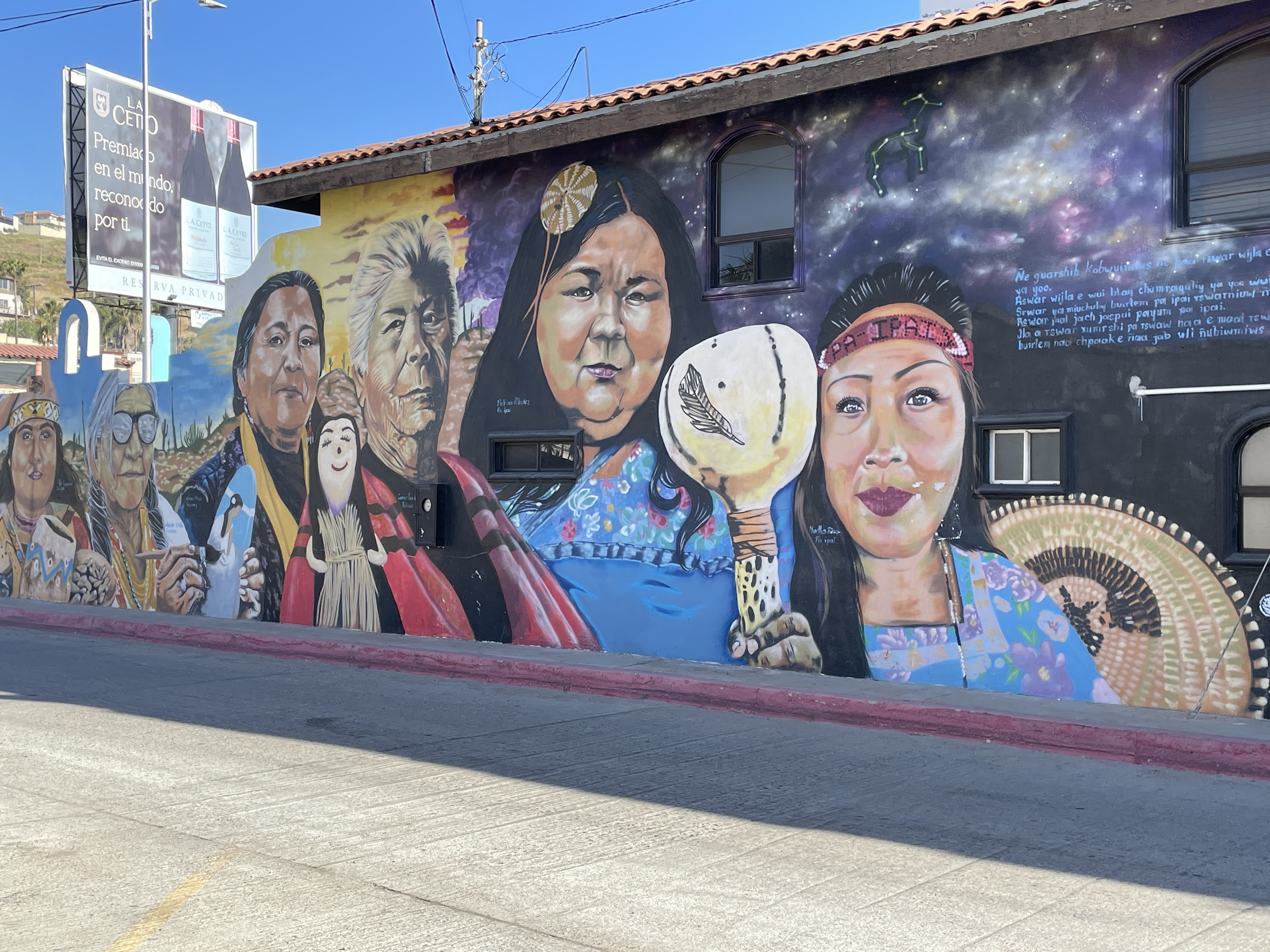
This mural portrays the matriarchs of the northern Baja area. each from a different indigenous tribe who lived there before others arrived.

Cruise ships dock here several times a week.

Built when alcohol and gambling were illegal in the United States, this was once a famous casino where the rich and famous came to gamble and drink. Now it belongs to the city and is used for weddings, retirement parties, etc.

Back in the 30s, the water came up to the edge of the casino property so people could come in their luxury yachts, dock, and walk right inside.

The original bar still exists and is well stocked. Here we heard the story of the invention of the margarita. Many claim to have invented it in various places in Mexico. It seems to trace back to a bartender who moved from place to place and brought the drink with him. Who knows?

One Book a Week-4: FINDING THE MOTHER TREE: Discovering the Wisdom of the Forest


When it first came out in 2018, I read The Overstory by Richard Powell. Finding the Mother Tree: Discovering the Wisdom of the Forest by Suzanne Simard appears to contain the endless years of detailed research and life story behind one of the characters in Powell’s novel. In fact, in her Acknowledgements, Simard thanks Powell for helping to make her life’s research more accessible to the general populace.

Simard’s book is part memoir, part detailed scientific explanations of her research and how a forest works and lives, and part how difficult it is to be taken seriously in the science world if you are female and your research contradicts the norm. She grew up in Canada. Her family made a living cutting down trees. Her family and life was and is intricately interwoven with nature. Even as a child, she was obsessed with tree roots, crawled around on the forest floor to see what lived there. A specific fascination was all the types and colors of fungi that grew just under the surface. Why were they there? What purpose did they serve? Later this became her life’s work, leading her to discover how trees of varying species use these fungi to communicate with and nurture each other. Of special significance are the “mother trees”, older, larger trees who provide nurturance to all the younger trees around them, recognize their kin, favoring them as they nurture all the other trees as well.

Traditionally, loggers and timber companies clear cut, then replanted with seedlings of all the same species of evergreen. It took Simard decades of research to convince them that it was not only the poorest way to grow new trees but also the least economical. For decades they saw her as some nutty woman, laughed at her research, laughed at her, even using epithets to her face. Ultimately, however, her work led to changes in how forestry is practiced.

This book relates her long struggle to save the forests. For those who are science minded, the final pages of the book contain 32 pages of Critical Sources. If you are interest in learning more about “mother trees”, go to http://mothertreeproject.org. It defines the term “mother tree” and explains how trees communicate. It also contains videos.
An Afternoon at the Cheech Museum – 2


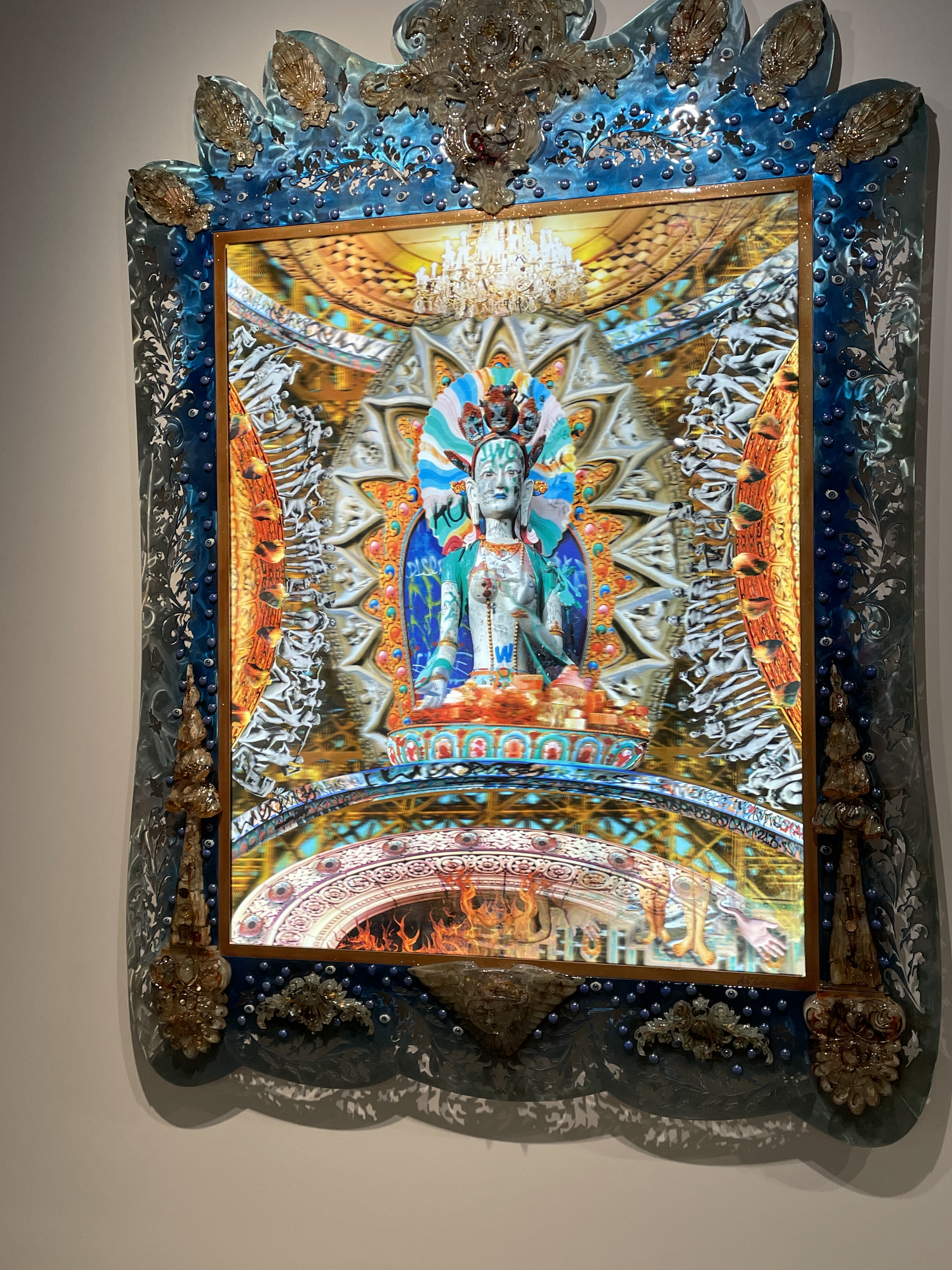
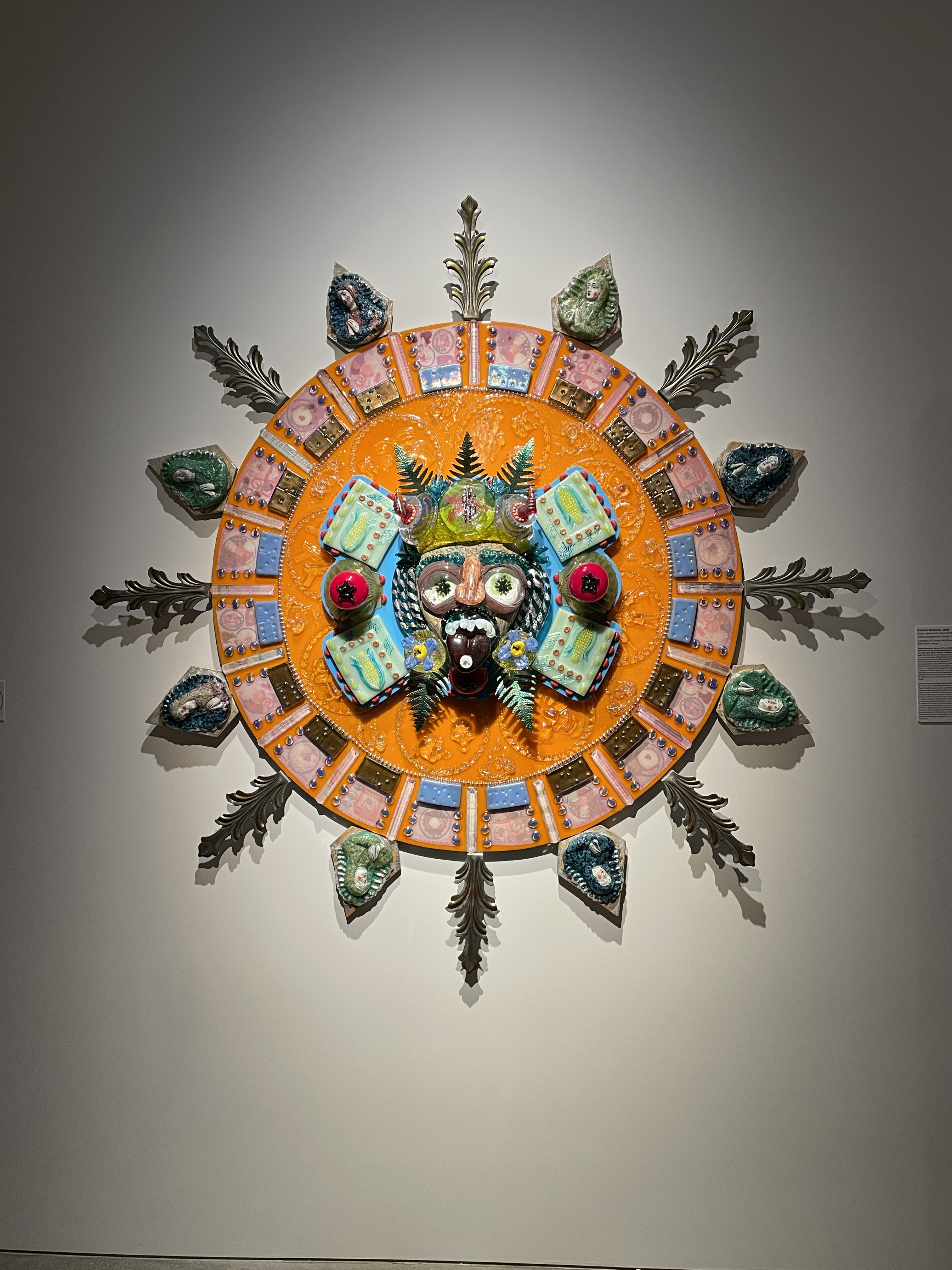
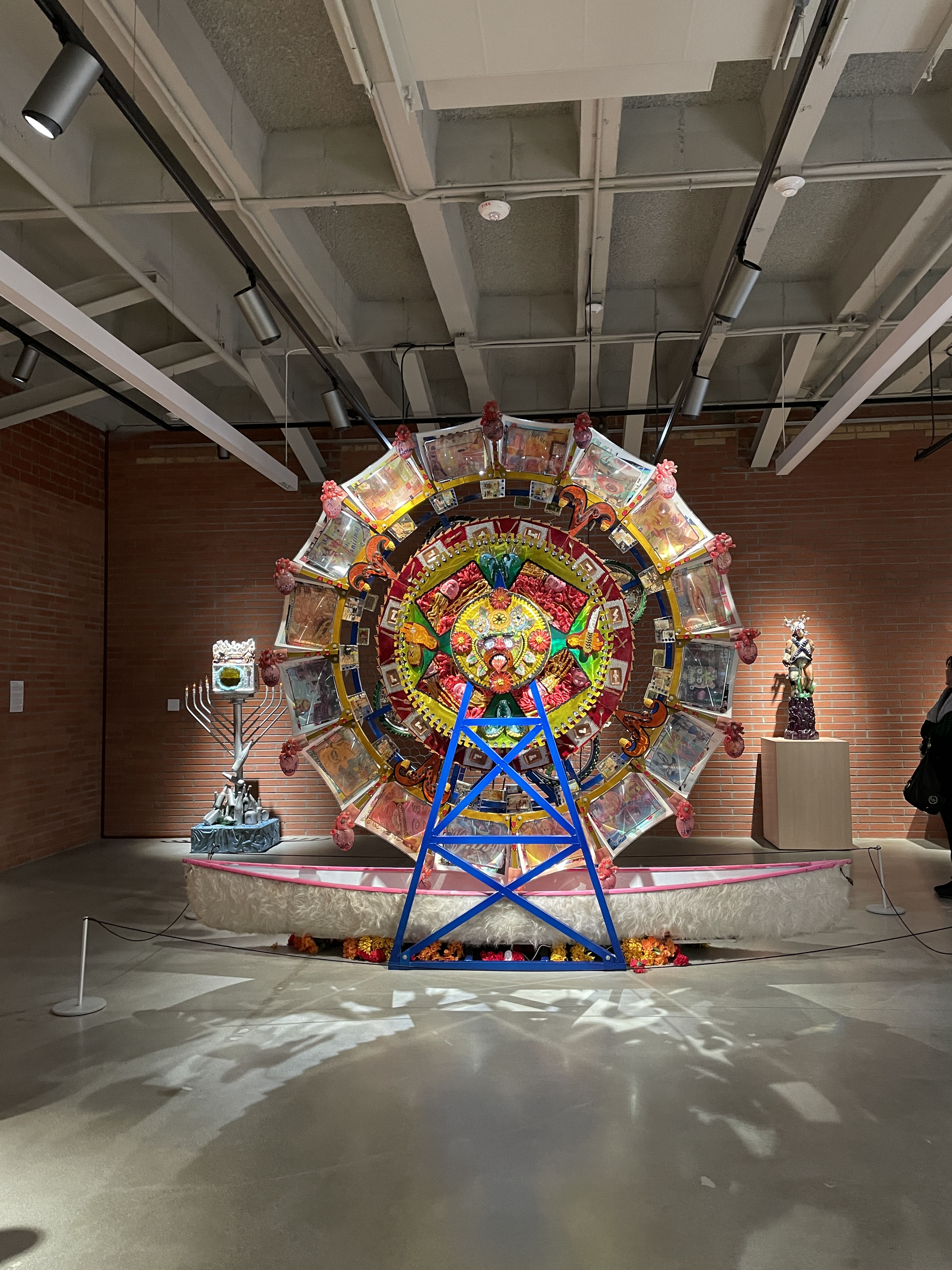
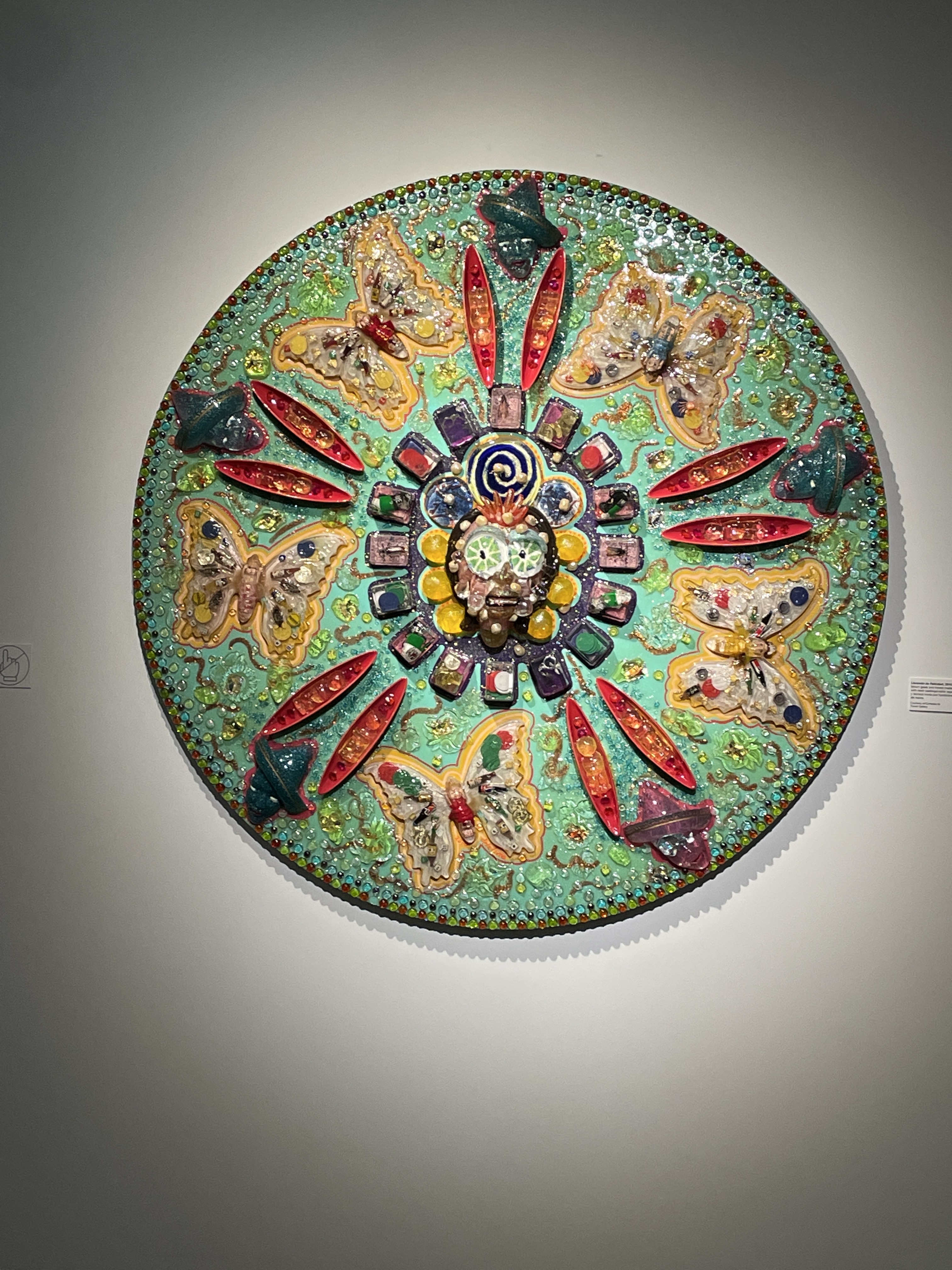
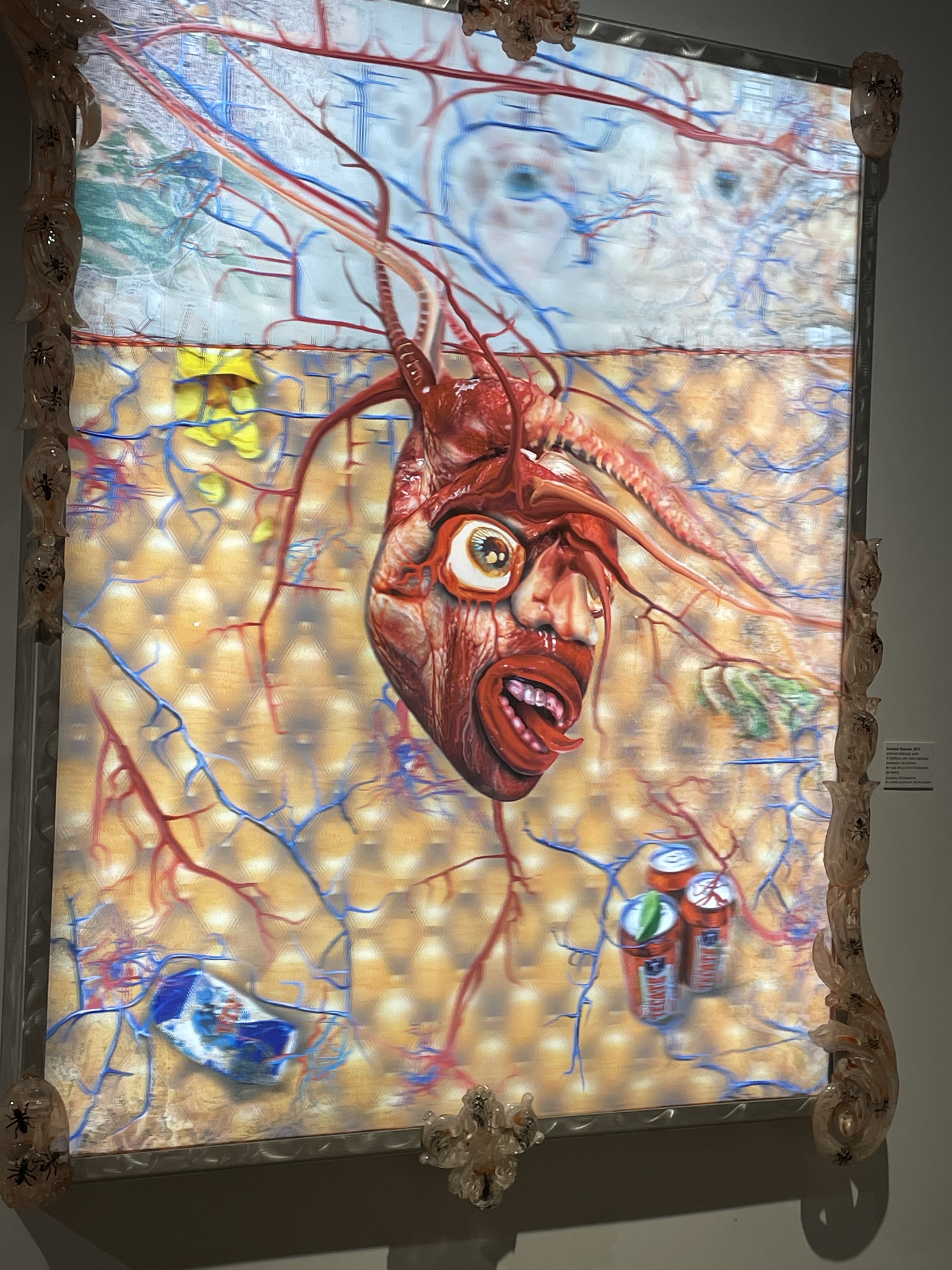
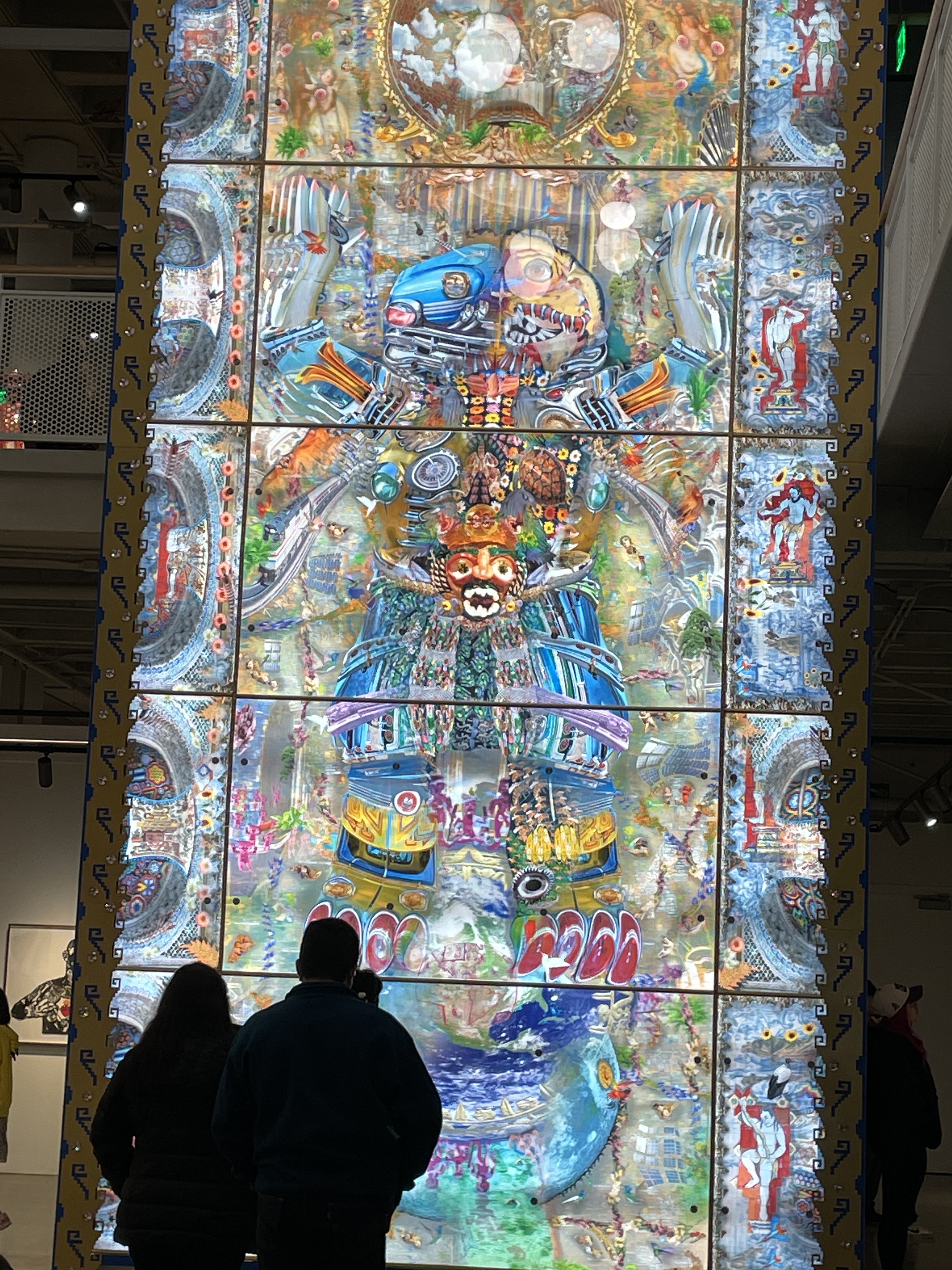
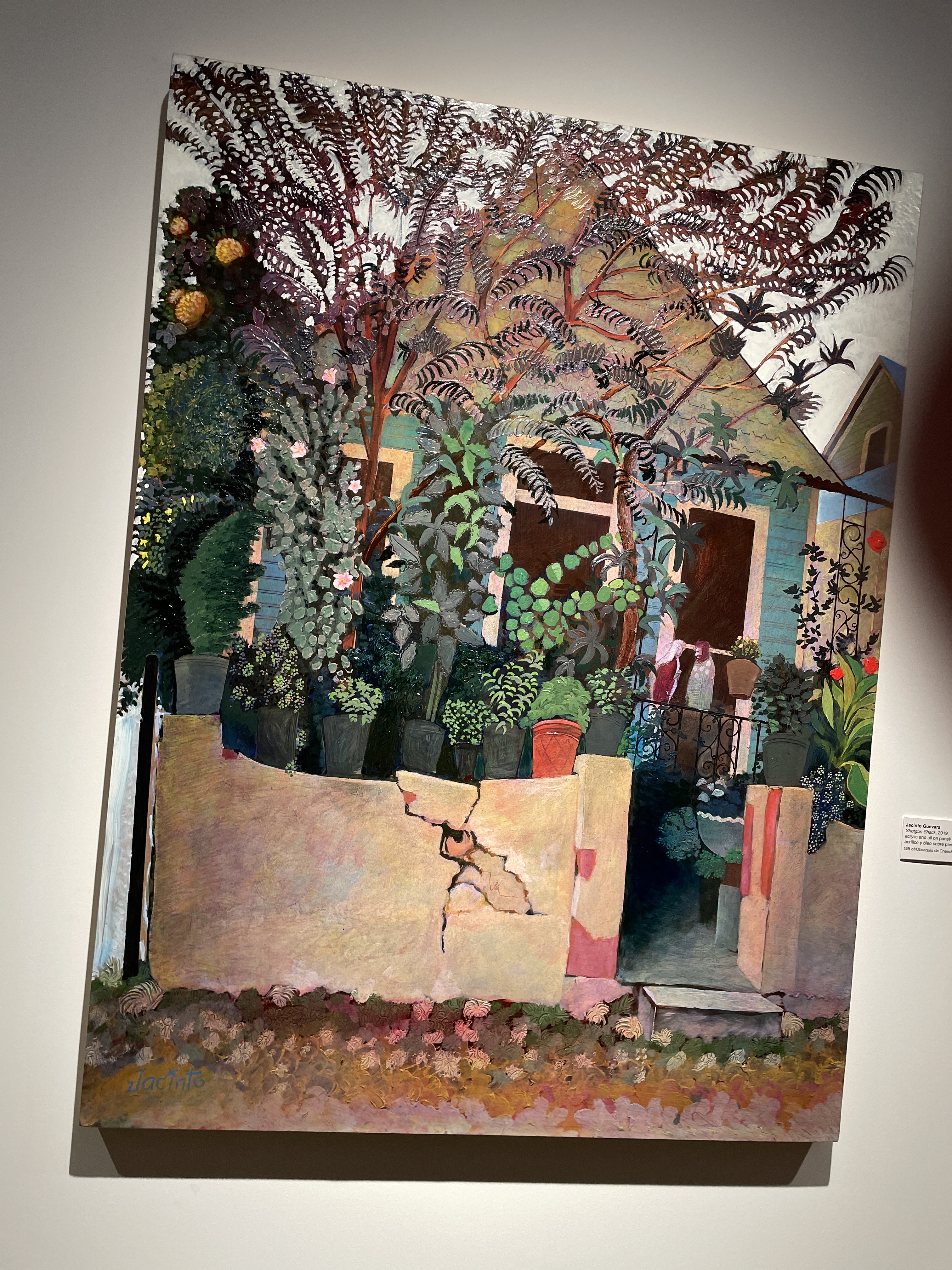
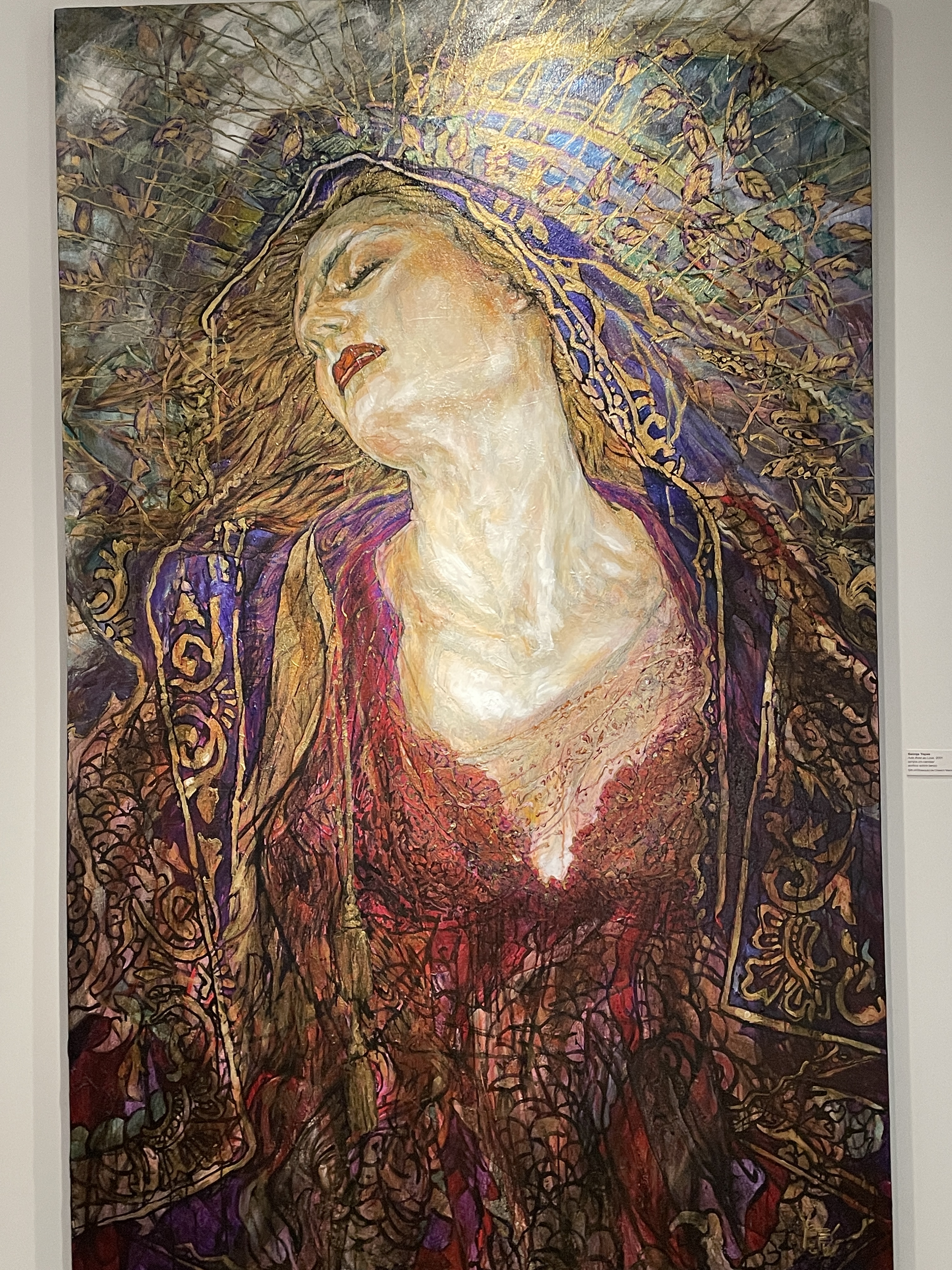
The second floor of the Cheech contains even more astonishing art including more multidimensional pieces except smaller than the giant one you see when you enter the building.

Depending where you stand in front, to either side, what you see is quite different. I kept thinking some old Flemish art or Hieronymus Bosch meets modern technology.

Much of the art makes a social or political statement especially about colonization, culture, poverty.

Some of the art is reminiscent of Mayan and Aztec calendars.

Hearts appear in many of the paintings.

And of course Frida.

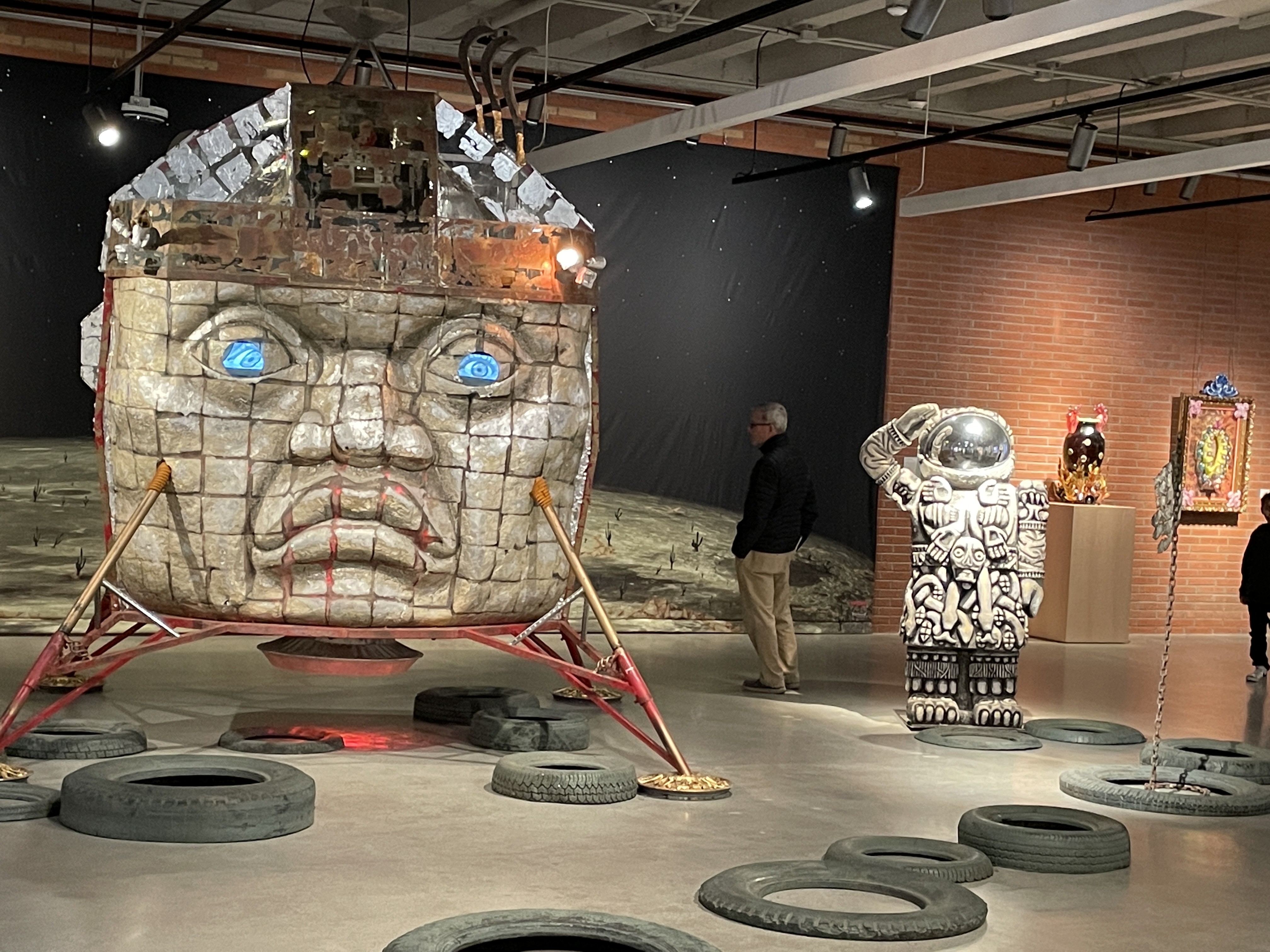
This is a space ship with changing eyes. If you walk around the back there is a creature inside watching everything with monitors.

An Afternoon at the Cheech–1


Some of you may remember the comedy duo Cheech and Chong way back in the day. Cheech has spent his life collecting Chicano and Chicana art. This year he gave a lot of his art collection to open a new museum in Riverside, California. Earlier this week my grandson, his girlfriend and I went to visit the museum. Photos and videos are allowed without flash. The following is the first set of photos I took. Please note that you need to see this art for yourself. Photos do not do it justice. Much of it is multidimensional and looks very different depending on where the viewer stands.

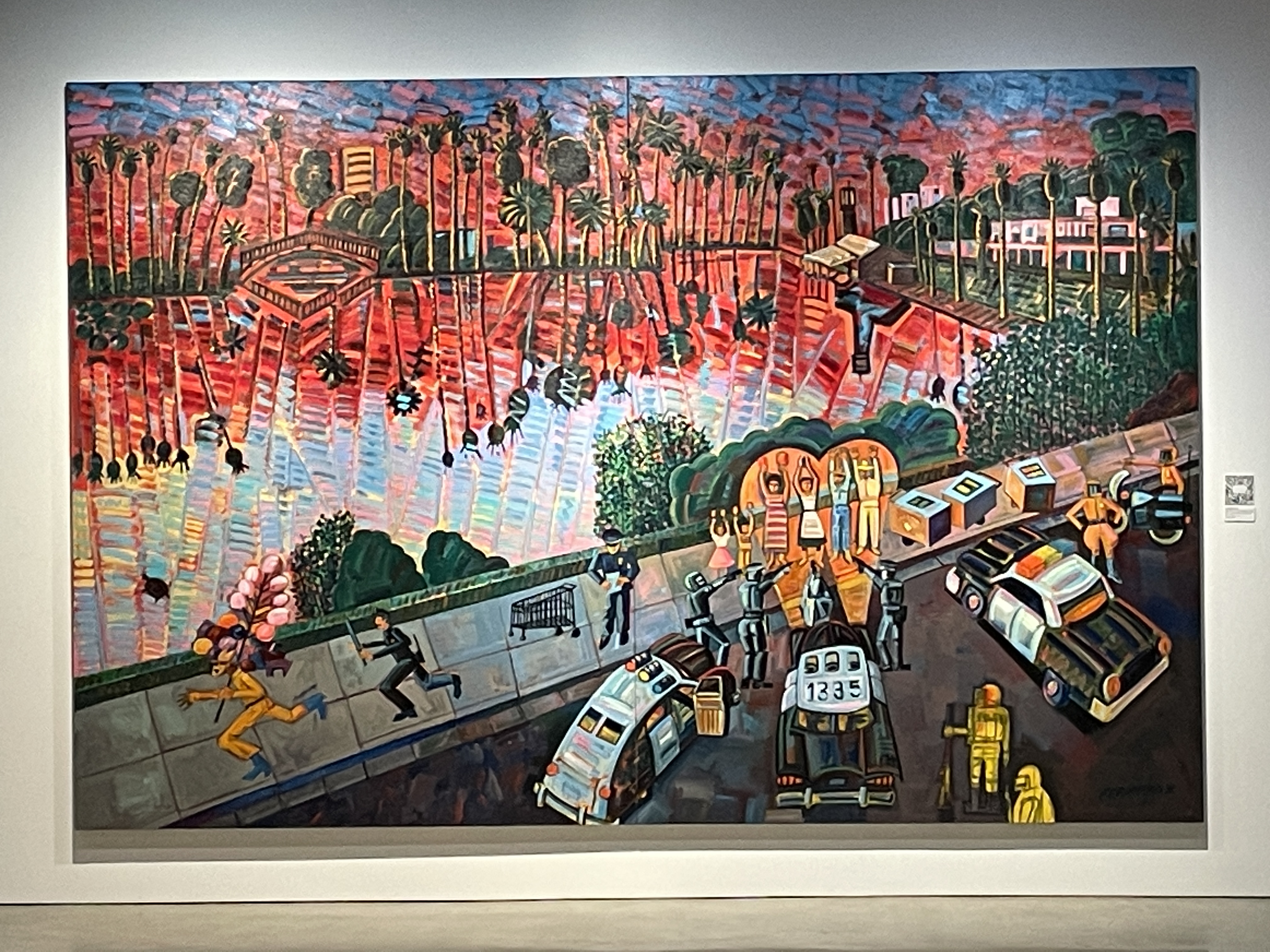
This is what you see when you enter the door; it is two stories high and multidimensional. Look how different the next photo of it looks from this one.

Walk farther to the side and it looks totally different again.

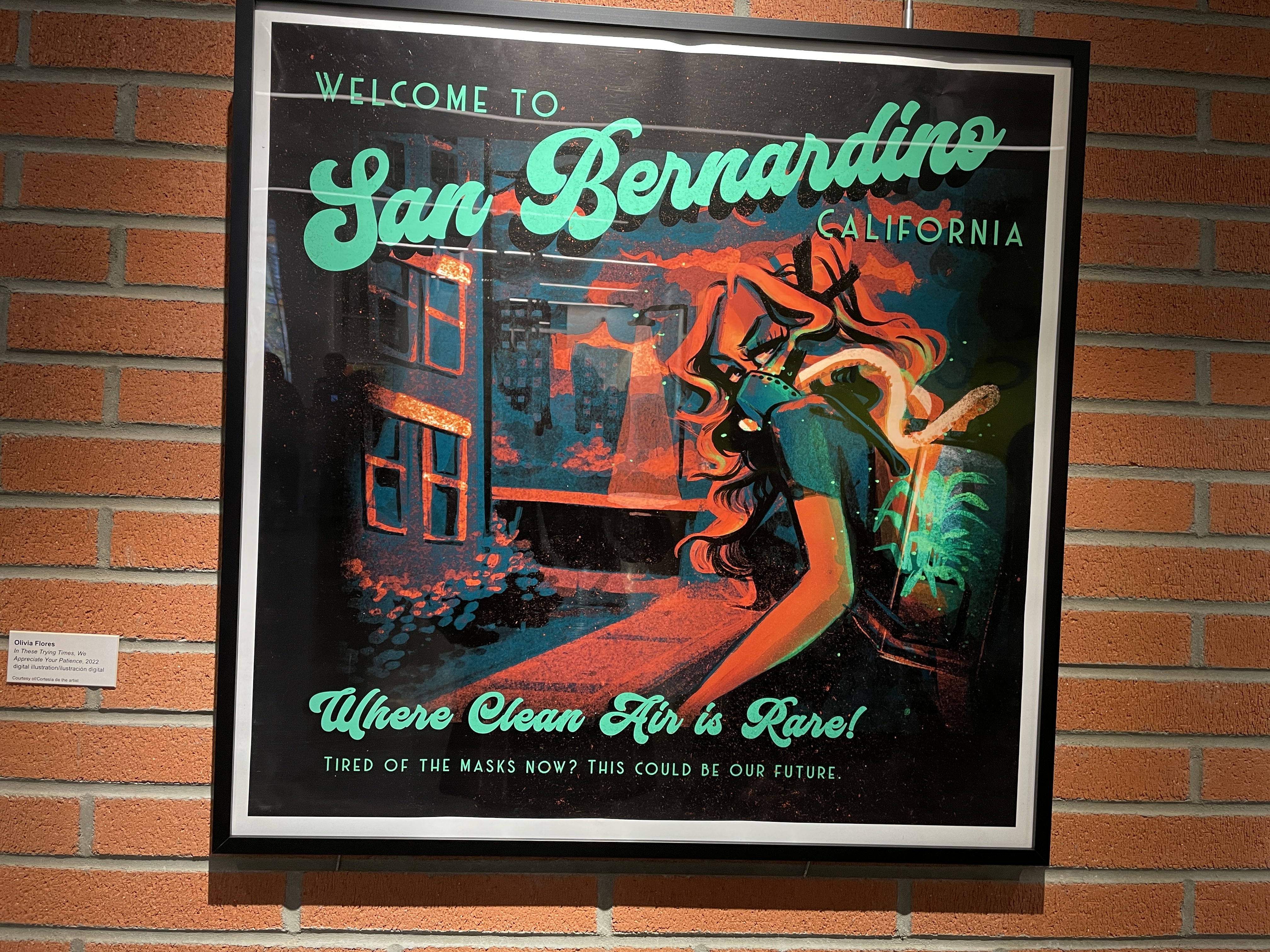
This speaks for itself. Right now where I live the air is clean enough that unless it is foggy, I can see all the way to downtown LA 30 plus miles away.

All the art at this museum has a message; much of it illustrates the ills of society.

The influence of indigenous art, e.g. Aztec, Mayan, can be seem in much of the art and the statements the art makes.

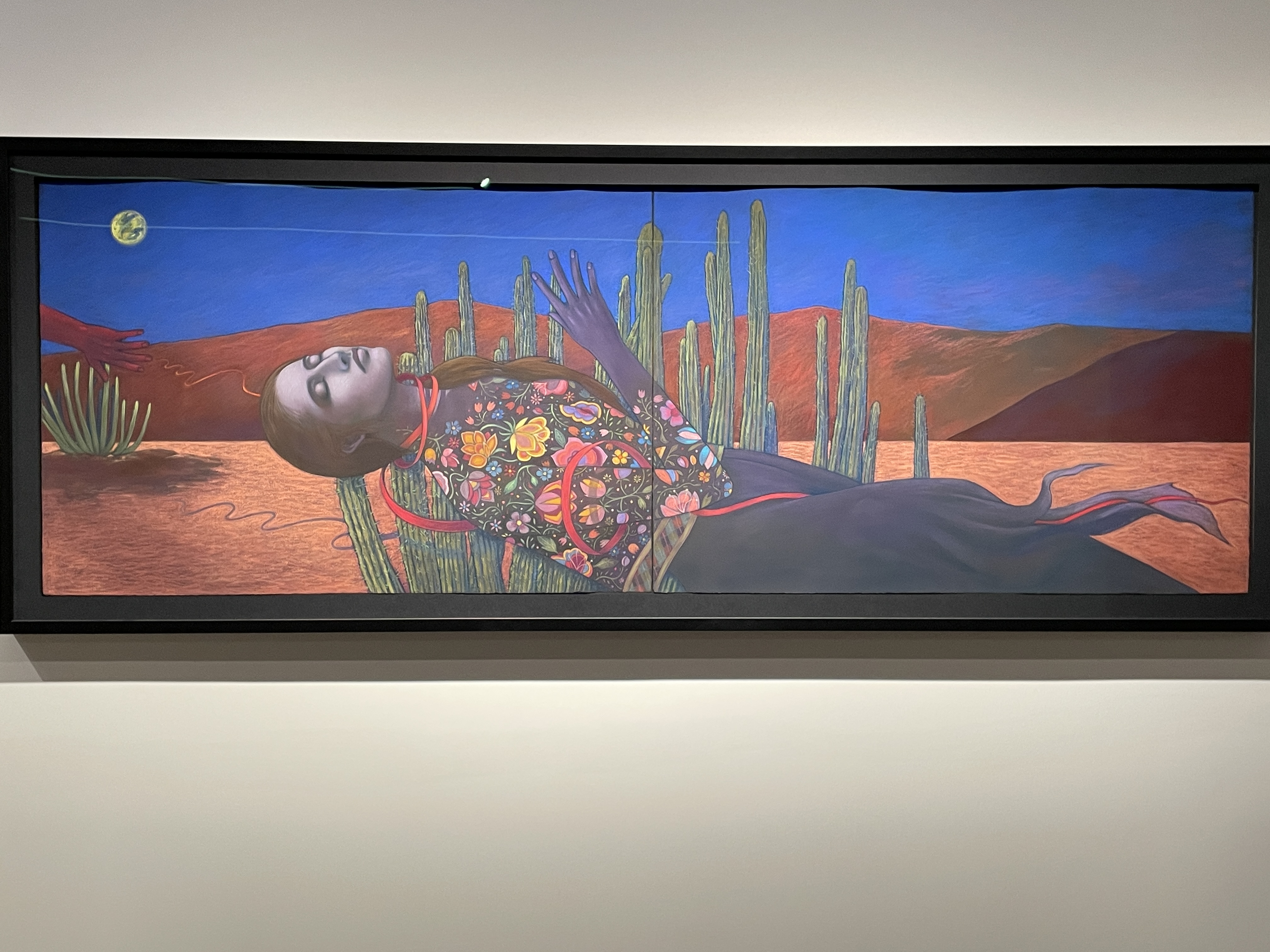
The woman above and the woman below hang next to each other.

Is Your Toilet Paper Killing the Planet?


Much of the toilet paper used in the US comes from the boreal forest in Canada. It is the tree to toilet pipeline as one environmental organization calls it. The Canadian boreal forest is home to many indigenous people as well as numerous wildlife species. Additionally, it is the world’s most carbon-dense forest. Below are some photos from the Internet.

Major companies clear-cut a million acres of this forest yearly for disposable paper products, much of it toilet paper. The leading culprits include such brands as Angel Soft, Cottonelle, and Charmin. Some brands are better choices if you care about our planet. Below is a chart provided by the NRDC to help you choose your toilet paper wisely and contribute to saving the planet.

Puma–2


Years ago while visiting Albuquerque or Santa Fe, I acquired a Zuni puma fetish. It is the only fetish I own. I bought it because it is a puma, the Directional Guardian and prey god of the North, representing independence, personal power, intensity, and loyalty, carried by travelers to protect their journey. It resides on a dresser in my bedroom, watching over me, protecting my life journey.

As I mentioned in a previous post, my puma obsession extends to researching them and writing poems about them. The following poem was originally published in my book, “On the Rim of Wonder”.

My neighbor walked out her door

found a puma lying on the lawn.

Puma rose, stretched, disappeared.

At night when I open my gate

I wonder if she lurks

behind the cedar trees,

Pounce ready.

A Zuni puma fetish guards my sleep.

I run with puma

Night wild

Free.

I scream and howl

Moonstruck

Bloodborn.

I hike the canyon

stroll around my house

look for puma tracks.

I see none.

I would rather die by puma

than in a car wreck.

Reception for the New Exhibit at The Getty


Monday evening I attended a private reception at The Getty for photographs taken by teens to reflect their reactions to the pandemic and the shut downs. This first photo explains the exhibit.

I was able to attend because Faith Mowoe invited me. She is my daughter’s cousin and teaches English at a high school here in California. Usually The Getty is closed on Monday. We arrived early hoping to be able to walk around a bit, but they did not allow anyone to enter until 5:30 so we strolled around the gardens near the parking lot. You cannot drive up to The Getty. You have to park in the parking area which costs 20 dollars and take a shuttle to The Getty which is otherwise free.

This and the next few photos were taken at the gardens near the parking lot.

The Getty sets on a hill overlooking portions of LA in all directions. The red on top of the mushroom like pillars in the this photo is bougainvillea.

The amount of stone in the buildings is huge. The Getty comprises several different buildings including several filled with art, others for research, and a theatre.

This photos shows one of the teen photographers. This one is from Ohio. The following photos illustrate the teens who were chosen out of the more than 1600 entries.

We briefly met the young lady in this photo. Many of the students who took the photos were present and honored by the sponsors of the exhibit.

After eating–the reception provided all sorts of delicious treats, wine, beer, water, and various others drinks–we strolled into the gardens.

Posters have been made from the teen photographs and will be available for purchase.

The Getty is astonishing. I was able to see only a tiny portion of it. Definitely a place to see if you come to Los Angeles.