One Book a Week-34: “If I Survive You”, Jonathan Escoffery


After reading about this book and its author in a recent issue of the Sunday “Los Angeles Times”, I saw it while wandering around the local library and checked it out. Although the author’s work has been published in various magazines, this is his first book.

This collection of short stories reads like a novel because the characters in the stories are either identical or related from Trelawny and his brother Delano to their ill-fated cousin, Cukie, all of whom are the descendants of Jamaican immigrants living in or near Miami, Florida. Sometimes excluded because they are Black, they face other challenges, e.g. Trelawny because people cannot figure out what he is ethnically or racially due to his complexion and hair, light and only somewhat curly. All struggle to discover who they are and where they belong, if anywhere.

While many of their experiences remain heart wrenching, Escoffery has the ability to also make their stories funny. I kept think of some works by Sherman Alexie whose stories are both horrifying and hilarious.

Note: The next three books will remain anonymous and no blogs about them because they are for a project and I cannot report about them. I will be blogging poems and essays about other topics.

One Book A Week-28: “The Tea Girl of Hummingbird Lane”, Lisa See


My view of this book remains somewhat mixed. I know it was a best seller, but some parts of the storyline seem extremely contrived rags to riches stories without evidence to back them up. Nevertheless, it is a powerful novel about the ritualistic Akha tribal people of the southern Chinese region of Yunnan who were viewed as backward and remained mostly unknown until their superior Pu’er tea was discovered. Additionally, the novel explores Chinese adoptions, issues Chinese children experience when adopted by white people, and how so-called primitive practices, e.g. killing twins and banishing their parents, can change over time even in remote areas.

I prefer to read books that provide me the opportunity to learn something new. This book definitely provided that. Before reading this novel, I knew nothing about the Akha people, even though I have visited tribal areas not too distant, nothing about Pu’er tea or tea processing and how tea can be as valuable a commodity as gold. Pu’er tea is different from other teas because of the types of trees from which it is harvested and its unique fermentation process which makes it a probiotic.

One Book A Week-27: “Lucy By The Sea”, Elizabeth Strout


A short, honest, realistic view of life, this book by Strout, written from the viewpoint of Lucy
Barton, continues the story started in her book, “Oh, William”, where Lucy and her ex, William, go to Maine to seek out his long lost sister whom he did not know existed until he took a DNA test. Once again they head to Maine, but for a much more stressful reason, the Covid pandemic. They both live separately in NYC where Covid hit early and hard. After accurately assessing the danger, William finds a large, old house to rent on the Maine coast and convinces Lucy to go with him there to save their lives. He convinces one daughter to leave NYC but the other insists on staying.

The book addresses the issues of isolation brought on by the pandemic and how people deal with stress and isolation differently and with the difficulties which arise when once close families can no longer see each other. It also shows that isolation can bring the positives that can be found in a more quiet life. Strout’s uniquely simple style emphasizes the emotions and stresses as well as the joys life can bring to all of us.

One Book A Week-25: “The Daughters of Madurai”, Rajasree Variyar


The first sentence of the book reads: “A girl is a burden. A girl is a curse.”

In India in early 1990s, Janani lives with her abusive mother-in-law and an alcoholic husband who is often absent, chauffeuring people here and there. Although she is allowed to keep daughter number one, the fate of the next daughters is death. She, who is Tamil lower caste, is lucky enough to work for the same higher caste family for whom her mother worked and with whom she spent most of her childhood. They treat her much better than her husband and mother-in-law who hate her for not bearing a boy baby.

The book goes back and forth between this time period and 2019 Australia where the fate of Indian girls and women is far different. The family returns to India for the funeral when the family patriarch dies. Those who know little about their family history learn some shocking revelations.

In the Afterward, the author discusses female infanticide. Although many educated families oppose it and national laws prohibit the practice, it remains so common in parts of rural India that in those places there is a shortage of women for marriage. As a consequence, men resort to kidnapping women from other areas.

I thought it would take me a while to read this 326 page novel. However, I became so engrossed, I finished it in two days while also engaging in several other activities.

Book a Week-21: “Boy, Snow, Bird”, Helen Oyeyemi


A unique and sometimes frightening story with a surprising ending, this is another tale of the lengths to which people of color will go to pass for white to gain the benefits of whiteness. For one New England family this has succeeded quite well by sending a too dark daughter back South to live with relatives and never allowing her to come to the town where the rest of the family lives. It fails when a too dark child is born and the parents keep her with them. It is also a tale of gender identity and how rape and abuse can destroy and deform and of resilience in the face of endless obstacles. This is not an ordinary novel.

One Book a Week-7: “Memorial Drive, A Daughter’s Memoir” by Natasha Trethewey


Published in 2020, and a must read for anyone who cares about abused women, their rights, and how law enforcement often fails them, this book by Trethewey, 2007 Pulitzer Poetry Price winner for “Native Guard”, voices her struggle to deal with her mother’s untimely death. When Trethewey was nineteen and in college, her mother was shot and killed by her step-father after the police officer assigned to protect her mother left his post early. Additionally, the memoir details the effects of the racism she experienced as the child of a white father and black mother (married when it was illegal where they lived) in Mississippi and later in Atlanta in the 1970s and 80s before her mother’s murder in 1985. The book gets its title from the street on which her mother lived when she was murdered. Through this memoir Trethewey discusses how her parent’s divorce, her mother’s remarriage to an angry, abusive man, and her mother’s murder has informed her life and affected the enduring love she holds for her mother.

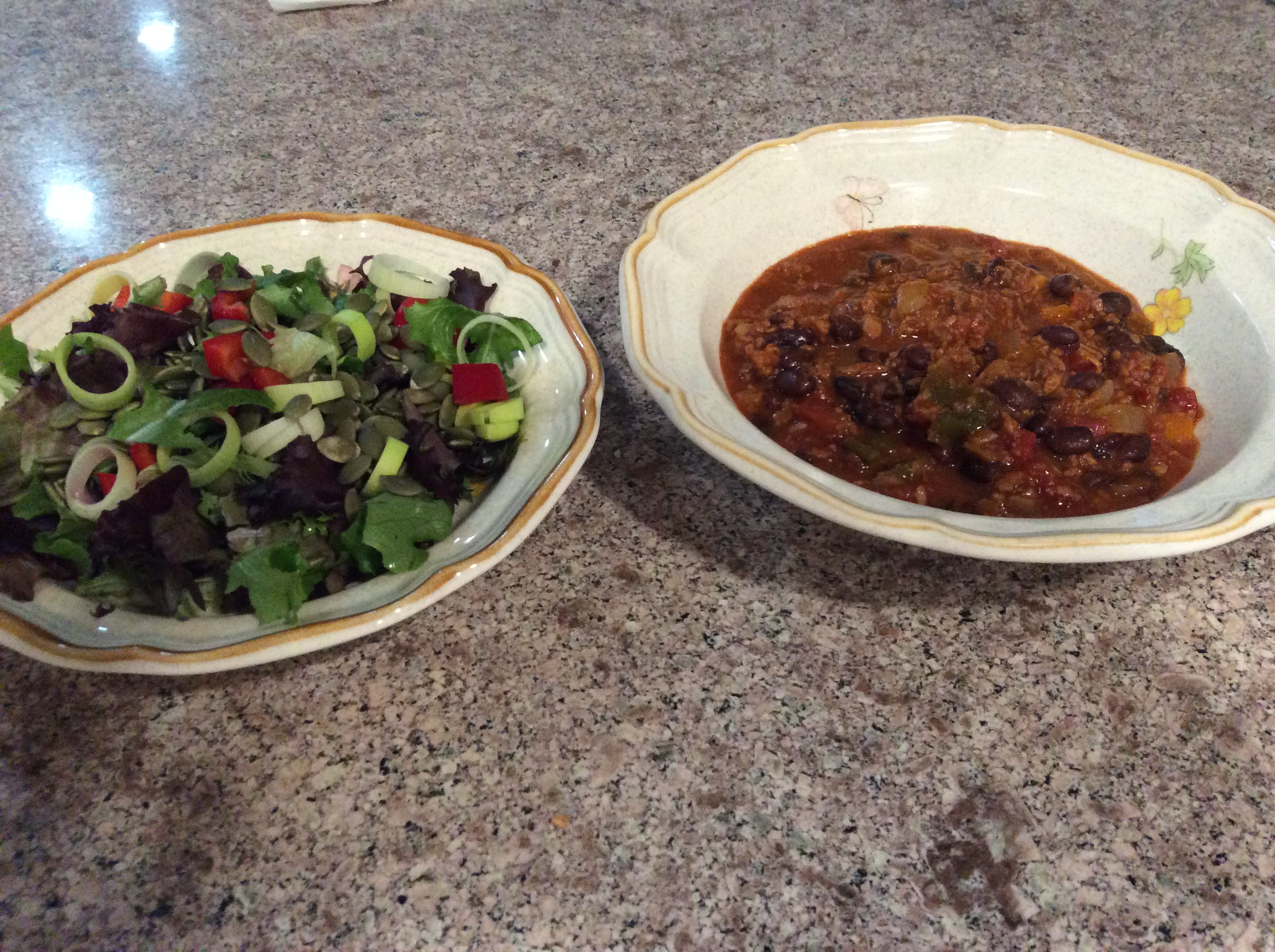
Easy Vegetarian Chili Dinner


I had some Soyrizo in the refrigerator–chorizo made from soybeans–and decided to try making chili with it. I sautéed one finely chopped onion in olive oil and added the Soyrizo after removing it from the casing and breaking it up into small pieces. After the onion was translucent, I added one deseeded and chopped red bell pepper and a deseeded and chopped poblano pepper. To this mixture I added one can undrained black beans and 1 small can chopped tomatoes. I let this mixture cook on low for several hours before serving. The Soyrizo makes it a little bit spicy, but if you want more spice add berbere, chili powder, etc. to your taste. I like thick chili but if you want it more like the consistency of soup, just add some broth or water.

The salad was made with a mixture of greens, chopped red bell peppers, dried bing cherries, and sliced leeks broken up so you can see the circles. These bowls have been in my family for decades. They were the everyday dishes my mom used when I was growing up.

Note: For those out there who question, and rightfully, some of the ingredients in meat substitutes, I do get it. However, once in a while I like to jazz up the food a bit.

An Old Bowl and the Silver Spoon


My Aunt Julia, Mom’s sister, lived to 94. She loved fine antique china, linens, and French furniture. The ordinary bowl in this photo defies those inclinations, its origins a mystery. How did she acquire such a plain bowl and why? I will never know. In spite of its age, cracks, dull finish, I have used it every morning for decades. It is my breakfast bowl, filled with yogurt or cottage cheese with dried blueberries and a handful of walnuts, or, occasionally, oatmeal.

The spoon, on the other hand, is not ordinary, but rather good silver from the set Dad gave Mom on their first wedding anniversary. Unlike Mom, who saved her good silver for holidays and special occasions, I use these spoons daily and think of her unconditional love, strong will, determination, and love for beauty.

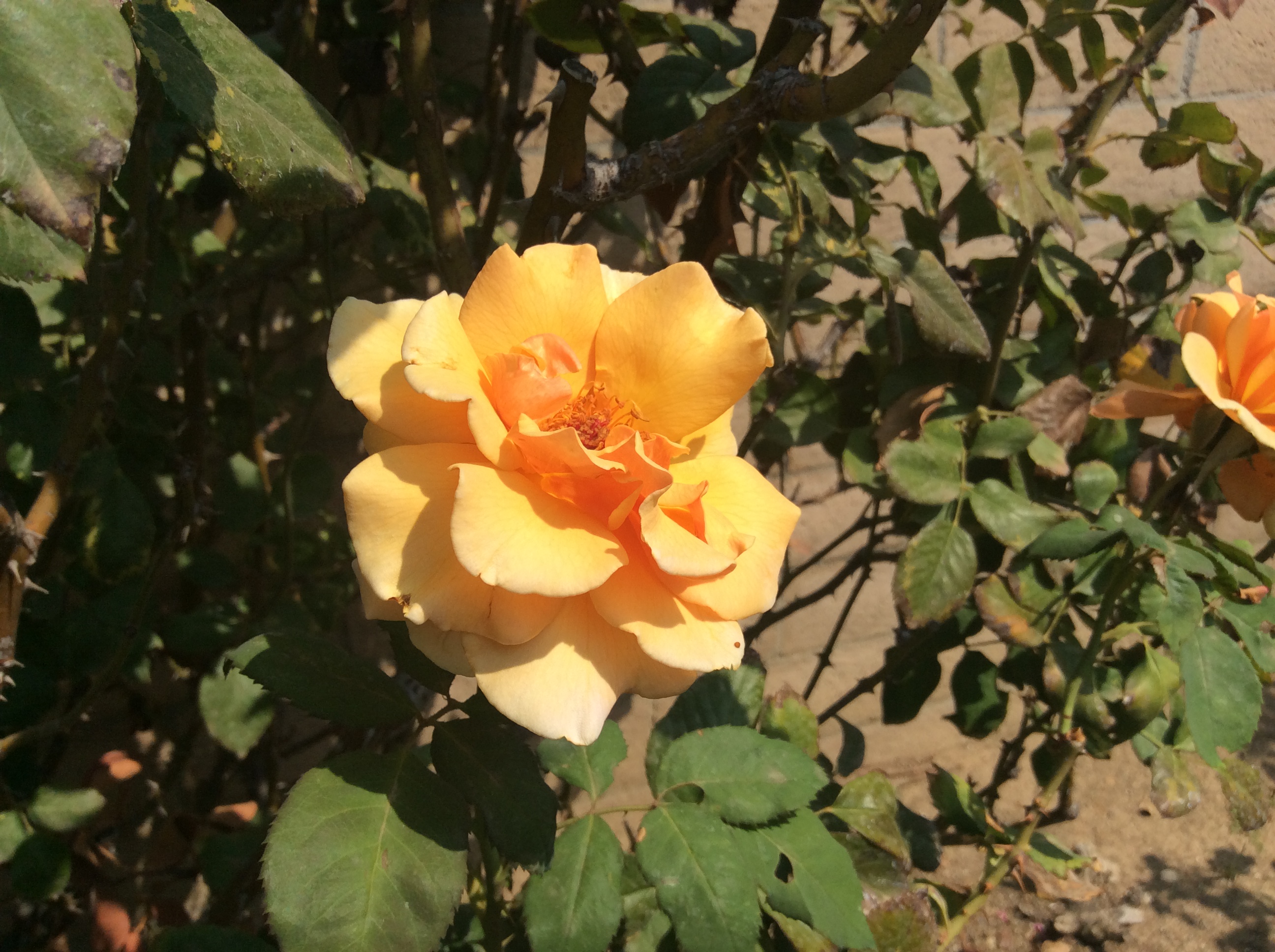
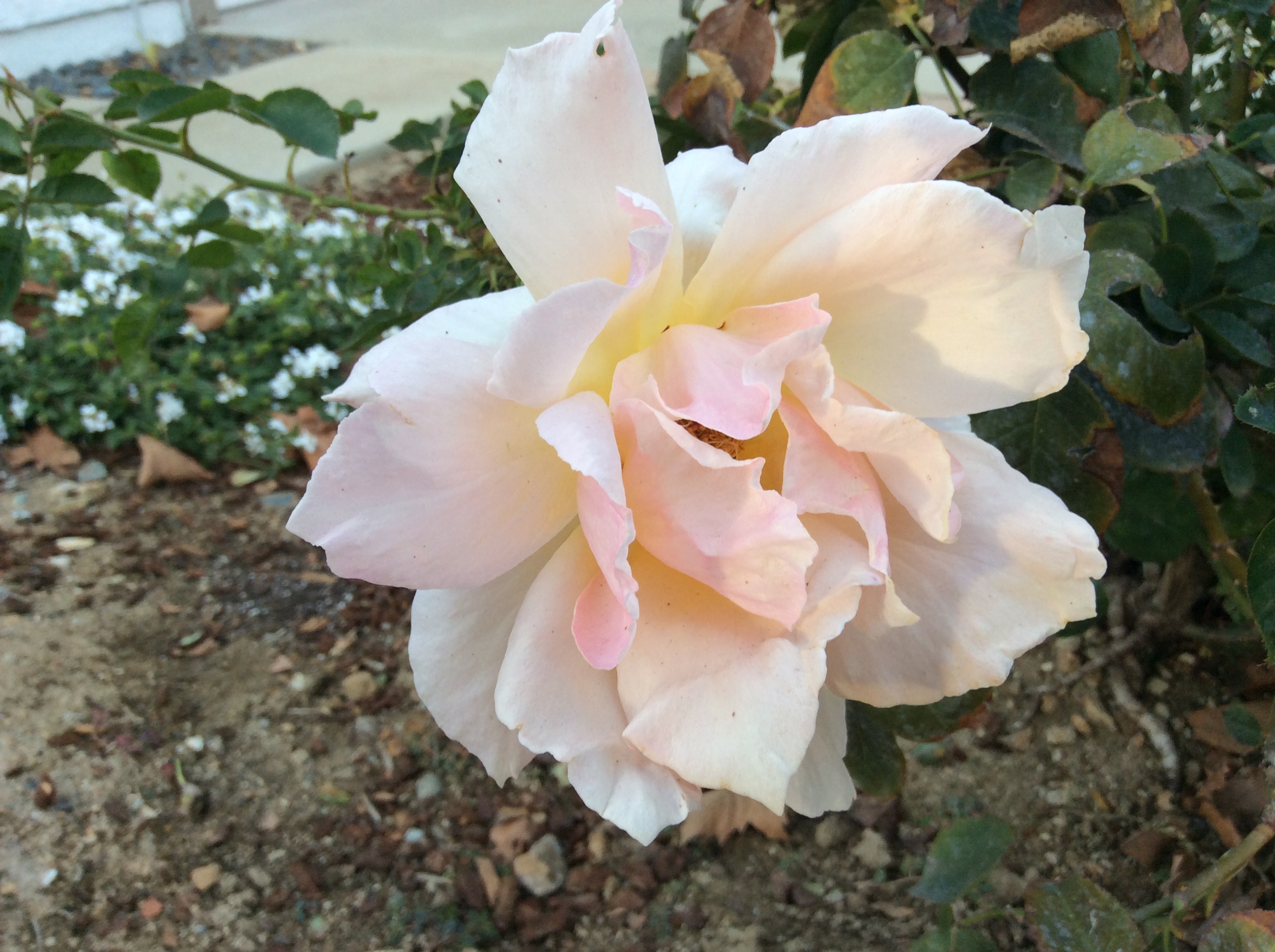
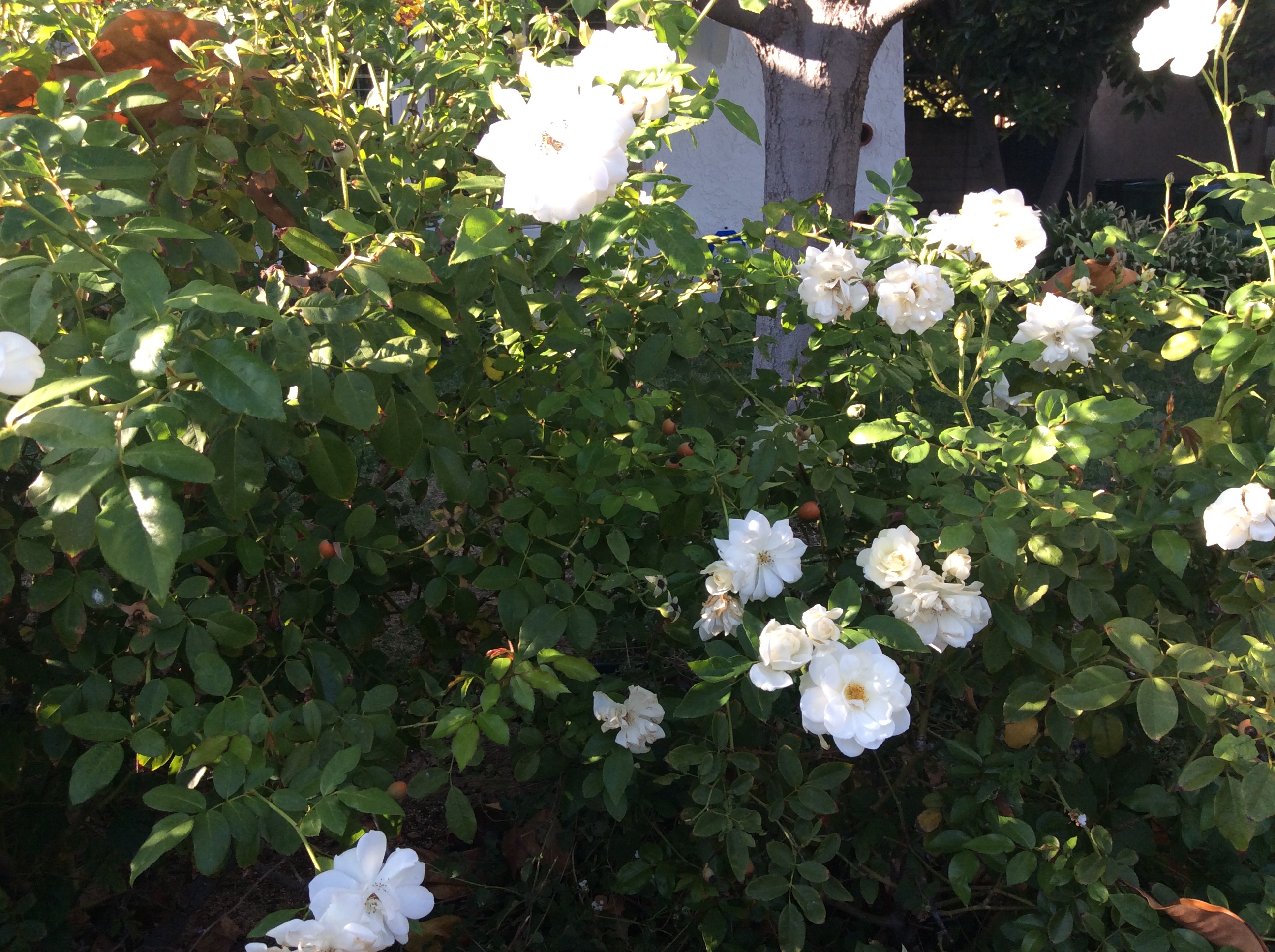
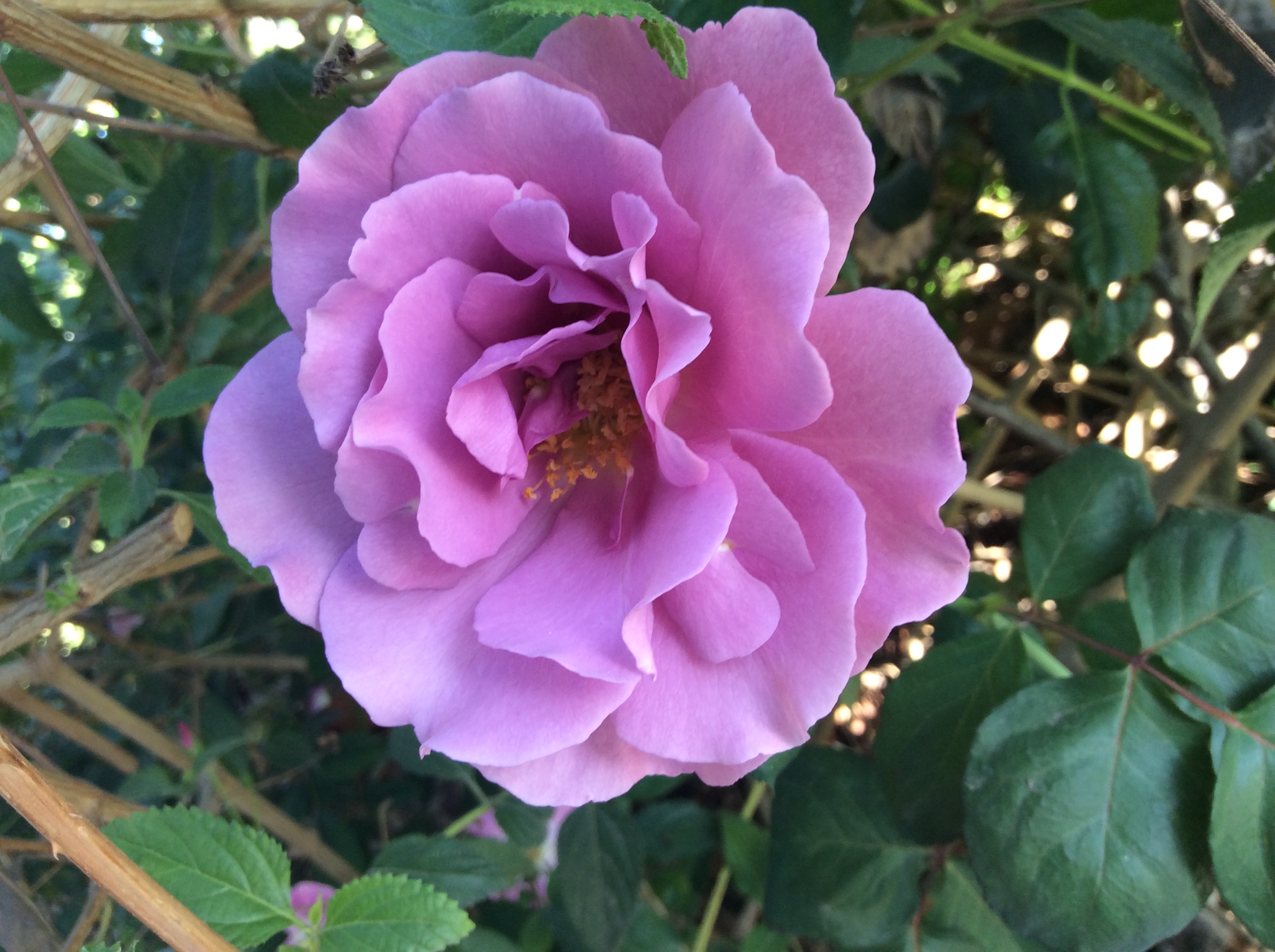
In Memory of Mother’s Roses


Mother’s rose garden

flowers for the family table

all my childhood summers.

Red, pinks, snowy.

No roses for decades

except those given, bouquets,

mostly red.

Now, I look out every window, roses

Pinks, reds, orange, lavender, yellow, snowy.

I love them, cut them,

And remember my mother.

Barbie Doll– a poem about my mother


Barbara Lewis Duke, pretty, petite, blue-eyed and blond, my

mother, one fearless, controlling woman. Long after Mom’s

death, Dad said, “Barbara was afraid of absolutely no one

and nothing.” They married late, 34 and 38. He adored her

unconditionally. She filled my life with horses, music, love,

cornfields, hayrides, ambition. Whatever she felt she

had missed, my sister and I were going to possess: books,

piano lessons, a college education. Her father, who died long

before I was born, loved fancy, fast horses. So did she. During

my preschool, croupy years, she quieted my hysterical night

coughing with stories of runaway horses pulling her in a wagon.

With less than one hundred pounds and lots of determination,

she stopped them, a tiny Barbie Doll flying across the Missouri

River Bottom, strong, willful, free.

My mother many, many years later with Dad. I took a photo of a photo I have hanging in the hall–the sun reflecting in the windows.