After reading two intense, serious books, one fiction and one non-fiction, I needed a break. Several friends and acquaintances recently told me about Ross Gay’s delight books so I went to the local library and asked them to request his latest, “The Book of (More) Delights”. I had my doubts after reading the first few entries, but kept going and then #10 “Alright Baby” made me laugh out loud as well as recall an incident in a high school class I taught years ago.
Gay’s 2.5 page entry is about testicles, yes, testicles. He tells about a couple of young guys who think they are not stuff challenging him and his friend (they are in their 40s) to basketball. The two 20 somethings were doing their best to prove what Gay calls their manhood. As Gay relates the incident, he jokes about maleness and testicles and how testicles control a lot of what men do. I had to laugh. The two old guys won by the way.
This mere 2.5 page story made me remember a class of teenagers I taught from years ago. I do not even recall what caused whatever was going on in class, but one male student suddenly shouted, “There’s too much testosterone in this room!” Everyone laughed. Thereafter every time any sort of commotion, even if piddly, occurred, everyone shouted, “There’s too much testosterone in this room!”
Neftali Ricardo Reyes Basoalto, a country boy who grew up in a remote, rainy, forested area in southern Chile, an area called Araucania, an indigenous name, became Pablo Neruda, a name he created so he could publish poetry without his father’s knowledge. His father and mother, who died less than a month after his birth, originally came from the wine country of central Chile. His father became a conductor for a ballast train in this southern region. His descriptions of his childhood are of a shy boy who loved nature in all its forms and books. Later, he wrote letters to girls for his friends. Yet, he says he wrote his first poem when he had barely learned to read. Overcome with emotion, he wrote a poem to his stepmother, the only mother he knew. When he showed it to his father, his father asked to know what he had copied it from.
Later, he moves to Santiago to attend university, always poor, always wearing black, always carrying books. He joins a Student Federation and becomes acquainted with other young poets. He writes, “I saw a refuge in poetry with the intensity of someone timid.” After he struggled paying for the printing of his first book, he wrote, “…the writer’s task…must be a personal effort for the benefit of all.”
He wins a literary prize at school, his books are popular, and he finds himself acquiring a job at a Chilean consul in Rangoon but to get there he and a friend end up in France and Portugal, then Japan, then Singapore, before finally arriving at his destination. Thus, began his life as a consul official in places all over the world, including Spain just before and at the beginning of Franco’s rise to power.
After witnessing so much poverty, so many conflicts benefiting the rich, he becomes an avid supporter of the Chilean Communist Party–a form of communism unlike what most think of when they think of communism. The communism he and his friends support includes working on behalf of the poor, the common laborer, the disenfranchised against the wealthy elite who controlled most Latin American countries during his lifetime and in many cases still do.
He states, “I want to live in a world where beings are only human with no other title but that, without worrying their heads about rules, a word, a label…I want the great majority, the only majority, everyone, to be able to speak out, read, listen, thrive…I have taken a road because I believe that road leads us all to a lasting brotherhood…an inexhaustible goodness…”
Later, he chose to live at Isla Negra, a sort of hideout especially in winter where he could write. Then he returned to Chile. He helped his friend Salvatore Allende campaign for the presidency of Chile. After Allende became president, he appointed Neruda to be ambassador to France. In 1971, Neruda won the Nobel Prize. In 1972, the US blockaded Chile and Neruda returned and completed the final edit of his memoirs. He was welcomed back with a ceremony at the National Stadium in Santiago with a huge crowd in attendance. In 1973, a military coup, supported by the US, overturned the government and assassinated Allende. Less than one month later, Neruda died. Shortly thereafter, news spread worldwide that his two houses in different parts of Chile had been ransacked and vandalized by the new government and its forces.
Last week a writer friend commented on the notion that writers are known for wearing turtlenecks. That’s news to me even though I am a writer and I wear turtlenecks plus multiple layers. I’m cold. I’m cold at least half of the year even here in Southern California. This comment caused me to count mine. It seems I own 25 turtlenecks–white, off-white, various shades of beige and brown but none dark, several black, two red, two orange, two coral one of which one is darker than the other, two striped (one black and white, one tan and creme), deep green, two hot pink, and one sheer in shades of black and brown and creme and a sort of burgundy color. Another is a color I am not even sure how to describe which I will call pale peach. Since I’ve been the same size for decades, I am guessing some of these border on the ancient but not worn out. I never dry them in the dryer. Drying clothes in the dryer wears them out faster and changes their color.
About one-third of the way through his “Memoirs”, Pablo Neruda talks about a poet friend of his in Spain who wore turtlenecks which Neruda claims was a huge no-no at the time. What does he say poets should wear? Black from head to toe. He had been wearing black practically since birth. His mother died from tuberculosis a month after he was born. Perhaps the endless rain and endless mud he describes in the area of southern Chile where he grew up made wearing black the most practical color. Doubtless the poverty he witnessed as a young man working as a poor employee of tiny Chilean consulates in places like Ceylon (now SriLanka), Indonesia, and India did not inspire him to wear colorful clothes. Then not long after he arrives in Spain, Franco comes to power and one of his best friends, Federico Garcia Lorca is assassinated. As for me, when I am not wearing colorful clothes, I wear black, not due to rain or mud or sadness. The reason I am drawn to black mystifies me–another thing to ponder.
Not sure this qualifies as a turtleneck but it comes close.
Two days ago I drove to the local library to return “The Historian” and inquire about a book an acquaintance had recommended. The library houses a used book section at its front hall entrance. I usually only glance at it because mostly it contains books in which I have zero interest. I glanced once again. There in nonfiction I saw NERUDA painted in big, bold bright colors-blue, red, green, purple–across the top half of a book cover. Just below this was a parade of flowers marching across the middle of the cover in the same bold, bright colors. Finally, at the bottom painted in bright red on a black background in capital letters it read, “MEMOIRS.” Inside the O is printed in the same red these words,”confieso que he vivido.” I snatched it up. The little sign said 25 cents. Although I’ve read Neruda poems mostly translated into English, I had no idea he had written anything about his own life. I knew I had to read this. I knew some things about his fascinating life. I wanted to know more. I dug around in my wallet, found a quarter, and deposited in the little brown box one of the librarians had indicated.
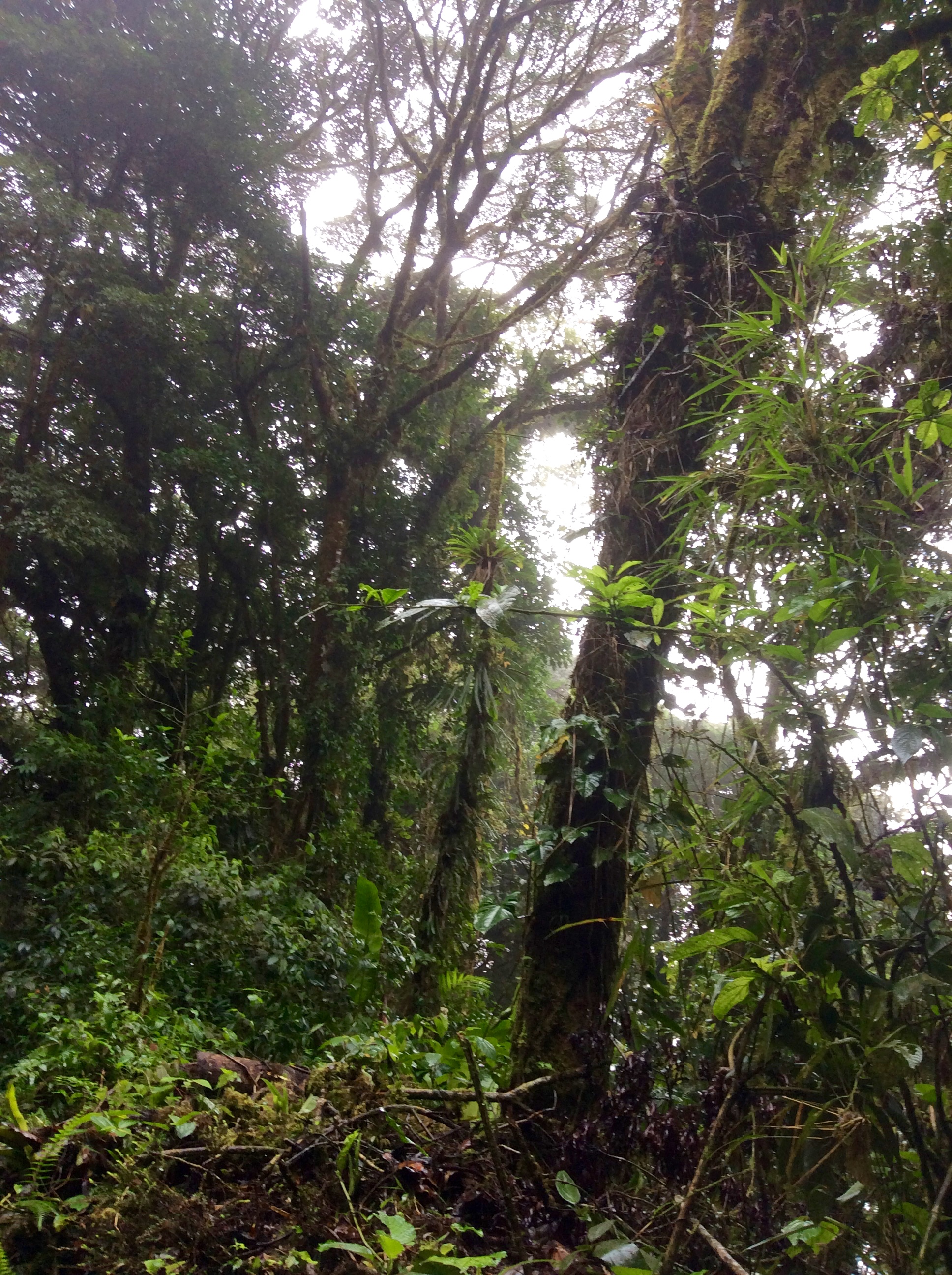
Later at home, I read the beginning, his brief introduction, explaining there are gaps here and there. He also explains, “What the memoir writer remembers is not the same as what the poet remembers.” He goes on to explain this. I will need to contemplate this more. Then in the beginning of the first chapter, “The Country Boy”, he describes “The Chilean Forest”. It starts, “Under the volcanoes, beside the snow-capped mountains, among the huge lakes, the fragrant, the silent, the tangled Chilean forest…” What continues is a prose poem describing this forest with intense sensory detail so clear the reader can see the details, the mystery, the lushness. He ends with this poem with the words, “Anyone who hasn’t been in the Chilean forest does not know this planet. I have come out of this landscape, that mud, that silence to roam, to go singing through the world.” Reading this beginning instantly linked me to his poetry I had read, to its sensory detail, to its lyricism.
They say we are all products of the environment in which we grew up whether we like it or not. Reading this is making me view this truism in a new light.
Translated from French and written by a Senegalese author, this novel takes place during the time of colonialism and the slave trade. In Paris of 1806, a famous botanist, Michel Adanson, is dying. He never has finished the botanical work to which he dedicated his life, and as he lays dying, his last words are the woman’s name “Maram”.
His daughter finds an unpublished memoir hidden in a cabinet. It is the story of his younger life, what happened to him in Africa, all addressed to his daughter so she can understand his story and the meaning of his last word. It is a tale both strange and sad, filled with healers and magic and tragedy. Maram, a fabled revenant, a woman of noble birth from the kingdom of Waalo, was captured and sold into slavery but managed to escape. While working on his quest to find new plants, Adanson hears about this woman and becomes obsessed with finding her. His guide, Ndiak, the son of a chief, accompanies him everywhere and they become friends. This is a story of adventure, romance, and the horrors and cruelty of the slave trade.
Note: The author won the International Booker Prize for his other novel, “At Night All Blood Is Black”. Readers of this will miss several books I am reading because I am a judge for a literary context and cannot discuss what I am reading for the next several weeks.
This is a sort of travelogue, memoir, and recipe book. The author begins in Odessa and travels south from there to the port of Constanza in Romania as well as various other seaside towns in Bulgaria, then to Istanbul. After spending more time there she heads east to all the ports and some inland cities near Turkey’s Black Sea coast.
I hope to learn new information and become a little more enlightened when I read–especially when reading non-fiction. This book did not disappoint. Here are a few of the things I learned:
-Odessa is a very old and once a very international city. At one point it had the second largest Jewish population in Europe. Now only about 1/3 of the residents are Jewish. Many of the restaurants serve traditional Jewish food even if not Jewish. Once in the past, Mark Twain visited there and made it famous for its ice cream.
-In Constanza, Romania, she witnessed a huge Navy Day celebration with booming gun salutes. Once upon a time, this city was famous for its Casino which now is just a glorious ruin. Here a breakfast mainstay is polenta with a mushroom topping. The author apparently liked the food because this section contains more recipes.
-Varna is the main seaport city in Bulgaria. The author’s main quest here was to see the gold, yes, gold. Once upon a time, this city was a major Roman port. Now the Museum of Archeology houses a spectacular collection of ancient gold. “Breastplates, bracelets, burial gifts, regal-looking head pieces, figurines, and pendants–all gold–shone for attention. The silent Midas room was deafening, ringing out with finery, treasure and opulence. And the loudest, biggest treasure of all, was the smallest. Tiny pendant earrings, almost inconceivably old, dating back 6000 years….these earring are the oldest ‘worked gold’ in the world. They belonged to the first known culture to craft golden artifacts, and they lived here, on Bulgaria’s section of the Black Sea in what some archeologists consider the oldest prehistoric town. But it was not gold that made this area wealthy; it was salt which was mined nearby. The world salary comes from the Latin word ‘salarium’–a Roman soldier’s stipend to buy salt.
-She goes to Istanbul and then on to Turkey’s Black Sea towns, Amasra, several a bit inland, Sinop, Trabzon, and Rize. Sinop has a particularly good harbor. There is a saying that the Black Sea has three safe harbors, July, August, and Sinop. This is in an area often targeted by Cossacks who crossed the Black Sea to raid these more prosperous areas. The town also houses an infamous prison where Russian convicts taught Turkish cellmates how to make model ships for which the town is now famous.-More than 3/4 of the world’s hazelnuts are grown in this area of Turkey. However, that did surprise me as much as the tea, yes, tea. When I think of Turkey, I think of that thick, strong Turkish coffee. However, Turkey is the fifth largest grower and exporter of tea in the world. The tea grows in the fog and mist on steep slopes that end at the sea. Several photos in the book illustrate the lush green mountains covered in tea bushes.
-When I think of Hagia Sophia, I think of the spectacular building in Istanbul, the one that has withstood invasions and earthquakes. But there is another one. On the western edges of the city of Trabzon, there is a smaller, more tranquil Hagia Sophia, one of the Black Sea area’s most spectacular monuments. It was built as a church in the 13th century, converted to a mosque, then to a cholera hospital, then a museum and finally back to a mosque in 2013. The ceiling and walls are covered with frescoes that for a long time no one knew existed until they were restored.
In addition to all the tales of her adventures and the ordinary people she meets, the book is filled with recipes that are specialties of the areas she visited. I’ve taken some ideas from several to experiment with new dishes like combining Swiss chard and sultanas (golden raisins) with chopped onions and garlic sautéed in olive oil and served over Basmati rice.
While reading the novel “Landscapes” this afternoon, this passage struck me: a man, recently blind, explains, “I rely on my other senses. I get by. But in another way I’m not sure I ever knew where I was headed, not even when I had eyesight, you know what I mean? I doubt anyone really knows where they’re going. But you walk ahead anyways, no?”
This caused me to reflect on a video I saw earlier in the day at Mendez High School where I work for College Match LA. The purpose of the video was to help students address what they will write about in their college essays, how they will write about themselves. It’s called “Essence Objects”. The task is to think about various objects you would put in a box, objects that represent how you see certain things or people, how you think. Here are some examples:
What object reminds you of your mother?
What object represents your favorite piece of music?
What object reminds you of a fear you have?
What object would you choose to illustrate your favorite book?
What object would a friend associate with you?
The list goes on and on, thought provoking questions. I don’t have to write a college essay but I’m going to go over the whole list and think and think and think.
Note: I picked this photo because the objects that make me think of my mother are roses. She had a rose garden in front of the barn on our Missouri farm. All summer when the roses were blooming, she floated roses in a glass bowl on the kitchen table where we ate.
What a delightful, entertaining book! The title refers to her basement kitchen in Edinburgh, Scotland, where she lives when she is not wandering the globe. Each chapter highlights a certain place in her travels, in this case Ukraine, various countries in Central Asia, e.g. Uzbekistan, Russia, and the city of Istanbul, which she says is one of her favorite cities to visit especially in winter when tourists are gone. In one chapter, “Russian Railway Pies”, she and her husband ride the train from Moscow to the eastern shore of Russia–the Trans Siberian Railway journey. They did this in winter when the temperature in some places they stopped were as low as 50 below zero.
Each chapter contains her experiences in an individual country or city. She describes the places in detail, the people she meets, the food she eats. She also relates her feelings regarding these places, many of which she had previously visited, how they have changed over the years for better or worse–worse in the case of Russia, what they mean to her. In each chapter she always goes back to her kitchen, her dog, hiking the Scottish highlands, and her cooking, usually a recipe where she is trying to re-create a food she ate in one of these places she loves.
This is her most recent book, published in 2024. She also has a series of books about particular places where the entire book is dedicated to that particular place. Mostly, she has travelled in Central Asia, Russian, the Balkans, Turkey. I enjoyed this book so much, I plan to read another one about her other adventures. She is not just on these adventures for fun but also as a career so she knows many journalists, diplomats, officials in these places.
Although technically not a sequel, “Violeta” seems to be a sort of sequel to “A Long Petal of the Sea”. If you are interested in Chilean history just before, during, and after the demise of Chilean president Salvador Allende and the horrors of Pinochet’s rule which the CIA helped to implement, this novel is for you.
This is the story of one woman, Violeta, told from her viewpoint via a long memoir written for and to her grandson. She begins life as the youngest child of a wealthy businessman whose poor and risky decisions lead to the family’s downfall, forcing them to escape to the remote, far southern regions of the country. It is the tale of a strong, passionate, determined woman who lived a lifestyle far ahead of her time, other family members, the far right Hitler sympathizing German farmers who immigrated to the far south, and others she knew including a renegade pilot who flew contraband and “prisoners” for various nefarious groups. Although not a murder mystery or a work of fiction that could be called adventurous, the story of Violeta’s life is so fascinating that I kept wanting to read on and on.
This book was not quite what I expected. It is somewhat memoir in that she talks about her career as a journalist accompanied by photographers and such which is not really on your own, about her marriage and divorce, the new guy, and actually traveling on her own. However, a large part of it, which is quite fascinating, is the history of the solo women travelers in history starting with the nun Egeria, who wrote about her own travels throughout the Middle East in the years AD 381-384. Centuries later the book, “Itinerarium Eerie”, provides the details of her journeys and her “boundless curiosity”.
The book provides details of the adventures of many women who traveled solo: Emily Hahn, Nellie Bly, Martha Gellhorn–once married to Hemingway, Annie Londenberry, Gertrude Bell–the first woman to ride by camel across the Empty Quarter in Saudi Arabia, Helena Swanwick, Ethel Smyth, Jean Baret–the first woman to circumvent the globe, Isabelle Eberhardt, Elspeth Beard. I realized in reading this I had actually read about one of these women, Sarah Hobson, who rode all over Persia (Iran) on horseback disguised as a man and have read several books about Gertrude Bell. In the 1700s, Jeanne Barat sailed around the world on a scientific expedition disguised as a man. In 1983, Elspeth Beard circumvented the globe on a motorcycle to heal the trauma she had suffered. Others rode bicycles, some used various forms of navigation, but all defied the norms of their time. Many encountered all sort of dangers and nearly died.
Yes, the book does give women advice on how to travel safely alone, what to pack, etc. And toward the end she tells the reader how to find adventures nearby in the countryside or streets where you live, how to open the eyes and ears, all the senses, and notice your surroundings in new ways.




 writingontherim