Book 29 for 2024: “The Covenant of Water”, Abraham Verghese


I waited for more than a year to get this book via the library. It stayed on the best seller lists for months and months and has been translated into more than twenty languages. It is the saga of one family from 1900 to 1977. The setting is the Kerala area of India (I have been to India but not this area). It is unique compared to much of India in that Christians, Muslims, and Hindus live in relative peace with each other. Unlike the more arid parts of India, this is a place dominated by water which is a major theme in the book. Several of the main characters in the book suffer from an inherited Condition, as they refer to it. In every generation, at least one person dies from drowning.

The book begins with a 12 year old girl being married off to a 40 some year old widower. She has to travel far from her family via water. He is kind and patient but unlike her, who loves the water, he will travel many extra miles to avoid even traveling by water. He is terrified of water because he has the Condition. Eventually, she becomes the family matriarch, Big Ammachi. This is her story and the story of her descendants, the Christian community in Kerala, and the fate of one British man who remained in India after independence. It is also the story of the progress of medicine (Big Ammachi’s granddaughter is determined to become a doctor and find what causes the Condition) and how one family experiences many hardships to further future generations.

The author, Vice Chair of the Department of Medicine at Stanford, details this fictional family’s history for several generations in 715 pages. It sounds daunting but I kept reading because I wanted to know what happens to all the people. At the same time, I found this to be one of the saddest books I have ever read. Due to the Condition and leprosy, for which there was no cure at the time, many people’s lives are horrendously affected. I did learn a lot about medicine and medical advances, how leprosy destroyed lives, Kerala and, much to my amazement, that many Christians in Kerala continued to follow the Hindu caste system.

Book 28 for 2024: “Gun Island”, Amitav Ghosh


A tale based on a Bengali legend about a merchant called the Gun Merchant, Bonduki Sadagar, this novel not only takes place in the mangrove swamps of the Sundarbans but also in Venice. It has nothing to do with guns but demonstrates how differences in language use among languages and translations can lead to total mistranslation. The narrator is an older, male, Bengali, rare book dealer who grew up in Kolkata but now lives in Brooklyn most of the year and goes back “home” occasionally. When he meets a distant relative by chance at a party, he finds himself enmeshed in the Gun Merchant tale and finds himself in search of a remote shrine where a king cobra lives. His adventure leads him to meet two young men and reconnect with an old friend, an Italian woman who is a famous historian.

What fascinated me most about this novel was learning all about the immense number of historical connections between the Bengali part of India and Venice especially related to trade and persons of Jewish descent. It is also filled with lessons in relationships among languages and history. For example, I learned the origin of the word ghetto. During the 17th century a part of Venice, Getto, was where their large and prosperous Jewish population was forced to live, Venice being one of few European cities where Jews were safe. Thus the word designating a part of the city became the word ghetto.

It is also a story about the risks and dangers of immigrants trying to get to Europe. I learned many Bengalis, mostly from Bangladesh, live in Venice and the numerous historical connections between the Bengali speaking areas of the world and Venice.

Book 27 for 2024: “The New Naturals”, Gabriel Bump


Rio, a young Black woman, and her husband, Gibraltar, academics living in Boston, become concerned and disillusioned with their current lives. She finds an abandoned restaurant on top of a hill in western Massachusetts. Heartbroken after the death of her newborn, she is determined to create a safe, new, underground society beneath the restaurant. She finds a benefactor and her dream begins to take place. Via word of mouth, others hear about this safe place for the “lost” and disillusioned and head there. These include two homeless men from Chicago, a successful, young journalist, and a former soccer player.

Can such a society work? What happens if they run out of money? Regardless, can the care individuals have for each other save them?

Note: Depending on what kind of novels you prefer, this may or may not be a book for you. Several of the characters have serious mental issues, some think it is ok to resort to violence to save what they believe in and find ways to justify their actions, some seem very, very “lost”.

Book 26 for 2024: “The Burgess Boys”, Elizabeth Strout


After winning the Pulitzer for her previous book, “Olive Kitteridge”, Strout continues her stories about people and families from a small town in Maine, the town of Shirley Falls. “The Burgess Boys” focuses on one family, the Burgesses. A freak accident which occurred when the children were under the age of ten has affected all their lives in one form or another. The boys, Jim and Bob–both lawyers, escaped to NYC as quickly as they could. Only their sister remained behind in Shirley Falls in the old family home which has become a rather dark and dismal place. Jim, a hyper successful, high powered attorney, has demeaned his younger brother Bob, a Legal Aid attorney, all their lives. The lifelong family dynamic is totally upended when the sister, Susan, calls them back for a family emergency after her teenage son commits a stupid, heinous act and gets himself in serious legal trouble.

Strout possesses a simple, straight forward, unique style of writing that seems perfect for telling family stories, illuminating human personal struggles, and illustrating the good and bad of modern life. If you have not read any of her work before, I suggest looking at the publication dates and reading them in order. The same characters keep reappearing and you learn about their lives as you go from book to book.

Book 25 for 2024: “The Spoiled Heart”, Sanjeev Shasta


The main character, Nayan Olak, is a Sikh whose parents immigrated to England. He has worked decades first on a factory floor and then later risen through the ranks of his union. Encouraged by others, he decides to run for head of the union when suddenly a young woman of the same ethnicity decides to run against him. She will do anything to beat him including using an unfortunate argument between them to accuse him of all sorts of misdeeds.

In the meantime, a woman, Helen, who left town under mysterious circumstances years ago shows up with her young adult son who is recovering from the aftermath of another unfortunate misunderstanding. Helen works for home health but refuses to take care of Nayan’s dementia ridden father. He cannot figure out why since she willingly takes care of others. He becomes obsessed with her, helps her son who becomes a sort of substitute for Nayan’s son who was killed along with Nayan’s mother in a fire many years previously. The police never determined who started the fire even though they knew it was arson.

Tragedies ensue as this story about race, misunderstandings, secrets, and relationships progresses. It also demonstrates the power, for better or worse, of misunderstood words and actions.

Book 22 for 2024: “The Reluctant Fundamentalist”, Mohsin Hamid


Written in an unusual style, the narrator, the main character, tells his story to an American visiting Pakistan. While they are sitting eating dinner and later walk to a hotel, the narrator relates his life as an immigrant who found US life too shallow, too focused on profit. The narrator, a young, Pakistani man with an Ivy League degree, attains the heights of success in the US, working in a highly desirable career position where he is the star. After 9/11 occurs, he questions who he is, what working in this sought after career means, whether it is even ethical to work in a position for a firm whose job it is to investigate companies, their profits, and ruin the lives of the people who work there. He is sent to Chile to investigate a literary firm, meets the manager who takes him under his wing and helps him look at what he is doing in a totally different light. Is money everything? Do the lives of ordinary workers matter? In addition, it is a love story. He meets a beautiful, young, wealthy, US woman, they develop a close friendship, and he discovers she is not mentally stable and does everything he can to help her.

While on the surface this appears to be a story of a young immigrant who does not ultimately fit in with US life, it is much more. It raises the questions of the definition of success, of what love is, of profit over humanity.

Book 21 for 2024: “The Thousand Crimes of Ming Tsu”, Tom Lin


If you like the unusual, violence, magic, revenge, stories of racism, classism, and Westerns, this is the book for you. Ming Tsu, a Chinese orphan at the time when the Chinese were building the railroad, is taken in by the head of a crime organization and taught to be an assassin. He falls in love with Ada, the daughter of a wealthy railroad magnate, elopes with her only to have her father (who has hired the crime organization to further his goals) kidnap her and force Ming Tsu into labor for the railroad. He eventually escapes, joins with a Chinese clairvoyant whom he calls the Prophet and a group of touring magic show performers, many of whom have supernatural abilities. He sets out to gain revenge, hunting down and killing all who helped his father-in-law kidnap Ada and put him in bondage. This is the classic Western romance, revenge story with a totally different twist and an unexpected ending.

A Tribute to My Mother


Barbie Doll

Barbara Lewis Duke, pretty, petite, blue eyed and blond, my

mother, one fearless, controlling woman. Long after Mom’s

death, Dad said, “Barbara was afraid of absolutely no one

and nothing.” They married late, 34 and 38. He adored her

unconditionally. She filled my life with horses, music, love,

cornfields, hay rides, books, ambition. Whatever she felt she

had missed, my sister and I were going to possess: books,

piano lessons, a college education. Her father, who died long

before I was born, loved fancy, fast horses. So did she. During

my preschool, croupy years, she quieted my hysterical night

coughing with stories of run away horses pulling her in a wagon.

With less than one hundred pounds and lots of determination,

she stopped them, a tiny Barbie Doll flying across the Missouri

River Bottom, strong, willful, free.

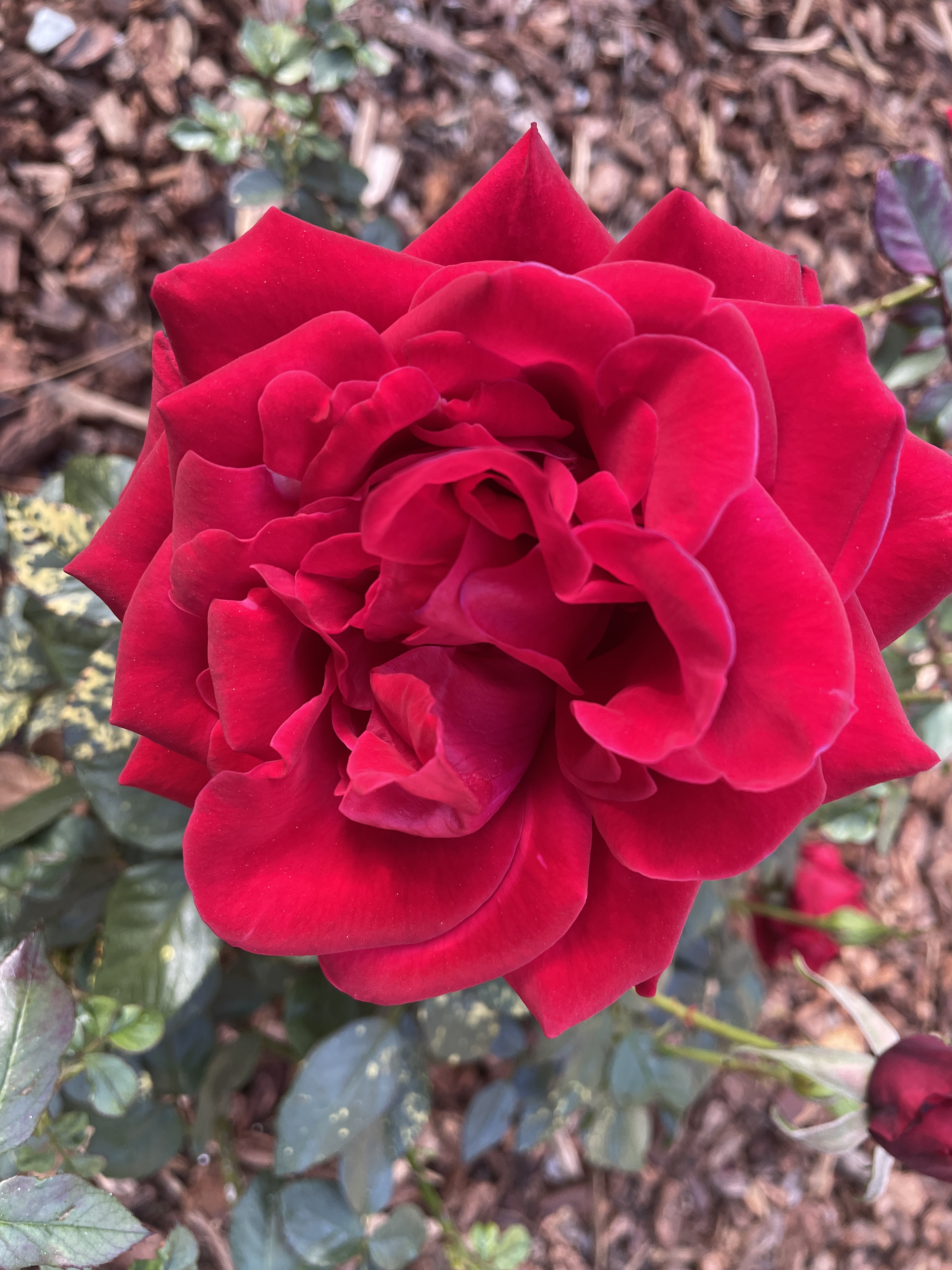
Note: This poem about my mother has been published in at least one anthology and my book of poetry. My mother loved roses, had a rose garden. I now grow roses too.

Book 20 for 2024: “The Midnight Library”, Matt Haig


Regrets and depression seem to have overwhelmed the main character, Nora. She’s lost her job, a car ran over her cat, she thinks she has failed at everything, and she says she wants to die. But does she really. Through a series of parallel universe experiences she gets to try out many different lives based on her long list of regrets. None really work because none of them exemplify her real self. She thinks she might like this new life or that new life, but none fulfill her, reflect her true self. She learns that money, fame, riches are not necessarily the answer. But what is the answer? What is the best way to live?

Book 19 for 2024: “Unearthing”, Kyo Maclear


Several months after Maclear’s father (who was a famous journalist) dies, she decides to take a DNA test to find out more about her family health and personality history, mainly because of the stories about a particular grandmother. She wonders if certain traits she and her sons have might possibly be inherited. The results of the test are a shock. Her father, the father she adored, who raised her and adored her, is not her biological father. At first, she thinks perhaps it was a sperm donor, but then she discovers this is not the case. Through the DNA test and her detective work, she finds two biological half-brothers (she was an only child before this discovery) who are willing to communicate with her, send her photos, etc. She tries relentlessly to acquire more information from her mother, who is often unforthcoming or tells her contradictory information. Then her mother gets dementia.

This is also a story of plants, of gardening. Both she and her mother are amateur botanists and expert gardeners. When nothing else works in their mother-daughter relationship, their love of plants and gardening holds them together. Even with dementia, her mother knows plants. Their other joint endeavor is ink drawings and love of art.

Additionally, this is the story of family, family secrets, inter-racial marriage, and challenging relationships. Kyo’s mother is Japanese living originally in England and later in Canada who often struggled with her status as a Japanese immigrant. Her “real” father, the one who raised her, was of British and Irish descent; her biological father was a Jewish formula one race car driver.