For many Christmas means gifts.
What are gifts?
Material things–the new toy, new technology,
perfume, clothes.
People spend hours and money
many lack to give gifts.
Yet the most wonderful gifts remain:
joy
love
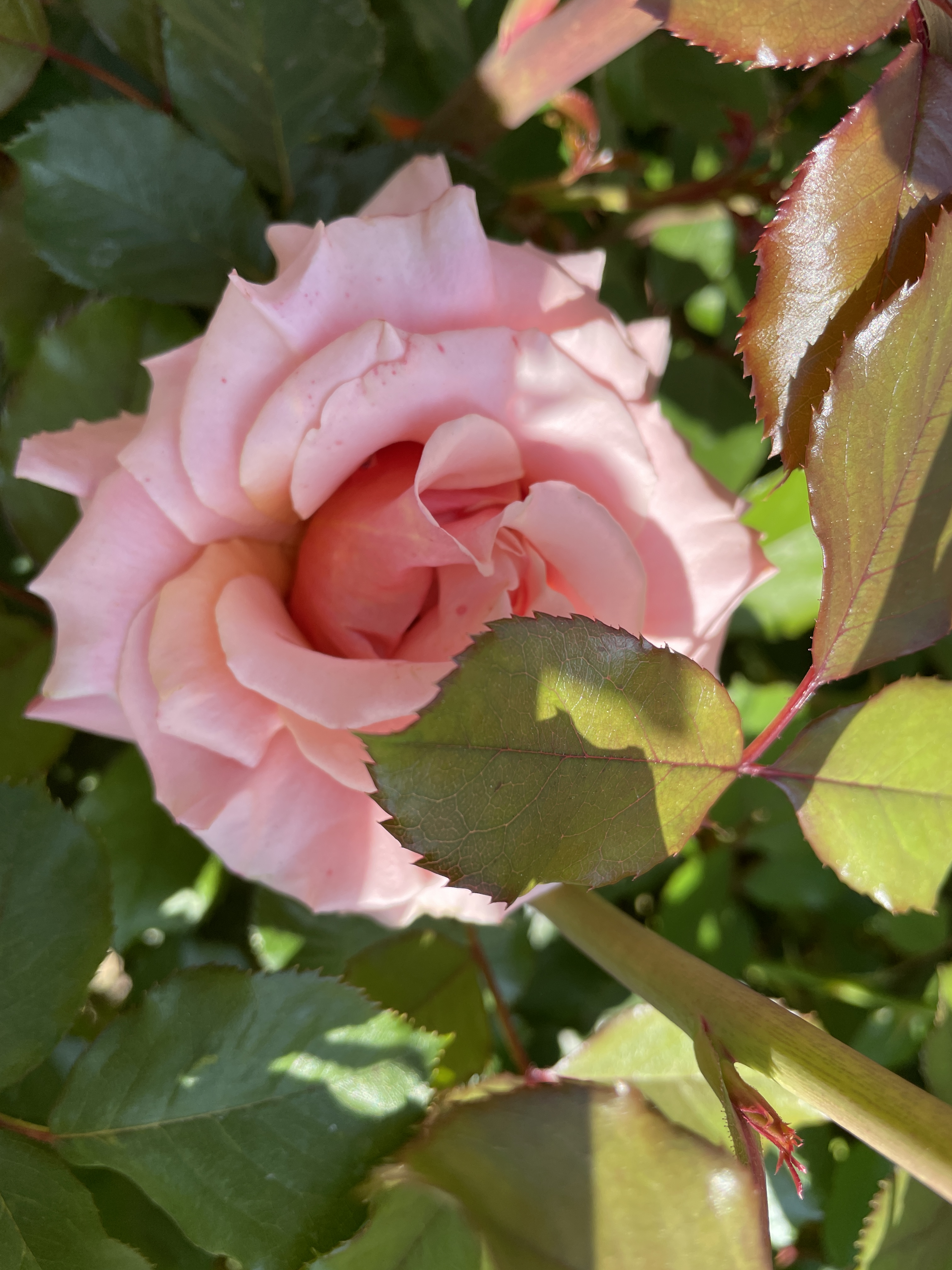
beauty
birdsong
touch
wonder
peace

For many Christmas means gifts.
What are gifts?
Material things–the new toy, new technology,
perfume, clothes.
People spend hours and money
many lack to give gifts.
Yet the most wonderful gifts remain:
joy
love
beauty
birdsong
touch
wonder
peace
Dad lived his entire life, 90 years, on the farm which my great grandfather, Gottlieb Werth, homesteaded in the middle 1800s. Gottlieb Werth came to the United States from Switzerland when he was 18. Even though Dad lived in the same place all his life, he liked road trips. The first occurred when I was three. He drove us all the way from Northwest Missouri to Monterey, Mexico. I still have photos of us wading in the Gulf in Texas before we crossed into Mexico. Thereafter, we almost never missed at least one road trip a year between wheat harvest and the start of school. Sometimes instead of a summer trip we took one around Christmas, like the year we went to Florida when I was in elementary school. I skipped school a couple of weeks, took my work along, and came home ahead because the flu, which I missed, put everything behind.
By the time I was six, I had probably covered half the continental United States and, of course, been to Mexico. I do not remember some of those first trips but the later ones I remember well, like the summer we spent in Crested Butte, Colorado, when it was still a mining town, and another in Placerville, Colorado, down the road from Telluride. Then it was just a nowhere place, filled with the Victorian houses of its mining heyday. Dad joked later that he should have bought one of those houses when it was cheap.
One year, the year between my junior and senior year in high school, we took a one month trip and drove 6,000 miles, from home to the Black Hills, where we had relatives, to Vancouver, to Vancouver Island and then to Victoria. We visited every national park along the way, Grand Tetons, Yellowstone, Glacier, Olympic, then drove up the Columbia and cut back across Rocky Mountain National Park and through Colorado. On an earlier trip we went to every park in Utah and Northern Arizona and Mesa Verde.
Dad’s interest in and curiosity about everything seemed endless. He tried the latest agricultural methods in his farming, was an avid conservationist, wanted to check everything out on these trips, talked to people about what they were doing. At home he read National Geographic and Scientific American and endless books.
Because of these trips, his sense of wonder, his propensity for intellectual activity, my friends in college were always shocked to find out he was a farmer. They often thought, originally, that he was a college professor.
He moved into this house where I grew up when he was ten. After Mom died, Dad and I were at her grave on Memorial Day when a man came up and starting talking with Dad. I learned that the building in the foreground of this photo, before it was used for livestock and storage, was used for dancing during the Depression. The sheriff would send out deputies to make sure no illegal alcohol was consumed. I took this photo four years ago when I took a trip back.

There used to be woods to the right of this photo but someone bought the land and bulldozed down all the huge oak trees. The tall douglas fir tree in the middle was tiny when we brought it home on one of our trips out West.
I will forever be thankful to Dad for instilling in me a love of exploration, wonder, and curiosity.
A story for our time!!!
El Presidente was enlarging his war against his citizens. This meant the roads were more crowded than before with refugees fleeing the capital city for safety among the farmers on the plains and up in the hills. Some of these refugees arrived, of course, at the farm of the wicked witch.

Whenever a family arrived, the witch would put on her wickedest face and voice (she’d been practicing) and tell the children she was going to roast them and eat them with mashed potatoes and baby gravy. The children believed her for about a minute and a half, whereas their parents just smiled as each family was taken in hand by the senior refugees and led to rooms where there were new beds. The tenured refugees had (with the witch’s permission) taken charge and somehow found enough lumber to build two new rooms (lean-tos) at the side of the house…
View original post 988 more words
Saturday, February 18, 2017
I watched movers box up a life today, a life I thought left me thirty some years ago. I was wrong.
When our daughter and I cleaned out the refrigerator, we found a large pot filled with egusi stew, remnants of the last meal he cooked. I took the footlong, hand carved, wooden spoon, scraped the dry bits clinging to the sides of the silver pot. Scrubbing it clean, smells of memory flooded my nostrils–cayenne, bitter leaves. It took me ten minutes, ten memory laden minutes. Even after scrubbed and dried, the pot’s cayenne smell filled my nostrils, the distinct smell of West African food.
I watched movers box up a life today, a life I thought left me thirty some years ago. I was wrong.
Our daughter and I found papers and photos, items her father kept all these years, detailed memories of our life together. I could barely look at them, throat constricting, tears welling in the eyes of this woman who never cries. Our daughter, dismayed, told me to go outside. I walked down the quiet street, brown leaves scattered from autumn, unraked, a strange street both urban and rural inside a city of nearly half a million residents. Is this where he walked, attempting to improve his health? Was I walking in his footsteps?
I watched movers box up a life today, a life I thought left me thirty some years ago. I was wrong.
This is a rather long read the gist of which is this: what if “we were taught to love and nurture and be generous to others” and these were the primary values in the world rather than the current values. “What if we were taught to open our hearts to the world? Would domination, violence, and war be possible?”
“All children are our children.” As I was posting my recent blog about the shooting of black men by the police, these words came into my mind with the force of revelation. At the time I was looking at a photograph of Philando Castile, taken at his place of work. Yes, I thought, my heart opening: “he is my child too.” This widening of the heart is at the center of the maternal values of ancient and contemporary matriarchal cultures around the world. It is a feeling some of us who were mothered well enough or who mothered children—including children not our own—carry within us. Is this the healing balm our world needs today?
Maternal values? So many of us turn up our noses at such a “gendered” term. Perhaps we were not mothered enough in our families of origin. Perhaps we still feel un-mothered. Perhaps we don’t want…
View original post 814 more words
When I first started blogging more than two years ago, I committed to blogging once a week. That I managed for a year or so and then since that time, it became more sporadic. Full time job, writing poems for my book, visitors, mini vacations, all sorts of stuff got in the way. Really, I let it lapse, but refused to give up. Last Thursday, I drove to Austin with my daughter and grandson for the biannual Story Circle Network Conference. The plan: while I conferred, they played. The Story Circle Network is an organization for women which encourages women to write, to tell their stories, to share these stories, and when possible and desired, publish those stories in various forms from memoir to poetry. This was my second time to attend and my first time to attend as a new board member. A former mentor/teacher of mine, Len Leatherwood, facilitated a workshop entitled “Transforming Your Writing Life in Just 20 Minutes a Day”, the last workshop I attended. She blogs everyday. I follow her blog. No matter what, she sits down and writes 20 minutes minimum a day separate from the writing she does with her students–she teaches writing privately in southern CA. One of her recent blogs has been accepted for publication–a piece of flash fiction. She nearly begged us to commit to this kind of writing practice. Previously, I had refused, flat out refused, partly thinking that if I tried it, more than half the resulting writing would be crap. Nevertheless, she and her workshop convinced me that at least for one month I must try this. Now all of you following my blog will be inundated with daily blog posts. I am filled with curiosity as to how people will respond. Maybe it will be like my Facebook posts–yes, I am an almost addict–the posts I consider most meaningful for the universe at large are the ones people ignore and the ones I consider personal trivia receive the most response. Maybe I will track what appeals to my readers. Some I won’t know because with blogging I share to Facebook and to a couple of professional networks, I have no clue who read what. Once I received an email regarding a poem I posted. Although it never showed up as a like, the lady actually told me she read my poem in church! Who would have guessed. I forgot to time myself so have no idea how long I have been here writing.
Here I am writing about why I am writing. On the stove I smell Jasmine rice cooking. I love Jasmine rice from Thailand. I am a very picky rice eater and prefer to mix equally white Jasmine rice with black and red. For one thing, it looks lovely when done–a sort of dark reddish purple. Since I sautéd chopped garlic in olive oil, then added the rice and sautéd for about 15 more seconds, then added water and some broth just before I started writing this, the smell of Jasmine rice fills the house. I piled a bunch of paper towels on the top before I put on the lid or you can use some cloth towel–a habit I picked up from my Iranian ex-husband. Iranians really know how to cook rice. I am also drinking a glass of Cupcake Shiraz which I bought on the way home from work. And yes, Shiraz is also the name of a city in Iran where they actually grow grapes or at least used to. But of course, drinking wine is no longer acceptable in Iran or at least not publicly. Good Muslims do not drink at all.
I did write something worthwhile while in this workshop and will share–doing this last because it won’t count as my daily writing since I wrote it yesterday.
This Is What I Know
My parents loved me, really loved me.
My mom was proud of my accomplishments.
Dad gave me a love of books, intellectual curiosity, and a
sense of wonder.
Mom gave me a love of music, beauty, and cooking.
Happiness is a choice.
I do not believe in luck. You make your own luck.
Life is an exciting adventure.
Horses give me joy.
Singing gives me joy.
Dancing gives me joy even if I rarely have the opportunity.
Family relationships can be distressingly complicated.
I am proud of my children and their accomplishments.
Religion matters much less to me than 99 per cent of the people I know.
Ethnic and religious prejudice distress me and I do not
understand those kinds of attitudes.
I am a good writer.
I want to make a real difference in the world.
I am happy 99 percent of the time.
Blessings flood my life.
My close friends and children and grandson are more
important to me than they know.
Writing has enriched my life.
I have few regrets:
One I have rectified;
the other I cannot–
my dad is dead.
Today, Thanksgiving Day, I will make Barbara Duke Lightle’s (my mother) pumpkin pie, using a recipe and blender she gave me decades ago. The recipe includes a small hand written note about her preferred way of combining the ingredients. My grandson loves this pie and the idea that what he is eating is a recipe from his great grandmother, a woman he will never know. He tries other pumpkin pies but likes only this one. Dad loved this pie, too. After Mom died and he discovered he was gluten intolerant, he taught himself to cook. He made this for himself sans the crust–pumpkin pudding.
1 1/2 cups cooked or canned pumpkin
1 1/2 cups milk or milk combined with cream or evaporated milk
3 eggs
3/4 cup brown or white sugar
1 tsp ground cinnamon
1 tsp ground nutmeg
1/2 tsp ground ginger
(or use 1/2 tsp nutmeg and 1 tsp ginger for a more spicy flavor)
Place all ingredients in a blender. Place your hand over the blender cover before starting the motor. Blend just a few seconds, until smooth, and pour into pastry lined pie shell. Bake at 450 for ten minutes, then bake at 350 for 30 minutes longer or until firm in the center. A piece of outer peel of orange can be blender grated into the pie mixture–if you do this, place in blender with 1/2 cup milk and blend fine before adding other ingredients.
You may use squash instead of pumpkin.
The hand written note says, “Juliana, if you use half evaporated milk it gives wonderful flavor and I like white sugar best”.
I use evaporated milk totally and white sugar like Mom recommended. I have never used orange peel. The cinnamon I am using today comes from a tree at my friend’s mother’s house in Ethiopia.
This seems a great day to also thank my mother for all she taught me: cooking, singing and playing the piano, a love of beauty–flowers, wildlife, good food, the list is endless. She taught me think positively, to believe in myself, to make the most of what life brings, to never give up. Thank you, Mom!!!
Barbara Lewis Duke, pretty, petite, blue-eyed and blond, my mother, one
fearless, controlling woman. Long after Mom’s death, Dad said, “Barbara was
afraid of absolutely no one and nothing!” They married late: 34 & 38. He
adored her unconditionally. She filled my life with horses, music, love,
cornfields, hay rides, books, and ambition. Whatever she felt she had missed,
my sister and I were going to possess: books, piano lessons, a college
education. Her father, who died long before I was born, loved, fancy,
fast horses. So did she. During my preschool, croupy years she quieted my
hysterical night coughing with stories of run away horses pulling her in a
wagon. With less than one hundred pounds and lots of determination, she
stopped them, a tiny Barbie Doll flying across the Missouri River Bottom,
strong, willful, and free.
Recently I decided to try writing poems about a few family members. Months ago on this blog I published a poem about my Grandmother along with the marriage photo of her and my grandfather, who was so much older than she (22 years) that I never knew him at all. In June I posted photos of the trip I took back to Missouri where I grew up. While a few things remained the same, I felt very sad about some changes and kept thinking how my dad must feel if he were watching. He died in 1996, lived in the same house for 80 years and on the same farm all his life. He labored long and hard to make the homeplace beautiful.
He watches:
The house where he was born
gone
Only the old carriage house stands.
The young man who farms the land cannot bear to tear it down.
He watches:
The ancient burr oaks and black walnuts
gone
bulldozed into waste piles or sold for greed.
He watches:
The house he lived and loved in for eighty years
still stands on land his family owned for more than 100.
Strangers live there:
He sees the well trimmed lawn,
new picket fence,
children playing.
He watches:
The pond he proudly built and stocked with fish reflects the summer sun.
The tree filled park between the pond and house
gone
He wonders why someone would destroy such beauty.
He watches:
The walnut grove where he ran cattle
gone
The pond where his grandson caught the giant turtle
gone
plowed over and planted to corn and soybeans.
He watches.
The ancients hunted here at the shores of a lake
nearly 12,000 years ago. In 1929, an amateur
archeologist discovered an ancient spear
point lodged in bone. I walk the mile long trail
down into the depths. Caliche, gravel,
larger rocks strewn by millennia. For
thousands of years Clovis, Folsom, and Portales
Man left remnants of their hunting life.
The scattered cottonwoods whisper in the wind,
timeless voices call me, beckoning.
Who were these people?
What did they look like?
Where did they come from?
In whose gods and goddesses did they believe?
Doubtless hunger drove them to this place of water
and plenty. Columbia Mammoths, giant sloths, dire wolves,
saber toothed cats gathered here for thousands of years.
The diggers found an obsidian spear head with a
bison whose horns spanned seven feet and
mammoths twice the size of elephants.
Saber toothed cats competed with these
ancient ancestors at this place, all driven by
hunger, thirst, and instinct. I wonder how
these people overcame danger, fear?
I walk the mile long path, stand in the shade
of these cottonwood trees , read the signs that
tell me what diggers found at specific spots along the trail.
The cottonwoods whisper to me. They
tell me ancient tales of hunger, strife, fear,
beauty, love, endurance. I hear the ancient voices
calling. They tell me ancient tales of woe, war,
weaponry, courage, and community. My
skin tingles strangely in the summer heat. Now
this land is dry, a desert, the water that sustained
teeming life evaporated in the crystalline air.
Twelve thousand years from now who will stand here?
Will this place exist? Will someone wonder the meaning
of our bones, who we were, what we believed?
Travel the World 4 Less
A Glimpse into My Life & Passions
Ceto-Magoism, the Whale-guided Way of WE in S/HE
Exploring the F-word in religion at the intersection of scholarship, activism, and community.
ANCESTRAL FOOD. HERBAL WISDOM. MAGICAL COOKERY. SEASONAL CELEBRATION.
inesemjphotography
politics, engineering, parenting, relevant things over coffee.
Food is the best expression of every emotion. Explore through my reviews, recipes, events and more.
Smile! A Site for Friends Wherever You Are!
inspiring personal growth through poetry and writing
Combining atheism with whimsy. This is a Fair and Balanced blog based on opinion unencumbered by fact.
Odds and ends ~ My Life
Original poetry, commentary, and fiction. All copyrights reserved.
bripike@gmail.com
A wildlife filmmaker in Africa
A Geeky Feminist's Musings On Pop Culture
"5 minute walks"