Red Roses


He’s very good at wooing:

gifts–chocolate cherries,

red roses, delicate lingerie,

I love you.

He wears his mask well,

keeps calm, a handsome spider,

weaving a silken web.

She laughs, tells her friends

just how very special she’s

sure he is.

He wears this mask for months,

finds them the perfect apartment,

swimming pool, gym, marble,

granite, luxury appliances.

She’s sure he loves her:

the gifts, the perfect apartment,

fancy restaurants, luxury weekends.

She’s late, heavy traffic, an

emergency at work. He

screams, wants to know

why; no explanation matters.

He hits her for the first time, her

torso, knocks her down.

Tomorrow 24 red roses

arrive at work. He begs

forgiveness. She’s sure

he’s sorry; it won’t happen

again.

Two months later, she’s

late again. Real reasons he

does not want to hear. He

screams, he hits, he knocks

her down.

She dreads red roses.
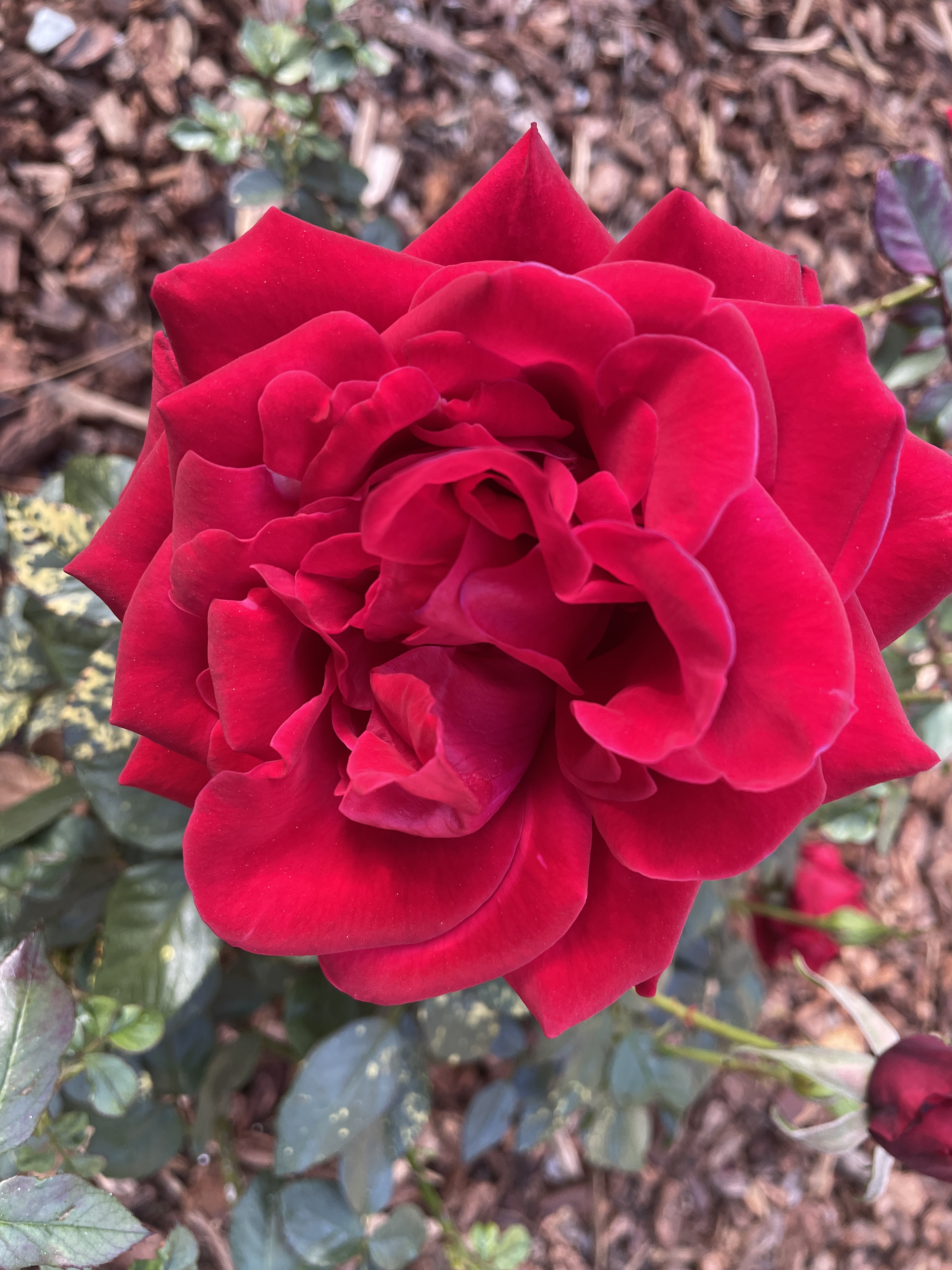
Note: This is part of my writing a poem per day for National Poetry Month. Regarding this poem, 34% of female homicides are women who have been killed by intimate male partners. Often when women kill a man attacking them, they are convicted of murder even when trying to defend themselves.

Perfect Spring Day


They tell writers, “Never ever use cliches.”

Sometimes I question that. When you

word a cliche, nearly everyone knows

exactly what you mean. For example:

This is a perfect spring day:

-birdsong wafting here and there,

mostly mockingbirds except for those

irredescent, orange-throated

hummingbirds at their feeder

-wind singing through the pines

-open windows for a change; it’s

75 degrees and sunny

-magenta and scarlet bougainvillea

climbing the garden wall

-white and lavender lantana

outdoing themselves with

spread and bloom

-geraniums in full flower

-mint growing so fast and tall

I already need to trim it.

I lounge on the patio reading

another novel, drinking rosewater

lassi, munching mixed nuts.

I feel gratitude for this

perfect spring day.

Book 15 for 2024: “The Elegance of the Hedgehog”, Muriel Barbery


Before reading this book, I thought of French society as relatively egalitarian. Apparently, it is not if this book mirrors reality. One main character Renee, 54, lives and works as a concierge in a high class building containing eight, large, luxury apartments which the residents own. As she tells her story, she notes that this is her 27th year at this job. She describes herself as “short, ugly, plump”. She rarely says anything nice about herself or any of the residents. She notes she is uneducated, insignificant. She has one friend, Manuela, a cleaning woman originally from Portugal. Renee thinks it is her duty, her lot in life, to pretend to be something she is really not, a person totally lacking in intellectual and artistic acumen. She runs the television to make the residents think she watches mindless melodramas when she is actually reading Tolstoy as well as all sorts of literature and Marx, history, well every genre. After all, her cat is named Leo for a reason. She goes to art galleries, listens to all sorts of classical music, is basically an intellectual in the true meaning of the word, but works very hard to hide this, because she thinks she must stick to her station in life as she sees it. This works until one resident dies and a wealthy Japanese man buys the deceased man’s apartment. Both he, who notes her cat is named Leo, and a young girl, the other main character who lives in one of the apartments and plans to commit suicide and set their apartment on fire, suspect Renee is not as she appears to be. I do not want to give it all away, but this is a book with many life lessons, including that adage about not judging a book by its cover.

Ovid


This is poem two for National Poetry Month. A friend wrote a poem following the prompt to write a poem about a book the writer has not read for a long time. She wrote about The Scarlet Letter. My poem is about the book, An Imaginary Life.

The Roman Emperor Augustus saw Ovid’s poetry as subversive,

a power threat. He exiled Ovid to a remote corner of the Empire,

somewhere over by the Black Sea, the Carpathian Mountains,

among the destitute, the superstitious, people who did even know

how to read or write. They believed in witches, feared ghosts, saw

evil in everything and everyone different. Different equaled

death.

Paid to host Ovid, the village leader teaches him to ride horses

bareback, hunt, become stronger. Ovid transforms from a weak

revolutionary who hates this place to one who sees the barren

beauty, wanders in the forests, plants a wildflower garden,

survives.

While hunting, they see barefoot tracks in snow, tracks

of a feral child, a boy. Ovid fears for him, finds him,

rescues him. An accident occurs. The villagers blame

the boy, want to kill him. He and Ovid escape,

wander far into the northern wilds, into

infinity.

Nostalgia


Today is the first day of National Poetry Month. I am committing myself to write a poem a day. Here is the first one for the month.

Easter yesterday made me sad,

remembering children, grandson,

egg dying, egg hunting, family

together, laughter, joy.

Found photos of my family,

I, a child, dressed in Easter finery,

a family tradition. Dad bought us

corsages to wear every Easter,

pretty dresses in spring colors–

my favorite a pink dress trimmed

in scarlet, a unique combination

explained why I liked it so much,

felt special wearing it.

Today I wear pink and orange

together, admire the deep purple

and red bougainvillea, scarlet rosebuds,

snowy freeway daisies,

shining in the sun and wonder

will I live long enough to teach

a great grandchild to color

Easter eggs.

Book 14 for 2024: “The Invisible Hour”, Alice Hoffman


This is a book for those who believe in the power of books to transform life, who are fans of Alice Hoffman, and who like time travel. It also about how a charismatic man can ruin the lives of many, especially women, by controlling everything around him through fear and coercion. In his Community books and contact with the rest of the world are banned. Mia is a young woman who sneaks into a local library and finds Hawthorne’s “The Scarlet Letter”. She realizes the life she is living in the Community is like the lives in the book. Through this book she manages to attain the courage to escape such a man, the man who destroyed her mother, Ivy. She makes her way back in time to the period in the book, has a love affair with Hawthorne, and finally escapes the horrible man who tracks her everywhere she goes.

Book 13 for 2024: “The Blueprint”, Rae Giana Rashad


In this dystopian novel white men in Texas run everything and carry guns, have taken over what was the US, eliminated The Constitution, and now use a Blueprint one of the main characters created. There is no choice for much of anything especially if you are a Black woman. An algorithm determines your occupation, spouse, residence, well, everything. Black men have a bit of choice, mainly to be in the military and die young. You can raise to a high rank, have some power, and be honored for your bravery. Sometimes young Black girls around 15 are assigned by this algorithm to be the concubines of powerful white men. This is how the main character, Solenne, ends up living with the most powerful man, becomes his lover. Unlike other circumstances where later she might have a choice, he becomes so obsessed with her that he never wants to let her go. To keep sane she writes about her enslaved ancestor, Henriette, the concubine of a powerful white planter in the 1800s. Women have a tracker implanted in their thumbs so men can see where they are and what they are doing. The only place to escape to is Louisiana, a free state, but even there greed and power can entrap you and force you to return to Texas. The prevailing attitude is this:

“The Councilmen said a nation was only as strong as its hold on its women. They had to squeeze the life out of the women’s liberation movements, give it no air…It begins at home with the wives.”

Book 12 for 2024: “Quiet in Her Bones”, Nalini Singh


If you like murder mysteries, this is a book for you. I do not normally read them, found the blurb intriguing and started it. Once I started, I did want to know what happened. I learned a lot about New Zealand, the diversity of wealthy people who live there, and the lush climate in some places. A wealthy South Indian woman suddenly disappears along with 250,000 in cash. Ten years later no one still knows what happened to her and then suddenly someone finds her Jaguar hidden in dense woods with her skeleton in it. Her devoted son has believed all this time she ran away from a horrible marriage (he cannot stand his mean dad) and is still alive. Now the son is a famous, wealthy writer and determined to find out who killed her. This is the story of her life, a horrible marriage, a wealthy neighborhood where nothing seems as it really is, and the son’s quest to find who killed his mother.

Book 11, 2024: ” Frida’s Fiestas: Recipes and Reminiscences of Life with Frida Kahlo”


The author of this book, Guadelupe Rivera, is the daughter of Diego Rivera by the woman to whom he was married before he married Frida. Diego went on a trip to Russia and his then wife, the author’s mother, became attached to her previous boyfriend, the poet Jorge Cuesta. She and Diego divorced and then he married Frida. Eventually, the two couples became friendly and at one point they all lived in the same house.

Thirteen years after Diego married Frida, the author moved in with them. This book details her life living with Frida and her father, how Frida learned to cook, how she decorated the Blue House in Coyoacan, the fiestas, the food, the adventures. The book includes photos and recipes of Frida and Diego’s favorite foods, photos of the house, and places the author visited with Frida. It is also a story of many of Mexico’s famous people at the time.

I own several books about Frida but this one is the most revealing and intimate in many ways. If you like Mexican food and find the life and art of Frida and Diego of interest, read this book.

Note: It was also written by the journalist Pierre Marie-Colle with photos by Ignacio Urquiza.