
Remnants of summer remaining
Sunrise over canyon walls, hoot owl calling
Hints of autumn lurking


Remnants of summer remaining
Sunrise over canyon walls, hoot owl calling
Hints of autumn lurking
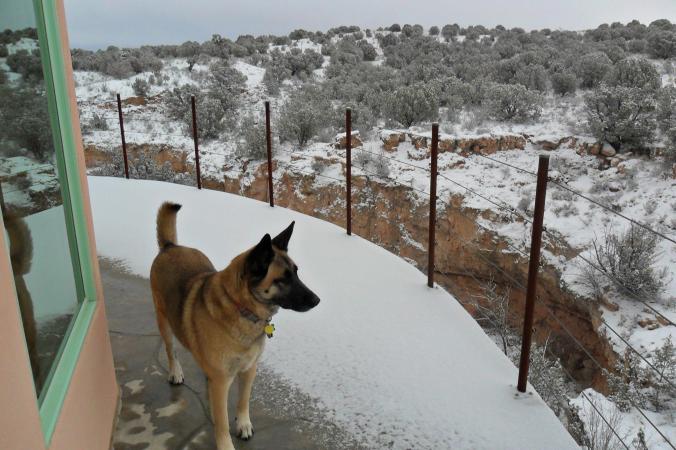
The crematorium handed me the 6″ by 4 ” dark brown wooden box. I knew it would be heavy; Isabella was an eighty pound wolf dog. I thought I was prepared.
Driving home, memories:
March 2006, daughter calls; two year old grandson wants a beta. I drive to PetSmart. Daughter tells me I must see these unusual, incredible seven-week-old puppies. Alert brown eyes look at me. Too big, black ears wiggle. The label says wolf, German Shepard, Blue Heeler. The two remaining puppies look like light colored German Shepherds or Belgium Malinois. I had not planned to get a dog, not yet.
Two years later I move into my new house: canyon edge, horses, bobcats, coyotes, foxes, road runners, mockingbirds, rattlesnakes. Isabella guards her property, sits on the patio where she can check for invaders. She rarely barks, growls. When she does, high alert–I check. Neighbor dogs, coyotes, foxes, chased off–not bobcats. She watches them.
I remember the day she dismembered a skunk, drug the carcass everywhere. After eleven baths at PetSmart, the skunk smell remained. The one day she growled, I shocked, investigated–a man walking down the arroyo toward the house. Growls became increasingly loud. Out on the patio, she stands, the man sees her, turns and runs. I feel safe, Isabella guarding, telling me if something unusual occurs. She’s mixed breed; I think she’ll live long.
Every morning, evening, she completes horse chores with me, chases bunnies, roadrunners. Two months ago, I, mesmerized, watch her catch, gobble two half-grown bunnies in less than one minute–nothing left. Mixed breed; I think she’ll live long.
Friday morning she helps me with chores, chases bunnies. Friday afternoon she can hardly move. At the vet, blood work like a four year old; x-ray shows a little something wrong. They give her two shots, schedule an ultra-sound for Saturday morning at another vet’s. Meds working, Saturday morning she’s her usual lively self, eager to travel in the truck, nose wet and cold.
Ultrasound vet tells me there’s little hope. Shocked, I stand there. “If she were your dog, what would you do?”
“Put her to sleep. She’s not in pain. She has a tumor the size of your small fist on her intestines–might be cancer, hard to operate.”
I look at the vet, frozen.
At 8:00 Wednesday evening, I open the box, take out the bag of Isabella’s steel grey ashes, walk out to her patio spot, the place where she guarded her kingdom, toss a handful of ashes into the wind, watch them float and scatter down into the canyon, tears tracking down my face. I close the bag, walk to the place where our long yearling colt, Star, is buried, dig an eight inch hole, bury another handful of ashes. I take the one tablespoon of ashes left back to the house, put them back in the black velvet bag and into the box with the card with her paw print, the crematorium certificate, the sympathy card signed by all the employees where they euthanized her, place it on top of a stack of old magazines in the Chinese cabinet.
At bedtime, I forget, go to call her in. This morning I find her hairs–she shed so much, wolf undercoat. Evidence of her presence permeates.
It will never end.
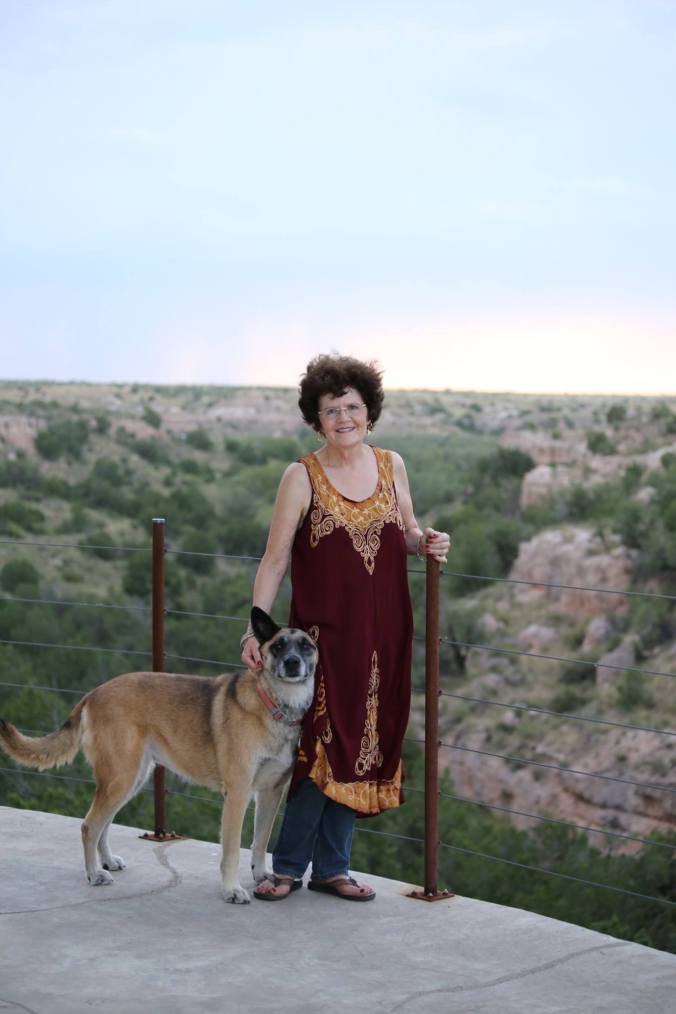
A powerful story of the power of woman and in this case of “right”.
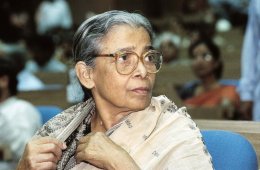 Photo credit: The New York Times
Mahasveta Devi died last month at the age of 90 in Kolkata, India. A widely acclaimed Bengali writer, she identified as an activist first, clearly evident in her meticulously researched “fiction.” Most of her stories champion the cause of those living on the margins of society, particularly the Adivasis or original inhabitants of India; poor, unemployed and itinerant, they traditionally subsisted off the land, and continue to struggle against exploitative upper caste landowners.
I cannot claim to be an expert on Devi or her activism, but there is a story I read a few years ago, which never fails to haunt me, whether because of the rawness with which she describes the harsh reality faced by tribal people or because of what can be seen as the violent but ultimate triumph of its female protagonist, I cannot tell. Perhaps because of both, or because…
View original post 1,120 more words
This is a rather long read the gist of which is this: what if “we were taught to love and nurture and be generous to others” and these were the primary values in the world rather than the current values. “What if we were taught to open our hearts to the world? Would domination, violence, and war be possible?”
 “All children are our children.” As I was posting my recent blog about the shooting of black men by the police, these words came into my mind with the force of revelation. At the time I was looking at a photograph of Philando Castile, taken at his place of work. Yes, I thought, my heart opening: “he is my child too.” This widening of the heart is at the center of the maternal values of ancient and contemporary matriarchal cultures around the world. It is a feeling some of us who were mothered well enough or who mothered children—including children not our own—carry within us. Is this the healing balm our world needs today?
Maternal values? So many of us turn up our noses at such a “gendered” term. Perhaps we were not mothered enough in our families of origin. Perhaps we still feel un-mothered. Perhaps we don’t want…
View original post 814 more words
If you have a long enough layover in Dubai, they put you up in their Emirates hotel and feed you in the cafeteria free. The hotel is nice, the food excellent–quite a nice perk. From the hotel it is easy to walk to several places as well as take a van tour around the city. We did both.
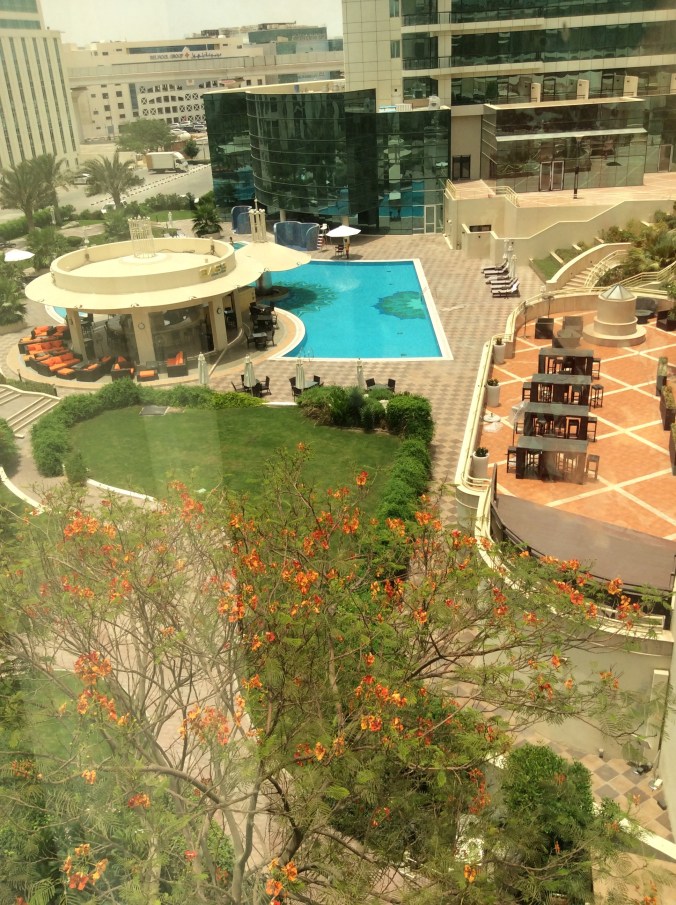
The view from my room. The pool has a swim up bar but it is not open during Ramadan which was occurring two years ago when we were there. Alcohol is available in some restaurants and bars but you must imbibe inside.

One of the first places we visited on the tour was this mosque, designed to look like the famous mosque in Istanbul. The following photos are of typical houses near the mosque.


Then we arrived at the beachfront of the Persian Gulf. The water is warm, like lukewarm soup. In the background two of the most expensive hotels in the world tower above the water.
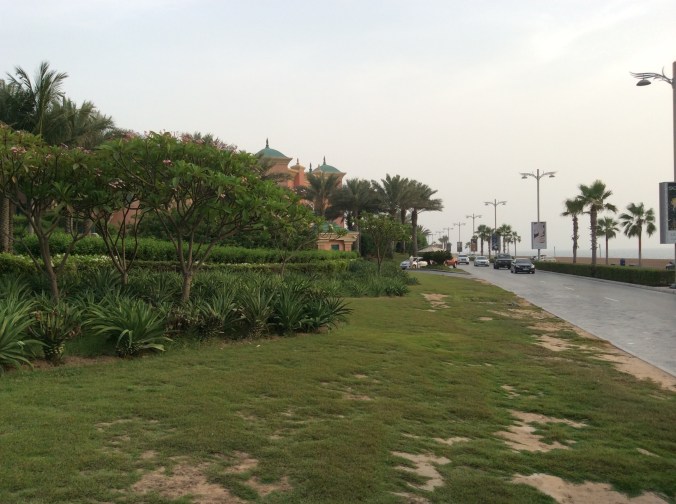
The street goes along the waterfront with luxury hotels on the left. Many of these areas are fill–manmade peninsulas.

You can visit the sister hotel in the Bahamas.

Because of the fill, the fake peninsulas, it is easy to get a bit disoriented. Plus during the summer there is so much haze, it is rather difficult to determine directions.
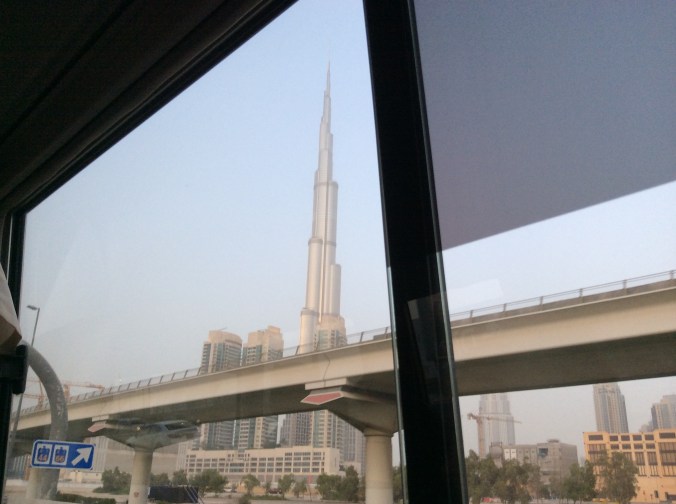
The tallest building in the world.

After visiting several smaller shopping areas, we arrived here, the famous Dubai mall. This is the largest aquarium in a mall in the world. Here you see people from everywhere in the world dressed in every way imaginable.

A children’s store across from the aquarium contained this lollipop tree with giant lollipops.
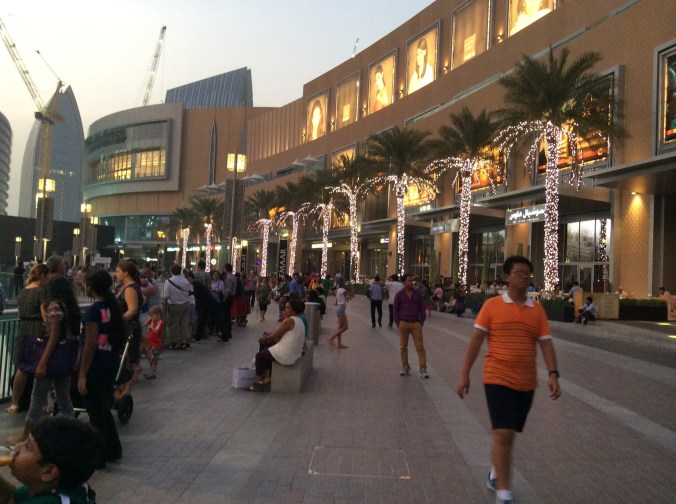
In spite of high heat–it was 108 when we arrived–no wind and high humidity (yes, because on the Gulf, even though it is desert, the humidity is stifling), many people were outside awaiting the fountain show.

One part of the skyline reflected in the lake. The fountain show, synchronized with music, is worth the wait even in the heat.

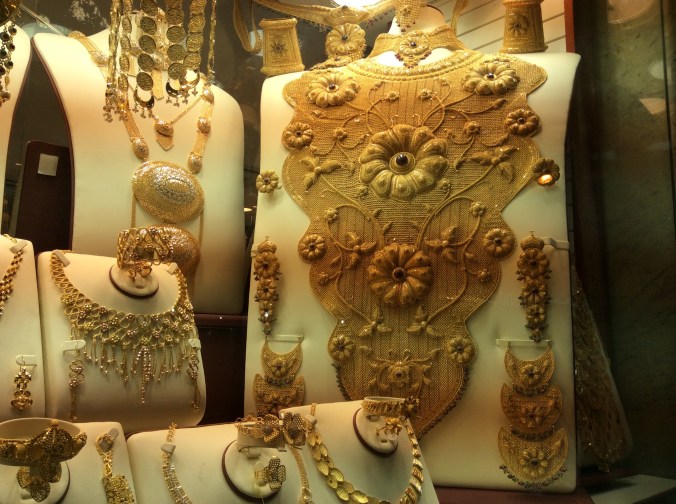
On to the gold and silver souk.

Gold and silver are sold by weight. You can also buy gold in shops at the airport; however, nothing quite has heavy and exotic as some of this.
We did actually shop in the food shops and bought nuts covered in various spices to take along for snacks.

w
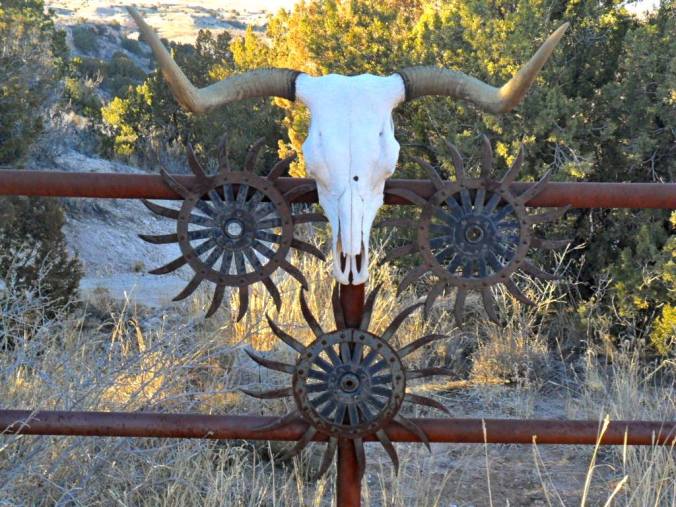
Years of bones piled up. Cattle–calves, yearlings, the old–heaped 100 yards
northeast of the ranch house, upwind from the summer, southwest prevailing
winds. Mostly black baldies, a few Charolais. Old bones bleached white,
disintegrated. Some new bloated bodies rotting, nauseating. Others just sundried
hide stretched over skeletons. Drug here by tractor, the dead. Shipping fever, parasites,
drought, extreme weather.
A ranch’s history written in bones.
Gaden’s quiet. Normally he is shouting, asking questions to which he knows the answers.
I’m thinking, “He must be sick.”
Today he is sitting quietly, feet splayed out, short ginger hair sticking out exactly like Alfalfa’s, chin balanced on his left hand, staring at the silver Apple laptop open on his desk.
We’re reading modern stories in English, stories by Kelly Link, Kevin Barry, Adam Marek, Sarah Hall, Jon McGregor, Jennifer Egan.
Ghosts, robot boyfriends, fake lovers, bull semen distributors.
Astonished reactions, “We get to read adult stories with cuss words!”
They’re seniors in high school, 17, 18, 19.
Two are pregnant; one’s a dad.
Warm summer raindrops on my face
Crimson cardinal drinking in blue birdbath
Feather grass waving in the wind
Last lavender and white iris before first frost
Cups of coffee from Chiapas at 6 in the morning
The sunning rattlesnake lying by my feet
Horses running wild and free
Facebook messages from friends far away
Waterfall’s roar after the thunderstorm
Night songs–coyote, cricket, nighthawk, frogs, hoot owl
Life

This poem praises my mother. It is page 17 of my memoir in poems, “On the Rim of Wonder”. It seems appropriate to republish it here for Mother’s Day.
Barbara Lewis Duke, pretty, petite, blue-eyed, and blond, my mother,
one fearless, controlling woman. Long after Mom’s death, Dad said,
“Barbara was afraid of absolutely no one and nothing.” They married
late: 34 and 38. He adored her unconditionally. She filled my life
with horses, music, love, cornfields, hay rides, books, ambition. Whatever
she felt she had missed, I was going to possess: books, piano lessons, a
college education. Her father, who died long before I was born, loved fancy,
fast horses. So did she. During my preschool, croupy years, she quieted my
hysterical night coughing with stories of run away horses pulling her
in a wagon. With less than 100 pounds and lots of determination, she
stopped them, a tiny Barbie Doll flying across the Missouri River Bottom,
strong, willful, free.
Who would think that a Mexican woman who wrote poetry more than three hundred years ago would have anything applicable to today’s political arena? About one and one half years ago, my daughter returned from a business trip with a little gift, a translation of Sor Juana’s work. It is not the sort of literature I sit down and read all the way through. It is deep, questioning, the sort of literature you savor here and there. A few minutes ago I opened the book once again to read one of her ballads–typically referred to as romances. However, this is not exactly a romance. It reads:
“One who is sad criticizes
the happy man as frivolous;
and one who is happy derides
the sad man and his suffering.
The two philosophers of Greece
offered perfect proofs of this truth;
for what caused laughter in one man
occasioned tears in another.
The contradiction has been framed
for centuries beyond number,
yet which of the two ways was correct
has so far not been determined;
instead, into two factions
all people have been recruited,
temperament dictating which
band each person will adhere to.”
This is only a small portion of the ballad. It is ballad 2 in the translation by Edith Grossman. The introduction to the book is by one of my favorite authors (I have read all her books published to date), Julia Alvarez.
Travel the World 4 Less
A Glimpse into My Life & Passions
Ceto-Magoism, the Whale-guided Way of WE in S/HE
Exploring the F-word in religion at the intersection of scholarship, activism, and community.
ANCESTRAL FOOD. HERBAL WISDOM. MAGICAL COOKERY. SEASONAL CELEBRATION.
inesemjphotography
politics, engineering, parenting, relevant things over coffee.
Food is the best expression of every emotion. Explore through my reviews, recipes, events and more.
Smile! A Site for Friends Wherever You Are!
inspiring personal growth through poetry and writing
Combining atheism with whimsy. This is a Fair and Balanced blog based on opinion unencumbered by fact.
Odds and ends ~ My Life
Original poetry, commentary, and fiction. All copyrights reserved.
bripike@gmail.com
A wildlife filmmaker in Africa
A Geeky Feminist's Musings On Pop Culture
"5 minute walks"


