Hope is the delusion of the oppressed.
It is buzzards watching, waiting in the trees,
laughing.

Hope is the delusion of the oppressed.
It is buzzards watching, waiting in the trees,
laughing.
Taste the honey on your tongue
avocado, dark brown
clover, golden
so many shades, textures
sweetness
pleasure
Feel the breeze caress your cheeks
bringing scents
honeysuckle
lilacs
peach blossoms
pleasure
Touch the silken fabric of your scarf
wind softness around you
midnight and snow
rainbows
desert sunsets
pleasure
Listen to the birds outside your window
mockingbird love songs
a rapture’s scream
the whir of hummingbird wings
emerald, indigo, grey
pleasure
Look at flowers blooming everywhere
crimson bougainvillea
roses, sunshine colors
pale pink, vermillion
beauty
pleasure
Sing a song of Gratitude

I am a bit behind so decided to share three poems I wrote more than ten years ago about my favorite animal obsession, pumas. These poems were first published in my poetry memoir, On the Rim of Wonder, which is available on Amazon and Barnes and Noble.
I
My neighbor walked out her door
found a puma lying in the lawn.
Puma rose, stretched, disappeared.
At night when I open my gate
I wonder if she lurks
behind the cedar trees,
Pounce ready.
My daughter dreams puma dreams:
a puma chases her up a tree.
There are no trees here big enough to climb.
A Zuni puma fetish guards my sleep.
I run with puma
Night wild
Free.
I scream and howl
Moonstruck
Bloodborn.
I hike the canyon,
stroll around my house,
look for puma tracks.
I see none.
I would rather die by puma
than in a car wreck.
II
I watch for eyes, blue changing to amber and back.
I put my palm, fingers stretched to measure, into the footprint.
Too small, bobcat.
No puma.
My thin body squeezes between the rocks,
climbing quietly down the cliff.
Watching, listening, searching.
No puma.
Pale amber rushes across my vision line.
My heart quakes.
I watch; I wait.
It is Isabella, a golden whir chasing rabbits.
No puma.
At sunrise, I walk the rim,
watching.
At sunset, I walk the rim,
waiting.
At night, I walk the rim,
dreaming.
No puma, not yet.
III
I want
to walk
with you
in my dreams
scream your screams
feel your blood
rushing
your heartbeat
mine
soft golden fur
wound in my hair
your amber eyes
glowing
through my brown
death defying
together walking
moonlit
wild
free

Note: My puma obsession continues. This painting and several others of pumas hang in my house. I now have two puma Zuni fetishes. I hike in the mountains hoping to see one in the wild.
Can you call yourself a creative writer if you have not written a word in months? I have a friend who promotes 20 minutes of writing per day, telling people to just write, forget quality, just write. Really?! I care about quality. Perhaps too much? I make sure to read quality writing 99.99% of the time. Is this just words I am writing here or is it quality or garbage? You tell me!
One thing I can do is read. I’m good at reading. And singing. And gardening. I talk to plants; that’s why they grow for me. I truly care. They bring me peace and joy.
In the last two months, I’ve read three collections of short stories, two by Anthony Doerr and one by Gayle Jones. Normally, I am not a short story reader, but here I am reading these. Talk about different. It’s almost like these two famous writers inhabit different planets. Doerr’s stories seem intensely emotional, often a bit fantastical and heart wrenching with a lush, descriptive, poetic style even though Doerr is not a published poet. Jones is a published poet, yet her stories are blunt, conversational, often first person and sometimes short–one page short.
In many, a character is telling his or her (most of the stories are her) story about where they are, some experience, somebody they knew, what they did or said. In one story the narrator says she’s an angel, explains where she’s been, whom she’s known, and ends up by asking readers if they’ve seen her near the Seine. I doubt anyone mistakes me for an angel.
Note: Book 13 for 2025 is “Butter”, Gayle Jones. A collection of short stories.
I was not looking for this, but rather accidentally found it while strolling through the stacks at the local library. What an informative and entertaining book. When it was first published in Lebanon in 2005, it sort of shocked the Arab world causing public debates about the subject matter and story both pro and con. The novel centers on the lives of four upper class Saudi young women who have known each other for years and are friends. Because the book openly discusses the difficulties young educated Saudi women have pursuing education and careers while also trying to find suitable men to marry, the religious conservatives found the novel blasphemous and wanted it banned. Others said it disrespected Saudi women. Black market copies showed up everywhere and the author became an overnight sensation.
The book focuses on the difficulties these women experience as they navigate the modern world while still living in a society founded in very conservative patriarchal cultural conditions. They want to believe in love and hope they will find someone to marry they also love. However, traditions get in the way of this goal more often than not. Some of them find someone they love and who loves them but families forbid it–the person is not high enough status or has been divorced, or…the barriers seem endless, focused on family connections. Love is considered a frivolous, unhealthy distraction.
Contrary to what I believed before reading this, most of these higher class Saudi young women are going to college, often in subjects like medicine and dentistry, and plan to pursue careers in their fields. Many have travelled to Europe where they are freer to roam, not dress conservatively, etc. Yet they return home because of close family ties and love of country. Several of the fathers in this novel are considerably more liberal than the girls’ mothers. Like any society the view of progress and tradition vary greatly by family and individual.
Because as a reader you get to “know” these young women, I found myself reading nonstop because I really wanted to know what was going to happen, whether any of them would be allowed to marry someone they loved or would be heartbroken and forced into unwanted situations. The latter never occurred thankfully. None were forced to marry someone they disliked. It is a great read for those who are curious about other cultures and how women navigate their lives in a place dramatically different from what is more common in Europe and the US.

A tiny book by the author of “Braiding Sweetgrass” envisions a totally different economy than the kind we have now. She uses a plant, the serviceberry, as a symbol for what she calls the “gift” economy. Instead of everything being focused on maximizing profit, it focuses on sharing and exchange and the idea that natural resources are gifts from Earth, from nature, rather than commodities to be exploited for profit.
She notes that capitalist economies hinge on the concept of scarcity and personal accumulation of wealth often at the expense of others. Gift economies, which occur in many indigenous cultures, focus on the mutual benefit of all which encourages gratitude and trust. Later in the book, she discusses how gift economies can be implemented and flourish alongside the current capitalist economy.
There must be considerable appeal for her concepts because this book has been on the non-fiction best seller list for weeks.
If you have ever felt enchanted by a trip to Rome, you will find this memoir delightful and informative. It made me want to return just to stay a while, wander around, visit the more obscure places Doerr describes, people watch, eat, and drink local wine.
In 2007, Anthony Doerr, the 2015 Pulitzer Price Winner, won the Rome Prize to become a fellow at the American Academy in Rome. He and his wife, Shauna, moved to Rome with their newborn twins, Owen and Henry. This memoir memorializes the four seasons they spent living there. They learn to care for babies; wander throughout Rome visiting tourist sites, local restaurants, the butcher, the baker, the toy store; learn enough Italian to acknowledge all the Italians who stop to admire the babies; and attend the vigil for the dying Pope John Paul II.
While there intending to write his later novel (the one that eventually won the Pulitzer) and failing to do so, he does manage to write a short story which I have read in one of his collections and to read everything by Pliny the Elder. His discussions about his readings makes me want to read some of Pliny the Elder myself. As in his short stories and novels, Doerr’s descriptions, language, and observations delight and enchant. This is a wondrous book about one of the world’s oldest and most fascinating cities which he calls, “a Metropolitan Museum of Art the size of Manhattan with no roof, no display cases…

I.
Why
and
What
draws me
to
witches
herbal secrets
moonlight
night riding
ancient ruins
and
archaic codes.
It is the Goddess blood I carry,
remembrance of a past
when women ruled
when peace reigned
and ALL were healed.
II.
Woman, wondrous, wild
daughter of the moon,
mysterious, magnificent
fierce secret keeper
guardian of the universal key.
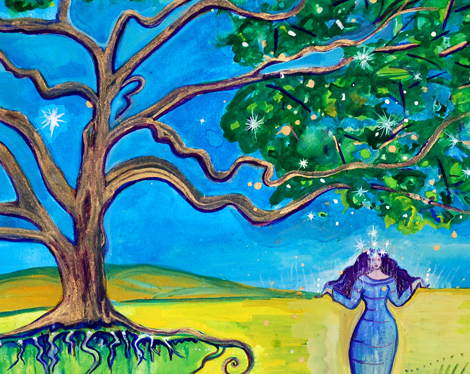
Note: These poems were originally published in my book of poetry, “On the Rim of Wonder”, available online at Barnes and Noble and Amazon.
“She was Christian but American Christian, the kind that believed Jesus just needed a bigger gun”–part of the description of the main character’s rich, not dentist mom rich but oil, trust fund rich, blue-eyed, blond girlfriend. Cyrus, the main character is an Iranian American whose father immigrated to the US when Cyrus was a baby after Cyrus’ mom was killed when the US shot down an Iranian passenger plane thinking it was a bomber (July 1988). His dad acquires a job at a Midwestern chicken farm, counting eggs, but special eggs. This farm breeds chickens to grow faster to get to market faster. He works six days a week, long hours, until Cyrus, who excelled in elementary and high school, becomes a sophomore in college. Suddenly, his dad dies.
Cyrus becomes an addict using alcohol and drugs and writes poetry and eventually finishes college. He becomes obsessed with and researches martyrs throughout history–people like Hypatia of Alexandria, Bhagat Singh, Emily Wilding Davison, the Soulit Women. He gets sober and obsessed with his own past. This eventually leads him to travel to Brooklyn to talk to a famous artist whose last exhibit is herself talking to visitors as she dies of cancer. In researching this woman’s paintings, he discovers a strange painting of a young man dressed as an angel whose job as a soldier is to ride at night with a flashlight through the fields of the dead and dying Iranian soldiers consoling them during the Iran/Iraq War. Cyrus knows that his mom’s brother had this actual job during that war and wonders can there be a possible the connection.
Throughout these events the reader is lead to not only explore Cyrus’ thoughts and beliefs but also those of his father, mother, uncle, and best friend, Zee. It is rare for a novel to be both heart wrenching and funny. Akbar accomplishes this task. One moment I found myself laughing out loud and the next almost in tears. I could not stop reading even though the paperback is long. Perhaps my knowing something about Iranian culture, food, etc. helped me appreciate some of the book more than I might have otherwise. Nevertheless, this is a universal story about love, discovering oneself, relationships, parenthood, human nature. It is definitely worth taking the time to read.
While his previous novel, Book Seven for the year, focused on map making, what it is like to be a refugee, and the stories of two, strong girls centuries apart, one of this novel’s main focus is birds. One narrator, at first no name and then later Nadir, relates part of the novel. His mother was an ornithologist who died in a tragic fire. Her ghost often speaks to him. The other main character, Laila, was a famous artist, an illustrator and painter of birds who mysteriously disappeared decades ago. She and a Black ornithologist insisted they had seen a new species of ibis, and she is supposed to have made drawings and paintings of this rare bird but all evidence disappeared with her.
This is also the story of various non-cisgender characters, some of whom hid their true identities from even those closest to them. Additionally, it is the tale of the lives of Syrian Americans in a NYC neighborhood, plus its destruction and renewal. As in his previous novel, the language and descriptions are poetic, often haunting, and sometimes heartbreaking. It also illustrates how our lives are often interrelated even when we are unaware, only to be discovered after years of searching.
I am guessing that the novel is at least somewhat autobiographical given that Nadir, born a girl, knows inside that he is really a boy. Between this novel and the first one, the author transitions from female to male.
Both books are beautifully written and I highly recommend reading them.
Travel the World 4 Less
A Glimpse into My Life & Passions
Ceto-Magoism, the Whale-guided Way of WE in S/HE
Exploring the F-word in religion at the intersection of scholarship, activism, and community.
ANCESTRAL FOOD. HERBAL WISDOM. MAGICAL COOKERY. SEASONAL CELEBRATION.
inesemjphotography
politics, engineering, parenting, relevant things over coffee.
Food is the best expression of every emotion. Explore through my reviews, recipes, events and more.
Smile! A Site for Friends Wherever You Are!
inspiring personal growth through poetry and writing
Combining atheism with whimsy. This is a Fair and Balanced blog based on opinion unencumbered by fact.
Odds and ends ~ My Life
Original poetry, commentary, and fiction. All copyrights reserved.
bripike@gmail.com
A wildlife filmmaker in Africa
A Geeky Feminist's Musings On Pop Culture
"5 minute walks"
 writingontherim