Rescue Horses and Book Signing–the Real Deal


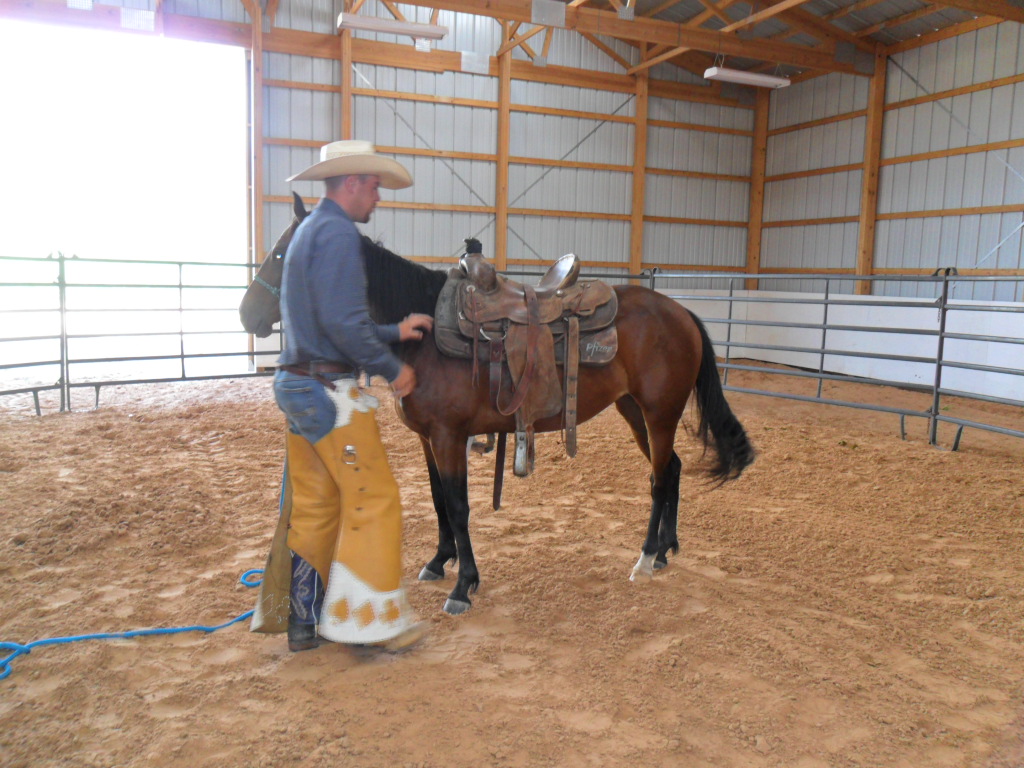
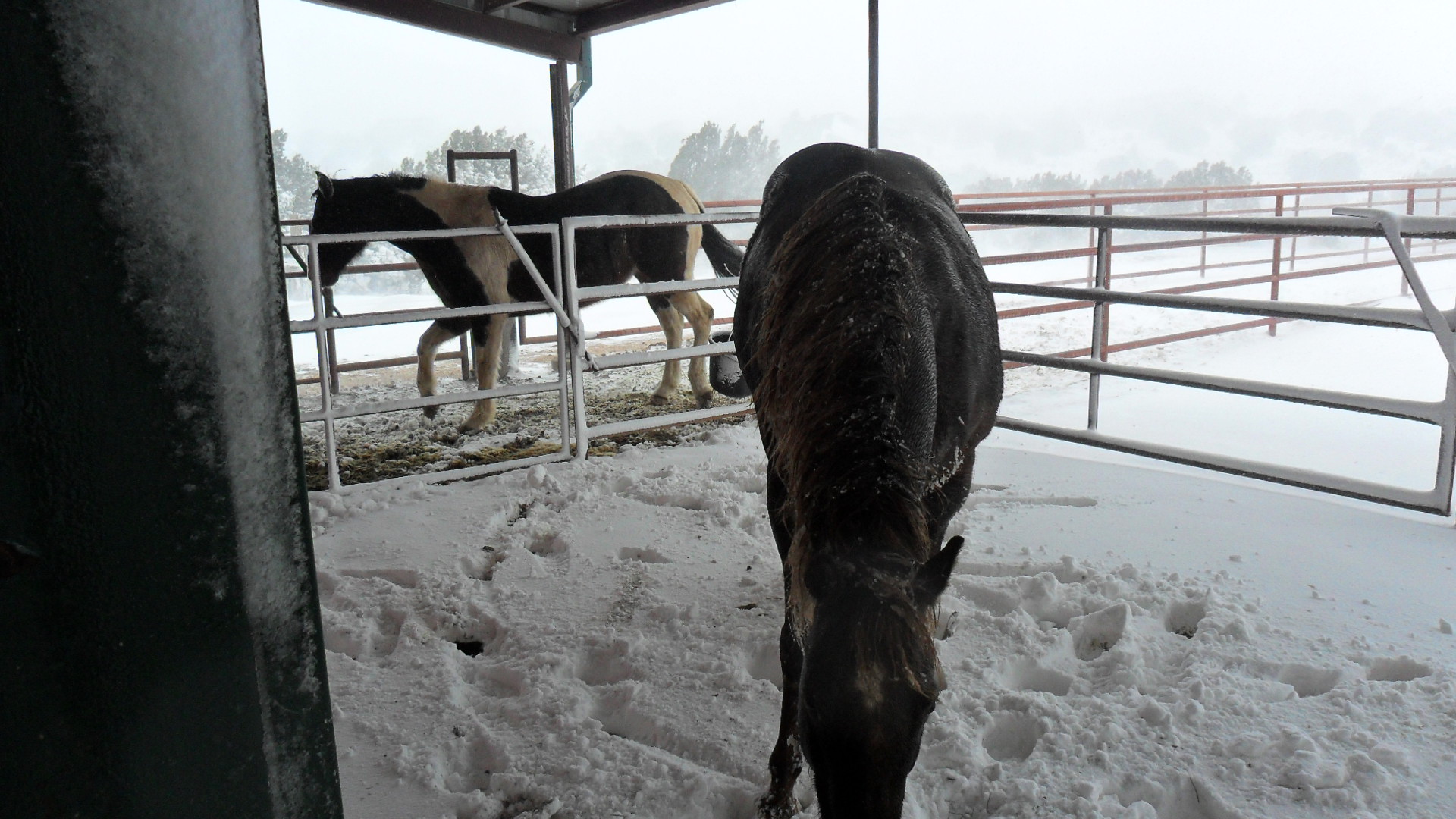
Started the day with coffee, make-up, inside plant watering and then off to see the rescue horses at Dove Creek Ranch near Canyon, Texas.  I spent about two hours there talking to the owner, the ranch manager, and others.  The following horse is Jazzy.  They gave a demonstration in the round pen and this was her fourth ride ever.  For a young horse she was really, really calm.


SAM_1580


Their technique includes a lot of ground work and desensitization to motions and sounds.


SAM_1581


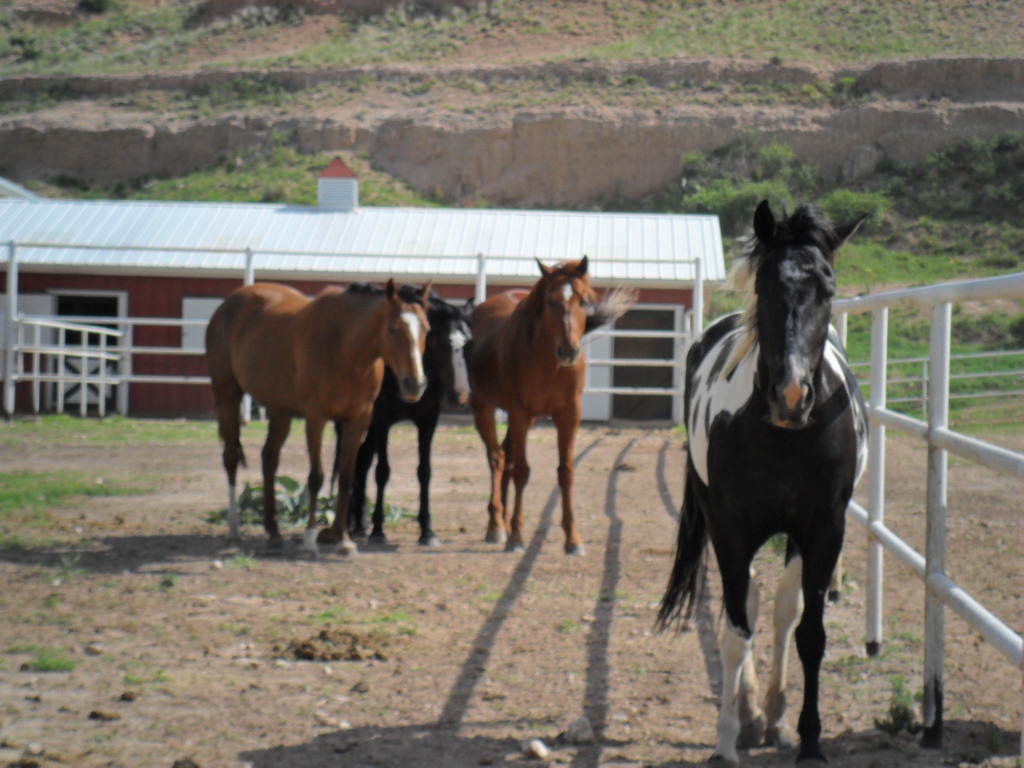
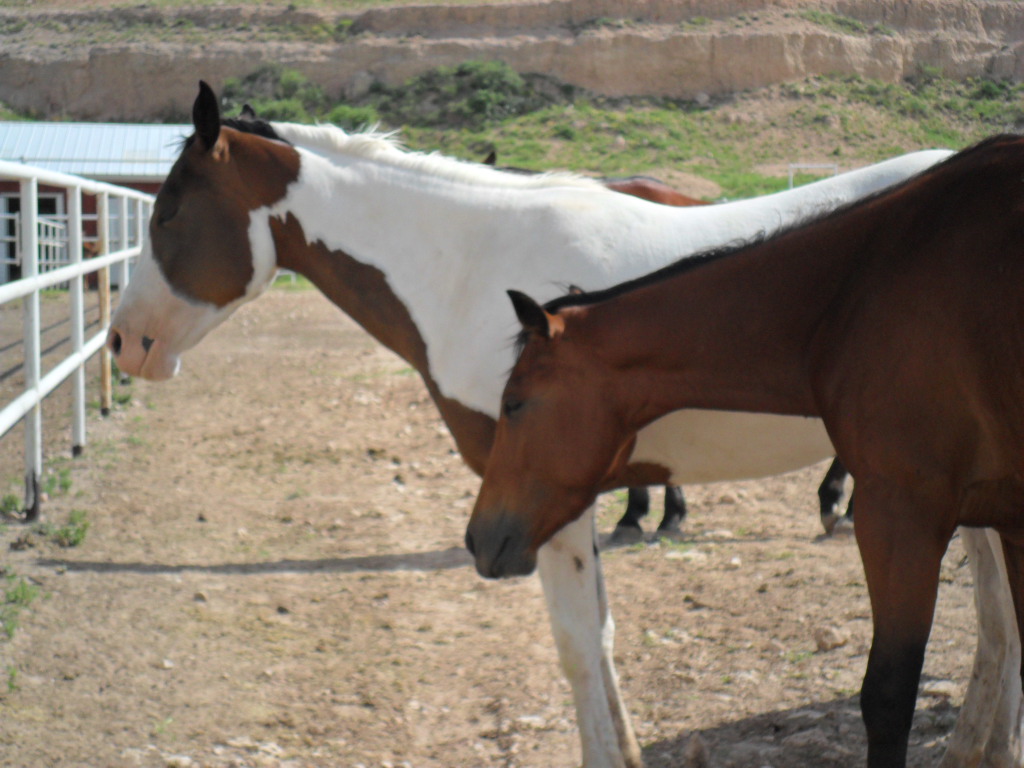
He put the saddle on and off repeatedly before riding her.  Then I went outside to a large corral to look at this flashy paint.  She is so beautiful but might not be adoptable.


SAM_1582


SAM_1583


Although they once had her mother and siblings who have already been adopted, her behavior is very inconsistent.  They told me that one day she does fine, but the next day she may not remember anything from the day before, or act a bit crazy like running into things.  The more we discussed this behavior and possible causes, the more it made me think of a horse I once knew who had eaten loco weed.  Loco weed is toxic and affects a horse so that it suddenly behaves basically crazy and unpredictable.  Made me sad; she is so beautiful.  I saw another paint filly, but she belongs to the ranch manager.  Yes, she is nice, but not the looker the above one is.

SAM_1584


Then I ran home for a couple of hours, checked to see where Rosie had disappeared–she was off grazing, and headed to my book signing.  It went well.  I was especially thrilled to see a few people I had not seen in a long time.  One, Kira Satterfield, used to teach with me years ago.  She said it had been seven.  My grandson passed out fliers, Hastings made coffee for the guests, and my daughter helped.


image


image


Book Signing and Rescue Horses


Tomorrow is a big day!!  First, I will get up and bake my second set of brownies.  It may be totally ridiculous, but on She Writes, taking food to your book signing was recommended so I made one pan of brownies tonight.  The other pan will bake in the morning.  Although this is not my first book, it is my first signing event.  Tomorrow at three at Hastings on Georgia I will be by the front door greeting and selling.  Because people actually get books signed and then do not buy them, just leave them somewhere in the store, Hastings will require buyers to pay first, then get the book signed.  I keep wondering just what sort of person does such a thing as get a book signed and then leave it randomly anywhere.

Since Cool died, I think Rosie is lonely.  Tomorrow morning Dove Creek Ranch Horse Rescue opens their doors for an annual event to show off their rescue horses, trained and ready for adoption.  At least I want to look and see who ( I see a horse as a who, not a which) is available.  Some of the horses have been so badly treated that it takes months and sometimes never to regain their trust and decent behavior.  Others just needed a home after their owners could no longer care for them.  The least I can do is look.  I will post photos of the ranch and horses tomorrow and report on the book signing.  Sleep currently seems a good idea.


10285598_10201564553698114_927164360_o

Mother, Barbara Lewis Duke


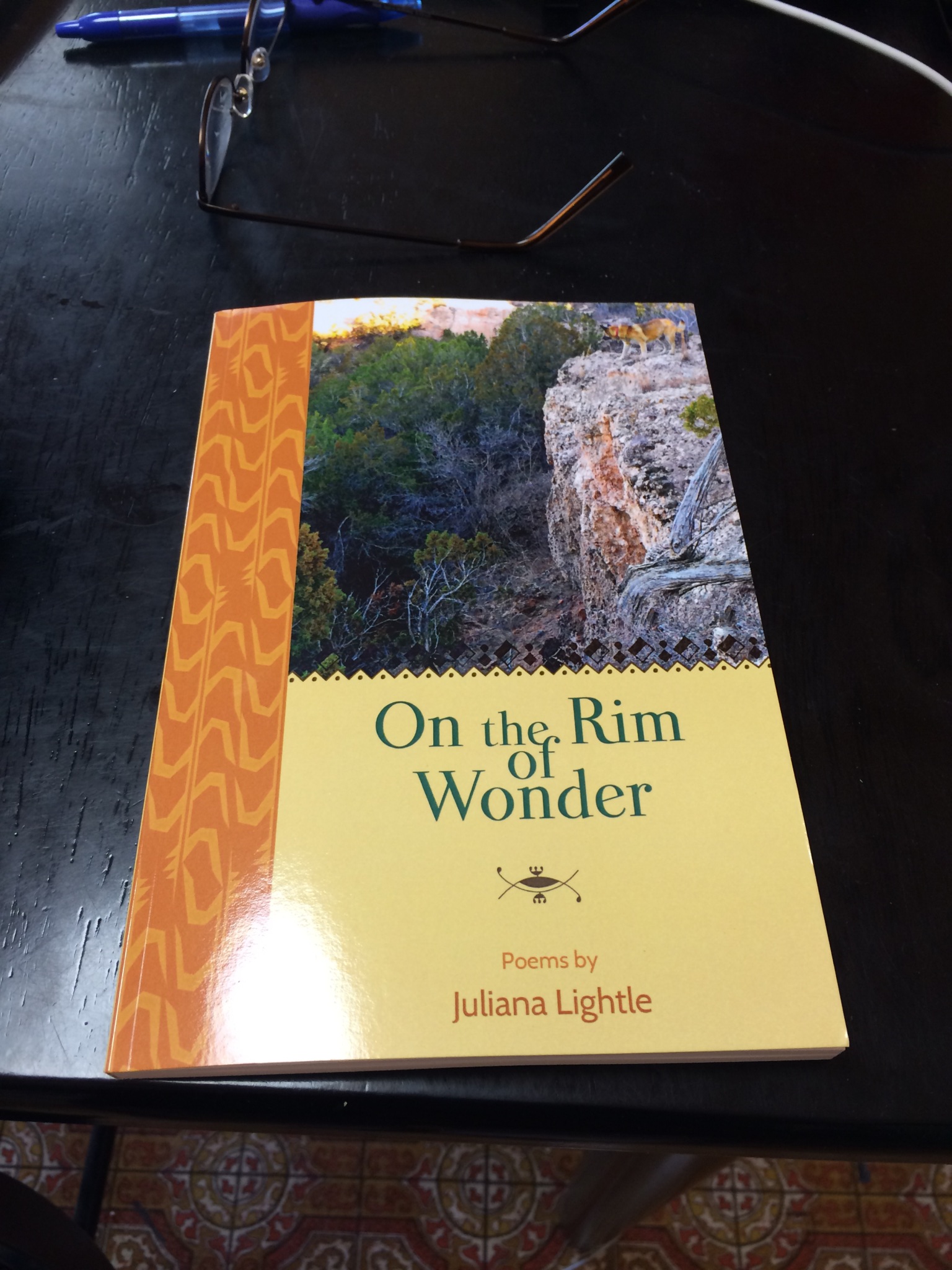
Mom was tiny, tough, and pretty.  She acquired the name Lewis because my grandparents had hoped for a boy and, for reasons I do not know, wanted a child named Lewis.  My grandparents named her younger brother Louis.  The following poem about my mother is one of the prose poems in my new book of poetry, On the Rim of Wonder, published last month by Uno Mundo Press.  Currently you can purchase it from Amazon or if you are in Amarillo, at Hastings on Georgia.  Shortly, it will be available on Kindle and signed copies can be ordered from me.


Barbie Doll


Barbara Lewis Duke, pretty, petite, blue-eyed and blond, my mother, one

fearless, controlling woman.  Long after Mom’s death, Dad said, “Barbara was

afraid of absolutely no one and nothing”.  They married late:  34 and 38.  He

adored her unconditionally.  She filled my life with horses, music, love,

cornfields, hayrides, books, ambition.  Whatever she felt she had missed,

my sister and I were going to possess:  books, piano lessons, a college education.

Her father, who died long before I was born, loved fancy, fast horses.  So did she.

During my preschool, croupy years, she quieted my hysterical night coughing

with stories of run away horses pulling her in a wagon.  With less than one hundred

pounds and lots of determination, she stopped them, a tiny Barbie Doll flying

across the Missouri River Bottom, strong, willful, free.


Gratitude and Dust


Initially, I planned to continue my Apocalyptic Planet series, but today’s events caused me to choose otherwise.  As I sit here writing this, I can see the endless blowing dust through the spotted window.  Sometime today, while I was at work, it sprinkled while the dust blew.  Now every window on the east and north side of my house appears as if someone had thrown handfuls of nearly dry mud at it.  My black car looks the same.  The wind whistles in the flue of the wood burning stove in my bedroom.  This storm  blows harder and longer than the one we experienced last week.  Tomorrow they forecast more of the same.

Saturday I stopped by two greenhouses to purchase some hanging baskets and native flowers.  The mesquite trees kept telling me, “Wait, wait.  Cold will come again. Wait!”  Normally, I obey what the mesquite trees tell me.  They never come out until they know without a doubt the cold is over and they feel safe.  I bought the flowers anyway.  This coming Saturday, Hilltop Senior Citizen Center in Amarillo has their Gala at my house to raise money–complete with a silent auction, food, and drink to raise some much needed money.  I want everything to look springlike and pretty.  I heard the weather forecast on the radio coming home from work.  I just looked again on the Internet.  Frost predicted tonight and even colder tomorrow night.  After I fed Rosie, placing the alfalfa as much out of the wind as I could, I brought the hanging baskets inside and poured a bunch of water on the other new plants. The native plants, tough, worry be little.  The others will not survive 33 degree weather.  Later, I will go out and cover them with old towels, hoping the wind relents and does not blow them off.

Everyone here posts photos of the dust on the Internet and gripes about this horrid weather.  Although I certainly dislike it, I refuse to complain.  This, too, is tornado country.  I listened to the news this morning and again coming home from work.  Thirty four dead, whole towns destroyed, a new school flattened.  Here I see no devastation, only the endless, depressing, annoying dust and wind.  My friends, family, and I are alive, our houses intact.  Rosie huddles behind the barn, still healthy, neighs when she hears me coming.  Gratitude engulfs me.


Rosie


Rosie


SAM_0461


The iris I was hoping for.

Intelligent Beings


Tonight the program Nature on PBS asked questions about animal intelligence as compared to humans.  This list portrays some of the things I learned, some new, some I remembered from past readings or other Nature programs:

-A few other animals besides humans recognize themselves in a mirror.  This list includes elephants, dolphins, and chimps.  Actually, humans do not demonstrate this ability until they are about 18 months old.

-Only a few species studied demonstrate a sense of social justice.  If they think they are being treated unfairly, they get mad and sometimes have a little fit.  This includes monkeys and dogs.

-Only one species studied demonstrated overt altruistic behavior and a sense of social justice toward others, the bonobo.  Of course, others may but have not been studied yet. Notably this is the same species that resolves social tension and conflict with sex rather than fighting.

-Humans grieve.  Many other mammals grieve immediately after the deaf of a loved one, e.g. their own young offspring, but few recognize the bones of long deceased members of their species.  The exception is elephants.  Elephants not only recognize the bones of other elephants, they frequently nuzzle them with their trunks and stay with them a while.

-Dolphins may seek out help when they need help.  The program showed a diver who was not looking for dolphins at all.  A dolphin who had a fish line and hook stuck in his side approached the diver and managed to stay very still while the diver removed the hook.  This took nearly ten minutes.  Of course, no one knows whether the dolphin was actually seeking help or simply stayed still when help was available.

-Chimps possess another behavior similar to humans, the ability to purposefully deceive.  A less dominant chimp was shown where a banana was hidden from a window outside an enclosure.  She and a more dominant female chimp were released into the enclosure at the same time.  The first chimp did not rush to the food.  Oh,no.  She waited and watched, played it cool,  and when the other chimp wandered off to the other side,  ran and ate the banana.

It is difficult to get inside of the mind of other animals.  Anyone who has pets thinks they are smart or at least dogs and cats seem to demonstrate considerable intelligence.  Horses do as well.  And yes, I have seen horses grieve.  When one of my horses died in a terrible and rather bizarre accident a few years ago, the other horses stood for hours in the place where the deceased horse had died.  They did not even leave to eat their alfalfa, a food they loved and always ran to.

I even think animals, in particular mammals,  know when they are headed to slaughter.  I think those who kill them know this but to admit it would be too painful.  They certainly know the smell of blood.  It incites terror.  Certainly animals can suffer at the hands of cruel humans.  Do animals besides us deliberately hurt others for the sheer, sick pleasure of it?  If there is a study regarding this topic, I have yet to see it.  I wonder.


Trivia


This marks week one of my commitment to write for at least twenty minutes every day.  A good way to “force” myself to do this is to blog daily.  In this past week I have heard from new people and received more comments than usual.  I had something already written out and then decided against posting it.  Because I am at least one hour behind on what I planned to do when I arrived home from work, this blog may be a bunch of trivia, depending on what you consider trivia.

I had not planned on cleaning my barn in preparation for fifty 100 pound bales of hay, but when they told me they would deliver Wednesday instead of Friday, it changed this evening’s plans dramatically.  I had to move the remaining hay from last November’s delivery to a different spot because I do not want “old” and “new” hay mixed.  100 pound bales do not weigh all that much less than I do so moving them is not all that easy.  Once moved, I sweep the loose hay up, lay down pallets, and sweep up everything.  I do not like hay to lay directly on the cement floor of the barn.  All that took over an hour.  Then it dawned on me that I should probably eat something.  Time mandated simplicity so I made a salad. Suddenly it reminded me of salads Gaston used to make.  Gaston lived with me for six months–a handsome exchange student from Argentina, who rode horses, played the piano while I cooked dinner, and then when I gave the word, made beautiful salads, kaleidoscopes of color, orange, red, green, yellow, purple.  Tonight, in a rush, I finally managed to make a salad as beautiful as Gaston’s.  In addition to his other assets, Gaston’s name is a song for the ears and the heart:  Gaston Luis Zulaica del Sueldo.  I love his name so much that it is the title of one of the poems in my new book of poetry, “On the Rim of Wonder”.  His counselor at school here loved it so much that she insisted on practicing it over and over and over to get it right when she announced it at graduation.

Salad eaten, once this post is complete, I must finish the baby blanket I promised today to deliver tomorrow.  More than eight years ago, I taught freshmen English.  One of my students, who has since gone to college, graduated, and now works for the school district where I work will soon be a father.  His wife, through her work as a neonatal ICU nurse, became a good friend of my daughter’s.  Their baby is due in a week or so.  I am running out of time.  I MUST finish this tonight.  Since I have to get up at 5:30 to get to work on time–I work 25 miles from where I live–it would seem that since it is now 7:49, I had better quit writing this and get to work.  Tomorrow I promise more exciting material.

The Story Circle Network Conference and My Commitment: This Is What I Know


ad_scnconfWhen I first started blogging more than two years ago, I committed to blogging once a week.  That I managed for a year or so and then since that time, it became more sporadic.  Full time job, writing poems for my book, visitors, mini vacations, all sorts of stuff got in the way.  Really, I let it lapse, but refused to give up.  Last Thursday, I drove to Austin with my daughter and grandson for the biannual Story Circle Network Conference.  The plan:  while I conferred, they played.  The Story Circle Network is an organization for women which encourages women to write, to tell their stories, to share these stories, and when possible and desired, publish those stories in various forms from memoir to poetry.  This was my second time to attend and my first time to attend as a new board member.  A former mentor/teacher of mine, Len Leatherwood, facilitated  a workshop entitled “Transforming Your Writing Life in Just 20 Minutes a Day”, the last workshop I attended.  She blogs everyday.  I follow her blog.  No matter what, she sits down and writes 20 minutes minimum a day separate from the writing she does with her students–she teaches writing privately in southern CA.  One of her recent blogs has been accepted for publication–a piece of flash fiction.  She nearly begged us to commit to this kind of writing practice.  Previously, I had refused, flat out refused, partly thinking that if I tried it, more than half the resulting writing would be crap.  Nevertheless, she and her workshop convinced me that at least for one month I must try this.  Now all of you following my blog will be inundated with daily blog posts.  I am filled with curiosity as to how people will respond.  Maybe it will be like my Facebook posts–yes, I am an almost addict–the posts I consider most meaningful for the universe at large are the ones people ignore and the ones I consider personal trivia receive the most response.  Maybe I will track what appeals to my readers.  Some I won’t know because with blogging I share to Facebook and to a couple of professional networks, I have no clue who read what.  Once I received an email regarding a poem I posted. Although it never showed up as a like, the lady actually told me she read my poem in church!  Who would have guessed. I forgot to time myself so have no idea how long I have been here writing.

Here I am writing about why I am writing.  On the stove I smell Jasmine rice cooking.  I love Jasmine rice from Thailand.  I am a very picky rice eater and prefer to mix equally white Jasmine rice with black and red.  For one thing, it looks lovely when done–a sort of dark reddish purple.  Since I sautéd chopped garlic in olive oil, then added the rice and sautéd for about 15 more seconds, then added water and some broth just before I started writing this, the smell of Jasmine rice fills the house.  I piled a bunch of paper towels on the top before I put on the lid or you can use some cloth towel–a habit I picked up from my Iranian ex-husband.  Iranians really know how to cook rice.  I am also drinking a glass of Cupcake Shiraz which I bought on the way home from work.  And yes, Shiraz is also the name of a city in Iran where they actually grow grapes or at least used to. But of course, drinking wine is no longer acceptable in Iran or at least not publicly.  Good Muslims do not drink at all.

I did write something worthwhile while in this workshop and will share–doing this last because it won’t count as my daily writing since I wrote it yesterday.


This Is What I Know


My parents loved me, really loved me.

My mom was proud of my accomplishments.

Dad gave me a love of books, intellectual curiosity, and a

sense of wonder.

Mom gave me a love of music, beauty, and cooking.

Happiness is a choice.

I do not believe in luck.  You make your own luck.

Life is an exciting adventure.

Horses give me joy.

Singing gives me joy.

Dancing gives me joy even if I rarely have the opportunity.

Family relationships can be distressingly complicated.

I am proud of my children and their accomplishments.

Religion matters much less to me than 99 per cent of the people I know.

Ethnic and religious prejudice distress me and I do not

understand those kinds of attitudes.

I am a good writer.

I want to make a real difference in the world.

I am happy 99 percent of the time.

Blessings flood my life.

My close friends and children and grandson are more

important to me than they know.

Writing has enriched my life.

I have few regrets:

One I have rectified;

the other I cannot–

my dad is dead.

Cool Surf


Wednesday, I topped the little rise down the

long drive to my house.

Cool’s down, lying down,

not like a happy horse,

soaking up the afternoon sun.

Down!!

Still dressed for work, I

rush, make him get up.

Instantly, I know, colic,

sadly go to the house,

change into jeans,

call the vet–he’s an

hour a way,

quirt banamine down Cool’s throat-

can’t hit his neck vein.

We walk and walk and walk,

waiting for the vet.

Cool’s hurting, distressed,

kicks my arm.

Vet and I load him in the

borrowed trailer as he

wobbles, half drugged.

Two giant bags drain into

his neck vein.

Vet listens, takes tests.

Result should read 2;

it reads 10.

In spite of hopeless odds,

the vet and staff work and

watch all night.

At 2:30 in the afternoon

a message on my cell phone:

Cool’s buried in the pasture with Miracle.

They’ve taken care of everything.

Stunned, trying not to cry at work.

Cool was fine when I left

Wednesday morning,

running the night before.

Stunned, remembering him as a baby,

the picture perfect paint.

Stunned, remembering how I

loved to watch him run,

head and tail up,

floating fast, joyous.

It’s Sunday now.

I walk out on my bedroom patio,

look up to his corral.

He always called to me, always.

Today, all I hear is the sound of silence.

SAM_1020

Cool, the other orphaned horse I raised.

579365_3069424508492_1766850092_n

Gypsies, Deserts, and Random Thoughts on a Cold Sunday Morning


In less than 15 hours, it has dropped from low 70s to 9 here on my canyon rim–one of the joys of living in the Panhandle of Texas where a mere change in wind direction can dictate the weather.  Yesterday afternoon, I was helping my daughter clean her back yard and ready the ground for planting some shrubs and a tree and now 60 degrees colder.  This type of drastic weather change has occurred repeatedly in the last few weeks.  Perhaps it has muddled my brain which keeps hopping back and forth from this to that.  First, the “this”.

Mostly, I read Latin American, American Indian, and Middle Eastern authors.  When I recently stopped by the library, I could find none of these that I had not already read so I picked up a book from a Dutch author of whom I had never previously heard, Margriet de Moor.  The book, a novel, The Duke of Egypt, tells the tale of a Gypsy man who meets this young Dutch woman.  They marry and lead a quite unusual life:  in the winter he lives with her on the family horse farm; in summer he leaves and lives with the Gypsies, wandering around Europe in their caravans.  When he is “home” with her, in the evenings he tells her tales of his Gypsy family and friends, centuries of history.  These tales shocked me:  centuries of discrimination, hangings–even Gypsy women hanged publicly for no other reason than they happened to be Gypsy in the wrong country at the wrong time, sick children whom no doctor would treat, starvation, driven from country to country.  Of course, like many people I have heard stories about Gypsies:  as a child my grandmother telling me that Gypsies stole other people’s children, a friend telling me the police said it was Gypsies when someone stole some silverware from her house, but I never really believed it.  Reading this book caused me to delve a bit more into Gypsy/Roma history only to learn even more tales of horror.  Hitler and his Nazis hated Gypsies almost as much as they hated Jews.  It is estimated that the Nazis sent at least ten per cent of the Gypsy population in Europe to the gas chamber.  On the positive side, I learned that many Gypsies were hired by people who raised horses to help them with their horse care because Gypsies were considered expert horse trainers and traders.  In addition, some hired them for their music to play for social events and festivals.

When several friends came over for dinner, I mentioned the book to them and my shock.  I wondered aloud as to why so many hated the Gypsies.  The general response was this:  Gypsies consistently live as they wish and refuse to follow the social norms of the rest of the population.  They refuse to settle down and live in one place, they enjoy life, dancing, drinking, roaming.  If you refuse to live like everyone else, the rest of the world will  punish you.

Then I moved on to the book I am reading now, Apocalyptic Planet:  Field Guide To The Future Of The Earth.  I am only on page 27 of 327, and already I have learned:  “Deserts generate most of the world’s airborne dust, contributing to a global migration of surface minerals.  Dust blowing from the southern Sahara is the single largest producer of iron for the mineral-poor soils of the Amazon in South America.  Half of this dust originates in the Bodele Depression north of Lake Chad, which produces about one hundred storms a year, each sending 40,000 tons of dust across the Atlantic to South America.”  And a bit further in the book:  much of the fertile High Plains here in the US (Kansas, eastern Colorado, Oklahoma, Nebraska, Texas, basically from Canada to Mexico) sit on top of a desert, e.g. the Sand Hills.  Currently, these sand hills remain stabilized by miles and miles of grass–our native short grass steppe.  It does not take much to imagine what would occur if drought continues and the grass disappears.  Once desertification occurs as it is now occurring in many places in the world, e.g. the Sahel, deserts consume.  Jonathan Overpeck, a leading climate researcher claims, “…we are significantly underestimating the severity of drought we could get in the future.”  He predicts many places now inhabited will become uninhabitable unless we initiate drastic changes in our water management.  People will be forced to move from places of little to no water to places “wherever there is no desert”.  He adds, “We are contributing enough change to the planet that we are moving toward more droughts instead of away from them.”  In the Sahel alone it is estimated that 500 million people will have to move to survive.  I think over this information and about the current drought here and look at the beautiful place where I write and live, wondering will it be habitable in one hundred years.

Now on to the “that”:  grateful I live here in the United States in spite of all our “problems”.  I could have been born in Ukraine, Syria, Central Aftican Republic, any of those places experiencing turmoil, fear, religious hatred, genocide, torture–the list goes on and on.  Instead here I am happy, relatively safe, warm in spite of the 9 degrees outside, well fed–you get the picture.

Barbie Doll


Barbara Lewis Duke, pretty, petite, blue-eyed and blond, my mother, one

fearless, controlling woman.  Long after Mom’s death, Dad said, “Barbara was

afraid of absolutely no one and nothing!”  They married late:  34 & 38.  He

adored her unconditionally.  She filled my life with horses, music, love,

cornfields, hay rides, books, and ambition.  Whatever she felt she had missed,

my sister and I were going to possess:  books, piano lessons, a college

education.  Her father, who died long before I was born, loved, fancy,

fast horses.  So did she.  During my preschool, croupy years she quieted my

hysterical night coughing with stories of run away horses pulling her in a

wagon.  With less than one hundred pounds and lots of determination, she

stopped them, a tiny Barbie Doll flying across the Missouri River Bottom,

strong, willful, and free.