Book 50 for 2025: “The Well of Loneliness”, Radclyffe Hall


Published in the US in 1928, banned in England, this is the first, well known lesbian novel and without doubt one of the saddest books I have ever read. Hall was already an award winning and popular novelist when she decided to write this novel. The main character, Stephen Gordon, was born to upper class English parents. Her parents had hoped for a boy and chosen the name Stephen. When she was born a girl, they decided to call her Stephen anyway. From an early age, she was different and preferred to ride horses and do outside activities with her father who adored her rather than wear frilly dresses and do the activities common for English girls at the time. Her mother found all this off putting and never showed any love or nurturing toward her. Later in life, after an unpleasant incident with a young woman who uses Stephen as a distraction from her boring life, Stephen’s mother throws her out of the family home and she moves to London where she writes a highly successful novel.

During WWI, they are desperate for ambulance drivers and Stephen is assigned to an all female ambulance regiment in France. There she meets another young woman who becomes her lover.

An English friend, a successful playwright, convinces Stephen to move to Paris where there are no laws against homosexuality and where there is a large community of similar people, many of whom are highly successful in their careers. She and her lover live there for many years, and Stephen successfully continues her career as a writer. Then an old friend from her childhood shows up and everything changes.

“Barbie Doll”–in honor of my mother


Barbara Lewis Duke, pretty, petite, blue-eyed and blond, my

mother, one fearless, controlling woman. Long after Mom’s

death, Dad said, “Barbara was afraid of absolutely on one

and nothing.” They married late, 34 & 38. He adored her

unconditionally. She filled my life with horses, music, love,

cornfields, hay rides, books, and ambition. Whatever she felt she

had missed, my sister and I were going to possess: books,

piano lessons, a college education. Her father, who died long

before I was born, loved fancy, fast horses. So did she. During

my preschool, croupy years, she quieted my hysterical night

coughing with stories of run away horses pulling her in a wagon.

With less than one hundred pounds and lots of determination,

she stopped them, a tiny Barbie Doll flying across the Missouri

River Bottom, strong, willful, free.

Note: This was first published in an anthology and later in my poetry memoir, “On the Rim of Wonder.” My mom loved the color pink and roses, had a rose garden. In the summer there were always crystal bowls on the dining table with roses floating. Today I have roses floating in two stemmed crystal bowls in my kitchen.

Book 42 for 2024: “These Is My Words: The Diary of Sarah Agnes Prine, 1881-1901, Arizona Territories


This fictional work is based on the life of the author’s great grandmother. Written as a diary with specific dates, the narrator is not yet a teen when the novel starts. Her parents are wanderers, always looking for a better, new place. Sarah’s character is that of a tough, pioneer girl and then a woman. She can ride horses, shoot to kill, manage a ranch, do whatever it takes to survive. Much of it includes a rather accurate portrayal of life in Arizonan territories as well as Texas at the time including the prejudices of many of the white inhabitants toward the Spanish speaking people already there, fights with Apaches, and the hunt for Geronimo. It is not just the story of her own life, including her relationship with the Army Captain whose job initially is to protect a wagon train, but also portrays other people living in the Southwest during that time period.

I read this as part of a book club. Reactions to the book varied widely from those of us who thoroughly enjoyed the book to at least one person who insisted it is poorly written and viewed it as a romance novel. The rest of us did not. She used an audio book edition. After her descriptions, it appears the audio book does not correctly follow the book itself and is poorly done which may have contributed to her view of this work. I borrowed this novel from the public library and it was obviously well read because it was not in the best condition.

Book 41 of 2024: “Crazy Horse”, Larry McMurtry


One of the saddest books I’ve ever read, this short piece of nonfiction details not only the life of Crazy Horse but also the demise of the traditional lifestyle of the Plains Indians. Crazy Horse has been the subject of endless legends and myths, many of which apparently have nothing to do with reality. He was not a chief; he often defied traditional Sioux customs. He was very much his own person. Among his people, he was especially known for his kindness and support of the poorest and weakest and for his prowess as a warrior. Crazy Horse died young due to not only white betrayal but also that of some of his own people.

I highly recommend this book if you are interested in this particular period of US history. At the end is a comprehensive list of sources with notes about each one of them.

Canyon de Chelley–Part Two: Driving into The Bottom


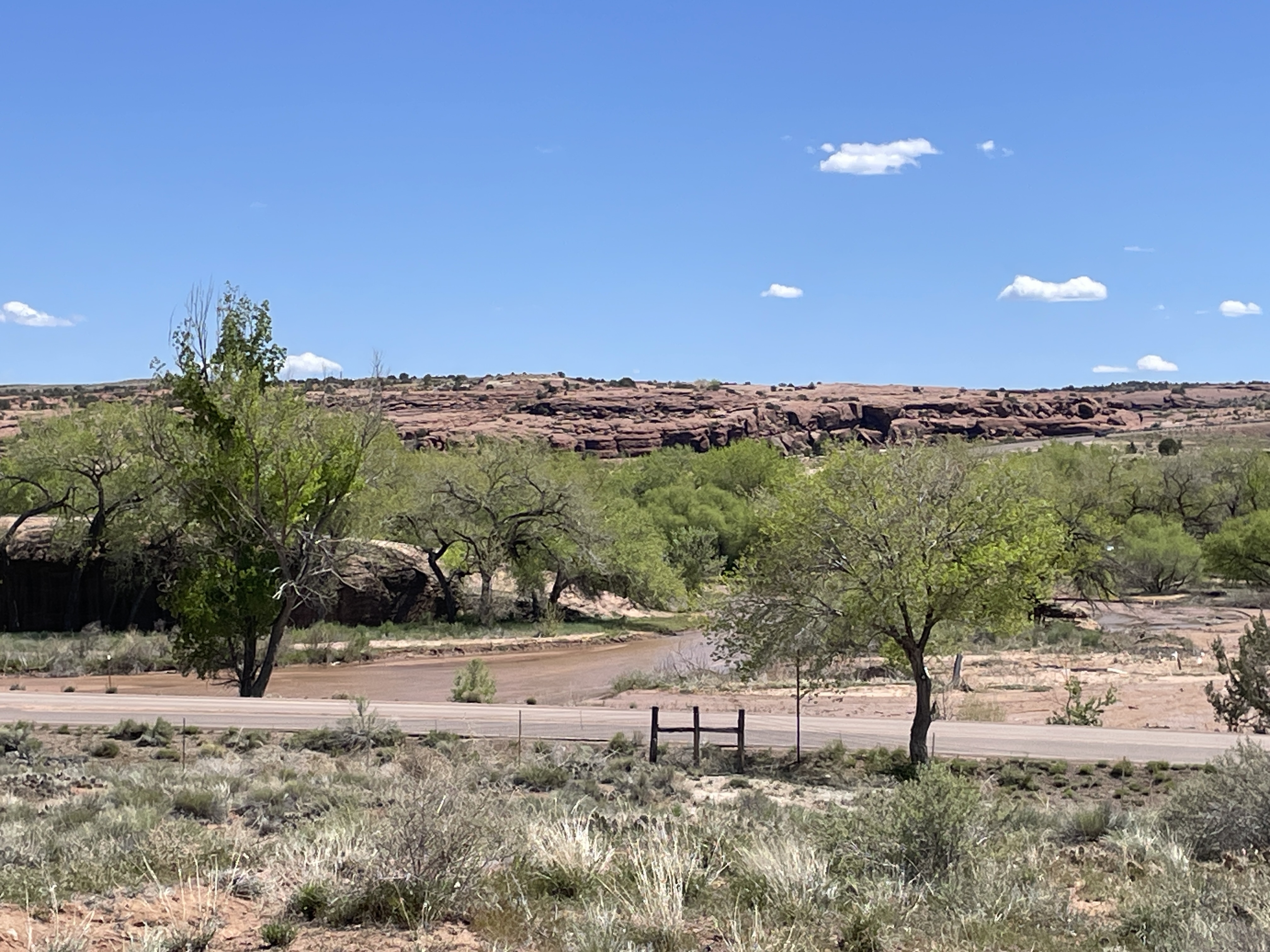
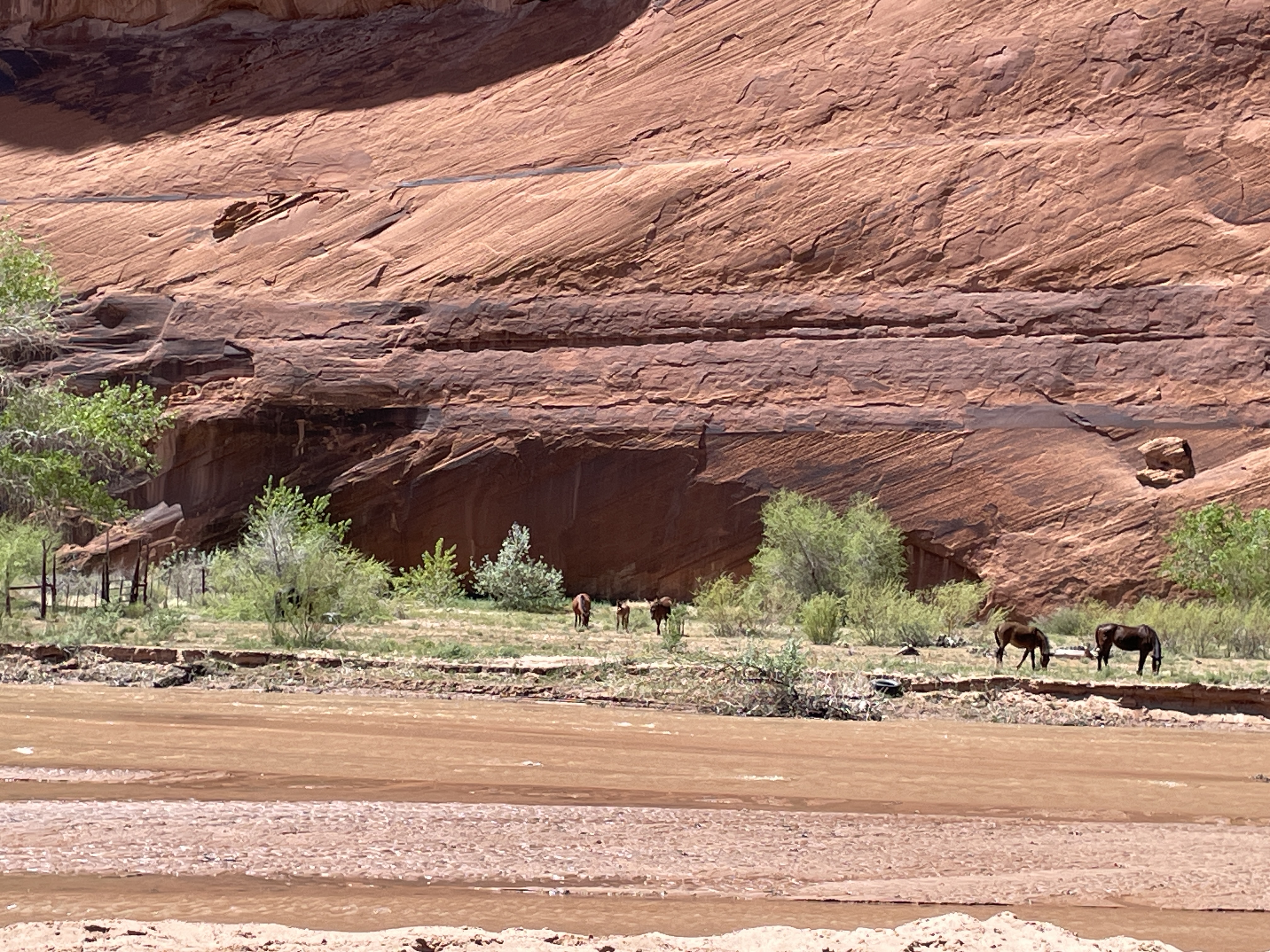
Canyon de Chelley was named by the Spanish who could not quite pronounce the Diné (Navaho) word for it and hence this name which is pronounced like de shay. It is more than 30 miles long and has a river running through it at least a substantial part of the year. In summer native people live there with sheep, horses, etc. even though fewer and fewer of the younger generation choose to do so. To enter the bottom of the canyon, you must acquire a permit and hire a Navaho driver. This is to protect it from the vandalism that occurred in the past. Canyon de Chelley is jointly managed by the National Park Service and the Navaho Nation.

Canyon de Chelley begins at the edge of Chinle, AZ, near the Holiday Inn which, by the way, serves traditional food such as mutton stew and blue corn fry bread. Yes, I ate both. This photo shows the beginning.

It was quite a trip; I sat between two women in the back of a Jeep with a perfect view of everything right in front of me. Oscar, the driver, knew exactly how to traverse the water, the wash (what they call this stream), run up and down the banks.

Driving right up the middle of the wash.

Petroglyphs can be seen in so many places we stopped that I lost count. Oscar said they are nearly endless and can be found throughout the canyon walls.

A few days previous to our arrival it had snowed so everything was green and lush from snow melt.

In addition to petroglyphs, there are etchings in the rock walls.

In this case an etching/rock carving of horses.

Yes, we drove under this overhanging tree limb.

Sometimes the wash was narrower and deeper and we drove up and down steep banks and through deeper water.

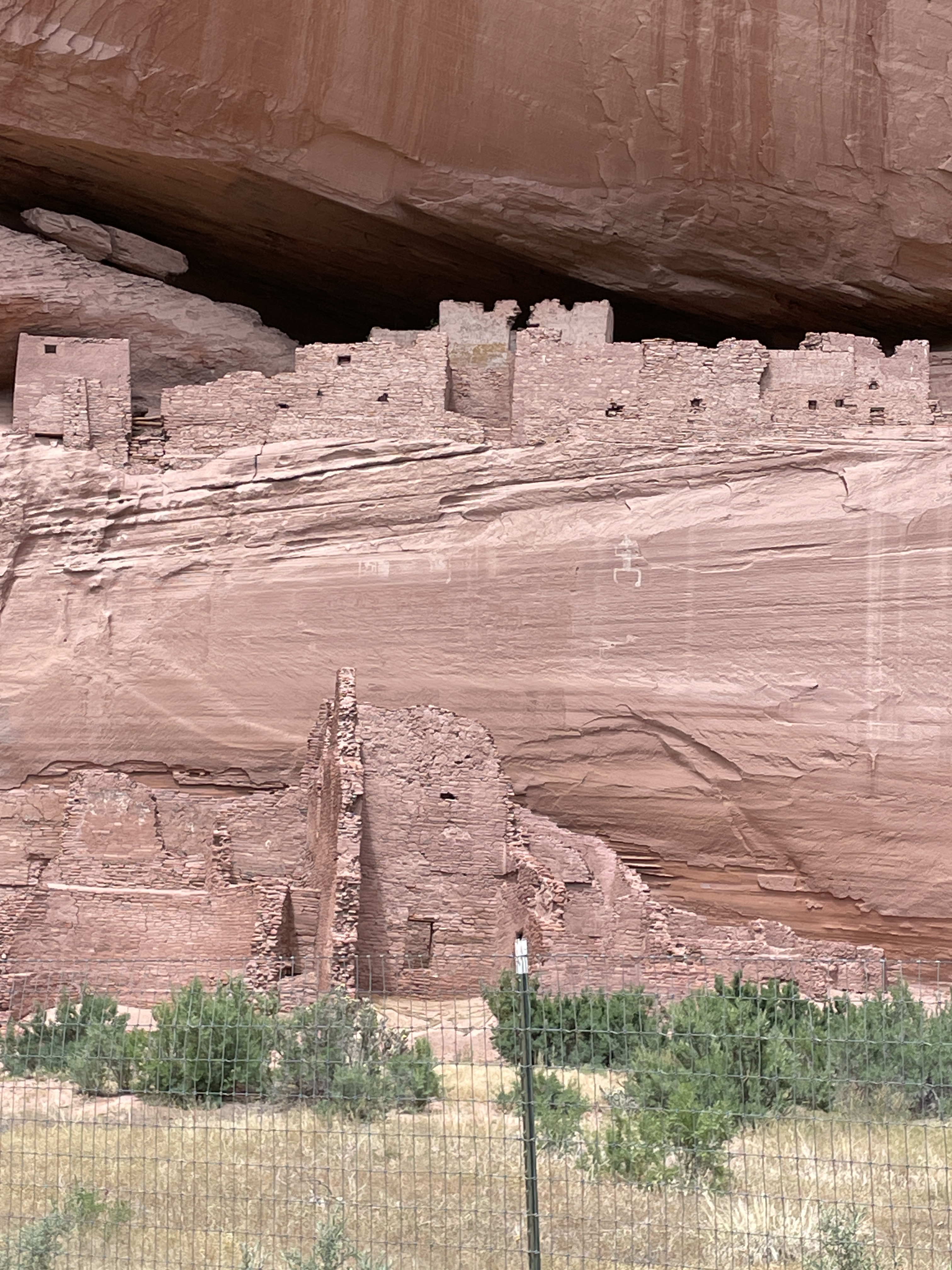
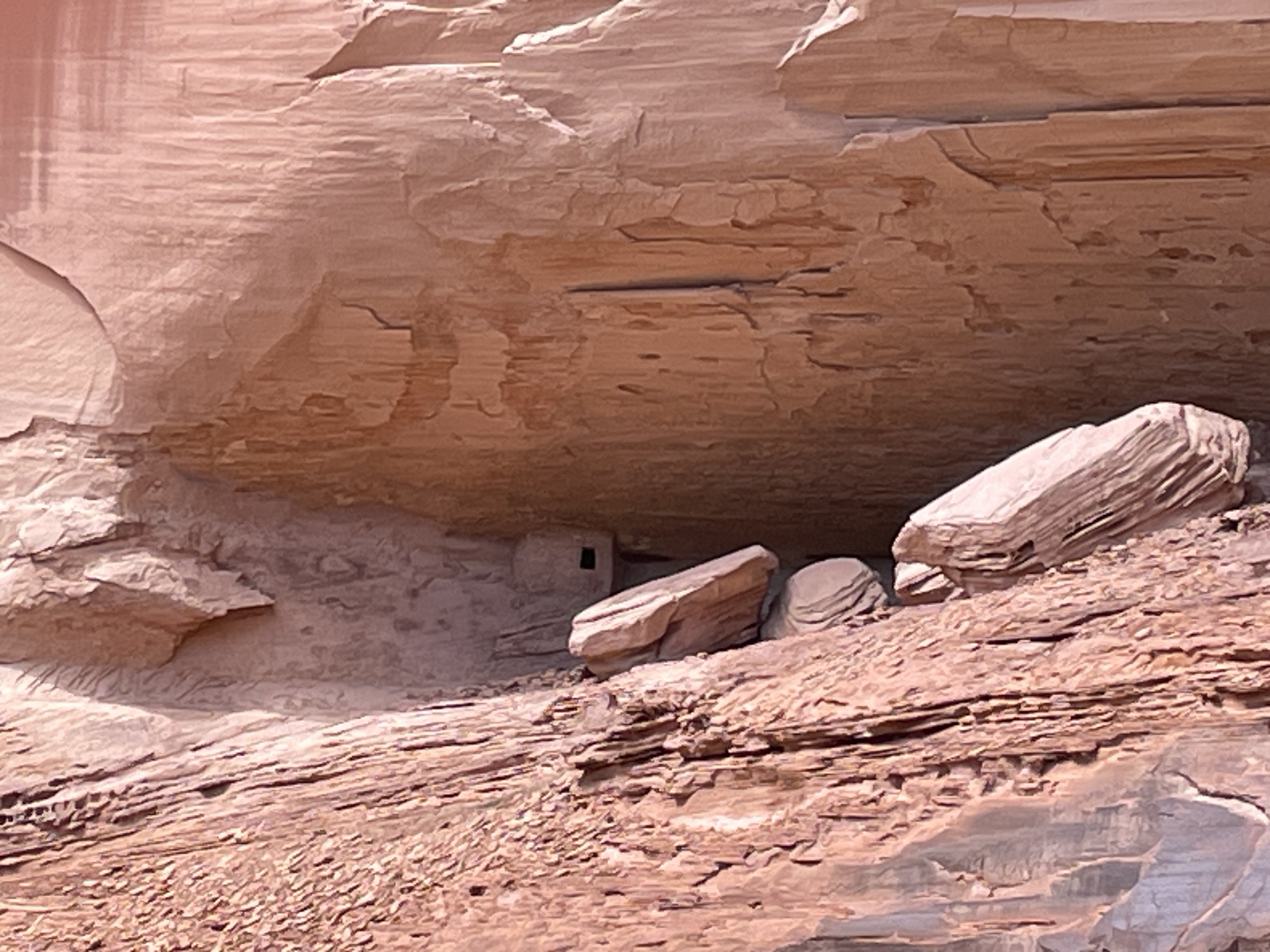
Ancient pueblo people lived here for centuries, some more than 5,000 years ago. This is one of the largest pueblo structures in the canyon (The White House–due to a white washed wall which you cannot see from this vantage point). The fence was built to protect it from vandals. We saw many smaller dwelling places and Oscar said there are hundreds in the canyon.

Headed back down the wash. This was a half day trip so only saw less than half of the canyon. You can hire for an all day trip complete with picnic lunch and go all the way to some of the famous formations that can be seen from the road at the edge of the top. There is also a side canyon called Muerto–due to a massacre of the natives that occurred after the Navaho forced long march.

The Jeep needs a bath after this trip.

Note: With a permit and guides, there is camping and horseback riding trips up the canyon in addition to this type of tour.

A Tribute to My Mother


Barbie Doll

Barbara Lewis Duke, pretty, petite, blue eyed and blond, my

mother, one fearless, controlling woman. Long after Mom’s

death, Dad said, “Barbara was afraid of absolutely no one

and nothing.” They married late, 34 and 38. He adored her

unconditionally. She filled my life with horses, music, love,

cornfields, hay rides, books, ambition. Whatever she felt she

had missed, my sister and I were going to possess: books,

piano lessons, a college education. Her father, who died long

before I was born, loved fancy, fast horses. So did she. During

my preschool, croupy years, she quieted my hysterical night

coughing with stories of run away horses pulling her in a wagon.

With less than one hundred pounds and lots of determination,

she stopped them, a tiny Barbie Doll flying across the Missouri

River Bottom, strong, willful, free.

Note: This poem about my mother has been published in at least one anthology and my book of poetry. My mother loved roses, had a rose garden. I now grow roses too.

One Book a Week-53: “The Last Ride of the Pony Express”, Will Grant


Since I was born in St. Joseph, MO, and grew up 30 miles from there, the Pony Express is something I have heard about my entire life. Therefore, when I saw this book at the local library, I decided to read it. What a fun and informative book!! In 2019, Will Grant, who lives in Santa Fe, NM, decided to locate the right horses, transport them to St. Joseph, and ride the route of the Pony Express from there to Sacramento, CA, the other end of the trail. After the sheriff’s department escorted him across the bridge to Kansas, he managed to avoid cities for the most of the 2000 mile trip. This book is his account of the old Pony Express Stations, ranchers, farmers, historians, businessmen, ordinary people, and wild horses he encounters on his 142 day adventure. Although many have written books about the Pony Express, he is the only person who has followed the entire route on horseback.

Ponies


Mom loved Shetland ponies.

not so much the stocky, chubby ones,

the fancy show ponies.

We had so many, I’ve lost count–

black, pinto, dappled grey with silver

mane and tail–the fanciest one.

Midget, a pinto, was the first one.

They bought her so I could learn to ride.

I was six.

At the country fair, I rode her.

She zigged; I zagged, fell off.

Utter humiliation.

On rainy days my sister and I would

put a few in the barn, dress them up,

play games with them,

living toys.

We even rode them when in high school

along the cornfields, across the terraces.

My last memory–riding, ambling along, not paying attention,

suddenly lots of noise in the cornfield,

an animal running through the cornstalks.

Pony bolted; I jumped, landed wrong,

limped for days at school, climbing

up and down the steps.

Did I ride again?

I don’t think so, not for years and

then I rode horses.

Covid19-5-Spring Beauty


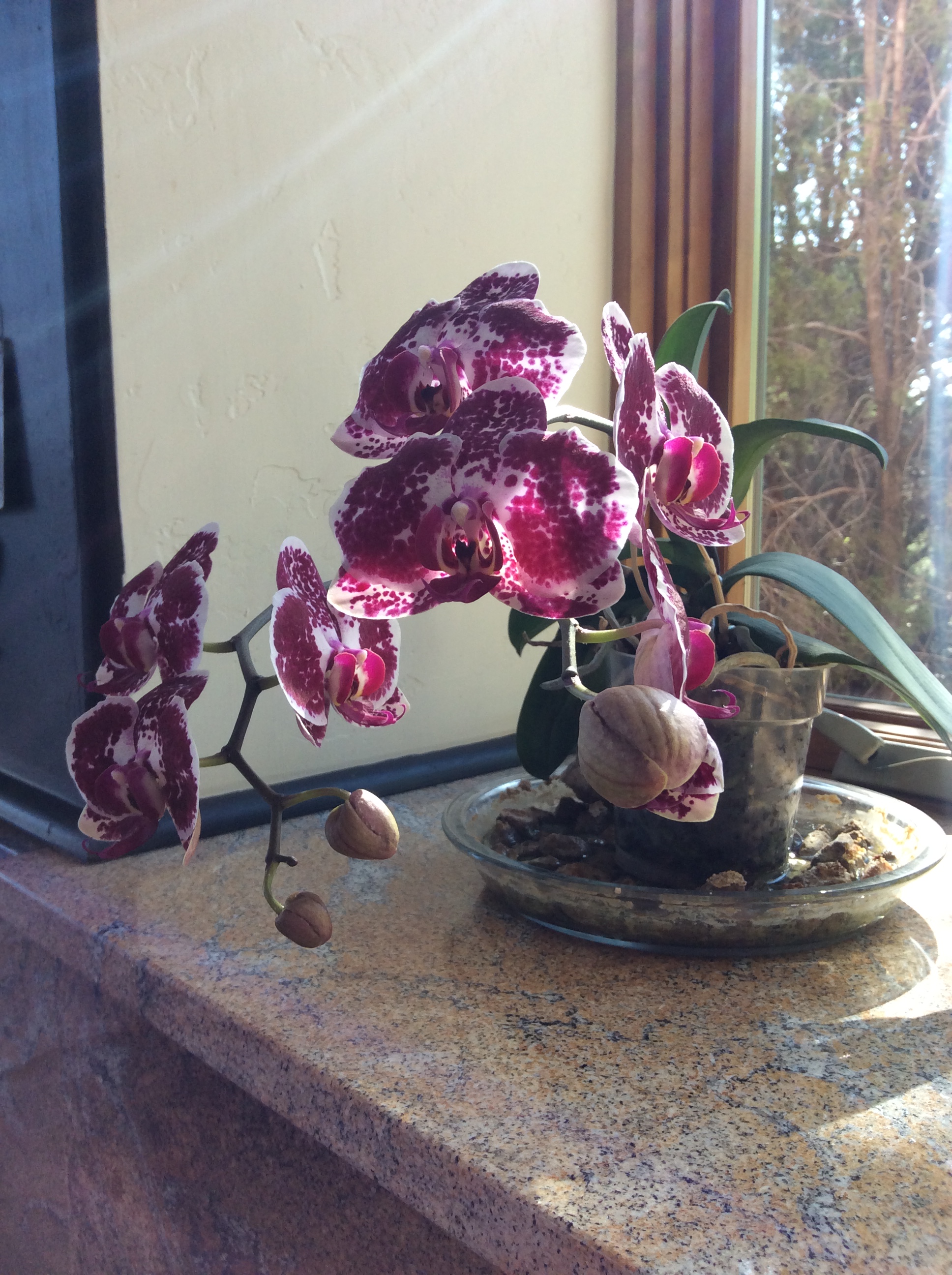
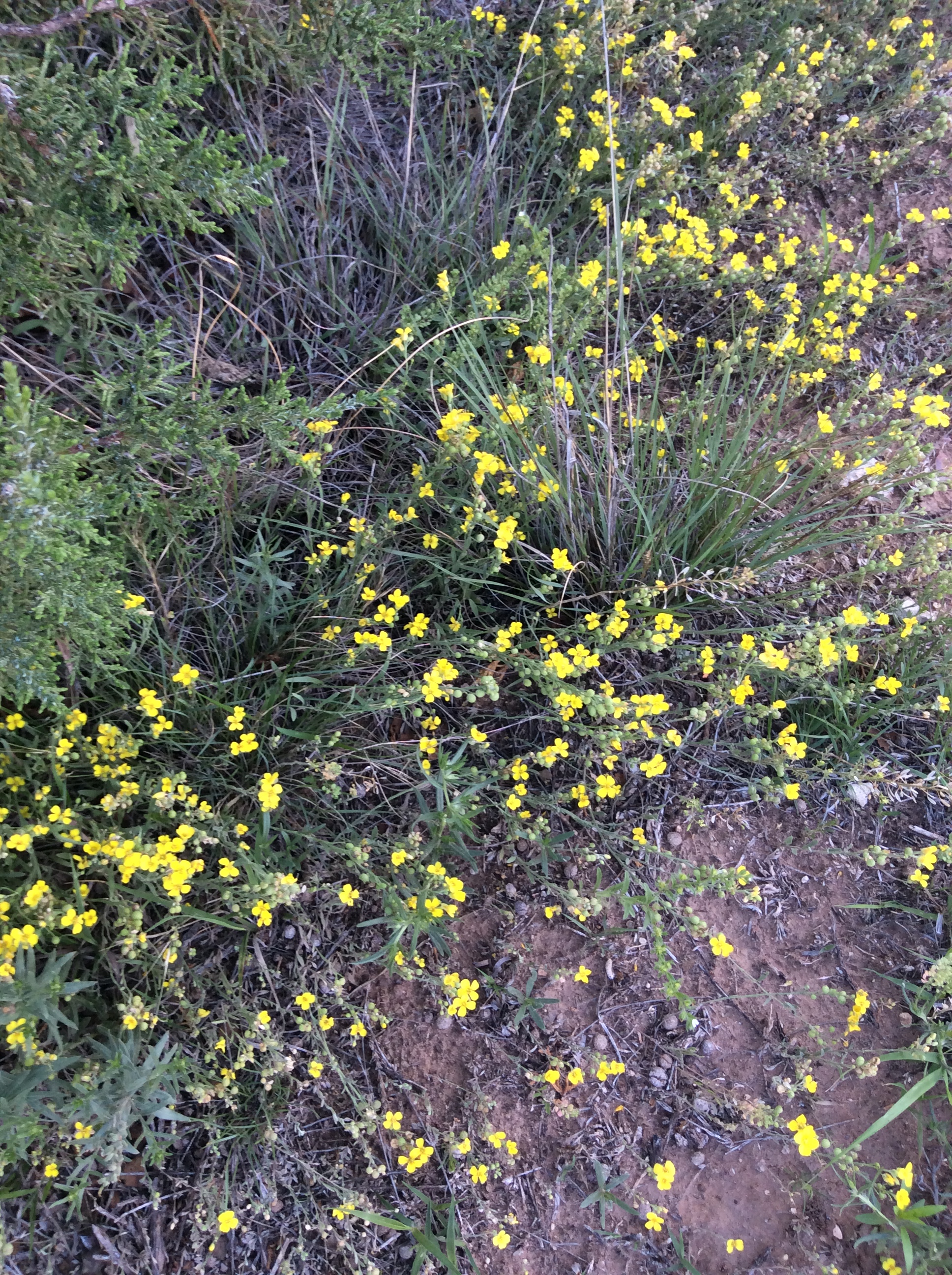
In the midst of being home for about a month now, it is spring most of the time.  Saturday was 80 something. Now it is snowing.  When it was 80 plus, I walked around outside and took photos of some of the wild flowers and the orchids blooming in the window above my kitchen sink.

I had planned to post several days ago, but I am so busy teaching English and Spanish online, I hardly have time to do much else. I did mow for several hours Saturday morning, did some gardening, cleaned horse runs, let them out to run. My students are studying the works of John Steinbeck, reading Animal Farm, The Odyssey, and Oedipus Rex–I teach four different levels of English.  Designing lessons they can do online with little assistance takes forethought and planning.  I thought I would hate it, but there are some things I really like and when we go back to class, I probably will continue.  In the meantime, I will read, think, garden, care for my horses, hike my canyon, teach, write, and dream.  Take care.  Be safe.

IMG_4588

IMG_4590

IMG_4591

Covid19–1


Will many record their experiences during this difficult time?  I have no idea.  However, a thought came to me yesterday that I should–not sure why, just that this is something I should do.  Interesting because I am not really into “shoulds.”

Because Martina, the exchange student who lived with me this time last year, lives n Milano, I have realized the seriousness of this for weeks.  She and her family have been quarantined for so long that I have lost track of just how long.  A couple of days ago her mother had to go to the grocery.  It took her four hours to get through the line.  She has a grandfather over 90; they worry about him; he is scared.

Yet, here in the Panhandle of Texas, many fail to realize just how awful this can get.  Until yesterday, when they had no choice due to the statewide mandate, they went out to eat, exercised at the gym, congregated in mass at bars, you name it. Now schools are closed until April 3 when the situation will be re-evaluated.

In the last ten days the only places I have gone are the grocery, the doctor’s office–for an awful allergy attack.  Luckily, I live out in the country, have horses.  They have to be fed twice a day, their runs cleaned.  Today it is 70, the patio doors are open; I might even take a little hike later.  Just me and Athena, my black, standard poodle.

Luckily, it has been spring break so I have had plenty of time to think about what to do with myself as I keep myself quarantined–I am not even going to my daughter and grandson’s house–I really miss seeing them.  What do I do:  have read two books, almost finished crocheting a poncho, worked one warm day in the garden, graded all the papers I brought home and posted them, cared for the horses, cooked, communicated with friends worldwide–Covid19 is everywhere, watched some TV, mostly news and documentaries.  One thing I will do every day is act as if I am actually going somewhere, put on my makeup, get dressed, have a plan for the day.

This morning I went to the grocery.  What did I do when I returned home?  I left the bag outside to air–will disinfect it shortly, I took off my clothes in the laundry room and put them to wash.  Then I took a hot shower.  Why all this you ask?  The virus can stay in your clothes for 24 hours.  There were more people in the store in the morning than I expected.  Are they healthy, virus free?  No idea.  In the county where I live, there have been two cases already.  I do not want to risk it.  Although I am healthy, I am in one of the higher risk categories due to my age.  I do not mind dying, but who wants to die from this?  I don’t.

It is a nice spring day outside, the wild flowers are starting to bloom, and I need to relearn how to use Google Classroom because that is how I will be teaching English and Spanish until who knows exactly when.  I have used it before over a year ago.  I need to refresh myself.

Here are a few pictures of the wild flowers around my house.  After this, review Google Classroom and maybe play the piano for a bit.

Take care of yourselves.  Be safe. Be wise.


IMG_3630

IMG_3340