Books 47-49 for 2025: See below


Three books but since one was tiny, “The Strange Library” by Haruki Murakami, and two might not count since I did not read all of them?? At first I thought the Murakami book might be a children’s book until I arrived at the end; it definitely is not a children’s book. This young boy goes to the library to check out books like he usually does and finds a different woman at the circulation desk. She gives him some odd instructions about where to find new books after he returns the books he has already borrowed. He has to walk through a sort of maze, meets some very strange people, and various unpleasant events occur. And the end is terribly sad. The book is short, with a fold up cover and illustrations of all sorts on every other page. The back cover is sort of like a mandala.

Then I tried to read “Yellowface” by R.F. Kuang but only managed to get half way and quit. This is highly unusual behavior for me because if I start a novel, I finish it no matter what. In this case, reading about a woman who steals a dead friend’s unpublished novel and makes it her own which becomes a best seller and then whines when she is attacked because she is white and the friend is Chinese and some question whether is she committing cultural appropriation and is this ok. There is also a lot about the intricacies and unfairness in the publishing industry with so much detail that I gave up. Do I feel guilty? A little.

The third book is “Cheating Death: The New Science of Living Longer and Better” by Dr. Rand McClain. I read most of this nonfiction book, picking and choosing the parts that seem most relevant to my own life and health. I highly recommend this book because it gives useful advice about supplements that can help with sleep, arthritis, diabetes, etc. instead of using some of the usual NSAIDs and some prescription drugs. However, he is not anti-many popular medicines like metformin, for example, so this is not an anti-prescription medicine book. There is a very informative chapter, “Bioidentical Hormone Replacement Therapy”, that details the pros and cons and suggests certain foods to eat, e.g. cruciferous vegetables, to counter some of the negative side effects. This book is useful in many ways. He also discusses some cutting edge therapies that are not available to most people but might be of interest to those searching for what is new and innovative regarding aging.

Carrot Cake Bars


These are easy to make and about as nutritious as a cake like treat can be. I used regular flour but might try almond flour next time.

3 cups lightly packed shredded carrots

1 heaping cup coarsely chopped walnuts

1 Tb. grated ginger or more to taste

2/3 cup light brown sugar

1 tsp BP

1 tsp baking soda

2 eggs

1 tsp vanilla extract

1 tsp ground cinnamon

1/2 tsp ground nutmeg

2/3 cup avocado oil

1 cup unbleached flour

Grease an 8 inch square pan ( I used glass). Put the oil, sugar, eggs, vanilla, and spices in mixing bowl and combine. Add ginger, BP, and baking soda. Add carrots and walnuts. Stir to combine. Finally, add the flour and stir. Pour into the baking pan. Use spatula to level because mixture will be thick. Bake at 335 for 45 minutes or until a toothpick inserted in middle comes out clean. Remove from oven and cool before cutting into bars.

Book 26 for 2025: “How the World Eats”, Julian Baggini


Although the subtitle says “A Global Food Philosophy”, most of it is an analysis of actually how the world does eat, including some rather remote tribal people, rarities in this contemporary world. This how also includes an analysis of how food affects health in different parts of the world, noting that although contemporary recommendations push vegetables and the Mediterranean diet, some people have no access to vegetables and eat mainly meat and fat and remain healthy. In other cases, like the Masai, cattle provide everything in their diet. The reader gets a broad based view of the best and the worse of diets and food practices worldwide.

A substantial portion of this tome–it is nearly 400 pages long with notes and index of more than 50 pages, looks at industrialized nations and world food supply, including the monopoly large food producing corporations maintain over what is available at grocery stores. Food is big business. The different definitions of food processing is covered as well as the good and bad. He debunks some common beliefs about food and health and notes that while people go hungry in some parts of the world, there is a surplus of food in others.

After all the analyzing and discussions, the last chapter covers “A Global Food Philosophy”. This includes recommendations for what we can do to create a healthier and more equitable worldwide food system while also saving the environment. He lists seven principles one of which is that our food management should be compassionate toward animals if we are going to eat them.

Black Bean and Corn Chili


Some probably would not call this a real chili. Nevertheless, it is healthy and vegan unless you garnish it with shredded cheese.

1 cup chopped purple onion

3 garlic cloves, coarsely chopped

Olive oil

2 cups black beans–either use canned or cook your own. I prefer to cook my own.

I can corn, drained

1/2 red bell pepper, seeded and chopped

1 cup canned salsa–I used one that was fine and medium heat. Add more depending on your preferred texture for chili.

1-2 Tablespoons berbere or chili powder. I used berbere.

Saute the onion and garlic in olive oil. Add bell peppers and saute until tender. Add the black beans and corn. Stir and add salsa and spices. Heat through and serve with condiments and shredded cheese of your choice.

Book Three for 2025: “”A Psalm for the Wild-Built”, Becky Chambers


This book is part of a group read at the church where I sing. Classified as science fiction because it occurs in a society on the moon of a different planet far into the future, it is the cheeriest science fiction I have ever read. One of the main characters, Sibling Dex, is a tea monk who travels from town to town, village to village, dispensing the right herbal tea and “advice” to the people who come to see him. He becomes frustrated and bored with this life and decides to head out into the countryside, out into the untouched nature where all the old roads are overgrown or now non-existent.

Due to past experiences, these humans have freed all the robots after they became sentient, and they have an agreement as to where each lives. In addition, humans have decided to live very differently, leave a lot of nature to nature and so live only in certain areas, in bigger towns and small villages with some nature here and there, but most of nature is now untouched and left to do whatever nature does.

Dex heads out in his tea house wagon which he pedals to generate electricity. It is self containing and he has everything he needs for at least two weeks. At one campsite not too far into the wilderness, a robot named Mosscap appears. Mosscap has volunteered to go into human territory per the ancient agreement between humans and robots and learn about humans. Dex finds this a mixture of frightening, intriguing, and confusing. Yet he agrees to allow Mosscap to accompany him on his adventure. The rest of the book is about what they discover, what they learn from each other, and the future they plan.

Chinese New Year at the Tzu Chi Campus


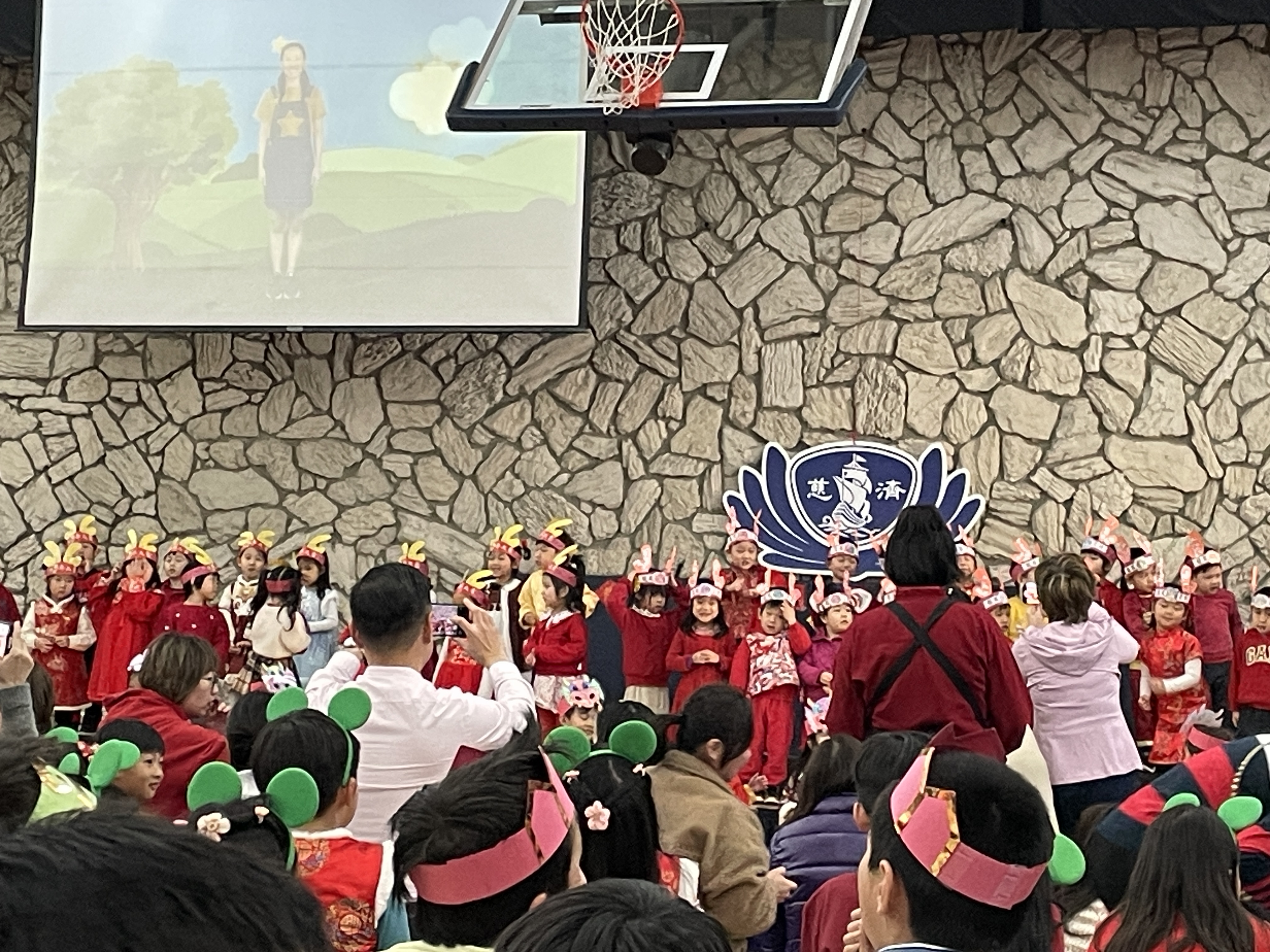
Today I traveled a bit south of where I live to the campus of the Tzu Chi school which I have visited numerous times. First we had a vegetarian lunch–they are Taiwanese Buddhists who advocate a vegetarian, plant based diet as better for the environmental future of Earth. Then all the visitors, who were mostly parents of the children, went to the gym for the program. Various ages wore headdresses to represent the various signs. Some of the youngest children wore dragon headdresses. This is the year of the dragon.

The children sang and danced.

Parents were very enthusiastic about taking photos.

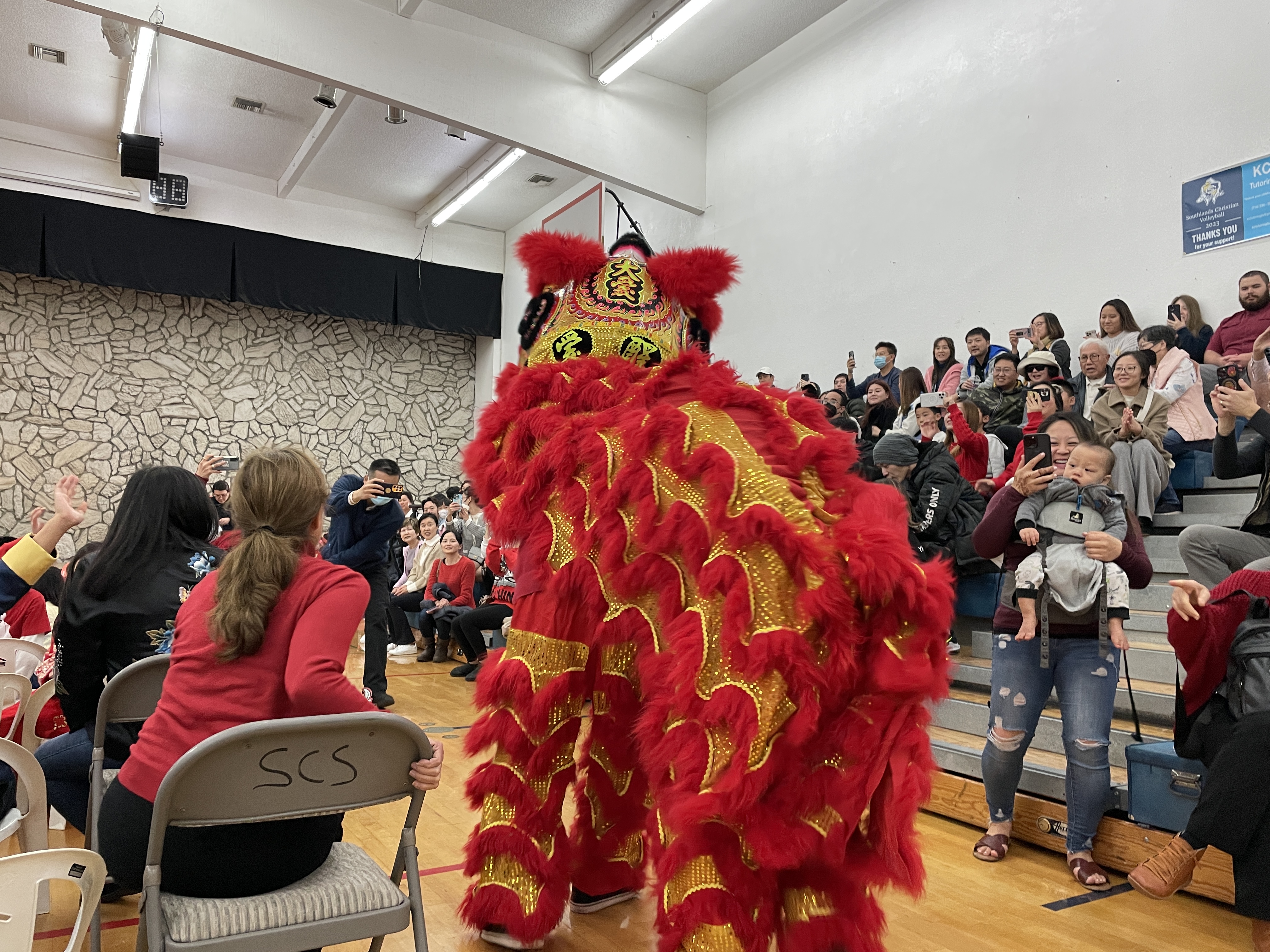
Then after all the students of varying ages finished all their performances, including older students who made a circle around the room and sang plus danced with perfect synchrony, out came the dragon.

It was so much fun to see all the children performing; it was obvious they had worked very hard to accomplish this. It was also enjoyable to see so many happy, enthusiastic parents.

Note: I work with this Buddhist Center teaching character education at local public schools.

Pasta With Beet Sauce


1 medium sized beet cut into pieces and steamed until tender

4 gloves garlic, chopped

1/2 medium sized onion, chopped

2-3 drops basil essential oil or use 1/4 cup leaves

Milk or cream–use plant based milk to make vegan

Saute onion and garlic until tender in enough olive oil to cover bottom of pan. Drain the beets and put into blender, add the sautéed onions and garlic, add basil. Add enough cream or milk to make a thick sauce–put in a little at first, blend, and then adjust to make a thick sauce. Pour back into skillet, and add cooked pasta of your choice. I used gigli from Italy. Stir until well mixed or pour the sauce on top of the pasta when you serve it. I topped with grated asiago cheese.

Baja Trip-7: Tres Mujeres Winery


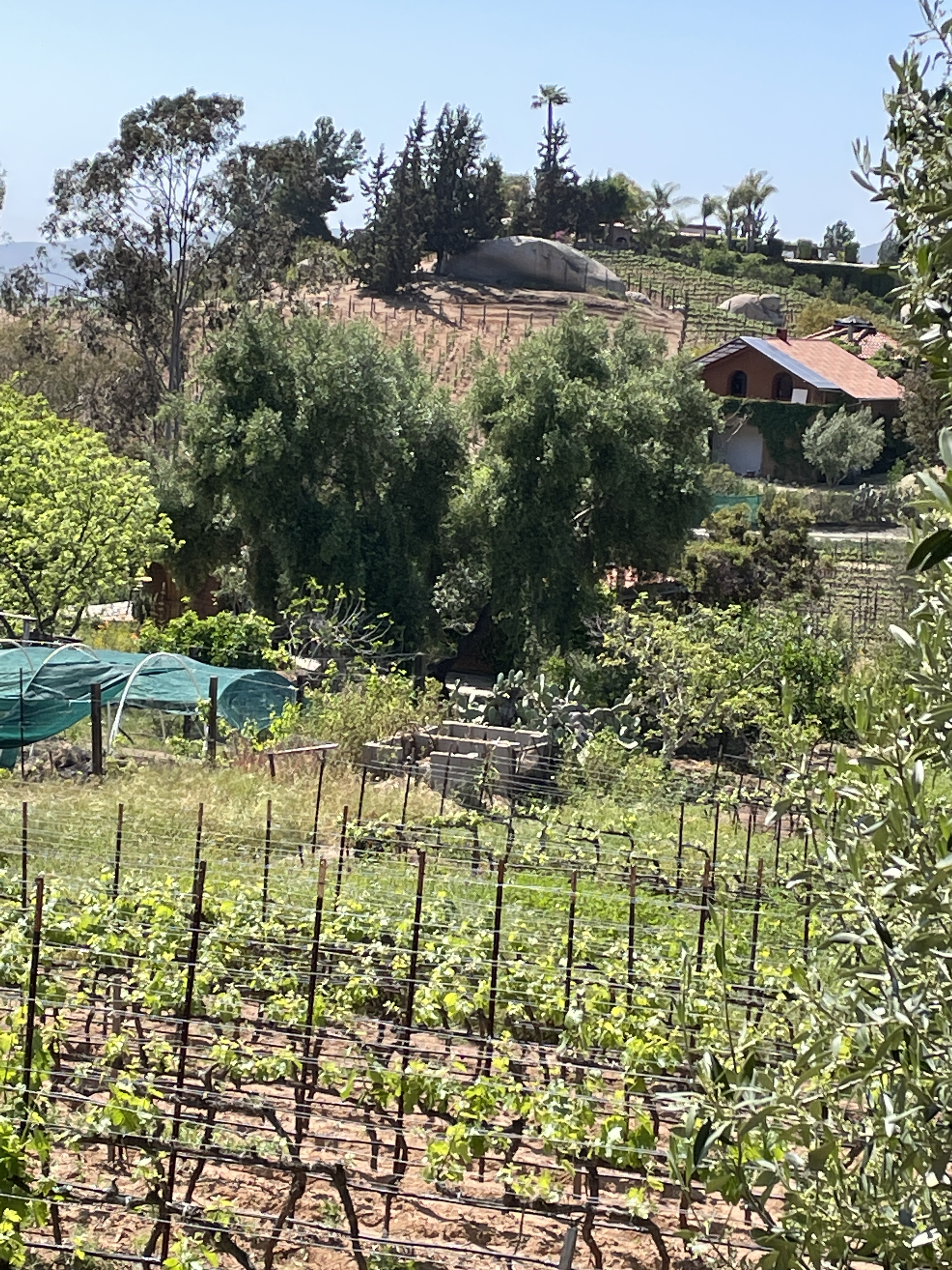
Originally started by three women–see the name, this woman is the only one of the three left as owner. She said she has been doing this for 20 years. The vineyards keep healthy without the use of toxic herbicides or pesticides. She says the breezes from the ocean help with keeping the vines healthy. She also has olive trees and gardens and a small restaurant–outside. The vegetables, flowers, etc. used in the restaurant are grown there. Below is the salad we had for lunch.

Lunch under the trees.

Wine tasting underground. What you notice when you drink all natural wines is that at the bottom of the bottle there is usually a residue.

The path in and out of the tasting room.

Buildings and fences made of local stone and flowers everywhere.

Stones, some quite large, show up everywhere in this part of Valle de Guadalupe. Some buildings, restaurants, other wineries, houses are build around the rocks with rocks as part of the architecture. I took the following photos from Tres Mujeres.

A lot of Valle de Guadalupe reminded me of parts of New Mexico and also the rocky hills around Temecula, California.

Not only are there over 100 vineyards in this valley but also endless olive groves. Locally pressed olive oil can also be purchased at many of the wineries. The other specialty is cheese. We stopped at one shop, the Cremeria Los Globos where they specialized in many cheeses filled with chipotle, black pepper, you name it. Honey is also produced locally and for sale at many wineries. For the most part, everything is all natural.

Roasted Root Vegetables


This is super easy and perfect for the colder weather. It is also good left over warmed up. You can adjust the amount for the number of people you plan to feed.

1 beet sliced about 1/8 inch thick

2 medium parsnips sliced same thickness

1 medium sized sweet potato, peeled and sliced same thickness

1/4 large sweet onion, coarsely chopped

Garlic powder

Olive oil

Heat oven to 425 degrees. Pour enough olive oil in a heavy oven appropriate pot to cover the bottom. Layer the vegetables with the chopped onion and a small amount of olive oil. Sprinkle garlic power over the top. Place lid on the pot. Bake until the vegetables are tender.

You can use any root vegetables. I used some of my favorites. I never bother to peel beets or parsnips. If you buy large parsnips, you may have to remove the core because it can sometimes be rather hard and bitter.