Tips for a Healthier You-2


Given the response I received from the last set of tips, it seems a good cause to periodically add more.  Essential oils hold a special place in my health routine.  I use them for so many things. I have found several especially useful to diffuse at night for prevention of allergy symptoms and to facilitate better sleep.  Although I generally prefer doTerra, I use other brands as well.  However, I have found that since I started using doTerra Breathe at night in a diffuser, my allergy symptoms remain minimal compared to what they were before.

Here are two formula I use at night.  I suggest individuals experiment to see what works for them.  I combine Breathe with other oils.  One formula is approximately 7 drops Breathe and seven drops Cedarwood.  Cedarwood is particularly good to facilitate deep, relaxing sleep.  It helps prevent sinusitis and reduces stress.  I have a large diffuser so you may want to experiment to see what works for you.

The other formula I use at night is Breathe as above combined with equal amounts of lavender and melaleuca (tea tree).  Melaleuca has so many others uses, it seems nearly limitless.  It is especially good for teenage acne and treating infections.  However, I myself have never used it for those purposes.  It is one of those “cure all” oils and reduces inflammation and boosts the immune system.
 

Tips for a Healthier You


Recently, I ran across a variety of tips to lower heart rate and triglycerides, reduce wrinkles, and feel happier and healthier.

  1.  Herbs like coriander, cilantro, oregano, garlic, ginger, thyme, basil, and pepper flakes block fat absorption in the digestive track.  Just add two teaspoons of any of these daily to reduce triglycerides.
  2. You can also lower triglycerides with black tea–eight ounces with every meal.  Research indicates consistency matters.  In one study this routine cut triglycerides 35% in three months.  White and green tea help too.
  3. Slow your heart rate and calm down by listening to relaxing music.  The most effective tempo is 60 beats per minute.  Think Baroque.
  4. One half cup of almonds daily can also reduce heart rate by as much as four points because almonds contain magnesium.
  5. Eat ten large green olives daily to reduce wrinkles and inflammation.  I will admit my concern with this would be the sodium.  Olives generally are quite salty.
  6. Eat sweet potatoes and strawberries to smooth skin.  They are filled with betacarotene and vitamin C.  You can even make a face mask with mashed sweet potatoes–just add a bit of milk and honey.  Leave on face ten minutes and wash off.


Personally, I use essential oils to improve my health and skin.  Every morning I put one drop of essential oil of cardamon in my first cup of coffee.  It improves digestion and helps fight infections. After tiring of my students complaining about the smell in my high school class room, I tried various essential oils in a diffuser.  The one that worked and about which no students complained is rosemary.  It helps with allergies, hay fever, and memory.  Some students jokingly tell me I need to dump the whole bottle in.  It also combats hair loss and dandruff.   I put it in my shampoo.  My favorites, however, are frankincense and myrrh. If your joints or muscles are aching, rub them down with magnesium oil and add a little of these.


Here’s to a healthier, happier you!!

Long Life


If you believe in averages and want to live long, don’t live in the United States of America, a country that failed to make it to the top ten for either men or women.  Some countries appear to be better for one gender than another.  A few countries remain in the top ten for both genders:  Japan, Switzerland, Singapore, Australia, Italy, and Luxembourg.  Iceland’s the place to be if you are a man, Spain for women.  Worldwide the mean for men is 68.1 and for women 72.7. Sadly, the discrepancy from country to country is immense.  Nine countries still show a life expectancy less than 55 years, all in sub-Sahara Africa.  War and AIDS take their toll.

Blue Zones remain the place to grow up and live if you desire a long healthy life.  Where are they?  Okinawa, a peninsula in Costa Rica–I’ve been close, Sardinia, Loma Linda in California–Seventh Day Adventists, to name a few.  Genetics, according to some experts, predicts only twenty per cent of longevity.  Then why do people in these places live long and healthy?  What do they have in common:

-healthy diets with lots of vegetables and fruit

-activity–the people there get a lot of exercise, e.g. climbing up and down the mountains of Sardinia

-a sense of community–people get together often

Some communities in the US plan to become Blue Zones.  Fort Worth, Texas, even has a Blue Zone project which includes encouraging restaurants to provide healthier options, a bike share program, and an initiative to combat childhood obesity.  My guess is that the United States will lag further and further behind unless the obesity epidemic can be controlled.  So far, I don’t see that happening.

What can you do to prolong your own life:

-don’t smoke

-eats lots of fruit and vegetables

-avoid sugar

-eat less meat and more fish

-eat less–Okinawans quit eating when they are 80 per cent full; they even have a saying for this

-spend time with friends and family

-find ways to increase your exercise even if it is as simple as throwing away your TV remote control

If I live the average of my parents and grandparents, I have a long way to go so I must take care of myself to stay healthy.

Apocalyptic Planet-Part Seven: Species Vanish


We all know extinction occurs.  Nearly everyone knows different species of dinosaurs at varied times roamed the earth for millennia.  Bones of all sorts of animals and various hominids are dug up off and on.  Scientists study them, determine their age, where and how they lived.  Scientists and sometimes even average persons develop theories about why they went extinct.  Regardless of which theory a person decides is accurate, these ancient extinctions generally took thousands of years. Recent extinctions are different, e.g. carrier pigeons.  Millions existed a couple of hundreds of years ago; now they are gone.  Why?  Humans.

Various causes exist for the extinctions of ancient species.  A major cause is the climate change caused my the changing tilt of the earth’s axis.  These changes occur over thousands and thousands of years.  What is different now?  Let’s take corn.  Native Americans cultivated rainbow colors of corn in small, frequently irrigated fields.  Where is most corn grown now?  Giant fields of GMO corn grow from horizon to horizon in the Midwest.  And if Monsanto had its way, no other corn would continue to exist for long.   Iowa is a good example.  Wherever this corn is grown, native grasses and other native plants totally disappear, in part due to cultivation.  A bigger issue is herbicides–to have clean fields, nothing and I mean nothing but corn must grow there.  A farmer’s expertise as a farmer is measured my just how super clean his fields are.  The only way to get these totally weedless fields is to use herbicides.  Biodiversity is a key to environmental health.  Little biodiversity exists in giant fields of crops like corn and soybeans.  Fertilizers to obtain huge yields wash downstream and in the Midwest eventually end in the Gulf of Mexico and cause giant marine algae blooms which pulls oxygen from the water to create a dead zone where no marine animals or fish can live.

Perhaps readers have heard of the plight of monarch butterflies.  Compared to just ten years ago, the population has dropped dramatically.  What happened to them?  Roundup.  Over 100,000 tons of Roundup and other brands of glyphosate herbicides are annually applied to crops in the US.  What do monarchs eat?  Milkweed.  Since 1999, 58 per cent of the milkweed has disappeared.  Recently, monarchs experienced a 30 per cent reduction in their numbers in one year.  Are we headed toward a mass extinction?  Some scientists think so.  These scientists are not talking about tigers, elephants, and rhinos being killed at an ever increasing rate for their body parts, but rather about the less noticeable extinctions of various plants and less obvious animals like frogs.  And then there is the problem with bees.  Bees are disappearing at an ever increasing rate due to not only diseases but due to herbicides and pesticides.  Without bees to pollinate the giant fields of almonds and various fruits in California, for example, those foods won’t exist.  See a previous post for more discussion on the importance of bees.  So why care about frogs?  Scientists consider frogs and amphibians in general an indicator of the health of an ecosystem.  Certain more tropical species of frogs are especially subject to the effects of climate change and they are disappearing.

Where I live big bluestem, blue grama, buffalo grass, and other native species grew from horizon to horizon.  This is the high plains.  Root systems of some plants grow twelve feet deep.  It has not rained in over a month.  Where the native grass once grew, crops are now grown.  This time of year finds open fields. Without rain, with the recent endless high winds, dust fills the sky.  To safely return home from town Sunday, I had to turn on the car lights to see.  The dryness fuels wildfires.  Earlier this week, over one hundred homes burned down in a wildfire north of Amarillo.  Drought.

Many human inventions are wonderful and make many lives better, but for some of them, I cannot help but wonder at what cost.


Apocalyptic Planet-Part Four: Seas Rise


As I write this title, it seems a bit counter intuitive that one of the first things I saw this morning was a newspaper discussing many small cities around the Texas Panhandle which are running out of water.  And on the TV news as I write this, the city of Amarillo announces measures being taken to curtail water use, followed by a detailed discussion, explaining how one of these smaller towns plans to address the lack of water.  Drought expands while ice melts and seas rise.

Childs explains sea behavior by comparing it to pouring water back and forth among a bunch of pans.  Ocean behavior varies from place to place.  Louisiana has been losing seacoast at the rate of twelve meters per year and large parts of the Nigerian coastline has lost as much as thirty meters per year, one of the fastest losses on earth–erosion.  The moon causes tides twice a day changing sea levels on the average of two meters each time.  Historically most sea level changes are long term changes.  A major cause of sea level change is temperature.  Half the current sea level rise can be attributed to thermal expansion.  Water warms and spreads out.  Not only does heat expand near the sea surface, but now also expands into depths not previously affected.  Findings by two oceanographers, Purkey and Johnson, indicate an increase in ocean heat 16 per cent greater than previously thought.  Oceans are the largest reservoirs of heat on earth.  Once heated, their size makes them slow to cool.

Purkey also notes that even in the depths of the seas, waves transfer heat.  However, because of the size of the Pacific, an event that occurred forty years ago in the southern Pacific will not reach the northern Pacific for approximately those forty years.  Thus, the warming and subsequent ice melt we see in the north Pacific started in the south Pacific forty years ago.  Another scientist, Carl Wunsch, notes that earth changes remarkably without human intervention.  Nevertheless, he recommends humans do something to reduce carbon dioxide emissions as a precautionary measure in addition to discouraging people from settling in low lying areas.  Unfortunately, rising seas do not bode well for much of the earth’s population who live in exactly these low lying areas:  all of Bangladesh, Venice, Shanghai, New Orleans, Bangkok, the Marshall Islands, and many US coastal cities to name just a few places.

St. Lawrence Island north of the Aleutians provides a perfect example of what is happening.  Sea ice breaks up too early, fish species they used to see are gone replaced by new ones they never saw before, and the population of seals and sea lions has altered.  Cancer rates in the villages there have risen dramatically caused in part by the toxic poisons concentrated in the meat of the seals, whales, and salmon they harvest from our polluted oceans.  In 2008, they brought a lawsuit against Exxon, Chevron, and Mobil, claiming that these companies are the world’s major contributors to global warming.  They want these companies to pay for moving their villages to higher ground.  Sea rise necessitates the move.  They lost in District Court, but the case is under appeal.  The court cited that the chain of events causing their predicament is too long to lay blame in one place.  Childs notes that we really need such places to endure, places where people know how to lead minimalist lives, places where people know how to survive.

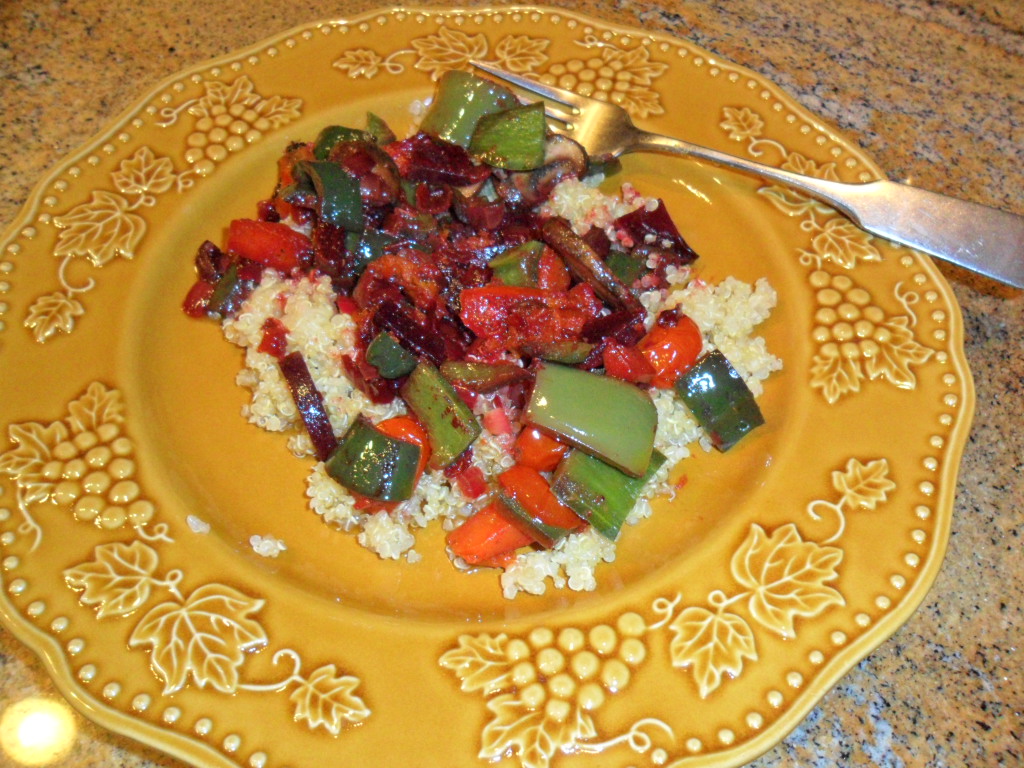
Curried Vegetables with Quinoa


This recipe originated out of my desire to learn to like quinoa.  Except for some quinoa cakes at a local restaurant, I had never eaten quinoa that I thought delicious.  Actually, I found it a dreadfully boring food.  Nevertheless, I became determined to find a way to like it.  Why?  Nutrition.  It is good for you.  So let’s start with how I learned to cook quinoa so it is actually tasty.

Quinoa

Olive oil

1 cup quinoa

1 3/4 cups water

1 tablespoon finely chopped garlic–I am lazy about garlic and buy it by the giant jarful, already chopped

1 heaping teaspoon vegetable or chicken base–I use Better Than Bouillon

Rinse quinoa thoroughly–it requires an extremely fine strainer.  Pour enough olive oil in a medium sauce pan to cover the bottom.  Place the chopped garlic in the olive oil and sauté a minute or so at medium high heat. Add the quinoa, stir quickly to mix with the garlic and oil mixture.  Add the water and base.  Stir thoroughly to combine the base with the other ingredients. Bring to a boil, turn heat down to low.  Cook approximate 20 minutes or until the quinoa has absorbed the liquid and is fluffy.  Quinoa reheats well in a microwave so you can make extra for meals later.

Curried Vegetables

1/2 medium purple onion, chopped

1 large poblano pepper, seeded and coarsely chopped

3-4 portabella mushrooms, sliced

1 large jalapeño pepper, seeded and coarsely chopped

1 small beet, sliced and cut into smaller pieces

1/2 cup coarsely chopped butternut squash

Olive oil

1/2 tsp. curry powder–I used Malaysian Seven Seas Curry by Spice Appeal

1/2 tsp. masala–I used Chana Masala by Spice Appeal

Use whatever curry you prefer.  This curry is a mite hot.

Saute the onion, mushrooms, squash, and beets in olive oil until slightly tender.  Add spices and peppers and sauté until tender but still slightly crisp.  Serve over the quinoa or rice.

Regarding olive oil:  I use it to make nearly every kind of food from all over the world.  I use a lot because I really like it.  I have even made pie crust out of olive oil.  It is one of those few oils you can use and know it is good for you.

SAM_1426

Summer Salad: Garbanzo Beans and Corn


The first Sunday is potluck Sunday at the Unitarian Universalist Fellowship in Amarillo, Texas, about 14 miles from where I live.  Usually, for years, I have made a certain pie that many like.  This morning I neither felt the inclination nor the had the time because I went out to feed horses and work on my steep drive.  Plus, the forecast predicted a quite hot day, 98 degrees Fahrenheit, making me disinclined to heat up the oven.  I opened my pantry door, viewed the canned goods and created this recipe.  Several asked how I made it; apparently my experiment met with success.

2 15 oz. cans garbanzo beans, drained and rinsed

1 15 oz. can whole kernel corn, drained

1/4 medium size purple onion, finely chopped

1 medium size red bell pepper, chopped

1/3 cup medium size black olives, sliced

1/4 cup (or amount to suit your own personal taste) red wine vinegar

1/2 cup olive oil

2 tsp. ground cumin

2 tsp. coriander seeds, ground

freshly ground black pepper to taste

Mix all the above.  Chill and serve.  Personally, I think this might have been even better if allowed to marinate to blend all the flavors.  This is easy,  nutritious, and vegan.

Do you like to eat? Bees and the Food Supply


SAM_1074Do you like to eat?  Do you eat almonds, apples, cherries, watermelon, blueberries, or cantaloupe?  In fact, the biggest factor limiting the world’s food supply is not war, drought, or any of the factors you commonly hear about.  The world’s food supply is limited by the amount of bees available for pollination.  In the last five years in the United States alone, approximately one million honey bee colonies died each year, about one third of our national bee herd.  Bees are in danger of extinction.  Native to Southeast Asia, honey bees were domesticated long before written history, before the building of the Egyptian pyramids.  Thousands of species of bees exist, but honey bees carry the main load of pollination for cultivated crops.

More than 740,000 acres of almonds, California’s leading agricultural export,  remain in cultivation in the Central Valley of California.  Pollination depends on bumble bees, honey bees, and wild bees.  Sadly, the wild bees are mostly extinct, killed by pesticides and habitat loss.  Now pollination depends on traveling bee keepers and their honey bees.  Today, commercial bee keepers number one fourth of what they did in 1980.  To get enough bees the almond (and cherry and apple, etc.) growers hire these bee keepers to install approximately 2 million bee hives to work the pollination.  Almonds alone require at least 1.5 million hives.  Each almond tree’s blossoms number 25,000 and at 135 or so trees per acre, that adds up to 3.5 million flowers to pollinate.  The difference between a poor harvest and a great one depends on bees.  After the bees finish their work in the Central Valley and other warmer climates, the commercial keepers take them to places like Idaho and North Dakota for the summer where they sip alfalfa, buckwheat, goldenrod, and sweet clover blossoms and produce the honey sold in groceries.

Where have all the bees gone?  What leads them toward extinction?  In 2006-2008, beehives across the world from Europe to here to Indian and Brazil nearly collapsed.  Causes vary:  foulbrood–a bacterial fungus, wasps, ants, mice, a host of viruses, nosema–bee diarrhea, and certain pesticides.  What can we do?  First, we can ban certain pesticides that are known to harm bees.  Second, we need to grow more flowers and blooming weeds (yes, I said weeds) to encourage a broader spectrum of healthy bees for pollination.  Honey bees cannot do it all alone.  The lack of sufficient flowers is the result of not only pesticides, but also the increase in lawns.  If you personally want to make a difference for bees and ultimately our food supply, let the wild flowers grow, plant more flowers and less lawn, limit pesticide use.

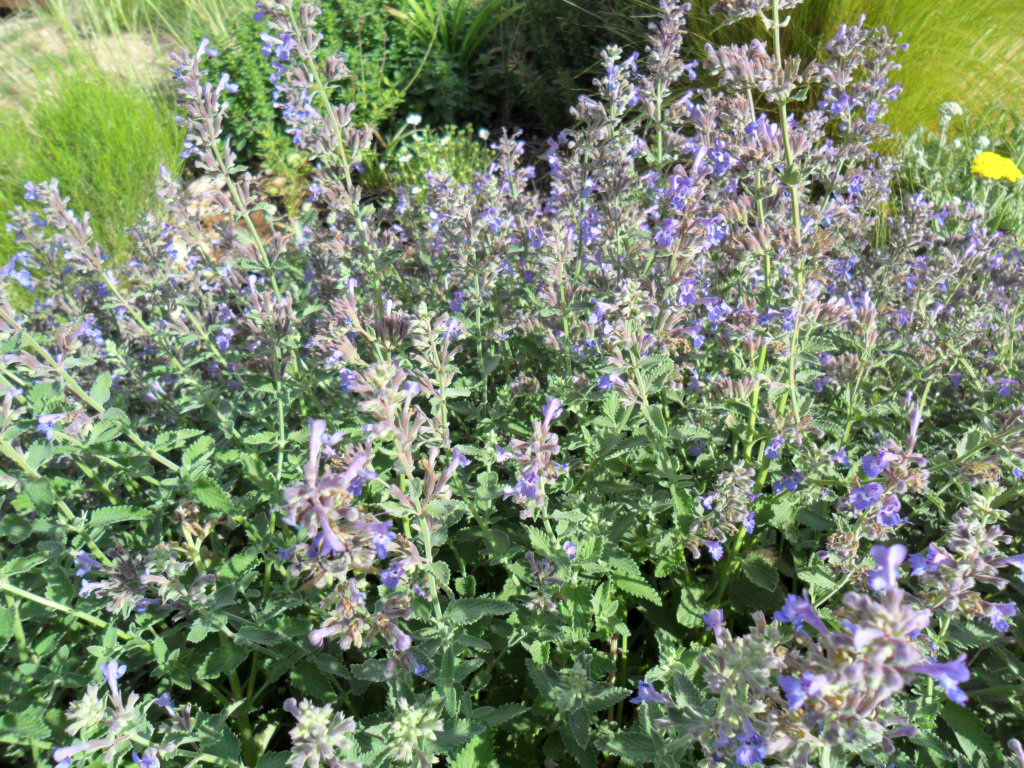
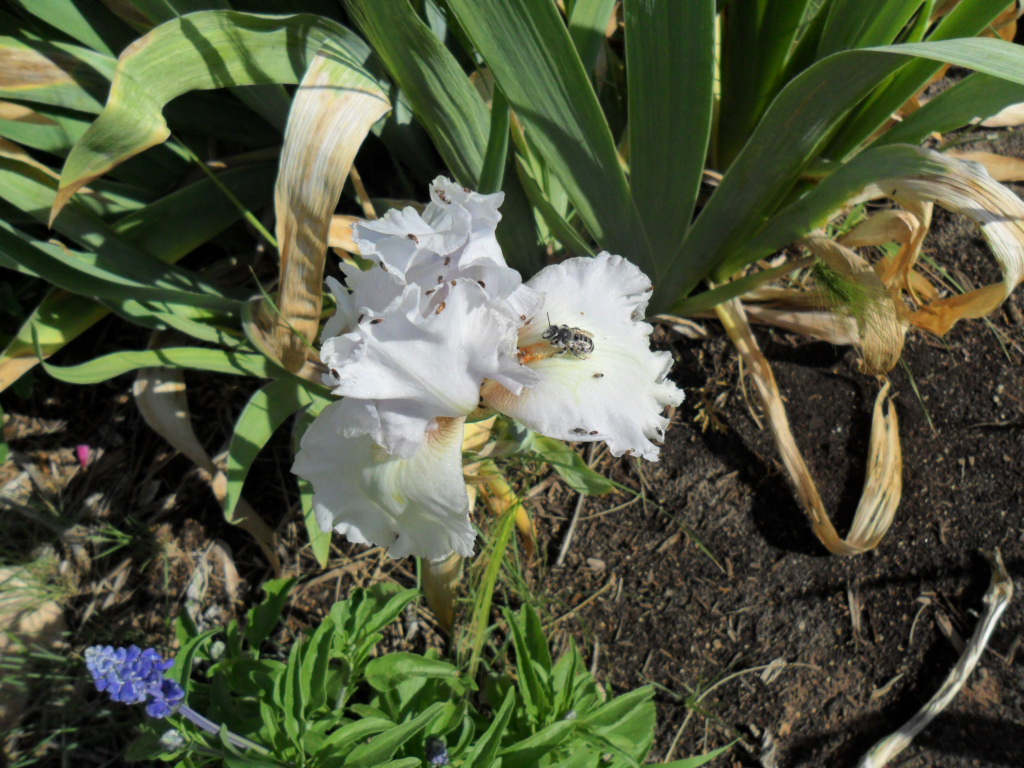
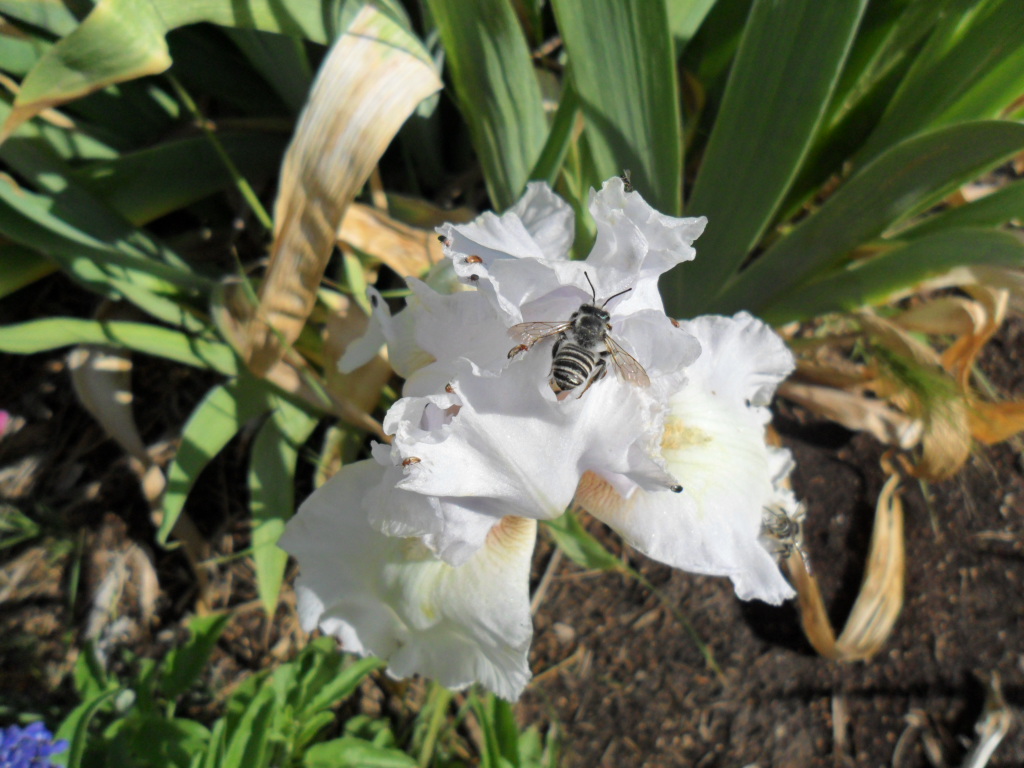
This morning I went out to my xeroscape garden–I have no lawn–and photographed bees.  At one catmint plant, so many busy bees made a clearly audible buzzing sound.  I witnessed at least four different kinds–species–of bees.  These SAM_1076

SAM_1081

SAM_1077

SAM_1078photographs illustrate at least several different types of flowers bees love.

Vegetables with Coriander, Cumin, and Tumeric


SAM_1010Vegetables are my favorite food.  Interspersed with the poems and essays I publish, I try to post unique recipes.  My recipes come from years of interaction and relationships with people from all over the world, husbands, exchange students who enhance my extended family, travels to Asia and Latin America, my international friends near where I live.  Recently, after a dinner party, I had left over vegetables that needed cooking so one evening home from work, I created this recipe.  It is vegan by accident not intention.  One could add fish, chicken, turkey leftovers (see recent post for turkey curry), shrimp…you get the idea.  The options are endless.  I used the vegetables I needed to use up, but take a look in your refrigerator and try what you have on hand.  Experiment.

1 medium sized beet, peeled and cut into half coins

1 poblano pepper seeded and chopped

1/2 purple onion, chopped

Several pieces of Swiss chard, stems removed and chopped, leaves cut into large, bite sized pieces

Garlic cloves, peeled and chopped–amount to your own taste

Olive oil

1 teaspoon coriander seeds, ground

1/2 teaspoon cumin–or extra to taste

1 teaspoon ground turmeric

Saute the beets, chopped Swiss chard stems, garlic, and onions in olive oil until beets are cooked through.  Add spices and poblano pepper.  When  the pepper is nearly done, add the Swiss chard leaves and cook only until wilted.

Serve over rice.  I used equal amounts of black, red, and Jasmine rice.

How to cook rice:

1/3 cup black rice

1/3 cup red rice

1/3 cup brown or Jasmine rice–your preference

1 teaspoon chopped garlic

1 teaspoon concentrated broth/bouillon–I use Better Than Bouillon brand which is available Vegetarian as well as Chicken, etc.

Pour enough olive oil into a saucepan to cover the bottom.  Add the rice and chopped garlic.  Saute at high heat until rice starts to stick, stirring constantly.  Add two cups water and the bouillon.  Stir rapidly until bouillon dissolves.  Turn down heat to low, cover the top of the saucepan with four paper towels or a tea towel folded to make several layers.  Put sauce pan lid on the top and cook for approximately one hour.  Red, brown, and black rice take twice as long to cook as white rice.  Do  not peek while rice is cooking.  Lifting the lid to check causes the rice to be mushy.

Aging


“Rage, Rage, against the dying of the light.”  Dylan Thomas

Custom says, “Age gracefully.”

Are they crazy, dumb!

Who wants to look

old

wrinkled

grey?

They lie!

All of them.

Who wants a broken mind

confused

unfocused

lost?

Shoot me!

Burn my bones.

Scatter them

in the desert sands

to feed

desert willow where

rattlesnakes lie

searching for shade.