Spicy Brisket for a Crowd


Originally, I had no intention of posting this.  I was simply making an easy dinner for ten guests on a hot summer day.  However, I received so many compliments that I decided to post it even though I took no pictures.  The only time I ever cook brisket occurs when quite a few people are coming over and I do not want much to do just before the food is served.  There is another rather odd reason I like to cook brisket in the summer:  I can use my electric roaster and plug it into the outlet on the patio and not heat up the house.  Since I do not particularly like barbecue, I try to do something different.

1 4-5 lb. brisket, trimmed of fat

1 large purple onion, coarsely chopped

Cumin, enough to completely cover the top of the brisket when sprinkled over it

2-3 Tbls. mild Mexican chili seasoning

1-2 tsp. coriander, ground  (optional)

Brown sugar

1 bottle cheap, dry, red wine

1 15 0z. can chopped, salt free tomatoes

4-5 jalapeño peppers (optional)

Place the brisket in a roaster fat side down and pour in the red wine to a depth of 1 1/2 inches.  Cover the top with the cumin and chili seasoning.  Evenly scatter the chopped onions over the top.  Bake at 325 for 2 hours.  Turn the brisket over so that the fat side is up.  Bake another 1-2 hours.  Turn the temperature down to 275 and turn over again so the the fat side is down.  Cover the top of the brisket with the tomatoes.  Sprinkle two small handfuls of brown sugar evenly over the top of the tomatoes.  If using the coriander, sprinkle it over the brown sugar.  Check to make sure the broth is not becoming too dry and add extra wine as needed. Bake another 1-2 hours.  If using the jalapeños, cut into halves and deseed. Add them about one hour before serving.  Usually, I cook brisket 6-7 hours.  I do not want it to become too dry, but I do want the broth to cook down so that it creates a natural sauce for the meat without using any thickening.  Just before serving, slice the brisket into pieces and stir around so the sauce covers all the pieces of meat.  I like to use the jalapeños this way because it does not increase the “heat” for those who do not like hot food, but there are tasty tidbit of hot for those who do.  Enjoy!

Costa Rica 5, Fauna


Costa Rica continued to surprise me.  I did expect some of the animals, photos of which are posted below,  but did not expect so many cattle, especially the dairy cattle, including Jerseys, Guernseys, and Holsteins,  that populated the steep mountain slopes.  They grazed everywhere up to their tummies in grass on even the steepest mountainsides.  I kept wondering how they learned to balance themselves and why they did not fall over, catapulting down the mountain.  Everyone in the group commented on the fat, happy cows.  Such abundance resulted in fabulous steaming milk for morning coffee, rich cheeses, and the creamiest ice cream imaginable.

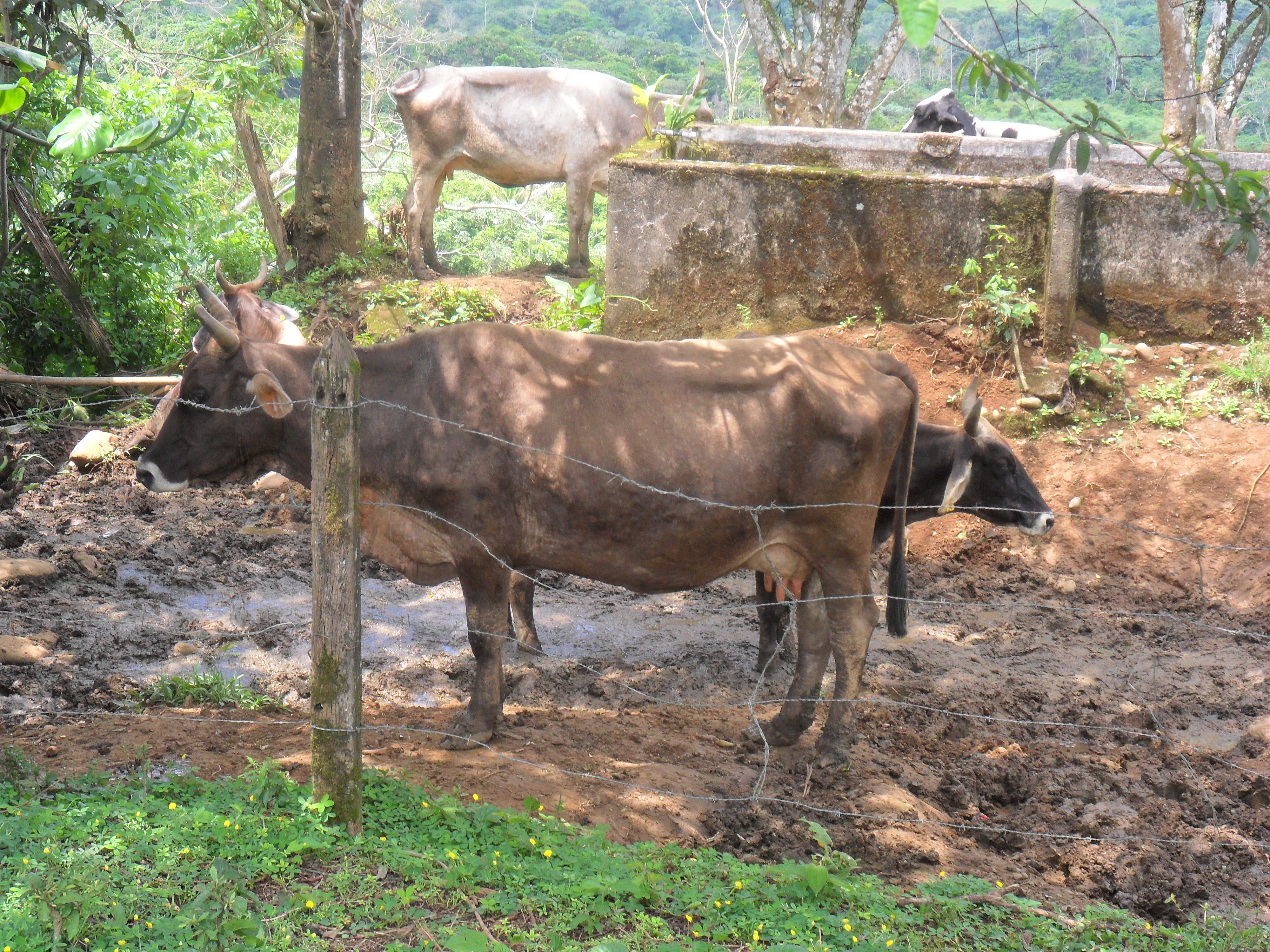
A cow pen near the top of a mountain on the Caribbean side next to the restaurant that sold cheese and where I ate the raw turtle egg.  Most of the cows roamed free up and down the mountainsides.

In the lowlands on both the Pacific and Caribbean sides of the country, Brahma cattle relaxed or grazed in the lush grass.  It reminded me of the landscape near Veracruz, Mexico, where I lived many years ago.

The most common meat besides fish, most of which is talapia, is chicken.  Near the mountain top where the Jersey cow above was photographed, I saw a huge shed and when I asked about it, was told it was a chicken farm. However, pork is frequently served as well and occasionally beef.  I took the following photograph at a small place on a dirt road.  We stopped there to drink coconut water.  The spotted, pregnant pig was due soon.  However, the fate of the black pig remained less lovely–food.  Their girth resulted from eating coconuts; they constantly gorged themselves.

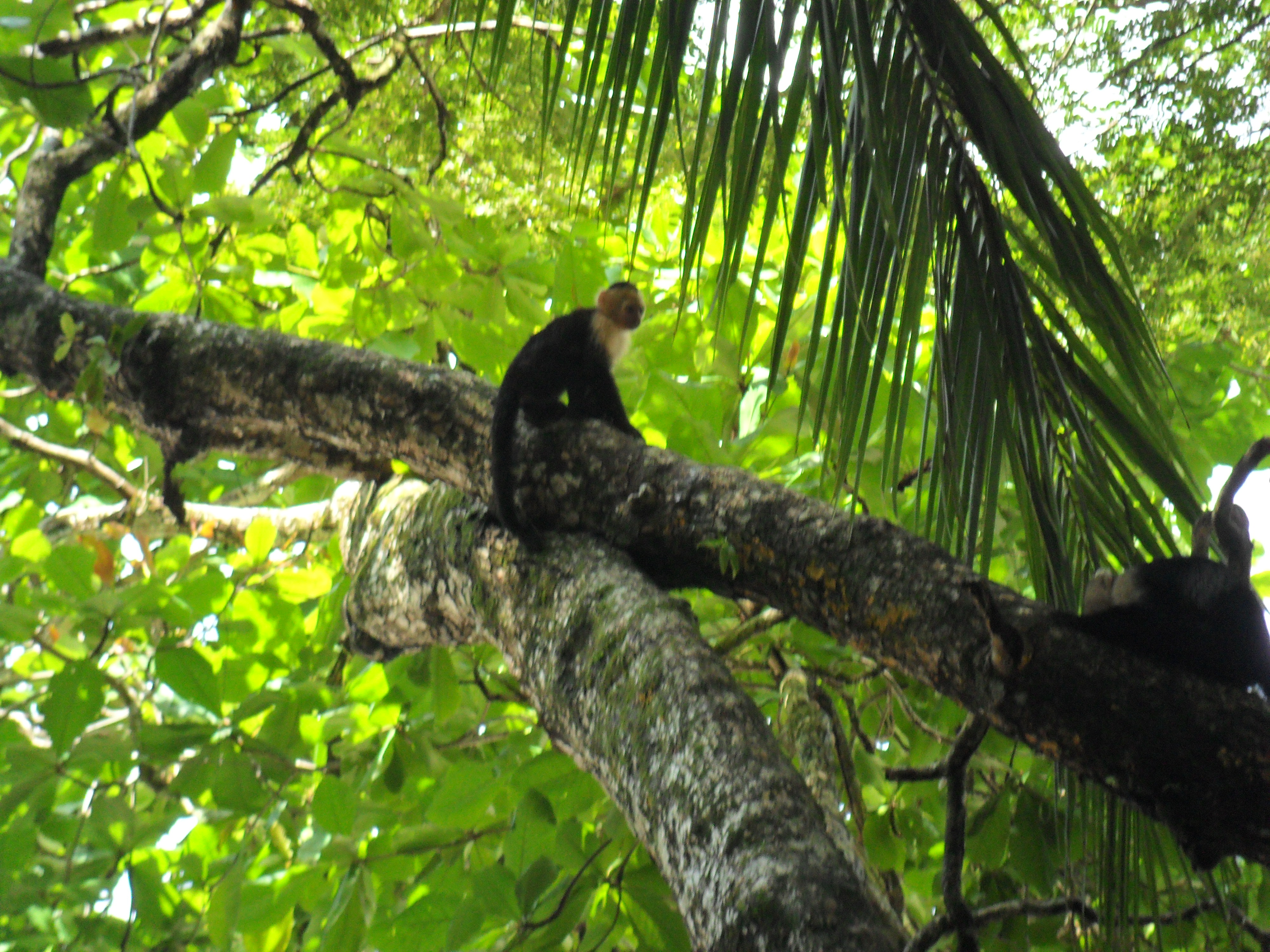
Birds abound, from the protected scarlet macaws on the Pacific Coast to tiny hummingbirds.  Hundreds of species I had never seen before and many I had seen rather often like various egrets and herons. And then there were the monkeys which I did expect to see but found difficult to photograph with my ordinary camera.

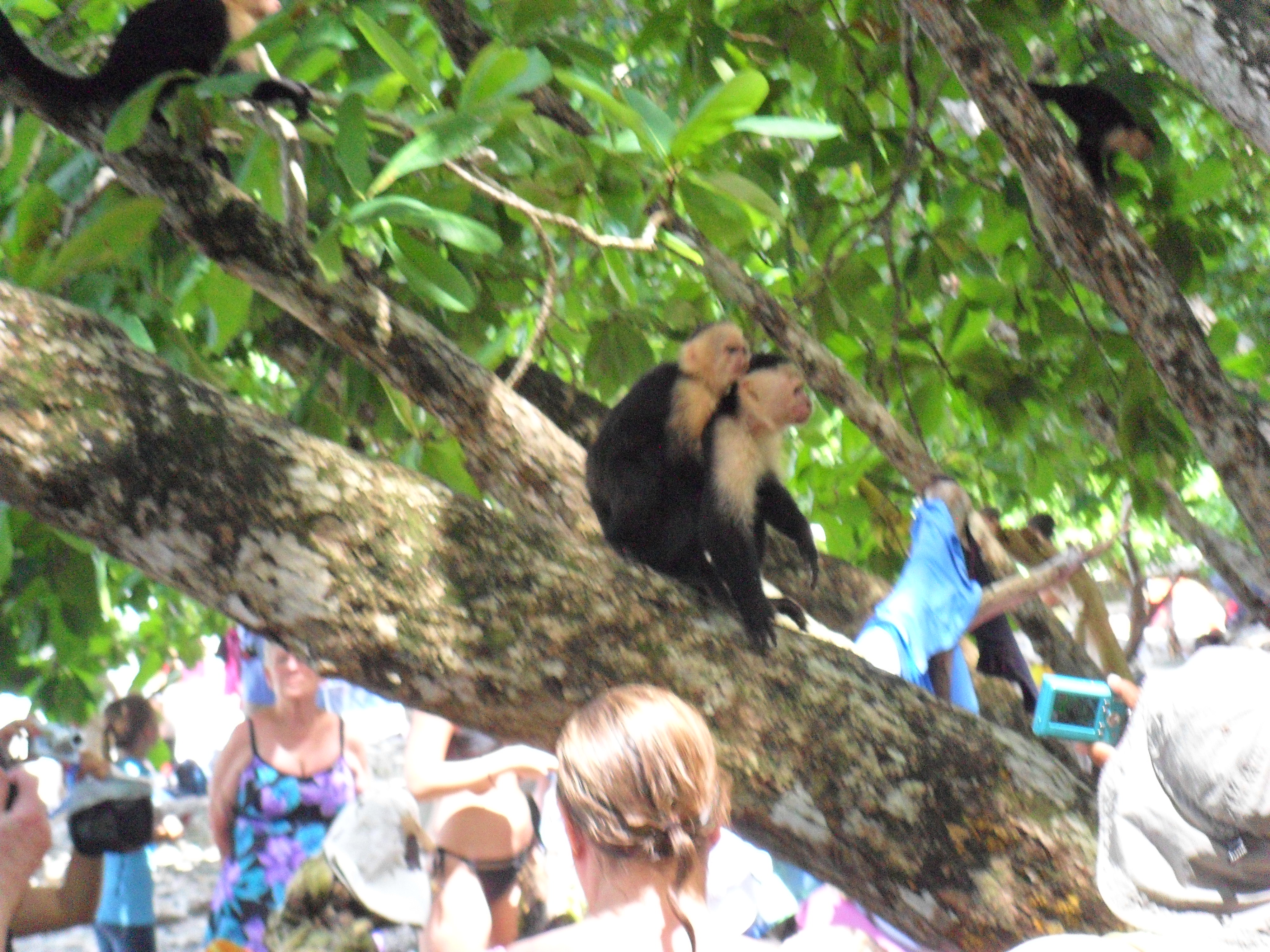
These white faced monkeys roamed everywhere near the beaches at Manual Antonio National Park, begging for food and if that did not work, actually stealing it.

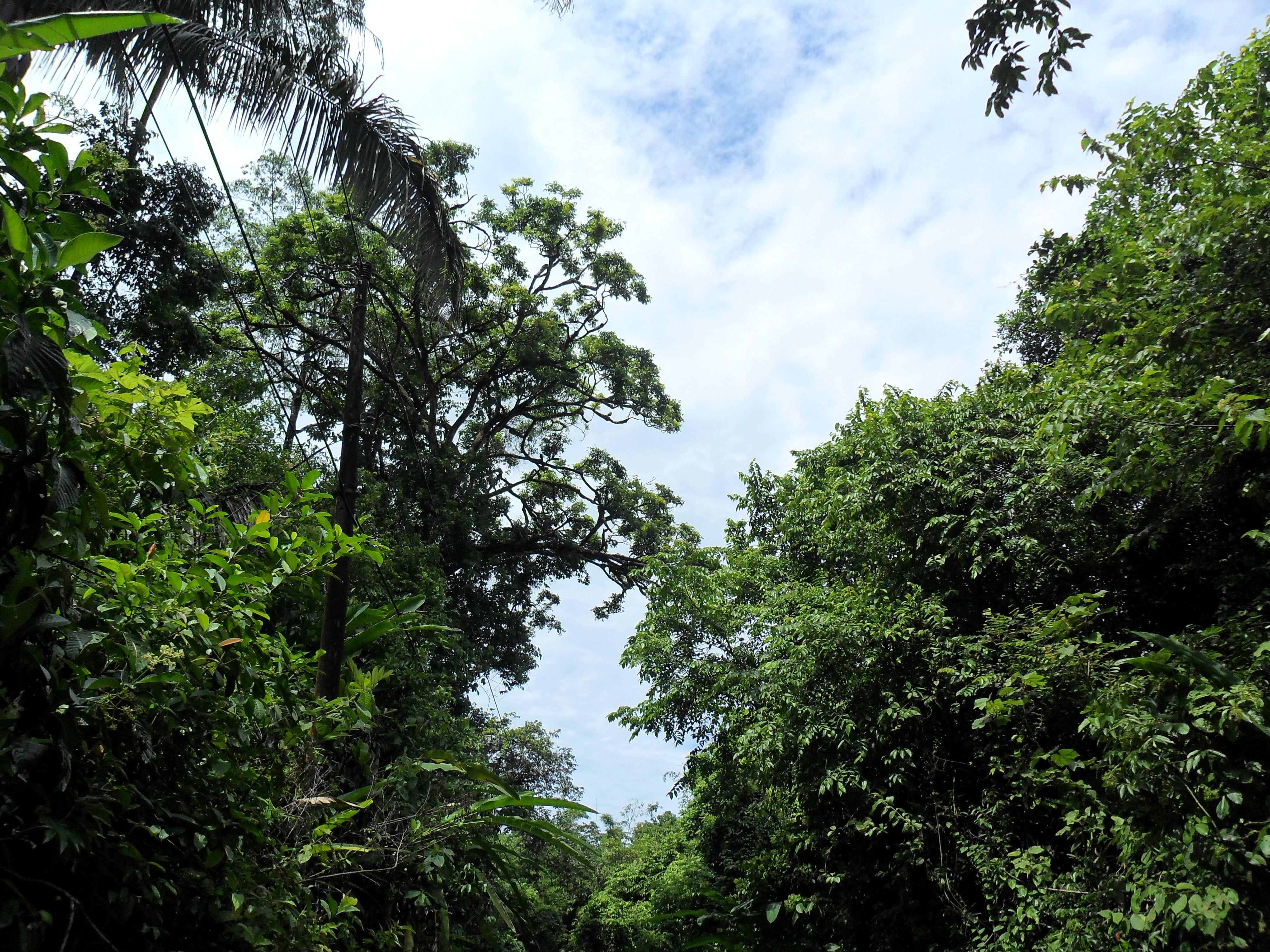
While the white face monkeys remained highly visible, the howler monkeys could be heard easily but were much harder to locate because they tend to stay high in the tallest trees.  Without a good telescoping lens, this was the best I could do.

Look for the dark blob in the middle of the photo.  They also move fast so hard to locate and follow and even harder to photograph under those conditions.

Just as we arrived, walking, at the entrance to Manuel Antonio, a downpour began.  Not fond of drenchings, I stayed back, hoping it would stop, and suddenly saw a small sloth, the grey spot in the nearly leafless tree in the middle of this photo.

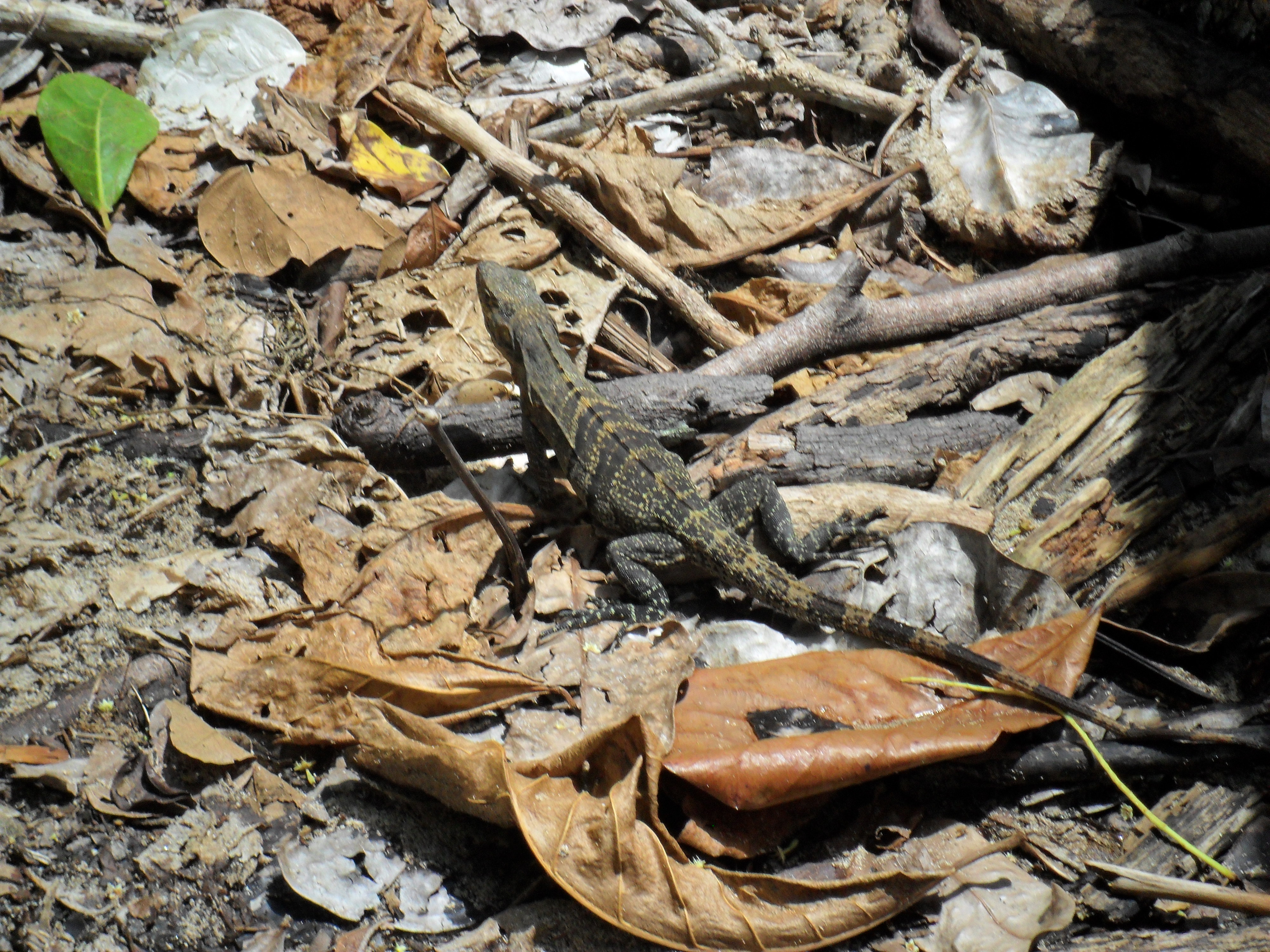
Lizards of many varieties abound.  The tree near my hotel room in Jaco contained four iguanas that appeared nearly lifeless since they never seemed to move.  Again, without a better lens I could not really photograph them.  However, at Manuel Antonio many other kinds of lizards ran here and there only slightly afraid and relatively easy to photograph.

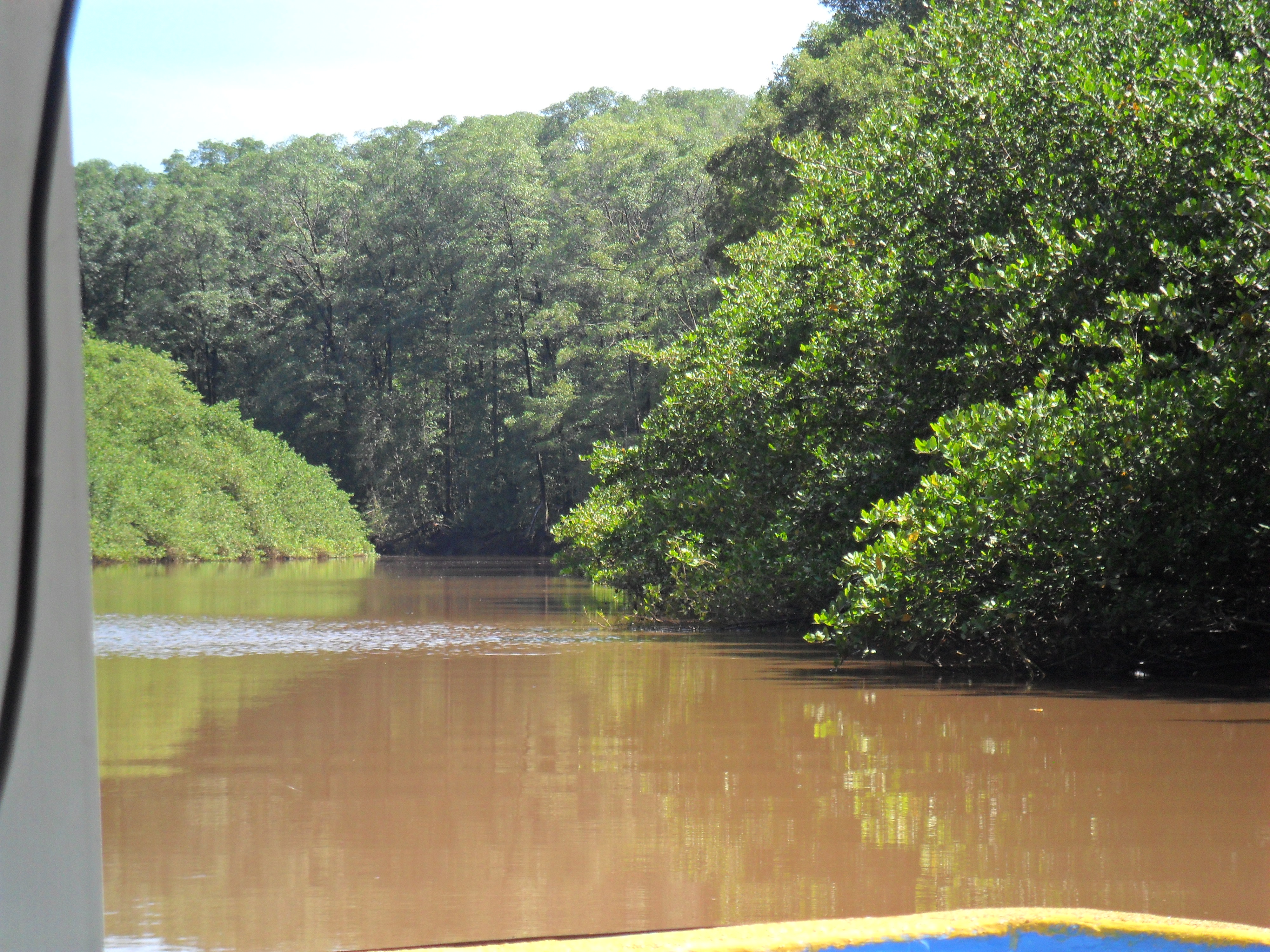
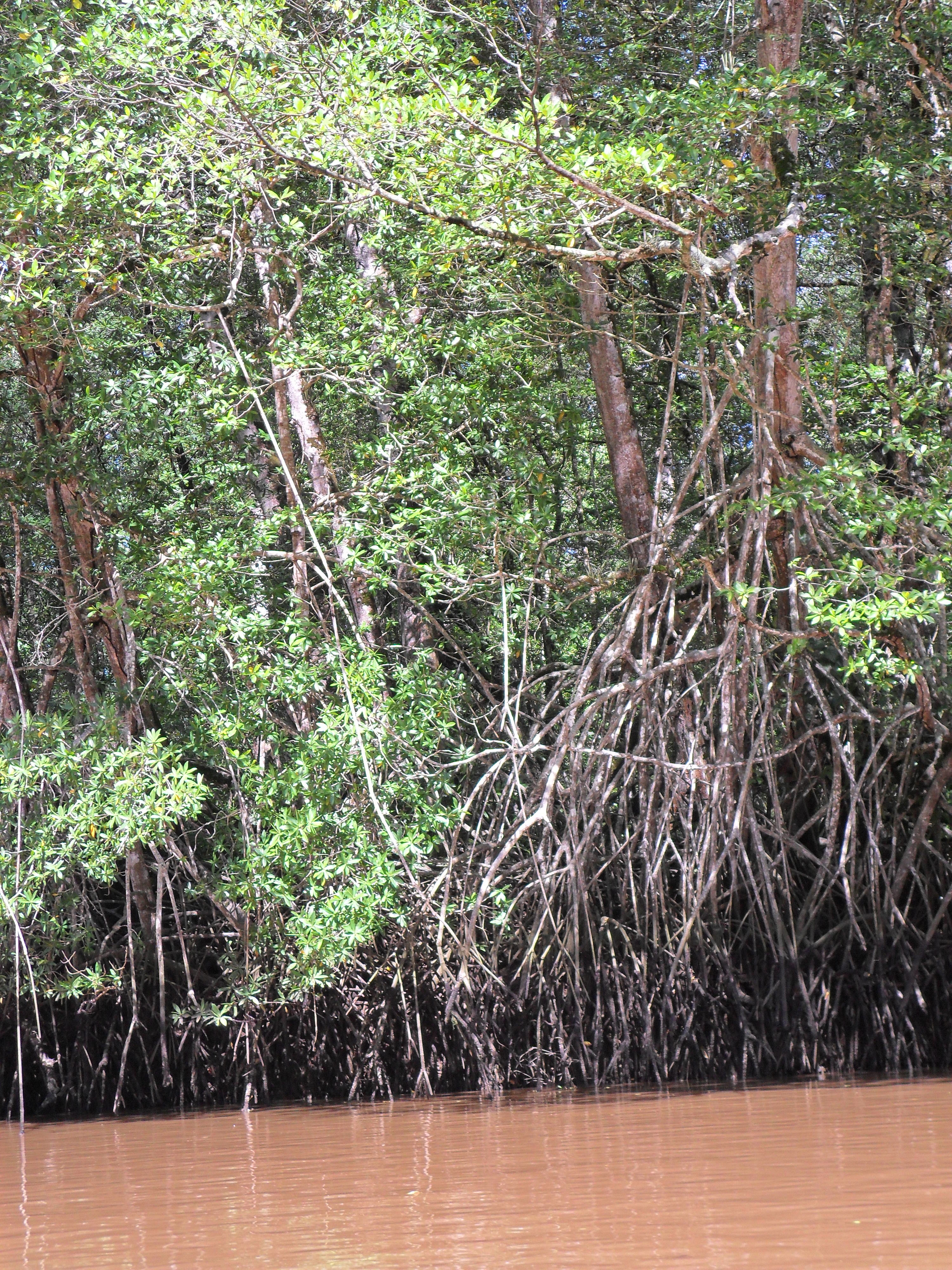
When I think back as to what I expected, it never occurred to me that huge, brackish (salt) water crocodiles existed in such abundance or even existed there at all.  Near Jaco, on the Rio Grande Tarcoles the Costa Ricans created a preserve to protect the endangered scarlet macaws and crocodiles.  We arrived early in the morning and floated around the river, into a mangrove swamp, watching birds and crocodiles.  The list of common birds included 58 species and we saw others that the guide referred to as “bonus birds”.  The following photos come from this lovely, relaxing river ride.  Truly, I loved this part of the trip.

Entering the mangrove swamp.

Two months old.

Where the Rio Grande Tarcoles enters the Pacific Ocean.

The boat captain feeding the crocodile in the mud barefoot.  I thought about touching this one he was so close until I was told they could swim as fast as 55 miles per hour.  It occurred to me that he could turn around really quickly and snap off my hand so…

Pura Vida: 2, Comida (Costa Rican food)


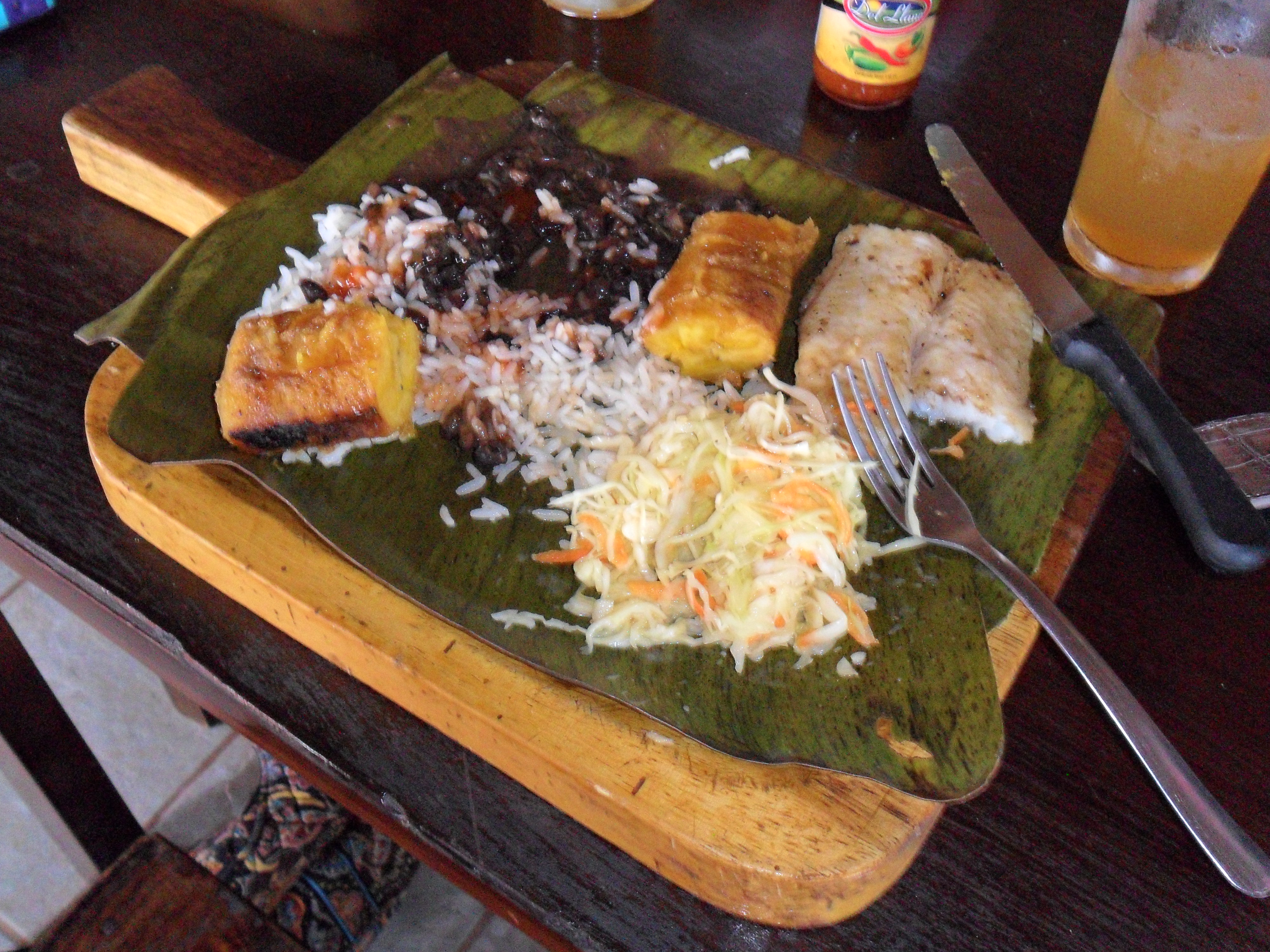
Costa Ricans appear to be very, very healthy.  Their food mainly consists of rice, black beans, salad, cooked vegetables, chicken or fish, fruit (usually pineapple, papaya, mangoes) and sometimes fried plantain.  In fact fried plantain was the only fried food, except occasionally cheese.  The food is plain with few spices, even though hot sauce, especially their version of tobasco,  is often available if you want it.  The national dish is gallo pinto:  left over white rice mixed nearly equally with black beans and sometimes a little chopped onion and bell peppers sautéed in oil.  This is a breakfast staple, but frequently served three times a day.  Sometimes, although black beans and rice are usually served at lunch and dinner, they are not mixed together then.  Often salad is their version of cole slaw, but tastes nothing like cole slaw here.  Usually both cabbage and carrots are very finely shredded and mixed together.  I never did quite figure out the dressing, in part because it varied greatly.  When the salad was with lettuce, it was also more finely chopped than we usually do here in the US and served with various dressings including olive oil.  The freshness of the salads stood out–no little bits of brown edges in Costa Rica.

The coffee, well, just lets say, I miss it.  Pitchers of steaming, strong, mountain grown coffee served with pitchers of steaming, rich milk.  In the mountains everywhere Jersey, Guernsey, and Holstein cows roamed up to their tummies in grass.  Happy cows for sure, producing rich milk for coffee and rich white cheese, which is served for breakfast.  Yes, breakfast, sometimes plain and sometimes fried.  Oh, and I cannot forget the ice cream.  Beyond creamy and smooth and rich.

There are sweets, usually made as snacks with coconut especially.  This was my favorite.

Obesity appeared to be non-existent.  I did see a few chubby people but no one really excessively over weight.  Perhaps diet is one reason, but they walk a lot even though most have cars.  They appear to drive them only if going some distance.  In the mountains I saw a lot of people riding horses.

The biggest food adventure for me occurred while waiting around near a little family owned restaurant at the top of a mountain.  All but four of us and the bus driver had gone river rafting.  We disembarked from the bus and walked around to kill time, chit chatting about this and that in Spanish.  Suddenly the restaurant owner came out with his grandson, unlocked the fence gate, and invited us in.  While sitting at the bar conversing with him and Hector, the bus driver, I noticed the menu posted on the wall.  It included huevo de tortuga.  Previous information given to us indicated that Costa Rican law protected turtles (tortugas).  I asked how he could serve this.  He told me it depended on the species of turtle and that he could acquire only a limited amount of them.  Suddenly, in front of me, Lisa, the other woman who did not go rafting and is pregnant, and Hector appeared three glasses that looked like giant, triple sized, shot glasses.  Each one contained a raw turtle egg immersed in red hot sauce the consistency of tobasco sauce.  Instructions and gestures indicated this was to be downed like a shot of tequila.  Lisa stuck her tongue in the sauce and said it was ok.  She downed hers first and said, “This is not all that bad.”  The restaurant owner told her it held great nutrition for her unborn baby.  I translated.  It became very clear to me that I had no choice but to down mine as well.  Hector downed his; then I mine.  Lisa’s assessment was correct; it was ok inspite of the turtle egg feeling like a rather solid but squishy mass as it slid down my throat.  The hot sauce made it possible.  Lisa downed a second one; Hector and I declined.  This experience remains one of the highlights of my trip:  relaxing in the middle of nowhere with a local family in their little restaurant.  Pura vida!!!!

Pura Vida


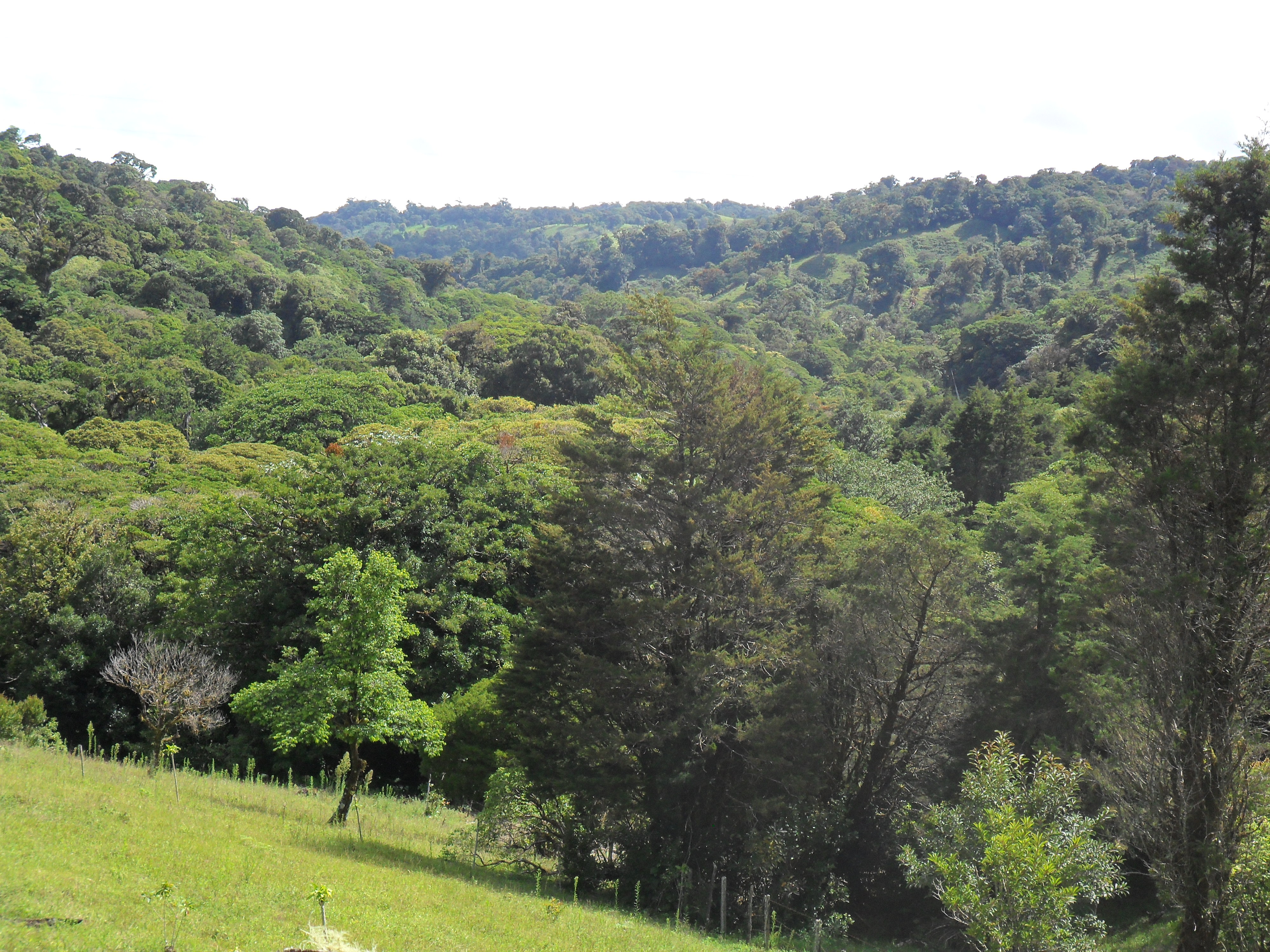
Everywhere in Costa Rica one hears Pura Vida.  It seems to be the national motto.  I have been here for a week.  This is the greenist, healthiest, cleanist, enviromentally conscious, most mountainous place I have ever been.  Few people smoke, there is no salt on the table anywhere, the food is mostly rice, black beans, fruit, and vegetables.  No hot peppers here unless they are on the Caribbean side where I have not gone yet.  When I return home later this week, I will post photos with written details, including some food photos and explanations.  Today I saw howler monkeys, iguanas, other lizards, numerous birds, white faced monkeys, sloths, and agoutis.  Tomorrow will start out by going to a place with lots of crocodiles and scarlet macaws.  This time of year it rains incessantly.  I have been soaked several times and nothing dries out. Even though I am not a lover of rain or being wet, it is impossible not to love this place.  Pura Vida.

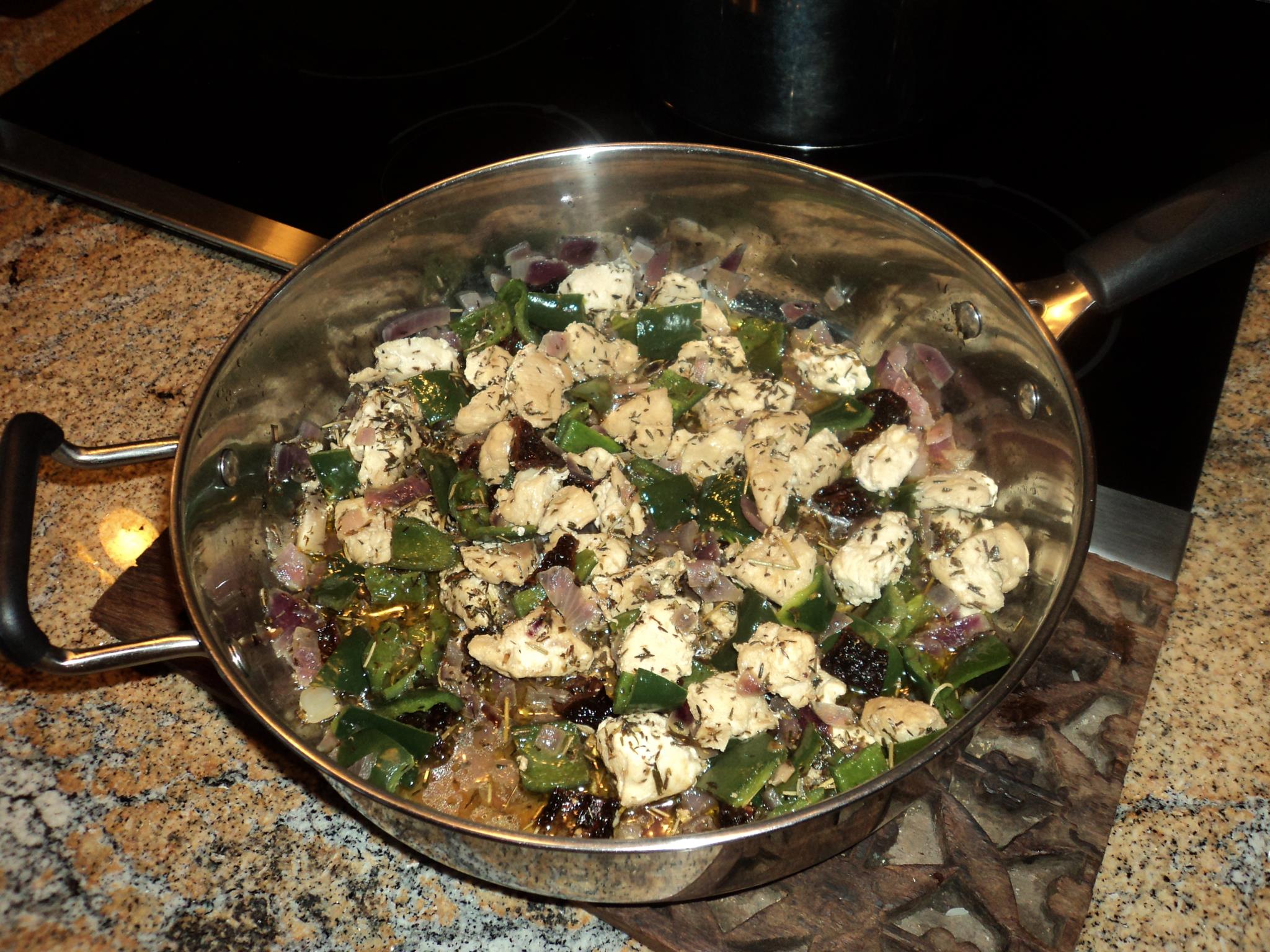
Chicken with poblano peppers, sun dried tomatoes and pasta


This recipe is posted as a tribute to Klara Kamper, from Austria.  Klara is an exchange student and nearly every week she has come over to ride my horse, Rosie.  After riding, I fix dinner.  Of all the different dinners I have fixed, this is Klara’s favorite.

4 pieces boneless chicken breasts, cut into bite sized pieces

2 large poblano peppers, deseeded and diced into bite sized pieces

1 large purple onion, chopped

5-6 pieces sun dried tomatoes, chopped into a large dice

Olive oil

Herbs de provence

Cover the bottom of a large skillet with olive oil.  Saute the onions until done.  Add chicken and more olive oil if necessary.  With your fingers sprinkle herbs de provence over the onion/chicken mixture.  When the chicken is nearly done, add the poblano peppers and sun dried tomatoes.  Saute until the poblano peppers are cooked but still a nice bright green.  You may also add mushrooms if you like.  Serve over your favorite pasta.  My daughter does not like herbs de provence so when I cook this for her, I use a  mixture of oregano, basil, and marjoram.

I am very, very picky about pasta.  My favorite is organic Montebello pasta produced by Monastero Di Montebello, Isola del Piano, Italy.  I especially like the conchiglie.  However, I use their spaghetti and other shapes as well.

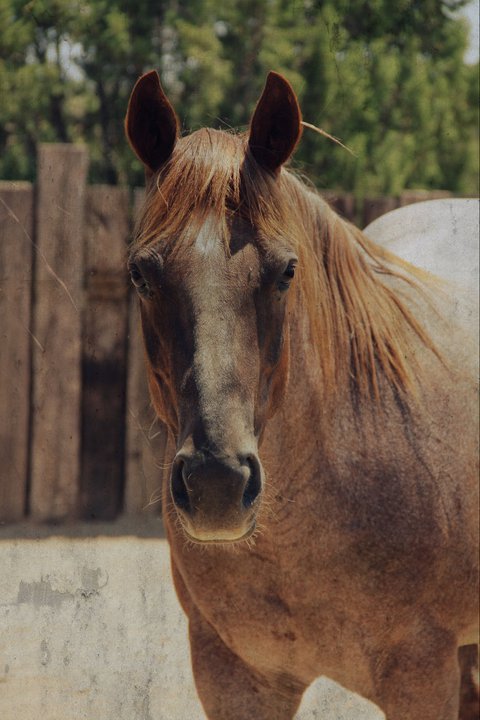
This is Rosie.  She will really miss Klara who leaves for home on June 25.


Rosie, who "adopted" Star after Miracle died.


A friend joined us to see the horses and for dinner.  Apparently, she took this photo just before I served dinner.

Flame Kissed Chicken and Lentil Salad


This week what I thought was going to be a culinary disaster resulted in the best chicken I have ever eaten.  Twelve people were coming for dinner–a teachers’ sorority.  One of the women gave me the chicken half frozen in marinade to take to my house–we work together.  She planned to come to my house early and grill the chicken.  Because she was unexpectedly late, I had to grill the chicken myself.  Now, to tell the truth, even though I cook a lot and blog about food, I had never grilled chicken before.  My daughter had grilled steaks several days earlier, but it never occurred to me to clean the drippings pan under the grill.  Here is what happened:

I heated the grill to about 450 degrees, took the still slightly frozen chicken out of the marinade and placed it on the grill.  It took only about 30 seconds and flames were shooting up about 6-8 inches and the chicken  was turning a grayish color.  I was concerned about two things:  the flames getting totally out of control and starting a real fire (my grill is propane) and the chicken being totally inedible.  I turned the heat down, pulled the grill farther away from the wall, turned the chicken over, and hoped it would be ok in the end.  After all this commotion, a half hour or so later, and after cooking the hamburgers as well, we tried the chicken.  It was the best chicken I have ever eaten.  It was even good left over cold out of the refrigerator–I normally refuse to eat leftover, cold chicken, reheated or otherwise, because I think it tastes dreadful.  People also told me the hamburgers were cook perfectly.

If anyone can tell me how to duplicate this delicious chicken result without all the flames and fire dangers, please comment on this post.

Several weeks ago a fellow food blogger, The Hungry Irishman, posted a lentil salad.  Here is my promise to him to post the lentil salad I make.  The original recipe is from one of my oldest and most favorite cookbooks, The Silver Palate.  However, like most everything I cook, I modify to suit myself and  never really follow the recipe, except maybe for cake, but I rarely bake cake so…

LENTIL SALAD

Cook two cups dried lentils in water with several carrots, 1 medium onion, chicken or vegetable stock, cloves, and 1 bay leaf.  Be sure not to over cook.

While the lentils are cooking, combine 3-4 garlic cloves, 1/2 cup olive oil, 1/4 cup white vinegar, 2 teaspoons dried thyme (you can use fresh also, but will require more thyme), and black pepper to taste in a blender and blend until creamy.  You may also add 2 teaspoons ground cumin for a slightly more  Middle Eastern taste.

When lentils are done, drain, and remove the carrots, etc.  Place in a serving bowl and stir in the blended  mixture.  Refrigerate overnight.  Just before serving add 1 cup scallions, chopped, and 1 cup chopped walnuts.  You may adjust vinegar and olive oil to suit your taste.

If you use regular onions chopped rather than scallions, this salad will keep well in the refrigerator for 4-5 days.

Teriyaki Salmon with Crystallized Ginger


4 4-6 oz. salmon filets

Enough teriyaki sauce to cover the salmon in a shallow dish

1 medium sized onion, chopped

1/3 cup chopped crystallized ginger

Olive oil

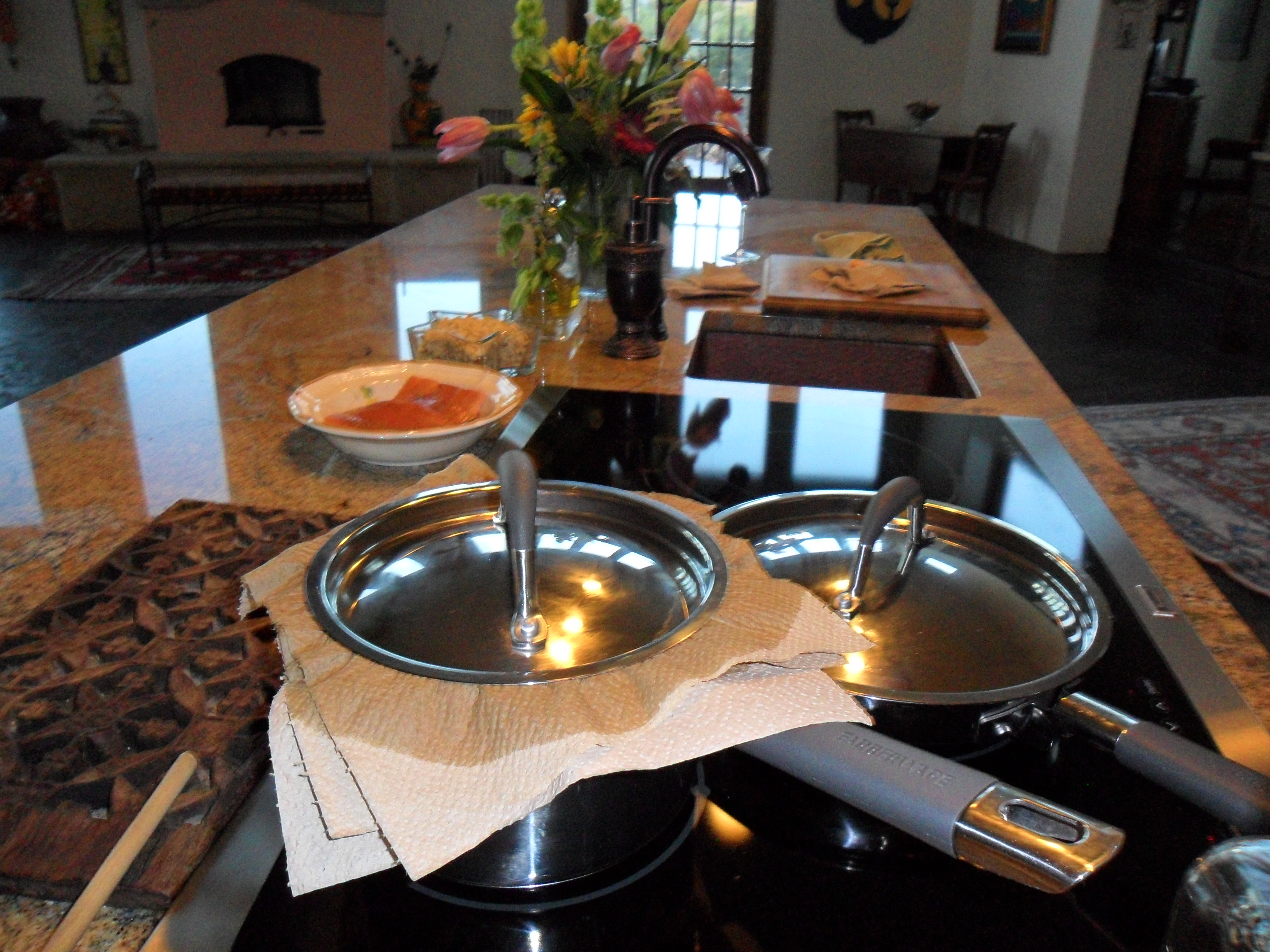
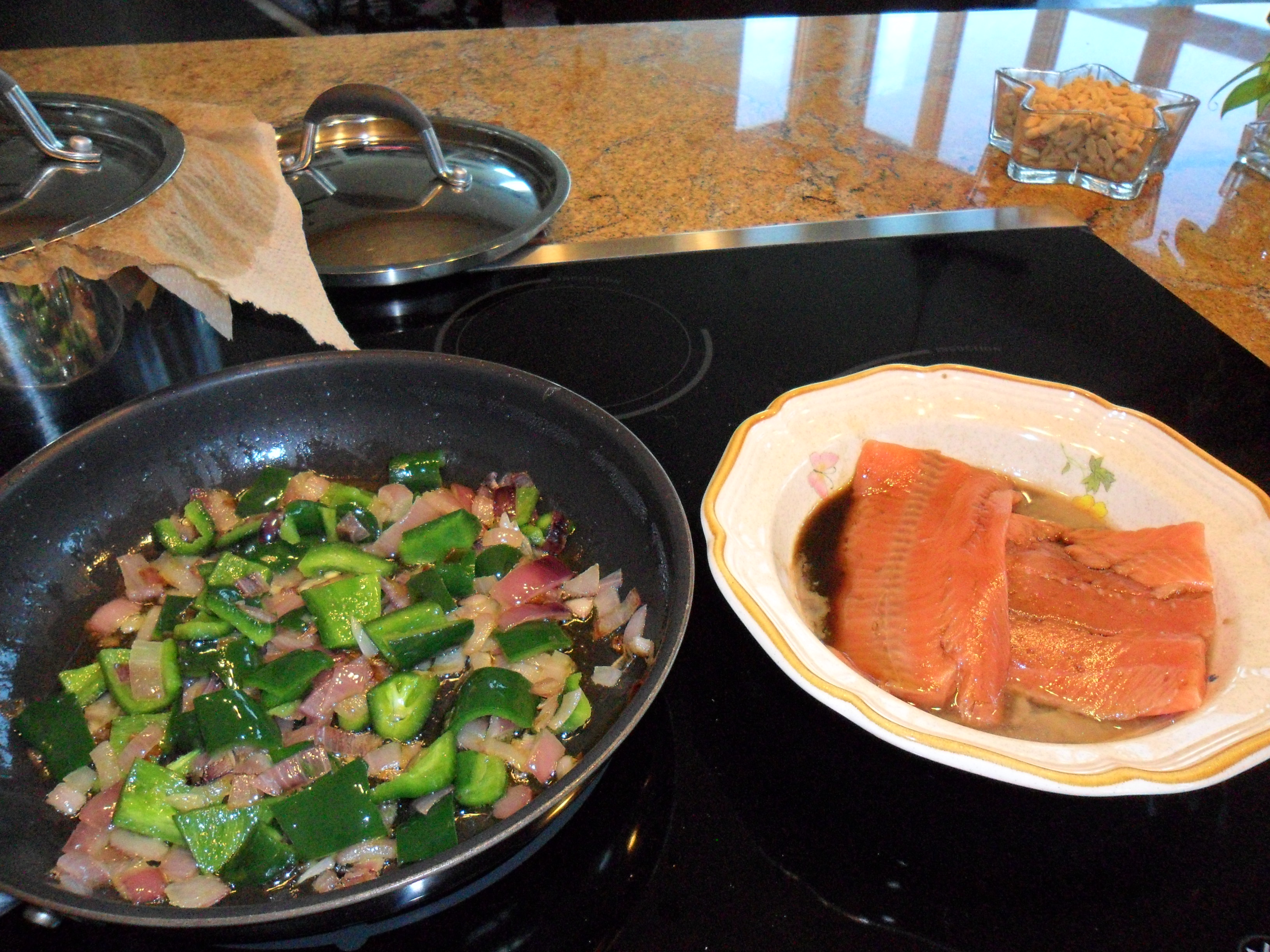
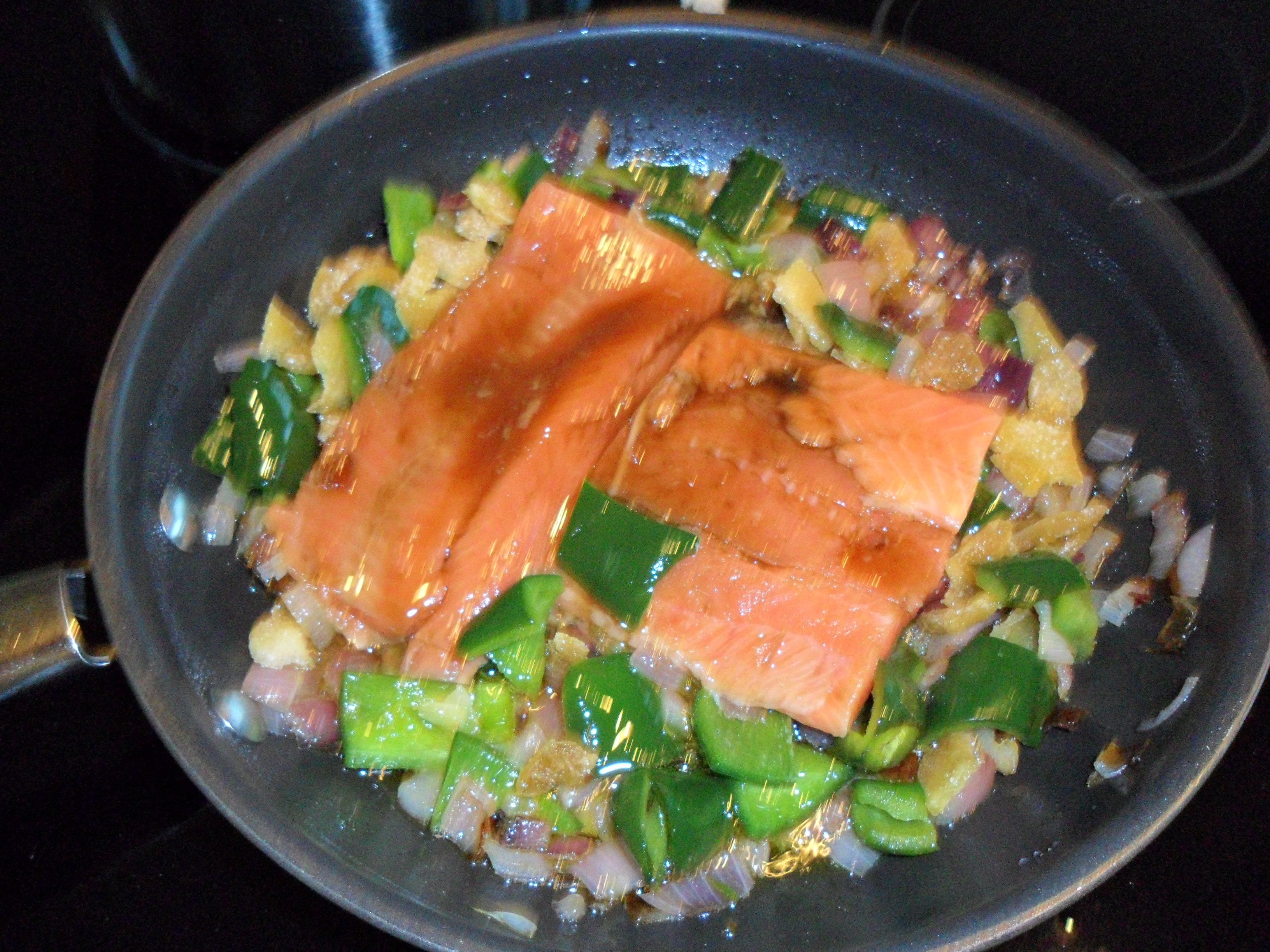
Marinate the salmon in the teriyaki sauce while you prepare the remainder of the ingredients.  You may marinate the salmon longer if you wish it to taste less fishy.  Saute the onions in enough olive oil to cover the bottom of your skillet.  Place the salmon and the teriyaki sauce in the skillet with the onions and sauté until the salmon is nearly done.  Add the crystallized ginger and cook until salmon is done.  Optional additions:  1 large poblano pepper chopped, chopped mushrooms, chopped garlic.  The photo below includes poblano peppers which I use in many dishes.  They have a unique flavor and little heat.  Serve with Jasmine rice with golden raisins and a green salad.

My son is the originator of the basic recipe.  I modified it to suit my own taste. He wraps all the ingredients in foil and cooks it on a cookie sheet on  the grill.  Sometimes I put it all together and bake it in the oven.  These latter methods are the easiest with company because it cooks while you entertain.

Pie: A Story of Mothers and Daughters


My mother usually viewed the world from a black and white perspective.  She had a lot of guidelines for how to live a productive and “good” life.   Neighbors and friends saw her as a “good” woman who cared for and did “good” in the rural community in which we lived.  Above all she was a good cook!!

I rarely think about her “rules” for life.  Suddenly I realize I actually “follow” a substantial number of these rules and have passed many on to my own daughter:

This is how you make butter with an electric mixer.

This is how you make a cake:

-grease and flour the cake pan(s)

-cut our circles of waxed paper to put on top of the greased and floured surface–you

do not want the cake to stick

-sift the flour

-soften the butter

-mix the ingredients in exactly this order.

This is what you wear.  You want to look presentable!!

-clean underwear in case you are in a car wreck

-matched clothes

-polished shoes

-purse and shoes that match

-no white anything before May 1 or after September 1.

This is how you present yourself to the world:

-well groomed

-clean fingernails

-self assured

-nice, but not too nice

-polite

-brushed teeth

-lotioned body

-clean hair.

This is how you wash your clothes:

-separate whites and colored items–you want the whites to stay white.

This is how you ride your pony:

-keep your heels down

-don’t lean too far back.

This is how you neck rein.

This is how you hold the reins.

This is how you get your pony to trot.

This is how you get your pony to canter.

This is how you get your pony to stop.

This is how you clean the house:

-vacuum first, dust second

-if you don’t do it right the first time, you will have to do it over.

This is how you work:

-hard

-persistent–never ever give up

-smart.

This is how you breathe to sing

This is how you practice well.

My mom could barely sew and only could play the piano by ear–two lifelong regrets.  I had to learn these things no matter what.  I do not like to sew much, but still play the piano and I love, love, love to sing!

She could cook, especially pie.  Her crusts were tasty works of art.  At potlucks people would get her pie first to make sure they got some.  At potlucks now, people get my pie first to make sure they get some.  My daughter does not even eat pie, but people love her pie and get a piece to make sure they get some.

Raisin Walnut Pie

This is not my mother’s recipe.  She mostly made black raspberry and other fruit pies and coconut chiffon pies.  This is the pie I make every time there is a potluck.  If I do not make it, people ask me about it so I gave up and just usually bring this pie.

3 eggs

3/4 cup corn syrup

1/2 cup brown sugar

1/4 cup butter or margarine, melted

1 tsp. vanilla

3/4 cup raisins, golden or dark

3/4 cup walnuts, broken

1 unbaked pie shell

Stir corn syrup and brown sugar into melted butter.  Beat eggs slightly and stir into the butter/sugar mixture.  Add vanilla.  Mix raisins and walnuts and sprinkle into the pie shell.  Pour the butter/sugar mixture over the walnuts and raisins.  Bake at 350 degrees for 45 minutes or until pie crust is golden and mixture is set.  Cool.

If you goof and do not have vanilla, stir in 1 tsp. of cinnamon instead.

Enjoy!!

Vegetarian Chorizo Casserole and Roasted Vegetables


Last night 12 people were at my house for dinner, including a friend who is Muslim so no pork.  I created this dish in order to feed both my Muslim and vegetarian friends. You could use regular chorizo, but after trying soyrizo, I quit using anything else and even my Mexican friends love it.  Tastes the same, but not so greasy so probably healthier.

I package soy chorizo, removed from casing

Enough small red potatoes to cover the bottom of a 13 X 9 casserole dish when thinly sliced

3 large poblano peppers, deseeded and sliced

1 medium purple onion, chopped

10 cherry tomatoes

2 cups half and half

4 TBS flour

1 TBS chili mild chili powder

Several TBS olive oil

Cover the bottom of the casserole with olive oil.  Layer the sliced potatoes so that they totally cover the bottom of the dish.  Remove the soy chorizo from its casing and crumble it over the potatoes.  Layer the sliced poblanos over the chorizo.  Sprinkle the chopped onions over the top of the peppers.  Scatter the cherry tomatoes on top of the onions.  In a blender, combine the half and half, the flour, and the chili powder.  Pour evenly over the casserole.  Cover with aluminum foil and bake at 350 degrees until the potatoes are tender.  You may uncover the casserole and continue baking for the last ten to fifteen minutes if you would like the top a bit browned.

I served this with roasted vegetables seasoned with cumin and ground coriander and Egyptian basil:

Cover the bottom of a heavy casserole with olive oil. Place thinly sliced potatoes–I used purple ones–to cover the bottom of the pan.  Continue layering your choice of vegetables, spices, and olive oil.  Bake at 400 degrees until the potatoes on done, stirring occasionally.  About ten minutes before the casserole is done, add kale leaves. The potatoes take longer to cook than any other vegetables I have ever used.  Last night I used these vegetables:  purple potatoes, yams, baby carrots, brussel  sprouts,  chopped onions, beets, kale, red jalapeños (seeded and halved), and whole garlic cloves.  This is also good with garbanzo beans added just before the kale.

I was going to take photos but was too busy entertaining to take them.

Curried talapia with garbanzos and chard


2-3 talapia fillets, depending on size

1 medium onion, chopped

1 medium poblano pepper, seeded and chopped, but not fine

2 red jalapeños, seeded and cut in half

1 Tbs. baltic seasoning

1 Tbs. garam masala

1/2 can garbanzo beans, drained

3 pieces chard, large vein removed and chopped with leaves torn into 2-3 inch pieces

Olive oil

Saute onions in olive oil until caramelized.  Add poblano, jalapeños, and chopped chard stems plus seasoning.

Saute until peppers are half cooked.  Add talapia.  When fillets are almost done, add garbanzos and chard leaves.

When the chard is wilted, but still green, serve over Basmati rice.  Serves 2-3.

Note:  there are different brands of baltic seasoning and garam masala.  I use different brands, but for this

particular recipe, I used Penzy.