bountiful autumn
pomegranates
scarlet lusciousness
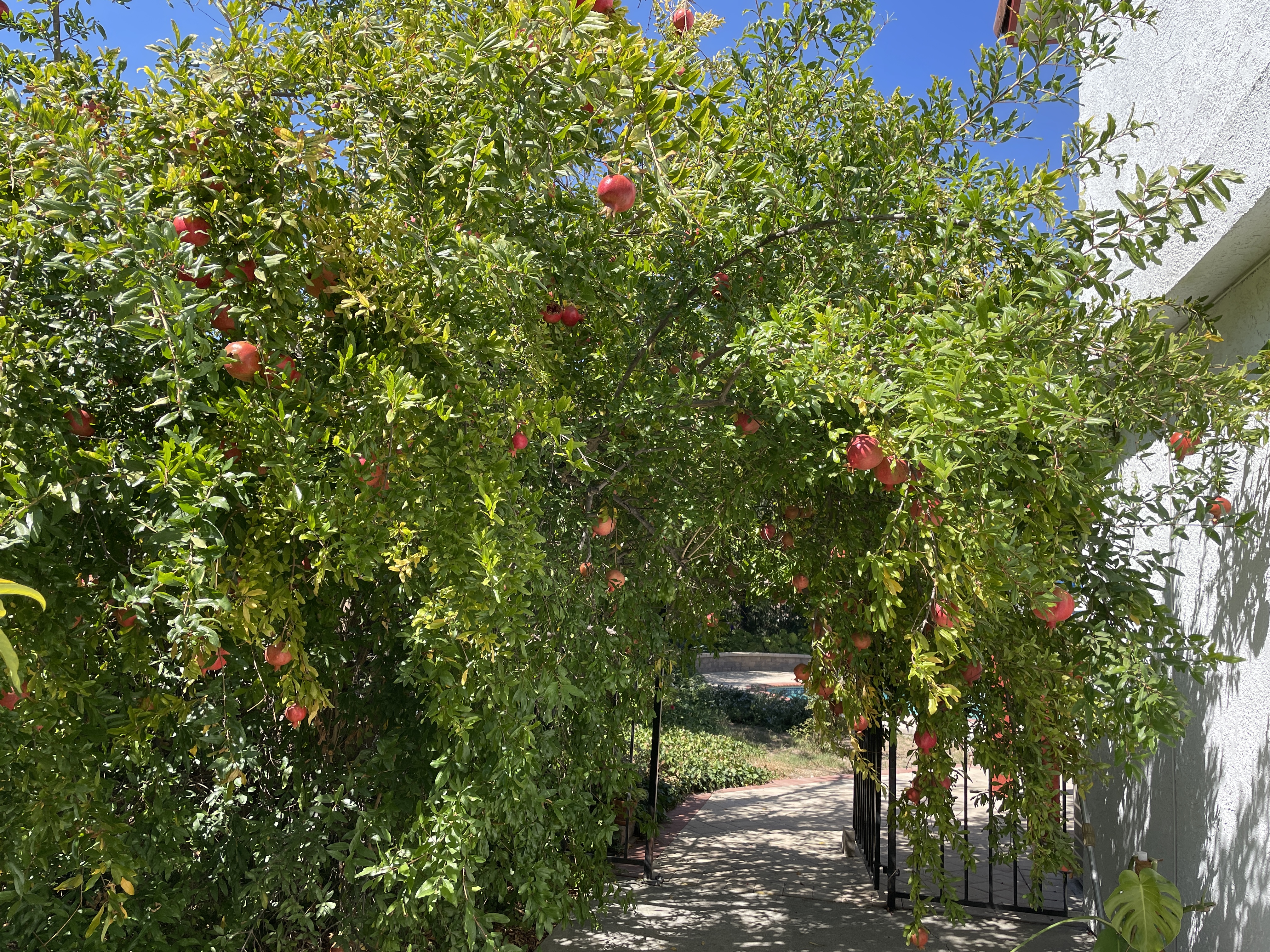
bountiful autumn
pomegranates
scarlet lusciousness
Several weeks ago, I spent a day wandering around the ancient sites where native peoples gathered over a thousand years ago.

This explains the extensive influence this place, located in the northwestern New Mexico desert, held for people from as far away as Central America. To reach this park, you have to drive on a dirt/gravel, rough road for more than 25 miles north of Crownpoint, NM. It is definitely worth the effort. However, it is impassable in rainy or snowy weather. The rangers who care for the park live there.
One of the first things you see as you get closer to the park is this rock tower, Fajada Butte.

Archeologists climbed to the top and discovered petroglyphs, “Sun Daggers”. Created between rock slabs, they align with each solstice and equinox and at these events the light projects to other sites, e.g. Pueblo Bonito. Other petroglyphs on a section of the canyon wall represent a supernova that occurred in 1054 CE.

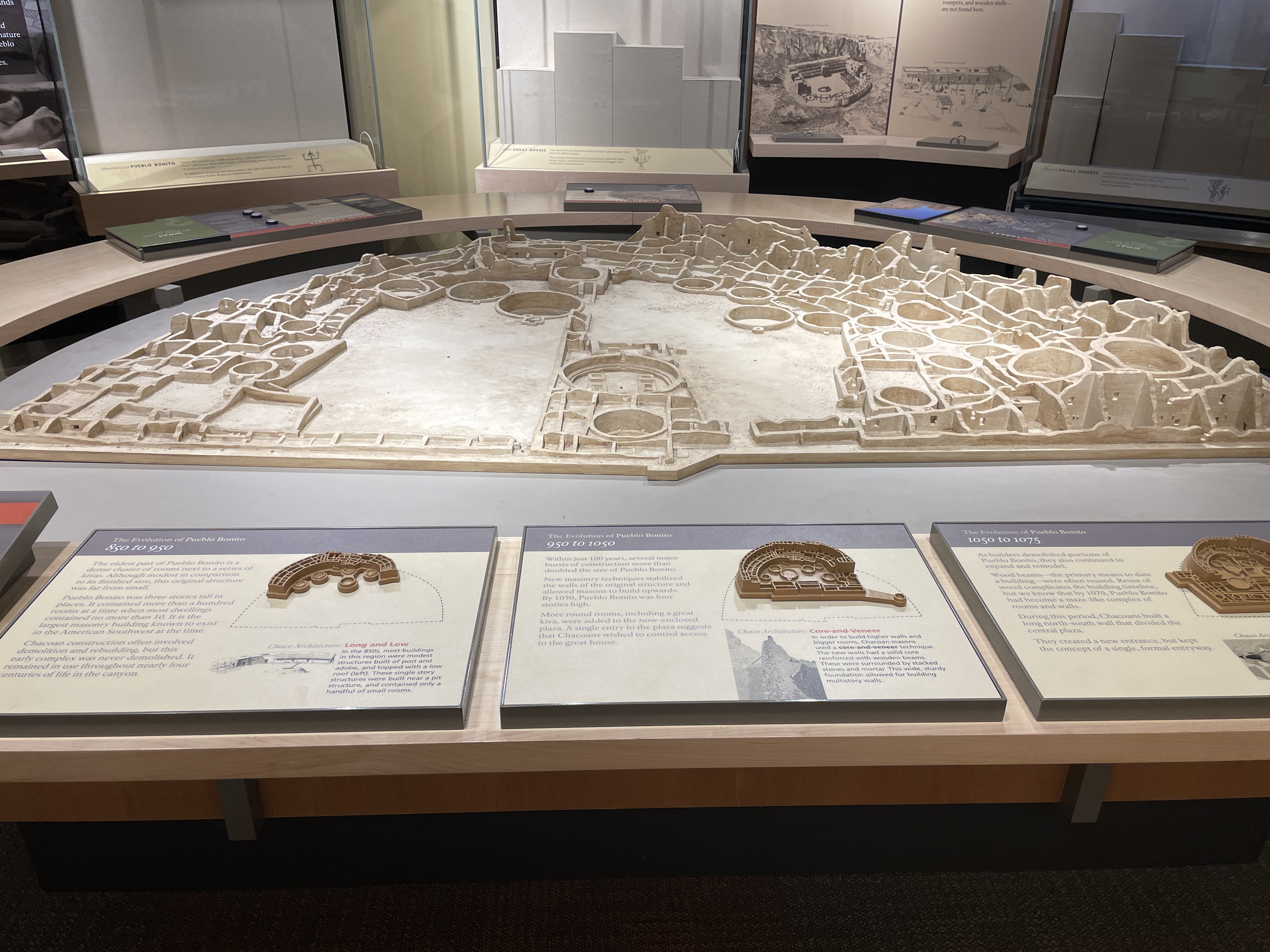
The following depicts an overview of the site as it would have been in the past. In the 1940s part of the wall of rock behind the site collapsed onto it and destroyed some of the buildings.
Here is how it looks today. Many of the doors and windows align with astronomical events, e.g. solstices, the two equinox, and astronomical events that occur only every 17 years.
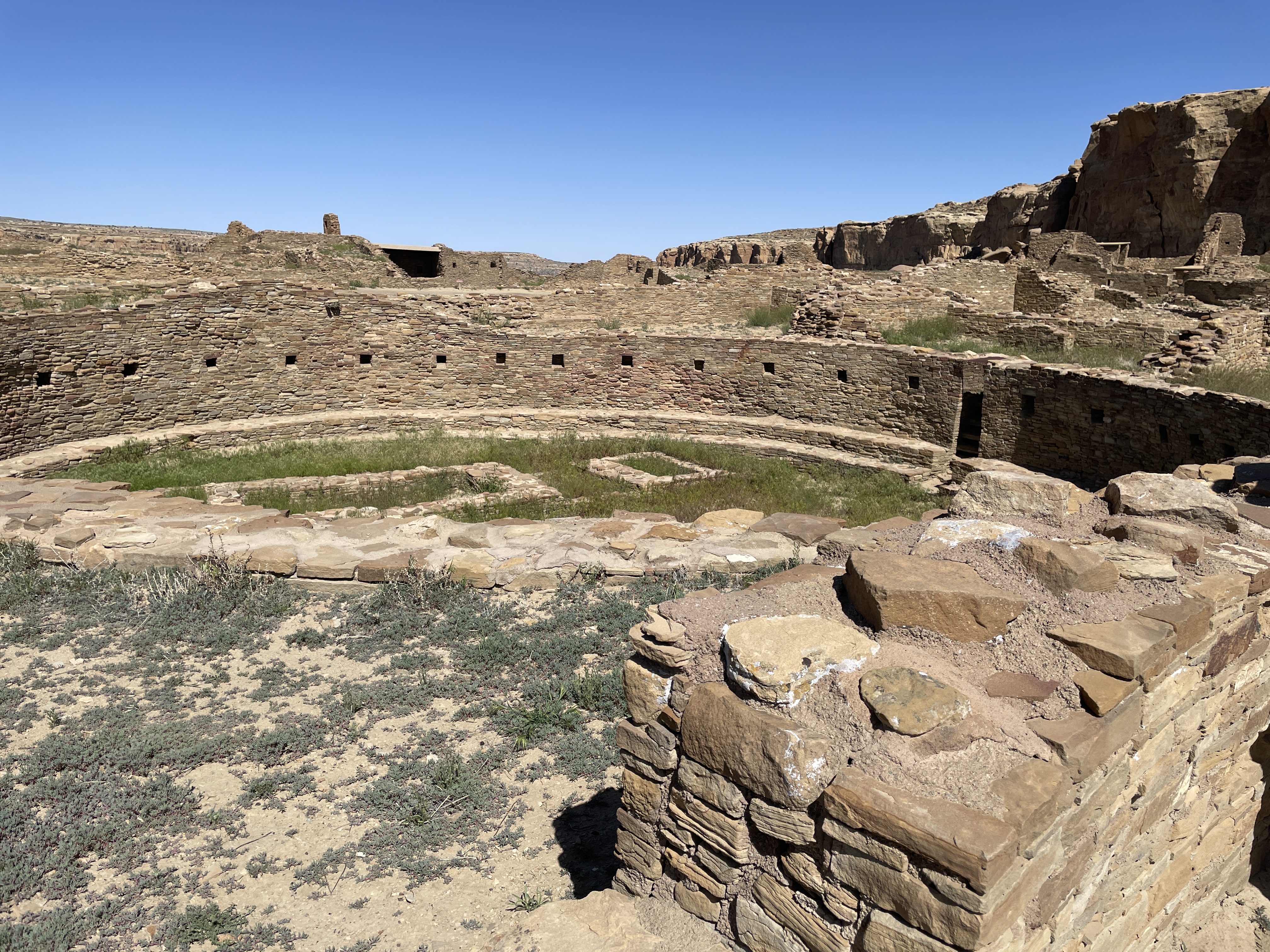
All sites here contain many kivas, many of which are very large. It is speculated that these were used for various sorts of ceremonies, including religious events.

In this view you can see how the rocks that fell from the cliff have destroyed parts of the structures.

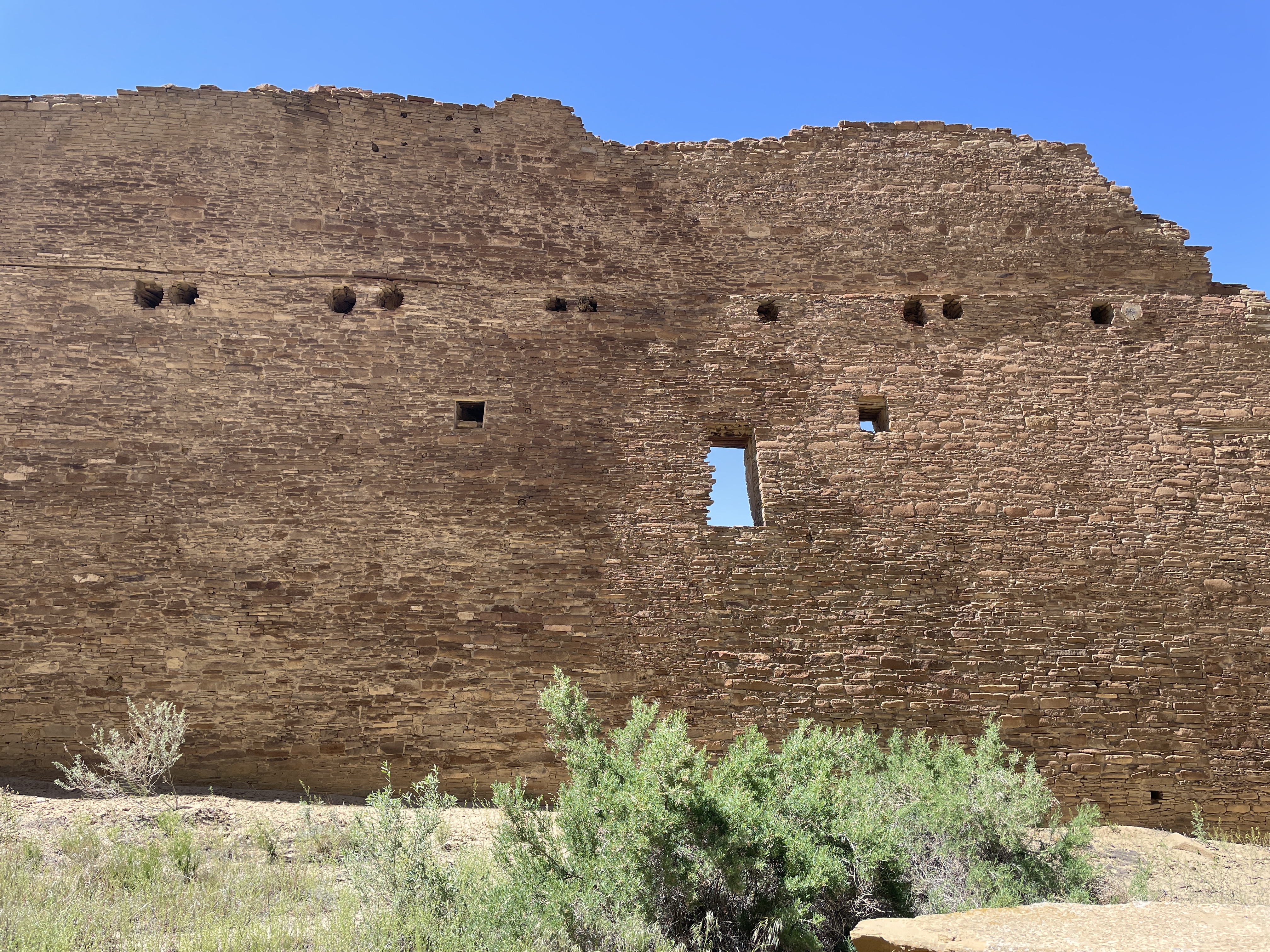
Many of the buildings were several stories high. In their heyday, they did not look like this. They were covered with something like stucco and painted white. What an impressive site they must have been–large white structures in the middle of the brown desert. Archeologists think few people lived here. It was a place for gathering, for ceremonies, for trade, for people from long distances to meet.
Across from Pueblo Bonito is the largest kiva found in the area.


Behind the bars on the far side of the photo is an area that was used for ceremonial dancers to don their costumes. At the bottom you can see a depression with a small door. Before centuries of sand filled it in, this place would have be large enough for the ceremonial dancers to enter through it.
If you follow a trail along the cliff from Pueblo Bonito, you will find another area built at different times hundreds of years ago.


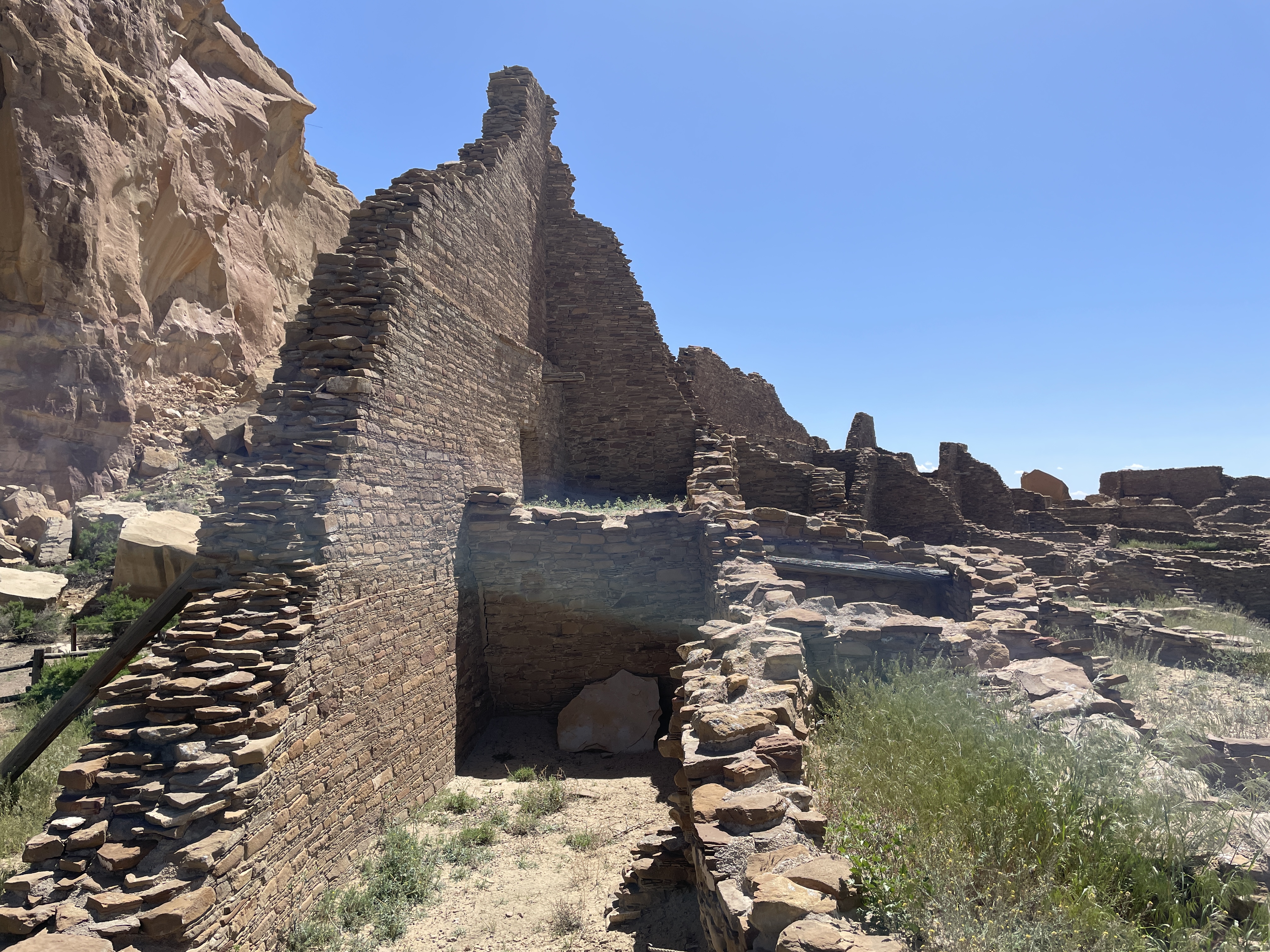
Another large kiva and many smaller ones are located at this site, including this famous long wall built at two different times.

The following shows where at some point the wall stopped, then later it was continued using somewhat different building material and techniques.


The top photo is considered the newer part of the wall.
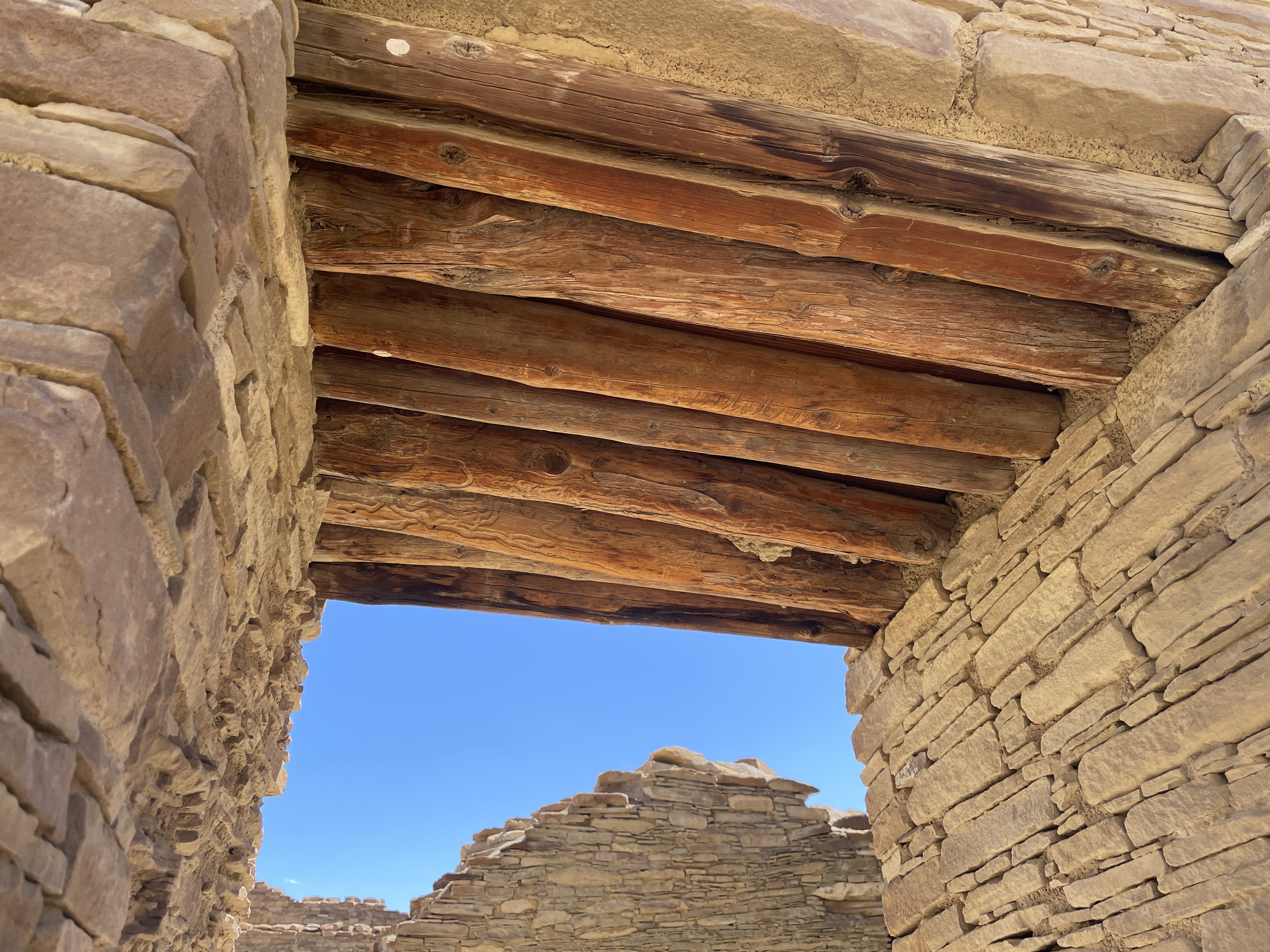
The wood used for tops of windows and doors was brought from forests hundreds of miles away. The desert air has enable it to be preserved.

When you walk the trails, you see wild flowers and native plants. This is desert rhubarb and it is edible.


While these are photos of the more impressive structures at Chaco Canyon, more than two hundred ceremonial and meeting sites can be found in this area of NM and AZ.
Barbie Doll
Barbara Lewis Duke, pretty, petite, blue eyed and blond, my
mother, one fearless, controlling woman. Long after Mom’s
death, Dad said, “Barbara was afraid of absolutely no one
and nothing.” They married late, 34 and 38. He adored her
unconditionally. She filled my life with horses, music, love,
cornfields, hay rides, books, ambition. Whatever she felt she
had missed, my sister and I were going to possess: books,
piano lessons, a college education. Her father, who died long
before I was born, loved fancy, fast horses. So did she. During
my preschool, croupy years, she quieted my hysterical night
coughing with stories of run away horses pulling her in a wagon.
With less than one hundred pounds and lots of determination,
she stopped them, a tiny Barbie Doll flying across the Missouri
River Bottom, strong, willful, free.
Note: This poem about my mother has been published in at least one anthology and my book of poetry. My mother loved roses, had a rose garden. I now grow roses too.

Several months after Maclear’s father (who was a famous journalist) dies, she decides to take a DNA test to find out more about her family health and personality history, mainly because of the stories about a particular grandmother. She wonders if certain traits she and her sons have might possibly be inherited. The results of the test are a shock. Her father, the father she adored, who raised her and adored her, is not her biological father. At first, she thinks perhaps it was a sperm donor, but then she discovers this is not the case. Through the DNA test and her detective work, she finds two biological half-brothers (she was an only child before this discovery) who are willing to communicate with her, send her photos, etc. She tries relentlessly to acquire more information from her mother, who is often unforthcoming or tells her contradictory information. Then her mother gets dementia.
This is also a story of plants, of gardening. Both she and her mother are amateur botanists and expert gardeners. When nothing else works in their mother-daughter relationship, their love of plants and gardening holds them together. Even with dementia, her mother knows plants. Their other joint endeavor is ink drawings and love of art.
Additionally, this is the story of family, family secrets, inter-racial marriage, and challenging relationships. Kyo’s mother is Japanese living originally in England and later in Canada who often struggled with her status as a Japanese immigrant. Her “real” father, the one who raised her, was of British and Irish descent; her biological father was a Jewish formula one race car driver.

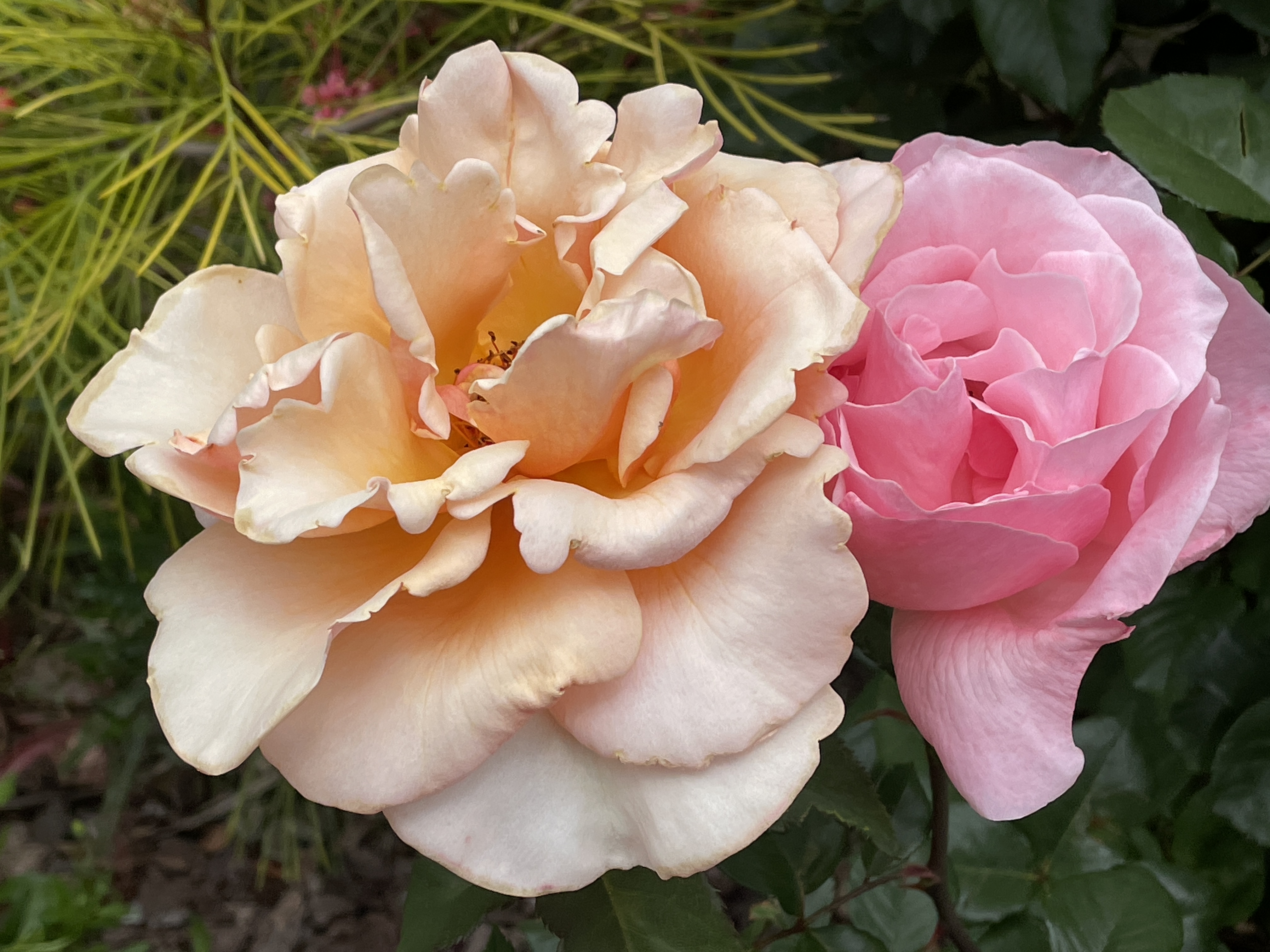
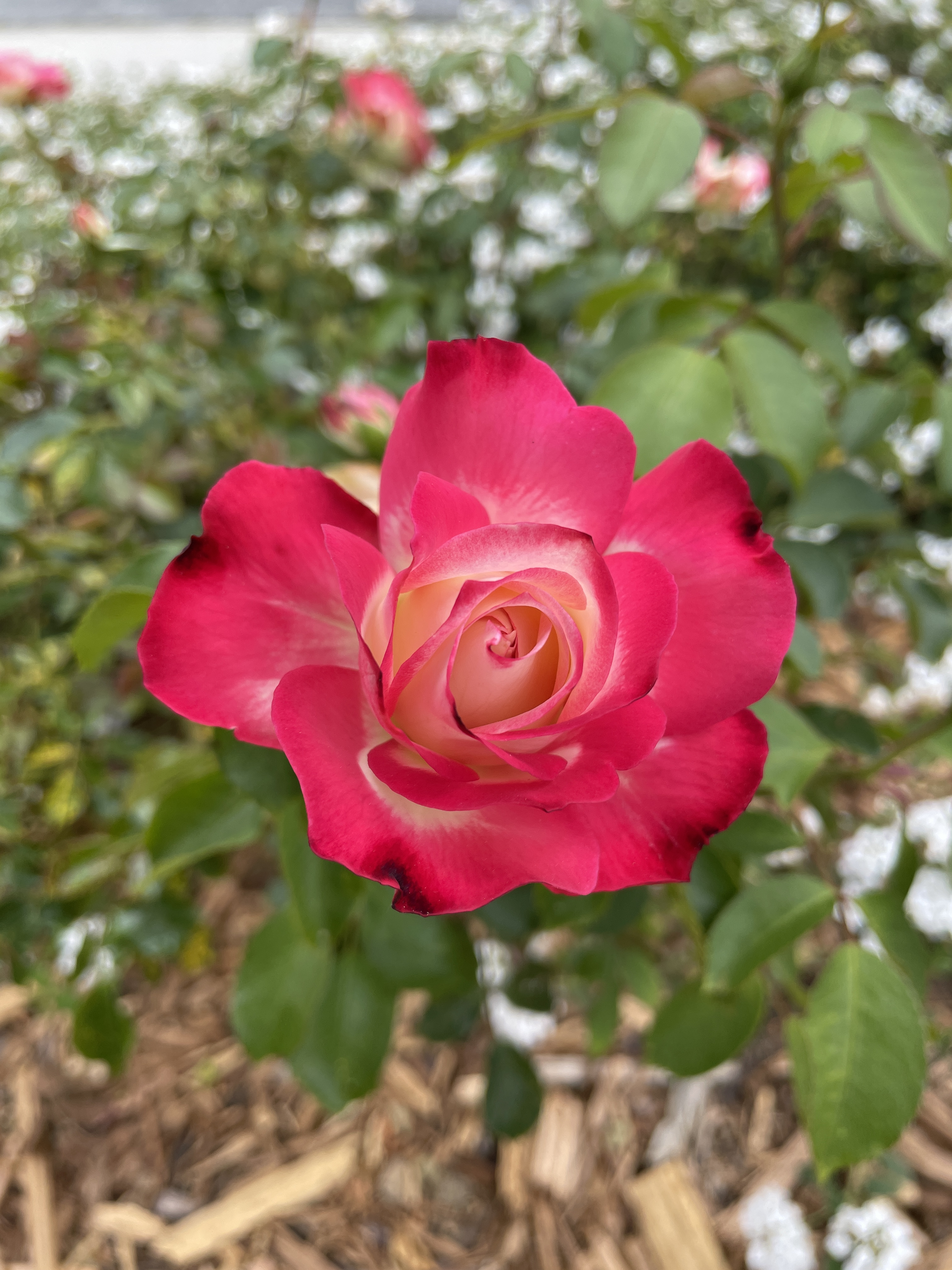
roses
rainbow colors
joy



Fearless little bird with chocolate brown head runs beside me
on the road. At the intersection I circle to the left, following
a familiar route. The heavy tree canopy here always astonishes.
It’s almost like walking in a forest.
The architectural variety amazes: mid-century modern, Spanish,
colonial, ranch, the smallest I am guessing contains 3500 sq. ft. One
house encompasses an entire city block, fronted with heavy, high
fences and metal gates. Privacy obsessed.
I’m watching my time. I don’t want to be late for singing
practice. I take a new route, perhaps a shortcut. It’s
120 degrees of a circle. Not quite a regular street,
not quite an alley, a combination–fronts of a few houses
and the backside of others. At one place it angles more;
I come to a three story stone fortress with intricate
geometrical designs vertically running up and down
the walls. No windows. A sign says, “No trespassing.”
Realization hits me. This is the other side of a house
I saw last year through a gap in a wall on another street.
Three ladies, strangers, asked me about it, told me they’d
heard it was the creation of a famous architect. I researched,
asked others, no one knew. Back then, I tried to find the front,
failed. Now I’m looking at it, wonderstruck. It appears abandoned,
an architectural wonder belonging to another time and place.

Time to rush, a bit lost, I look at my phone map, finish the loop,
find a familiar street, walk faster. Then I see a large, white, colonial house,
weeds knee high, black shutters hanging askew. Here it is abandoned
in the midst of multi-million dollar houses. I wonder what the neighbors
think. Walking on I hear water rushing, peer through the hedges–a stream
runs downhill from the side of this huge brown house at least 100 feet
and gurgles in a pool behind the bushes. Hurrying, I stop in front of one
of my favorite houses, a one-story, tan, Spanish style, small compared
to the others nearby. I take a photo of the tree in front by the sidewalk,
its impressive girth impossible to ignore.

Finally, I’m near my destination, walking in front of The Gamble House,
a tourist destination made famous by the movie, “Back to the Future”,
a structure I see at least twice a week.

I started out thinking I would write a poem per day for National Poetry Month. Well, I’m a bit behind on that, but here are two of several I have written so far.
Spring
The mockingbird awakens me with his song.
A hummingbird, dressed in green with an iridescent
orange collar, flits by my head then sips nectar
from a scarlet bougainvillea blossom.
The neighborhood barn owl hoots at dawn and dusk.
A black and red/orange bird I’ve never seen before
lights on a palo verde limb.
A Western Bluebird dips its beak repeatedly in
the talavera birdbath.

Remember
In this world steeped in senseless violence remember
each day to find a piece of beauty:
-rosebuds opening
-the scent of jasmine
-a friend’s smile
-a bit of birdsong
In this world ravaged by wars remember
each day to find the jewels of joy:
-listen to a child’s laughter
-dance to a favorite song
-walk in the morning sunshine
-tell someone you love them

He’s very good at wooing:
gifts–chocolate cherries,
red roses, delicate lingerie,
I love you.
He wears his mask well,
keeps calm, a handsome spider,
weaving a silken web.
She laughs, tells her friends
just how very special she’s
sure he is.
He wears this mask for months,
finds them the perfect apartment,
swimming pool, gym, marble,
granite, luxury appliances.
She’s sure he loves her:
the gifts, the perfect apartment,
fancy restaurants, luxury weekends.
She’s late, heavy traffic, an
emergency at work. He
screams, wants to know
why; no explanation matters.
He hits her for the first time, her
torso, knocks her down.
Tomorrow 24 red roses
arrive at work. He begs
forgiveness. She’s sure
he’s sorry; it won’t happen
again.
Two months later, she’s
late again. Real reasons he
does not want to hear. He
screams, he hits, he knocks
her down.
She dreads red roses.
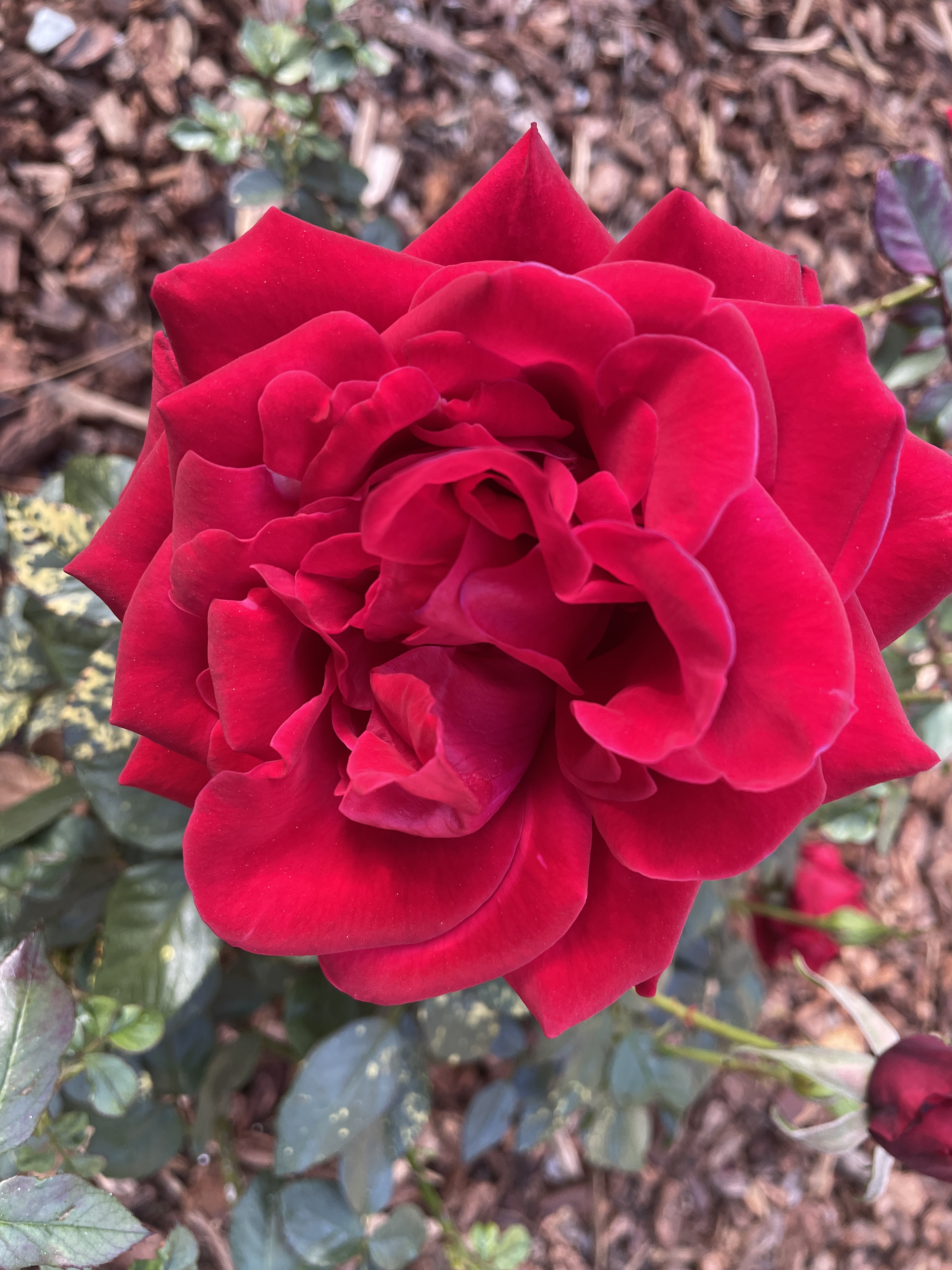
Note: This is part of my writing a poem per day for National Poetry Month. Regarding this poem, 34% of female homicides are women who have been killed by intimate male partners. Often when women kill a man attacking them, they are convicted of murder even when trying to defend themselves.
They tell writers, “Never ever use cliches.”
Sometimes I question that. When you
word a cliche, nearly everyone knows
exactly what you mean. For example:
This is a perfect spring day:
-birdsong wafting here and there,
mostly mockingbirds except for those
irredescent, orange-throated
hummingbirds at their feeder
-wind singing through the pines
-open windows for a change; it’s
75 degrees and sunny
-magenta and scarlet bougainvillea
climbing the garden wall
-white and lavender lantana
outdoing themselves with
spread and bloom
-geraniums in full flower
-mint growing so fast and tall
I already need to trim it.
I lounge on the patio reading
another novel, drinking rosewater
lassi, munching mixed nuts.
I feel gratitude for this
perfect spring day.

Today is the first day of National Poetry Month. I am committing myself to write a poem a day. Here is the first one for the month.
Easter yesterday made me sad,
remembering children, grandson,
egg dying, egg hunting, family
together, laughter, joy.
Found photos of my family,
I, a child, dressed in Easter finery,
a family tradition. Dad bought us
corsages to wear every Easter,
pretty dresses in spring colors–
my favorite a pink dress trimmed
in scarlet, a unique combination
explained why I liked it so much,
felt special wearing it.
Today I wear pink and orange
together, admire the deep purple
and red bougainvillea, scarlet rosebuds,
snowy freeway daisies,
shining in the sun and wonder
will I live long enough to teach
a great grandchild to color
Easter eggs.

Travel the World 4 Less
A Glimpse into My Life & Passions
Ceto-Magoism, the Whale-guided Way of WE in S/HE
Exploring the F-word in religion at the intersection of scholarship, activism, and community.
ANCESTRAL FOOD. HERBAL WISDOM. MAGICAL COOKERY. SEASONAL CELEBRATION.
inesemjphotography
politics, engineering, parenting, relevant things over coffee.
Food is the best expression of every emotion. Explore through my reviews, recipes, events and more.
Smile! A Site for Friends Wherever You Are!
inspiring personal growth through poetry and writing
Combining atheism with whimsy. This is a Fair and Balanced blog based on opinion unencumbered by fact.
Odds and ends ~ My Life
Original poetry, commentary, and fiction. All copyrights reserved.
bripike@gmail.com
A wildlife filmmaker in Africa
A Geeky Feminist's Musings On Pop Culture
"5 minute walks"
 writingontherim