Wine tastings and a few favorite things


Arrived home from work and fed Rosie.  Looked at the dry native grass around my house and decided to water a bit of it even though I loathe wasting water.  Green is probably safer than winter brown.  The recent giant wildfire raised my concerns about the fire danger in this drought.  I cannot remember when it rained and the next ten days show no rain in sight.  As soon as I finish writing this or shortly thereafter, I get to run back to town and join probably 100 plus other people at friends’ house to taste the wine and food brought by Market Street.  These friends run a bed and breakfast with a spectacular garden complete with koi pond and just about every kind of flower you can grow in this area.  It’s cool, nearly froze last night, so I will wear the black turtle neck and slacks I wore to work.  It’s hard to believe that it was just above freezing last night and is supposed to hit 100 next Monday–the desert has now reached here apparently.

Thinking about this leads me to think about some of my favorites, especially when it comes to wine:  zinfandels, especially from Lodi, California.  The moderately priced one I buy most often is OVZ.  It frequently goes on sale here which is even better.  I also like  Seven Deadly Zins–unfortunately I have never seen it on sale.  Basically, I love red wines and almost never drink white.  A moderately priced nice blend is Apothic Red.  Market Street had a super sale so I bought several–ten percent off if you buy six at a time.  The best malbec I ever drank came directly in baggage from Argentina, a present to me from my Argentinian exchange student when he arrived.  You can’t get it here and when his mom tried to ship me some, she was not allowed.

The students at school  kept commenting on my black attire today.  They asked if I was going to a funeral or something.  I laughed.  I like black; I look good in black.  It also shows off my turquoise jewelry.  My most favorite color is orange. Turquoise looks good with it too.  Red and green are ok.  Finally after decades I have learned to like hot pink, but really I am not a pink person–see my poem about Hot Pink Toenails–on an old blog.  It remains one of my blog posts that people look at most–I have no clue why.  The one color I really do not like is blue, especially pale blue. Perhaps tomorrow I will post about favorite books.  I really would like readers to comment about their favorites.  It fascinates me what people perceive and feel about this and that.  Often I am the only person I know who reads what I read.

Off to taste some new wines and maybe find a new favorite.

Apocalyptic Planet-Part Seven: Species Vanish


We all know extinction occurs.  Nearly everyone knows different species of dinosaurs at varied times roamed the earth for millennia.  Bones of all sorts of animals and various hominids are dug up off and on.  Scientists study them, determine their age, where and how they lived.  Scientists and sometimes even average persons develop theories about why they went extinct.  Regardless of which theory a person decides is accurate, these ancient extinctions generally took thousands of years. Recent extinctions are different, e.g. carrier pigeons.  Millions existed a couple of hundreds of years ago; now they are gone.  Why?  Humans.

Various causes exist for the extinctions of ancient species.  A major cause is the climate change caused my the changing tilt of the earth’s axis.  These changes occur over thousands and thousands of years.  What is different now?  Let’s take corn.  Native Americans cultivated rainbow colors of corn in small, frequently irrigated fields.  Where is most corn grown now?  Giant fields of GMO corn grow from horizon to horizon in the Midwest.  And if Monsanto had its way, no other corn would continue to exist for long.   Iowa is a good example.  Wherever this corn is grown, native grasses and other native plants totally disappear, in part due to cultivation.  A bigger issue is herbicides–to have clean fields, nothing and I mean nothing but corn must grow there.  A farmer’s expertise as a farmer is measured my just how super clean his fields are.  The only way to get these totally weedless fields is to use herbicides.  Biodiversity is a key to environmental health.  Little biodiversity exists in giant fields of crops like corn and soybeans.  Fertilizers to obtain huge yields wash downstream and in the Midwest eventually end in the Gulf of Mexico and cause giant marine algae blooms which pulls oxygen from the water to create a dead zone where no marine animals or fish can live.

Perhaps readers have heard of the plight of monarch butterflies.  Compared to just ten years ago, the population has dropped dramatically.  What happened to them?  Roundup.  Over 100,000 tons of Roundup and other brands of glyphosate herbicides are annually applied to crops in the US.  What do monarchs eat?  Milkweed.  Since 1999, 58 per cent of the milkweed has disappeared.  Recently, monarchs experienced a 30 per cent reduction in their numbers in one year.  Are we headed toward a mass extinction?  Some scientists think so.  These scientists are not talking about tigers, elephants, and rhinos being killed at an ever increasing rate for their body parts, but rather about the less noticeable extinctions of various plants and less obvious animals like frogs.  And then there is the problem with bees.  Bees are disappearing at an ever increasing rate due to not only diseases but due to herbicides and pesticides.  Without bees to pollinate the giant fields of almonds and various fruits in California, for example, those foods won’t exist.  See a previous post for more discussion on the importance of bees.  So why care about frogs?  Scientists consider frogs and amphibians in general an indicator of the health of an ecosystem.  Certain more tropical species of frogs are especially subject to the effects of climate change and they are disappearing.

Where I live big bluestem, blue grama, buffalo grass, and other native species grew from horizon to horizon.  This is the high plains.  Root systems of some plants grow twelve feet deep.  It has not rained in over a month.  Where the native grass once grew, crops are now grown.  This time of year finds open fields. Without rain, with the recent endless high winds, dust fills the sky.  To safely return home from town Sunday, I had to turn on the car lights to see.  The dryness fuels wildfires.  Earlier this week, over one hundred homes burned down in a wildfire north of Amarillo.  Drought.

Many human inventions are wonderful and make many lives better, but for some of them, I cannot help but wonder at what cost.


Poverty


Proofs sent to the library at work–a high school–cannot legally be used on the shelves so they end up in various places.  Somehow I end up where they reside and read them.  My latest, The Boiling Season by Christopher Hebert provides abundant food for hard core thinking.  The setting, a Caribbean island, reeks of political turmoil and the legacy of slavery.  Unless you are totally ignorant of Caribbean history and the various cultures there, it does not take long to figure out the setting is Haiti.  In case you want to read the book, I will give you only a cursory introduction.  The main character grows up in basically what we call here a slum.  His mom dies of malaria when he is quite young and  his dad owns a small store.  He hates it and focuses most of his life on getting out of these circumstances.  He gets a job and a place to live with a senator, meets important people, and eventually discovers an abandoned estate out in the country.  He moves there after it is bought by a wealthy foreign white woman who hires him to restore it.  He absolutely loves the place.  It is an island of beauty and peace in the middle of squalor, poverty, and strife.

The details you can read for yourself.  It’s focus is the dilemma many who grow up poor and want to better themselves face:  if you progress, are you abandoning your roots, to whom do you owe loyalty.  And, indeed, what is progress?  Civil war breaks out and the main character is torn between his desire for peace and a more elegant lifestyle in this beautiful place and the needs of the poverty stricken people who surround it and who at one point work there.  Is he a free person or just a fancier slave for the rich who own the place?  Has he deluded himself into thinking because he worked hard to get where he is that he is better?

Although the book’s setting is a particular place, the theme remains universal.  I think of individuals I personally know who could not cope with success and riches, who felt they must “save” all their relatives and then were left with nothing themselves.  The thinking is this:  if you come into money, you must share it with everyone; to keep it for yourself is morally wrong.  If this is the case, how can the cycle ever break?  This sort of thinking is very difficult for those of use who work hard and save for the future to understand.  We question why we should help them when they hit the bottom.

Yesterday my hard working, single mom, going to graduate school daughter went on a rant about people she knows who get food stamps, Medicaid, etc. while she works and goes to school and gets nothing.  They have fancier cars, better TVs, etc. than she does.  I do understand both viewpoints although I admit I am the frugal without being austere.  I remember a time several years ago when several of my poorer students–I teach at a Title 1 school–wore jeans more expensive than I would ever buy–its jeans.  We got into a discussion about this.  I informed them that all the clothing I had on except for underwear and socks came from a thrift store.  When I take things to the thrift store, I actually shop.  Thrift stores are full of “finds”.  The response of one student was echoed by others, “I would never go into a thrift store.  Someone might see me go in there.”  Because they were poor, they wanted to avoid anyone seeing them do anything they thought might confirm this.

Although fraud exists in programs for the poor, it also exists in high end banking and just about everything.  The solution is to work hard to investigate and prevent it.  I keep wondering what is the solution for the people truly in need?  Do we punish everyone to prevent the fraudulent acts of the few?  And what about the children?  What happens to the dependent young?  Obviously, the world has not found answers.  I wonder if we ever will.

Random Thoughts at the End of a Rather Long Day


When I realized the time and know 5:30 tomorrow morning will come sooner than I may prefer, I decided I had to write something here to fulfill my commitment to write daily for at least one month–three weeks down and one to go.  Will I continue?  Don’t know yet.  Pluses:  I have gained quite a few new followers, at least ten, maybe more–have not taken an exact count; it proves that if you stick to something, there are pay offs; and it forces me to think about some things I’ve read or experienced in a way that I might not if I were not going to blog about it.

What are some of those things I am thinking about?  First, the weather.  We desperately need rain and this statement comes from someone not all that fond of rain.  I like the green results but do not like to be out in the rain normally.  It is a wonder I love Costa Rica because it rains almost daily at least it did when I was there two summers ago.  Fire warnings are even currently posted on overhead flashing signs on the interstates–not daily, but every time the wind rises which here is almost daily.  Second, when I think about the destruction of volcanoes–from reading another chapter in Apocalyptic Planet last night, I keep wondering what would happen today if another explosion like Krakatoa in the 1800s occurred.  Mass famine I imagine and a bunch of certain types of religious people claiming the end of the world.  Third, after spending two boring mornings giving STAAR tests–the state standardized tests in Texas, and another morning left to go, wondering exactly why I still think standardized tests are good.  Fourth, wondering how to turn this blog into a sort of website where people who want a signed copy of my new book, On the Rim of Wonder, can order it directly from me on this blog/website (I have had requests already which is, of course, a wonderful thing since book marketing is not all that easy).  Fifth, well this will have to wait until another day when my mind is really sharp and we can have a discussion about the effects of poverty and why it is so difficult to escape.

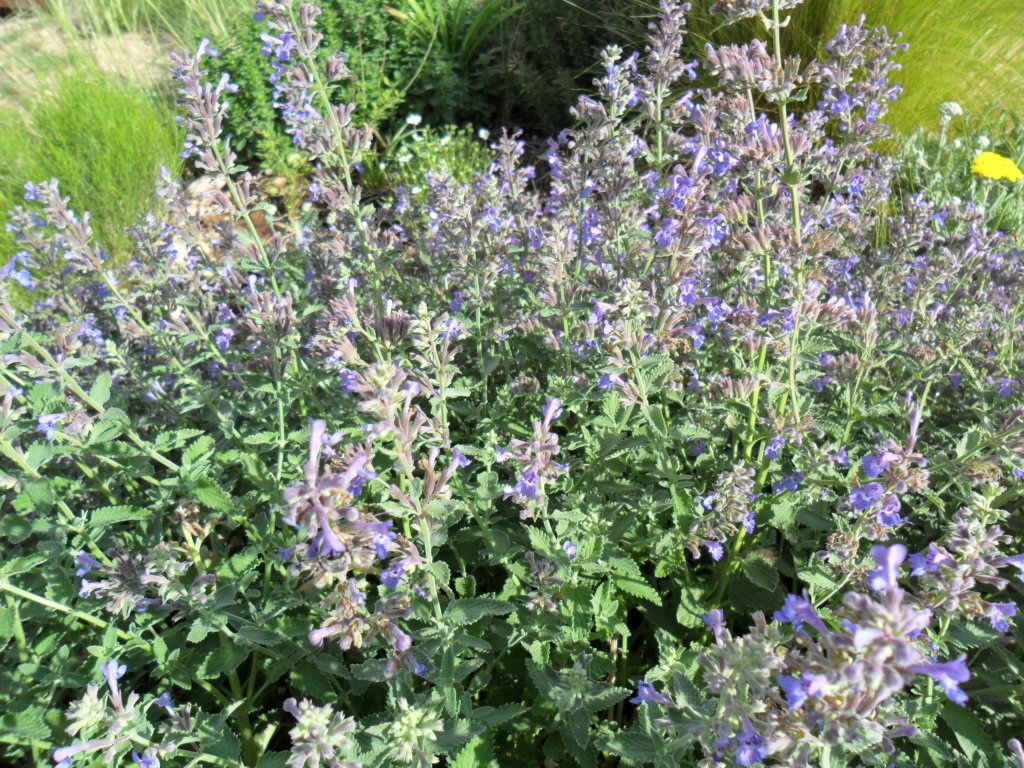
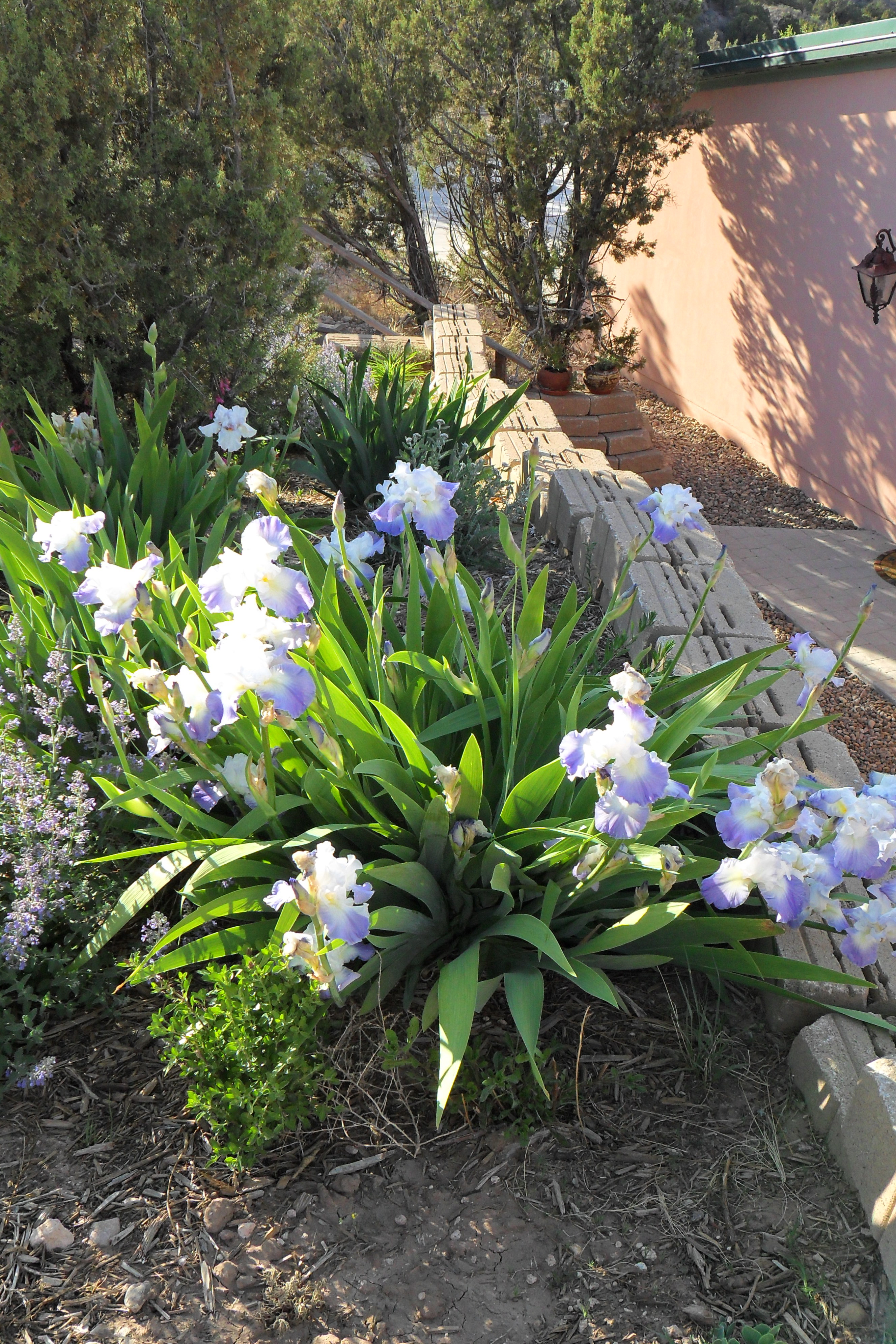
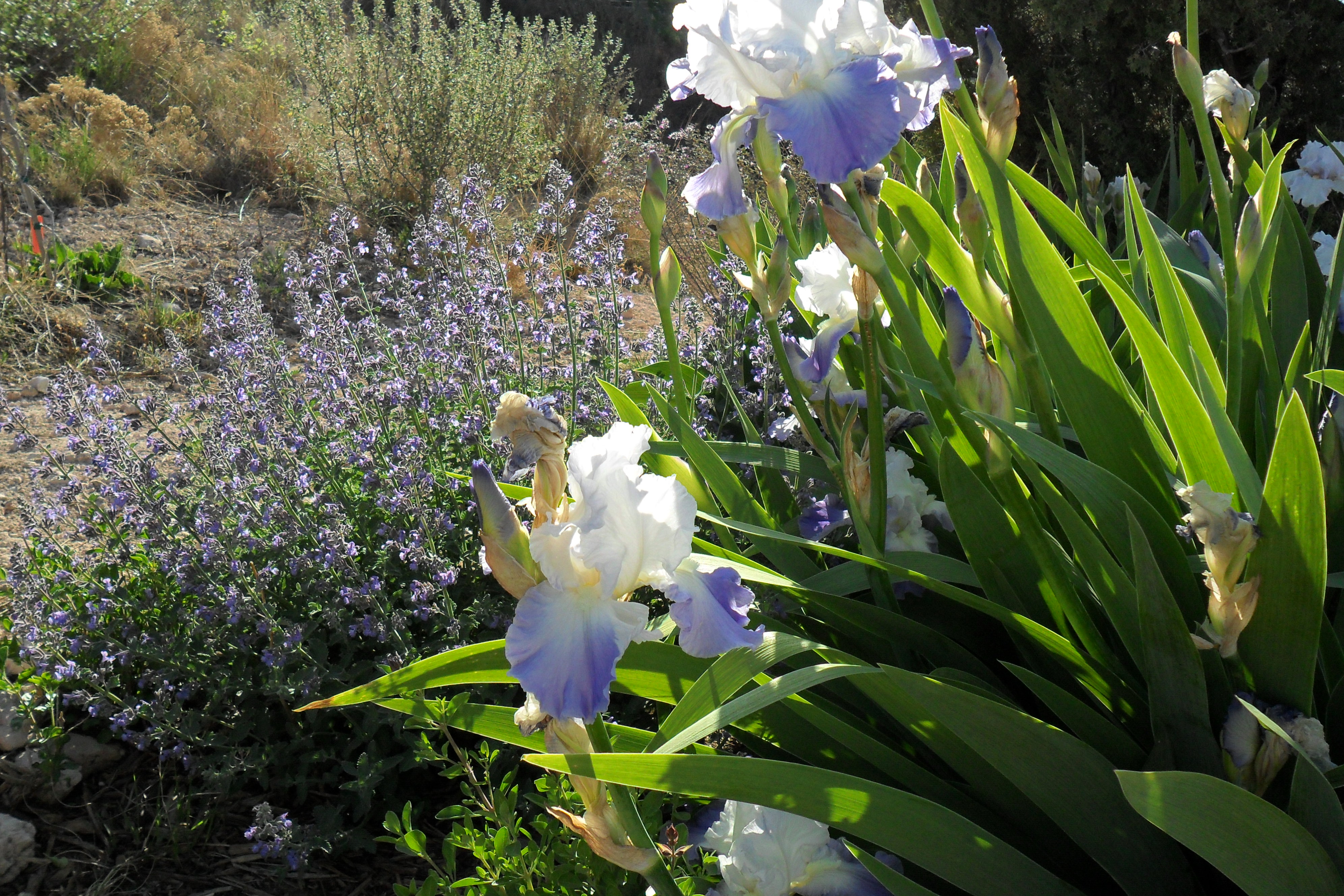
In the meantime, while I was out watering around my house–to keep my xeroscape garden alive (even drought resistant flowers need some) and to, I hope, make my house safer in case of a wildfire, I thought about all the lovely flowers blooming in spite of the dry weather.  Here they are in all their enduring beauty.


SAM_1081


SAM_1074


SAM_1078


SAM_0461


SAM_0161


SAM_0160

Commitments, Hosting Benefits, and What We Take for Granted


Shortness of post is necessitated by the time.  Why bother?  Nearly three weeks ago, I committed to writing daily.  Blogging seemed like a logical means to accomplish this.  I expect others and myself to follow through on commitments.  So here I am writing in the middle of the night.

Tonight I hosted a fund raiser for the Hilltop Senior Center here in Amarillo.  We tried to sell tickets in advance but not all that many sold.  The Director of the Center and I became a bit worried, but continued with planning, hoping some would show up even if at the last minute.  They did.  We had great Mexican food donated by Braceros on Sixth Avenue, wine, my wonderful well water, cheeses, fruit, and cakes.  Even the silent auction proved to be a great success.  However, nature became the real star of the event, nature and my dog Isabella.  Unlike earlier in the week when the wind shrieked to 6o miles an hour creating several days of endless dust, today the wind laid low, the sun shone, and it was hot.  This morning the heat went on and this afternoon the air conditioning as it rose to past 90.  Thirty degrees difference between night and day is rather typical here and some days, like to day, this difference increases to nearly forty.

At dark the stars seem so much brighter out here in the country.  Many of the guests walked back and forth on the patio, looking for different constellations.  People came inside for a while only to go back out and look at the stars and the crescent moon.  What I take for granted daily, became a wonder for my company.  As I write this, I think about all the things each of us take for granted, things we eat, experience, feel daily.  How often do we really take the time to appreciate these things, to realize that although they may be ordinary for us, for others they would be incomparable blessings.  So now as I finish this, get ready for bed, and snuggle into my cool sheets, I will meditate and give thanks to the universe for the wonder of the stars.


The Sound of Silence


For years I puzzled over what this phrase means.  This evening I discovered the answer.  Unlike the first part of the week, today was sunny, little wind, high 70s, what most consider a perfect day weather wise.  I ran home from work, gave Rosie, my horse, some food, let Isabella, my dog out for a bit, and then ran back to town to see my grandson perform.  He attends Wolflin Elementary School.  The physical education teacher selected a group of students called the SWAT Team who perform at different functions.  The last time I saw them, they performed at a local high school’s basketball tournament.  Today they executed four routines at their school’s annual gala, a fund raiser with games, food, a silent auction, dunking in the water, that sort of thing.  It really astonished me.  I have no idea how much they practiced, but these routines were not short and everything was perfectly choreographed.  First, the boys performed using basketballs to do various tricks and movements in unison to music.  Then  the girls did this complicated sort of dance over these long bamboo poles that other students clicked together.  The only other place where I have seen anything like this is in Thailand at the Rose Garden near Bangkok.  The third routine included both boys and girls and they used this giant circle of multicolored cloth to dance around, in and out, make the cloth into a sort of yurt like shape.  I have no idea how they kept it up like a giant circular tent one minute and flat the next.  Finally, they competed with hoola hoops to see who could keep going the longest.

After I returned home, I hosed off the front entryway, planted some flowers in pots, and watered other flowers, all in preparation for a fund raiser tomorrow night at my house–to raise money for a local senior citizens center.  Rosie is shedding her winter coat and seemed miserable itching so I brushed her.  Now tufts of pale rose colored hair lay everywhere in her corral.  Finally, a bit after eight I came inside for a late dinner.  Then I noticed.  No sounds, no wind, no appliances humming, no coyotes howling, no birds singing, no dogs barking, no sounds at all.  Nothing.  The patio doors are open; I walked outside a few minutes ago.  Nothing.  I sit here before the computer and hear the sounds the keys make when I hit them.  When I stop, nothing.

Rosie


Rosie


SAM_0301


Isabella on the patio in winter.

SAM_0160


They started blooming today.

Apocalyptic Planet-Part Six: Cold and Ice


In spite the current global warming, Earth’s past and perhaps distant future is ice.  This past winter, much of the Midwestern and Eastern United States thought it had already returned.  A friend, forced to attend a mandatory training session, reported that the trainer from Minnesota made fun of those who claim we are warming.  Even though it was March, Minnesota remained a frozen land.  I kept thinking to myself, wait until the heatwave hits this summer.  Then what will he think.

Craig Childs likes adventures most of us would avoid even if we feel rather adventurous.  He flies into a camp in Greenland where scientists, all men, study ice.  Ice does not encourage a lot of life.  No animals, no plants, nothing here–the Greenland Ice Sheet.  The weather remains dreadful most of the year.  On the few days when they can leave camp, these scientists go out to take readings on remote sensors stuck in the ice.  These sensors enable them to determine how the ice changes.  They get to the camp by ski plane during the windows of clear weather which sometimes do not occur for days.  What kind of scientists go here?  Physicists, chaos researchers–yes there is such a thing as chaos research, climate change scholars, ice climate researchers, and an occasional adventurer.  The chaos guy’s interests focus on what cannot be predicted.  He records creaks, snaps, ice sounds.  These giant glaciers emit considerable noise.

This Greenland Ice Sheet is nothing like the ordinary ice we think of.  It’s dry and hard.  Shovels do not work very well.  They use chisels to break off big chunks.  The wind shrieks over the ice, sometimes at 80 miles per hour. It is twenty below in the summer.  Not twenty below Fahrenheit, twenty below Celsius.  To urinate, a guy has to wear parka, mittens, the works, and goes out to the pee pole far enough from camp not to contaminate the drinking water made from melted ice.  Now and then some poor bird gets lost or blown off course.  They don’t last long usually.  Here holes drilled find bedrock thousands of feet below the ice sheet.  One drill came up with spruce tree needles.  Once this very same location was a forest.  Greenland was green!

What happened?  One driver is solar radiation changes caused by the earth’s tilt.  Over tens of thousands of years, Earth swings away from the sun and then back.  These are nearly imperceptible changes.  It takes only a little.  The opening and closing of the Bering Strait also affects climate change.  Current warming aside, Earth’s recent past  (the last 60 million years) is an ice age, partly caused by teutonic plates moving and mountain building which reduced carbon dioxide in the atmosphere, making it colder.  All this points to human behavior as a factor in the current change to warmer. When Childs asked these scientist if they thought another ice age was on the way, they all laughed.  One noted that change in and of itself is unpredictable.  As one of my students might say, “Duh!”  On its own Earth makes quick climate jumps.  They did make a point to say , “We are tinkering to the point we could initiate a jump on our own.” Some computer models say global warming can lead to another ice age by disrupting climates.  One scientist indicated that humans may be preventing or delaying the next ice age by warming the earth.

Who knows what the future may bring even one thousand years from now.  In the long distant past the entire Earth was covered with ice.  At other times the poles were forests.  Maureen Raymo, a paleoclimatologist at Columbia University says, “My feeling is that there is never going to be another ice age as long as there are humans on the planet.”  Some scientists think we will develop a technology to control the level of carbon dioxide in the atmosphere.  Raymo notes, “If they (meaning humans) were smart, they’d get their act together.”

Friends


This day, like many, has flown by in a whirl wind.  On May 3, I am hosting a benefit for a local senior citizens’ center.  We will have a silent auction, food, and drinks.  Over one hundred invitations have been sent, but only a few have actually bought tickets in spite of the fact that quite a few people have told me they plan to attend.  Customs vary in different parts of the United States.  When I lived east of the Mississippi River, people actually religiously responded to request for an RSVP.  Here in the Texas Panhandle, not so much.  At this juncture, I have no clue how many people will show up.

About two and on half hours ago, my friends showed up with the forks and spoons and plates and wine and auction items.  These items currently reside in one of the guest bedrooms and the garage.  We decided to have some wine and then I dug out cheese and crackers and some more wine and more cheese and crackers.  And we visited.

A downside of United States life for me is the pace.  Everything is done in a huge hurry.  People even gulp their food.  I especially notice the difference when I spend time with people from other cultures who take hours to eat dinner and visit.  When one of my best friends from India lived here and I invited others over, we took hours to eat and visit.  Recently, when a US friend brought his exchange student from Italy over to ride my horse and his daughter and wife showed up as well, we rode, and then fixed dinner.  We cooked, visited, and ate leisurely.  The young woman said she felt so at home because we were spending time, visiting, cooking, everything leisurely.  I frequently cook dinner very late by US standards, e.g. eight o’clock at night.  When my exchange students from South America lived with me, they thought this was normal.  People there eat late by standards here.  My daughter tells me I have become more and more like all these people from other countries with whom I spend time.  I laugh.

Tonight’s experience further validated my belief in the value of friends and time spent with them.  This was not one of those planned, elaborate events.  We just sat, drank, ate, and enjoyed the pleasure of each other’s company.  It was wonderful.


Gratitude and Dust


Initially, I planned to continue my Apocalyptic Planet series, but today’s events caused me to choose otherwise.  As I sit here writing this, I can see the endless blowing dust through the spotted window.  Sometime today, while I was at work, it sprinkled while the dust blew.  Now every window on the east and north side of my house appears as if someone had thrown handfuls of nearly dry mud at it.  My black car looks the same.  The wind whistles in the flue of the wood burning stove in my bedroom.  This storm  blows harder and longer than the one we experienced last week.  Tomorrow they forecast more of the same.

Saturday I stopped by two greenhouses to purchase some hanging baskets and native flowers.  The mesquite trees kept telling me, “Wait, wait.  Cold will come again. Wait!”  Normally, I obey what the mesquite trees tell me.  They never come out until they know without a doubt the cold is over and they feel safe.  I bought the flowers anyway.  This coming Saturday, Hilltop Senior Citizen Center in Amarillo has their Gala at my house to raise money–complete with a silent auction, food, and drink to raise some much needed money.  I want everything to look springlike and pretty.  I heard the weather forecast on the radio coming home from work.  I just looked again on the Internet.  Frost predicted tonight and even colder tomorrow night.  After I fed Rosie, placing the alfalfa as much out of the wind as I could, I brought the hanging baskets inside and poured a bunch of water on the other new plants. The native plants, tough, worry be little.  The others will not survive 33 degree weather.  Later, I will go out and cover them with old towels, hoping the wind relents and does not blow them off.

Everyone here posts photos of the dust on the Internet and gripes about this horrid weather.  Although I certainly dislike it, I refuse to complain.  This, too, is tornado country.  I listened to the news this morning and again coming home from work.  Thirty four dead, whole towns destroyed, a new school flattened.  Here I see no devastation, only the endless, depressing, annoying dust and wind.  My friends, family, and I are alive, our houses intact.  Rosie huddles behind the barn, still healthy, neighs when she hears me coming.  Gratitude engulfs me.


Rosie


Rosie


SAM_0461


The iris I was hoping for.

Volunteering at Palo Duro Canyon


424908_2650517636082_1731467384_n

In front of the Visitor’s Center with Eduardo and Gaston, exchange students who lived with me several years ago.


Occasionally, I volunteer in the gift shop at Palo Duro Canyon, the second largest canyon in the United States.  If  individuals drove through Amarillo on I-40 through the endless flat prairie land and never ventured far, they would not even be able to dream up this canyon only twenty miles away.  To get there, you have to drive through more flat land, covered in wheat pasture, corn, milo, and the few remaining pastures of native grass.  You can see for miles; you can even see the taller buildings in Amarillo which are not all that tall.  Then, unexpectedly the land opens up, cliffs appear.  The first time you see it, you feel astonishment.  Nothing you see on the way there prepares you.  Years ago Battelle Memorial Institute sent me on a business trip to Amarillo.  People told me I should go see the big canyon.  I laughed to myself, thinking they must be just talking about a large arroyo.  When I finally did drive down, my mouth gaped in shock.  How could this be?

Palo Duro Canyon is still being created by water erosion.  The Prairie Dog Town Fork of the Red River (no I did not make this name up) runs through it.  Barely a running stream now with the drought, when a big summer thunderstorm blasts it fury, this river can rise ten feet almost immediately.  When it does this, campers remain stranded inside the park until the river calms down because to get into the park, depending how far in you go,  you have to literally cross the river repeatedly.  Because of this, they have decided to build bridges across the five water crossings.  Some of us who love driving through the water find this innovation unacceptable.

Today, I volunteered from 1-5.  People came in from Indiana, Minnesota, Ecuador, south Florida–on a trip to Californian and back, Ohio, Germany–a young woman working as a nanny here.  Usually, I meet even more people from other countries, especially European countries.  When I ask the Germans in particular how they know about this place, they tell me Palo Duro Canyon and its history is featured on the Internet there.  Here come all these people from far away and I have students who live a mere 25 miles away and have never seen it.  The family from Indiana came because their daughter wants to attend West Texas A & M University in Canyon, Texas–named after the canyon of course.  She told me she wants to bring her horse and WT is one of the few universities in the country where you can major in agriculture and participate in an extensive horse program.  She exuded excitement and enthusiasm.

In the midst of chatting with all these visitors, I noticed the unusual behavior of one woman in particular.  She had medium grey hair pulled back in a ponytail with hair a lighter shade of grey framing her face. All her clothes were dark grey.  She walked to the book area–we sell a lot of books, and started flipping slowly through several of them.  She picked them up as if they were delicate flowers or fragile glass.  She held them as if she thought they might break if she held them tight.  When she put one up to look at another, it appeared as if she barely touched them.   She never smiled, just looked and looked and looked.  She did not buy a book.