My Ethiopian Adventure–Lalibela, Part Two–the Monolithic Churches


IMG_0397

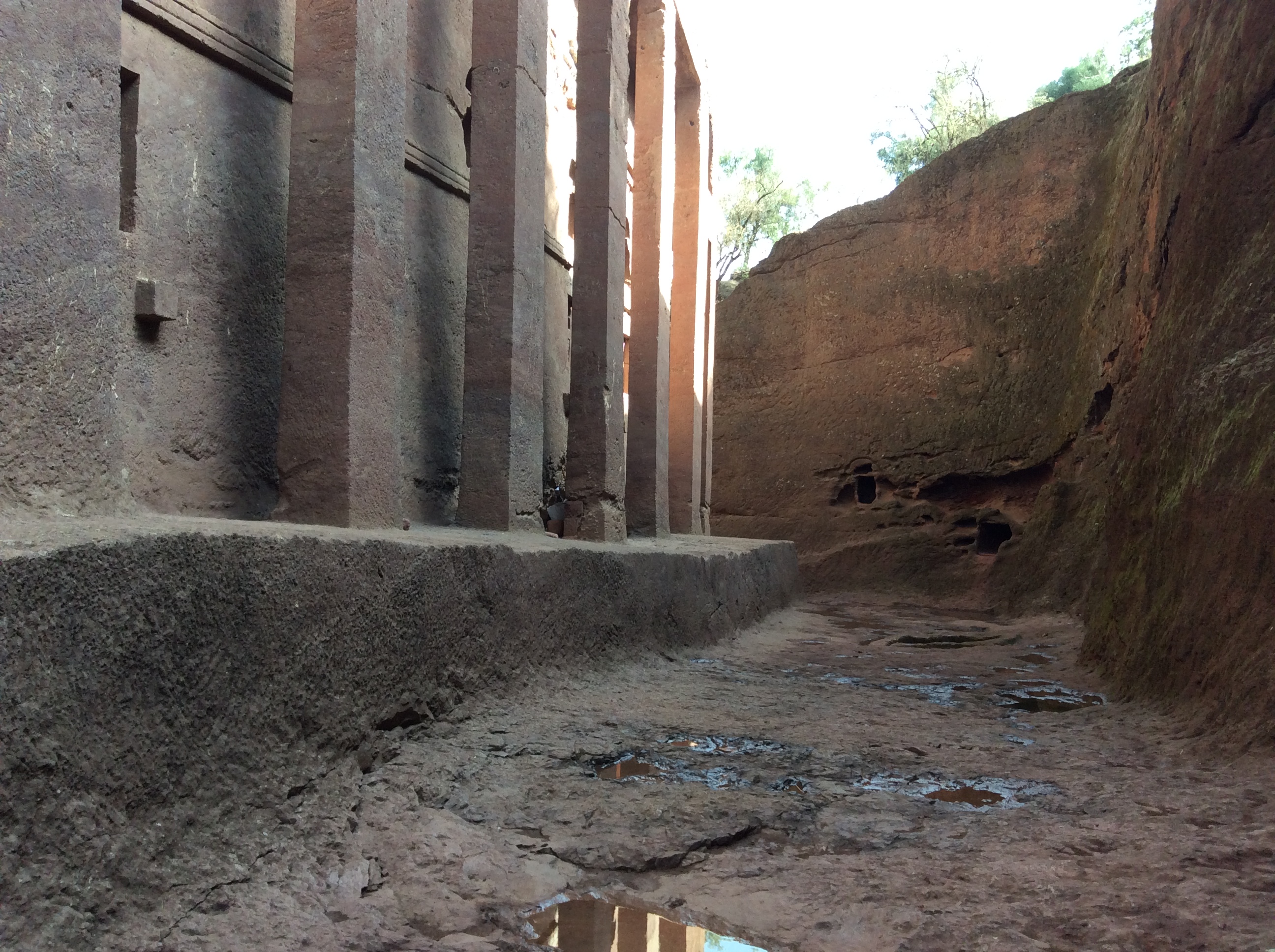
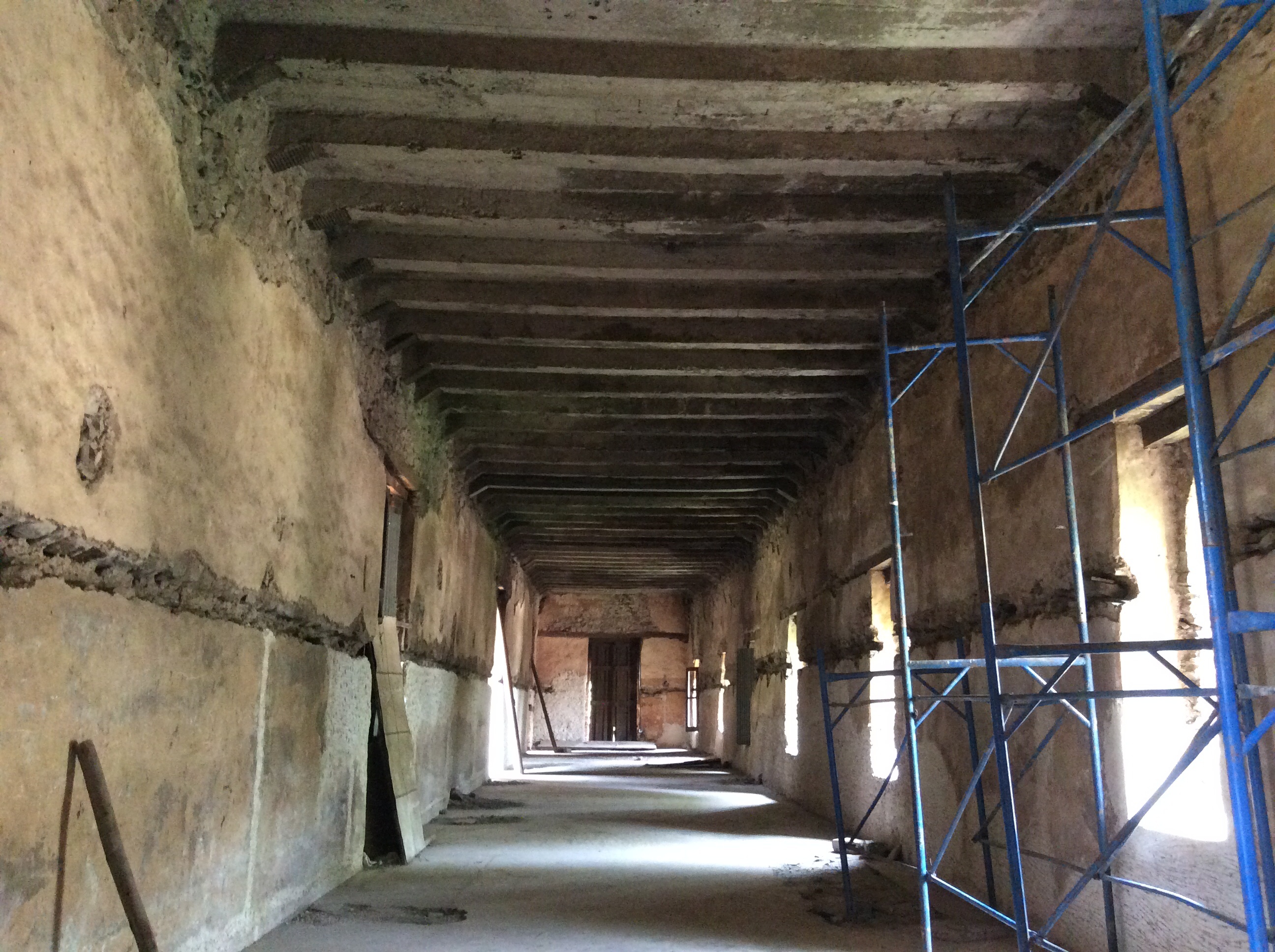
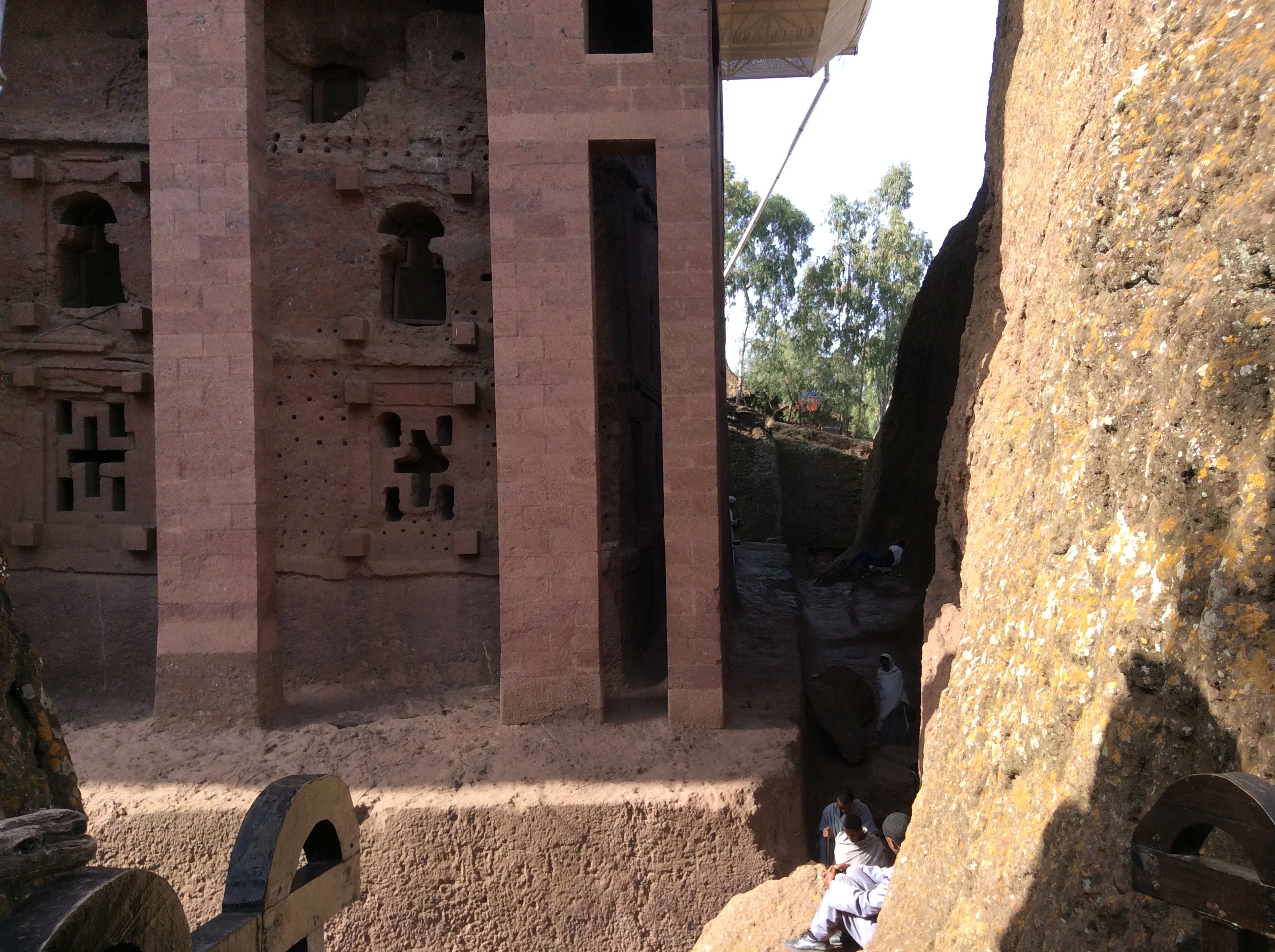
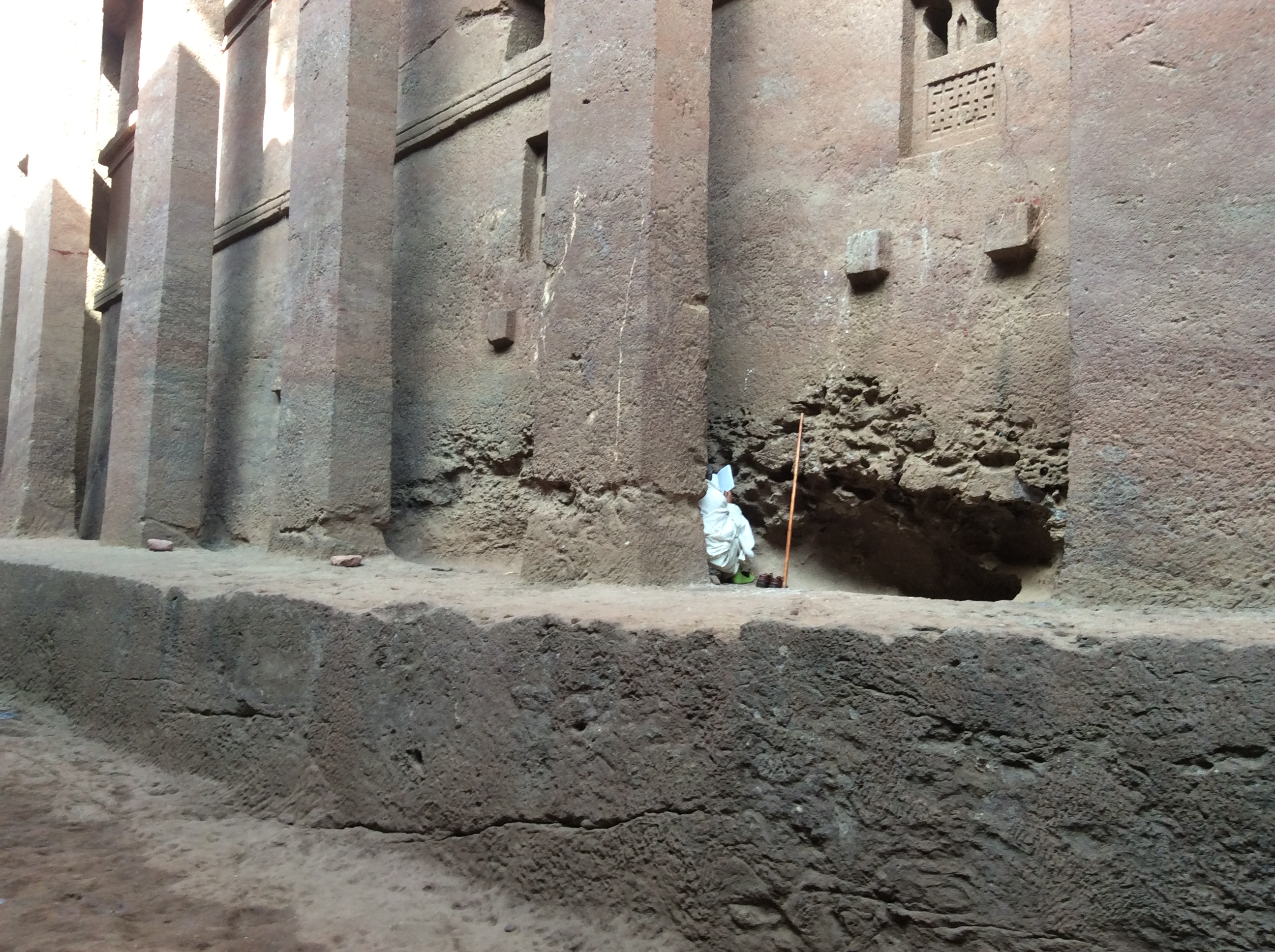
This is the first of the monolithic churches we visited.  Because the churches were built from the top down and actually cannot be seen until you are very near them, you have to climb down a lot of steps to get to the bottom level from which you can enter into the interior.  The “trenches” around them are the same depth as the churches are high because they were carved out of the solid stone.  As you look at these photos, you will notice multiple cross designs, including Greek, the type found in Axum, those referred to as Lalibela.  Every carving, every painting, every design possesses an explicit symbolic meaning.  I wish I had been able to record all the information provided by the guide.  This church, Bet Medhane Alem, is the largest of this type.  It’s approximate size is 33.7 meters  by 23.7 meters with a height of 11.5 meters (109.5 feet by 77 feet with a height of 37.4).  All sides have columns.
IMG_0399


IMG_0400

These churches are not mere tourist attractions.  We saw many people walking around, praying, and worshipping.  Services are still held here.  Carved into some of the “trench” walls opposite the church are tombs.  Those buried in these tombs have been removed and their graves now lie on either side of the River Jordan–photos of that later.

IMG_0398

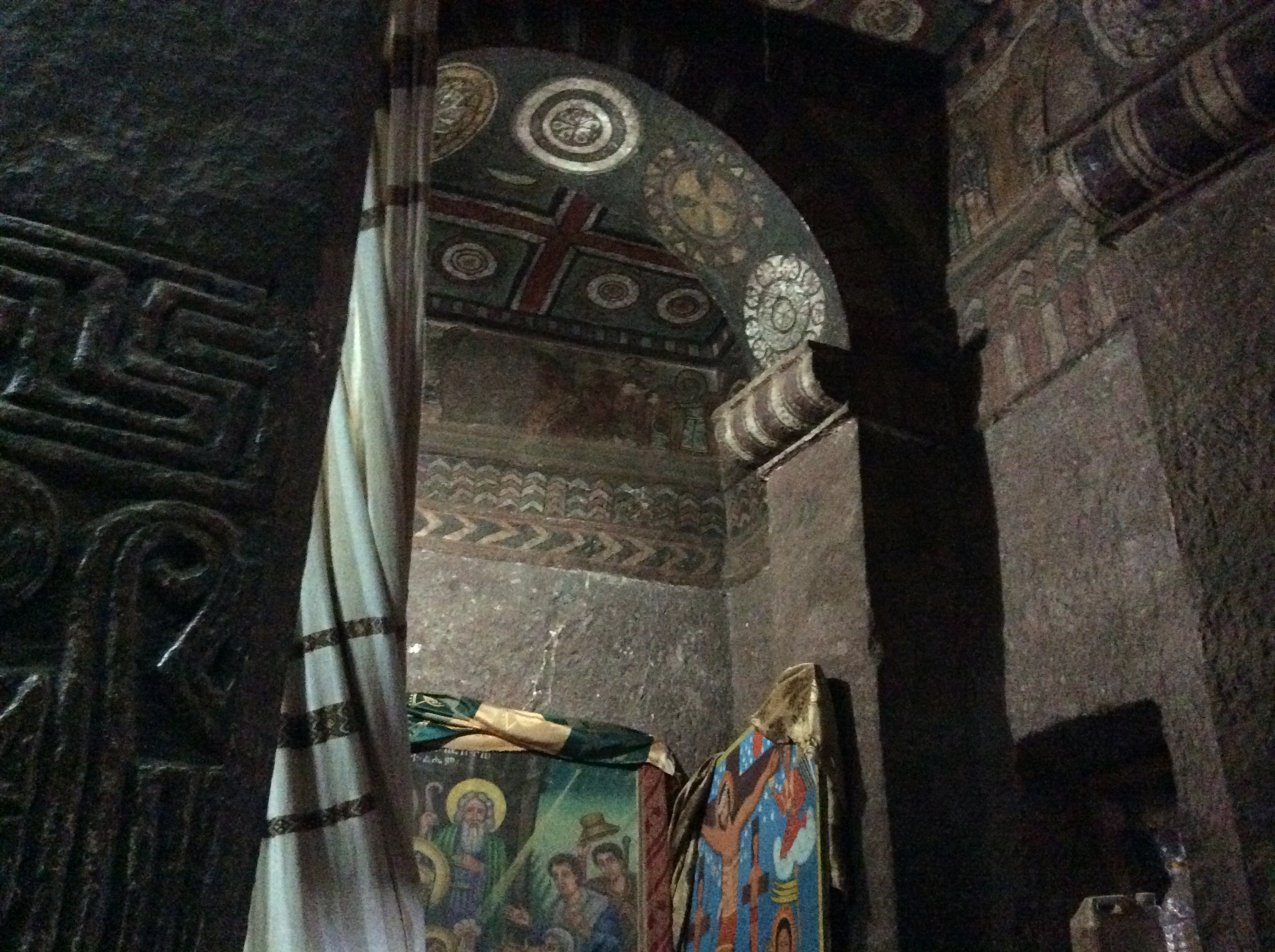
The interior decoration includes detailed carvings, elaborate drapes, and paintings.

IMG_0403

Certain areas, like this one behind the drapes, only priests can access, mainly because they contain the sacraments.  The floors of all the churches are hard rock so all contain coverings of cloth, Persian type rugs, and bamboo.  Accessing the interior requires a lot of climbing up and down very worn, slick, stone steps.

IMG_0405

While smaller trenches and areas separate this first group of churches from each other, the entire group is surrounded by the deepest, large trench.  This is the next church we visited.  It lacks outside columns.

IMG_0407

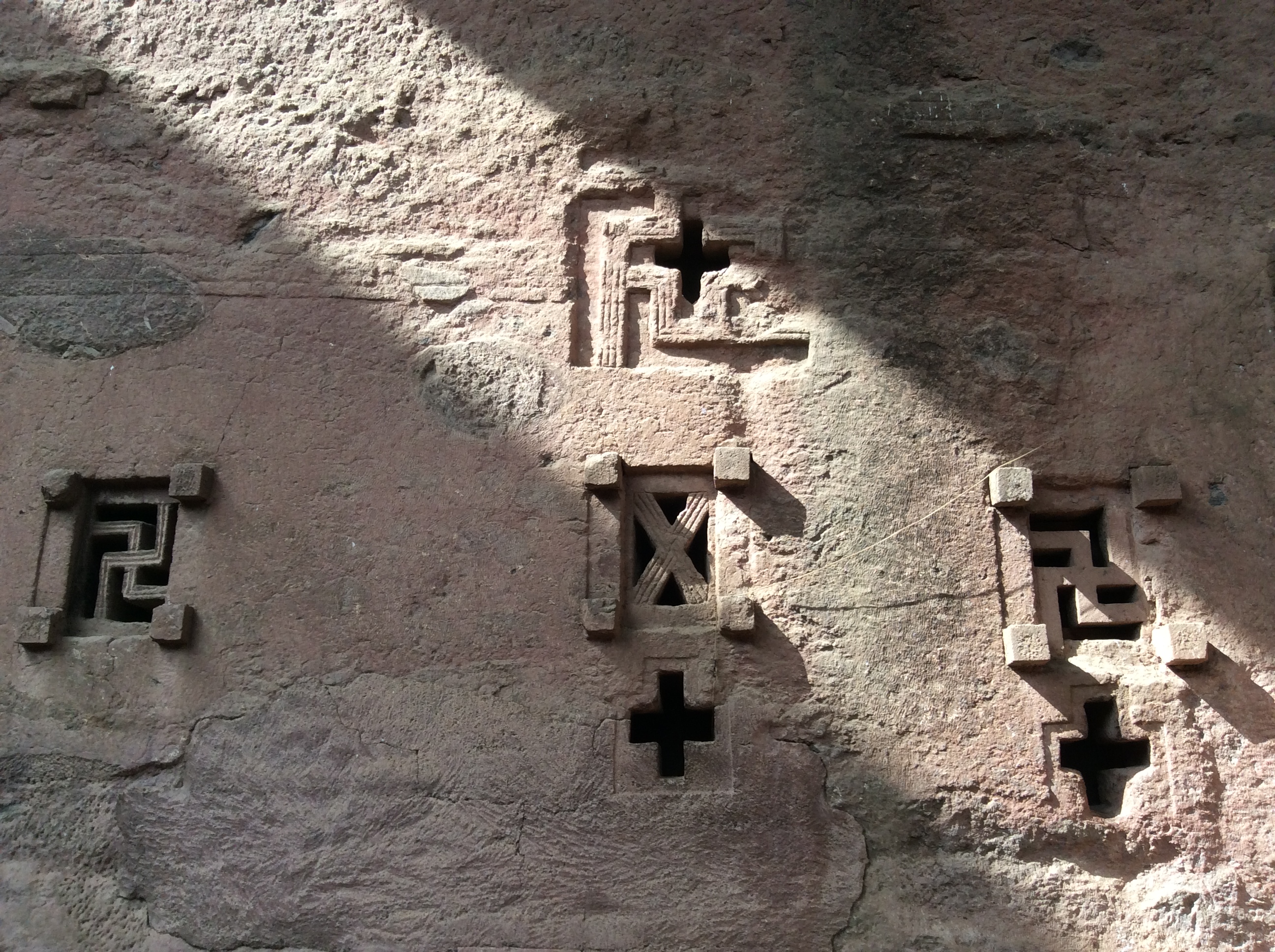
At first the sight of swastikas everywhere startled me until I remembered how old these churches are and the original meanings attached to this symbol.  Our deacon guide explained that they symbolize everlasting life (the circle of life) and also mentioned its meaning in ancient Hinduism–the continual, everlasting cycle of birth and rebirth.

IMG_0408

This is the fertility pool.  It is so deep that the priest must be lowered into the water attached to ropes as are the man or woman who wants treatment in this holy water.  At one point, someone realized that the pool was no longer as deep as it was originally.  When they investigated, they found the pool had been filled with dirt below where it could be seen.  When this dirt was excavated, a cache of ancient, holy artifacts were found.  They had been buried there to protect them.
IMG_0409

IMG_0411

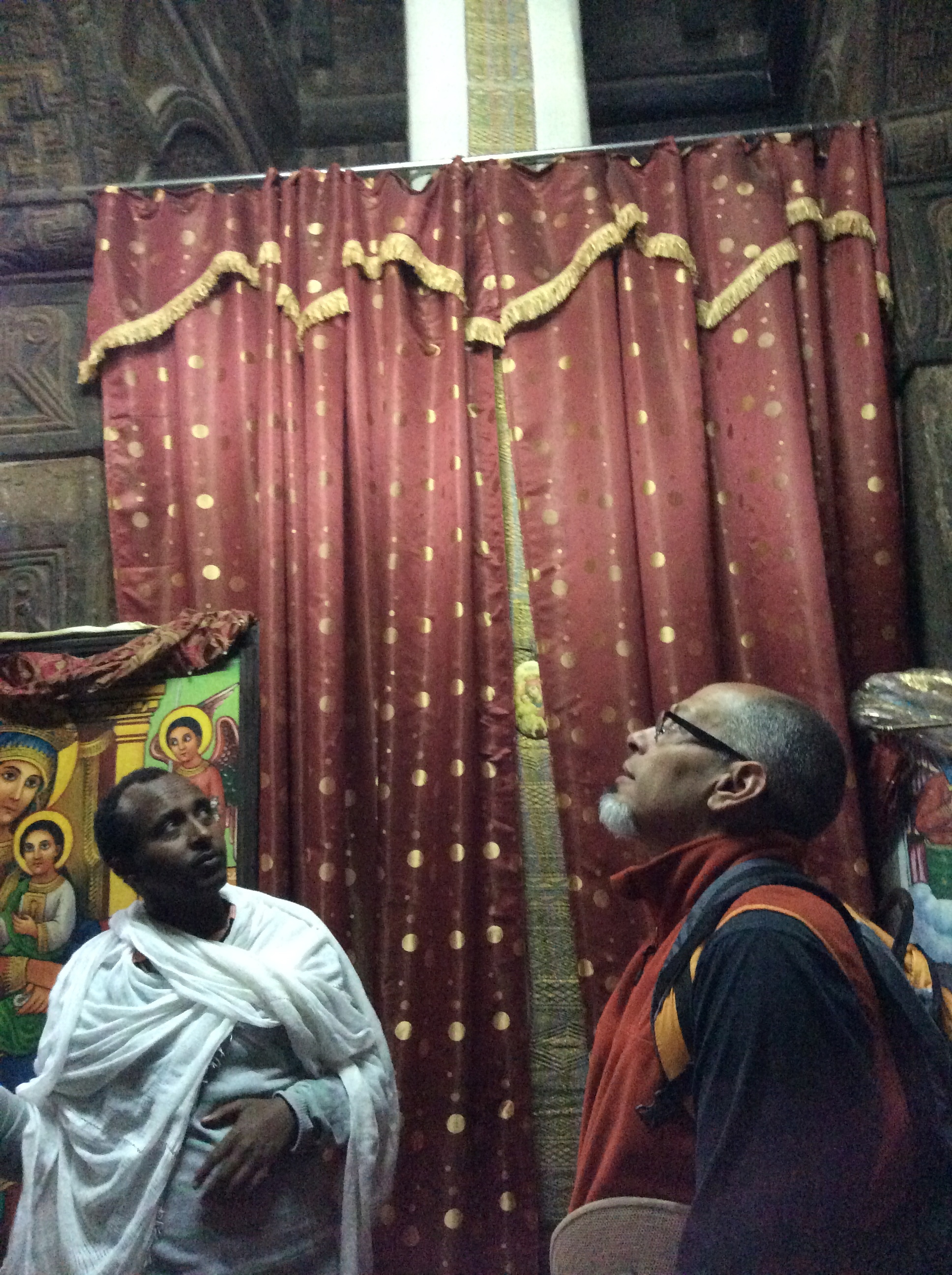
Ethiopians wrap themselves in white not just to go to church, but in general.  I constantly marveled how they keep these garments so incredibly white in spite of dirt and rain and walking through mud everywhere.  The person on the right is our guide, a deacon in the Ethiopian Orthodox Church.  He knows the meaning of every carving, every painting, every symbol.  The extent of information explained was not only detailed but extensive.

IMG_0412

Only some of the churches possess paintings on the walls as well as carvings.  The wise men, Mary, everyone looks Ethiopian at least to some extent.

IMG_0413

Notice the Star of David.  This symbol is everywhere because the Ethiopians believe they are descendants of Solomon and Sheba.  As a consequence, the paintings, carvings, all the symbols reflect not only the New Testament but also the Old Testament.
IMG_0414

Every church has this curtain behind which only a priest can go.  Every church has a copy of the Ark of the Covenant.  They believe the original was taken by Menelik I, the son of Solomon and Sheba, to its current location in Axum in a special treasury next to the Church of Saint Mary of Zion.  It has been safely kept there through the millennia.

IMG_0415

IMG_0416


IMG_0417

Protective roofs cover some of the churches.  The guide explained that the hardness of the basalt varies.  Because some of the stone is softer, churches carved out of this softer stone had begun to deteriorate.  The coverings protect and preserve them.
IMG_0419

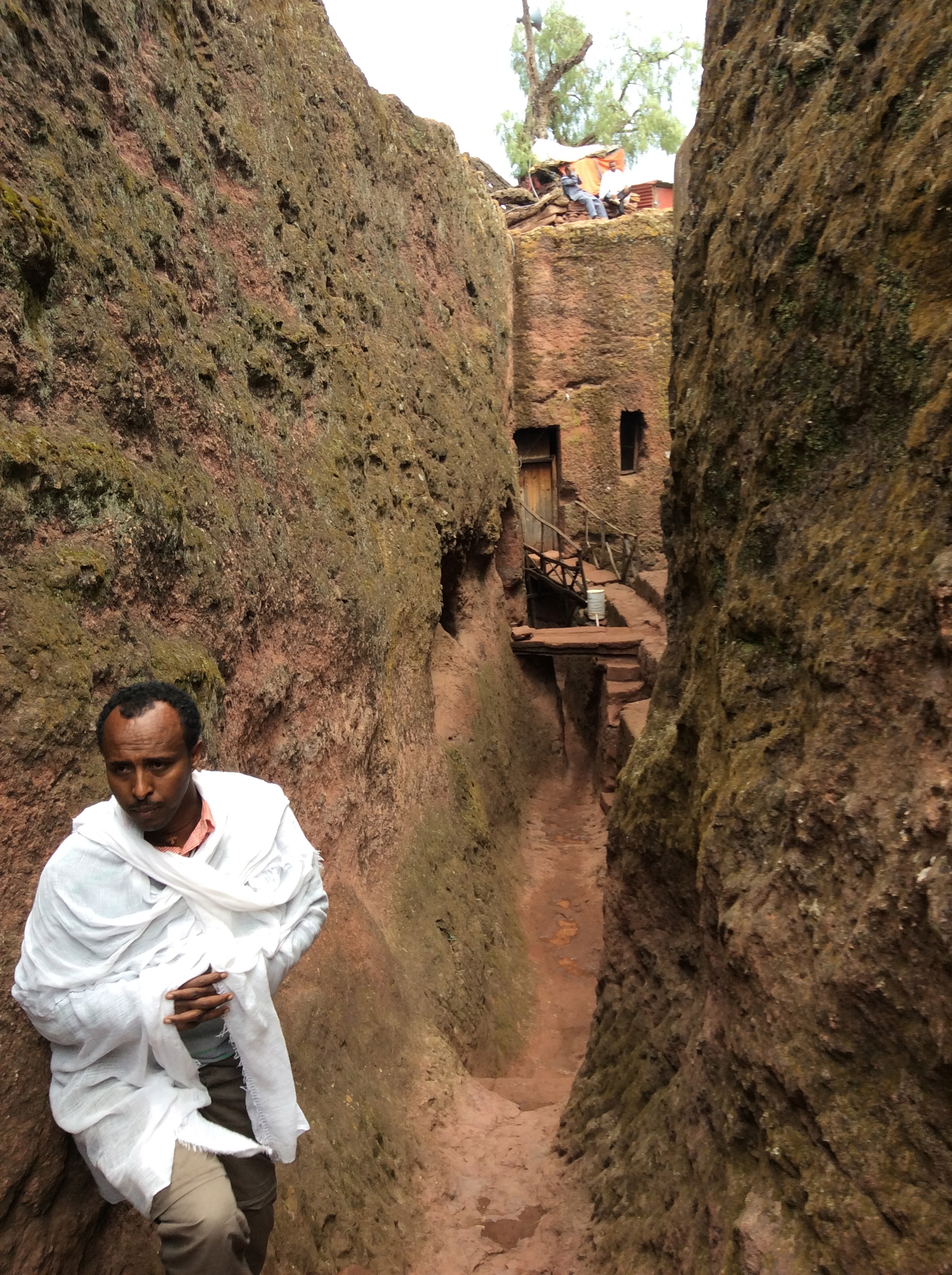
To get from church to church in this first group of churches, usually we walked through these trenches.  To reach the actual church entrances requires climbing up steps.  These trenches enable water drainage into the River Jordan during the rainy season.  The floor of the churches remain above the water.

IMG_0420

Walking through these churches kept me in a constant state of awe.  They were built more than 800 years ago without modern tools.  And there are eleven of them all here, carved out of solid stone.

IMG_0421

St. George and the Dragon hold a prominent place in Ethiopian Orthodox symbolism.  The dragon represents paganism.  St. George slated the dragon.

IMG_0422


IMG_0423

We left this  group of churches, climbing out from this trench and headed to one of the most photographed.

IMG_0425

We encountered two walking funeral processions complete with chanting.  I took no photos because it seemed disrespectful.


My Ethiopian Adventure–from Addis to Kombolcha


Saying goodbye to Addis at 8 in the morning, we headed northeast and later north toward Kombolcha–spelling differs, depending on whose map you view.  The official Ethiopian map spells the town as Kombolch.  Addis is high, the second highest capital in the world.  We drove northeast all morning across rivers and through green fields.

IMG_0246

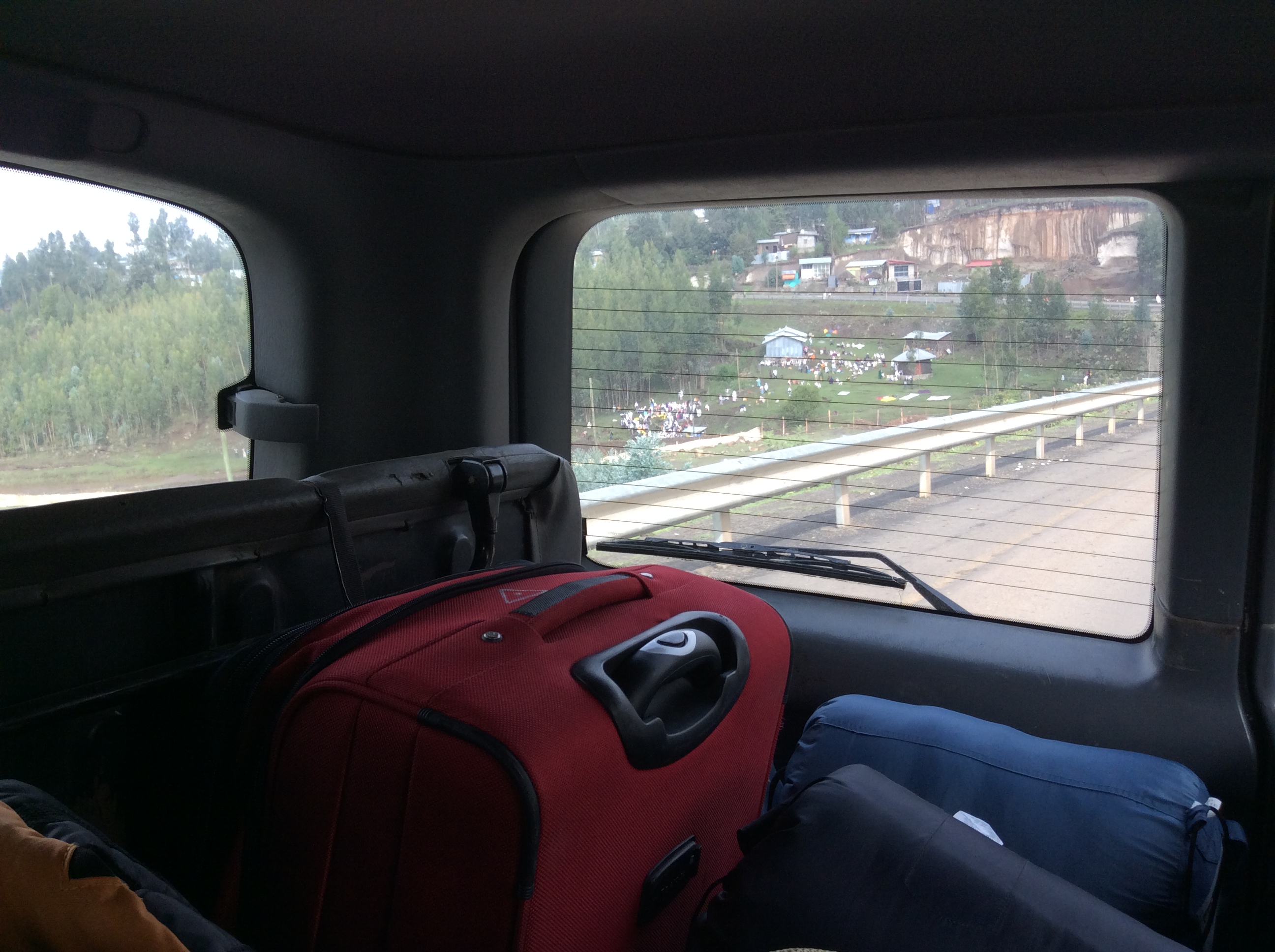
Not far outside Addis we saw this scene, a river with many people near it.  Our driver, Alemu explained this river contains holy, healing water and all those people you see through the window are pilgrims coming to be blessed by the resident priest and hopefully healed by the river waters.

IMG_0249

Who would know this is Ethiopia if no one told you? Not what I expected at all honestly.

IMG_0248

IMG_0250

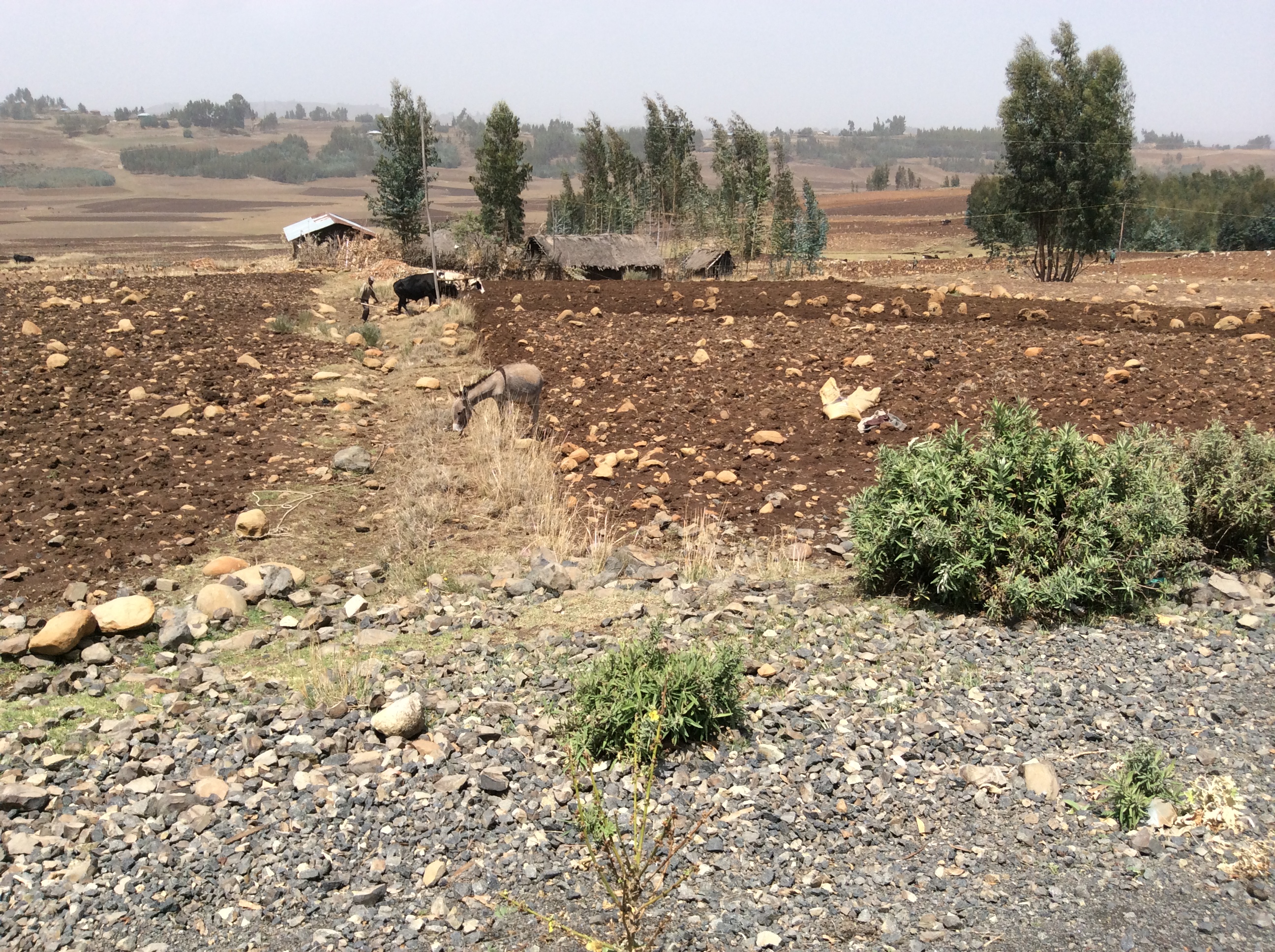
Most of the farmland is very rocky.  Farmers gather rocks, in some places make fences out of them or just pile them up.  Even with these efforts fields remain full of rocks.

IMG_0251

We drove for hours through this type of farmland.

IMG_0257

This is a typical country village which appeared off and on continuously along the highway.  Traditional buildings are usually round with thatched roofs.  More and more people have begun to use metal roofs which forces the building shape to rectangular rather than round.  We heard a story about a thatched roof house that caught on fire.  Nothing but the thatch burned because underneath the thatch was a meter of mud.

IMG_0258

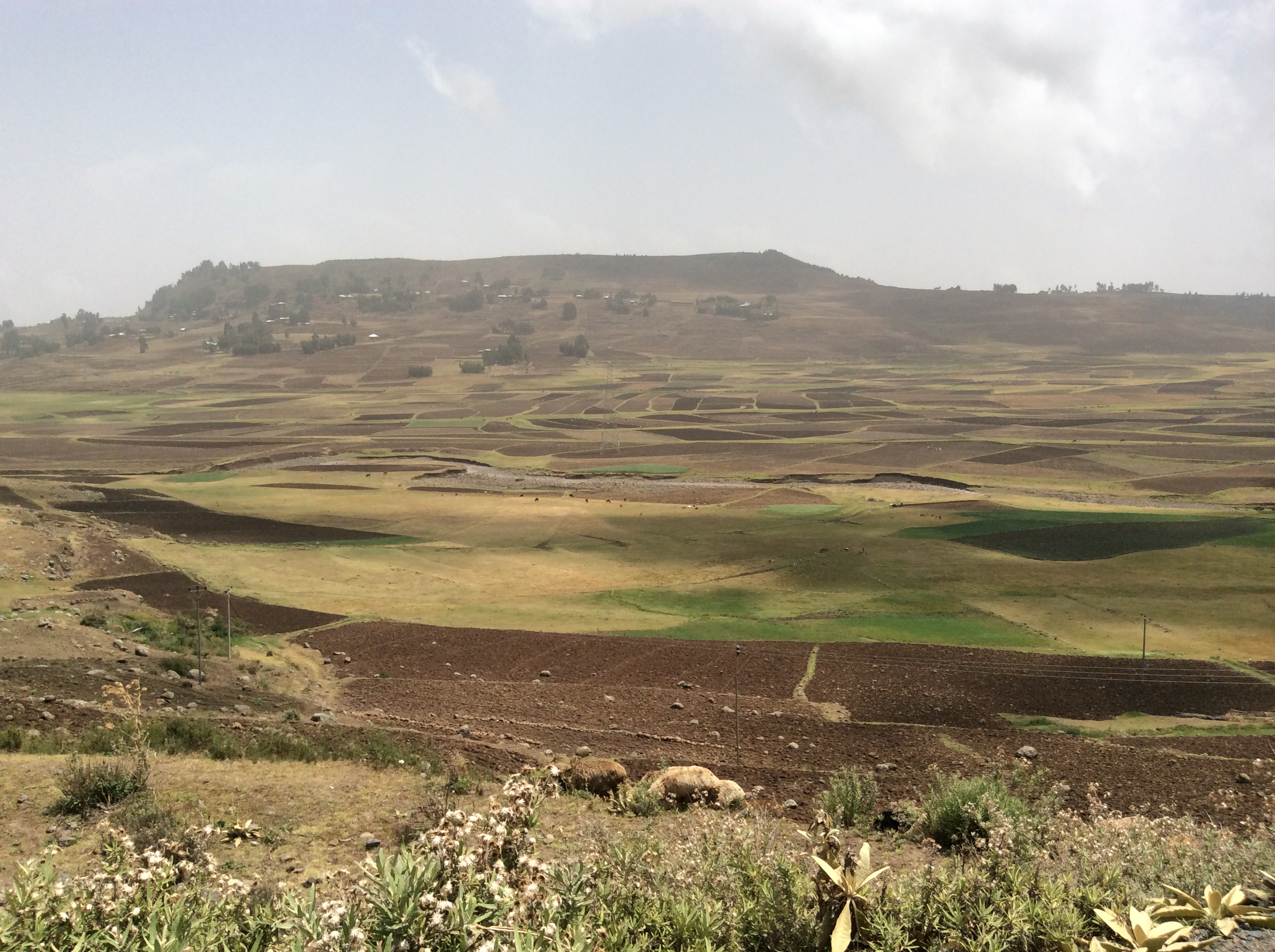
Most Ethiopian farming is done the old way:  either horses or cattle pull the plow with a man guiding it usually through a lot of rocks.  I commented about seeing no tractors so then every time we saw one everyone shouted, “Juliana, there’s a tractor.”  I think I saw only five of them in ten days and only one was actually working in a field.  It became obvious rather quickly how totally impractical a tractor and its equipment would be in much of the farmland:  too many rocks and as you will soon see, too steep.  The tractor would fall over.

IMG_0261

Eventually we started climbing higher and higher.  To the left was one of Ethiopia’s high peaks near or over 4000 meters–13 to 14 thousand feet.

IMG_0262

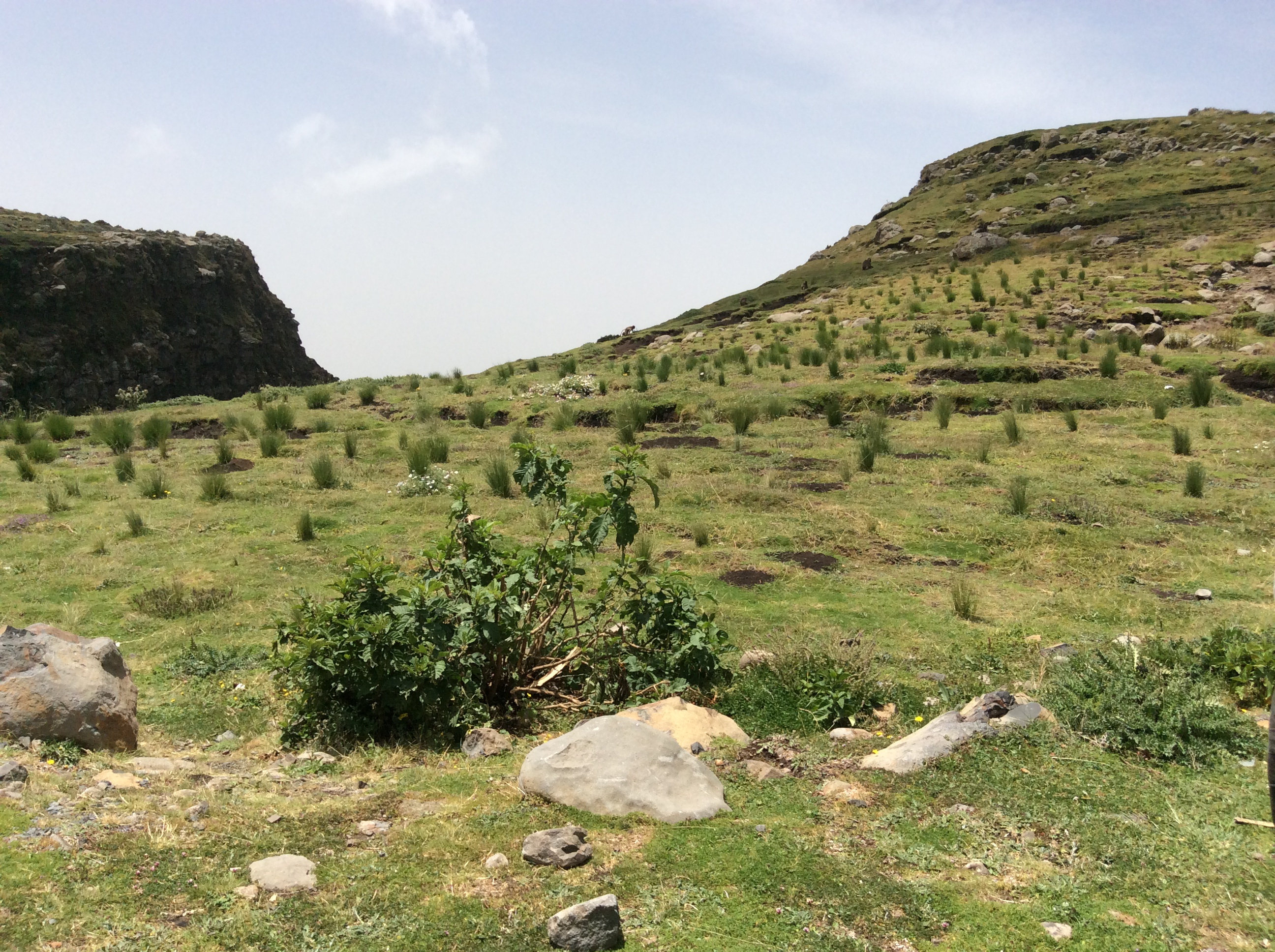
And then, there it was, Menelik’s Window.  This was the first area we saw with numerous gelada baboons.  However, these ran away unlike the ones later in Simien National Park.

IMG_0266

That’s Dino down on the edge.  At this point in the trip, I was still quite horrified by all the steep cliffs and stayed way back.  He was trying to get a good photo of the baboons.  Menelik II, the last Ethiopia leader to be able to claim himself as a direct male descendant of King Solomon, found this place special, a view into the real Ethiopia across miles of mountains. He is known for defeating the Italian invaders, expanding the kingdom, and especially for modernizing Ethiopia.

IMG_0267

My grandson now owns this hat.  This boy and his friends spend their days chasing the baboons away from the tufts of grass, which their families use to make the thatched roofs, and making hats for sale.

IMG_0264

You can see the selection of different styles of hats on display on the grass.  On the mountainside in the back lots of herbs grew, including thyme.  The boys also sold packets of herbs they had gathered and dried.

IMG_0268

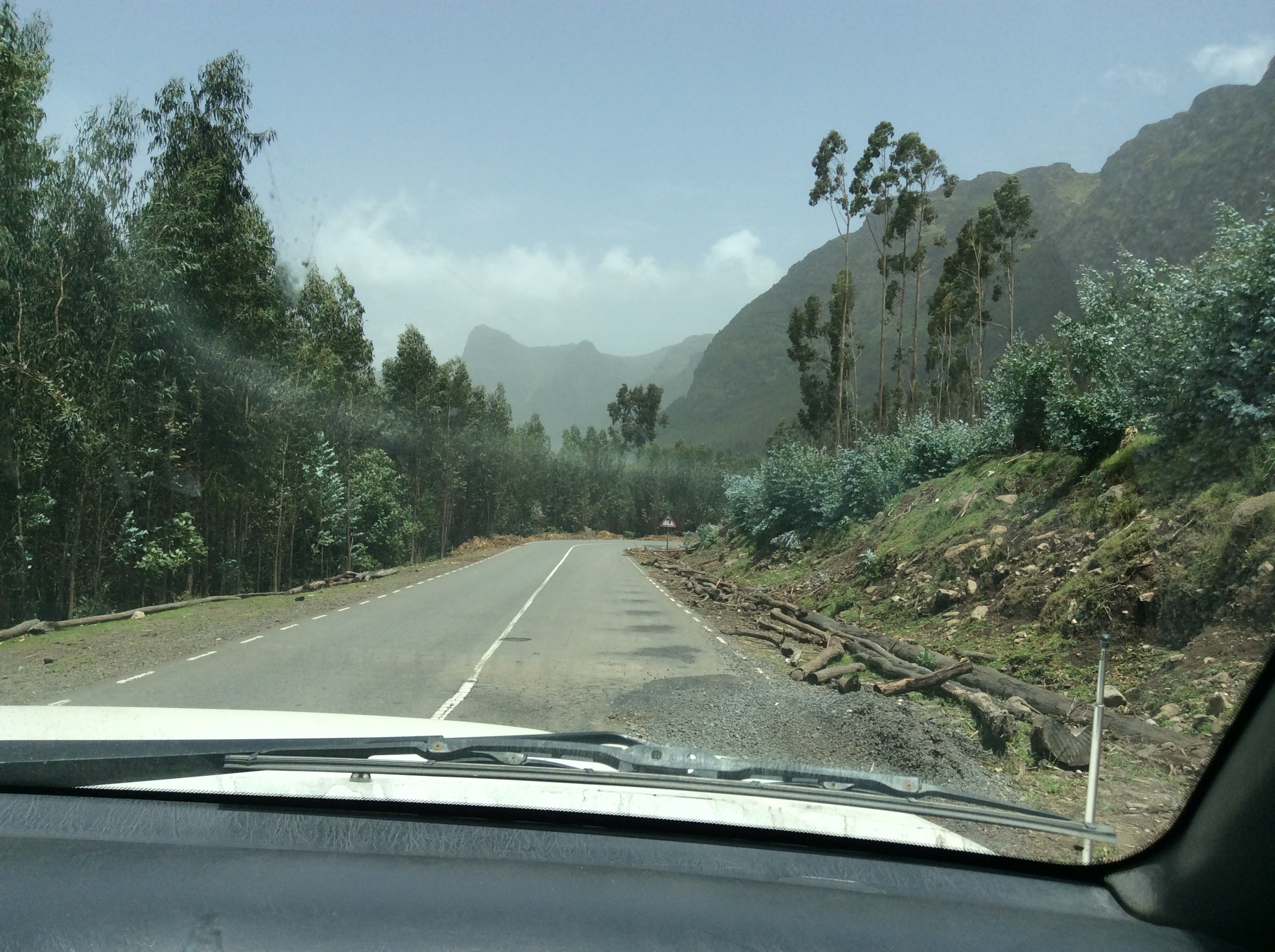
We dropped down on a winding mountain road through eucalyptus forests.  Eucalyptus is not native to Ethiopia, but grows everywhere there.  It is used as a basic material for building their houses, for scaffolding to build tall city buildings, for just about everything.  Several different species grew along the road.

IMG_0271

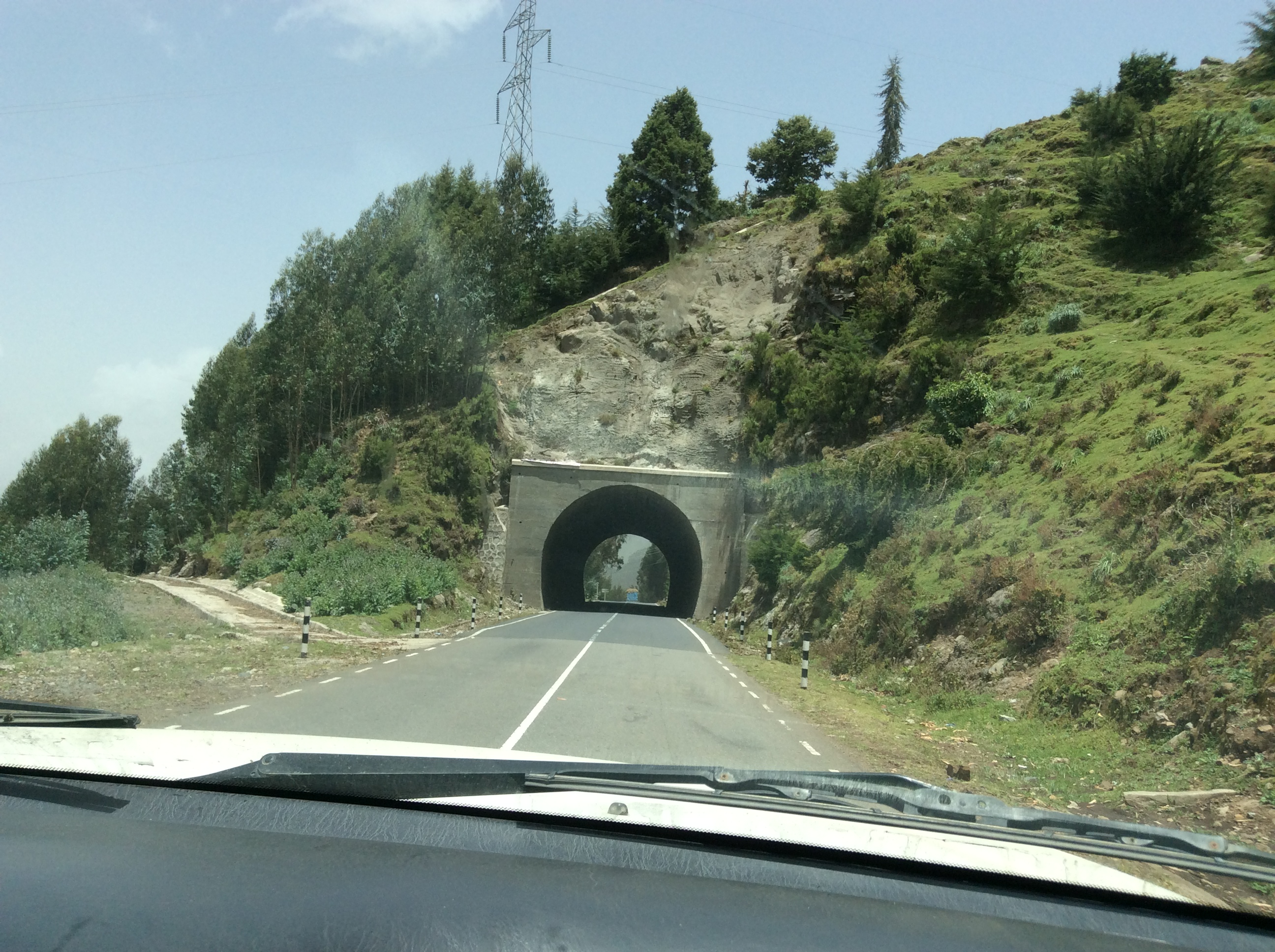
Ethiopia’s main highways are excellent.  Many were built years ago by the Italians, more recent ones by the Chinese.  Ethiopians make jokes about how long the Chinese roads might last.

IMG_0272

Eventually, we dropped down out of the mountains into an area that was much drier.

IMG_0276

A typical town with all sorts of shops right along the road.  When driving in Ethiopia, dodging people, cattle, camels, horses, burros, and goats is the norm. Everything it seems likes these good roads.

IMG_0279

A boy driving camels down the highway.  Loose animals, like the burro on the right, roam seemingly unattended.  I saw few fences.

IMG_0280

In the small towns in this semi arid area, we saw several totally veiled women, faces covered totally except for their eyes.  Alemu informed us that this was a new thing, not seen until the last few years.  He seemed to think it had become fashionable to copy Saudi women.

IMG_0281

We stopped to look at certain plants beside the road.

IMG_0282

Dino recalled playing with these pretty green balls as a child with this forewarning,  “Do not eat them, do not touch your eyes or you will go blind.”  They are called the Apples of Sodom.

IMG_0284

At this juncture near the beginning of this adventure, I had not yet realized how everything in Ethiopia possesses symbolic meaning.

IMG_0285

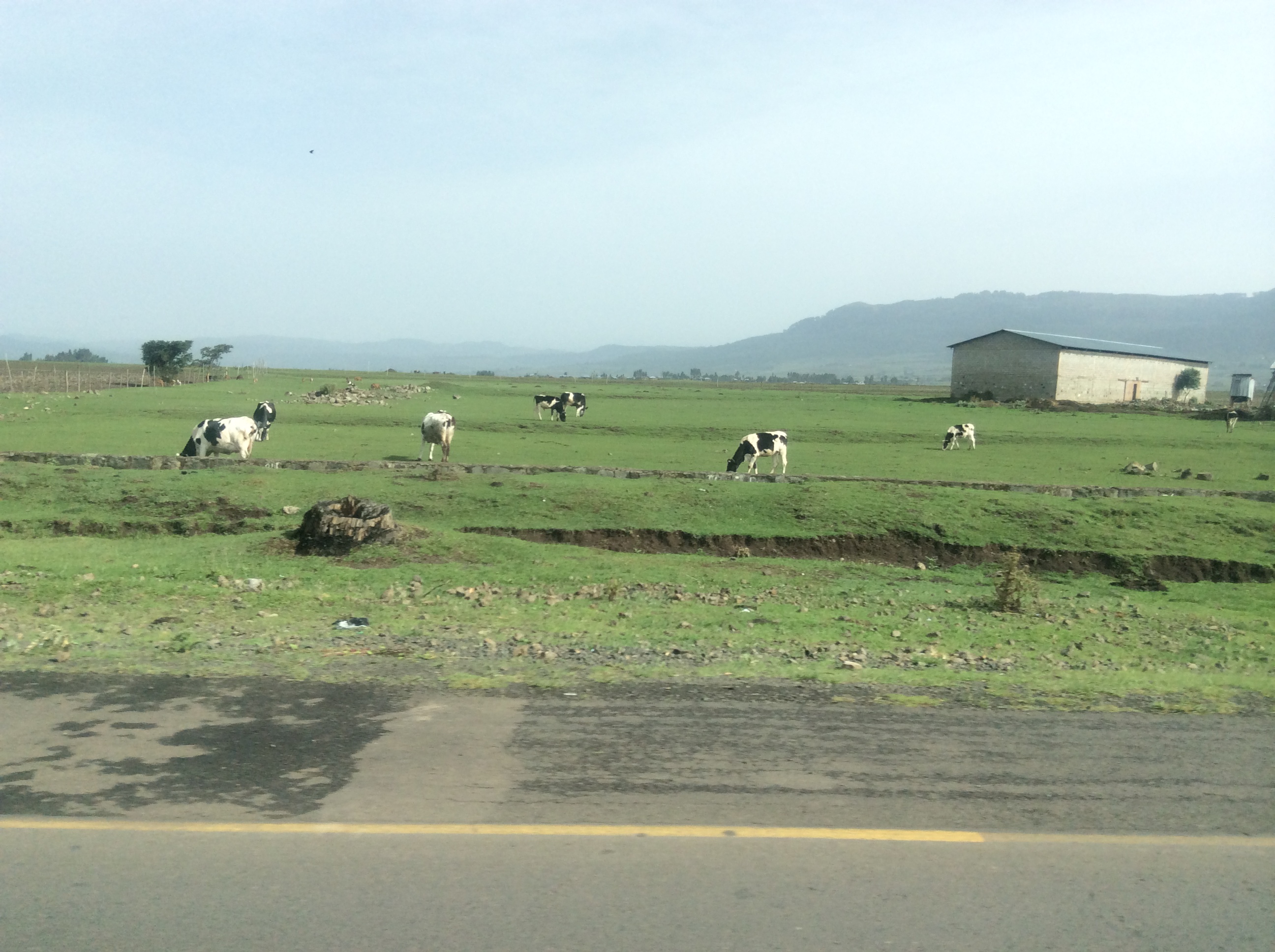
We drove along this immense, lush valley for miles.  Alemu said this huge herd of cattle belonged to a semi nomadic group who brought their cattle here during the rainy season to graze and fatten.  A bit farther down the road the land belonged to one of the richest men in Ethiopia, indeed the world, Al Amoudi.  It was the only place where I saw a tractor actually used in a field.

IMG_0288

Arriving in Kombolcha, we saw this new college in the process of creation.  This became a common sight–new buildings, new schools, construction everywhere.

IMG_0289

My first hotel room in Ethiopia at the Sunny Side Hotel in Kombolcha complete with mosquito netting–the blue blob above the bed.  At least it had a shower and toilet.  Many places use the style of accommodations one finds in a lot of Asia.  Forget toilets as you know them–just a tiled area with a hole in the ground and the ever present water with which to wash.  We carried our own toilet paper just in case.  However, many places had both so customers could choose.

My Ethiopian Adventure–the Beginning


After leaving the US on July 2, flying 14 hours to Dubai, spending a day there, I finally made it to Addis Ababa (also spelled Abeba) on the 4th.  I remained in Ethiopia until this past Monday when I left Addis late in the afternoon.  Blog posting from Ethiopia was limited because wifi is available only in certain areas and places and there is no 2,3, or 4G anywhere.  For those of you who saw my four posts from Ethiopia, some photos and a few details may be repeated.  My plan is to post photos and detailed information now that I am back which will require a number of posts because not only did we go on a ten day road trip, we also spent time in Addis Ababa and Adama (Nasret).

I went on this trip with two friends, a couple.  Dino is from Ethiopia, having grown up in Dire Dawa.  His parents now live in Adama where his father owns and runs a printing press.  Two of his sisters and one brother live in Addis.  We spent the first few days before our road trip in Addis, staying with his sister, Anna, who owns a painting company.  She imports the paint from Italy and her clients include individuals and businesses.  Her company also paints cars.  Of course, she painted her own house with this paint.  I loved the colors and textures.

IMG_0209

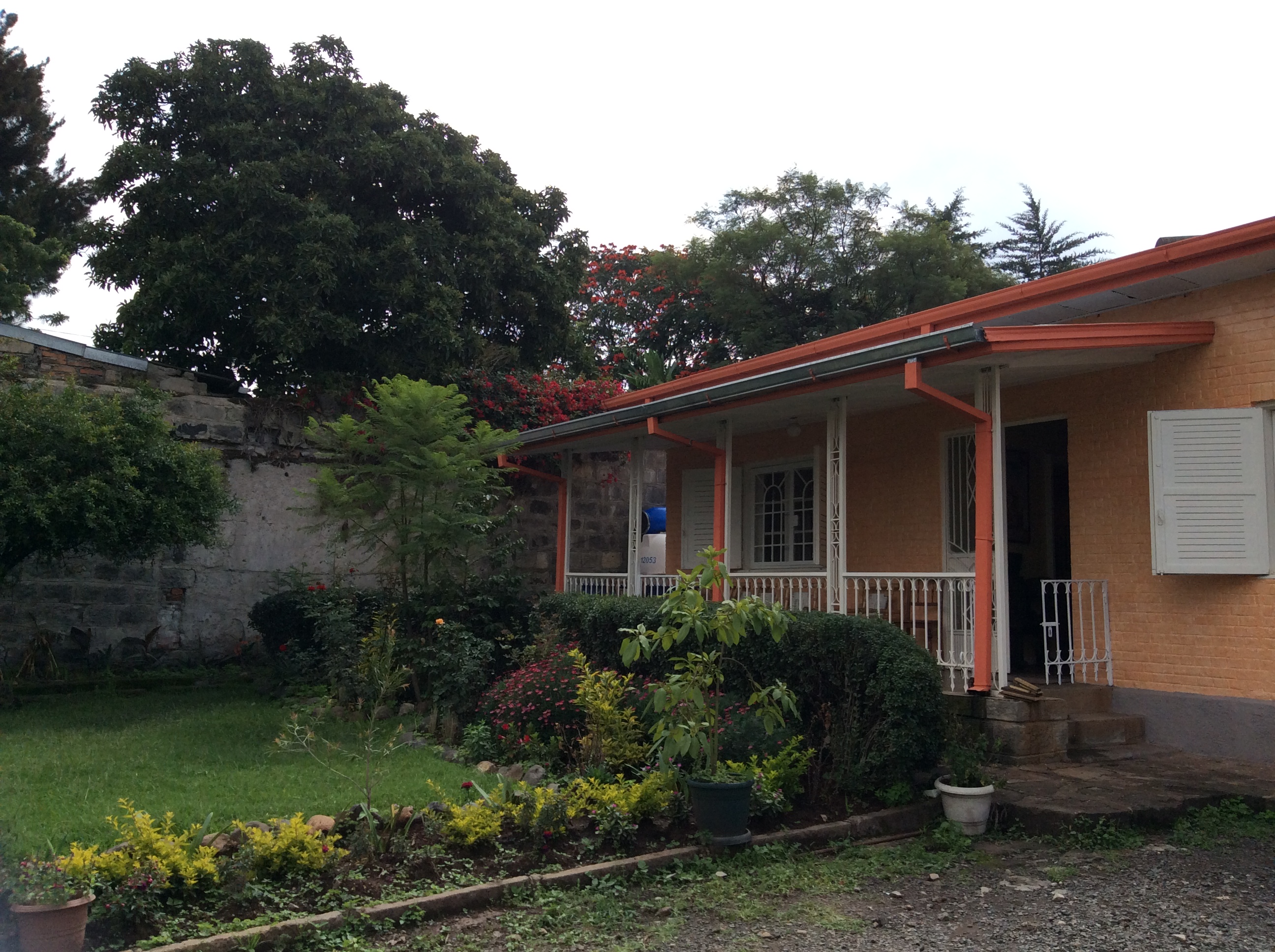
The front of Anna’s lovely house.  It is the rainy season and flowers grow everywhere.

IMG_0206

IMG_0207

IMG_0208

The translation for these orange flowers, which I had never seen before, is flowers of the sun.

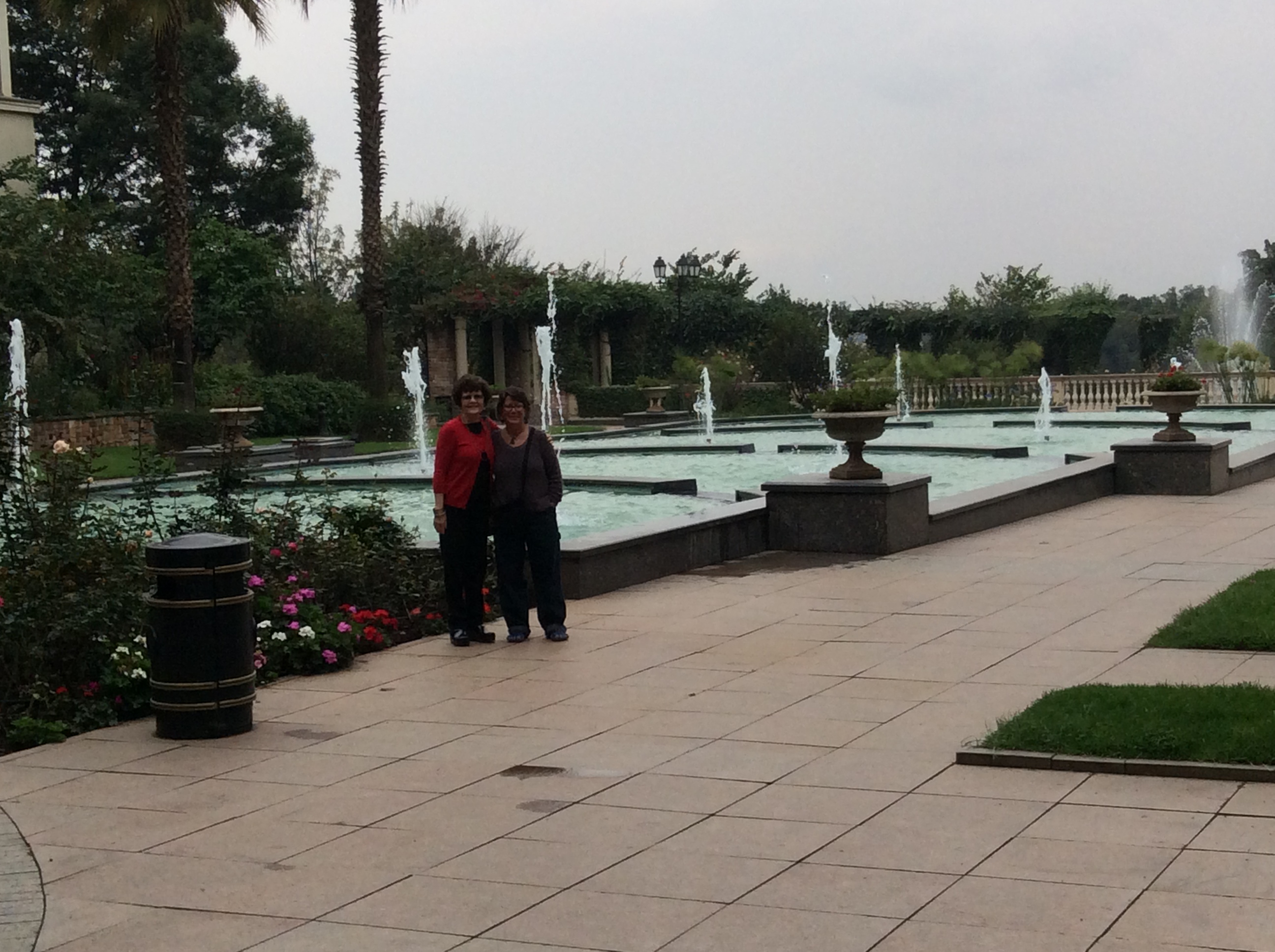
One afternoon four of us decided to take a drive around Addis to see some of the more beautiful spots which mainly included the Addis Hilton Hotel and the Sheraton, which is a five star.  Carlo, Dino’s father drove.  What a remarkable man, in his 80s and still getting to work at 6, driving everywhere.  The Hilton is the older of the two.  The grounds of both display lush greenery.

IMG_0216

IMG_0218

Zuriash and I enjoying the grandeur.

IMG_0219

Papyrus by the pool at the Sheraton.

IMG_0224

The swimming pool at the Sheraton.  You cannot use it unless you are staying there.  However, the pool at the Hilton is available on a membership basis–you do not have to stay there to use it.

IMG_0226

The rooms at the Sheraton overlooking the gardens and pool.  Dino and Carlo, son and father, walking down the path to the pool area.  Apparently, many visiting dignitaries stay here.  Inside walls are filled with excellent local art.
IMG_0227

And then there is Addis traffic.  Approximately six million people live there.  In five or so days, riding here and there all over the city, I saw only two traffic lights, neither of which worked.  Most large intersections contain a traffic circle and around and around you go trying to wiggle into a space and get across the intersection.  Take a look.

IMG_0210

Trying to drive to Guiseppe’s house, Anna driving, we were stuck here.  The big trucks would not let us through.  Finally, a guy in another car, got out, stopped the trucks and waved us on.  It took us 1 1/2 hours to get there.  A couple of days later, he came to Anna’s in twenty minutes.

IMG_0214

In front of Guiseppe’s house.  A typical residential street, sometimes like this one with gates on each end.  People hire someone to watch the gates.  You honk and they are opened and then closed.

IMG_0215

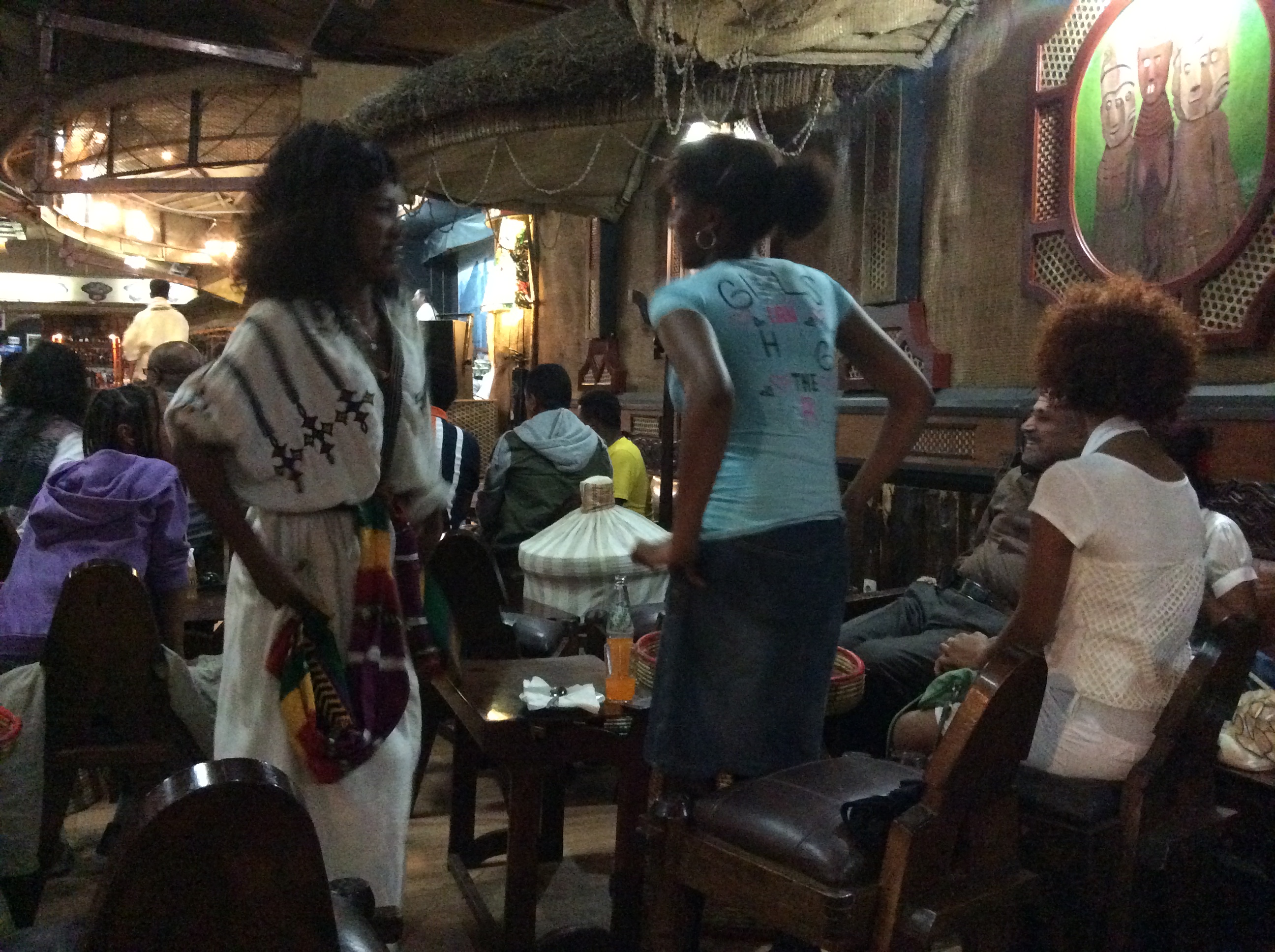
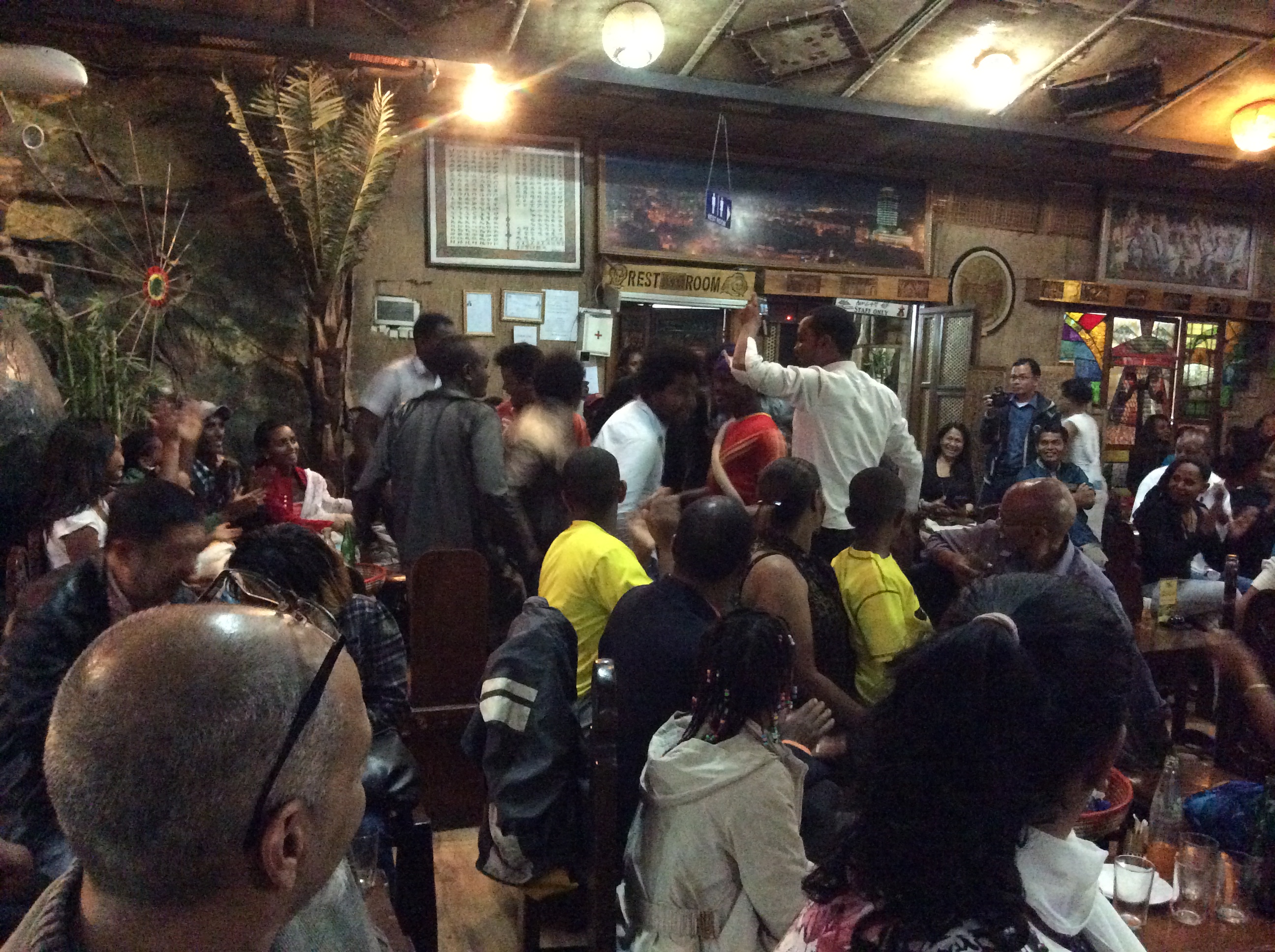
On the last evening before we began our ten day road trip, Anna took us to a cultural restaurant to eat traditional food and watch the dancing from different parts of the country.  I expected it to be just a tourist spot, but no, many locals were there.  During the dancing, locals competed with the professionals to see who could dance the best.

IMG_0242

This dance requires almost no motion except a lot of shoulder action.  I attempted to do it myself when the man behind the girl in white came over and asked me to dance.  I tried but would have to practice forever to get this one right.

IMG_0243

The young men in the background competing.

IMG_0229

Anna and I in front of her house.  She is wearing a traditional Ethiopia dress.

Ethiopia–From the Roof of Africa to the Nile


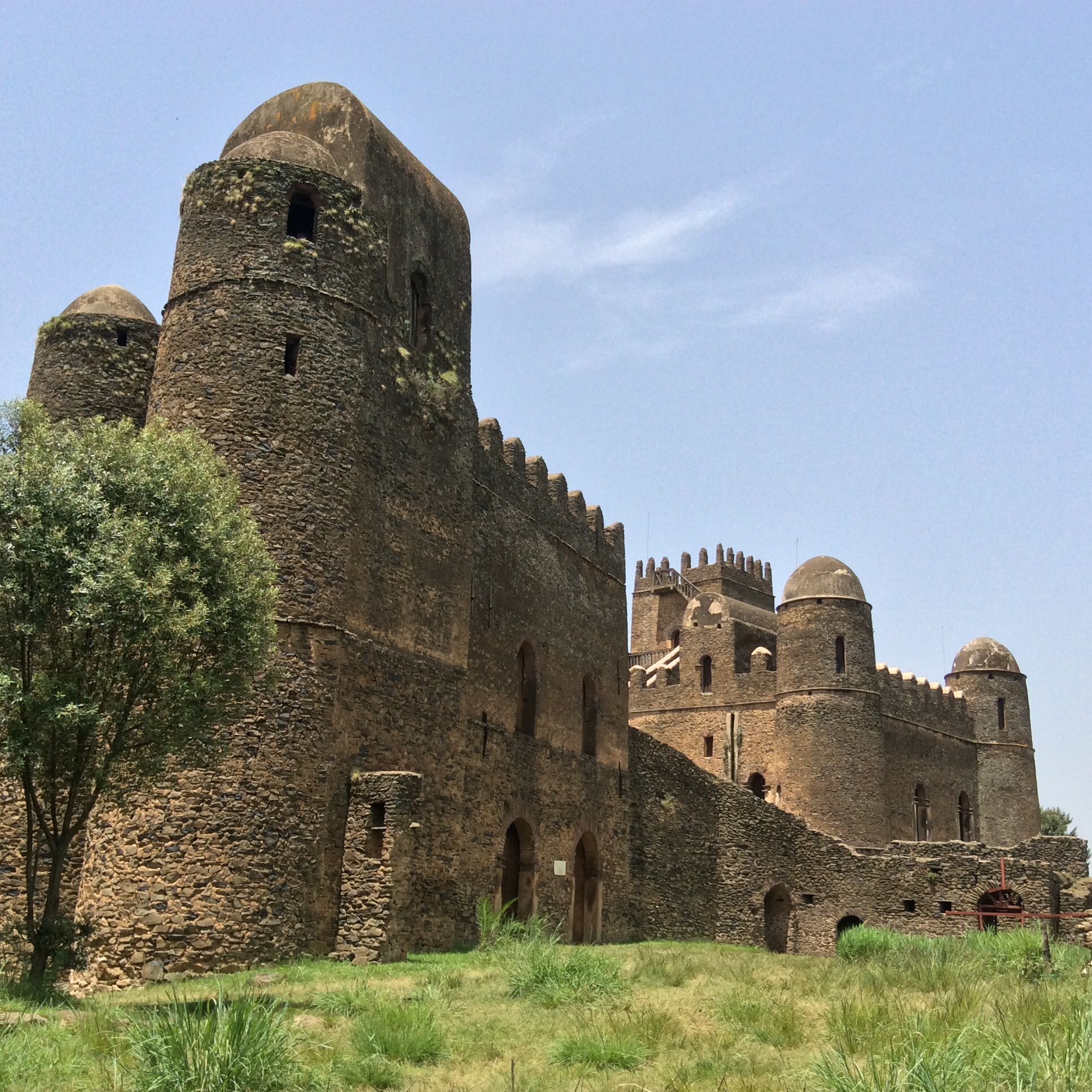
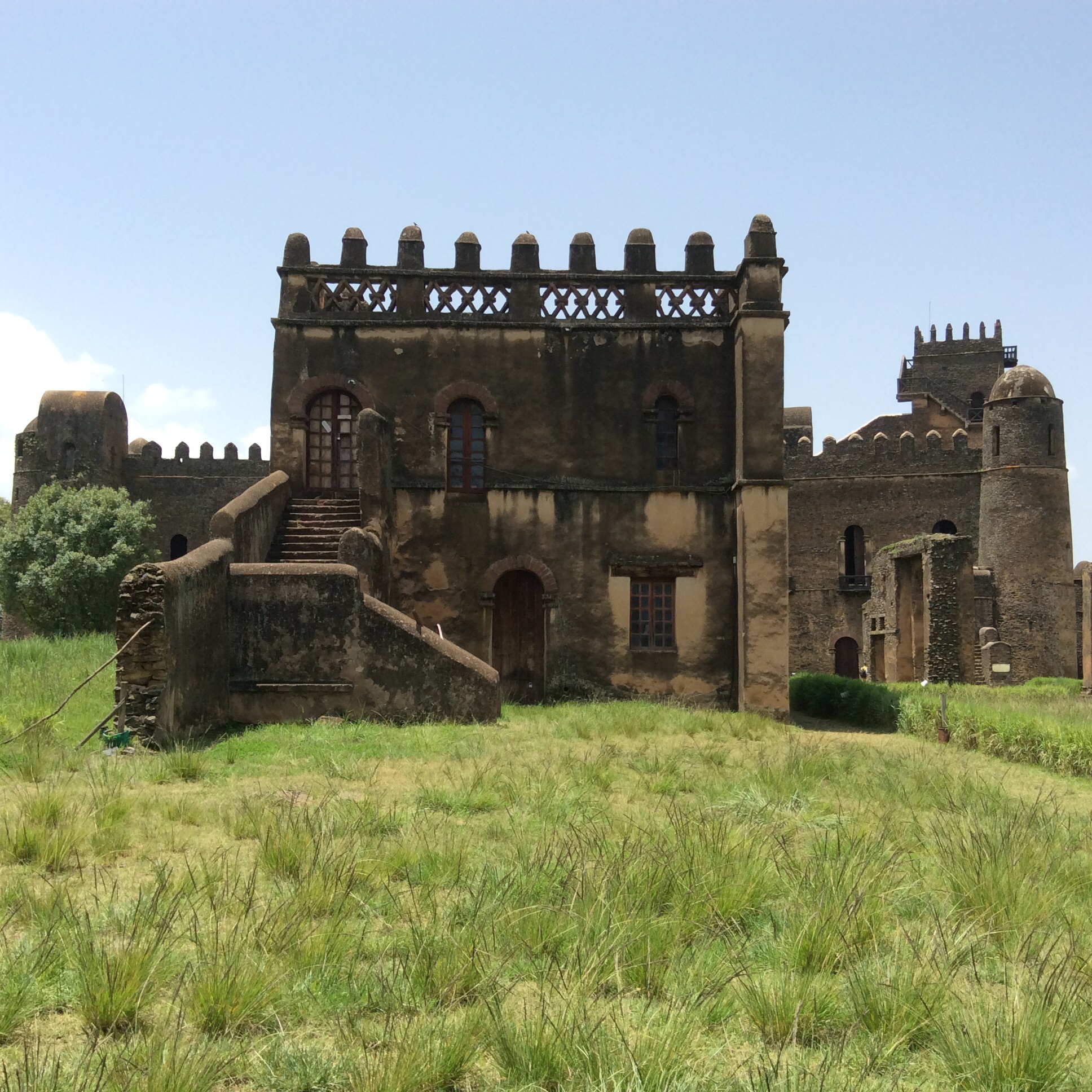
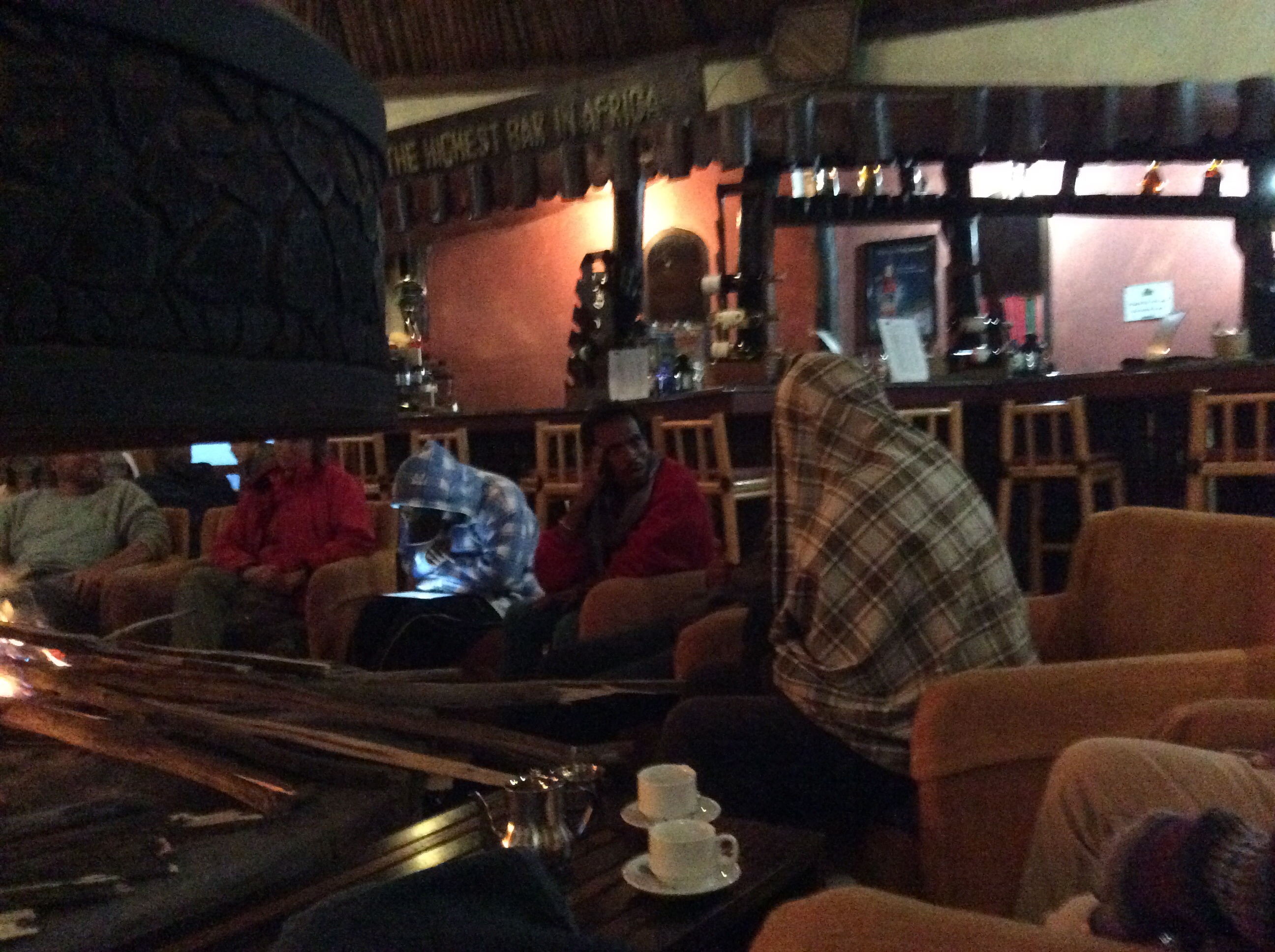
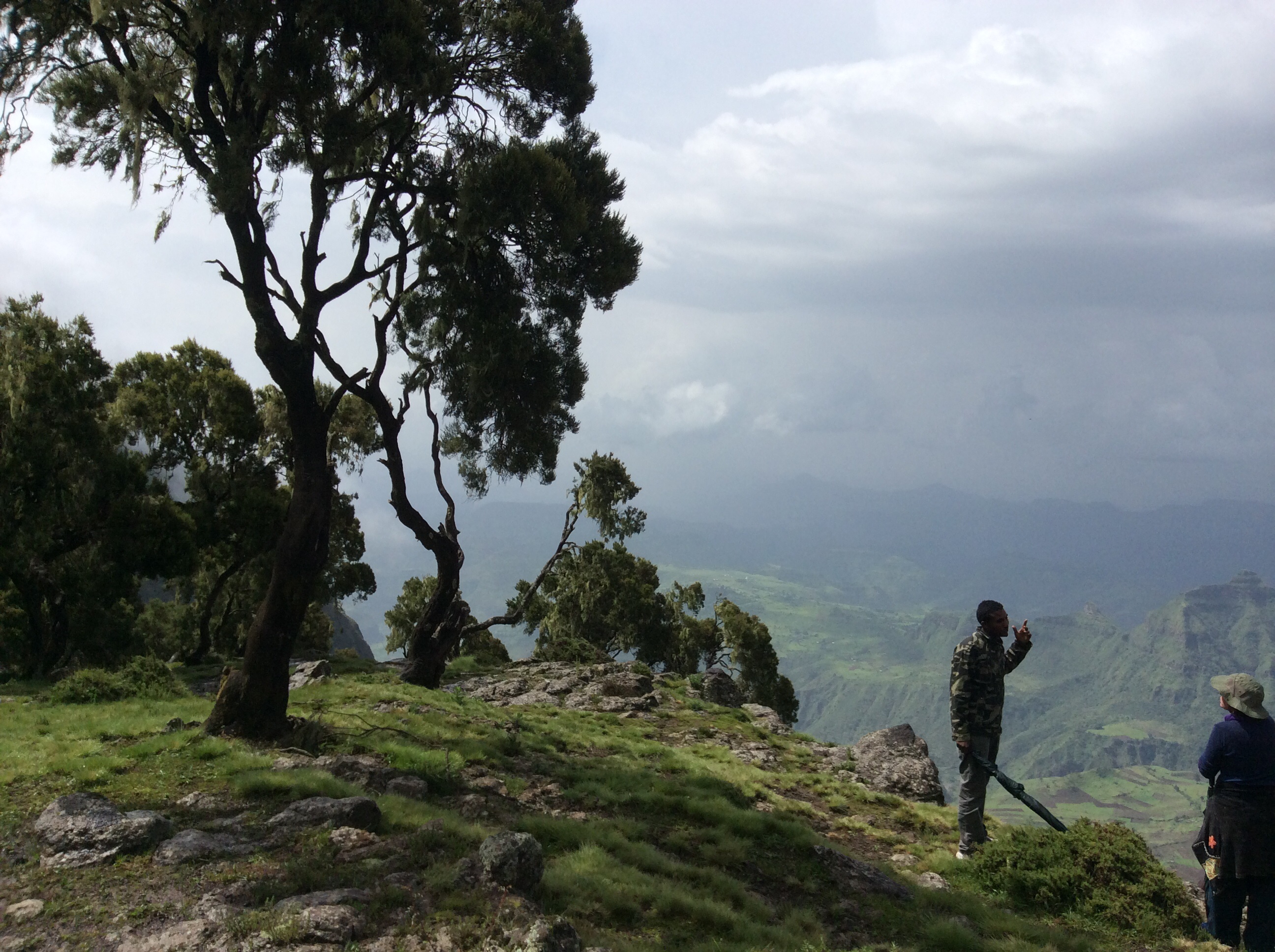
imageimageimageimageimageimageimageInternet is not so reliable at times here.  Yesterday we saw 23 Walia ibex in the Simien Mountins above 14,000 feet.  They are found only there.  Photos include Simien Mountains, the highest bar in Africa, the castles in Gondar, and the Blue Nile River, the longest in the world.  Staying at a hotel on Lake Tana.  Saw several hippos near the Nile bridge, but the guard said no photos.  For some reason, these photos loaded in reverse order.  We were in the Simien Mountains first where we stayed in a hotel above 13,000 feet with no heat, took a small trek, and saw hundreds of gelada baboons.  We saw the castles today and went to an overlook over the Blue Nile.


imageimageimage


Wine tasting and book signing


This day has been so full of events and planning that I almost forgot to blog.  First, I made a quick trip to town to accomplish some necessary tasks before my big trip to Ethiopia starts in two weeks.  In fact, two weeks from this moment I will be on Emirate Airlines flying for 14 hours and 45 minutes to Dubai.  With a long layover there, we get a hotel room and a tour.  Then on to Ethiopia for two and one half weeks.  Since only wifi is available there and only in a few places, you will hear from me but not all that often.

I bought an iPAD mini to take photos (in addition to a camera) and keep a log of my daily adventures–maybe I will turn it into some sort of small travel book or my friends with whom I am going and I will make a book.  When I returned home, I tried to figure out some things on the mini myself, but alas, it is not the same at all as this iMAC.  Finally, I gave up and called my ten year old grandson (he has a mini).  Of course, he knew exactly what to do and walked me through everything.

About that time the wine guy at Market Street showed up with this huge cooker–it is really large, bigger than my Mini Cooper.  Tomorrow night they will have a wine tasting at my house, but with a different twist.  Market Street is providing the food:  hamburgers, hotdogs, brats, and all the trimmings.  My garage has boxes of buns, chips, and I am not sure what all stacked up.  In  my great room boxes containing 100 wine glasses are stacked.   The guests are supposed to bring their favorite bottle of wine to share.  I have told several friends to not bother because I have about five bottles of white wine I want to get rid of–I am not a white wine drinker.  We expect approximately 100 they told me.  They predict thunderstorms.  I am hoping the storms, if they come, hold off of until late.  Here on the canyon edge storms provide incredible drama including waterfalls.  And mud.

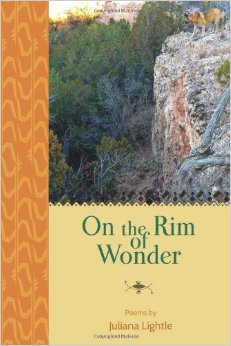
While in town, I stopped by Hastings, a chain that sells books, movies, CDs, that sort of thing.  This Saturday, the 21st at 3, they are hosting a book signing for me for my new book On the Rim of Wonder.  We have everything all set and ready to go.  They already have fliers posted, gave me one to display during the wine tasting and said I could bring chocolate brownies to share with buyers.  Yesterday, I was in a minor panic because they had spelled my name incorrectly on the flier.  Kudos to Crystal at Hastings, she got it fixed quickly.

Now I am going to vacuum even if it is ten at night.


51yW0RGMMvL._SY344_BO1,204,203,200_

Teaching English for a change


Years ago, four day before school started, the principal informed me that I was going to teach freshmen English and a special course for all these juniors and seniors who had passed the state test but not one single English class.  The goal–we were on a quarter system then:  teach a year of English per quarter or at least do that for the seniors.  Of course, everyone knew that if I did the traditional curriculum, such a thing would prove impossible.  I took a look at the students.  Smart (at least some of them), rebellious, lazy, unmotivated, potheads probably–some openly admitted it, and various combinations of these sorts of things.  For fun the previous summer, I had taken a week long course on how to teach junior Advanced Placement English–I know, a strange idea of fun, but I loved it.  Four days gave me little time to prepare so I decided I would use the freshman book for the freshmen, but incorporate what I had learned in the AP English course.  For this other special class, I decided to try some really different tactics, including starting with a really different book than any had probably ever read.  Because of the language–swear words in Spanish for starters, and because of the topics, e.g. prison, it seemed necessary to get the permission from the head of the English department.  The book:  A Place to Stand by Jimmy Santiago Baca, one of my all time favorite books and a superb example of figurative language.  The department head gave permission much to my astonishment–she must have taken a look at the students and decided anything was worth a try.  The students actually read ahead, looked the author up online, found out he was giving a reading in Santa Fe and contacted him. We did go to Santa Fe for the reading and actually had lunch with him and his wife and baby–who would now be a teenager or nearly so.  One of the students who went contacted me a couple of months ago to tell me he still had a signed copy of one of Baca’s books.

After that year, I taught math for years–algebra, geometry.  Occasionally, I even cotaught chemistry or remedial science for those who had not passed the state test.  About three weeks ago, the new principal called me in and asked me what I wanted to teach.  I said English.  He asked me how about senior English?!  Next school year I will be teaching British literature.  Now, I am trying to think how to make Beowulf and Canterbury Tales readable and exciting.  I was told I could also incorporate modern British literature so I started looking at the Man Booker (sort of like a British and former British colonies version of the Pulitzer or something of that sort) short list.  Much to my astonishment, I have read a lot of the authors on this list, but mostly those from the colonies like Nigeria and India.  Now I am reading We Need New Names by NoViolet Bulawayo.  This book won the Pen Hemingway and was short listed for the Man Booker.  Probably more familiar authors for many readers would be names like Iris Murdoch, Doris Lessing, Amitav Ghosh, and Kiran Desai.  If any of you who read this blog have others suggestions for modern British literature, send me the names.  The students may be in a temporary  (or longer) state of shock when they find out they really do have to read, but they will get over it and might even discover its fun.

Friends and Flowers


SAM_0483


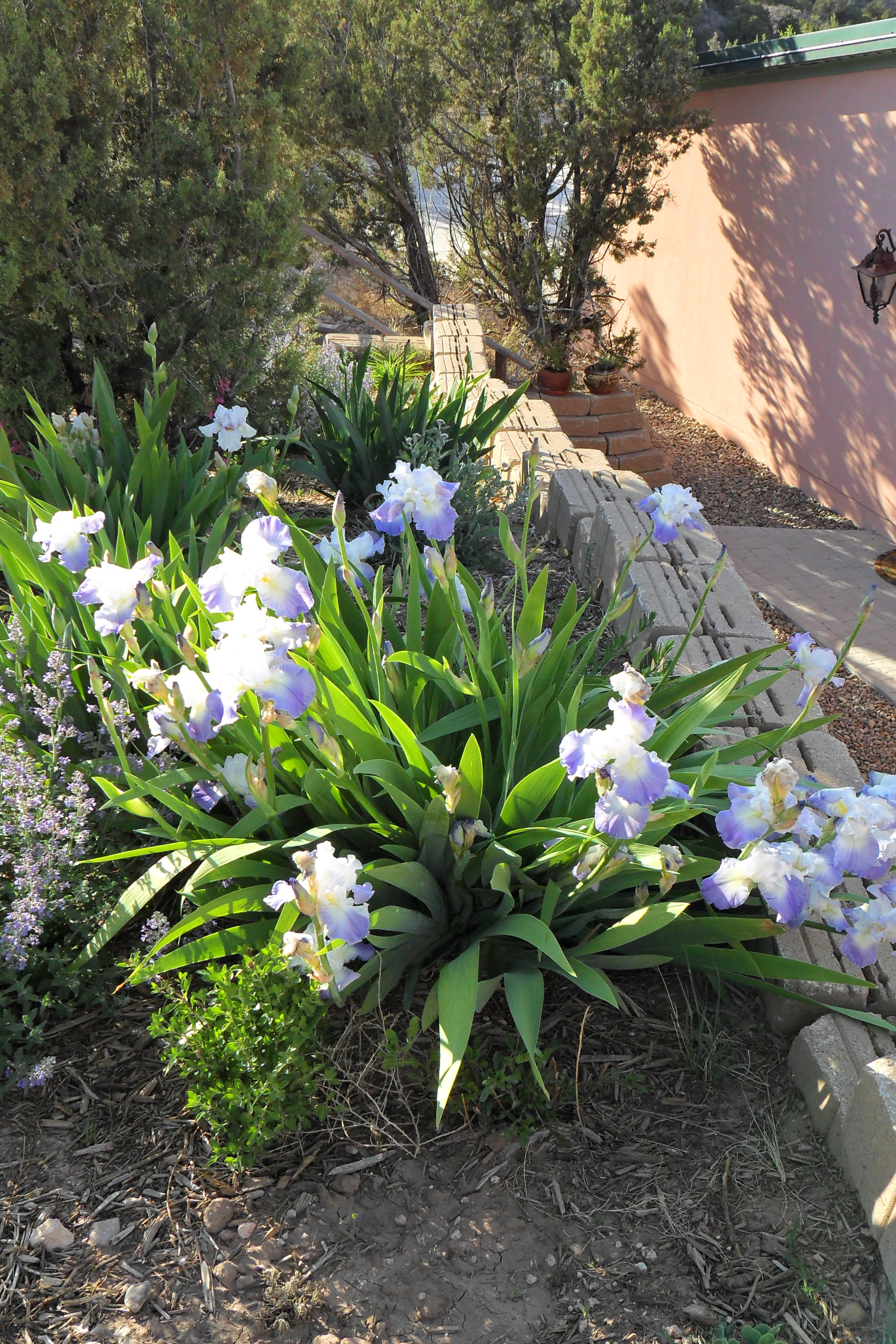
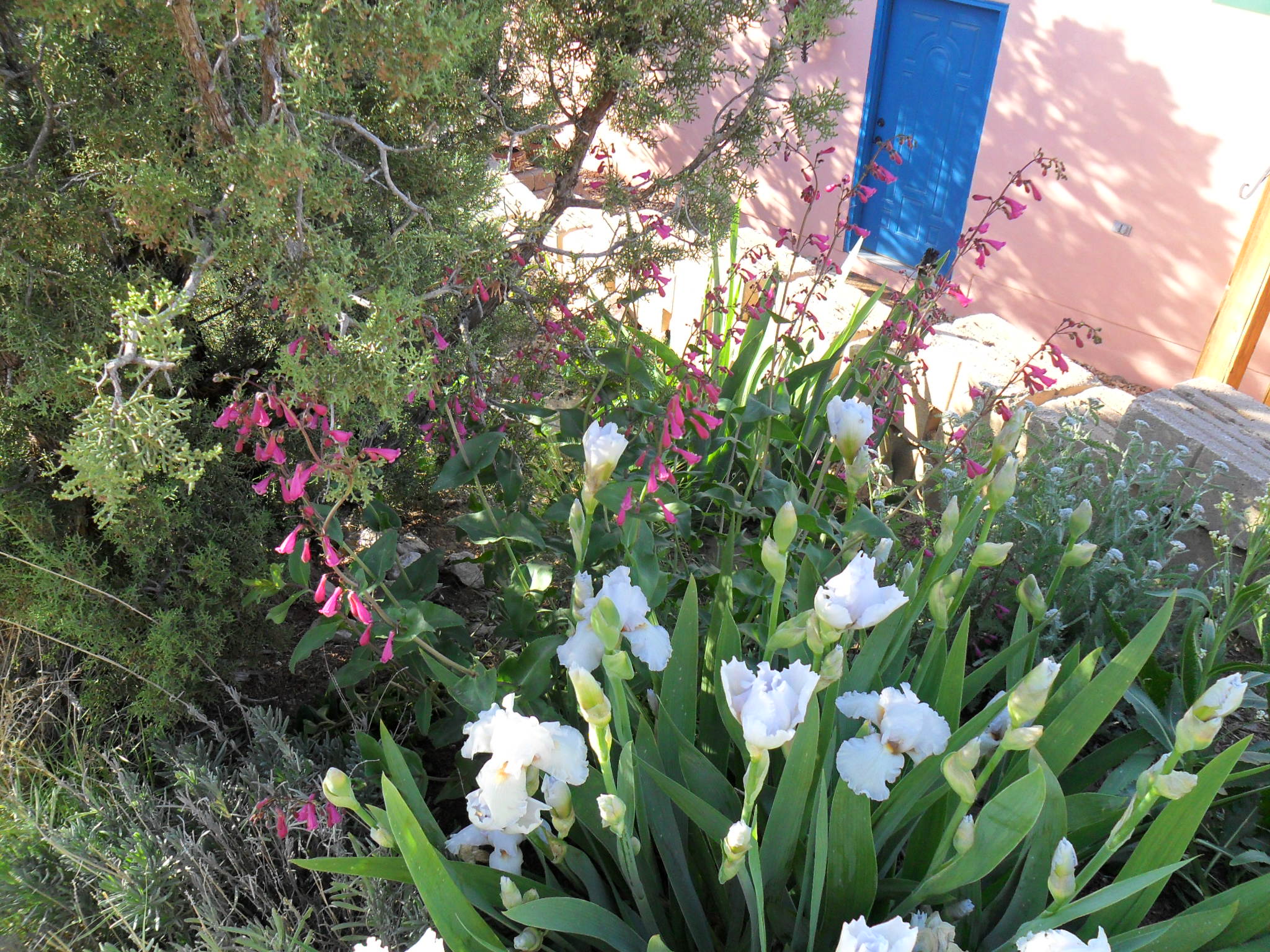
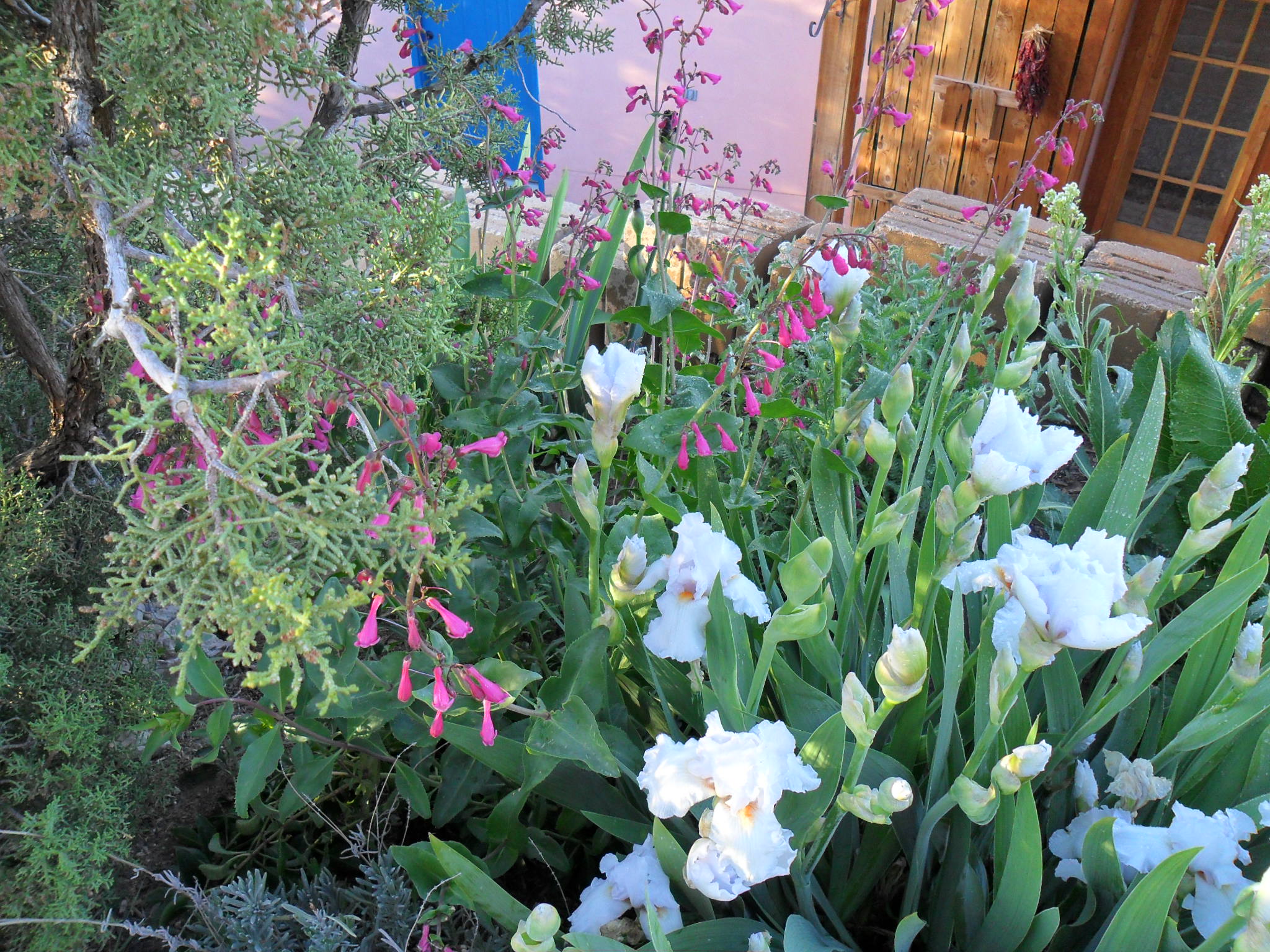
On my way home from work today, I stopped by a friend’s house to get some Black Eyed Susans.  She and her husband run a bed and breakfast with a spectacular garden in the back.  Iris of every color are blooming, yellow, lavender and white, peach, every shade of purple, and one a combination of colors I have never seen before.  The lavender and white combined in one flower I gave her in the fall of 2012.  They rebloom and spread rather rapidly.  Because of that and the fact that I cannot bear to throw any away, I have them by the barn and here and there.  Some do better than others–a lot of the soil here is either clay or caliche or a combination, not very conducive to anything but the toughest.  She has a rose bush taller than I am which means it must be about 5’6″ or 7″.  Another deep red rose was already blooming.  She gives me flowers and I wait and see how they do or if the deer or bunnies will eat them.

Today’s weather brought perfection, a rare treat of just the right temperature, sunshine, and no wind.  When I arrived, her husband was napping in the garden in a lawn chaise.  He got up, we all walked around the garden, looked in the koi pond, and commented what flowers seemed to flourish more readily than others.  Many flowers which do well in town either die out here in the country only twelve miles away or fail to thrive.  They just sit there and do nothing.  She and I have shared flowers for years, flowers and conversation and wine.  We all decided to sit town and share some wine and cheeses and crackers and visit.  They travel widely and always have tales to tell.  He is from Jordan so we discuss world events.  Part of today’s conversation centered on Boko Haram and the differences between Shia and Sunni.  He is Sunni and I used to be married to a Shiite.  Often we discuss extremism and how it harms everyone, regardless of religion.  None of us understand the hatred some people seem to feel toward others who are different from them either my race or religion or ethnicity or gender.

As soon as I returned home and changed into gardening clothes, I fed Rosie, and planted the Black Eyed Susans with a big dose of water and root stimulator.  Who knows if they will make it.  I will wait and see.  If they do, they will contrast nicely with the purple of the catmint and the white, tiny, native Blackfoot Daisies growing wild among the other plants in my little garden.  What more can a person wish for than spending time with good friends among the flowers.  And a little wine never hurts.


SAM_0161


SAM_0461


SAM_1503


SAM_0463


SAM_0459


Wine tastings and a few favorite things


Arrived home from work and fed Rosie.  Looked at the dry native grass around my house and decided to water a bit of it even though I loathe wasting water.  Green is probably safer than winter brown.  The recent giant wildfire raised my concerns about the fire danger in this drought.  I cannot remember when it rained and the next ten days show no rain in sight.  As soon as I finish writing this or shortly thereafter, I get to run back to town and join probably 100 plus other people at friends’ house to taste the wine and food brought by Market Street.  These friends run a bed and breakfast with a spectacular garden complete with koi pond and just about every kind of flower you can grow in this area.  It’s cool, nearly froze last night, so I will wear the black turtle neck and slacks I wore to work.  It’s hard to believe that it was just above freezing last night and is supposed to hit 100 next Monday–the desert has now reached here apparently.

Thinking about this leads me to think about some of my favorites, especially when it comes to wine:  zinfandels, especially from Lodi, California.  The moderately priced one I buy most often is OVZ.  It frequently goes on sale here which is even better.  I also like  Seven Deadly Zins–unfortunately I have never seen it on sale.  Basically, I love red wines and almost never drink white.  A moderately priced nice blend is Apothic Red.  Market Street had a super sale so I bought several–ten percent off if you buy six at a time.  The best malbec I ever drank came directly in baggage from Argentina, a present to me from my Argentinian exchange student when he arrived.  You can’t get it here and when his mom tried to ship me some, she was not allowed.

The students at school  kept commenting on my black attire today.  They asked if I was going to a funeral or something.  I laughed.  I like black; I look good in black.  It also shows off my turquoise jewelry.  My most favorite color is orange. Turquoise looks good with it too.  Red and green are ok.  Finally after decades I have learned to like hot pink, but really I am not a pink person–see my poem about Hot Pink Toenails–on an old blog.  It remains one of my blog posts that people look at most–I have no clue why.  The one color I really do not like is blue, especially pale blue. Perhaps tomorrow I will post about favorite books.  I really would like readers to comment about their favorites.  It fascinates me what people perceive and feel about this and that.  Often I am the only person I know who reads what I read.

Off to taste some new wines and maybe find a new favorite.

Apocalyptic Planet-Part Seven: Species Vanish


We all know extinction occurs.  Nearly everyone knows different species of dinosaurs at varied times roamed the earth for millennia.  Bones of all sorts of animals and various hominids are dug up off and on.  Scientists study them, determine their age, where and how they lived.  Scientists and sometimes even average persons develop theories about why they went extinct.  Regardless of which theory a person decides is accurate, these ancient extinctions generally took thousands of years. Recent extinctions are different, e.g. carrier pigeons.  Millions existed a couple of hundreds of years ago; now they are gone.  Why?  Humans.

Various causes exist for the extinctions of ancient species.  A major cause is the climate change caused my the changing tilt of the earth’s axis.  These changes occur over thousands and thousands of years.  What is different now?  Let’s take corn.  Native Americans cultivated rainbow colors of corn in small, frequently irrigated fields.  Where is most corn grown now?  Giant fields of GMO corn grow from horizon to horizon in the Midwest.  And if Monsanto had its way, no other corn would continue to exist for long.   Iowa is a good example.  Wherever this corn is grown, native grasses and other native plants totally disappear, in part due to cultivation.  A bigger issue is herbicides–to have clean fields, nothing and I mean nothing but corn must grow there.  A farmer’s expertise as a farmer is measured my just how super clean his fields are.  The only way to get these totally weedless fields is to use herbicides.  Biodiversity is a key to environmental health.  Little biodiversity exists in giant fields of crops like corn and soybeans.  Fertilizers to obtain huge yields wash downstream and in the Midwest eventually end in the Gulf of Mexico and cause giant marine algae blooms which pulls oxygen from the water to create a dead zone where no marine animals or fish can live.

Perhaps readers have heard of the plight of monarch butterflies.  Compared to just ten years ago, the population has dropped dramatically.  What happened to them?  Roundup.  Over 100,000 tons of Roundup and other brands of glyphosate herbicides are annually applied to crops in the US.  What do monarchs eat?  Milkweed.  Since 1999, 58 per cent of the milkweed has disappeared.  Recently, monarchs experienced a 30 per cent reduction in their numbers in one year.  Are we headed toward a mass extinction?  Some scientists think so.  These scientists are not talking about tigers, elephants, and rhinos being killed at an ever increasing rate for their body parts, but rather about the less noticeable extinctions of various plants and less obvious animals like frogs.  And then there is the problem with bees.  Bees are disappearing at an ever increasing rate due to not only diseases but due to herbicides and pesticides.  Without bees to pollinate the giant fields of almonds and various fruits in California, for example, those foods won’t exist.  See a previous post for more discussion on the importance of bees.  So why care about frogs?  Scientists consider frogs and amphibians in general an indicator of the health of an ecosystem.  Certain more tropical species of frogs are especially subject to the effects of climate change and they are disappearing.

Where I live big bluestem, blue grama, buffalo grass, and other native species grew from horizon to horizon.  This is the high plains.  Root systems of some plants grow twelve feet deep.  It has not rained in over a month.  Where the native grass once grew, crops are now grown.  This time of year finds open fields. Without rain, with the recent endless high winds, dust fills the sky.  To safely return home from town Sunday, I had to turn on the car lights to see.  The dryness fuels wildfires.  Earlier this week, over one hundred homes burned down in a wildfire north of Amarillo.  Drought.

Many human inventions are wonderful and make many lives better, but for some of them, I cannot help but wonder at what cost.


Poverty


Proofs sent to the library at work–a high school–cannot legally be used on the shelves so they end up in various places.  Somehow I end up where they reside and read them.  My latest, The Boiling Season by Christopher Hebert provides abundant food for hard core thinking.  The setting, a Caribbean island, reeks of political turmoil and the legacy of slavery.  Unless you are totally ignorant of Caribbean history and the various cultures there, it does not take long to figure out the setting is Haiti.  In case you want to read the book, I will give you only a cursory introduction.  The main character grows up in basically what we call here a slum.  His mom dies of malaria when he is quite young and  his dad owns a small store.  He hates it and focuses most of his life on getting out of these circumstances.  He gets a job and a place to live with a senator, meets important people, and eventually discovers an abandoned estate out in the country.  He moves there after it is bought by a wealthy foreign white woman who hires him to restore it.  He absolutely loves the place.  It is an island of beauty and peace in the middle of squalor, poverty, and strife.

The details you can read for yourself.  It’s focus is the dilemma many who grow up poor and want to better themselves face:  if you progress, are you abandoning your roots, to whom do you owe loyalty.  And, indeed, what is progress?  Civil war breaks out and the main character is torn between his desire for peace and a more elegant lifestyle in this beautiful place and the needs of the poverty stricken people who surround it and who at one point work there.  Is he a free person or just a fancier slave for the rich who own the place?  Has he deluded himself into thinking because he worked hard to get where he is that he is better?

Although the book’s setting is a particular place, the theme remains universal.  I think of individuals I personally know who could not cope with success and riches, who felt they must “save” all their relatives and then were left with nothing themselves.  The thinking is this:  if you come into money, you must share it with everyone; to keep it for yourself is morally wrong.  If this is the case, how can the cycle ever break?  This sort of thinking is very difficult for those of use who work hard and save for the future to understand.  We question why we should help them when they hit the bottom.

Yesterday my hard working, single mom, going to graduate school daughter went on a rant about people she knows who get food stamps, Medicaid, etc. while she works and goes to school and gets nothing.  They have fancier cars, better TVs, etc. than she does.  I do understand both viewpoints although I admit I am the frugal without being austere.  I remember a time several years ago when several of my poorer students–I teach at a Title 1 school–wore jeans more expensive than I would ever buy–its jeans.  We got into a discussion about this.  I informed them that all the clothing I had on except for underwear and socks came from a thrift store.  When I take things to the thrift store, I actually shop.  Thrift stores are full of “finds”.  The response of one student was echoed by others, “I would never go into a thrift store.  Someone might see me go in there.”  Because they were poor, they wanted to avoid anyone seeing them do anything they thought might confirm this.

Although fraud exists in programs for the poor, it also exists in high end banking and just about everything.  The solution is to work hard to investigate and prevent it.  I keep wondering what is the solution for the people truly in need?  Do we punish everyone to prevent the fraudulent acts of the few?  And what about the children?  What happens to the dependent young?  Obviously, the world has not found answers.  I wonder if we ever will.