Adventures in Argentina– Teatro Colon


IMG_2950

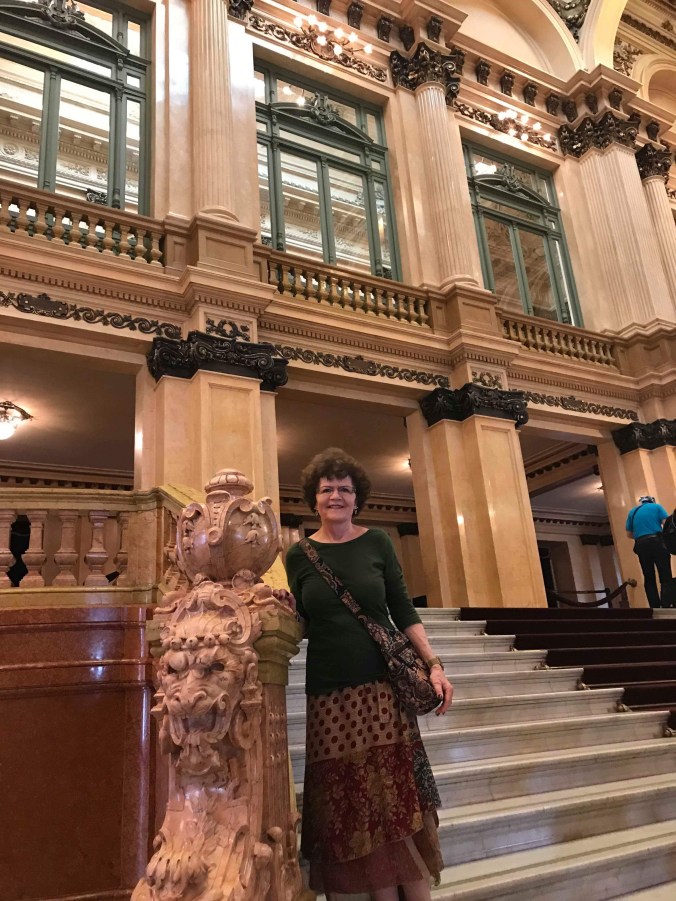
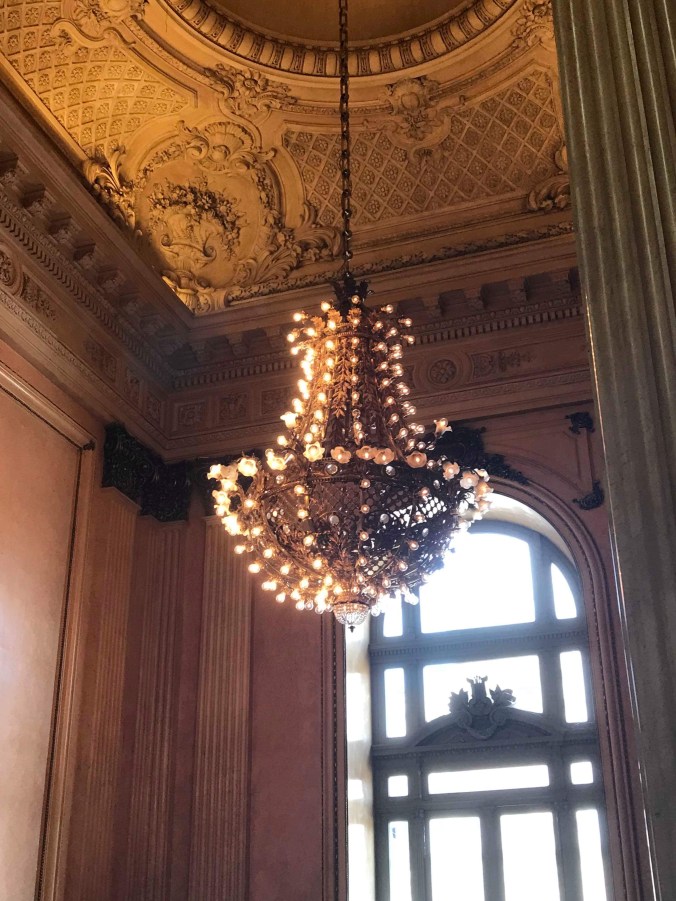
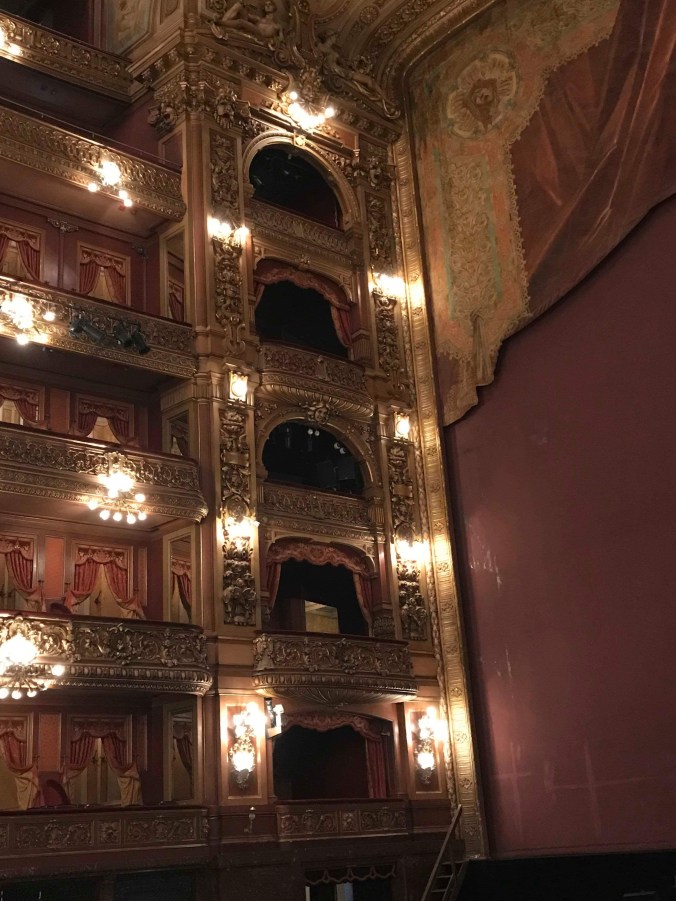
Teatro Colon, considered one of the world’s great theaters, began on May 25, 1908, with a performance of Verdi’s Aida.  This theatre replaced the original theatre which began operation in 1857.  Teatro Colon’s construction took twenty years even though its original cornerstone was laid in 1890.  The original architect, Francesco Tamburini, died in 1891.  His partner took over but also died.  The final architect, Jules Dormal, completed the theatre.
IMG_2943

IMG_2957

IMG_2951

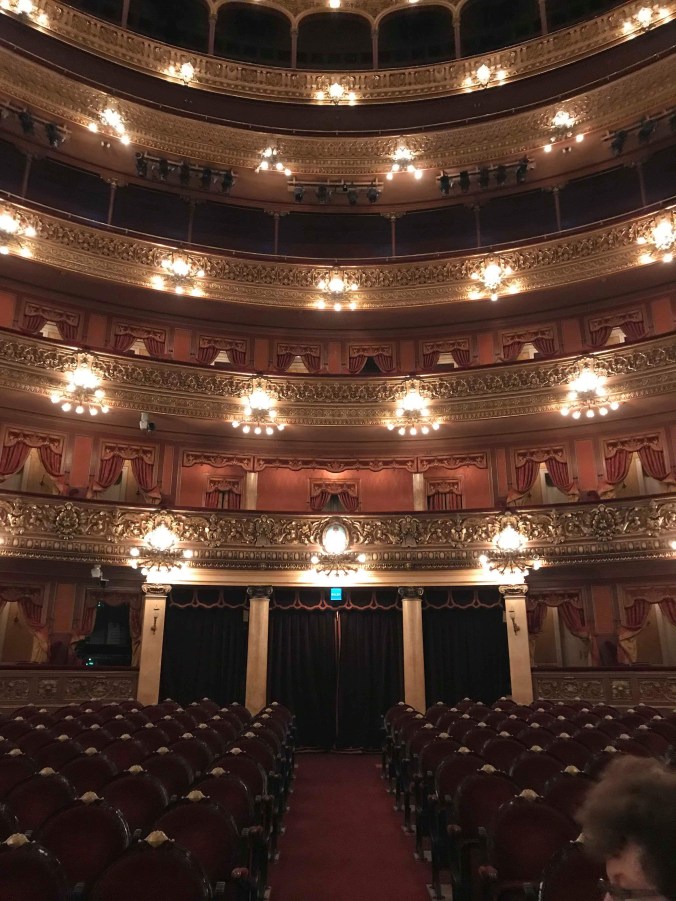
Theater Colon is huge–originally 8,202 square meters, 3,196 of which is underground. Later 12,000 more meters were added.  The total floor space equals 58,000 square meters.  The design includes French and Italian styles, and includes dressing and practice rooms, rooms to design sets and create scenery, etc.–this part of the theatre is underground.  Everything used in the productions here are created on site.
IMG_2945

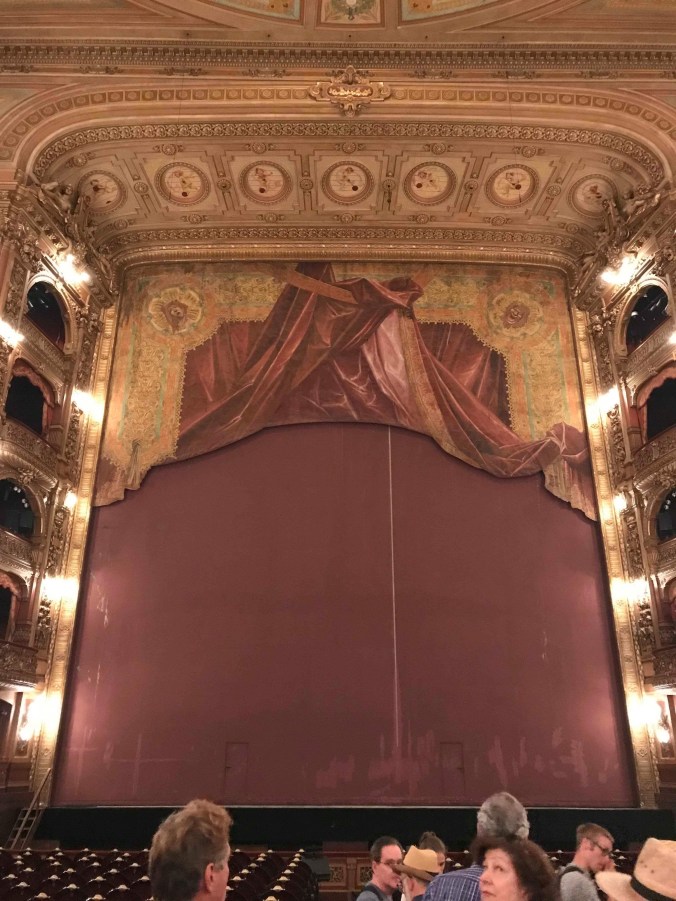
This is the curtain area.  The actual curtain used during performances remains behind what you see here.
IMG_2942

IMG_2955

Marble, gold, other precious stones and metals are everywhere.

IMG_2953

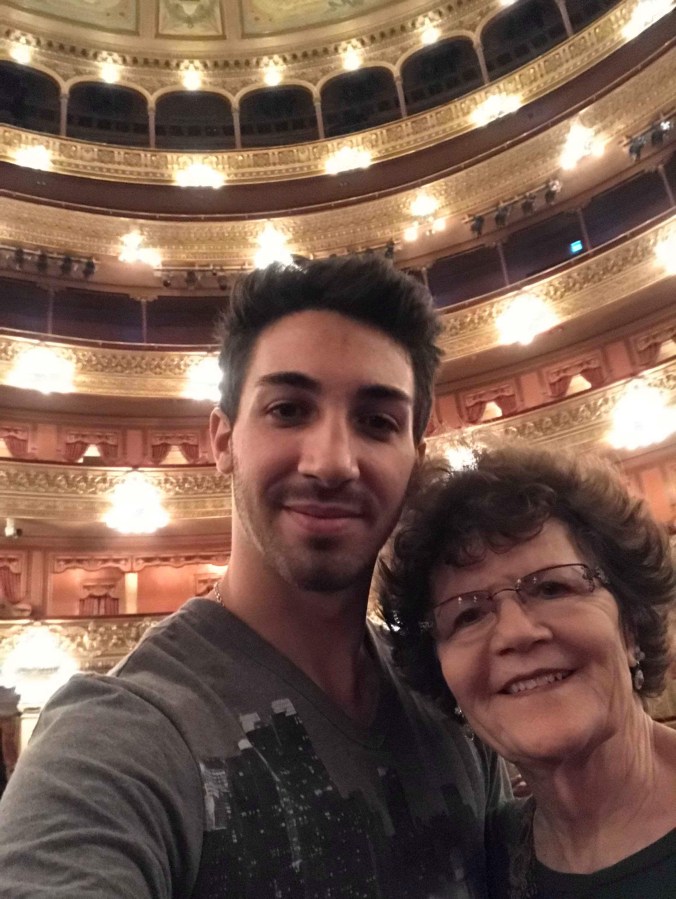
Due to design, its acoustics are known worldwide as one of the best.  Every famous opera singer you have ever heard of performed here.  This holds true for ballet dancers and orchestras as well.

Currently, the theatre provides a venue for operas, symphonies, ballet, choral music, and contemporary dance among other artistic endeavors. During this March alone, fifteen  different performances of varying types occurred here. When we arrived the lines were long, some for buying tickets for performances, others for tours.

IMG_2954

IMG_2963

IMG_2939


Adventure in Argentina–Buenos Aires


On March 4, a little before noon, I arrived in Buenos Aires EZE airport.  Customs was relatively organized, straight forward, and simple.  Once I acquired my luggage, I headed out.  There stood Gaston waiting for me, the reverse of when he came to live with me a little more than eight years ago and I waited for him at the Amarillo airport. One thing remained the same–hugs.  We hailed a cab, loaded my luggage, and headed for the hotel which his dad, Hugo, had arranged.  In spite of the fact that neither of us had managed much sleep the night before (mine was sleep on a ten hour red eye flight and his was a night in the bus from Cordoba), we headed out to find some lunch and explore.

IMG_2923

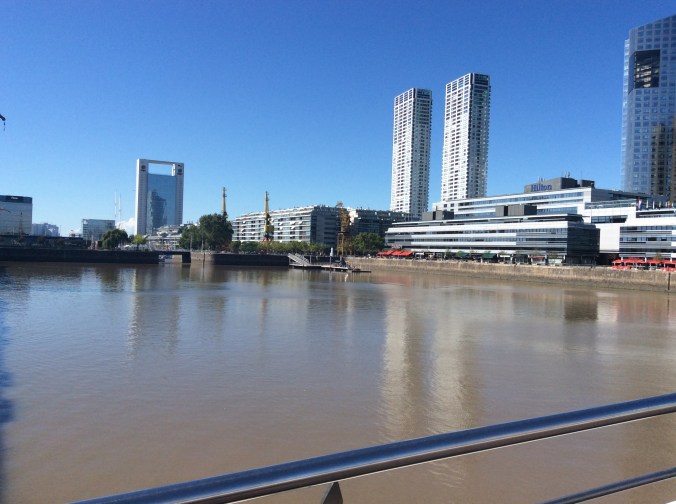
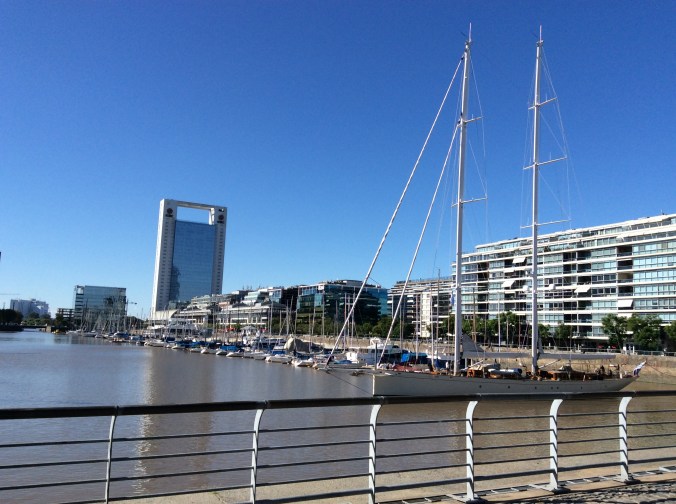
After a long walk (I have a Fitbit and we walked 35 miles in 2 1/2 days before we left Buenos Aires), we arrived here at this very modern business district on the right.  The tall building in the distance is a Chinese bank.

IMG_2925

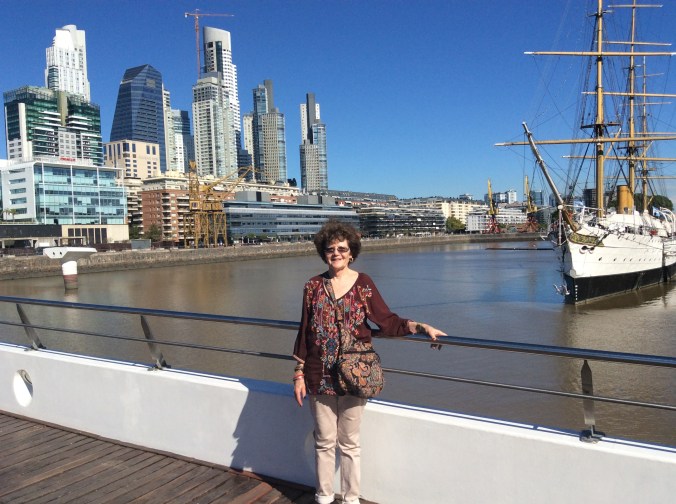
To the left are many old warehouses which have been converted into apartment buildings, restaurants, and shops.  It has become a fashionable place to live.  Several of these sailing vessels floated in the water.  Some could be boarded for a tour.  We just strolled around and enjoyed the views, the weather.

IMG_2931

We crossed the bridge and explored a rather exclusive area.  Buenos Aries is an old city which combines the old and the new.  Many of the sidewalks and streets have not changed in hundreds of years–the original cut stones remain.

We did have to laugh at our first lunch experience.  Although the restaurant appeared to be quite traditional and Argentinian on the outside, the menu was mostly Tex-Mex food.

IMG_2965

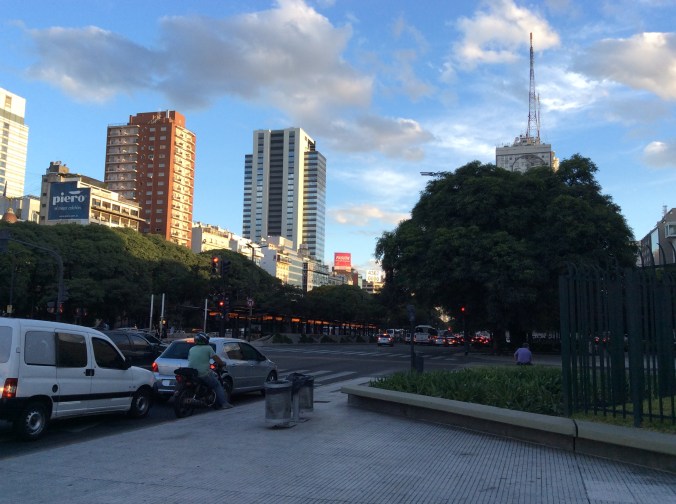
One of the longest streets in the world, this one goes from one end of the city to the other.  Note the trees!  Every city I visited contained an astonishing amount of trees.  Except for the most narrow streets, trees lined them.  Later I learned about an Argentinian saying:  there are three things you must do in life, plant a tree, write a book, have a child.  I feel grateful because I have done all three.

IMG_2967

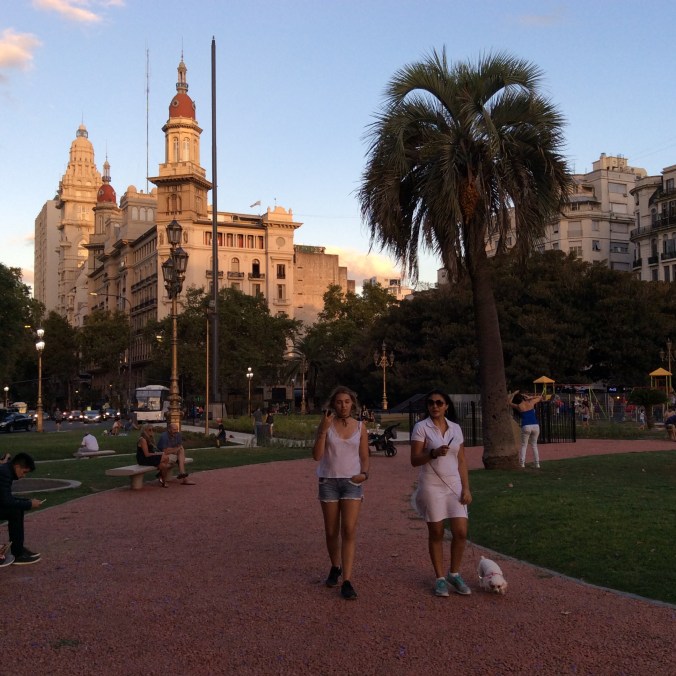
Parks, parks, and more parks–they are everywhere and people use them–children playing, dog walkers, runners exercising, people relaxing on park benches, chatting.

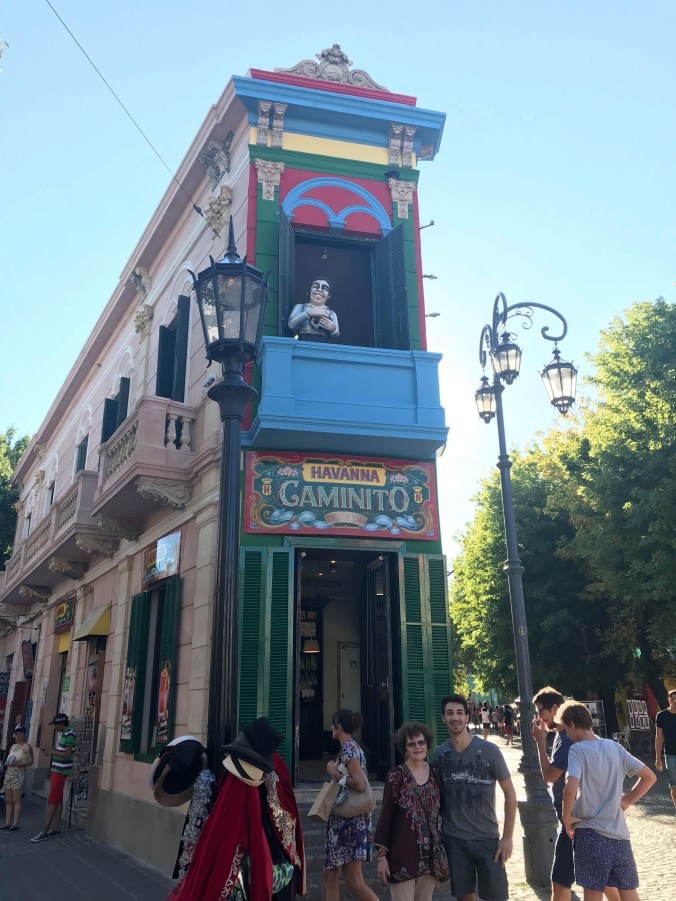
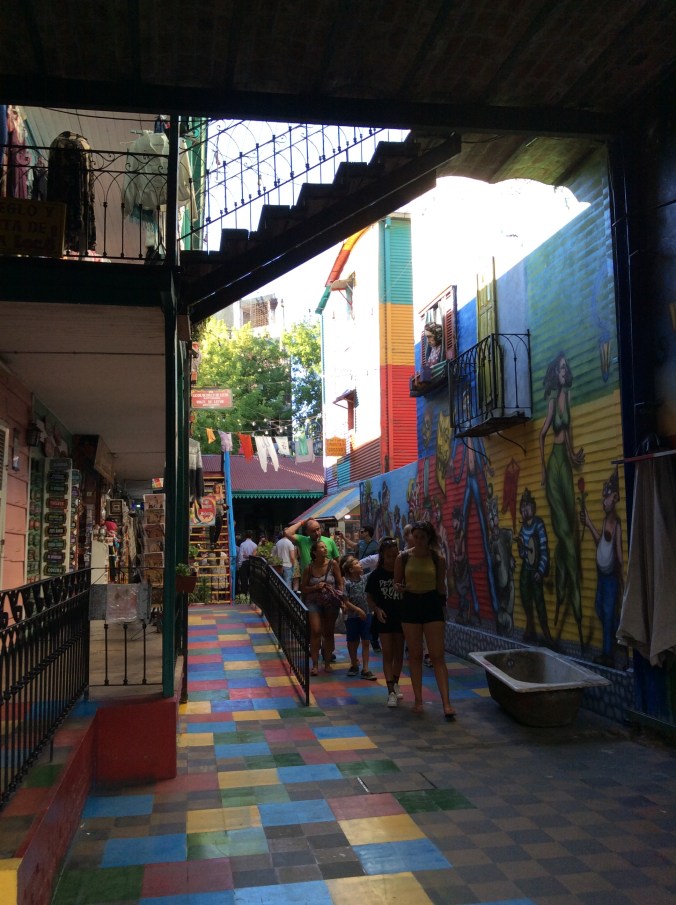
Hugo had given Gaston a list of some places to visit, one of which is an old area with colorful buildings, traditional dancing, e.g. tango, and lots of tourists.  Many of the restaurants this time year–end of summer there–are open air, filled with people enjoying summer’s end.

IMG_2961

We had a coffee (we drank quite a lot of coffee–for breakfast and after dinner almost every day), watched tango and traditional country dancers.  Tango is a Buenos Aires dance tradition.  People in other parts of the country dance the traditional dances, not tango.  We watched while a woman in her 80s left her table and danced perfectly with a young man dressed in traditional clothes–everyone cheered.  People there eat dinner late, 9-10 at night.  One day in Buenos Aires we somehow sort of forgot lunch and were hungry so we went to this special restaurant (they have a very unique way of making a potato dish which Gaston likes) about eight.  The waiters looked at us as if we were crazy.  No one else arrived at the restaurant before nine and most even later.  This suited me fine.  I much rather eat late than early.

IMG_2936


Adventure in Argentina


On March 3, I left for a two week trip to Argentina to visit my former exchange student and his family.  On March 4, Gaston met me at EZE airport in Buenos Aires.  I took the red eye from Houston to EZE, ten hours but an easy direct flight.  Little did we expect then that we would be spending a considerable amount of time in an eye clinic in Cordoba, the city where Gaston lives and attends engineering school.  We spent most of three days in Buenos Aires, then flew to Iguassu to see the famous falls. Several days later while waiting on a four hour late plane from there to Cordoba, suddenly I could not see clearly in my left eye; large pieces of black something floated all around and everything was blurry.

At nine the next morning we walked the five blocks from Gaston’s apartment to the most advanced eye clinic in Cordoba, a private clinic open on a Saturday morning. After experiencing multiple eyedrops in both eyes, seeing several doctors,  being subjected to all sorts of modern machines and tests, I found out I could not see because my left eye was quite inflamed with lots of fluid which made it nearly impossible for them to see what they needed to make a definite determination.  They gave me a prescription for the inflammation and told me to return on Monday morning and to be as quiet and calm as possible to facilitate healing.  That nixed the planned road trip Gaston’s parents and I planned to start that same Saturday.

Some blessings are unexpected.  While I would have seen more of Argentina than I did with a longer road trip–ultimately we took a shorter one, I would not have spent a relaxing, fun weekend with the whole family at La Finca, the family place in the country outside of Cordoba–photos later. I became acquainted with family members and friends, lived their typical weekend life, ate Argentinian food, all things I would have missed if we had been able to follow our original plans.

On Monday some of the inflammation had cleared so they could see that I did not have a retinal detachment–my main concern.  The doctors cleared the way for a shorter road trip and told me to come back Thursday morning.  At that time they were able to determine the exact problem and told me to make an appointment with a doctor here in the states because I would not be in Argentina when the final solution needed to occur.

Three trips to the clinic, seeing multiple doctors plus a retinal specialist twice all cost a total of 110 dollars.  Tomorrow morning my left eye receives a laser treatment and then I am told I will be fine; I visited the doctor here on Monday.  He told me exactly what they had told me.  I can only begin to imagine what my Monday trip to this doctor and the laser tomorrow will cost.  At times I wonder if it would not have been better to stay in Cordoba another week, pay the extra flight cost, and receive the laser treatment there.

Tomorrow photos of Buenos Aires and our adventures there will appear after I return from the retinal specialist’s office.

Note:  at a lecture last evening I saw a friend who is originally from Germany.  After she heard my healthcare adventure in Argentina, she informed me that she has to use very expensive eye drops.  They are so much cheaper in Europe that she and her husband, she is in her 80s and her husband 92, fly to Europe regularly to get the drops.  Even with the cost of these flights, they save several thousand dollars each time.

Blood Quantum: A Poem for Our Time


My grandson cuts himself into 16 equal pieces:

4/16 Urhobo from Africa

3/16 Spanish from Spain

4/16 European–two Swiss German great, great-grandfathers

(Werth and Kaiser), Irish, English and who knows what

3/16 Mexican–whatever mixtures that may be

2/16 Navaho


Who am I? What am I?

Who are you? What are you?

Do we really know?

Who sets the rules?

white men

black

Indian

Native American

Irish

English

German

from where and for whom?


He looks Navaho:

-blue black straight hair

-pale brown skin

-obsidian eyes.

One four year old girl asks him,

“Are you American Indian?”

His six year old self says nothing.

She repeats,

“Are you American Indian?”

He says, “It’s complicated.”


The Navaho won’t claim him, too little blood.

He needs 1/4, not 1/8.

Caddy and Fort Sill Apache allow 1/16, not Navahos.

1/4 blood is for

-Sioux

-Cheyenne

-Kiowa

-Navaho

1/8 works for Comanche and Pawnee.

Some Cherokees only want a Cherokee ancestor.


But he is none of those.

Is he Navaho?

Is he white?

The old South goes by the one drop rule:

one drop of Negro…

Is a person with 99/100 per cent white

and 1/100 black, black?

Who says?

Kids at school ask, “What are you?”

He tells them.

They say, “You’re lying.”


I only know specifically about two ancestors,

the Swiss Germans.

Another great grandfather disappeared during the Civil War.

I don’t even know his name.

Who am I?

Who are you?

I think I’ll get a DNA test.

Then I’ll know how many pieces I need to cut myself into.


Note:  This was originally published in my book “On the Rim of Wonder”.  I had a cousin send me 75 pages of ancestry information.  I looked up more myself.  That one great grandfather remains a mystery.  I had my DNA done.  It did not match what I expected from the ancestry work.

Blood quantum is the term the US government used to determine whether a person would be qualified as an Indian.  Now many Indian Nations use it to decide who can be on the tribal rolls and who cannot.


Sunday Poem–Gifts


IMG_2903

For many Christmas means gifts.

What are gifts?

Material things–the new toy, new technology,

perfume, clothes.

People spend hours and money

many lack to give gifts.

Yet the most wonderful gifts remain:

joy

love

beauty

birdsong

touch

wonder

peace


Jen Payne’s New Book


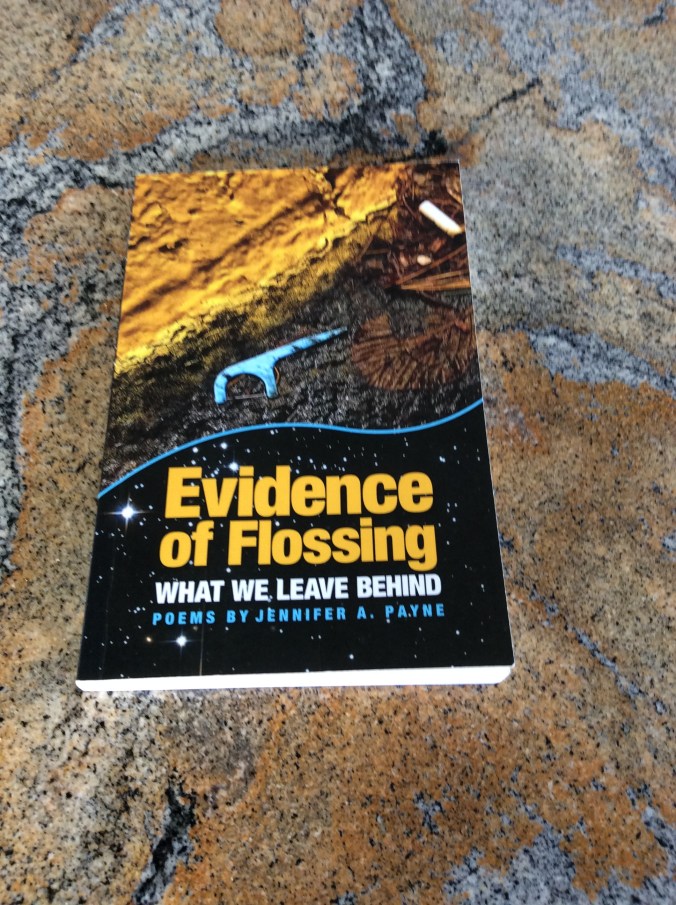
Evidence of Flossing, WHAT WE LEAVE BEHIND provides an unexpected metaphor for individual life, culture, and so much more. Nearly all the poems are accompanied with a photograph, often of trash in which lays a dental flosser (yes, one of those instruments with which you floss your teeth) with date and location.  Flossing is supposed to prevent anything from being left behind.  Hence, the title brings up an unusual play on words.

The first section Damage contains more than 20 poems which are a lament about much of modern life–mass shootings, the demise of wildlife, unpleasant changes.  One poem asks the question:  “Would God floss?”  In the second section, Contact, the poems focus on the natural world, walks in the city, the woods, beaches.  The third section, Connection, emphasizes the interconnectedness of everything, especially the relationships between humans and animals and nature.  There are poems about frogs, storms, birds.  One called Evidence of Fairies makes the reader feel the magic of old growth forests with moss and ancient trees.  In the footnote to another poem she discusses the fact that wolf spiders actually create songs to lure lovers. Then, toward the end, the Alice poems appear,  Alice as in “Alice in Wonderland”.  In my favorite poem Payne relates her encounter with a stranger picking oyster mushrooms near a path in the woods.

After reading the poems and comments in this book, I will never view flossing the same way again.  Will I find dental flossers now, something I never even previously thought about?  I use those long strings of floss not flossers.  Apparently the poems and flosser photos affected enough people that some sent Payne photos of flossers they saw here and there on the ground, some of which she has included in the book.

Even if I find no flossers, now I will certainly give a lot more thought to what I and others leave behind.


IMG_2901


About the author:  Jennifer Payne is the owner of Words by Jen, a graphic design and creative services company in Connecticut. She belongs to the Arts Council of Greater New Haven as well as several other arts and poetry organizations.  Her work has been featured in various publications, including The Aurorean, Six Sentences, and the Story Circle Network.  You can read some of her writing on her blog Random Acts of Writing.


Sunday Poem-Puma I


“An animal’s eyes have the power to speak a great language.”  Martin Buber


My neighbor walked out her door

found a puma lying on the lawn.

Puma rose, stretched, disappeared.


At night when I open my gate

I wonder if she lurks

behind the cedar trees,

pounce ready.


My daughter dreams puma dreams:

a puma chases her up a tree.

There are no trees here big enough to climb.


A Zuni puma fetish guards my sleep.

I run with puma

Night wild

Free.


I scream and howl

Moonstruck

Bloodborn.


I hike the canyon

stroll around my house

look for puma tracks.

I see none.


I would rather die by puma

than in a car wreck.


SAM_0912

Note:  This is the first in a series of Puma Poems in my book “On the Rim of Wonder”.

Sunday Poem–“Hair”


No females in my family had long hair.

Dad did not like it,

said it showed male domination

over women.

Once when grown and gone

from home, I began to grow mine

out, experiment.

When he saw it, he told me

he thought it unbecoming.

I cut it.

Mom said she had long hair

when she was young.

Her dad forbade her to cut it.

In her twenties she chopped her golden locks

off, flapper style, then hid her head

in a scarf, afraid.


Note:  This poem is from the family section of my book, “On the Rim of Wonder”.


Sunday Poem


A few years ago Uno Mundo Press published my second book, a book of poems.  Reviewers say it is a memoir.  Oddly, that was not the plan; in retrospect, it seems apt.  The poems’ topics are not chronological but rather via topic with quotations before each topic as a sort of introduction.  For the foreseeable future, while I continue writing another book, I will post one poem from the book every Sunday.

The book begins with this quotation:

“Do something scandalous to give your descendants something

to talk about when you are gone.”  Vanessa Talbot


The first section begins with this quote by Judith Jameson, the famous dancer and choreographer:

“I always tell my dancers.

You are not defined by your fingertips,

or the top of you head,

or the bottom of your feet.

You are defined by you.

You are the expanse.

You are the infinity.”


The first poem in the book goes like this:

I Have Lived

Depression, sad days, melancholy.

Gone!

At 26, I said, “To hell with this!

You control you life, live it!”


I tried forbidden liaisons, trained horses,

Traveled around the world, a cobra wrapped around my neck,

Walked the Shalimar Gardens in Kashmir,

Stood before the Jama Masjid in Old Delhi,

Watched the Taj Mahal reflected in still waters,

Walked the streets of Katmandu,

Talked to monks at Shwedagon Pagoda,

Bargained with sticks in dirt, math our only common language,

Downed raw turtle eggs in Costa Rica,

Danced on table tops, sang “Adonai”,

Roamed empty roads across the Navaho Nation,

Divorced four times,

Raised two talented children.


I have lived, running on the rim of wonder.

IMG_2675


Predetermined?


IMG_2676

Today at the bookstore browsing, I picked up a book nestled among the magazines.


This question appeared on page 41:  “If you were given a book on the story of your life,

would you read the end?”


I asked my grandson.  He immediately said, “No!”


I wonder.


Remain unsure.


If I read it, could I change it?


Are lives predetermined, choiceless?


Are we unwittingly predetermined and just victims?


If I read it, could I change it?


Eat something different,

sing a varied song,

laugh more,

spend more time with sunsets, sunrises,

read less, more,

love someone new,

say words now lost,

write a contrary story,

choose an opposing path,

challenge?