Book 18 for 2024: “Quiet Street”, Nick McDonell


Want to know how the top 1 percent, the super wealthy live and control nearly everything in the US? Read this book. In a mere 117 pages, McDonell explains his own life and that of fellow 1 percenters. He details his early life, the private school he attended, the family connections, summers taking sailing lessons in the Hamptons, and vacations using private jets to places like the Galapagos Islands. At 18, he was able to get his first novel published in part because of his family connections to a famous publisher. Eventually, he left this life behind to become a foreign correspondent in Iraq and Afghanistan.

In this book he details how the super wealthy hoard wealth, pass it from one generation to another, and how outsiders, the poor and those not white, are kept out. Here are a few quotes from the book:

“I began to see how, in the United States of America and elsewhere, success almost always, and predominantly, depends upon wealth–and frequently comes at the expense of the less wealthy.”

“We in the one percent like to believe in meritocracy, even fairness.” At this point he lists several of famous people who rose to wealth and power from poorer circumstance and explains how this is used to make the “one percenters feel good, they distract from the possibility of a more humane distribution of wealth.”

Why do the one percenters behave as they often do? He interviews several whom he knows through his private school connections. “The fear they share was loss of wealth. Without ever saying so, they were very much afraid of losing their country houses, the barn converted for their kids sleepovers, the space for the grand piano, the green houses, pied-a-terre where their mother-in-law stayed without interfering in everyone’s business, the airport lounge that allowed them to enjoy pleasures among their own, in quiet. They were afraid of supermarket processed cheese, preferred organic stuff which they believed would keep them alive longer….they were afraid of losing their Prada bags…the cashmere….They feared losing wealth not for its own sake but because it was justified, in their own minds, by intelligence, hard work, determination—that is by character.” They truly seem to believe they are smarter and harder working than other people.

Book 16 for 2024: “Digging to America”, Anne Tyler


This book details the lives and relationships between two families, one native to the US and the other Iranian immigrants. When the young couple in each family adopt a Korean baby, their lives become intertwined. Every year on the anniversary of the arrival of the babies, they take turns hosting an Arrival Party. Two of the grandparents, one on each side, one male and one female, find their lives linked in unexpected ways. The book explores what it means to be an immigrant, how the native born sometimes view those from another country, and questions to what extent a person’s character is due to culture and what is simply the way that person remains regardless of culture. While a serious exploration of culture, family relationships, friendship, and cultural adaption, the book is also quite funny. I found myself sometimes laughing out loud and at other times feeling sad. I also found myself thinking more about my own personality and its development.

Ovid


This is poem two for National Poetry Month. A friend wrote a poem following the prompt to write a poem about a book the writer has not read for a long time. She wrote about The Scarlet Letter. My poem is about the book, An Imaginary Life.

The Roman Emperor Augustus saw Ovid’s poetry as subversive,

a power threat. He exiled Ovid to a remote corner of the Empire,

somewhere over by the Black Sea, the Carpathian Mountains,

among the destitute, the superstitious, people who did even know

how to read or write. They believed in witches, feared ghosts, saw

evil in everything and everyone different. Different equaled

death.

Paid to host Ovid, the village leader teaches him to ride horses

bareback, hunt, become stronger. Ovid transforms from a weak

revolutionary who hates this place to one who sees the barren

beauty, wanders in the forests, plants a wildflower garden,

survives.

While hunting, they see barefoot tracks in snow, tracks

of a feral child, a boy. Ovid fears for him, finds him,

rescues him. An accident occurs. The villagers blame

the boy, want to kill him. He and Ovid escape,

wander far into the northern wilds, into

infinity.

Book 13 for 2024: “The Blueprint”, Rae Giana Rashad


In this dystopian novel white men in Texas run everything and carry guns, have taken over what was the US, eliminated The Constitution, and now use a Blueprint one of the main characters created. There is no choice for much of anything especially if you are a Black woman. An algorithm determines your occupation, spouse, residence, well, everything. Black men have a bit of choice, mainly to be in the military and die young. You can raise to a high rank, have some power, and be honored for your bravery. Sometimes young Black girls around 15 are assigned by this algorithm to be the concubines of powerful white men. This is how the main character, Solenne, ends up living with the most powerful man, becomes his lover. Unlike other circumstances where later she might have a choice, he becomes so obsessed with her that he never wants to let her go. To keep sane she writes about her enslaved ancestor, Henriette, the concubine of a powerful white planter in the 1800s. Women have a tracker implanted in their thumbs so men can see where they are and what they are doing. The only place to escape to is Louisiana, a free state, but even there greed and power can entrap you and force you to return to Texas. The prevailing attitude is this:

“The Councilmen said a nation was only as strong as its hold on its women. They had to squeeze the life out of the women’s liberation movements, give it no air…It begins at home with the wives.”

Book 11, 2024: ” Frida’s Fiestas: Recipes and Reminiscences of Life with Frida Kahlo”


The author of this book, Guadelupe Rivera, is the daughter of Diego Rivera by the woman to whom he was married before he married Frida. Diego went on a trip to Russia and his then wife, the author’s mother, became attached to her previous boyfriend, the poet Jorge Cuesta. She and Diego divorced and then he married Frida. Eventually, the two couples became friendly and at one point they all lived in the same house.

Thirteen years after Diego married Frida, the author moved in with them. This book details her life living with Frida and her father, how Frida learned to cook, how she decorated the Blue House in Coyoacan, the fiestas, the food, the adventures. The book includes photos and recipes of Frida and Diego’s favorite foods, photos of the house, and places the author visited with Frida. It is also a story of many of Mexico’s famous people at the time.

I own several books about Frida but this one is the most revealing and intimate in many ways. If you like Mexican food and find the life and art of Frida and Diego of interest, read this book.

Note: It was also written by the journalist Pierre Marie-Colle with photos by Ignacio Urquiza.

Eye Drama


Kohl

Kajal

Sormeh

Mebari

Ancient names for eyeliner

still in use today.

Kohl-Arabic

Kajal-South Asian

Ithmid-the purest kohl

made from galena

Surma-powered kohl in Urdu, Bengali

Sormeh-loose power preferred by Persians

Tiro-Nigerian

Mebari-red eyeliner, Japanese

Nefertiti used it.

Today the Worso and Wodaabe

African men use it.

Where women must veil themselves

the eyes are everything.

Bedouins use it for protection

from the desert sun.

In defiance find Cat Eyes

in Chola culture.

In Kerala Kathakali

dancers use it.

Geishas in Kyoto use red.

Find influencers on TikTok

Instragram, they will

teach you how.

Note: The above poem was inspired by my most recent read:

“Eyeliner A Cultural History”, Zahra Hankir. Hankir is a Lebanese journalist whose history of eyeliner throughout the world informs the reader about places and people and customs many never heard of or know about.

Book Seven for 2024: “After Eden, A Short History of the World”, John Charles Chasteen


Want to learn a lot in less than 400 pages? Read this book. Published this year, it is the most recent book by a prominent Latin American scholar and historian. After humans learned agriculture and built cities, most of the population of the world became increasingly patriarchal and warlike. The divide between rich and poor increased. Egalitarian foragers and wandering hunters existed only in more remote areas. A few still exist in those remote and less modern corners of the world, often places where few others want to even go. This quote says a lot about the current state of affairs:

“Our civilization has thousands of years practice making war. We have almost NO practice making global peace, but without it we are doomed. Today’s pervasive nationalism and rearmament is unlikely to help us make global peace.”

And a page later:

“Only a true unanimous global effort has any chance to preserve our common home.”

He notes that saving Earth will take huge social transformations, including curbing the excessive consumer capitalism that currently pervades plus overcoming a world wide history where half of humanity mistreated the other half, a practice that still continues.

Chinese New Year at the Tzu Chi Campus


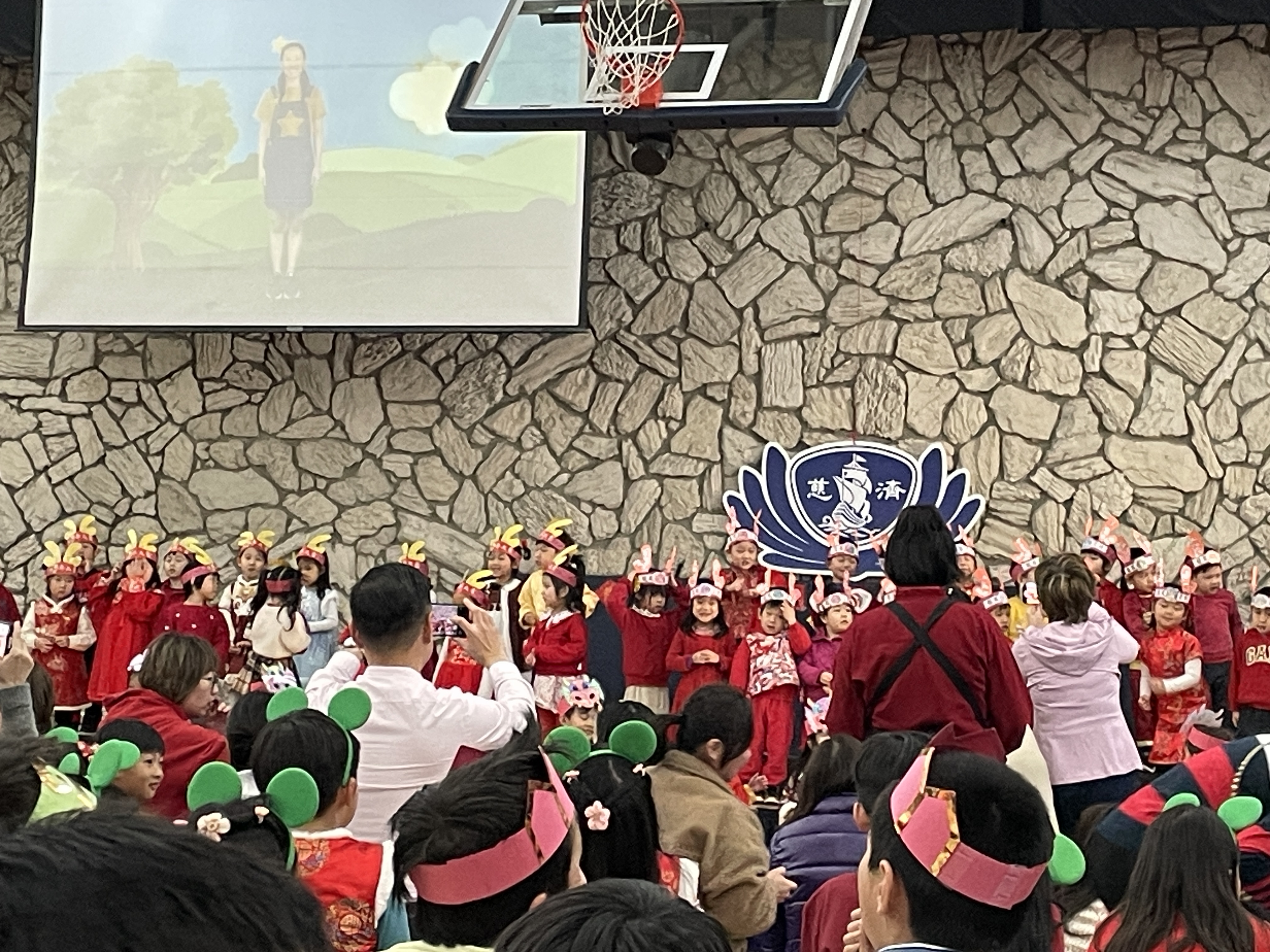
Today I traveled a bit south of where I live to the campus of the Tzu Chi school which I have visited numerous times. First we had a vegetarian lunch–they are Taiwanese Buddhists who advocate a vegetarian, plant based diet as better for the environmental future of Earth. Then all the visitors, who were mostly parents of the children, went to the gym for the program. Various ages wore headdresses to represent the various signs. Some of the youngest children wore dragon headdresses. This is the year of the dragon.

The children sang and danced.

Parents were very enthusiastic about taking photos.

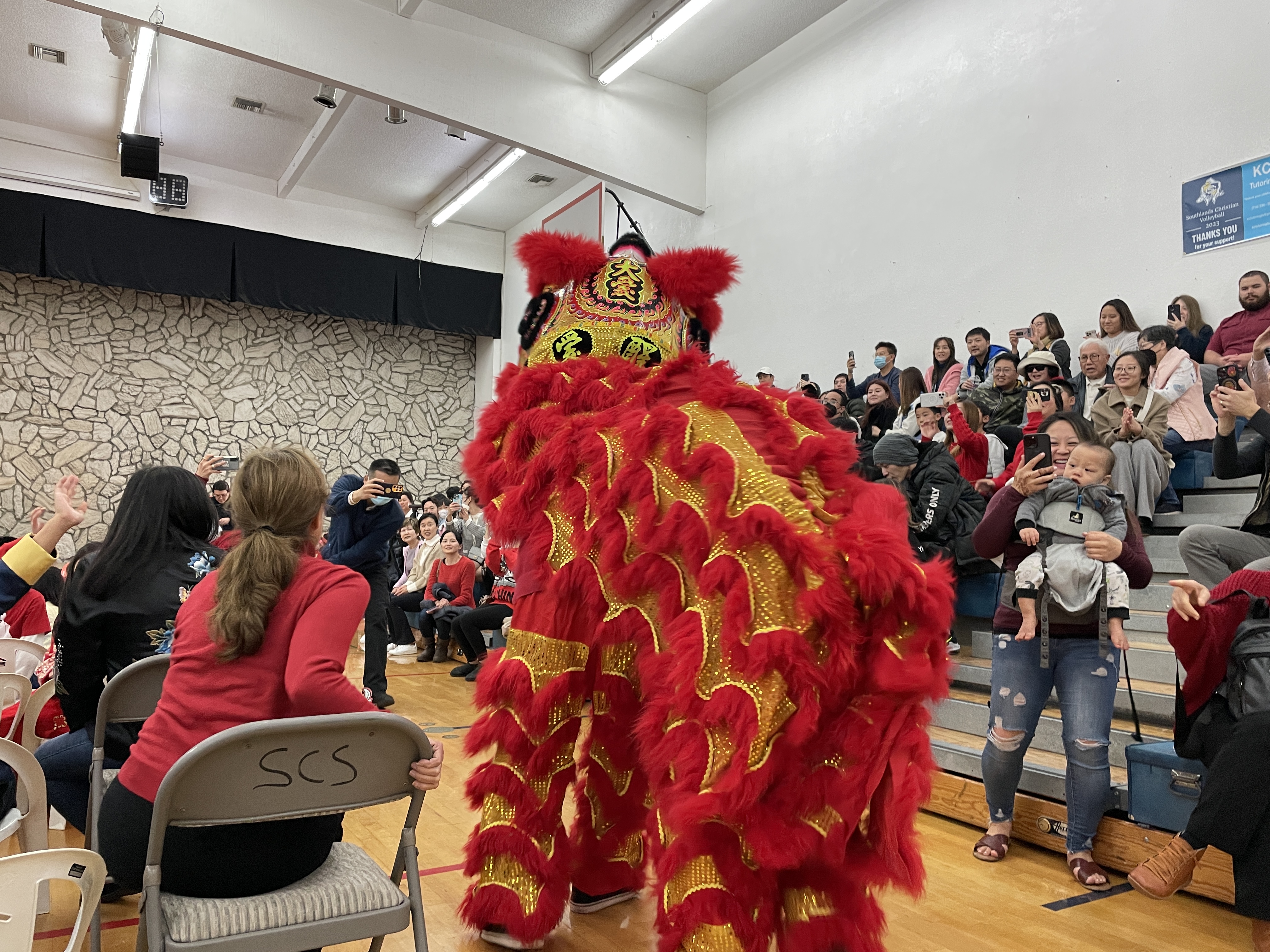
Then after all the students of varying ages finished all their performances, including older students who made a circle around the room and sang plus danced with perfect synchrony, out came the dragon.

It was so much fun to see all the children performing; it was obvious they had worked very hard to accomplish this. It was also enjoyable to see so many happy, enthusiastic parents.

Note: I work with this Buddhist Center teaching character education at local public schools.

Book Six for 2024: “Look At The Lights, My Love”, Annie Ernaux


Who would have thought a person could write an entire book about a hyper market? I never heard of Auchan until I read this book. For those not in the know, located in France, it is described as a hyper-market on search engines. From Ernaux’s description and those on the Internet, I think there is nothing like it in the US. The author refers to it as a Supermarket, but it is nothing like what we call a supermarket here. It is a superstore, somewhat like the big box stores here but much more. It sells food, clothes, books, you name it, but not like Target or Costco. The bookstore is a separate area, as are many other little shops within the giant store, e.g the fishmonger. It is three stories, open 24/7, and according to the Internet, works toward being something for everyone while caring about the environment and such. The employees wear a uniform so in that regard they all look the same. The store attends to the needs of all the various religions of the people of France, Muslims, Jews, Christians, everyone. This is especially true when it comes to food. During certain holidays, the preferred food for that religious holiday becomes available.

Ernaux decides to go shopping there in 2012 and 2013 over a span of a year. She deliberately goes at different times of day to see if there are differences. There are. Certain groups of people shop early in the morning–like older people. Young singles go later, mom’s with children at a different time. When there is a no school day, gangs of teen girls show up to hang out and shop. When the weather is bad, people go there to escape. Once in a while someone recognizes her, tells her they love her writing, and they have a conversation. At the first floor entry where there are places to sit, she notices that older North African men seem to like to hang out there and watch the passerby’s.

She notices that while a person can shop in a sort of anonymity that is impossible while standing in the checkout line. Here your eating habits, what method you choose to pay, whether you have elderly people at home or babies or children are all on full display laying there on the conveyor belt for all to see. If you have to ask for help with the money, it exposes you as a foreigner. Yet people pretend they do not notice or care–perhaps they do not.

I occasionally go to Target, never to Walmart or Costco. Nevertheless, reading this book has made me notice things I never noticed before, and normally I am quite observant. Now even when I go to smaller grocery stores, I notice who is there, what they are buying. Sometimes people will ask me a question about something in the store. At places near my house, I sometimes see people I know and chat.

Superstores


Masses of US residents apparently find superstores, or as an acquaintance calls them, big box stores, Costco, Walmart, Target, the perfect places to shop. The only positive aspect I can think of is that they are the only places, except for some giant supermarkets, where you can find people of every ethnicity and age in the same place at the same time. Nevertheless, there are differences. For example, Costco, a store I loathe, attracts people with more money than the people who shop at Walmart, even though income level of Walmart shoppers does vary some depending on the location of the store. I used to occasionally shop at a Walmart in a college town. Its clientele were obviously different from those at another Walmart located in one of the poorer neighborhoods in a medium-sized Texas city. I have only been to one Walmart in California. It seemed dingy, even a bit dirty, dismal, did not have what I needed. I left.

My son and two of my neighbors appear to love Costco and shop there often. The one time I went with my son, I could not leave fast enough. Who wants to buy all that stuff stacked so high no one can reach it anyway? They believe Costco has bargains. Really? My observation is, well, maybe, if you own a business or have a giant family and can buy masses of stuff at once. Thankfully, and, yes, I mean it, I live alone, have zero desire to hoard stuff so why would I ever want to shop there.

Occasionally, I have to go to Target to purchase copy paper and printer cartridges. I could get the latter online, but then it comes in this plastic wrapping that is not especially recycle friendly which haunts me. I hate waste. Target’s variety of shoppers is noticeable; even the checkout people are of obviously varying ethnicities. My favorite is this smiling middle-aged woman wearing a headscarf. She engages with customers, says something friendly, smiles even when the line is long and I’m certain she’s worked for hours. I wonder how she does it.

It occurs to me that I could go to Target–one is close to my house and I find it tolerable–pretend to shop, walk around, observe, and write an essay about everyone and everything I see. Since the nearest CVS drugstore shut down and moved to Target, I might even have a legitimate excuse to go there.