Book a Week-20: “Sankofa”, Chibundu Onuzo


After her mother dies, Anna searches through her mother’s belongings and discovers a hidden diary written by the African father she never knew and about whom her white mother, who never married, told her nearly nothing. She travels to Scotland to have the diary authenticated by an expert, researches, and discovers her father had to return to Africa, became a revolutionary, and then president (or dictator, depending on the source) of a small African nation. She also learns that he is still alive.

Leaving behind a daughter and white husband from whom she is separated, Anna decides to travel to Africa to find her father. Treated unequally as a biracial child in England, in Africa she is seen as “obroni”, white. Thus, the book addresses issues of racial identity, family acceptance (she does find her father) and belonging, and tells a tale of the adventures of a middle-aged woman in search of self.

One Book a Week-18: “If An Egyptian Cannot Speak English”, Noor Naga


Identity politics remains at the heart of this unusual novel. Written in three parts, One portrays a “love” affair between an Egyptian American woman who has gone to Cairo to find her Egyptian self and an unemployed, revolution (as in Arab Spring) photographer who alternates between living in a rooftop shack and homelessness. Each vignette starts with a question and alternates between the voice of the woman and the man, expressing their viewpoints on life, love, and their situation. Part Two is the same except without the “headline” question. Part Three is a big surprise–a discussion, written as a play, a critique of the rest of the novel among the author, an instructor, and several “students”.

I loved this book in part because it enabled me to learn a lot about Egyptian cultures, but also because I found it thought provoking and intriguing.

Baja Trip-5: Wandering Around Ensenada


First, we went to the fish market where I saw fish I could not even begin to identify. Then we strolled along the wharf.

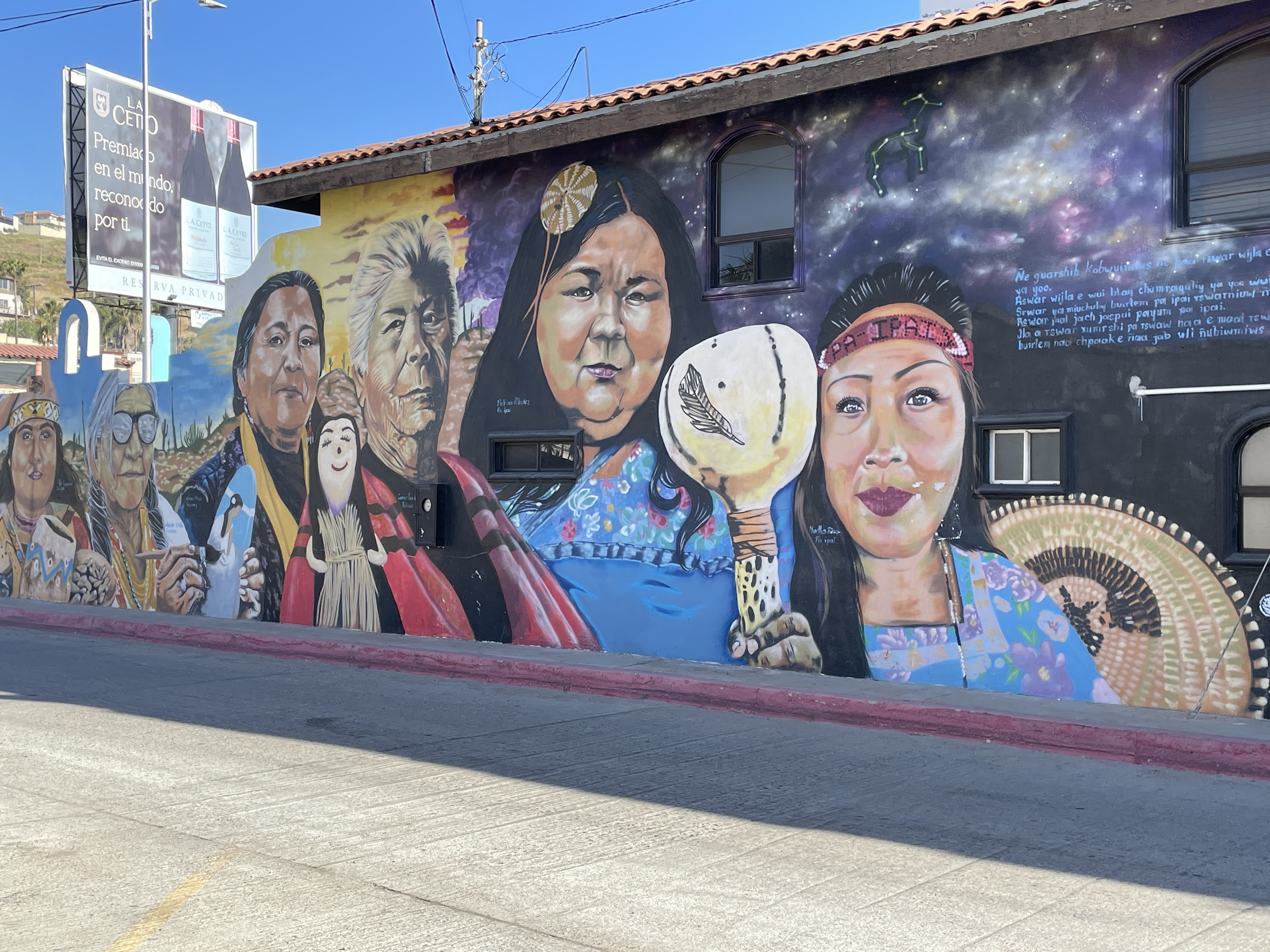
This mural portrays the matriarchs of the northern Baja area. each from a different indigenous tribe who lived there before others arrived.

Cruise ships dock here several times a week.

Built when alcohol and gambling were illegal in the United States, this was once a famous casino where the rich and famous came to gamble and drink. Now it belongs to the city and is used for weddings, retirement parties, etc.

Back in the 30s, the water came up to the edge of the casino property so people could come in their luxury yachts, dock, and walk right inside.

The original bar still exists and is well stocked. Here we heard the story of the invention of the margarita. Many claim to have invented it in various places in Mexico. It seems to trace back to a bartender who moved from place to place and brought the drink with him. Who knows?

One Book a Week-13: Blue Desert, Celia Jeffries


As an ardent reader who prefers what are usually referred to as literary novels and serious non-fiction, few books impact me deeply and emotionally like this one has. As soon as I finished it, I reread parts of it several times, then sat silently stunned.

After her family moves to North Africa for her father’s work, an 18 year old British girl, rescued by a Taureg leader, is believed dead by her family until she resurfaces years later at a Catholic “home” run by nuns in North Africa. She re-enters British society, marries, leads a relatively “normal” life while keeping a secret for decades. When she receives a telegram, “Abu is dead”, everything changes. Her past comes rushing back in unexpected ways.

One Book a Week-3


While wandering around Barnes and Noble looking for something new to read, I read the blurb for An Imaginary Life by David Malouf, an Australian writer. I bought it. Of course, I had heard of Ovid, seen parts of Metamorphosis, his most famous work, but knew little about him. Emperor Augustus exiled him to the remote regions near the Black Sea for reasons not totally known but perhaps due to the nature of Ovid’s erotic poetry which was very popular. Written in the first person, this book relates Ovid’s experiences, thoughts, and feelings while in exile. The urbane and educated Ovid now has to learn to live with superstitious, illiterate, poverty stricken people whose language he does not know, who possess none of amenities to which he is accustomed, who live in a bare survival mode. They find a “wild child” and Ovid becomes determined to catch him and teach him. The Child has lived with the animals and speaks their language, seems immune to weather even though naked, knows nothing of humans. As Ovid lives with and teaches the Child, he begins to question what it means to be human, to be civilized, to be different. What is the true meaning of life?

Note: If you look up Ovid, you will find a birthdate but no date of death. No one knows exactly when or where he died or where he was buried.

An Afternoon at the Cheech Museum – 2


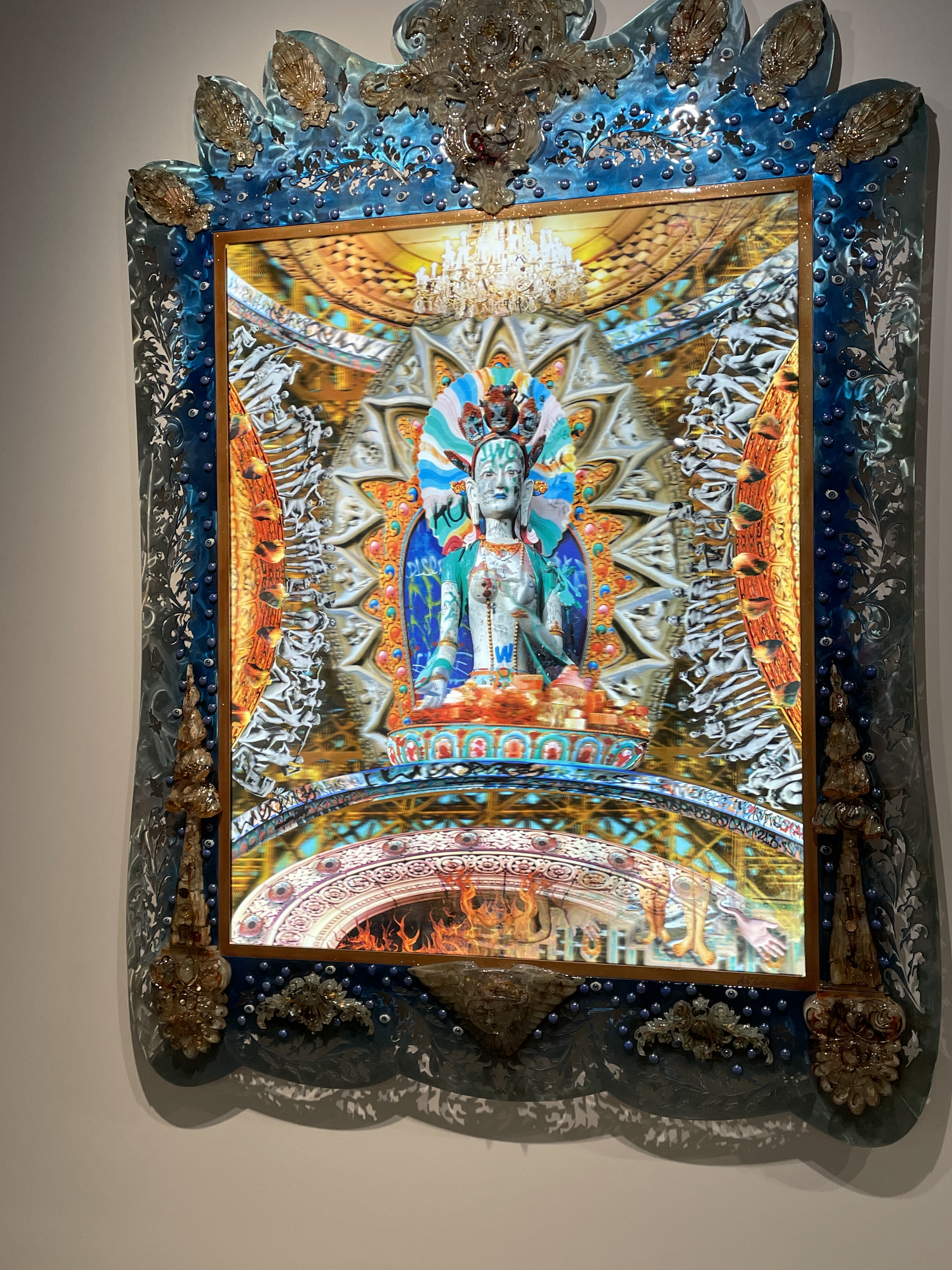
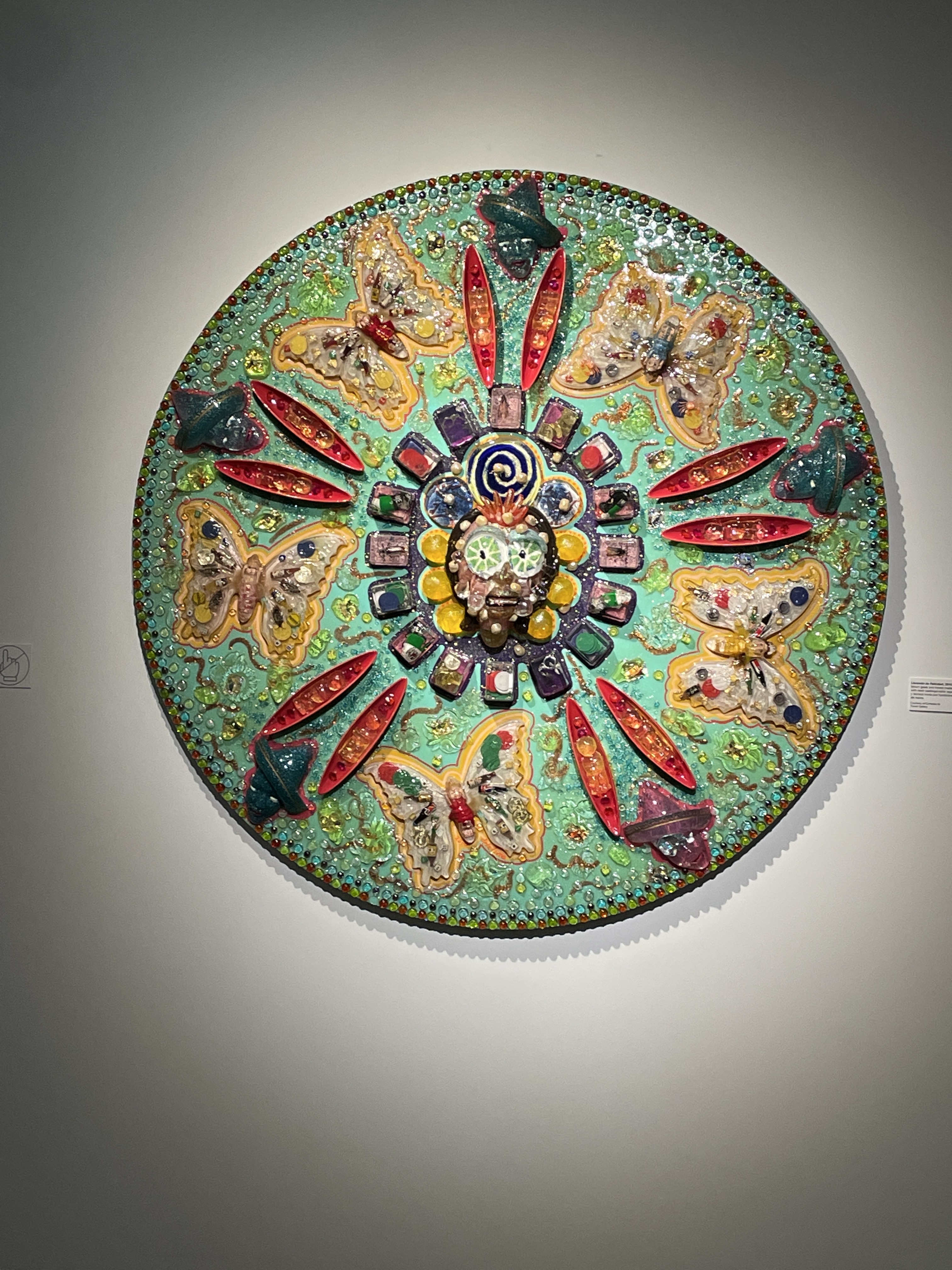
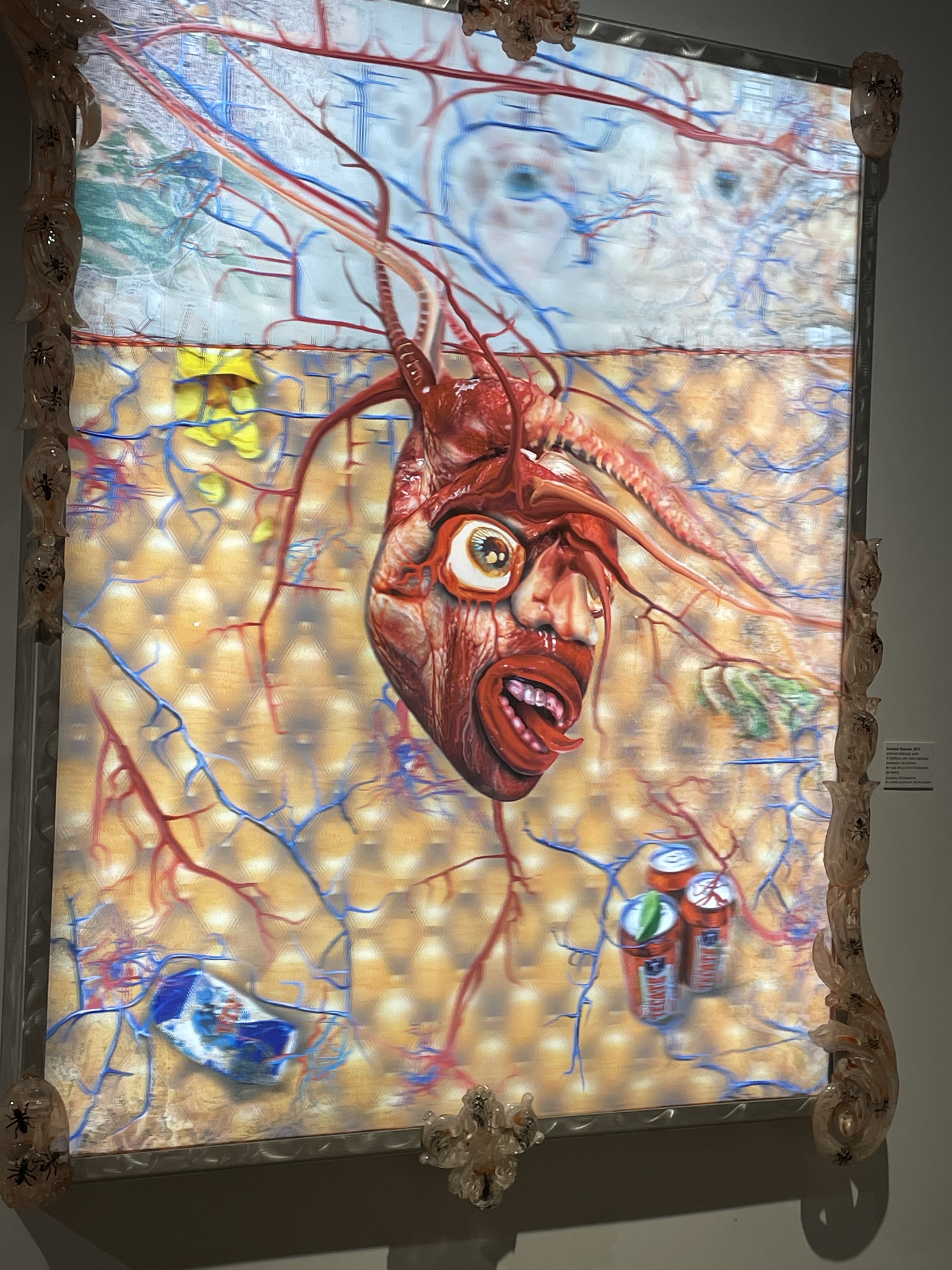
The second floor of the Cheech contains even more astonishing art including more multidimensional pieces except smaller than the giant one you see when you enter the building.

Depending where you stand in front, to either side, what you see is quite different. I kept thinking some old Flemish art or Hieronymus Bosch meets modern technology.

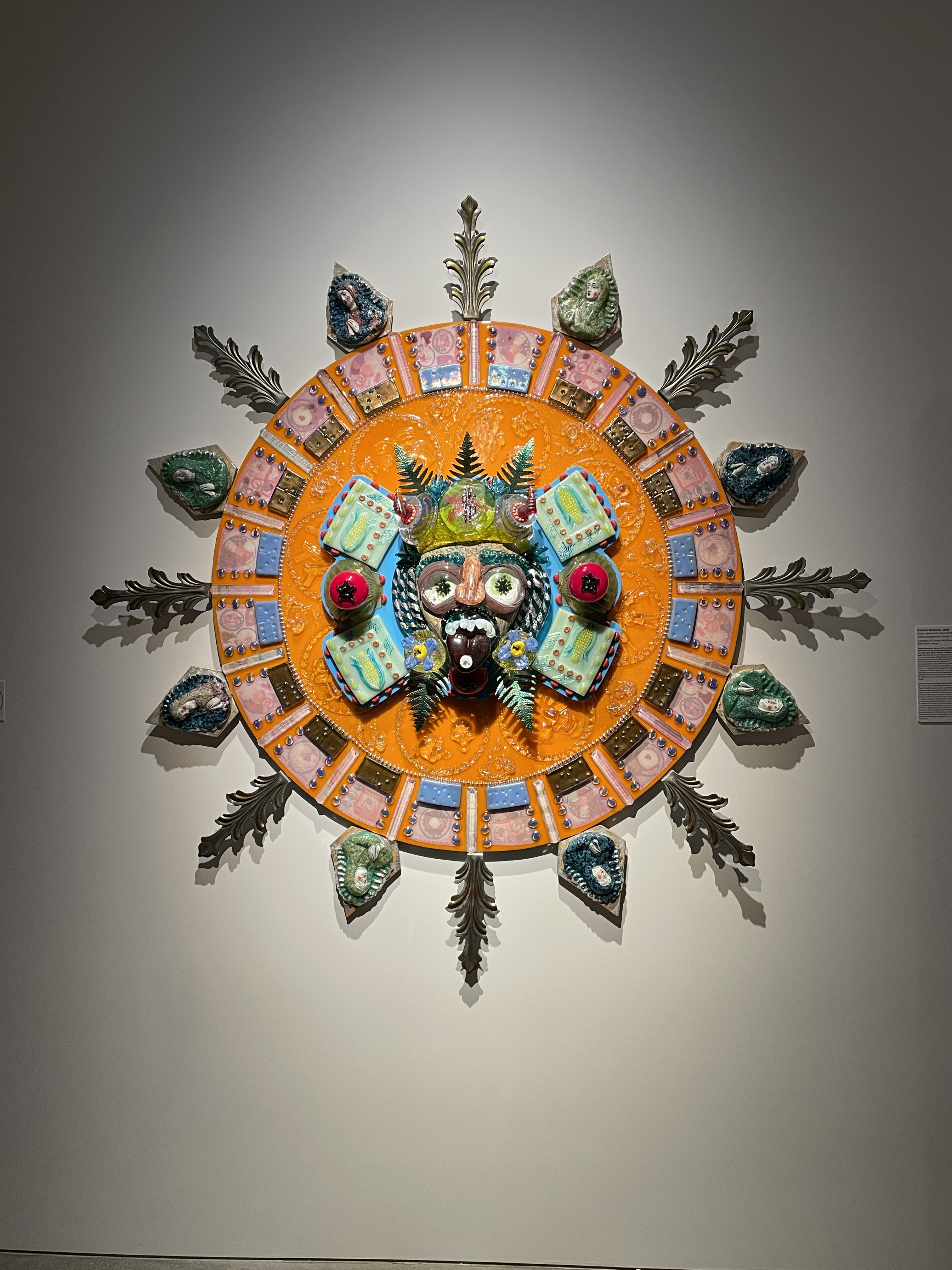
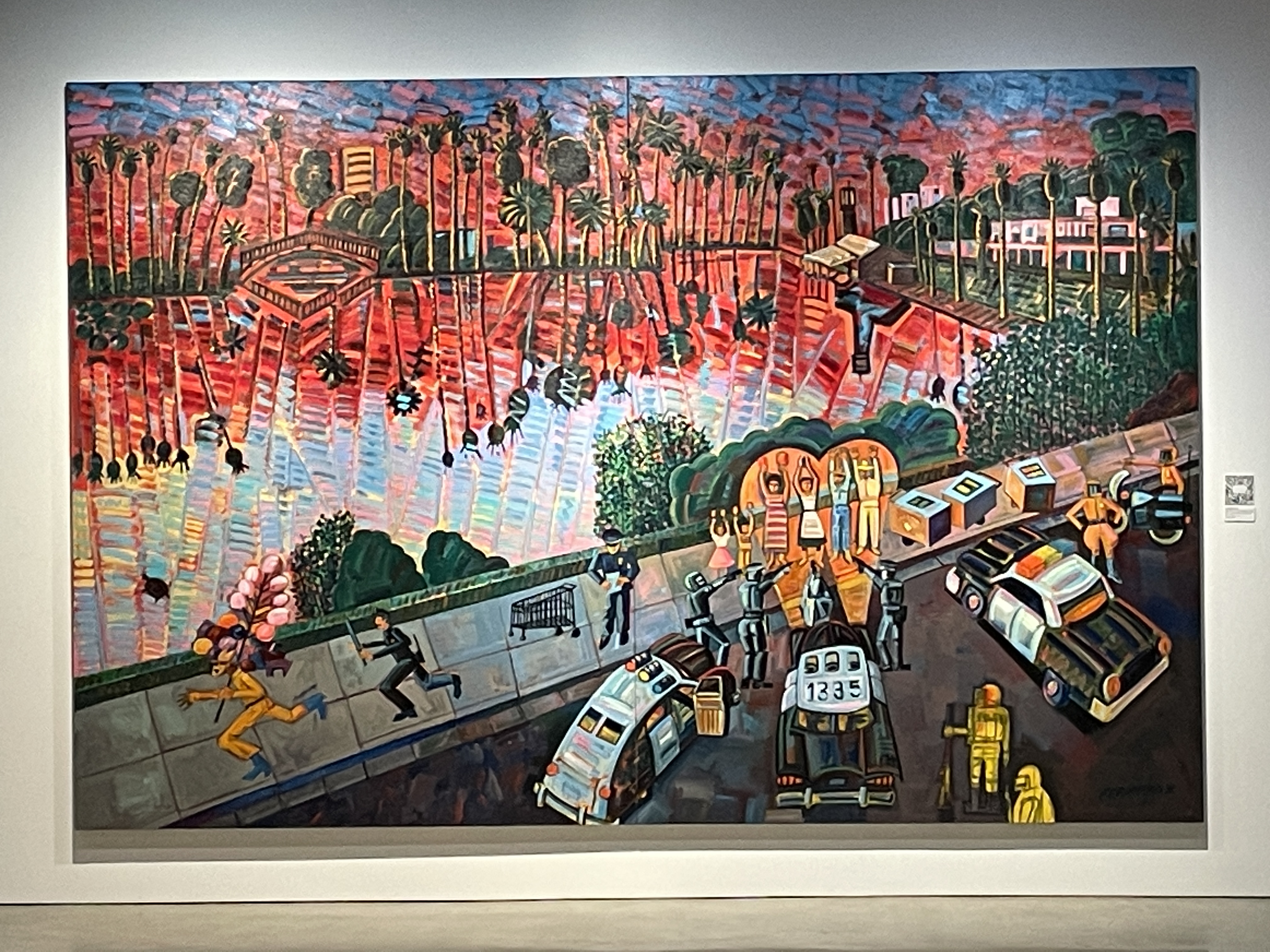
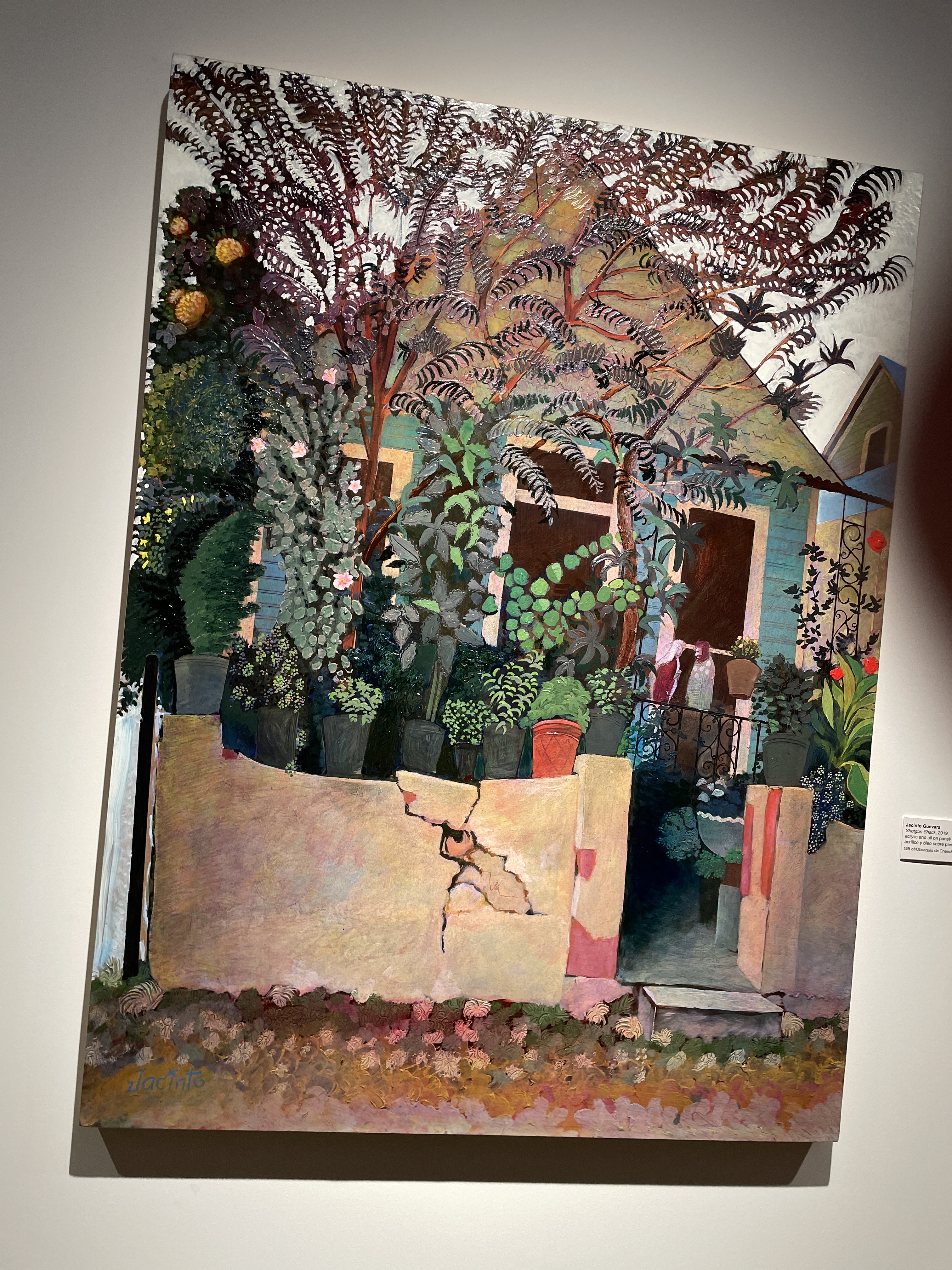
Much of the art makes a social or political statement especially about colonization, culture, poverty.

Some of the art is reminiscent of Mayan and Aztec calendars.

Hearts appear in many of the paintings.

And of course Frida.

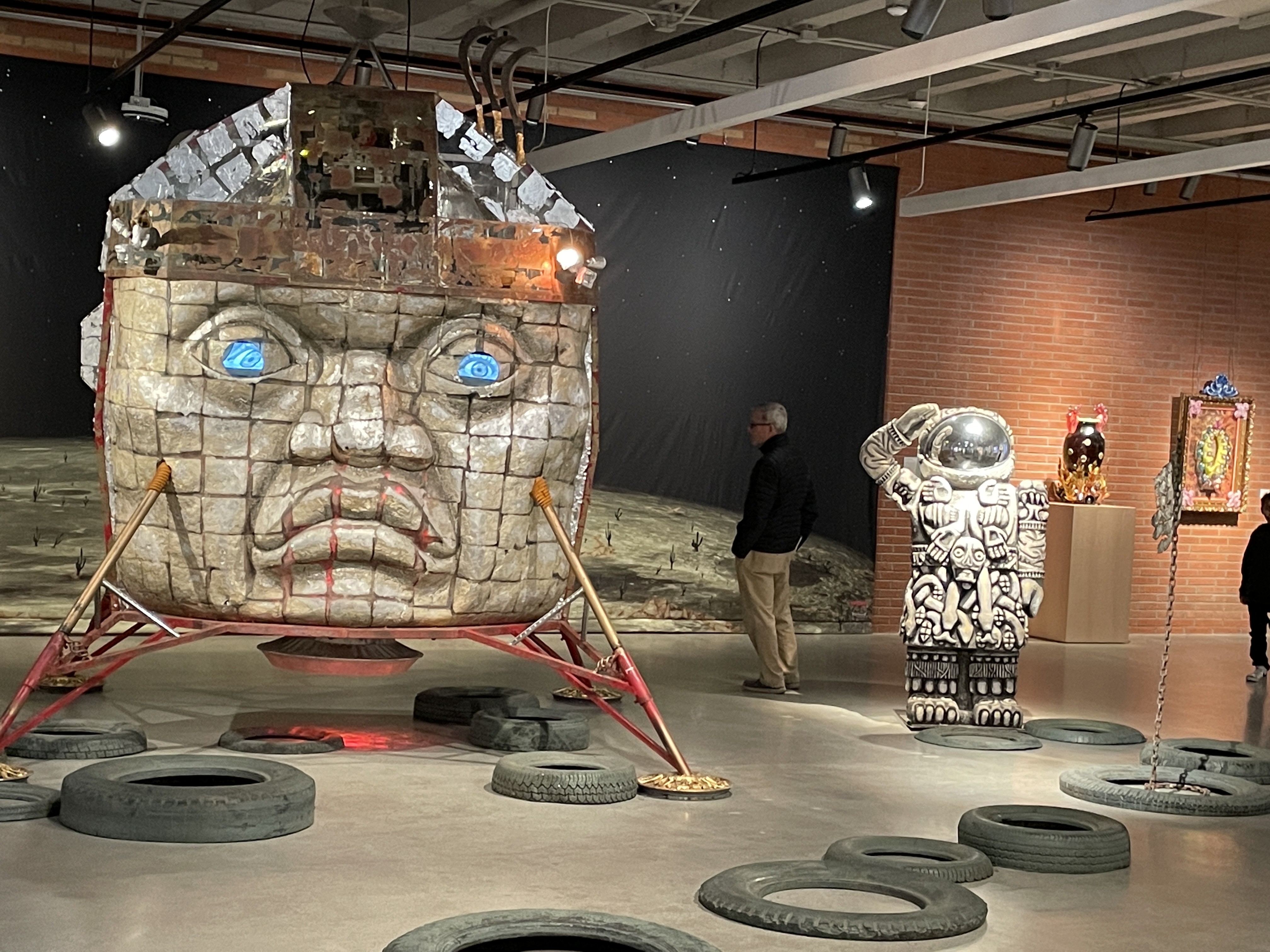
This is a space ship with changing eyes. If you walk around the back there is a creature inside watching everything with monitors.

An Afternoon at the Cheech–1


Some of you may remember the comedy duo Cheech and Chong way back in the day. Cheech has spent his life collecting Chicano and Chicana art. This year he gave a lot of his art collection to open a new museum in Riverside, California. Earlier this week my grandson, his girlfriend and I went to visit the museum. Photos and videos are allowed without flash. The following is the first set of photos I took. Please note that you need to see this art for yourself. Photos do not do it justice. Much of it is multidimensional and looks very different depending on where the viewer stands.

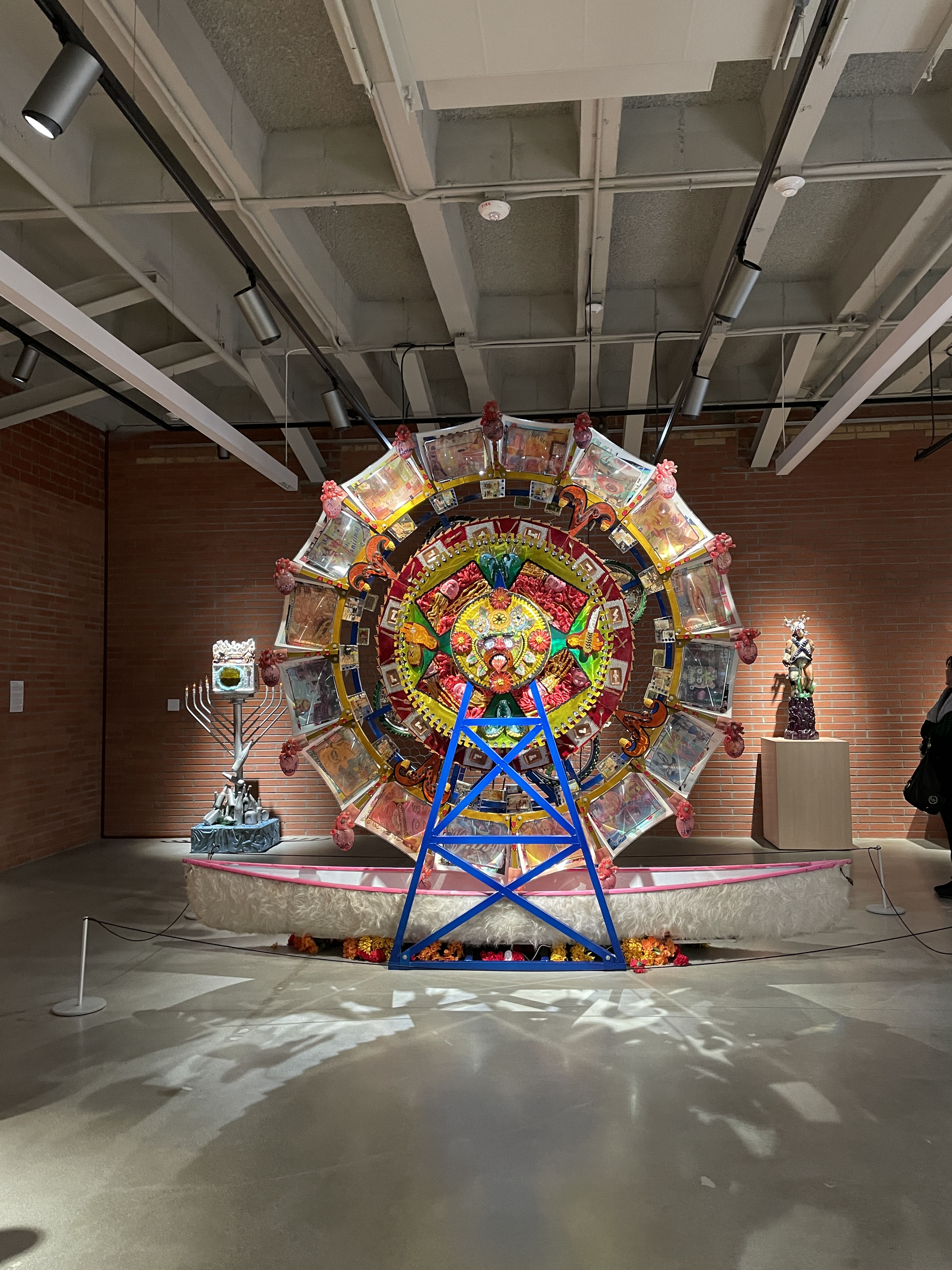
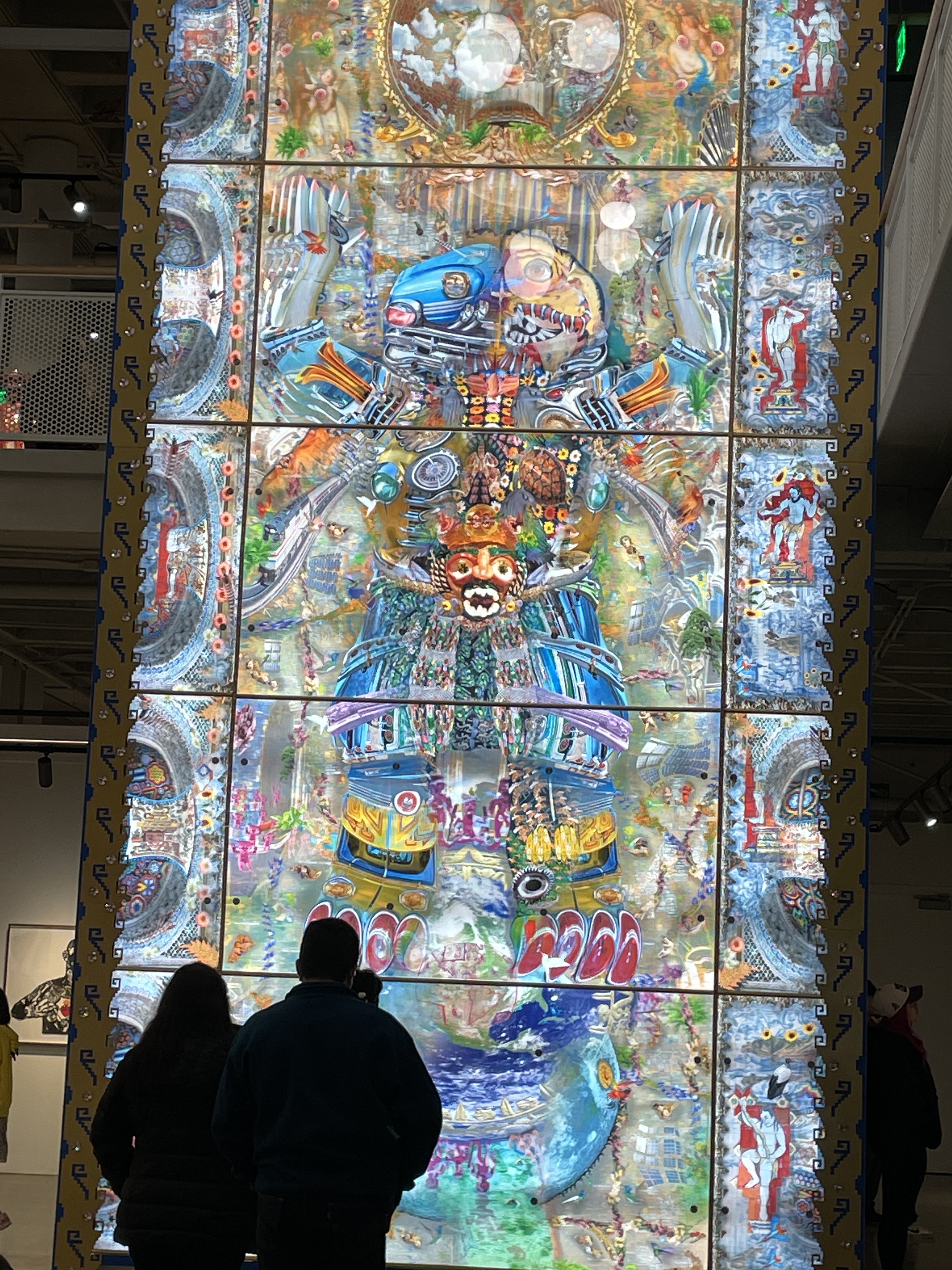
This is what you see when you enter the door; it is two stories high and multidimensional. Look how different the next photo of it looks from this one.

Walk farther to the side and it looks totally different again.

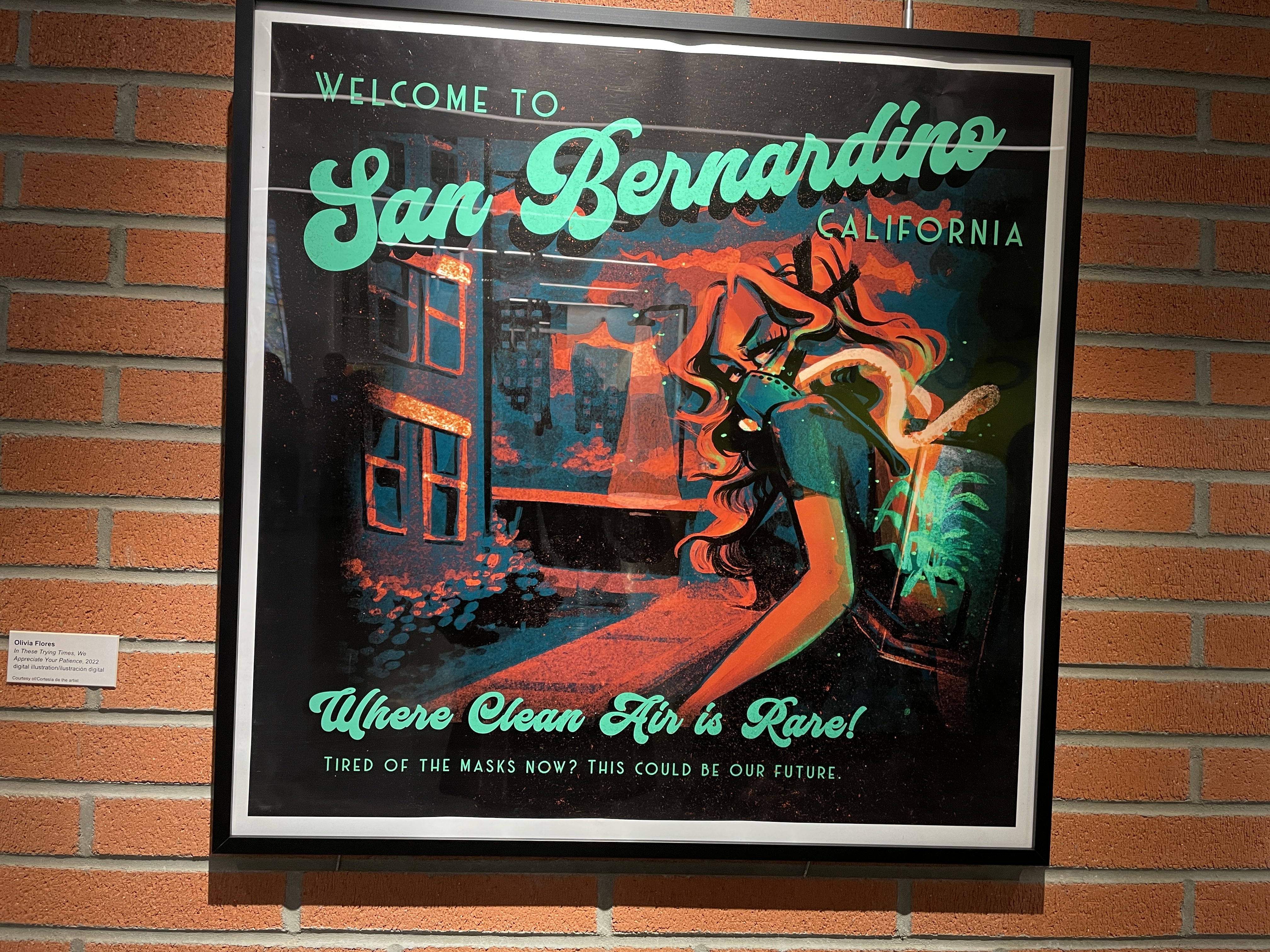
This speaks for itself. Right now where I live the air is clean enough that unless it is foggy, I can see all the way to downtown LA 30 plus miles away.

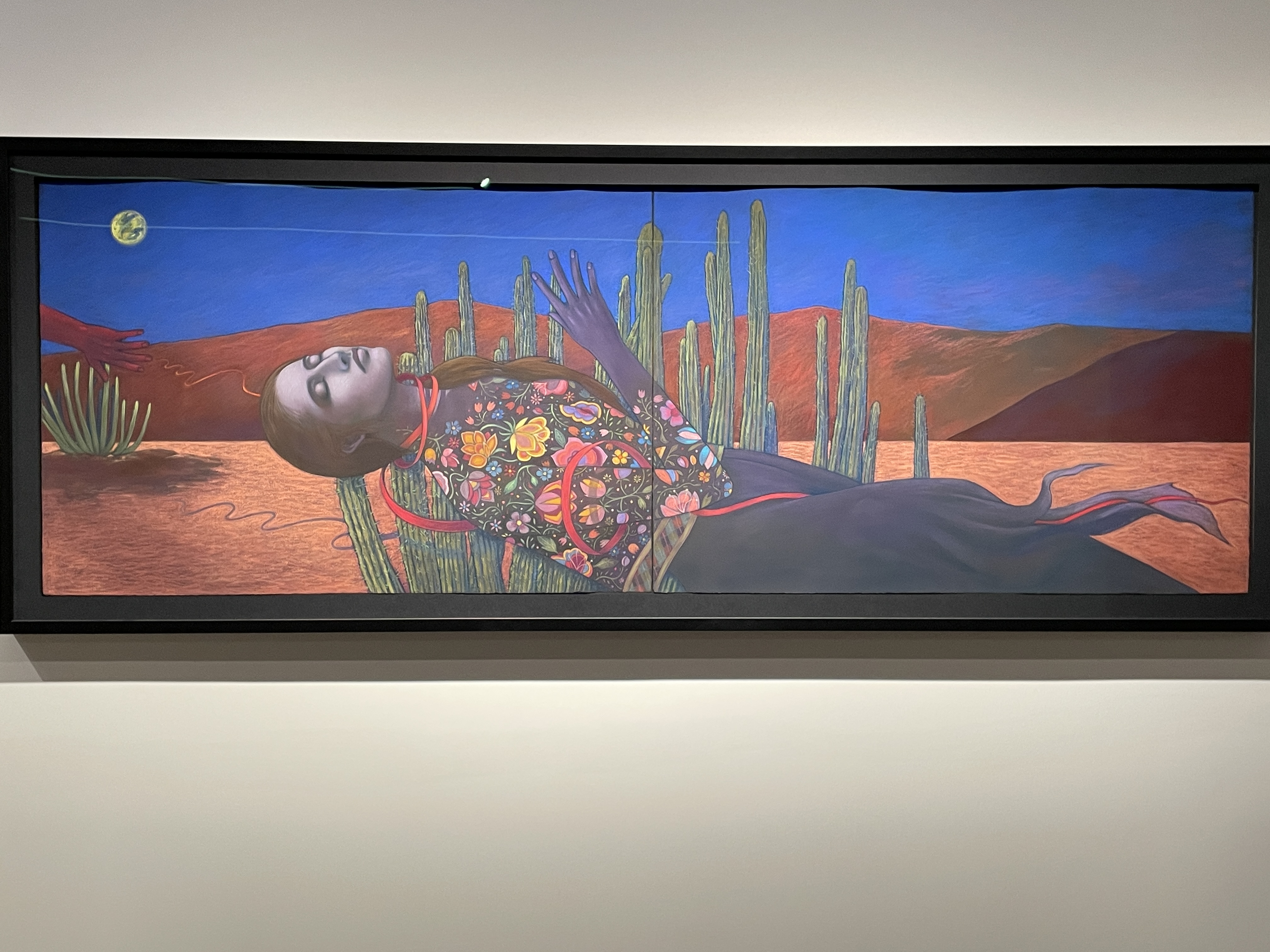
All the art at this museum has a message; much of it illustrates the ills of society.

The influence of indigenous art, e.g. Aztec, Mayan, can be seem in much of the art and the statements the art makes.

The woman above and the woman below hang next to each other.

The Riverside Art Museum


On January 2, my grandson, D’mitri, his girlfriend, Landri, and I went to The Riverside Art Museum and the Cheech in Riverside, California. This post includes what we saw at this museum. Later I will share photos of the art at the Cheech.

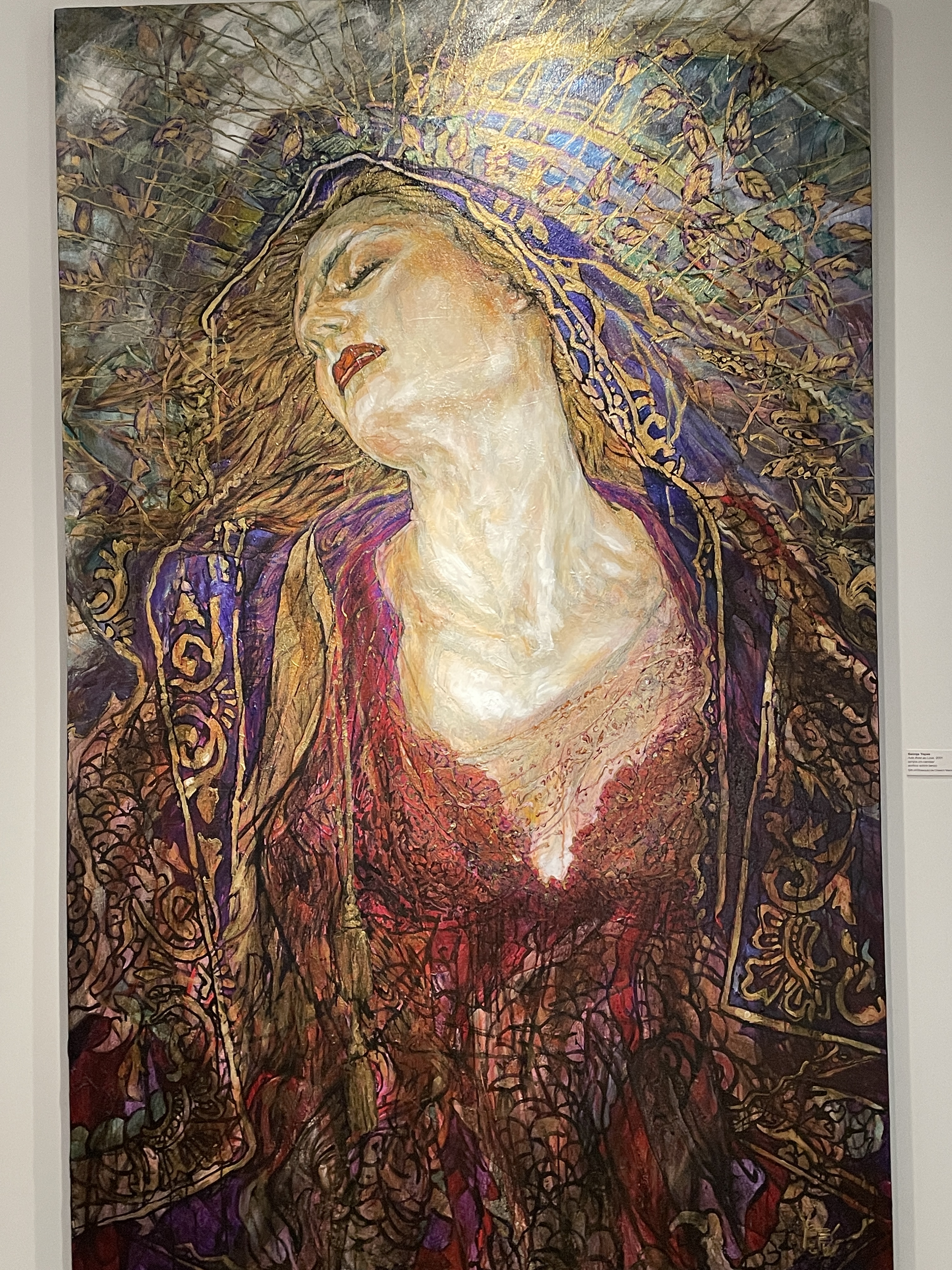
All the art seen in these first photos is by this Turkish-Mexican American artist. Here she explains how and why she interweaves the various parts of her heritage.

The next gallery room contained hundreds of photos from the 1970s in LA and surrounding areas. Although LA certainly is not the perfect place, improvements since that time are evident in the photographs. Here is a photo about that exhibit.

The next gallery contained art of the Joshua trees. The paper used was made of Joshua trees.

The following photos were taken in a hallway above the patio garden and in a smaller adjoining gallery.

The title of this one is The Future.

The galleries are all arranged around this patio.

The Murals at Mendez High School


Every Wednesday I visit Mendez High School in Boyle Heights near downtown LA. I volunteer as a college counselor for College Match LA. The school is named after the couple who, in 1946, sued for equal education for Mexican children and won.

This is the couple and the school mascot is the jaguar.

This explains the ruling that gave Mexican children equal educational rights.

View of downtown from in front of the College Center area where students go to get help with college applications, learn from presentations by admissions officers from different colleges, and work on college and financial aid applications.

Thanks to the two guys sitting here chatting for giving me permission to take this photo.

When I asked who did the murals, I was told that students did them in conjunction with an art class several years ago.

Reception for the New Exhibit at The Getty


Monday evening I attended a private reception at The Getty for photographs taken by teens to reflect their reactions to the pandemic and the shut downs. This first photo explains the exhibit.

I was able to attend because Faith Mowoe invited me. She is my daughter’s cousin and teaches English at a high school here in California. Usually The Getty is closed on Monday. We arrived early hoping to be able to walk around a bit, but they did not allow anyone to enter until 5:30 so we strolled around the gardens near the parking lot. You cannot drive up to The Getty. You have to park in the parking area which costs 20 dollars and take a shuttle to The Getty which is otherwise free.

This and the next few photos were taken at the gardens near the parking lot.

The Getty sets on a hill overlooking portions of LA in all directions. The red on top of the mushroom like pillars in the this photo is bougainvillea.

The amount of stone in the buildings is huge. The Getty comprises several different buildings including several filled with art, others for research, and a theatre.

This photos shows one of the teen photographers. This one is from Ohio. The following photos illustrate the teens who were chosen out of the more than 1600 entries.

We briefly met the young lady in this photo. Many of the students who took the photos were present and honored by the sponsors of the exhibit.

After eating–the reception provided all sorts of delicious treats, wine, beer, water, and various others drinks–we strolled into the gardens.

Posters have been made from the teen photographs and will be available for purchase.

The Getty is astonishing. I was able to see only a tiny portion of it. Definitely a place to see if you come to Los Angeles.