Annually, I make a pilgrimage to this ancient place where people hunted on the shores of a lake nearly 12,000 years ago. It continues to be the oldest evidence of human habitation in the Americas. For a large part of the twentieth century it was a gravel pit. The gravel mining created both positive and negative consequences. Without it, the bones of giant bison, mammoths, dire wolf, saber toothed cat and camels might never have been discovered at all. However, because the owners of the quarry refused to stop mining, some portions of the site were destroyed by big swoops of the excavator machines. Frequently archaeologists worked simultaneously along with mining operations, continuing within sight of each other. Various groups, including some private individuals, attempted repeatedly to buy the site to save its precious stash of bones, artifacts, and ancient wells. The owners refused to sell. Finally, in 1978, Eastern New Mexico University purchased the site and continues archaeological excavation there. They also run the nearby museum adjacent to the university football stadium.
If you expect something wondrous and grandiose, you will be severely disappointed. A small building houses a teensy museum, restrooms, a few sweat shirts and posters and books for purchase. An individual sits by the door to take your meager entrance fee–at most five dollars–and answer questions. These individuals explain they are majors in disciplines related to the site, archaeology, paleontology, anthropology, that sort of thing. A simple gravel trail traverses the site and a smaller trail goes to an ancient well–16 have been found at or near the site–and to a dig inside a building where you can observe the layers unearthed, which group of people left which type of artifacts, and actual bones of mammoths, giant bison, and other animals from the end of the last Ice Age.
People react differently to such sites. I always remain entranced, overwhelmed, reflective, thinking to myself, “I am walking where people walked and hunted and went about their lives more than 11,000 years ago.” The most ancient evidence of people is labeled Clovis Man–Clovis, NM, is just up the road. They never found human bones of these people here , just their spearheads stuck in the ribs and shoulders of mammoths which stood 15 feet at the shoulders. The people who came later made a different type of spear, called Folsom points. These people, Folsom Man, lived later by 1-2 thousand years. Another site, called Folsom, is near the tiny town of Folsom, NM, farther north at the edge of the mountains. This site is on private land and tours are available only twice a year. Although I visited the town last year, I have not visited this site. Other people arrived later and although the collection is smaller, their spearheads remain available for viewing at the nearby Blackwater Draw Museum on the main road between Clovis and Portalis, NM.
When I look at the list of animals who lived here at the end of the last Ice Age, I feel amazed because they include both camels and horses as big as our horses now. Both of these became extinct as did the saber toothed cat with the humongous canine teeth and the dire wolf. Giant sloths lived until modern times but nowhere near New Mexico. How could all these animals live here? It was wet and green then. Until the last couple of decades, bodies of water of varying sizes have drawn animals and people to this area. Giant fields of irrigated corn and dairy farms lowered the water table sufficiently to eliminate any evidence of water. At the time of Clovis Man a large lake covered the site. Later, during a 3000 year drought, people dug the ancient wells to reach water. Because this remained the only place for hundreds of miles with a supply of water, people came.
The trail begins just to the northwest of the tiny building and goes along the top for a couple of hundred feet before it drops down into the gravel pit remains. The gravel was below all the layers containing human artifacts and ancient animal bones so the pit is wide and deep.
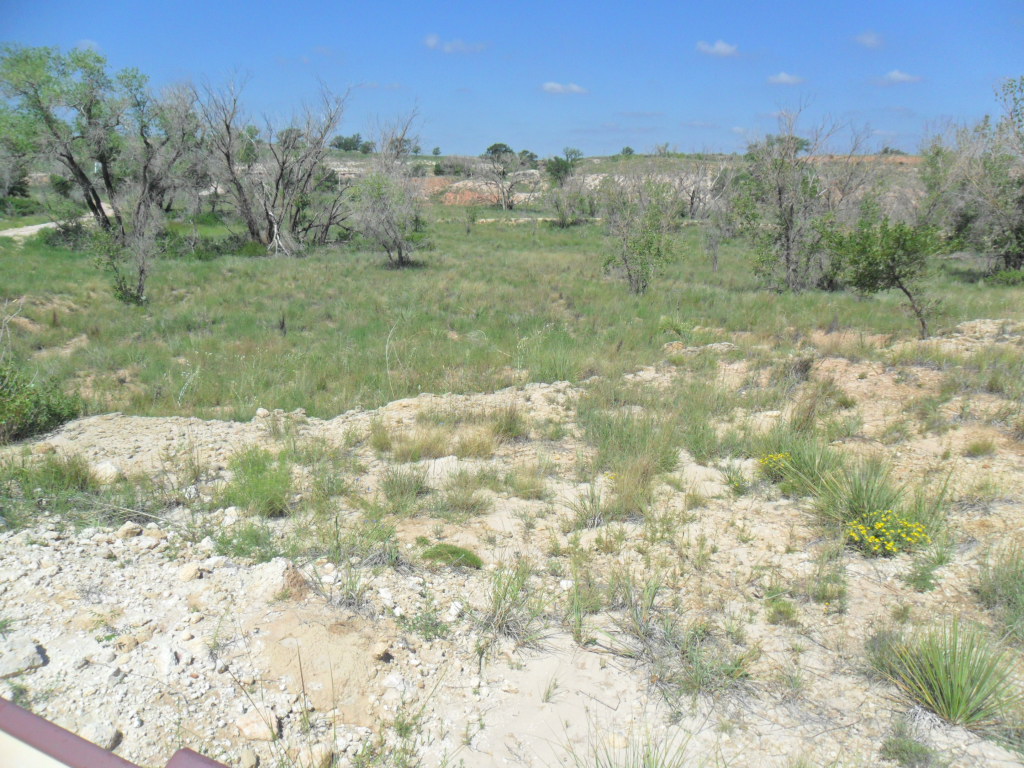
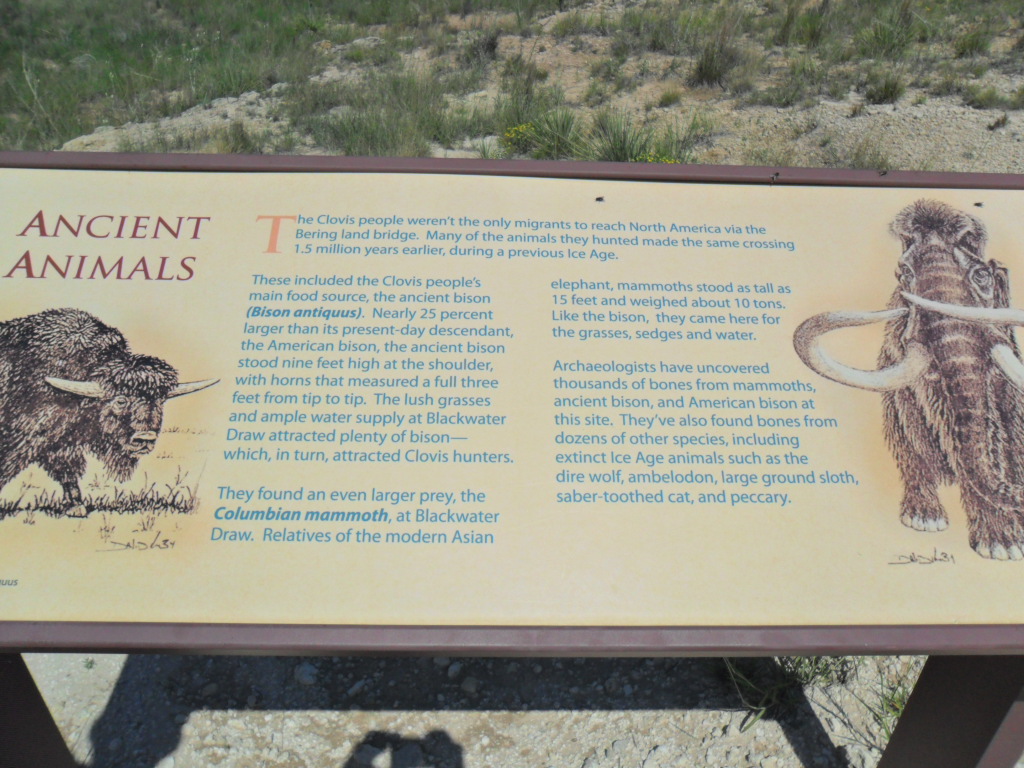
If your sight is good, you can read this. The primary source of food for Clovis Man, giant bison and Columbian mammoths, came here for the water. Archaeologists theorize that hunters often killed these huge animals while they were in the water where it was more difficult for them to escape and move quickly. In one place on the trail, evidence of a five bison kill complete with spearheads makes one think just how difficult and dangerous this hunting activity must have been. I stand there, think about my own 5’4″ height, and wonder what it would be like to have a Columbian mammoth close to me. Doubtless many died from injuries during such activities.
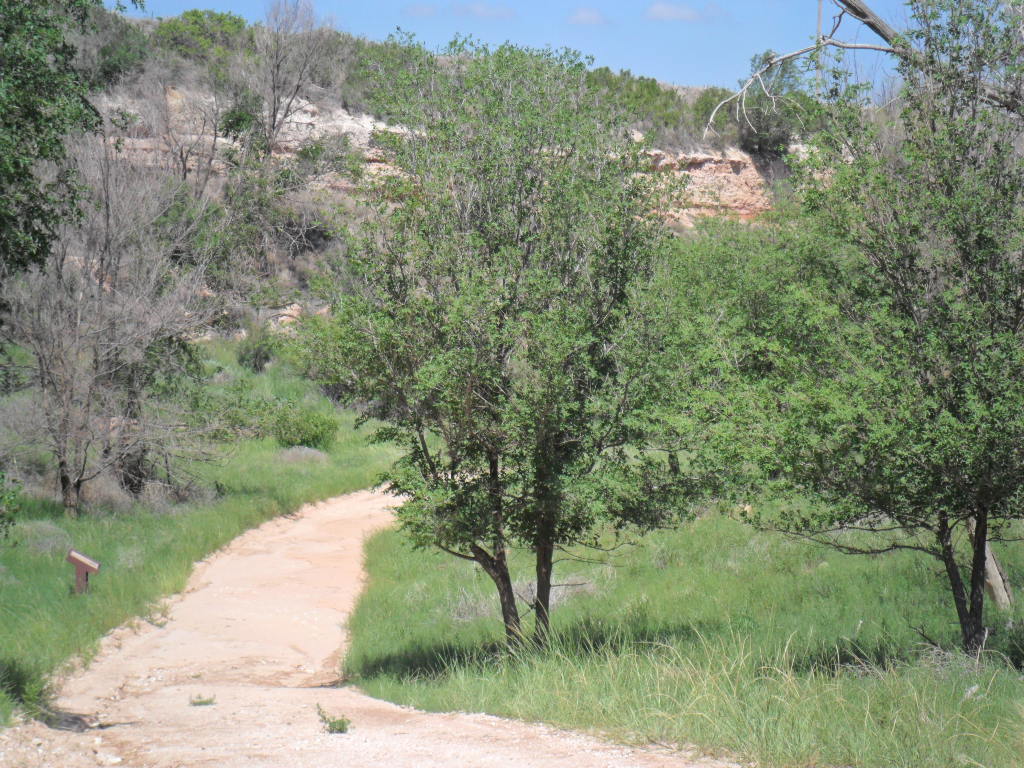
The train meanders along the bottom of the gravel pit. This year, plentiful rain grows abundant grass. During the last several years, little rain has fallen as evidenced by all the dead trees and bushes scattered around the site. Normally, this area is semiarid with less than 18 inches of rain per year.
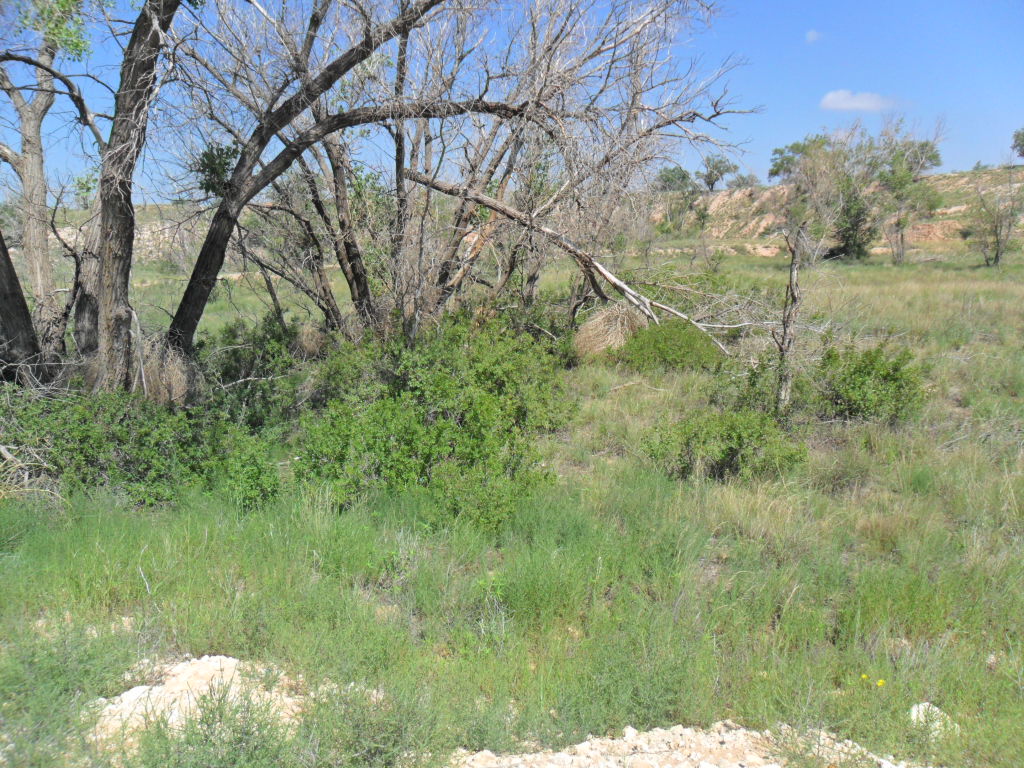
If spectacular scenery appeals to you, do not go here. Most of the bones and artifacts were found in the layers at the sides of the pit. As you walk the trail, markers indicate the location of findings. Few human remains are found at such sites because these were not permanent settlement places. Ancient peoples roamed the land in search of water and food.
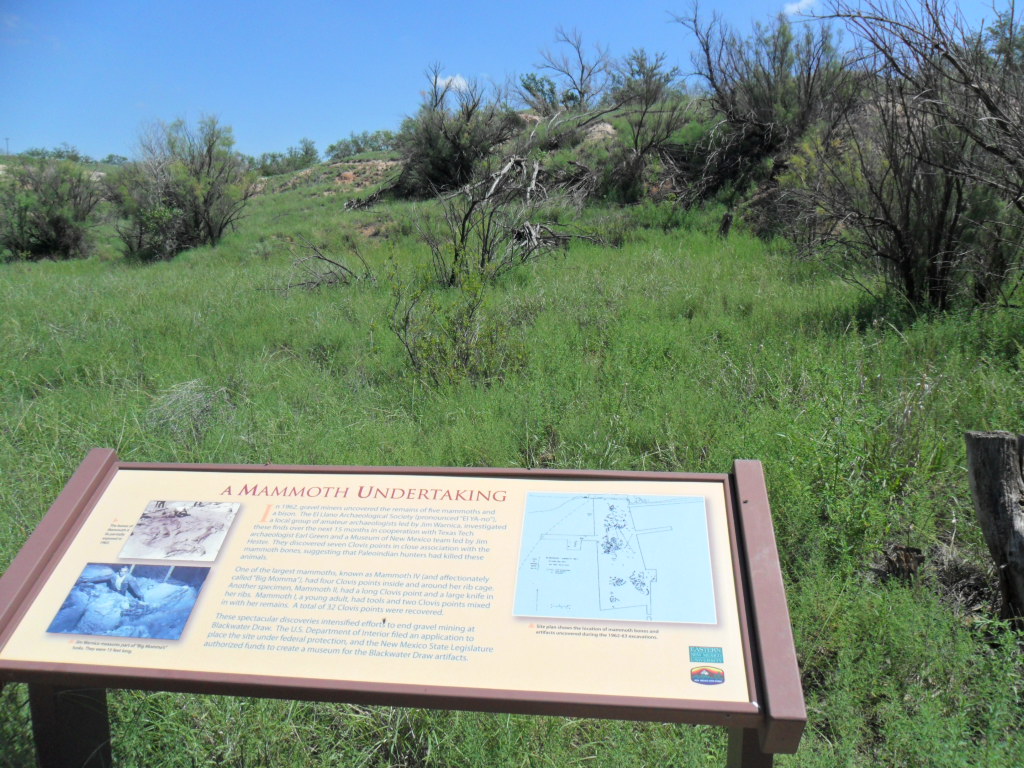
Signs, such as this along the trail, illustrate different places where specific bones and artifacts were found. They also explain the different types of artifacts, their specific uses, and the history of the site. Maps, like the one on this sign, help the viewer hone in on specifics in relation to where one is standing. The photo illustrates archaeologists in action during site digs.
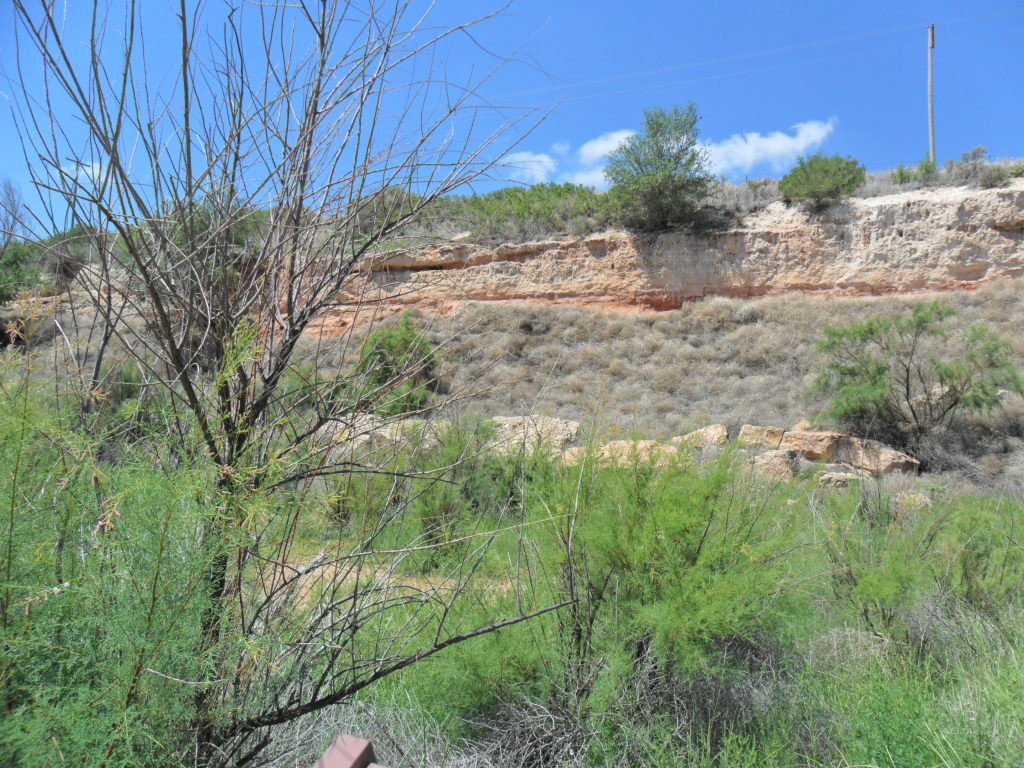
Cliffs, like the one here, surround the site. In these small cliffs each layer indicates a different age of human activity by not only the type of sediment but also by the type of artifacts and animal bones found. Just beyond this particular cliff at the west edge of the site, irrigation pivots run in a huge corn field. The grey at the bottom of the cliff indicates an immense pile of dead, dried, tumble weeds. This is dry country.
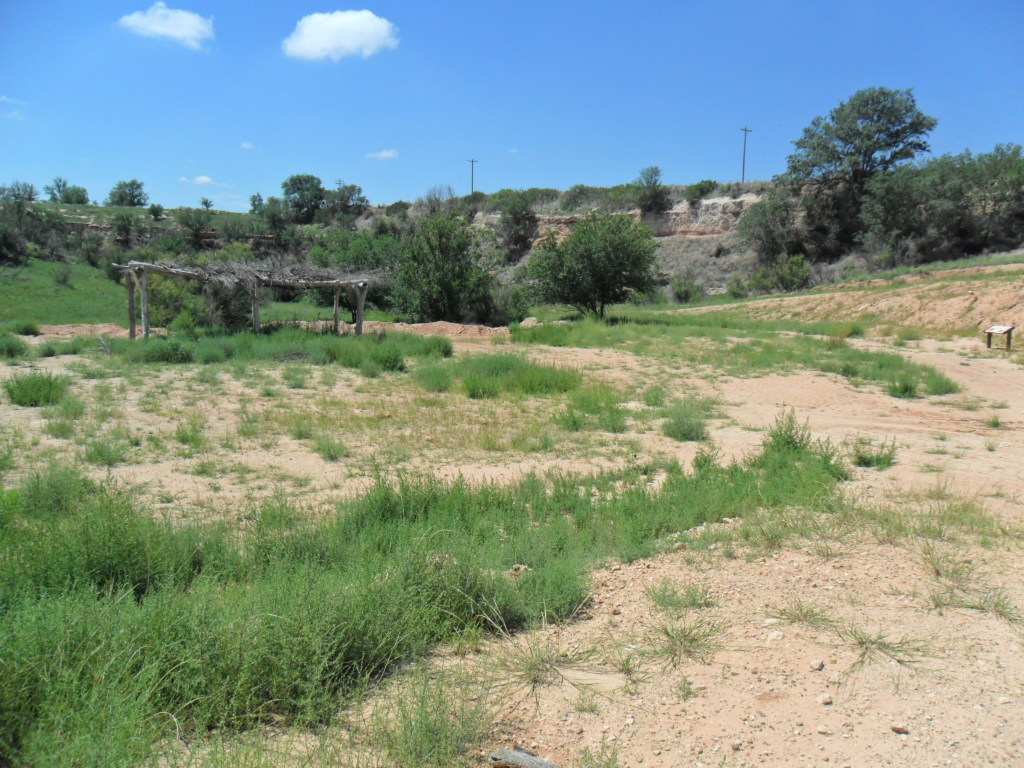
Approximately three fourths through the trail, the site mangers have erected several structures. This one is the most primitive. Others are modern with picnic tables and in one place I saw a giant sand box. Guessing, I think it must be used to illustrate how one sifts through layers of soil to carefully remove spearheads, bones, pottery, etc. This is the perfect place for a field trip, not too long, but full of geological and paleontological information.
I go here usually once a year. If you ask me why, I may articulate something about how it has the oldest artifacts and bones found in North America. The real reason?? I am not quite sure. This place fascinates me, connects me with something ancient and wondrous, something undefined and mysterious.





























 writingontherim