Snowbound


This prose poem recently appeared in the latest “Story Circle Journal”.

419367_2650520196146_2132320757_n

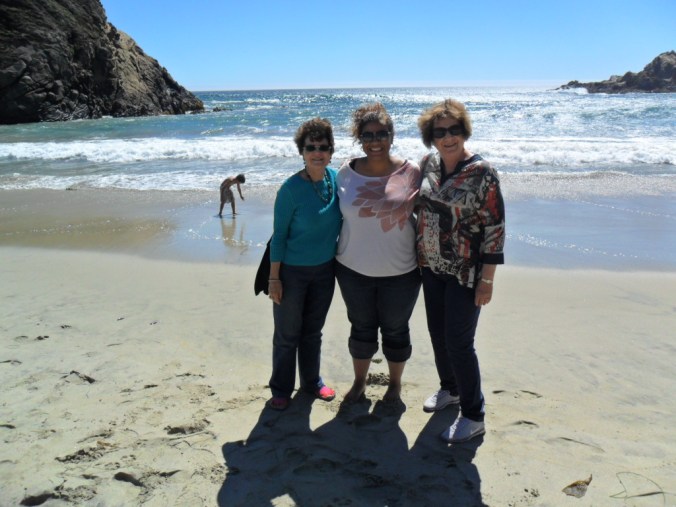
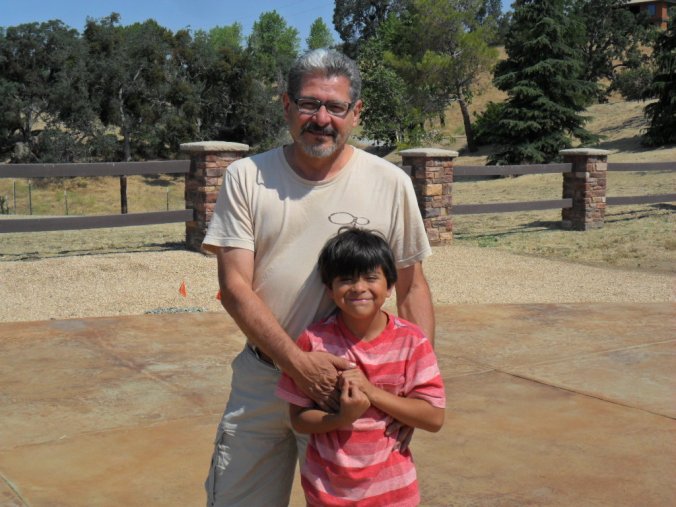
They’re young; they’re handsome; they’re mine for six months.

Two seventeen year old South Americans.  The Brazilian has never

seen snow.  It snows two feet in less than twenty-four hours, wind

shrieking along the canyon rim, drifts piling four feet high, roads

closed.  Even the snow plows give up.  We’re house and barn bound.

Horses need food.  We all pitch in, climb through drifts, shovel.

Schools never closed are closed; offices closed.  No lights on the road.

Two days later it takes us an hour rocking back and forth in the green

Off Road 4X4 truck to go the one eighth  mile to the main road.  After school

and work we leave the truck near the road  and trudge down the long hill

to the house.  By flashlight we struggle  back up the next morning, trying

not to fall.  Even boots fill with snow.  That evening, the boys insist

we drive all the way down to the barn.  I start to fix dinner.  They tell me,

“We’ll be back in an hour.  We aren’t going through that again!”

They shovel tracks for the truck all the way from the barn to the main road.

I miss them, especially in winter.

Day Trip to Lake Marvin and Canadian, Texas–Part Two


After eating lunch at the elementary school, two of us decided to go to the museum for which Canadian is famous, The Citadel.  Originally a Baptist Church, it lay in total disrepair until Dr. Abraham and his wife bought it, totally restored and converted it into their residence.  They gave it to the town as a museum and moved into another Victorian house which they totally restored.  The location of The Citadel currently contains the house, a gift shop, and another building which houses an art gallery.  First, you go to the gift shop to purchase tickets.  On this particular Fall Festival weekend, the Abrahams also open their actual residence to the public and take you on a personal tour themselves if you so desire.  Given my limited time, I purchased a ticket only for The Citadel.

SAM_1348

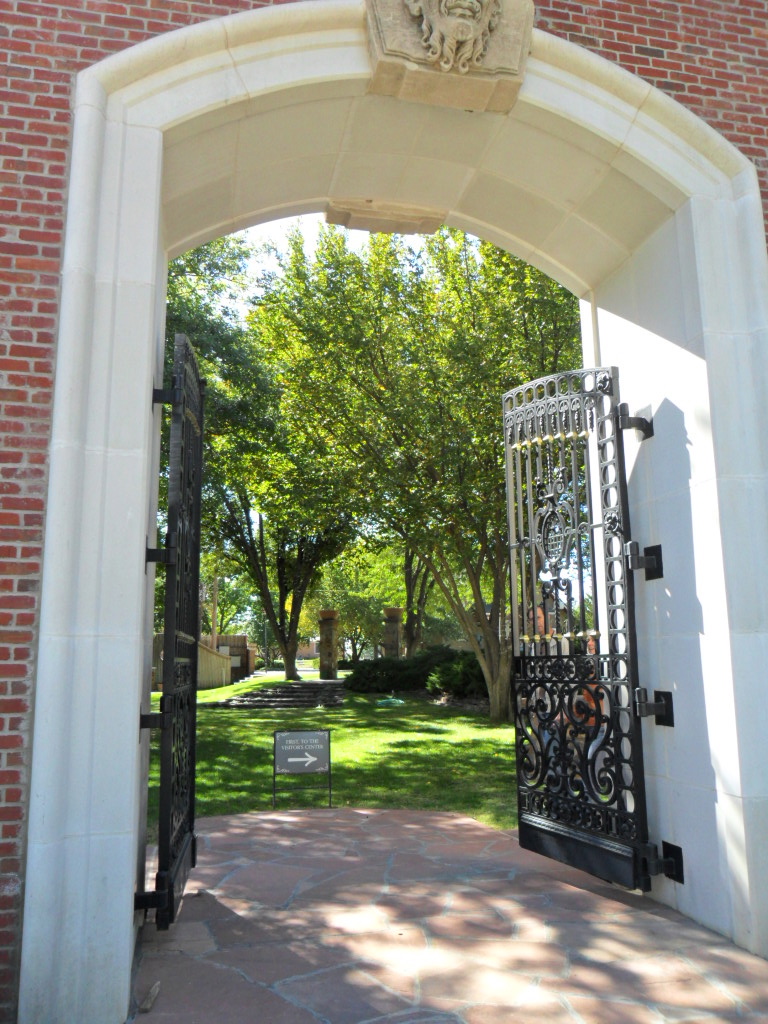
This door is one of the first things you will see if you walk to the entry gates from the south of the house.  Everything remains elegant, ornate and in a style one does not often see in this part of the United States.  Canadian is an exception; fancy, old houses are everywhere.

SAM_1350

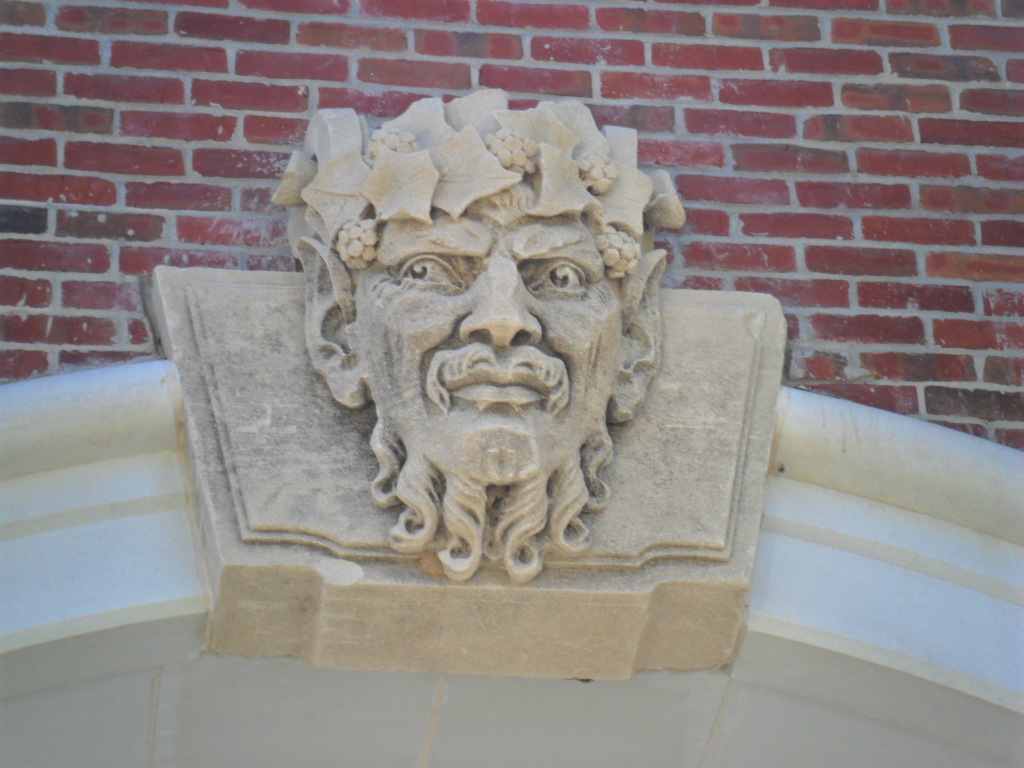
The entry gate, looking across the lawn, provides a view of the property from front to back. Below is the face above the gate.

SAM_1351

SAM_1353

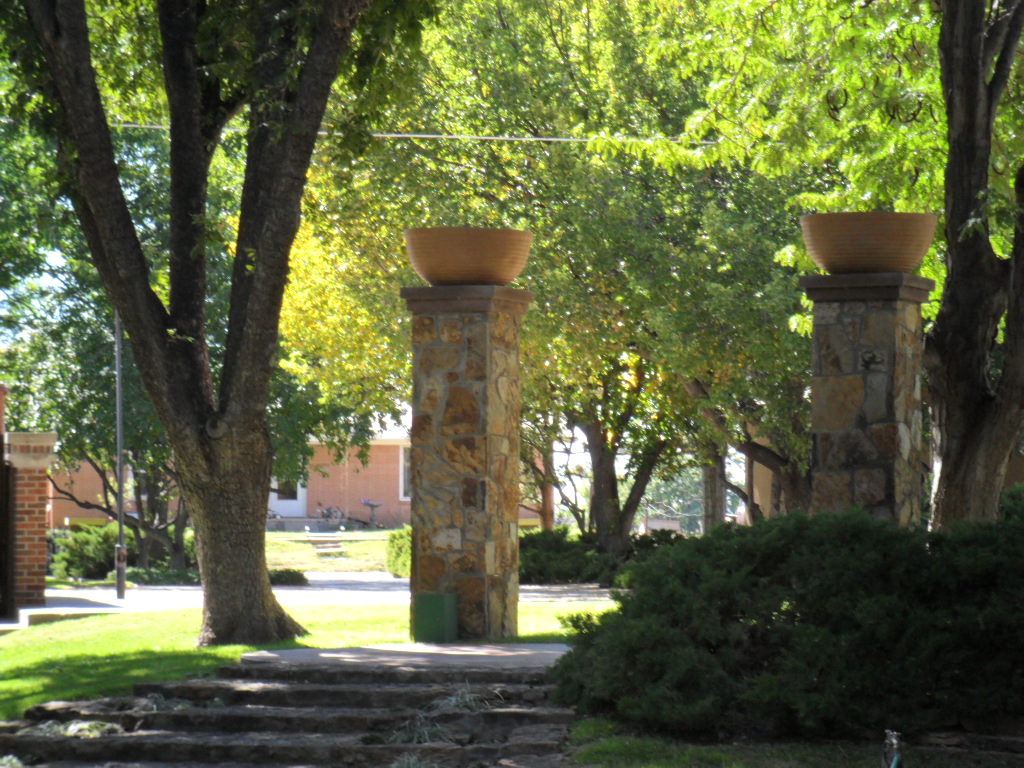
These columns stand one block back from the entry gate.  The property equals one square block.  This quotation is inside the entry gate to the left.

SAM_1352

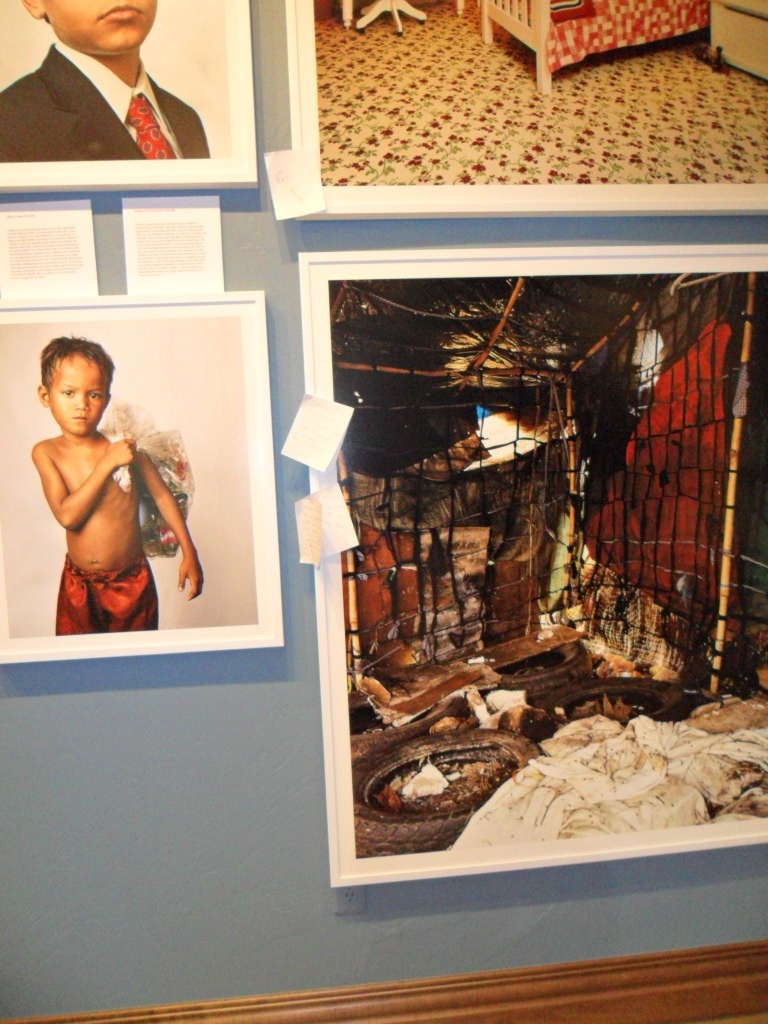
After buying my ticket at the gift shop, I headed to the museum and found the current show astonishing, impressive, and frequently hauntingly sad.  The entire gallery houses the photography of one person, James Mollison.  This young man decided to go to various countries taking photos of children and their bedrooms.  The complete collection was available for purchase in a book with details about the author’s interviews with all the children he photographed.  I bought one for my grandson.

SAM_1361

Although some of the photos showed children with beautiful bedrooms, living in relative ease and occasional opulence, most of the children lived in squalor or had no place to live at all except the street.  The boy below lives in Nepal. His entire family live in this room.

SAM_1354

SAM_1356

The boy above lives in Cambodia.  They live in a shack above a river. When it rains a lot or flooding occurs, they have no place to go and everything floods.  The river provides water, food, washing, everything.

SAM_1358

This boy in Brazil lives and sleeps on the street.  If he is lucky, he finds a sofa outside on which to sleep.  To eat, he has to steal.

SAM_1359

Living in Italy remains anything but easy if you are Roma.  Although he has a family, they have no place to live so sleep on this mattress outside, the entire family.  Harassment necessitates frequent moving.  They live in a constant state of fear and desperation.

SAM_1360

From a tribe in the Amazon, this youngster actually lives with family and they do have a place to live.  However, modernization and the drive to harvest the various natural resources there threaten their traditional life and homeland.

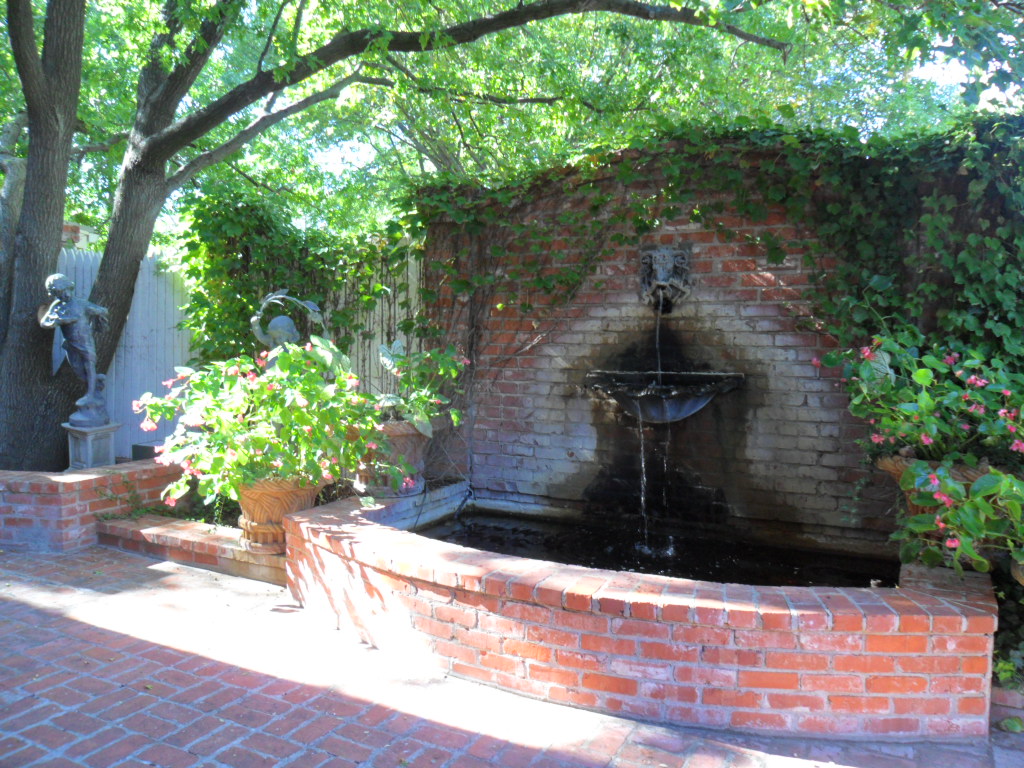
After leaving the art gallery I headed across the lawn to the house, taking photos along the way.  This fountain is in a small side yard, just inside the gate.

SAM_1363

SAM_1365

Once in the house, you can take photos but unfortunately with no flash.  Without a fancy camera, I gave up the idea of photography while in the house and just enjoyed the beauty of the art, the furniture, the exquisite rugs, one of which especially caught my eye.  I love rugs and own a few from Iran, Afghanistan, Egypt, and a couple of Zapotec runners.  I am especially fond of rugs from the Middle East and know a little about them,  sometimes roaming  around rug shops for the joy of rug viewing somewhat like going to a museum to look at the art.  However, never have I seen a rug anything like the one that lay before me.  Entranced, I stared in awe.  First, the rug was huge; it filled the entire master suite.  In the center a shepherd and sheep stood with lions, deer, and various other animals around the border.  I found one of the ladies helping with tours; she knew nothing about the rug and sent me to the lady in the gift shop.  She didn’t either and told me to go down the street five blocks to where Dr. Abraham currently lives and ask him.  I informed her that I did not have a ticket to tour there and tour time was running out.  She told me to go anyway.

Mrs. Abraham provided a warm greeting. I explained I was ticketless and had only come to find out about the rug.  She told me an identical rug had been in the house where her husband grew up. However, the rug at The Citadel was not that rug.  Dr. Abraham’s brother  inherited the original rug when their father died.  She indicated they had bought the rug at an auction.  For more specifics, she instructed me to find Dr. Abraham in the kitchen.  When I found him, he was explaining to others about the tiles. I waited. He seemed delighted with my interest in the rug and told me about it.  His family was originally from Lebanon.  An identical rug was, indeed, in the house where he grew up.  In fact, he and his siblings used the rug for games they invented, hopping around from animal to animal. By the time his father died, the rug had become quite worn from all this use and his brother did inherit it.  Dr. Abraham loved the rug and was delighted when someone told him that they thought a similar, if not identical, rug was to be auctioned off in New Orleans. He went to the auction and purchased the rug which is in much better condition than the one from his childhood. He told me he knew little about rugs, but was quite sure he had been told it was from Damascus.  Since the trip to Canadian, I researched rugs a bit,but cannot find the origin of this rug.  I intend to keep trying.

All this exploration with the rug caused me to leave Canadian considerably later than planned. The drive from Canadian to Miami, Texas, provides somewhat dramatic scenery typical of much of the west with an occasional richness of trees and green quite unexpected and delightful.  The following photographs were taken during this drive.

SAM_1366

The Canadian River with the bluffs on the other side.

SAM_1367

SAM_1368

It appeared as if someone had built a cairn at the summit of this odd little hill.  In the middle of nowhere, who could I ask.

SAM_1370

Day Trip to Marvin Lake and Canadian, Texas–Part One


Two weeks ago, I joined the local Native Plant Society group for a trip to Lake Marvin east of Canadian, Texas, near the Oklahoma border.  Lake Marvin is located in the Black  Kettle National Grassland  which includes land in both Texas and Oklahoma. This national grassland’s name comes from the Southern Cheyenne Chief by the same name.  An aging chief, he had attempted to make peace with whites and had been guaranteed protection by the head officer at a nearby US Army Fort.  He, along with old men, children, and women was massacred by Lt. Colonel Armstrong Custer and his troops in Custer’s first great “success” as an Indian fighter.  It was an easy battle; the Indians had been assured their safety at this encampment.  They were totally unprepared.  Black Kettle attempted to meet the soldiers and flew a white peace flag as well as a US flag over his teepee. He and his wife were mowed down in a barrage of bullets.  The massacre is called the Battle of the Washita because the Indian encampment was on the Washita River which flows through the grassland.

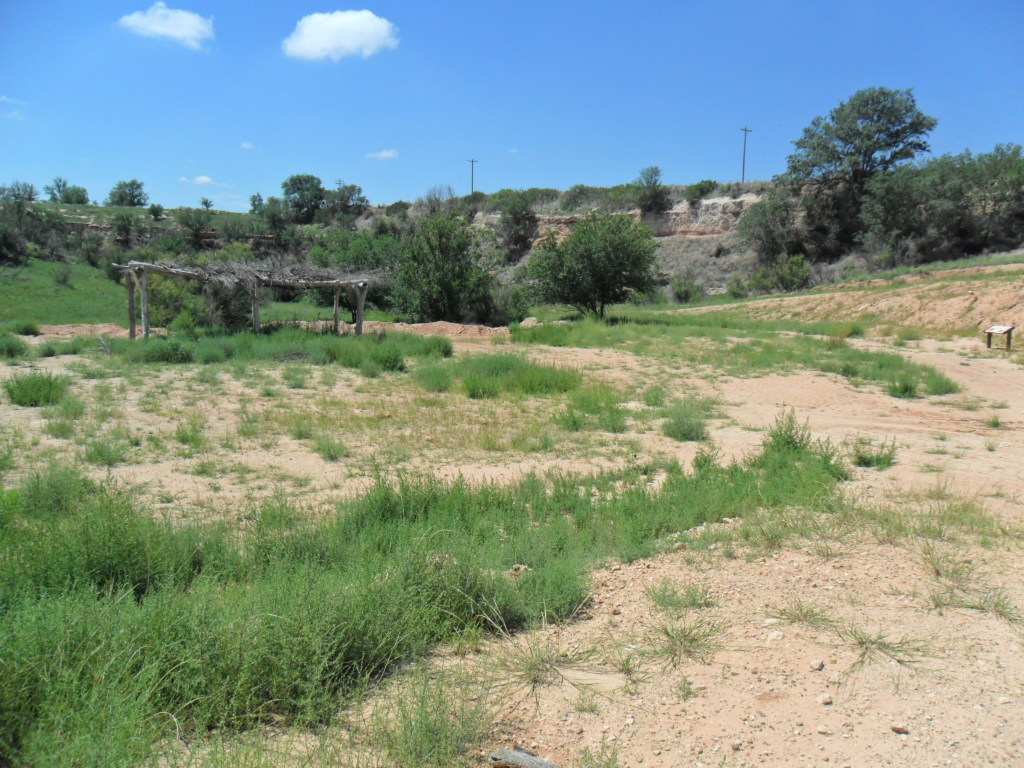
Those of us who live in the Panhandle of Texas become accustomed to the lack of trees and semi arid climate.  It is always a huge surprise to find those rare spots with numerous trees, water, and thick vegetation. Lake Marvin and much of the area near Canadian provide a total contrast to what we usually see.  JR  Bell, an expert on native grasses and plants, lead the hike around Lake Marvin, a manmade lake constructed for conservation purposes in the 1930’s on Boggy Creek.   Regretfully, I failed to carry a pen and pad to write down the name of all the grasses, some of which exist in the area where I live and others I had never seen before.  Perhaps some of you who read this will be able to identify the various grasses which include blue grama, side oats grama–the state grass of Texas, little blue stem, and two other species of blue stem, switch grass, buffalo grass, and wheat grass.  Unfortunately, Johnson grass, a non-native,  invasive species, also grows near the edges of the lake.

SAM_1321

The hike began near what was once the water’s edge before silt and drought made the lake half its original size.  Johnson grass, the outsider, is not too difficult to identify because of the bright maroony red on the leaves.  This enables an non-expert like me to differentiate among Johnson grass and a few other similar looking species.  While I tried to listen and watch grass identification, rather quickly I realized that without pen and paper remembering all of them would be impossible so I focused on photographing the natural beauty surrounding me.

SAM_1326

SAM_1323

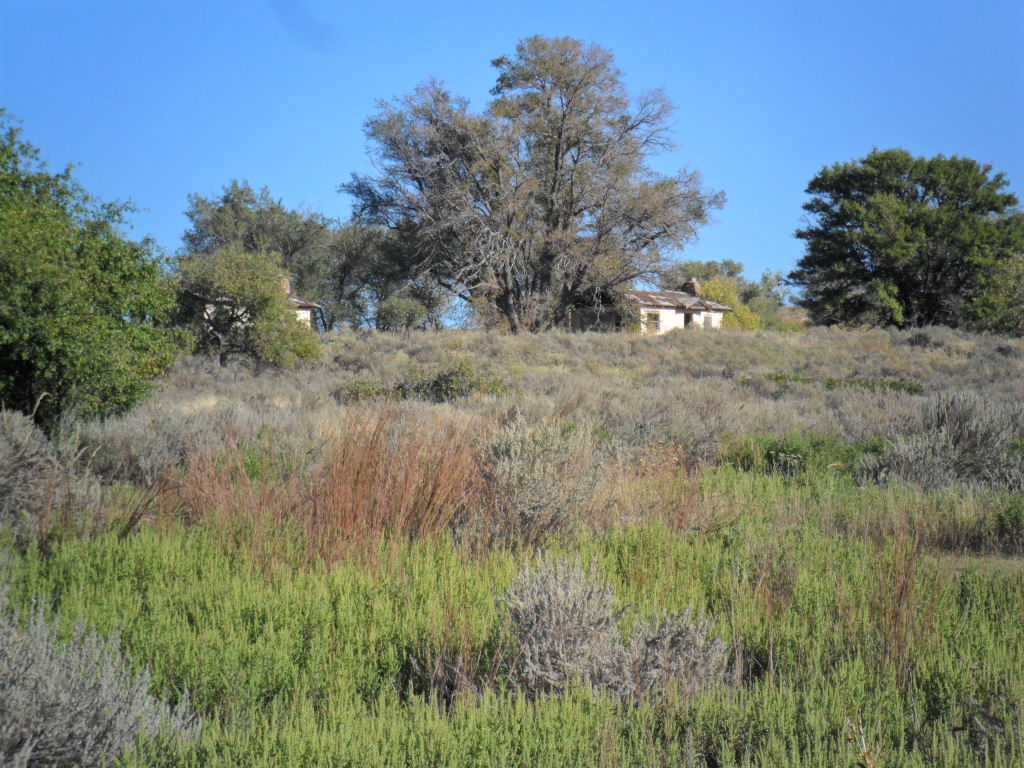
No one told me the origin or purpose of the abandoned buildings up the hill from the lake.  The change in flora one sees by facing the hill rather than toward the lake is amazing.  One could almost draw an imaginary line with certain grasses and shrubs on one side and totally different ones on the other.  The magic key, as always, is water.  Where I live, two hours away, no sage brush grows.  Here on the hillside, it grows everywhere with various grasses, some rather small and semi hidden, interspersed.

SAM_1328

I learned several keys to identifying grasses:  seed heads, texture of leaves and stems–some rough and others smooth, size of leaves and stems, some variations in color.  Height helps but does not necessarily determine differences because the same grass species can vary depending on amount of water and type of soil.  The amount and size of the trees continually astonished me, like this tunnel through the trees, something I never expected to see in the Panhandle.

SAM_1330

Where I grew up in northwestern Missouri, huge black walnut trees grow everywhere.  I recall exploring the walnut grove on the farm repeatedly as a child.  I certainly never expected to see them on this little trip.  Suddenly, astonished me stood there surrounded.

SAM_1334

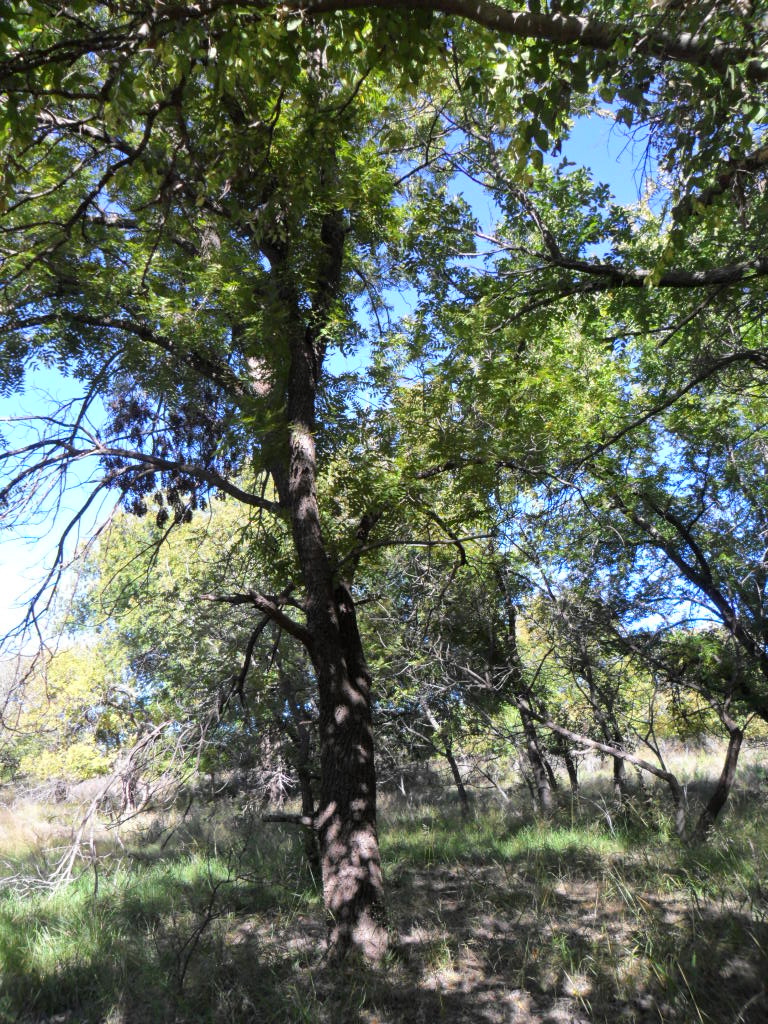
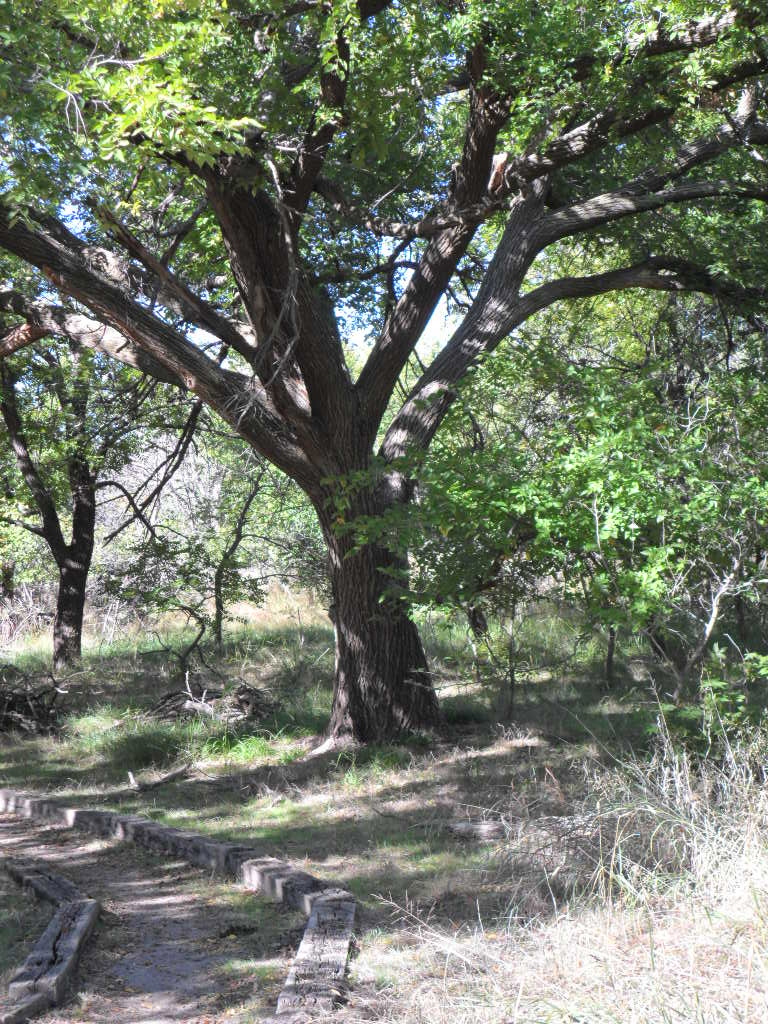
While these trees never reach the size of the ones where I grew up and the nuts remain considerably smaller, here they stood, their distinctive leaves giving them away.  Before I went away to college, every autumn, we picked up the nuts, cleaned them–while the outside is a lovely lime green, the area between the seed and outside, is a sticky, dark brown mess which makes excellent natural dark brown dye, and cracked them to retrieve the meat inside.  Black walnut nuts are much harder than English walnuts and cracking them requires a hammer and something really hard on which to place the nut. After I left home, every year Mom spent hours working on these nuts and brought me at least a pound at Christmas, a true labor of love.  They are especially tasty with in recipes with chocolate or bananas.

SAM_1331

SAM_1332

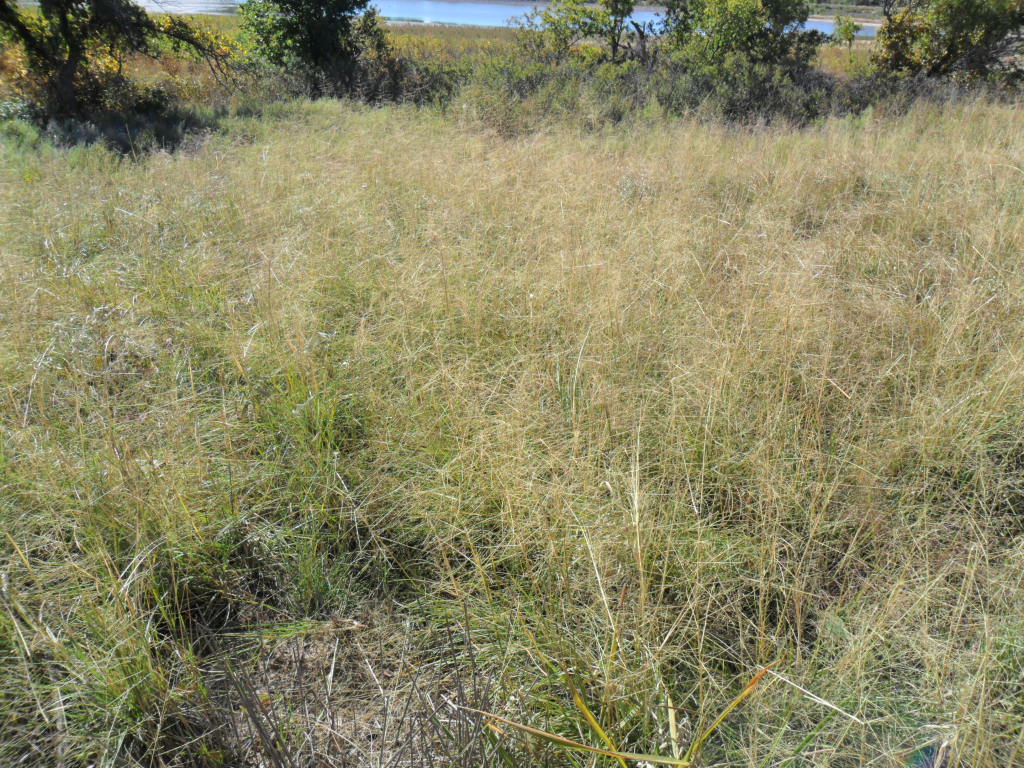
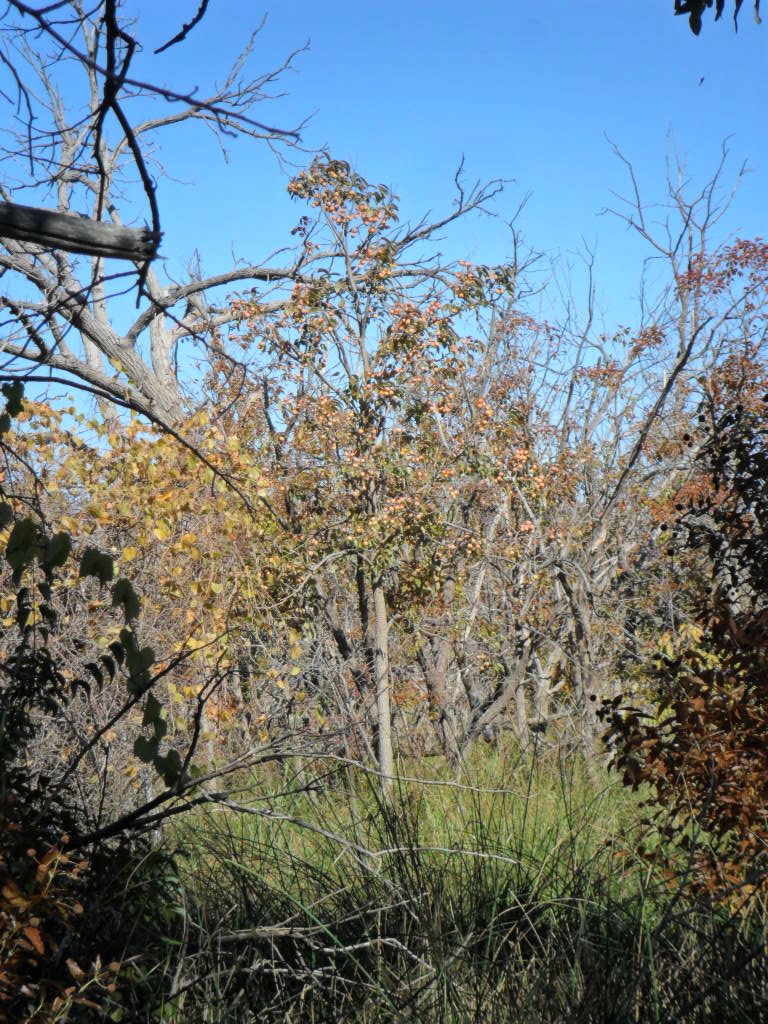
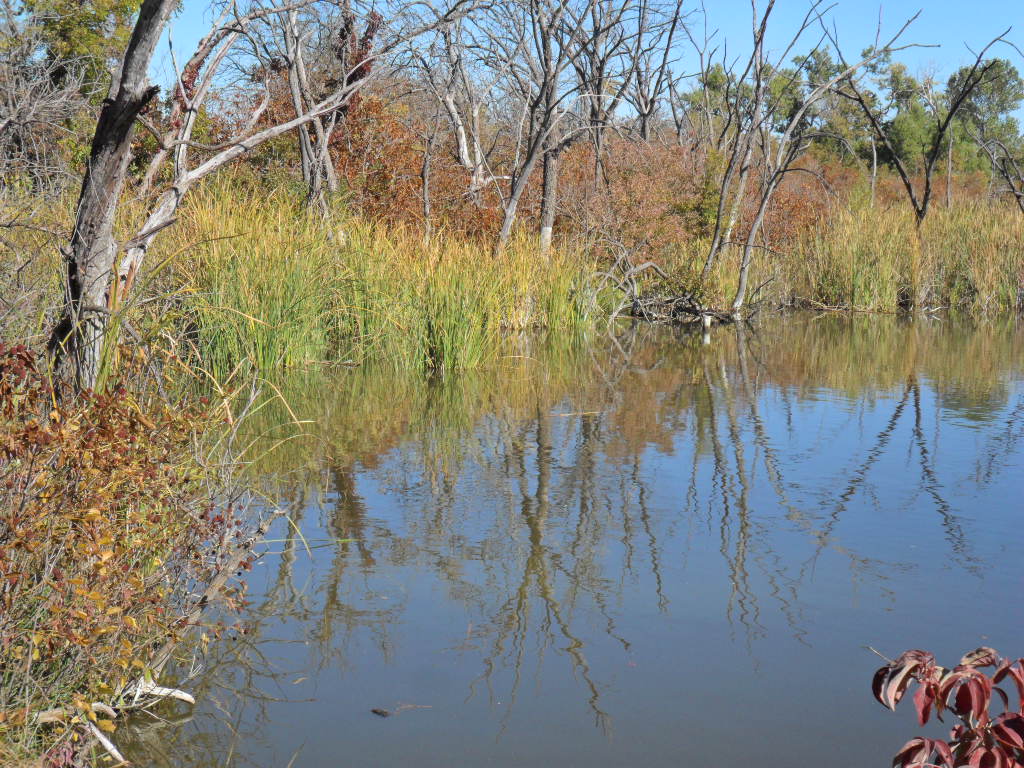
The hike provided continual surprises, a boggy pool, persimmon trees, a plant whose leaves resembled miniature spectacles, a grass so fine and thick in a glade between the trees that it looked like a tiny patch of fog on the ground, and poison ivy.

SAM_1336

Persimmons.

SAM_1343

This particular tree was loaded with persimmons.

SAM_1339

SAM_1340

Cattails in the background.

SAM_1341

SAM_1342

SAM_1344

When I first walked up to this spot, the fine grass toward the back of the photo looked exactly like a tiny patch of fog nestled in a miniature glade among the trees.

SAM_1346

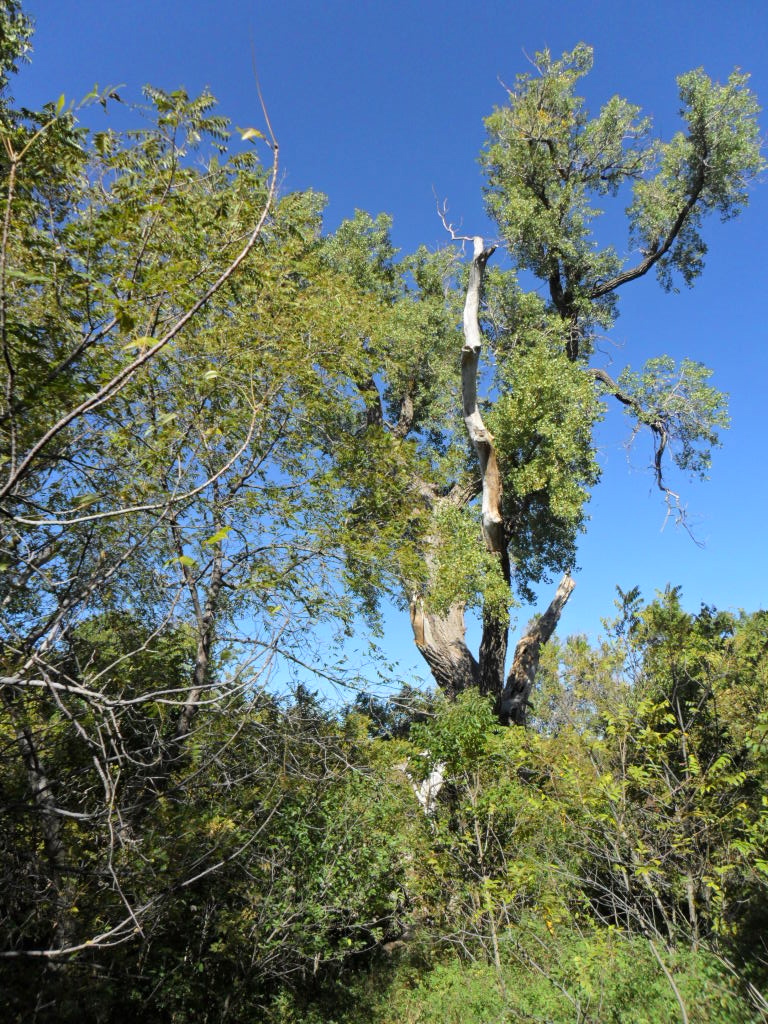
We took off from the main trail especially to come to this cottonwood tree, one of the oldest, if not the oldest, in the Panhandle. Over a hundred years ago this tree stood as the sentinel for the overland trail that went through this area.  The military, ranchers, and Native Americans all used the trail across this area of the plains.  The tree’s height enabled it to be seen for miles and helped travelers keep on their way with accuracy.  Once we reached the end of the main trail, some of the group took off in their vehicles while a few went on around the lake.  It saddened me to see so much of it dried up and old tires sticking out of the dried mud.  However, along the way, we saw numerous trees I could not identify.  The bark of this tree is particularly distinctive.

SAM_1347

This field trip coincided with the fall festival held annually in the small town of Canadian which gets its name from the Canadian River which flows beside the town.  The town is unique in the number of large, elaborate Victorian houses there.  Several of us ended the trip at the local elementary school with a big craft fair and a barbecue lunch.

Geronimo: A Manly Legend, No Women Allowed!


Geronimo: A Manly Legend, No Women Allowed!.  This is from a blog I follow.  If you are interested in Native American history, this is definitely a must read, complete with photos of the Apache women who have totally been left out of most tellings of the Geronimo and Apache histories.  I also recommend the story by Leslie Marmon Silko, my favorite author, which relates another view.  The story is, “A Geronimo Story”.  It can be found in her book, Storyteller.  There is a belief among some that the real Geronimo was not the person captured and imprisoned.  Supposedly, the Apache tried to tell this to the whites, but they refused to believe it.

Bedtime Reading or Not–the Hazara


A lifelong habit that helps me settle down to sleep remains reading.  However, occasionally I delve into a book that turns out not to be so wonderful to read just before going to bed.  The topic turns to the disturbing and then, suddenly, my mind churns.  By that time, it is too late to go back.  Or, like the book I am reading now, parts of it consist of stories inspiring, amusing, enlightening, parables for life.  Then there are the other parts:  the abuse of an entire people by the other ethnicities surrounding them, genocide, turmoil, invasion.  I remain a lifelong lover of libraries.  Recently, while browsing through new books, I found this one:  The Honey Thief  by Najaf Mazari and Robert Hillman.  Mazari grew up in a Hazara village in the northern part of Afghanistan, the area known as Hazarajat, became a master rug maker and fled from the Taliban to Australia in 2000 where he met his now close friend and coauthor.  For several days now, it has been my bedtime reading.

The Hazara people speak a dialect of Farci, the language of Iran.  Data varies, but they number approximately seven million in Afghanistan and remain one of the largest ethnic groups there.  Nevertheless, in spite of this, other groups discriminate against them for various reasons, including the fact that most Hazara are Shia Muslims surrounded by Sunnis.  Until 1893, they were the majority when half were massacred and many fled to live in Iran, Pakistan, and India.  Some believe the Hazara are the descendants of Genghis Khan’s warriors.  Many resemble the people who live in Mongolia today and in many ways parts of their culture resemble that of Mongolia, e.g. their tents look like yurts; no one knows for sure.  They have lived in what is now known as Afghanistan for hundreds of years.  They are people of the mountains who have learned to cultivate beauty and farm in high, inaccessible places.  They are famous for poetry and story telling.  Unlike other women in Afghanistan, they shunned burkas, fought along side men as soldiers, and believed in education for women.  These attributes fueled discrimination by other groups there.

Now back to bedtime reading.  Several stories in particular contain what I consider the necessary qualities for bedtime perusal:  entertaining and instructive without gore, controversy.  They also hold an unusual quality of something you cannot quite quantify, a hint of the mystery of life, of a particular kind of not quite describable beauty.  Hoping that at least some of you will find the book and actually read it, I will first list the stories to read without dread or worry if you want to read at bedtime:  “The Wolf Is the Most Intelligent of Creatures”, “The Music School”, and the “Snow Leopard”.  Under no circumstances read “The Life of Abdul Khaliq” and “The Death of Abdul Khaliq”.  You will, indeed, learn a considerable amount of Afghan history, but unless you are quite heartless and insensitive, you probably will not be able to drift off to a pleasant dreamland for hours.

If all this stokes your curiosity, here are two websites to learn more about the Hazara:  www.joshuaproject.net and http://www.hazarapeople.com.

Blackwater Draw–Part One


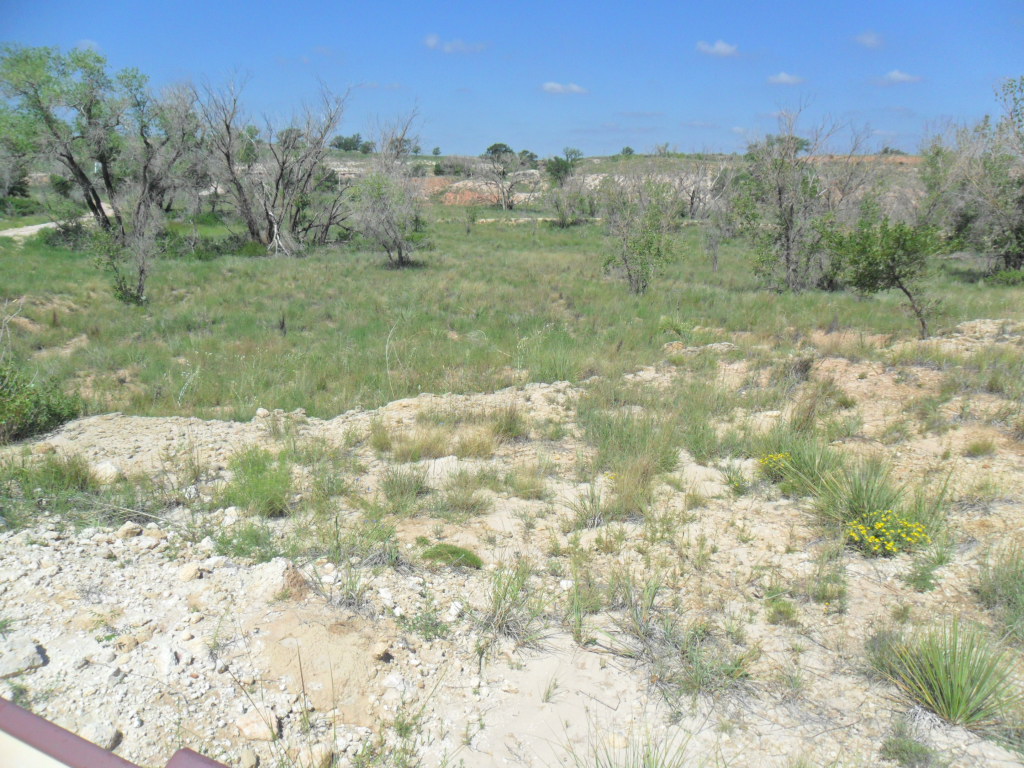
Annually, I make a pilgrimage to this ancient place where people hunted on the shores of a lake nearly 12,000 years ago.  It continues to be the oldest evidence of human habitation in the Americas.  For a large part of the twentieth century it was a gravel pit.  The gravel mining created both positive and negative consequences.  Without it, the bones of giant bison, mammoths, dire wolf, saber toothed cat and camels might never have been discovered at all.  However, because the owners of the quarry refused to stop mining, some portions of the site were destroyed by big swoops of the excavator machines.  Frequently archaeologists worked simultaneously along with mining operations, continuing within sight of each other.    Various groups, including some private individuals, attempted repeatedly to buy the site to save its precious stash of bones, artifacts, and ancient wells.  The owners refused to sell.  Finally, in 1978, Eastern New Mexico University purchased the site and continues archaeological excavation there.  They also run the nearby museum adjacent to the university football stadium.

If you expect something wondrous and grandiose, you will be severely disappointed.  A small building houses a teensy museum, restrooms, a few sweat shirts and posters and books for purchase.  An individual sits by the door to take your meager entrance fee–at most five dollars–and answer questions.  These individuals explain they are majors in disciplines related to the site, archaeology, paleontology, anthropology, that sort of thing.  A simple gravel trail traverses the site and a smaller trail goes to an ancient well–16 have been found at or near the site–and to a dig inside a building where you can observe the layers unearthed, which group of people left which type of artifacts, and actual bones of mammoths, giant bison, and other animals from the end of the last Ice Age.

People react differently to such sites.  I always remain entranced, overwhelmed, reflective, thinking to myself, “I am walking where people walked and hunted and went about their lives more than 11,000 years ago.”  The most ancient evidence of people is labeled Clovis Man–Clovis, NM, is just up the road.  They never found human bones of these people here , just their spearheads stuck in the ribs and shoulders of mammoths which stood 15 feet at the shoulders.  The people who came later made a different type of spear, called Folsom points.  These people, Folsom Man, lived later by 1-2 thousand years.  Another site, called Folsom, is near the tiny town of Folsom, NM, farther north at the edge of the mountains.  This site is on private land and tours are available only twice a year.  Although I visited the town last year, I have not visited this site.  Other people arrived later and although the collection is smaller, their spearheads remain available for viewing at the nearby Blackwater Draw Museum on the main road between Clovis and Portalis, NM.

When I look at the list of animals who lived here at the end of the last Ice Age, I feel amazed because they include both camels and horses as big as our horses now.  Both of these became extinct as did the saber toothed cat with the humongous canine teeth and the dire wolf.  Giant sloths lived until modern times but nowhere near New Mexico.  How could all these animals live here?  It was wet and green then.  Until the last couple of decades, bodies of water of varying sizes have drawn animals and people to this area.  Giant fields of irrigated corn and dairy farms lowered the water table sufficiently to eliminate any evidence of water.  At the time of Clovis Man a large lake covered the site.  Later, during a 3000 year drought, people dug the ancient wells to reach water.  Because this remained the only place for hundreds of miles with a supply of water, people came.

The trail begins just to the northwest of the tiny building and goes along the top for a couple of hundred feet before it drops down into the gravel pit remains.  The gravel was below all the layers containing human artifacts and ancient animal bones so the pit is wide and deep.

SAM_1302

SAM_1301

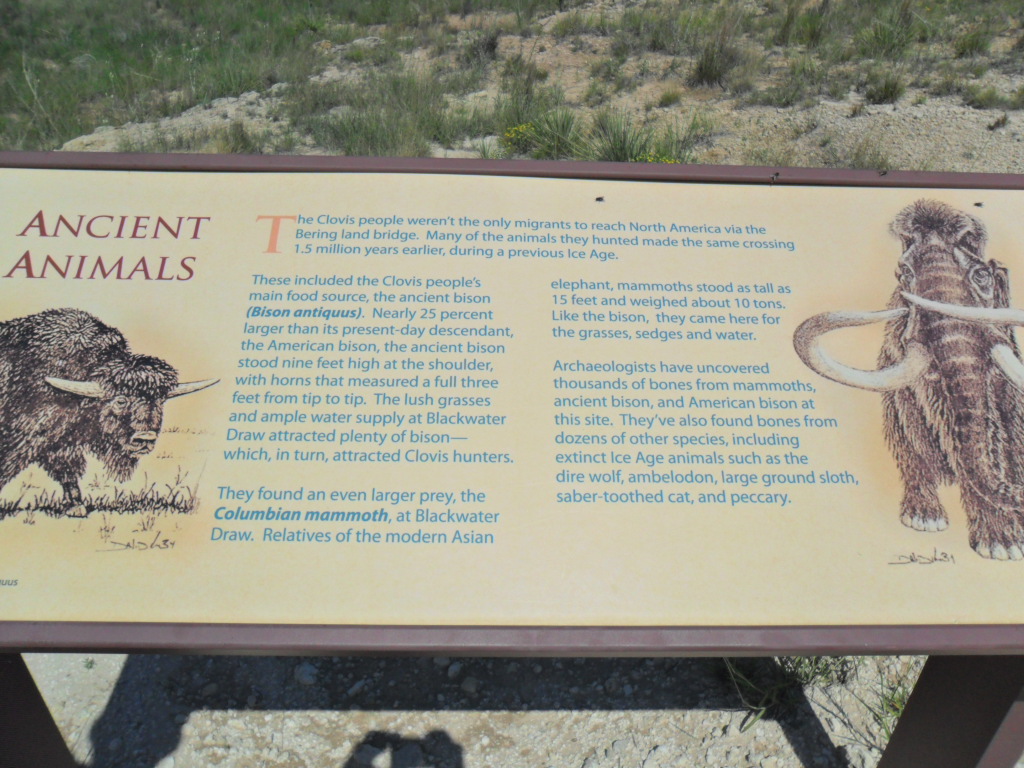
If your sight is good, you can read this.  The primary source of food for Clovis Man, giant bison and Columbian mammoths, came here for the water.  Archaeologists  theorize that hunters often killed these huge animals while they were in the water where it was more difficult for them to escape and move quickly.  In one place on the trail, evidence of a five bison kill complete with spearheads makes one think just how difficult and dangerous this hunting activity must have been.  I stand there, think about my own 5’4″ height, and wonder what it would be like to have a Columbian mammoth close to me.  Doubtless many died from injuries during such activities.

SAM_1304

The train meanders along the bottom of the gravel pit.  This year, plentiful rain grows abundant grass.  During the last several years, little rain has fallen as evidenced by all the dead trees and bushes scattered around the site.  Normally, this area is semiarid with less than 18 inches of rain per year.

SAM_1303

If spectacular scenery appeals to you, do not go here.  Most of the bones and artifacts were found in the layers at the sides of the pit.  As you walk the trail, markers indicate the location of findings.  Few human remains are found at such sites because these were not permanent settlement places.  Ancient peoples roamed the land in search of water and food.

SAM_1305

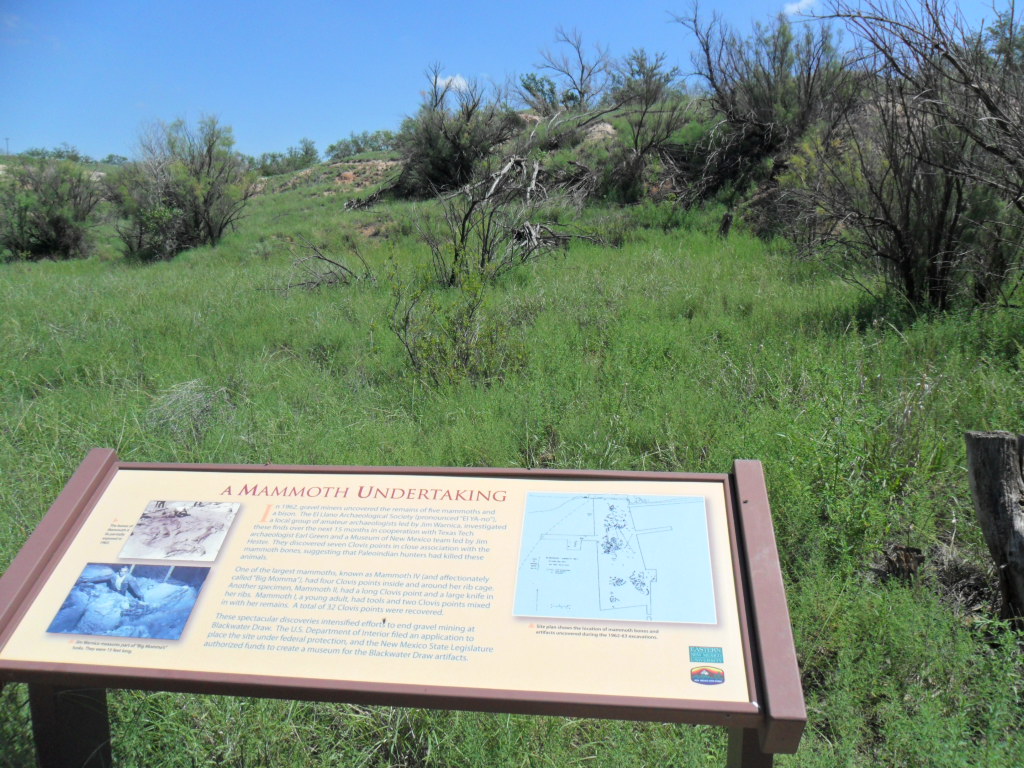
Signs, such as this along the trail, illustrate different places where specific bones and artifacts were found.  They also explain the different types of artifacts, their specific uses, and the history of the site.  Maps, like the one on this sign, help the viewer hone in on specifics in relation to where one is standing.  The photo illustrates archaeologists in action during site digs.

SAM_1307

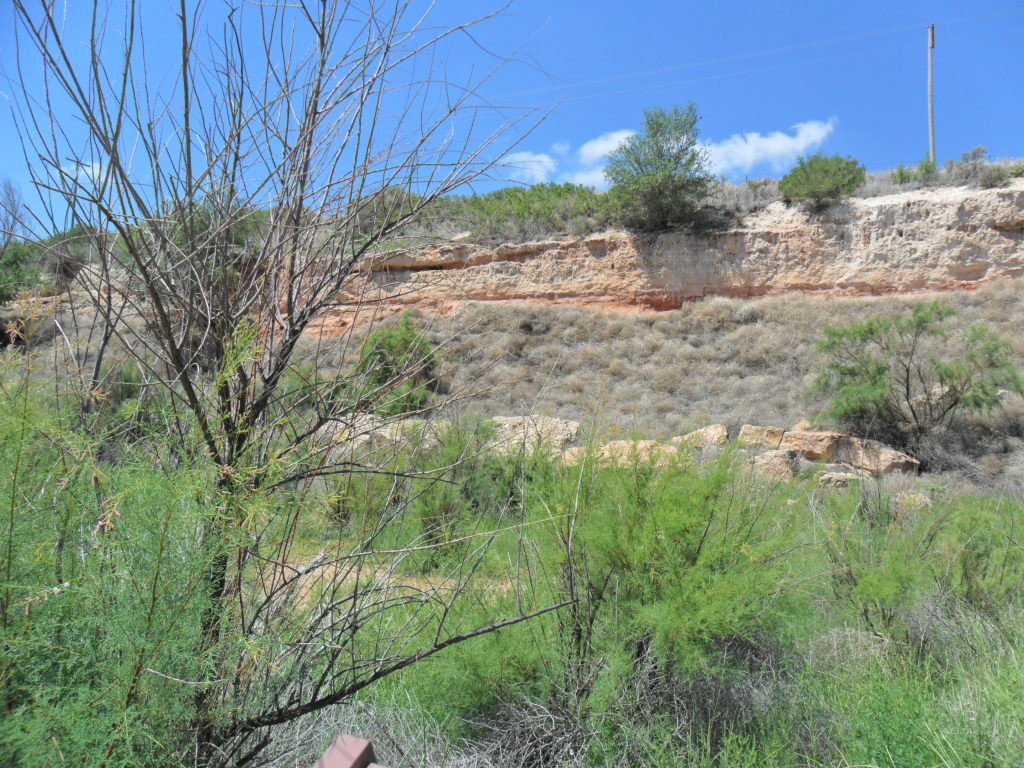
Cliffs, like the one here, surround the site.  In these small cliffs each layer indicates a different age of human activity by not only the type of sediment but also by the type of artifacts and animal bones found.  Just beyond this particular cliff at the west edge of the site, irrigation pivots run in a huge corn field.  The grey at the bottom of the cliff indicates an immense pile of dead, dried, tumble weeds.  This is dry country.

SAM_1308

Approximately three fourths through the trail, the site mangers have erected several structures.  This one is the most primitive.  Others are modern with picnic tables and in one place I saw a giant sand box.  Guessing, I think it must be used to illustrate how one sifts through layers of soil to carefully remove spearheads, bones, pottery, etc.  This is the perfect place for a field trip, not too long, but full of geological and paleontological information.

I go here usually once a year.  If you ask me why, I may articulate something about how it has the oldest artifacts and bones found in North America.  The real reason??  I am not quite sure.  This place fascinates me, connects me with something ancient and wondrous, something undefined and mysterious.

Family Roadtrips


During my childhood, my father took us on regular road trips.  The first one occurred when I was three.  He actually drove all the way from northwestern Missouri to Monterey, Mexico, via Padre Island and back.  Every year we took at least one, sometimes two.  Later in life, I truly realized the value and magic of these family road trips.  Although my daughter, grandson and I take short road trips to New Mexico in particular, we had never taken a really long one until two weeks ago when we left Amarillo, Texas, headed for Carmel, California.

At our first stop, Old Town, Albuquerque, for lunch, we experienced a most refreshing and delightful drink which I plan to duplicate the next time I invite friends over for dinner.

SAM_1176

This feast for the eyes and mouth consists of water infused with pineapple and strawberries.  It tastes best after letting it set to allow the fruit to meld into the water.

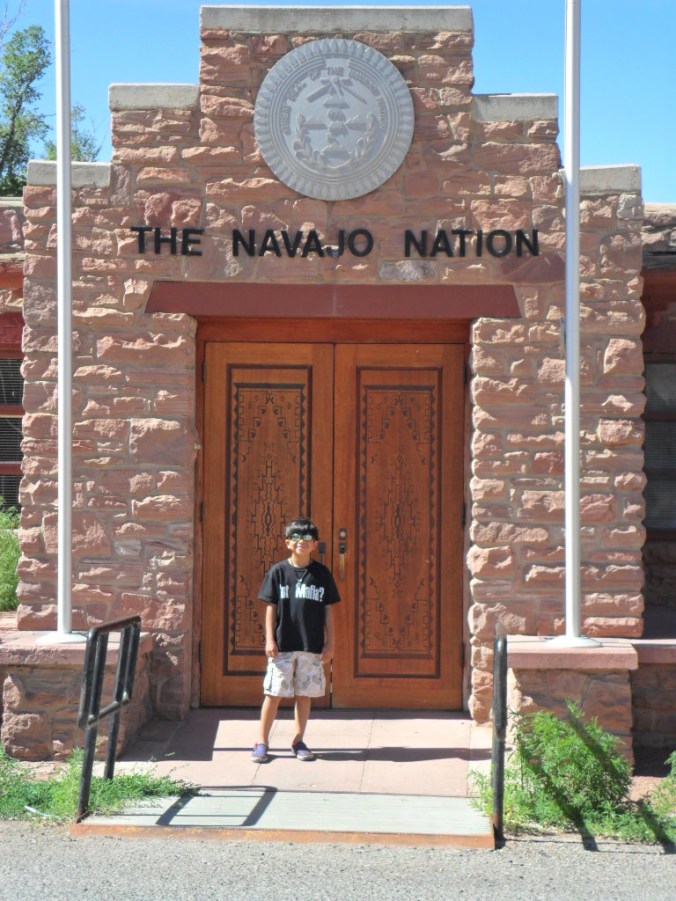
We spent the night in Gallup, but arrived too late to visit the galleries and shops so headed to a little Italian restaurant where my grandson, D’mitri, donned a black shirt which reads Got Mafia.  Friday morning we headed to Window Rock, capital of the Navaho Nation.  Since D’mitri’s great grandfather was Navaho, D’mitri’s interest in this stop remained high.

SAM_1178

SAM_1179

SAM_1180

After strolling around the park here, we stopped to visit the ladies selling the jewelry they were making on site.  As a person a bit obsessed with corn plants, I could not resist a pair of turquoise earrings that look exactly like tiny ears of corn.  D’mitri had to have a necklace with a soccer ball pendant which he wore the rest of the trip.
SAM_1183

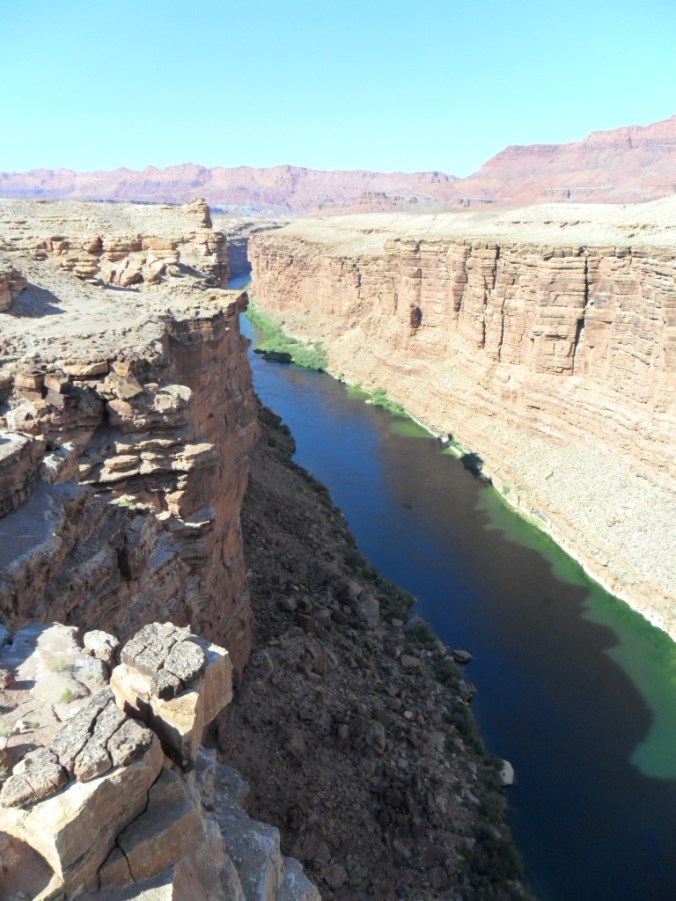
After the morning at Window Rock, we drove off across the Navaho Nation and the Hopi, headed for the North Rim.  We stopped off and on to visit vendors along the side of the road.  The dwellings throughout the Navaho Nation seemed scattered across the landscape with many hogans next to or close to what appeared to be a main house.  Horses roamed in the semi-arid fields.  The Hopi area, however, held a different view with no scattered dwellings.  Everyone seemed to live in villages along the way and I never saw a horse in Hopi country.  Finally, we crossed the mighty Colorado River at Navaho Bridge from which I took this photo.
SAM_1186

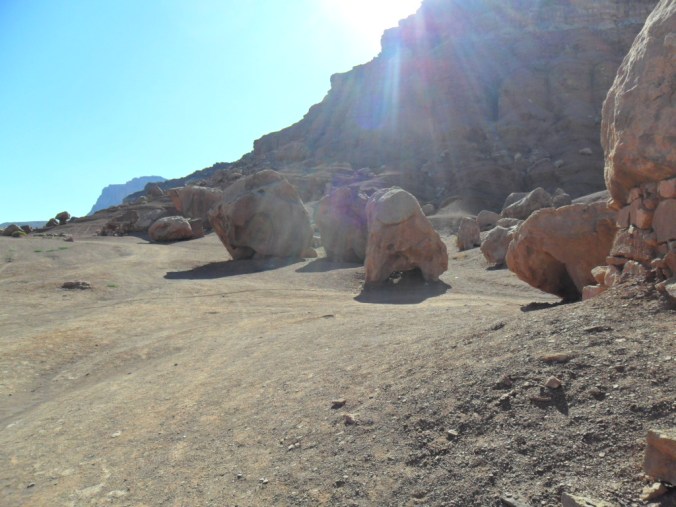
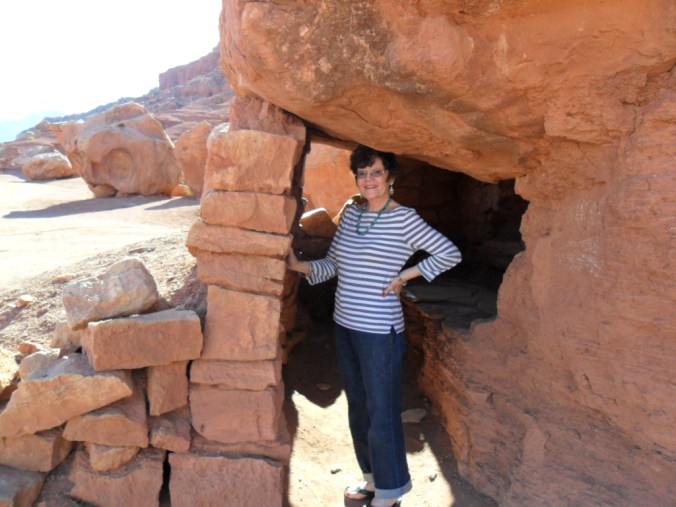
The road follows the base of the cliffs of Vermillion Cliffs National Monument.  We could see them looming large long before we arrived.  Huge rocks appeared to have tumbled off the cliffs and lay near the road.  I kept wondering if they ever fall and hit cars.

SAM_1188

SAM_1190

SAM_1189

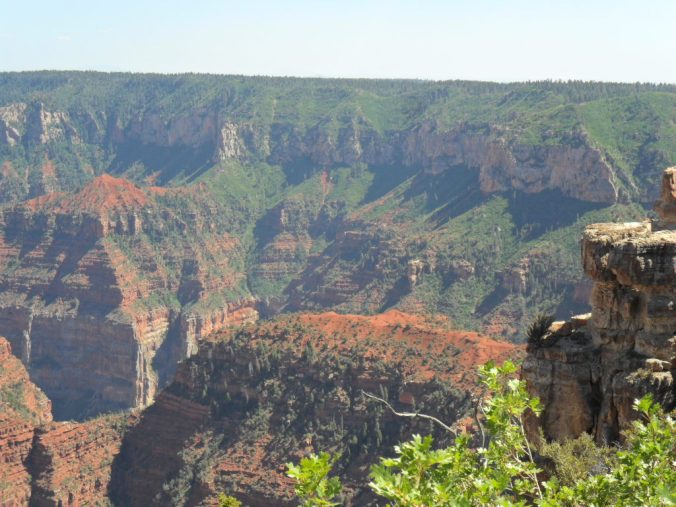
We finally made it to the Jacob Lake Inn near the North Rim of the Grand Canyon.  We arrived too late to go to the Grand Canyon  so took a hike through the ponderosa pines supposedly headed to a lake.  Dry, hot weather apparently turned the lake into a mere puddle.  We barely made it back before dark, disappointed.  The next morning we drove the forty some miles through heavy woods interspersed with giant meadows to the North Rim.  If you have never been to the Grand Canyon, its size and grandeur remain impossible to convey via photos.  Perhaps due to the rather warm, dry conditions, a heavy haze hung over the Canyon all day.  We took a few tiny hikes, only to discover just how very much out of shape we are.  Additionally, the altitude affected D’mitri quite negatively, making him more tired than customary.  Nevertheless, determined to not miss out too much, I took several photographs from Imperial Point.

SAM_1191

SAM_1192

SAM_1193

SAM_1195

SAM_1197

SAM_1196

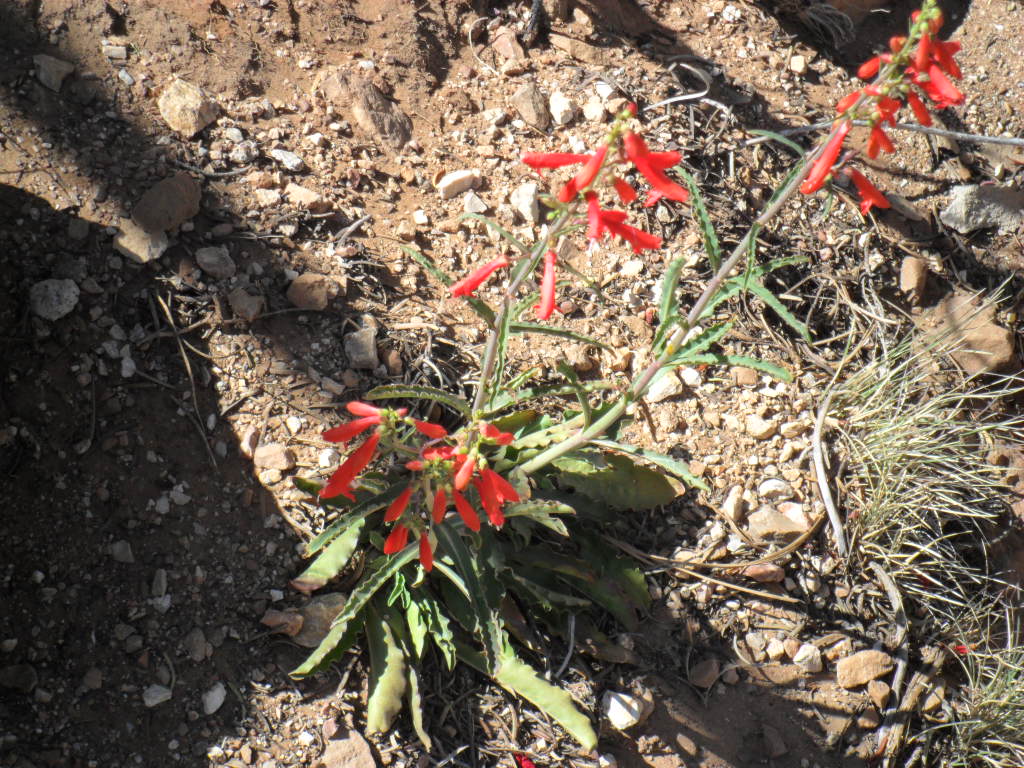
Flowers exactly the same as grow where I live on a little canyon in the Panhandle of Texas grew along the path.  We spent another night at Jacob Lake and then continued toward Las Vegas.  The fastest route drops off the Kaibab Plateau rather dramatically with spectacular long views, the depth and breadth of which no ordinary camera can capture.  We ate a late breakfast in Hurricane, Utah, a bit after the infamous Colorado City, Arizona,  where the houses appeared quite large with high walls around many of them.  Then off to Las Vegas, Nevada, to meet an elementary school classmate, Craig Prater,  whom I had not seen in years.  He treated us to a fabulous lunch at the Mandalay Bay, took us to a shopping area down road, and he and I attempted to catch up for all those years while Ema and D’mitri shopped.  We marveled how two children who attended a rural school (at first it had only one room and then later two) eighteen miles from any town of more than a couple of hundred could attain what we have attained.  He produces films and travels all over the world.  I have lived, worked,  and traveled to many different places.

SAM_1198

SAM_1200

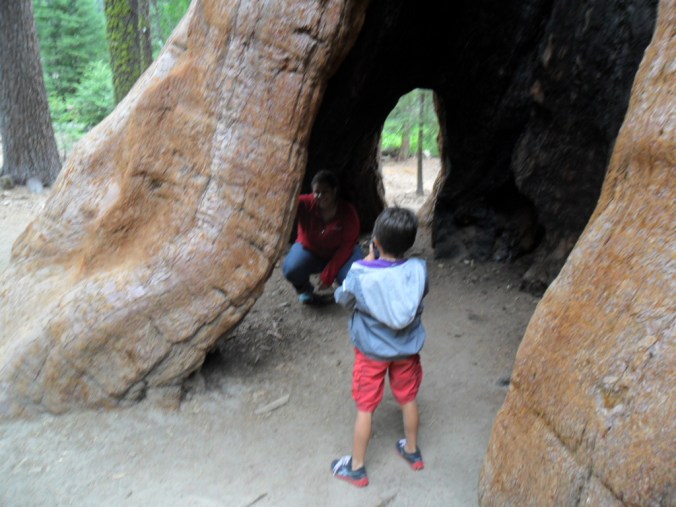
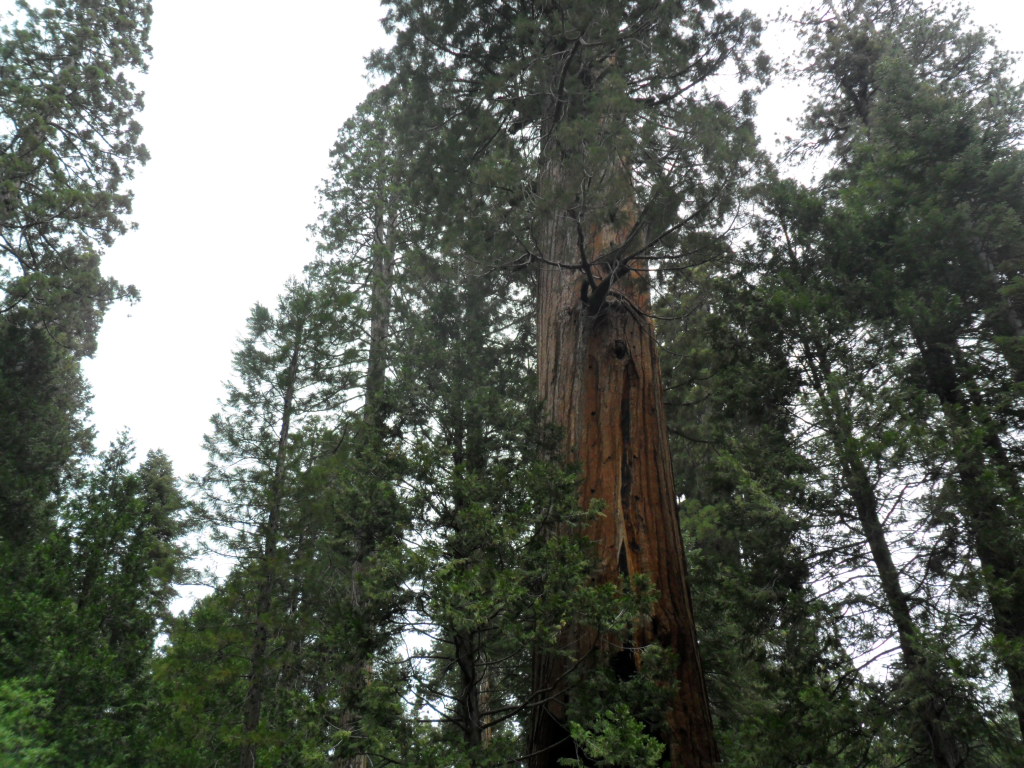
After Las Vegas, we drove to Mojave, California, for the night. The only  scenery on this drive is through a canyon on the Interstate.  We experienced high winds and a sand storm and arrived after dark.  The next morning we solved the mystery of the hundreds of red blinking lights on the hillsides, wind turbines.  From there it is a rather short drive,  a couple of hours, to the Trail of 100 Giants in Sequoia National Monument.  To say we experienced amazement is an understatement.  What a magical forest so wet and dark and alluring after miles and miles and miles of hot desert.

SAM_1204

SAM_1205

SAM_1207My daughter, Ema, and her son, D’mitri really enjoy clowning around and what better place than surrounded by the largest trees in the world.  The squirrels here also “talked” a lot and we tried to get close.

SAM_1209

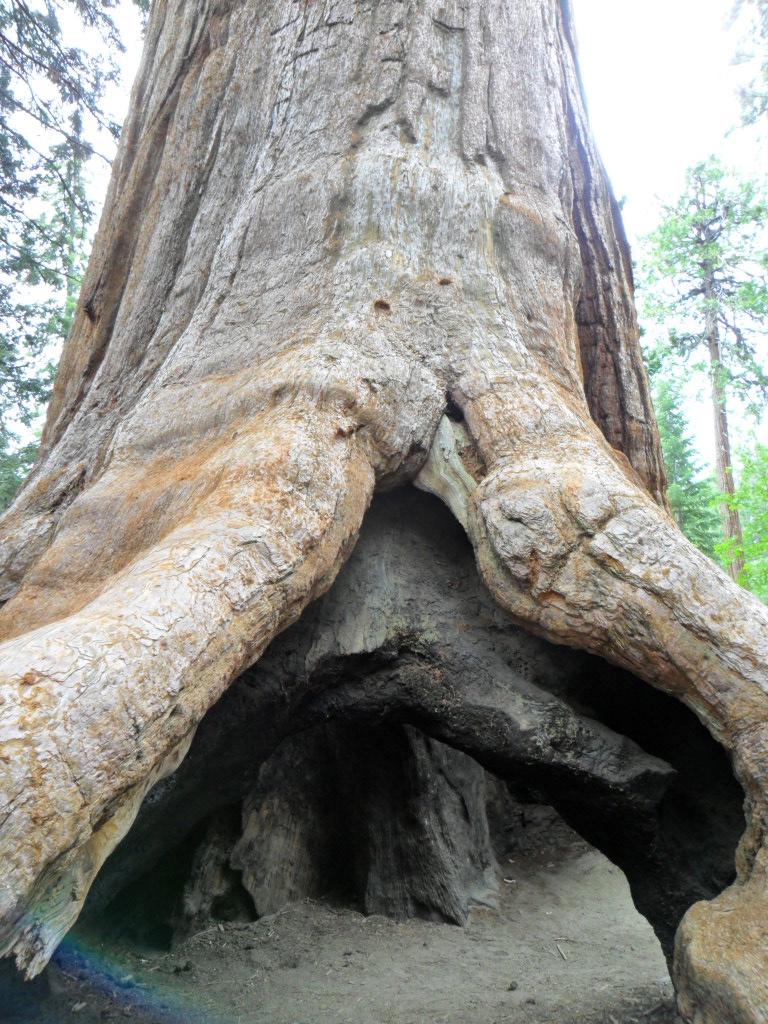
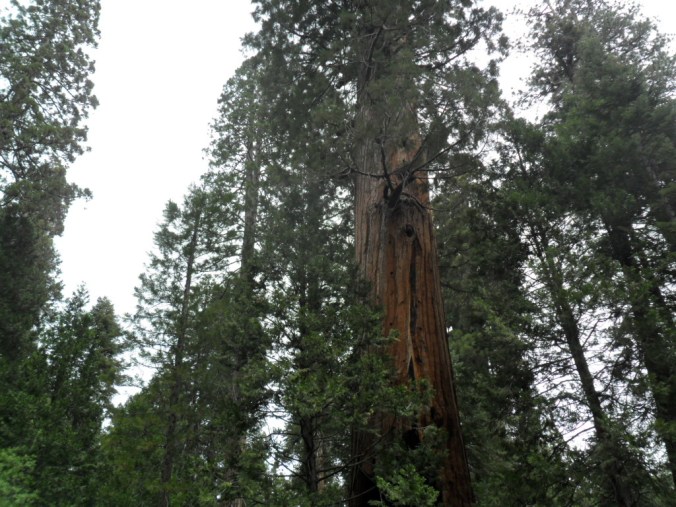
Usually, I frequently dislike photos of me, but this one is an exception.  Although not large, this tree stood out as so unique I could not resist a photo shot.  Even with the best camera, I doubt a photo of an entire sequoia tree is possible.  You have to see them to obtain the full effect.
SAM_1210

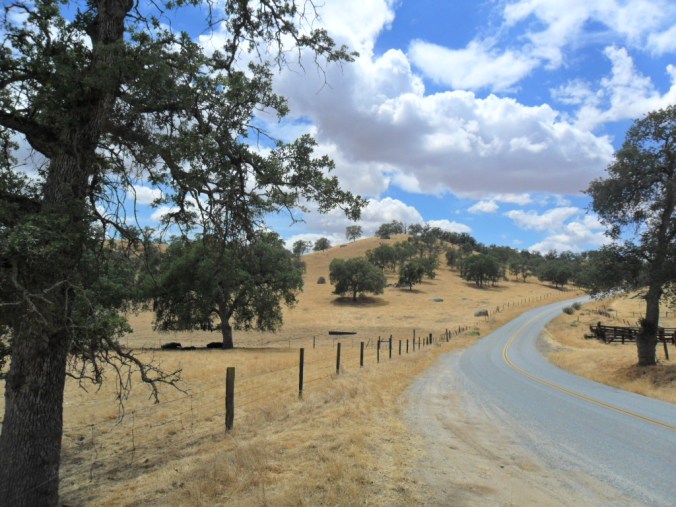
We wanted more time with the trees, but needed to make it to Carmel by evening so headed down the mountain toward California Hot Springs.  Altitude is everything here.  In ten minutes the golden hills replace giant trees.
SAM_1218

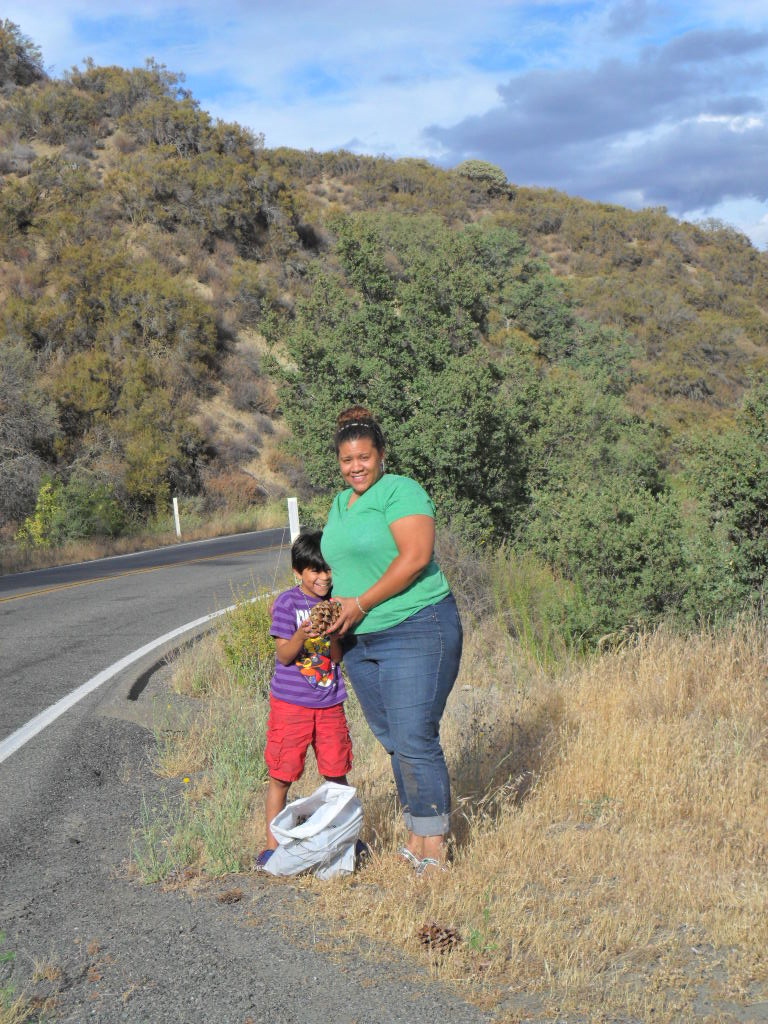
Then, in an hour or less, we were driving across the Central Valley past miles of vegetables and at least three types of trees in huge orchards or groves.  The only tree species I was able to identify was almonds.  I wanted to take pictures, but did not desire to arrive in Carmel at my college roommate’s house in the dark so I kept driving.  No quick road exists that crosses California except way to the south.  This still astonishes me.  Two lanes with heavy truck traffic take a long time to get from one destination to another.  We decided to cross on 198 through Coalinga to San Lucas which resulted in a fun, scenic drive with lots of twists and turns.  Much to our surprise, huge pine cones lay everywhere beside the road.  It seemed strange that these cones came from a tree much smaller than the Sequoia.  Ema and D’mitri collected some to display at home.

SAM_1219

Finally, just before dark we arrived at the Rinaldo’s.  Suzy and I roomed together at Grinnell College at the ages of 18-19.  David attended Grinnell also.  We only see each other once or twice a year but can pick up conservations as if it were a few moments ago.  They live in the Santa Lucia Preserve.

SAM_1268

SAM_1258

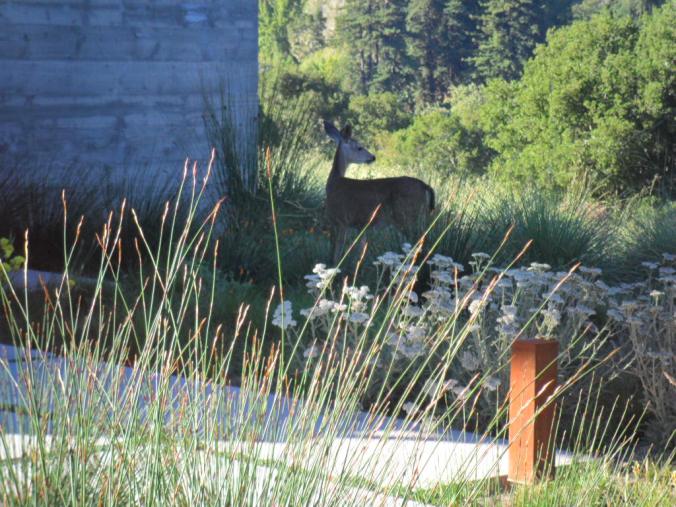
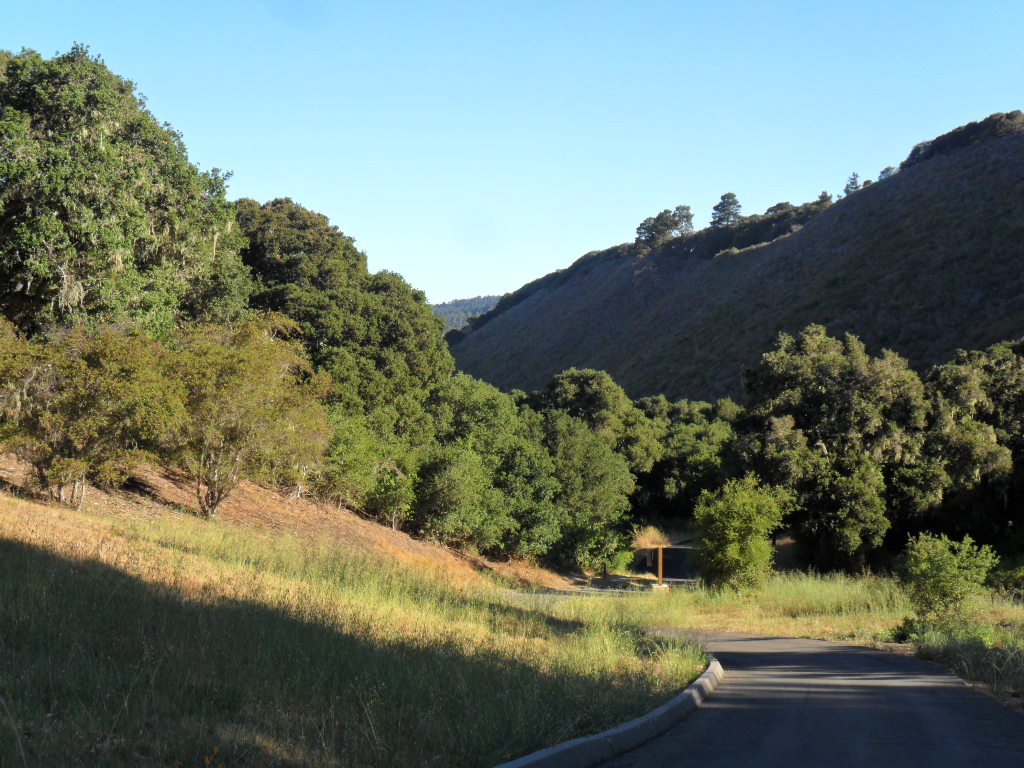
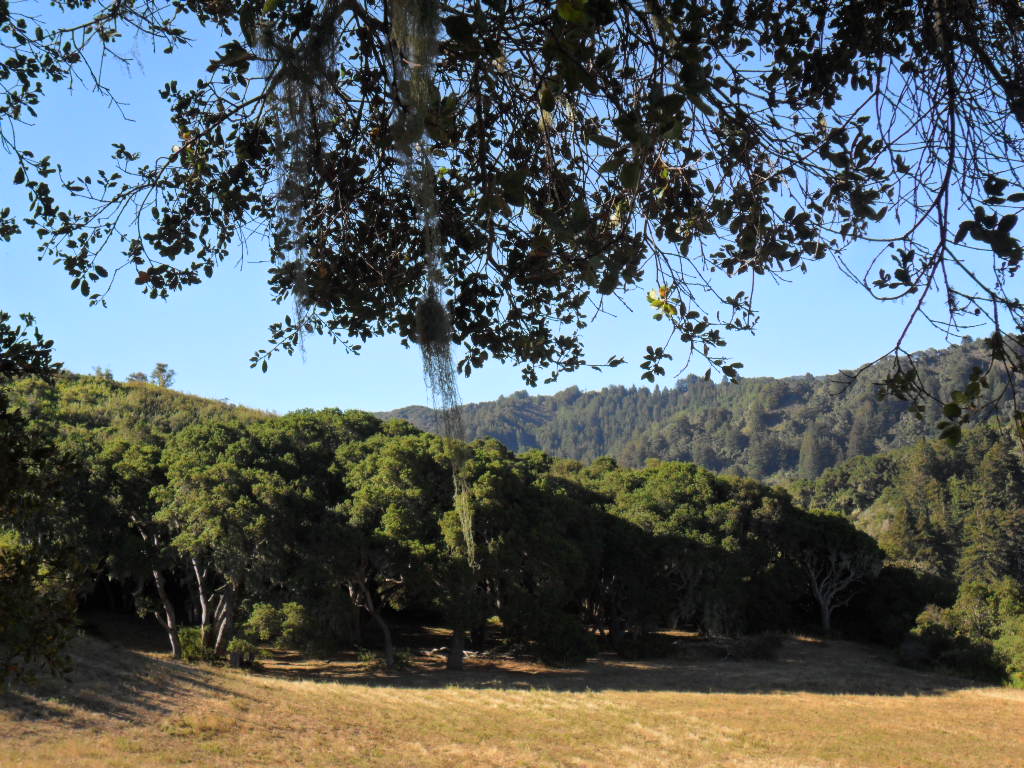
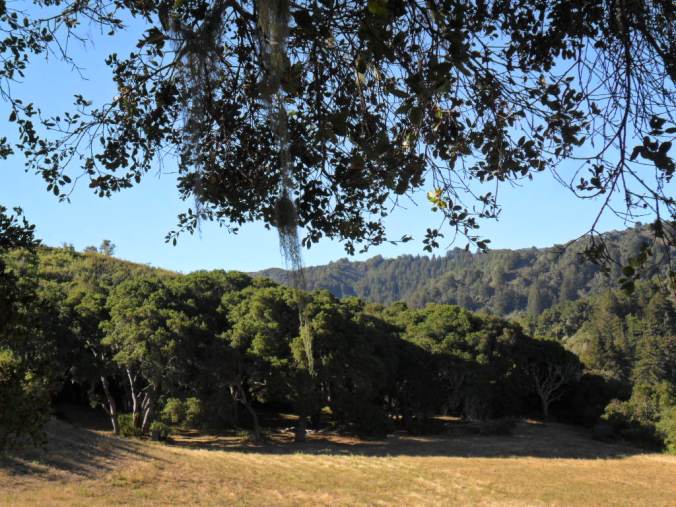
Every morning this deer casually ate California poppies and ran away only if I went outside too quickly.  One morning I took a long walk up one of the few roads on the Preserve.  I love the live oaks and learned they are very fire resistant so residents are allowed to let them grow close to their houses.  Everything else, except for a few native grasses and plants–no trees or brush, must be cleared for 150 feet all around any house.

SAM_1259

SAM_1265

SAM_1264

SAM_1262

SAM_1261

I commented on the radiant red colors I saw in the leaves of an attractive plant only to find out it is poisonous oak and if I touched it, the result would not make me very happy.  It must love this particular environment because it grows everywhere.

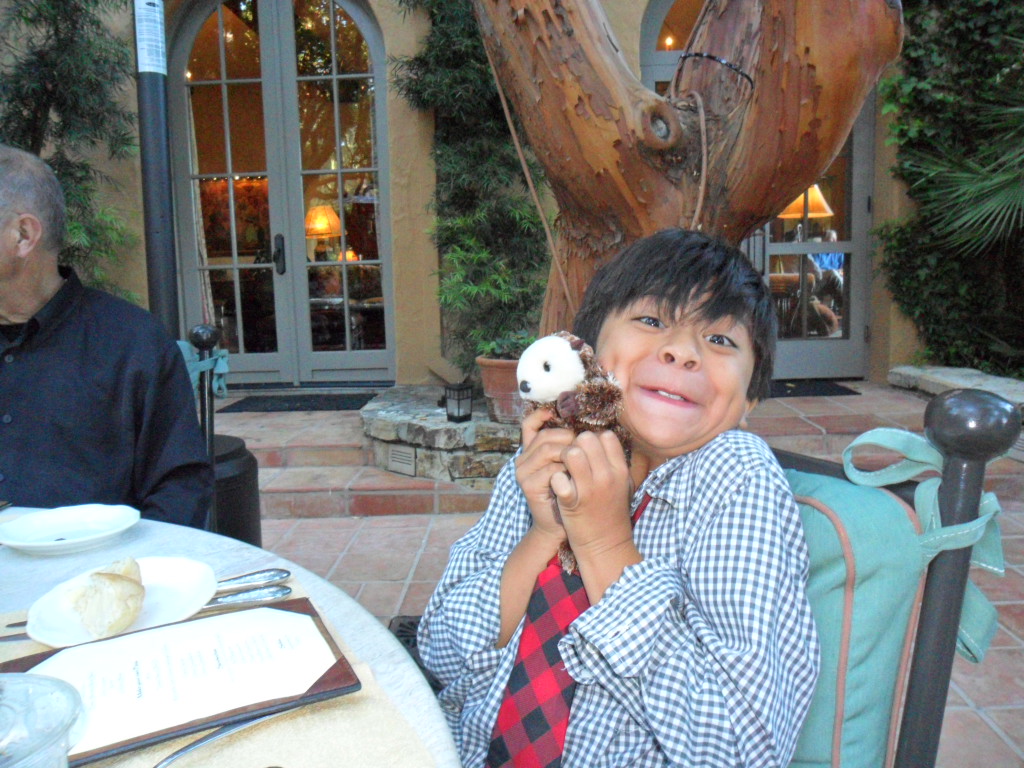
One of my favorite restaurants is at the Hacienda at Santa Lucia Preserve, not because of the food, but due to the impeccable service and enchanting atmosphere, what I imagine to have existed in old California.  D’mitri says it is his favorite fancy restaurant on the trip.

SAM_1221

SAM_1223

SAM_1228

SAM_0103

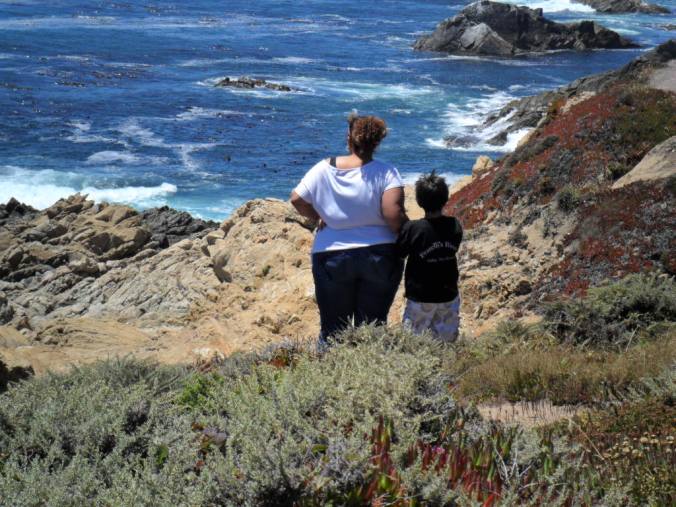
In the dark, driving back home to David and Suzy’s, we saw a bobcat, several deer, wild turkeys, a skunk, and another animal we could not identify.  The next day we ladies went shopping in Carmel while David and D’mitri took a ride in the Porsche and swam.  No one can go near Carmel surely and not drive the glorious drive south to Big Sur.  D’mitri loves water so we stopped at two different places along the way.
SAM_1238

SAM_1239

SAM_1241

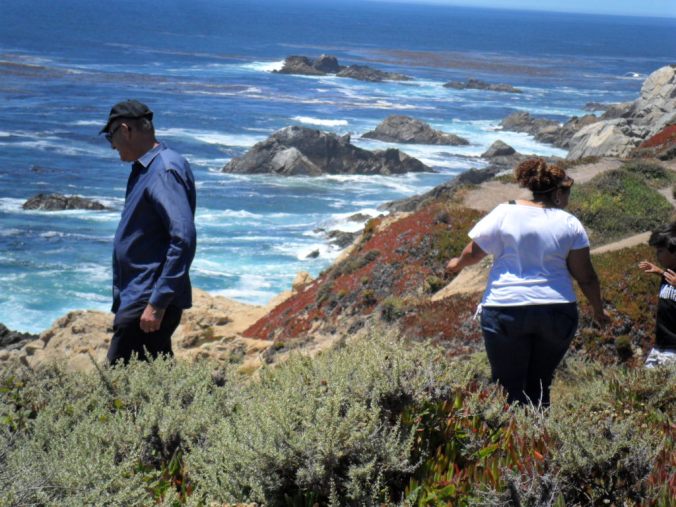
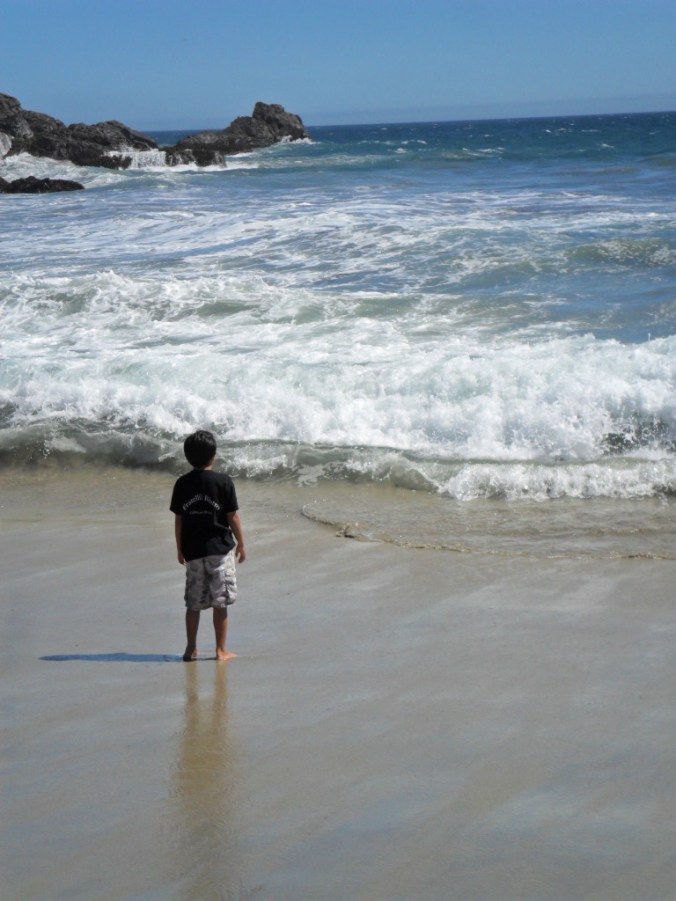
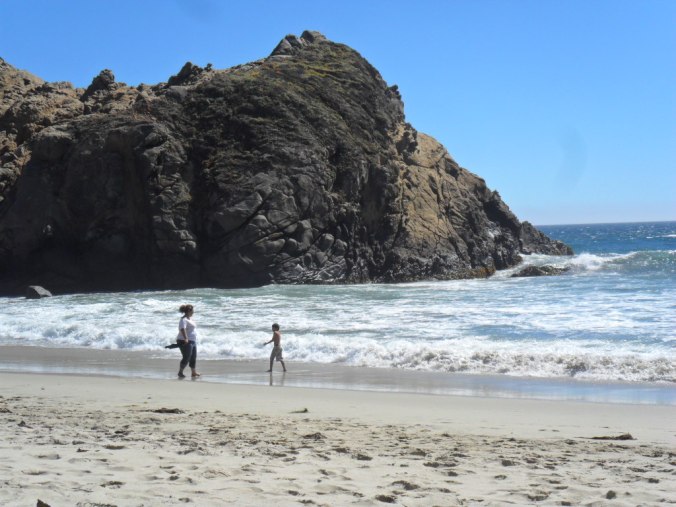
D’mitri became quite alarmed when Suzy told him many of the bushes along the path are poison oak.  David informed us that a really wonderful beach existed down the road if we could get in.  Off we drove to Julia Pfeiffer Burns State Park.  They only allow so many cars into the park at once so we had to wait until someone left.  It was worth the wait.  This beach does not allow swimming; people have drowned here.  Nevertheless, who cares; the drama of crashing surf, giant holes in rocks worn by water, and trees shaped by wind and erosion make it magical.
SAM_1245

SAM_1252

SAM_1251

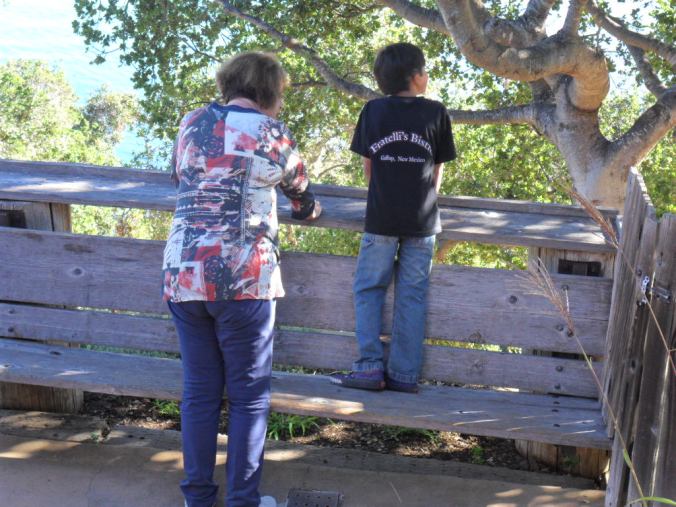
SAM_1250You cannot go down highway 1 without stopping at Nepenthe.  This restaurant’s views alone are worth going there, plus a gift shop full of finds from all over the world.  The wine list and hamburgers finish off the list of why you must stop here if you are anywhere near Big Sur.
SAM_1255

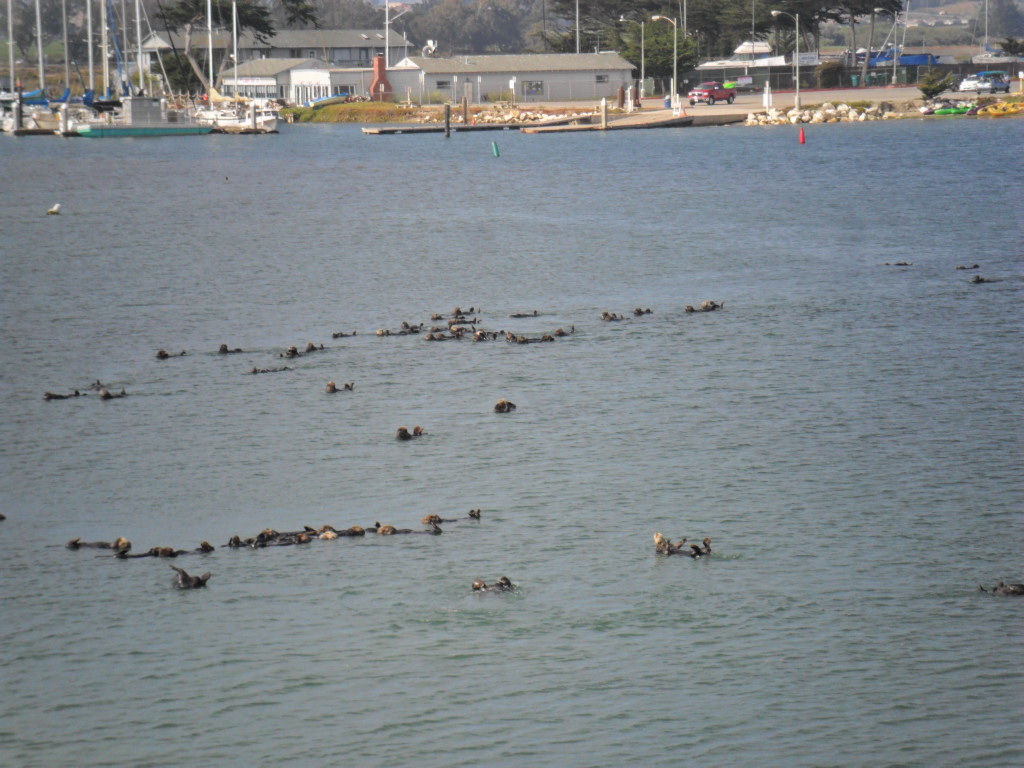
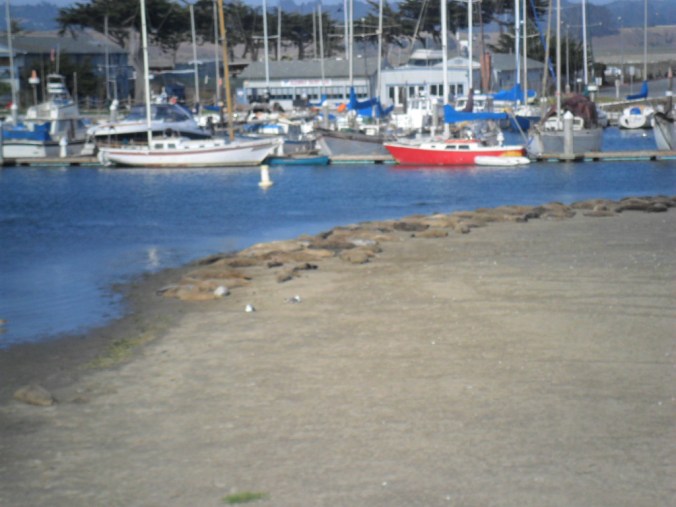
Time seemed to run rapidly; with only one day left, we decided to head to Moss Landing to see the seals.  Much to David’s astonishment, not only did seals lay all along the beach, but a large number of sea otters were playing in the water, rolling over and over, splashing.  David had been there many times and never seen anything like this.  The sea otters delight the watcher with their playful antics.

SAM_1271

SAM_1272

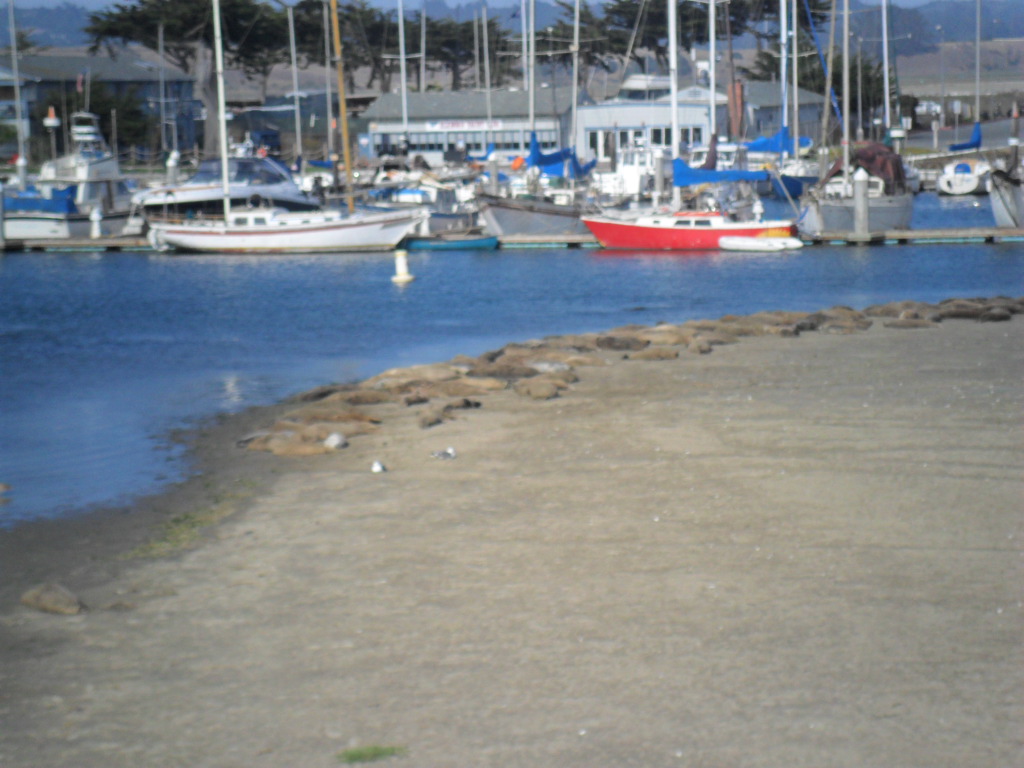
Unlike the ever playful sea otters, the seals just lay still like large rocks along the beach.
SAM_1274

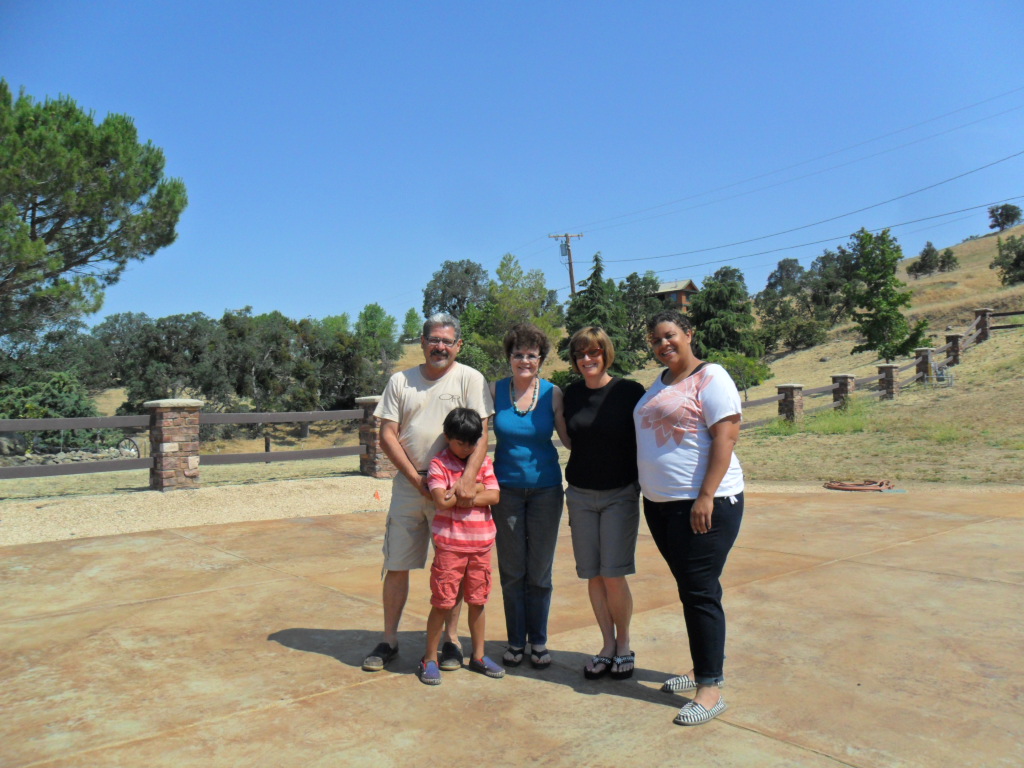
Early on a Saturday morning, Suzy and David fed us waffles to fortify us for the long drive to Flagstaff, nearly 700 miles.  We crossed over to Salinas, then down 101 and finally through Bakersfield where we found a delightful, rather elegant Italian restaurant for lunch.  The good looking waiter chit chatted and provided excellent service, three pluses when you go out to eat.  As we cut across the middle of California, headed for I-40 eventually and neared Tehachapi, Ema decided to call D’mitri’s other grandparents who have a house there. When we went the other direction almost a week before, they had been vacationing in France.  To our surprise, they answered and asked us to stop for the night.  D’mitri’s excitement was contagious.  He expressed special delight to have his grandfather to himself for hours instead of needing to share him with other grandchildren.  The Herreros live on a hillside with a breathtaking view for miles.  Unfortunately, the haze prevented proper photography so I gave up on the idea of capturing the endless panorama.   However, this presented itself as the perfect opportunity for family photos.

SAM_1278

SAM_1280

SAM_1285

The California desert never comes to mind when I think of California.  I always fly to San Francisco or Oakland and visit friends or conduct business.  Unlike the glorious red rocks and drama of southern Utah and northern Arizona or the saguaros of  southern Arizona, the California desert maintains an endless pale tan color with only a few tiny plants.  Thanks to air conditioned automobiles, you can drive for miles, escaping the intense heat.  When we finally stopped at a Dairy Queen for a refresher, D’mitri and I stepped out of the car and were nearly knocked over by the hideously hot wind.  In general, I like heat, but this seemed overwhelming.  When we drove off, I asked Ema about the temperature.  She looked it up on her smart phone, 118.  The only truly beautiful I sight I saw (and I think nearly everywhere possesses some sort of loveliness) occurred when I drove over the mighty Colorado River, surrounded by the only green for miles.  After this heat, the cool, green beauty of Flagstaff enchanted us.  We settled into our hotel room, then drove off to our third Italian restaurant in two days, Oregano’s.  Instead of the usual coloring books, puzzles, etc. offered to children, this place gives them pizza dough to mold.

SAM_1287

As we drove home, I noticed how terribly dry it is once we dropped out of the mountains around Flagstaff.  Off and on we crossed areas where there had been enough rain to create a pale green.  Apparently, it had not rained west of Albuquerque because it still looked like brown winter just as it had eleven days before on the first day of the trip.  East of Albuquerque we encountered such an intense downpour with some hail that I could not see to drive.  I pulled off the road and waited. From Albuquerque to Amarillo, in the eleven days we were gone, it had rained enough to make the mountains, foothills, and high plains a lovely soft emerald.   We had missed the hot, 100 plus week and came home to rain and cooler weather that lasted several days.  In one week, the weather had changed from record highs to record lows, the typical extremes one learns to live with on the Llano Estacado.

DNA


Several months ago I decided to participate in the Human Genome Project through National Geographic.   When I called to order the kit, the young man reminded me that as a woman, I would receive only one half of my ancestry, the female half.  Since women do not have a Y chromosome, a woman can only trace her female family line through her mitochondrial DNA.  He suggested I use my grandson’s DNA so I would receive complete results.  Of course, that meant that in the end, I would have to factor in what I knew about his father’s family and deduct that to determine my own.  After the Geno 2.0 kit arrived, we took his cheek swabs and mailed them off.  This week when we returned from an 11 day family road trip, the results arrived.  With the results came detailed explanations of human migratory history and even comparisons of populations with DNA most like his.  Although none were close, the top two groups were people in Bermuda and Mexican Americans.  Luckily, the information contained a detailed explanation of the people of Bermuda.  The Native American results I expected since his great grandfather was Navaho.  Other parts came as somewhat a surprise. Once again I am taking a poetry class and now working on publishing a book of my poetry so I decided to write a poem about this experience.
The results loom before me on

the computer, percentages:

Northern European, Mediterranean,

Native American, Neanderthal,

sub Sahara African, South African–

as in the Bushmen in the Kalahari,

Northeast Asian, Southwest Asian.

Suddenly, calculations move through

my brain.  I look again, add, subtract,

recalculate, stare, ponder. Is there

a family secret I missed?  How will

I know, from whom?

Everyone I could ask is dead.

SAM_1183

Going Home Again


Last weekend I returned to the county where I grew up and the family farms in Andrew and Holt County, Missouri.  It had been at least six years since I had returned to the place my great grandfather homesteaded over a hundred years ago.  Strangers live in the house where I grew up and my father lived 80 of his 90 years.  On the site where he was born, only the old carriage house still stands, a sentinel to a lifestyle long gone.  Repeatedly, I tried to write a poem about all this, but have not been able to do so–perhaps the experience is still too close.  Additionally, for the first time, I attended my high school reunion and chatted with individuals I had not seen since I was 18.  Decades truly change people; I would have recognized only a couple without the name tags.  Northwest Missouri this year presents an intense emerald landscape.  Having travelled there from the semi-arid land where I now live, I suffered “green” shock.  And tree shock.  The Panhandle of Texas grows few large trees outside of towns and cities.  Even with my very ordinary camera, these photographs capture the beauty I witnessed and family memories I want to remember and share with my children and friends.

SAM_1167

This is the house where I grew up and Dad lived 80 years.  The building in the foreground was built during the depression.  Before it was put to its final farm use–for hogs and chickens at various times in my childhood–Dad held dances here.  Because of prohibition, the sheriff always sent someone to make sure no illegal alcohol consumption occurred.

SAM_1097

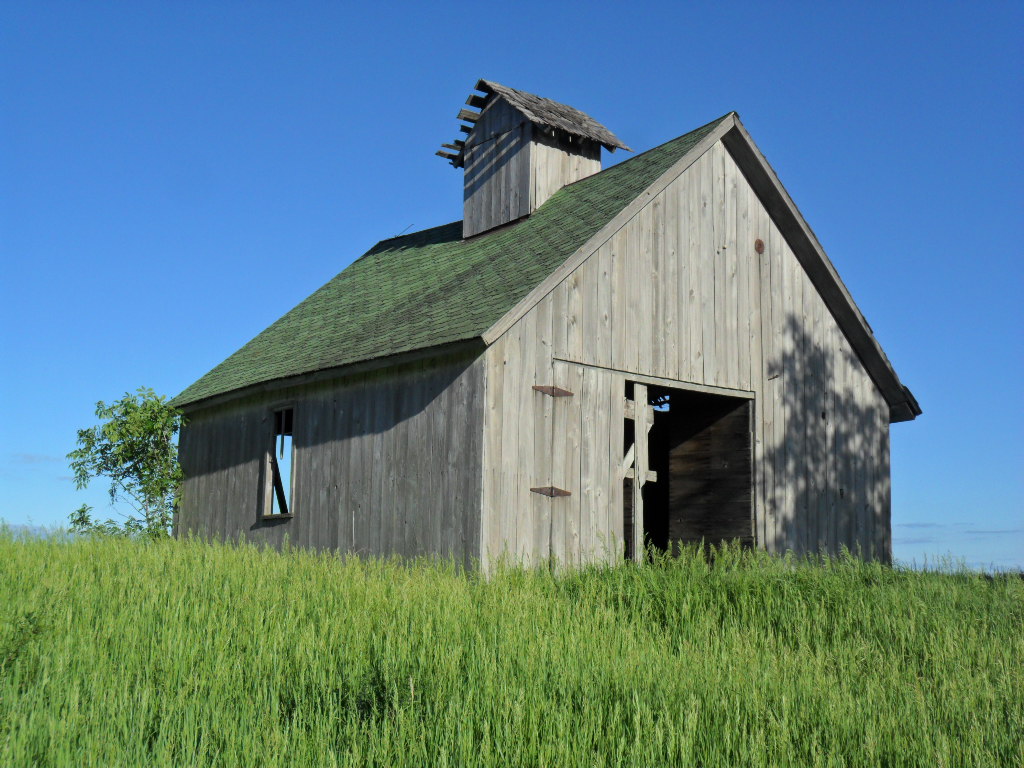
The old carriage house, just south of the site where a large house stood during my childhood, still stands.  The stained glass transom window hanging in my own house now and an etched glass hunting scene are all that remain of the house where Dad lived as a small child.  Emptiness and raccoons finally destroyed it.   When he gave me the windows over thirty years ago, Dad said it was impossible to keep an empty house in good shape forever.

SAM_1165

At the age of 18, my great grandfather, Gottlieb Werth, came to the United States to avoid being drafted into the Swiss army which hired out soldiers as mercenaries.  My father told me what his mother told him:  my father’s mother stood on the roof of her house in Switzerland and waved until she could no longer see her son; she never saw him again.  This photograph shows his grave in the Fillmore, Missouri, cemetery.

SAM_1094

Nearby, perhaps fifty feet away, lay the graves of Mom and Dad and my grandparents.  I never knew this grandmother; she died long before I was born.  My grandfather died when I small and sadly I do not remember him.  The family stories tell that he taught me to talk at a very early age, nine months, because he held me on his lap and told me about everything occurring outside the windows.  My first word was “tractor”.

SAM_1090

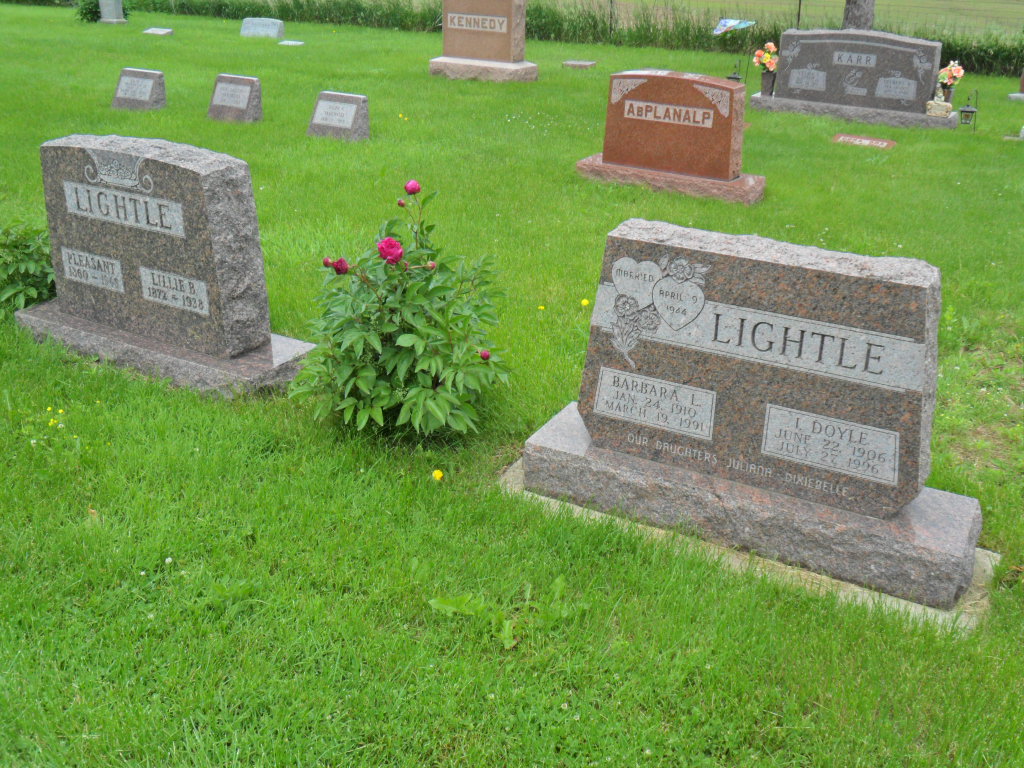
Another family story tells that this grandfather walked to Andrew County, Missouri, from Illinois.  Andrew County’s rolls are full of Lightles.  It remains the only place I have ever lived where I am not the only person with my last name in the phone book.  Dad claimed there would be even more Lightles except for the fact that several brothers died when they tried to walk across the Nodaway River on winter ice and it broke.  They all drowned.

SAM_1106

Dad built the large pond in this photo and stocked it with fish.  Until a few years ago when someone bought the land and destroyed all the trees, a small forest of ancient oaks, black walnuts, and chestnuts grew between the house and pond.  Dad kept it mowed and groomed–a park.  Sadness filled me when I saw the trees all gone.

SAM_1107

All my childhood we attended Antioch Christian Church.  Although I could not see it from my house, if I walked across the road to where the carriage house still stands, it looms across the distance.  Potlucks were a very popular activity here.  Mom made such fabulous pies that everyone would get her pie first to make sure they got a piece.

SAM_1114

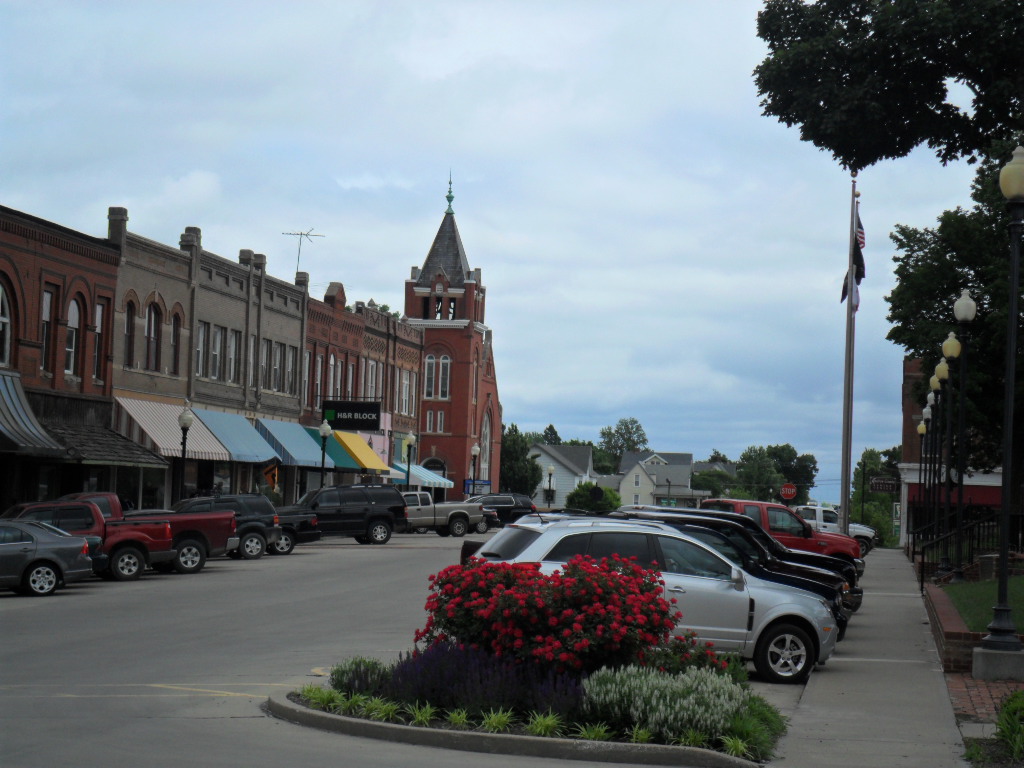
The sign in front of the Andrew County Courthouse.  This county remains filled with people of Swiss descent to the point they have celebrations commemorating their heritage. The following include photos of the courthouse and some of the restored buildings on the courthouse square.

SAM_1112

SAM_1116

SAM_1113

Several reasons exist for my returning “home” at this time, including attending my high school reunion for the first time.  The following photos show several people I had not seen since I was 18, including Melanie Eisiminger, who was the valedictorian when I was salutatorian so many years ago, and Jim Ahillen and his lovely wife.  Melanie is in the middle.

SAM_1127

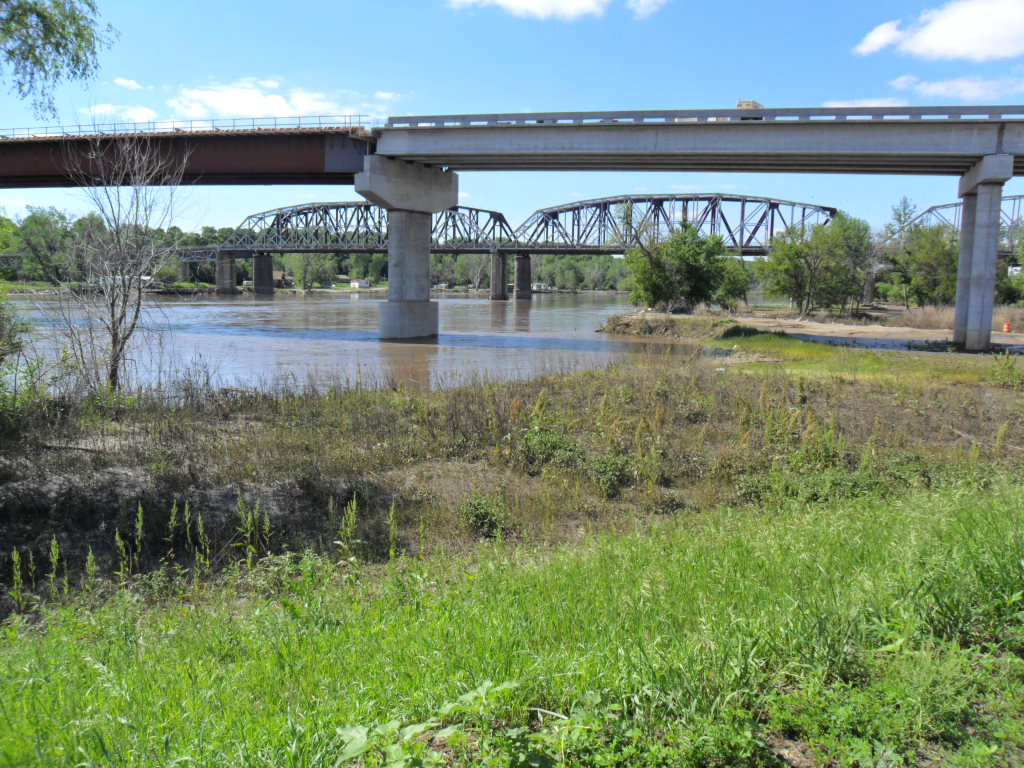
My mother grew up in Holt County, Missouri,  in the town of Fortesque and her family farm next to the Missouri River still remains mostly in the family.  In my childhood, Fortesque was still relatively prosperous.  Now fewer than fifty people live there.  The farm lays right next to the Missouri River.  I walked down the levee and took photos of this mighty river, the Rulo, Nebraska bridge, and the farm.  If I turned one direction, I faced the bluffs where White Cloud, Kansas, resides and the other direction is Nebraska.

SAM_1134

SAM_1128

SAM_1139

Between the Missouri River and the bluffs lays one of the largest wildlife refuges in the United States, Squaw Creek National Wildlife Refuge.  It is especially important for migratory birds, bald eagles, wading birds, and various mammals.  One can drive the new road ten miles through it to observe birds in particular but also other species.  The huge cottonwoods and oaks fascinated me.  It appears I had totally forgotten just how grand these trees can grow if given adequate water.  In one area I drove for at least four miles through a tree tunnel, then several raptors screamed at me while I tried to photograph them, and finally I managed to photograph a red winged black bird and geese.  After several days of semi constant rain, it felt fabulous to experience a perfect sunny day for my tiny trip to the wild.

SAM_1150

SAM_1148

SAM_1151

SAM_1149

SAM_1152

SAM_1155

After I left Squaw Creek, I drove to Mound City to find the graves of the Duke side of my family.  The last time I had been there was when we buried my aunt, mother’s sister.  I also remember going with her there more than twenty years ago.  I recalled the general location but had to hike around a bit to find them.  Because Grandfather Duke was much older than Grandmother, I never knew him.  Aunt Julia came to visit me at least once a year until she neared ninety and could no longer travel easily.    She never married and remained admirably independent until she became too feeble to get around on her own.

SAM_1160

SAM_1161

The E stands for Evelyn.  She was named after a woman Grandmother worked for on the White Cloud Reservation, Evelyn Le Clair.  On my previous visit to Missouri, I went to the White Cloud Reservation and inquired about the Le Clairs but had been told they had moved away a long time ago.  Grandmother had to work because her father went blind and could no longer work.  His name was Kaiser and he, too, came from Switzerland.  The following is the gravestone of my great grandmother.  Mother frequently recited sayings from her, e.g. you can’t tell by the looks of a frog how far he can leap.

SAM_1159

In  my childhood, we cut across the country side to go from the Andrew County farm where we lived to Grandmother’s Holt County farm.  I remained unsure whether I could recall exactly how to do this but tried and met with success, feeling very happy with myself, remembering something I had not accomplished in decades.  Because it had rained six inches the previous week, unlike last year during the drought, knee high grass grew along the backroads, corn was coming up, ponds were full.  I drove by the houses of people I remember from childhood, not knowing who lived there any more except a few.  People change, life proceeds, but the country still holds endless promise and beauty.  Finally, with a few hours left before flying back to Texas, I stopped by a new area north of Kansas City, Briarwood, strolled around, visited an excellent natural food market, ate a rather exotic lunch, and took a few photographs of huge new houses and the Kansas City skyline.

SAM_1173

SAM_1175

Everyone asked me to bring some rain back to the Panhandle of Texas.  It has rained three times since I returned home.  A coincidence, of course, but very welcome.

For All the Lonely, Lost Young Men


At first, I planned to simply post a poem by this title, a response to the bombing in Boston and the young men who orchestrated it.  Then I decided that a few comments seemed more appropriate.  These comments come from a realization and conversations with a couple of colleagues at work noticing that all the perpetrators of the bombings and mass killings have been young males.  These young men cite various causes from the anger of being disenfranchised and bullied to religious fervor of a certain type to insanity.  All acknowledged anger over something, a rage so profound they felt driven to act, at least for those to whom authorities could talk.  Most appeared to be alienated from their culture, friends, or family, young men who failed to fit in.  Although we must condemn their horrific acts, perhaps it would also prove more productive to ask, “Why?” Unless we know why and address the causes, these events will be repeated somewhere at some totally unforeseen time.  And many innocents will die again and again.  Perhaps equally disturbing is the fact that we are not alone.  These types of events repeat themselves in one way or another in many other countries in the world.  Additionally, I realize that many people feel the solution lies in revenge, punishment, justice as they see it.  For those, many of the sentiments I express in this poem may seem too simplistic, too kind, too naive.  I teach high school.  I work with all types of young men daily.  I see their fear, anger, loneliness even if fleeting and only momentarily.  We can make a difference; we can reach out.

Look at yourselves

filled with

fear,

anger,

hatred.

This world may not embody

the perfect place

of which you dream;

do not despair.

We care.

Do not shoot me.

I care.

Do not throw bombs at the innocent;

They care.

Do not hate the different.

They care.

Do not despair.