One Book a Week-41: “Woman of Light”, Kali Fajardo-Anstine


This historical novel lead me to learn a lot about the history of the Denver area and nearby indigenous areas with regard to both Hispanic and other immigrants, e.g. Greek. I had no idea Denver was once such a racist place with the KKK marching in the streets and white men killing men of color over women and land.

The title comes from the nickname of the main character, Luz Lopez, luz being the Spanish word for light. The novel traces her family’s sad and unjust history from the indigenous areas of CO and NM where her family originated to their migration to Denver in search of work. Luz has special powers, reads tea leaves, initially works as a laundress, and lives with her aunt because her parents were both killed. Her brother, a snake charmer, has to leave town to save his life after white men beat him nearly to death because he dares to love a white woman. This is a book about survival, love, jealousy, hatred, joy, and the history of various indigenous and immigrant people in Colorado and New Mexico.

The author’s earlier book, “Sabrina and Corina”, a collection of stories, was a finalist for the National Book Award and won a number of other prizes.

Disappearance and Murder


A 450 mile stretch of highway runs between two cities in British Columbia, Prince George and Prince Rupert. As part of the Trans-Canada Highway, it was completed in 1969. This event increased the disappearance and murder of First Nations (indigenous) women which began in the 1800s with the influx of miners near First Nations lands. More than 1200 First Nations women have disappeared or been found murdered in recent years. These women are 7 times more likely to be raped and/or murdered than any other group in Canada.

The United States fares no better. Approximately 7000 Native women have gone missing since 2016. If a non-Native person murders a Native person on tribal lands, tribal police cannot arrest the person; other law enforcement often fails to respond. In the US a Native women is 4.5 times more likely to be raped and/or murdered than any other group.

4 out of 5 First Nations, US Native, and Alaska Native women report experiencing violence.

For more information see “Hunted” on Al Jazeera English, powwow times.com, cnn.com, YouTube: Searching for America’s Missing Women. There are many other sources as well.

One Book a Week-6: Drive Your Plow Over the Bones of the Dead by Olga Tokarczuk


Even though I try to keep up-to-date on Nobel Prize authors, I was unfamiliar with this one until I saw this book on a table at Barnes and Noble. First, the title intrigued me; then the blurb added more mystery. I bought it–so glad I did. Once I started, there was no stopping–fascinated.

Written in first person, it is contains the thoughts and experiences as related by an older woman. Once a bridge engineer, she now resides in the Polish countryside near the Czech border. Winters are harsh; most of the people who live there live there only in summer. She stays and cares for the houses of the summer people while they are gone all winter. She also teaches English part-time to children at the local school. Her passions are animals and astrology. Even though a science type, she is totally convinced that astrology contains life’s secrets even to the point of predicting the time and events of a person’s death. The book is also a murder mystery with an ending totally different from what I expected.

Now I am going to purchase the author’s book, Flights, which won the Mann Booker prize in 2018.

One Book a Week-3


While wandering around Barnes and Noble looking for something new to read, I read the blurb for An Imaginary Life by David Malouf, an Australian writer. I bought it. Of course, I had heard of Ovid, seen parts of Metamorphosis, his most famous work, but knew little about him. Emperor Augustus exiled him to the remote regions near the Black Sea for reasons not totally known but perhaps due to the nature of Ovid’s erotic poetry which was very popular. Written in the first person, this book relates Ovid’s experiences, thoughts, and feelings while in exile. The urbane and educated Ovid now has to learn to live with superstitious, illiterate, poverty stricken people whose language he does not know, who possess none of amenities to which he is accustomed, who live in a bare survival mode. They find a “wild child” and Ovid becomes determined to catch him and teach him. The Child has lived with the animals and speaks their language, seems immune to weather even though naked, knows nothing of humans. As Ovid lives with and teaches the Child, he begins to question what it means to be human, to be civilized, to be different. What is the true meaning of life?

Note: If you look up Ovid, you will find a birthdate but no date of death. No one knows exactly when or where he died or where he was buried.

One Book a Week-2


One book a week? To date this year it has been more like 3-4, depending on the book and week. I wrote reviews for four books today on Goodreads including The Sea of Tranquility, Little Fires Everywhere, An Imaginary Life, The Woman They Could Not Silence. I mentioned the first one in my last post.

I noticed that Little Fires Everywhere is now a series, streaming. I will not watch it because it is one of the few books that made me cry. I rarely cry. Is it worth reading? Yes. I view it as recommended reading for parents. How do you treat your child who is different, the child who is not how you want your child to be? Is conforming the best way to live? And at what cost? Is a poor minority child better off with wealthy parents from a different ethnicity who can provide everything?

Next I read a non-fiction book, The Woman They Could Not Silence, The Shocking Story Of A Woman Who Dared To Fight Back, by Kate Moore. Apparently I did not know as much about women’s history in the US as I had thought. This is the true story of the life of Elizabeth Packard. Here are some of the things I learned:

  1. In the mid 1800s if a woman was married, her husband could place her in a mental asylum as insane and she could do nothing about it even if she was sane. She could not get out even if relatives and friends tried to come to her rescue.
  2. Her husband could confiscate all her property and do with it whatever he pleased. She and everything she owned now belonged to him.
  3. People in mental asylums were terrorized and treated with methods now considered even illegal treatment for actual terrorists, e.g. water boarding.
  4. A common, accepted treatment for “difficult” and “emotional” women was clitoridectomies, female genital mutilation. Prominent psychiatrists viewed female genitalia as the cause of female insanity. Dr. Isaac Brown, a prominent London surgeon, stated that it was easy to cure female insanity, just cut off her clitoris. This was practiced in both the US and England.

Elizabeth Packard’s husband placed her in an asylum because she disagreed with his religious views and her outgoing nature. This book details her life in the decades she struggled to be released from the asylum and her struggles to make life better for those who were placed in asylums. It is a must read for anyone interested in the history of women in the 1800s and the treatment of those deemed insane.

Prophetic Passages from Octavia Butler


In my last blog post about reading, I promised to address the prophecies of Octavia Butler in my next post. The best way is to quote some passages from Parable of the Talents which was published in 1998. This book is the sequel to Parable of the Sowers. In that book the main character creates a new religion with CHANGE as a major focus. In fact, one of the main tenants of that religion forms the words on Octavia Butler’s tombstone which I quoted in an earlier post. Here are some passages from Parable of the Talents:

I couldn’t help wondering, though, whether these people with their crosses, had some connection with my current least favorite presidential candidate, Texas Senator Andrew Steele Jarrett. It sounds like the sort of thing his people might do—a revival of some nasty out of the past….So now we have another group that uses crosses and slaughters people. Jarrett’s people could be behind it. He insists on being a throwback to some earlier ‘simpler’ time. Now does not suit him. Religious tolerance does not suit him. He wants to take us back to some magical time when everyone believed in the same God, worshipped Him in the same way, and understood that their safety in the universe depended on completing the same religious rituals and stomping anyone who is different.

Jarrett’s supporters have been known to burn people at the stake for being witches….a Moslem, a Jew, a Hindu, a Buddhist, or in some parts of the country, a Mormon, a Jehovah’s Witness, or even a Catholic. A witch may also be an atheist or an eccentric…anyone who does not fit into Jarrett’s version of Christianity. He condemns the burnings but in very mild language.

He has a simple answer: ‘Join us! Our doors are open to every nationality, every race.! Leave your sinful past behind, and become one of us. Help us make American great again.”

Note: If you are interested in Octavia Butler books, the stack at the right bottom of the photo are mostly her books. Some are series and need to be read in a certain order.

One Book a Week-1


After finishing Tolstoy and the Purple Chair, by Nina Sankovitch, who sets out to read a book each day for a year in order to alleviate her grief over her sister’s death, I decided to commit to reading a minimum of one book a week for a year. As of today, I have already read three, the first of which was The Sea of Tranquility by Emily St. John Mandel. Previously I had read my last Octavia Butler novel, Parable of the Talents in which the main character creates a religion with the ultimate goal of establishing human colonies in “the stars”. Then I discover that the title of The Sea of Tranquility refers to a specific area of the Moon where in this book there are two human colonies. Additionally, there are other colonies, the Far Colonies. Their specific location is never cited.

What is the likelihood that I would pick up a book at the library where the goal of the main character in the last book I read is fulfilled in the second book? Coincidence? Serendipity?

And, by the way, a pandemic occurs in both novels. Butler’s book, written in the 1990s, contains a number of prophetic statements and events which sound like today’s news. More about that in the next post.

Bittersweet


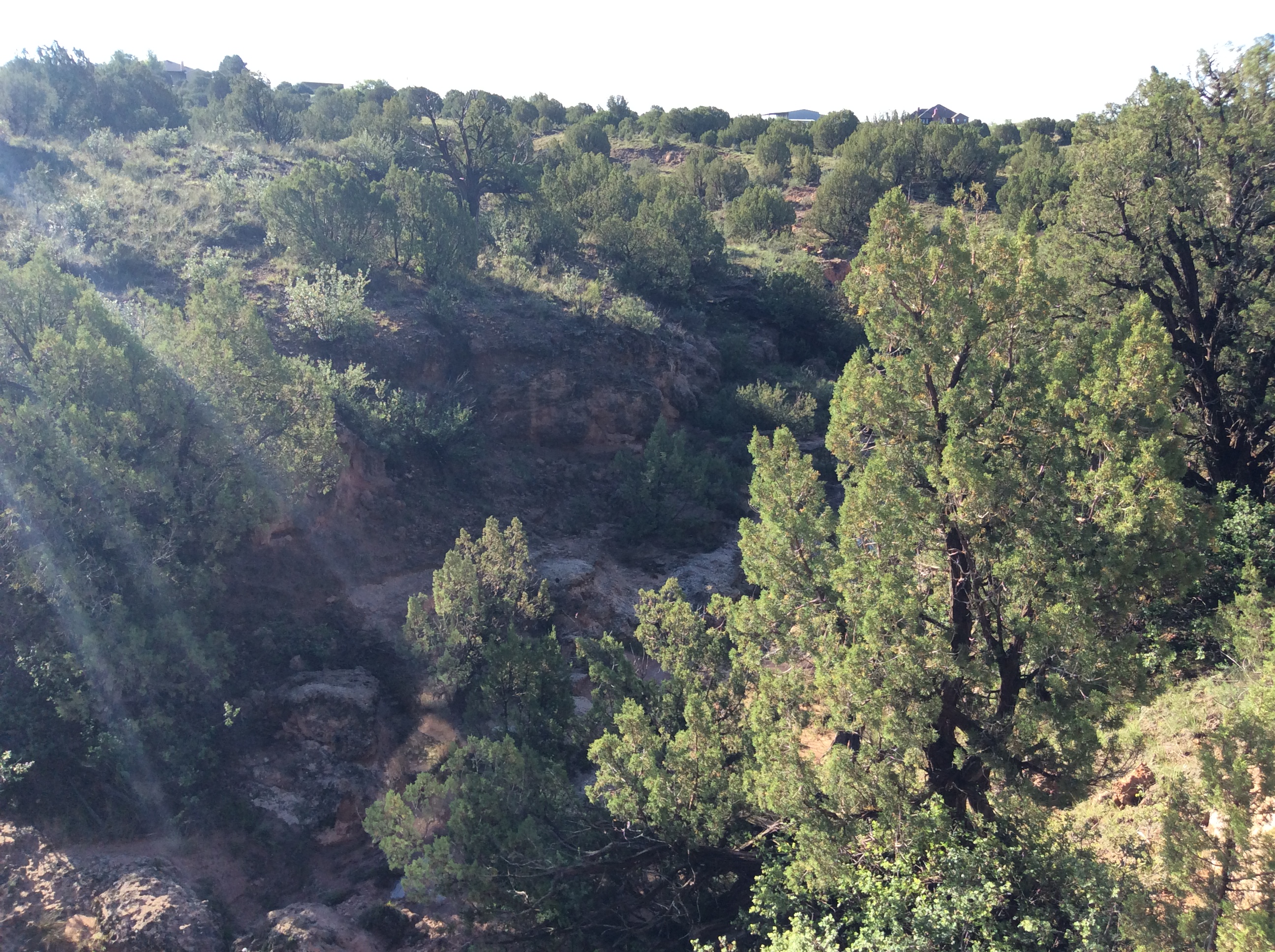
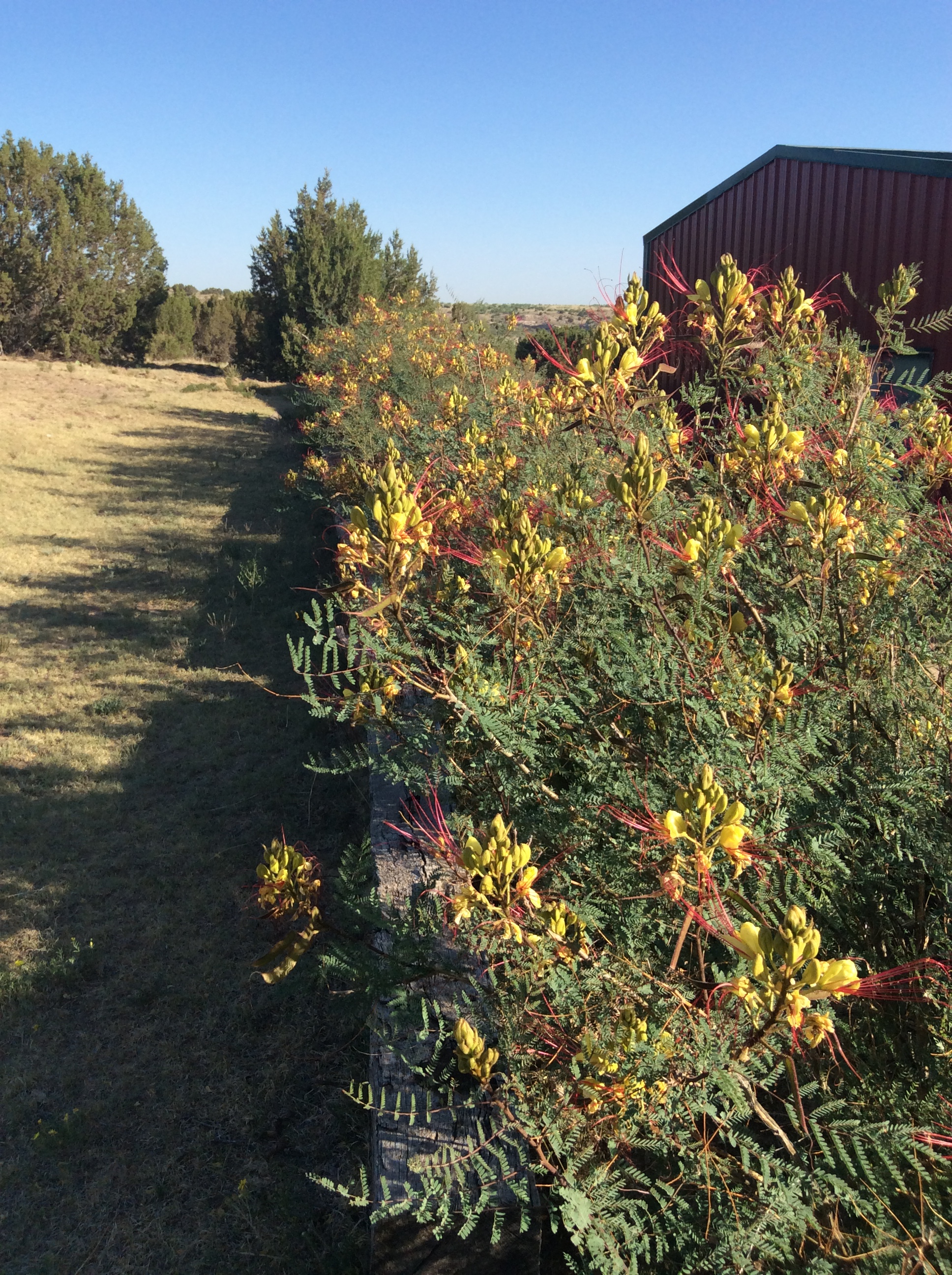
Ten days ago I took the final photos of the house I originally built as my dream home. Events occur, life changes, new adventures await. Final photos taken from the patio, great room, and walkway to the barn of the house where I lived the last 13 years.

Now I am in The San Gabriel Valley in northeastern LA County house hunting. The trees here, the flowers, the succulents astonish. Purple jacaranda trees in full bloom line many streets. Yesterday evening while out strolling around the hotel grounds for some exercise, I saw the largest humming bird I have ever seen. I feel excited to start this new adventure.

STUFF


One of my fellow elementary school students from decades ago posted a quote on Facebook, the topic of which is STUFF. The gist of this is that STUFF rarely makes your life better, usually costs money, fails to contribute to wonderful memories, and provides little in the way of happiness. The timeliness of this post really hit me. Where have I been lately? Certainly not doing much blogging. In addition to working full time, my recent endeavors focus on getting rid of STUFF as in took 35 pounds of paper documents to the shredder and there is more to come, hauled one load of clothes I no longer wear to the shop for Downtown Women’s Center and another load is stacked up on a desk, gave 20 books to the school library and some to the local bookstore, lined up glassware from flower bouquets sent to me to take to the florist on Tuesday on way home from work, and I just got started. More boxes remain to attack.

How did I acquire all this STUFF, and more importantly why did I keep some of it for decades? Perhaps easier to haul it around than to address the problem. Some of it was so old, it even shocked me why I still had it. Now that I am done for today getting rid of more STUFF, I am going to take a walk in the sunshine and admire the yellow wildflower carpet beautifying my land.

Reflections–Old Year, New Year


Most 2020 goodbyes ring with epithets on the horrors of 2020. I object. 2020 brought bad, yes, mainly due to Covid 19’s effects on the lives of masses. It also enlightened us:

-staying home makes cleaner air.

-staying home increases home gardening and thus healthier eating.

-staying home leads to a slower, more thoughtful life, to extra time with family.

-staying home reconnects us with ourselves.

2020 lead to positives that have nothing to do with Covid 19:

-increased awareness and concern for the lives of others different from ourselves.

-increased awareness that discrimination and brutality among our police exists and we need to fix it.

-increased awareness of the ever growing income gaps in our society.

Covid 19 did bring:

-an increased awareness of the impacts of any pandemic and that we must prepare ourselves because there will be more.

-an increased appreciation of essential workers and their roles in our everyday lives.

-an increased appreciation for nurses and doctors and other health care workers.

Spring will come,

flowers will bloom,

birds will sing.

Yesterday, I heard Bishop Michael Curry speak on national news. I will close with one sentence which remains with me:

“Love is a commitment to the Common Good.”