A Surprising Find at the Library


Two days ago I drove to the local library to return “The Historian” and inquire about a book an acquaintance had recommended. The library houses a used book section at its front hall entrance. I usually only glance at it because mostly it contains books in which I have zero interest. I glanced once again. There in nonfiction I saw NERUDA painted in big, bold bright colors-blue, red, green, purple–across the top half of a book cover. Just below this was a parade of flowers marching across the middle of the cover in the same bold, bright colors. Finally, at the bottom painted in bright red on a black background in capital letters it read, “MEMOIRS.” Inside the O is printed in the same red these words,”confieso que he vivido.” I snatched it up. The little sign said 25 cents. Although I’ve read Neruda poems mostly translated into English, I had no idea he had written anything about his own life. I knew I had to read this. I knew some things about his fascinating life. I wanted to know more. I dug around in my wallet, found a quarter, and deposited in the little brown box one of the librarians had indicated.

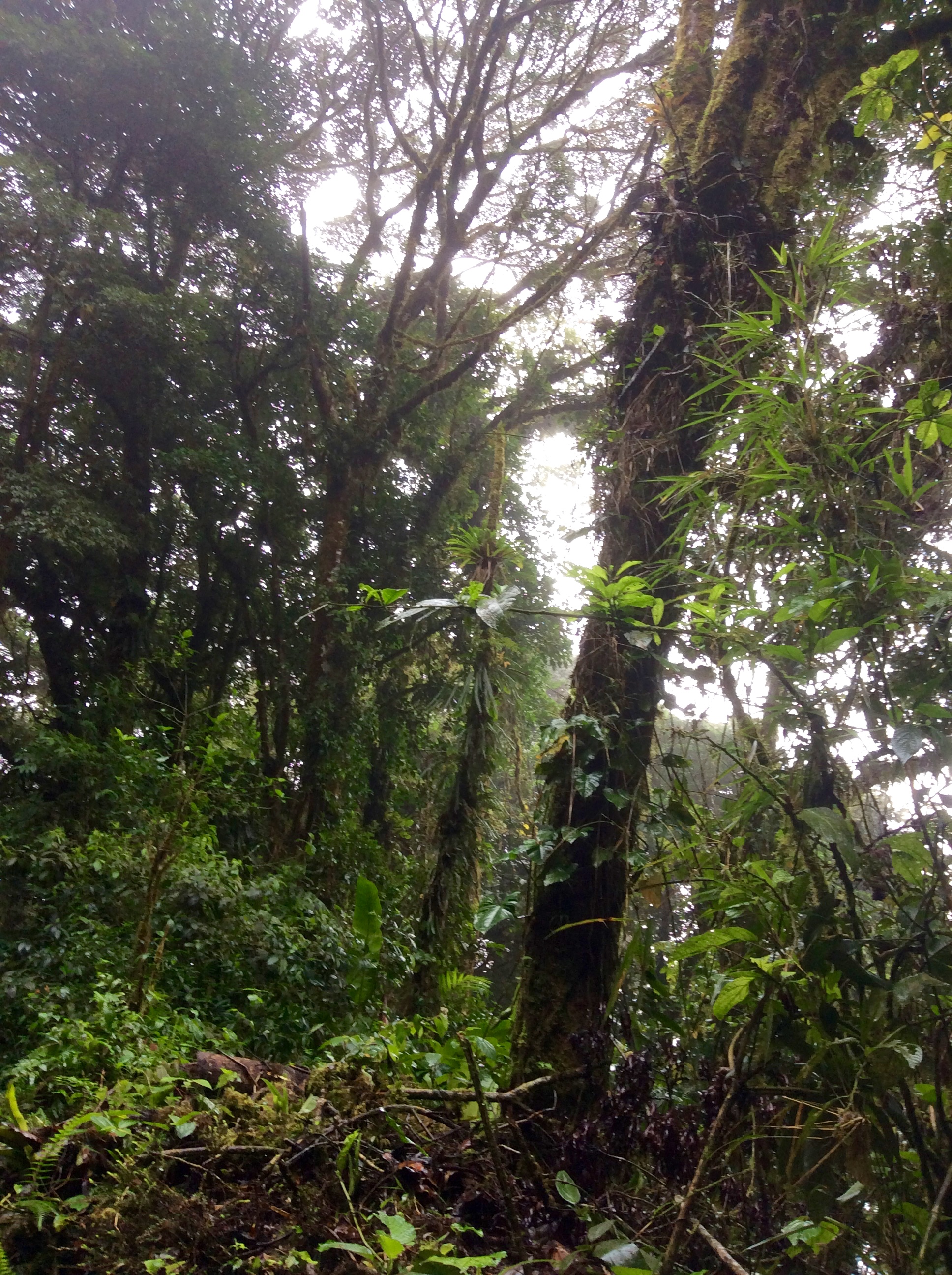
Later at home, I read the beginning, his brief introduction, explaining there are gaps here and there. He also explains, “What the memoir writer remembers is not the same as what the poet remembers.” He goes on to explain this. I will need to contemplate this more. Then in the beginning of the first chapter, “The Country Boy”, he describes “The Chilean Forest”. It starts, “Under the volcanoes, beside the snow-capped mountains, among the huge lakes, the fragrant, the silent, the tangled Chilean forest…” What continues is a prose poem describing this forest with intense sensory detail so clear the reader can see the details, the mystery, the lushness. He ends with this poem with the words, “Anyone who hasn’t been in the Chilean forest does not know this planet. I have come out of this landscape, that mud, that silence to roam, to go singing through the world.” Reading this beginning instantly linked me to his poetry I had read, to its sensory detail, to its lyricism.

They say we are all products of the environment in which we grew up whether we like it or not. Reading this is making me view this truism in a new light.

In Defense of Young People


Recently, at a party I attended, someone claimed young people these days are lazy, don’t want to work, feel entitled. Sometimes I can keep my mouth shut, just listen, and disagree inside. Not this time. When I hear comments like this about young people, comments with which I vehemently disagree whether it is in person or on social media, I feel compelled to speak up.

During at least half the year, I spend one day a week at an inner city high school. Granted the students I work with are high achieving, students who are the opposite of lazy, some almost to the extreme. When I mentioned this, the person said, “Well this is because they are recent immigrants.” In most of these cases at this school, that is true. Then I explained that I had taught more than 20 years at two Title I high schools where nearly no one was a recent immigrant. Of course, like throughout history, there are some lazy young people. That, however, does not describe the majority. I’ve had homeless students who took the hardest dual credit classes and prevailed. I’ve had students who spent extra time at school because it was safer than being home. I’ve had students whose parents were in jail or drug addicts but still made it to school, did the required work, and graduated. I’ve had students struggling with mental health issues but no matter what managed to do the work required.

Reasons to be lazy abound. Reasons to feel hopeless about the future abound. Look at the present economy, look at the wage cap between the rich and poor, look at how many struggle to find a decent job. Young people are aware of all this, acutely aware. Yet most do the work required and press on no matter what.

I applaud them!

Essence Objects


While reading the novel “Landscapes” this afternoon, this passage struck me: a man, recently blind, explains, “I rely on my other senses. I get by. But in another way I’m not sure I ever knew where I was headed, not even when I had eyesight, you know what I mean? I doubt anyone really knows where they’re going. But you walk ahead anyways, no?”

This caused me to reflect on a video I saw earlier in the day at Mendez High School where I work for College Match LA. The purpose of the video was to help students address what they will write about in their college essays, how they will write about themselves. It’s called “Essence Objects”. The task is to think about various objects you would put in a box, objects that represent how you see certain things or people, how you think. Here are some examples:

  • What object reminds you of your mother?
  • What object represents your favorite piece of music?
  • What object reminds you of a fear you have?
  • What object would you choose to illustrate your favorite book?
  • What object would a friend associate with you?

The list goes on and on, thought provoking questions. I don’t have to write a college essay but I’m going to go over the whole list and think and think and think.

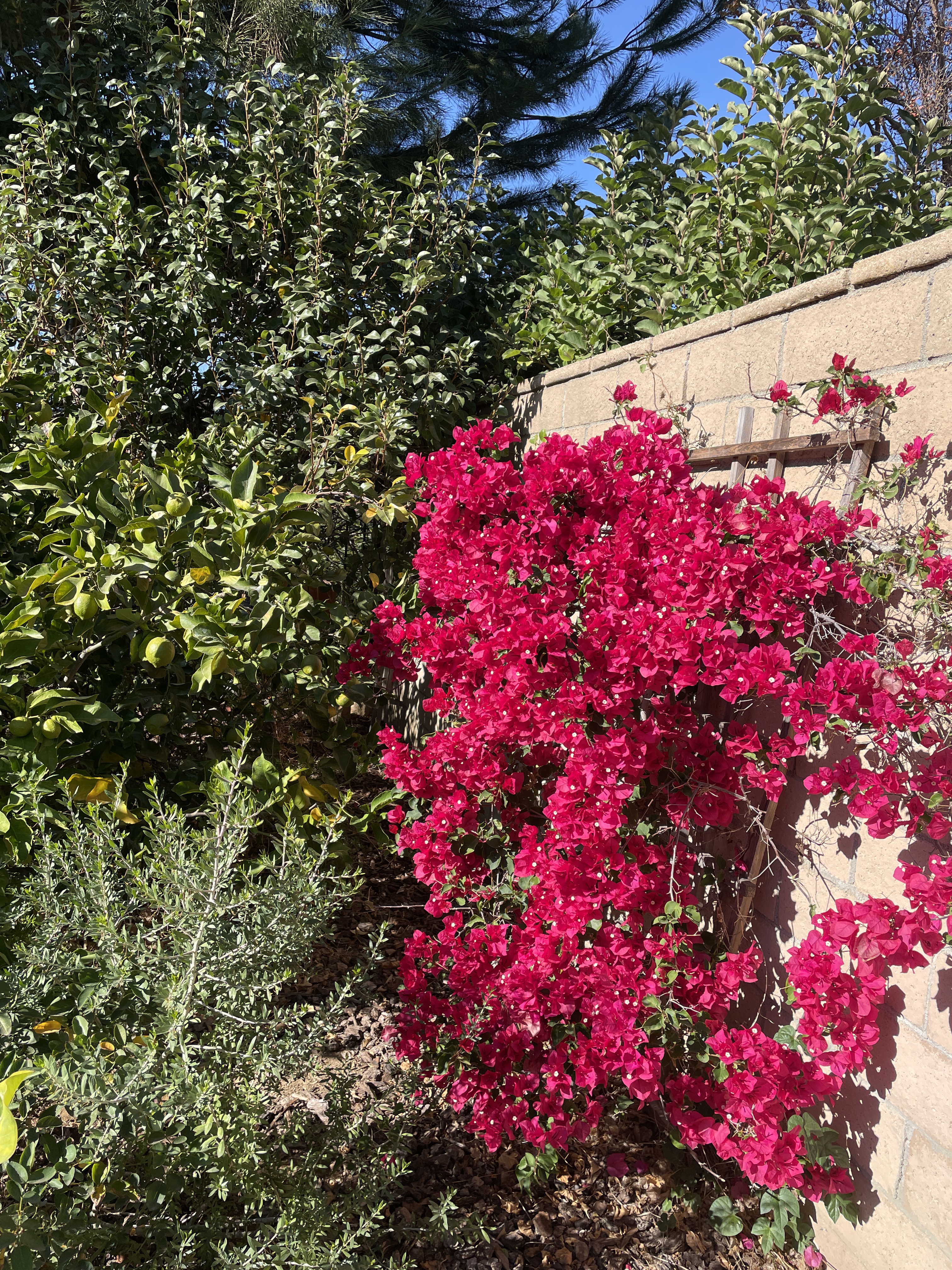
Note: I picked this photo because the objects that make me think of my mother are roses. She had a rose garden in front of the barn on our Missouri farm. All summer when the roses were blooming, she floated roses in a glass bowl on the kitchen table where we ate.

The Angel


Can you call yourself a creative writer if you have not written a word in months? I have a friend who promotes 20 minutes of writing per day, telling people to just write, forget quality, just write. Really?! I care about quality. Perhaps too much? I make sure to read quality writing 99.99% of the time. Is this just words I am writing here or is it quality or garbage? You tell me!

One thing I can do is read. I’m good at reading. And singing. And gardening. I talk to plants; that’s why they grow for me. I truly care. They bring me peace and joy.

In the last two months, I’ve read three collections of short stories, two by Anthony Doerr and one by Gayle Jones. Normally, I am not a short story reader, but here I am reading these. Talk about different. It’s almost like these two famous writers inhabit different planets. Doerr’s stories seem intensely emotional, often a bit fantastical and heart wrenching with a lush, descriptive, poetic style even though Doerr is not a published poet. Jones is a published poet, yet her stories are blunt, conversational, often first person and sometimes short–one page short.

In many, a character is telling his or her (most of the stories are her) story about where they are, some experience, somebody they knew, what they did or said. In one story the narrator says she’s an angel, explains where she’s been, whom she’s known, and ends up by asking readers if they’ve seen her near the Seine. I doubt anyone mistakes me for an angel.

Note: Book 13 for 2025 is “Butter”, Gayle Jones. A collection of short stories.

Book Ten for 2025: “Four Seasons in Rome”, Anthony Doerr


If you have ever felt enchanted by a trip to Rome, you will find this memoir delightful and informative. It made me want to return just to stay a while, wander around, visit the more obscure places Doerr describes, people watch, eat, and drink local wine.

In 2007, Anthony Doerr, the 2015 Pulitzer Price Winner, won the Rome Prize to become a fellow at the American Academy in Rome. He and his wife, Shauna, moved to Rome with their newborn twins, Owen and Henry. This memoir memorializes the four seasons they spent living there. They learn to care for babies; wander throughout Rome visiting tourist sites, local restaurants, the butcher, the baker, the toy store; learn enough Italian to acknowledge all the Italians who stop to admire the babies; and attend the vigil for the dying Pope John Paul II.

While there intending to write his later novel (the one that eventually won the Pulitzer) and failing to do so, he does manage to write a short story which I have read in one of his collections and to read everything by Pliny the Elder. His discussions about his readings makes me want to read some of Pliny the Elder myself. As in his short stories and novels, Doerr’s descriptions, language, and observations delight and enchant. This is a wondrous book about one of the world’s oldest and most fascinating cities which he calls, “a Metropolitan Museum of Art the size of Manhattan with no roof, no display cases…

Book 50 for 2024: “Teddy and Booker T”, Brian Kilmeade


I finished this book on New Year’s Eve, missing my goal of reading a book a week all this past year, but not by much. No excuses except one book I read was nearly 800 pages which took a bit longer.

This last book was full of surprising information. I had no idea that Teddy Roosevelt and Booker T. Washington were friends. This book is very detailed with loads of historical information about the lives of both of these men. Born worlds apart in terms of freedom, economics, and race, they both had a goal to further the status of Black people. In terms of his political future, Roosevelt made a big mistake when he invited Washington to the Whitehouse for a family dinner. Once this event became known, white people in the South were outraged. Jim Crow incidents, e.g. lynching, increased. Roosevelt felt he had to backtrack some to save himself and this included one his worst decisions in terms of racial equality. Meanwhile, they tried to hide their relationship more, did not visit each other as often, and Washington had to go to great lengths to appease some whites in the South to keep Tuskegee growing and flourishing. W.E.B. Du Bois viewed Washington negatively and thought he went too far to appease white people and did not do enough for his own race. Du Bois who had grown up free in the North did not understand Washington’s viewpoints and did not know what he did secretly to help Black people. If you are interested in the actual history of this period and how these three men affect the present, I highly recommend this book. There are 35 pages of references, notes, and documentation at the end of the books for those who want to read further on this topic and time period.

Book 44 for 2024: “Framed: Astonishing True Stories of Wrongful Convictions,” John Grisham and Jim McCloskey


Without doubt this ranks among the most horrifying books I have ever read. Every life story (there are ten) discussed in detail illustrates failures in the US justice system:

–inept police, sheriff departments, and judges

–judicial corruption

-criminals paid to give false testimony in return for lower sentences or pay

-sheriff departments, police, and judges unwilling to admit they made a mistake when evidence clearly indicates they are in error

-racism

In one case ten years ago, an innocent person in Texas was actually put to death. The governor refused to acknowledge the evidence given to him that proved the person was innocent. The majority of the cases discussed in this book occurred in Texas although this sort of thing occurs throughout the country.

Note: One of the authors, Jim McCloskey, founded Centurion Ministries, the first organization in the world focused on freeing those wrongfully convicted. The state with the most exonerated individuals is Texas.

Book 41 of 2024: “Crazy Horse”, Larry McMurtry


One of the saddest books I’ve ever read, this short piece of nonfiction details not only the life of Crazy Horse but also the demise of the traditional lifestyle of the Plains Indians. Crazy Horse has been the subject of endless legends and myths, many of which apparently have nothing to do with reality. He was not a chief; he often defied traditional Sioux customs. He was very much his own person. Among his people, he was especially known for his kindness and support of the poorest and weakest and for his prowess as a warrior. Crazy Horse died young due to not only white betrayal but also that of some of his own people.

I highly recommend this book if you are interested in this particular period of US history. At the end is a comprehensive list of sources with notes about each one of them.

Book 40 for 2024: “If We Are Brave: Essays from Black Americana”, Theodore R. Johnson


Johnson, a columnist for The Washington Post, notes that the US was founded on a set of ideals but for much of its history agreement on what those are ideals are has not existed. What are these ideals, who are they for? Today there is little agreement on much of this. There seems to be a lack of a common vision on what a democratic system is and should be and for whom. The essays in this book address these questions both today and from the origins of the country when only white men who owned land could vote. This book also discusses how different races in the country and the changing predominance of cultures affects the ideals people hold and the kind of country they envision for themselves.

As a Black man who is a retired Navy Commander, he also discusses his own experience, extensive research, and personal views. This short book is an excellent primer on how different races and cultures experience living in this country and their varying visions of the meaning of democracy.

Book 37 for 2024: “Follow the Science: How Big Pharma Misleads, Obscures, and Prevails”, Sharyl Atkinson


The title tells it all. The author is an investigative journalist. The book is filled with details of varying science reports and studies. A lot of what she quotes is the opposite of the official narrative and science for vaccines in particular, especially those related to childhood vaccinations and Covid vaccines. Technically, both flu and Covid shots are not vaccines in that they do not keep the recipient from getting the disease in all cases like the vaccines for smallpox, measles, and polio do. This does matter in considering whether individuals should get the shots. She also discusses general public immunity in regard to flu and Covid, especially the latter. She also questions the claims that childhood vaccines as they are currently given never cause autism and whether some children are susceptible to extremely negative reactions to these vaccines when the majority of children are not. The main claim is that the giant pharmaceutical companies have enormous power to control the narrative about medications they produce, have huge influence with elected officials of both parties, and will do whatever it takes to make a profit on the drugs they manufacture.