Going Home Again


Last weekend I returned to the county where I grew up and the family farms in Andrew and Holt County, Missouri.  It had been at least six years since I had returned to the place my great grandfather homesteaded over a hundred years ago.  Strangers live in the house where I grew up and my father lived 80 of his 90 years.  On the site where he was born, only the old carriage house still stands, a sentinel to a lifestyle long gone.  Repeatedly, I tried to write a poem about all this, but have not been able to do so–perhaps the experience is still too close.  Additionally, for the first time, I attended my high school reunion and chatted with individuals I had not seen since I was 18.  Decades truly change people; I would have recognized only a couple without the name tags.  Northwest Missouri this year presents an intense emerald landscape.  Having travelled there from the semi-arid land where I now live, I suffered “green” shock.  And tree shock.  The Panhandle of Texas grows few large trees outside of towns and cities.  Even with my very ordinary camera, these photographs capture the beauty I witnessed and family memories I want to remember and share with my children and friends.

SAM_1167

This is the house where I grew up and Dad lived 80 years.  The building in the foreground was built during the depression.  Before it was put to its final farm use–for hogs and chickens at various times in my childhood–Dad held dances here.  Because of prohibition, the sheriff always sent someone to make sure no illegal alcohol consumption occurred.
SAM_1097

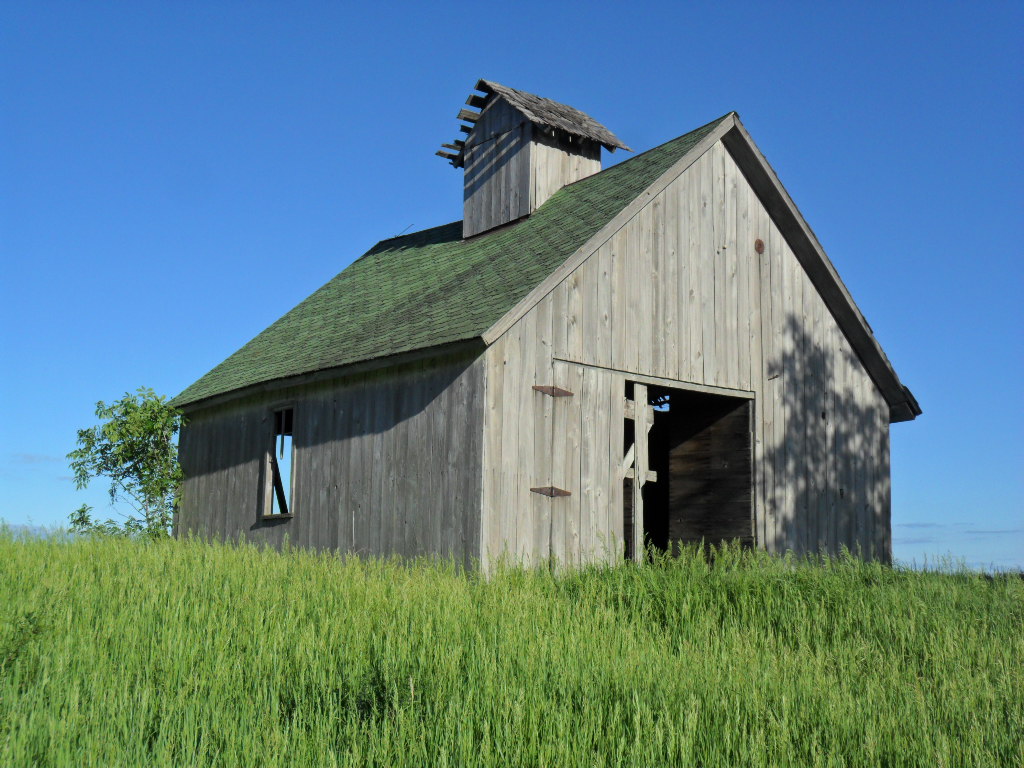
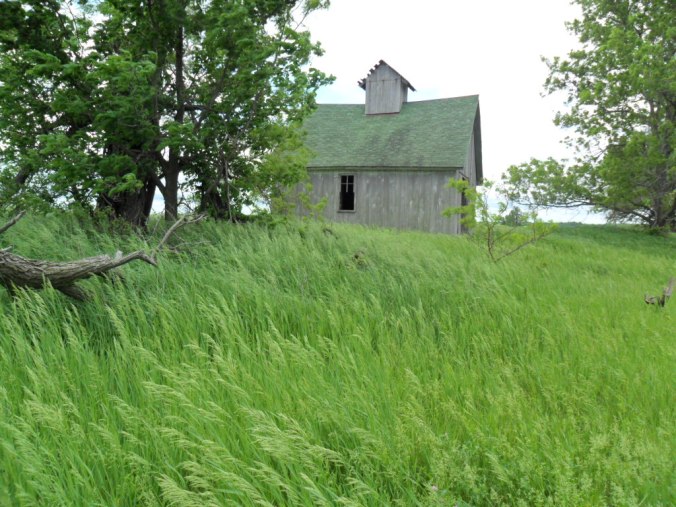
The old carriage house, just south of the site where a large house stood during my childhood, still stands.  The stained glass transom window hanging in my own house now and an etched glass hunting scene are all that remain of the house where Dad lived as a small child.  Emptiness and raccoons finally destroyed it.   When he gave me the windows over thirty years ago, Dad said it was impossible to keep an empty house in good shape forever.

SAM_1165

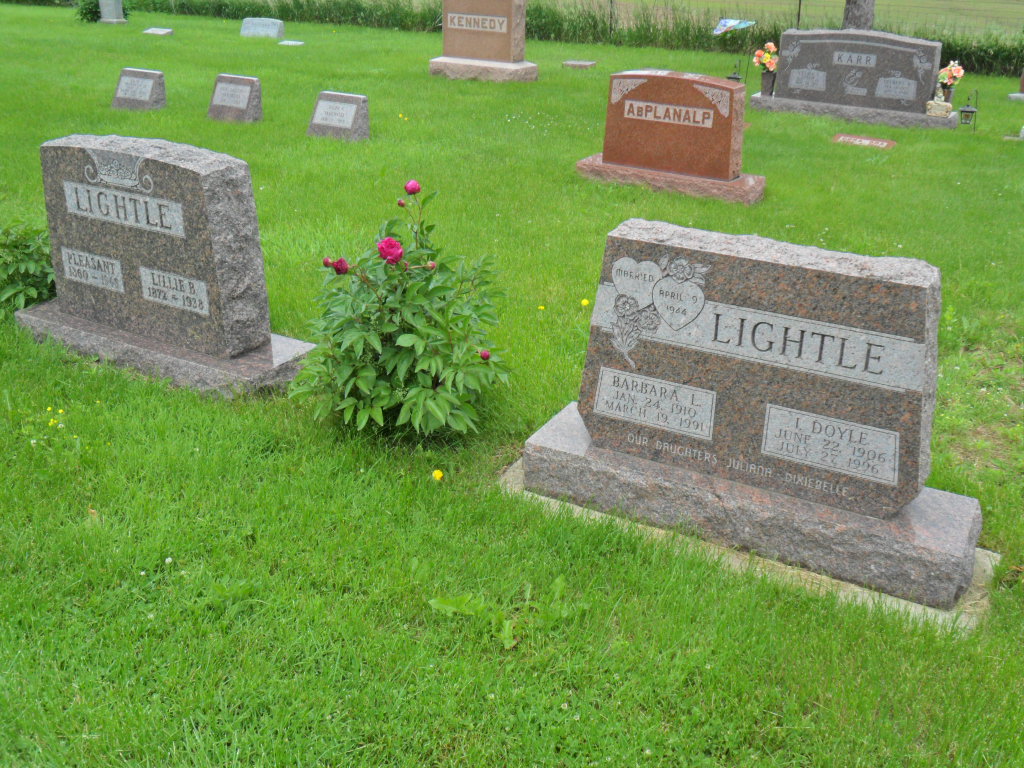
At the age of 18, my great grandfather, Gottlieb Werth, came to the United States to avoid being drafted into the Swiss army which hired out soldiers as mercenaries.  My father told me what his mother told him:  my father’s mother stood on the roof of her house in Switzerland and waved until she could no longer see her son; she never saw him again.  This photograph shows his grave in the Fillmore, Missouri, cemetery.

SAM_1094

Nearby, perhaps fifty feet away, lay the graves of Mom and Dad and my grandparents.  I never knew this grandmother; she died long before I was born.  My grandfather died when I small and sadly I do not remember him.  The family stories tell that he taught me to talk at a very early age, nine months, because he held me on his lap and told me about everything occurring outside the windows.  My first word was “tractor”.
SAM_1090

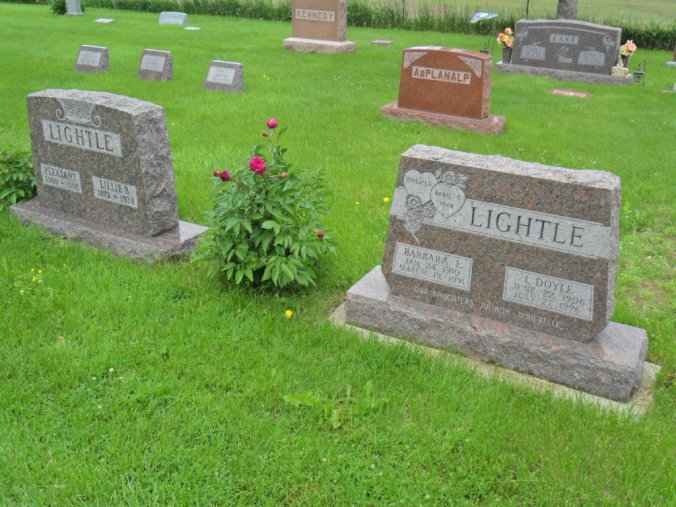
Another family story tells that this grandfather walked to Andrew County, Missouri, from Illinois.  Andrew County’s rolls are full of Lightles.  It remains the only place I have ever lived where I am not the only person with my last name in the phone book.  Dad claimed there would be even more Lightles except for the fact that several brothers died when they tried to walk across the Nodaway River on winter ice and it broke.  They all drowned.
SAM_1106

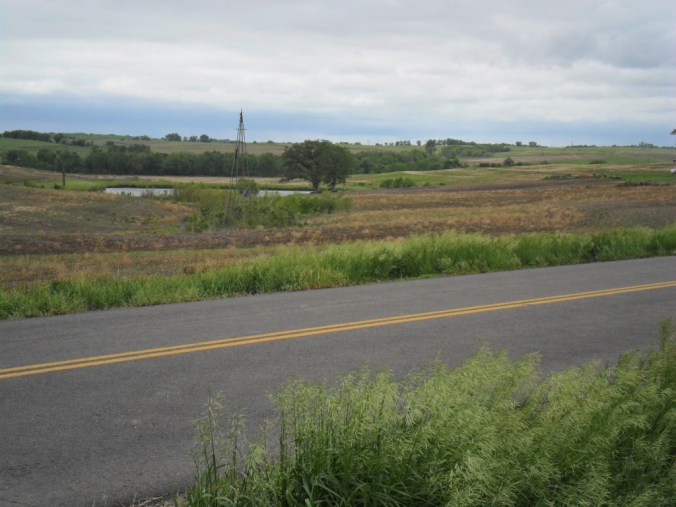
Dad built the large pond in this photo and stocked it with fish.  Until a few years ago when someone bought the land and destroyed all the trees, a small forest of ancient oaks, black walnuts, and chestnuts grew between the house and pond.  Dad kept it mowed and groomed–a park.  Sadness filled me when I saw the trees all gone.

SAM_1107

All my childhood we attended Antioch Christian Church.  Although I could not see it from my house, if I walked across the road to where the carriage house still stands, it looms across the distance.  Potlucks were a very popular activity here.  Mom made such fabulous pies that everyone would get her pie first to make sure they got a piece.

SAM_1114

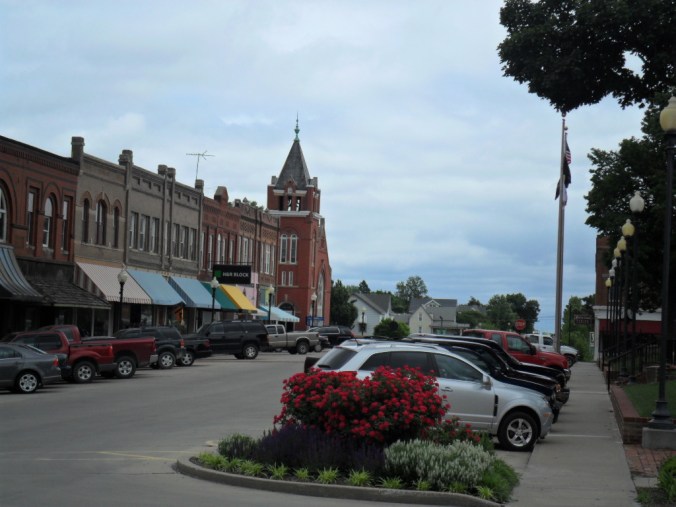
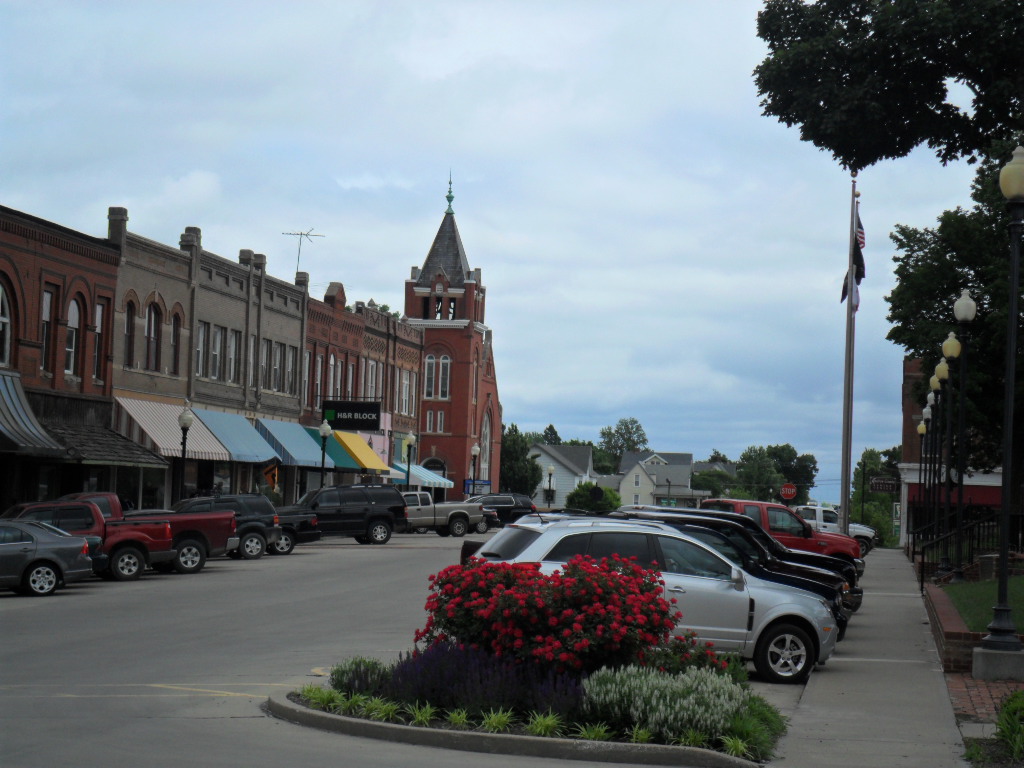
The sign in front of the Andrew County Courthouse.  This county remains filled with people of Swiss descent to the point they have celebrations commemorating their heritage. The following include photos of the courthouse and some of the restored buildings on the courthouse square.

SAM_1112

SAM_1116

SAM_1113

Several reasons exist for my returning “home” at this time, including attending my high school reunion for the first time.  The following photos show several people I had not seen since I was 18, including Melanie Eisiminger, who was the valedictorian when I was salutatorian so many years ago, and Jim Ahillen and his lovely wife.  Melanie is in the middle.

SAM_1127

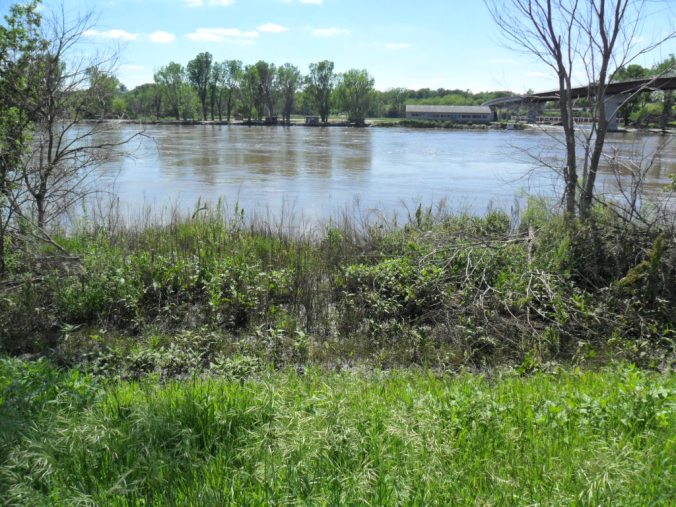
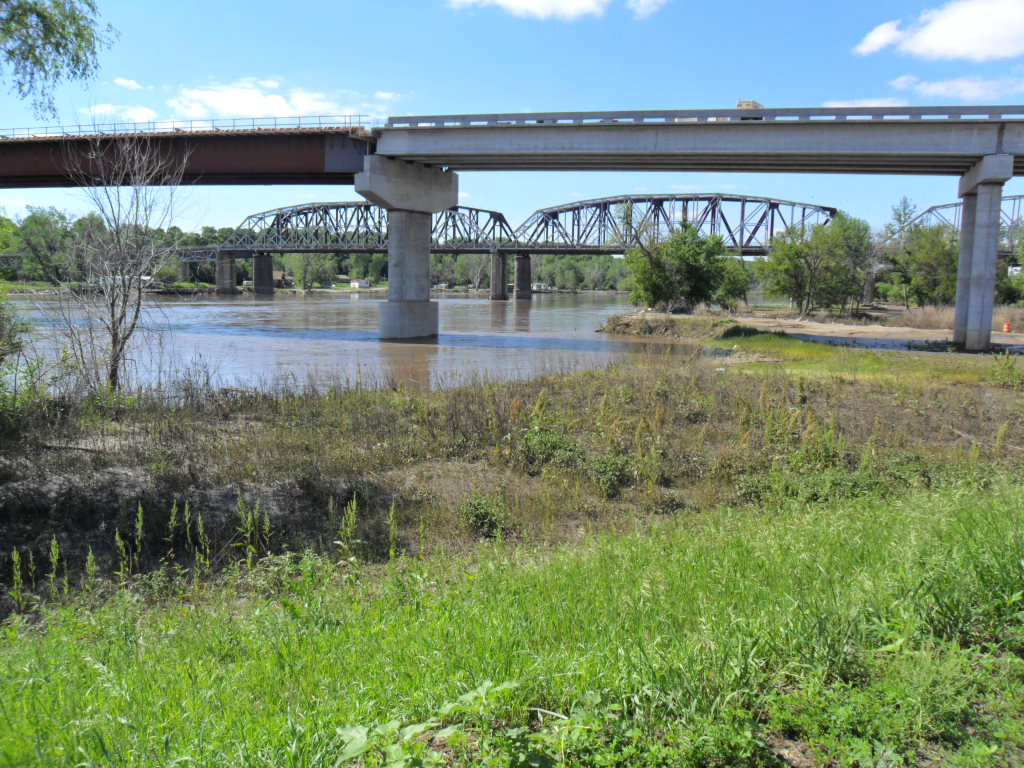
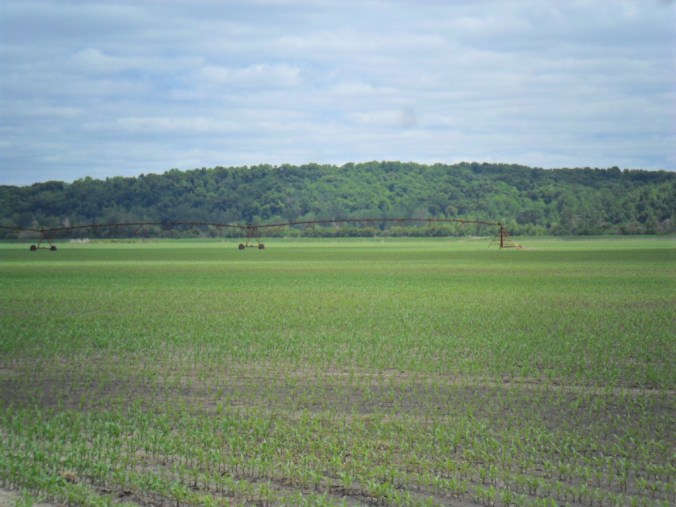
My mother grew up in Holt County, Missouri,  in the town of Fortesque and her family farm next to the Missouri River still remains mostly in the family.  In my childhood, Fortesque was still relatively prosperous.  Now fewer than fifty people live there.  The farm lays right next to the Missouri River.  I walked down the levee and took photos of this mighty river, the Rulo, Nebraska bridge, and the farm.  If I turned one direction, I faced the bluffs where White Cloud, Kansas, resides and the other direction is Nebraska.

SAM_1134

SAM_1128

SAM_1139

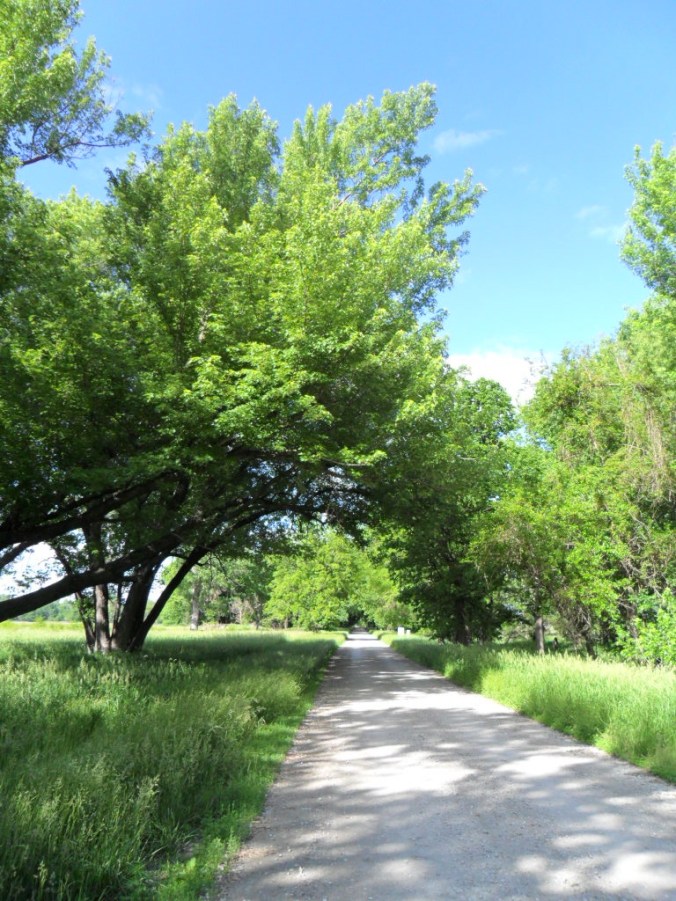
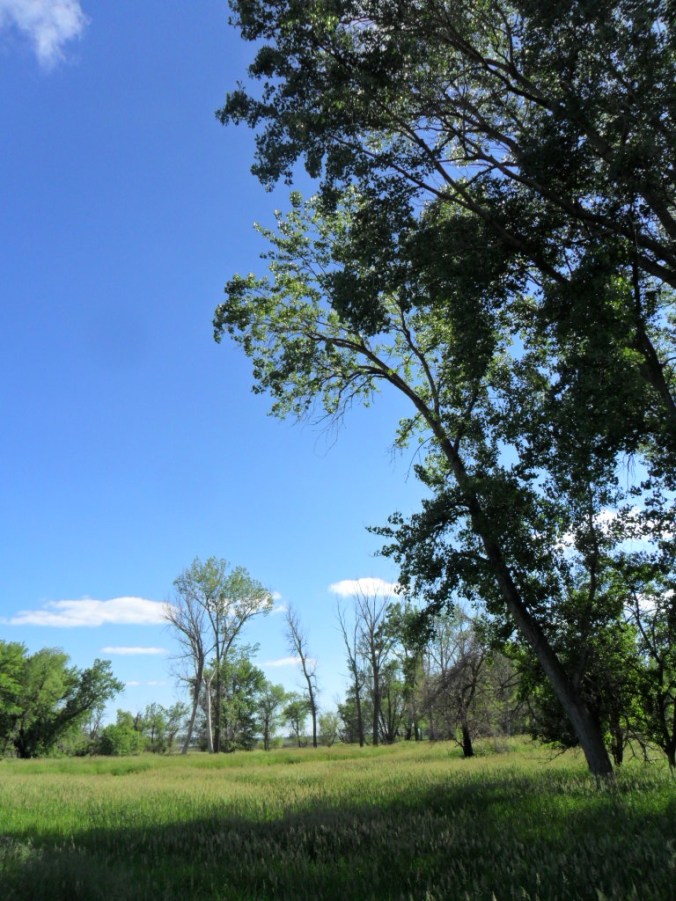
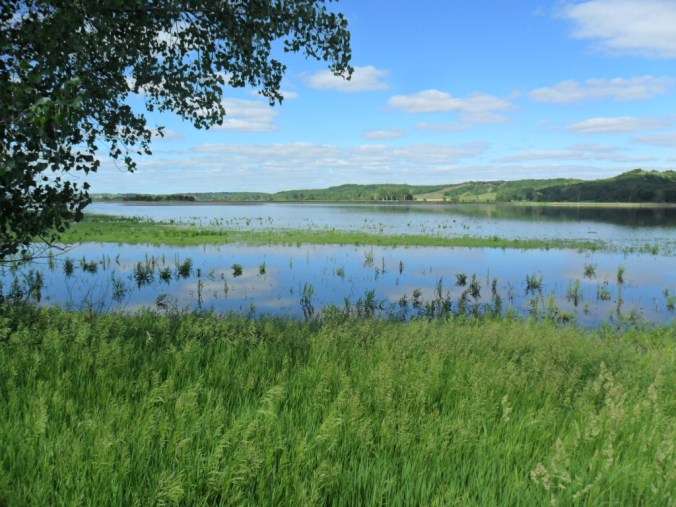
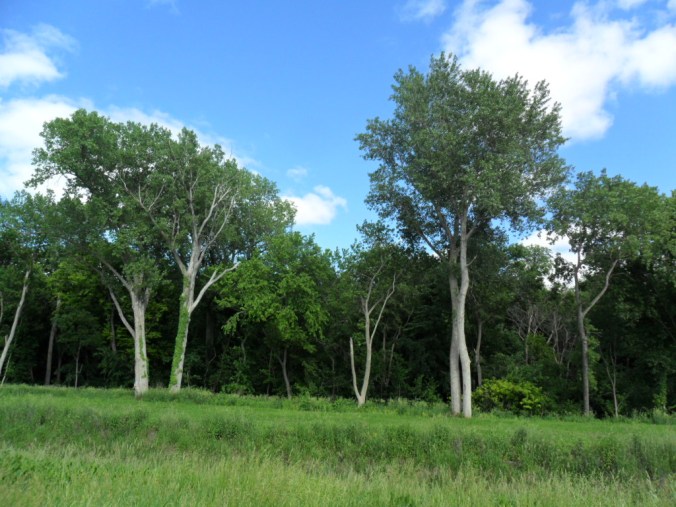
Between the Missouri River and the bluffs lays one of the largest wildlife refuges in the United States, Squaw Creek National Wildlife Refuge.  It is especially important for migratory birds, bald eagles, wading birds, and various mammals.  One can drive the new road ten miles through it to observe birds in particular but also other species.  The huge cottonwoods and oaks fascinated me.  It appears I had totally forgotten just how grand these trees can grow if given adequate water.  In one area I drove for at least four miles through a tree tunnel, then several raptors screamed at me while I tried to photograph them, and finally I managed to photograph a red winged black bird and geese.  After several days of semi constant rain, it felt fabulous to experience a perfect sunny day for my tiny trip to the wild.
SAM_1150

SAM_1148

SAM_1151

SAM_1149

SAM_1152

SAM_1155

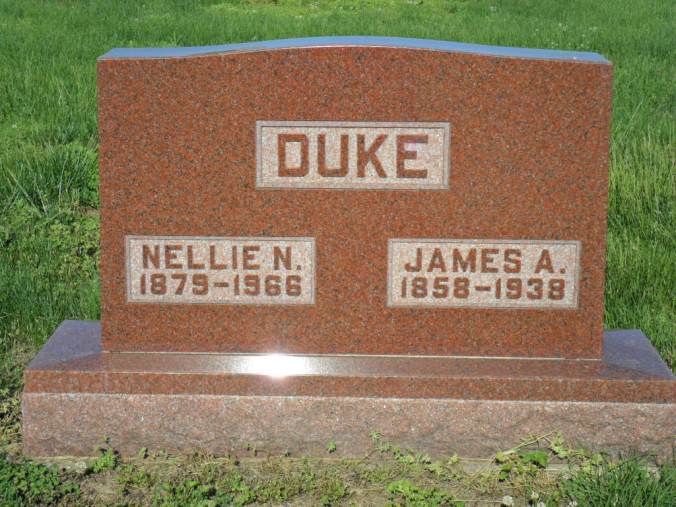
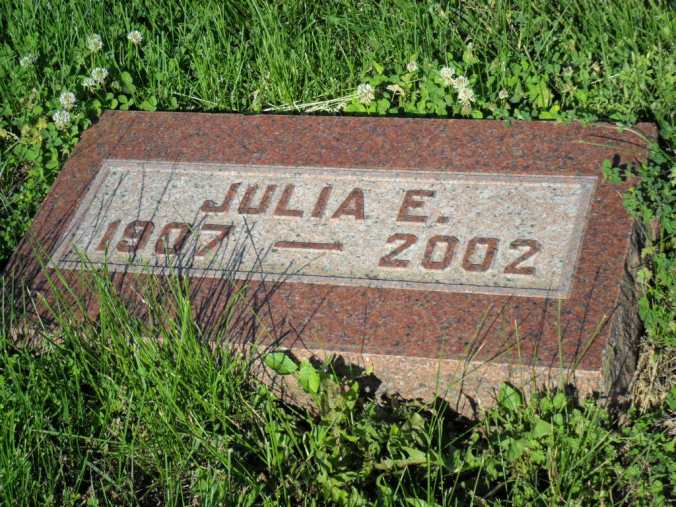
After I left Squaw Creek, I drove to Mound City to find the graves of the Duke side of my family.  The last time I had been there was when we buried my aunt, mother’s sister.  I also remember going with her there more than twenty years ago.  I recalled the general location but had to hike around a bit to find them.  Because Grandfather Duke was much older than Grandmother, I never knew him.  Aunt Julia came to visit me at least once a year until she neared ninety and could no longer travel easily.    She never married and remained admirably independent until she became too feeble to get around on her own.
SAM_1160

SAM_1161

The E stands for Evelyn.  She was named after a woman Grandmother worked for on the White Cloud Reservation, Evelyn Le Clair.  On my previous visit to Missouri, I went to the White Cloud Reservation and inquired about the Le Clairs but had been told they had moved away a long time ago.  Grandmother had to work because her father went blind and could no longer work.  His name was Kaiser and he, too, came from Switzerland.  The following is the gravestone of my great grandmother.  Mother frequently recited sayings from her, e.g. you can’t tell by the looks of a frog how far he can leap.

SAM_1159

In  my childhood, we cut across the country side to go from the Andrew County farm where we lived to Grandmother’s Holt County farm.  I remained unsure whether I could recall exactly how to do this but tried and met with success, feeling very happy with myself, remembering something I had not accomplished in decades.  Because it had rained six inches the previous week, unlike last year during the drought, knee high grass grew along the backroads, corn was coming up, ponds were full.  I drove by the houses of people I remember from childhood, not knowing who lived there any more except a few.  People change, life proceeds, but the country still holds endless promise and beauty.  Finally, with a few hours left before flying back to Texas, I stopped by a new area north of Kansas City, Briarwood, strolled around, visited an excellent natural food market, ate a rather exotic lunch, and took a few photographs of huge new houses and the Kansas City skyline.

SAM_1173

SAM_1175

Everyone asked me to bring some rain back to the Panhandle of Texas.  It has rained three times since I returned home.  A coincidence, of course, but very welcome.

For All the Lonely, Lost Young Men


At first, I planned to simply post a poem by this title, a response to the bombing in Boston and the young men who orchestrated it.  Then I decided that a few comments seemed more appropriate.  These comments come from a realization and conversations with a couple of colleagues at work noticing that all the perpetrators of the bombings and mass killings have been young males.  These young men cite various causes from the anger of being disenfranchised and bullied to religious fervor of a certain type to insanity.  All acknowledged anger over something, a rage so profound they felt driven to act, at least for those to whom authorities could talk.  Most appeared to be alienated from their culture, friends, or family, young men who failed to fit in.  Although we must condemn their horrific acts, perhaps it would also prove more productive to ask, “Why?” Unless we know why and address the causes, these events will be repeated somewhere at some totally unforeseen time.  And many innocents will die again and again.  Perhaps equally disturbing is the fact that we are not alone.  These types of events repeat themselves in one way or another in many other countries in the world.  Additionally, I realize that many people feel the solution lies in revenge, punishment, justice as they see it.  For those, many of the sentiments I express in this poem may seem too simplistic, too kind, too naive.  I teach high school.  I work with all types of young men daily.  I see their fear, anger, loneliness even if fleeting and only momentarily.  We can make a difference; we can reach out.

Look at yourselves

filled with

fear,

anger,

hatred.

This world may not embody

the perfect place

of which you dream;

do not despair.

We care.

Do not shoot me.

I care.

Do not throw bombs at the innocent;

They care.

Do not hate the different.

They care.

Do not despair.

2012 in review


The WordPress.com stats helper monkeys prepared a 2012 annual report for this blog.

Here’s an excerpt:

600 people reached the top of Mt. Everest in 2012. This blog got about 2,800 views in 2012. If every person who reached the top of Mt. Everest viewed this blog, it would have taken 5 years to get that many views.

Click here to see the complete report.

I started this blog 11 months ago.  I want to thank all my followers, commenters, and friends who follow me via WordPress, Facebook, etc.  for making this a success.  Thank you and Happy New Year.  May this new year bring joy and prosperity to all of you.

Pumas


I have previously mentioned that I am taking a poetry class with Lorraine Mejia-Green through the Story Circle Network.  To date we have read poetry by Mary Oliver, Lucille Clifton, Naomi Shihab Nye, and Joy Harjo.  Clifton has written a very interesting series of poems called Foxes.  Joy Harjo’s most famous poem is about horses.  My obsession seems to be pumas even though I do love horses.

Puma I

                                                   My neighbor walked out her door,

                                                    found a puma lying on the lawn.

                                                    She arose and ambled off.

                                                    At night when I open my gate

                                                     I wonder if puma lurks

                                                     behind the cedar tree.

                                                     My daughter dreams puma dreams:

                                                      A puma chases her up a tree

                                                     There are no trees here big enough to climb.

                                                     A Zuni puma fetish guards my sleep.

                                                     I run with puma

                                                     Night wild

                                                     Free.

                                                     I scream and howl

                                                     Moonstruck

                                                     Bloodborn.

                                                     I hike the canyon

                                                     Stroll around my house

                                                     Look for puma tracks.

                                                     I see none.

                                                     I would rather die by puma

                                                     than in a car wreck.

Puma II

                                        I watch for eyes, blue changing to amber and back.

                                        I put my palm, fingers stretched to measure, into the footprint.

                                        Too small, bobcat.

                                         No puma.

                                         My thin body squeezes between the rocks,

                                                           climbing quietly down the cliff.

                                         Watching, listening, searching.

                                          No puma.

                                           Pale amber rushes across my vision line.

                                           My heart quakes.

                                           I watch; I wait.

                                           It is Isabella, a golden whir chasing rabbits.

                                           No puma.

                                           At sunrise, I walk the rim.

                                                          watching.

                                          At sunset, I walk the rim,

                                                           waiting.

                                          At night, I walk the rim,

                                                           dreaming.

                                           No puma; not yet.

Why I Write


This post continues the saga of my writing for the SCN poetry class.  One of our first assignments included reading Mary Oliver’s poem about why she writes and then write one of our own about why we write.  Unlike many writers, discipline frequently escapes me.  I write when I feel like it or get inspired or have something special I want to say.  What do I care about?  Why do I write and about what?

I want to write about

beauty and life,

wind and flowers,

riding and writing on the rim,

sleeping in the moonlight.

I want to write to

make a difference,

challenge the status quo,

instill a love of wonder,

change the world

even if only for one minuscule moment

in one tiny corner.

I want to write so that when I die, they will say,

“She mattered!”

Faith, Lies, and the War on Terror


This blog began as a vehicle to “make” me write more and share my writings, e.g. poetry, flash memoir, essays, with others and to learn from reader responses.  Along the way, it morphed into my recipes—starting with friends requesting them, my travels and adventures, inspirations, and thoughts.  This post will morph me into something I fear may be far more controversial, but also feel I must explore. Several years ago, a couple of friends and I enrolled as continuing education students in a course about Islamic thought and literature.  Our hope was to learn more about exactly what the title indicated.  Although I had already read quite a lot of Middle Eastern literature, especially Iranian, and also some Turkish novels as well as memoirs and nonfiction books, I had no one with whom to discuss my readings and thoughts.  This presented an ideal opportunity.  After a couple of weeks, it became quite clear that the teacher had a definite agenda.  Although she never overtly discussed her own religious beliefs, she generally chose parts of readings to discuss to promote a certain, anti-Islamic bias.  We read the Quran (in translation because none of us spoke or read Arabic—mine was a Pakistani translation), Ayaan Hirsi Ali—various works including Infidel, Benazir Bhutto’s autobiography, and short stories by Iranian, Palestinian, and other Middle Eastern authors.  None were from Southeast Asia where the majority of the world’s Muslims live.  None were from India.  When we discussed the Quran, she chose very specific passages that zeroed in on what she perceived to be Islam’s oppression of women and promotion of violence and war.  When the rest of us tried to also discuss passages about ones duty to the oppressed, the orphans, the poor, she would channel the discussion back to her chosen agenda.  Some dropped out.  The rest of us decided to stay because we wanted to read and discuss the writings in spite of the situation.  Over time, our insistence on a broader based view seemed to affect her strong bias slightly.  In the end, she even showed the Iranian movie, “Children of Heaven”, which presents the plight of a poor Iranian family in a very sympathetic light.  The father overtly loves his wife and struggles valiantly to help her and his family in any way he can. This class has led me to further pursue my readings of literature from Iran, Egypt, Turkey, Pakistan, India, etc., both fiction and non-fiction and to learn as much as I can about the past and present as it relates to issues in these parts of the world.  Since then, I have also experienced the privilege of hosting exchange students from Thailand, Brazil, and Argentina.  One of my closest friends grew up Muslim in Indonesia.  I also have Christian, Jewish, Muslim, Buddhist, Pagan and atheist friends from many parts of the world, and some who have little interest in religion. Recently, the librarian where I teach asked me to read Wanted Women, Faith, Lies, and the War on Terror:  The Lives of Ayaan Hirsi Ali and Aafia Siddiqui.  I finished it recently and highly recommend reading this book.  The author, Deborah Scroggins, spent six years following the lives of these two women, including interviewing their colleagues, family members, self proclaimed jihadists, and government officials from several countries.  She delineates an incredible amount of information and data.  If you care about the political and spiritual future of this planet and the ongoing controversies surrounding Islam, Christianity, and Judaism, this book provides an excellent opportunity to explore history and the events of the last 20-30 years, and then to develop your own insights.  My hope is that this post will encourage others to explore new avenues of knowledge and open wider venues of thought that encourage a better, kinder world in which we respect and value each others’ differences.

Recommended additional readings:   This is one of my favorite magazines.  It is free and covers art, cuisine, nature, history, literature, geography, just about everything imaginable.  For teachers, they have suggested uses and additional materials at the back.  It comes out six times per year.

If you are unfamiliar with literature from the Arab world, this is a good place to start.  Mahfouz won the Nobel prize for literature.  Although his novels take place in Egypt, the themes are universal.

In spite of the word jihad in the title, this is more of a “fun” read.  The Iranian American author, a journalist, decided to go to the Iran of her roots and work and live there for a while.  This book describes her adventures as a journalist in Iran.

Other books I recommend are Moonlight on the Avenue of Faith by Gina B. Nahai                   (this is one of my all time favorite books), No God but God by Reza Aslan, another Iranian journalist, The Forty Rules of Love by Elif Shafak (this book is a novel about Rumi, whose beliefs Islamists do not find acceptable), and Shattering the Stereotypes:  Muslim Women Speak Out edited by Afzal-Khan.

Another source of information about events, literature, art, etc. in the Middle East is a blog entitled “Sugar Street Review”.  One of their latest blog posts, Top Five Female Arab Writers provides a list of these women with photos, brief bios, and some critique.

The Land in Love with Guns


In the United States firearms kill approximately 15,000 individuals per year.  In Britain, Australia, and Canada, the average is 350 per year.  Spain’s rate is even lower.  In Germany, it is less than 800.  A young person here dies about every 4 ½ hours, shot dead.  The US murder rate is 19.5, nearly 20 times higher that the next 22 richest countries.  In the 23 richest countries combined, 80 percent of all gun related deaths are in the US; 87 percent of children killed are shot by guns here.  In the last 45 years, bullets killed more than one million people in the US.

Gun sales are big money.  More than a dozen hand guns are sold per minute.  One survey indicates that one out of every four US homes possess a gun; another survey says 39 percent.  However, most guns are owned by only a small proportion of the population, gun “collectors” who own an average of seven weapons per person.  Guns are cheap here and bullets even cheaper, about 50 cents each.  The Mexican government contends that our cheap guns help fuel the dreadful violence there which then overflows to here.

In spite of all this, the US murder rate is the lowest in more than 45 years.  The NRA claims more guns equal less violent crime.  The NRA contends that the lower crime rate is the result of less strict gun laws and more people owning guns.  Nevertheless, mass murder occurs on a regular basis.  We mourn, we lament, but nothing changes.

Eventually, another mass murder occurs and the cycle repeats itself.  Why?  Who or what is responsible?  What can be done?  Will more restrictive gun laws help or hinder?  Debates continue; opposing views and answers abound, but the cycle continues.  Will it ever change?

I wrote the above after the last mass murder event.  Nothing changed.  Now the conversation appears more strident, more active.  Apparently, the mass killing of children is more heinous, more scary than the mass murder of adults even if the adults are young.  The NRA advocates armed guards at schools.  How will that prevent mass killings at movie theaters, at malls, at churches, on the street, e.g. the three murders this week in Pennsylvania?

Australia was another country in love with guns, but after a mass killing there, they changed their collective mind.  They enacted strict gun control laws for assault weapons and ammunition.  Could that work here?  I think not.  This is a country in love with guns because the right to own a gun symbolizes  what is perceived as individual rights.  This is a country where personal liberty remains far more important than community safety and social justice.  Until that changes, mass murders will continue.

DEATH


I was afraid of revealing me, the essence of me.  Who even, indeed, was I?  My mother told me, when I started dating, to hide the essence of me, boys wouldn’t like it.  Too smart; too aggressive; too full of myself; too intense; too serious; too burning inside strong; too adventuresome; too nasty a temper; too full of desire to feel, taste, see, learn; too much in love with a world of possibility.  I took her advice, married a genius scientist, safe, timid, disadventurous.  He liked me because I could shoot a bird off a wire hundreds of feet away.  I time, we all died, him, me, the bird.


This piece was a finalist in a flash memoir contest.

Recipe for Life


Yesterday, I attended the memorial service for an extraordinary woman, Paula Porterfield.  As a young woman she exhibited remarkable intelligence and leadership skills.  She attended college and became a nurse.  Then without warming, schizophrenia struck. She kept on going and attained a second degree.  She never gave up.  Her generosity and kindness remain legendary.  She both loved and wrote poetry, created hand made gifts for friends, and gave endlessly, never complaining no matter how bad her health, how distressing her living conditions, or how badly her hands shook.  She never spoke ill of others. She modeled how to live life well in spite of awful odds.  Here is her recipe for life:

3 c. Love

1 c. Understanding

2 tbsp. Concern

2 tsp. Emotional Security

2 tbsp. Joy

4 tbsp. Hope

1 c. Loyalty

3/4 c. Committment

Pinch of Support

Cream Love and Understanding.   Mix Concern and Emotional Security.  Fold in Joy and Hope.  Sift Loyalty and then blend in pinch of Support and Commitment.  Sprinkle with Humor and cover with Dreams.

Put into a beautiful Being and share with the world.

Paula will be missed.