Book 22 for 2024: “The Reluctant Fundamentalist”, Mohsin Hamid


Written in an unusual style, the narrator, the main character, tells his story to an American visiting Pakistan. While they are sitting eating dinner and later walk to a hotel, the narrator relates his life as an immigrant who found US life too shallow, too focused on profit. The narrator, a young, Pakistani man with an Ivy League degree, attains the heights of success in the US, working in a highly desirable career position where he is the star. After 9/11 occurs, he questions who he is, what working in this sought after career means, whether it is even ethical to work in a position for a firm whose job it is to investigate companies, their profits, and ruin the lives of the people who work there. He is sent to Chile to investigate a literary firm, meets the manager who takes him under his wing and helps him look at what he is doing in a totally different light. Is money everything? Do the lives of ordinary workers matter? In addition, it is a love story. He meets a beautiful, young, wealthy, US woman, they develop a close friendship, and he discovers she is not mentally stable and does everything he can to help her.

While on the surface this appears to be a story of a young immigrant who does not ultimately fit in with US life, it is much more. It raises the questions of the definition of success, of what love is, of profit over humanity.

Book 20 for 2024: “The Midnight Library”, Matt Haig


Regrets and depression seem to have overwhelmed the main character, Nora. She’s lost her job, a car ran over her cat, she thinks she has failed at everything, and she says she wants to die. But does she really. Through a series of parallel universe experiences she gets to try out many different lives based on her long list of regrets. None really work because none of them exemplify her real self. She thinks she might like this new life or that new life, but none fulfill her, reflect her true self. She learns that money, fame, riches are not necessarily the answer. But what is the answer? What is the best way to live?

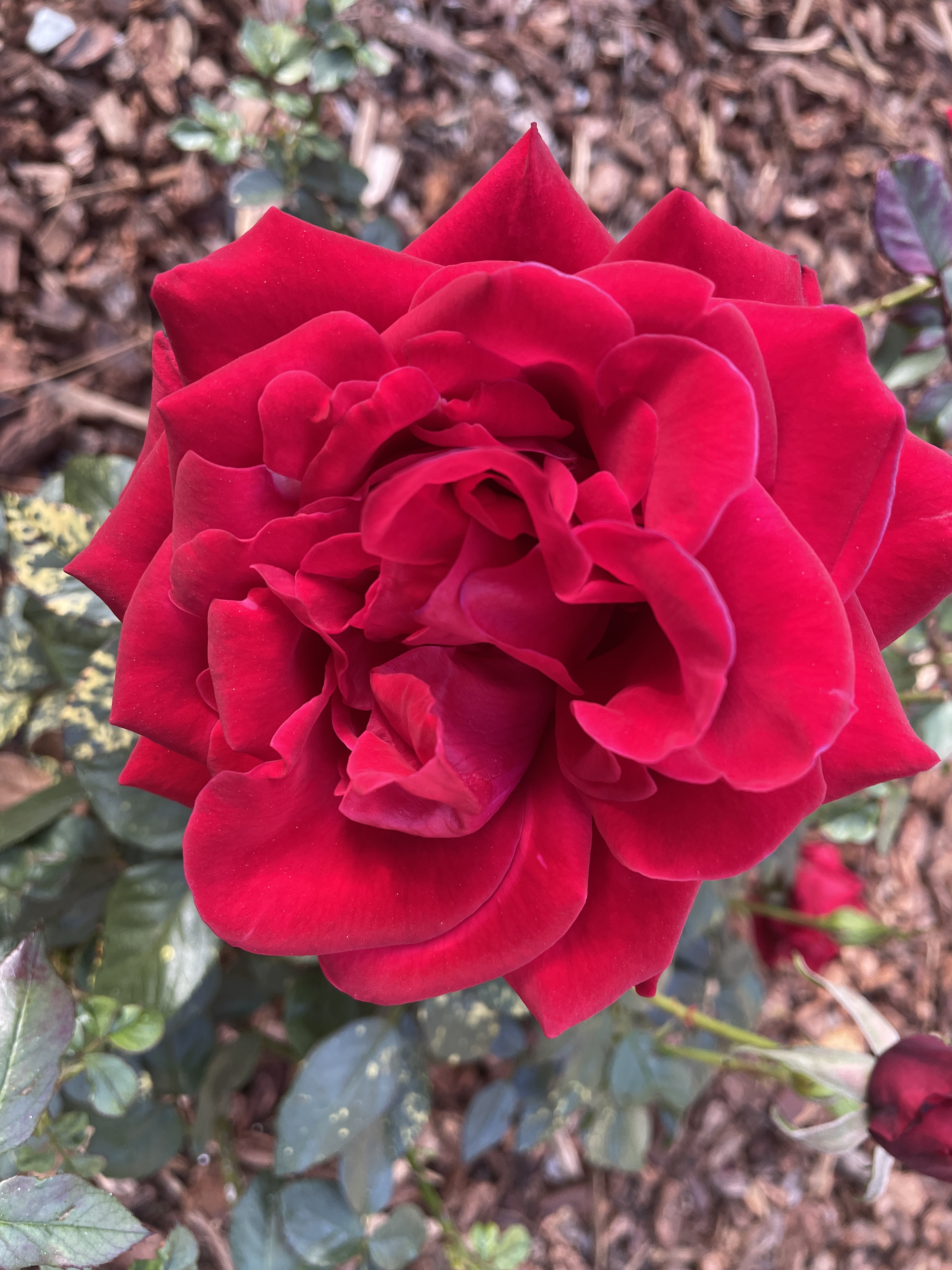
Red Roses


He’s very good at wooing:

gifts–chocolate cherries,

red roses, delicate lingerie,

I love you.

He wears his mask well,

keeps calm, a handsome spider,

weaving a silken web.

She laughs, tells her friends

just how very special she’s

sure he is.

He wears this mask for months,

finds them the perfect apartment,

swimming pool, gym, marble,

granite, luxury appliances.

She’s sure he loves her:

the gifts, the perfect apartment,

fancy restaurants, luxury weekends.

She’s late, heavy traffic, an

emergency at work. He

screams, wants to know

why; no explanation matters.

He hits her for the first time, her

torso, knocks her down.

Tomorrow 24 red roses

arrive at work. He begs

forgiveness. She’s sure

he’s sorry; it won’t happen

again.

Two months later, she’s

late again. Real reasons he

does not want to hear. He

screams, he hits, he knocks

her down.

She dreads red roses.

Note: This is part of my writing a poem per day for National Poetry Month. Regarding this poem, 34% of female homicides are women who have been killed by intimate male partners. Often when women kill a man attacking them, they are convicted of murder even when trying to defend themselves.

Books 3-5 for 2024: “Happening”, “The Young Man”, “Simple Passion”, Annie Ernaux


In the last few days, I’ve read three books by Annie Ernaux who won the Nobel Prize for literature in 2022. Although she is a major writer in France, I had never previously heard of her. Since the local library possessed none of her books, I drove to Claremont and checked out all of her books that were available. The publication dates range from 1974 to 2022.

Most of her books defy categorization. The librarian helped me find them because some were in fiction and some nonfiction. From just reading them, it is impossible to determine whether what I’m reading is real or imaginary or a combination. She writes about women’s lives mostly and issues that only women experience.

“The Young Man”, copyright 2022, tells a detailed account of a love affair between a young male student and a 50 something woman, thirty years older than he. They meet on weekends often at his apartment, make fervent love, visit sidewalk cafes, wander. The narrator notes that people sometimes look askance at them in a way they never view an older man and a younger woman. She finds love making helps her write, “Often I have made love to force myself to write.” At the end of the book are photos of Ernaux over the years (she was born in 1940) and a detailed biography.

Next I read “The Happening”, (2001) a detailed account of a young female student seeking an abortion when it was illegal in France. She manages to hide her state from most people including her parents. She finally finds an elderly nurse, but later experiences complications and ends up in the hospital where a young doctor, who thinks she is just some poor woman off the street, treats her badly. When he discovers she is a university student, he finds her and apologizes. It seems mistreating the poor is okay but not someone from his own class status.

Then I read “Simple Passion” (1991), a short (64 pages) detailed account an illicit love affair between a young, married man from Eastern Europe and the narrator. The telling part of this story is the narrator’s (the author?) obsession with this man she calls A. She waits for his calls 24/7. She thinks about him every waking moment and dreams about him at night. I kept thinking of myself and many women I know who have become obsessed with some man to their own detriment.

A a writer, I find her work totally fascinating in its extreme courage. She writes in detail about experiences few would dare to even talk about, but many experience and keep silent. Much of it is autobiographical, an even great demonstration of bravery. Who dares tell the truth of many of our own experiences? Very few of us.

One Book a Week-50: “The Poet X”, Elizabeth Acevedo


I purchased this book not long after it won the National Book Award, but never managed to get around to reading it until recently. I love this book. Yes, it won in the youth category, but since I have worked with teens for decades, I “get” it. It is a novel in poetry where the narrator, a 15 year old Dominican Latina, Xiomara, who lives in Harlem, keeps a poetry journal to stay sane. Her very religious Catholic die-hard Mom frequently drives her crazy with rules like she can never talk to a boy, much less date one. Her dad is a bit of a playboy and less strict. Her twin brother is a genius who won a scholarship to a fancy private school, and her best friend, Caridad, is hyper religious. Yet these young people all keep each other “together”. Her English teacher realizes Xiomara has a gift and encourages her to become involved in poetry slam events. She cannot see how this is possible given her mother’s attitude toward her poetry. You do not have to be a teenager to enjoy this book. In fact, if you think you do not understand teenagers, I suggest you read this book. It will enlighten you.

A Book a Week-43: “Desertion”, Abdulrazak Gurnah


Gurnah, a native of Zanzibar, won the Nobel Prize for Literature in 2021. This is the second of his novels I have read. Both deal with colonial Africa and the effects of colonialism on both individuals and countries, especially in East Africa.

In 1899, a British man, Pearce, stumbles out of the desert and collapses near the shop of a local businessman, Hassanali. His sister, Rehana, saves Pearce. This sparks a love affair, the results of which have long lasting effects on several families, not only for Pearce and Rehana, but for lovers and individual family members two generations later.

It is also a tale of governments immediately after independence and their failures. Additionally, it addresses “forbidden” love and its effects on those who genuinely love each other but cannot pursue their love. The effects are not only immediate but long lasting, affecting others not just the two lovers.

One Book a Week-34: “If I Survive You”, Jonathan Escoffery


After reading about this book and its author in a recent issue of the Sunday “Los Angeles Times”, I saw it while wandering around the local library and checked it out. Although the author’s work has been published in various magazines, this is his first book.

This collection of short stories reads like a novel because the characters in the stories are either identical or related from Trelawny and his brother Delano to their ill-fated cousin, Cukie, all of whom are the descendants of Jamaican immigrants living in or near Miami, Florida. Sometimes excluded because they are Black, they face other challenges, e.g. Trelawny because people cannot figure out what he is ethnically or racially due to his complexion and hair, light and only somewhat curly. All struggle to discover who they are and where they belong, if anywhere.

While many of their experiences remain heart wrenching, Escoffery has the ability to also make their stories funny. I kept think of some works by Sherman Alexie whose stories are both horrifying and hilarious.

Note: The next three books will remain anonymous and no blogs about them because they are for a project and I cannot report about them. I will be blogging poems and essays about other topics.

One Book a Week-29: “We Are Not Like Them”, Christine Pride and Jo Piazza


A heart wrenching Prologue begins this contemporary novel about race, family, and friendship. Two children, one white (Jen) and one black (Riley), became best friends in kindergarten. Their close friendship endures to adulthood and through distance. Finally, once again in the same city, their bond is tested when Jen’s husband, a police officer, shoots an unarmed 14 year old black boy. Riley, a TV reporter, is assigned to interview the boy’s mother.

Their story, told from the viewpoints of both women, covers the effects of such a tragedy on family and fellow police officers and the community, illustrates the trauma of current events, and demonstrates how such a disaster tests all involved.

Book a Week-21: “Boy, Snow, Bird”, Helen Oyeyemi


A unique and sometimes frightening story with a surprising ending, this is another tale of the lengths to which people of color will go to pass for white to gain the benefits of whiteness. For one New England family this has succeeded quite well by sending a too dark daughter back South to live with relatives and never allowing her to come to the town where the rest of the family lives. It fails when a too dark child is born and the parents keep her with them. It is also a tale of gender identity and how rape and abuse can destroy and deform and of resilience in the face of endless obstacles. This is not an ordinary novel.

One Book a Week-5: The Importance of Paris by Cynthia F. Davidson


This memoir take place when the author decides to move to Paris in order to address certain “issues” related to her childhood and young adult years. She grew up in Saudi Arabia before the oil boom and went to high school and lived in Beirut when it was considered one of the best cities in the world. She had to leave when Lebanon became war torn, her dad was kidnapped, and her sister shot. Her return to the US proved traumatizing even though she is not genetically of Middle Eastern descent. Paris was filled with Lebanese refugees so she moves there in an attempt to understand what happened to her beloved Lebanon and why.

This is not an ordinary memoir. I could not stop reading it; I wanted to know what happens next and why. It includes a graphic honesty not found in most memoirs I’ve read. In addition, it contains political and historical explanations for the events that transpired during the time period of the book.

Want to learn more about the background to current events in the Middle East? Want to read about a remarkable life? Then read this memoir.