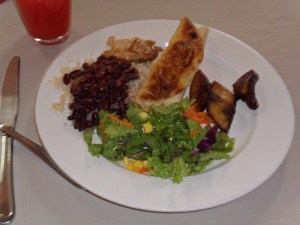
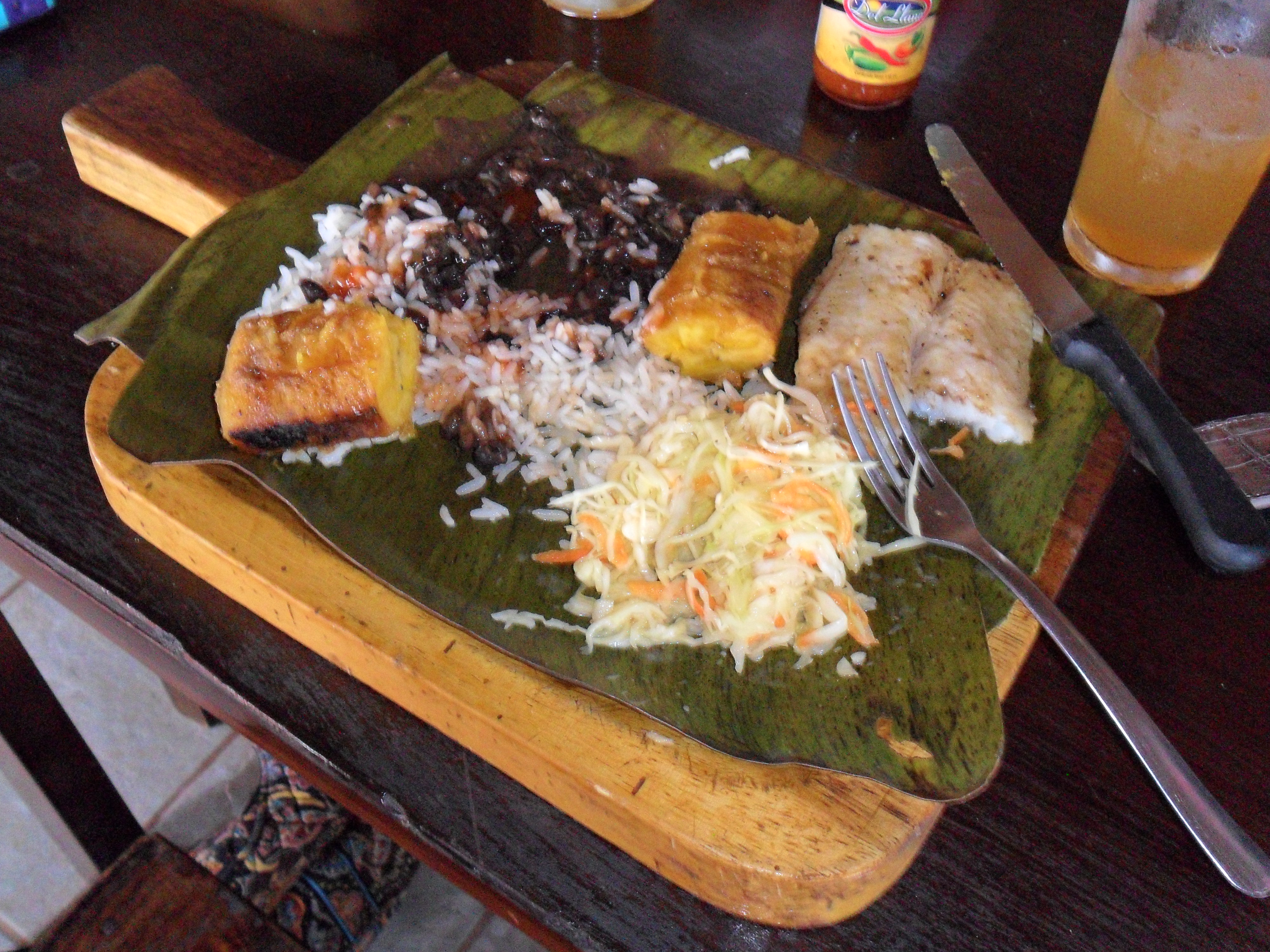
Costa Ricans appear to be very, very healthy. Their food mainly consists of rice, black beans, salad, cooked vegetables, chicken or fish, fruit (usually pineapple, papaya, mangoes) and sometimes fried plantain. In fact fried plantain was the only fried food, except occasionally cheese. The food is plain with few spices, even though hot sauce, especially their version of tobasco, is often available if you want it. The national dish is gallo pinto: left over white rice mixed nearly equally with black beans and sometimes a little chopped onion and bell peppers sautéed in oil. This is a breakfast staple, but frequently served three times a day. Sometimes, although black beans and rice are usually served at lunch and dinner, they are not mixed together then. Often salad is their version of cole slaw, but tastes nothing like cole slaw here. Usually both cabbage and carrots are very finely shredded and mixed together. I never did quite figure out the dressing, in part because it varied greatly. When the salad was with lettuce, it was also more finely chopped than we usually do here in the US and served with various dressings including olive oil. The freshness of the salads stood out–no little bits of brown edges in Costa Rica.

The coffee, well, just lets say, I miss it. Pitchers of steaming, strong, mountain grown coffee served with pitchers of steaming, rich milk. In the mountains everywhere Jersey, Guernsey, and Holstein cows roamed up to their tummies in grass. Happy cows for sure, producing rich milk for coffee and rich white cheese, which is served for breakfast. Yes, breakfast, sometimes plain and sometimes fried. Oh, and I cannot forget the ice cream. Beyond creamy and smooth and rich.
There are sweets, usually made as snacks with coconut especially. This was my favorite.

Obesity appeared to be non-existent. I did see a few chubby people but no one really excessively over weight. Perhaps diet is one reason, but they walk a lot even though most have cars. They appear to drive them only if going some distance. In the mountains I saw a lot of people riding horses.
The biggest food adventure for me occurred while waiting around near a little family owned restaurant at the top of a mountain. All but four of us and the bus driver had gone river rafting. We disembarked from the bus and walked around to kill time, chit chatting about this and that in Spanish. Suddenly the restaurant owner came out with his grandson, unlocked the fence gate, and invited us in. While sitting at the bar conversing with him and Hector, the bus driver, I noticed the menu posted on the wall. It included huevo de tortuga. Previous information given to us indicated that Costa Rican law protected turtles (tortugas). I asked how he could serve this. He told me it depended on the species of turtle and that he could acquire only a limited amount of them. Suddenly, in front of me, Lisa, the other woman who did not go rafting and is pregnant, and Hector appeared three glasses that looked like giant, triple sized, shot glasses. Each one contained a raw turtle egg immersed in red hot sauce the consistency of tobasco sauce. Instructions and gestures indicated this was to be downed like a shot of tequila. Lisa stuck her tongue in the sauce and said it was ok. She downed hers first and said, “This is not all that bad.” The restaurant owner told her it held great nutrition for her unborn baby. I translated. It became very clear to me that I had no choice but to down mine as well. Hector downed his; then I mine. Lisa’s assessment was correct; it was ok inspite of the turtle egg feeling like a rather solid but squishy mass as it slid down my throat. The hot sauce made it possible. Lisa downed a second one; Hector and I declined. This experience remains one of the highlights of my trip: relaxing in the middle of nowhere with a local family in their little restaurant. Pura vida!!!!








 writingontherim