Imagine a world with no hunger.

Imagine a world with no hunger.
If you have ever felt enchanted by a trip to Rome, you will find this memoir delightful and informative. It made me want to return just to stay a while, wander around, visit the more obscure places Doerr describes, people watch, eat, and drink local wine.
In 2007, Anthony Doerr, the 2015 Pulitzer Price Winner, won the Rome Prize to become a fellow at the American Academy in Rome. He and his wife, Shauna, moved to Rome with their newborn twins, Owen and Henry. This memoir memorializes the four seasons they spent living there. They learn to care for babies; wander throughout Rome visiting tourist sites, local restaurants, the butcher, the baker, the toy store; learn enough Italian to acknowledge all the Italians who stop to admire the babies; and attend the vigil for the dying Pope John Paul II.
While there intending to write his later novel (the one that eventually won the Pulitzer) and failing to do so, he does manage to write a short story which I have read in one of his collections and to read everything by Pliny the Elder. His discussions about his readings makes me want to read some of Pliny the Elder myself. As in his short stories and novels, Doerr’s descriptions, language, and observations delight and enchant. This is a wondrous book about one of the world’s oldest and most fascinating cities which he calls, “a Metropolitan Museum of Art the size of Manhattan with no roof, no display cases…


Some probably would not call this a real chili. Nevertheless, it is healthy and vegan unless you garnish it with shredded cheese.
1 cup chopped purple onion
3 garlic cloves, coarsely chopped
Olive oil
2 cups black beans–either use canned or cook your own. I prefer to cook my own.
I can corn, drained
1/2 red bell pepper, seeded and chopped
1 cup canned salsa–I used one that was fine and medium heat. Add more depending on your preferred texture for chili.
1-2 Tablespoons berbere or chili powder. I used berbere.
Saute the onion and garlic in olive oil. Add bell peppers and saute until tender. Add the black beans and corn. Stir and add salsa and spices. Heat through and serve with condiments and shredded cheese of your choice.
The request for Thanksgiving was for a pecan pie. I think the usual pecan pie recipe is too sweet so I made this version. If you prefer walnuts to pecans, you can use walnuts.
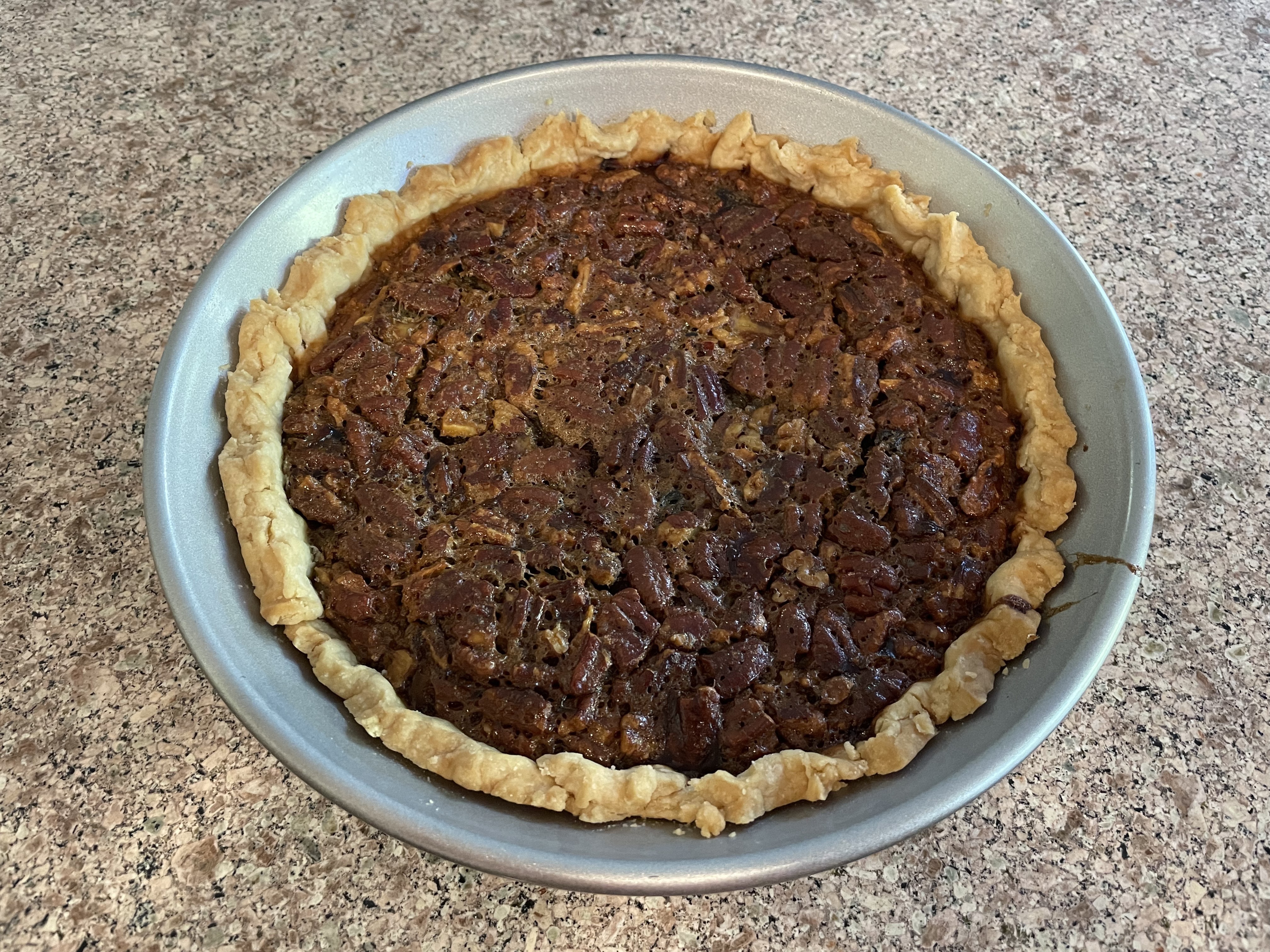
3 eggs
3/4 cup dark corn syrup–I used to the new Karo which claims to not be high fructose
1/2 cup light brown sugar
1/4 cup butter, melted
1 tsp. vanilla
1 cup broken pecans
1/2 cup golden raisins
1 unbaked pie shell
Melt butter. Beat eggs slightly. Stir in corn syrup, brown sugar, butter, and vanilla. Add nuts and raisins. Pour into pastry shell and bake at 350 for 40-45 minutes.
The author of this book, Guadelupe Rivera, is the daughter of Diego Rivera by the woman to whom he was married before he married Frida. Diego went on a trip to Russia and his then wife, the author’s mother, became attached to her previous boyfriend, the poet Jorge Cuesta. She and Diego divorced and then he married Frida. Eventually, the two couples became friendly and at one point they all lived in the same house.
Thirteen years after Diego married Frida, the author moved in with them. This book details her life living with Frida and her father, how Frida learned to cook, how she decorated the Blue House in Coyoacan, the fiestas, the food, the adventures. The book includes photos and recipes of Frida and Diego’s favorite foods, photos of the house, and places the author visited with Frida. It is also a story of many of Mexico’s famous people at the time.
I own several books about Frida but this one is the most revealing and intimate in many ways. If you like Mexican food and find the life and art of Frida and Diego of interest, read this book.
Note: It was also written by the journalist Pierre Marie-Colle with photos by Ignacio Urquiza.

Today I traveled a bit south of where I live to the campus of the Tzu Chi school which I have visited numerous times. First we had a vegetarian lunch–they are Taiwanese Buddhists who advocate a vegetarian, plant based diet as better for the environmental future of Earth. Then all the visitors, who were mostly parents of the children, went to the gym for the program. Various ages wore headdresses to represent the various signs. Some of the youngest children wore dragon headdresses. This is the year of the dragon.

The children sang and danced.

Parents were very enthusiastic about taking photos.

Then after all the students of varying ages finished all their performances, including older students who made a circle around the room and sang plus danced with perfect synchrony, out came the dragon.
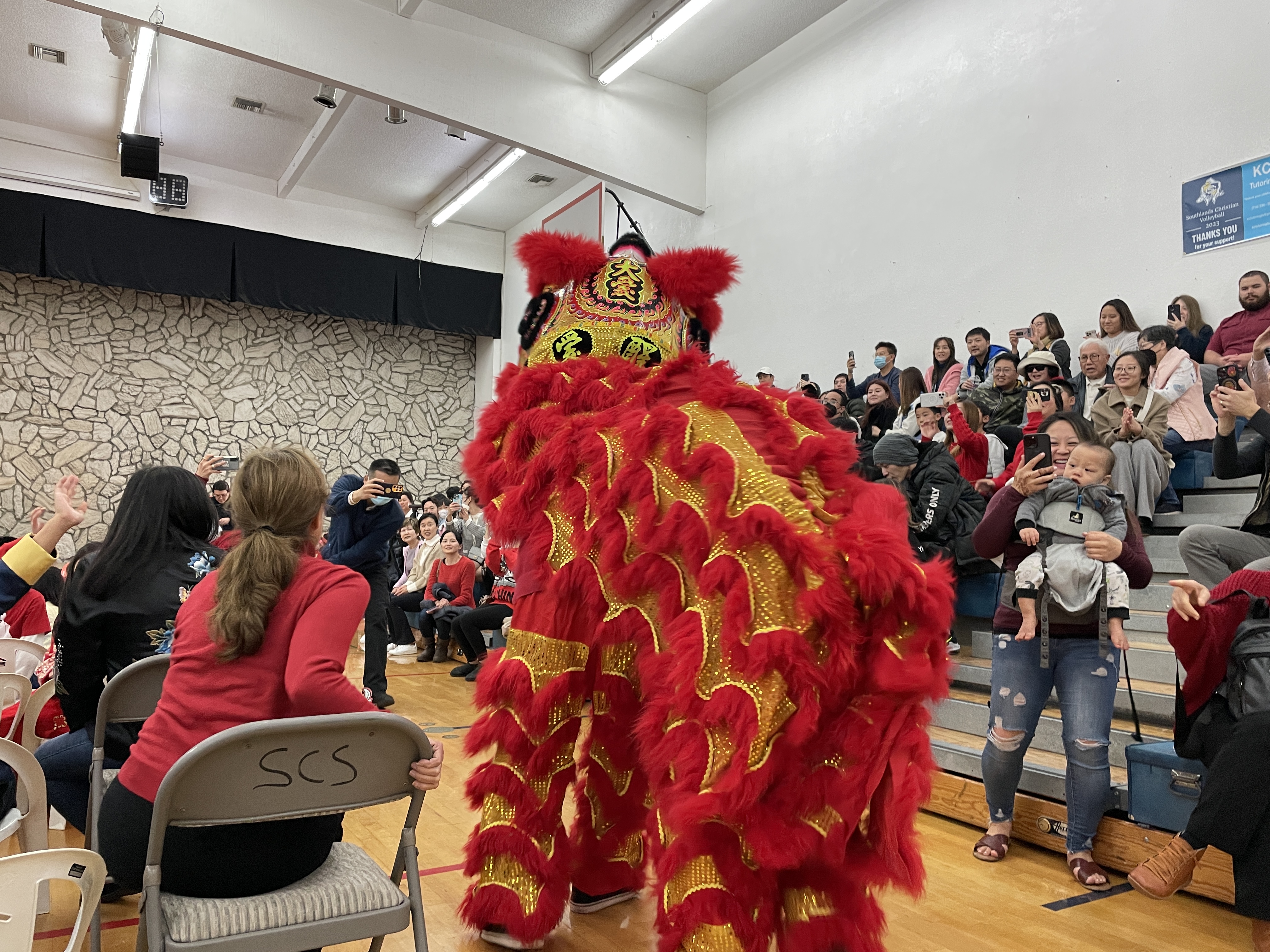

It was so much fun to see all the children performing; it was obvious they had worked very hard to accomplish this. It was also enjoyable to see so many happy, enthusiastic parents.
Note: I work with this Buddhist Center teaching character education at local public schools.
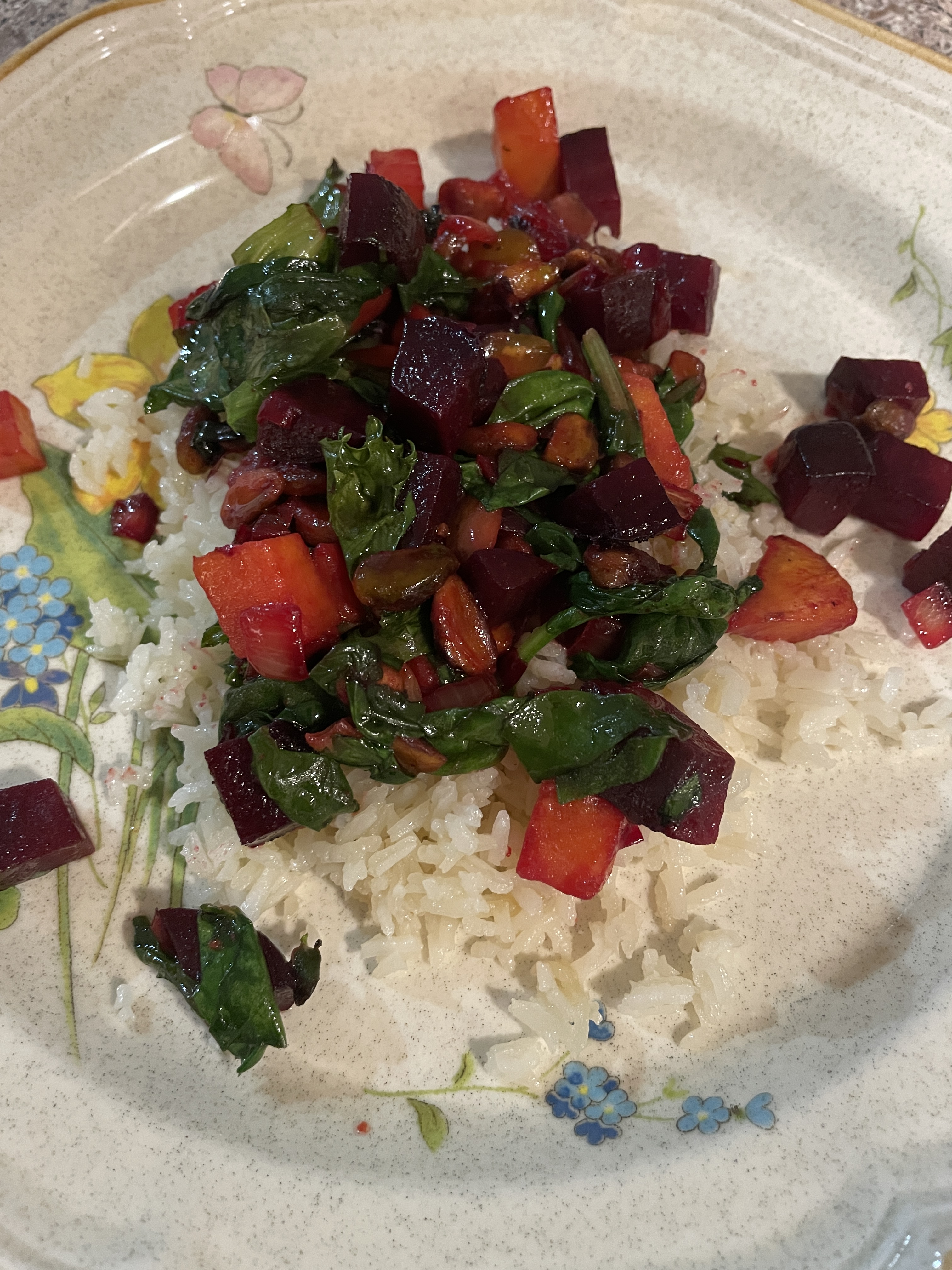
This recipe is vegan if you do not sprinkle grated cheese on top. It serves two. I used it as a main dish but it would also make an excellent side dish.
1/2 large beet, cut in small cubes
1/2 large sweet potato, peeled and cut into cubes
1/2 sweet onion, coarsely chopped
1/4 cup pistachios
2 cups greens
Sauté onion and beets in olive oil until tender. Add sweet potatoes and cook until soft. Stir in pistachios and 2 cups mixed greens. Stir until greens wilt. Serve over rice. Due to the flavors in the ingredients, I did not add any spices, but you could use your favorite spices.
1 medium sized beet cut into pieces and steamed until tender
4 gloves garlic, chopped
1/2 medium sized onion, chopped
2-3 drops basil essential oil or use 1/4 cup leaves
Milk or cream–use plant based milk to make vegan
Saute onion and garlic until tender in enough olive oil to cover bottom of pan. Drain the beets and put into blender, add the sautéed onions and garlic, add basil. Add enough cream or milk to make a thick sauce–put in a little at first, blend, and then adjust to make a thick sauce. Pour back into skillet, and add cooked pasta of your choice. I used gigli from Italy. Stir until well mixed or pour the sauce on top of the pasta when you serve it. I topped with grated asiago cheese.


Is it inherited?
Six year old me watched Grandmother
look around, take silver knife, cut into pale
yellow rectangular prism, plop a chunk into
her mouth, close her eyes,
smile.
In Aunt Julia’s presence, this never occurred,
Was it our shared secret,
Grandmother and me?
Yesterday, I told the cafeteria lady,
“Please bring me biscuits, extra butter.”
Less courageous than Grandmother,
I use blue corn pancakes, homemade bread, pasta,
excuses to eat butter, lots of golden, melted
butter.
Who eats butter on conchiglie?
I do, scooping out a tablespoon
from the butter bowl, watch it melt
in hot, drained Italian pasta from a
six-hundred-year-old monastery,
sprinkle on some sea salt, plop
a spoonful in my mouth, close my eyes,
smile.
Note: This poem is published in my book “You’re Gonna Eat That? Adventures with Food, Family, and Friends”. My grandmother, Mom’s mom, rarely smiled. When Mom went to the hospital to have my sister, the family story is that Grandmother fed me so many bread, butter, and sugar sandwiches, I became fat. I was two. I remember a mint patch in her backyard. She’d gather mint, boil water, and make mint tea with cream and sugar. I liked it. When Aunt Julia traveled out of town, I remember seeing Grandmother eat butter and smile. This is Grandmother’s wedding photo.

This is super easy and perfect for the colder weather. It is also good left over warmed up. You can adjust the amount for the number of people you plan to feed.
1 beet sliced about 1/8 inch thick
2 medium parsnips sliced same thickness
1 medium sized sweet potato, peeled and sliced same thickness
1/4 large sweet onion, coarsely chopped
Garlic powder
Olive oil
Heat oven to 425 degrees. Pour enough olive oil in a heavy oven appropriate pot to cover the bottom. Layer the vegetables with the chopped onion and a small amount of olive oil. Sprinkle garlic power over the top. Place lid on the pot. Bake until the vegetables are tender.
You can use any root vegetables. I used some of my favorites. I never bother to peel beets or parsnips. If you buy large parsnips, you may have to remove the core because it can sometimes be rather hard and bitter.

Travel the World 4 Less
A Glimpse into My Life & Passions
Ceto-Magoism, the Whale-guided Way of WE in S/HE
Exploring the F-word in religion at the intersection of scholarship, activism, and community.
ANCESTRAL FOOD. HERBAL WISDOM. MAGICAL COOKERY. SEASONAL CELEBRATION.
inesemjphotography
politics, engineering, parenting, relevant things over coffee.
Food is the best expression of every emotion. Explore through my reviews, recipes, events and more.
Smile! A Site for Friends Wherever You Are!
inspiring personal growth through poetry and writing
Combining atheism with whimsy. This is a Fair and Balanced blog based on opinion unencumbered by fact.
Odds and ends ~ My Life
Original poetry, commentary, and fiction. All copyrights reserved.
bripike@gmail.com
A wildlife filmmaker in Africa
A Geeky Feminist's Musings On Pop Culture
"5 minute walks"
 writingontherim