Commitments, Hosting Benefits, and What We Take for Granted


Shortness of post is necessitated by the time.  Why bother?  Nearly three weeks ago, I committed to writing daily.  Blogging seemed like a logical means to accomplish this.  I expect others and myself to follow through on commitments.  So here I am writing in the middle of the night.

Tonight I hosted a fund raiser for the Hilltop Senior Center here in Amarillo.  We tried to sell tickets in advance but not all that many sold.  The Director of the Center and I became a bit worried, but continued with planning, hoping some would show up even if at the last minute.  They did.  We had great Mexican food donated by Braceros on Sixth Avenue, wine, my wonderful well water, cheeses, fruit, and cakes.  Even the silent auction proved to be a great success.  However, nature became the real star of the event, nature and my dog Isabella.  Unlike earlier in the week when the wind shrieked to 6o miles an hour creating several days of endless dust, today the wind laid low, the sun shone, and it was hot.  This morning the heat went on and this afternoon the air conditioning as it rose to past 90.  Thirty degrees difference between night and day is rather typical here and some days, like to day, this difference increases to nearly forty.

At dark the stars seem so much brighter out here in the country.  Many of the guests walked back and forth on the patio, looking for different constellations.  People came inside for a while only to go back out and look at the stars and the crescent moon.  What I take for granted daily, became a wonder for my company.  As I write this, I think about all the things each of us take for granted, things we eat, experience, feel daily.  How often do we really take the time to appreciate these things, to realize that although they may be ordinary for us, for others they would be incomparable blessings.  So now as I finish this, get ready for bed, and snuggle into my cool sheets, I will meditate and give thanks to the universe for the wonder of the stars.


The Sound of Silence


For years I puzzled over what this phrase means.  This evening I discovered the answer.  Unlike the first part of the week, today was sunny, little wind, high 70s, what most consider a perfect day weather wise.  I ran home from work, gave Rosie, my horse, some food, let Isabella, my dog out for a bit, and then ran back to town to see my grandson perform.  He attends Wolflin Elementary School.  The physical education teacher selected a group of students called the SWAT Team who perform at different functions.  The last time I saw them, they performed at a local high school’s basketball tournament.  Today they executed four routines at their school’s annual gala, a fund raiser with games, food, a silent auction, dunking in the water, that sort of thing.  It really astonished me.  I have no idea how much they practiced, but these routines were not short and everything was perfectly choreographed.  First, the boys performed using basketballs to do various tricks and movements in unison to music.  Then  the girls did this complicated sort of dance over these long bamboo poles that other students clicked together.  The only other place where I have seen anything like this is in Thailand at the Rose Garden near Bangkok.  The third routine included both boys and girls and they used this giant circle of multicolored cloth to dance around, in and out, make the cloth into a sort of yurt like shape.  I have no idea how they kept it up like a giant circular tent one minute and flat the next.  Finally, they competed with hoola hoops to see who could keep going the longest.

After I returned home, I hosed off the front entryway, planted some flowers in pots, and watered other flowers, all in preparation for a fund raiser tomorrow night at my house–to raise money for a local senior citizens center.  Rosie is shedding her winter coat and seemed miserable itching so I brushed her.  Now tufts of pale rose colored hair lay everywhere in her corral.  Finally, a bit after eight I came inside for a late dinner.  Then I noticed.  No sounds, no wind, no appliances humming, no coyotes howling, no birds singing, no dogs barking, no sounds at all.  Nothing.  The patio doors are open; I walked outside a few minutes ago.  Nothing.  I sit here before the computer and hear the sounds the keys make when I hit them.  When I stop, nothing.

Rosie


Rosie


SAM_0301


Isabella on the patio in winter.

SAM_0160


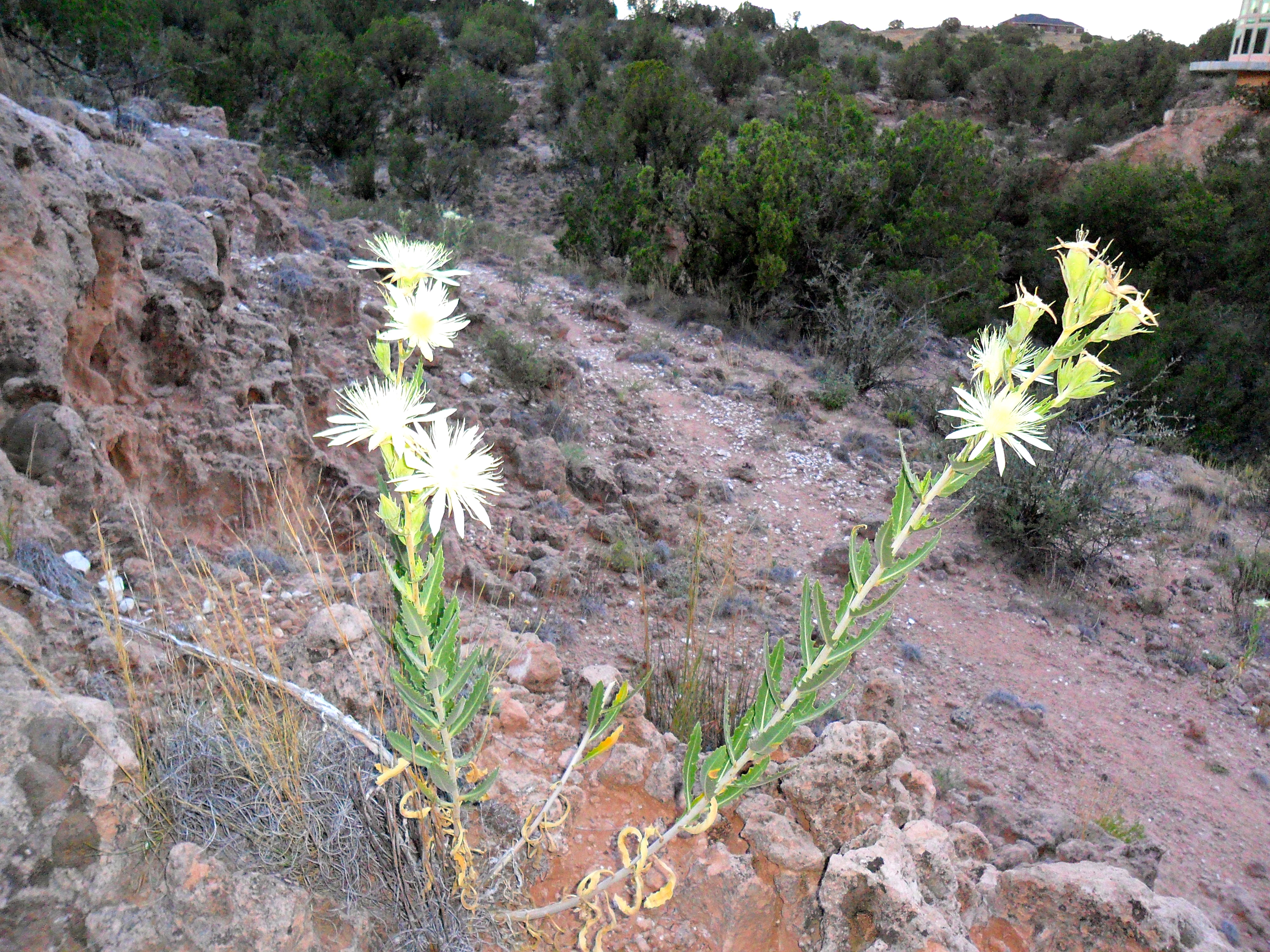
They started blooming today.

Gratitude and Dust


Initially, I planned to continue my Apocalyptic Planet series, but today’s events caused me to choose otherwise.  As I sit here writing this, I can see the endless blowing dust through the spotted window.  Sometime today, while I was at work, it sprinkled while the dust blew.  Now every window on the east and north side of my house appears as if someone had thrown handfuls of nearly dry mud at it.  My black car looks the same.  The wind whistles in the flue of the wood burning stove in my bedroom.  This storm  blows harder and longer than the one we experienced last week.  Tomorrow they forecast more of the same.

Saturday I stopped by two greenhouses to purchase some hanging baskets and native flowers.  The mesquite trees kept telling me, “Wait, wait.  Cold will come again. Wait!”  Normally, I obey what the mesquite trees tell me.  They never come out until they know without a doubt the cold is over and they feel safe.  I bought the flowers anyway.  This coming Saturday, Hilltop Senior Citizen Center in Amarillo has their Gala at my house to raise money–complete with a silent auction, food, and drink to raise some much needed money.  I want everything to look springlike and pretty.  I heard the weather forecast on the radio coming home from work.  I just looked again on the Internet.  Frost predicted tonight and even colder tomorrow night.  After I fed Rosie, placing the alfalfa as much out of the wind as I could, I brought the hanging baskets inside and poured a bunch of water on the other new plants. The native plants, tough, worry be little.  The others will not survive 33 degree weather.  Later, I will go out and cover them with old towels, hoping the wind relents and does not blow them off.

Everyone here posts photos of the dust on the Internet and gripes about this horrid weather.  Although I certainly dislike it, I refuse to complain.  This, too, is tornado country.  I listened to the news this morning and again coming home from work.  Thirty four dead, whole towns destroyed, a new school flattened.  Here I see no devastation, only the endless, depressing, annoying dust and wind.  My friends, family, and I are alive, our houses intact.  Rosie huddles behind the barn, still healthy, neighs when she hears me coming.  Gratitude engulfs me.


Rosie


Rosie


SAM_0461


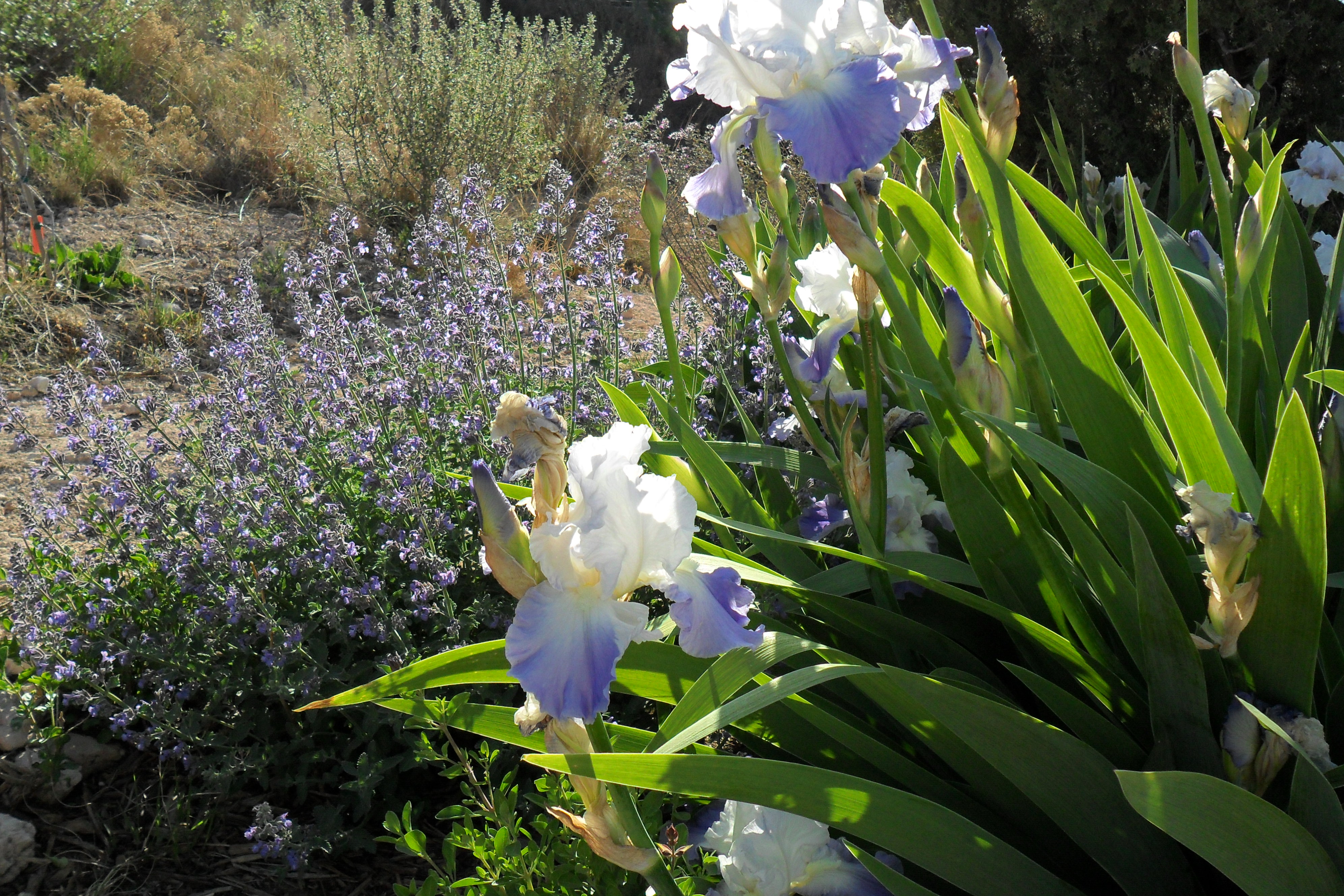
The iris I was hoping for.

Volunteering at Palo Duro Canyon


424908_2650517636082_1731467384_n

In front of the Visitor’s Center with Eduardo and Gaston, exchange students who lived with me several years ago.


Occasionally, I volunteer in the gift shop at Palo Duro Canyon, the second largest canyon in the United States.  If  individuals drove through Amarillo on I-40 through the endless flat prairie land and never ventured far, they would not even be able to dream up this canyon only twenty miles away.  To get there, you have to drive through more flat land, covered in wheat pasture, corn, milo, and the few remaining pastures of native grass.  You can see for miles; you can even see the taller buildings in Amarillo which are not all that tall.  Then, unexpectedly the land opens up, cliffs appear.  The first time you see it, you feel astonishment.  Nothing you see on the way there prepares you.  Years ago Battelle Memorial Institute sent me on a business trip to Amarillo.  People told me I should go see the big canyon.  I laughed to myself, thinking they must be just talking about a large arroyo.  When I finally did drive down, my mouth gaped in shock.  How could this be?

Palo Duro Canyon is still being created by water erosion.  The Prairie Dog Town Fork of the Red River (no I did not make this name up) runs through it.  Barely a running stream now with the drought, when a big summer thunderstorm blasts it fury, this river can rise ten feet almost immediately.  When it does this, campers remain stranded inside the park until the river calms down because to get into the park, depending how far in you go,  you have to literally cross the river repeatedly.  Because of this, they have decided to build bridges across the five water crossings.  Some of us who love driving through the water find this innovation unacceptable.

Today, I volunteered from 1-5.  People came in from Indiana, Minnesota, Ecuador, south Florida–on a trip to Californian and back, Ohio, Germany–a young woman working as a nanny here.  Usually, I meet even more people from other countries, especially European countries.  When I ask the Germans in particular how they know about this place, they tell me Palo Duro Canyon and its history is featured on the Internet there.  Here come all these people from far away and I have students who live a mere 25 miles away and have never seen it.  The family from Indiana came because their daughter wants to attend West Texas A & M University in Canyon, Texas–named after the canyon of course.  She told me she wants to bring her horse and WT is one of the few universities in the country where you can major in agriculture and participate in an extensive horse program.  She exuded excitement and enthusiasm.

In the midst of chatting with all these visitors, I noticed the unusual behavior of one woman in particular.  She had medium grey hair pulled back in a ponytail with hair a lighter shade of grey framing her face. All her clothes were dark grey.  She walked to the book area–we sell a lot of books, and started flipping slowly through several of them.  She picked them up as if they were delicate flowers or fragile glass.  She held them as if she thought they might break if she held them tight.  When she put one up to look at another, it appeared as if she barely touched them.   She never smiled, just looked and looked and looked.  She did not buy a book.

Water, Water, Where?


Today, I drove about fifty miles to watch a play especially produced by my friend, King Hill, for the Gem Theatre in Claude.  I almost did not go because of high winds and blowing dust.  Between 8 and 10 this morning visibility was so low  it was impossible to see the horizon.  High wind and blowing dust warnings started yesterday.   Now, as I write this, these warnings have continued for more than 24 hours.  Red flag warnings flash across the TV screen. Thankfully, not quite the dust bowl extremes, not yet anyway.

Originally, a green sea of grass covered all the land where I live in the Panhandle of Texas, the Llano Estacado. Immense herds of buffalo roamed free.  This prairie grass protected the land from erosion.  Rivers and an occasional canyon interrupted this endless sea, including the Canadian River, Palo Duro Canyon and the network of canyons running into it.  Once the Spanish brought horses, Kiowa and Comanche ruled this sea for more than a hundred years.  Under a full moon, the Comanche reigned by night raids from Nebraska to Mexico.

What happened?  Plows brought by people from the East dug up the grass.  These people planted the crops they knew, wheat, corn.  They settled in towns and homesteaded the country. They brought cattle and in some areas developed gigantic ranches.  Hunters killed all the buffalo except a few the famous rancher Charlie Goodnight and his wife managed to save.  Remnants of this southern herd now live at Caprock Canyons State Park near the tiny town of Quitaque, Texas.  Those who farmed dry land farmed.  In a normal year crops grew, the people prospered.  In dry years dust blew because there was no grass to hold the dirt.

Today, giant pumps pull water from the aquifers, the Ogallala, the Santa Rosa. My well is 400 feet deep, some are nearly 900.  More and more people move here from other parts of the United States.  They want lawns like the ones they had where it rains forty inches a year.  It does not rain much here, twenty in a good year, ten in a bad year.  These aquifers lose much more water to irrigation in a year than are replenished by rain.  Farmers grow corn,wheat, cotton, and milo, all irrigated.  In some places where  the water became to saline for crops, the pumps sit abandoned.

Today, I drove by miles and miles of dry, thirsty grass, perfect fuel for the wind driven wildfires which sometimes start this time of year.  In other places irrigation pivots rained water on immense emerald fields of wheat.  I could not help but wonder how much of this water evaporated in the sixty mile an hour wind.  As I finish writing this with the TV on  weather watching, I see Fire Weather Watch, High Wind Warning, Red Flag Warning flash across the screen. I hear the wind roar and heavy outdoor furniture slide across the patio.  I’ve seen wildfires, had a half mile of cedar post fence burned down.  All it takes is a tiny piece of cigarette thrown from a truck or car, a flash of dry lightning.  They predict three more days of this.

I love the space, the vermillion sunsets, the intense blue of the sky.  I watch my neighbors water, water, water their new houses in the country.  I think about those pivots irrigating in the wind, and I wonder what will happen when all the water’s gone.


SAM_1369


Apocalyptic Planet–Part One


Usually I read only one book at a time.  Lately, I am reading several, one of which is Apocalyptic Planet:  Field Guide to the Future of the Earth by Craig Childs.  Childs is a sort of combined explorer/adventurer/scientist.  He goes to places few go to see what occurs there, the wind, the flora and fauna, the weather, the climate.  The next couple of days I intend to share some of his most pithy observations and ruminations.  We will start with the desert.  He and a friend literally wandered around the most arid and hostile portion of the Sonoran Desert in northwestern Mexico.  This desert has enlarged and become more arid due to an extended drought.

Deserts come and go.  If you live in a lovely lush green landscape, wait long enough and it, too, may become a desert.  Six thousand years ago lakes, marshes, and grassland lay where the Sahara is today.  A slight orbital change in earth’s relation to the sun caused nearby oceans to heat up, changing atmospheric conditions.  Humans living there had no choice but to move.  Forty per cent of the earth’s population lives in semiarid regions.  Even a small drought changes survival chances for the people who live there.  The Sahara, the Gobi, and the Taklimakan are growing, arable farmland decreasing.  Vulnerable areas include southern Spain, Greece, Bolivia, Australia, central Asia, and our own West.  The entire American High Plains (I live in the southern part) sits on top a giant desert.  Without pivot irrigation, only grass grows here.  In the last decade many irrigation wells have dried up or gone too saline.  The giant bulges you see in places like the sand hills of Nebraska are really a sand dune sea covered with grass.  Take away a little rain and here comes the desert.

Childs and his friend carried water with them and buried them with markers in the sand so they could find them later.  As the desert grows in parts of India, women carry water farther and farther, an average of six miles a day, four gallons at a time.  In the Sahel just south of the Sahara a difference in rainfall of just an inch or two can mean the difference between survival and starvation.  Without water, there is no civilization.

What causes these changes?  Human behavior and the increase in greenhouse gases are  part of the reason.  Humans are creating enough changes that we are moving toward more deserts, not fewer.  One climate expert, Jonathan Overpeck, thinks we are seriously underestimating the severity of drought we will face in the not so distant future.  Forget five and seven year droughts and think fifty years.  Hadley cells also affect climate change.  Tomorrow I will explain Hadley cells and how they affect our weather.

SAM_1190


Northern Arizona

SAM_1302


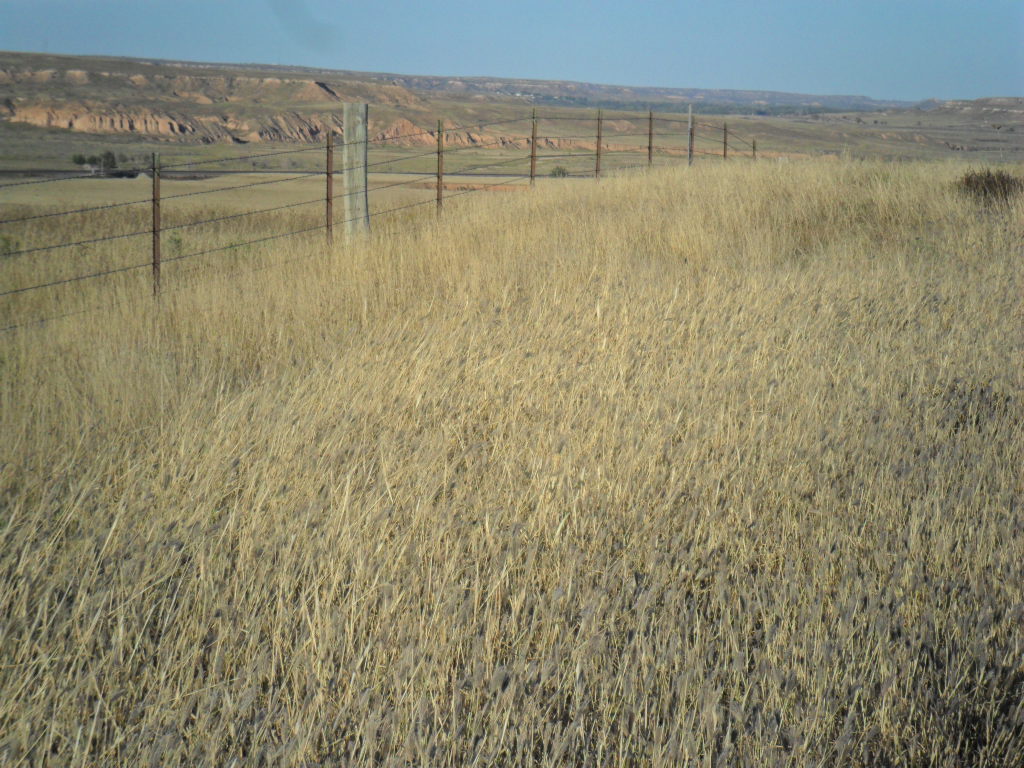
Eastern New Mexico


SAM_1370


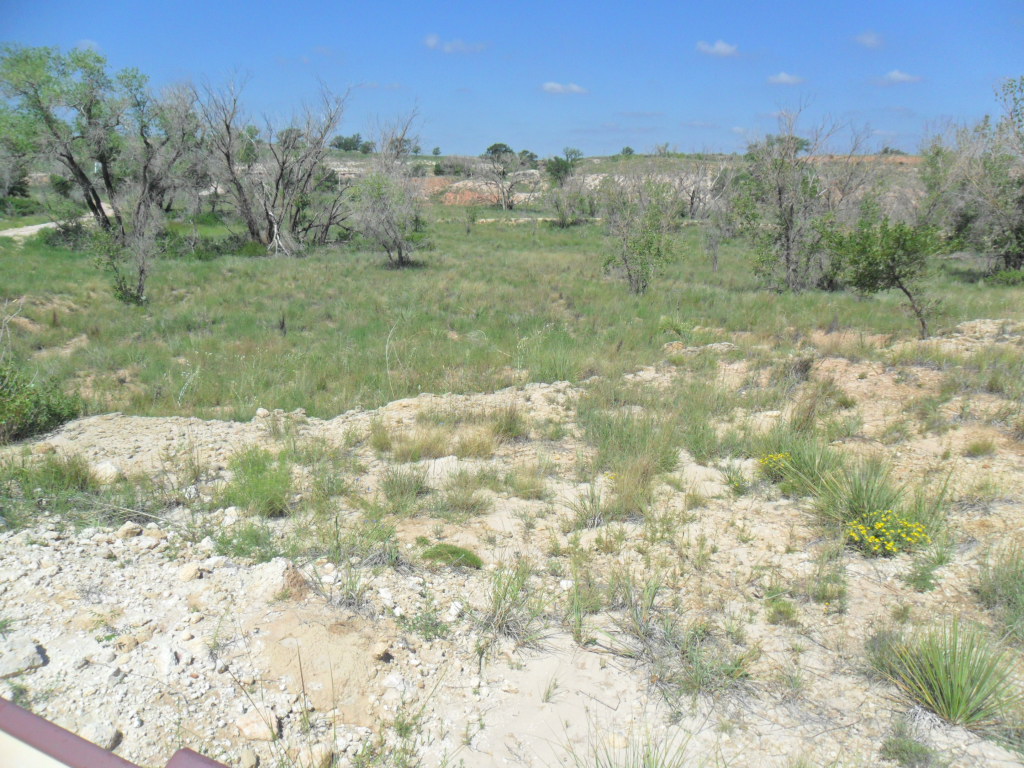
Texas Panhandle

A Happy Birthday with Three Penny Opera


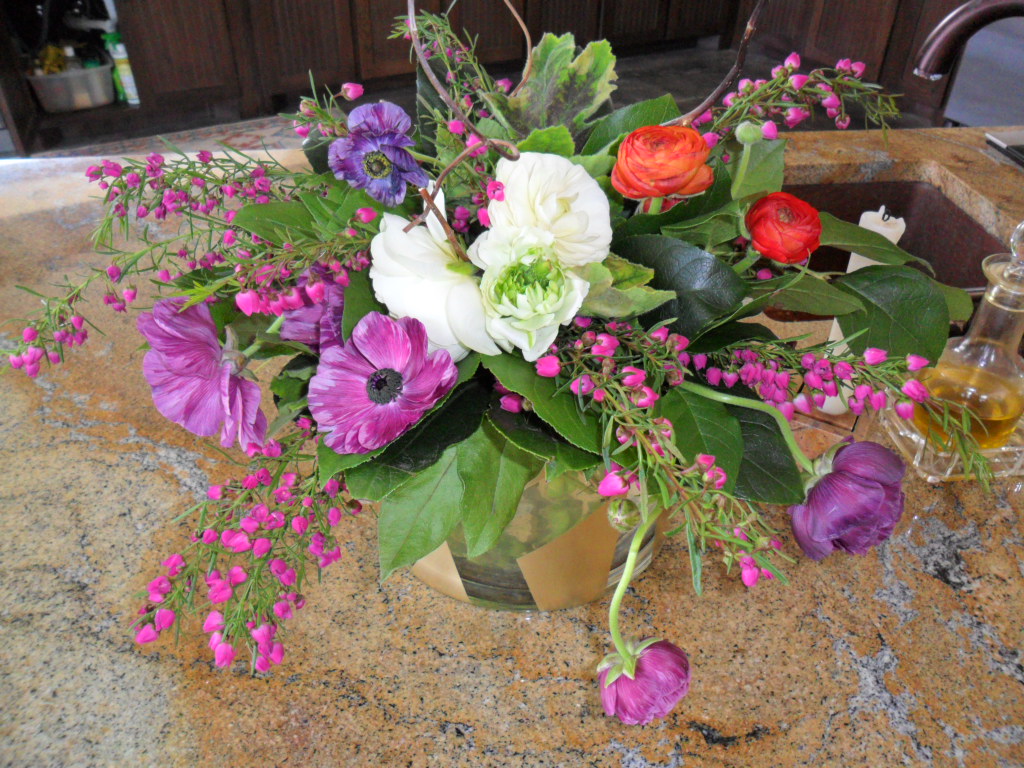
After a certain age many of us do not expect all that exciting a birthday, but mine this past week was a huge exception to anything I could have expected.  First, on the day before, these spectacular flowers arrived from my son, Erik Karlsson.   Parie Designs in Amarillo, Texas, really knows how to do flowers out of the ordinary.


SAM_1478


Almost two weeks ago, Walker Lewis, the Director, and Jeromy  Hunt, the Production Stage Manager, of the upcoming production of Three Penny Opera (Amarillo Opera Company) arrived to stay with me for three weeks.  Yesterday, my birthday, was an off day for them.  Chad Armstrong, one of the baritones, came over to ride my  horse, Rosie.  Romy and Walker gave me a bottle of good cab and bought me a birthday cake.  We relaxed on the rim of wonder (my patio), ate, and rode Rosie.  Then last night we all went to the annual opera gala.  Unfortunately, one of the opera performer’s husband became ill so now I will have my tiny fifteen minutes of  glory playing the madame of the brothel, pretending to smoke a cigarette, counting money, and watching “my girls” and the customers, or so they tell me.  Later today, I go for a fitting and start the one week of rehearsals remaining until the first performance on Saturday night.

I could not have ordered a better birthday.

SAM_1463

Chad Armstrong on Rosie, Walker on the left and Romy on the right.

SAM_1466

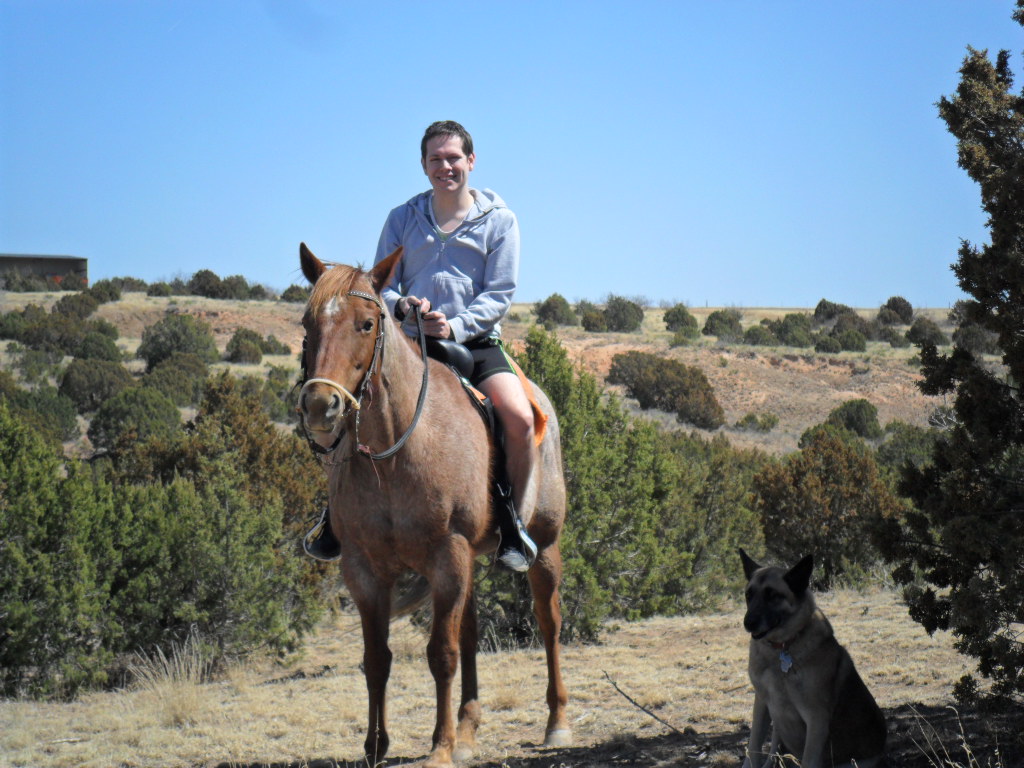
While Romy, Walker, and I hiked around, Chad rode off here and there, disappearing for a while and then showing back up.  Rough riding in canyon country.  Neither Romy nor Walker had ridden since childhood.

SAM_1471

Walker Lewis learning to ride–on Rosie.  He loved it and will ride again this coming week.  He kept smiling all over!!!

SAM_1474

Romy on Rosie with my dog, Isabella resting in the shade of a juniper tree.

Apparently, riding Rosie produced so much fun that the other singers want to come over later this week and ride.  Nothing beats fun friends, fabulous food, and pretty well broke horses for a day to remember!!!


Cool Surf


Wednesday, I topped the little rise down the

long drive to my house.

Cool’s down, lying down,

not like a happy horse,

soaking up the afternoon sun.

Down!!

Still dressed for work, I

rush, make him get up.

Instantly, I know, colic,

sadly go to the house,

change into jeans,

call the vet–he’s an

hour a way,

quirt banamine down Cool’s throat-

can’t hit his neck vein.

We walk and walk and walk,

waiting for the vet.

Cool’s hurting, distressed,

kicks my arm.

Vet and I load him in the

borrowed trailer as he

wobbles, half drugged.

Two giant bags drain into

his neck vein.

Vet listens, takes tests.

Result should read 2;

it reads 10.

In spite of hopeless odds,

the vet and staff work and

watch all night.

At 2:30 in the afternoon

a message on my cell phone:

Cool’s buried in the pasture with Miracle.

They’ve taken care of everything.

Stunned, trying not to cry at work.

Cool was fine when I left

Wednesday morning,

running the night before.

Stunned, remembering him as a baby,

the picture perfect paint.

Stunned, remembering how I

loved to watch him run,

head and tail up,

floating fast, joyous.

It’s Sunday now.

I walk out on my bedroom patio,

look up to his corral.

He always called to me, always.

Today, all I hear is the sound of silence.

SAM_1020

Cool, the other orphaned horse I raised.

579365_3069424508492_1766850092_n

Gypsies, Deserts, and Random Thoughts on a Cold Sunday Morning


In less than 15 hours, it has dropped from low 70s to 9 here on my canyon rim–one of the joys of living in the Panhandle of Texas where a mere change in wind direction can dictate the weather.  Yesterday afternoon, I was helping my daughter clean her back yard and ready the ground for planting some shrubs and a tree and now 60 degrees colder.  This type of drastic weather change has occurred repeatedly in the last few weeks.  Perhaps it has muddled my brain which keeps hopping back and forth from this to that.  First, the “this”.

Mostly, I read Latin American, American Indian, and Middle Eastern authors.  When I recently stopped by the library, I could find none of these that I had not already read so I picked up a book from a Dutch author of whom I had never previously heard, Margriet de Moor.  The book, a novel, The Duke of Egypt, tells the tale of a Gypsy man who meets this young Dutch woman.  They marry and lead a quite unusual life:  in the winter he lives with her on the family horse farm; in summer he leaves and lives with the Gypsies, wandering around Europe in their caravans.  When he is “home” with her, in the evenings he tells her tales of his Gypsy family and friends, centuries of history.  These tales shocked me:  centuries of discrimination, hangings–even Gypsy women hanged publicly for no other reason than they happened to be Gypsy in the wrong country at the wrong time, sick children whom no doctor would treat, starvation, driven from country to country.  Of course, like many people I have heard stories about Gypsies:  as a child my grandmother telling me that Gypsies stole other people’s children, a friend telling me the police said it was Gypsies when someone stole some silverware from her house, but I never really believed it.  Reading this book caused me to delve a bit more into Gypsy/Roma history only to learn even more tales of horror.  Hitler and his Nazis hated Gypsies almost as much as they hated Jews.  It is estimated that the Nazis sent at least ten per cent of the Gypsy population in Europe to the gas chamber.  On the positive side, I learned that many Gypsies were hired by people who raised horses to help them with their horse care because Gypsies were considered expert horse trainers and traders.  In addition, some hired them for their music to play for social events and festivals.

When several friends came over for dinner, I mentioned the book to them and my shock.  I wondered aloud as to why so many hated the Gypsies.  The general response was this:  Gypsies consistently live as they wish and refuse to follow the social norms of the rest of the population.  They refuse to settle down and live in one place, they enjoy life, dancing, drinking, roaming.  If you refuse to live like everyone else, the rest of the world will  punish you.

Then I moved on to the book I am reading now, Apocalyptic Planet:  Field Guide To The Future Of The Earth.  I am only on page 27 of 327, and already I have learned:  “Deserts generate most of the world’s airborne dust, contributing to a global migration of surface minerals.  Dust blowing from the southern Sahara is the single largest producer of iron for the mineral-poor soils of the Amazon in South America.  Half of this dust originates in the Bodele Depression north of Lake Chad, which produces about one hundred storms a year, each sending 40,000 tons of dust across the Atlantic to South America.”  And a bit further in the book:  much of the fertile High Plains here in the US (Kansas, eastern Colorado, Oklahoma, Nebraska, Texas, basically from Canada to Mexico) sit on top of a desert, e.g. the Sand Hills.  Currently, these sand hills remain stabilized by miles and miles of grass–our native short grass steppe.  It does not take much to imagine what would occur if drought continues and the grass disappears.  Once desertification occurs as it is now occurring in many places in the world, e.g. the Sahel, deserts consume.  Jonathan Overpeck, a leading climate researcher claims, “…we are significantly underestimating the severity of drought we could get in the future.”  He predicts many places now inhabited will become uninhabitable unless we initiate drastic changes in our water management.  People will be forced to move from places of little to no water to places “wherever there is no desert”.  He adds, “We are contributing enough change to the planet that we are moving toward more droughts instead of away from them.”  In the Sahel alone it is estimated that 500 million people will have to move to survive.  I think over this information and about the current drought here and look at the beautiful place where I write and live, wondering will it be habitable in one hundred years.

Now on to the “that”:  grateful I live here in the United States in spite of all our “problems”.  I could have been born in Ukraine, Syria, Central Aftican Republic, any of those places experiencing turmoil, fear, religious hatred, genocide, torture–the list goes on and on.  Instead here I am happy, relatively safe, warm in spite of the 9 degrees outside, well fed–you get the picture.

Two Year Blogging Anniversary–Writing on the Rim


To paraphrase that old adage, “time flies”.  Two years ago last week, I started blogging here at Word Press.  The following is my first blog post.  Blogging has enabled me to “meet” new people and forced me to write more poems with the consequence that within the next two months, my book of poetry will be published.

SAM_0306

976891_563106790378718_1476495689_o

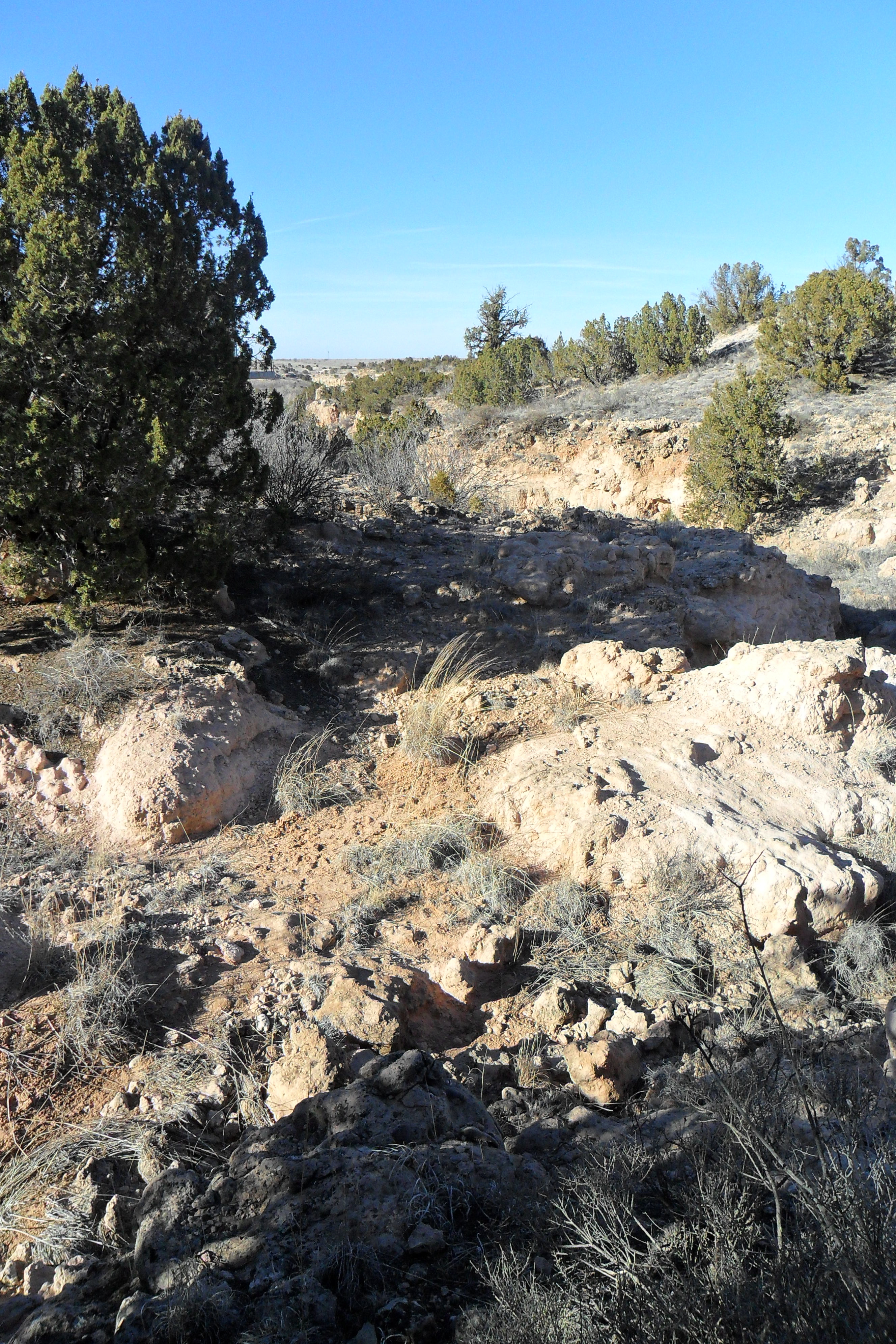
The canyon edge looms out my bedroom windows,

pale adobe, stark.

Fall to death or serious injury!

I will not fall; I love living on the edge.

Raing brings a one hundred foot deluge,

a wall of water, red adobe, cascading, screaming.

Someone said my house is pink; it is not pink:

cold of canyon, worldwide color,

Moroccan, pueblo, Saudi, Mali, Navaho, Timbuktu,

Desert, alive and lovely.

Everywhere.

Three bucks watch me through my bedroom windows.

They see me move; they stare.

Isabella stands rigid, watching…what?

Bobcat casually climbs the canyon wall, impervious.

He marks the cedar tree, walks a deer path, disappears.

Secretive, rarely seen.

The huge hoot owl’s voice echoes down the canyon,

drifting into my dreams.

A young roadrunner calls, scatchy voice,

running across the patio–on the edge.

In the spring the mockingbird sings all night,

“This is my territory,”

I sing all year, full of joy.

I live in beauty on the rim.

SAM_0461

SAM_0894

Writing on the Rim