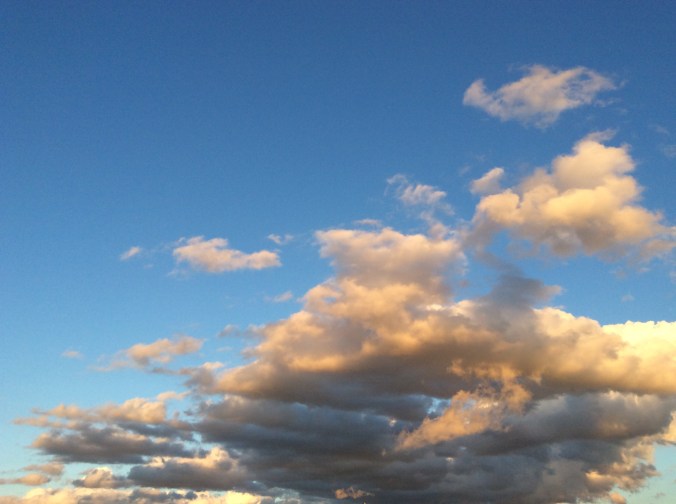

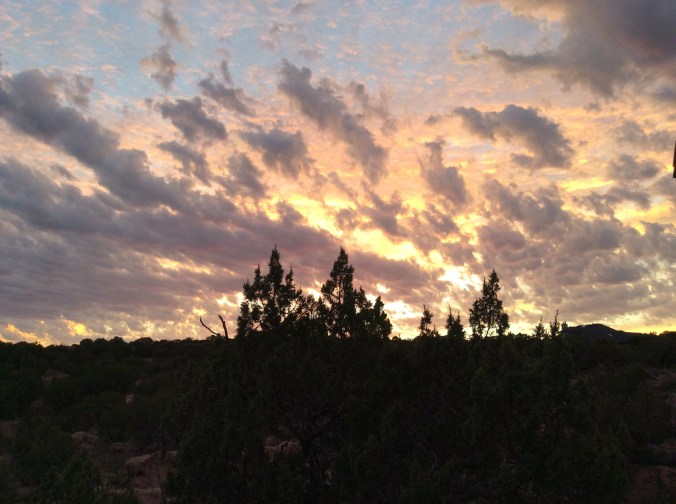


Caprock Canyons State Park, at the southern end of Palo Duro Canyon, requires about 1 1/2 hours to drive from my house. Yesterday, we met the Panhandle Native Plant Society there to investigate flowers and grasses.

When we first arrived, it seemed blue might break through the cloud cover, but it did not.
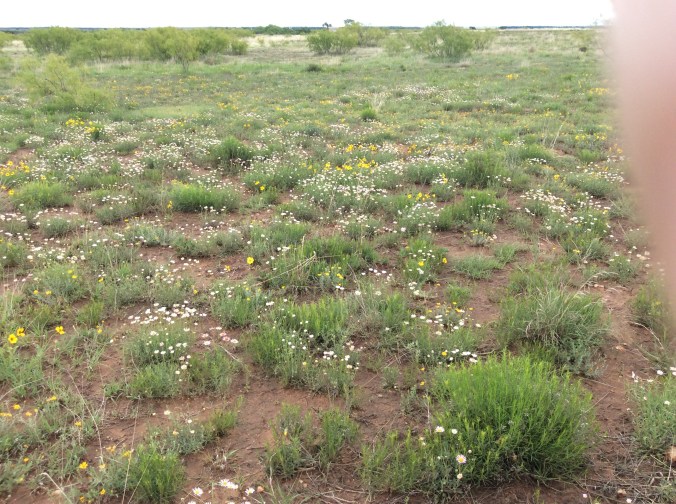
The park ranger took us to several different sites to identify different flower and grass species. The above is an area which in the early 90s was a cotton field and has been restored with native vegetation.

We drove to another area which remained “wild”–never cultivated.


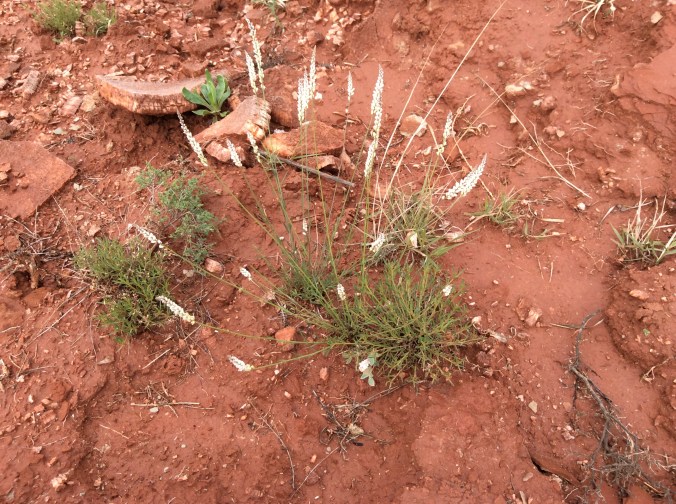

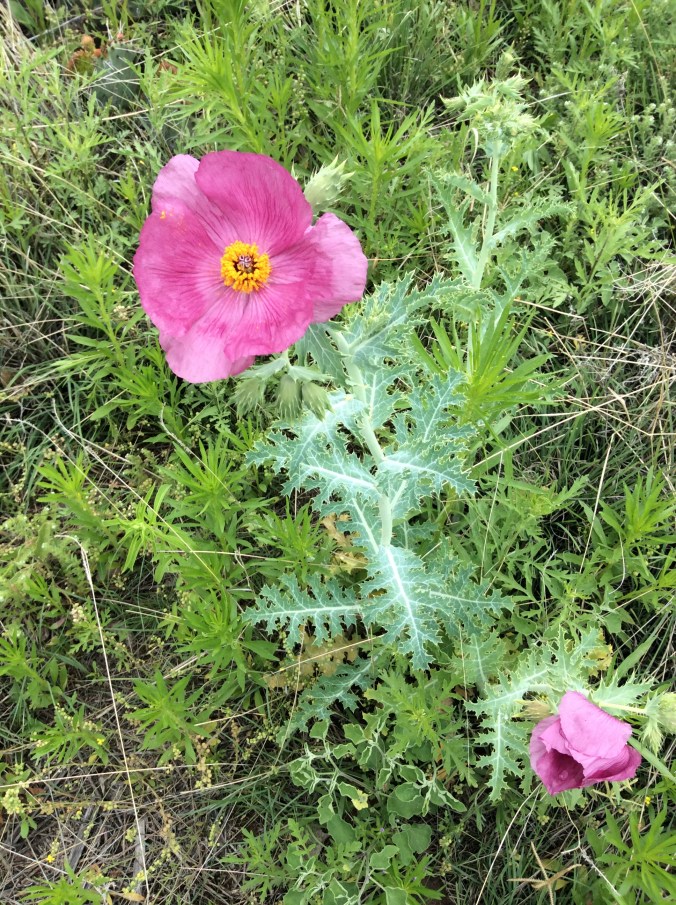
Then we drove to a picnic area overlooking the lake. Close to there we found the poppy below.
After lunch, we parted with the rest of the group and drove to the end of the road. Martina had hoped to see bison–the state bison herd roams there. At this point we had seen none. As I drove along, a bison bull was strolling down the road. Martina took this photo from the side window. He was only a couple of meters from the car.

We stopped and took a few more photos where the road ends. I have hiked from this point in the past, but not yesterday.
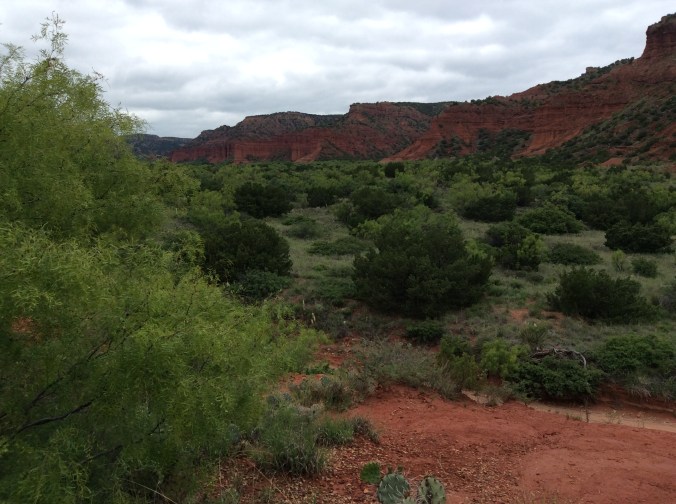
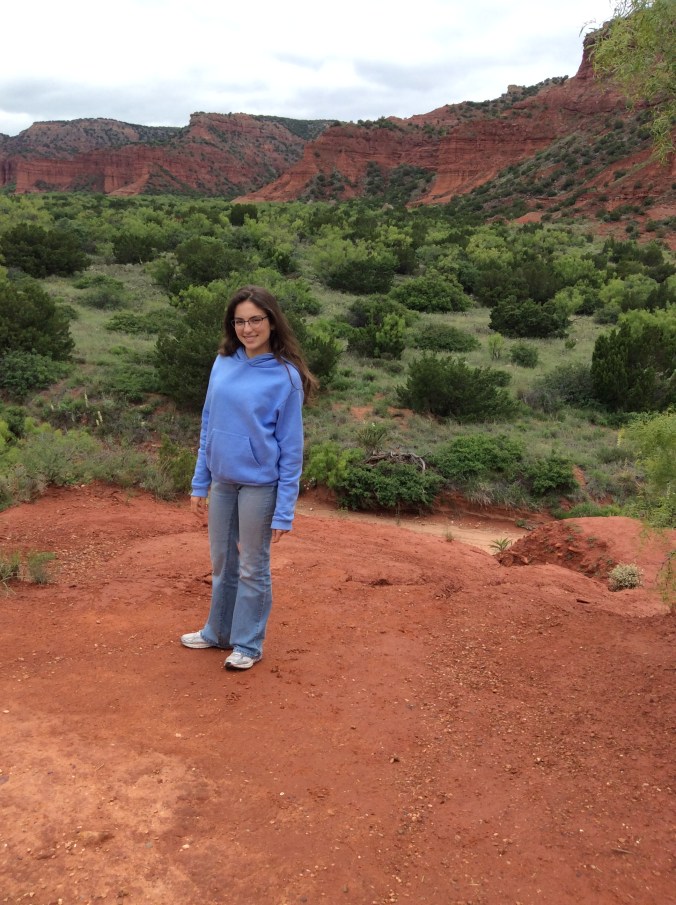
After leaving the park, we headed to Silverton, Texas, to visit a coffee shop there which was recently featured in a Texas magazine as the place to go.

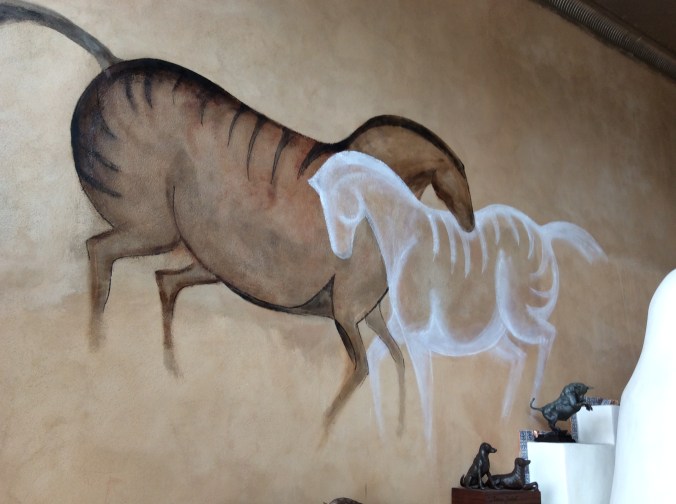
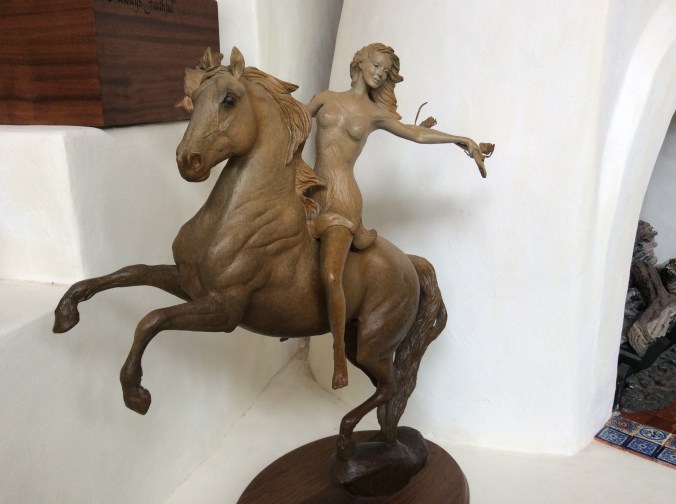
I loved the murals and sculptures. The owner is a sculptor and also a raptor trainer. The shop features coffee, desserts, unique clothing, and art.
On the way back we stopped at the Palo Duro Canyon overlook/picnic area on highway 207.

If you are in the Amarillo or Canyon, Texas, area, I highly recommend this day trip.
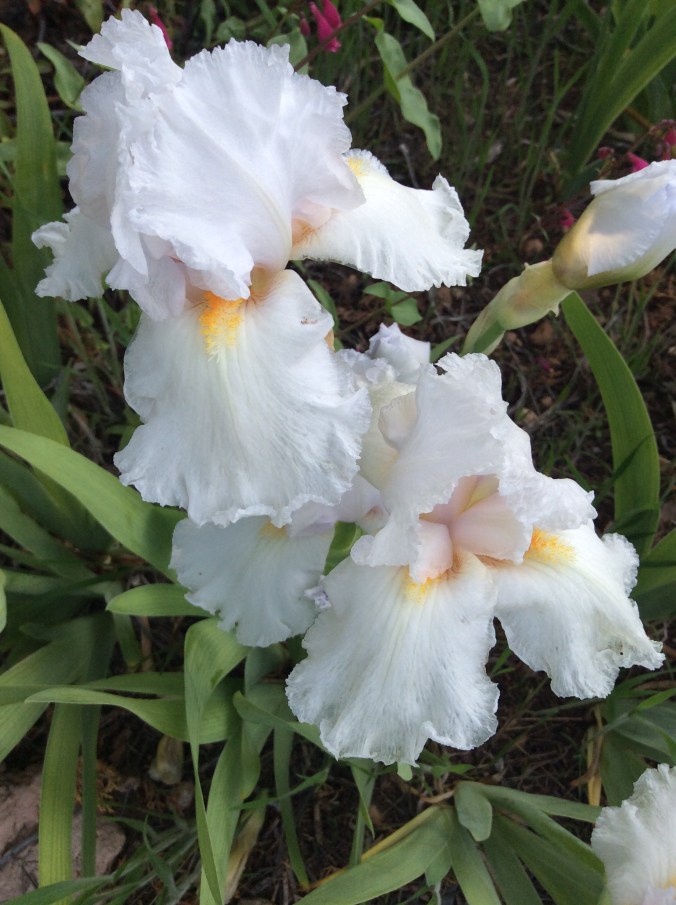
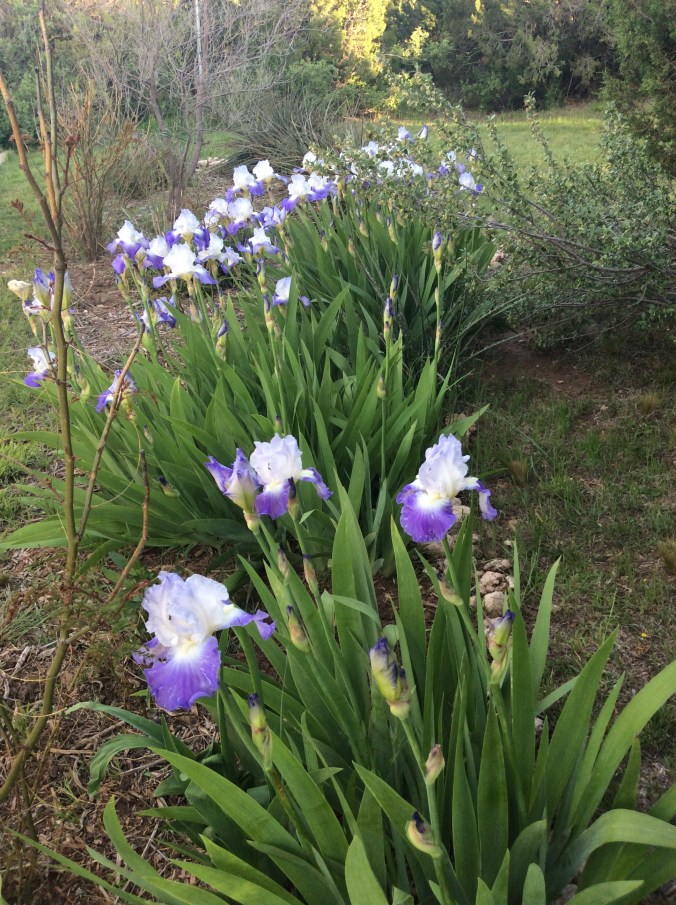
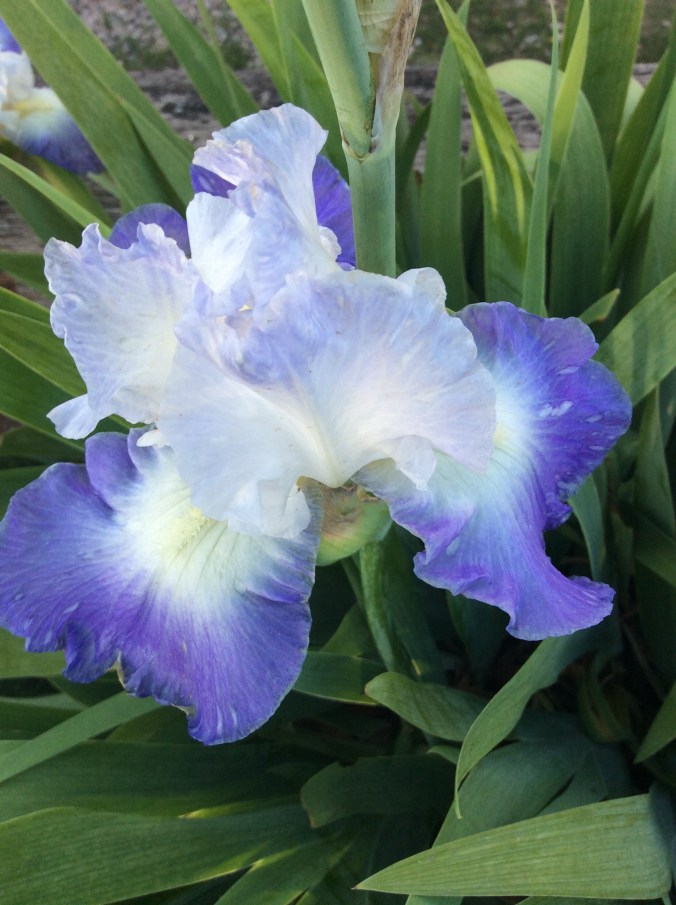
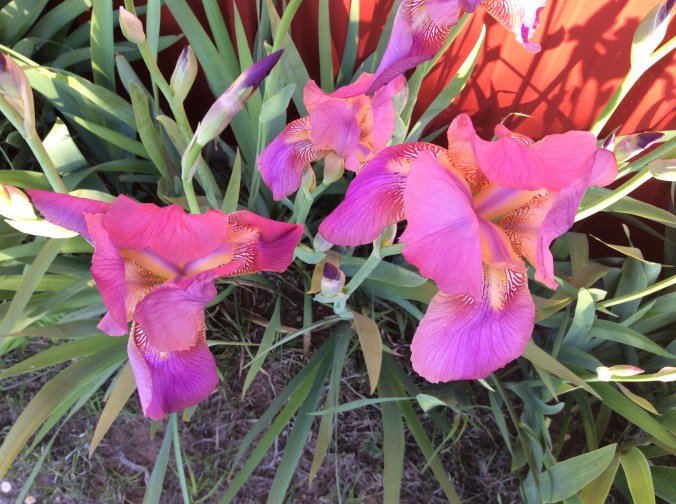
All these spring showers result in lots of flowers–wild flowers and iris.







Two weeks and one day ago, Martina arrived from Milano, Italy, to live with me until the end of the school year. We have discovered astonishing similarities: we both sing and play the piano, we love vegetables and fish, we read books. Tonight my grandson and daughter are coming over for Italian food. We went grocery shopping today, bought pancetta for pasta alla carbonara. Because my grandson is vegetarian, we purchased Morning Star “bacon” and will make a separate vegetarian version for him.
As we planned this repast, I learned that in Italy everyone eats several courses unless in a very big hurry. Course one includes various little goodies like cheeses, nuts, salami, often thought of in the US as antipasto, but it can include many other things. Each person obtains a drink of his or her choice and snacks on the goodies and converses. There are separate courses that follow: pasta, meat or fish, salad, and finally dessert. Italians eat dinner late, e.g. 9-9:30, which reminded me of Argentina where people also eat late. I like to eat late unlike many people in the US. However, we won’t eat that late tonight, more like perhaps 7:30 or whenever we get everything done.
Right now as we await the arrival of my family, Martina and I are sipping tea while she works on a dystopian short story she has to write for English class–she is a senior here–and I write this blog post. The snow from last evening has mostly melted and the sun is setting. Martina loves Panhandle of Texas sunsets and sunrises. I will take photos of the food and post them tomorrow.
Most of my posts are poems, things I have learned, travel adventures, or serious comments about the world. This one is more of a personal sharing post. Here are three photos of my dog, Athena. She is a standard poodle and quite fearless and territorial. She will even stand off coyotes. Sometimes this makes me sad because I do enjoy the wide variety of wildlife where I live. However, I like the idea that she is fearless and protective and warns me about anything unusual. Nothing escapes her notice.

When I took this, she had just demolished a bone and fragments appear on her left leg.
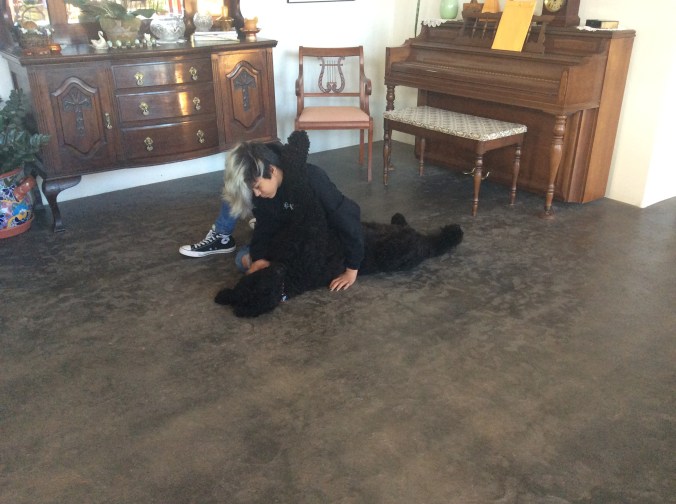
She and my grandson playing.

Inspecting her territory in her short summer haircut taken last summer.
I just finished the book “American Wolf”. Most people do not associate their dogs with big predators. Poodles were originally bred to hunt. When I watch her roam the wild around my house, hunter, predator comes to mind. I have watched her chase foxes, coyotes, skunks, you name it. She is clever enough to never get too close to the skunk. The coyote and she had a stand off. Eventually, Athena won. I have not seen a coyote since and that was months ago.
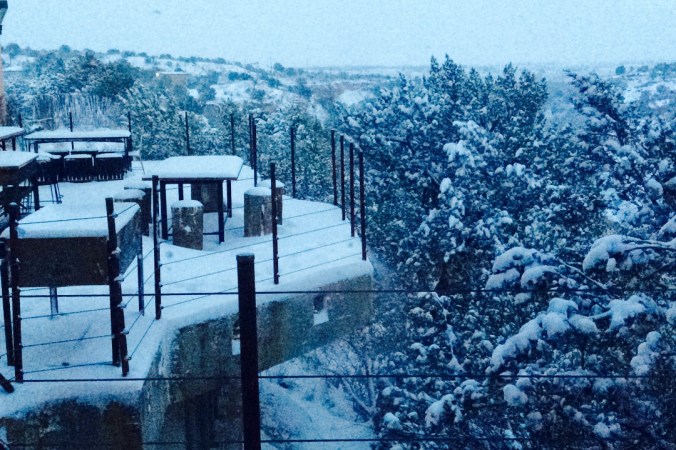
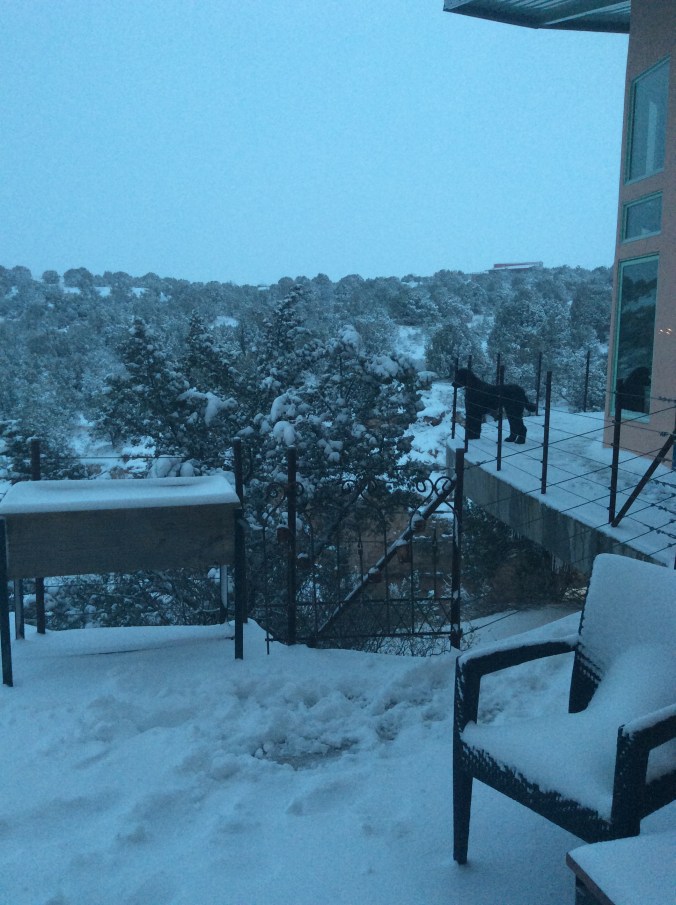
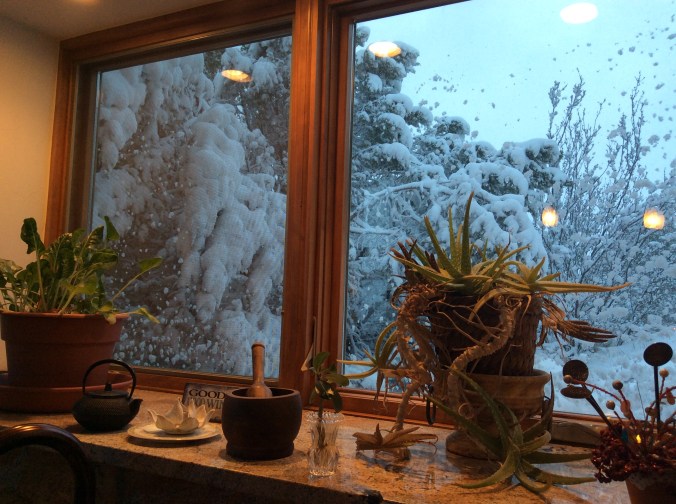
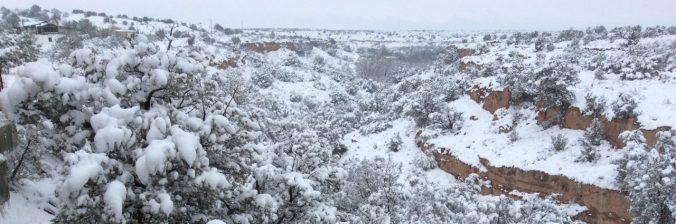
After nearly none last year, it hit suddenly and dramatically last night: cold, intense, beautiful.
Yucca will take over if you let it.
Every summer after the blooms dry, I tackle them with long,
red-handled clippers and cut off long stalks.
Not bothering to put on boots, I set out in black and grey Chacos,
cutting stalks in places unreachable by tractor.
I climb down to a rough area, open these long, red-handled clippers,
chop off the dead blossoms, then look down.
She lies there, her body slightly bigger than the size of my upper arm,
fat, not long.
A snake stretched out, only 1/8 inch from the front of my Chacos.
I look again. Crap. She’s a rattlesnake, one of those short,
stout prairie rattlers, perfectly blending with the grey and brown
rocks and soil.
Slowly, I inch backward, taking care not to fall on the steep slope.
When several feet away, I run to the barn, grab two shovels off their hooks,
run back. She’s gone. I search everywhere around.
I never find her.


Raging wind gone still
Mockingbird carols to Sunset
Dusk whispers to Night
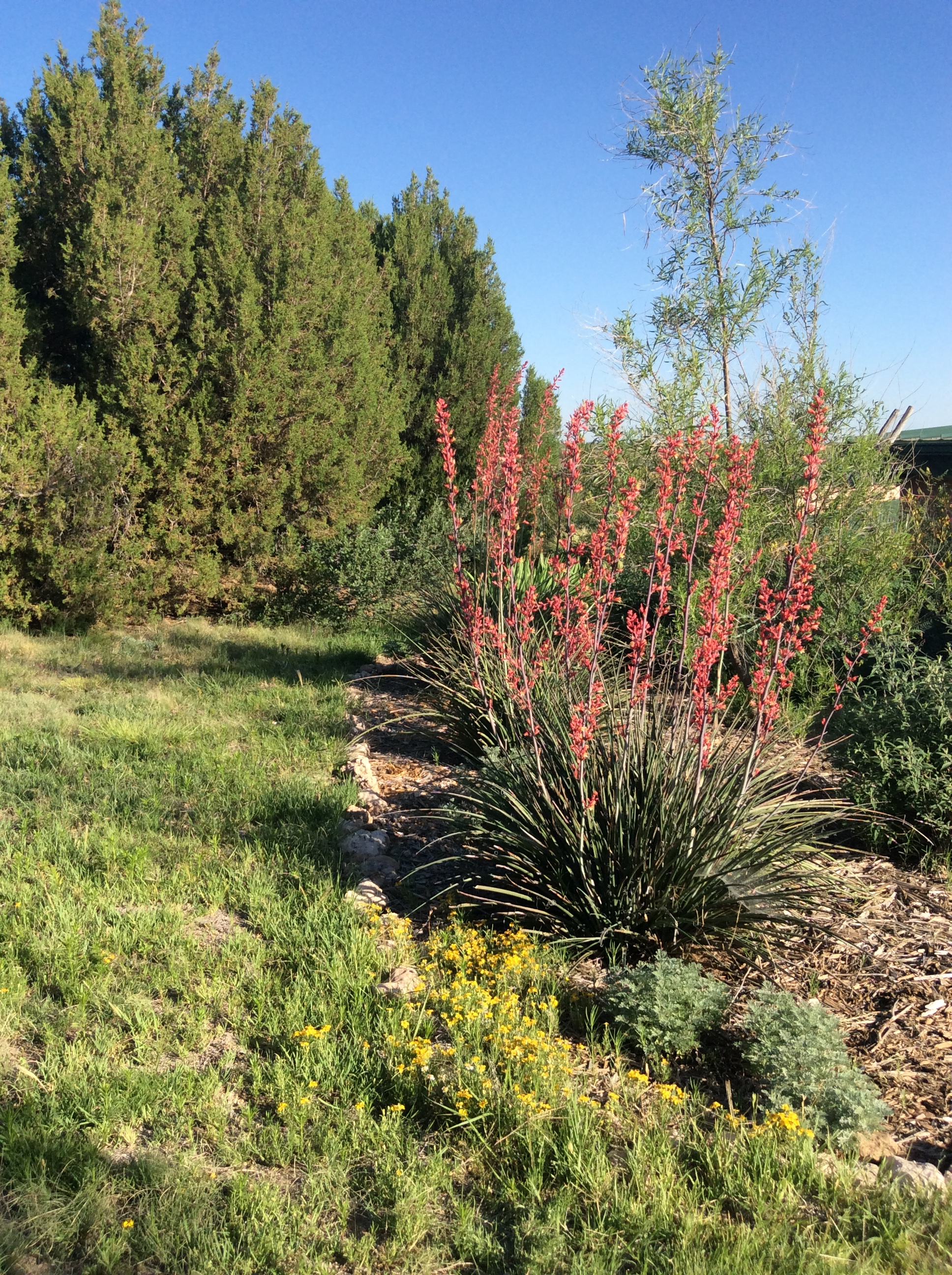
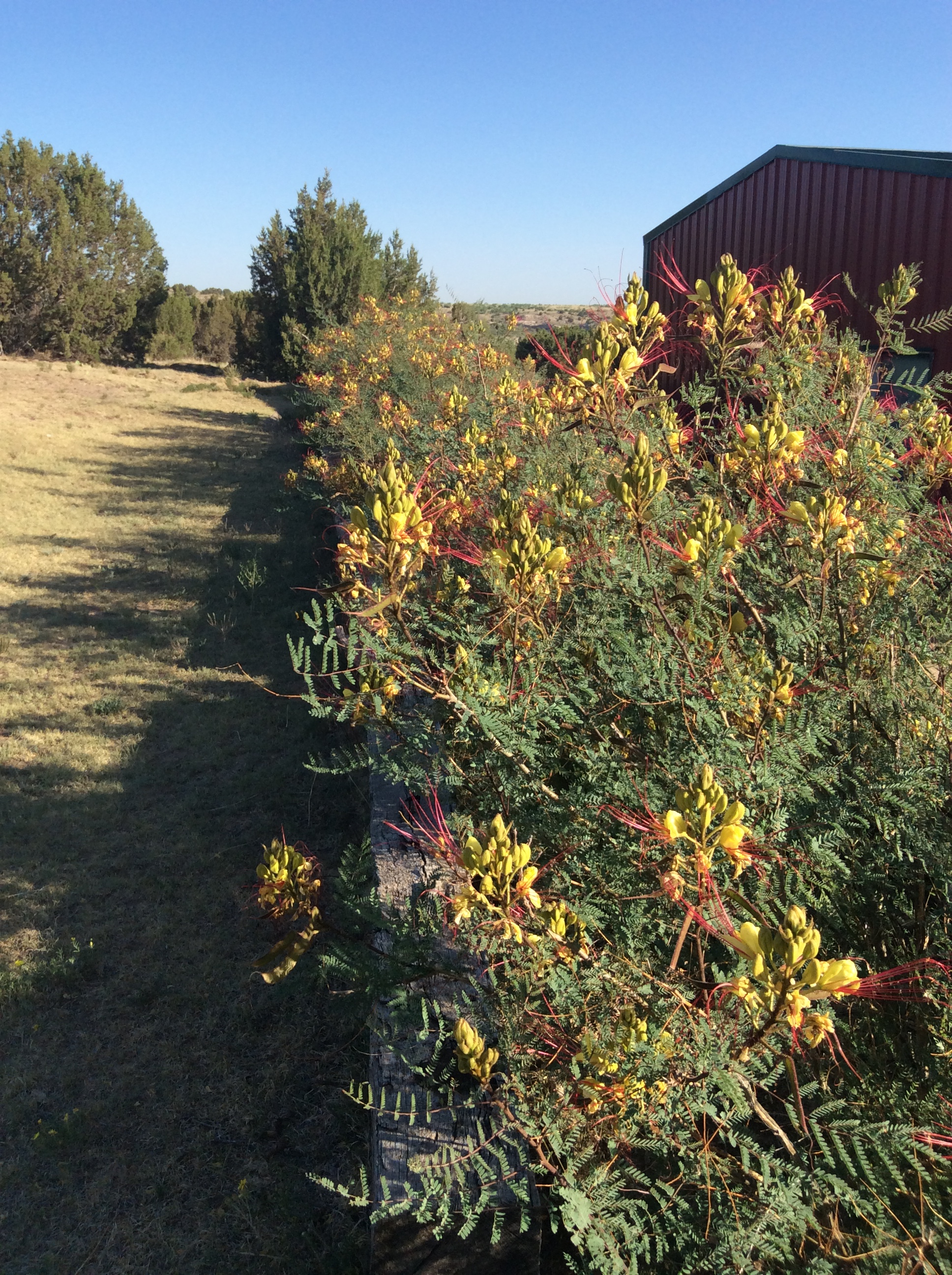
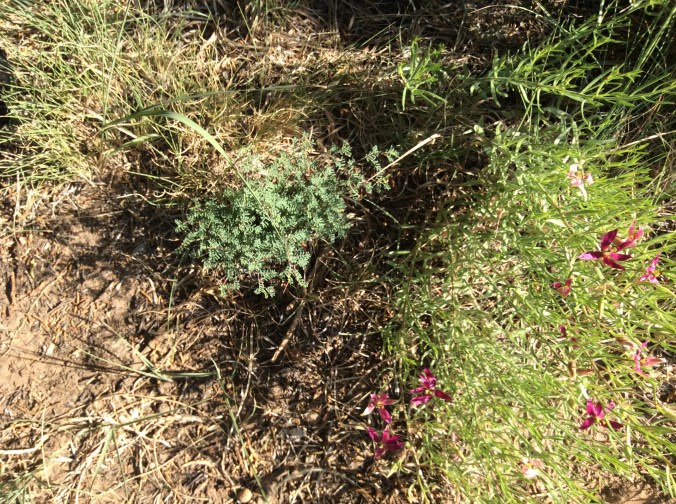
In spite of only one inch of rain since last autumn, many flowers persist: sundrops, black foot daisies, chocolate flowers, wine cups, primrose, desert (Mexican) birds of paradise, red yucca, salvia, catmint, native grasses, milkweed. I took these photos after feeding the horses this morning.





Last evening I attended a new exhibit at Panhandle-Plains Historical Museum. The exhibit featured moccasins, paintings, and various artifacts made by different Great Plains tribes, including a headdress worn by Quanah Parker. The exhibit also contains many old photographs. A number of Comanches were present including a lady over 100 years old.
After I left the exhibit, I kept thinking about it and wondered how current Comanches might feel when they come to something like this which in many ways honors them but also displays a past that will never return. While contemplating, I wrote this poem about what I saw.
Beaded moccasins,
moons of work.
Ceremonial beauty,
now encased in glass, labelled, dated by someone’s guess,
for strangers who believe in a strange god,
desecrate the land,
waste invaluable water,
kill bears for sport.
Weep
Wait
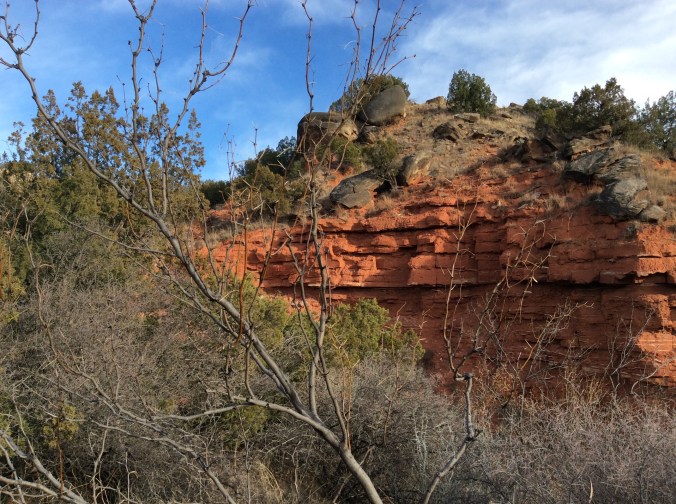
Palo Duro Canyon, Comanche Country, where they made their last stand and were forced to go to a reservation in Oklahoma after federal troops killed over a thousand of their horses.
Travel the World 4 Less
A Glimpse into My Life & Passions
Ceto-Magoism, the Whale-guided Way of WE in S/HE
Exploring the F-word in religion at the intersection of scholarship, activism, and community.
ANCESTRAL FOOD. HERBAL WISDOM. MAGICAL COOKERY. SEASONAL CELEBRATION.
inesemjphotography
politics, engineering, parenting, relevant things over coffee.
Food is the best expression of every emotion. Explore through my reviews, recipes, events and more.
Smile! A Site for Friends Wherever You Are!
inspiring personal growth through poetry and writing
Combining atheism with whimsy. This is a Fair and Balanced blog based on opinion unencumbered by fact.
Odds and ends ~ My Life
Original poetry, commentary, and fiction. All copyrights reserved.
bripike@gmail.com
A wildlife filmmaker in Africa
A Geeky Feminist's Musings On Pop Culture
"5 minute walks"
 writingontherim