Book 12 for 2024: “Quiet in Her Bones”, Nalini Singh


If you like murder mysteries, this is a book for you. I do not normally read them, found the blurb intriguing and started it. Once I started, I did want to know what happened. I learned a lot about New Zealand, the diversity of wealthy people who live there, and the lush climate in some places. A wealthy South Indian woman suddenly disappears along with 250,000 in cash. Ten years later no one still knows what happened to her and then suddenly someone finds her Jaguar hidden in dense woods with her skeleton in it. Her devoted son has believed all this time she ran away from a horrible marriage (he cannot stand his mean dad) and is still alive. Now the son is a famous, wealthy writer and determined to find out who killed her. This is the story of her life, a horrible marriage, a wealthy neighborhood where nothing seems as it really is, and the son’s quest to find who killed his mother.

Book One for 2024: “Rain of Gold”, Victor Villaseñor


The lady in charge of the College Center at Mendez Learning Center told me about this book, one of her favorites. I received it for Christmas from my grandson. It is the first book I read this year.

Although it reads like an epic novel, it is non-fiction, the story of Victor Villaseñor’s family tracing back to his four grandparents in Mexico, one set from Jalisco and the other from the rugged mountains closer to the US border. All left Mexico to escape the violence of the Mexican Revolution and eventually settled in Southern California.

Some of the events in this story are heart wrenching incidents of violence, even death, blatant prejudice, and economic poverty. On the other hand, I often found myself laughing out loud, it was so funny. The author’s parents remain perfect examples of strong people who never give up, whose persistence and determination lead to prosperous lives as successful business owners. The author continues to live on the ranch where he grew up in northern San Diego County. Now 83, he has authored many books including a sequel to this one. His website not only talks about his life and writing, but also struggles with dyslexia.

Shootings


In Iowa

the governor says she’s praying

the senator says he’s praying

presidential candidates tell us to pray.

What?!

Oh, yes, I observe how well

that’s working.

82 school shootings last year,

39 dead, 89 wounded.

In US, death by gun is now primary

cause of demise for children and teens.

It’s not much better for the rest of us.

18,762 shot dead.

36,167 injured.

If you’re male, depressed, have a gun,

just shoot yourself.

Bang!

Thousands shot themselves.

I know some keep saying,

“People kill people, not guns.”

If you don’t have a gun,

you can’t shoot someone else

or yourself with one.

The most popular gun in the US?

An AR-15.

Think about that!

What does it tell

you about this country.

A Book a Week-24: “The Water Museum”, Luis Alberto Urrea


What an amazing story collection!! As I read these incredibly diverse stories featuring so many different types of people, I kept wondering how does he know so much about different sorts of individuals:

-An older white lady in a tiny town in Idaho who runs a little restaurant.

-Chicanos in San Diego–this one I “get”; he grew up near there in Tijuana.

-A divorced white guy, wandering aimlessly cross country.

-A teen in Arizona who loves a nice girl from a dangerous family.

-A “weird” old man in a Mexican village.

-A young man trying to save his dead dad’s possessions from questionable friends.

-A strange magical realism Mexican story. I love magical realism so if I think it strange…

-A kids’ trip to a water museum ( the title) in the drought ridden plains.

-A sad South Dakota story of a white man married to an woman from Pine Ridge.

-In Iowa a widowed farmer trying his best to befriend and understand his Mexican neighbors.

One Book a Week-12: The Sweetness of Water, Nathan Harris


The immeasurable horrors of slavery and the immediate years after come excruciatingly alive in this novel. Decent white people help recently freed brothers but at a terrible price. A “forbidden” romance between two Confederate soldiers highlights the destructiveness of class and hatred. Yet, in spite of the despair and cruelty, resilience, decency, and tenderness prevail in the end. Long listed for the Booker Prize, this detailed and beautifully written novel remains true to some of the most painful parts of US history.

One Book a Week-11: The Vanishing Half, Brit Bennett


This unusual novel features identical twin sisters, inseparable as children, living in a small town in rural Louisiana. The town’s founder, a light skinned Black man, insisted on maintaining a certain character for the town–only light skinned Black people should live there. At sixteen the sisters run away to New Orleans where they ultimately choose diametrically opposed lives, one passing as white, marrying a wealthy white man who knows nothing of her true past. In spite of the deception and lies, years later their lives become intertwined in unexpected ways. The novel not only addresses themes of race but also sexual identity and who we are as individuals and a country.

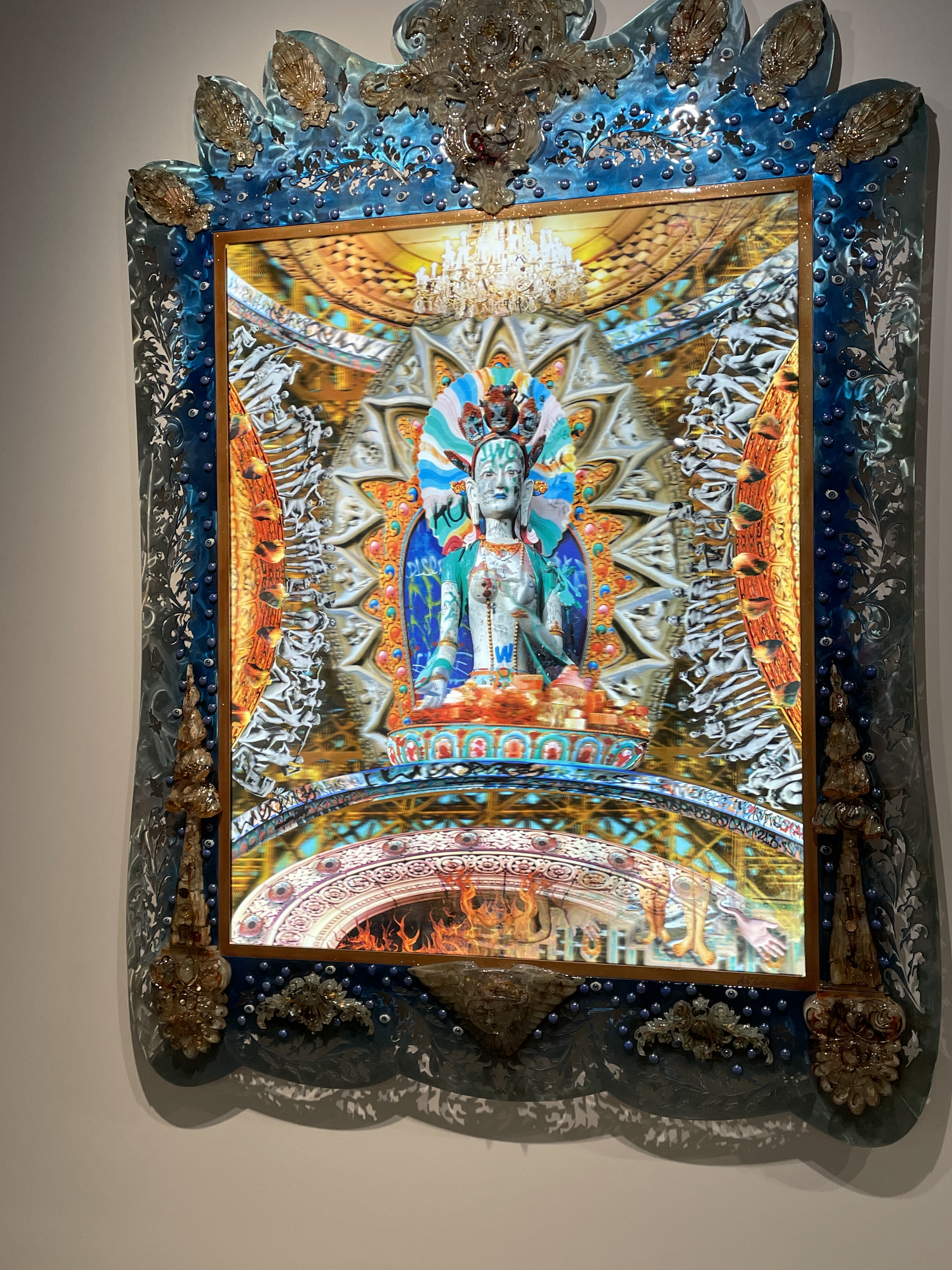
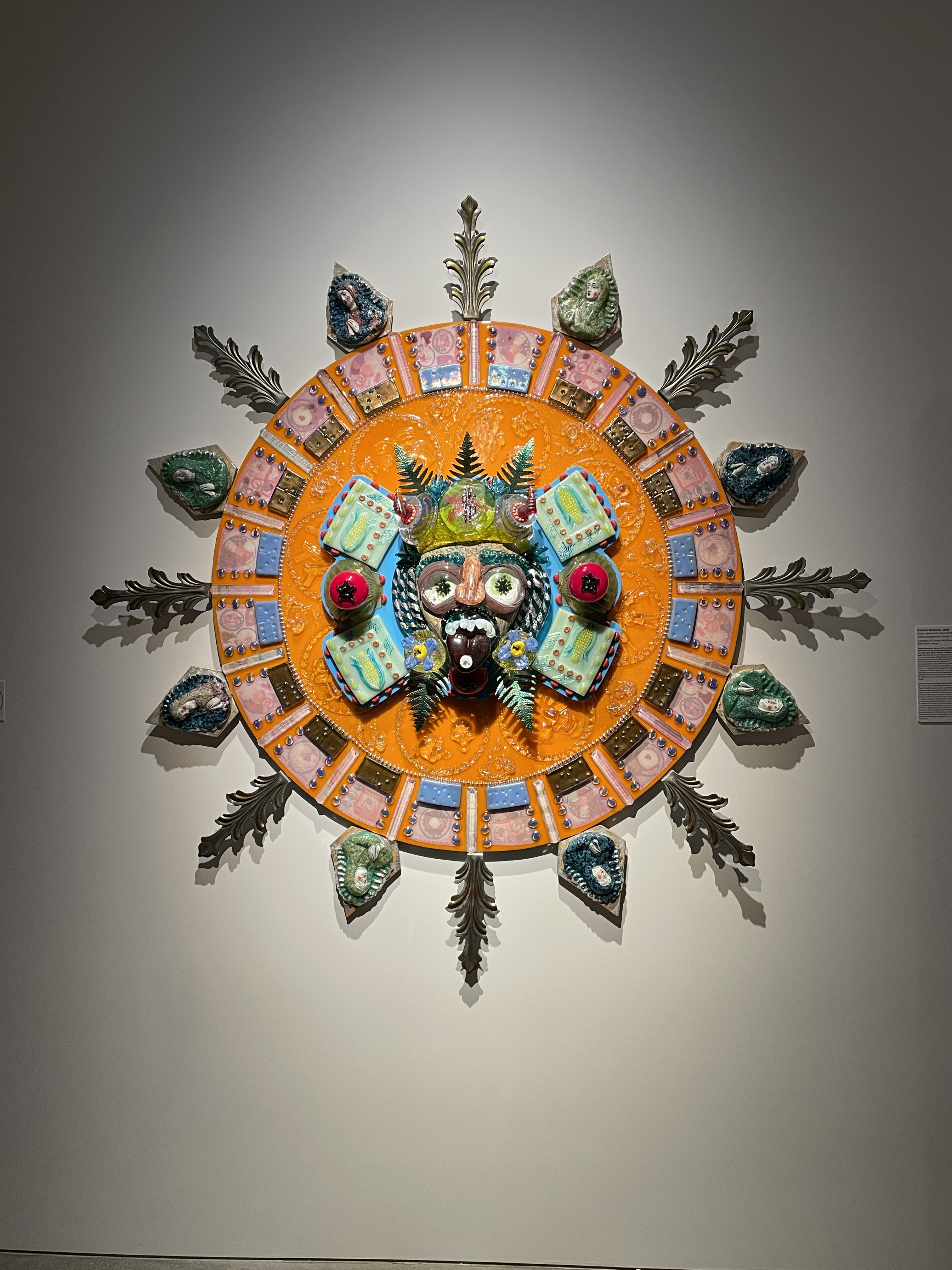
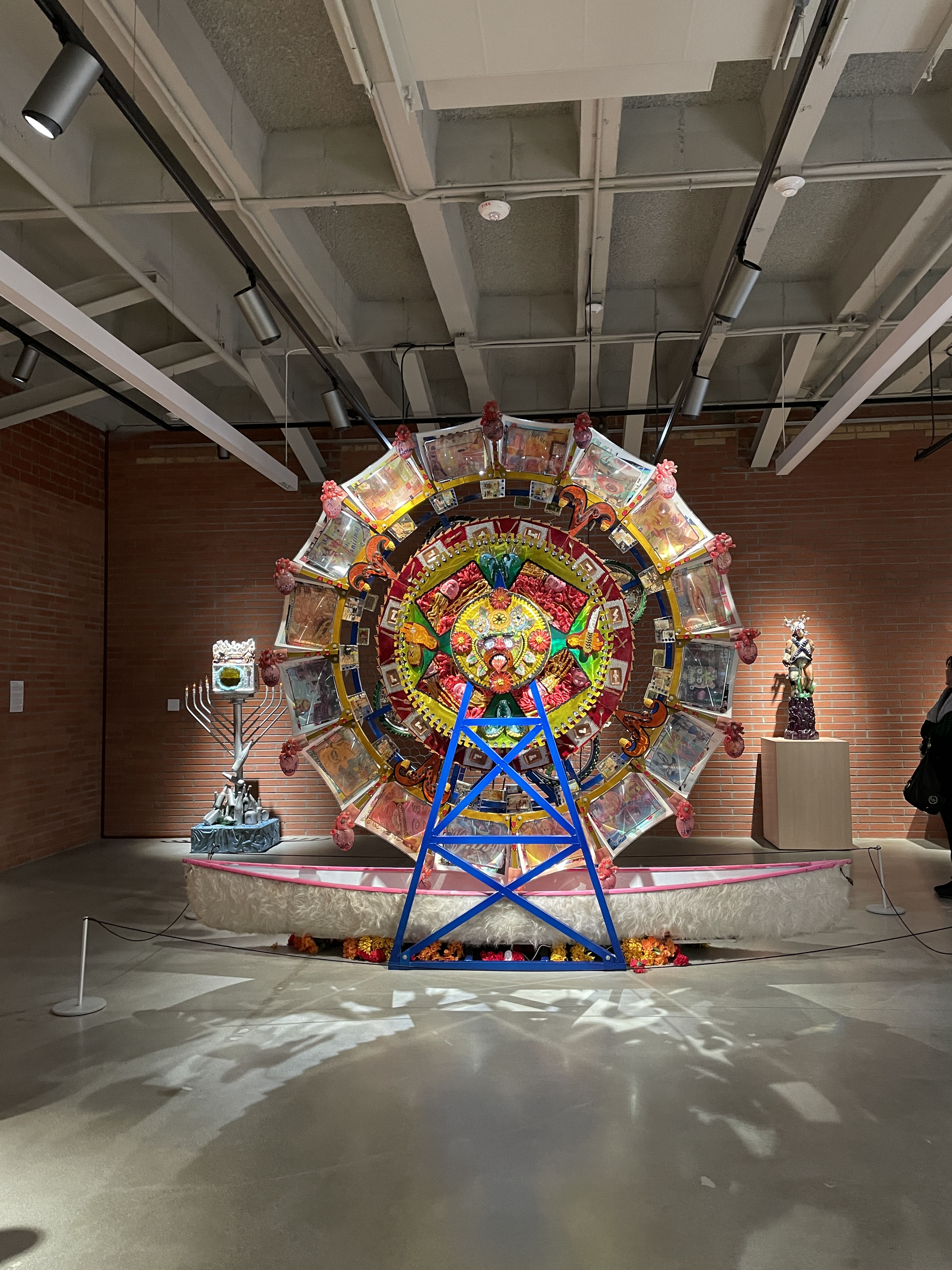
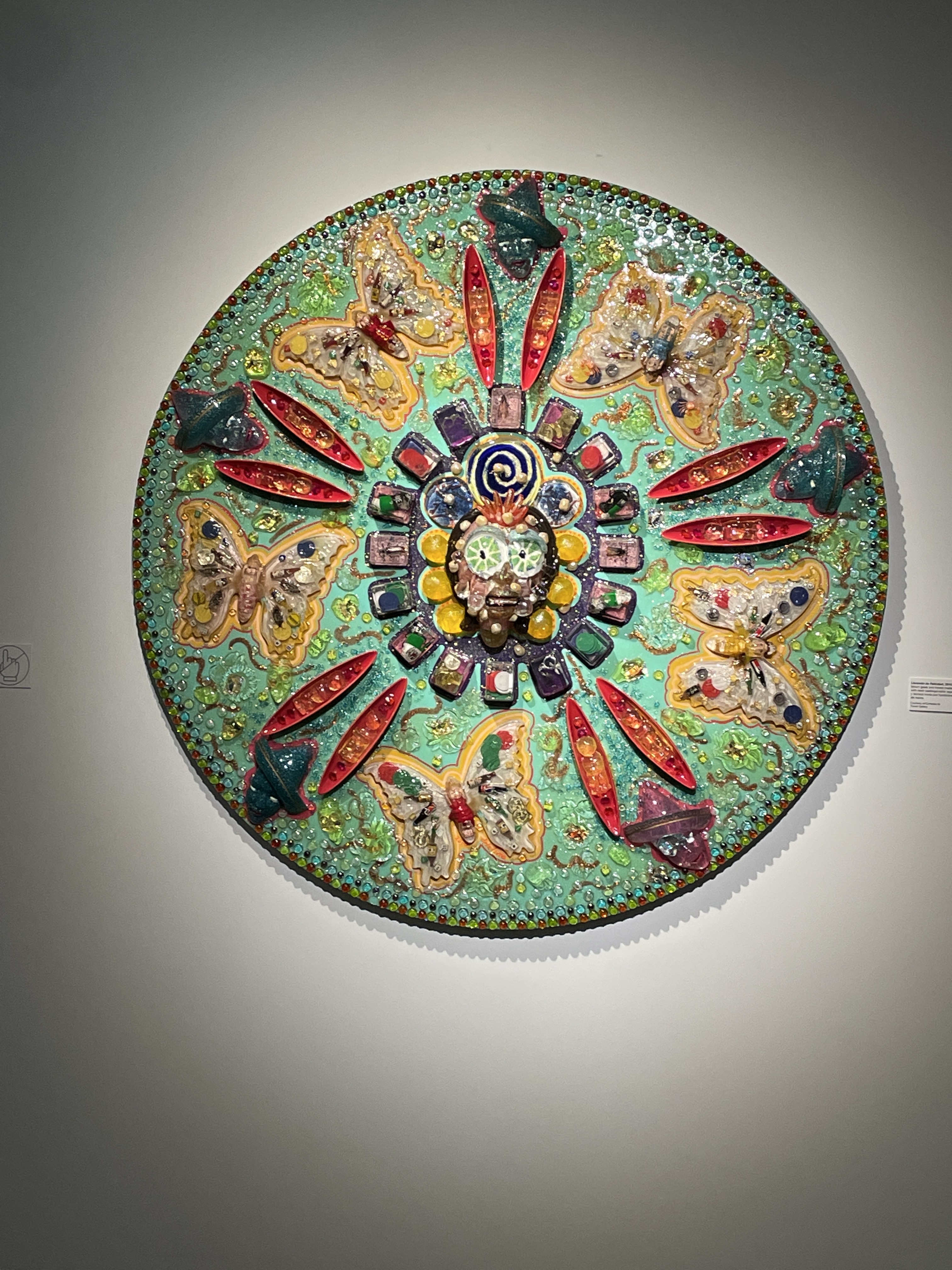
An Afternoon at the Cheech Museum – 2


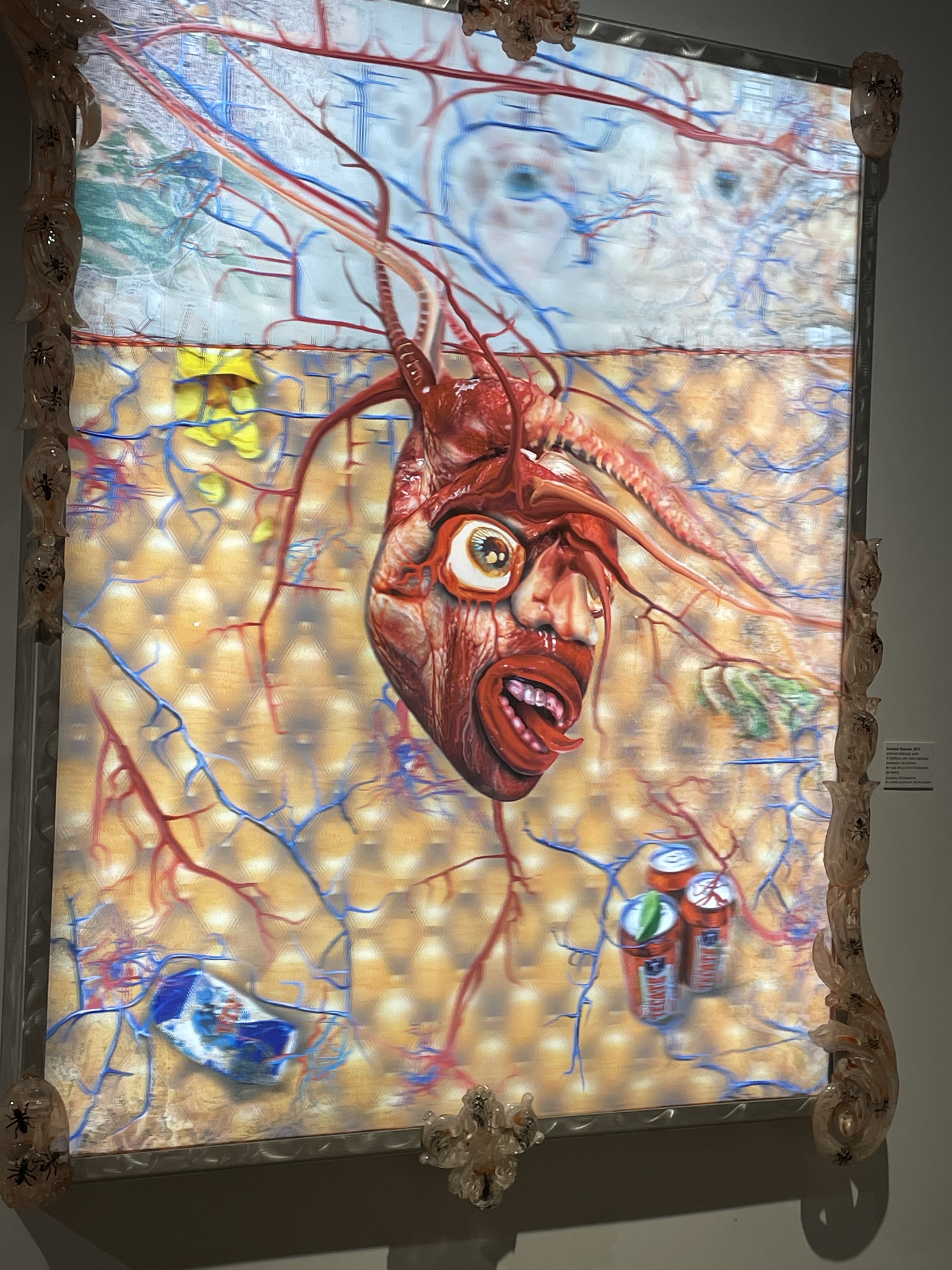
The second floor of the Cheech contains even more astonishing art including more multidimensional pieces except smaller than the giant one you see when you enter the building.

Depending where you stand in front, to either side, what you see is quite different. I kept thinking some old Flemish art or Hieronymus Bosch meets modern technology.

Much of the art makes a social or political statement especially about colonization, culture, poverty.

Some of the art is reminiscent of Mayan and Aztec calendars.

Hearts appear in many of the paintings.

And of course Frida.

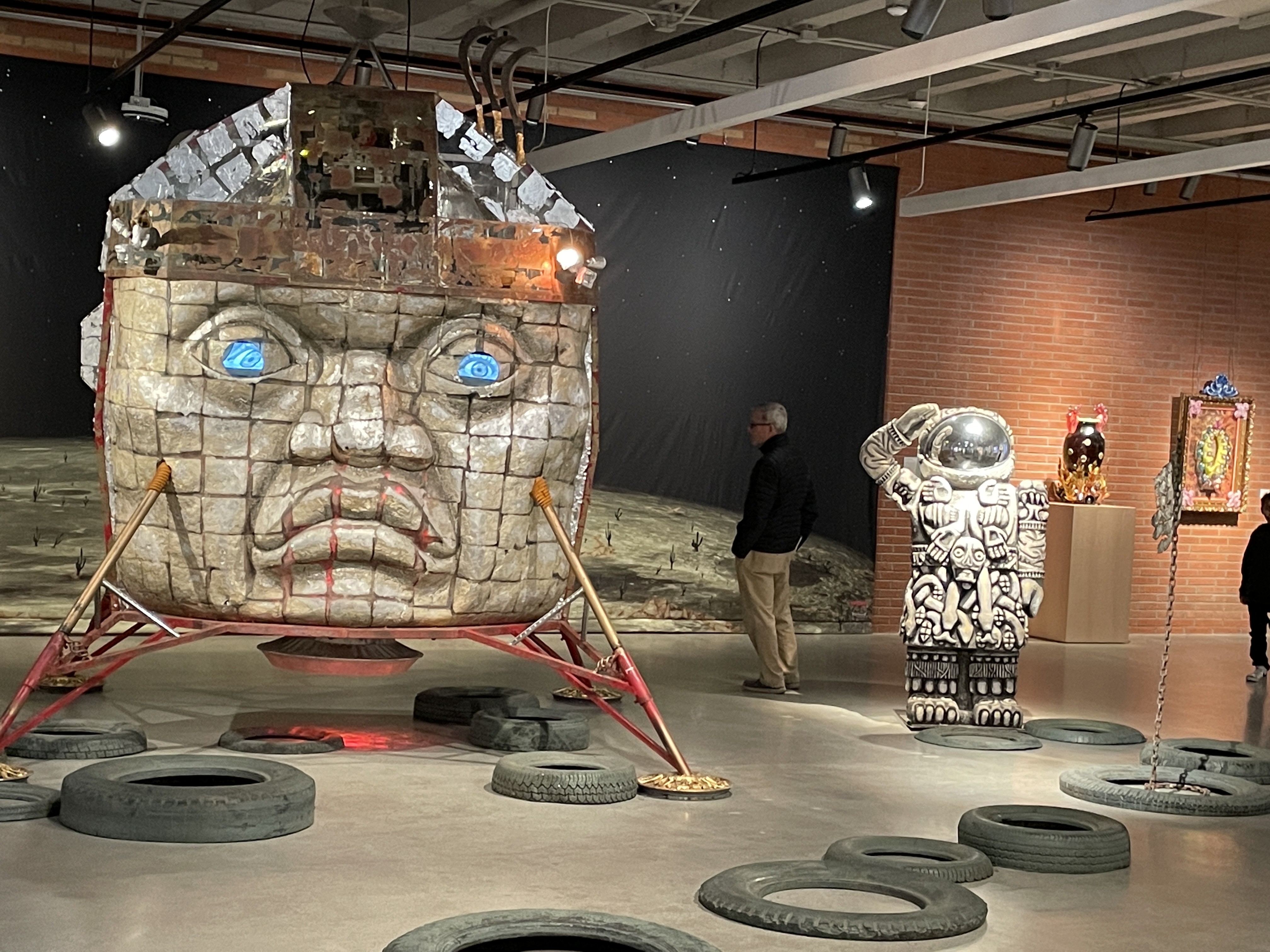
This is a space ship with changing eyes. If you walk around the back there is a creature inside watching everything with monitors.

Fuerte


An “exercise” to write a poem about ones origins with the words I am from… inspired me to write this poem.

I am from the dark side of the moon, blood born, secretly shining.

Fuerte

I am from puma, stalking your memories, invading your minds,.

Fuerte

I am from Gottlieb, who left Swiss mountains 150 years ago at 18 to avoid

becoming a mercenary, moved to Missouri, created a farm. His cultivator

sets in my front garden.

Fuerte

I am from persons Gujarati, Bengali, Punjabi, who sailed seas, met strangers, loved.

Fuerte

I am from Esan, a Nigerian tribe about which I knew nothing until a DNA test revealed,

ancient, black, beautiful.

Fuerte

I am from Latin America, Colombian, Peruvian, Puerto Rican–wanderers, explorers.

Fuerte

I am from Slavic peoples. Byzantine, Macedonian, Alexander the Great.

Fuerte

I am from brave wandering ancestors–Asian, Latin, Toscani Italian, French, German, Swiss, Slavic, Iberian.

Fuerte

I am from J haploid group, people who left the northern Middle East 7000 years ago,

wandered, explored, populated Western Europe.

Fuerte

I am from farmers, Doyle and Barbara, who grew corn, wheat, soybeans, Hereford and Charolaise cattle

to whom I carried salt blocks as a child.

Fuerte

I am from Sacred Corn, the nourisher, singing on hot summers, growing.

Fuerte

I am from the sweet smell of Jasmine, Roses, Honeysuckle, winding up walls, overgrowing gardens,

giving people hope.

Fuerte

I am from lemons, figs, dates, pomegranates, golden, dark, red, tropical, lingering.

Fuerte

I am from Stars, universal child, born on sacred ground, singing infinite songs.

Fuerte

Italy–Sirens’ Song


As we drove along the Amalfi Coast, the guide told us the mythological story of the Sirens.  My daughter took a photo out the window of the Sirens’ islands.

IMG_2866

Later I wrote this poem remembering the travails of Odysseus.


The melodious Sirens’ song

lured Odysseus

begging to be untied from

the mast.

Even the roaring sea’s

voice whispered in

comparison.

They sang honeyed

love songs to starving

sailors, longing for a woman’s

touch, a kiss, ecstasy.

With knife claws, they

ripped them asunder,

crunching bones, blood

erupting.

Satiated, they sang,

eternal, etherial, deceptive.


Several days later at a shop in Sorrento, while my daughter was looking for a medusa cameo, the owner, a cameo artist, brought out Siren cameos.  He insisted the Siren’s have been terribly misunderstood.  I wanted clarification but unfortunately other customers appeared and I remain mystified.

Summer Reading


IMG_3957Last year I joined Now Read This, the online bookclub sponsored by PBS and The New York Times.  Why did I join?  To expand my exposure to books I might not otherwise read, to learn, to explore, to interact with others reading the same books.

I rarely read fantasy or science fiction.  This summer has become an exception.  The June choice, The Fifth Season by Jemisin, won the Hugo in 2016.  The other two books in the trilogy won in 2017 and 2018.  I wanted to know what happened to the characters so I read them all.  The spine says Fantasy.  I think they are more science fiction.  Even people who claimed they did not like either fantasy or science fiction became like me and read them all.  This series tells a futuristic tale extremely applicable to events, both social and political, in the world today, how prejudice kills both overtly and covertly,  how fear of those who are different affect everyone, what it costs to live in a world where certain attitudes exist.

It took me two days to finish the July title even with chores, touchup house painting, all the things teachers attempt to do during summer break.  Although I had previously read at least three books by Luis Alberto Urrea, I had not read this one, The House of Broken Angels about a family who lives back and forth across the border–San Diego and Tijuana.  It is a tragic-comedy about the endurance, hopes, dreams, cooking, living of several generations.  His non-fiction book, The Devil’s Highway, is a must read for those who want to understand what occurs along the US-Mexico borderlands.

In the midst of all this, I went back and reread Ursula LeGuin’s The Left Hand of Darkness.  Wow, no wonder it caused a stir when it was published in the 1960s: a whole country where everyone switches back and forth between male and female and those who cannot do this are considered perverts.  Additionally, the main character is described as having very dark brown skin and those who do not behave exactly as they should or politically protest are sent off to a stark camp where they work in excessive cold and eventually die.

Then I read an article about Toni Morrison and authors who do not write for people based on a certain audience, e.g. black, white.  They write about what they know, what they feel, for a different purpose. One book listed was Children of Blood and Bone by Tomi Adeyemi, a fantasy, all of which takes place in what we now think of as Nigeria. It has not one single white character in it.  I kept thinking, wow.  I read a lot of literature from Africa, Middle East, and Latin America.  Most of the time, for better or worse, characters from other cultures show up, usually European and usually for the worse.  Not in this one.  If you go to a book store looking for it, look in Young Adult.  Jemisin’s can be found in Adult Science Fiction/Fantasy.  When I mentioned to someone I could not tell why some are categorized one way and some another, I was told there is less graphic sex in YA.  Really?  I cannot tell the difference.

Next on my list?  I annually act as a judge in a literary contest.  Three novels arrived in yesterday’s mail.  Guess I need to get busy.