Bedtime Reading or Not–the Hazara


A lifelong habit that helps me settle down to sleep remains reading.  However, occasionally I delve into a book that turns out not to be so wonderful to read just before going to bed.  The topic turns to the disturbing and then, suddenly, my mind churns.  By that time, it is too late to go back.  Or, like the book I am reading now, parts of it consist of stories inspiring, amusing, enlightening, parables for life.  Then there are the other parts:  the abuse of an entire people by the other ethnicities surrounding them, genocide, turmoil, invasion.  I remain a lifelong lover of libraries.  Recently, while browsing through new books, I found this one:  The Honey Thief  by Najaf Mazari and Robert Hillman.  Mazari grew up in a Hazara village in the northern part of Afghanistan, the area known as Hazarajat, became a master rug maker and fled from the Taliban to Australia in 2000 where he met his now close friend and coauthor.  For several days now, it has been my bedtime reading.

The Hazara people speak a dialect of Farci, the language of Iran.  Data varies, but they number approximately seven million in Afghanistan and remain one of the largest ethnic groups there.  Nevertheless, in spite of this, other groups discriminate against them for various reasons, including the fact that most Hazara are Shia Muslims surrounded by Sunnis.  Until 1893, they were the majority when half were massacred and many fled to live in Iran, Pakistan, and India.  Some believe the Hazara are the descendants of Genghis Khan’s warriors.  Many resemble the people who live in Mongolia today and in many ways parts of their culture resemble that of Mongolia, e.g. their tents look like yurts; no one knows for sure.  They have lived in what is now known as Afghanistan for hundreds of years.  They are people of the mountains who have learned to cultivate beauty and farm in high, inaccessible places.  They are famous for poetry and story telling.  Unlike other women in Afghanistan, they shunned burkas, fought along side men as soldiers, and believed in education for women.  These attributes fueled discrimination by other groups there.

Now back to bedtime reading.  Several stories in particular contain what I consider the necessary qualities for bedtime perusal:  entertaining and instructive without gore, controversy.  They also hold an unusual quality of something you cannot quite quantify, a hint of the mystery of life, of a particular kind of not quite describable beauty.  Hoping that at least some of you will find the book and actually read it, I will first list the stories to read without dread or worry if you want to read at bedtime:  “The Wolf Is the Most Intelligent of Creatures”, “The Music School”, and the “Snow Leopard”.  Under no circumstances read “The Life of Abdul Khaliq” and “The Death of Abdul Khaliq”.  You will, indeed, learn a considerable amount of Afghan history, but unless you are quite heartless and insensitive, you probably will not be able to drift off to a pleasant dreamland for hours.

If all this stokes your curiosity, here are two websites to learn more about the Hazara:  www.joshuaproject.net and http://www.hazarapeople.com.

My Father


Recently I decided to try writing poems about a few family members.  Months ago on this blog I published a poem about my Grandmother along with the marriage photo of her and my grandfather, who was so much older than she  (22 years) that I never knew him at all.  In June I posted photos of the trip I took back to Missouri where I grew up.  While a few things remained the same, I felt very sad about some changes and kept thinking how my dad must feel if he were watching.  He died in 1996, lived in the same house for 80 years and on the same farm all his life.  He labored long and hard to make the homeplace beautiful.

He watches:

The house where he was born

gone

Only the old carriage house stands.

The young man who farms the land cannot bear to tear it down.

He watches:

The ancient burr oaks and black walnuts

gone

bulldozed into waste piles or sold for greed.

He watches:

The house he lived and loved in for eighty years

still stands on land his family owned for more than 100.

Strangers live there:

He sees the well trimmed lawn,

new picket fence,

children playing.

He watches:

The pond he proudly built and stocked with fish reflects the summer sun.

The tree filled park between the pond and house

gone

He wonders why someone would destroy such beauty.

He watches:

The walnut grove where he ran cattle

gone

The pond where his grandson caught the giant turtle

gone

plowed over and planted to corn and soybeans.

He watches.

SAM_1165

Blackwater Draw-Part Two


The ancients hunted here at the shores of a lake

nearly 12,000 years ago.  In 1929, an amateur

archeologist discovered an ancient spear

point lodged in bone.  I walk the mile long trail

down into the depths.   Caliche, gravel,

larger rocks strewn by millennia.  For

thousands of years Clovis, Folsom, and Portales

Man left remnants of their hunting life.

The scattered cottonwoods whisper in the wind,

timeless voices call me, beckoning.

Who were these people?

What did they look like?

Where did they come from?

In whose gods and goddesses did they believe?

Doubtless hunger drove them to this place of water

and plenty.  Columbia Mammoths, giant sloths, dire wolves,

saber toothed cats  gathered here for thousands of years.

The diggers found an obsidian spear head with a

bison whose horns spanned seven feet and

mammoths twice the size of elephants.

Saber toothed cats competed with these

ancient ancestors at this place, all driven by

hunger, thirst, and instinct.  I wonder how

these people overcame danger, fear?

I walk the mile long path, stand in the shade

of these cottonwood trees , read the signs that

tell me what diggers found at specific spots along the trail.

The cottonwoods whisper to me.  They

tell me ancient tales of hunger, strife, fear,

beauty, love, endurance.  I hear the ancient voices

calling.  They tell me ancient tales of woe, war,

weaponry, courage, and community.  My

skin tingles strangely in the summer heat.  Now

this land is dry, a desert, the water that sustained

teeming life evaporated in the crystalline air.

Twelve thousand years from now who will stand here?

Will this place exist?  Will someone wonder the meaning

of our bones, who we were, what we believed?

Blackwater Draw–Part One


Annually, I make a pilgrimage to this ancient place where people hunted on the shores of a lake nearly 12,000 years ago.  It continues to be the oldest evidence of human habitation in the Americas.  For a large part of the twentieth century it was a gravel pit.  The gravel mining created both positive and negative consequences.  Without it, the bones of giant bison, mammoths, dire wolf, saber toothed cat and camels might never have been discovered at all.  However, because the owners of the quarry refused to stop mining, some portions of the site were destroyed by big swoops of the excavator machines.  Frequently archaeologists worked simultaneously along with mining operations, continuing within sight of each other.    Various groups, including some private individuals, attempted repeatedly to buy the site to save its precious stash of bones, artifacts, and ancient wells.  The owners refused to sell.  Finally, in 1978, Eastern New Mexico University purchased the site and continues archaeological excavation there.  They also run the nearby museum adjacent to the university football stadium.

If you expect something wondrous and grandiose, you will be severely disappointed.  A small building houses a teensy museum, restrooms, a few sweat shirts and posters and books for purchase.  An individual sits by the door to take your meager entrance fee–at most five dollars–and answer questions.  These individuals explain they are majors in disciplines related to the site, archaeology, paleontology, anthropology, that sort of thing.  A simple gravel trail traverses the site and a smaller trail goes to an ancient well–16 have been found at or near the site–and to a dig inside a building where you can observe the layers unearthed, which group of people left which type of artifacts, and actual bones of mammoths, giant bison, and other animals from the end of the last Ice Age.

People react differently to such sites.  I always remain entranced, overwhelmed, reflective, thinking to myself, “I am walking where people walked and hunted and went about their lives more than 11,000 years ago.”  The most ancient evidence of people is labeled Clovis Man–Clovis, NM, is just up the road.  They never found human bones of these people here , just their spearheads stuck in the ribs and shoulders of mammoths which stood 15 feet at the shoulders.  The people who came later made a different type of spear, called Folsom points.  These people, Folsom Man, lived later by 1-2 thousand years.  Another site, called Folsom, is near the tiny town of Folsom, NM, farther north at the edge of the mountains.  This site is on private land and tours are available only twice a year.  Although I visited the town last year, I have not visited this site.  Other people arrived later and although the collection is smaller, their spearheads remain available for viewing at the nearby Blackwater Draw Museum on the main road between Clovis and Portalis, NM.

When I look at the list of animals who lived here at the end of the last Ice Age, I feel amazed because they include both camels and horses as big as our horses now.  Both of these became extinct as did the saber toothed cat with the humongous canine teeth and the dire wolf.  Giant sloths lived until modern times but nowhere near New Mexico.  How could all these animals live here?  It was wet and green then.  Until the last couple of decades, bodies of water of varying sizes have drawn animals and people to this area.  Giant fields of irrigated corn and dairy farms lowered the water table sufficiently to eliminate any evidence of water.  At the time of Clovis Man a large lake covered the site.  Later, during a 3000 year drought, people dug the ancient wells to reach water.  Because this remained the only place for hundreds of miles with a supply of water, people came.

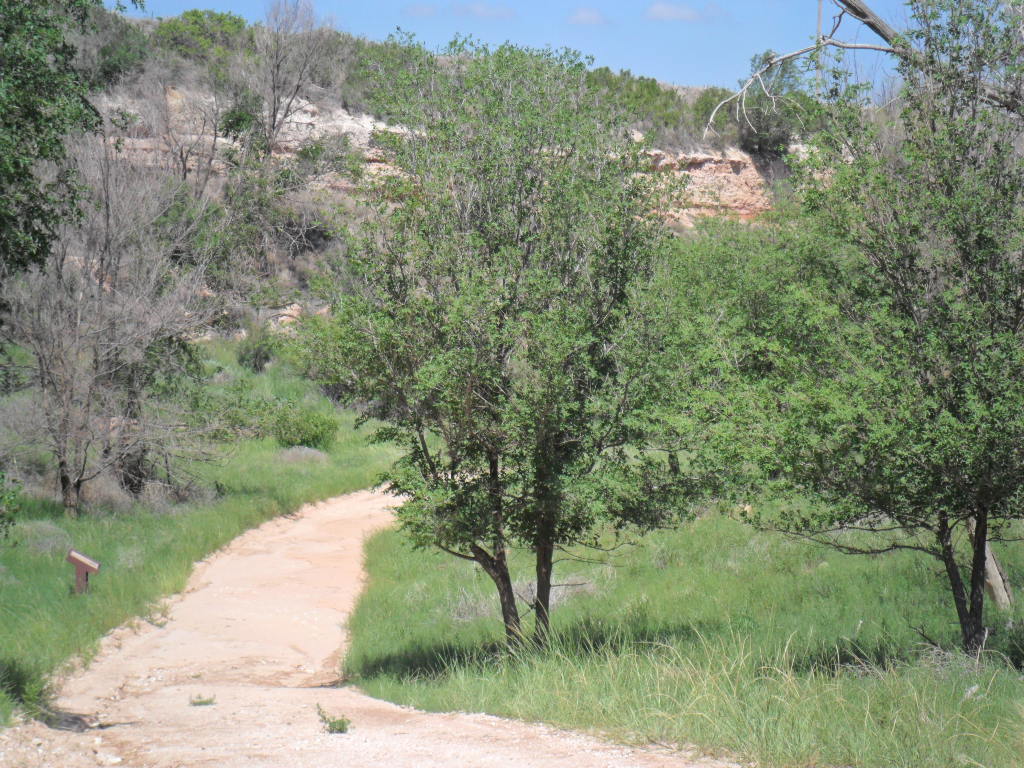
The trail begins just to the northwest of the tiny building and goes along the top for a couple of hundred feet before it drops down into the gravel pit remains.  The gravel was below all the layers containing human artifacts and ancient animal bones so the pit is wide and deep.

SAM_1302

SAM_1301

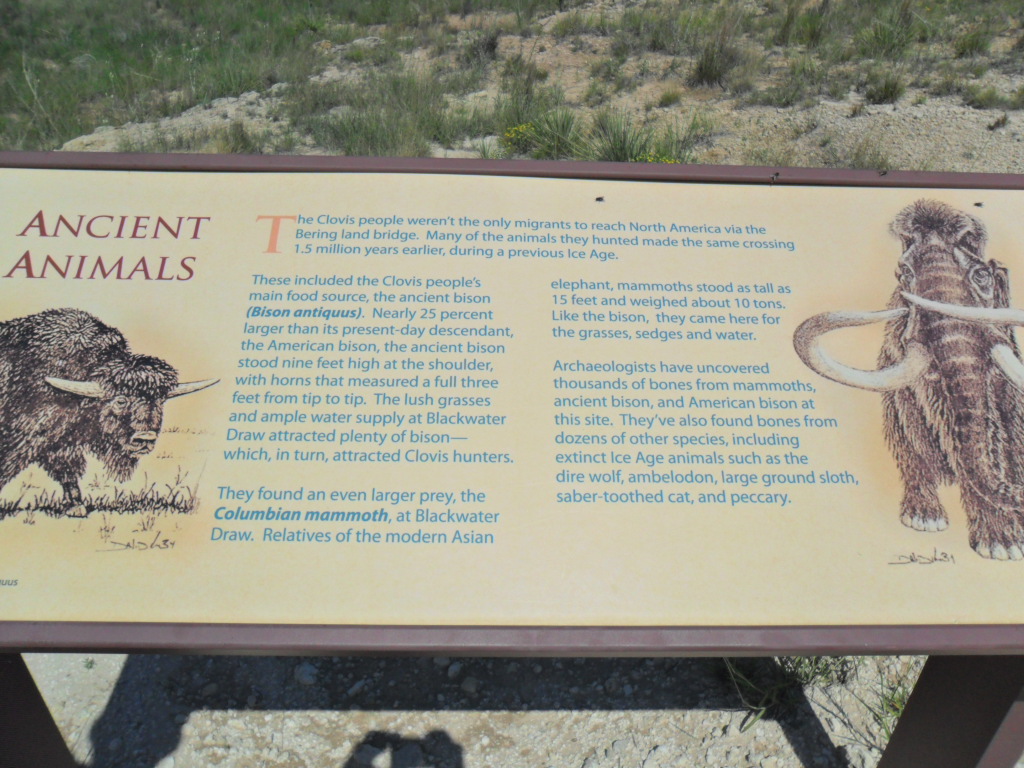
If your sight is good, you can read this.  The primary source of food for Clovis Man, giant bison and Columbian mammoths, came here for the water.  Archaeologists  theorize that hunters often killed these huge animals while they were in the water where it was more difficult for them to escape and move quickly.  In one place on the trail, evidence of a five bison kill complete with spearheads makes one think just how difficult and dangerous this hunting activity must have been.  I stand there, think about my own 5’4″ height, and wonder what it would be like to have a Columbian mammoth close to me.  Doubtless many died from injuries during such activities.

SAM_1304

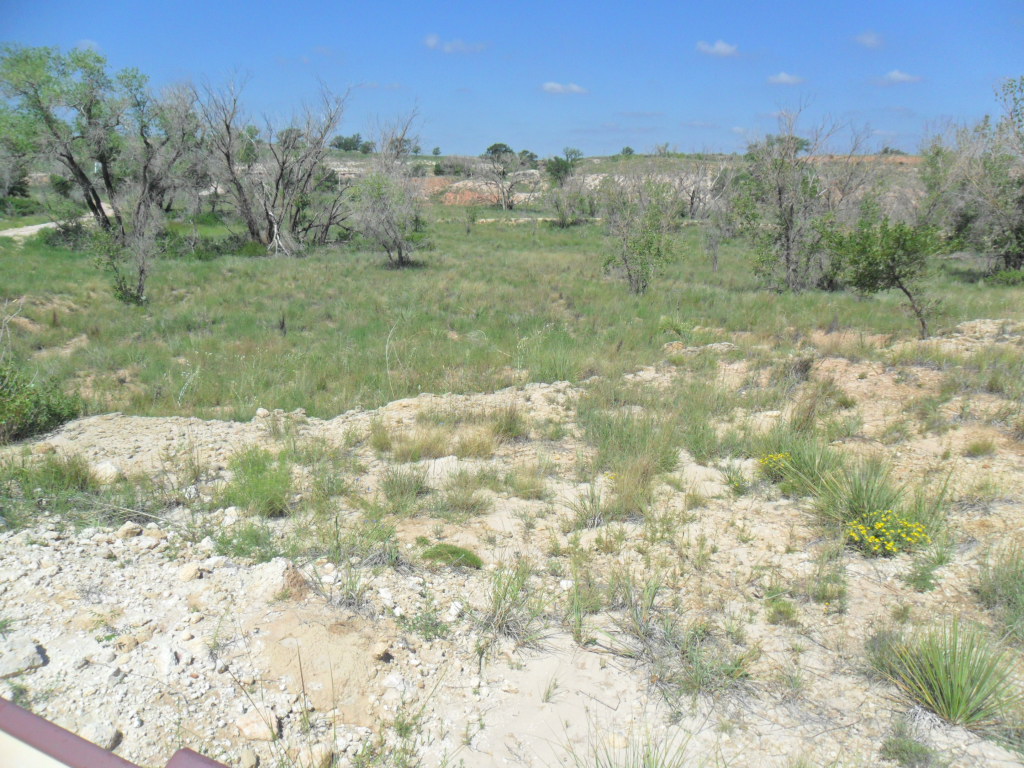
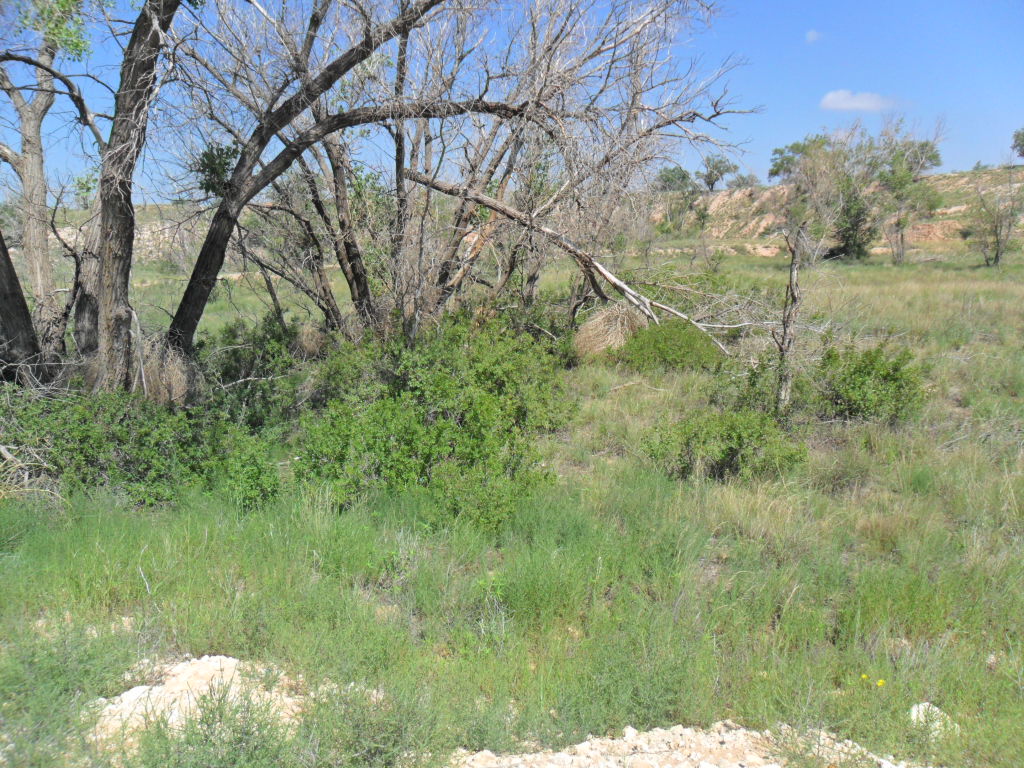
The train meanders along the bottom of the gravel pit.  This year, plentiful rain grows abundant grass.  During the last several years, little rain has fallen as evidenced by all the dead trees and bushes scattered around the site.  Normally, this area is semiarid with less than 18 inches of rain per year.

SAM_1303

If spectacular scenery appeals to you, do not go here.  Most of the bones and artifacts were found in the layers at the sides of the pit.  As you walk the trail, markers indicate the location of findings.  Few human remains are found at such sites because these were not permanent settlement places.  Ancient peoples roamed the land in search of water and food.

SAM_1305

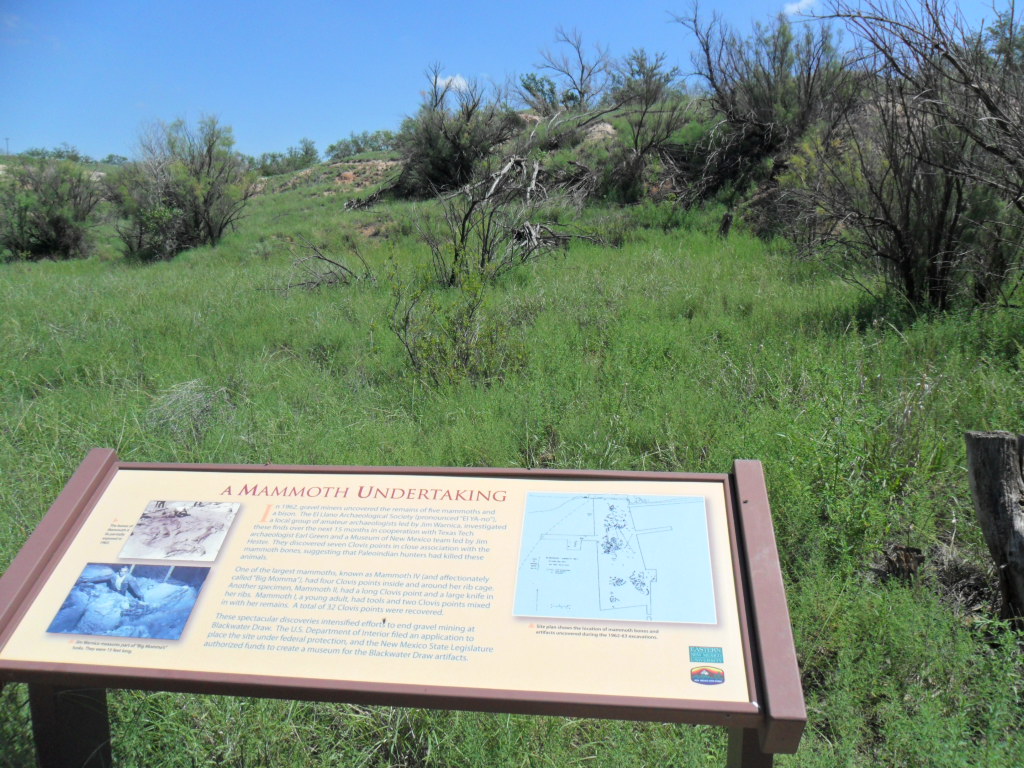
Signs, such as this along the trail, illustrate different places where specific bones and artifacts were found.  They also explain the different types of artifacts, their specific uses, and the history of the site.  Maps, like the one on this sign, help the viewer hone in on specifics in relation to where one is standing.  The photo illustrates archaeologists in action during site digs.

SAM_1307

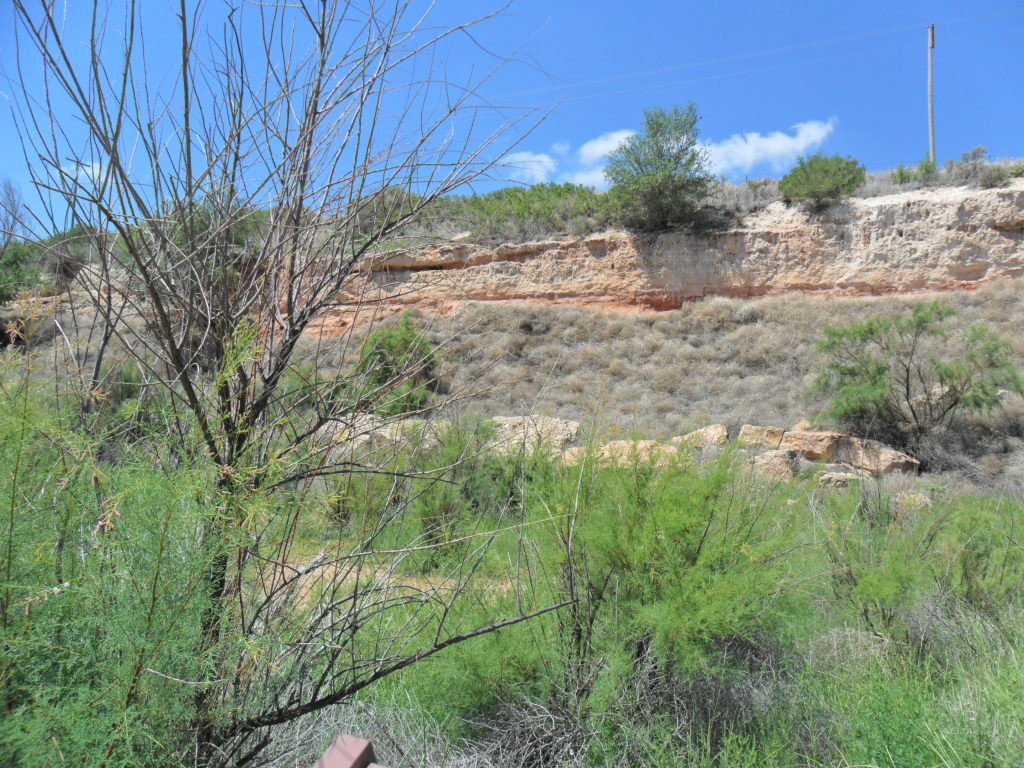
Cliffs, like the one here, surround the site.  In these small cliffs each layer indicates a different age of human activity by not only the type of sediment but also by the type of artifacts and animal bones found.  Just beyond this particular cliff at the west edge of the site, irrigation pivots run in a huge corn field.  The grey at the bottom of the cliff indicates an immense pile of dead, dried, tumble weeds.  This is dry country.

SAM_1308

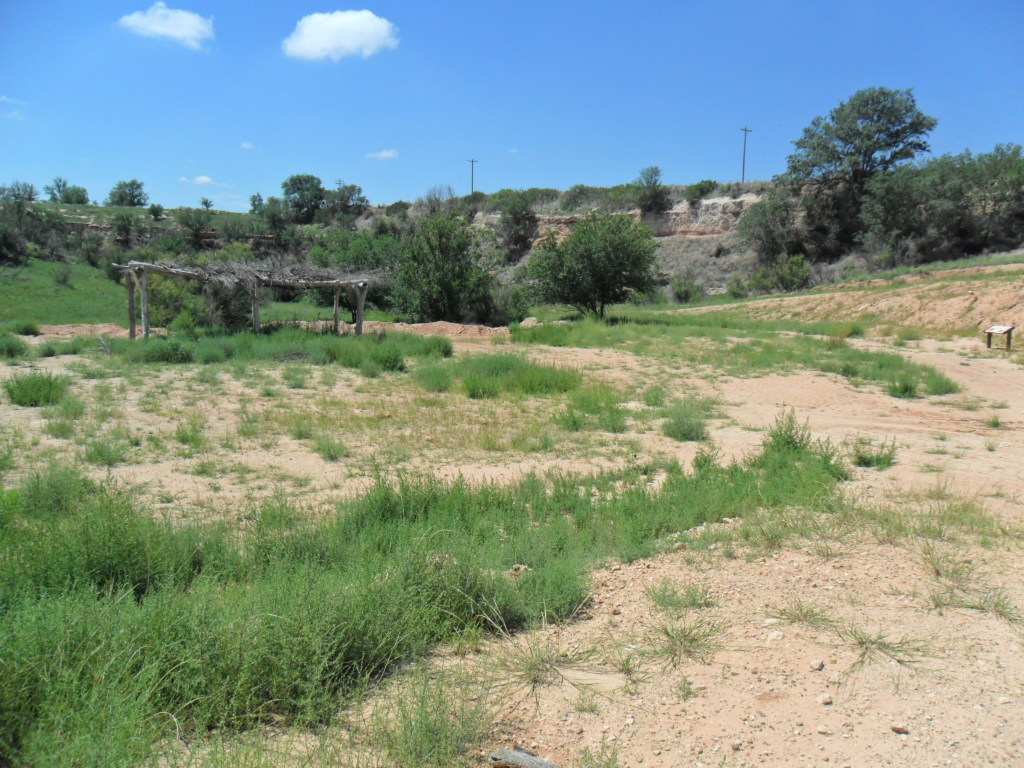
Approximately three fourths through the trail, the site mangers have erected several structures.  This one is the most primitive.  Others are modern with picnic tables and in one place I saw a giant sand box.  Guessing, I think it must be used to illustrate how one sifts through layers of soil to carefully remove spearheads, bones, pottery, etc.  This is the perfect place for a field trip, not too long, but full of geological and paleontological information.

I go here usually once a year.  If you ask me why, I may articulate something about how it has the oldest artifacts and bones found in North America.  The real reason??  I am not quite sure.  This place fascinates me, connects me with something ancient and wondrous, something undefined and mysterious.

The Gift


On the wall for forty years,

a copy of some famous painting.

Almost everything a strange dark

shade of blue, a blue not quite

blue, the merest hint of green:

antique cupboard, curved table

base, ladder back chair, window

frame, even the tree outside.

The only exceptions:

white table cloth,

newspaper in the lady’s hands,

her pale pink floral dress with tiny

darker pink flowers,

large copper antique teapot

in the cupboard, the black and copper

pots on top.  Her teacup, saucer, plate

of toast, white and blue, an old Danish pattern.

I’ve kept this gift,

hung on too many walls to count.

My college roommate, the giver, said,

“This reminds me of you.”

I look at it; all these years

have wondered why.

We’re still friends.

I’ve never asked.

The Farrier


He looks like the typical cowboy

with no cowboy hat.

A cowboy hat would get in the way

up against a horse.

Pale blue eyes,

grey, handlebar mustache,

pack of Camels

he chain smokes,

Australian shepherd, Chili, by his side.

After the trimming

he sits and talks to me

for two hours.

He tells me a story

he told me the last time.

I listen as if it were the first time.

People call him from Oklahoma City.

They want a shoer.

He tells them,

“Too far unless

there’s ten head at 85 a head.”

They agree.

He gets there with Chili,

a pup then.

He starts to tie her up.

“No need;

let her play with our puppy.”

He does.

They invite him out.

It is New Year’s Eve.

“The dive they took me to

was real rough, real rough,

so rough I’d worry about

my safety even with two 45s.

They had a friend singing there

somewhere in Southeast Oklahoma City.

Real rough.

Next morning I’m ready

for the other six horses.

There’s none.”

He packs up,

comes home.

Chili won’t eat,

won’t play.

He sits and waits at the vet.

It’s parvo.

She’s had the vaccine

but not enough time.

“The people in Oklahoma City

lied about the horses

about the parvo.

Chili stayed on IVs for five days.”

Today, Chili’s a dog dynamo,

no longer a puppy but

with puppy energy.

She and Isabella play

constantly for the two hours.

He says,

“You must be rich to build this place.”

I laugh.

“Rich, I’m not rick.

Lucky maybe,

no, not lucky.

I don’t believe in luck.”

A person makes her own luck.

Smart helps, sometimes.

DNA


Several months ago I decided to participate in the Human Genome Project through National Geographic.   When I called to order the kit, the young man reminded me that as a woman, I would receive only one half of my ancestry, the female half.  Since women do not have a Y chromosome, a woman can only trace her female family line through her mitochondrial DNA.  He suggested I use my grandson’s DNA so I would receive complete results.  Of course, that meant that in the end, I would have to factor in what I knew about his father’s family and deduct that to determine my own.  After the Geno 2.0 kit arrived, we took his cheek swabs and mailed them off.  This week when we returned from an 11 day family road trip, the results arrived.  With the results came detailed explanations of human migratory history and even comparisons of populations with DNA most like his.  Although none were close, the top two groups were people in Bermuda and Mexican Americans.  Luckily, the information contained a detailed explanation of the people of Bermuda.  The Native American results I expected since his great grandfather was Navaho.  Other parts came as somewhat a surprise. Once again I am taking a poetry class and now working on publishing a book of my poetry so I decided to write a poem about this experience.

The results loom before me on

the computer, percentages:

Northern European, Mediterranean,

Native American, Neanderthal,

sub Sahara African, South African–

as in the Bushmen in the Kalahari,

Northeast Asian, Southwest Asian.

Suddenly, calculations move through

my brain.  I look again, add, subtract,

recalculate, stare, ponder. Is there

a family secret I missed?  How will

I know, from whom?

Everyone I could ask is dead.

SAM_1183

Going Home Again


Last weekend I returned to the county where I grew up and the family farms in Andrew and Holt County, Missouri.  It had been at least six years since I had returned to the place my great grandfather homesteaded over a hundred years ago.  Strangers live in the house where I grew up and my father lived 80 of his 90 years.  On the site where he was born, only the old carriage house still stands, a sentinel to a lifestyle long gone.  Repeatedly, I tried to write a poem about all this, but have not been able to do so–perhaps the experience is still too close.  Additionally, for the first time, I attended my high school reunion and chatted with individuals I had not seen since I was 18.  Decades truly change people; I would have recognized only a couple without the name tags.  Northwest Missouri this year presents an intense emerald landscape.  Having travelled there from the semi-arid land where I now live, I suffered “green” shock.  And tree shock.  The Panhandle of Texas grows few large trees outside of towns and cities.  Even with my very ordinary camera, these photographs capture the beauty I witnessed and family memories I want to remember and share with my children and friends.

SAM_1167

This is the house where I grew up and Dad lived 80 years.  The building in the foreground was built during the depression.  Before it was put to its final farm use–for hogs and chickens at various times in my childhood–Dad held dances here.  Because of prohibition, the sheriff always sent someone to make sure no illegal alcohol consumption occurred.
SAM_1097

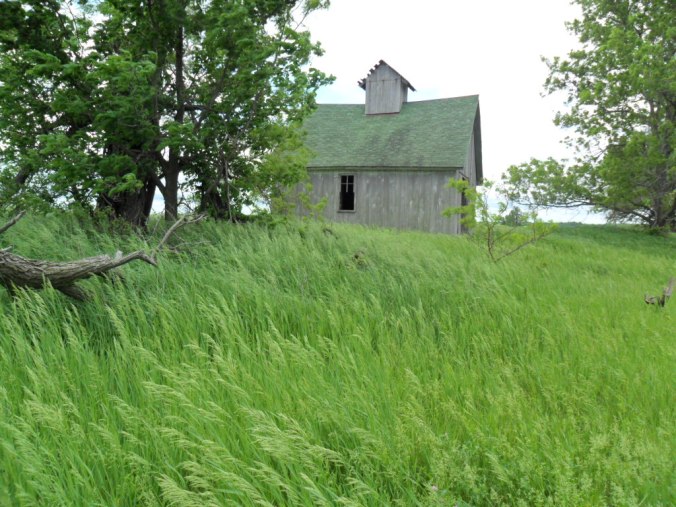
The old carriage house, just south of the site where a large house stood during my childhood, still stands.  The stained glass transom window hanging in my own house now and an etched glass hunting scene are all that remain of the house where Dad lived as a small child.  Emptiness and raccoons finally destroyed it.   When he gave me the windows over thirty years ago, Dad said it was impossible to keep an empty house in good shape forever.

SAM_1165

At the age of 18, my great grandfather, Gottlieb Werth, came to the United States to avoid being drafted into the Swiss army which hired out soldiers as mercenaries.  My father told me what his mother told him:  my father’s mother stood on the roof of her house in Switzerland and waved until she could no longer see her son; she never saw him again.  This photograph shows his grave in the Fillmore, Missouri, cemetery.

SAM_1094

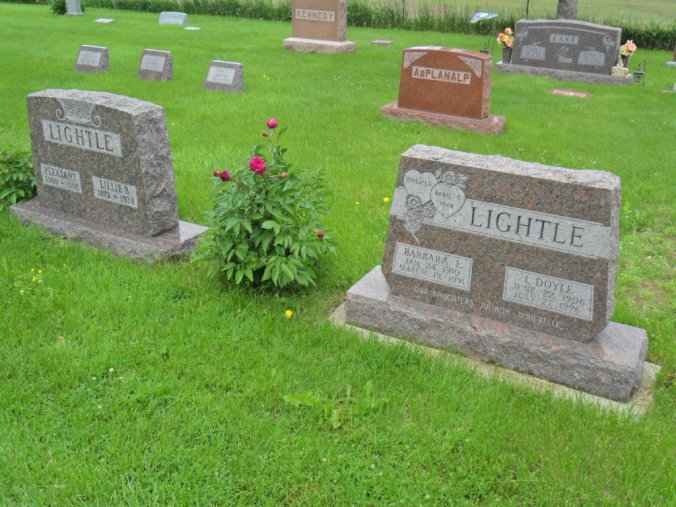
Nearby, perhaps fifty feet away, lay the graves of Mom and Dad and my grandparents.  I never knew this grandmother; she died long before I was born.  My grandfather died when I small and sadly I do not remember him.  The family stories tell that he taught me to talk at a very early age, nine months, because he held me on his lap and told me about everything occurring outside the windows.  My first word was “tractor”.
SAM_1090

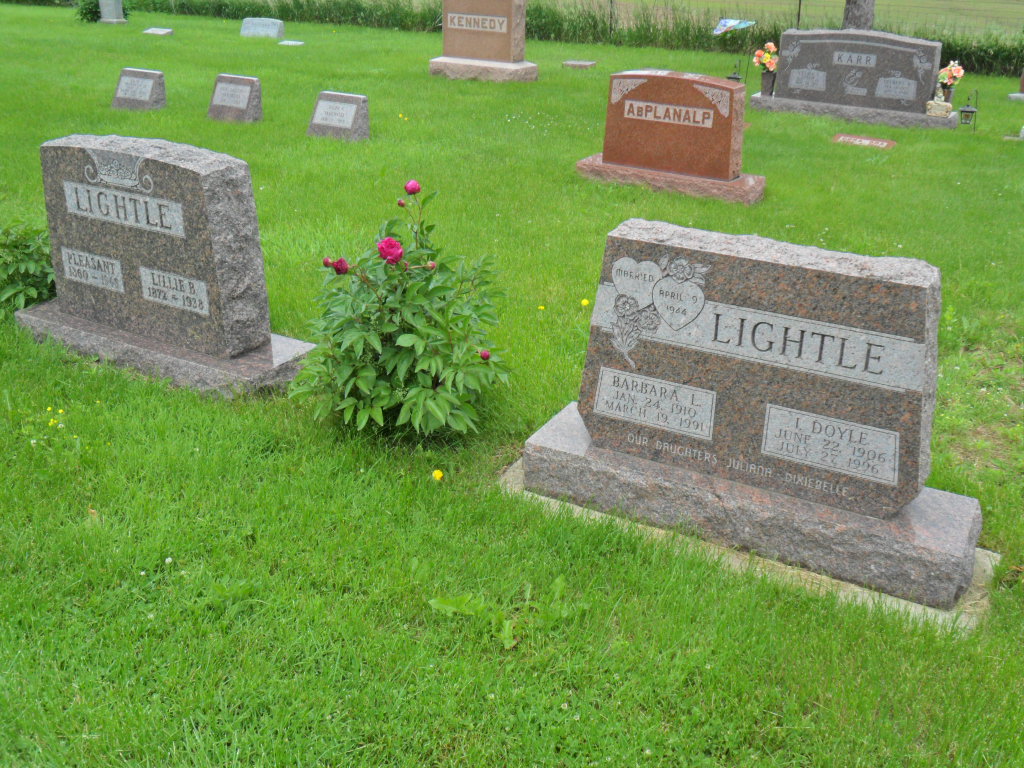
Another family story tells that this grandfather walked to Andrew County, Missouri, from Illinois.  Andrew County’s rolls are full of Lightles.  It remains the only place I have ever lived where I am not the only person with my last name in the phone book.  Dad claimed there would be even more Lightles except for the fact that several brothers died when they tried to walk across the Nodaway River on winter ice and it broke.  They all drowned.
SAM_1106

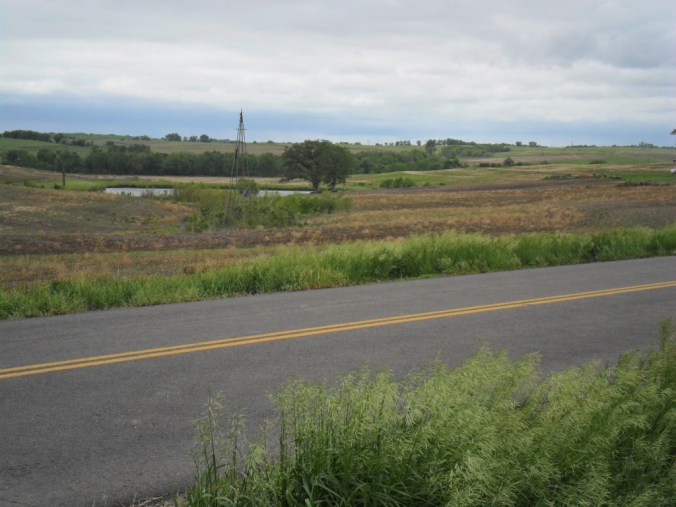
Dad built the large pond in this photo and stocked it with fish.  Until a few years ago when someone bought the land and destroyed all the trees, a small forest of ancient oaks, black walnuts, and chestnuts grew between the house and pond.  Dad kept it mowed and groomed–a park.  Sadness filled me when I saw the trees all gone.

SAM_1107

All my childhood we attended Antioch Christian Church.  Although I could not see it from my house, if I walked across the road to where the carriage house still stands, it looms across the distance.  Potlucks were a very popular activity here.  Mom made such fabulous pies that everyone would get her pie first to make sure they got a piece.

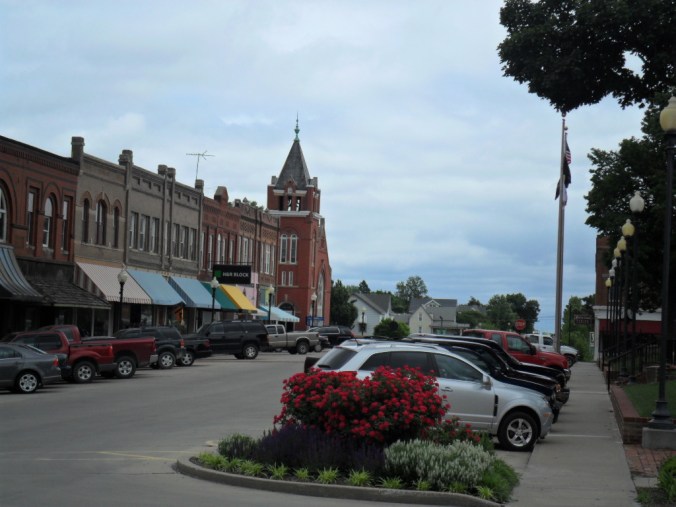
SAM_1114

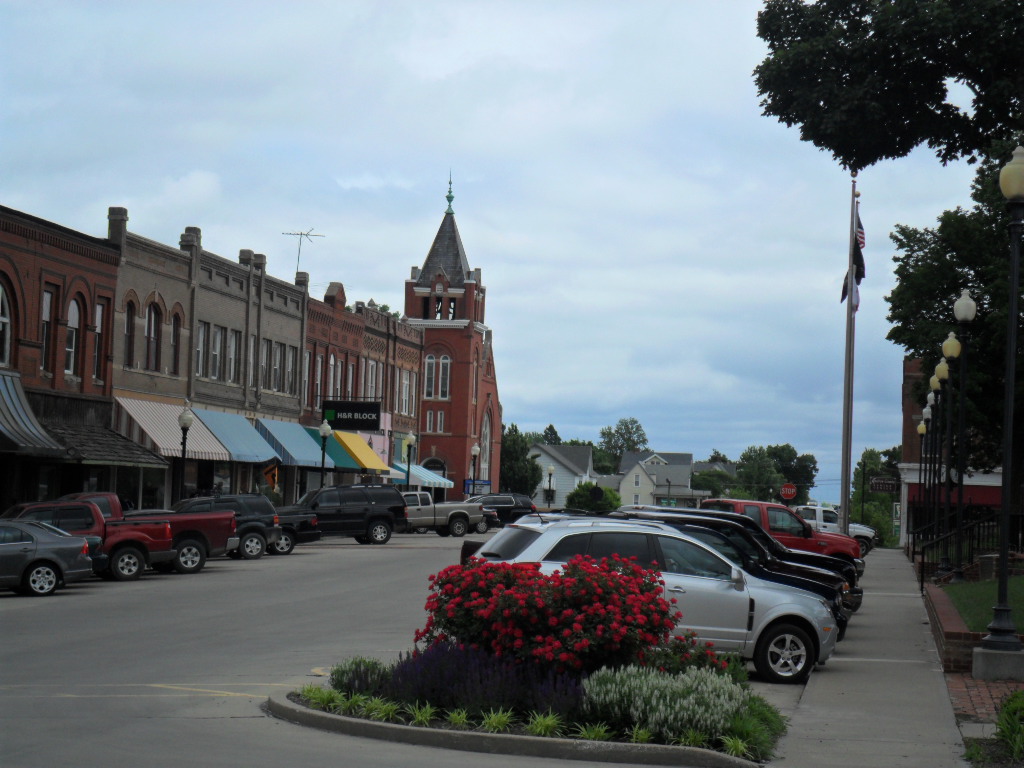
The sign in front of the Andrew County Courthouse.  This county remains filled with people of Swiss descent to the point they have celebrations commemorating their heritage. The following include photos of the courthouse and some of the restored buildings on the courthouse square.

SAM_1112

SAM_1116

SAM_1113

Several reasons exist for my returning “home” at this time, including attending my high school reunion for the first time.  The following photos show several people I had not seen since I was 18, including Melanie Eisiminger, who was the valedictorian when I was salutatorian so many years ago, and Jim Ahillen and his lovely wife.  Melanie is in the middle.

SAM_1127

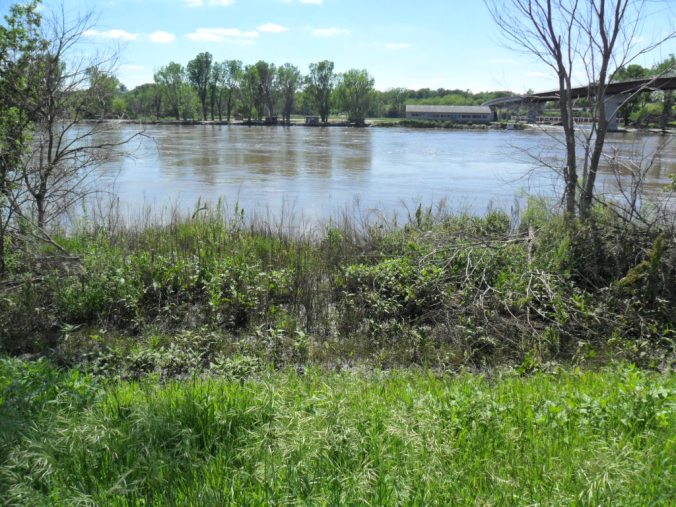
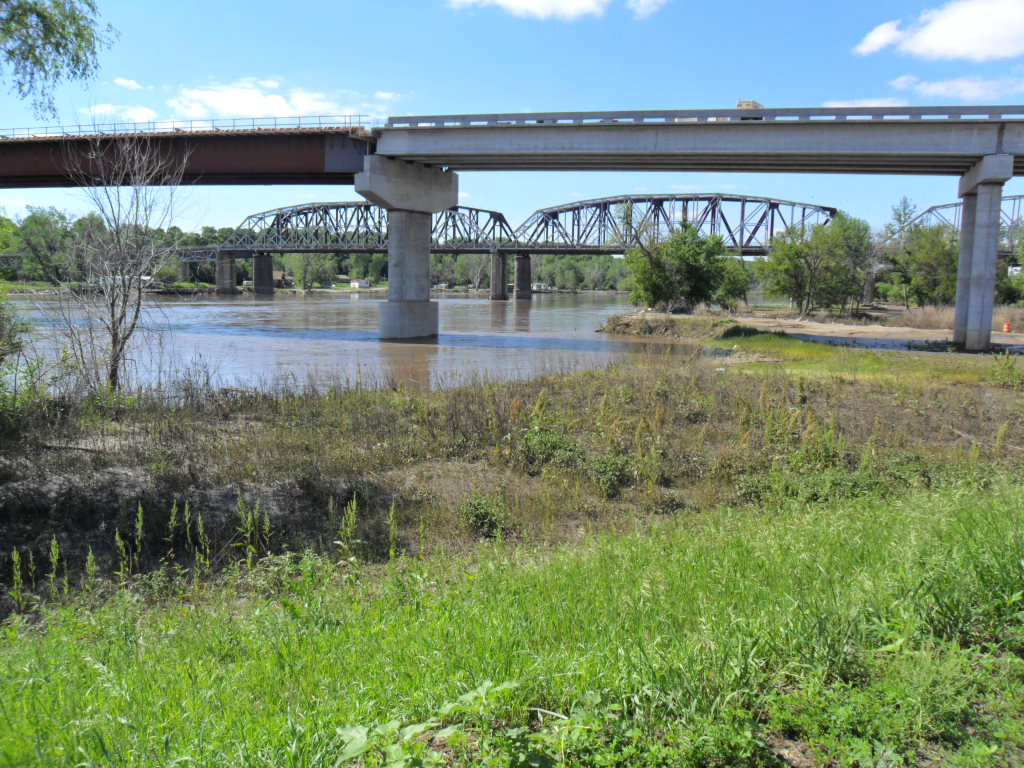
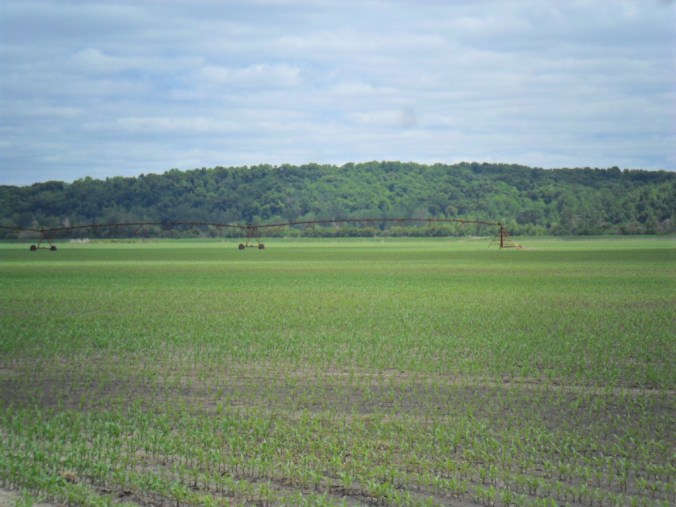
My mother grew up in Holt County, Missouri,  in the town of Fortesque and her family farm next to the Missouri River still remains mostly in the family.  In my childhood, Fortesque was still relatively prosperous.  Now fewer than fifty people live there.  The farm lays right next to the Missouri River.  I walked down the levee and took photos of this mighty river, the Rulo, Nebraska bridge, and the farm.  If I turned one direction, I faced the bluffs where White Cloud, Kansas, resides and the other direction is Nebraska.

SAM_1134

SAM_1128

SAM_1139

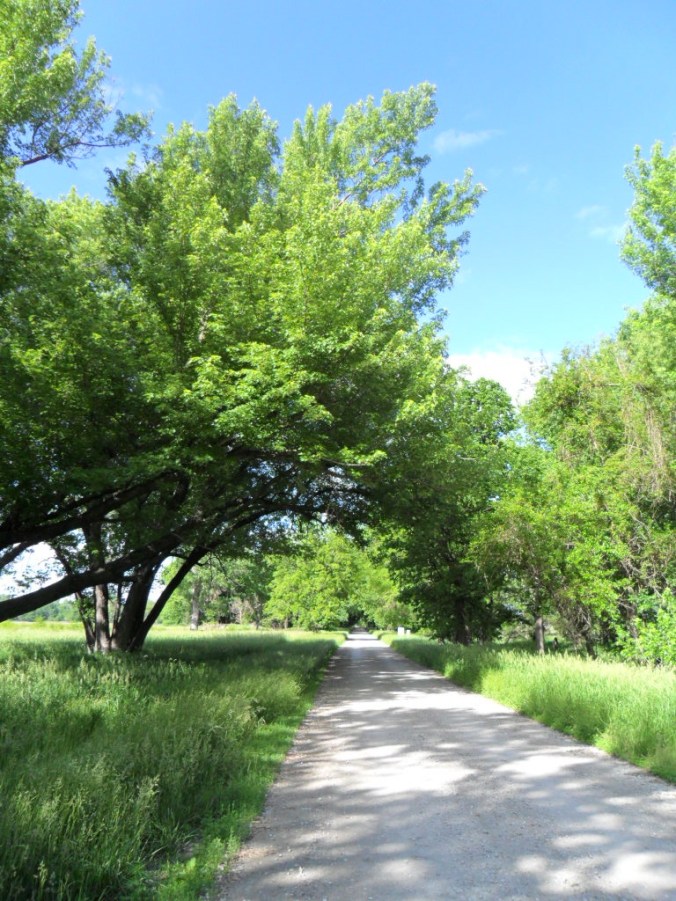
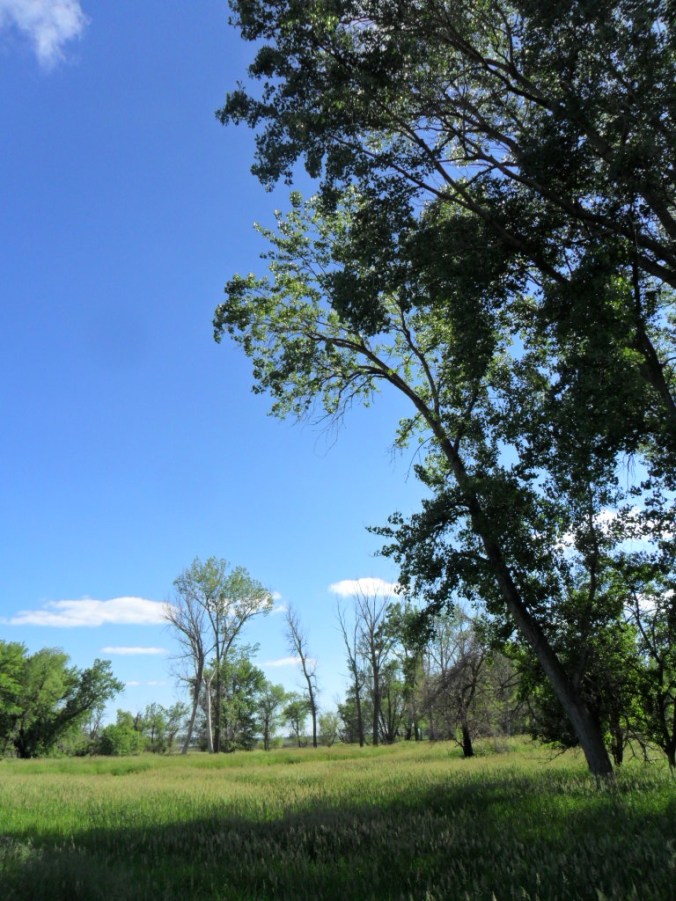
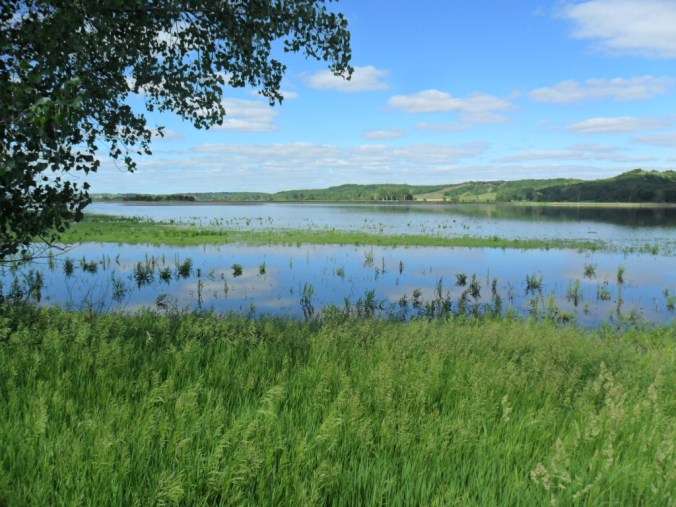
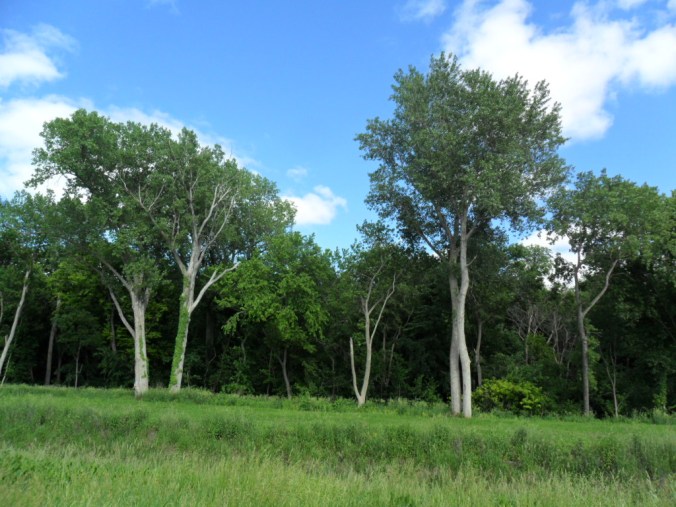
Between the Missouri River and the bluffs lays one of the largest wildlife refuges in the United States, Squaw Creek National Wildlife Refuge.  It is especially important for migratory birds, bald eagles, wading birds, and various mammals.  One can drive the new road ten miles through it to observe birds in particular but also other species.  The huge cottonwoods and oaks fascinated me.  It appears I had totally forgotten just how grand these trees can grow if given adequate water.  In one area I drove for at least four miles through a tree tunnel, then several raptors screamed at me while I tried to photograph them, and finally I managed to photograph a red winged black bird and geese.  After several days of semi constant rain, it felt fabulous to experience a perfect sunny day for my tiny trip to the wild.
SAM_1150

SAM_1148

SAM_1151

SAM_1149

SAM_1152

SAM_1155

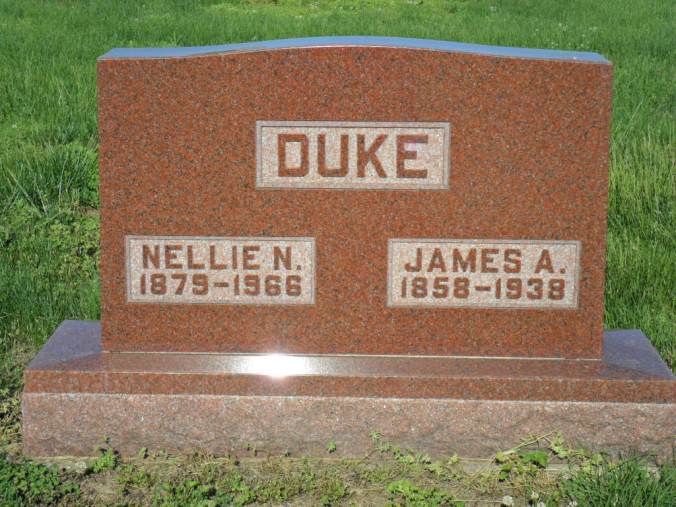
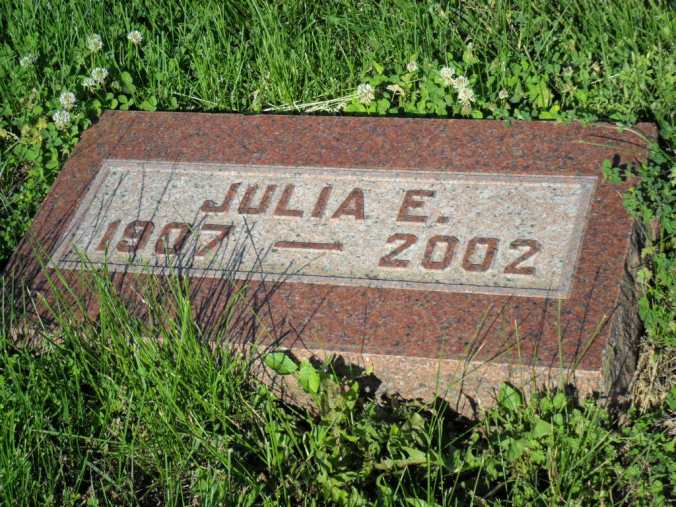
After I left Squaw Creek, I drove to Mound City to find the graves of the Duke side of my family.  The last time I had been there was when we buried my aunt, mother’s sister.  I also remember going with her there more than twenty years ago.  I recalled the general location but had to hike around a bit to find them.  Because Grandfather Duke was much older than Grandmother, I never knew him.  Aunt Julia came to visit me at least once a year until she neared ninety and could no longer travel easily.    She never married and remained admirably independent until she became too feeble to get around on her own.
SAM_1160

SAM_1161

The E stands for Evelyn.  She was named after a woman Grandmother worked for on the White Cloud Reservation, Evelyn Le Clair.  On my previous visit to Missouri, I went to the White Cloud Reservation and inquired about the Le Clairs but had been told they had moved away a long time ago.  Grandmother had to work because her father went blind and could no longer work.  His name was Kaiser and he, too, came from Switzerland.  The following is the gravestone of my great grandmother.  Mother frequently recited sayings from her, e.g. you can’t tell by the looks of a frog how far he can leap.

SAM_1159

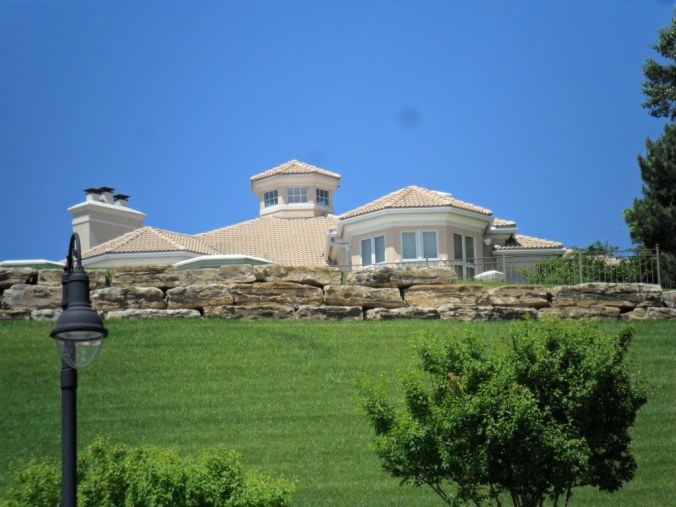
In  my childhood, we cut across the country side to go from the Andrew County farm where we lived to Grandmother’s Holt County farm.  I remained unsure whether I could recall exactly how to do this but tried and met with success, feeling very happy with myself, remembering something I had not accomplished in decades.  Because it had rained six inches the previous week, unlike last year during the drought, knee high grass grew along the backroads, corn was coming up, ponds were full.  I drove by the houses of people I remember from childhood, not knowing who lived there any more except a few.  People change, life proceeds, but the country still holds endless promise and beauty.  Finally, with a few hours left before flying back to Texas, I stopped by a new area north of Kansas City, Briarwood, strolled around, visited an excellent natural food market, ate a rather exotic lunch, and took a few photographs of huge new houses and the Kansas City skyline.
SAM_1173

SAM_1175

Everyone asked me to bring some rain back to the Panhandle of Texas.  It has rained three times since I returned home.  A coincidence, of course, but very welcome.
For All the Lonely, Lost Young Men


At first, I planned to simply post a poem by this title, a response to the bombing in Boston and the young men who orchestrated it.  Then I decided that a few comments seemed more appropriate.  These comments come from a realization and conversations with a couple of colleagues at work noticing that all the perpetrators of the bombings and mass killings have been young males.  These young men cite various causes from the anger of being disenfranchised and bullied to religious fervor of a certain type to insanity.  All acknowledged anger over something, a rage so profound they felt driven to act, at least for those to whom authorities could talk.  Most appeared to be alienated from their culture, friends, or family, young men who failed to fit in.  Although we must condemn their horrific acts, perhaps it would also prove more productive to ask, “Why?” Unless we know why and address the causes, these events will be repeated somewhere at some totally unforeseen time.  And many innocents will die again and again.  Perhaps equally disturbing is the fact that we are not alone.  These types of events repeat themselves in one way or another in many other countries in the world.  Additionally, I realize that many people feel the solution lies in revenge, punishment, justice as they see it.  For those, many of the sentiments I express in this poem may seem too simplistic, too kind, too naive.  I teach high school.  I work with all types of young men daily.  I see their fear, anger, loneliness even if fleeting and only momentarily.  We can make a difference; we can reach out.

Look at yourselves

filled with

fear,

anger,

hatred.

This world may not embody

the perfect place

of which you dream;

do not despair.

We care.

Do not shoot me.

I care.

Do not throw bombs at the innocent;

They care.

Do not hate the different.

They care.

Do not despair.

Puma IV


SAM_0912In the poetry class this week we read Louise Erdrich.  I’ve read most of her novels but did not realize she also wrote poetry.  In particular I liked “Captivity” which made me think of Quanah Parker and his mother.  We are supposed to be inspired by whatever author’s poems we are reading on any given week.  Sometimes that occurs; sometimes not.  The following poem follows the previous three puma poems I published on this blog last September.  This one is different; it comes from an actual dream last week.  Its unique beginnings contradict the fact that I rarely recall dreams and care nothing about dream interpretation.

Stars shining through sleep

Dreaming dark.

A white, luminescent lion

comes nuzzling arms, legs.

Should fear engulf or

a quiet peace dominate?

Tawny lions encircle:

affectionate

smiling lion smiles.

Fear slides in slightly,

logically.

These lions bring love,

a natural peace.

Fear dissipates,

the lions and I locked

in an eternal, primal dance.