Costa Rica Adventure, Day Two–Part Two


The problem with tours is that they think you need to get your money’s worth and the best way to do that is to pack as much as possible into the shortest about of time possible.  When some of us complained a bit after a couple of days, we were informed that we should not confuse vacations and tours.  They are not the same thing.  We were on a tour, not a vacation.  Nevertheless, the tour did have some advantages like getting us into places we might have missed or never found on our own.  However, that was not really the case for Day Two.  That whirlwind morning in San Jose not only included the National Theatre and the Gold Museum, but also the Metropolitan Cathedral.  It does not have lighting conducive to photography with a “normal” camera, cell phone, etc.  Therefore, my attempts to photograph the endless and lovely stained glass windows proved futile.  Here is what I was able to photograph.

IMG_1908

This is a large church.  Yes, we were there as tourists, but many others were there praying, sitting silently, worshipping.

IMG_1911

I could not find a place where the chandelier did not interfere with the view where I could take a really good photograph.  Nevertheless, hopefully those of you who read this can get the feeling for this really wonderful place.

On a totally separate but perhaps related note, I watched Public Television for a while tonight about finding ones roots.  I keep thinking somehow my DNA results must be a bit screwy because the places where I feel most at home, the cultures in which I have an interest, the literature I love to read, and the music to which I usually listen have no relationship whatsoever with the places from which the majority of ancestors came.  I have been to Costa Rica twice now and to one particular town (besides San Jose)  twice–others were new this trip.  What concerns me is that all the tourists and people buying up property there who are from Europe, the US, and Canada will totally ruin its values and beauty.

Gratitude


Usually, I plan my posts, write them out carefully, sometimes even proof a couple of times.  Today is Thanksgiving Day here in the United States.  Even though I know all about the historical lies to cover up the truth about the supposed original Thanksgiving, I continue to think this is a useful and fun holiday for several reasons.  Thankfulness, gratitude, remains the primary source of a happy life.  The list of things for which I am thankful seems nearly endless:

-health

-living in a place filled with natural beauty

-my daughter

-my grandson

-my son, even though we talk only occasionally and he lives far away

-teaching

-my students, one of whom posted on Facebook this morning that he is grateful that he had me as a teacher ten years ago

-the friends who took me with them to Ethiopia this past summer

-all my other friends locally and from all over the world

-the exchange students who have lived with me and from whom I receive messages regularly

-my parents for whom I owe eternal gratitude for teaching me values, independence, tolerance, a love of beauty and knowledge, and a sense of wonder

-music

-my ability to sing

-horses

-wildlife, nature–here where I am so fortunate to live

-art

-my ability to write

-all the people who love my book of poetry and tell me they do–I might also include the people, mostly men, who find it shocking

-happiness and the choice I made to be happy all those long years ago

-red wine

-plentiful food

I could go on and on.  However, it seems best to end with this fantabulous morning on my own little rim of wonder and say I am thankful for a life filled with so many astonishing events and experiences I never expected and for which I am endlessly grateful.

SAM_1454

My Ethiopian Adventure: the Monasteries of Lake Tana


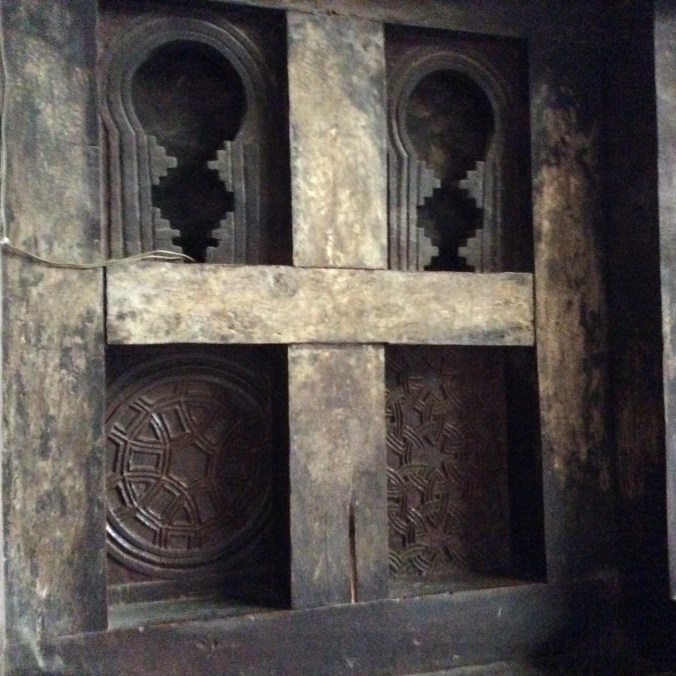
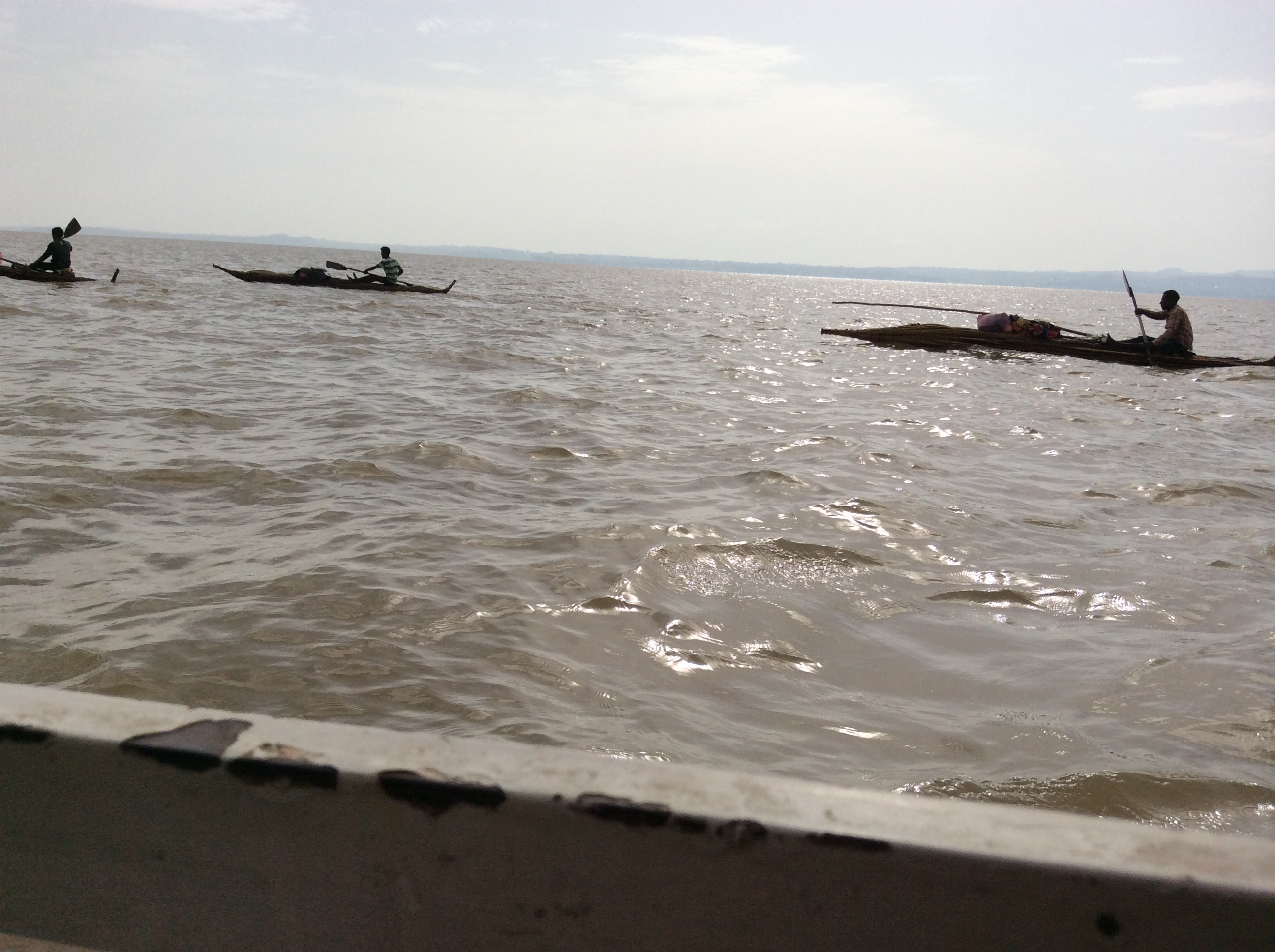
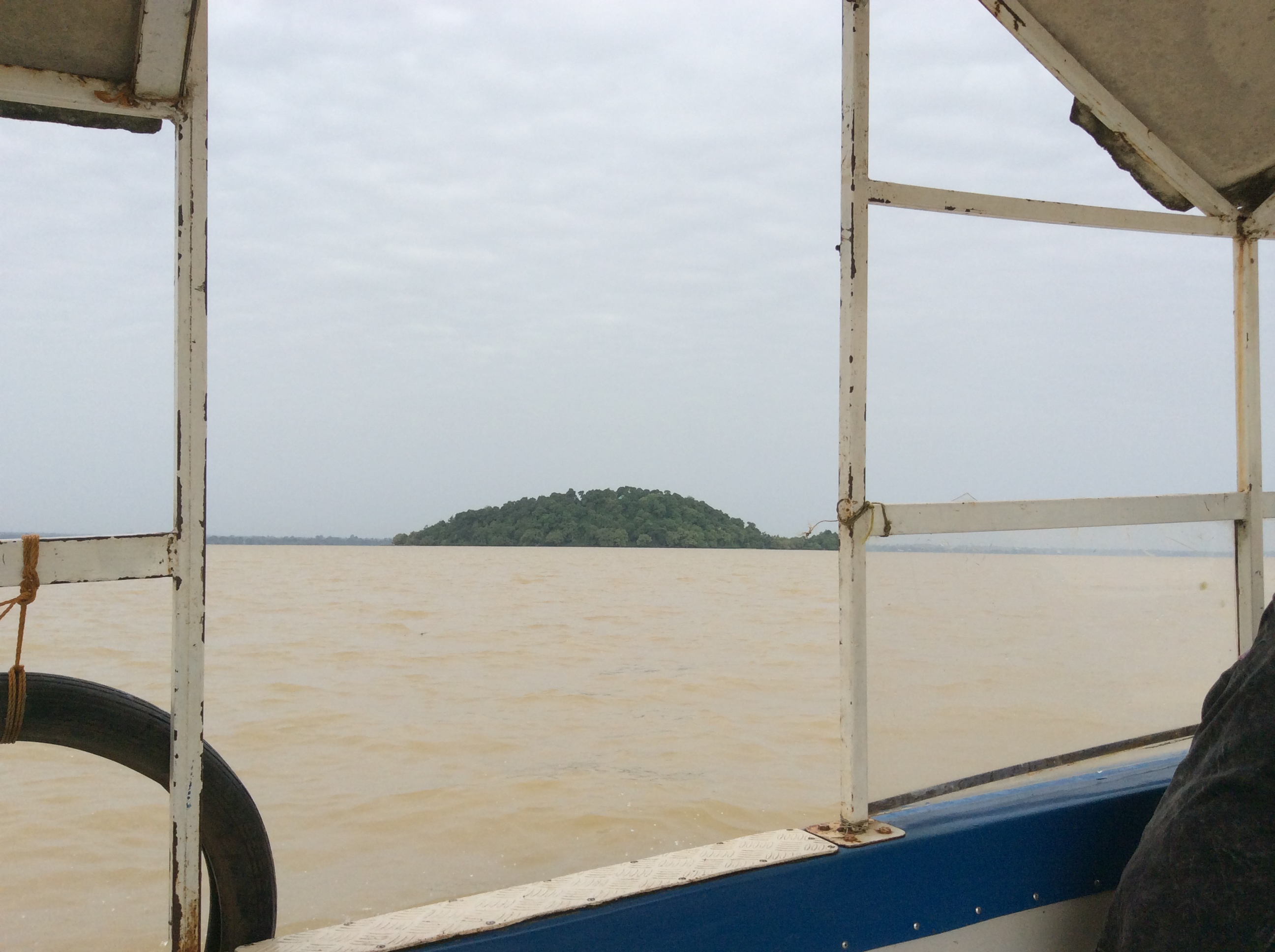
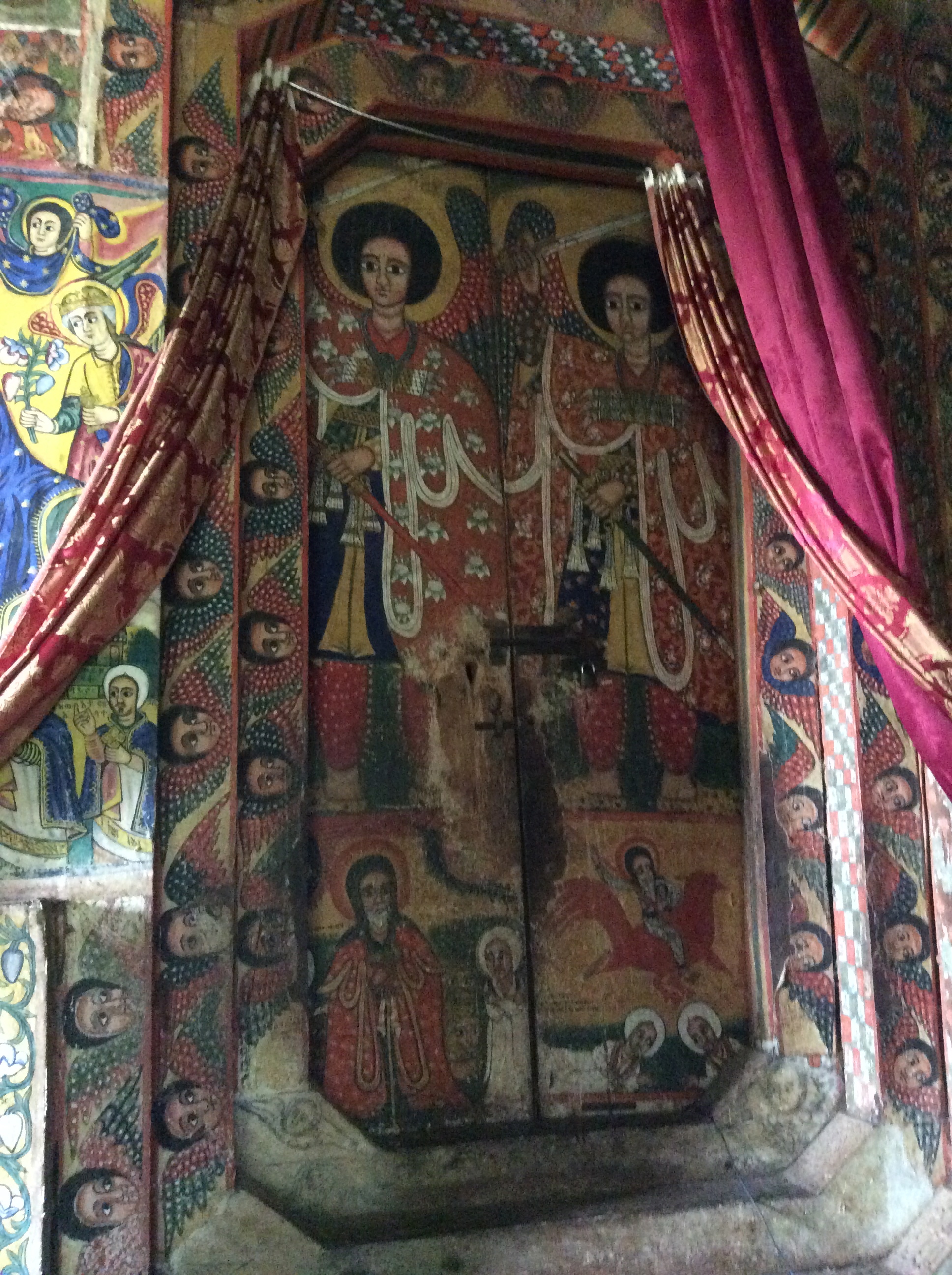
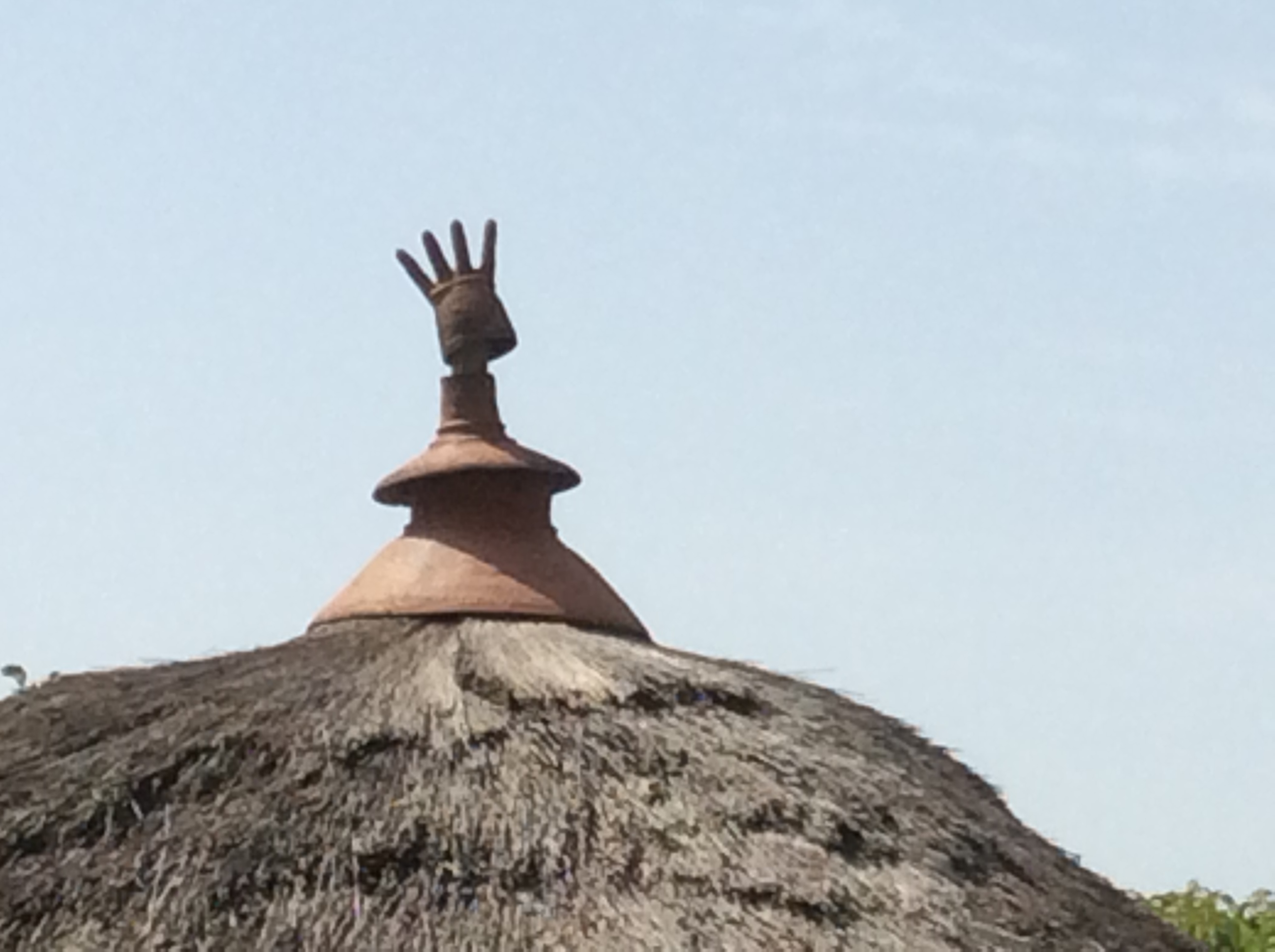
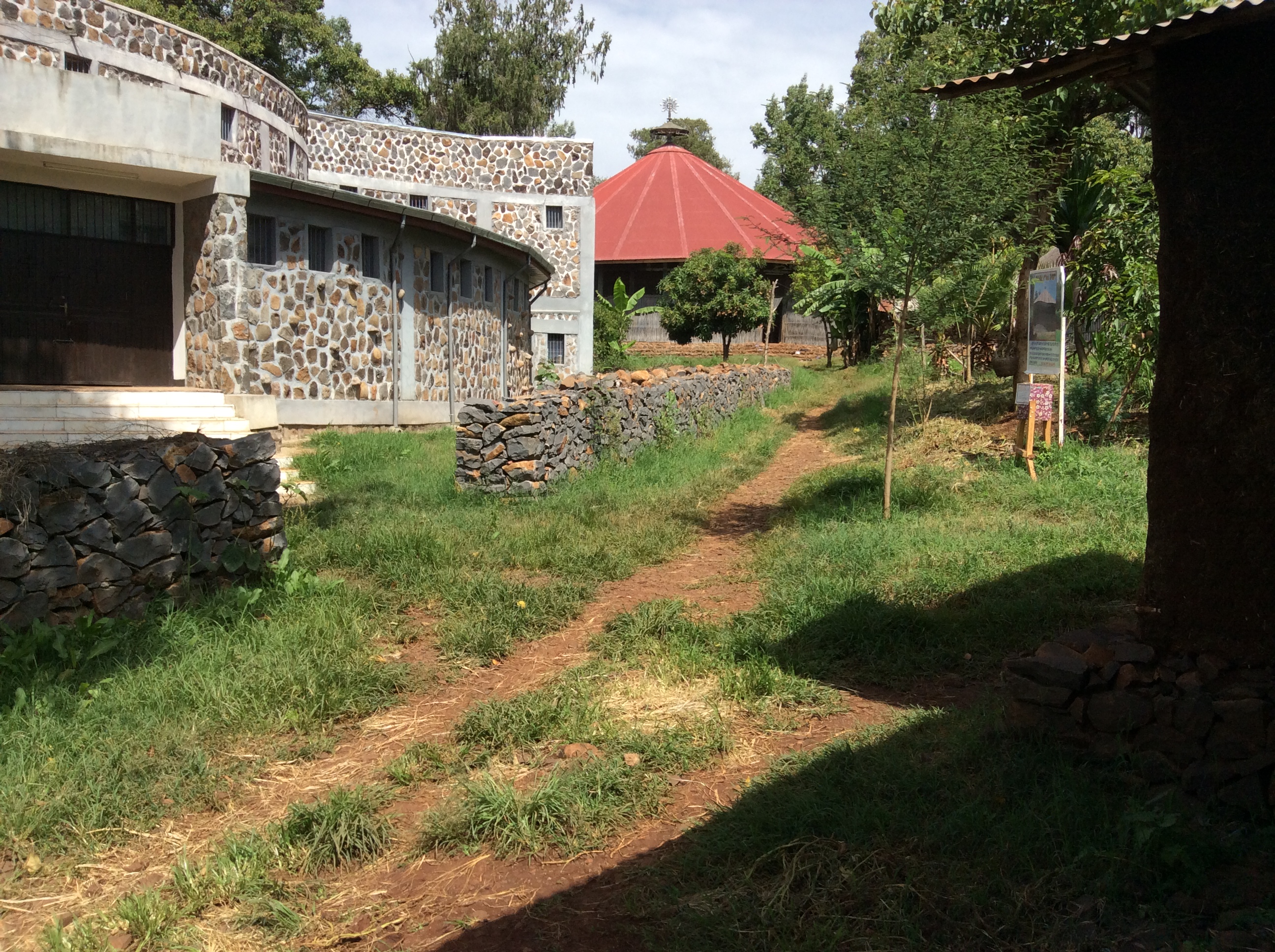
Of the 37 islands on Lake Tana, 20 shelter churches and monasteries, very old monasteries, many of which remain in use today.  While some are closed totally to women, we visited Ura Kidane Mihret with no problem.  It is part of a larger complex, the Convent of Mercy founded in the 14th century.  Various buildings date from that era to more recent times.  To reach the monastery you have to climb in a boat and ride across Lake Tana to the Zege Penisula.  We boarded our small boat at the far end of this garden at the hotel–there were four of us and the helmsman–and headed across the lake. IMG_0809 On the way we passed a number of fishermen paddling their papyrus boats. IMG_0817 We also sailed past a couple of islands like this one where one monk lives alone.  On another island lives a priest.  Women are not allowed except on one, just at the edge near the dock.  We did not go there. IMG_0818 Once you arrive at the dock you hike up a hill past various vendors selling everything from religious paintings to hand woven scarves. IMG_0820 This young man used all natural materials to paint small replicas of the paintings found in the monastery itself.  In retrospect I wish I had purchased at least one; I never saw anything quite like them again. Like most religious buildings in Ethiopia, all the buildings in this complex are round.  The only place in Ethiopia where I saw rectangular churches was in Lalibela. IMG_0821 Every piece of space on the interior walls is painted with religious scenes from the Bible and Ethiopian religious history.  The current paintings date from 100-250 years ago when, as the paint began to deteriorate, they used a special process to repaint them.   This particular monastery is noted for these incredible paintings. IMG_0822 IMG_0824 IMG_0826 IMG_0827 The tops of all the buildings are adorned with different symbols for peace.  Sometimes they also represent the disciples of Jesus as well or other religious symbolism. IMG_0829   IMG_0830 A new visitor center remains under construction; it seemed nearly complete. IMG_0831 The visitor center is the rock building on the left, the monastery the building in the rear. IMG_0832 On the path back to the boat dock vendors sell scarves and jewelry.  I bought several scarves, one of which was totally different from any I saw anywhere else.  If I had only known just how unique it would be, I would have bought the other one–she had only two.  These scarves are hand loomed and in some cases the yarn is also hand spun. IMG_0833 Finally, back near the dock we stopped for coffee, indulging ourselves in the totally Ethiopian experience of their coffee ceremony.  You have not truly sipped coffee until you participate in one of these.  There is nothing anywhere quite like it. IMG_0836

My Ethiopian Adventure–Lalibela, the Churches, Part Three


After we left the first group of churches, we had to walk to reach the one that is probably the most photographed.

IMG_0428

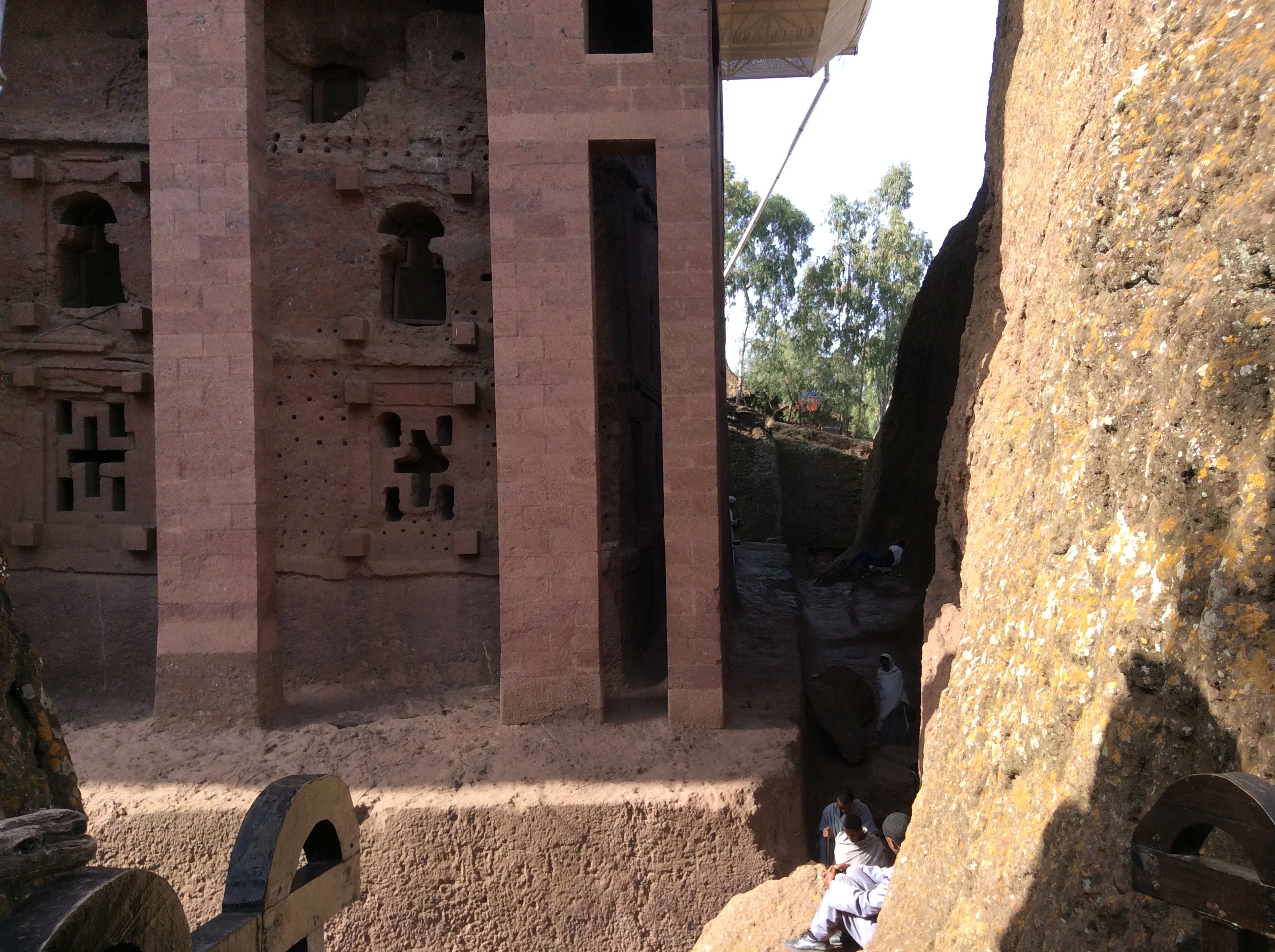
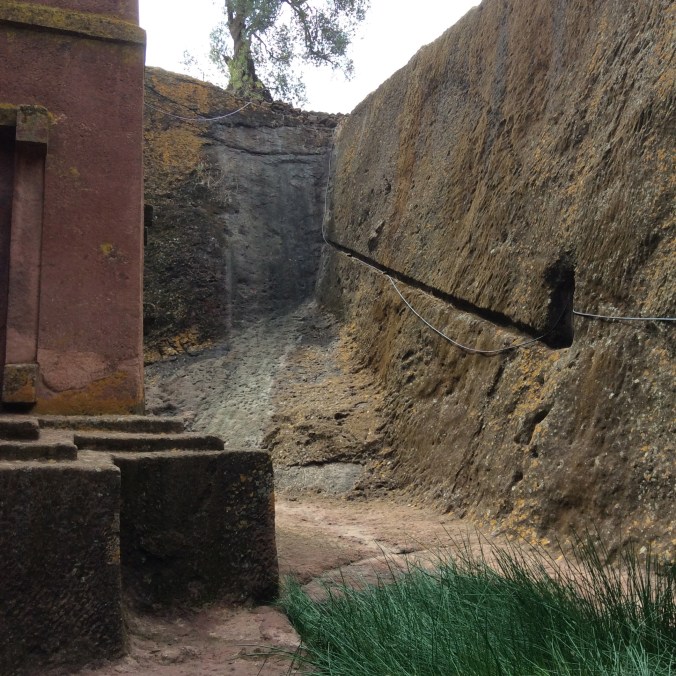
Like all these churches, this one, Bet Emanuel, was carved and dug out of solid rock and is built so that the top is level with the slope of the land.  Thus, it is purposefully nearly invisible unless you are quite close to it.  To get to the bottom and go inside you have to climb down rather steep steps. Built in the Auxumite style (Auxum was the original “capital” of the Ethiopian Orthodox Church), some art historians consider it to be the most impressive church in Lalibela.  It is 18 meters by 18 by 12 (58.5 feet by 58.5 by 39).

IMG_0429

The guide explained that because this church is of harder stone, it has no protective cover like some of the first churches we entered.
IMG_0430

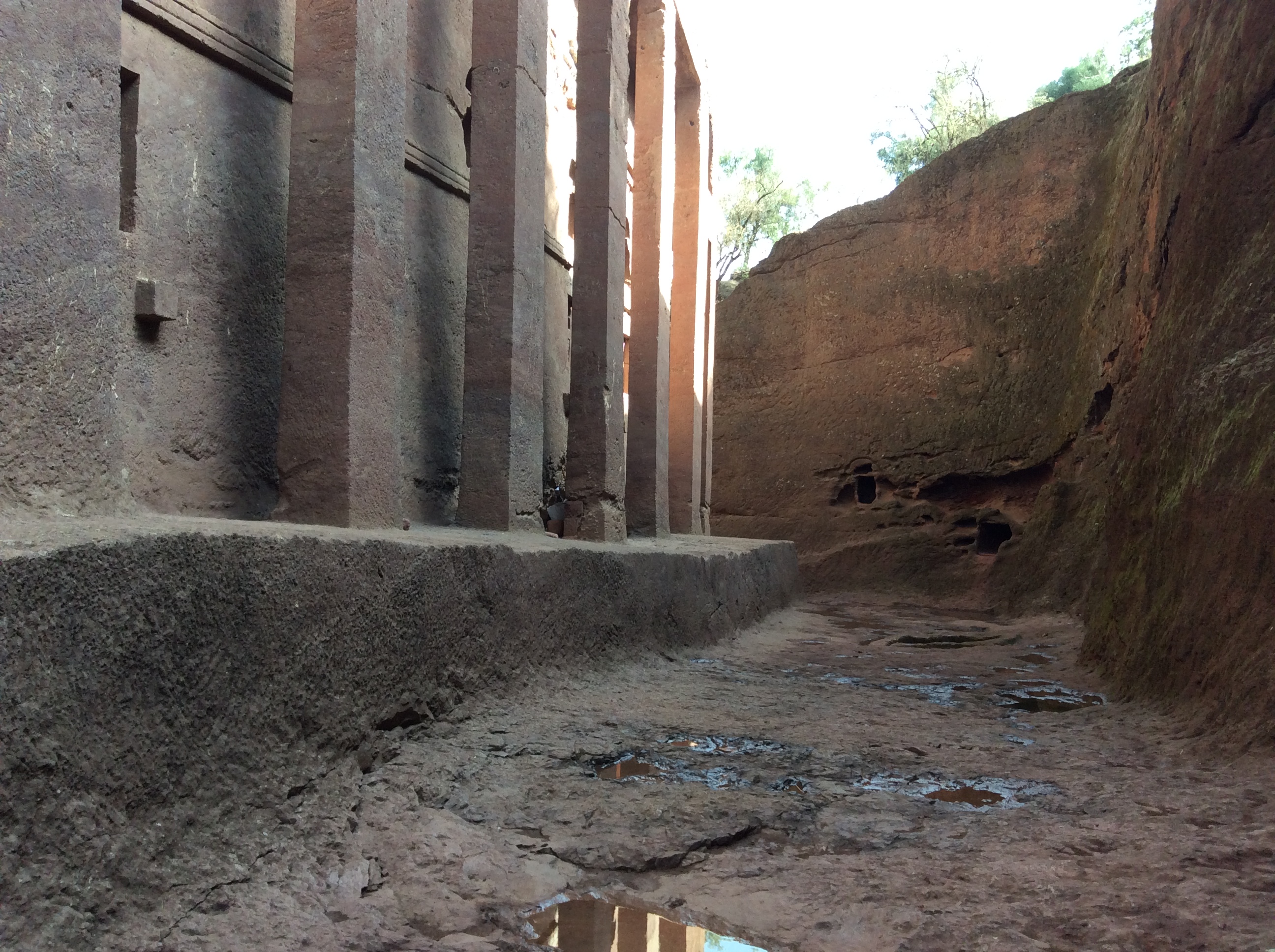
Like the first group of churches, this one also has a drainage trench around it.

IMG_0431

A pool of holy water–I saw a boy go up to one of the pools and fill a bottle with water.

IMG_0432

A holy space where only priests can enter.  Every church has a copy of the Ark of the Covenant and a symbolic Bethlehem.

IMG_0435

Saint George and the Dragon appear everywhere. Saint George is the national saint of Ethiopia. There is even St. George beer.

IMG_0436

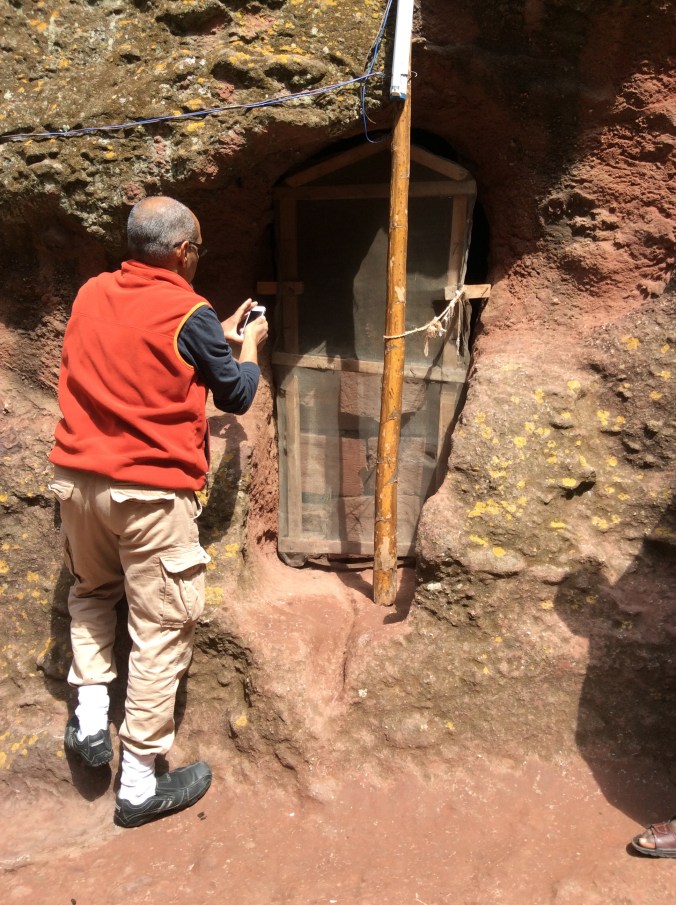
In this second group of buildings, two were definitely designed as churches.  However, even though others are currently used as churches, there is some question as to whether that was their original purpose.  The guide told us that one building is believed to have been the residence of King Lalibela and his family.  Unlike most of the other buildings, its layout does not appear to have been designed as a church. It also does not contain the usual paintings and artwork.
IMG_0437

Another sacred space. Before we could go on to see the other churches in this group, we had to climb out and walk by the River Jordan.

IMG_0438

All the trenches that drain water from the churches during the rainy season flow into this River Jordan.  The design of the churches, the symbolism, this River Jordan, everything was designed to duplicate to the extent possible he Holy Land, to create another Holy Land in the highlands of Ethiopia, a new Jerusalem.
IMG_0439

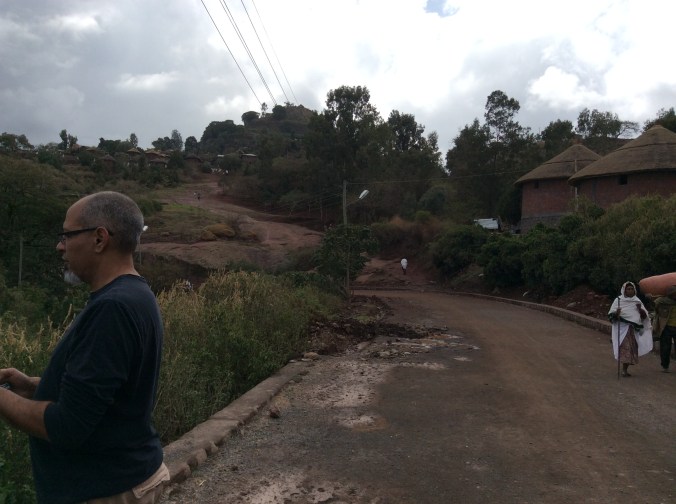
The road by the River Jordan.  Until recently people lived in the traditional houses you see on the right.  In front of one we saw a group of young men being trained as priests.

IMG_0440

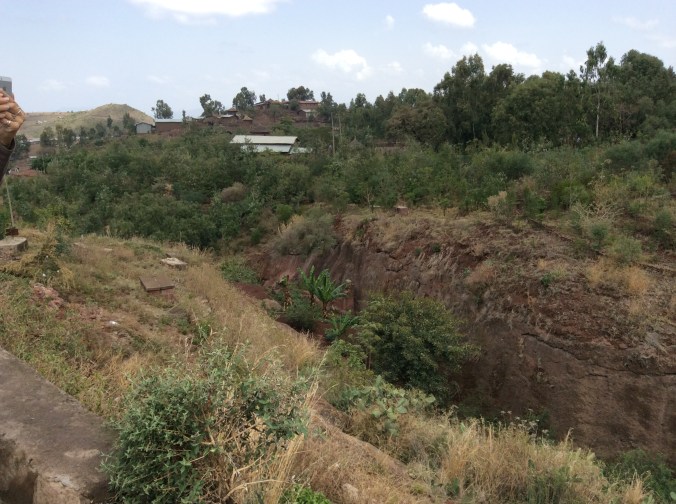
The land near the churches looks just like anywhere.  You cannot see the churches until you are really close to them.  We were told they were built this way intentionally to protect them from invaders who had destroyed earlier visible churches.
IMG_0441

On both sides of the River Jordan are cemeteries. The dead from the tombs in the walls opposite the churches (see Part I and II) were moved here.

IMG_0442

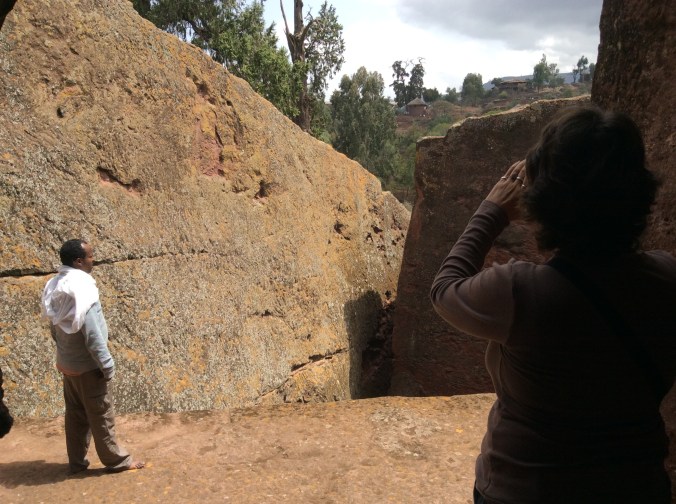
Unlike the first group of churches shown in Part I, not all the churches in the second group are connected by trenches or so close together.To see some of them you have to climb in and out from one to another.
IMG_0443

IMG_0444

The guide took this photo.  Why am I wearing my socks over my jeans?  Fleas.  It is common knowledge that the carpets and bamboo mats on the floors of the churches contain lots of fleas.  We were told to tuck our jeans inside our socks and spray everything below our knees with insect spray.

IMG_0448

IMG_0449

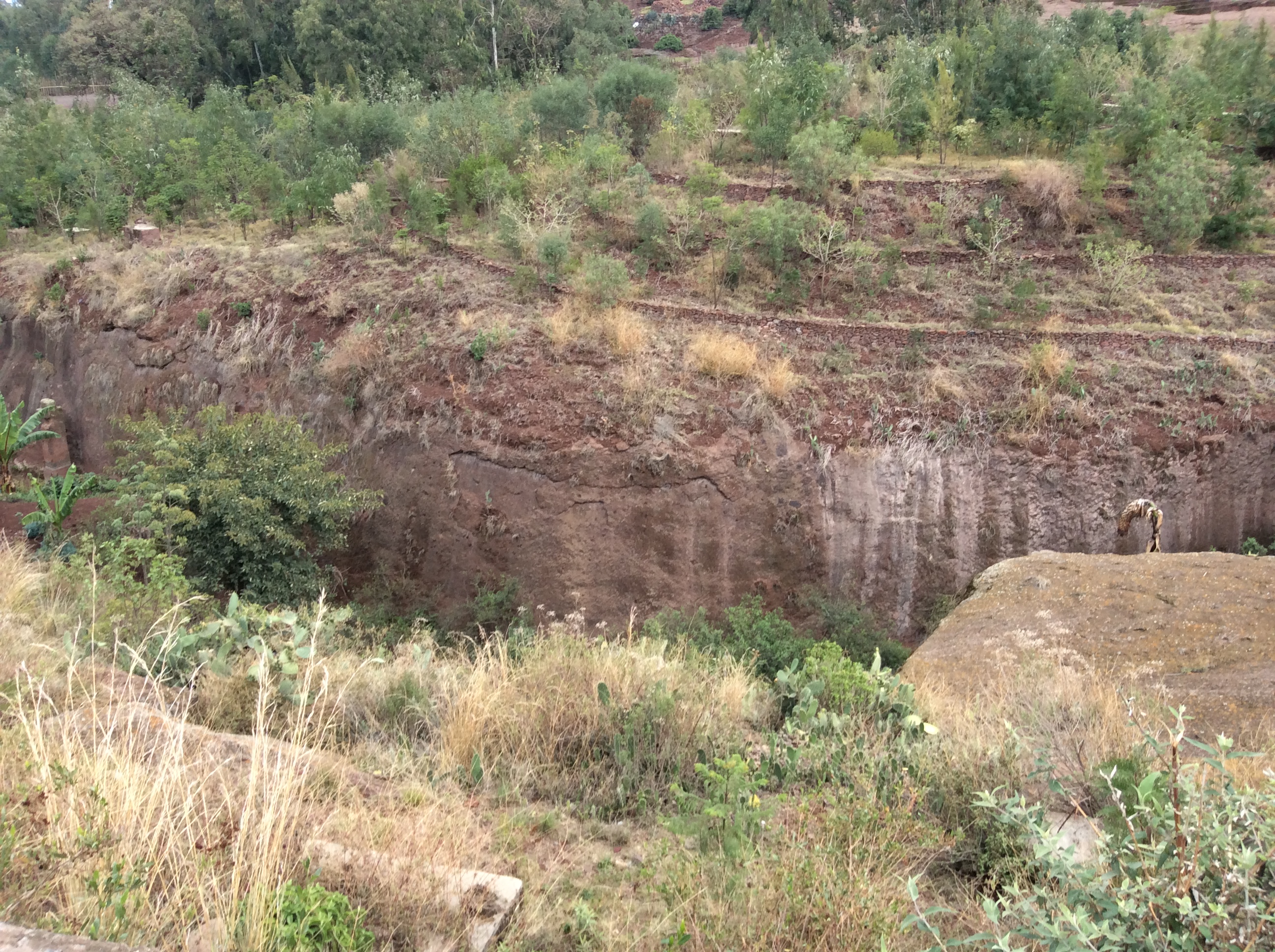
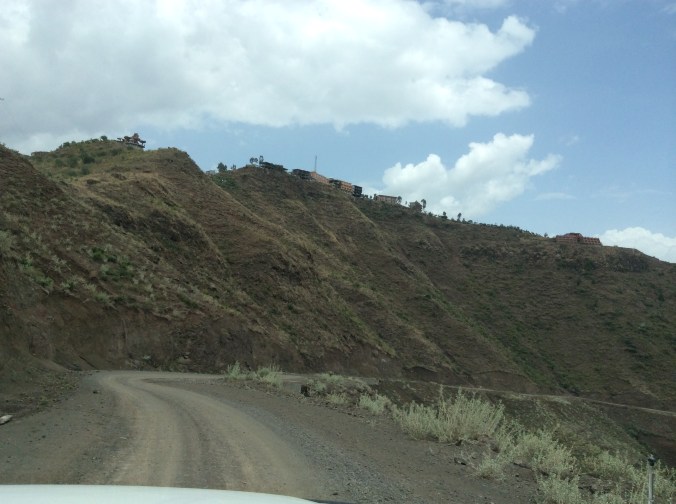
Between this latter group of churches, there are some passageways so you do not always have to climb in and out.  There is a third type of church in this area, churches built in caves, one of which is 40 kilometers from Lalibela.  Churches such as these exist nowhere else in the world. The only way in and out of Lalibela is that steep road below my hotel room.
IMG_0451

It was drier around Lalibela because the rains were late. We headed to the cave church of Yemrehanna Krestos for the afternoon.

IMG_0452

IMG_0457

One disadvantage of traveling to Ethiopia this time of year, especially in the north, is the weather, cold and rainy.  On the positive side, often we were the only tourists.

IMG_0458

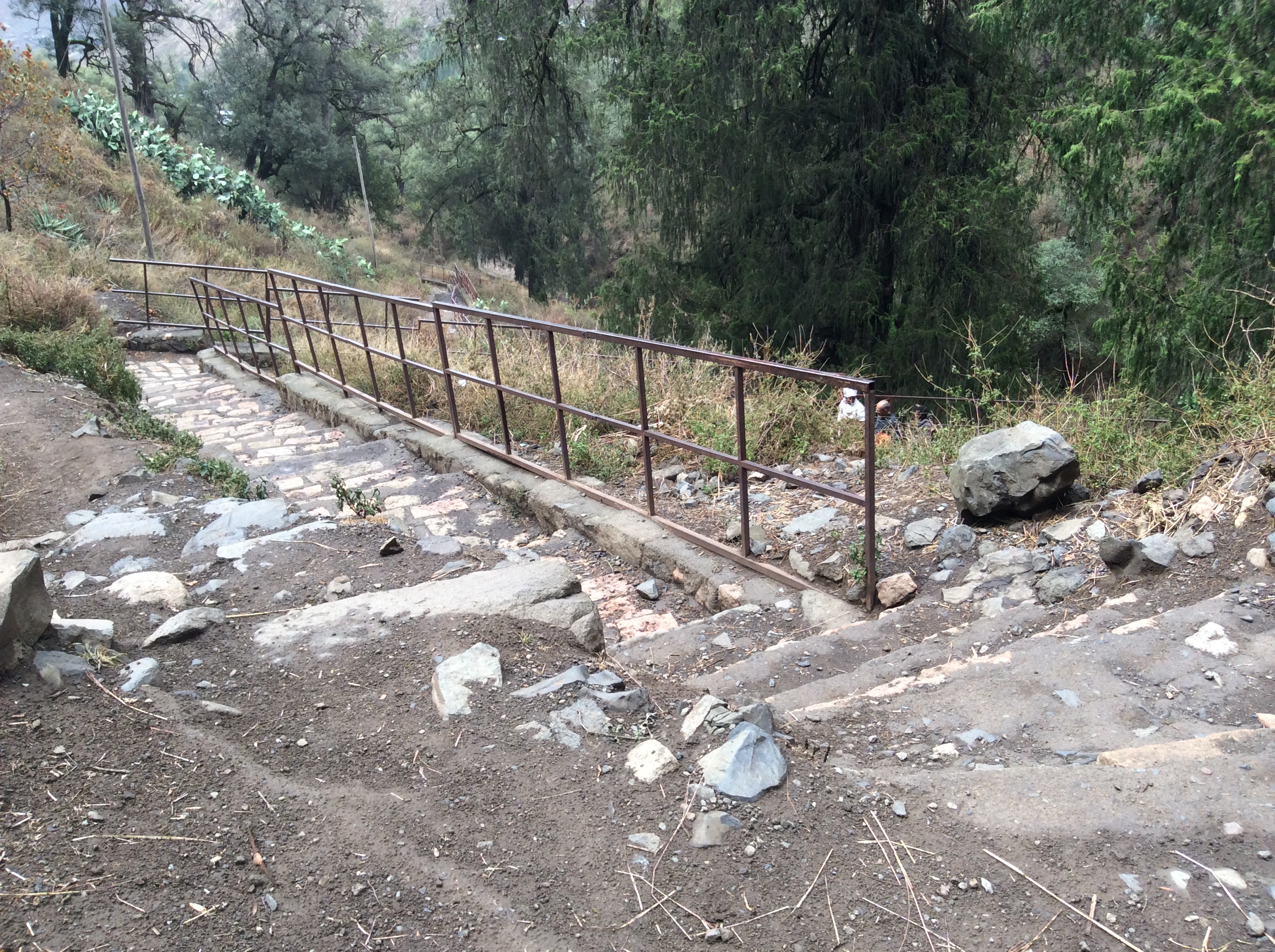
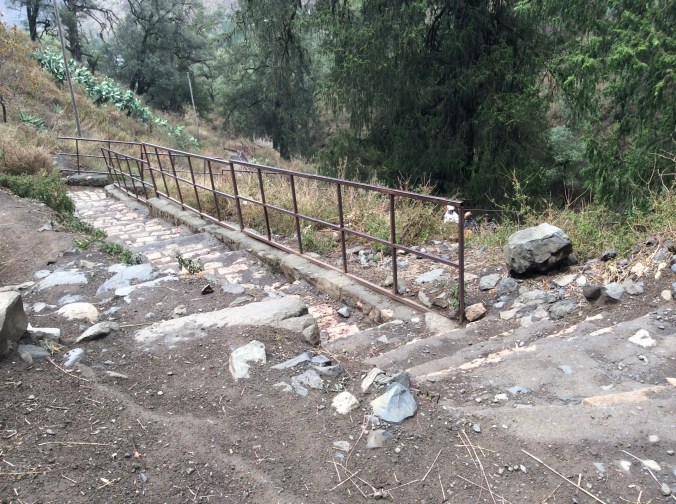
The climb up to the church was long and a bit steep but with good steps and handrails.  Rain had made the stones a bit slippery.  The churches have served an unintentional good in that around most churches in the country the original forest is left to hide the church.  This was one of a few places where we could see what the land looked like before deforestation and before invasive species were brought in from elsewhere.
IMG_0459

The guide who took us through the churches in Lalibela came with us here.  I walked with him and Dino and Zuriash walked with the priest who did not speak English.

IMG_0460

This is what you see when you first arrive at the top.  Like in all the churches, you have to take your shoes off.

IMG_0461

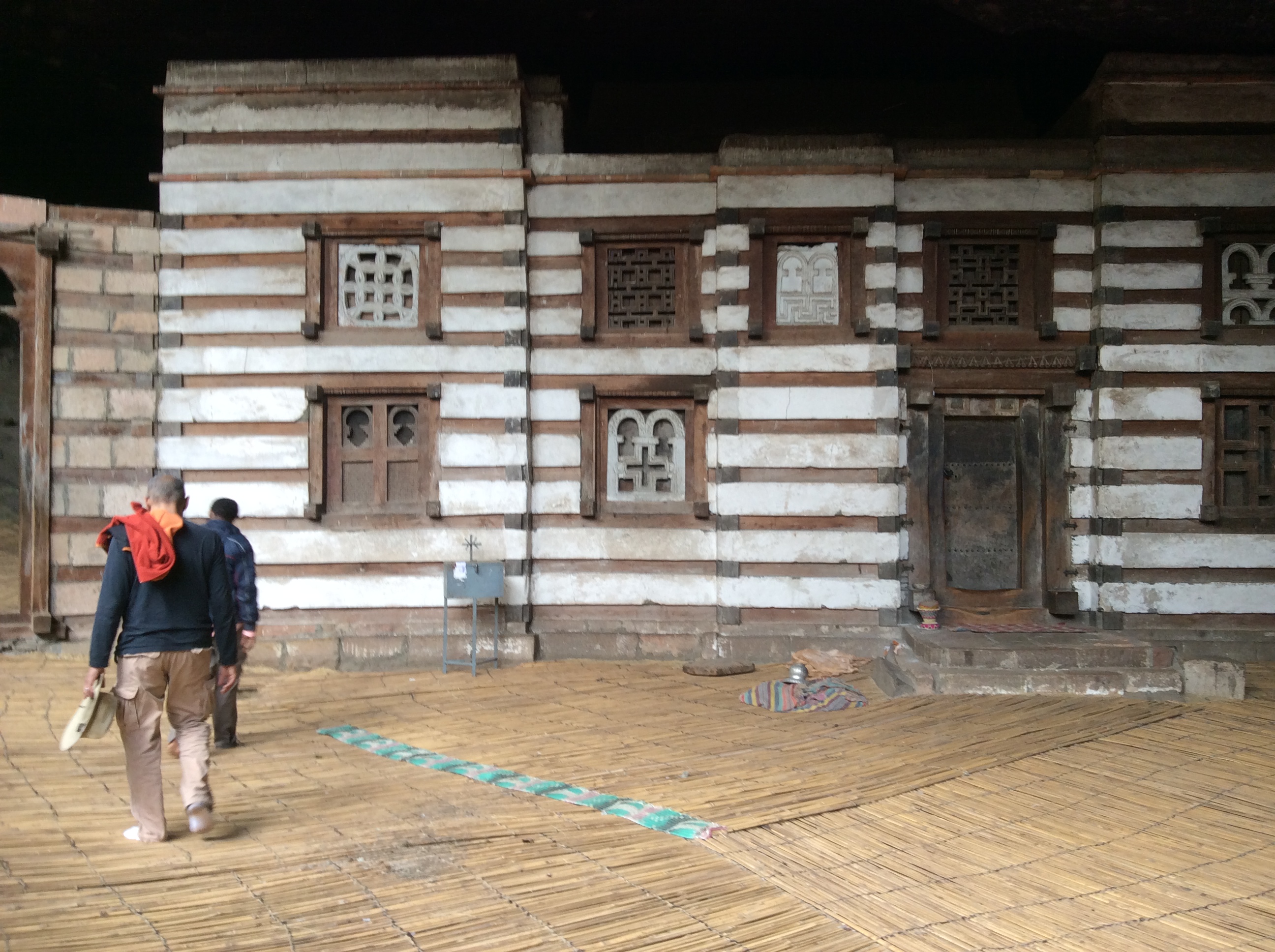
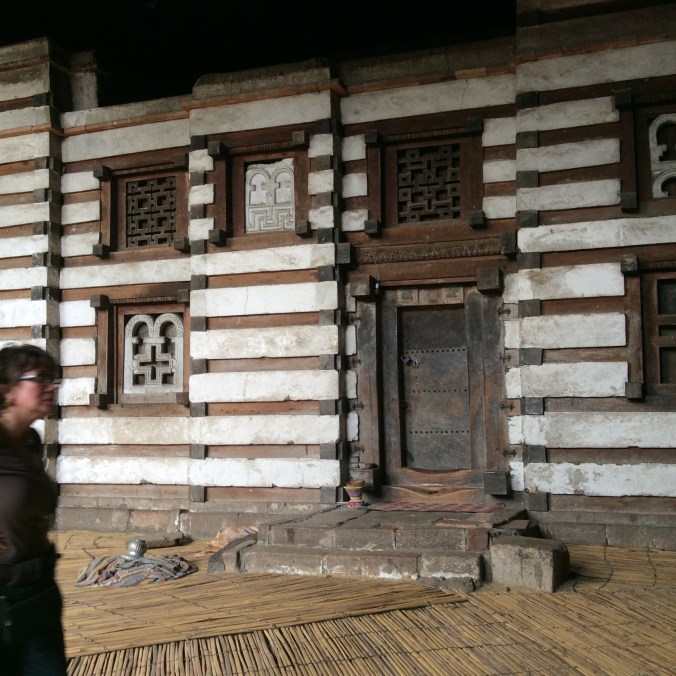
An entire church resides inside the cave.  We were told that the white marble and wood were brought from Egypt by elephants. The church dates to the 11th century.
IMG_0463

The cave is big with lots of space around the church.

IMG_0462

IMG_0464

IMG_0465

IMG_0472

The decor and carvings inside the church are very detailed and elaborate.  Services are held here weekly and at certain times of the year many pilgrims journey here some walking for many miles.

IMG_0473

The priest who resides in the village.  This is “his” church.

IMG_0468

Behind this fence at the back of the cave lay the bones of pilgrims who died here.

IMG_0477

The Ethiopians believe that one of the Three Wise Men came from Ethiopia.
IMG_0470

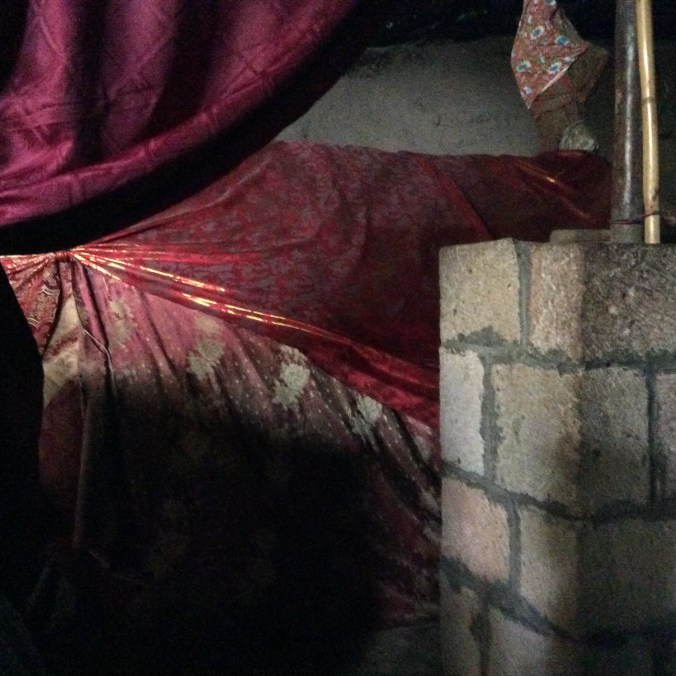
The tomb of Yemrehanna Krestos resides behind the church inside the cave.
IMG_0484

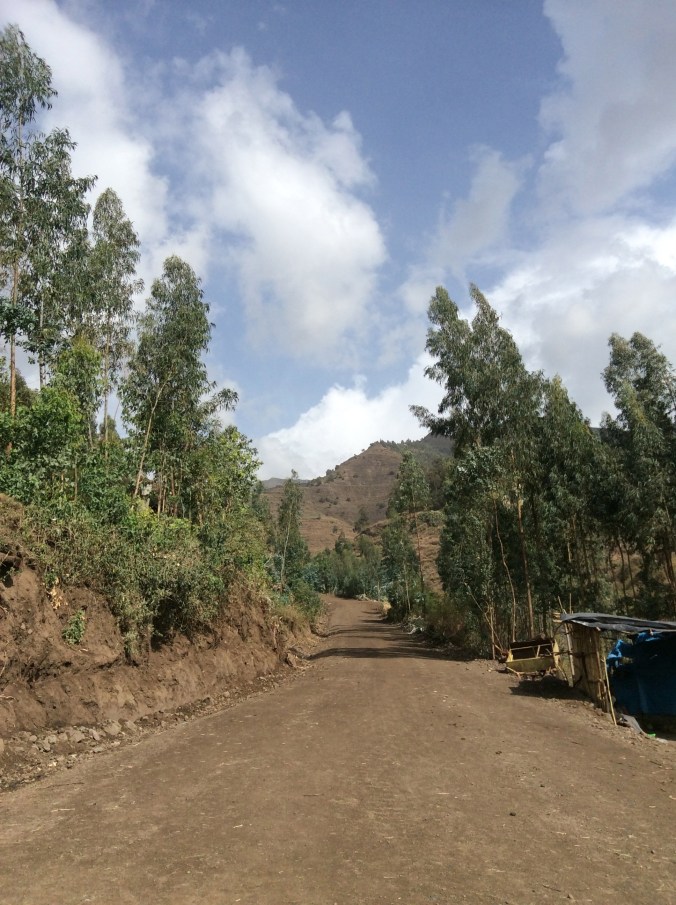
The road to this church is relatively new.  Before pilgrims had to either walk or ride a horse or donkey to get here.  The road continues above the village, but we turned around and headed back to Lalibela.
IMG_1263

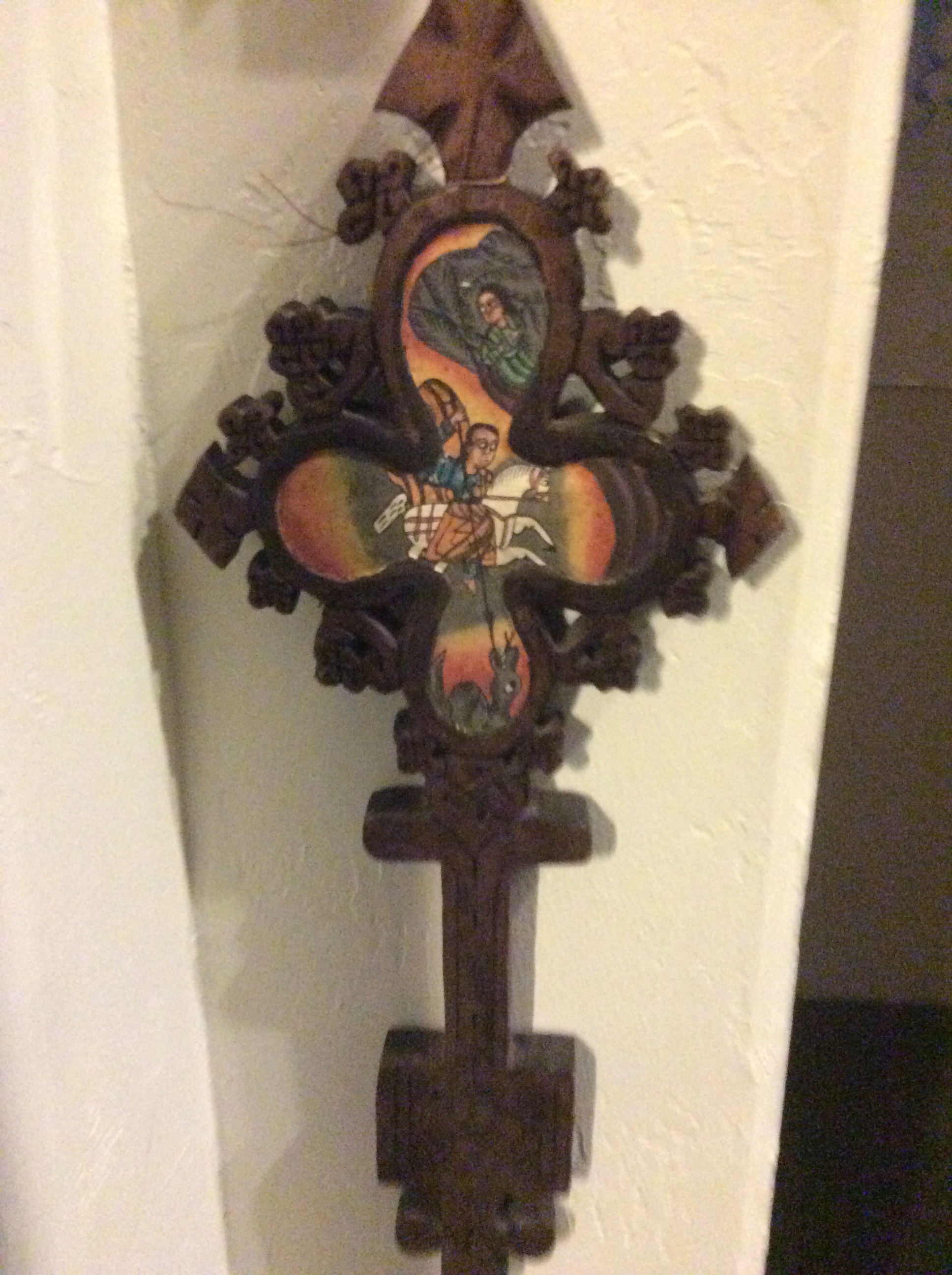
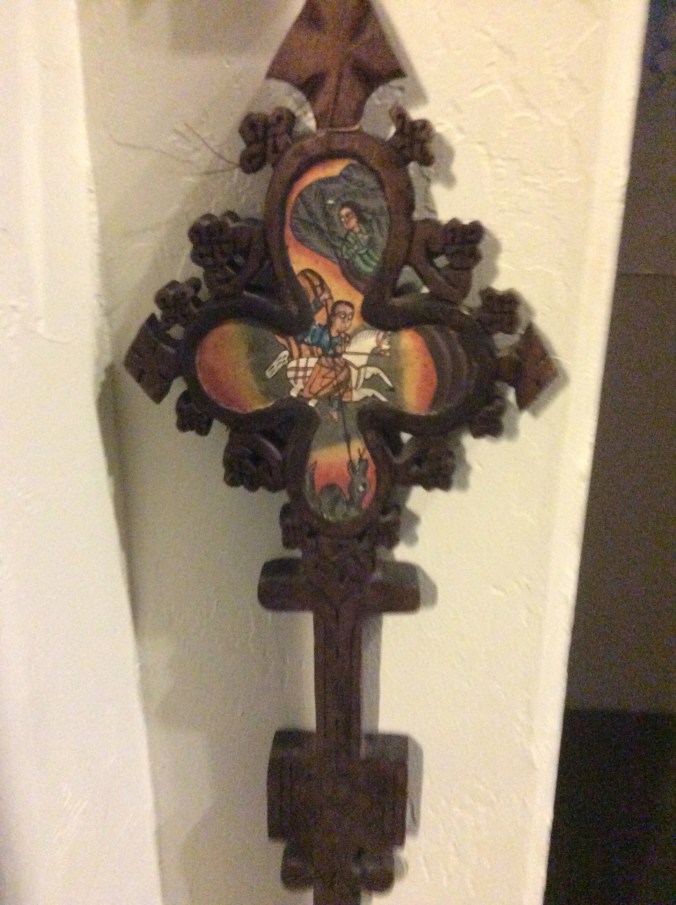
There were two shops in the village that sold sacred objects and souvenirs.  I bought this cross which has St. George and the Dragon on one side and the Virgin Mary and baby Jesus on the other.  Mary is exceedingly important in the Ethiopian Orthodox Church.

IMG_1265

I like to bargain and generally did quite well with it when purchasing various items.  However, the man in this shop for this particular item refused to come down.  I really wanted it because it seemed quite unique so bought it at his price.  Nowhere else did I have to do that.

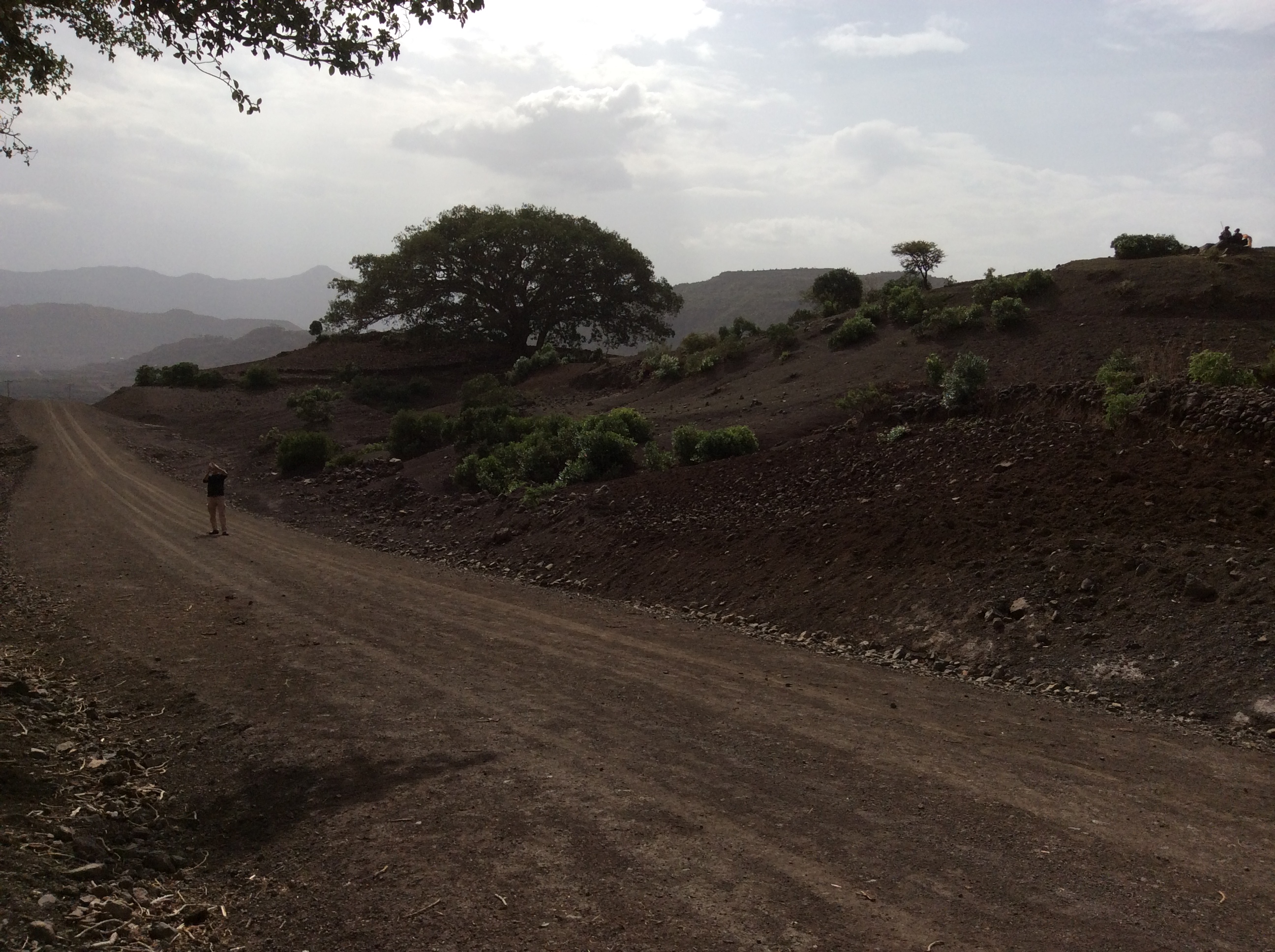
On the road back to Lalibela we decided to stop and admire a couple of huge fig trees.

IMG_0485

IMG_0486

My Ethiopian Adventure–Lalibela, Part Two–the Monolithic Churches


IMG_0397

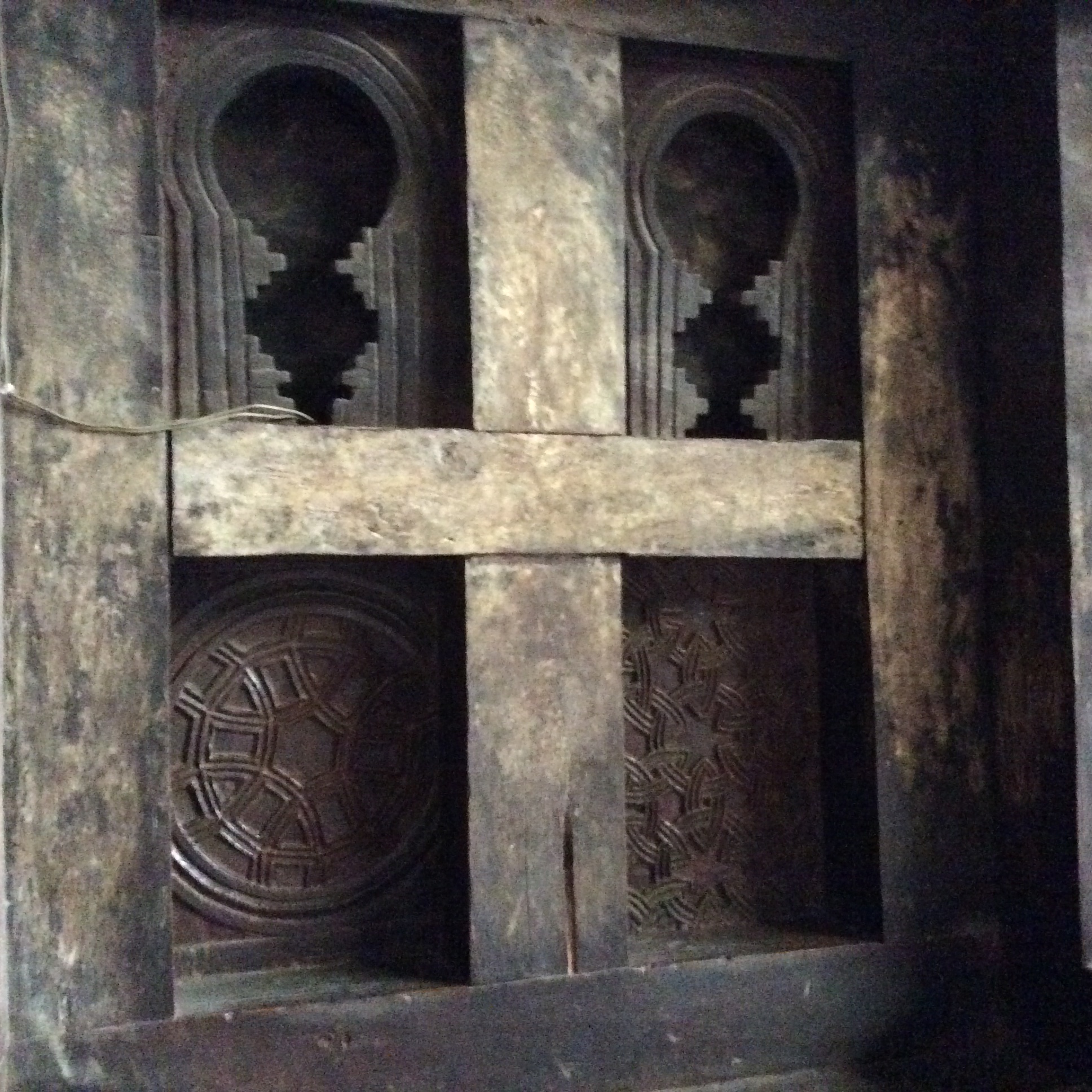
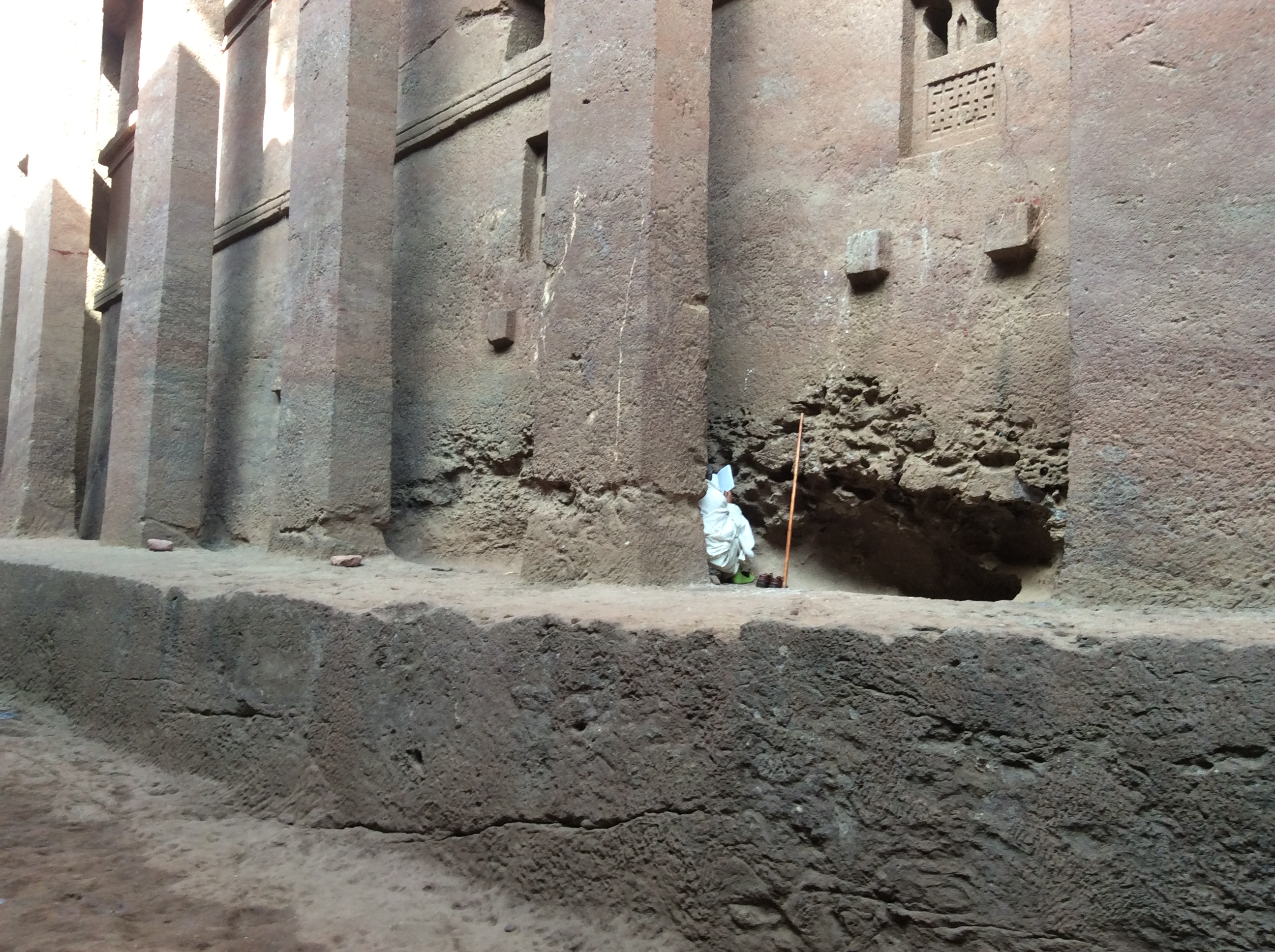
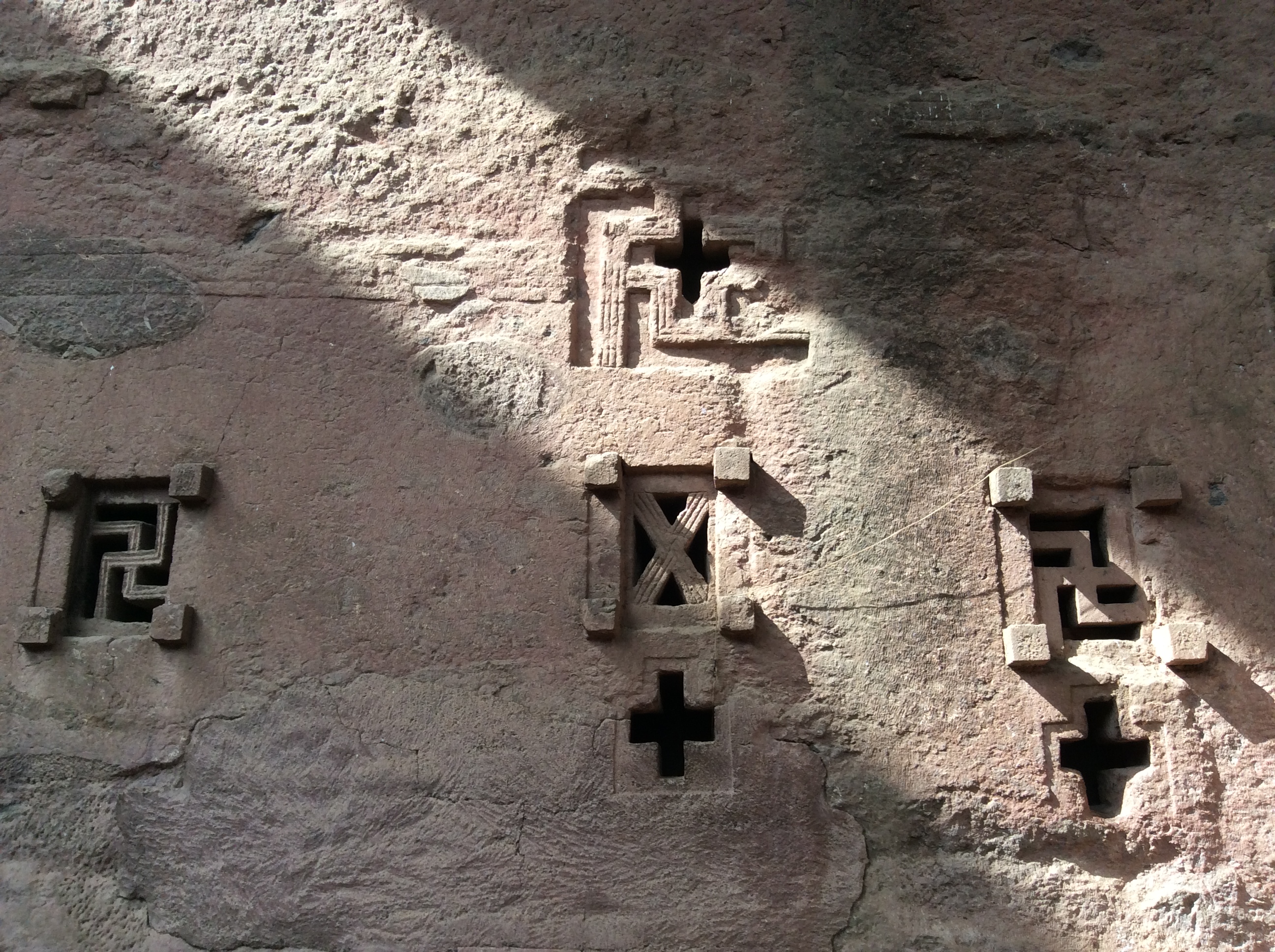
This is the first of the monolithic churches we visited.  Because the churches were built from the top down and actually cannot be seen until you are very near them, you have to climb down a lot of steps to get to the bottom level from which you can enter into the interior.  The “trenches” around them are the same depth as the churches are high because they were carved out of the solid stone.  As you look at these photos, you will notice multiple cross designs, including Greek, the type found in Axum, those referred to as Lalibela.  Every carving, every painting, every design possesses an explicit symbolic meaning.  I wish I had been able to record all the information provided by the guide.  This church, Bet Medhane Alem, is the largest of this type.  It’s approximate size is 33.7 meters  by 23.7 meters with a height of 11.5 meters (109.5 feet by 77 feet with a height of 37.4).  All sides have columns.

IMG_0399


IMG_0400

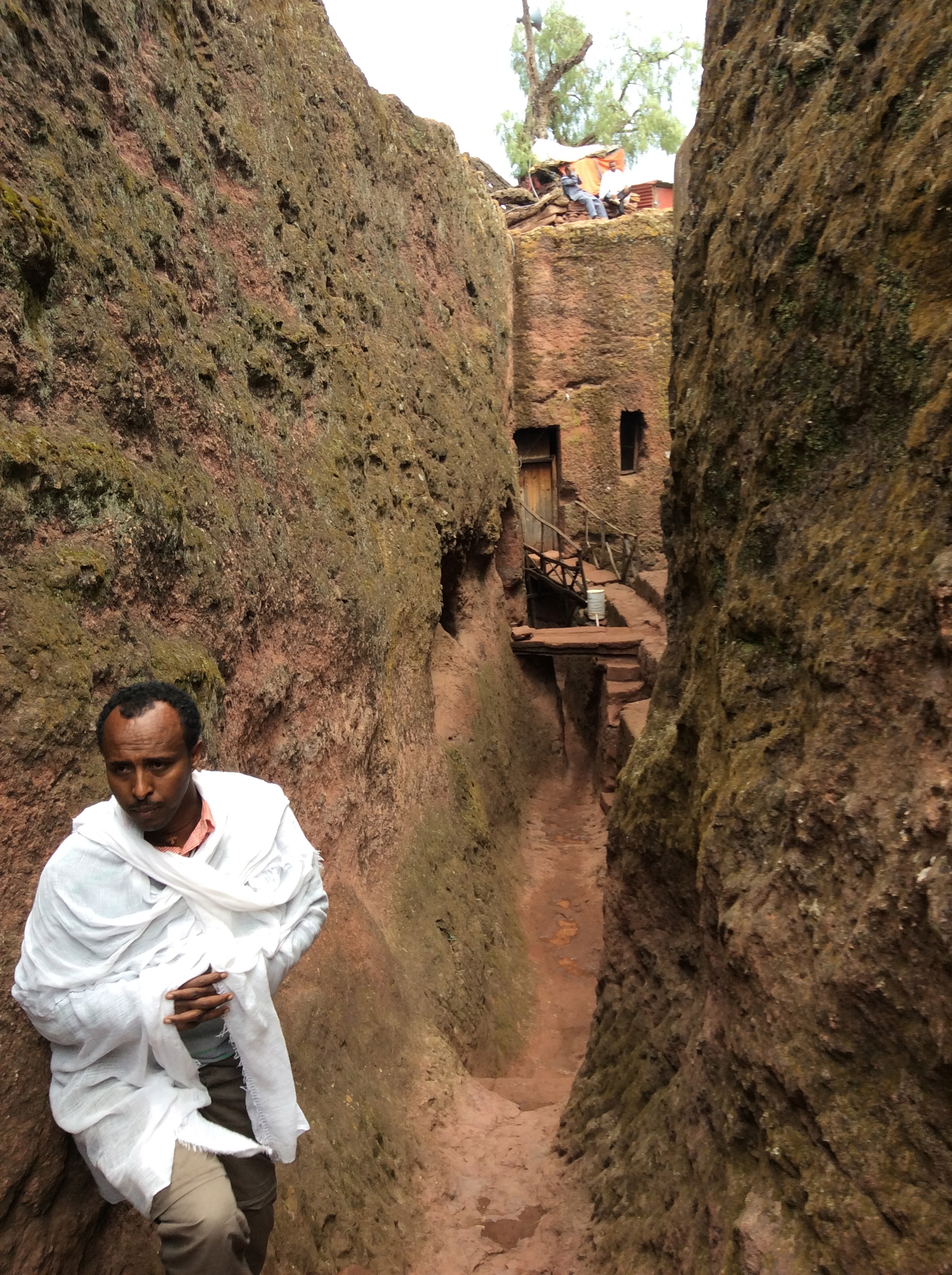
These churches are not mere tourist attractions.  We saw many people walking around, praying, and worshipping.  Services are still held here.  Carved into some of the “trench” walls opposite the church are tombs.  Those buried in these tombs have been removed and their graves now lie on either side of the River Jordan–photos of that later.

IMG_0398

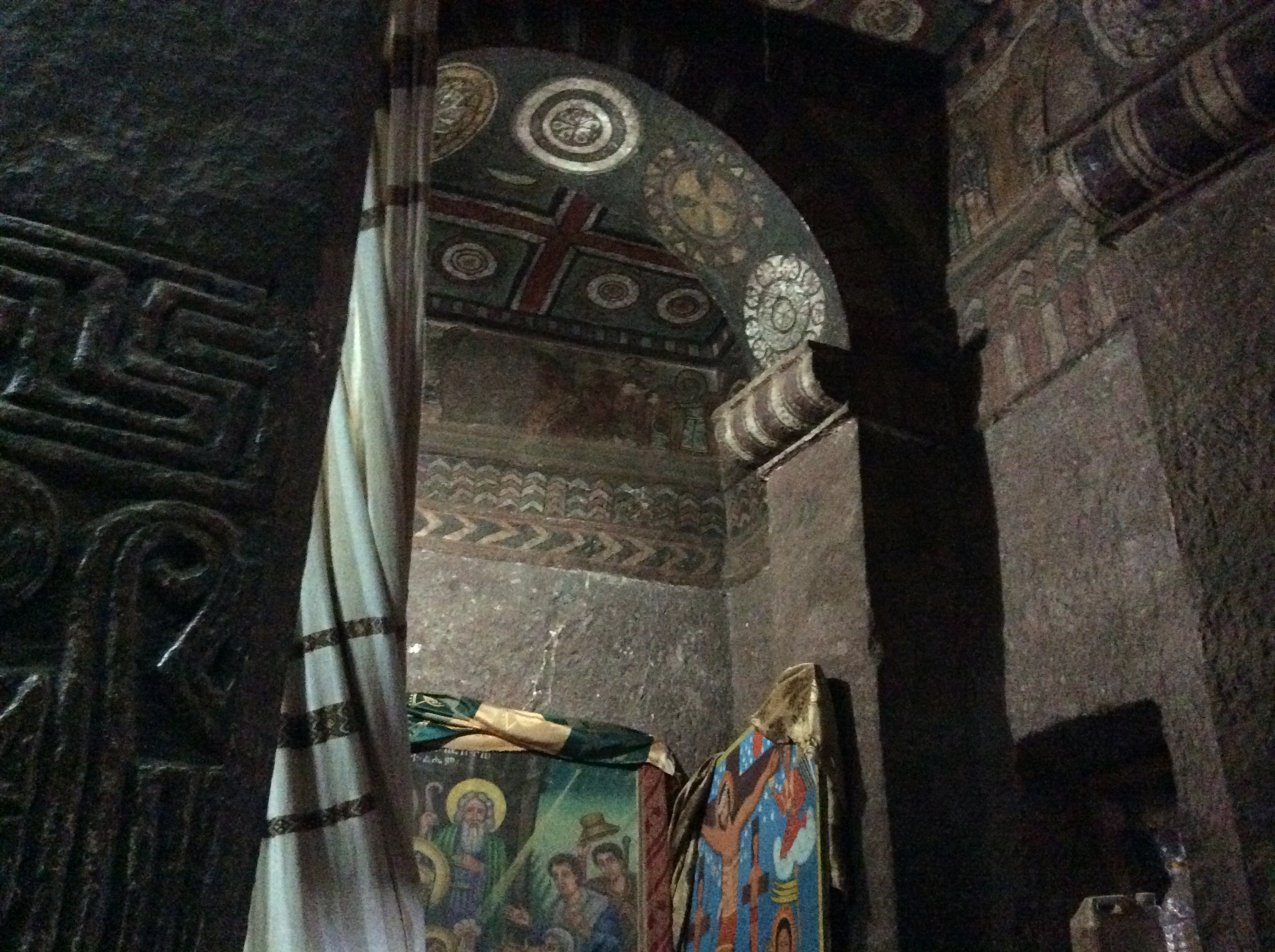
The interior decoration includes detailed carvings, elaborate drapes, and paintings.

IMG_0403

Certain areas, like this one behind the drapes, only priests can access, mainly because they contain the sacraments.  The floors of all the churches are hard rock so all contain coverings of cloth, Persian type rugs, and bamboo.  Accessing the interior requires a lot of climbing up and down very worn, slick, stone steps.

IMG_0405

While smaller trenches and areas separate this first group of churches from each other, the entire group is surrounded by the deepest, large trench.  This is the next church we visited.  It lacks outside columns.

IMG_0407

At first the sight of swastikas everywhere startled me until I remembered how old these churches are and the original meanings attached to this symbol.  Our deacon guide explained that they symbolize everlasting life (the circle of life) and also mentioned its meaning in ancient Hinduism–the continual, everlasting cycle of birth and rebirth.

IMG_0408

This is the fertility pool.  It is so deep that the priest must be lowered into the water attached to ropes as are the man or woman who wants treatment in this holy water.  At one point, someone realized that the pool was no longer as deep as it was originally.  When they investigated, they found the pool had been filled with dirt below where it could be seen.  When this dirt was excavated, a cache of ancient, holy artifacts were found.  They had been buried there to protect them.

IMG_0409

IMG_0411

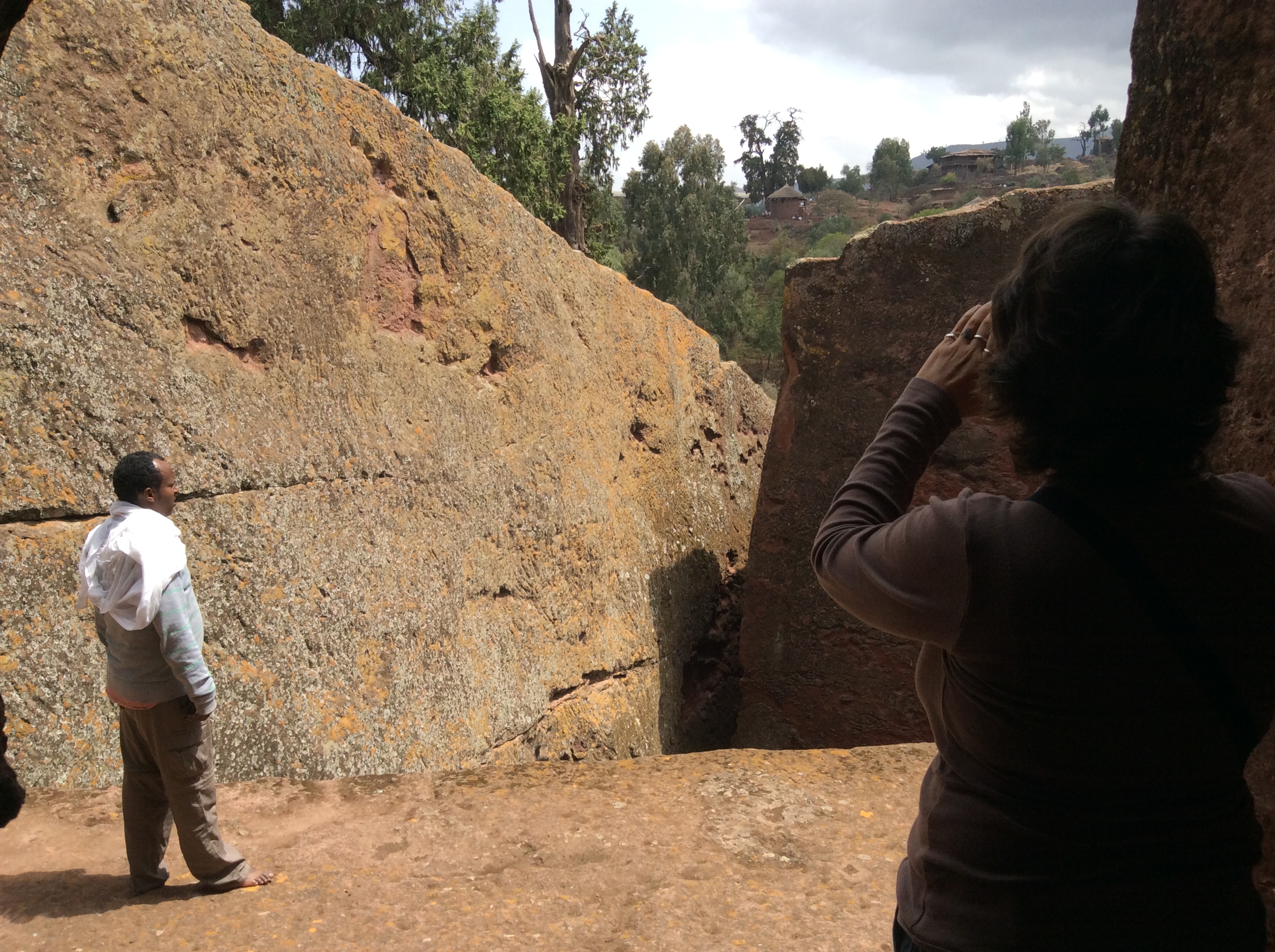
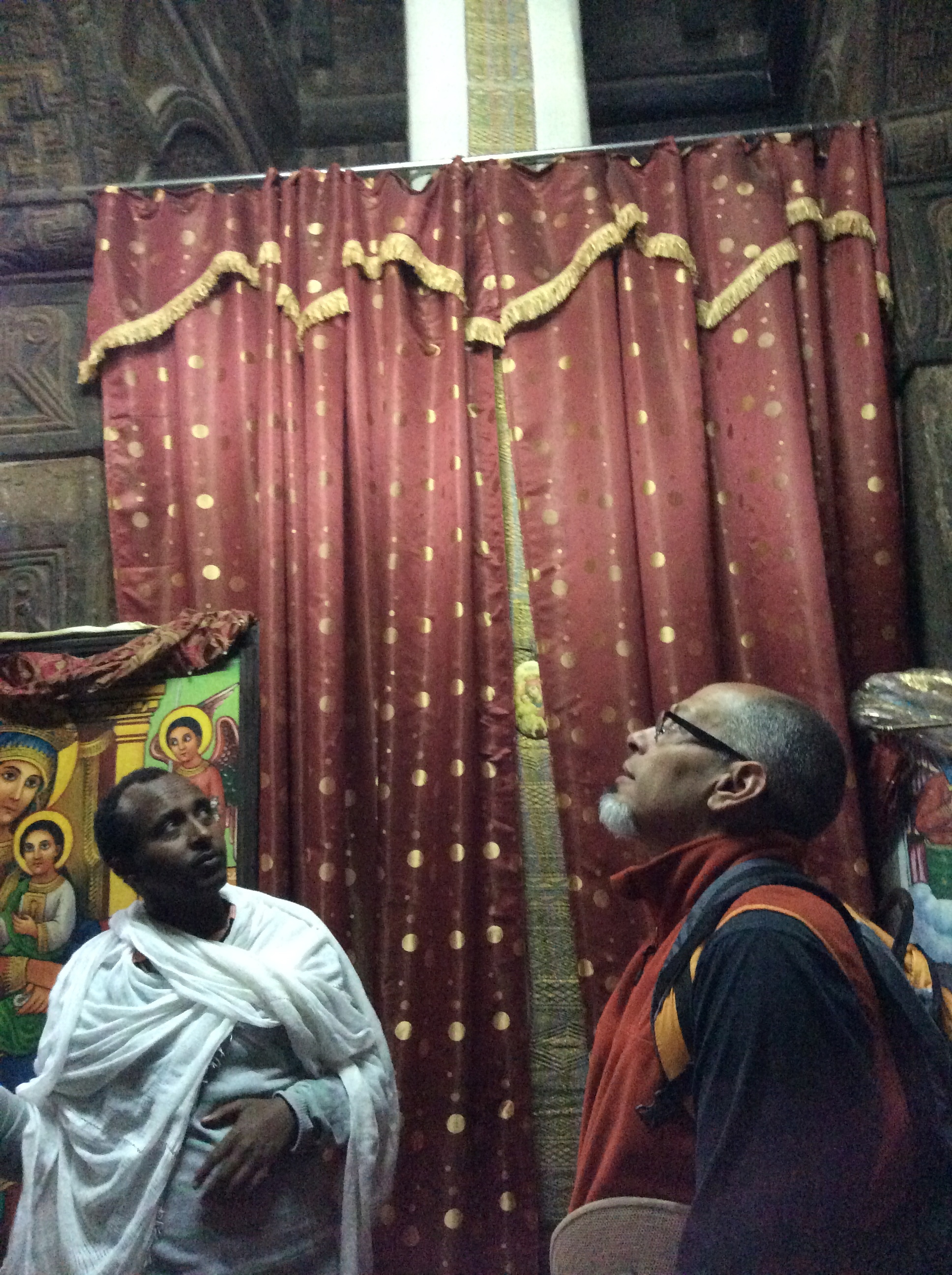
Ethiopians wrap themselves in white not just to go to church, but in general.  I constantly marveled how they keep these garments so incredibly white in spite of dirt and rain and walking through mud everywhere.  The person on the right is our guide, a deacon in the Ethiopian Orthodox Church.  He knows the meaning of every carving, every painting, every symbol.  The extent of information explained was not only detailed but extensive.

IMG_0412

Only some of the churches possess paintings on the walls as well as carvings.  The wise men, Mary, everyone looks Ethiopian at least to some extent.

IMG_0413

Notice the Star of David.  This symbol is everywhere because the Ethiopians believe they are descendants of Solomon and Sheba.  As a consequence, the paintings, carvings, all the symbols reflect not only the New Testament but also the Old Testament.

IMG_0414

Every church has this curtain behind which only a priest can go.  Every church has a copy of the Ark of the Covenant.  They believe the original was taken by Menelik I, the son of Solomon and Sheba, to its current location in Axum in a special treasury next to the Church of Saint Mary of Zion.  It has been safely kept there through the millennia.

IMG_0415

IMG_0416


IMG_0417

Protective roofs cover some of the churches.  The guide explained that the hardness of the basalt varies.  Because some of the stone is softer, churches carved out of this softer stone had begun to deteriorate.  The coverings protect and preserve them.
IMG_0419

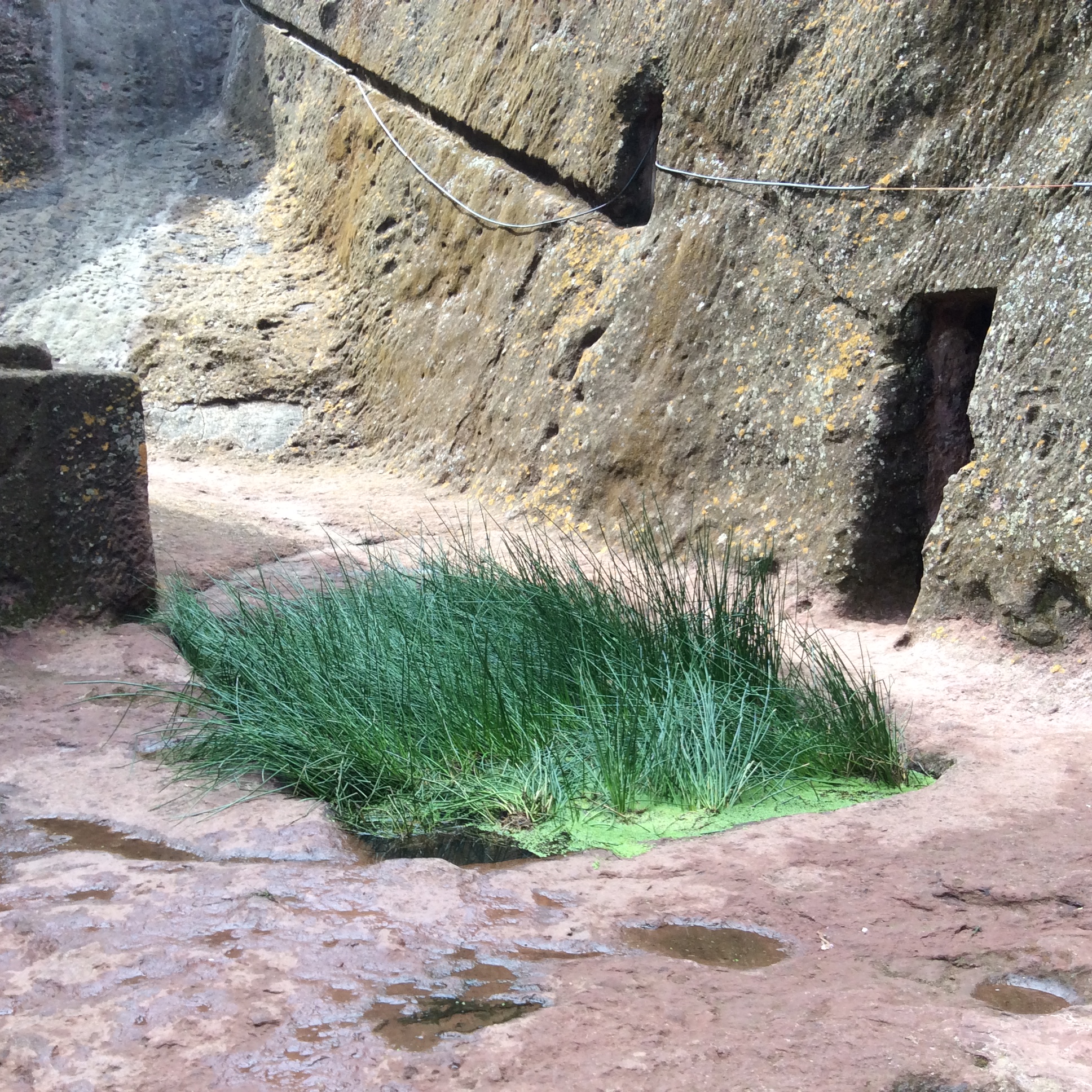
To get from church to church in this first group of churches, usually we walked through these trenches.  To reach the actual church entrances requires climbing up steps.  These trenches enable water drainage into the River Jordan during the rainy season.  The floor of the churches remain above the water.

IMG_0420

Walking through these churches kept me in a constant state of awe.  They were built more than 800 years ago without modern tools.  And there are eleven of them all here, carved out of solid stone.

IMG_0421

St. George and the Dragon hold a prominent place in Ethiopian Orthodox symbolism.  The dragon represents paganism.  St. George slated the dragon.

IMG_0422


IMG_0423

We left this  group of churches, climbing out from this trench and headed to one of the most photographed.

IMG_0425

We encountered two walking funeral processions complete with chanting.  I took no photos because it seemed disrespectful.


My Ethiopian Adventure–Lalibela, Part One


IMG_0393

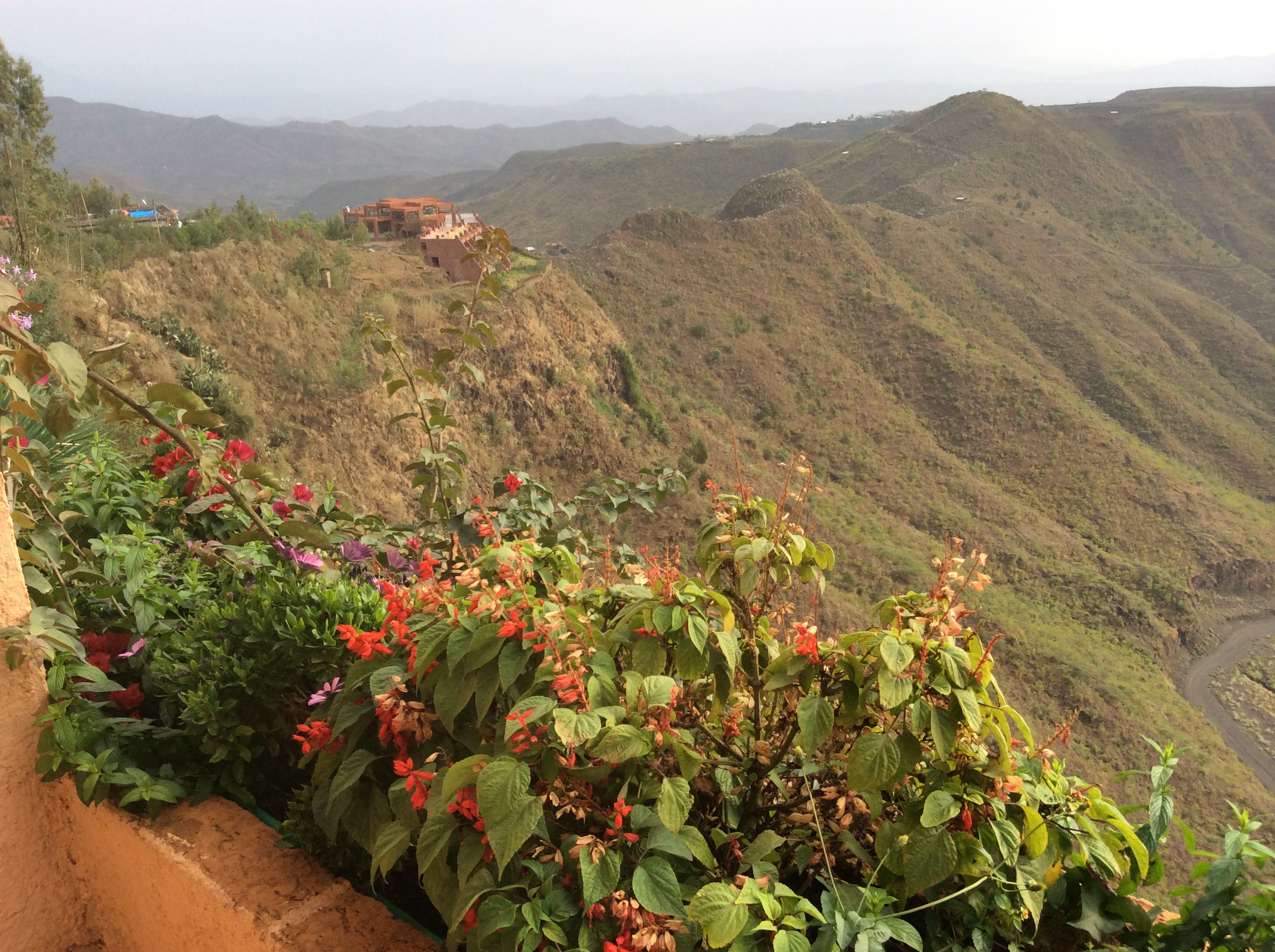
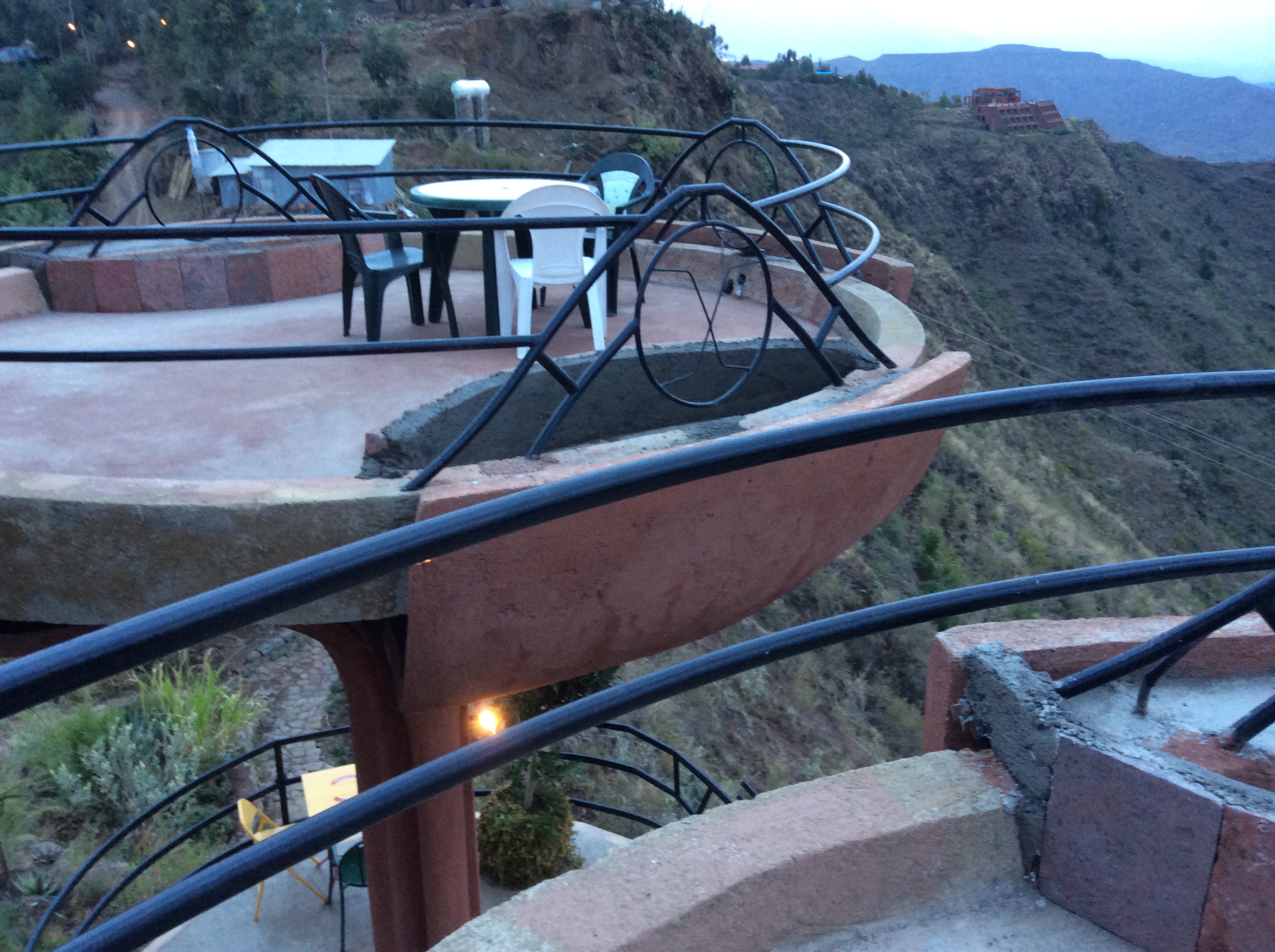
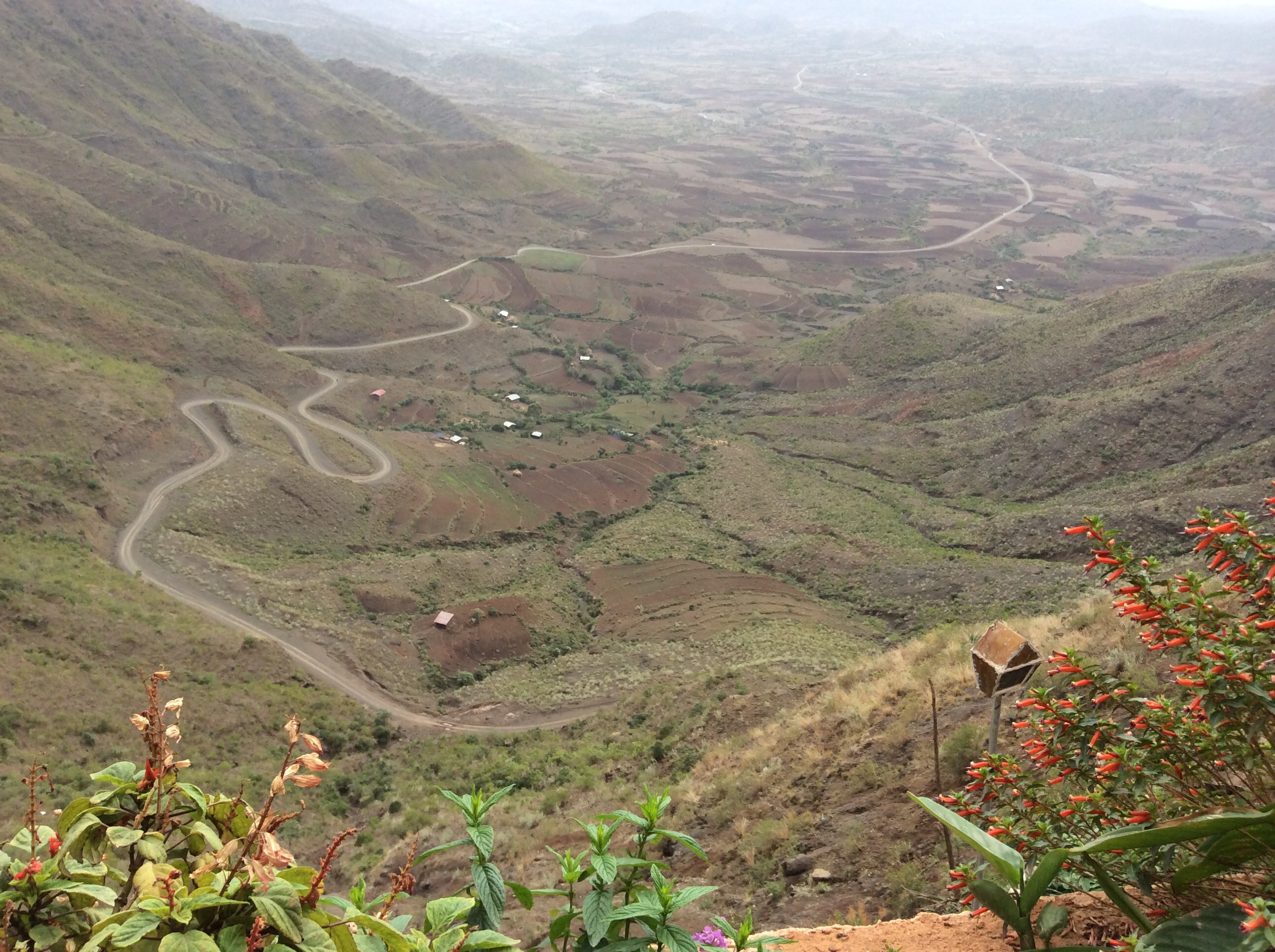
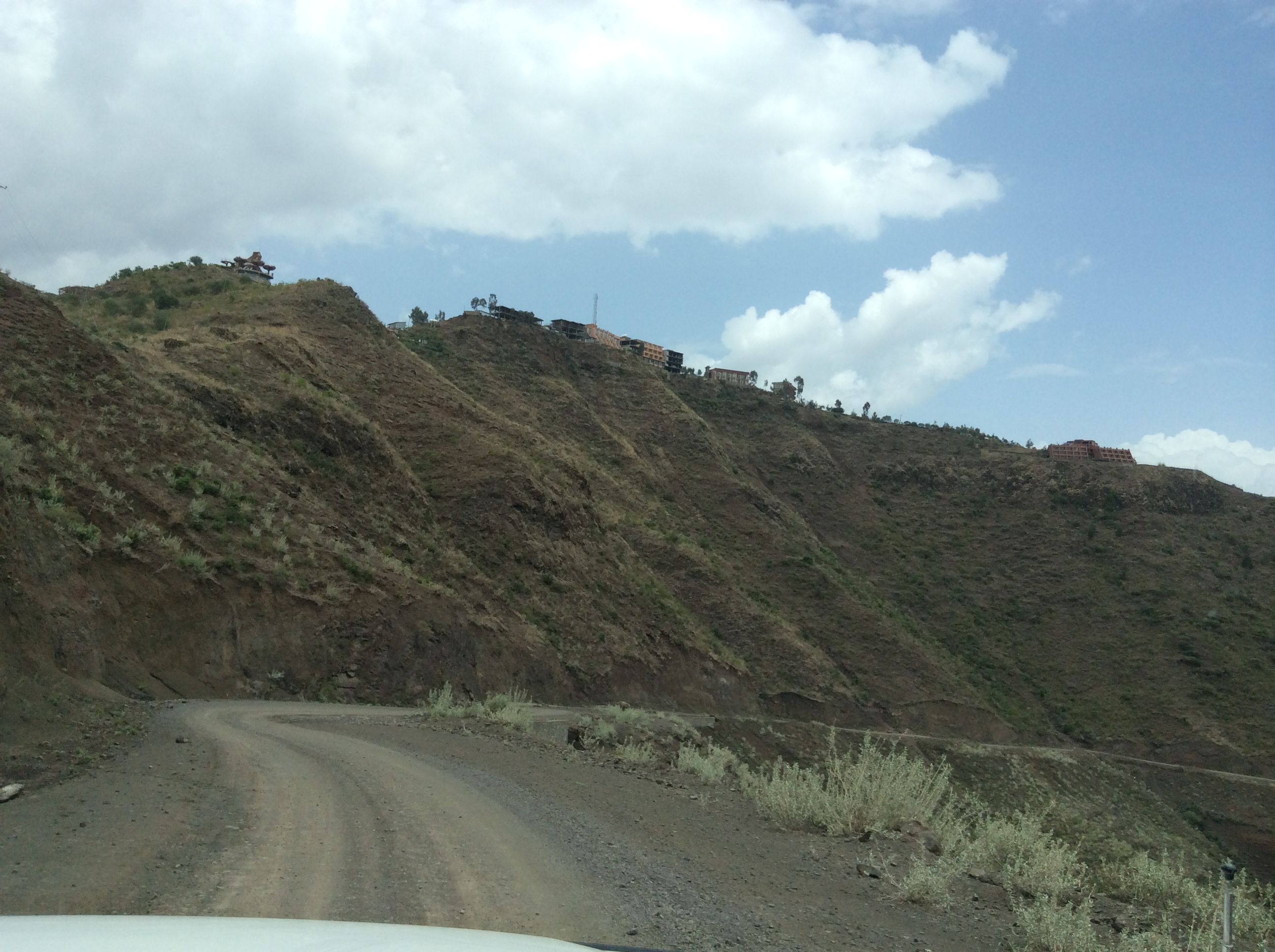
The final climb to Lalibela nearly terrified me–switchbacks up and up, no guard rails as I recall, and drop-offs more than a thousand feet.  This photo, taken from my hotel room patio, fails to really show just how far down the drop really is.  The other buildings in the photo are also hotels.  Having been told that only one really good restaurant exists there, we ate at the same place two evenings.  It rests at the end of a narrow unpaved road at the edge of a cliff.

IMG_0497

The second evening there, we met the owner, an older woman from Scotland who originally came to Lalibela at the request of a friend to teach.  She stayed, bought this land, and hired two young architects from Addis to design the restaurant–to look like a flower.

IMG_0498


IMG_0494

To get to this restaurant from the hotel, Alemu had to turn the corner as tightly as he could, backup a bit, and then proceed on this road.  Immediately below where we backed up,  there is a steep cliff.  I asked him if anyone ever fell off. He said a friend of his did.  I assumed he had died, but no, his vehicle was caught by a tiny ledge and he survived.

image

The road up to Lalibela as viewed from my hotel patio.  We stayed at the Maribela Hotel which was one of the nicest on the road trip.  They were still building a restaurant but served an excellent breakfast.

IMG_0395

Lalibela is to the Ethiopian Orthodox Church what Jerusalem is to Jews and many western Christians.  It is famous for its eleven churches carved from solid rock.  It has been called the New Jerusalem, a New Golgotha.  In approximately 1200 AD, King Lalibela, one of the last kings of the Zagwe dynasty, came to power after God told his brother, who was king, to abdicate.  The name Lalibela comes from honey, sweetness because when a baby, King Lalibela was surrounded by bees which prophesied his future greatness.  The story becomes quite complicated but in essence, angels took his soul to heaven and showed him the churches he was to build.  They were built in twenty four years with the help of angels.  Lalibela then became the holy city.  Like the ancient rulers from Axum (the original holy city where they believe a church holds the Ark of the Covenant), the Zagwe dynasty traced their origin to King Solomon and the Queen of Sheba.

In Lalibela two types of rock churches still stand:  rock hewn monolithic churches which were cut out of solid basalt from the top down with trenches surrounding them and rock hewn churches which were cut inward from a cliff or by using a natural cave or indentation in a cliff as a starting point.  The architectural and technical building skill required is clearly evident.  The churches are on several levels and built in such a way that they drain to carry off the heavy rain flow during the rainy season.  The trenches around the churches also serve to feed the River Jordan–an area made to duplicate the original River Jordan.  The architecture of the monolithic churches exists nowhere else in the world.

To tour the churches requires a professional guide who knows the history and architecture intimately.  Our guide held the position of deacon in the Ethiopian Orthodox Church.  While many Muslims live in parts of Ethiopia, Lalibela is a Christian town in a heavily Christian area.  Deacons and priests can marry, but if a male wants to become a bishop, he cannot marry.  The Ethiopian Orthodox Church, like the traditional Catholic Church with Latin, has its own ancient religious language, Ge’ez.  The alphabet of modern Amharic is the same as Ge’ez. Priests learn to read Ge’ez.  Later, in Gondar, we were able to get a priest to chant from a religious text in Ge’ez.  For more details regarding the Ethiopian Orthodox Church, a list books in both the New Testament and Old Testament, as well as other sacred texts and hymnals, go to:   http://www.ethiopianorthodox.org. There are many more books in the Orthodox Bible than in those used by European and American churches.

IMG_0396

Friends and Flowers


SAM_0483


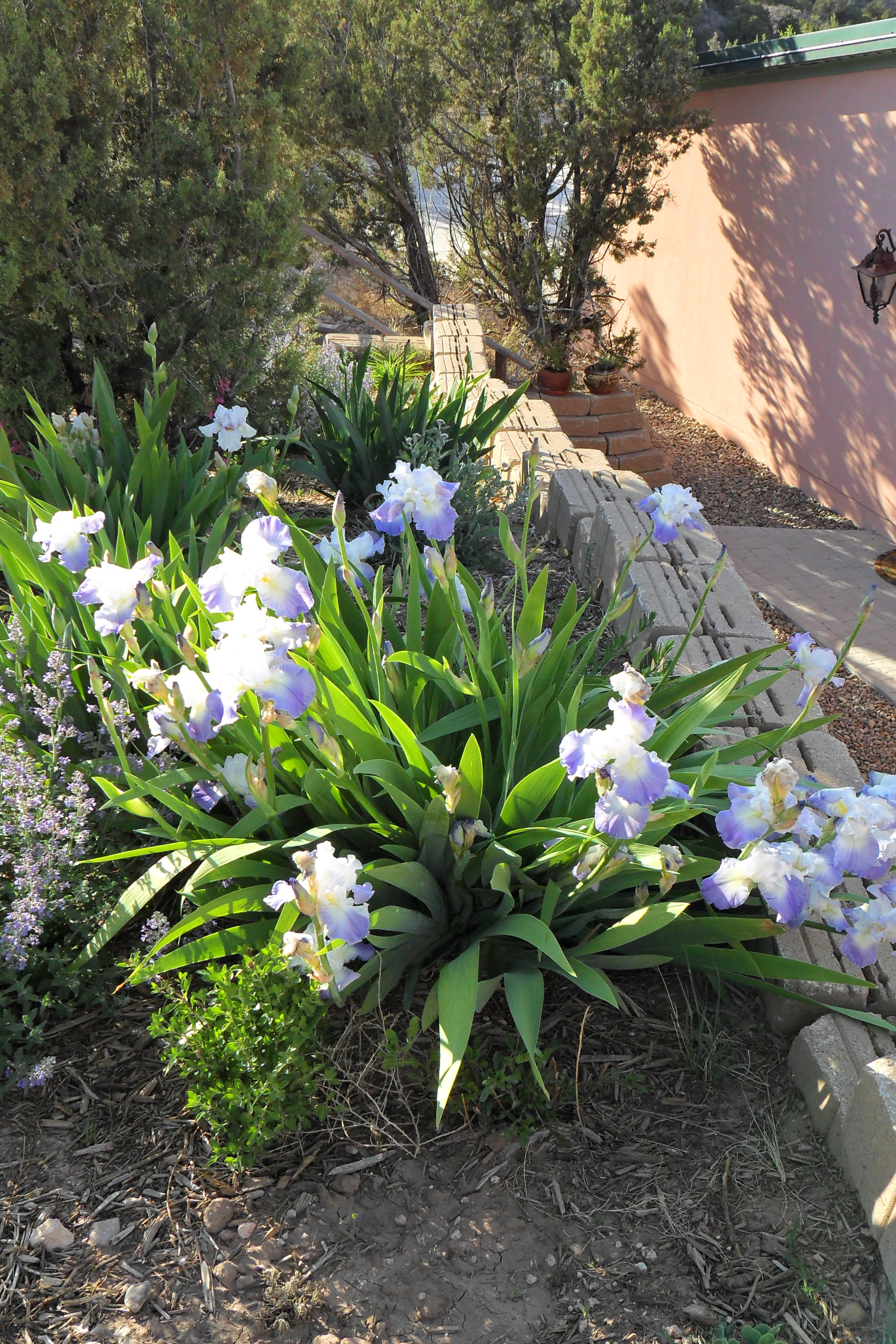
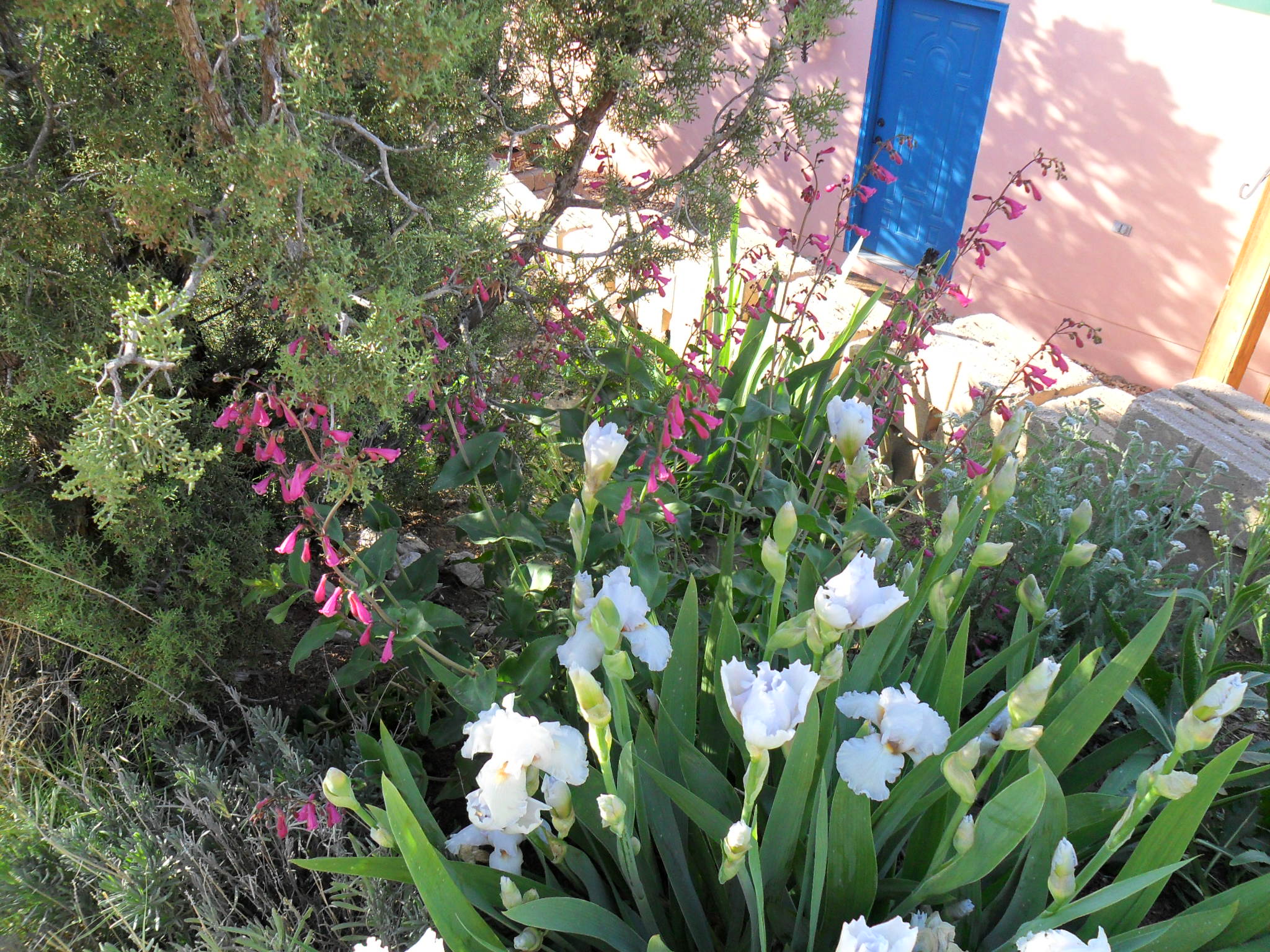
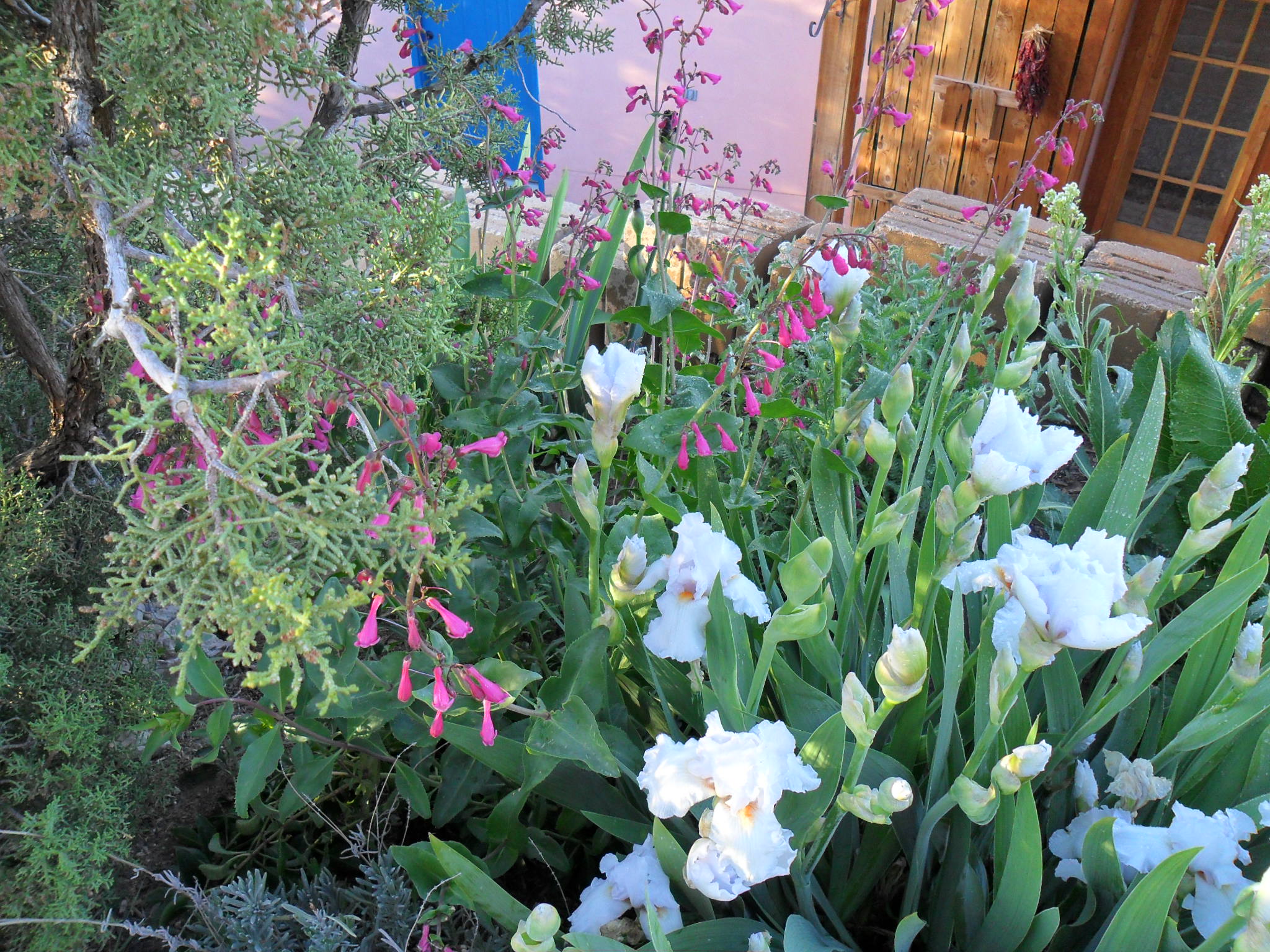
On my way home from work today, I stopped by a friend’s house to get some Black Eyed Susans.  She and her husband run a bed and breakfast with a spectacular garden in the back.  Iris of every color are blooming, yellow, lavender and white, peach, every shade of purple, and one a combination of colors I have never seen before.  The lavender and white combined in one flower I gave her in the fall of 2012.  They rebloom and spread rather rapidly.  Because of that and the fact that I cannot bear to throw any away, I have them by the barn and here and there.  Some do better than others–a lot of the soil here is either clay or caliche or a combination, not very conducive to anything but the toughest.  She has a rose bush taller than I am which means it must be about 5’6″ or 7″.  Another deep red rose was already blooming.  She gives me flowers and I wait and see how they do or if the deer or bunnies will eat them.

Today’s weather brought perfection, a rare treat of just the right temperature, sunshine, and no wind.  When I arrived, her husband was napping in the garden in a lawn chaise.  He got up, we all walked around the garden, looked in the koi pond, and commented what flowers seemed to flourish more readily than others.  Many flowers which do well in town either die out here in the country only twelve miles away or fail to thrive.  They just sit there and do nothing.  She and I have shared flowers for years, flowers and conversation and wine.  We all decided to sit town and share some wine and cheeses and crackers and visit.  They travel widely and always have tales to tell.  He is from Jordan so we discuss world events.  Part of today’s conversation centered on Boko Haram and the differences between Shia and Sunni.  He is Sunni and I used to be married to a Shiite.  Often we discuss extremism and how it harms everyone, regardless of religion.  None of us understand the hatred some people seem to feel toward others who are different from them either my race or religion or ethnicity or gender.

As soon as I returned home and changed into gardening clothes, I fed Rosie, and planted the Black Eyed Susans with a big dose of water and root stimulator.  Who knows if they will make it.  I will wait and see.  If they do, they will contrast nicely with the purple of the catmint and the white, tiny, native Blackfoot Daisies growing wild among the other plants in my little garden.  What more can a person wish for than spending time with good friends among the flowers.  And a little wine never hurts.


SAM_0161


SAM_0461


SAM_1503


SAM_0463


SAM_0459


Poverty


Proofs sent to the library at work–a high school–cannot legally be used on the shelves so they end up in various places.  Somehow I end up where they reside and read them.  My latest, The Boiling Season by Christopher Hebert provides abundant food for hard core thinking.  The setting, a Caribbean island, reeks of political turmoil and the legacy of slavery.  Unless you are totally ignorant of Caribbean history and the various cultures there, it does not take long to figure out the setting is Haiti.  In case you want to read the book, I will give you only a cursory introduction.  The main character grows up in basically what we call here a slum.  His mom dies of malaria when he is quite young and  his dad owns a small store.  He hates it and focuses most of his life on getting out of these circumstances.  He gets a job and a place to live with a senator, meets important people, and eventually discovers an abandoned estate out in the country.  He moves there after it is bought by a wealthy foreign white woman who hires him to restore it.  He absolutely loves the place.  It is an island of beauty and peace in the middle of squalor, poverty, and strife.

The details you can read for yourself.  It’s focus is the dilemma many who grow up poor and want to better themselves face:  if you progress, are you abandoning your roots, to whom do you owe loyalty.  And, indeed, what is progress?  Civil war breaks out and the main character is torn between his desire for peace and a more elegant lifestyle in this beautiful place and the needs of the poverty stricken people who surround it and who at one point work there.  Is he a free person or just a fancier slave for the rich who own the place?  Has he deluded himself into thinking because he worked hard to get where he is that he is better?

Although the book’s setting is a particular place, the theme remains universal.  I think of individuals I personally know who could not cope with success and riches, who felt they must “save” all their relatives and then were left with nothing themselves.  The thinking is this:  if you come into money, you must share it with everyone; to keep it for yourself is morally wrong.  If this is the case, how can the cycle ever break?  This sort of thinking is very difficult for those of use who work hard and save for the future to understand.  We question why we should help them when they hit the bottom.

Yesterday my hard working, single mom, going to graduate school daughter went on a rant about people she knows who get food stamps, Medicaid, etc. while she works and goes to school and gets nothing.  They have fancier cars, better TVs, etc. than she does.  I do understand both viewpoints although I admit I am the frugal without being austere.  I remember a time several years ago when several of my poorer students–I teach at a Title 1 school–wore jeans more expensive than I would ever buy–its jeans.  We got into a discussion about this.  I informed them that all the clothing I had on except for underwear and socks came from a thrift store.  When I take things to the thrift store, I actually shop.  Thrift stores are full of “finds”.  The response of one student was echoed by others, “I would never go into a thrift store.  Someone might see me go in there.”  Because they were poor, they wanted to avoid anyone seeing them do anything they thought might confirm this.

Although fraud exists in programs for the poor, it also exists in high end banking and just about everything.  The solution is to work hard to investigate and prevent it.  I keep wondering what is the solution for the people truly in need?  Do we punish everyone to prevent the fraudulent acts of the few?  And what about the children?  What happens to the dependent young?  Obviously, the world has not found answers.  I wonder if we ever will.

Amazon


His milk chocolate, heavy lidded eyes stare at me from the

front of the magazine.

His cheeks display charcoal tattoos, a criss cross

design, tiny Xs on top, stopping where his nostrils flare.

His straight hair barely touches his shoulders.

not the black I expected, but the color of mahogany.

His eyebrows grow thin and wide,

no visible eyelashes.

His skin, color of morning coffee with two teaspoons of milk,

looks clear, smooth.

His full lips only slightly darker than his skin

do not smile.

He, a Kayapo Indian, continues staring.

He lives in Kayapo Territory, Brazil, land the size of

Great Britain and Ireland.

He plans to save it from the rest of us.

He plans to save us from our own worst selves.


SAM_1502


The Kayapo and other indigenous Amerindians have lived in the rainforest for millennia.  They and most environmentalists view their rainforest as a priceless haven for biodiversity.  Their Amazon remains a major defense in the fight against global warming and habitat destruction.  Fifteen per cent of greenhouse emissions, more than all the trucks, cars, buses, and planes combined, come from deforestation.  Although Brazil has slowed the deforestation rate by 70 per cent in the last nine years, last year saw a reversal with an sudden increase of 30 per cent.  Brazil also began construction of a network of canals, dams, and a huge hydroelectric project on the Xingu River in the middle of Kayapo territory.  The Kayapo and other Amerindians defeated a larger project in the 1990s. They intend to defeat this one.

The chief of the Kayapo, Megaron, knows what is at stake, not only for his tribe, but also for the rest of us, long term survival.  One  National Geographic article noted, “It is one of the richest ironies of the Amazon that the supposedly civilized outsiders who spent five centuries evangelizing, exploiting, and exterminating aboriginal people are now turning to them to save ecosystems recognized as critical to the health of the planet–to defend essential tracts of land from the outside world’s insatiable appetite.”

Kayapo success can be attributed to their ability to embrace some of the best of the modern world while retaining a strong sense of identity, culture, and traditions, all of which come from the forest.  As Megaron notes, “Before the white man, we were always fighting other tribes.  Not anymore.  We stopped hitting each other over the head and united against a bigger threat.”  For our own long term health and success, we can support them and hope they succeed.


Friends


This day, like many, has flown by in a whirl wind.  On May 3, I am hosting a benefit for a local senior citizens’ center.  We will have a silent auction, food, and drinks.  Over one hundred invitations have been sent, but only a few have actually bought tickets in spite of the fact that quite a few people have told me they plan to attend.  Customs vary in different parts of the United States.  When I lived east of the Mississippi River, people actually religiously responded to request for an RSVP.  Here in the Texas Panhandle, not so much.  At this juncture, I have no clue how many people will show up.

About two and on half hours ago, my friends showed up with the forks and spoons and plates and wine and auction items.  These items currently reside in one of the guest bedrooms and the garage.  We decided to have some wine and then I dug out cheese and crackers and some more wine and more cheese and crackers.  And we visited.

A downside of United States life for me is the pace.  Everything is done in a huge hurry.  People even gulp their food.  I especially notice the difference when I spend time with people from other cultures who take hours to eat dinner and visit.  When one of my best friends from India lived here and I invited others over, we took hours to eat and visit.  Recently, when a US friend brought his exchange student from Italy over to ride my horse and his daughter and wife showed up as well, we rode, and then fixed dinner.  We cooked, visited, and ate leisurely.  The young woman said she felt so at home because we were spending time, visiting, cooking, everything leisurely.  I frequently cook dinner very late by US standards, e.g. eight o’clock at night.  When my exchange students from South America lived with me, they thought this was normal.  People there eat late by standards here.  My daughter tells me I have become more and more like all these people from other countries with whom I spend time.  I laugh.

Tonight’s experience further validated my belief in the value of friends and time spent with them.  This was not one of those planned, elaborate events.  We just sat, drank, ate, and enjoyed the pleasure of each other’s company.  It was wonderful.