Determination


People tell me I have a lot of determination. If they know about it, they use this example: I just finished my 659th day of walking at least 10,000 steps per day never missing a day. My average is over 13,000 but it was higher until the rain came. It forced me to dance, jog, and run in place inside my house, not exactly a fun endeavor.

Three years ago as part of a Story Circle Network class, I read about book written by a woman who read a book per day for a year in order to help her deal with her grief over the loss of young family member who died too soon. I figured if she could read a book a day, surely I could read a book per week. First year I made it, second I fell one short, and in 2025 I read 53 and reviewed them all on my blog.

Today, I finished book one off 2026: “We Are Green and Trembling” by the Argentinian writer Gabriela Cabezon Camara. It won the National Book Award for translated literature. A sort of fantastical, historical novel, it portrays the life of a real person, Antonio de Erauso. Now identifying as a man, he writes letters to his aunt who is the prioress of a Basque convent. When a small girl, his parents placed her in the convent hoping she would someday replace the aunt as head of the convent. To flee the narrow confines of such a life, she escapes and disguises herself as a man. Through his narration and letters to his aunt, he tells of all his adventures, including working as a mule skinner, then becoming a conquistador in South America among other endeavors. At the time of the novel, he has escaped the military captain for whom he fought and rescued two native Guarini girls from enslavement along with two monkeys. The smallest girl and the monkeys were in cages and near starvation when he rescued them. Pursued by the military they escaped, they now reside deep in the jungle aided by the natives who live there.

Through this novel, the author manages to criticize colonialism, the tyranny of strict religious beliefs, the treatment of women, and the horrors inflicted on native peoples.

In Defense of Young People


Recently, at a party I attended, someone claimed young people these days are lazy, don’t want to work, feel entitled. Sometimes I can keep my mouth shut, just listen, and disagree inside. Not this time. When I hear comments like this about young people, comments with which I vehemently disagree whether it is in person or on social media, I feel compelled to speak up.

During at least half the year, I spend one day a week at an inner city high school. Granted the students I work with are high achieving, students who are the opposite of lazy, some almost to the extreme. When I mentioned this, the person said, “Well this is because they are recent immigrants.” In most of these cases at this school, that is true. Then I explained that I had taught more than 20 years at two Title I high schools where nearly no one was a recent immigrant. Of course, like throughout history, there are some lazy young people. That, however, does not describe the majority. I’ve had homeless students who took the hardest dual credit classes and prevailed. I’ve had students who spent extra time at school because it was safer than being home. I’ve had students whose parents were in jail or drug addicts but still made it to school, did the required work, and graduated. I’ve had students struggling with mental health issues but no matter what managed to do the work required.

Reasons to be lazy abound. Reasons to feel hopeless about the future abound. Look at the present economy, look at the wage cap between the rich and poor, look at how many struggle to find a decent job. Young people are aware of all this, acutely aware. Yet most do the work required and press on no matter what.

I applaud them!

New Year’s Wishes


In a hurting, damaged world

where greed and hatred often reign

I wish for

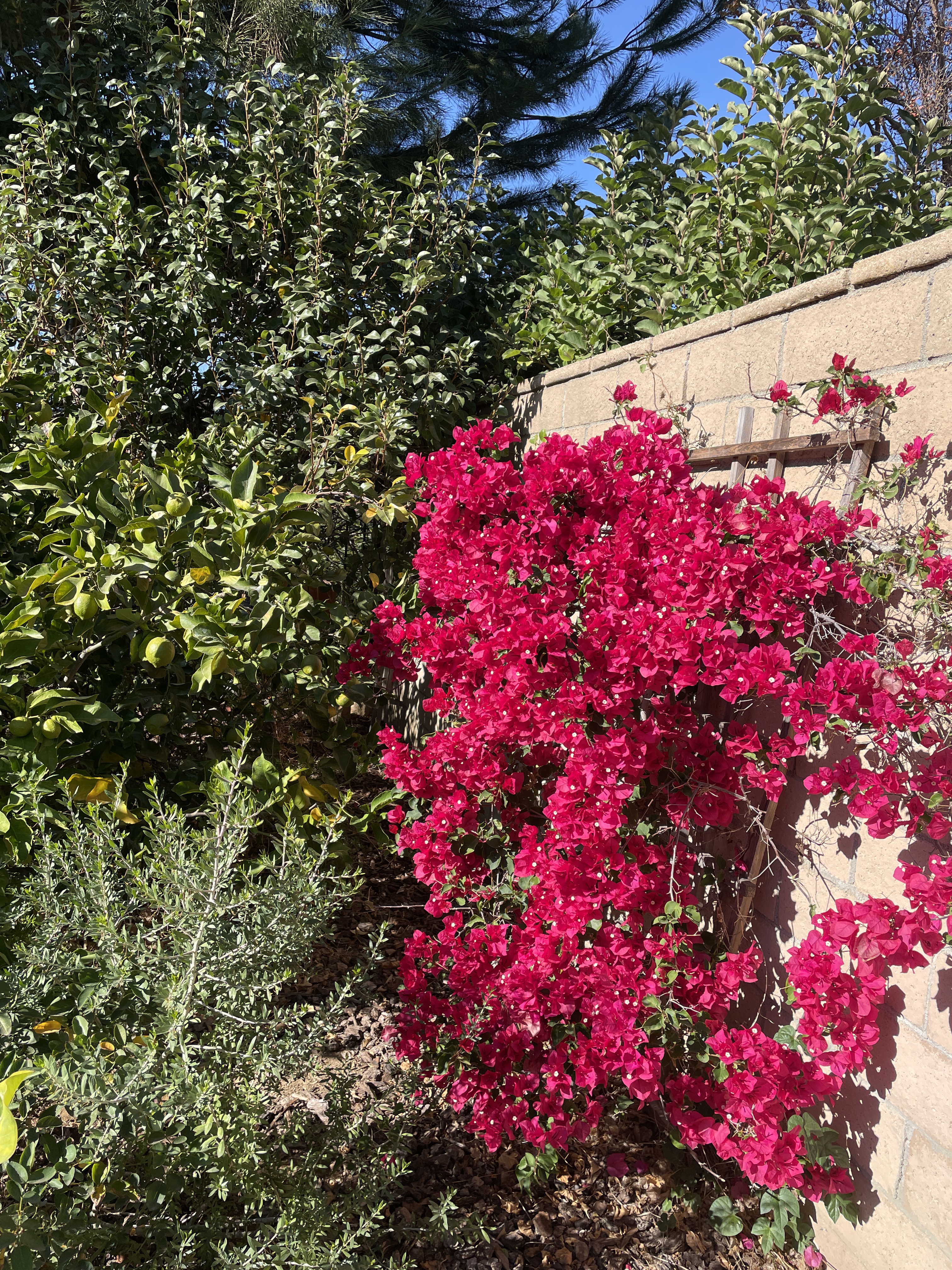
the beauty of flowers to flow into hearts

kindness toward those different from self

to permeate hearts and mines

the light of joy create compassion

toward each other

the knowledge that we are all one race,

one people flow through humanity

Hold friends and family close

Smile, greet strangers

Release hatred, anger into air

Promise yourself to love more,

let others be themselves,

be grateful, find joy

Book 53 for 2025: “The Historian”, Elizabeth Kostova


The daughter of a diplomat and historian explores books in her father’s library one evening and discovers an ancient book and a bunch of yellowing letters. These letters are those of one of her father’s advisors in graduate school, a man who suddenly disappeared. The center of the book contains a strange dragon drawing. This discovery leads her on a quest to find out more about her father’s past and the fate of a mother she has never known.

The letters involve the evil history of Vlad the Impaler who is the person behind the legend of Dracula. Vlad the Impaler was ruler of what is now part of Romania. In his efforts to retain power and fight off the Turks, whom he hated, his cruelty became legend. Often he impaled his enemies alive on stakes driven through their bodies and lined them up by the hundreds along the roadsides.

Combining reality and the legend of Dracula and vampires, this book’s main character, the daughter of the historian, leads the reader from London to Amsterdam to Istanbul to various parts of Romania and Bulgaria in search of the truth of her father’s past and the supposed death of her mother. Although it is a vampire story (I am not a vampire fan), it is much more; it is a fascinating trek through a part of history few know much about and about which little has been written.

Note: I doubted I would finish it by year’s end because this novel is 642 pages long. However, I found the story and history so compelling that I finished it before Christmas.

Book 52 for 2025: “The City And Its Uncertain Walls, Haruki Murakami


This is my fourth Murakami book in the past couple of months and his latest work. In the Afterword he notes that the core of this long novel is a novella published in 1980 in a literary magazine. He was never satisfied with it and never allowed it to be republished in book form. Yet he knew “this contained something vital for me.” Like his other works I have read, the settings include young people, libraries, and strange events many of which are akin to what is called magical realism. The boundaries between reality and the imagination are blurred and questions who we are and what is real.

It begins with a young couple, 17 and 16, in love. The girl tells the boy about this strange walled town and tells him her real self resides there. She describes it in detail and tells him he could go there and become the Dream Reader in the library in this town which has no books, just old dreams that need to be read and where the main animal form is unicorns who often die in mass during the harsh winters there. One day with no warning, she disappears. In one form or another he spends the rest of his life searching for her. Somehow he ends up in this bizarre town where he has to give up his shadow to remain. He has substantial issues with this as he watches his shadow become ill and nearly die.

Later, after a successful career as a book dealer for a large corporation, he suddenly retires and decides to apply for a head library position in a small town in the remote mountains. He meets the previous head librarian whose life is full of mystery and where the reality of this real place and the bizarre town seem blurred. He meets a strange teenager who practically lives in the library reading books with great rapidity day after day. His relationship with the boy develops and he sees what he has been seeking his entire life.

This book takes a look at what is reality, the subconscious, and life’s meaning. It is also an ode to libraries and books and love.

Book 51 for 2025: “The Shadow Land”, Elizabeth Kostova


A young woman, Alexandra, travels to Sofia, Bulgaria, for a job as an English teacher in part to help her recover from the strange disappearance (and probably death) of her brother. She has barely arrived when she helps an elderly couple and the man with them. By accident she ends up with an urn of ashes in a bag when her luggage and theirs gets a bit mixed up. The ashes are inside an ornately and unusually carved box with the name Stoyan Lazarov engraved on it. She sets out to find them with the help of a young cab driver.

As they set out on this journey, they discover they are being followed but have no idea why. The cab driver whom she calls Bobby has keen observation skills which mystify her at first. They find part of the family and then unfortunate things occur to many they meet who are relatives or are connected to the man whose name is on the box. Without initially realizing it, they become involved in Bulgarian politics and political corruption as they try to unravel the story of the box and the man whose ashes it contains.

As I read this novel, which is both a lesson on the horrible Soviet occupation of Bulgaria and human determination and resilience, I became entranced with the history and culture of Bulgaria. If you want a glimpse into another culture and its history and the beauty of the Bulgarian landscape, I highly recommend this book. It is also a mystery story that keeps the reader going.

The author also wrote an earlier book called “The Historian” which is a novel about the history of Vlad the Impaler who is the real person behind the Dracula stories. I plan to read that novel as well.

Book 50 for 2025: “The Well of Loneliness”, Radclyffe Hall


Published in the US in 1928, banned in England, this is the first, well known lesbian novel and without doubt one of the saddest books I have ever read. Hall was already an award winning and popular novelist when she decided to write this novel. The main character, Stephen Gordon, was born to upper class English parents. Her parents had hoped for a boy and chosen the name Stephen. When she was born a girl, they decided to call her Stephen anyway. From an early age, she was different and preferred to ride horses and do outside activities with her father who adored her rather than wear frilly dresses and do the activities common for English girls at the time. Her mother found all this off putting and never showed any love or nurturing toward her. Later in life, after an unpleasant incident with a young woman who uses Stephen as a distraction from her boring life, Stephen’s mother throws her out of the family home and she moves to London where she writes a highly successful novel.

During WWI, they are desperate for ambulance drivers and Stephen is assigned to an all female ambulance regiment in France. There she meets another young woman who becomes her lover.

An English friend, a successful playwright, convinces Stephen to move to Paris where there are no laws against homosexuality and where there is a large community of similar people, many of whom are highly successful in their careers. She and her lover live there for many years, and Stephen successfully continues her career as a writer. Then an old friend from her childhood shows up and everything changes.

Book 46 for 2025: “Norwegian Wood”, Haruki Murakami


This is the novel that shocked him by selling over a million copies and made him famous. It is the story of Toru, a young college student, whose two best friends from childhood change his life. One, his best male friend, commits suicide unexpectedly. Afterwards, the other friend, Naoko, a beautiful and mentally fragile young woman, and Toru spend their weekends just walking together all over Tokyo. As her mental health deteriorates, he increasingly falls in love with her and tries to help. Meanwhile, as Naoko becomes mentally more unstable, he meets another young woman, Midori, who is adventuresome, outgoing, and mentally stable. He does not want to give up on Naoko but is also drawn to Midori with whom he attends college.

The novel is written from the viewpoint of Toru. He tells not just about these women but also his very eccentric roommate at a dormitory and his friend, Nagasawa, who is very smart and disciplined but also quite immoral by Toru’s standards. Although the novel takes place in a Japan of several decades ago, Toru’s narrative and life seem quite modern and realistic.

One thing a reader from the US might notice is that all the characters go everywhere using public transportation. No cars are ever mentioned. Since several of the characters commit suicide, I decided to research the suicide rate in Japan. For decades the suicide rate of young people in Japan has been quite high and continues to be a concern there.

Although I am many decades older than all the main characters, I could not stop reading. This is a meaningful, very well written novel which I highly recommend. It is my second Murakami novel recently and I will read more.

Note: The version I read has the author’s notes from 2023 which are very informative and interesting. He apparently has to leave his home in Japan and go elsewhere, e.g. Greece, to write.

Book 45 for 2025: “Atmosphere”, Taylor Jenkins Reid


Joan, the main character, is an astronomer obsessed with the stars since childhood. She is content with her life as a physics professor until she sees an ad seeking the first women scientists to join NASA’s space program. While her initial attempt fails, she applies again and succeeds.

In the summer of 1980, she begins her astronaut training at Houston’s Johnson Space Center, along with other trainees, including some from the military and others chosen because of their specialist expertise. She is one of those. Some of the top military pilots are nice and some like to make jokes at the expense of women. The women know they won’t all be chosen to go to space. As a consequence one woman in particular becomes excessively competitive. Others help each other and hang out together.

The novel details the rigor of astronaut training both mentally and physically, how trainees behave under stress, and how all the stress makes some people nicer and others increasingly rude. In the midst of all this Joan continues to care for her beloved niece and discovers a love she never dreamed of in her wildest dreams.

Book 44 for 2025: “Kafka on the Shore”, Haruki Murakami


This is my first Murakami novel; it will not be my last. It’s fascinating and profound. A 15 year old boy, Kafka, runs away from home. His mother and older sister disappeared when he was four. He does not remember them. His father, a famous sculptor, ignores him. Although they live in the same house, they rarely see each other. After running away, he finds a private (but open to the public) library in another city and is taken in by the two people in charge of the library.

Nakata, another main character who is an elderly man, is not very bright due to a bizarre event that sent him to the hospital in a coma when he was a child. He talks to cats and makes fish and eel fall from the sky like rain. He becomes friends with another principal character, a young truck driver, who helps him out because Nakata reminds him of his grandfather.

The novel portrays the lives of these characters through their actions, dreams, and fantastical events. The unreal becomes real and people learn about their true selves through these events.