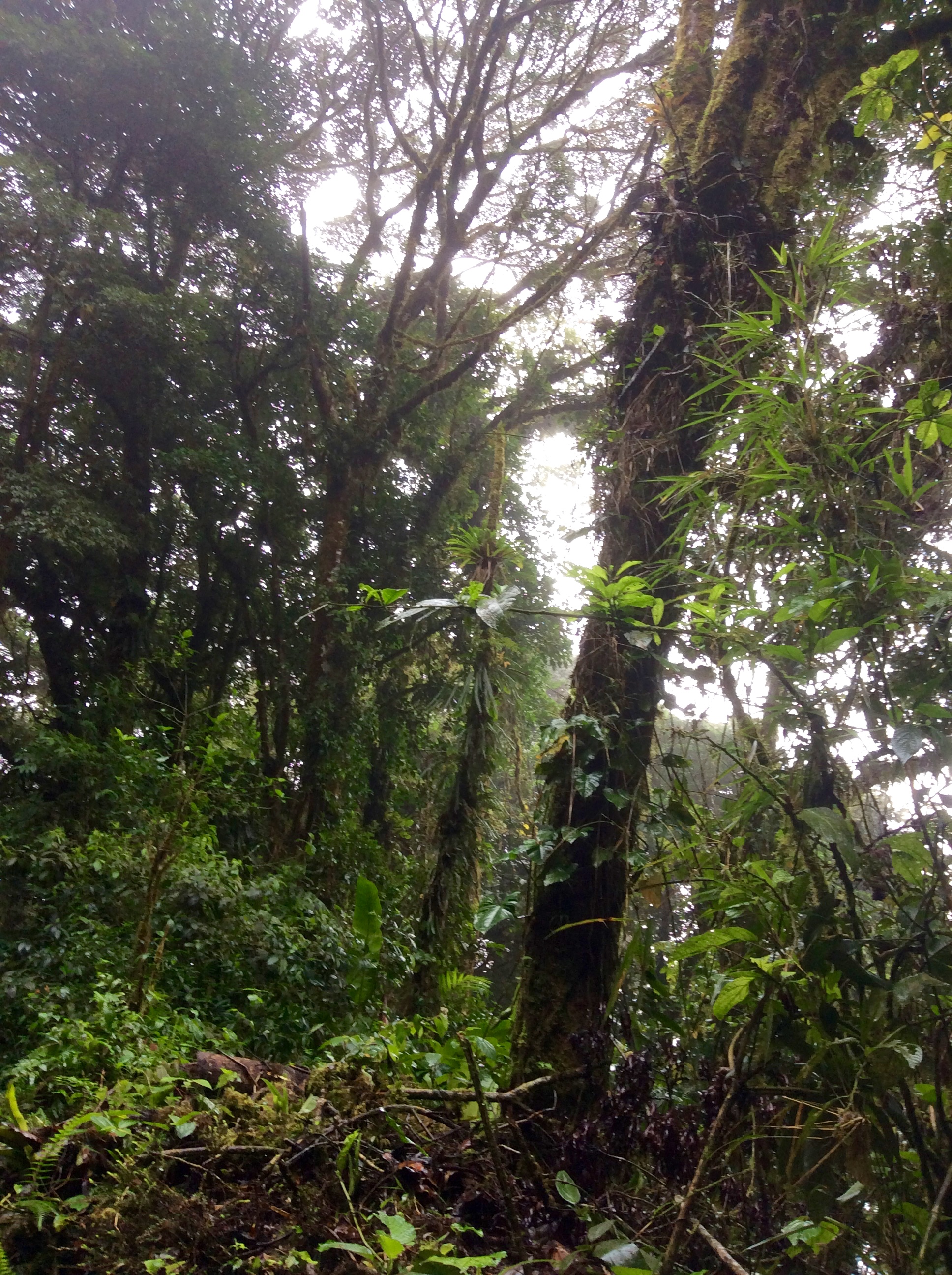
gurgling water
redwoods sighing
peace


Note: All the plants in this 78 acre garden are native to the area including the coastal redwoods.
Joan, the main character, is an astronomer obsessed with the stars since childhood. She is content with her life as a physics professor until she sees an ad seeking the first women scientists to join NASA’s space program. While her initial attempt fails, she applies again and succeeds.
In the summer of 1980, she begins her astronaut training at Houston’s Johnson Space Center, along with other trainees, including some from the military and others chosen because of their specialist expertise. She is one of those. Some of the top military pilots are nice and some like to make jokes at the expense of women. The women know they won’t all be chosen to go to space. As a consequence one woman in particular becomes excessively competitive. Others help each other and hang out together.
The novel details the rigor of astronaut training both mentally and physically, how trainees behave under stress, and how all the stress makes some people nicer and others increasingly rude. In the midst of all this Joan continues to care for her beloved niece and discovers a love she never dreamed of in her wildest dreams.

This is my first Murakami novel; it will not be my last. It’s fascinating and profound. A 15 year old boy, Kafka, runs away from home. His mother and older sister disappeared when he was four. He does not remember them. His father, a famous sculptor, ignores him. Although they live in the same house, they rarely see each other. After running away, he finds a private (but open to the public) library in another city and is taken in by the two people in charge of the library.
Nakata, another main character who is an elderly man, is not very bright due to a bizarre event that sent him to the hospital in a coma when he was a child. He talks to cats and makes fish and eel fall from the sky like rain. He becomes friends with another principal character, a young truck driver, who helps him out because Nakata reminds him of his grandfather.
The novel portrays the lives of these characters through their actions, dreams, and fantastical events. The unreal becomes real and people learn about their true selves through these events.

This is a sort of travelogue, memoir, and recipe book. The author begins in Odessa and travels south from there to the port of Constanza in Romania as well as various other seaside towns in Bulgaria, then to Istanbul. After spending more time there she heads east to all the ports and some inland cities near
Turkey’s Black Sea coast.
I hope to learn new information and become a little more enlightened when I read–especially when reading non-fiction. This book did not disappoint. Here are a few of the things I learned:
-Odessa is a very old and once a very international city. At one point it had the second largest Jewish population in Europe. Now only about 1/3 of the residents are Jewish. Many of the restaurants serve traditional Jewish food even if not Jewish. Once in the past, Mark Twain visited there and made it famous for its ice cream.
-In Constanza, Romania, she witnessed a huge Navy Day celebration with booming gun salutes. Once upon a time, this city was famous for its Casino which now is just a glorious ruin. Here a breakfast mainstay is polenta with a mushroom topping. The author apparently liked the food because this section contains more recipes.
-Varna is the main seaport city in Bulgaria. The author’s main quest here was to see the gold, yes, gold. Once upon a time, this city was a major Roman port. Now the Museum of Archeology houses a spectacular collection of ancient gold. “Breastplates, bracelets, burial gifts, regal-looking head pieces, figurines, and pendants–all gold–shone for attention. The silent Midas room was deafening, ringing out with finery, treasure and opulence. And the loudest, biggest treasure of all, was the smallest. Tiny pendant earrings, almost inconceivably old, dating back 6000 years….these earring are the oldest ‘worked gold’ in the world. They belonged to the first known culture to craft golden artifacts, and they lived here, on Bulgaria’s section of the Black Sea in what some archeologists consider the oldest prehistoric town. But it was not gold that made this area wealthy; it was salt which was mined nearby. The world salary comes from the Latin word ‘salarium’–a Roman soldier’s stipend to buy salt.
-She goes to Istanbul and then on to Turkey’s Black Sea towns, Amasra, several a bit inland, Sinop, Trabzon, and Rize. Sinop has a particularly good harbor. There is a saying that the Black Sea has three safe harbors, July, August, and Sinop. This is in an area often targeted by Cossacks who crossed the Black Sea to raid these more prosperous areas. The town also houses an infamous prison where Russian convicts taught Turkish cellmates how to make model ships for which the town is now famous.-More than 3/4 of the world’s hazelnuts are grown in this area of Turkey. However, that did surprise me as much as the tea, yes, tea. When I think of Turkey, I think of that thick, strong Turkish coffee. However, Turkey is the fifth largest grower and exporter of tea in the world. The tea grows in the fog and mist on steep slopes that end at the sea. Several photos in the book illustrate the lush green mountains covered in tea bushes.
-When I think of Hagia Sophia, I think of the spectacular building in Istanbul, the one that has withstood invasions and earthquakes. But there is another one. On the western edges of the city of Trabzon, there is a smaller, more tranquil Hagia Sophia, one of the Black Sea area’s most spectacular monuments. It was built as a church in the 13th century, converted to a mosque, then to a cholera hospital, then a museum and finally back to a mosque in 2013. The ceiling and walls are covered with frescoes that for a long time no one knew existed until they were restored.
In addition to all the tales of her adventures and the ordinary people she meets, the book is filled with recipes that are specialties of the areas she visited. I’ve taken some ideas from several to experiment with new dishes like combining Swiss chard and sultanas (golden raisins) with chopped onions and garlic sautéed in olive oil and served over Basmati rice.

–
–
“What’s an army anywhere but a bunch of state-sanctioned mass shooters funded by our tax dollars. Do the deed as a civilian and you get the chair, do it as a soldier and they’ll pin some tinfoil your chest.”
“To be alive and try to be a decent person, and not turn it into anything big and grand, that’s the hardest thing of all. You think president is hard? Ha. Don’t you see that every president becomes a millionaire after he leaves office? If you can be a nobody, and stand on your own two feet for as long as I have, that’s enough…People don’t know what’s enough. That’s their problem. They think they suffer, but they’re really just bored. They don’t eat enough carrots.”
In a rather ordinary, small, dismal Connecticut town an elderly woman, suffering from dementia, saves a 19 year old boy from committing suicide. She takes him in and this act of kindness transforms both their lives in unexpected ways. While taking care of her, he also finds a job at a local fast food restaurant where his cousin works as well as several others whom many would consider lesser people. They help each other, form tight bonds, and develop unlikely friendships that reveal how caring and empathy can make all the difference in people’s lives.
This novel is touching, sad, and joyful all at once. These are poor ordinary people trying to survive the best way they know how. For many readers it will be a glimpse into the way many people in this country (and, indeed, the world) actually live–poor, struggling to survive, but also kind and caring.

I enjoyed the previous book by Caroline Eden so much I searched for this one. I doubt I will ever make it to Samarkand or Tashkent, places sort of on my bucket list, so what I do is read everything I find about these fabled cities on the Silk Road. The sub-title of this one is “Recipes and Stories From Central Asia and The Caucasus”. It starts with Samarkand and the story of Tamerlane, the legendary hero who conquered a lot of this area and a large portion of surrounding areas in 1370. He was a military genius who loved chess and made up his own chess game with twice the number of pieces.
What foods show up in both the stories and recipes? Beets, fruit–dried and fresh for which the area is famous, tomatoes, cucumber, pomegranates, cabbage, lentils, rice, lamb and mutton, and all sorts of kebabs and flatbreads. I learned there is a huge beach on Lake Issyk-Kul in Kyrgyzstan. It is one of the world’s largest alpine lakes and in summer people from Russia and all over Central Asia flock to its shores. People who own guest houses there make all their money for the entire year in the brief summer between mid-July and mid-August.
In the remote mountains of Azerbaijan lies the small town of Gyrmyzy Gasaba above the Qudiyaleay River, a town where all the people are Jewish. Even though Azerbaijan is a predominantly Shia Muslim country, the people in this town have peacefully lived here for hundreds of years. This town is considered the last surviving pre-Holocaust Jewish town untouched by WWII.
If you are a lover of apples, then consider this country, Kazakhstan, the place where apples originated. All apples in the world today come from the original apples here. The name of the largest city, Almaty, whose older name was Alma-Ata means fatherland of apples. In Ile-Altalan National Park on the northern slopes of the Tien Shan mountain chain thousands of acres of wild apples flourish.
Even though this book was published less than ten years ago in 2016, a lot of people must have been interested in reading the stories and recipes because the copy the library found for me is not in the best condition. Before I return it, I will copy some of the recipes to try.

The novel fascinated me in so many ways, the style of writing, the subject matter, what I learned about some famous paintings and especially Turner. I will never see works by Turner in the same way as I previously did. Before mostly I noticed the colors, the translucence. I totally missed the details and the violence nearly hidden.
The novel takes place after an ecological collapse in England where first violent floods occurred followed by a devastating drought. Now it has not rained in three years and Penelope, the main character, spends most of her time working as an archivist for the notable collection at a soon to be demolished estate in the English countryside. She has lived here for two decades with her current partner, Aidan, who owns the estate. The disasters have nearly destroyed the once magnificent mansion. Now Penelope and Aidan allow refugees from the disasters to live there with them as they transition to new places and housing until the new buyers demolish the place.
Most of the novel is Penelope’s diary, what she writes about her life present and past. In the midst of this her archivist notes appear as well as descriptions of famous paintings, most of which show women being brutalized in one way or another, e.g. The Abduction of the Sabine Women, 1633-34, Nicholas Poussin. Later in the novel there are segments from the viewpoint of Aidan’s brother, Julian, who previously owned the estate and with whom Penelope experienced a violent and disastrous relationship.
This is a tale of survival, redemption, memory, and art as a means of renewal. I liked this novel so much that I spent time looking up the art the protagonist describes, researching Turner, writing down passages, etc.

While reading the novel “Landscapes” this afternoon, this passage struck me: a man, recently blind, explains, “I rely on my other senses. I get by. But in another way I’m not sure I ever knew where I was headed, not even when I had eyesight, you know what I mean? I doubt anyone really knows where they’re going. But you walk ahead anyways, no?”
This caused me to reflect on a video I saw earlier in the day at Mendez High School where I work for College Match LA. The purpose of the video was to help students address what they will write about in their college essays, how they will write about themselves. It’s called “Essence Objects”. The task is to think about various objects you would put in a box, objects that represent how you see certain things or people, how you think. Here are some examples:
The list goes on and on, thought provoking questions. I don’t have to write a college essay but I’m going to go over the whole list and think and think and think.

Note: I picked this photo because the objects that make me think of my mother are roses. She had a rose garden in front of the barn on our Missouri farm. All summer when the roses were blooming, she floated roses in a glass bowl on the kitchen table where we ate.
The last two books of hers that I read were set in the more recent times when Salvador Allende and later Pinochet were presidents of Chile. This one dates back to the 1800s and the Chilean Civil War. In 1866 a nun of Irish descent living in San Francisco has a passionate affair with a Chilean aristocrat and becomes pregnant. He abandons her; their daughter becomes the woman in the title of this novel. She is raised by a loving step father, an intellectual teacher from whom she learns to be independent and defy societal norms. At a young age she becomes the writer of short pulp fiction novels using a fake male name. The income from these helps her family live a reasonably good life.
Bored with writing these lucrative little books, she convinces a San Francisco newspaper to hire her as a journalist where she works along with a more seasoned journalist, Eric Whelan. Eventually, the two are sent to Chile to cover the civil war and violence occurring there. She sees this as not only an opportunity to satisfy her adventurous spirit but also an opportunity to find her biological father. She encounters dangers, almost gets killed, and sets off to find herself in the far southern reaches of the Chilean wilderness, learning from the indigenous people who live there how to survive in remote mountains.
Note: One of the places she goes was nearly impossible for non indigenous people to find during the 1800s and many never made it. Today, it is a popular area for hiking, camping, and exploring nature.

Travel the World 4 Less
A Glimpse into My Life & Passions
Ceto-Magoism, the Whale-guided Way of WE in S/HE
Exploring the F-word in religion at the intersection of scholarship, activism, and community.
ANCESTRAL FOOD. HERBAL WISDOM. MAGICAL COOKERY. SEASONAL CELEBRATION.
inesemjphotography
politics, engineering, parenting, relevant things over coffee.
Food is the best expression of every emotion. Explore through my reviews, recipes, events and more.
Smile! A Site for Friends Wherever You Are!
inspiring personal growth through poetry and writing
Combining atheism with whimsy. This is a Fair and Balanced blog based on opinion unencumbered by fact.
Odds and ends ~ My Life
Original poetry, commentary, and fiction. All copyrights reserved.
bripike@gmail.com
A wildlife filmmaker in Africa
A Geeky Feminist's Musings On Pop Culture
"5 minute walks"