September 1, on the Rim of Wonder


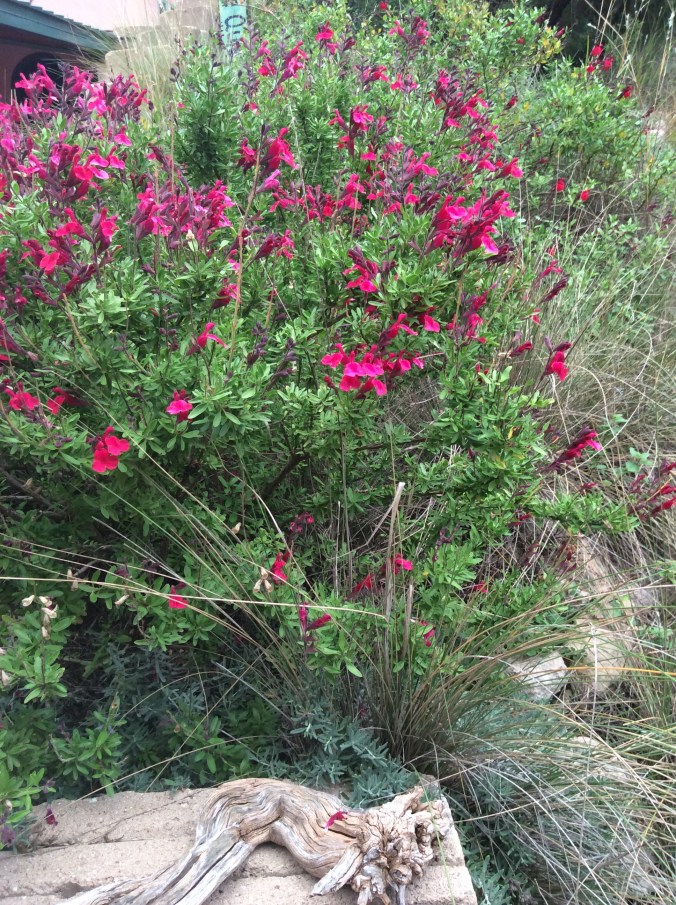
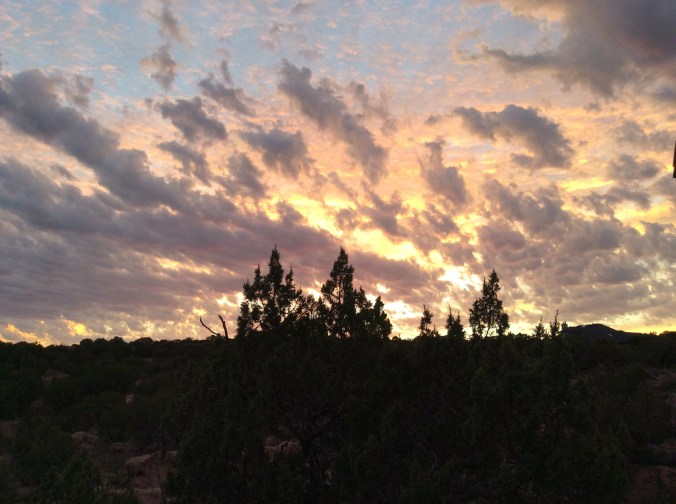
Sunrise

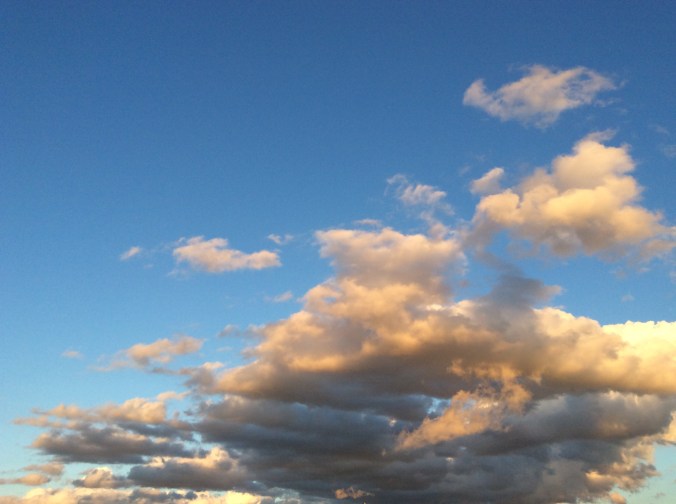
Dappled clouds

Owl hooting

Wren climbing

IMG_3489

IMG_3486

IMG_3487

Later, I graded papers and watched part of John McCain’s funeral, some of which almost brought me to tears.  I often disagreed with him but never did I question his passionate love of country, his courage, his willingness to buck the norm, to defy convention when he thought it was the right thing to do.  I think he and I shared certain values on which this country is based even if the country as a whole rarely lives up to them.  These include the conviction that all people are equal, that everyone deserves justice, and each person carries the right to find his or her own share of happiness without judgment and condemnation from others who may think differently.

Later, while working on the latest book I am writing, I found handwritten recipes written by my grandmother, my mother’s mother, Nellie Narcissus Duke (Kaiser),whose father came here from Switzerland as a child.  One, for dumplings, remains readable.  The other written in pencil on the front and back of thin paper is fragile.  It is for Strawberry Shortcake.  If Grandmother Duke ever made dumplings, I do not remember it.  Mother did–chicken and dumplings.  I wonder if she used this recipe.  I do remember conversations about the shortcake because Dad did not like strawberry shortcake even though he liked strawberries.  I took photos of these two recipes written decades ago in my grandmother’s handwriting.

IMG_3492IMG_3493

IMG_3494


Black Raspberries


Mom filled the white bowl with black raspberries.

I pour Bossie’s white milk over them,

watched it form a pattern,

flowing around the raspberries–

a design in deep purple and white.

I thought it almost too beautiful to eat.

I was seven.

Now I rarely find black raspberries.  Red ones won’t do.  They lack intensity, the beauty.  Every year we went to Hunt’s Orchard north of Amazonia, Missouri, to buy black raspberries, took them home, sorted to discard the imperfect ones, then threw them way behind the garden next to the timber–huge trees, oak and hickory.  Eventually, these imperfections transformed into thriving black raspberry bushes.  We had our own patch, created from the discarded, the imperfect.

Mom fed us fresh raspberries for a few days.  The rest she used to create her famous pies, froze a freezer full.  Baked, they transformed a winter kitchen into the warmth and sweetness of my mother’s family devotion.

I bake pies, many kinds of pies.  I have never made a black raspberry pie.


12193406_10204105678156113_6043720938154804167_n

Note:  this will be published in an upcoming publication by the Story Circle Network.  In July my daughter, grandson, and I went to Hunt’s Orchard–yes, it still exists.  I asked about black raspberries.  We were too late; the season was over.  The timber behind the garden area was to the right in this photo.  The person who bought the land years later bulldozed down all the big trees.

Cutting Yucca


Yucca will take over if you let it.


Every summer after the blooms dry, I tackle them with long,

red-handled clippers and cut off  long stalks.

Not bothering to put on boots, I set out in black and grey Chacos,

cutting stalks in places unreachable by tractor.


I climb down to a rough area, open these long, red-handled clippers,

chop off the dead blossoms, then look down.

She lies there, her body slightly bigger than the size of my upper arm,

fat, not long.

A snake stretched out, only 1/8 inch from the front of my Chacos.


I look again.  Crap.  She’s a rattlesnake, one of those short,

stout prairie rattlers, perfectly blending with the grey and brown

rocks and soil.


Slowly, I inch backward, taking care not to fall on the steep slope.

When several feet away, I run to the barn, grab two shovels off their hooks,

run back.  She’s gone.  I search everywhere around.


I never find her.


SAM_1546


The Clerk


He’s gorgeous!


I walk into the department store,

plan to pay a bill, order a griddle for the new stove,

see a bald headed 30 something with a big, brown beard.

He is not what I get.


A younger man walks up, “Can I help you?”

Explaining what I want, I look.

Wow.

Caramel skin, five inches taller than I,

obsidian ringlets falling, not long,

cut short to a form a big ball, a glossy poof.


He’s not too thin, not too chubby.

Just right.

Straight nose, not too long, not too short.

Just right.

Arched eyebrows, oval face.

Just right.


He’s drool worthy.

It’s ridiculous.  I’m old enough to be his grandmother,

maybe older.


Do we ever get too old to look, to appreciate?


Missouri Roadtrip-the Home Place


6CC097FA-6B1F-4C37-8170-6026A42B8C30This is he house where I grew up north of Fillmore, Missouri.  My dad lived here in this house from 10 year old to 90. He died in the month after his 90th birthday.  The house stands on the land my great grandfather established after he arrived from Switzerland in the mid 1800s.

3A97C88F-30A5-4A32-99E3-5E4D8E1172F5This is the only building left at the site of my grandparents original house and barns.  It is an old carriage house.  In this photo my daughter and grandson are taking a look.  One of the original stained glass transome windows from the house hangs in my own house. My grandparents were Lilliebelle Werth and Pleasant Lightle.
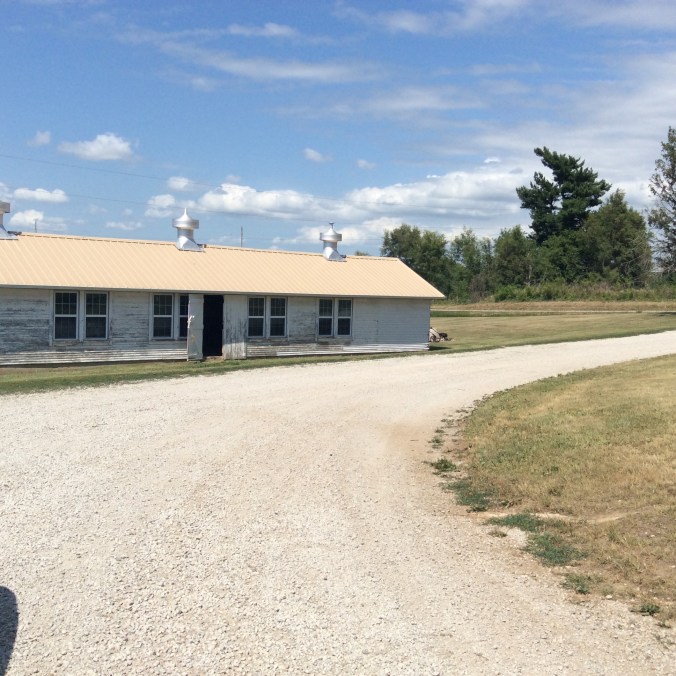
 

D44A6726-4FF1-4FB0-9F89-47F7E7C98391When I was a child, this was once a chicken house but mostly the farrowing house for our registered Hampshire hogs.  Later I learned that when first built during Prohibition, Dad held dances here which the sheriff checked to make sure there was no alcohol.
5776CE1A-1C1F-4232-BFE4-50F8B1387533

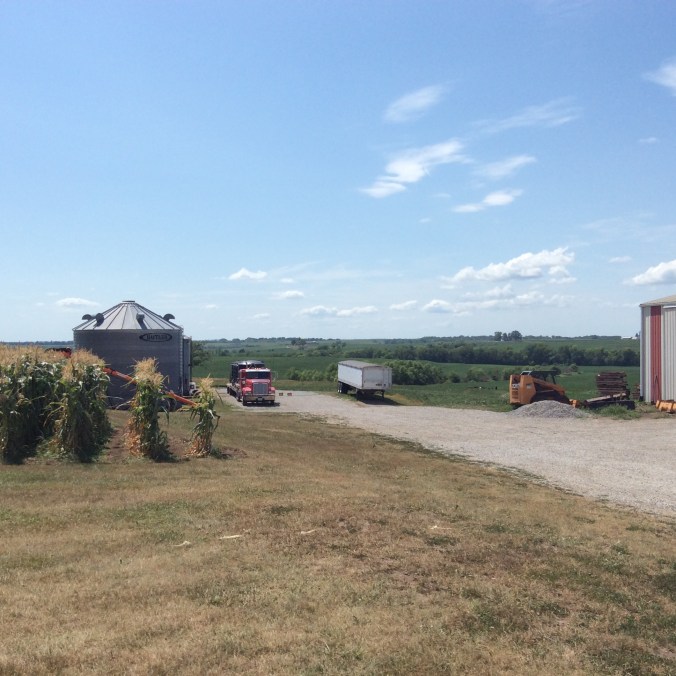
This is corn and soybean country. The view reaches across the land from the back of the home place.  We met the young couple who own the house now. They keep everything spic and span just like my parents did.  I am grateful.


050EC16C-195A-4404-8DF0-81DF5434F71E

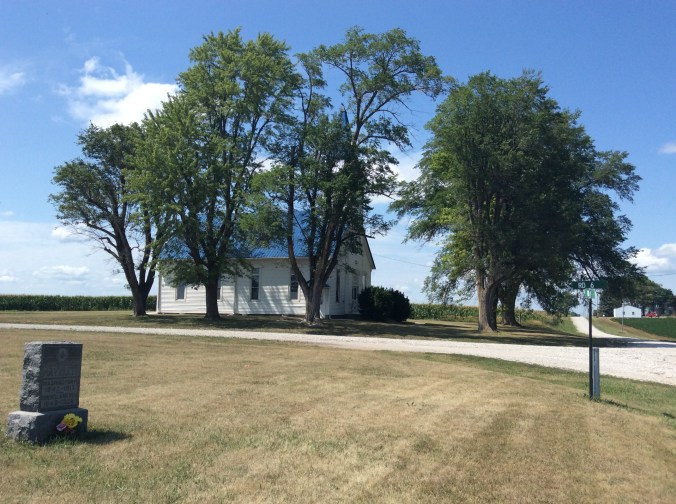
Antioch Christian Church where we attended church when I was a child.  My mom’s fruit pies were famous here.

Argentinian Adventure–Cafayate in the Calchaqui Valley


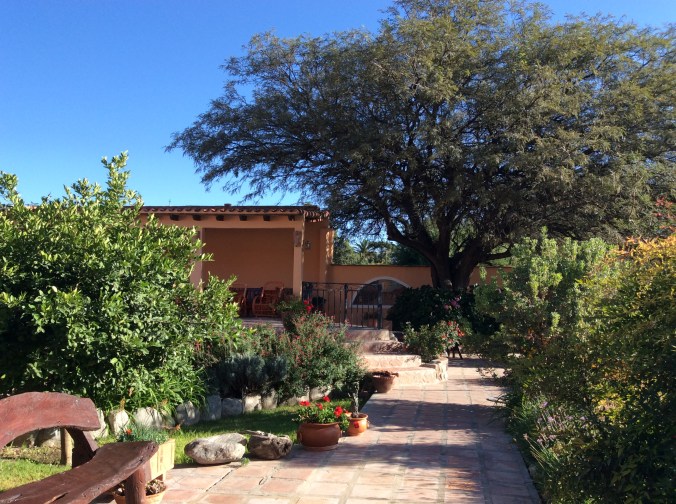
One of the highest wine growing regions in the world exists in northern Argentina in the Calchaqui Valley.  This lovely hotel where we spent the night reminded me of New Mexico.

IMG_3149

The hotel garden.

IMG_3155

The ceiling above the walkway.

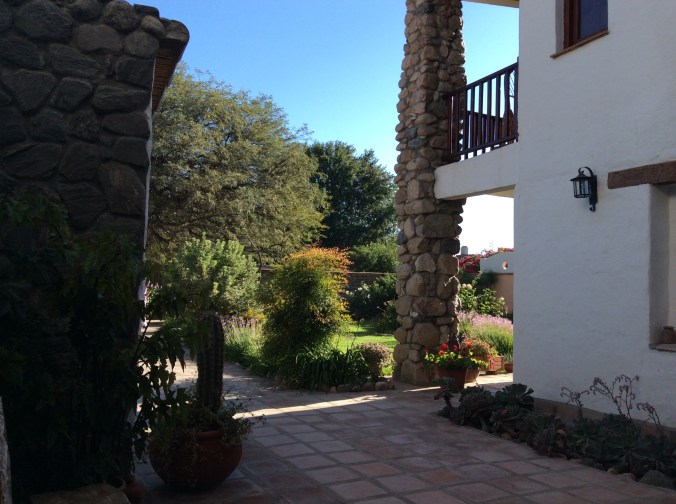
IMG_3150

The walkway from the garden to the front of the hotel.  Spanish colonial architecture and design seem much the same everywhere.

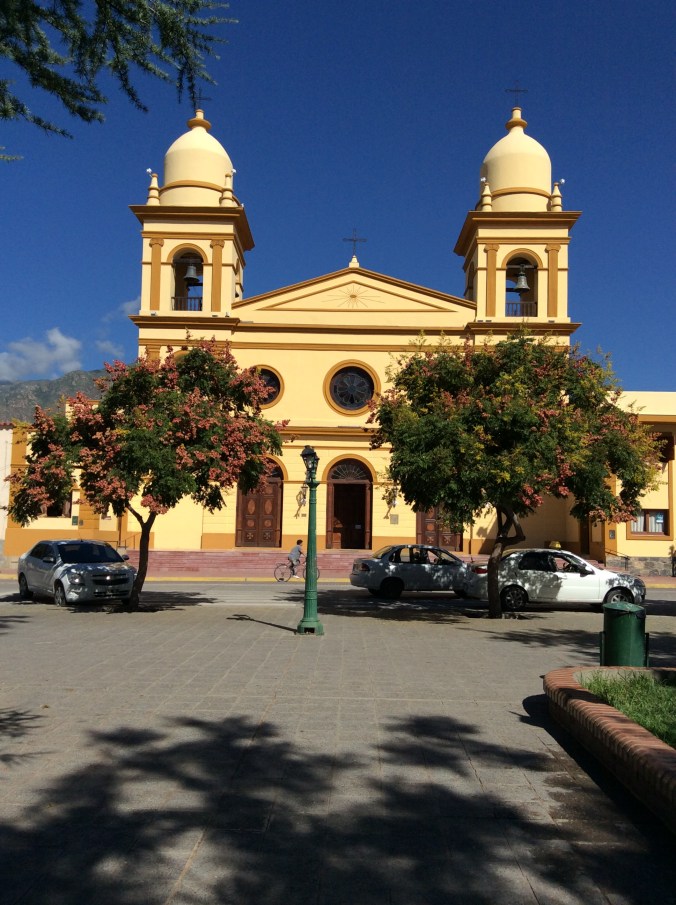
Cafayate is small and lovely.  Like every other city, it too has a square with a church on one side. We went there instead of Mendoza, the city most people in the US associate with Argentinian wine, because Hugo, Gaston’s dad, prefers the wine from there over that from Mendoza.

IMG_3158

The church on the square in Cafayate.

IMG_3159

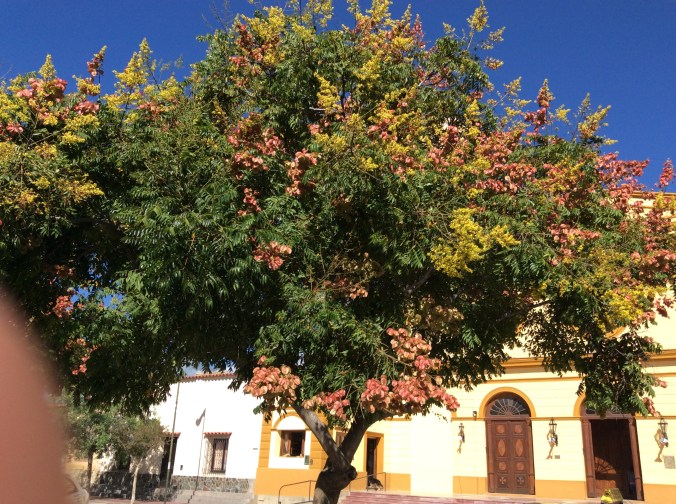
Many trees were in bloom there.  Gaston’s mom and I collected some seeds from this one and I have two plants growing in pots at my house.

IMG_3156

More colonial architecture.

Although most of this valley is filled with vineyards from one mountain range to the other, I did see fields as well.

IMG_3204

Behind the hotel where we parked the truck, the guy was raising fighting cocks.  I never had the chance to take of photo of them.

IMG_3205

After a leisurely breakfast at the hotel, we needed to the oldest winery in the valley.


Flowers–Texas Panhandle Tough


In spite of only one inch of rain since last autumn, many flowers persist:  sundrops, black foot daisies, chocolate flowers, wine cups, primrose, desert (Mexican) birds of paradise, red yucca, salvia, catmint, native grasses, milkweed.  I took these photos after feeding the horses this morning.

IMG_3332

IMG_3334.JPG

IMG_3335.JPG

IMG_3336

IMG_3337

IMG_3339

IMG_3340.JPG

IMG_3341

IMG_3342

Argentinian Adventure–The Road to Wine Country


Late on a Monday morning, Gaston’s parents and I headed toward Cafayate, a relatively small town at the edge of the sierra which grows some of the best wine grapes in the world.  It is a long drive through incredibly varied landscapes.

IMG_3113

One of the first towns we drive through is Jesus Maria.  As in many Argentianian cities, trees line many streets.  Here acequias provide water for the trees.

IMG_3122

Except where cleared for farming–giant soybean and corn fields, much of the land through which we drove looks like this.

IMG_3124

Taken as we sped along, this photo show soybeans in the distance.  Since it seemed relatively dry here, I asked if they were irrigated.  Gaston’s father told me no, that they had developed a type of soybeans that require much less water.

IMG_3119

When I first saw this out my window, I thought maybe water, but no, this was the beginning of miles and miles of salt.

IMG_3120

Another photo taken looking through my window.

IMG_3131

And then we speed into the cloud forest. I was astonished my whole time here.  I had to idea there was such a thing in Argentina.

IMG_3141

We climbed higher and higher and stopped at a visitor’s area where displays explained the flora and fauna which live here.

IMG_3140

IMG_3138

IMG_3137

This area is a subtropical jungle.

IMG_3136

Often we drove through clouds or along the side of rushing mountain rivers. And then as suddenly as we arrived in these mountains, we were on the other side where it was dry.  The selva–jungle–stopped almost as suddenly as it began.  One side of the mountains lush and green with ocelots, all sorts of other wildlife, and on the other semi-arid country, equally beautiful but so astonishingly different only a few miles away.

IMG_3132