Hiking high trail
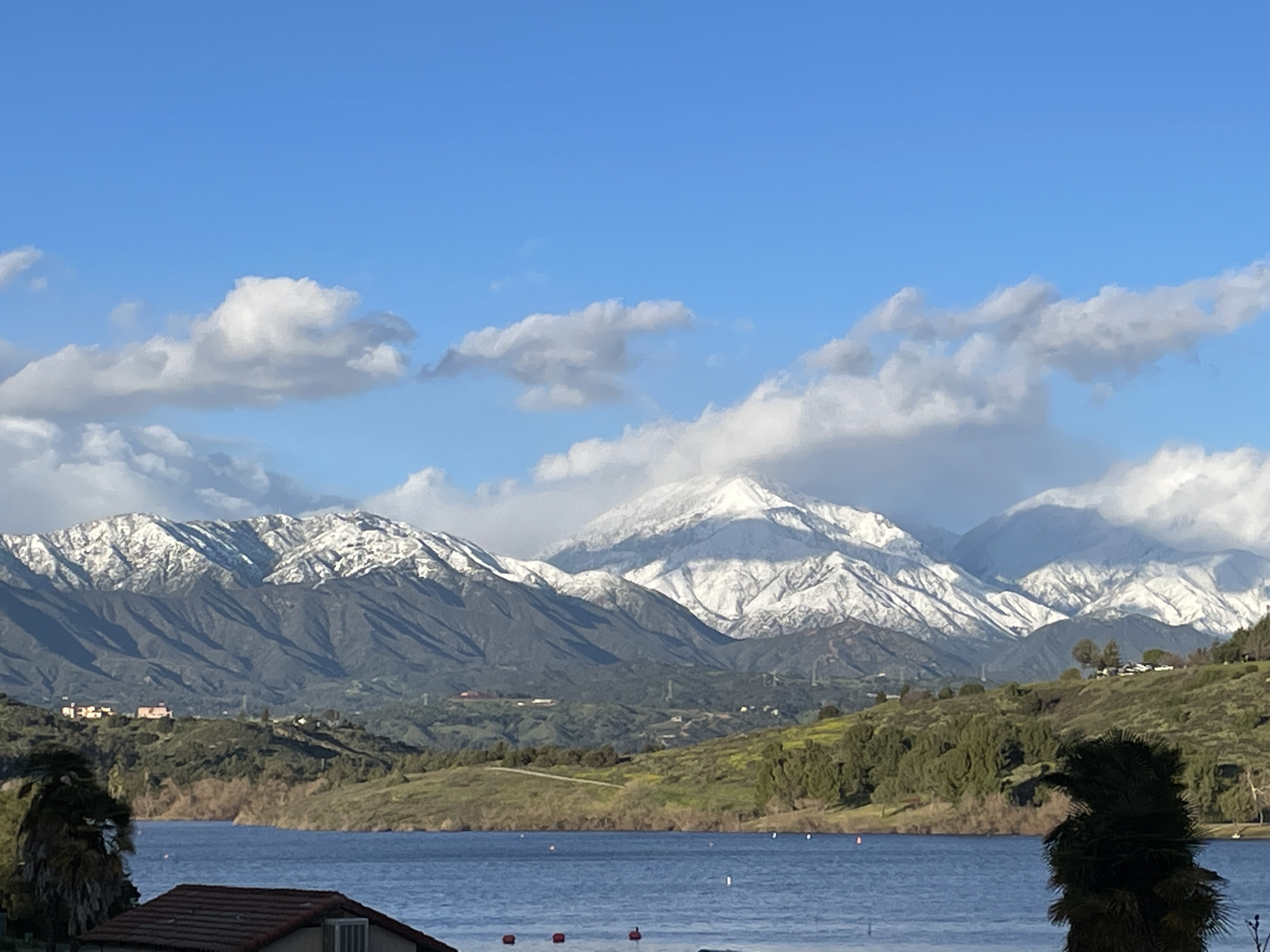
Dark clouds shroud mountains
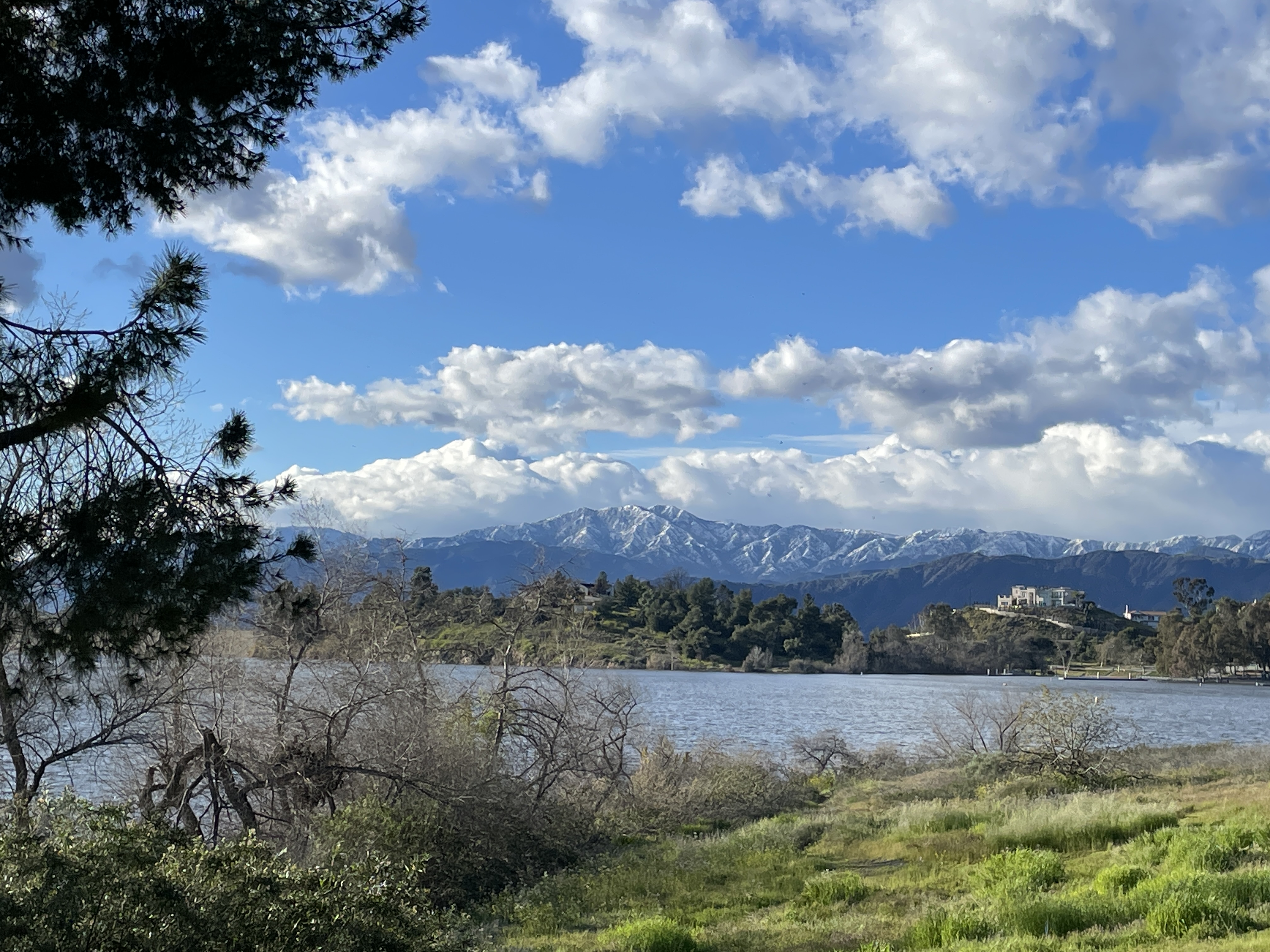
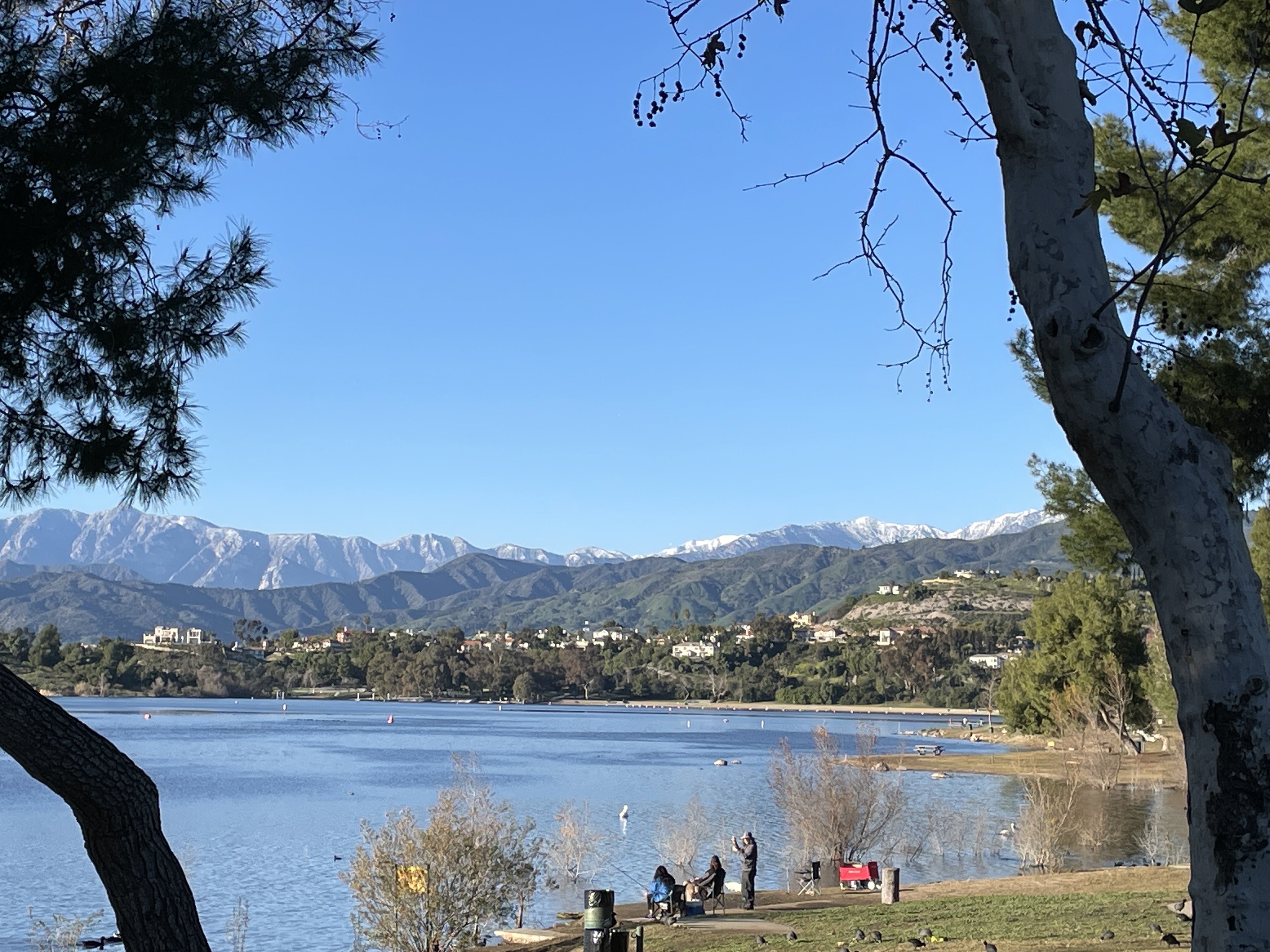
Azure lake glimmers
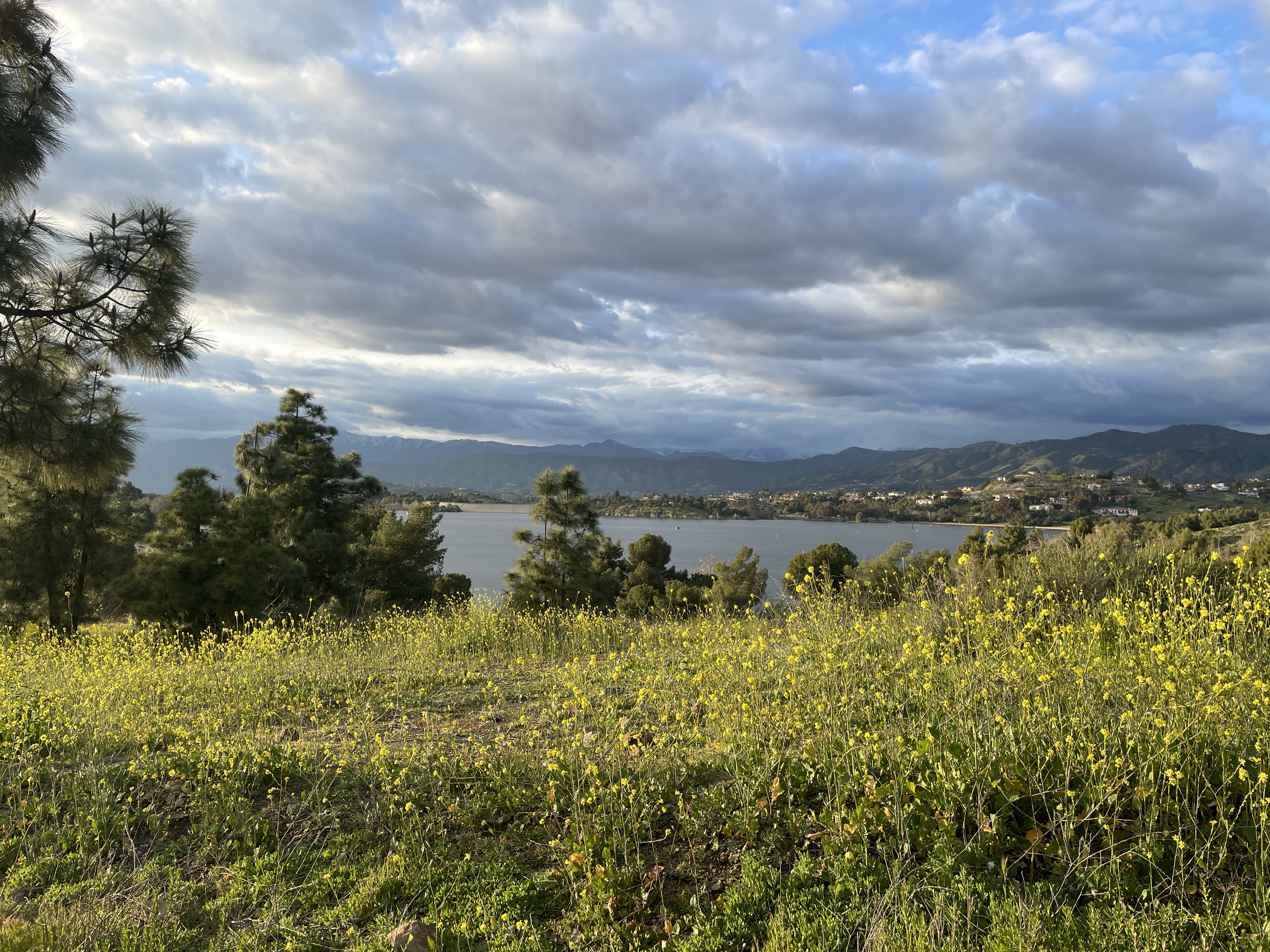

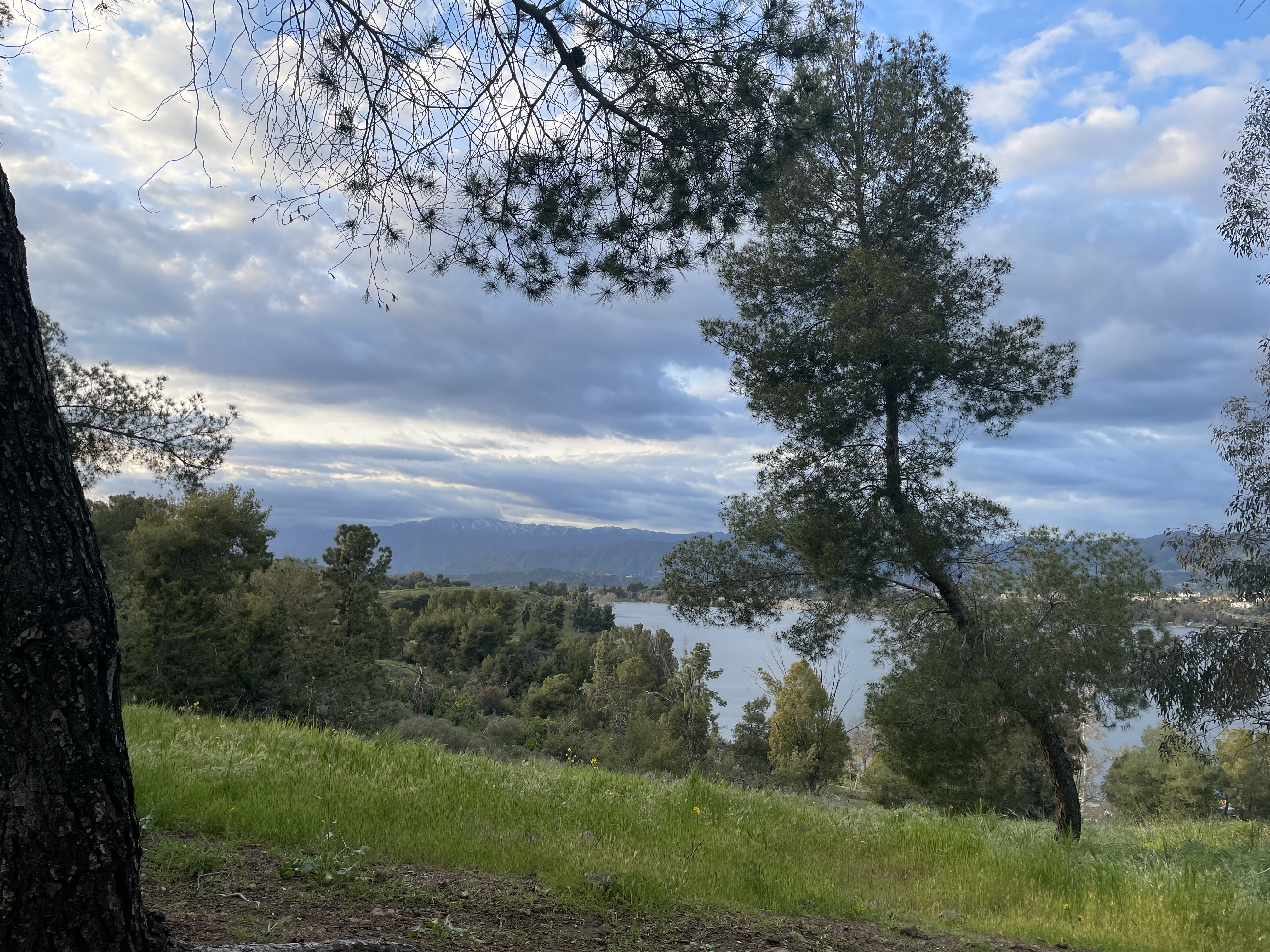


Hiking high trail
Dark clouds shroud mountains
Azure lake glimmers
Snow wonderland
Wind singing through pines
Walking in Bonelli


How to describe this unusual novel? Here’s a possible list:
-No over all plot.
-Several stories about individuals scattered throughout, e.g. read about a person and event, then many pages later back to that person and the consequences of the event(s).
-Short philosophical musings/vignettes interspersed here and there. One reviewer counted 116.
-One common theme relates to the title, Flights, in that in most of the “stories” people are traveling or have traveled on quests for “meaning” or escape from a cumbersome reality.
I learned the following from reading this book:
-Per his request Chopin’s heart was taken from his body. His body was buried in Paris but his sister secretly transported his heart in a jar of special preservation liquid back to Poland, the land of his birth.
-A Dutch anatomist discovered the Achilles tendon after dissecting his own amputated leg.
-Plastination is the method used in anatomy to preserve bodies and body parts. Several characters in the book make their living or are obsessed with this process.
This is not a book for those who prefer relaxing reading or for the “faint of heart”.
Note: The author won the Nobel Prize in literature in 2018. This book won the Mann Booker for translated literature from all over earth in 2018. I plan to read another of her books–have now read two of them–but since the other one in English is 1000 pages long rather guess it might take more than a week for me to read it. This is actually the 11th book I have read to date in 2023 but did not start blogging about them so two are missing in the blog posts,

snow blossoms
falling in pool
a song of silence

This memoir take place when the author decides to move to Paris in order to address certain “issues” related to her childhood and young adult years. She grew up in Saudi Arabia before the oil boom and went to high school and lived in Beirut when it was considered one of the best cities in the world. She had to leave when Lebanon became war torn, her dad was kidnapped, and her sister shot. Her return to the US proved traumatizing even though she is not genetically of Middle Eastern descent. Paris was filled with Lebanese refugees so she moves there in an attempt to understand what happened to her beloved Lebanon and why.
This is not an ordinary memoir. I could not stop reading it; I wanted to know what happens next and why. It includes a graphic honesty not found in most memoirs I’ve read. In addition, it contains political and historical explanations for the events that transpired during the time period of the book.
Want to learn more about the background to current events in the Middle East? Want to read about a remarkable life? Then read this memoir.

warm sun
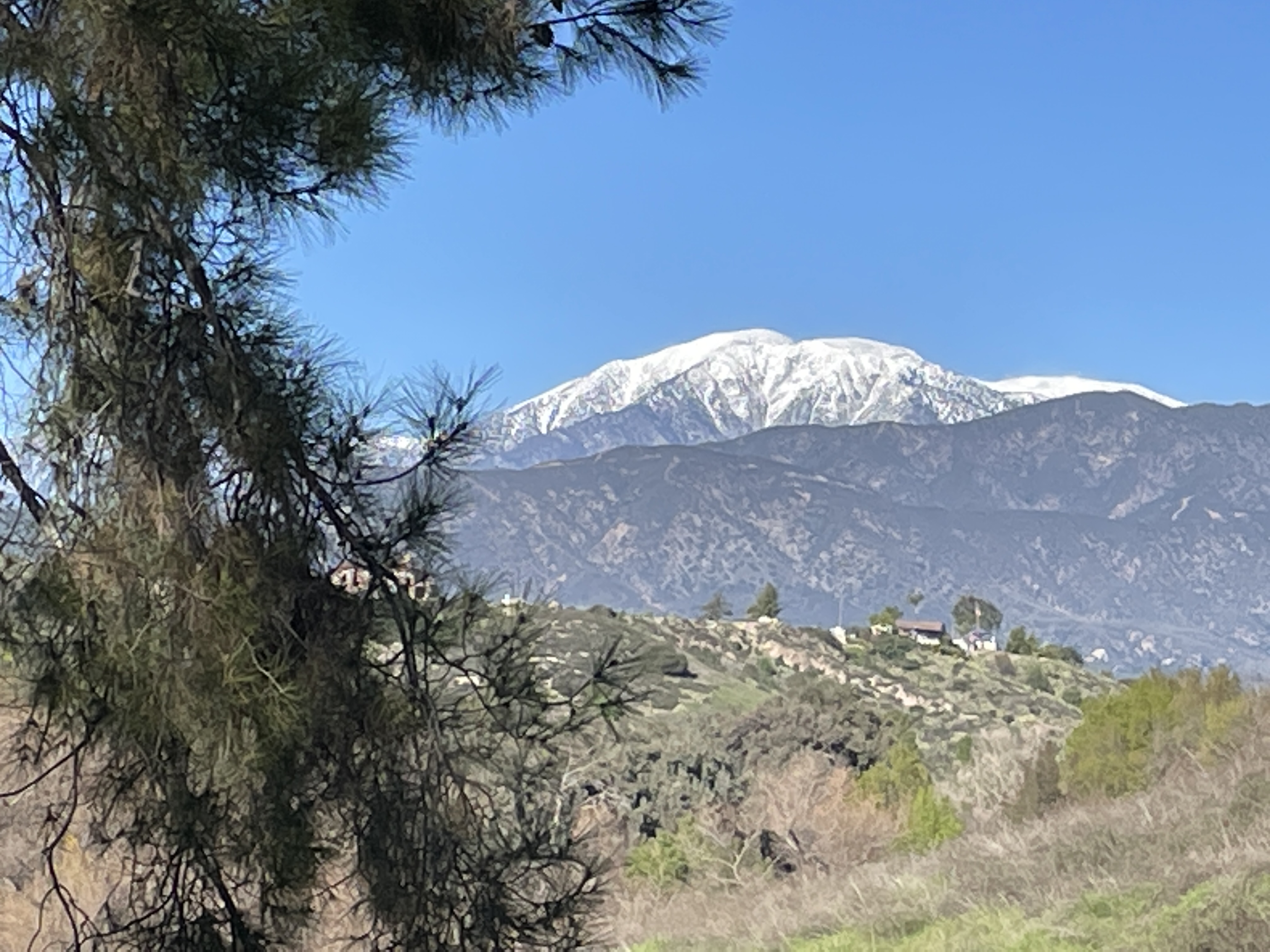
snow-capped mountains
heartwarming joy



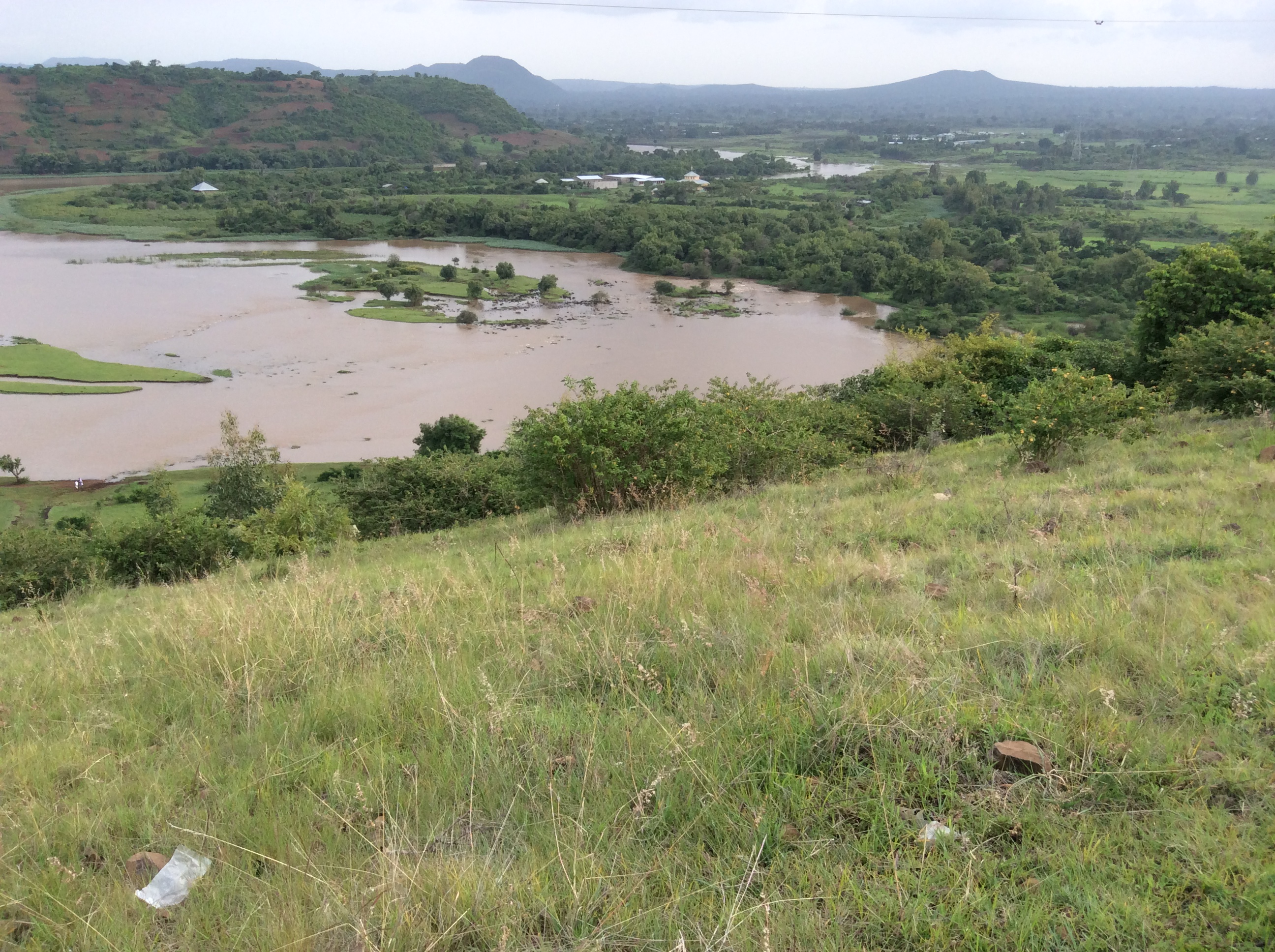
Riding hours through emerald mountains
to Bahir Dar.
We drove up a steep road,
monkeys begging near the roadside.
Car parked, we climbed a steep hill.
There she was
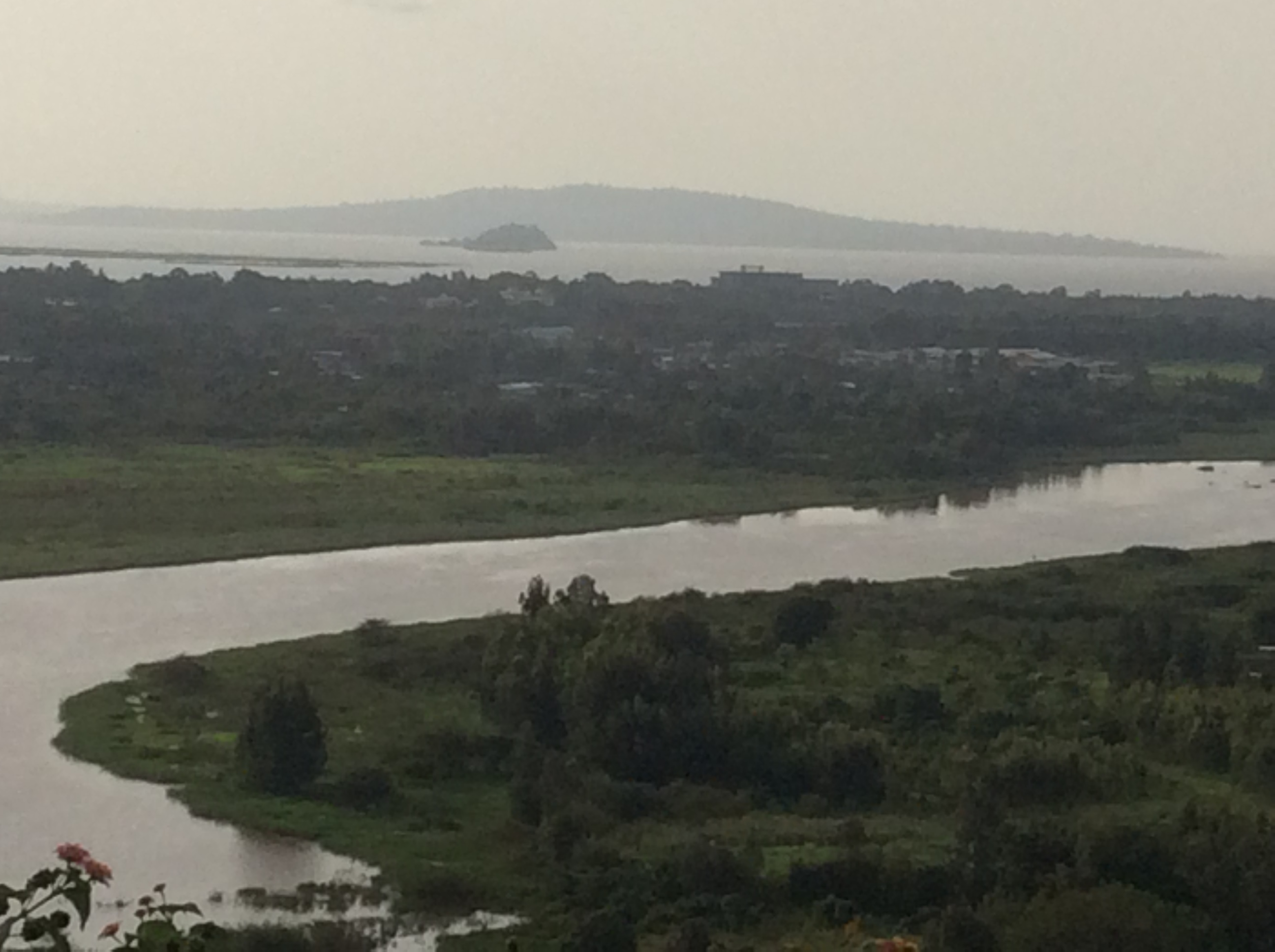
The NILE
a silver ribbon far below
grassy fields
two white robed people
walked, hippos barely visible.
The NILE
I cried,
a life’s longing fulfilled.
The NILE
Flowing from Lake Tana,
she lay below me,
the legendary river,
ancient people, ancient stories,
builder of civilizations,
of life.
The NILE.

When it first came out in 2018, I read The Overstory by Richard Powell. Finding the Mother Tree: Discovering the Wisdom of the Forest by Suzanne Simard appears to contain the endless years of detailed research and life story behind one of the characters in Powell’s novel. In fact, in her Acknowledgements, Simard thanks Powell for helping to make her life’s research more accessible to the general populace.
Simard’s book is part memoir, part detailed scientific explanations of her research and how a forest works and lives, and part how difficult it is to be taken seriously in the science world if you are female and your research contradicts the norm. She grew up in Canada. Her family made a living cutting down trees. Her family and life was and is intricately interwoven with nature. Even as a child, she was obsessed with tree roots, crawled around on the forest floor to see what lived there. A specific fascination was all the types and colors of fungi that grew just under the surface. Why were they there? What purpose did they serve? Later this became her life’s work, leading her to discover how trees of varying species use these fungi to communicate with and nurture each other. Of special significance are the “mother trees”, older, larger trees who provide nurturance to all the younger trees around them, recognize their kin, favoring them as they nurture all the other trees as well.
Traditionally, loggers and timber companies clear cut, then replanted with seedlings of all the same species of evergreen. It took Simard decades of research to convince them that it was not only the poorest way to grow new trees but also the least economical. For decades they saw her as some nutty woman, laughed at her research, laughed at her, even using epithets to her face. Ultimately, however, her work led to changes in how forestry is practiced.
This book relates her long struggle to save the forests. For those who are science minded, the final pages of the book contain 32 pages of Critical Sources. If you are interest in learning more about “mother trees”, go to http://mothertreeproject.org. It defines the term “mother tree” and explains how trees communicate. It also contains videos.

The second floor of the Cheech contains even more astonishing art including more multidimensional pieces except smaller than the giant one you see when you enter the building.
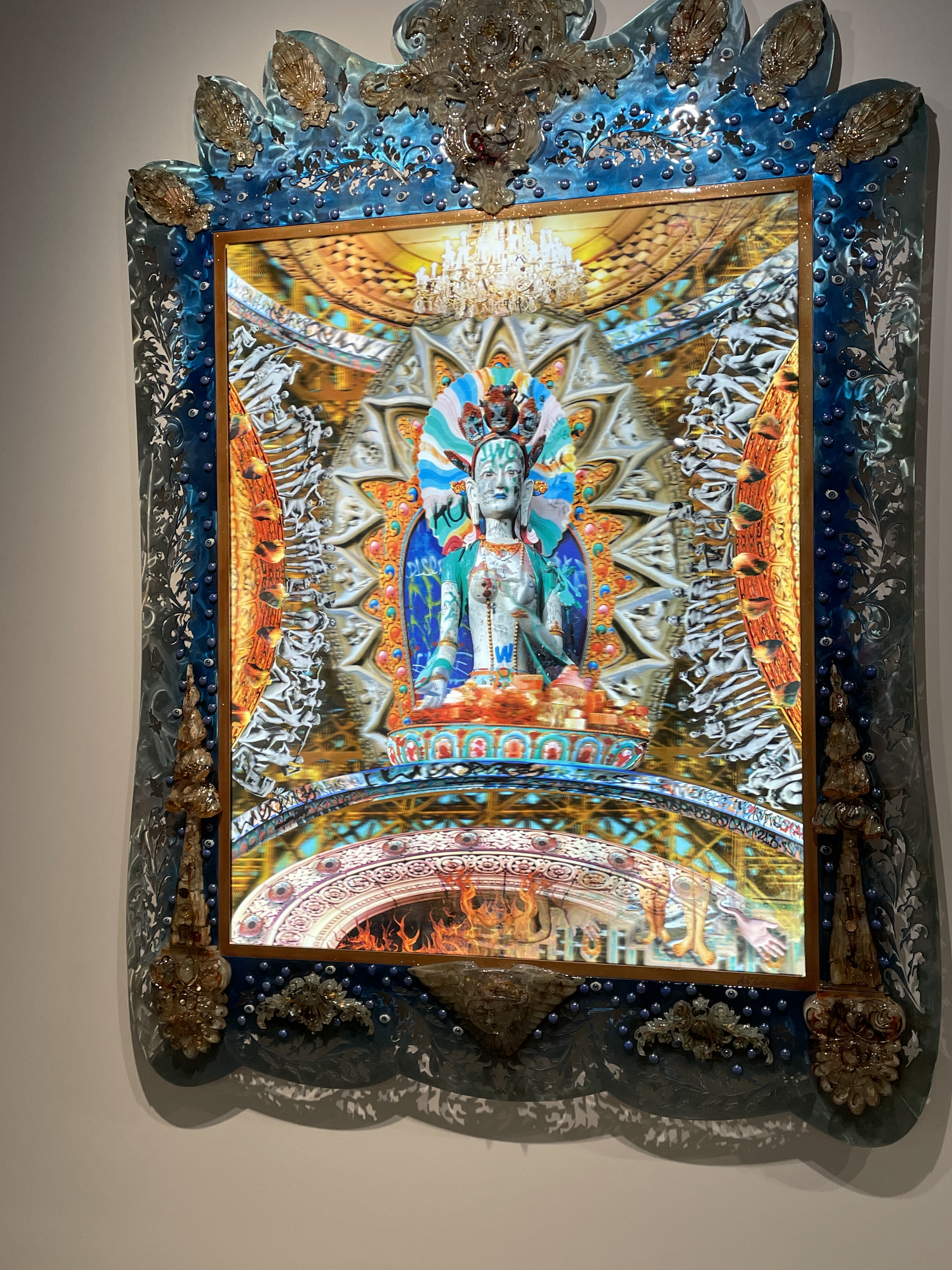


Depending where you stand in front, to either side, what you see is quite different. I kept thinking some old Flemish art or Hieronymus Bosch meets modern technology.
Much of the art makes a social or political statement especially about colonization, culture, poverty.

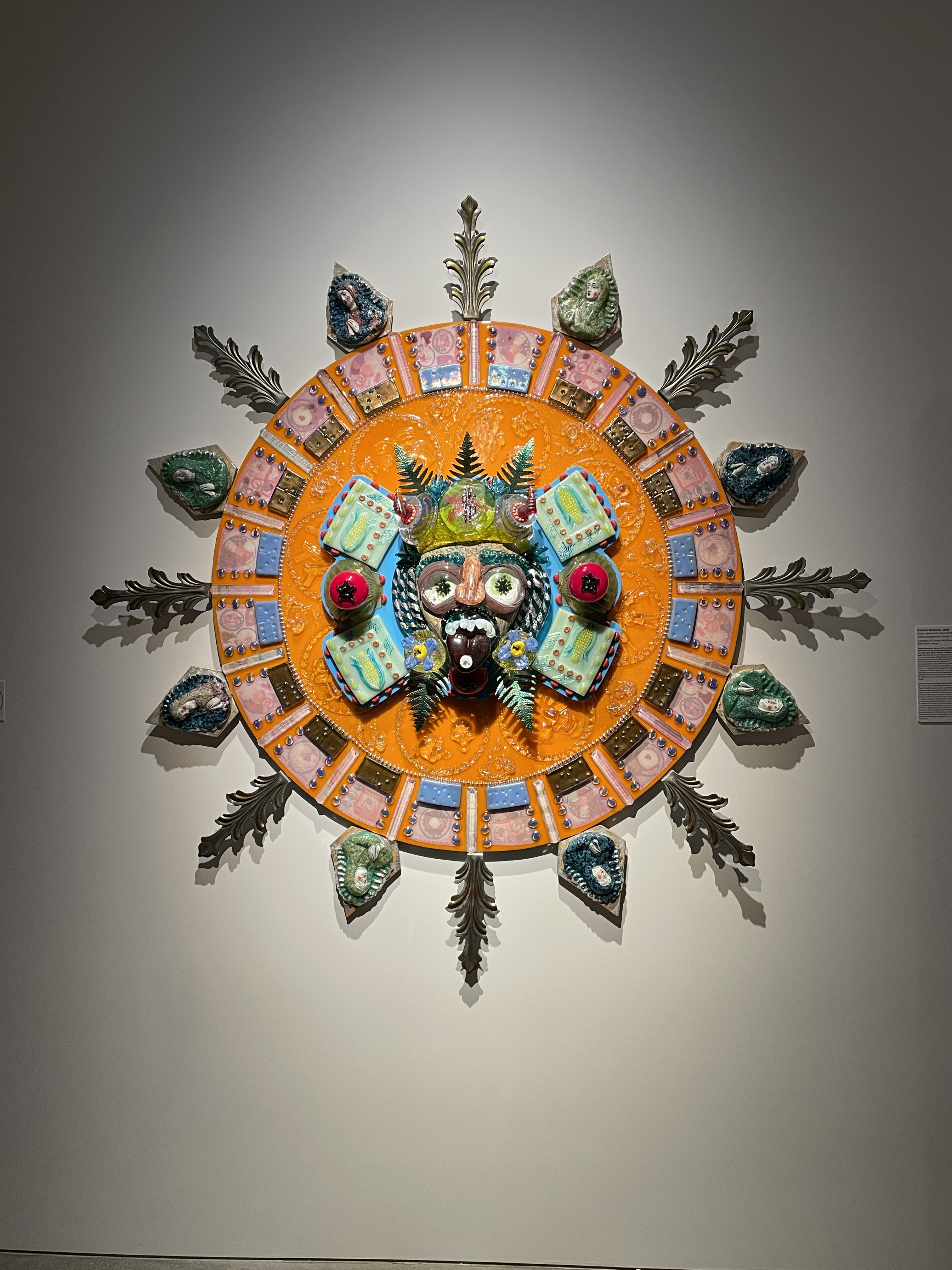
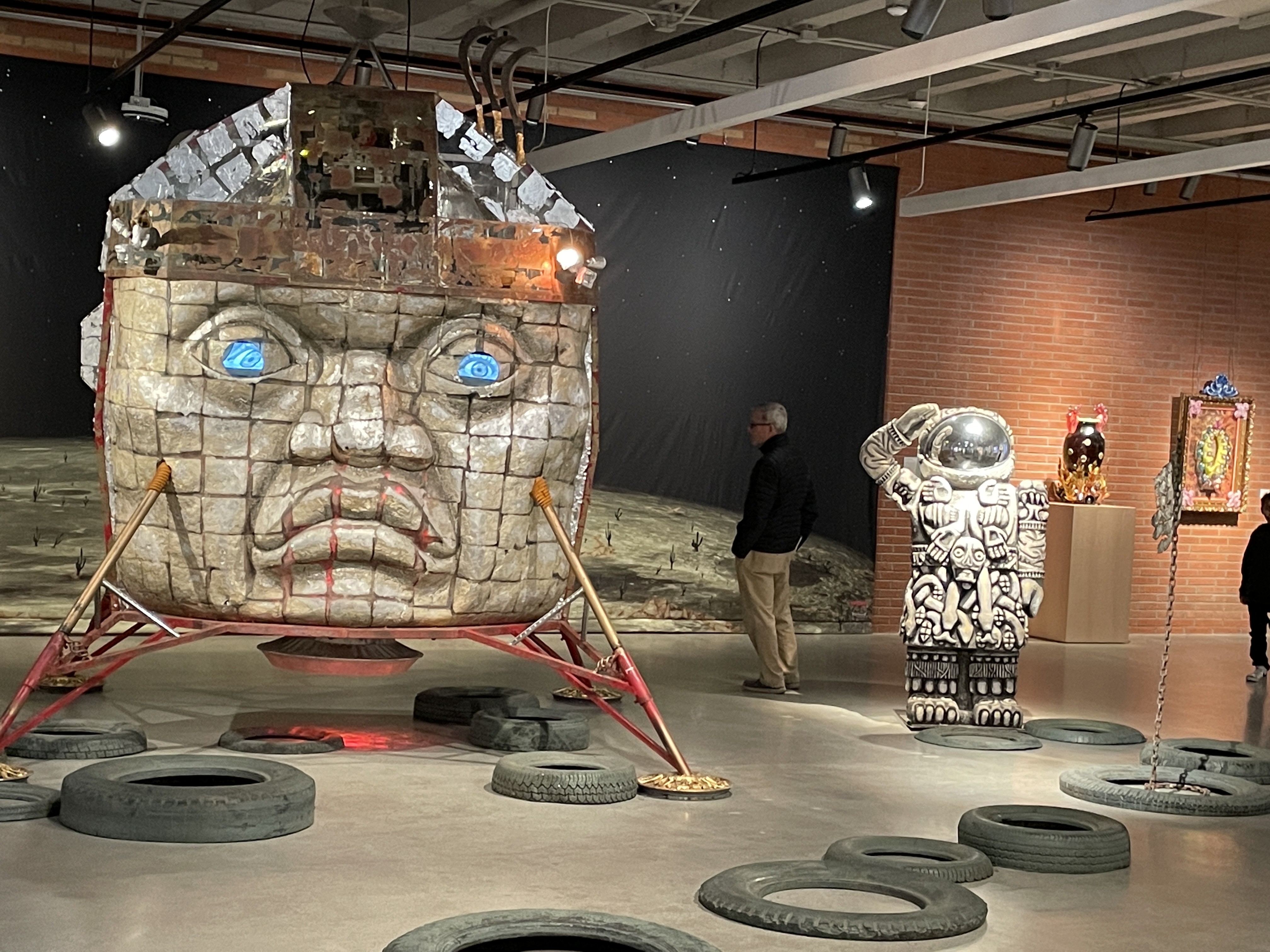
Some of the art is reminiscent of Mayan and Aztec calendars.

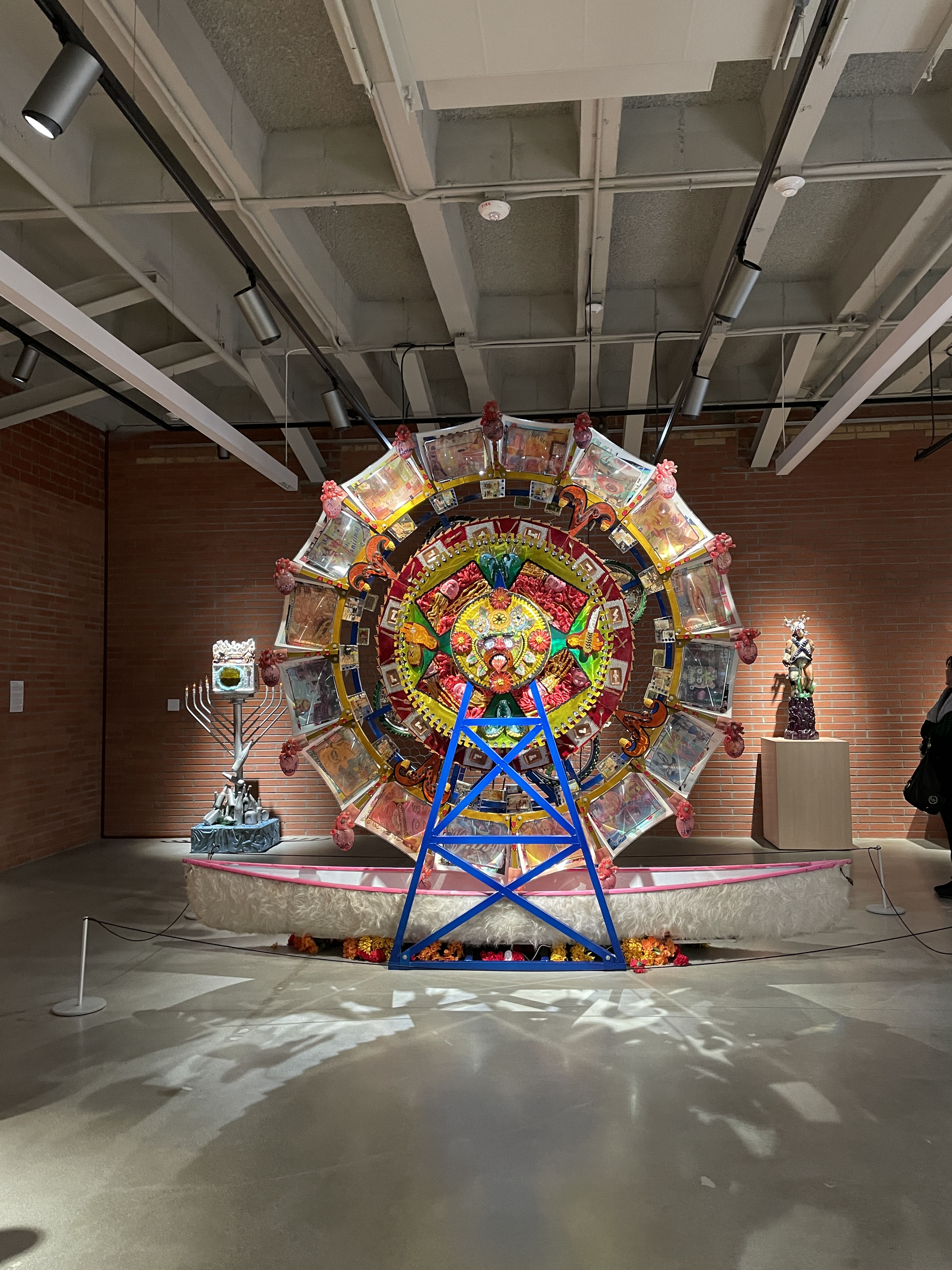

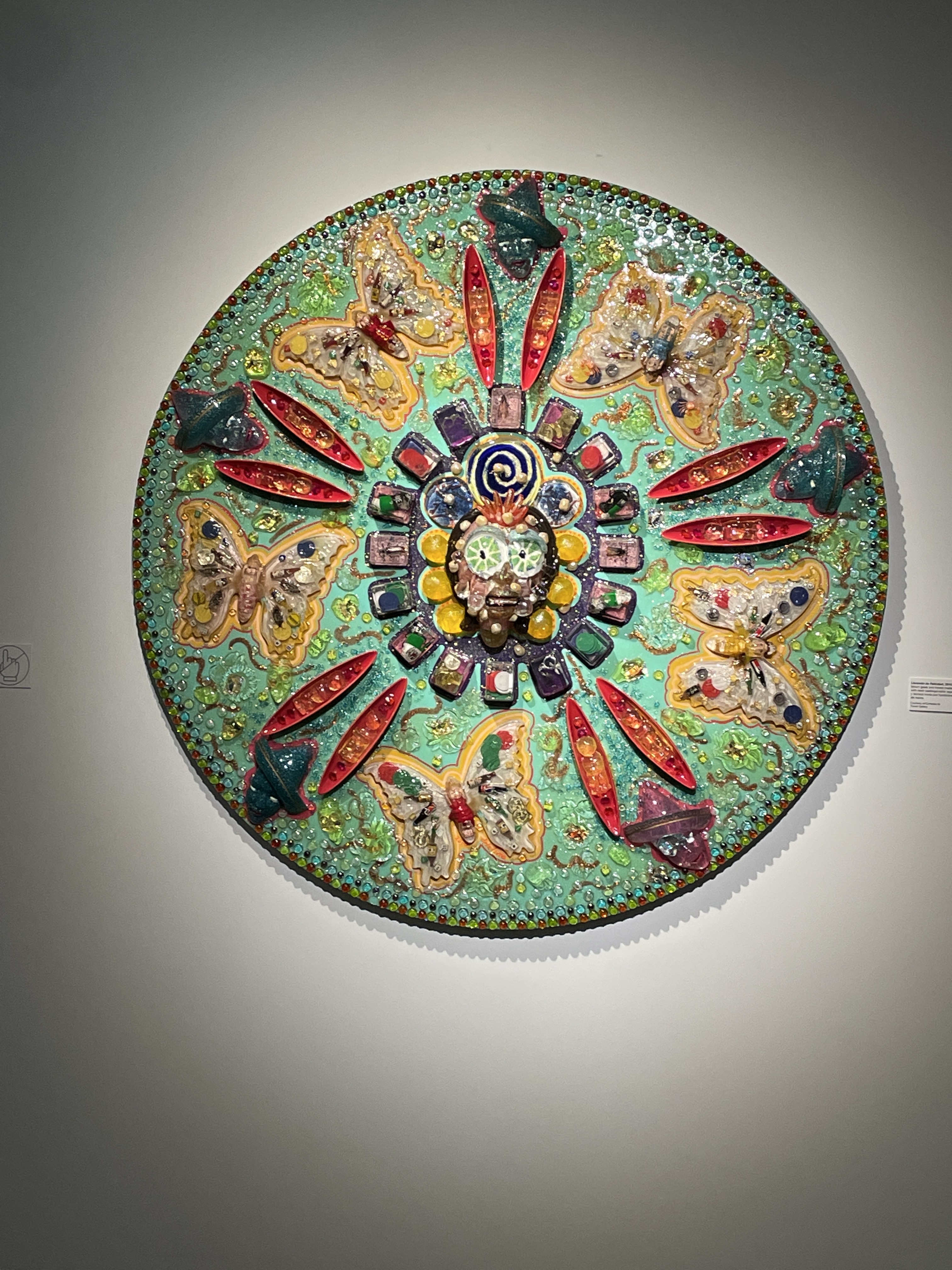
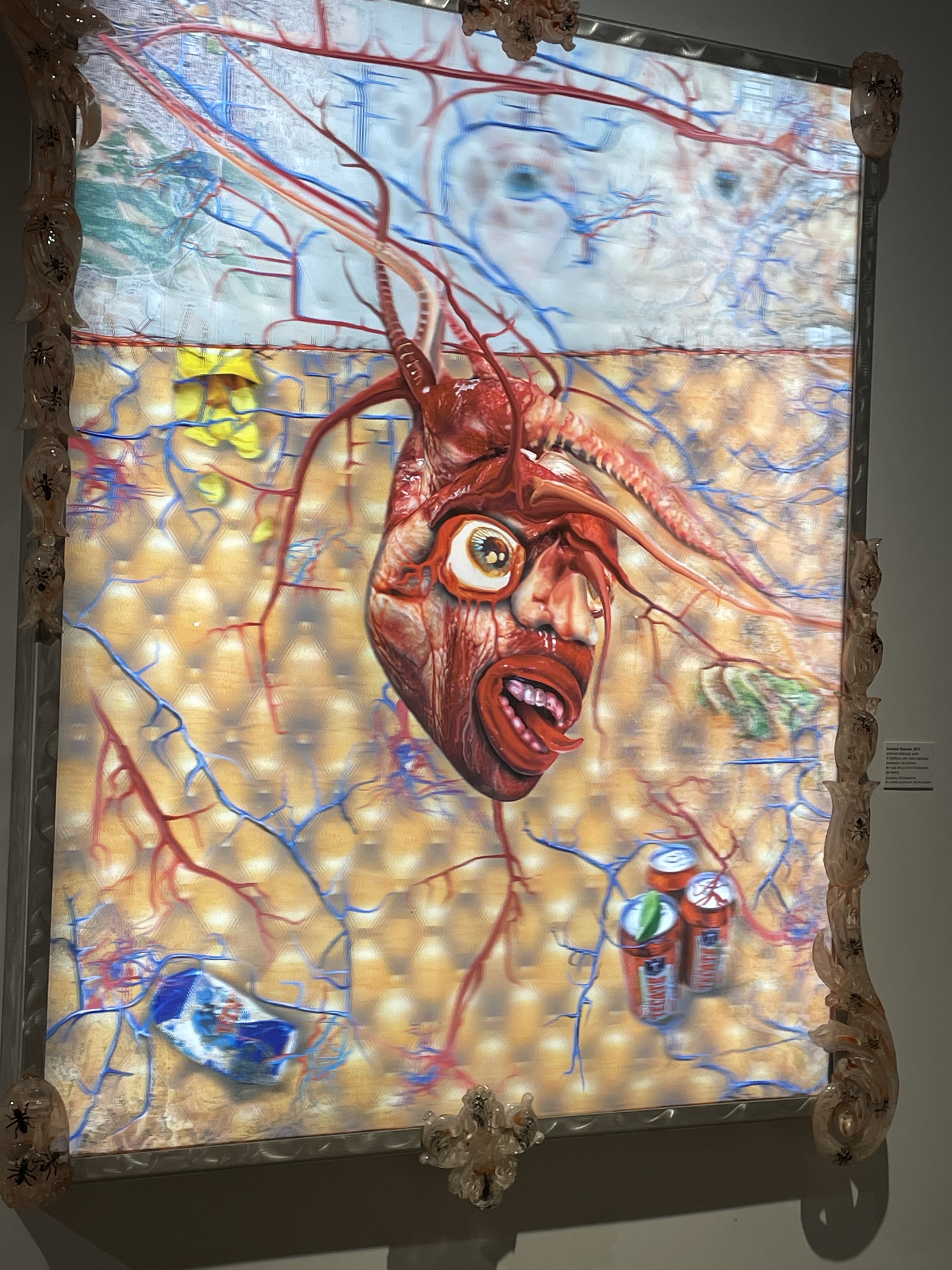
Hearts appear in many of the paintings.

And of course Frida.


This is a space ship with changing eyes. If you walk around the back there is a creature inside watching everything with monitors.
On January 2, my grandson, D’mitri, his girlfriend, Landri, and I went to The Riverside Art Museum and the Cheech in Riverside, California. This post includes what we saw at this museum. Later I will share photos of the art at the Cheech.
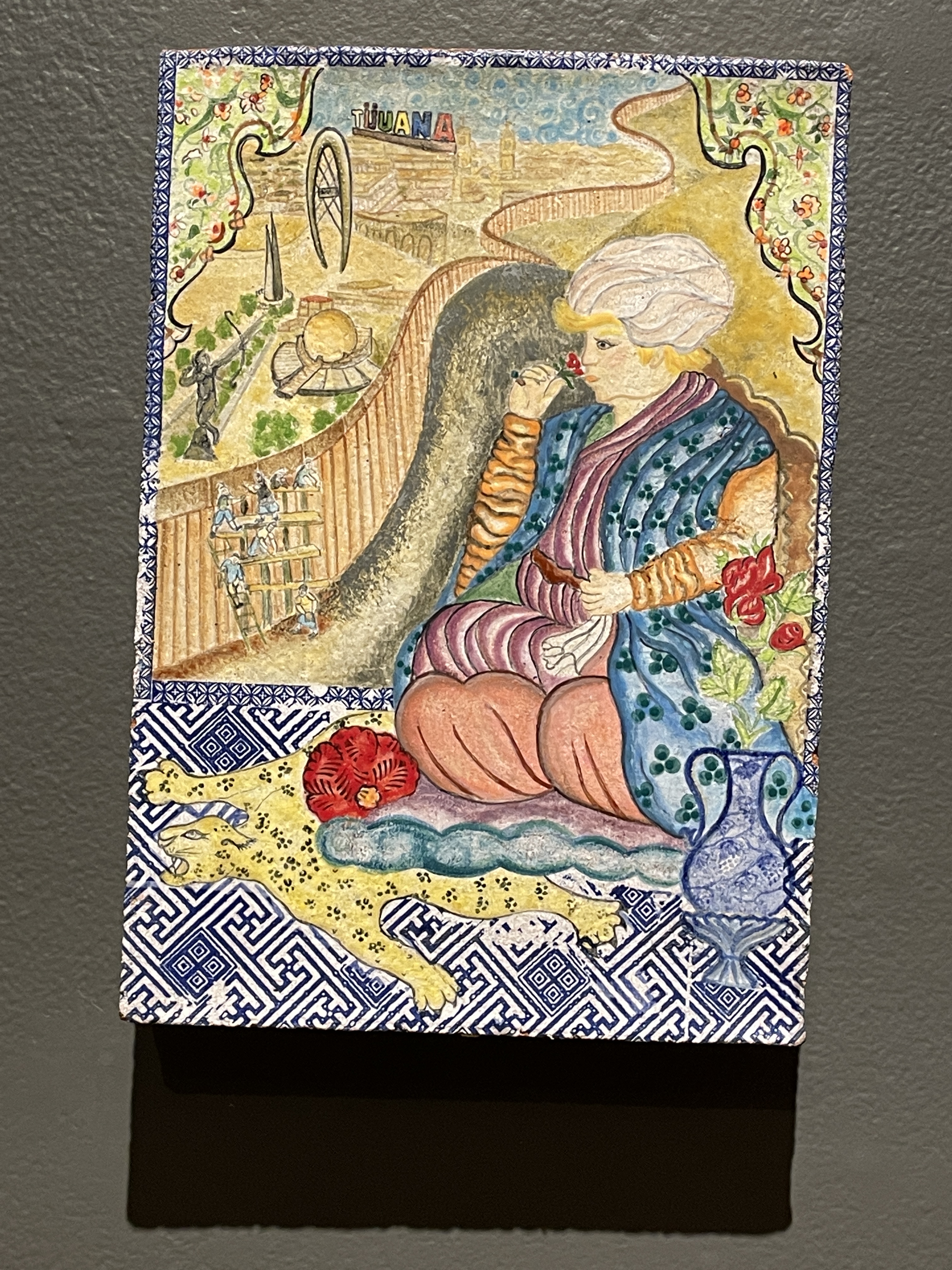


All the art seen in these first photos is by this Turkish-Mexican American artist. Here she explains how and why she interweaves the various parts of her heritage.
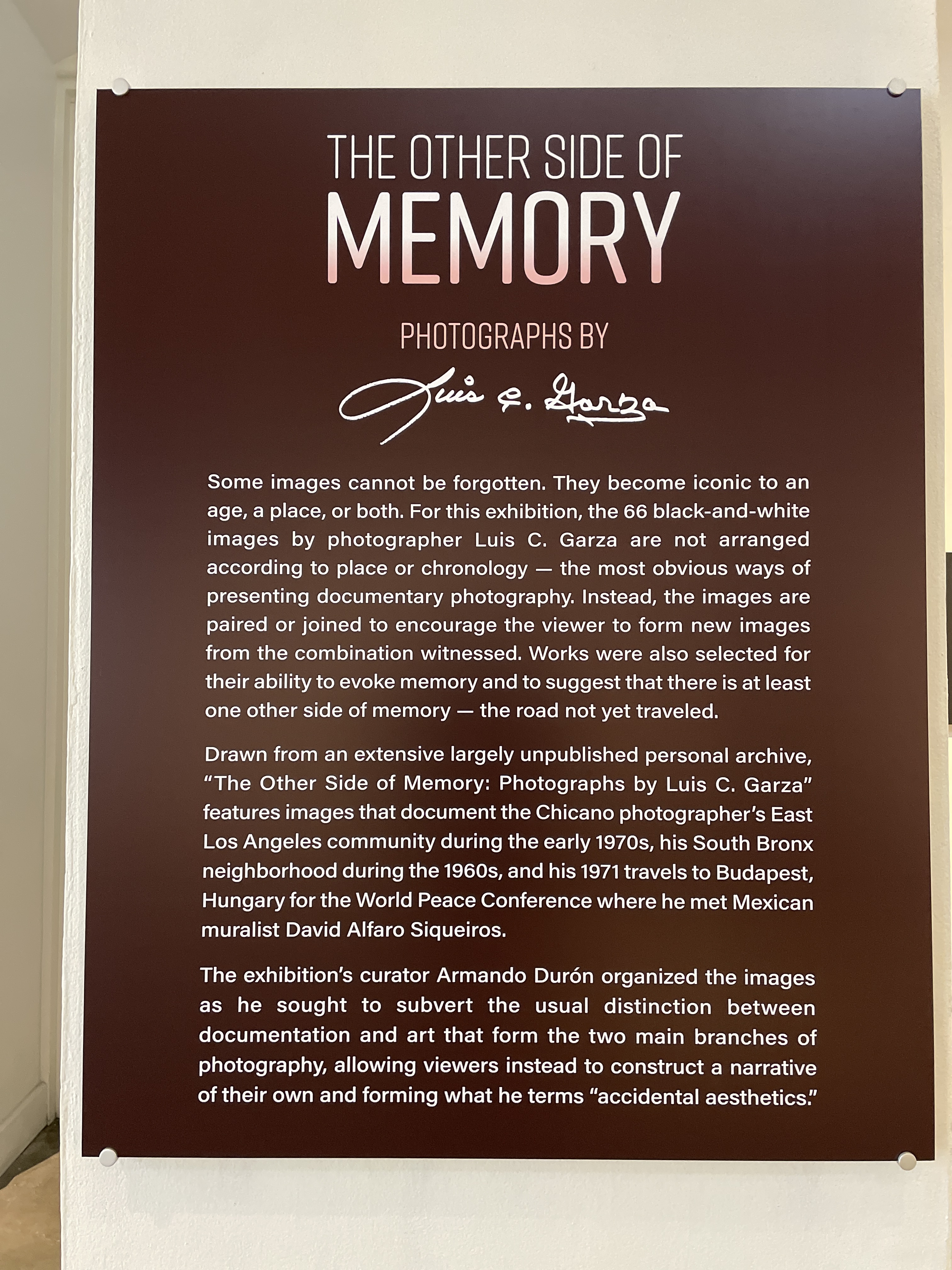
The next gallery room contained hundreds of photos from the 1970s in LA and surrounding areas. Although LA certainly is not the perfect place, improvements since that time are evident in the photographs. Here is a photo about that exhibit.
The next gallery contained art of the Joshua trees. The paper used was made of Joshua trees.
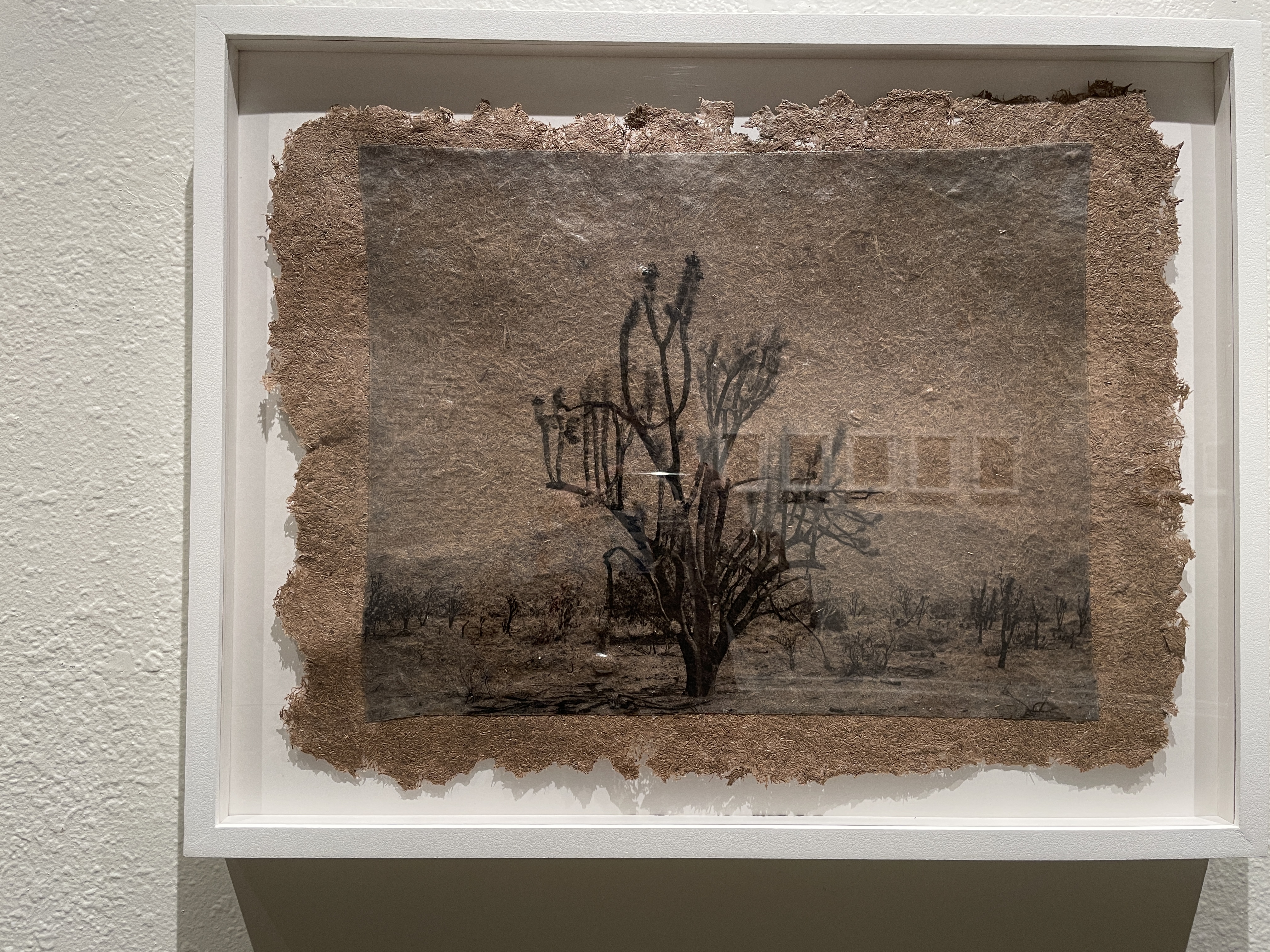

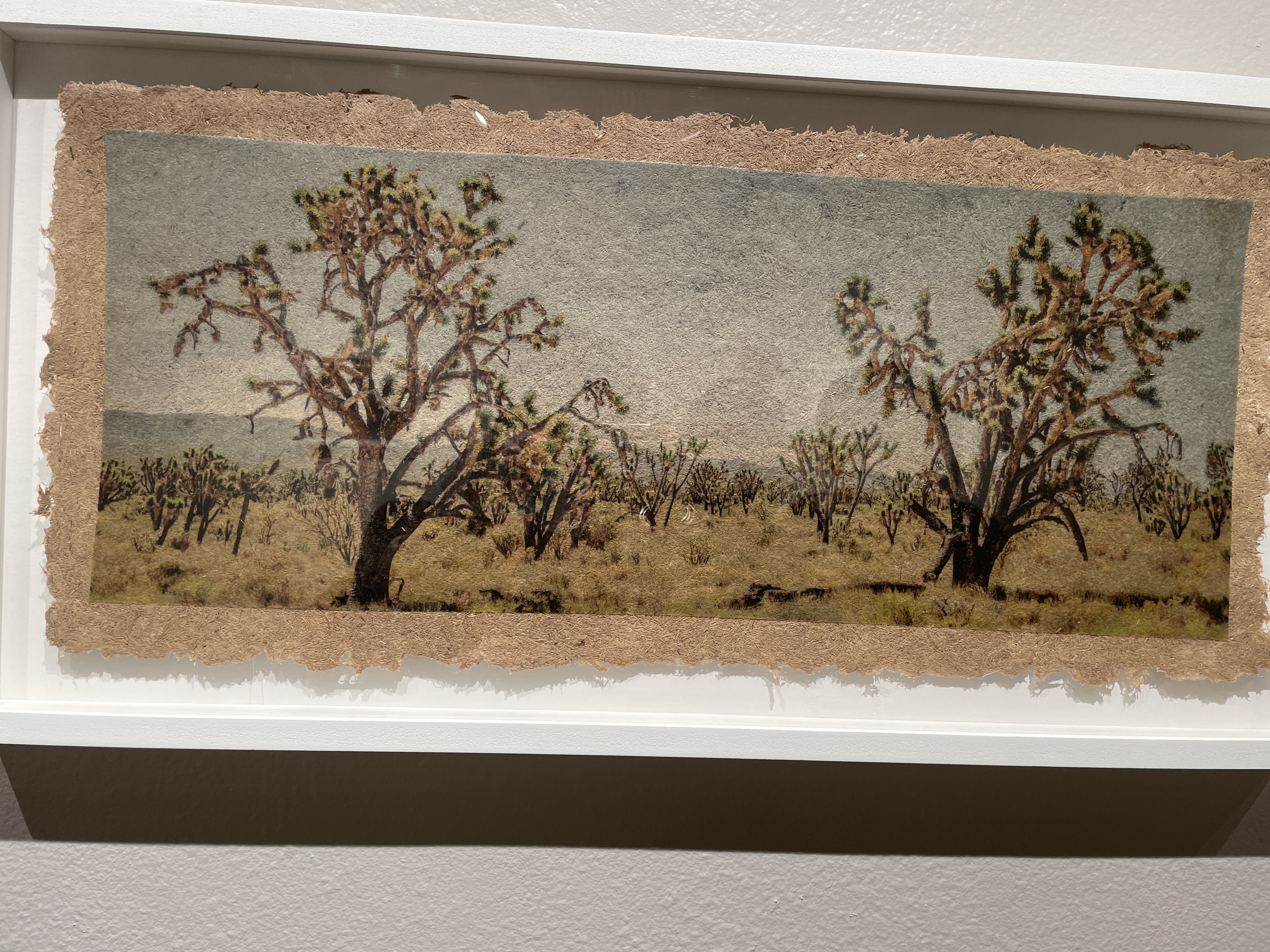
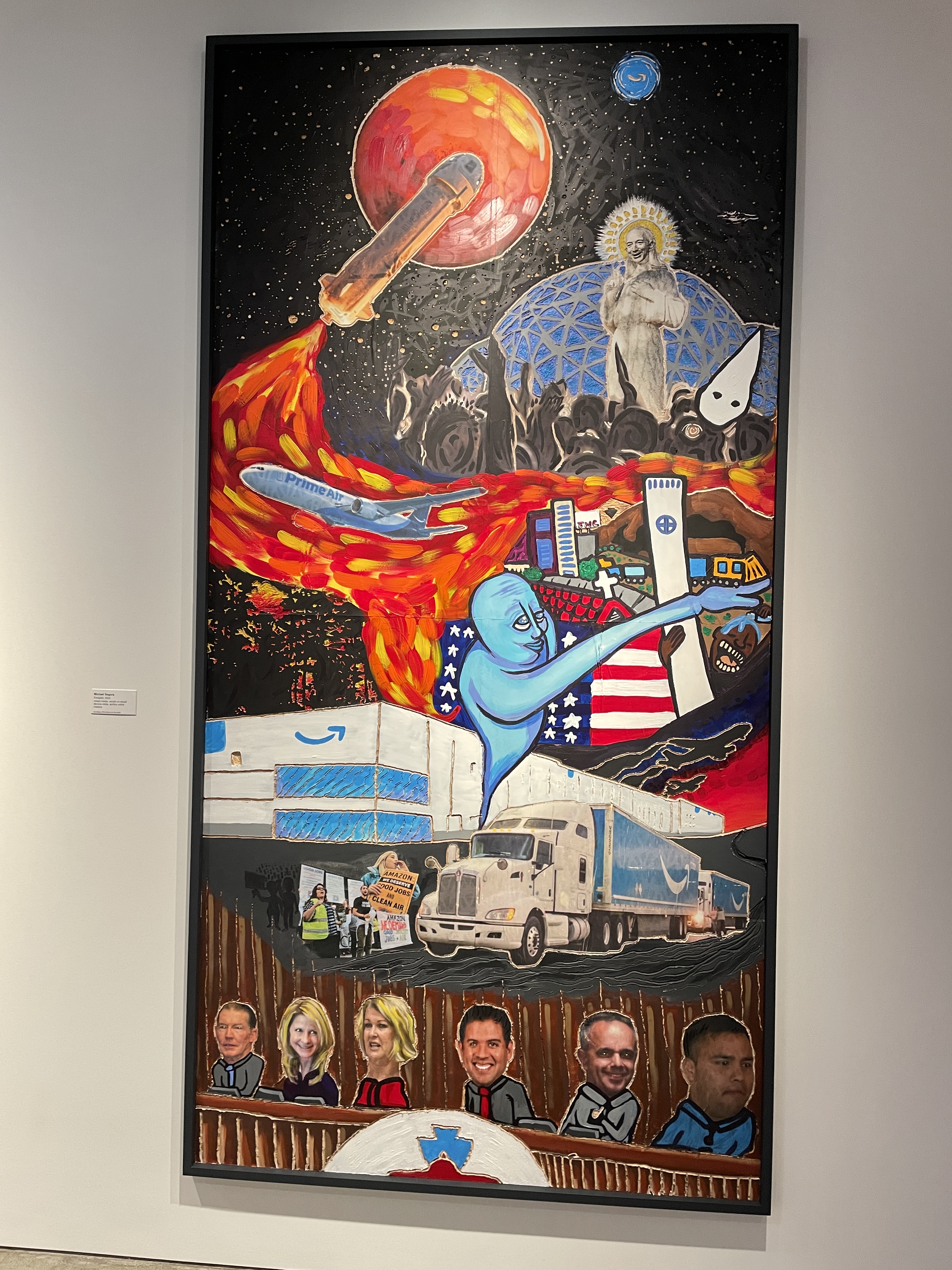
The following photos were taken in a hallway above the patio garden and in a smaller adjoining gallery.


The title of this one is The Future.

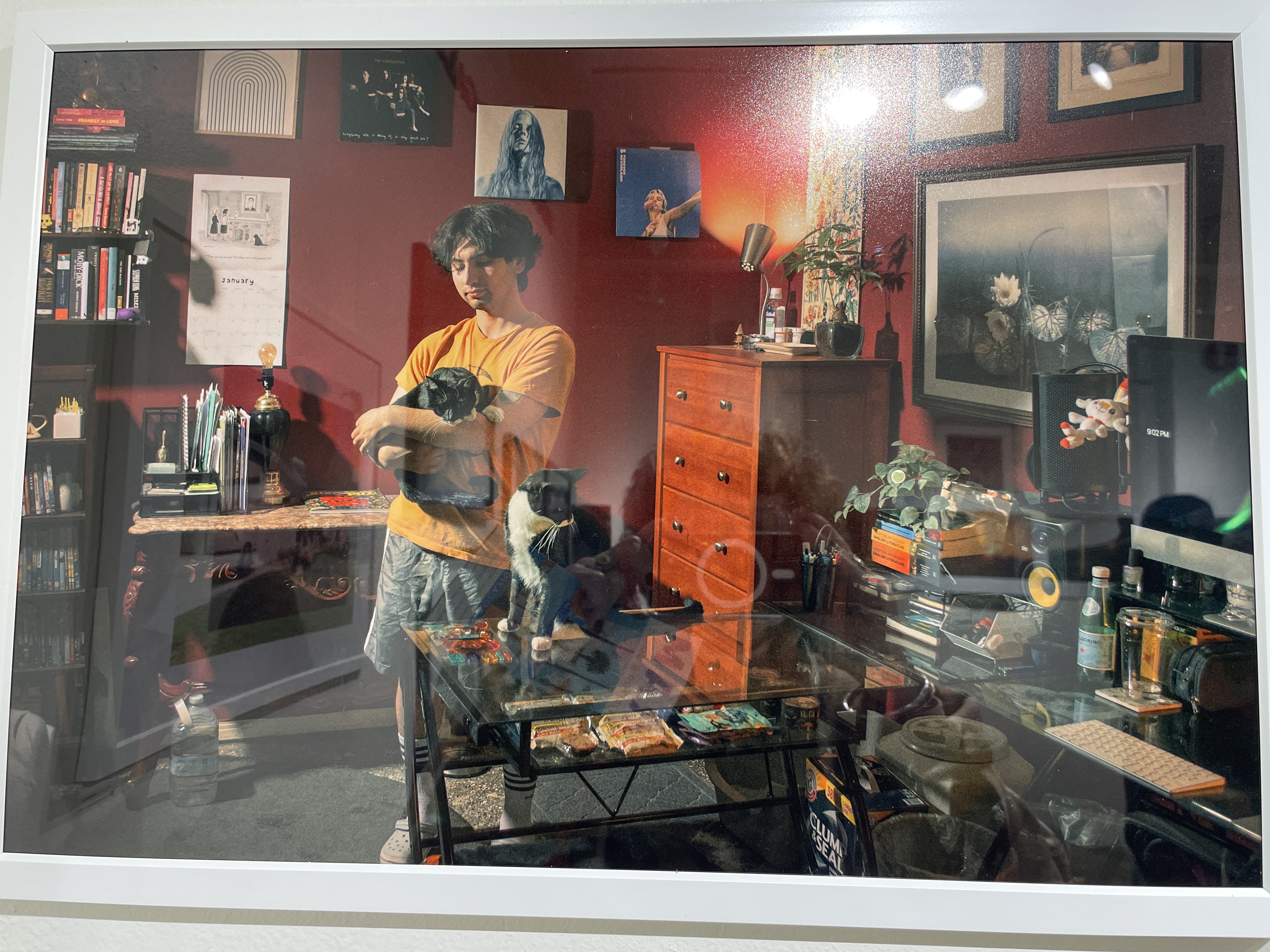

The galleries are all arranged around this patio.
Travel the World 4 Less
A Glimpse into My Life & Passions
Ceto-Magoism, the Whale-guided Way of WE in S/HE
Exploring the F-word in religion at the intersection of scholarship, activism, and community.
ANCESTRAL FOOD. HERBAL WISDOM. MAGICAL COOKERY. SEASONAL CELEBRATION.
inesemjphotography
politics, engineering, parenting, relevant things over coffee.
Food is the best expression of every emotion. Explore through my reviews, recipes, events and more.
Smile! A Site for Friends Wherever You Are!
inspiring personal growth through poetry and writing
Combining atheism with whimsy. This is a Fair and Balanced blog based on opinion unencumbered by fact.
Odds and ends ~ My Life
Original poetry, commentary, and fiction. All copyrights reserved.
bripike@gmail.com
A wildlife filmmaker in Africa
A Geeky Feminist's Musings On Pop Culture
"5 minute walks"
 writingontherim