Book 34 for 2026: “Forgotten”, Raja Shehadeh and Penny Johnson


The subtitle is “Searching for Palestine’s Hidden Places and Lost Memorials”. Published in 2025, the book follows the authors’ travels from their home in Ramallah in the West Bank in search of ancient buildings, churches, grave memorials, etc. For those who find it difficult to picture the location of Israel, Gaza, West Bank, etc. there is a detailed map at the beginning of the book.

The memorials they find vary from that for three Egyptian soldiers who died in the 1967 war to buried famous poets. They discover the remains of the wall that surrounded the great Bronze Age city of Tell Balata and a sophisticated water system from a Bronze and Iron Age city. In many cases these places are hidden among modern Israeli buildings or appear to be a bunch of rubble at first. Usually, they manage to find these places with the help of older locals.They find the tombs of saints, a Greek Orthodox monastery that had to be rebuilt, the remains of a deserted mosque destroyed by Israelis–all that is left is the minaret, the ruins of many ancient Palestinian villages that over time have been destroyed by the Israelis. In some cases ruins from the BC era have been built over with malls and parks, including one that is now under the Palestine Television Tower.

One thing they noted that has nothing to do with buildings or ruins is how the Dead Sea is becoming smaller and smaller due to excessive irrigation for crops farmed by kibbutzes. The Jordan River feeds into the Dead Sea and its level has gone down for the same reason. Drought and irrigation has increased the need for water for crops. The authors question the longterm sustainability of these irrigation methods. As I read this I thought of all the irrigation in the West of the US, the low water flow of the Colorado River, and how the Western US is facing some of the same issues.

Book 33 for 2026: “The Stationery Shop”, Marjan Kamali


I said I was going to read all her novels. This one is the middle novel but they are not a series. The time span in this one goes from 1913 to 2013. The political events are more detailed in this novel, including how the toppling of Mossadegh by the Shah’s forces and Britain and US, the later revolution, and the Iran-Iraq War affects various characters and their families. The novel’s title comes from the stationery shop owned by Mr. Fakhri where the other two main characters in the novel meet when both are 17. They love books and fall in love via their visits to this shop. Then the events of 1953 occur, family’s histories create havoc, and people’s pasts catch up with them in unexpected ways.

This novel also goes into greater depth about how Persian traditions affect lives, how much social class matters, arranged versus love matches, modern families versus more traditional families and how all these issues affect individual lives for better or worse. As in the others, the reader learns a lot about Persian food with some details as to how to make various dishes–no recipes, just descriptions. My reaction to the events and characters in this novel were stronger than for the others. I would even call this novel a sort of tear jerker if you are inclined to react emotionally to what you read.

Note: I recommend all three of her novels. They are entertaining, well written, and an excellent way to learn a lot about the last 80 or so years of Iranian history that still affects all of us.

Book 31 for 2026: “The Lion Women of Tehran”, Marjan Kamali


This novel narrates the lives of two women who became best friends in elementary school in Tehran in the 1950s. One, Elaheh, who has lived in luxury until the death of her father forces her and her mother to move to a poor part of the city. Two, Homa, a rambunctious seven year old who lives nearby. Elaheh’s mother has no choice but to enroll her in the nearby public school where they meet and become best friends against the objection of Elaheh’s mother who thinks the people there are tacky and beneath her. Because Elaheh’s (Ellie) prefers to spend time at Homa’s house where there is an entire family–father, mother, children, who are warm and loving, her mother does various things to keep her from Homa’s family. It does not work and Homa’s mother teaches Ellie how to cook and they treat her as one of the own.

Their happy friendship is disrupted when Ellie’s mother marries her former husband’s brother and they move back to the wealthy part of town and Ellie is enrolled in one of the best schools in Tehran. Ellie works hard at her studies and becoming popular and succeeds. She is very embarrassed when Homa gets a scholarship to this school and shows up. Nevertheless, they reestablish their friendship and everything seems to go well until political turmoil occurs. They finish high school and enroll in the University of Tehran. Then betrayal and disaster ensues.

I could not stop reading because of the story. For those who know little of Iranian history in the last 100 years, through the events in the novel, the reader not only learns how difficult life can be in Iran but also a lot of recent Iranian history. It reveals the determination of Iranians to live the best they can regardless of the circumstances and how life can change instantly because of someone’s misguided words. After I finished this novel, I went to the library and requested Kamali’s other two novels.

Book 30 for 2026: “A Rift in Time”, Raja Shehadeh


Written in 2010 this nonfiction work follows the author on a journey as he attempts to reenact the journey his great-great uncle made to escape the police of the Ottoman Empire as it was disintegrating in the early 1900s. Unlike now when the countries of Syria, Lebanon, Iraq, Jordan, Israel have borders and you have to have permission to cross, then they were all part of the Ottoman Empire with no borders. The only countries at the time that were not part of the Ottoman Empire were Iran and a lot of the peninsula of what is now Saudi Arabia. The fact that all these new countries have borders made it difficult for the author to exactly follow his ancestor’s travels.

The author, a Palestinian Christian who is also a leading Palestinian lawyer, lived in the West Bank when he wrote this memoir. The uncle was a journalist in the late 1800s and died just before the existence of Israel occurred. As Shehadeh travels, he notes how the landscape has changed. Israeli authorities have destroyed most of the old Palestinian villages. Where their small farms, olive groves, etc. existed, the Israelis have created large, mechanized farms. He notes that these farms use a lot of irrigation and have caused the water table to go down and made changes to the Jordan River and Dead Sea.

While visiting the old places and people he can find that might know of his relative, he also discusses Palestinian history and the history of the creation of Israel. Britain wanted the help of Zionist Jews to help defeat the Ottoman Turks who had allied themselves with the Germans in WWI. To get their help they created the Balfour Declaration in 1917 which promised the Zionists that they would help them create a homeland of their own in what was then Palestine. After the fall of the Ottoman Empire, what was Palestine and now Israel was ruled for decades by the British–the British Mandate (1920-1948). The author’s uncle predicted much of what occurred and actually wanted the Ottomans to continues ruling but differently, giving each group of people more self-governing power. Instead we now have countries many of whose borders were created by the British and French.

Recent Adventures in Santa Barbara County


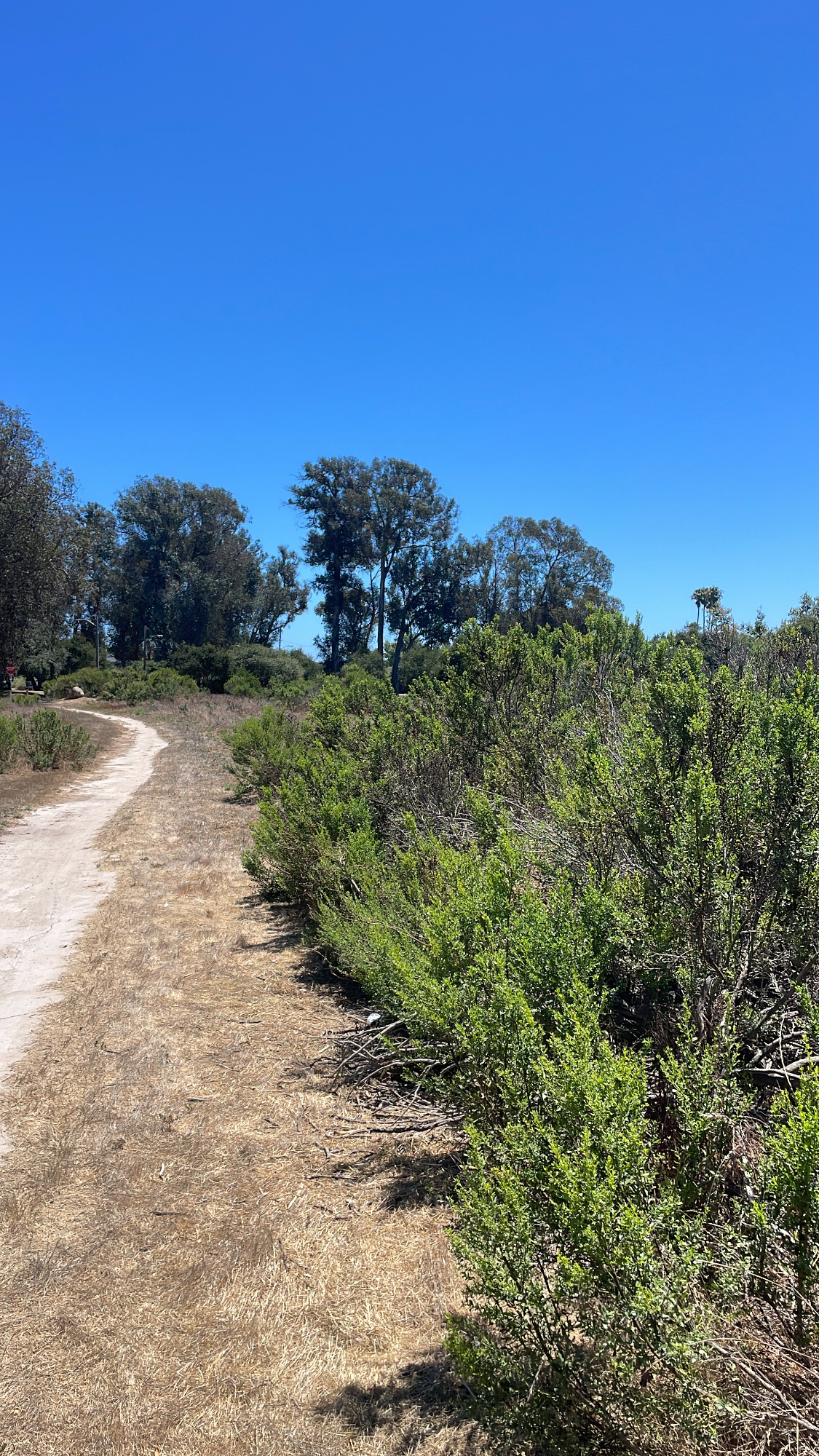
After dropping my grandson off at his apartment in Goleta, I went in search of a trail about which I had read. Well, GPS did not take me there but to another trail. Here is where I began.

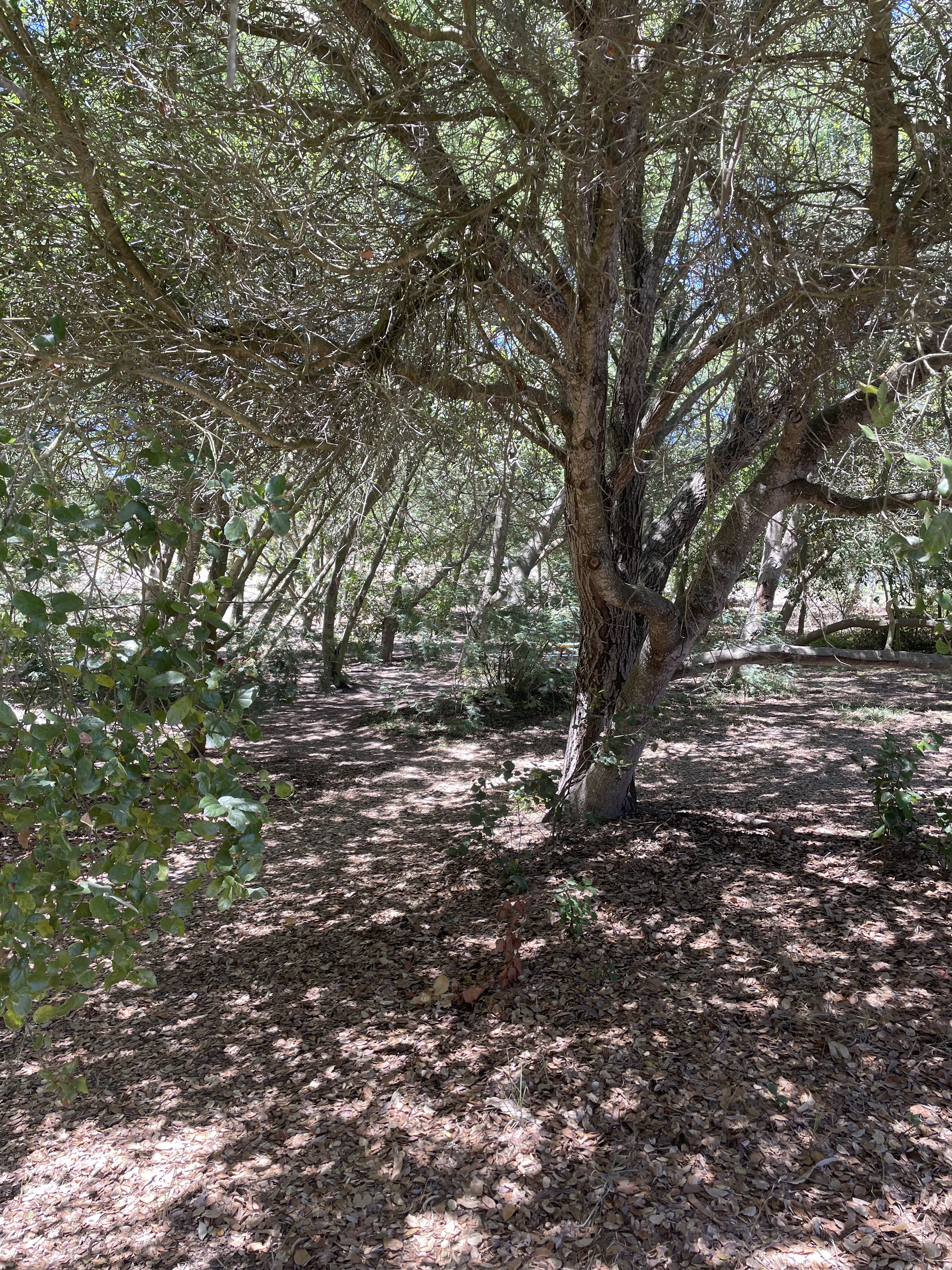
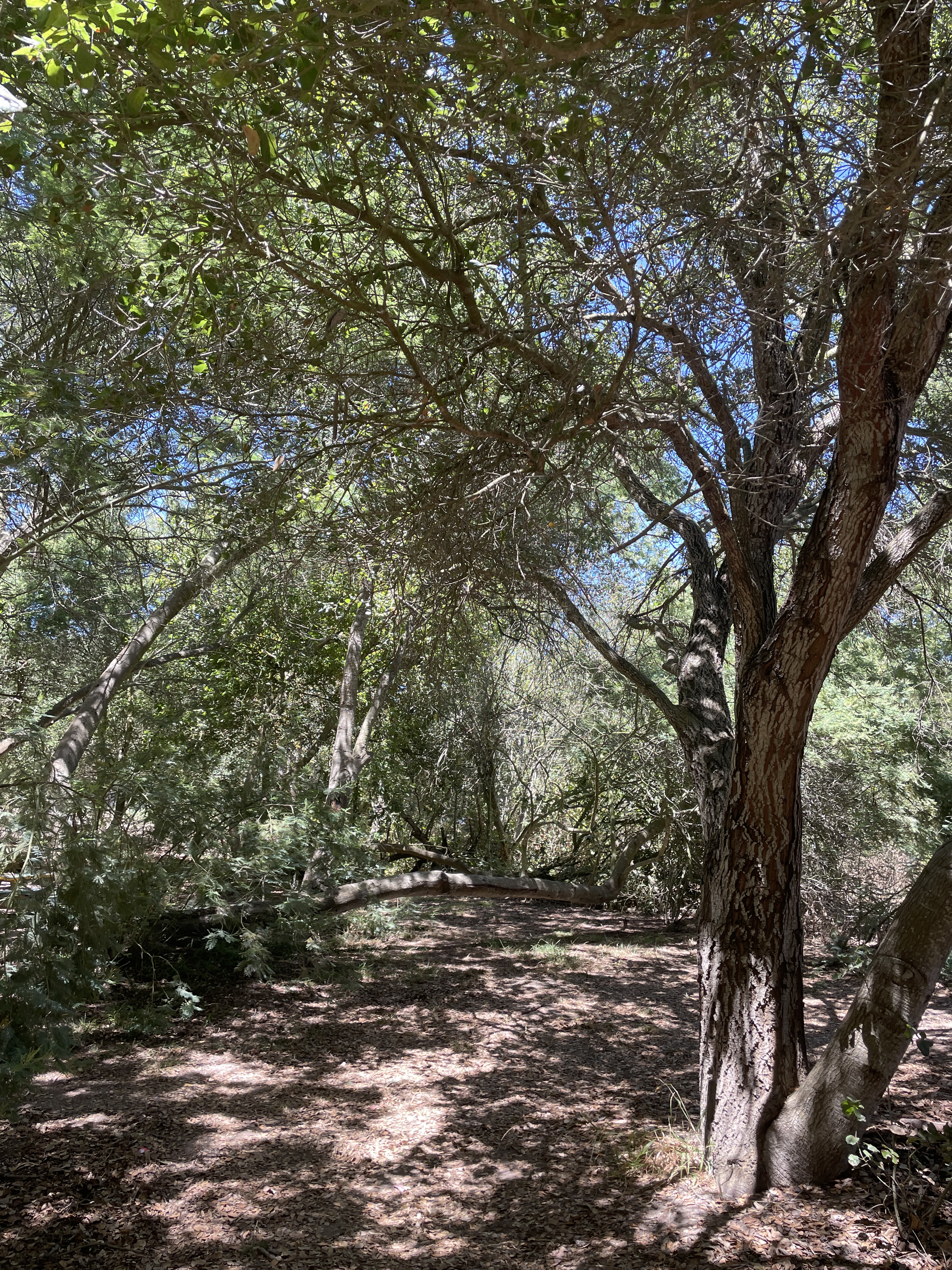
It’s summer and the wetlands are not very wet but this goes between two wetlands. This whole area is apparently for wetland preservation. Lower after looping around, I came to a woods.

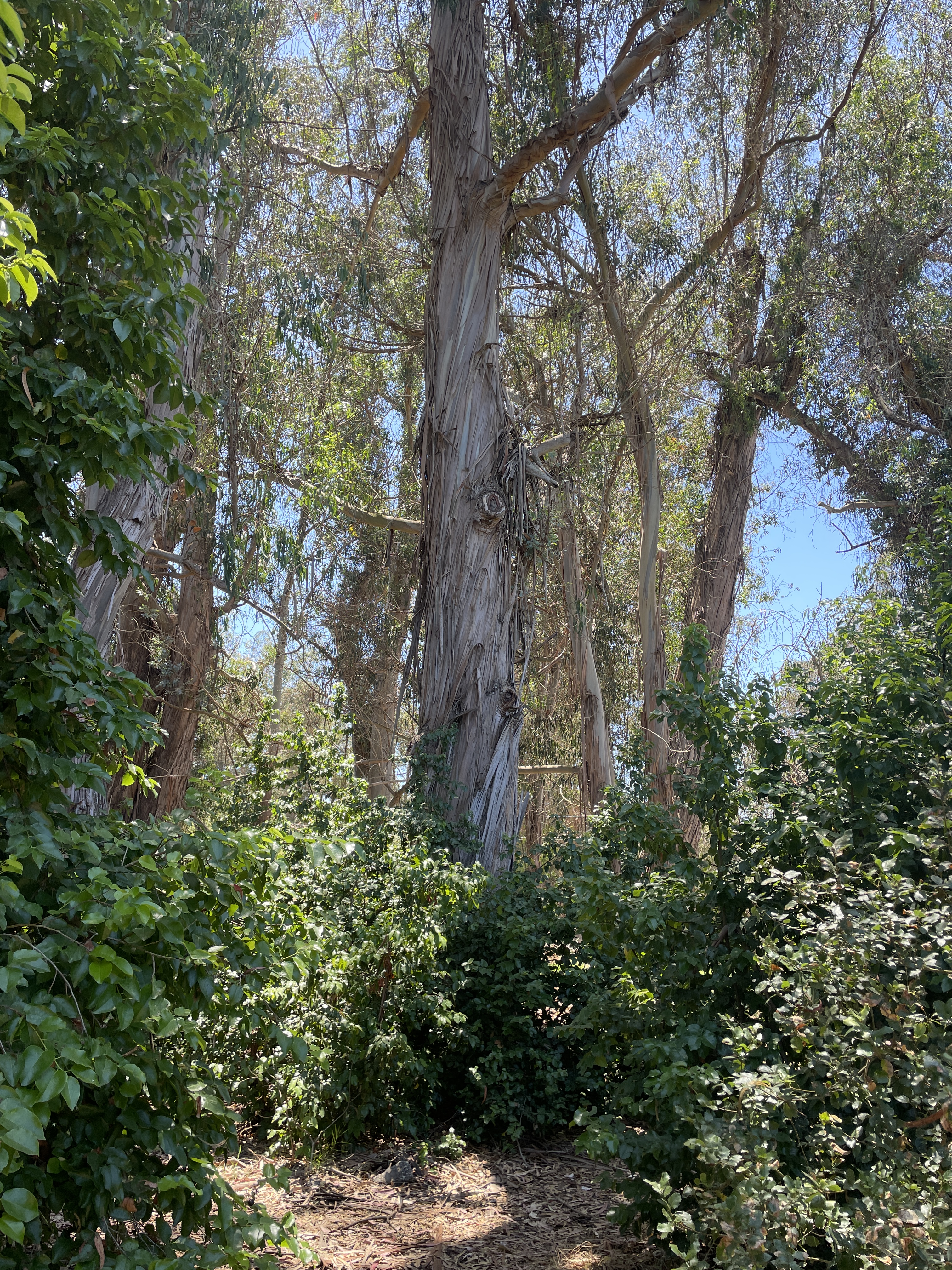
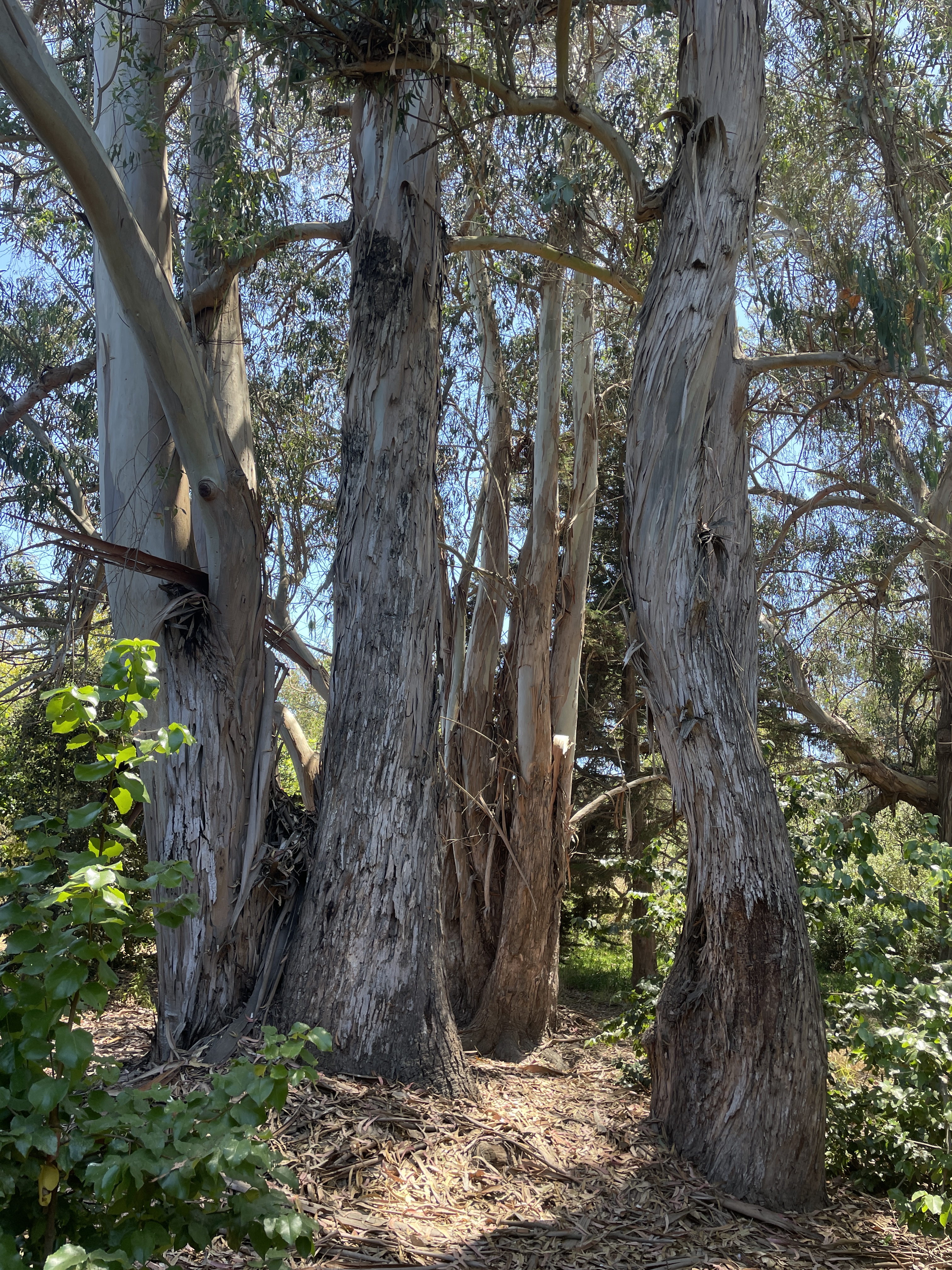
I tried to figure out a way to take a photo that would encompass the entirety of these large, tall trees but gave up.

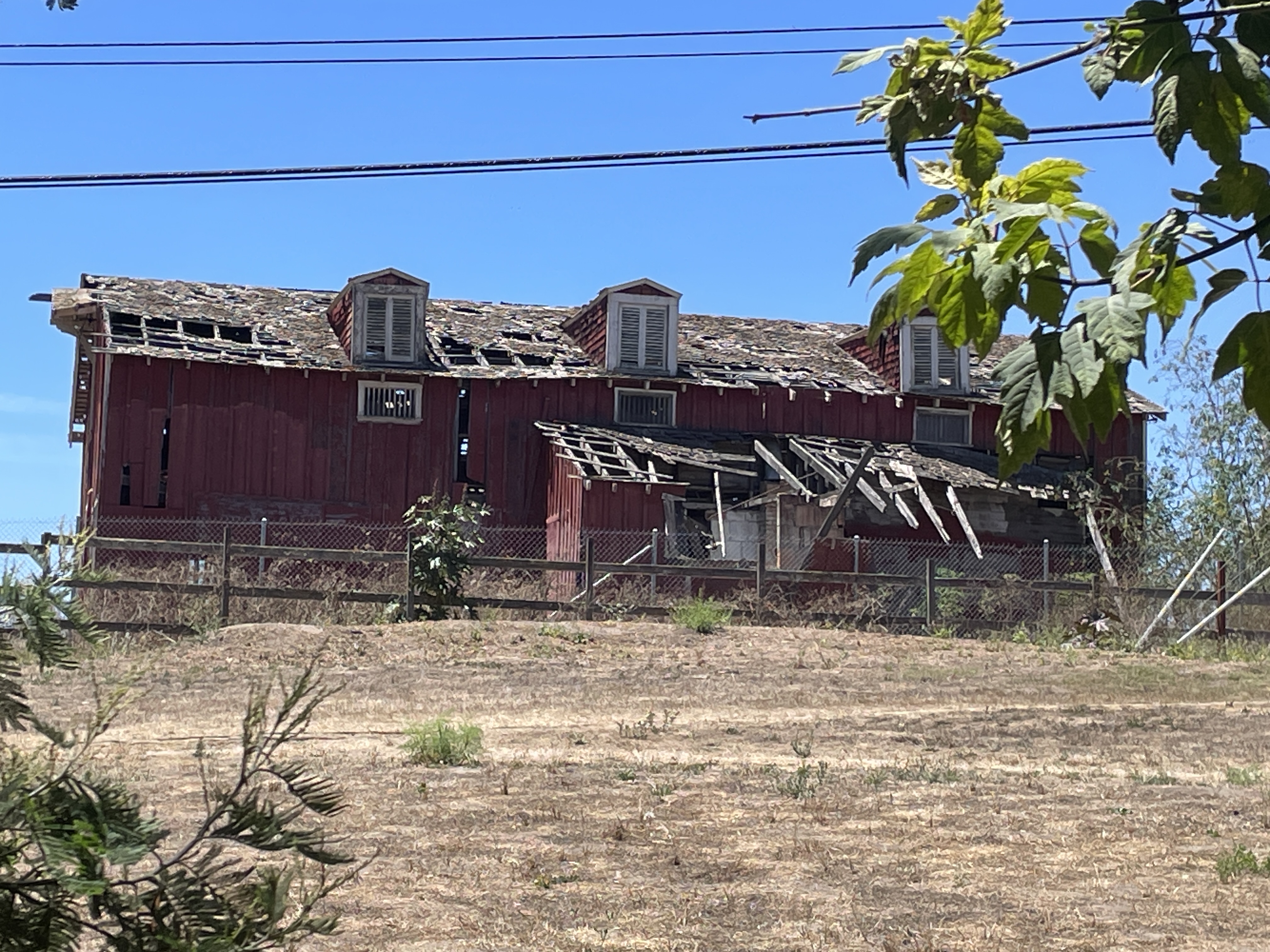
The trail sort of loops back and near here I saw a picnic table covered in graffiti. And then after walking to the other side of the wooded area, I saw this old barn.

Once upon a time, it appears to have been quite fancy.

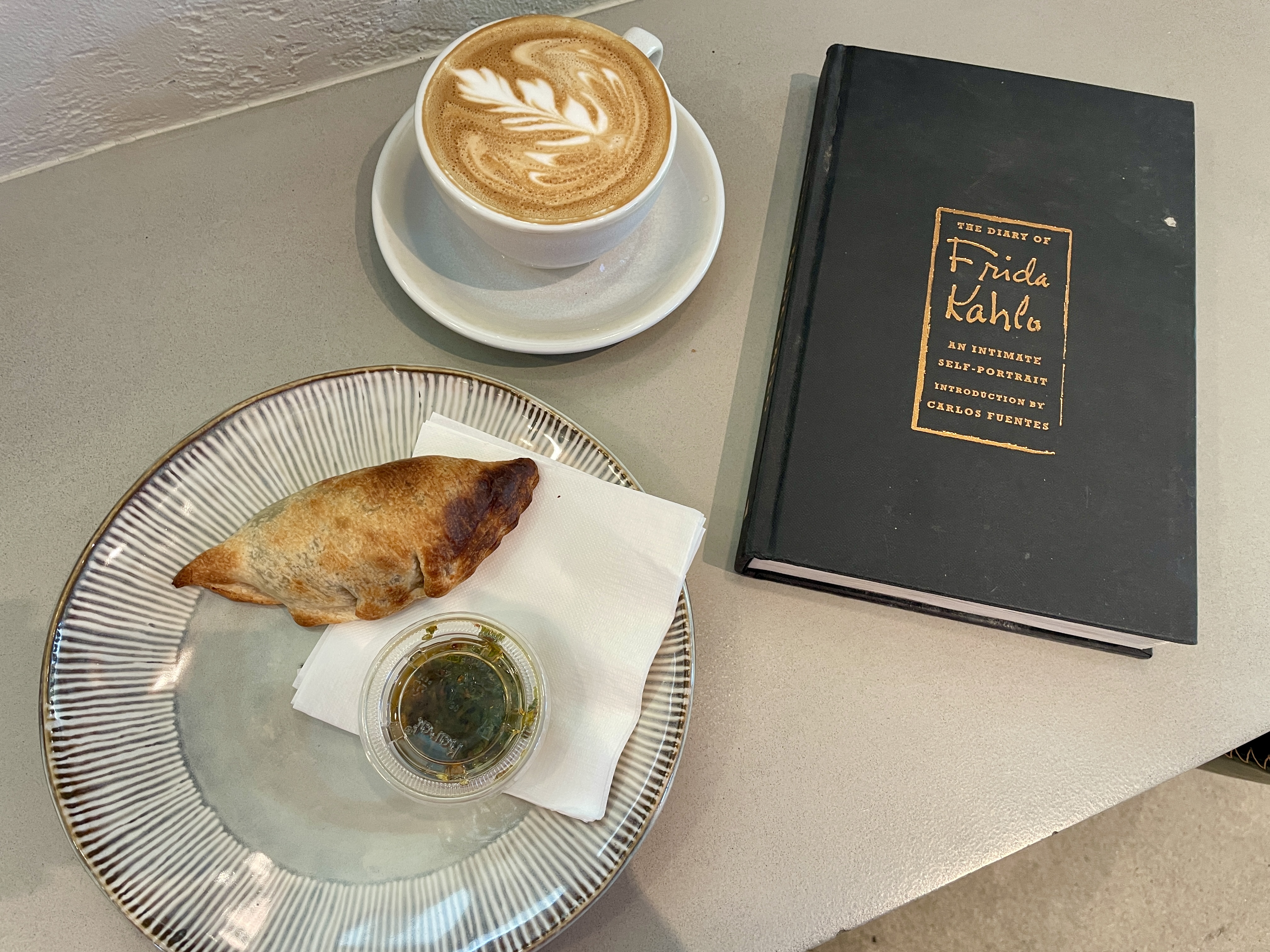
I walked back to my car and drove to Carpenteria, a smaller beach town south of Santa Barbara toward Ventura. Carpenteria is not fancy like some other beach towns. It is friendly, laid back. I was hungry so went to the Dart Coffee place which was closed the last time I stopped there.

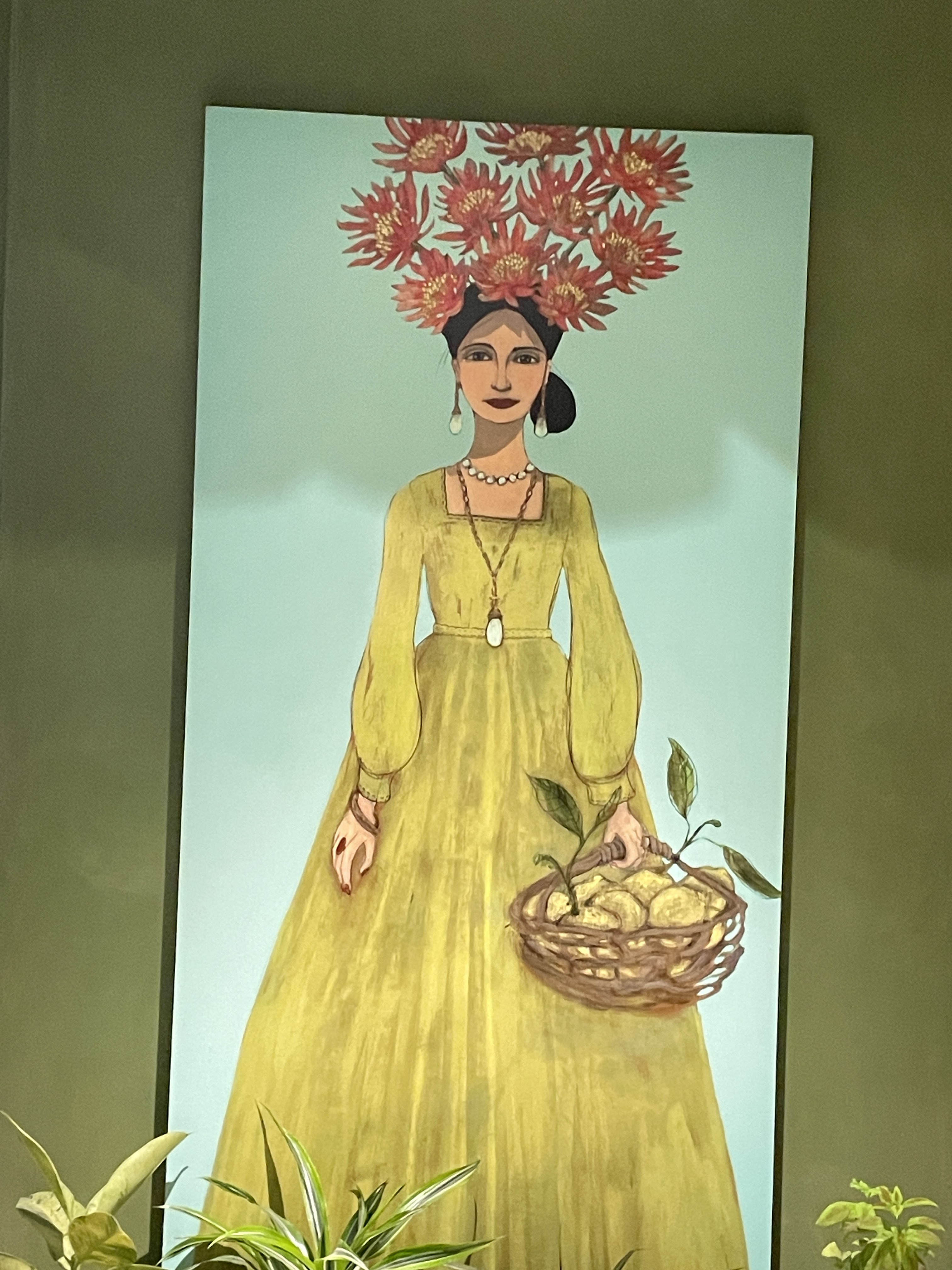
The empanada was yummy and served with their own chimichurri. This is a Frida book I have never seen before; it was on a shelf with other books for anyone to read.

This coffee shop sells cards with paintings similar to this one on the wall in a hallway that goes to other shops.

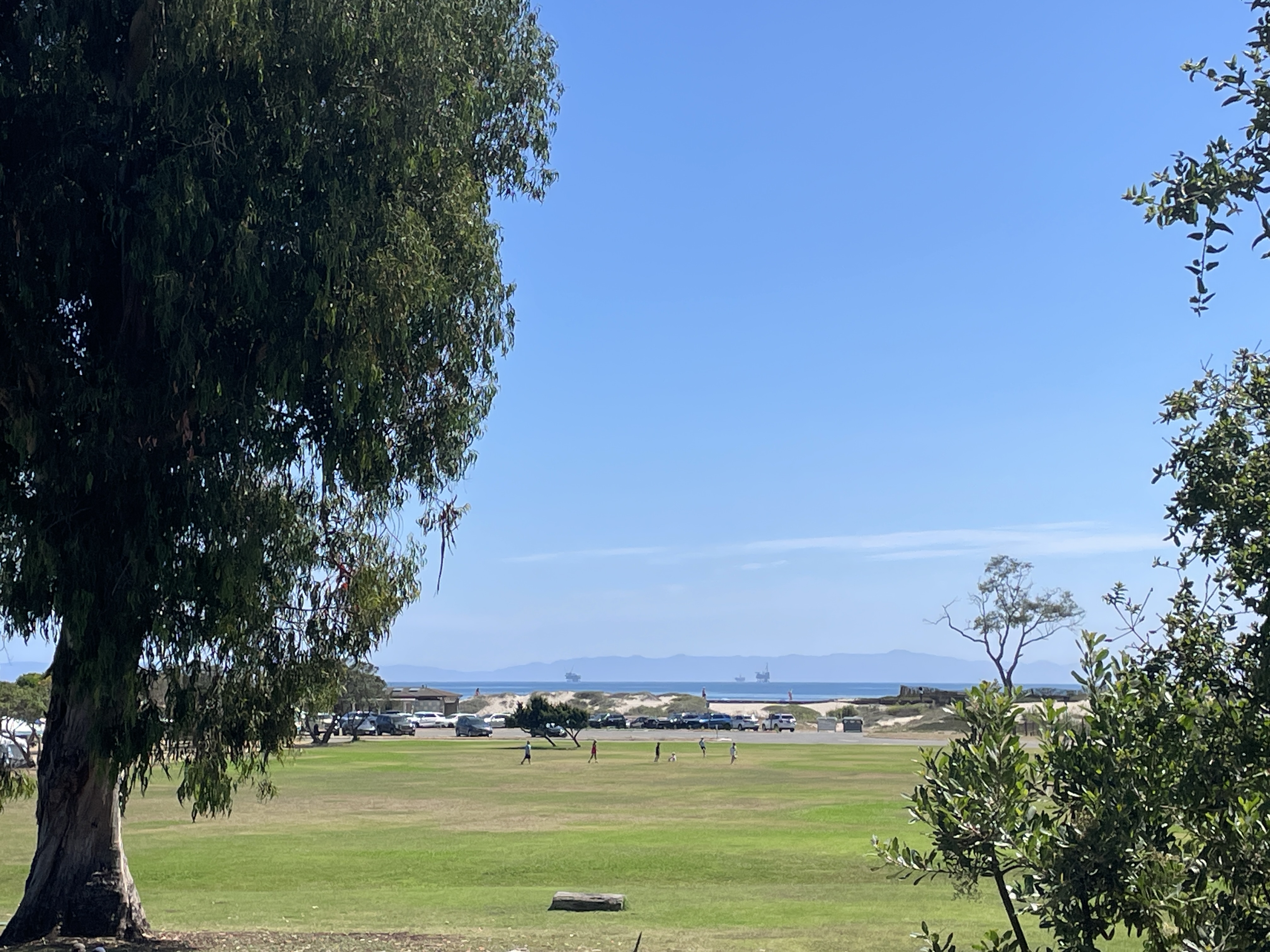
After wandering around this area and trying to find a shop where I previously bought a sweater (the shop was gone), I walked toward the beach.

In the distance beyond the ocean you can see the Channel Islands.

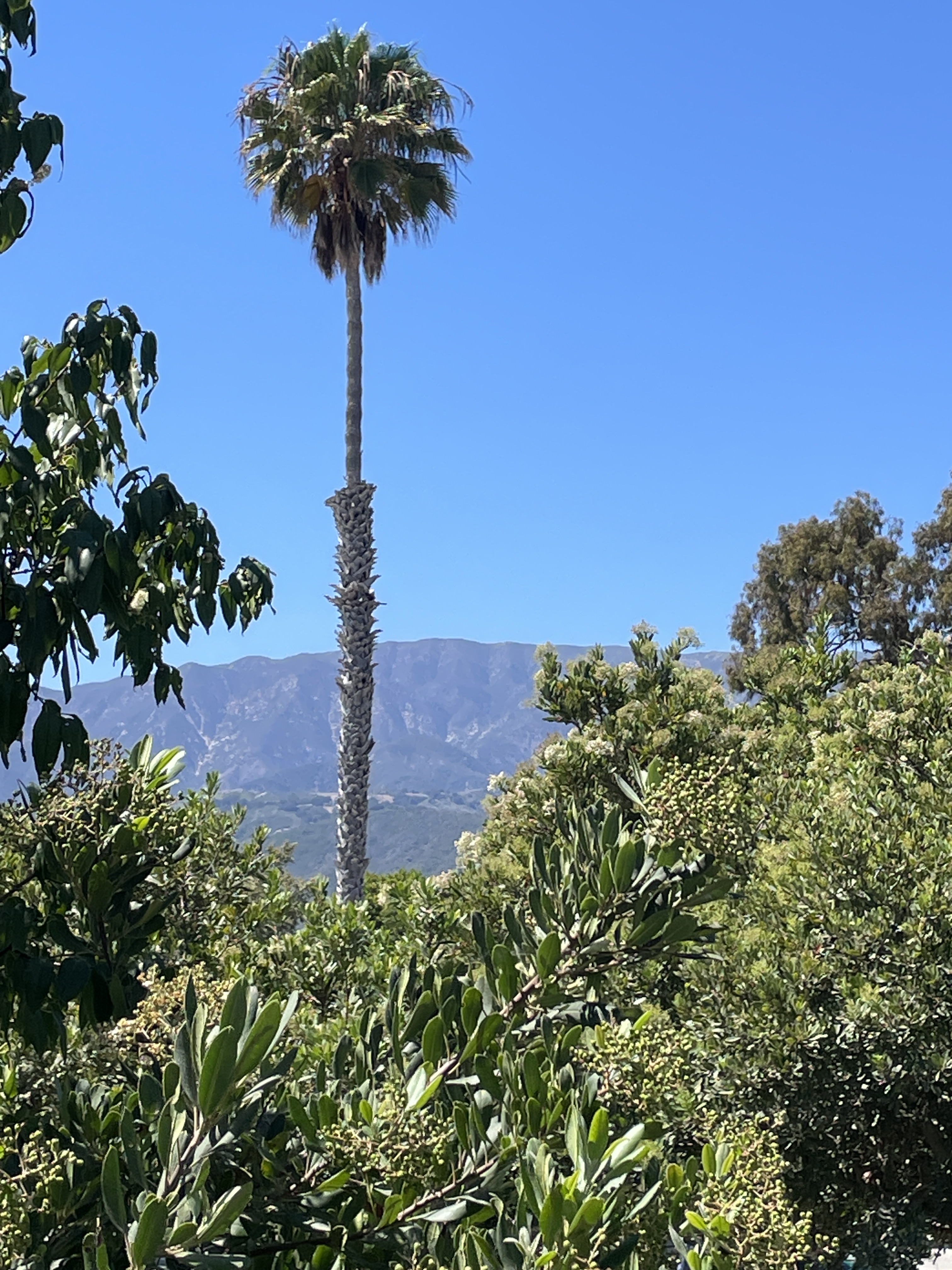
And turning around and facing the other direction, I saw this.

Balinese Gamelan Music and Dancing


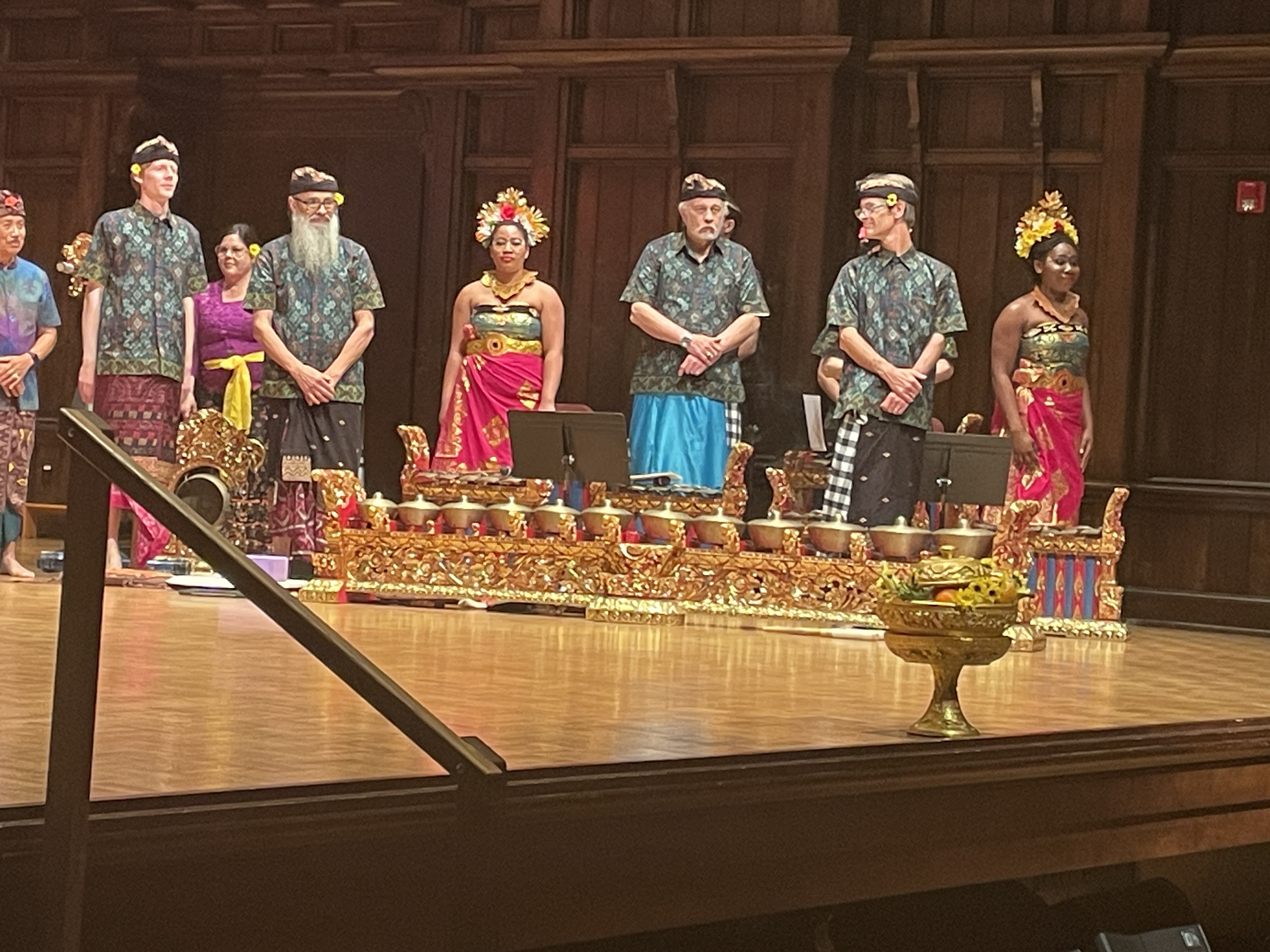
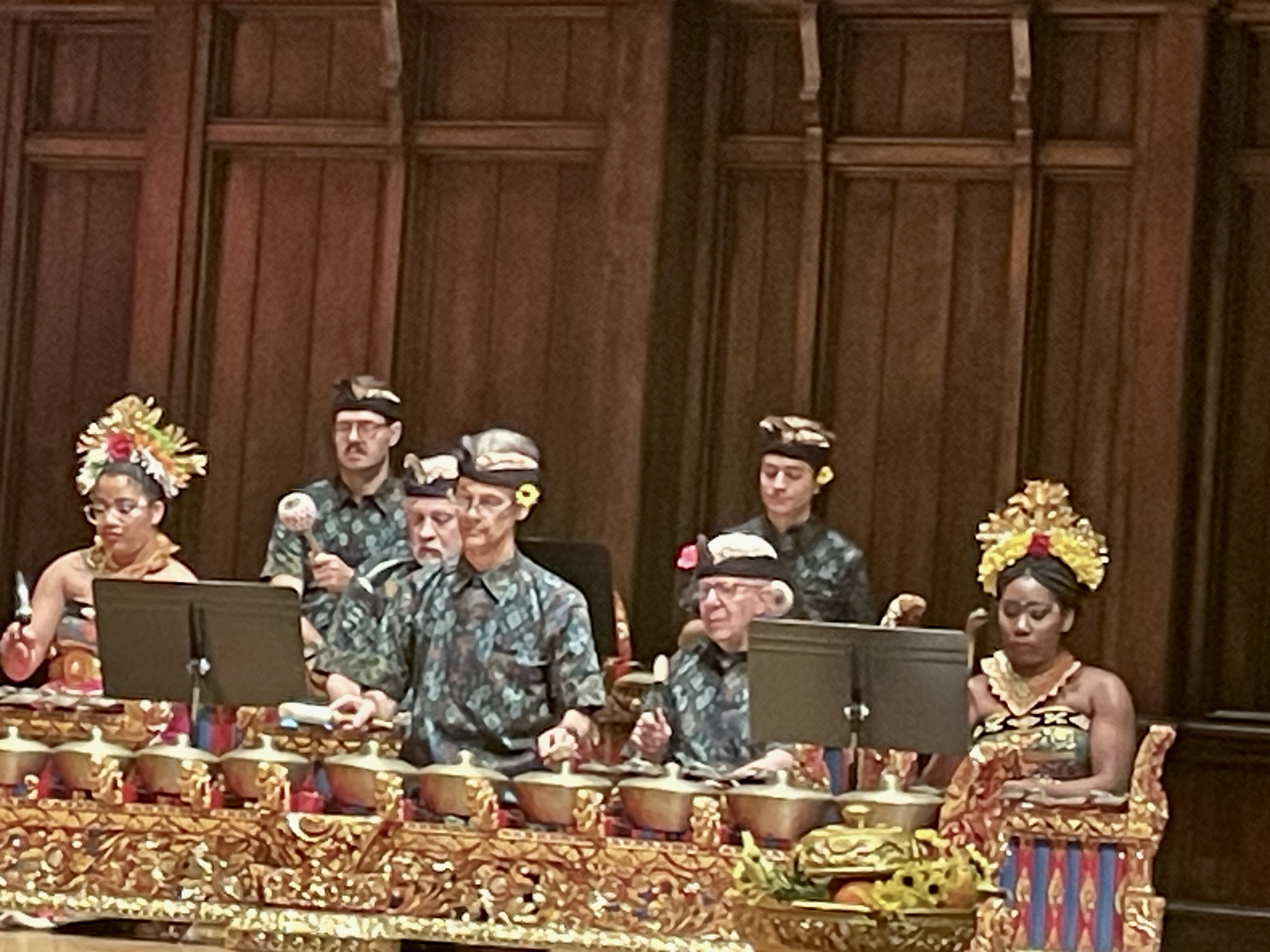
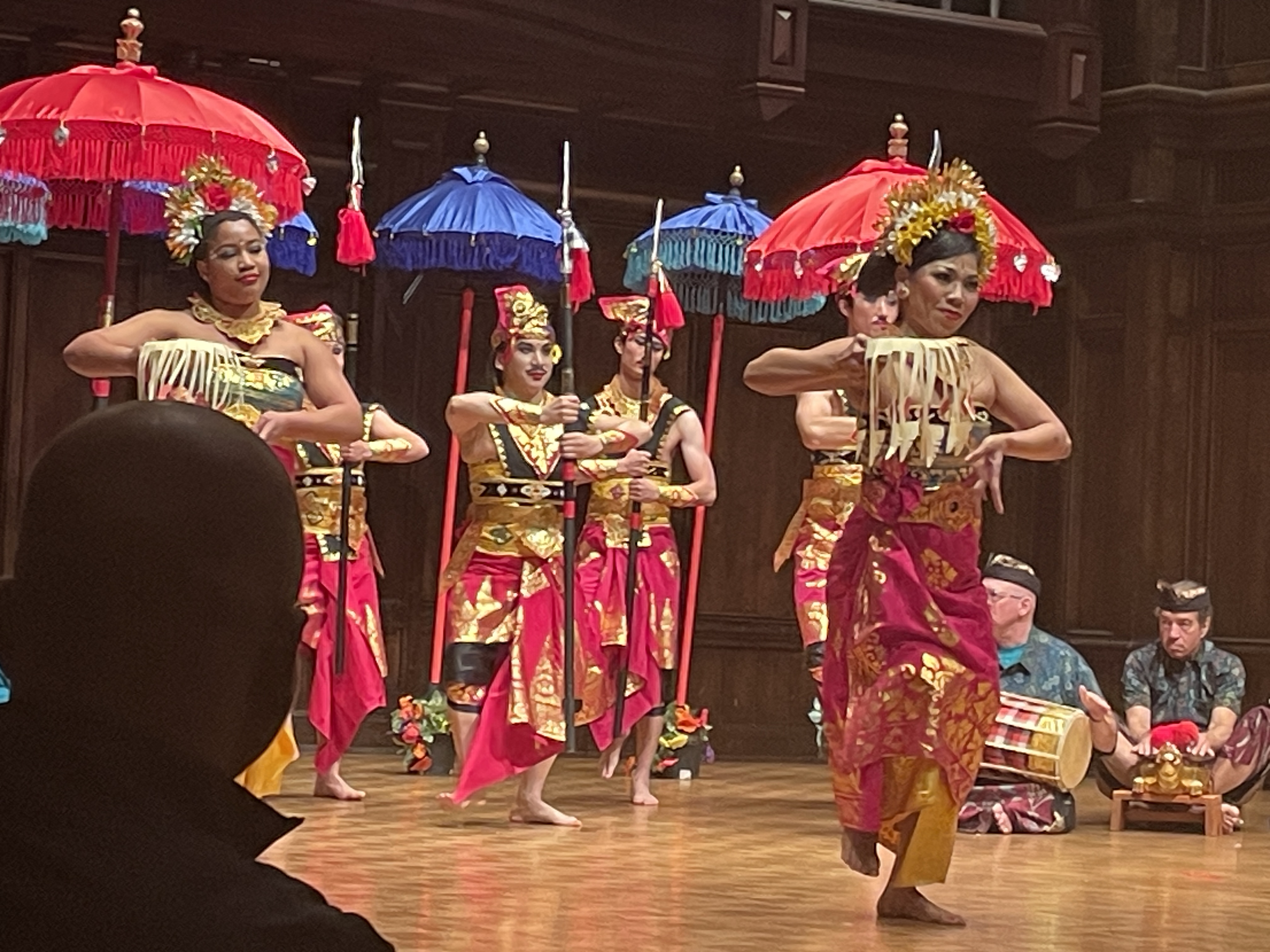
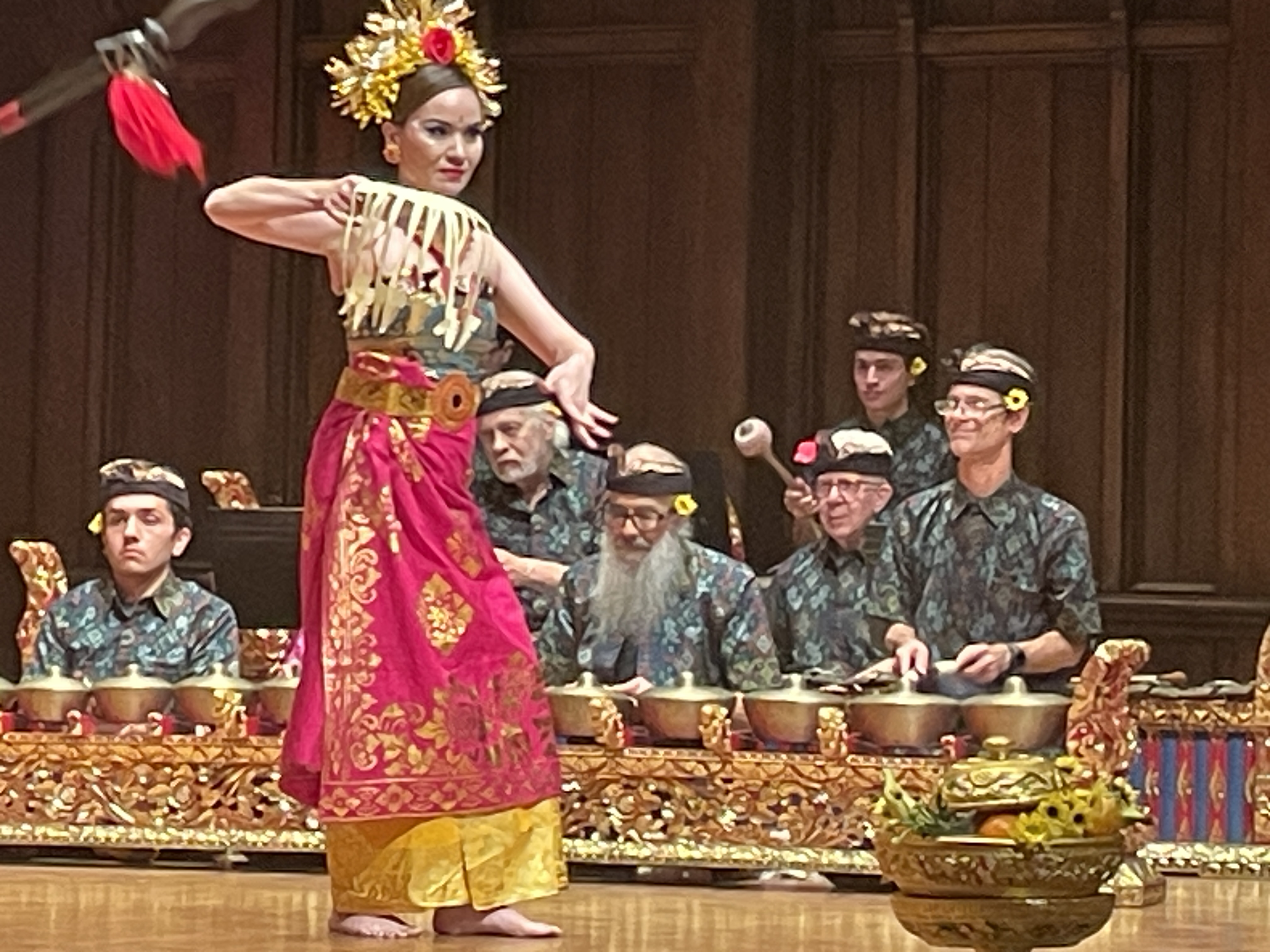
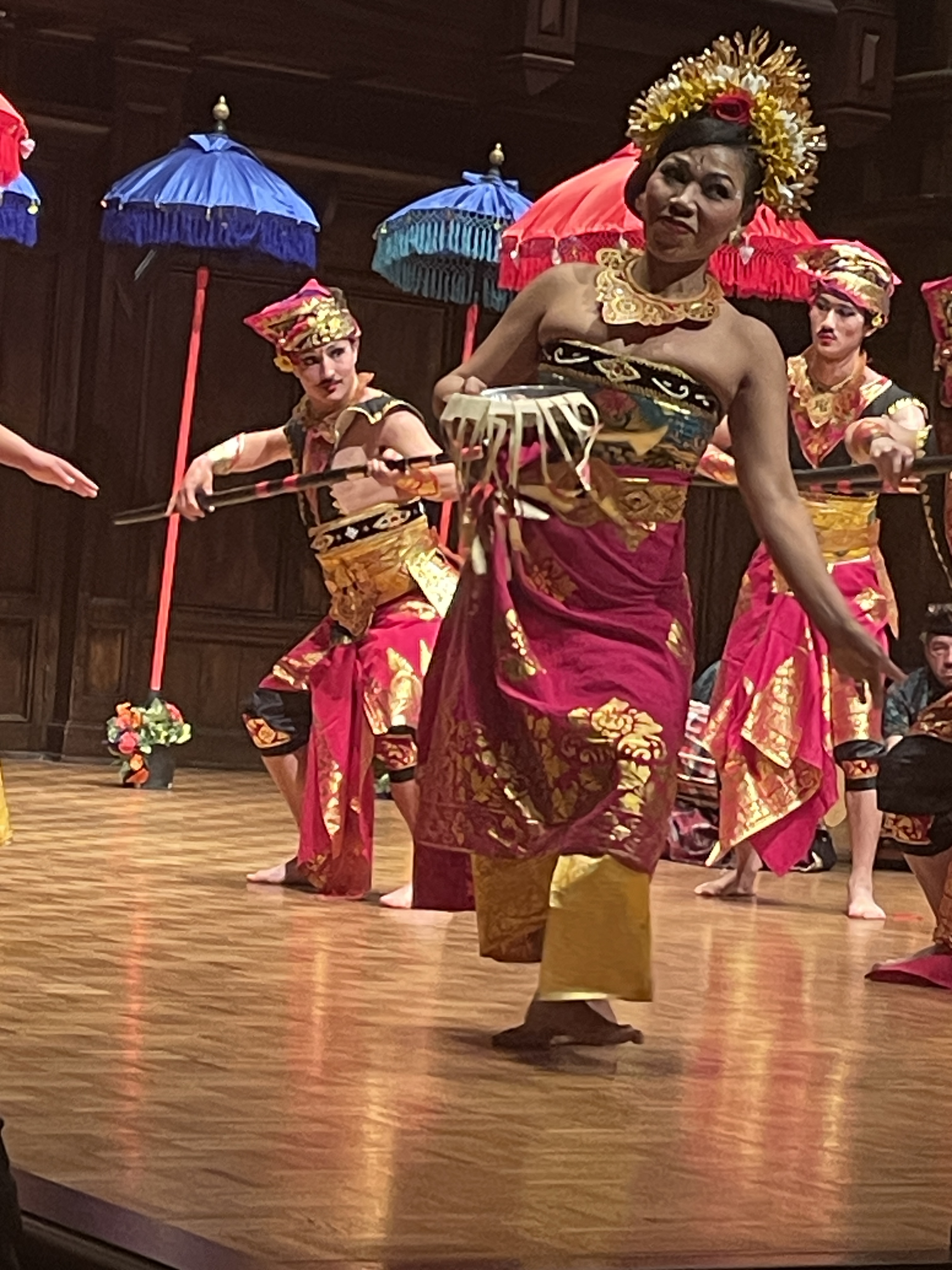
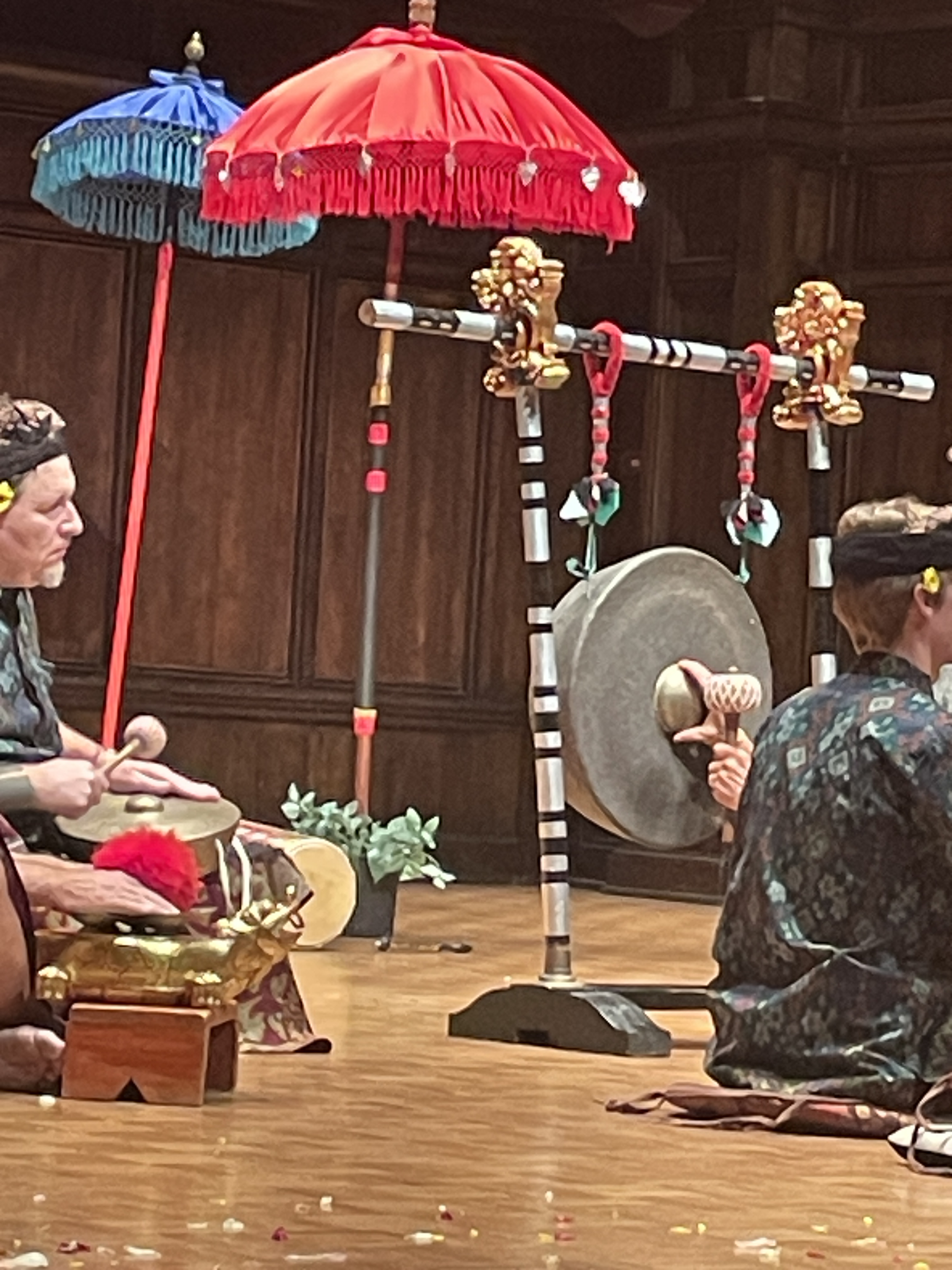
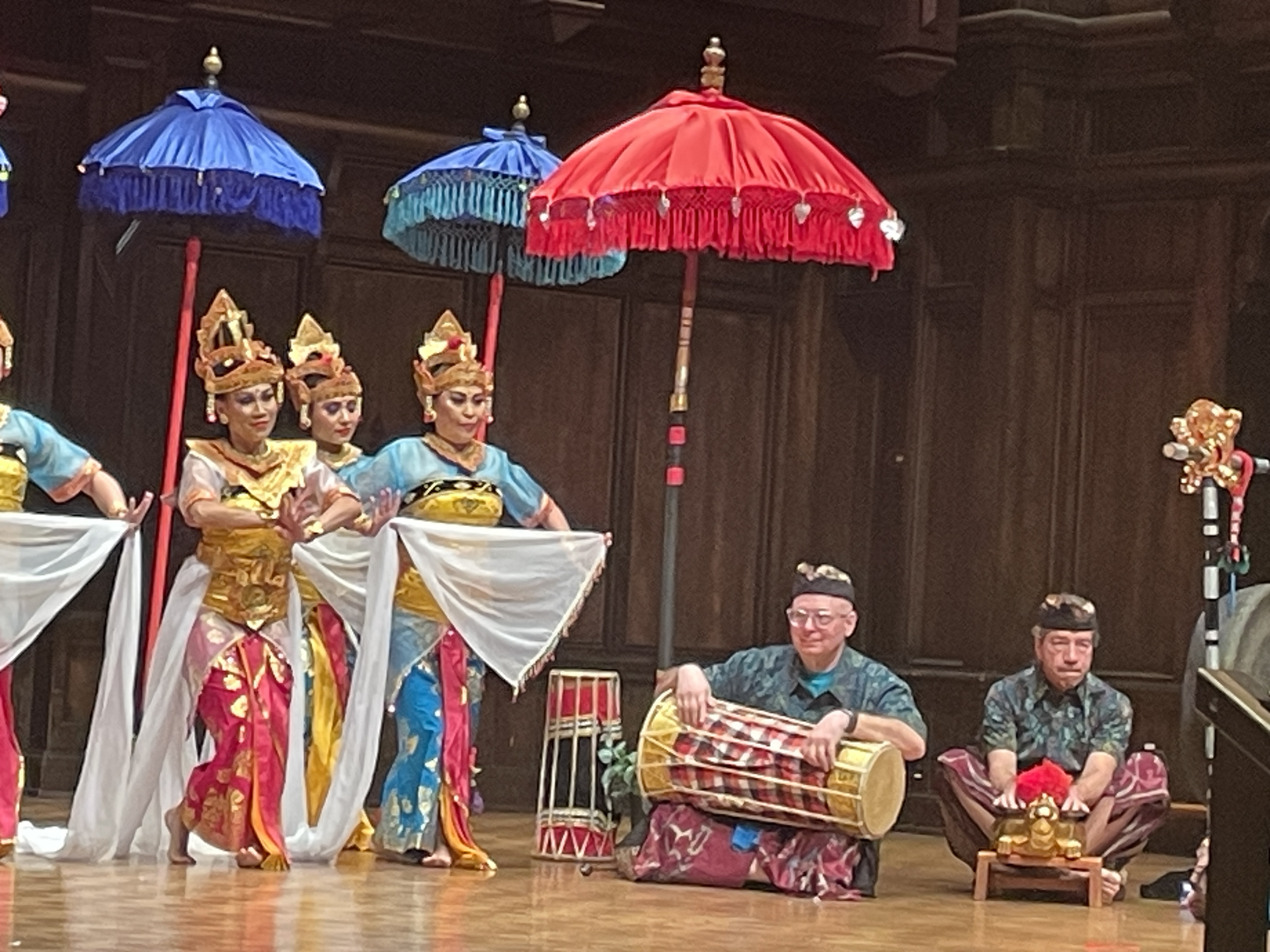
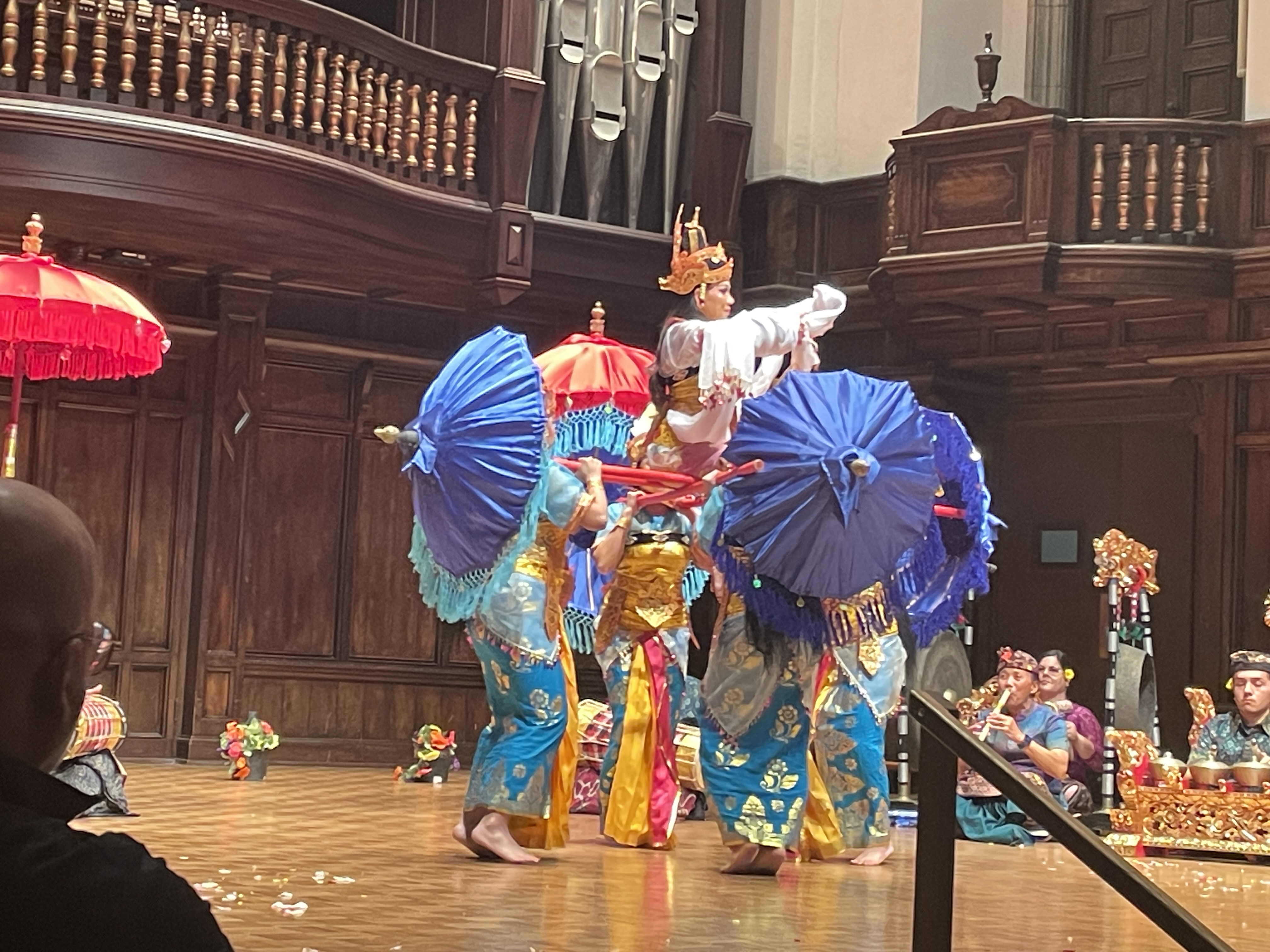
Earlier this week I attended a concert at Pomona College. I do not recall ever hearing Gamelan music before. Gamelan is percussion music. In fact the word means percussion orchestra. The instruments used in this performance are called gong kebyar. The instruments are made of bronze, iron, or bamboo. This music sounds nothing like European music. The instruments are tuned to a very high pitch and deliberately what one might consider out of tune. This is intentional. Pomona College has its own gamelan ensemble. Musicians and dancers from The Californian Institute of the Arts joined them. They performed traditional temple dancing, music from Balinese puppet theatre, and some original pieces by a famous Balinese couple (Dr. NyomanWenten and Nanik Wenten) –both music and dance. The style of this music is loud and fiery. I could only take photos because recording was prohibited.

Delights 6


Redwood tree absorbs the mist.

Jasmine fragrance fills th air.

Scarlet, hot pink, peach, orange and multicolored

rose blooms grace the garden wall.

Hummingbirds drink nectar from the feeder

in the lilac bush.

Morning joy.

California Adventure 2


Although my son had been here a couple of times previously, he had never been up Mt. Baldy so we decided to drive a way I had never gone before, the Glendora Mountain Highway. It begins in the mountains above the town of Glendora, CA, and goes approximately 22 miles east where it intersects the highway going up Mt. Baldy at the Mt. Baldy Village. This road is not for the faint of heart. Although in good condition and well paved and two lanes wide, it is narrow and windy and without guard rails. Unfortunately, we did not stop and I was so busy driving, I could not see all the views. Unlike most of the highways and roads up toward the mountains all of which have views to the south, this highway crosses over to the other side so that many of views reveal all the rugged mountains to the north. I will attempt this adventure again, but not alone. For most of the trip we saw no other cars, and there is no cell phone reception up this way so best to have someone along with you if you decide to drive this.

After we intersected the main road, we drove to the top but the very top is blocked off so we turned around and parked to hike to Angel Falls. The following photos were taken on this hike. Most of it is paved, but the very last part up to the falls is steep and gravel and necessitates crossing the stream below the falls. We decided to hike farther up a gravel road that climbs up the mountain where the paved part stops. Angel Falls can be heard long before you can see it. This is a relatively easy hike. Even on a Monday, there were quite a few people headed to the Falls so if you do not want crowds, go on a weekday.

Yes, that is snow on the left side.

California Adventure 1


My son was visiting from Ohio and we decided to go on an adventure. Highway 39 used to go up through the mountains north of Azusa and connect with Highway 2. However, due to rockslides the last 4 or so miles, those 4 miles of the highway have been closed for years. We decided to drive as far as we could. You can go around the barrier and continue by hiking farther up over a sort of pass. Although my son did go partway, we did not hike to the top. These are photos along the way where you pass two reservoirs that are now used only for flood control. It is not a difficult drive and a fun activity going up into Los Angeles National Forest–an easy day adventure.

Delights – 5


reading,

listening to birds

the gurgling of water,

looking up to watch

four hummingbirds challenge

each other at the feeder, and

I notice I’m surrounded by flowers

and the scent of orange blossoms.