It takes genius to write a novel about serious topics, e.g. racism, poverty, addiction, drug dealing, crime, which is also very funny. This is the first book I’ve read this year where I found myself frequently laughing out loud. In the projects of South Brooklyn in 1969, an elderly church deacon shoots a young drug dealer, who is also a star local baseball pitcher. Thus begins a saga about the Black and Hispanic residents who live there, the cops who patrol the area, the Italian mobsters who control the docks, and the church where the shooter is a deacon. The “New York Times” listed this as one of the ten best books of 2020. Indeed it is. This is the third book I have read by this author, and I will soon progress to another one.
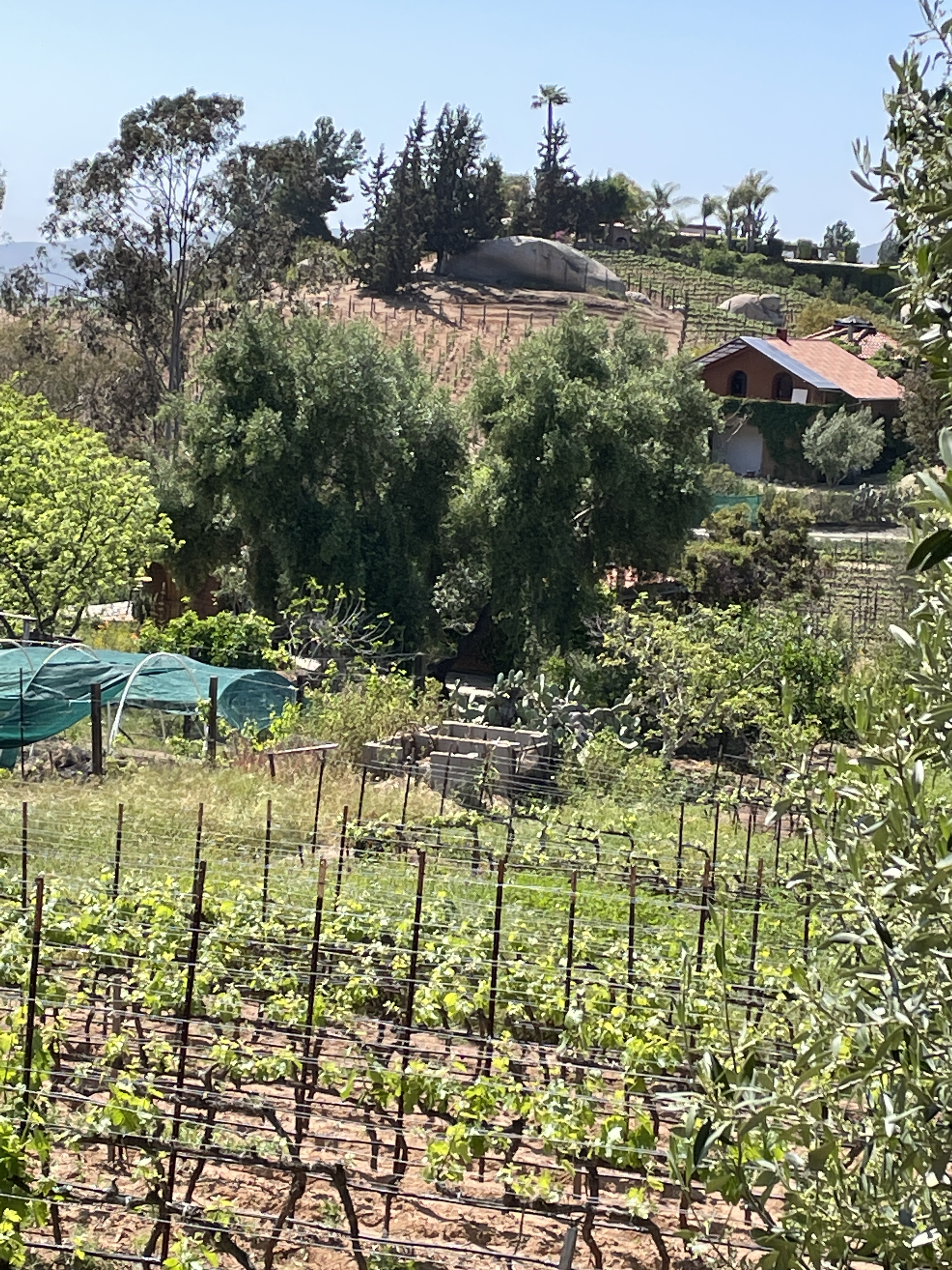
Originally started by three women–see the name, this woman is the only one of the three left as owner. She said she has been doing this for 20 years. The vineyards keep healthy without the use of toxic herbicides or pesticides. She says the breezes from the ocean help with keeping the vines healthy. She also has olive trees and gardens and a small restaurant–outside. The vegetables, flowers, etc. used in the restaurant are grown there. Below is the salad we had for lunch.
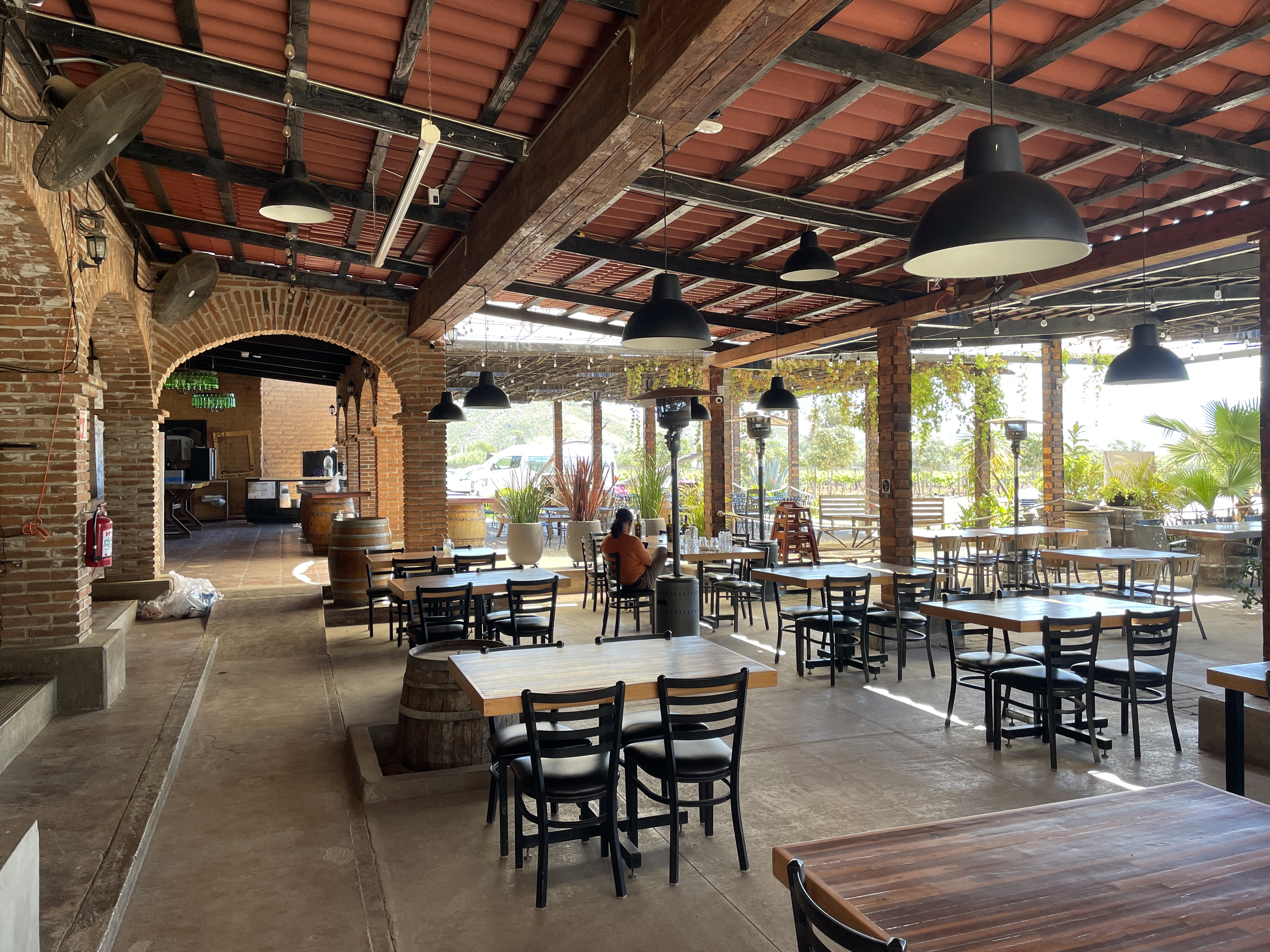
Lunch under the trees.
Wine tasting underground. What you notice when you drink all natural wines is that at the bottom of the bottle there is usually a residue.
The path in and out of the tasting room.
Buildings and fences made of local stone and flowers everywhere.
Stones, some quite large, show up everywhere in this part of Valle de Guadalupe. Some buildings, restaurants, other wineries, houses are build around the rocks with rocks as part of the architecture. I took the following photos from Tres Mujeres.
A lot of Valle de Guadalupe reminded me of parts of New Mexico and also the rocky hills around Temecula, California.
Not only are there over 100 vineyards in this valley but also endless olive groves. Locally pressed olive oil can also be purchased at many of the wineries. The other specialty is cheese. We stopped at one shop, the Cremeria Los Globos where they specialized in many cheeses filled with chipotle, black pepper, you name it. Honey is also produced locally and for sale at many wineries. For the most part, everything is all natural.
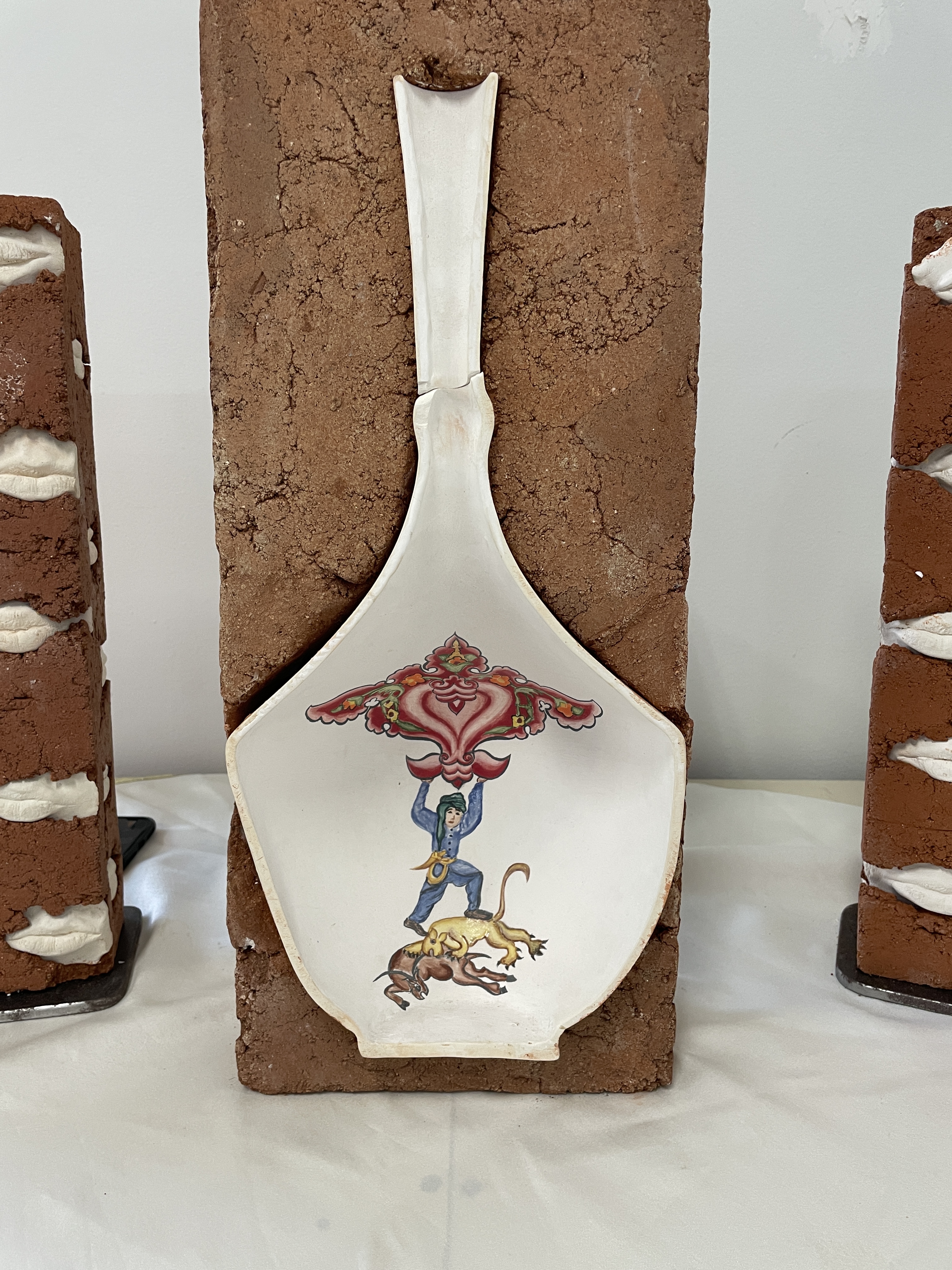
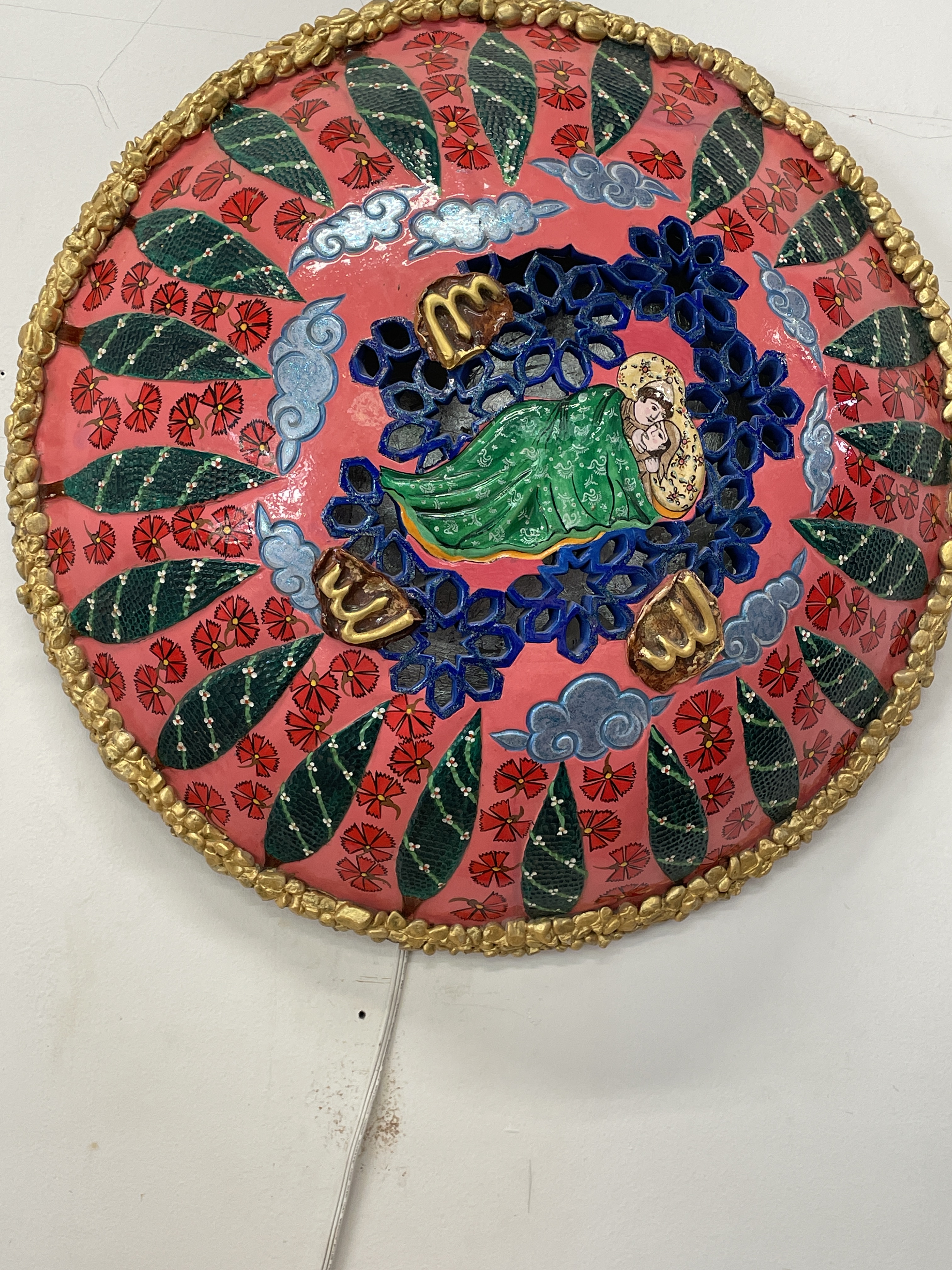
The first place we visited after breakfast was the art gallery/studio and home of Beliz Iristay. Although she does other things, her main medium is ceramics. I had first seen her art on display at the Riverside Museum back in December and posted some of that art in a previous blog. Originally from Turkey, she is married to a Mexican artist. The two met while both were teaching in Istanbul. She has lived also in the US and her artwork has been displayed in many places in the US. She and her husband live in the Valle de Guadelupe near Ensenada, Mexico.
Here are a few of the pieces I photographed in her gallery in Mexico.
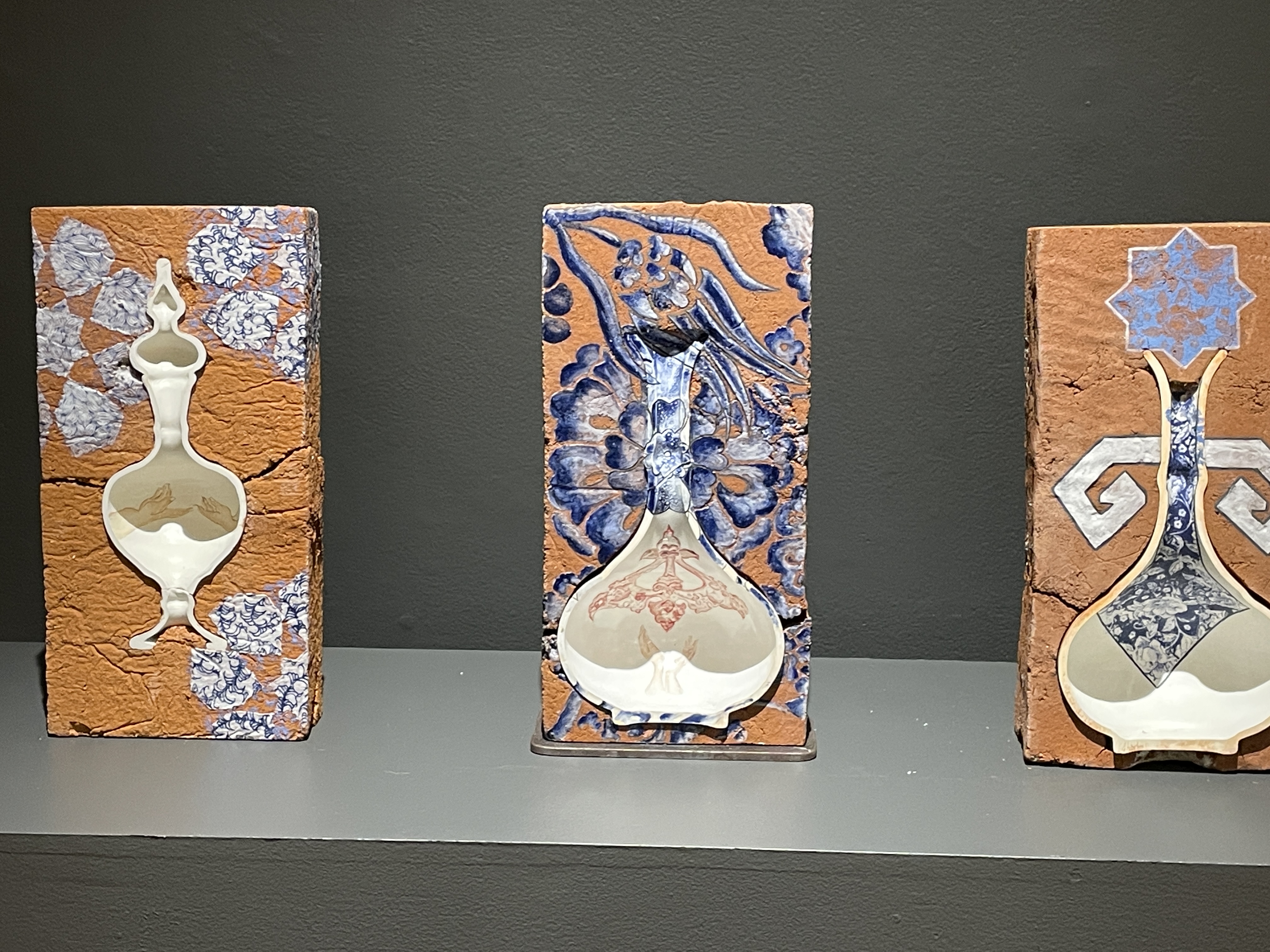
Following is work that was on display at the Riverside, CA Art Museum until last week. The first tells a bit about her and why she produces the type of art she creates. At her studio she repeatedly emphasized that she sees herself as creating feminist art that makes statements about the plight of women throughout the world. At her studio she was creating some large pieces for a new commissioned display that supports what she sees as her feminist goals.
She frequently uses traditional adobe bricks from Mexico made locally where she lives and then transforms them into various works of art often combining the Mexican and the Turkish cultures.
First, we went to the fish market where I saw fish I could not even begin to identify. Then we strolled along the wharf.
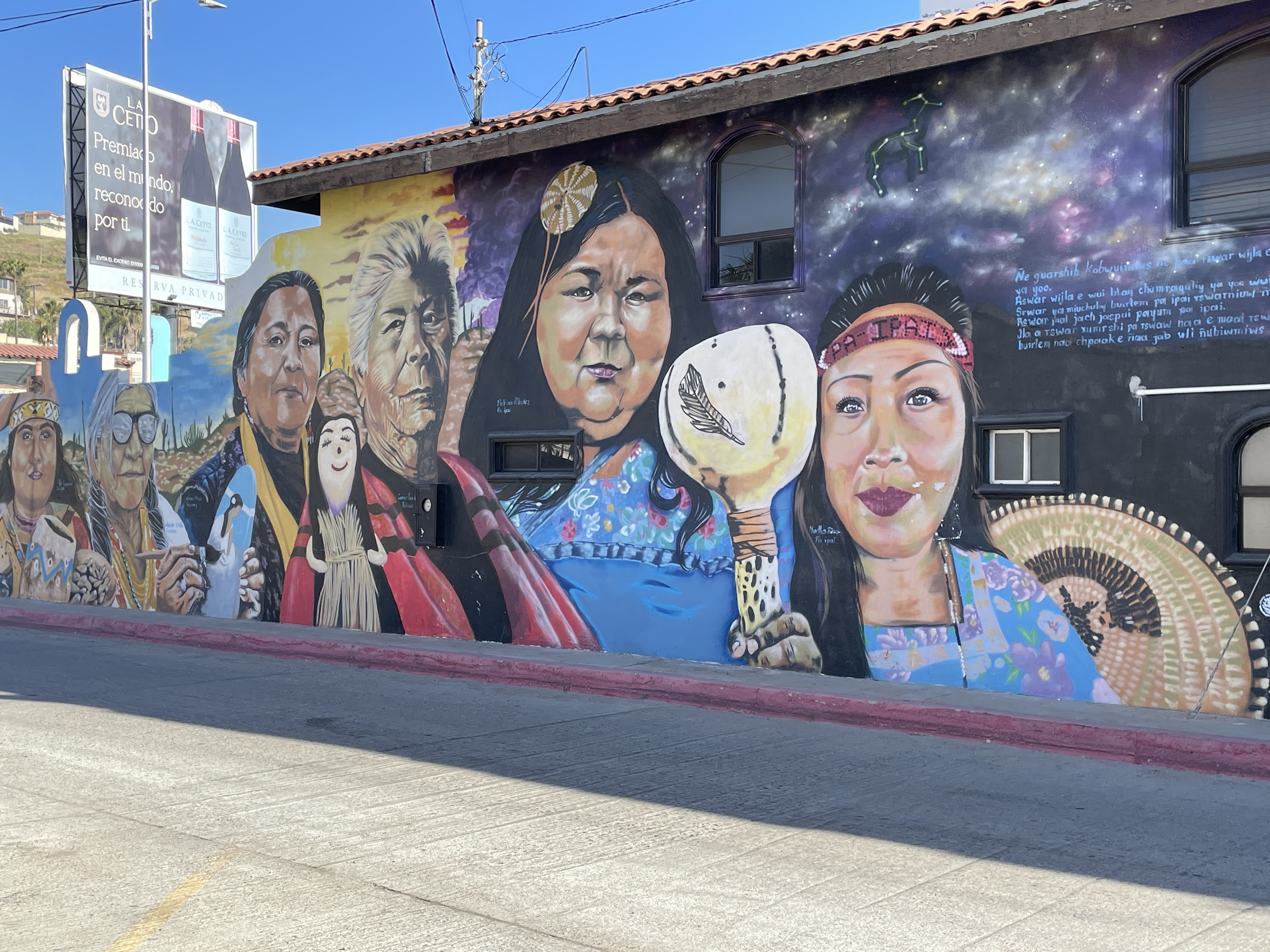
This mural portrays the matriarchs of the northern Baja area. each from a different indigenous tribe who lived there before others arrived.
Cruise ships dock here several times a week.
Built when alcohol and gambling were illegal in the United States, this was once a famous casino where the rich and famous came to gamble and drink. Now it belongs to the city and is used for weddings, retirement parties, etc.
Back in the 30s, the water came up to the edge of the casino property so people could come in their luxury yachts, dock, and walk right inside.
The original bar still exists and is well stocked. Here we heard the story of the invention of the margarita. Many claim to have invented it in various places in Mexico. It seems to trace back to a bartender who moved from place to place and brought the drink with him. Who knows?
Day Two we visited several wineries and went to dinner at one of the top 50 restaurants in Latin America, La Laja. The following photos are from the first winery where we not only tasted various wines but also took a tour of their remarkable wine cellar dug deep into solid rock.
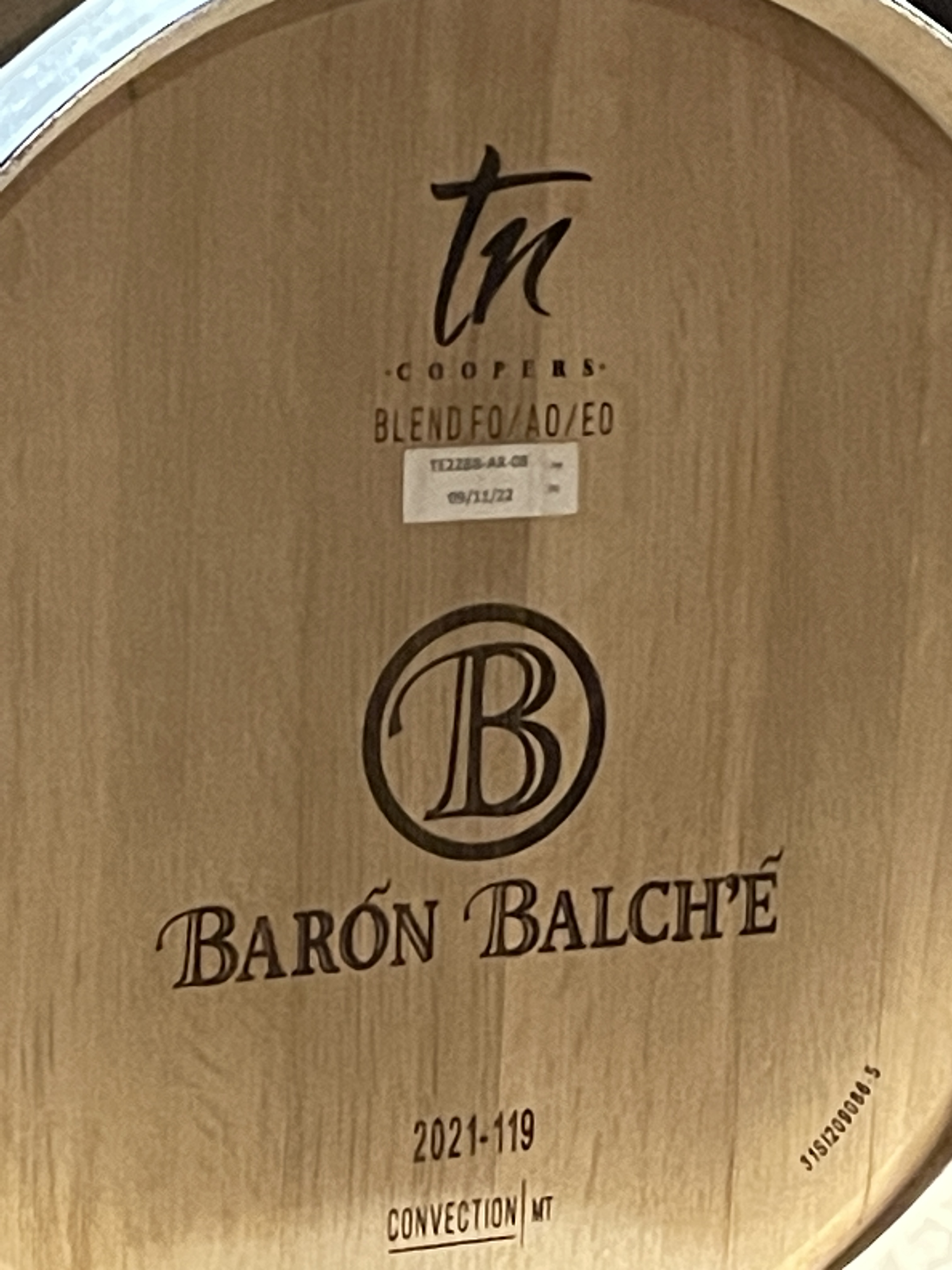
This is the name of the winery and each barrel is marked with varietal, date, etc.
The hills in some part of Valle de Guadalupe reminded me of the hills near Temecula, CA.
Here you can see how the cellar is dug out of the rock. The rock was oozing moisture due to the unusual amount of rain they received this winter.
I loved this message so much I had to take a photo of it.
I wish I could find a duplicate to hang outside on one of the empty sides of my house.
The wines here are all natural. Many of the wineries we visited do not use pesticides or herbicides.The sophistication of many of the wineries in Baja is very impressive.
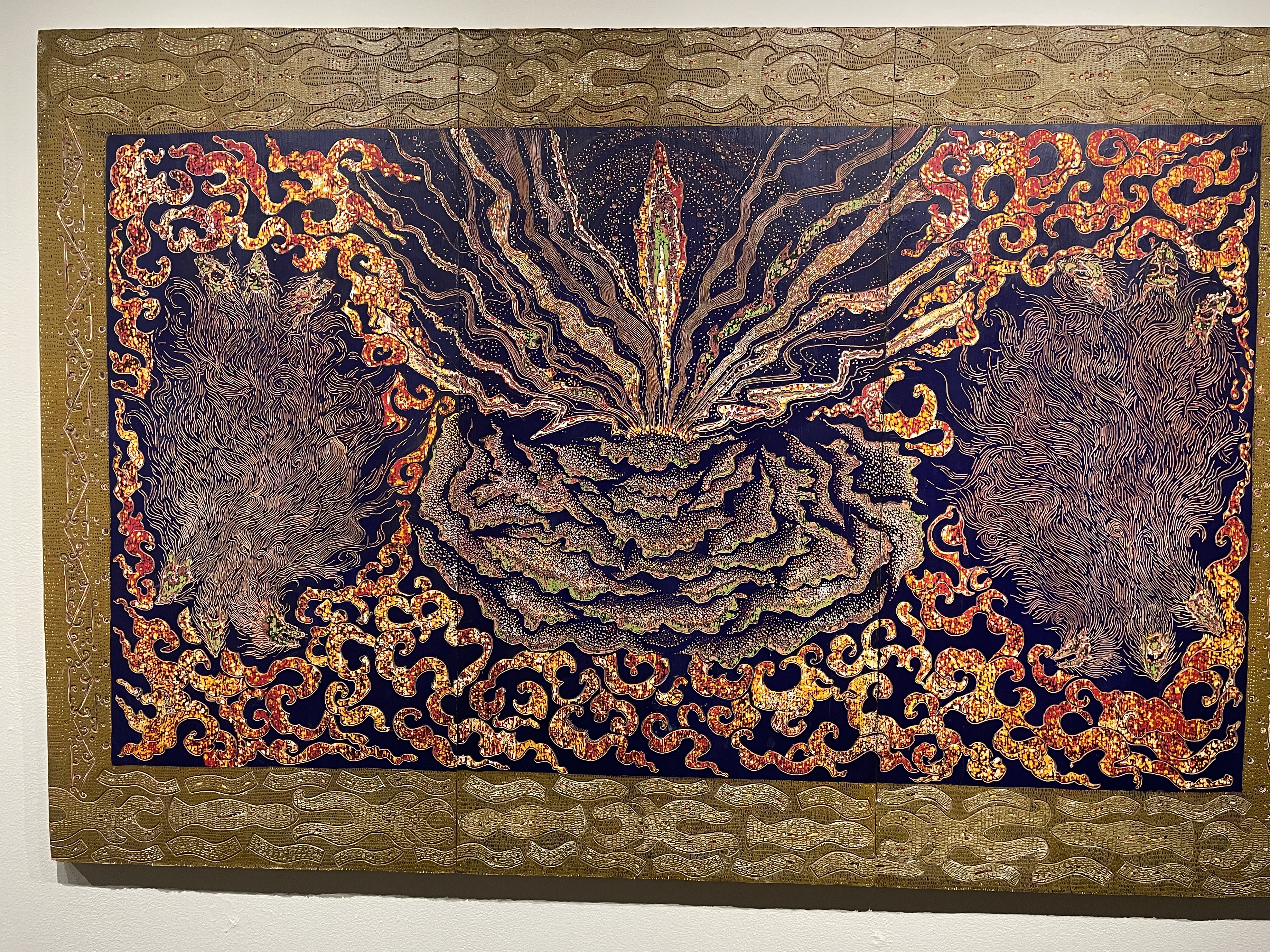
Day one we drove across border to Tijuana where we visited the incredible La Caja Art Gallery. We viewed a variety of art works, drank delicious Mexican chocolate, and had a sensory experience blind-folded.
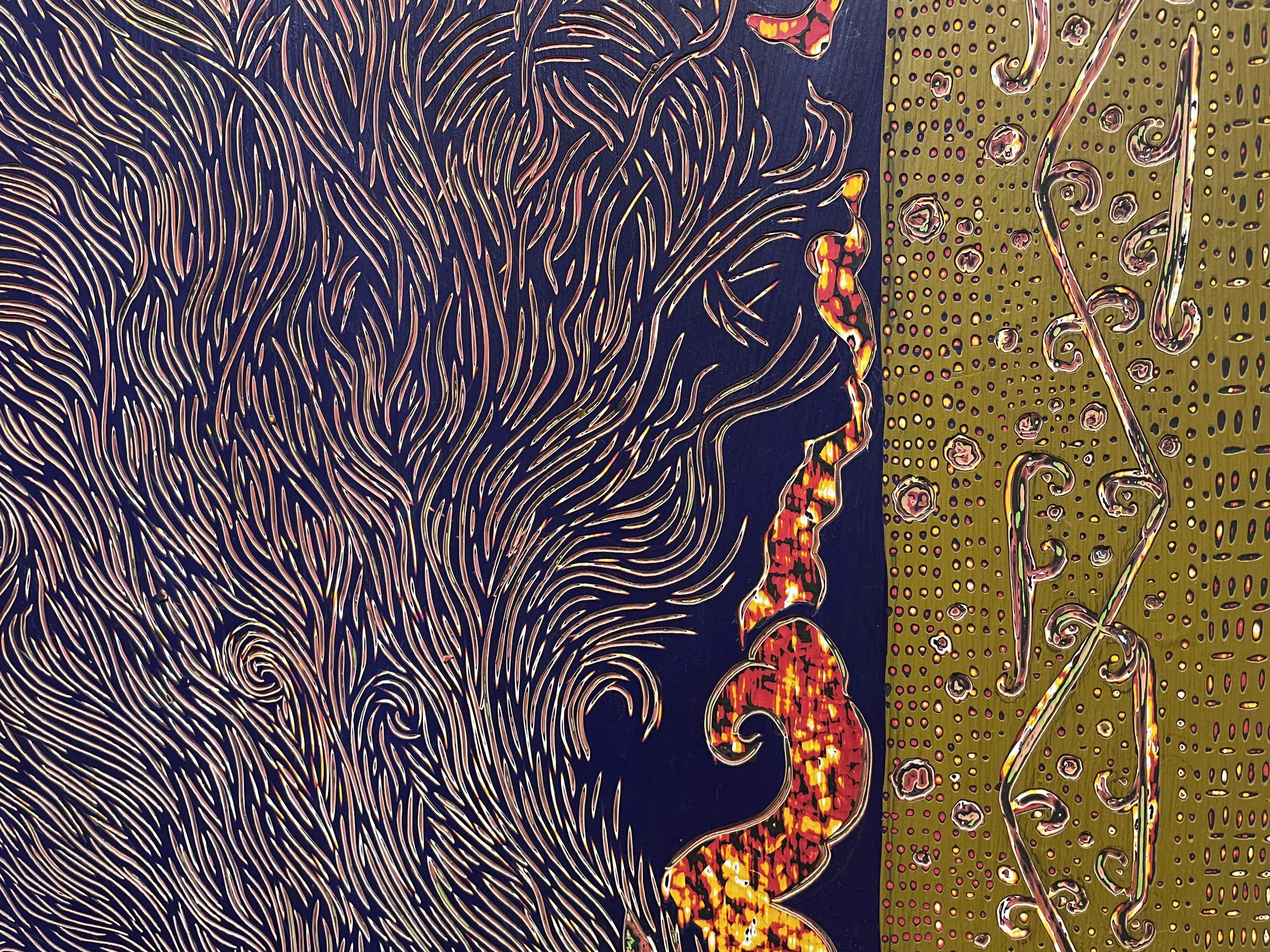
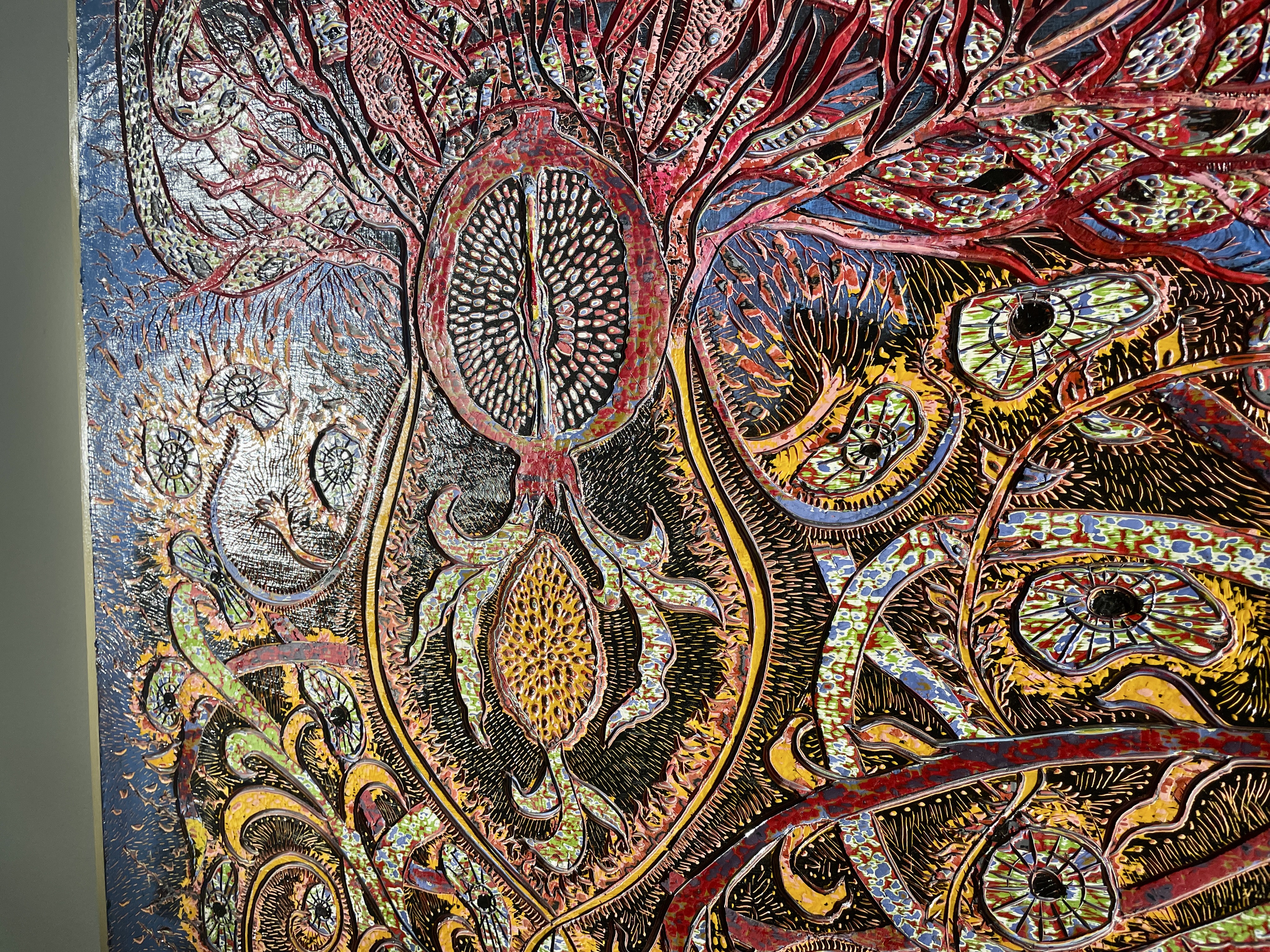
A close up of the previous painting. It consists of not only layers of paint but also carving into the surface.
Food for thought.
A different artist for the above and the following.
This one was painted directly onto the wall.
Later we experienced lunch at Caesar’s where supposedly (this is contested by some other places in Mexico) the original Caesar Salad was created.
This memoir take place when the author decides to move to Paris in order to address certain “issues” related to her childhood and young adult years. She grew up in Saudi Arabia before the oil boom and went to high school and lived in Beirut when it was considered one of the best cities in the world. She had to leave when Lebanon became war torn, her dad was kidnapped, and her sister shot. Her return to the US proved traumatizing even though she is not genetically of Middle Eastern descent. Paris was filled with Lebanese refugees so she moves there in an attempt to understand what happened to her beloved Lebanon and why.
This is not an ordinary memoir. I could not stop reading it; I wanted to know what happens next and why. It includes a graphic honesty not found in most memoirs I’ve read. In addition, it contains political and historical explanations for the events that transpired during the time period of the book.
Want to learn more about the background to current events in the Middle East? Want to read about a remarkable life? Then read this memoir.
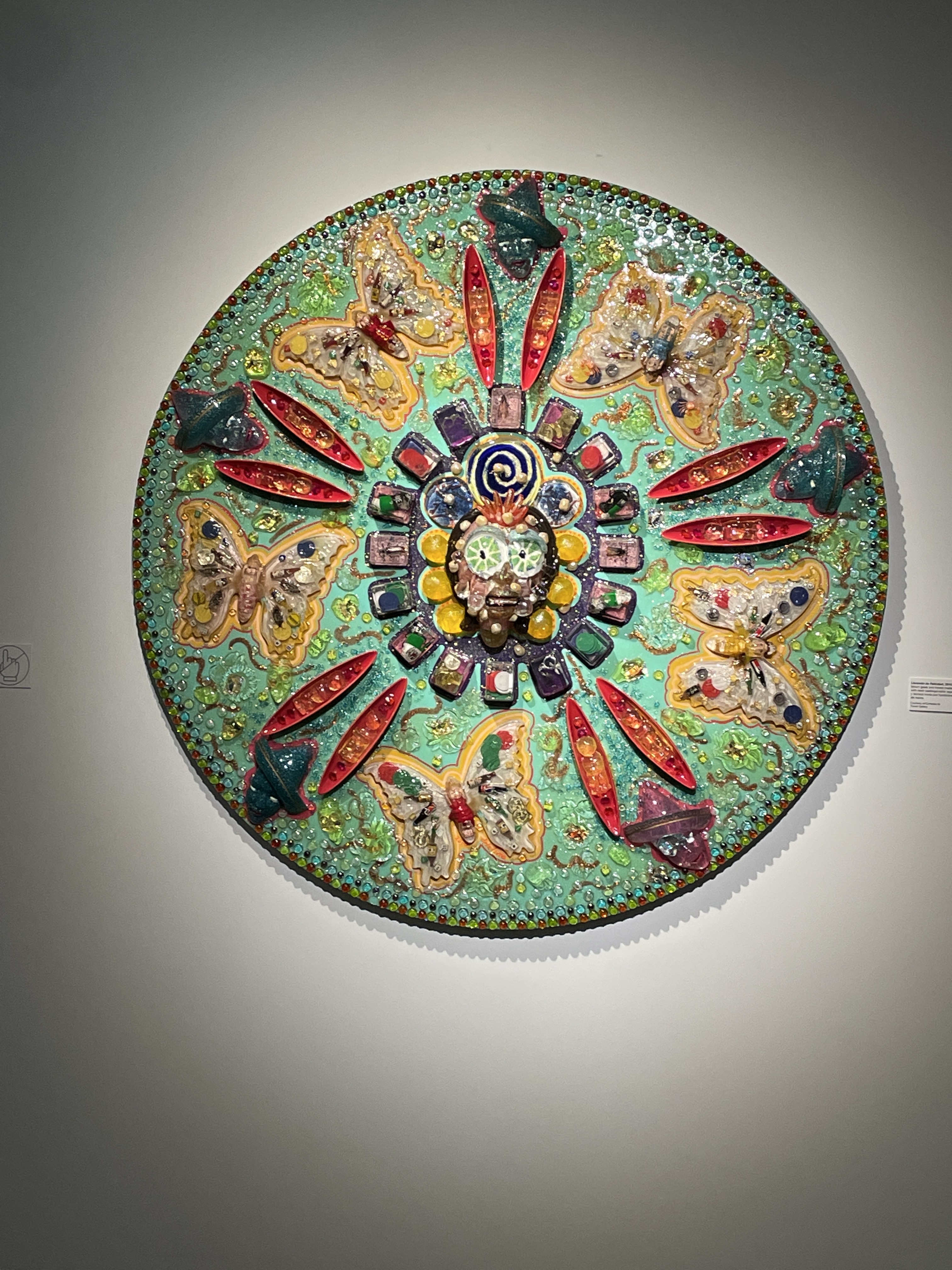
The second floor of the Cheech contains even more astonishing art including more multidimensional pieces except smaller than the giant one you see when you enter the building.
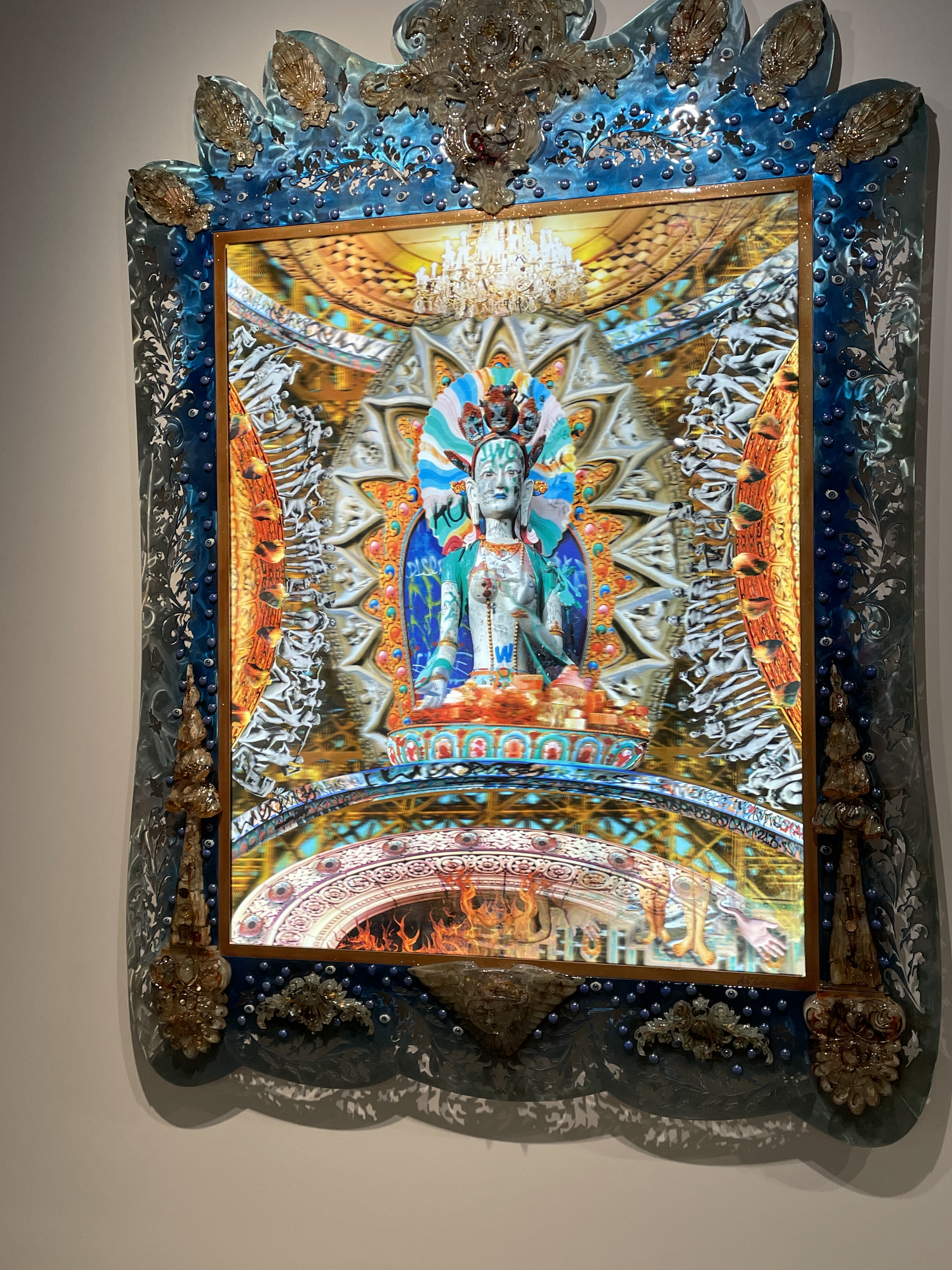
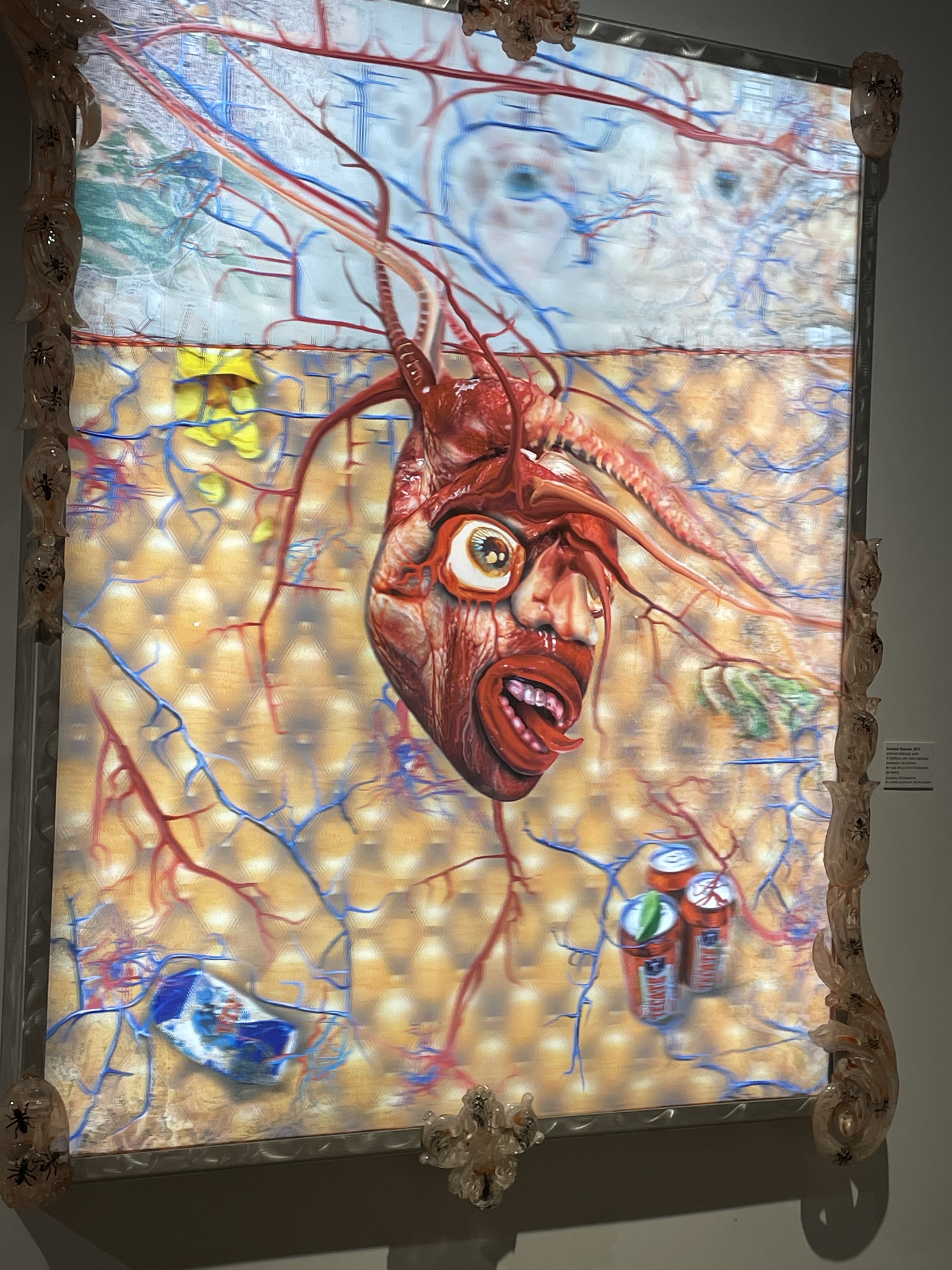
Depending where you stand in front, to either side, what you see is quite different. I kept thinking some old Flemish art or Hieronymus Bosch meets modern technology.
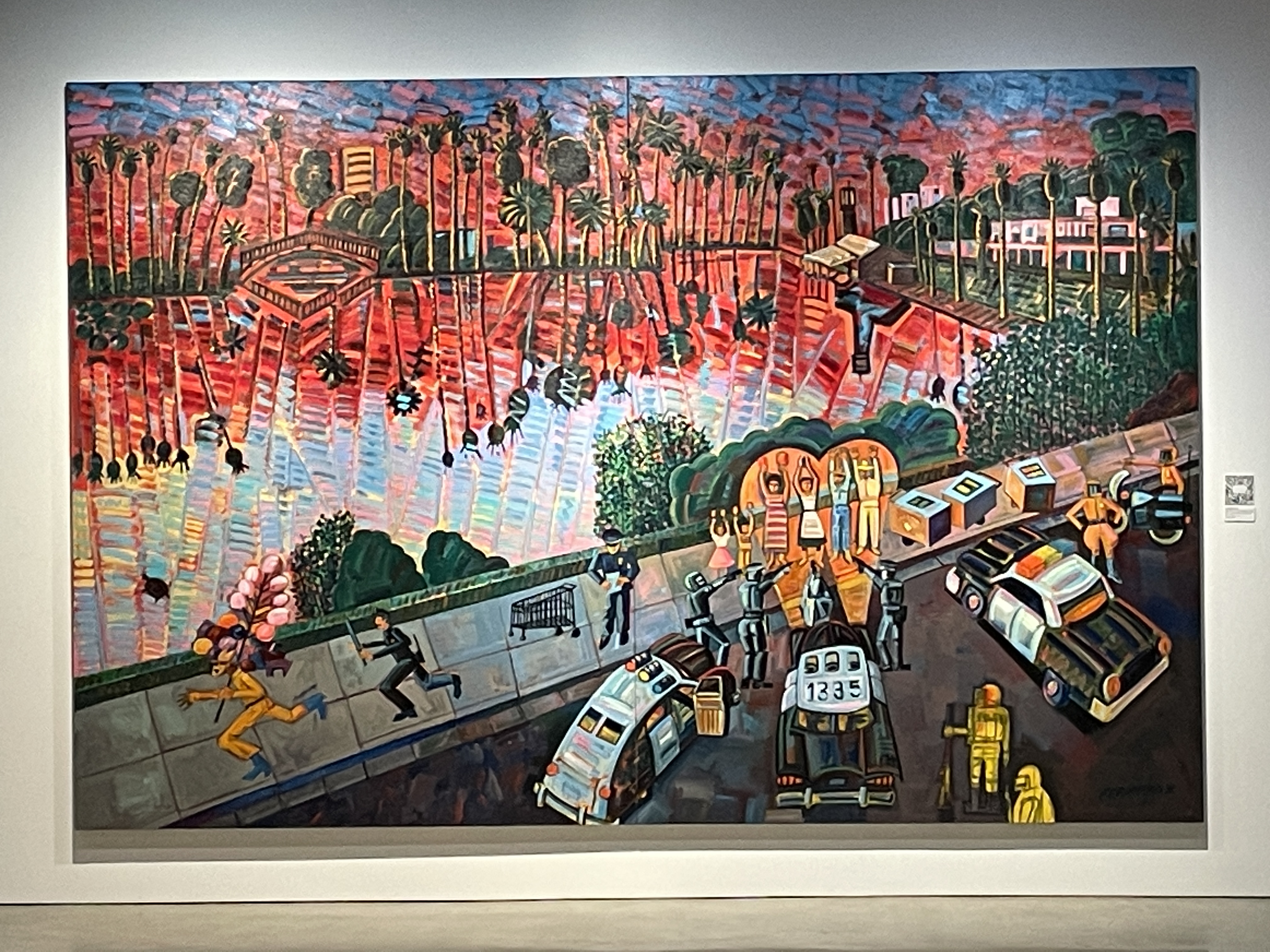
Much of the art makes a social or political statement especially about colonization, culture, poverty.
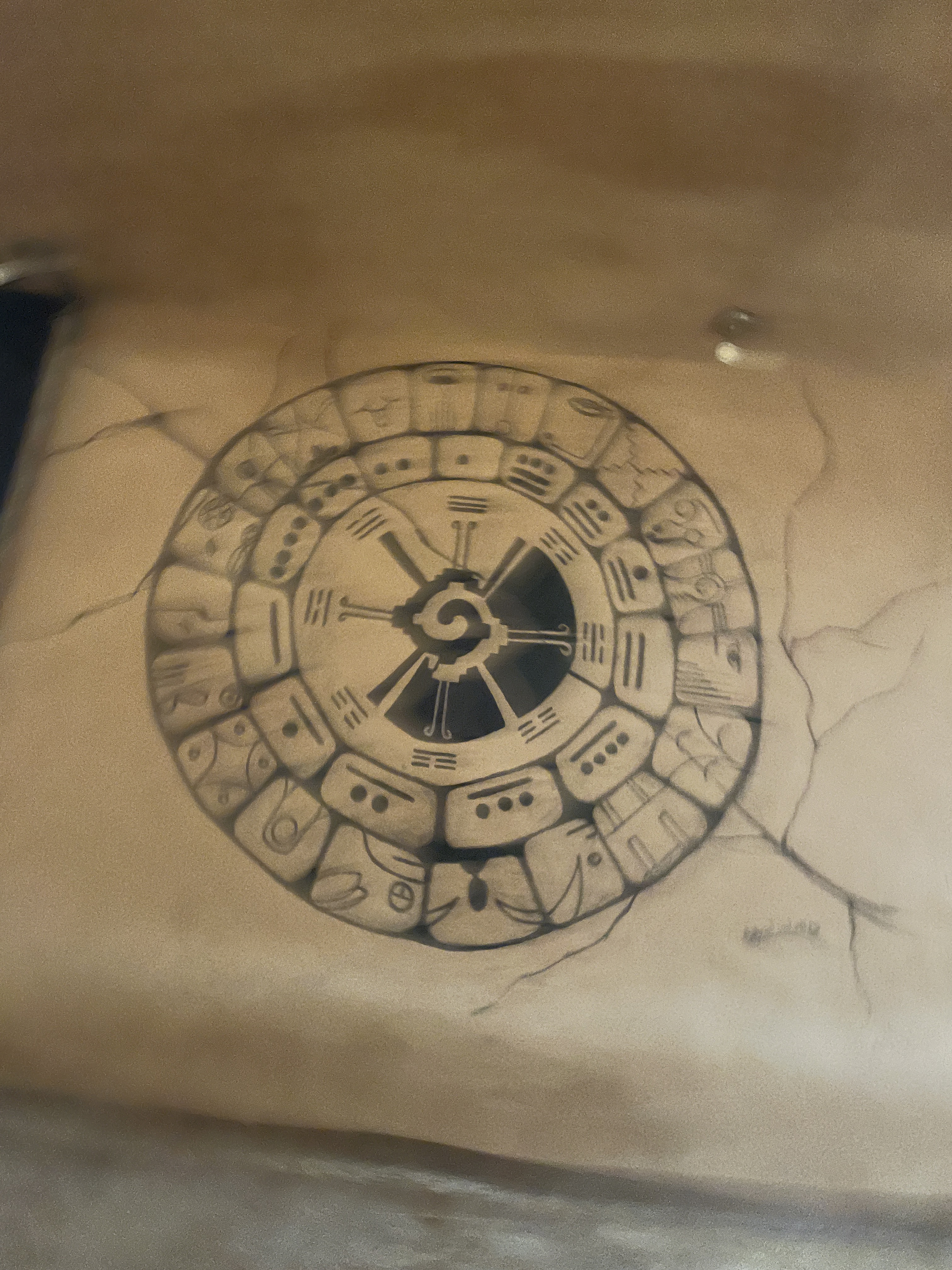
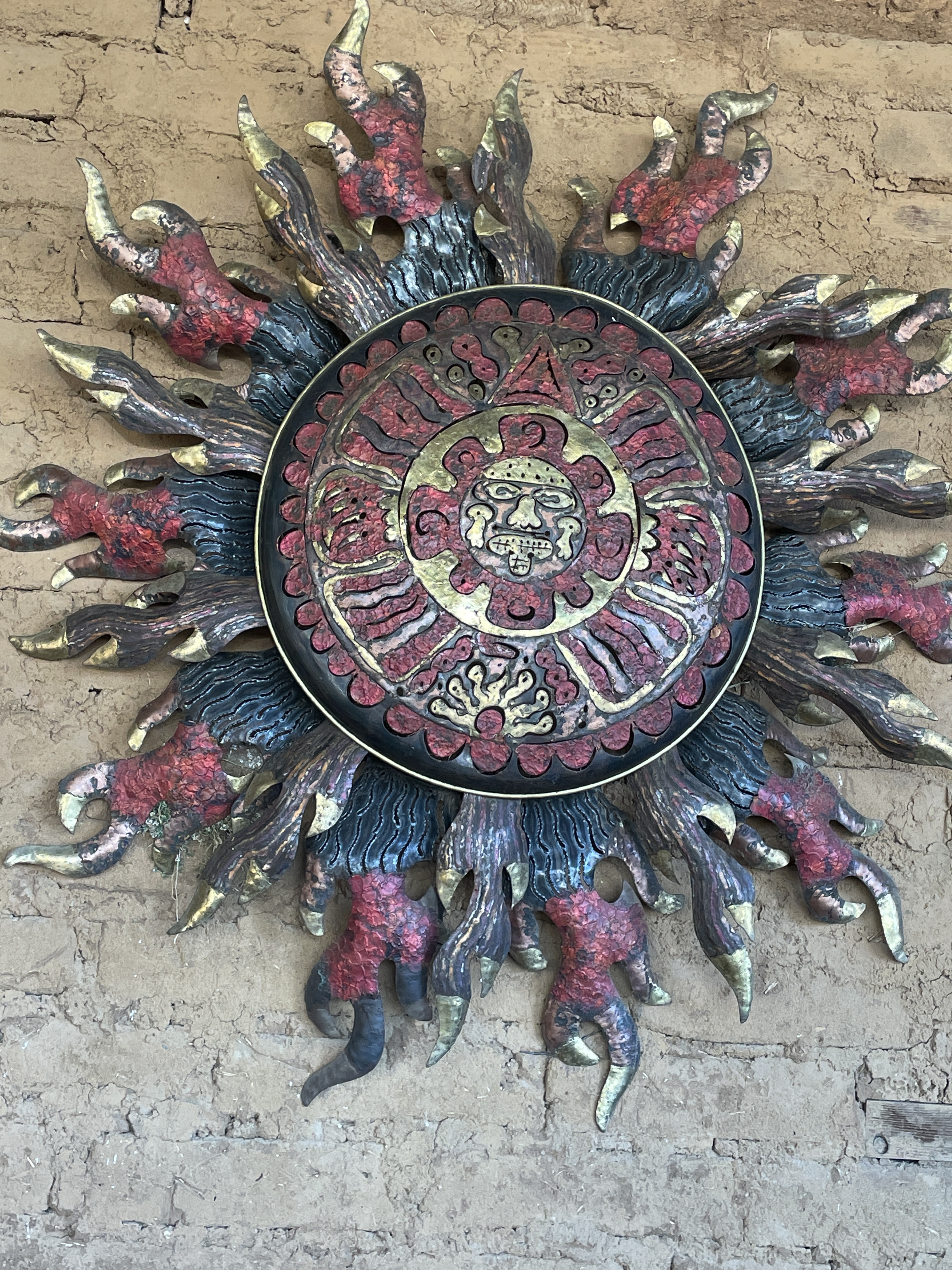
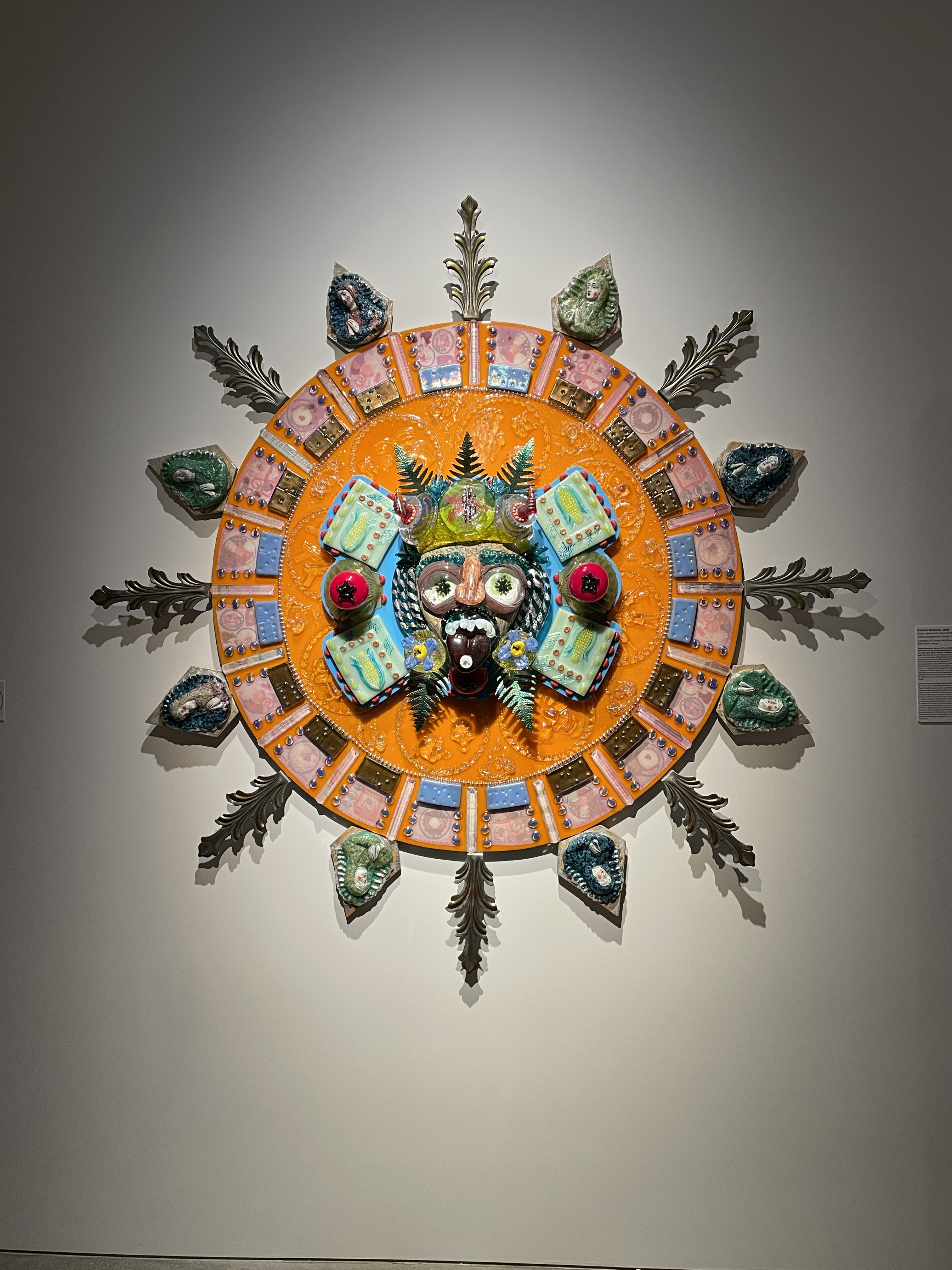
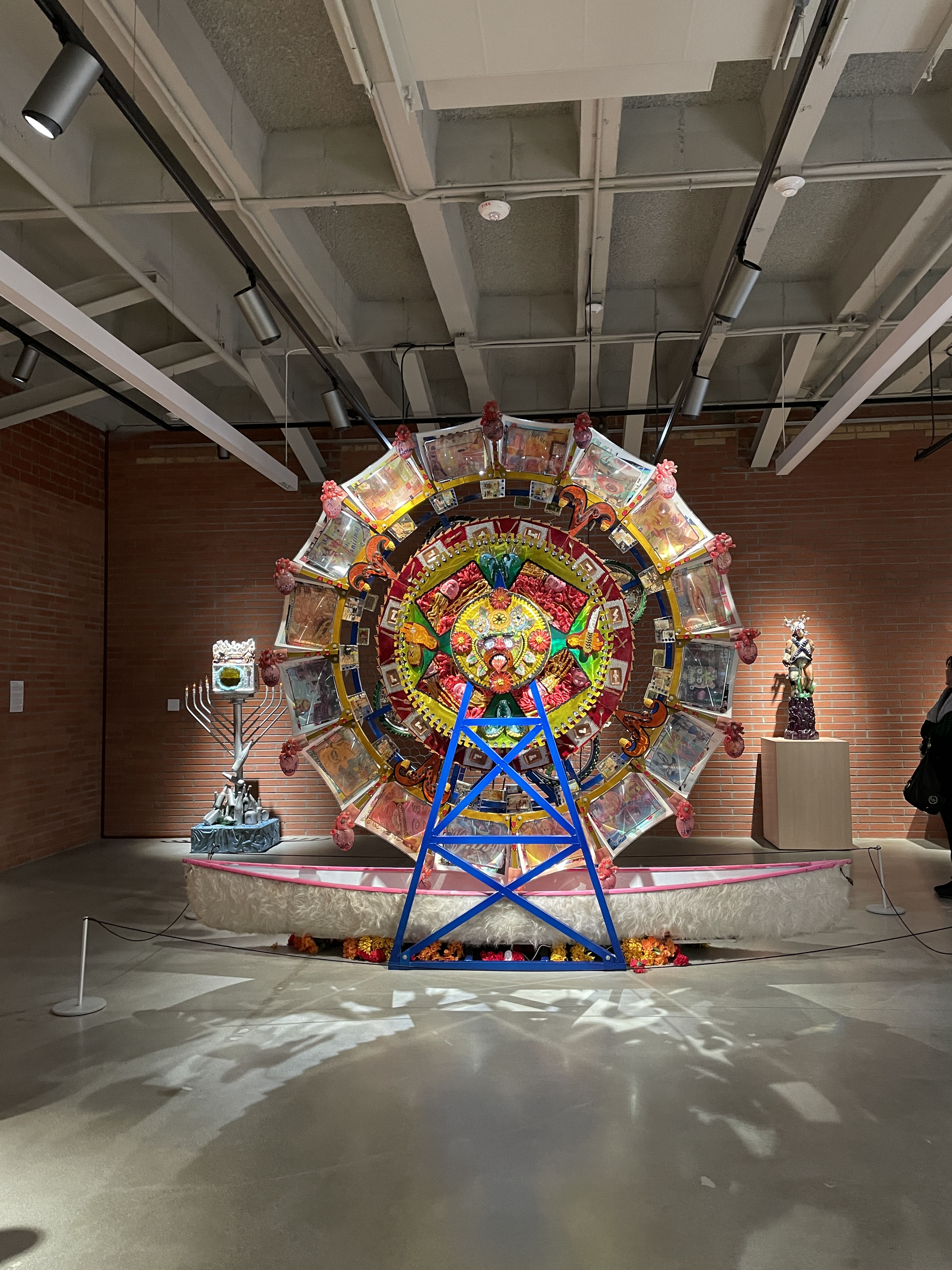
Some of the art is reminiscent of Mayan and Aztec calendars.
Hearts appear in many of the paintings.
And of course Frida.
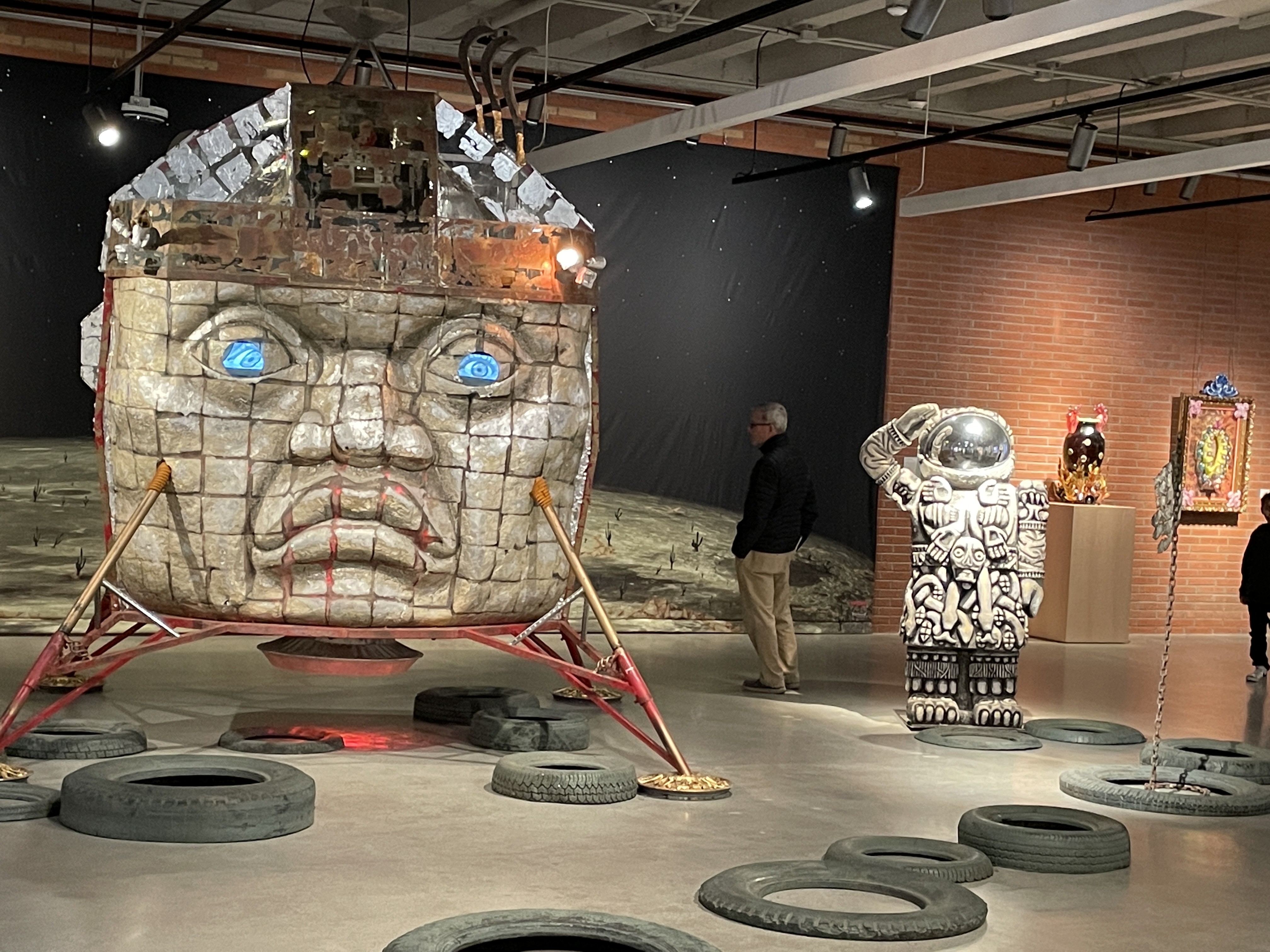
This is a space ship with changing eyes. If you walk around the back there is a creature inside watching everything with monitors.
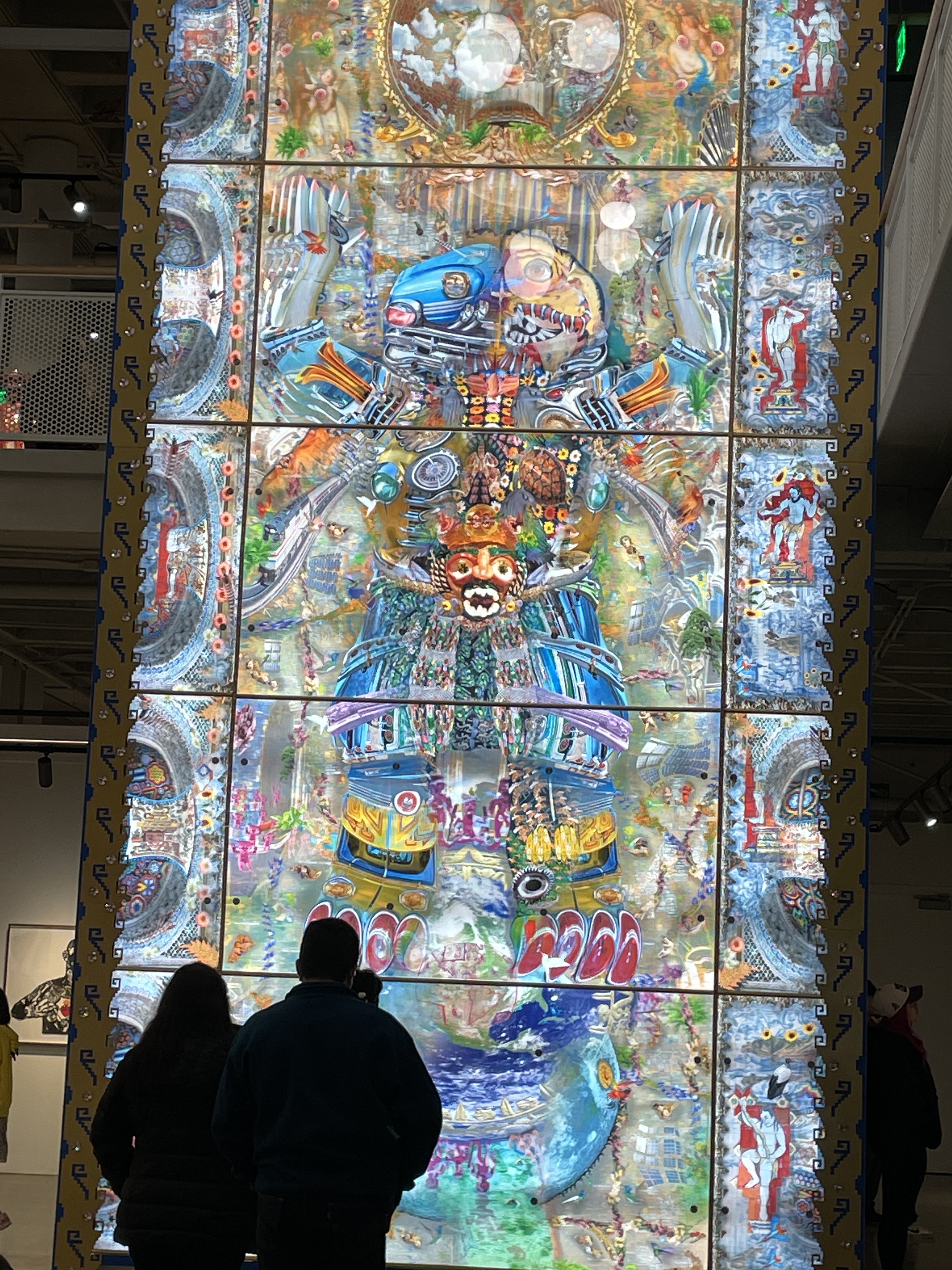
Some of you may remember the comedy duo Cheech and Chong way back in the day. Cheech has spent his life collecting Chicano and Chicana art. This year he gave a lot of his art collection to open a new museum in Riverside, California. Earlier this week my grandson, his girlfriend and I went to visit the museum. Photos and videos are allowed without flash. The following is the first set of photos I took. Please note that you need to see this art for yourself. Photos do not do it justice. Much of it is multidimensional and looks very different depending on where the viewer stands.
This is what you see when you enter the door; it is two stories high and multidimensional. Look how different the next photo of it looks from this one.
Walk farther to the side and it looks totally different again.
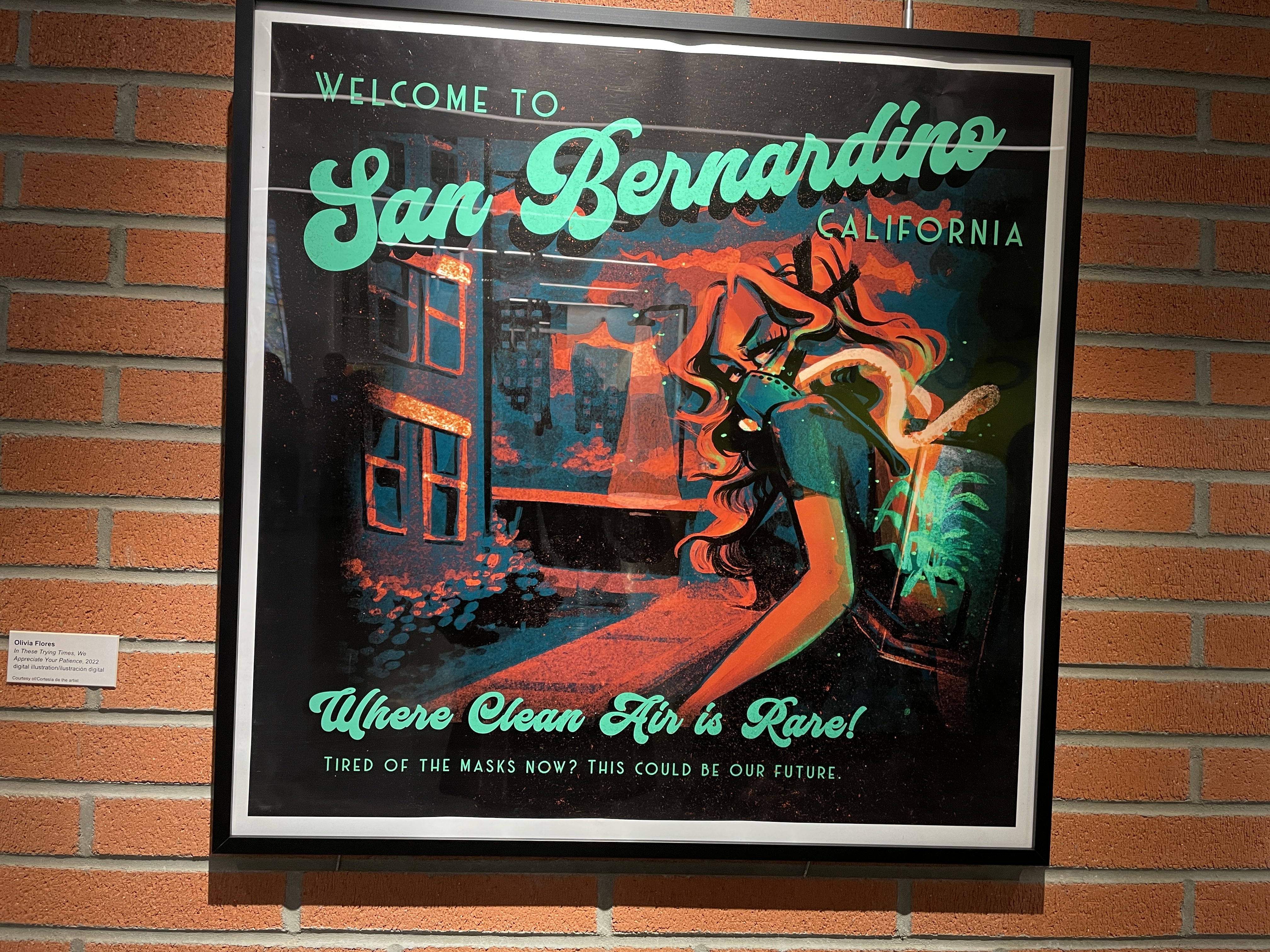
This speaks for itself. Right now where I live the air is clean enough that unless it is foggy, I can see all the way to downtown LA 30 plus miles away.
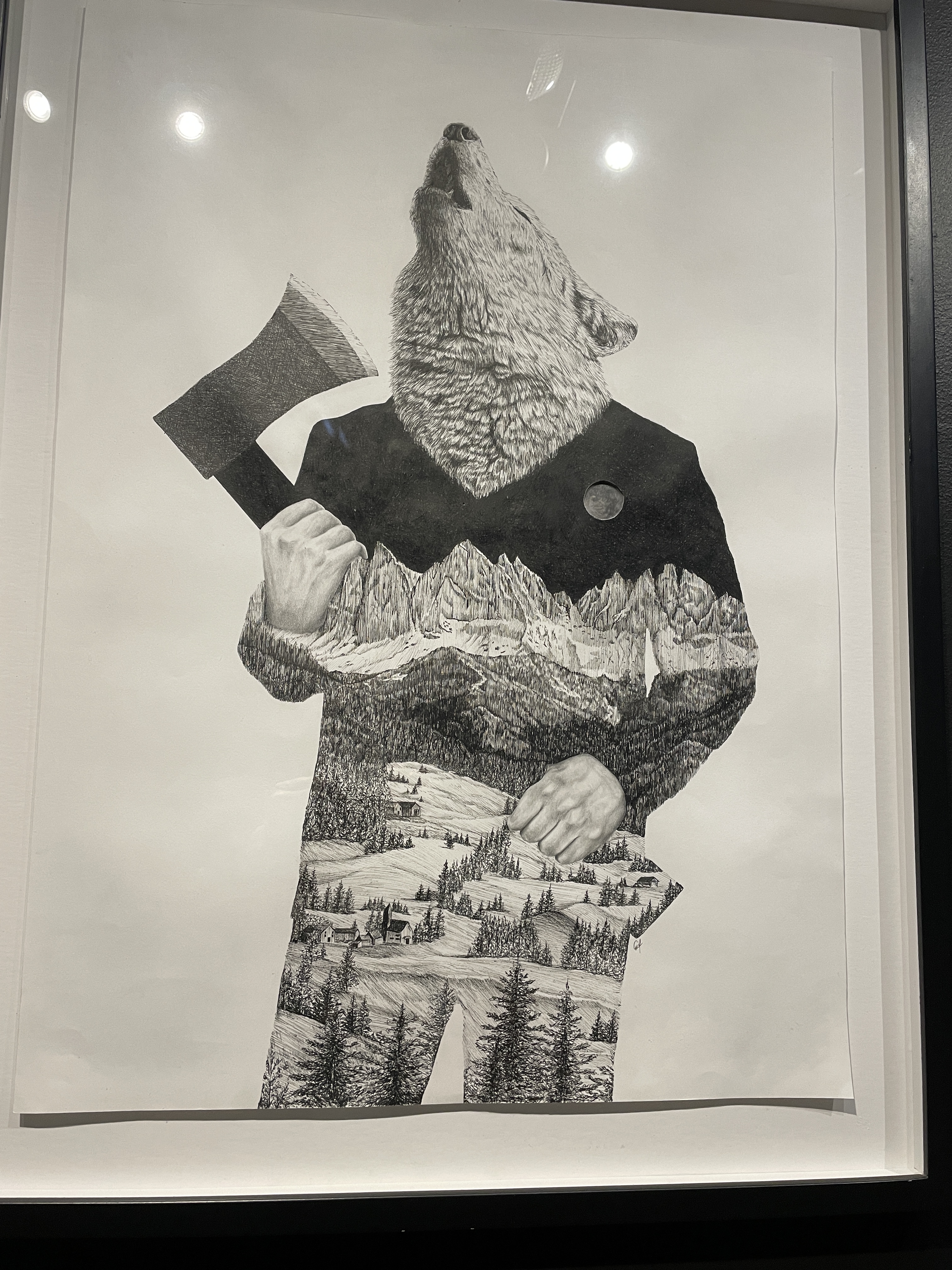
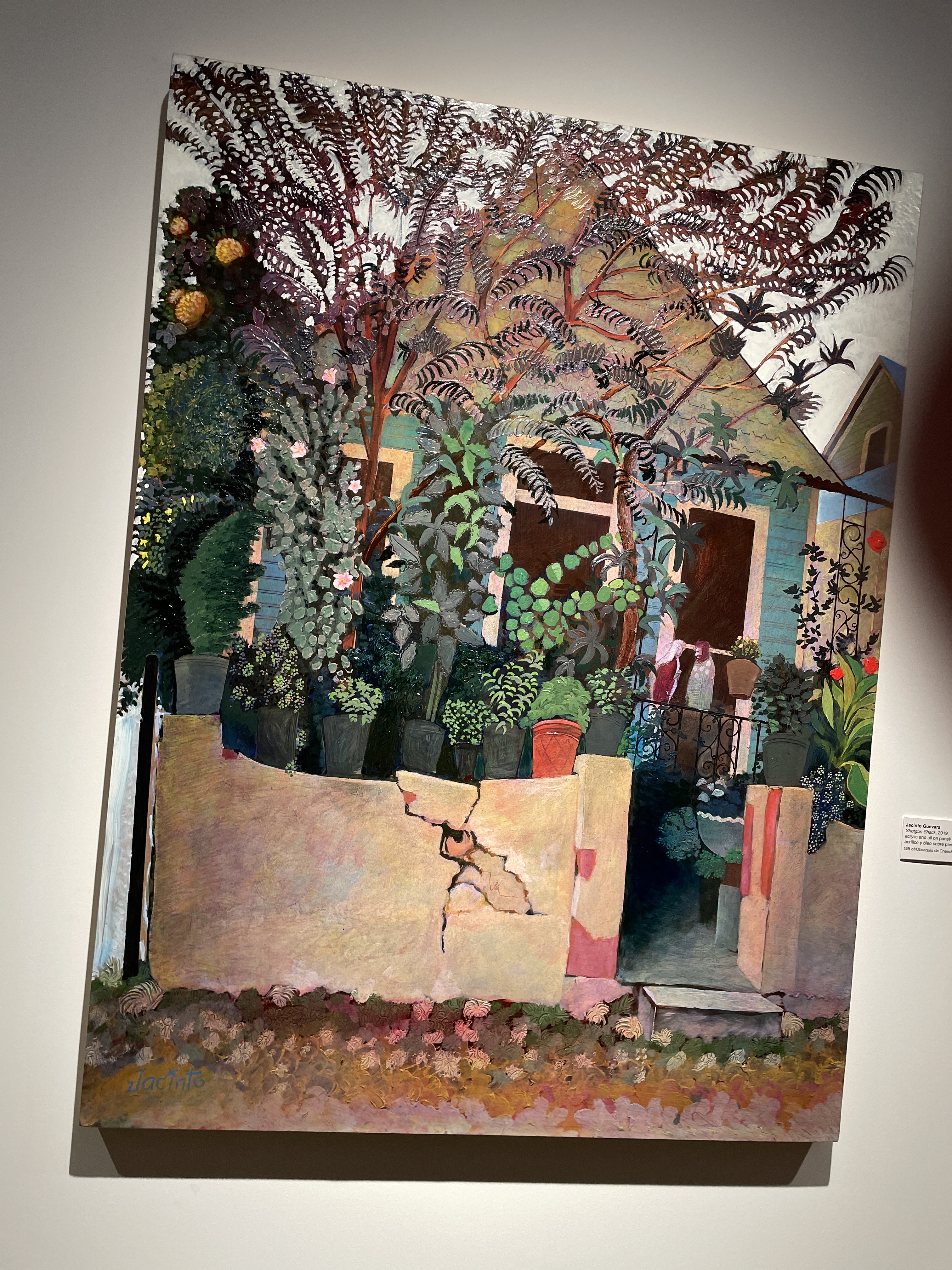
All the art at this museum has a message; much of it illustrates the ills of society.
The influence of indigenous art, e.g. Aztec, Mayan, can be seem in much of the art and the statements the art makes.
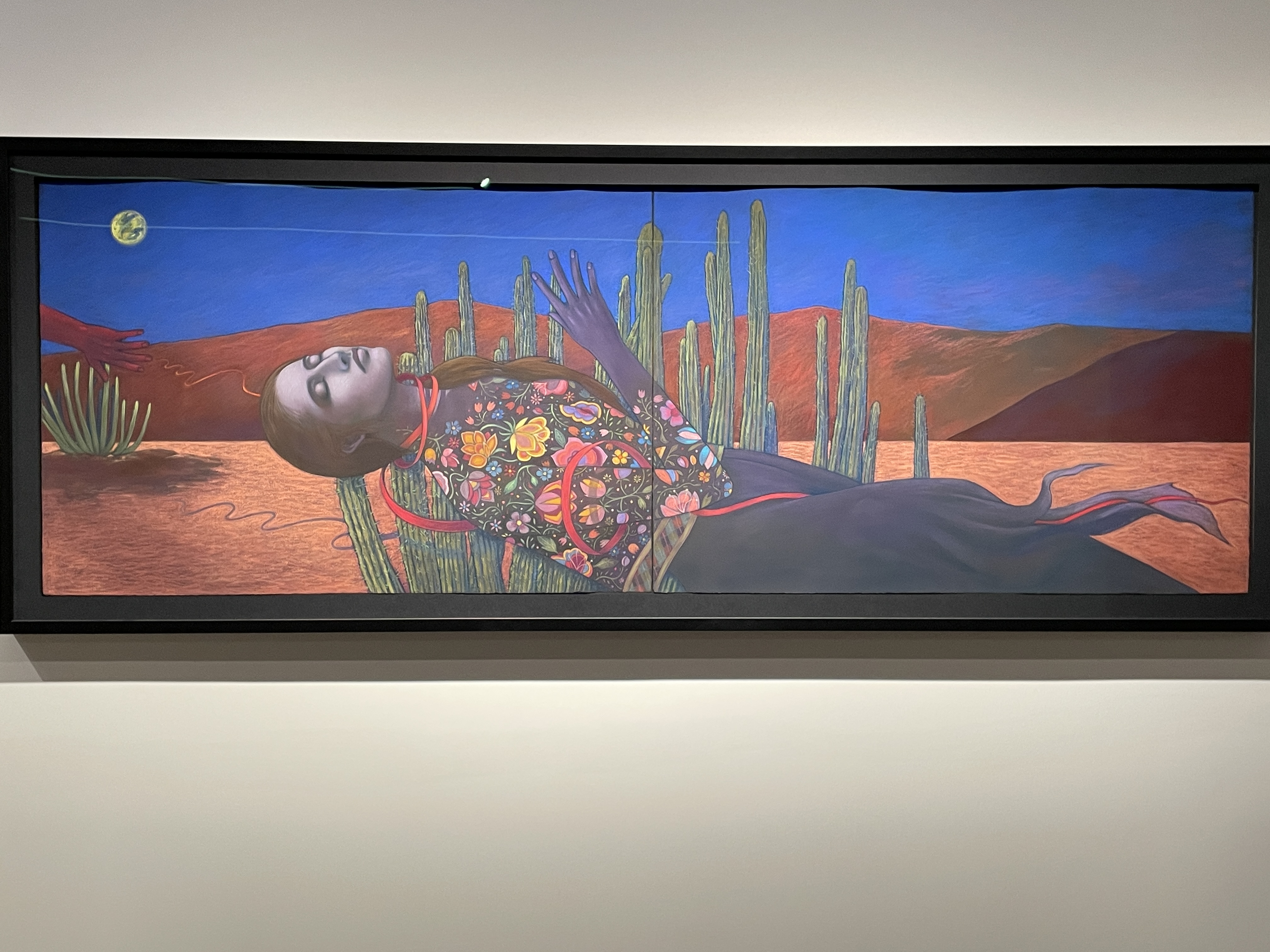
The woman above and the woman below hang next to each other.