Book 27 for 2026: “Mother Mary Comes To Me”, Arundhati Roy


Although Roy has written numerous books including the Booker Prize winning “The God of Small Things”, this is her first memoir. While the prose is easy to read, the subject matter is often heart wrenching. Roy’s mother, a single parent (divorced) in India when this was totally unacceptable, accomplishes remarkable achievements including the founding of a very successful school while acting what often seems very cruel as a mother to her two children, Arundhati and her brother. The mother’s treatment of Arundhati is so disturbing that when she is just 18 and in her third year of architecture school in Delhi, she quits going home to Kerala to see her mother and quits communicating with her for seven years. Yet, she admits to loving her mother irrationally.

Arundhati becomes involved in documentary film making, sometimes as writer and sometimes as an actor in the films. In addition to her activities as a writer and film maker, she becomes an ardent political activist against rising Hindu nationalism. She provides details of spending time with hunted activists in the jungle, getting arrested, and even tried for writing a piece the judiciary considered insulting. This is an unusually honest and intimate memoir about her family, her mother, and life and politics in India.

Book 26 for 2026: “The Loneliness of Sonia and Sunny”, Kiran Desai


By an author whose previous novel won the Booker Prize, this novel was long listed for the most recent Booker Prize. Although 670 pages long, it did not take me as long as I expected to read this because I found I kept going because I wanted to know what was going to occur. It is the tale of two families and two young people, both of whom have studied and lived in the United States. The background city for both families is the Indian city of Allahabad. The two, retired, family patriarchs get together frequently to play chess even though their families are sometimes rivals for status and influence.. The two do not live far apart and all the older family members know each other, including those who have moved away to Delhi and other places. The youngest members do not know each other and accidentally meet on an overnight train. At that point they do not know that their two grandparents had tried to match make them in an arranged marriage. Later, this becomes an embarrassment.

Sonia wants to become a novelist and is attending college at a small liberal arts college in New England where she becomes involved with a famous but cruel artist who becomes obsessed with her and whose influence she has become unable to escape, initially literally and later psychologically. Sunny lives and wants to stay in NYC to escape the overbearing influence of his mother and the violence between her and the two brothers of her deceased husband.

Not wanting to reveal all the complexities of the lives of these two young people who come to love each other but whose lives keep tearing them apart and the challenges they face as they try to make sense of their lives, I will simply say this is a novel I recommend. The reader learns a lot of about Indian culture and its variances, about the huge differences among different parts of India, e.g. Goa and Delhi, but also how universal family and personal struggles really are.

Book 19 for 2026: “An Unnecessary Woman”, Rabih Alameddine


Aaliya Saleh, 72, lives alone in an apartment in Beirut. Her obsession is reading books and translating books into Arabic. Every January she starts a new translation. Upon completion, she stores the translation in a box and puts it in the spare bedroom. No one ever sees them or reads them. Her family members envy her large apartment because she is divorced and has no children–her brothers think they should have it because they are married and have children. Her mother is a difficult woman and has become stricken with mild dementia. Written in first person, Aaliya relates her life as she sees it. Her impotent husband walks out and she is fine with this because he is a difficult person. Living alone she is able to defy norms and customs and lives as she chooses, a reclusive life for the most part except for her decades long job running a small bookstore. During her telling in the novel she is now retired with some relatively minor aches and pains. She has managed to live as she chooses in spite of the Civil War, repeated bombing by the Israelis, and other difficulties. Toward the end, an unthinkable disaster occurs that threatens what she views as her life’s purpose.

This character’s prodigious reading and knowledge of literature and authors inspired me to look up authors I had not read, learn more about them, and go to the bookstore and library in search of some of the books she discusses in the novel. It also made me think more about how societies see women as unnecessary (or worse) if they fail to comply with societal norms. This novel’s setting may be Beirut, but it could be anywhere in the world in terms of the price women often pay when they defy cultural norms and live as they choose.

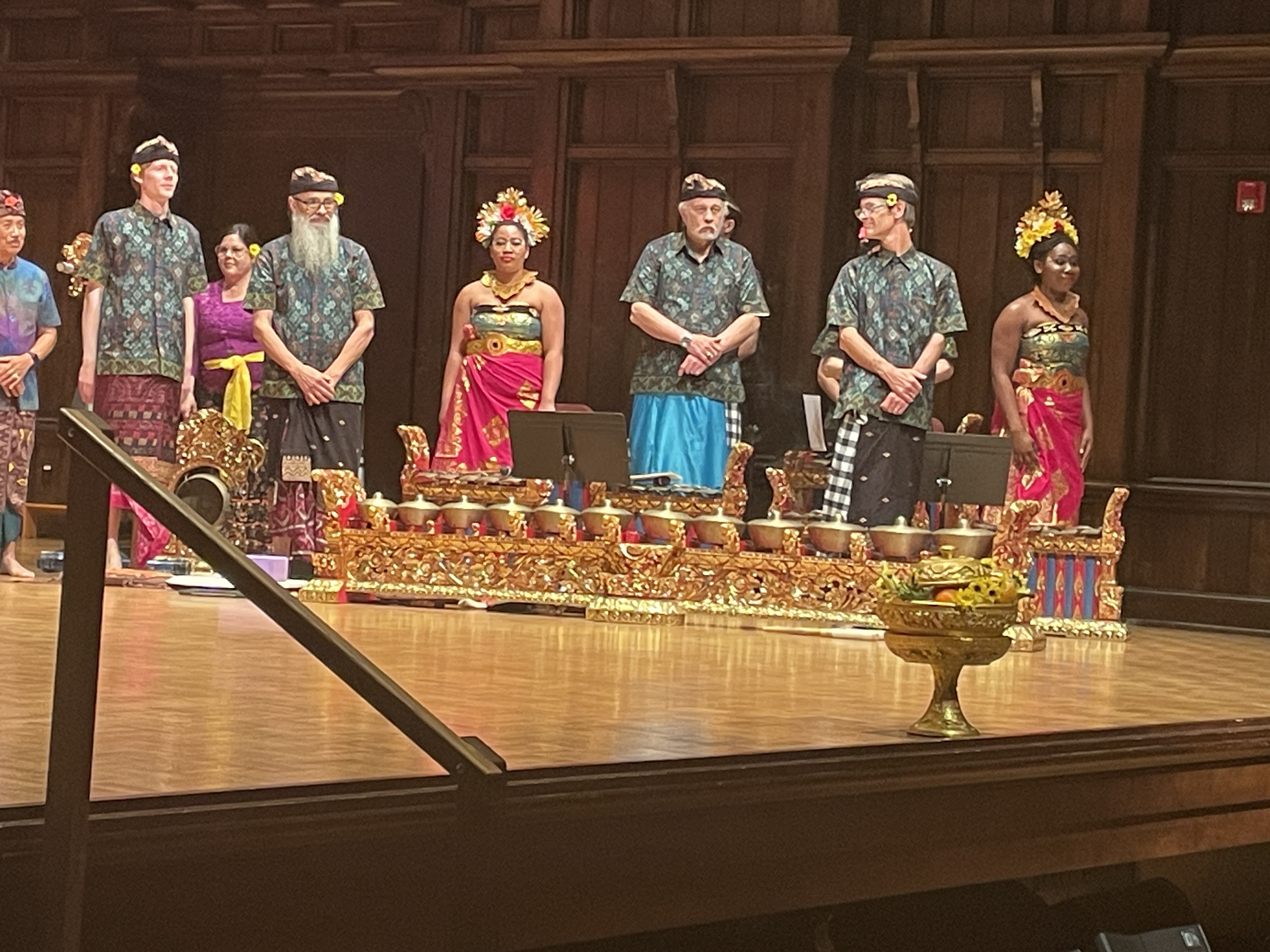
Balinese Gamelan Music and Dancing


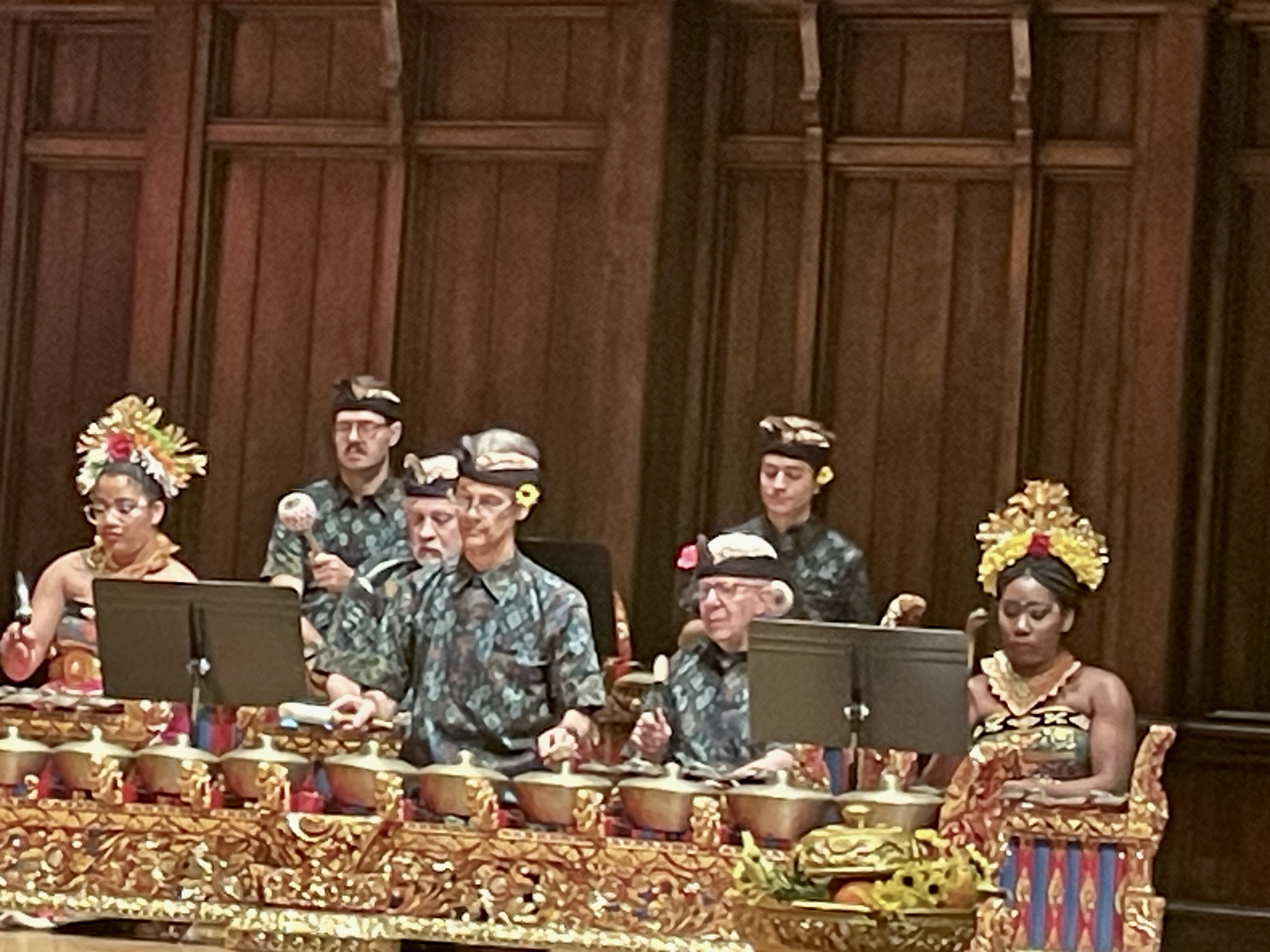
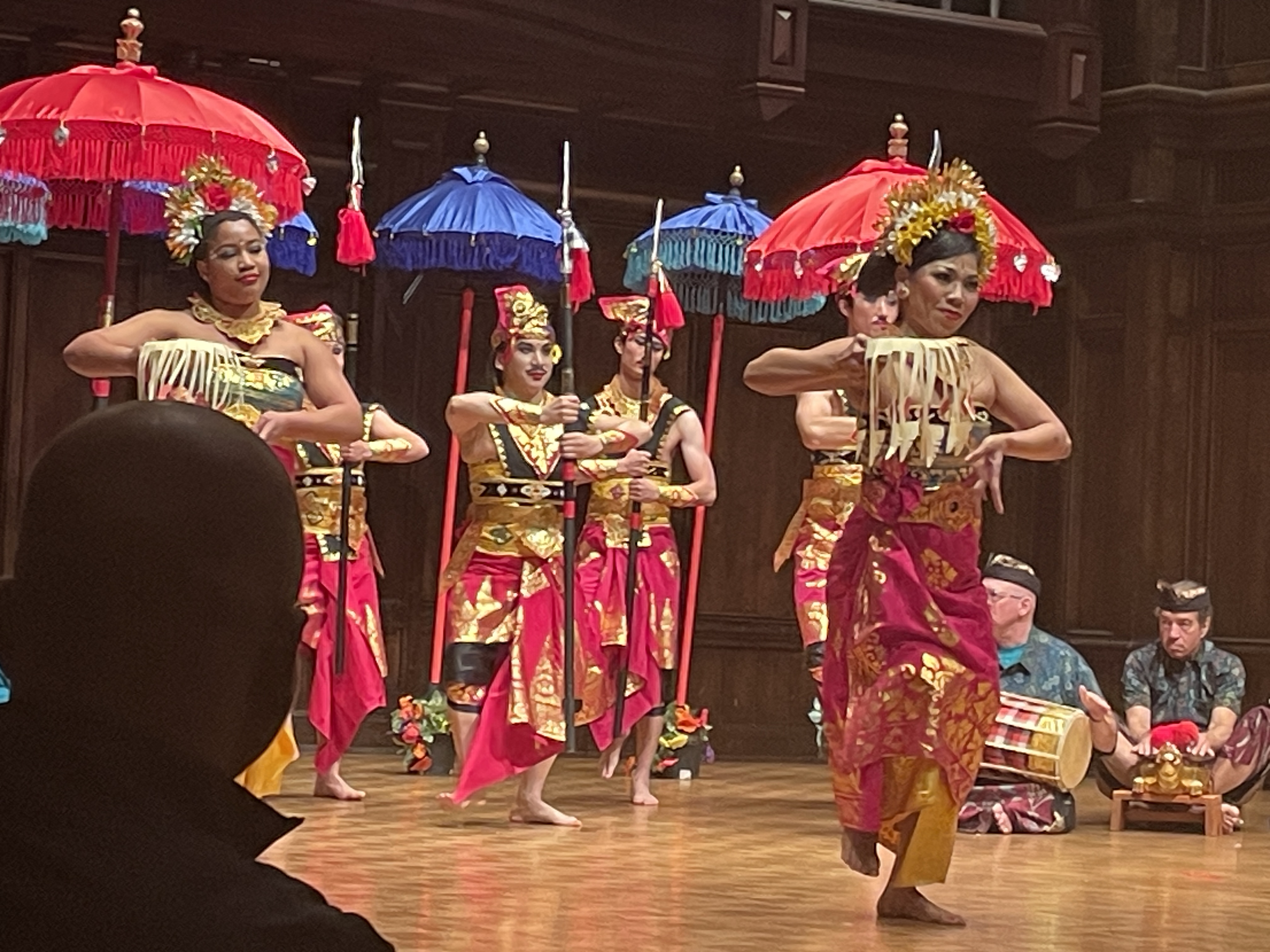
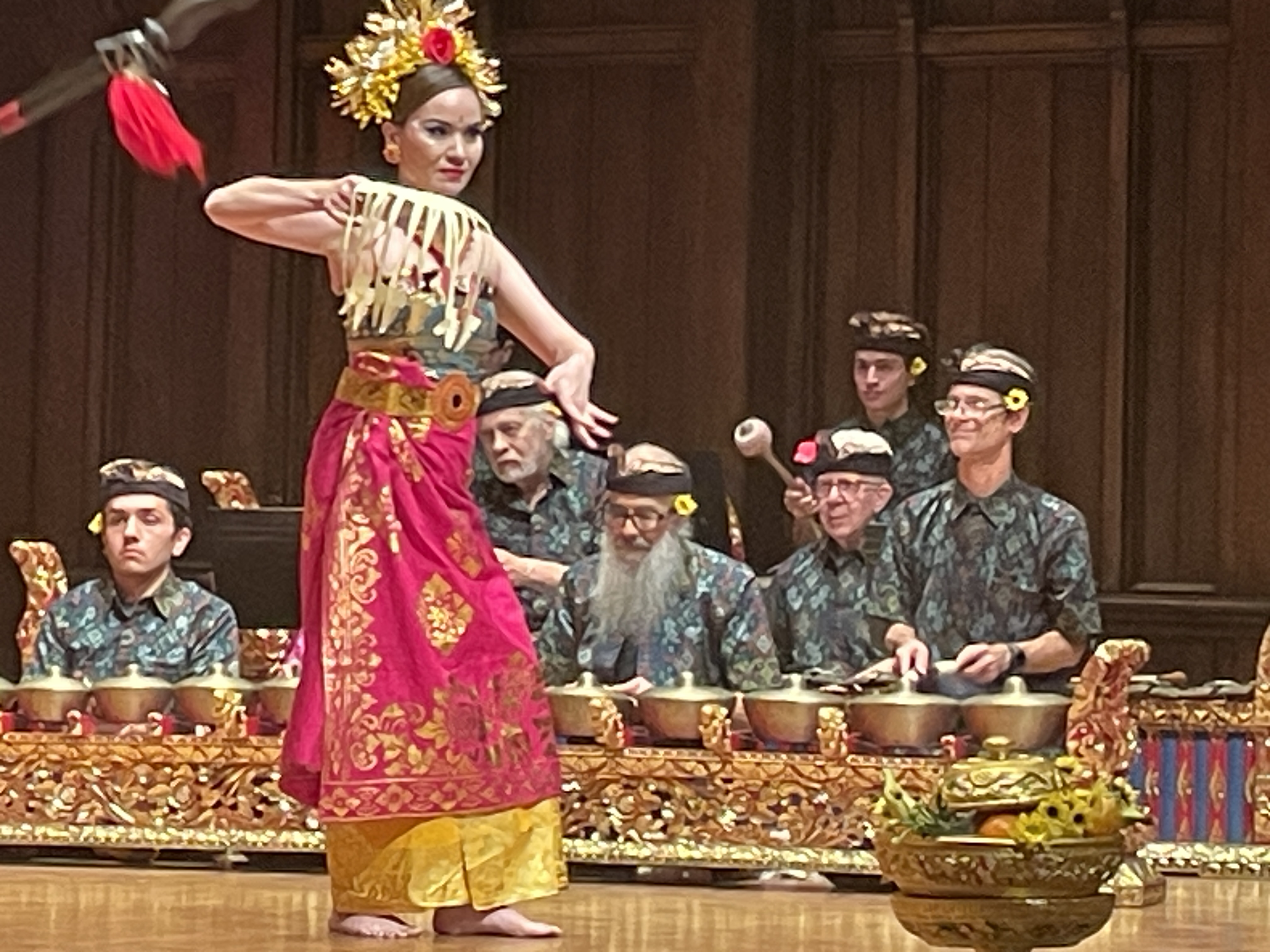
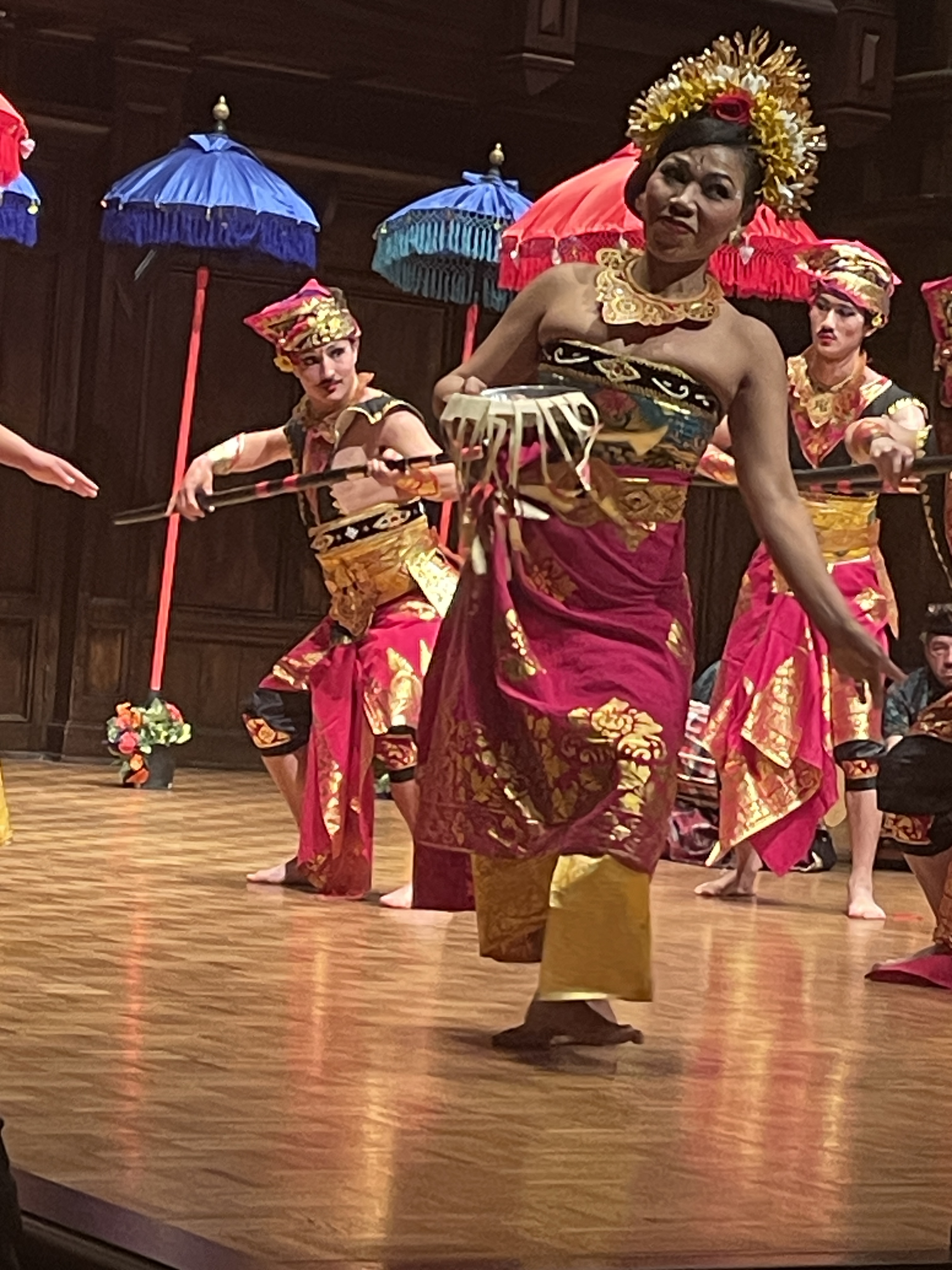
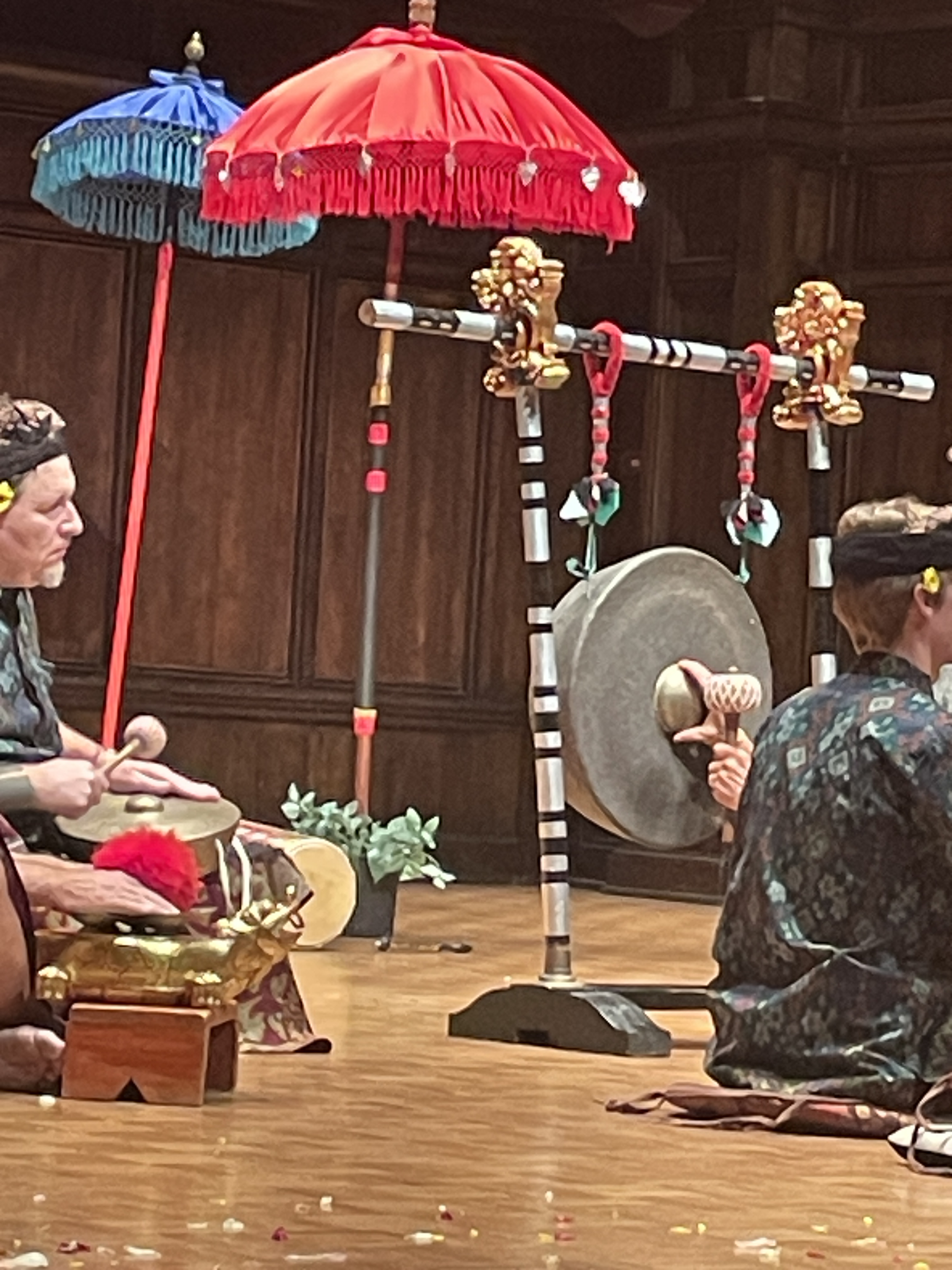
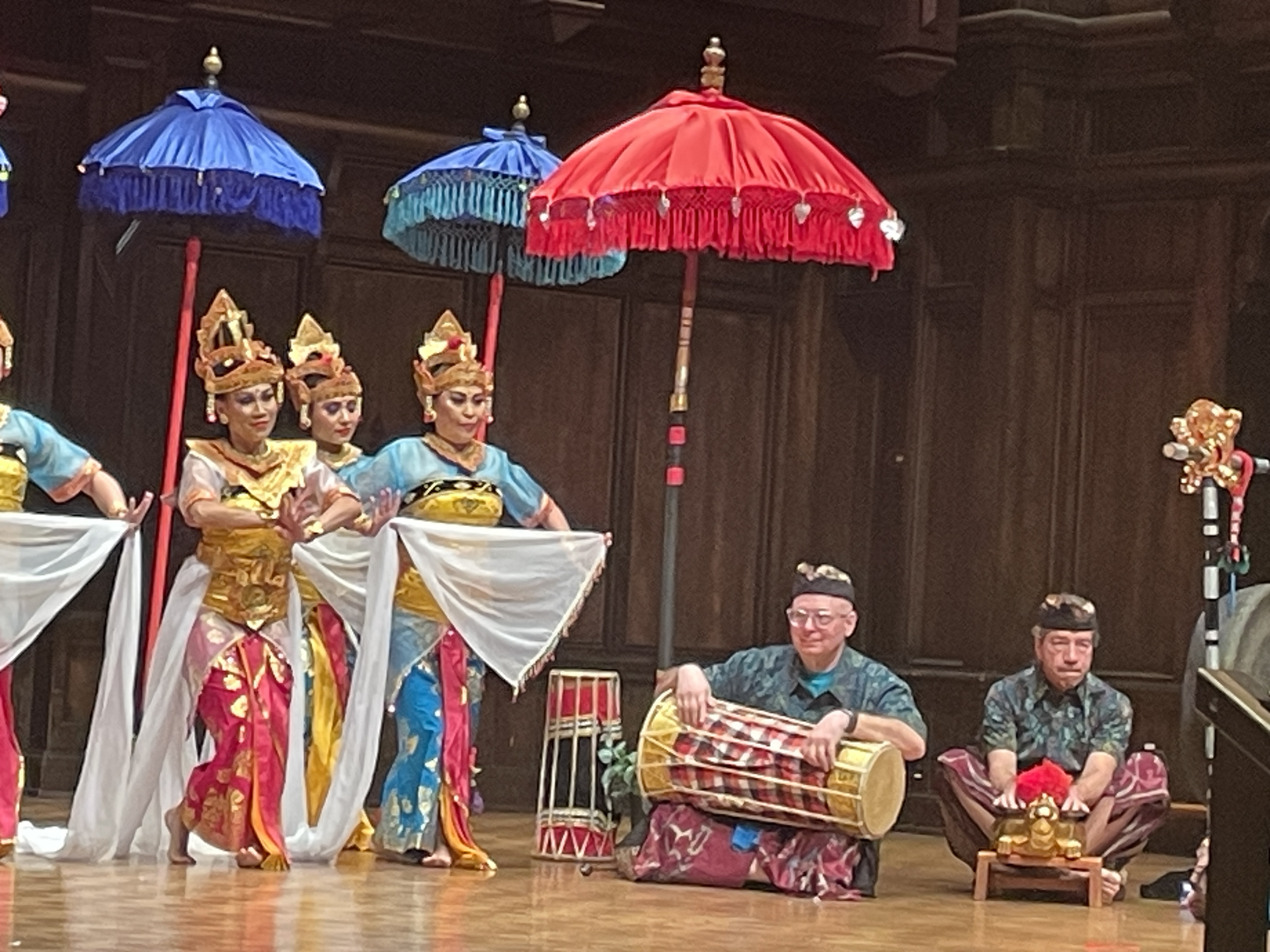
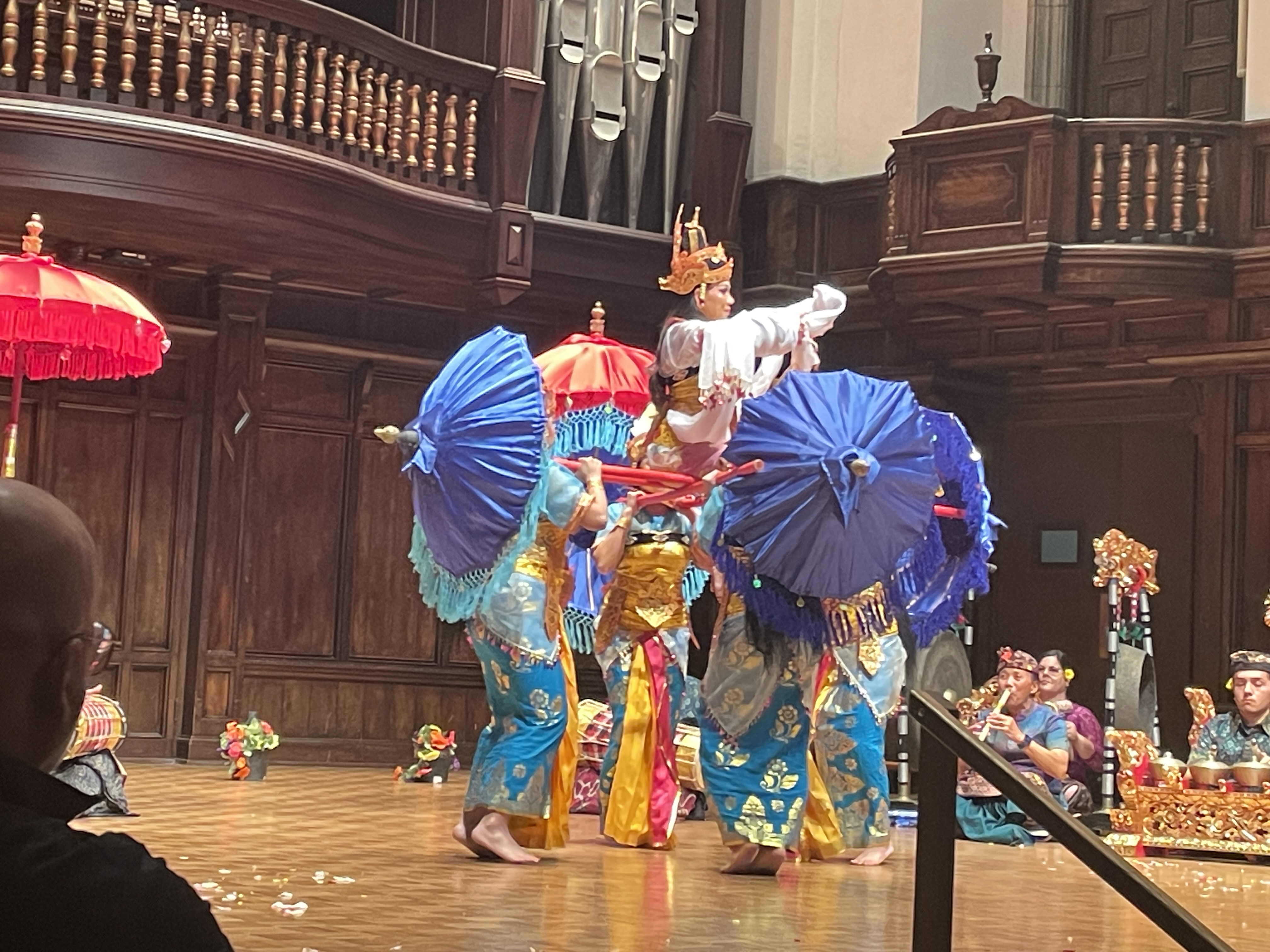
Earlier this week I attended a concert at Pomona College. I do not recall ever hearing Gamelan music before. Gamelan is percussion music. In fact the word means percussion orchestra. The instruments used in this performance are called gong kebyar. The instruments are made of bronze, iron, or bamboo. This music sounds nothing like European music. The instruments are tuned to a very high pitch and deliberately what one might consider out of tune. This is intentional. Pomona College has its own gamelan ensemble. Musicians and dancers from The Californian Institute of the Arts joined them. They performed traditional temple dancing, music from Balinese puppet theatre, and some original pieces by a famous Balinese couple (Dr. NyomanWenten and Nanik Wenten) –both music and dance. The style of this music is loud and fiery. I could only take photos because recording was prohibited.

Book 11 for 2026: “How literature saved my life”: David Shields


I only acquired this book because the author of “Delights”, Ross Gay, recommended it as one of his favorite books. I almost quit reading it but kept going because I wondered why he loved this book. Perhaps if you watch a lot of movies (I am not a movie person), it would be better because Shields critiques a lot of movies, almost none of which I had ever even heard of. He also seems to prefer non-fiction and critiques a lot of non-fiction essay writers. To be honest even though I read hundreds of books, most of the books he mentions I have never read. His taste apparently differs greatly from mine. I have read Joan Didion, John Cheever, Gertrude Stein, Yeats, as he has and I do agree with him about the essay, “Killing an Elephant”. In this essay George Orwell describes a horrible event he experienced as a young man while working for the British in Burma (now Myanmar). I agree with Shields that this essay describes better the horrors of colonialism and racism better than most books written on those subjects.

What bothers me about this work by Shields is the relentless negativity. I consider myself to be a rather realistic person, often perhaps too blunt for my own good. Nevertheless, I do not view my life or that of others as nearly as hopeless and lonely as Shields seems to view it. Here is a quote from near the end of the book:

“I believe in art as pathology lab, landfill, recycling station, death sentence, aborted suicide note, lunge at redemption. Your art is most alive and dangerous when you use it against yourself. That’s why I pick at my scabs” and four pages later at the end: “I wanted literature to assuage human loneliness, but nothing can assuage human loneliness. Literature doesn’t lie about this–which is what makes it essential.” I know lots of folks talk about the plague of loneliness permeating society these days. He focuses on this relentlessly for 207 pages. Do most people feel this awful a lot of the time? Am I naive? How did I escape it?

Book Eight for 2026: “What Life Was Like In The Land of The Prophet. Islamic World AD 570-1405


Fascinated since childhood by the lands surrounding the Mediterranean Sea, I accidentally discovered this book when I had to go to a new LA County library because the one near me is closed for renovations. The book describes in detail the life of Mohammed and the controversy that ensued after his death as to who should be in charge. This dispute ultimately caused the division into Sunni and Shia which continues today. It also covers other less well known groups such as Ismailis, a missionary sect of Shia Islam, and Sufiis, Muslim mystics.

I found the book extremely informative in describing how a small group of Arabs managed to conquer most of the land south of the Mediterranean and the lands to the east and eventually convert Central Asia and a substantial portion of West Africa. It also details the reign of many of the more famous caliphs, wars among various Muslim ruling families, and the building of Alhambra. While most of Europe was still feudal and in the Dark Ages, many Muslim cities such as Cairo and Damascus were centers of scientific research and learning as well as the arts and literature. Unlike what many continue to believe, Muslim women often held jobs and sometimes positions of considerable power and had legal guarantees to property and inheritance when women in Europe did not.

Book Six for 2026: “THE BOOK OF (MORE) DELIGHTS,” Ross Gay


As I mentioned in a previous post, his books on delights were mentioned to me by two different people in two totally different settings so I decided to stay sane in all the seriousness of my life, reading something lighter might be a good thing to do. I guess I was thinking delights like flowers, food, etc. but this is more like a series of short essays about life all written in the span of one year–his gardening, experiences strolling around his neighborhood and favorite coffee shops, food, his parents, his wife, some personal history, his experience as a college professor, children. However, he also addresses serious issues–his meeting a homeless veteran just out from a stint in a mental facility and how he was compelled to help out after first driving off, racism he has experienced, his issues with the government and social media, family death, and life in general. And above all, what it means to him to identify as a poet.

Delights–2


As a person who works with high school students mostly non-white, many of whom have family members who are undocumented, I worry and need to find daily delights to stay sane. I decided to make a list of some of the past week’s delights:

-afternoons 70 degrees, sunny, no wind

-hummingbirds sipping nectar from both flowers and the two feeders

-singing a song the lyrics of which come from a poem by Langston Hughes where he dreams a world with no racism

-sitting on the back patio, listening to birdsong while I read a book about delights

-learning that all the rains have eliminated drought in California

-appreciating all the colors of the flowers blooming in my yard

Book Four for 2026: “Playground”, Richard Powers


Another intriguing novel by an author who has won both the Pulitzer and the National Book Award. Initially the four main characters do not seem to have any interactions with each other. 12 year old Evie’s life is changed forever when her father, the inventor of the first aqualung, makes her submerge in a pool to prove it works. She becomes one of the world’s most famous divers and oceanographers. Ina, an artist, grew up in US naval bases all over the South Pacific and eventually finds herself at a university in Illinois. Rafi, a genius black child, is pushed by his dad to apply to a private Jesuit high school where he meets Todd, a rich kid whose whose family provides scholarships to the school. The two become best friends in spite of different interests. Rafi loves literature and Todd loves computers. They bond over a thousands of years old Chinese game with which they become obsessed. They become roommates at the same university where Ina is a student. The three become best friends.

Decades later all these lives become intertwined on an island in the South Pacific–Makatea in French Polynesia, an island where the harvesting of giant phosphorus deposits nearly ruined it while furnishing the rest of the world with fuel to make planets grows faster and better and feed the world. Because of Evie’s obsession with the sea, I learned enormous amounts about the ocean and the varied animals that live there, some of which I had never heard of before. Because of Todd’s obsession with computers and his invention of an AI game, I learned a lot about how gaming works and how people become addicted. For Rafi, the agony and anger of often being the one left out, the one seen as the smart Black kid, and the only one in many circumstances affect how he views the world and himself and where life eventually takes him. From his character I learned new things about literature and how books and writing affect people and their relationships.

I could not stop reading this book. Years ago, when it first came out, I read the author’s novel, “The Overstay”. While the topics and characters are totally different, in some ways this novel reminded me of that story, of how our lives are often intertwined in all sorts of ways we never expected.

Garden of Delights


A garden of delights

my my new goal.

Why do I/we need

such a garden?

Sanity, yours and mine.

Genocide in Gaza, Sudan,

eastern Congo, probably

even in other places where

there’s no news.

Poverty here in the richest

nation on Earth.

Poverty my neighbor seems

shocked when I tell her.

People living in condemned

trailers, no heat, no water–

It’s freezing inside.

People surviving, barely.

Malnourished children, big

hungry eyes, staring.

A garden of delights

my new goal.

Why do I/we need

such a garden?

Masked men and some women

attacking people in the streets,

in their homes,

knocking down doors.

smashing windows.

You’d think I’m describing

Russia, Nazi Germany

but no, I’m describing

happenings in my own

county and

across the US.

A garden of delights

my new goal.

Sanity = Delights

I look out my window

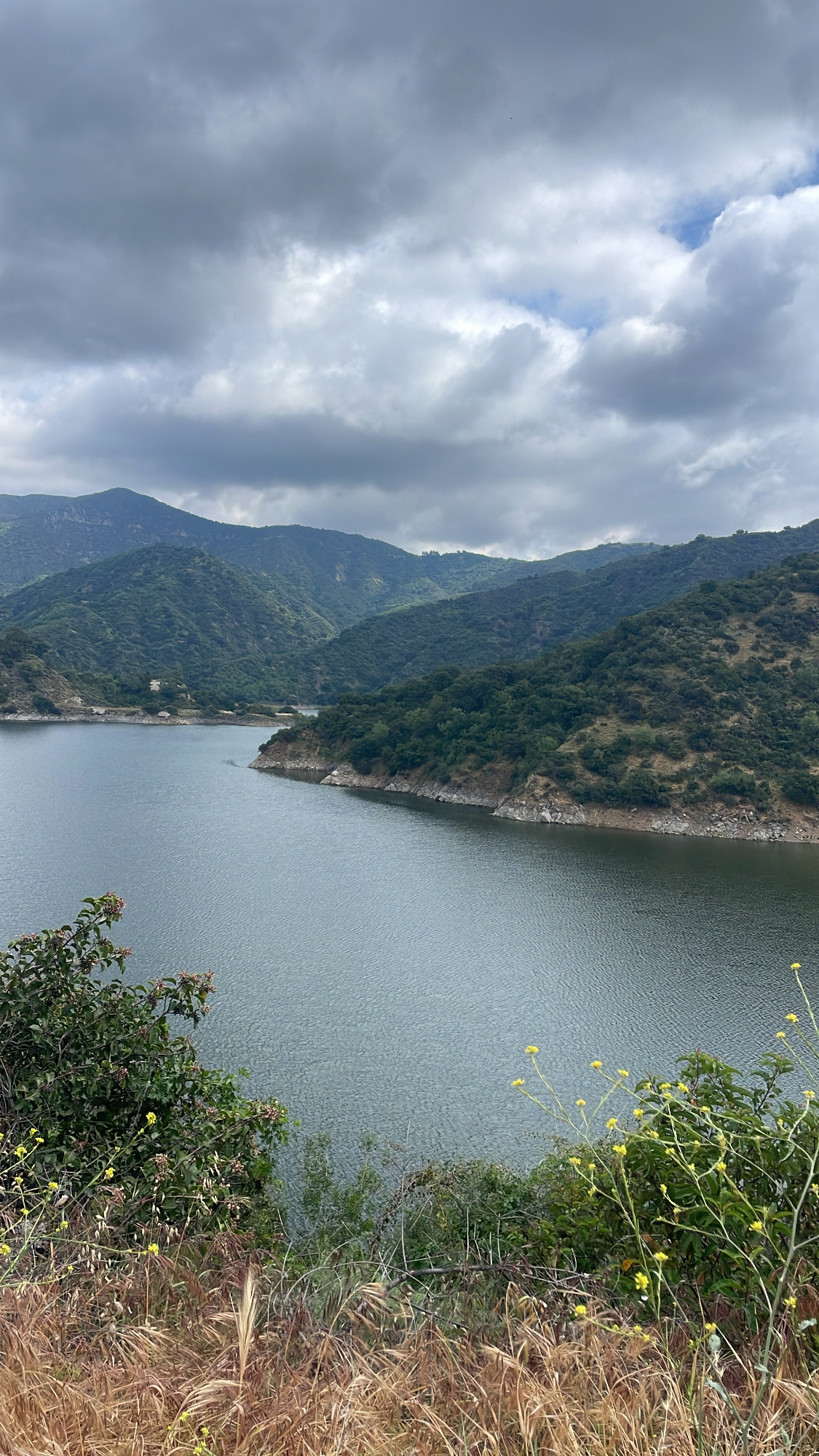
purple mountains loom

in crystalline air.

Recent rains create

emerald hills,

blooming freeway daisies,

roses in my garden,

pink, sunset colors, snow.

Bougainvillea the color of blood

climbs my garden wall.

The turquoise fountain gurgles.

Photo of daughter and grandson

make me smile.

Symbols, sacred corn grace

walls and make me

remember cornfields in summer

when on a hot day

I could hear corn grow.

Three different pine trees whisper,

the Soleri bell rings in wind.

Ah, yes, I live in a garden,

a garden of delights.

And I remain sane

for at least one

more day.