July 27 – Summer.This was published yesterday by the Story Circle Network on One Woman’s Day.
animals
Costa Rica 5, Fauna
Costa Rica continued to surprise me. I did expect some of the animals, photos of which are posted below, but did not expect so many cattle, especially the dairy cattle, including Jerseys, Guernseys, and Holsteins, that populated the steep mountain slopes. They grazed everywhere up to their tummies in grass on even the steepest mountainsides. I kept wondering how they learned to balance themselves and why they did not fall over, catapulting down the mountain. Everyone in the group commented on the fat, happy cows. Such abundance resulted in fabulous steaming milk for morning coffee, rich cheeses, and the creamiest ice cream imaginable.
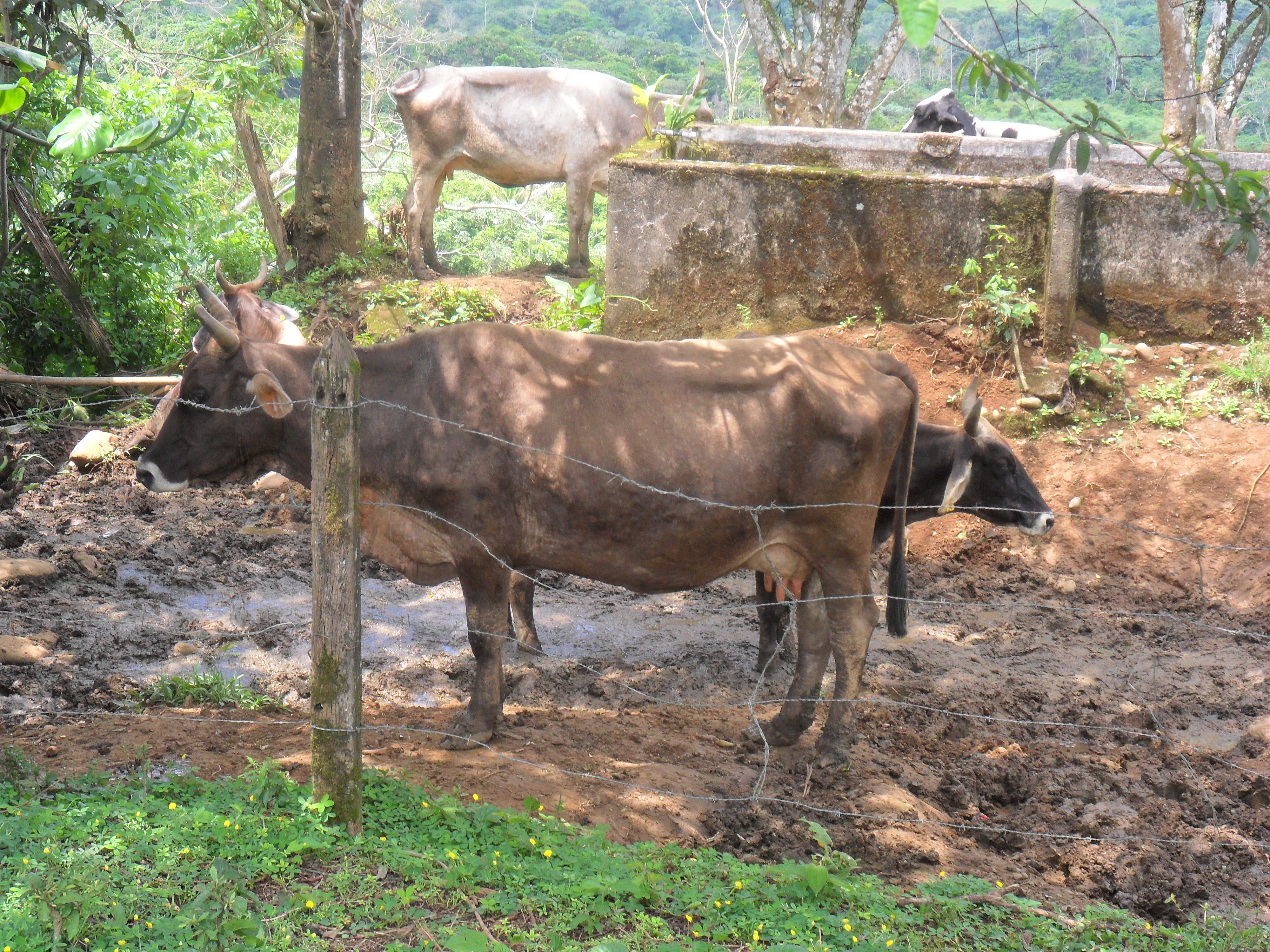
A cow pen near the top of a mountain on the Caribbean side next to the restaurant that sold cheese and where I ate the raw turtle egg. Most of the cows roamed free up and down the mountainsides.

In the lowlands on both the Pacific and Caribbean sides of the country, Brahma cattle relaxed or grazed in the lush grass. It reminded me of the landscape near Veracruz, Mexico, where I lived many years ago.
The most common meat besides fish, most of which is talapia, is chicken. Near the mountain top where the Jersey cow above was photographed, I saw a huge shed and when I asked about it, was told it was a chicken farm. However, pork is frequently served as well and occasionally beef. I took the following photograph at a small place on a dirt road. We stopped there to drink coconut water. The spotted, pregnant pig was due soon. However, the fate of the black pig remained less lovely–food. Their girth resulted from eating coconuts; they constantly gorged themselves.

Birds abound, from the protected scarlet macaws on the Pacific Coast to tiny hummingbirds. Hundreds of species I had never seen before and many I had seen rather often like various egrets and herons. And then there were the monkeys which I did expect to see but found difficult to photograph with my ordinary camera.

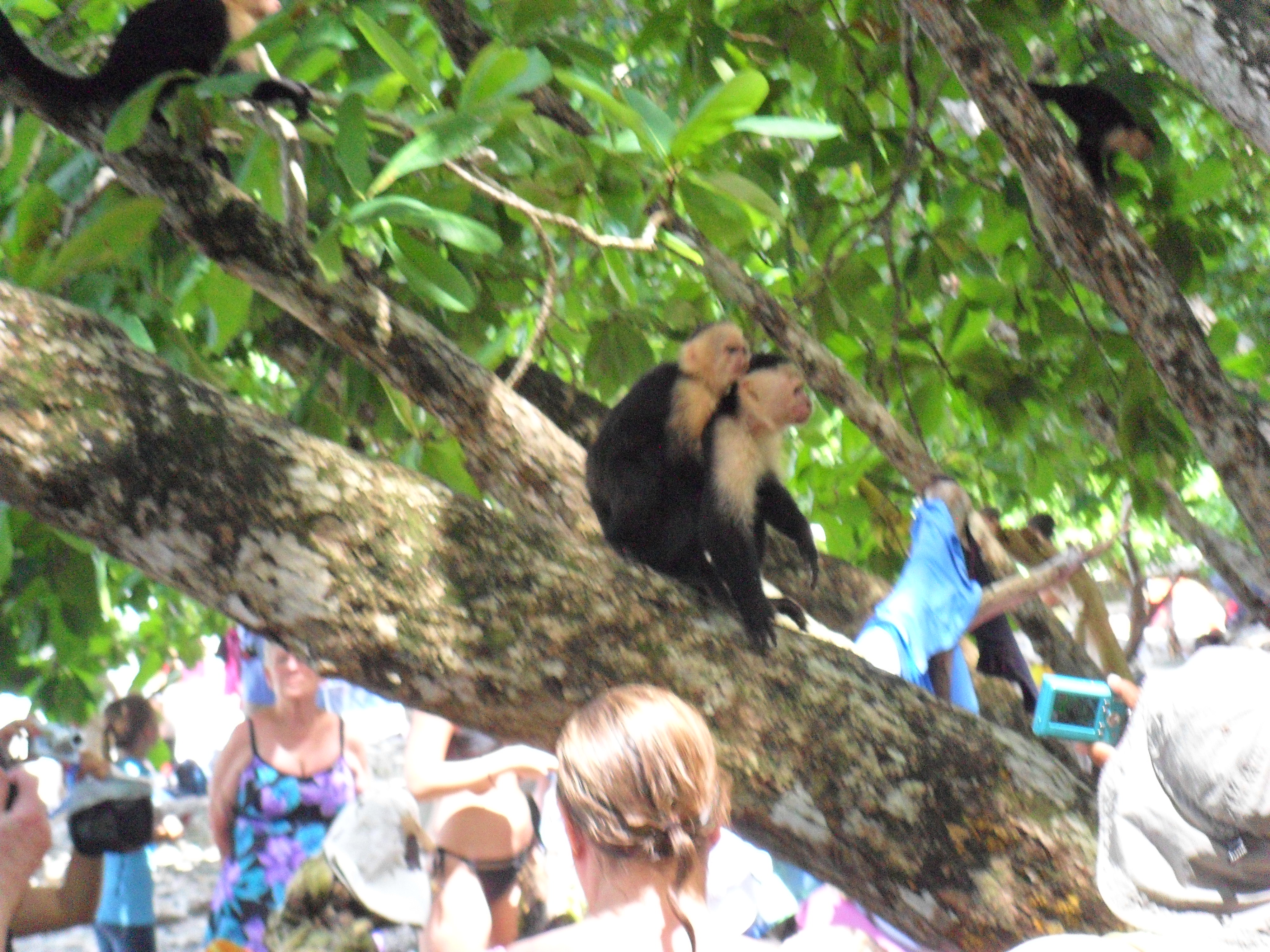
These white faced monkeys roamed everywhere near the beaches at Manual Antonio National Park, begging for food and if that did not work, actually stealing it.
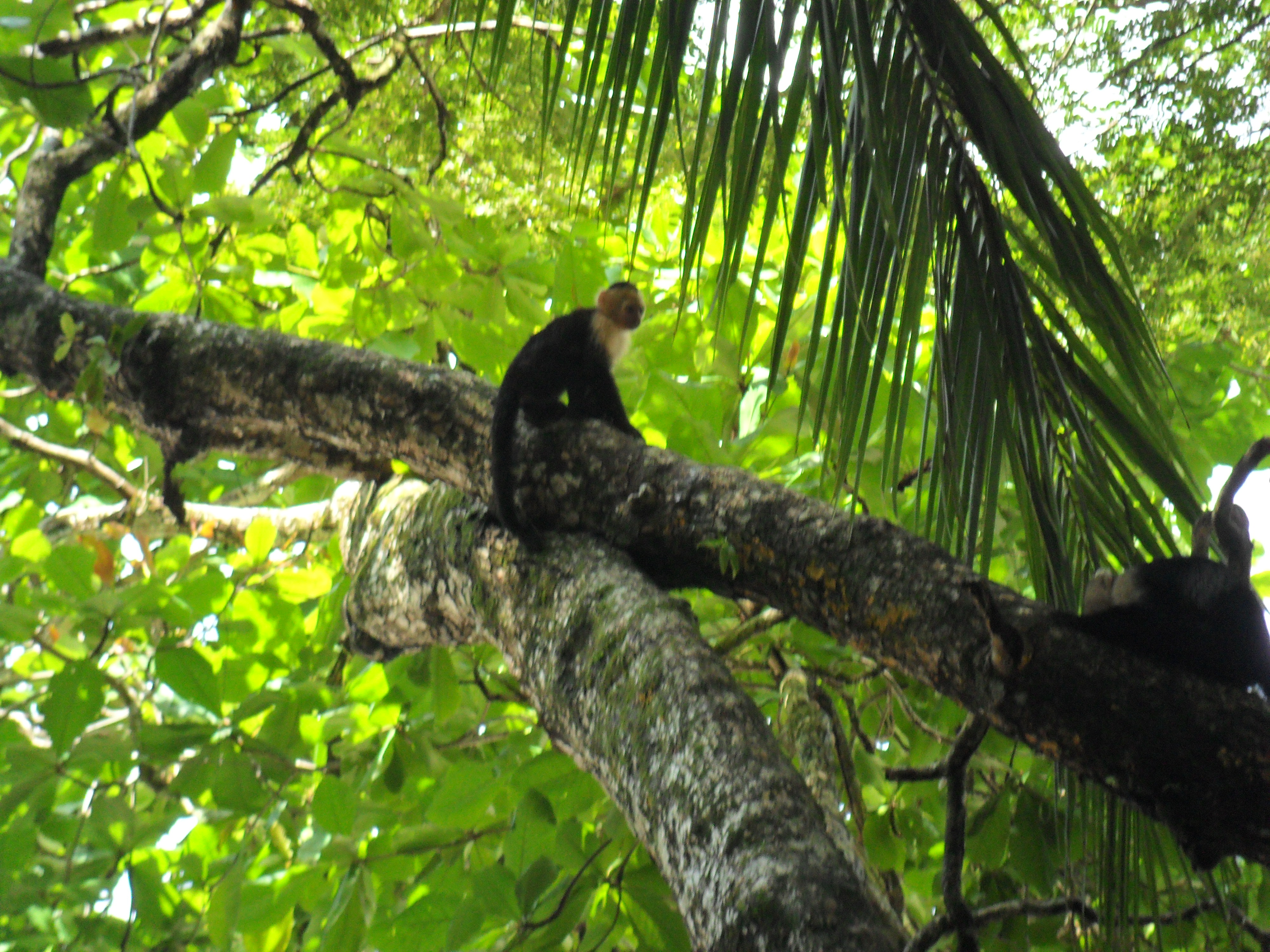
While the white face monkeys remained highly visible, the howler monkeys could be heard easily but were much harder to locate because they tend to stay high in the tallest trees. Without a good telescoping lens, this was the best I could do.
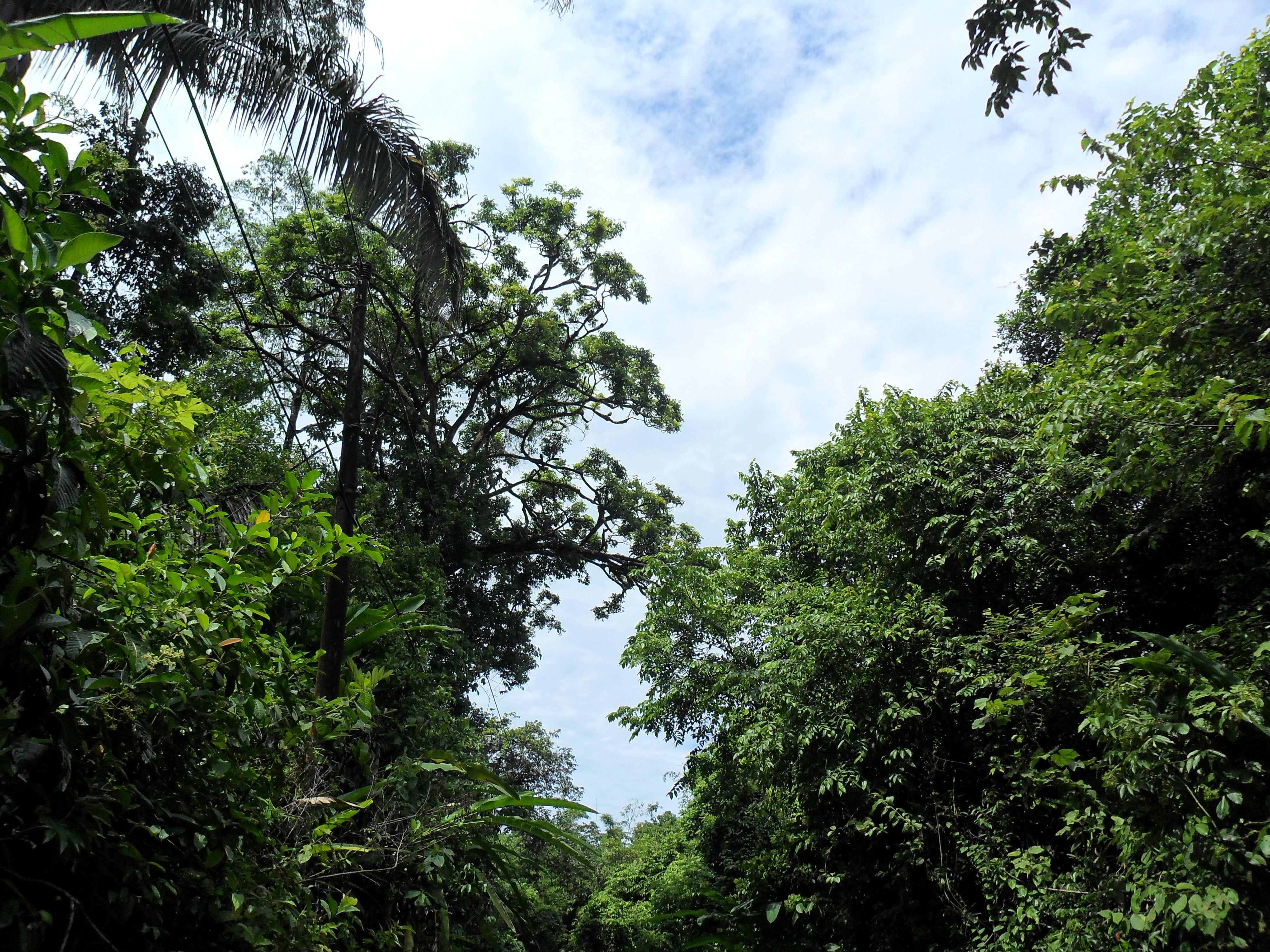
Look for the dark blob in the middle of the photo. They also move fast so hard to locate and follow and even harder to photograph under those conditions.

Just as we arrived, walking, at the entrance to Manuel Antonio, a downpour began. Not fond of drenchings, I stayed back, hoping it would stop, and suddenly saw a small sloth, the grey spot in the nearly leafless tree in the middle of this photo.
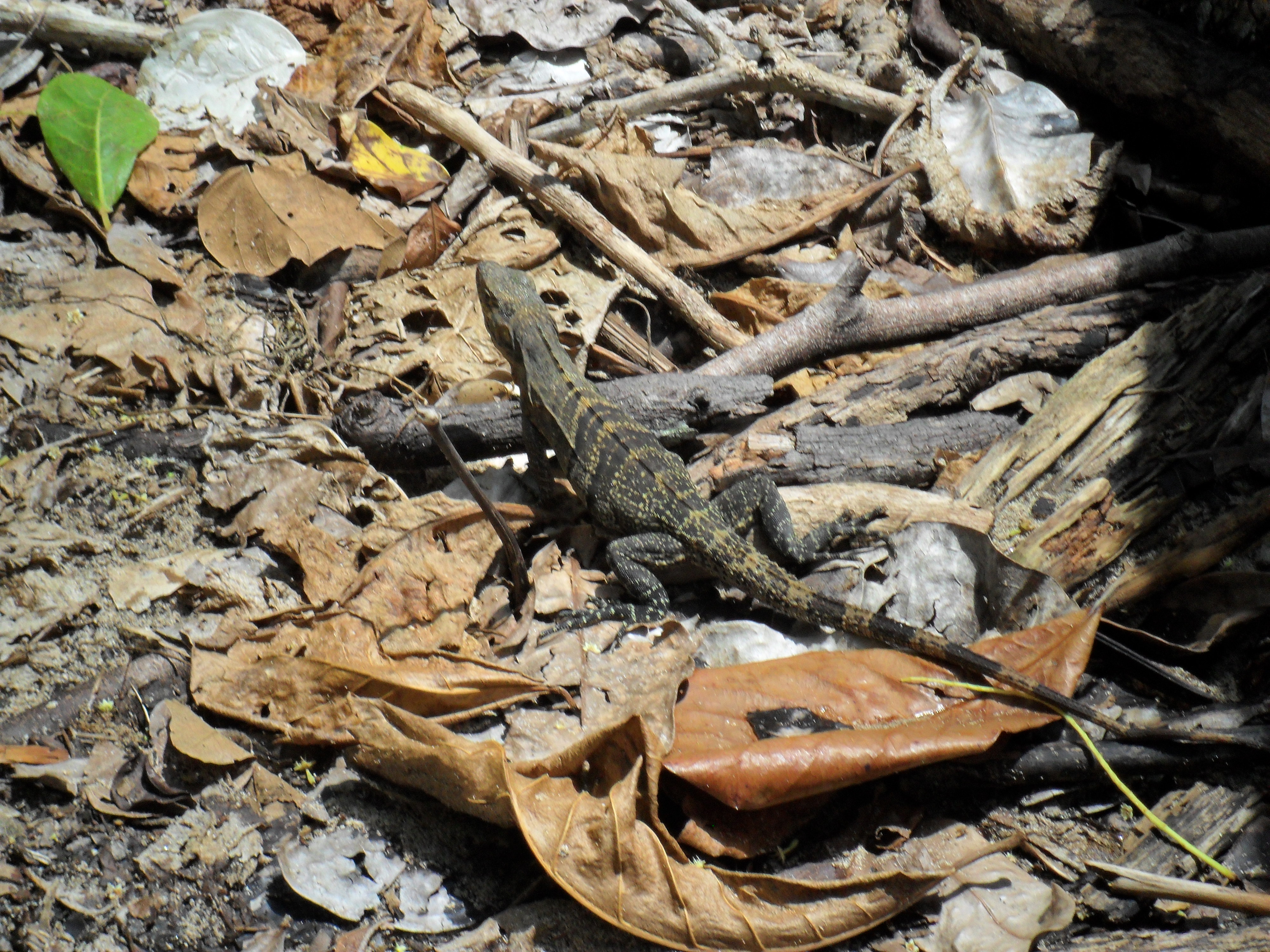
Lizards of many varieties abound. The tree near my hotel room in Jaco contained four iguanas that appeared nearly lifeless since they never seemed to move. Again, without a better lens I could not really photograph them. However, at Manuel Antonio many other kinds of lizards ran here and there only slightly afraid and relatively easy to photograph.

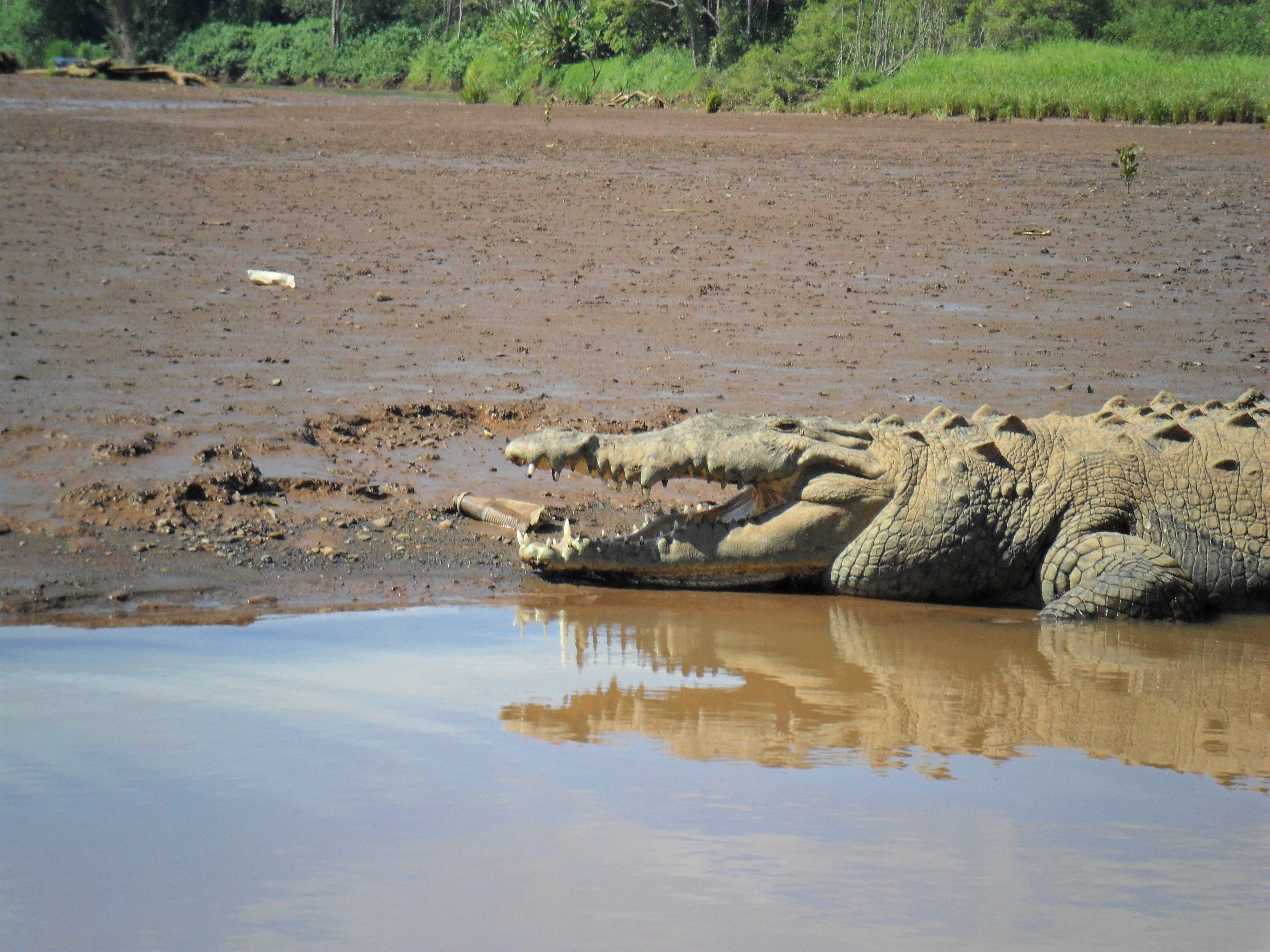
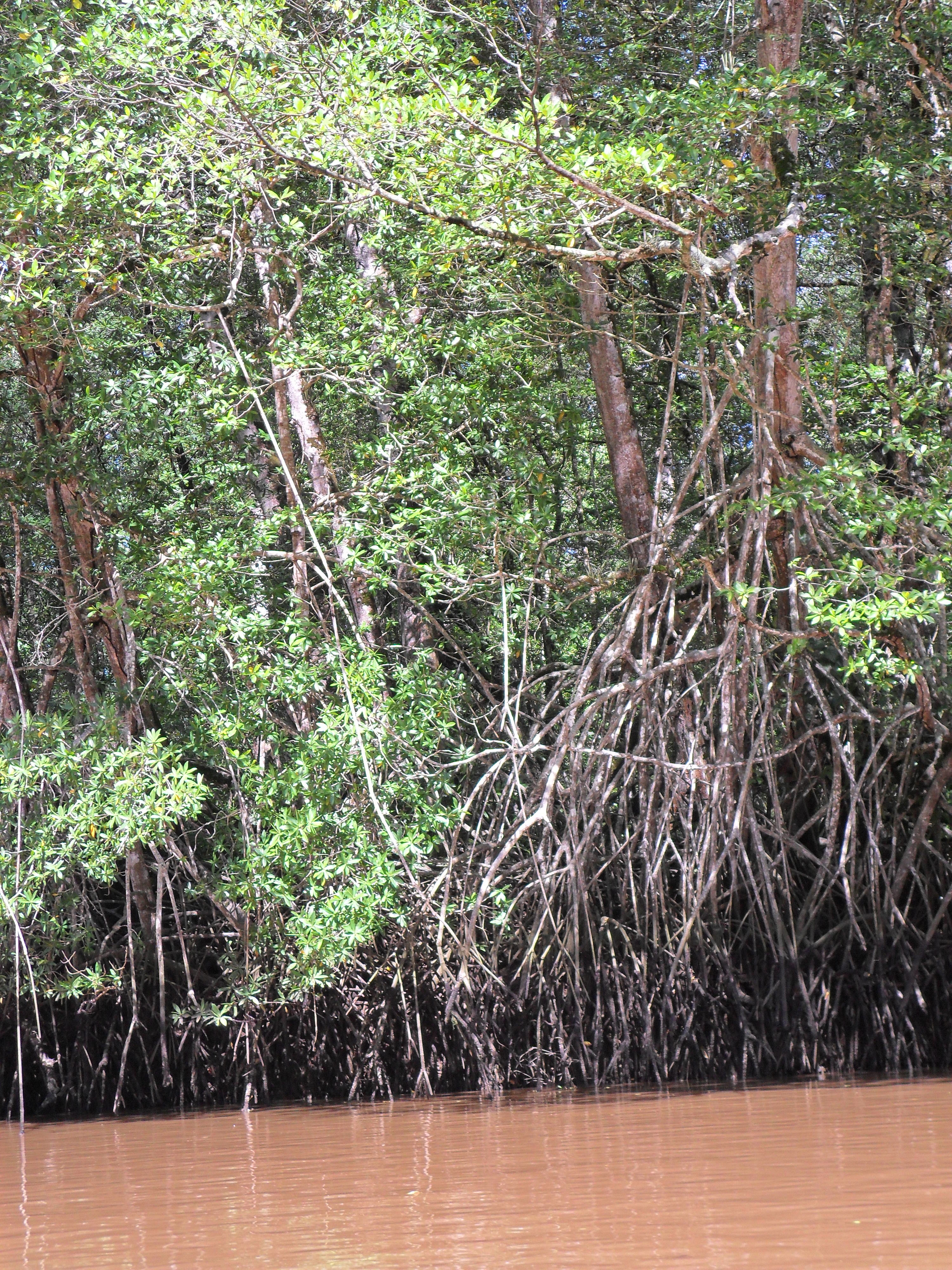
When I think back as to what I expected, it never occurred to me that huge, brackish (salt) water crocodiles existed in such abundance or even existed there at all. Near Jaco, on the Rio Grande Tarcoles the Costa Ricans created a preserve to protect the endangered scarlet macaws and crocodiles. We arrived early in the morning and floated around the river, into a mangrove swamp, watching birds and crocodiles. The list of common birds included 58 species and we saw others that the guide referred to as “bonus birds”. The following photos come from this lovely, relaxing river ride. Truly, I loved this part of the trip.


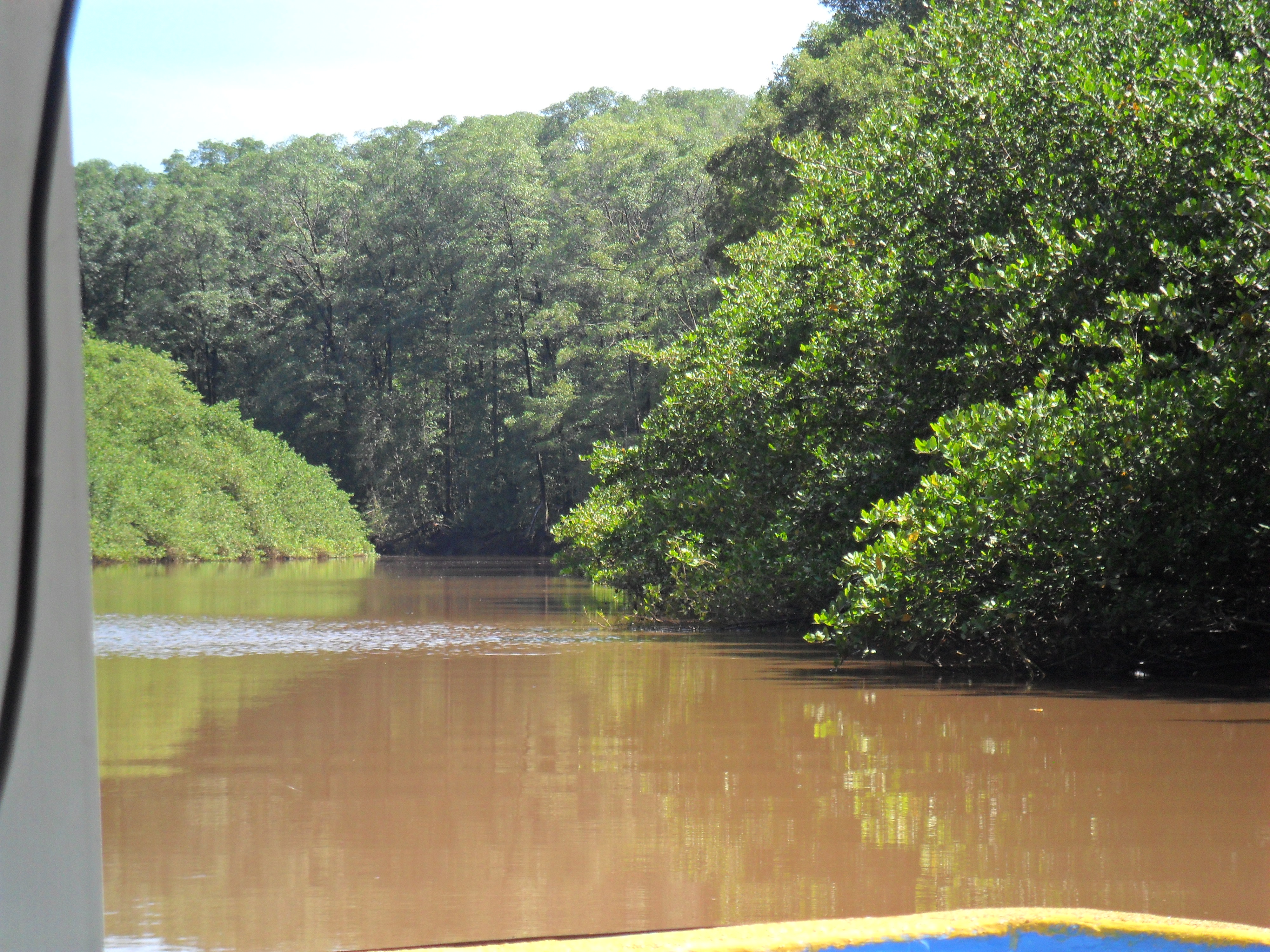
Entering the mangrove swamp.


Two months old.

Where the Rio Grande Tarcoles enters the Pacific Ocean.


The boat captain feeding the crocodile in the mud barefoot. I thought about touching this one he was so close until I was told they could swim as fast as 55 miles per hour. It occurred to me that he could turn around really quickly and snap off my hand so…

Pura Vida
Everywhere in Costa Rica one hears Pura Vida. It seems to be the national motto. I have been here for a week. This is the greenist, healthiest, cleanist, enviromentally conscious, most mountainous place I have ever been. Few people smoke, there is no salt on the table anywhere, the food is mostly rice, black beans, fruit, and vegetables. No hot peppers here unless they are on the Caribbean side where I have not gone yet. When I return home later this week, I will post photos with written details, including some food photos and explanations. Today I saw howler monkeys, iguanas, other lizards, numerous birds, white faced monkeys, sloths, and agoutis. Tomorrow will start out by going to a place with lots of crocodiles and scarlet macaws. This time of year it rains incessantly. I have been soaked several times and nothing dries out. Even though I am not a lover of rain or being wet, it is impossible not to love this place. Pura Vida.
DEATH
I was afraid of revealing me, the essence of me. Who even, indeed, was I? My mother told me, when I started dating, to hide the essence of me, boys wouldn’t like it. Too smart; too aggressive; too full of myself; too intense; too serious; too burning inside strong; too adventuresome; too nasty a temper; too full of desire to feel, taste, see, learn; too much in love with a world of possibility. I took her advice, married a genius scientist, safe, timid, disadventurous. He liked me because I could shoot a bird off a wire hundreds of feet away. I time, we all died, him, me, the bird.
This piece was a finalist in a flash memoir contest.
Horses in Heaven
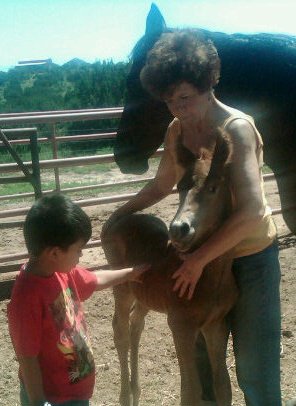
Heaven for horses seems a bit far fetched, especially for someone who lacks certainty about heaven even for people. Nevertheless, it remains a comforting concept. Yesterday, I buried Starry Miracle, less than two, an orphan I bottle fed every 3-4 hours day and night when his mother, Miracle, died. He not only survived, he thrived.
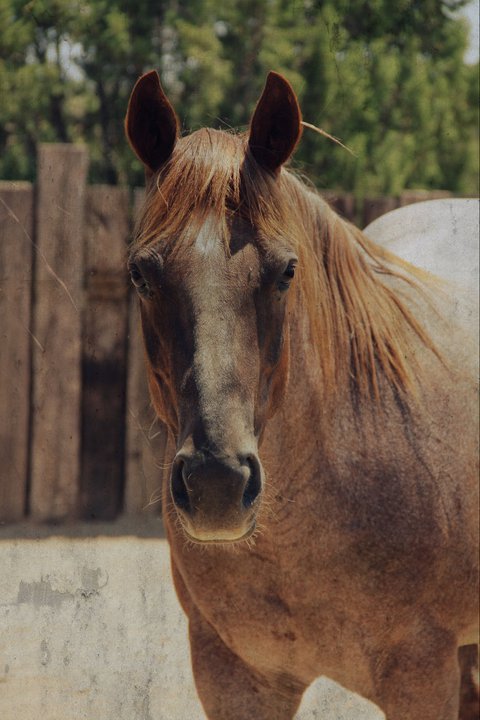
Around 4:30 Wednesday, friends went to my place to ride Rosie, a chunky, red roan mare. They found Star dead. It appeared he had been playing, jumping, and rearing, and freakily caught his ankle in a space between the pipe gate and fence, broke it and ruptured his femoral artery, then bled to death. When they called to tell me, disbelief set in. As a horse owner for many years, I know the common causes of horse deaths, colic mainly, from which Miracle died three days after his birth. I have inspected fences and corrals for safety many times. The possibility of such an accident never even entered my mind.
His body stiff, distorted, his coat, lusterless, bore no resemblance to his burnished copper body, glinting in the sun, following me, nipping if I ignored him. Often, I thought he thought I was a horse or he a human.
The two surviving horses spent hours standing in the spot where he died, licking the pipe fence from which I had hosed off his blood, smelling the ground, neighing. They even failed to rush to their hay when I fed them. Eventually, I opened their gates. They ran across the rugged canyon land constantly for fifteen minutes, dream horses running in the wind.
Miracle, Star’s mother, deceased, July 2010. Rosie who “adopted” Star after Miracle died, and Cool, the other orphaned horse I raised.



Writing on the Rim
The canyon edge looms out my bedroom windows,
pale adobe, stark.
Fall to death or serious injury!
I will not fall; I love living on the edge.
Rain brings a one hundred foot deluge,
a roar of water, cascading, screaming.
Someone said my house is pink; it is not pink!
It is the color of the canyon, the worldwide color,
Moroccan, pueblo, Saudi, Mali, Navaho, Timbuktu,
Desert, alive and lovely.
Three bucks watch me through my bedroom windows.
They see me move; they stare.
Isabella stands rigid, watching.
I kneel to her level; follow her eyes.
The bobcat casually climbs the canyon wall, impervious.
He marks the cedar tree, walks a deer path, disappears.
He is a secret, rarely seen.
The huge hoot owl’s voice echoes down the canyon,
drifting through my dreams.
A young road runner calls, scratchy,
running across the patio–on the edge.
In the spring the mocking bird sings all night,
“This is my territory.”
I sing all year, full of joy.
I live in beauty on the rim.

I decided to reblog this because it is the season for giving thanks, and I am eternally grateful for the privilege of living in such a beautiful place. Yesterday, my family and I took a hike here, saw deer, lovely colorful rocks, bunnies, and native plants the names of which I do not know. I live in beauty on the rim of wonder!! I feel blessed!!

