This illustrates how it is possible to farm profitably and sustain the environment including wildlife.
animals
Horses

horses, running, bucking
storms coming
later, calmly graze together
a lesson


8 Creative Ways to Reduce Human-Wildlife Conflict
For those of you who want all our wonderful wildlife to survive…

THE TIGER is an iconic endangered species, with as few as 3,200 leftin the forests of India and Southeast Asia. Conservationists have invested millions of dollars into saving the species, and recent population surveys have showed a promising uptick in the number of tigers in the wild.
 A new population survey in India shows tigers making a modest comeback. Photo credit: WWF.
This is good news for tigers. But is it good news for people living with tigers?
The answer is a mixed bag. Tigers keep forest ecosystems across Asia in balanceas the dominant top predator, and sustain ecotourism and conservation funding as a flagship species.
But living in close proximity to tigers can be dangerous.
 The historic range of tigers is shown in beige, while the current range is orange. The region is now home to 3 billion people, with tigers occupying…
View original post 1,241 more words
#JoinThePack: Will you howl fight for a future with wolves? Ooowwwwoooooooooooooooooooooooo!!!!!!
As a fan of wolves and other predators, e.g. pumas, I want to share this. Predators help maintain a healthy ecosystem. Also see my other posts about wolves.
The wolf’s return to Yellowstone restored an ecological balance which had been lost. Watch the animated film, “The Fable of the Wolf.” Will you howl + fight for wolves? Ooowwwwoooooooo!
Source: #JoinThePack: Will you howl fight for a future with wolves? Ooowwwwoooooooooooooooooooooooo!!!!!!
Satao – the enigma
The world is at risk of losing nearly all the large, wild mammals due to greed, misinformation, and habitat loss. Until people quit buying elephant tusks, rhino horn, etc. and the demand ceases, this will be very difficult to stop.


Alive, Satao was almost unknown; dead, he became legend.
How did it happen?
A year ago, Satao fell to a poacher’s poisoned arrow in a remote corner of Tsavo East National Park. When news of his death became known early in June 2014, it circled the globe at a speed any publicity agent would have been proud of. The international press, from Le Monde to The New York Times carried news of his death. It generated millions of tweets and Facebook page reads. There were YouTube tributes, news reports, articles, blog posts… two online petitions signed by 180,000 called for presidential protection for the remaining Tsavo tuskers. A week later, a tribute released on YouTube by the Great Elephant Census – created from the last footage we filmed of Satao, was seen by 135,000. ( http://youtu.be/KjDH_QZd0ok ) News of his death went viral in a way normally reserved only for…
View original post 1,378 more words
My Ethiopian Adventure–Gelada Baboons
The last of the grass eating primates–all others are now extinct–gelada baboons are found only in Ethiopia above 1800 meters. The first I saw ran up and down the cliffs at Menelik’s Window. Because the people in this area use large tufts of grass to make house roofs, boys patrol the area, attempting to keep the baboons from eating this particular type of grass. 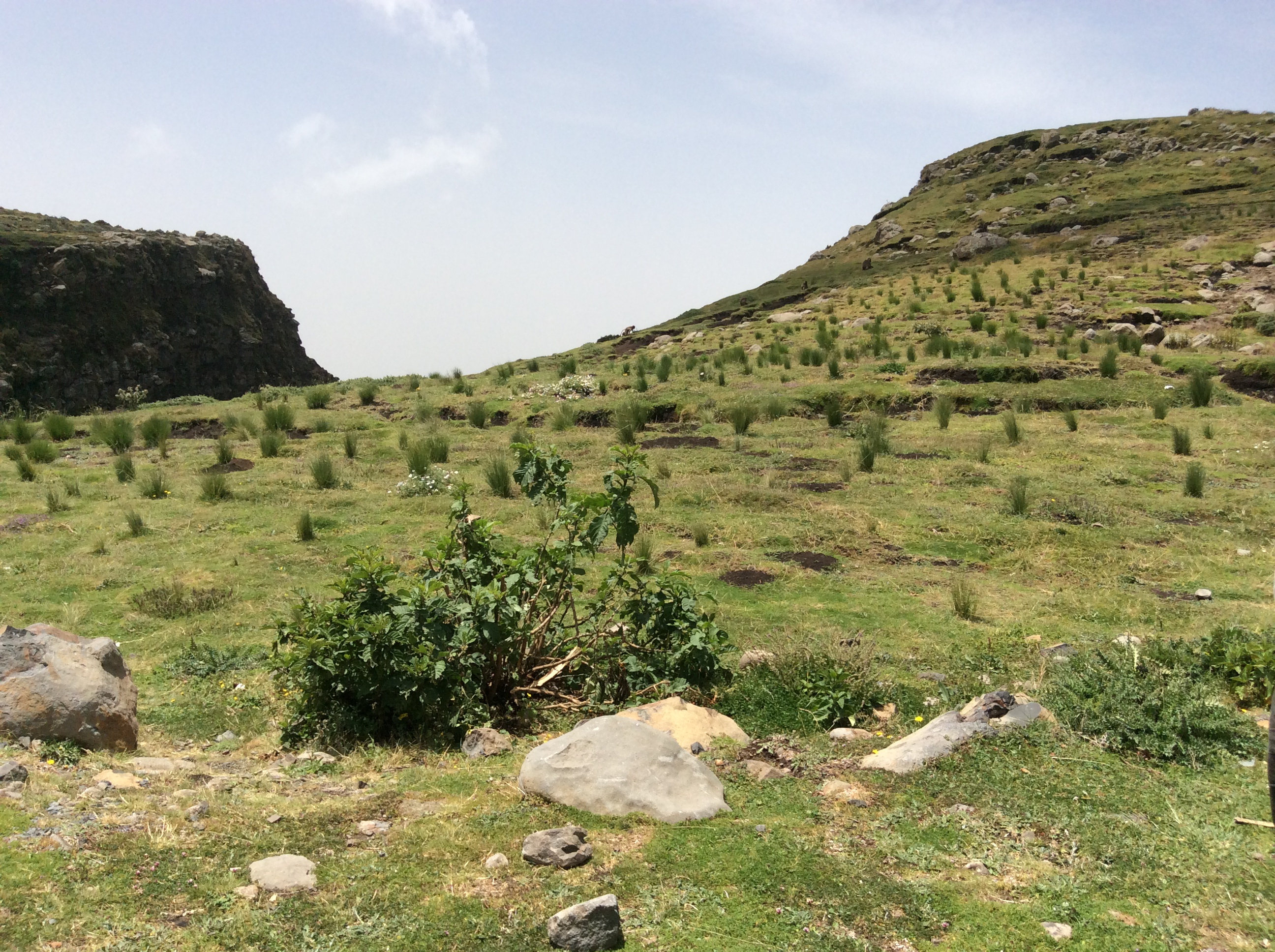 Perhaps because of their experience being chased persistently by humans, these baboons were hard to photograph up close because they ran off. The boys who guard the grass pass time by making hats and other items out of the grass the baboons want.
  If you look closely at the following photo, you can see a couple of baboons running up the slope.
  Although you can see gelada baboons in several places in the high mountains of central Ethiopia, their major sanctuary is Simien Mountains National Park. Here they are protected from hunting.
  Unlike those at Menelik’s Window, these did not run off especially if one walked along quietly or stopped to watch. Unlike other species of baboons, these are not aggressive. The males may appear to be boss because of their big manes, red-hearted chests, and size, but such is not the case. In the world of gelada baboons, females rule. Females even choose the one male that shares up to six or so females. The male may try to fight off contenders, but in the end the females choose.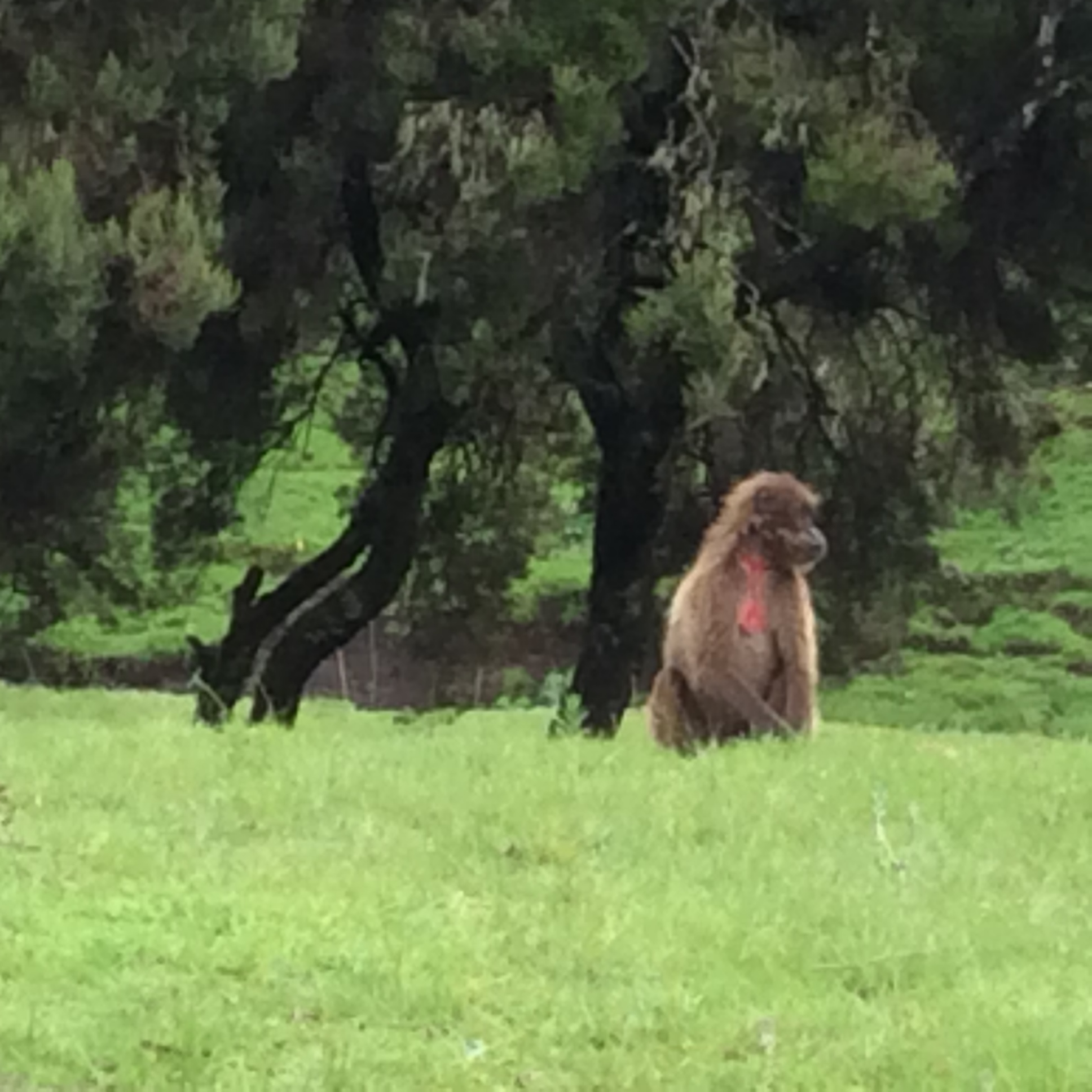
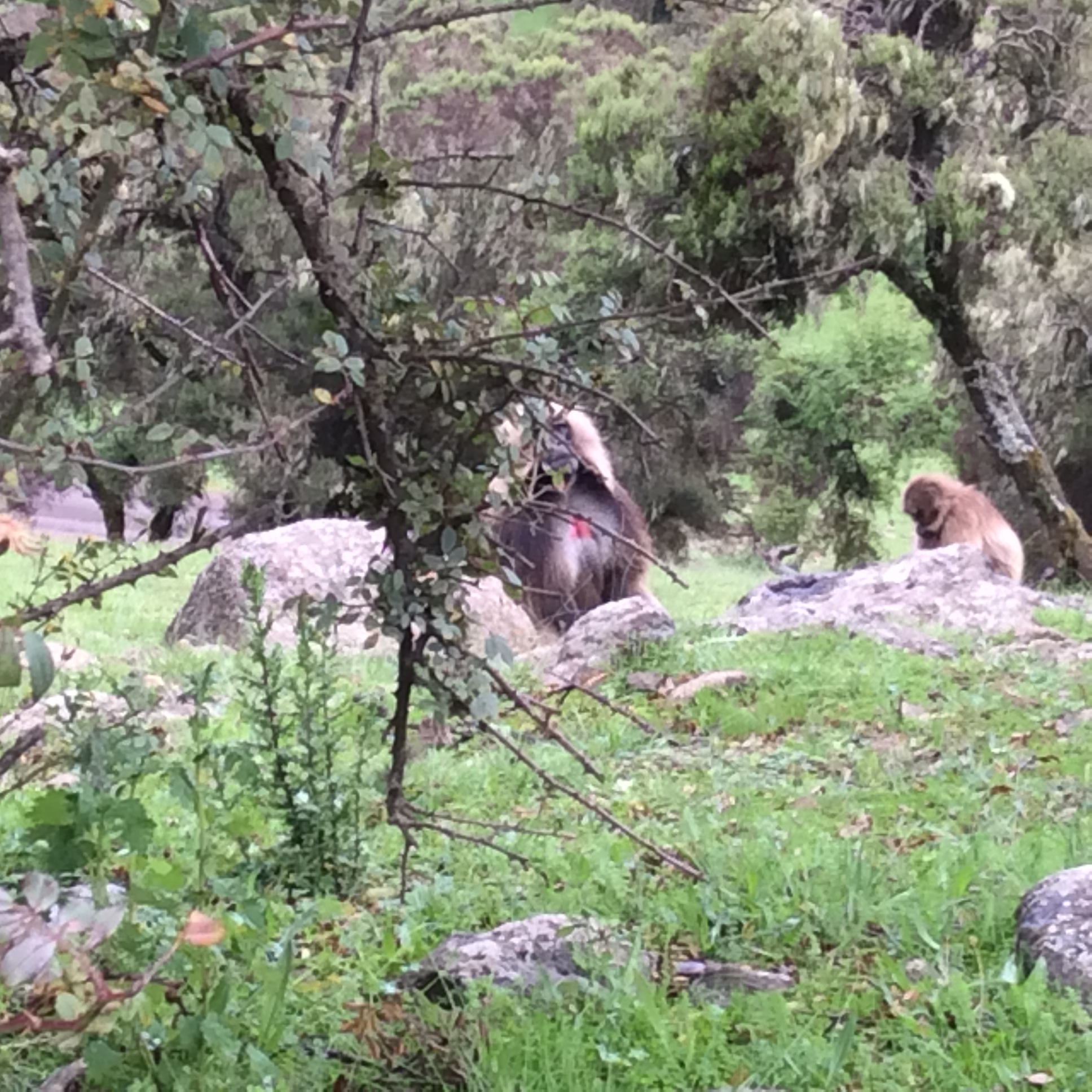 Because I found many of the 2000 feet cliff drop-offs a bit daunting, on the hike I chose to go higher with the guide. A fortuitous choice for sure. We found ourselves surrounded by a huge troop of peacefully grazing baboons complete with babies playing in the trees.
  Gelada baboons spend their days sitting on their fat humanlike buttocks eating grass. Except for humans they are the most terrestrial of all the primates. They climb down the steep cliffs at night to sleep in tight groups. This helps them escape predators, e.g. leopards and hyenas. Probably their safest habitat is Simien Mountains National Park because to enter the park every visitor has to sign in. Everywhere you go, an assigned guard with an assault rifle accompanies you.
  Because of the rainy weather, he slung his assault rifle over one shoulder and held his umbrella in the opposite hand. We did not see any more gelada baboons until several days later on the last day of our road trip when we stopped to visit a sort of inn/hotel owned by a German woman.
  Experts estimate only one to two hundred thousand remain. Habitat loss and hunting males for their manes threaten their survival. They are listed as a threatened species.
Ethiopia–From the Roof of Africa to the Nile
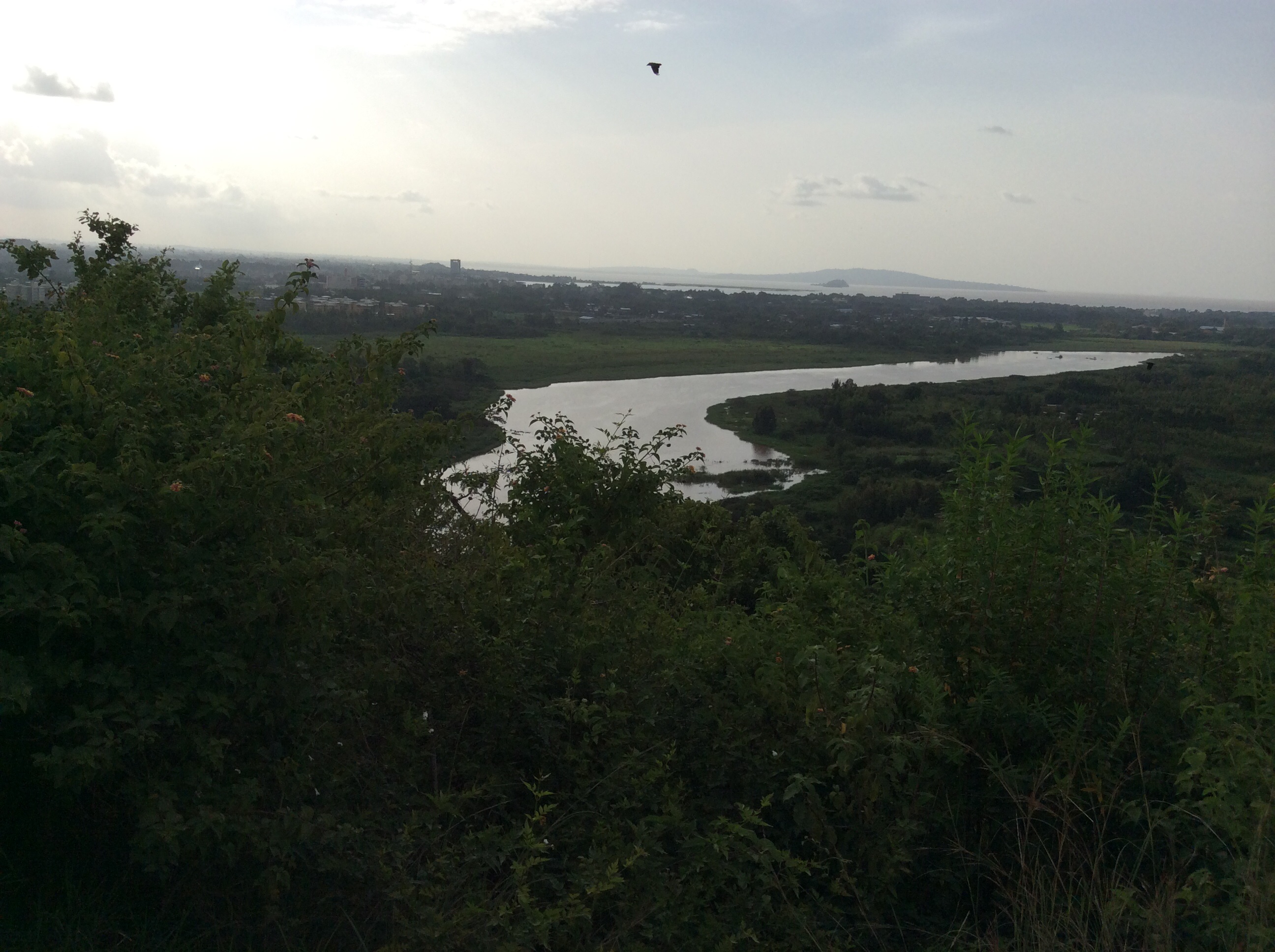

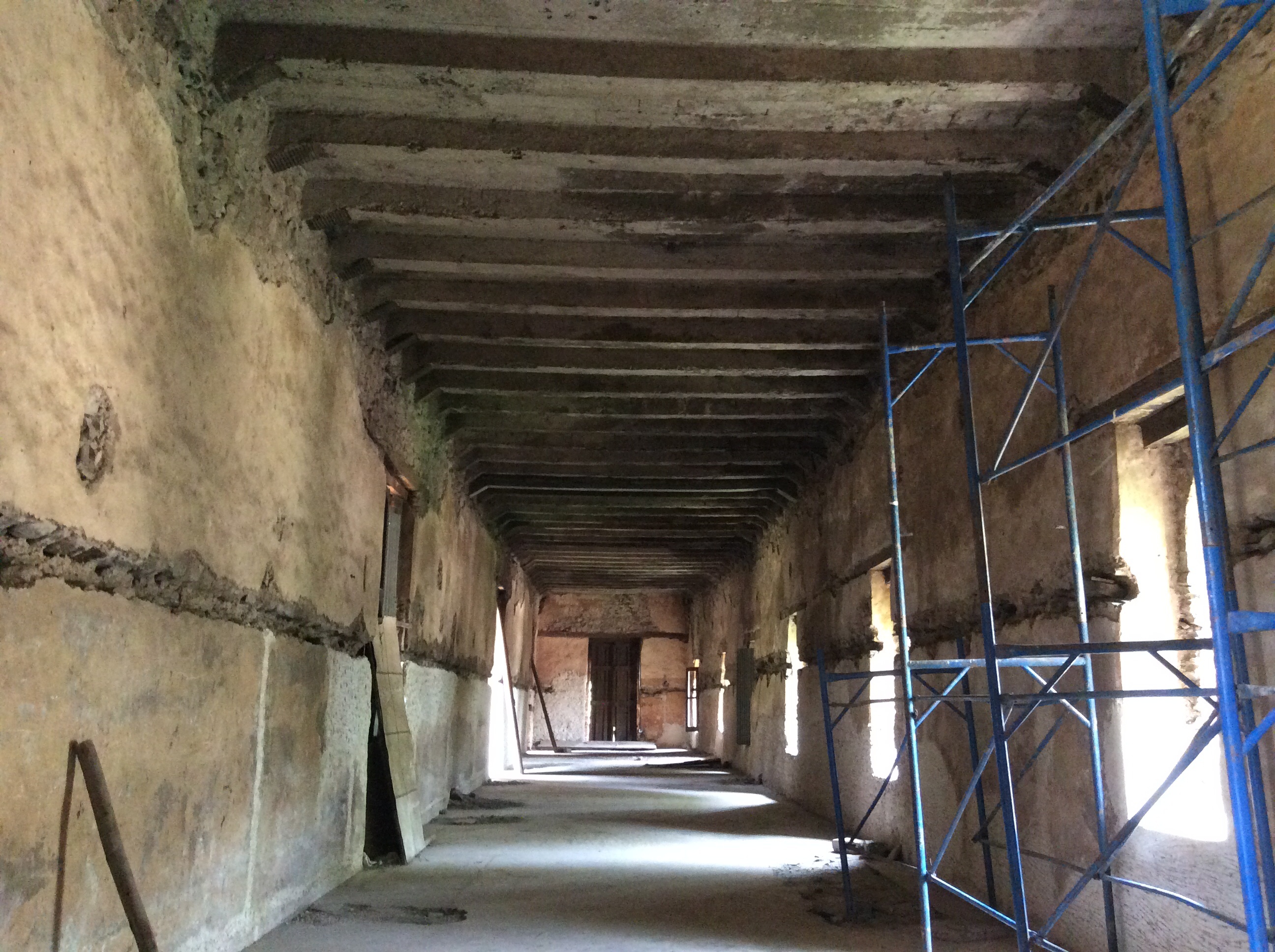

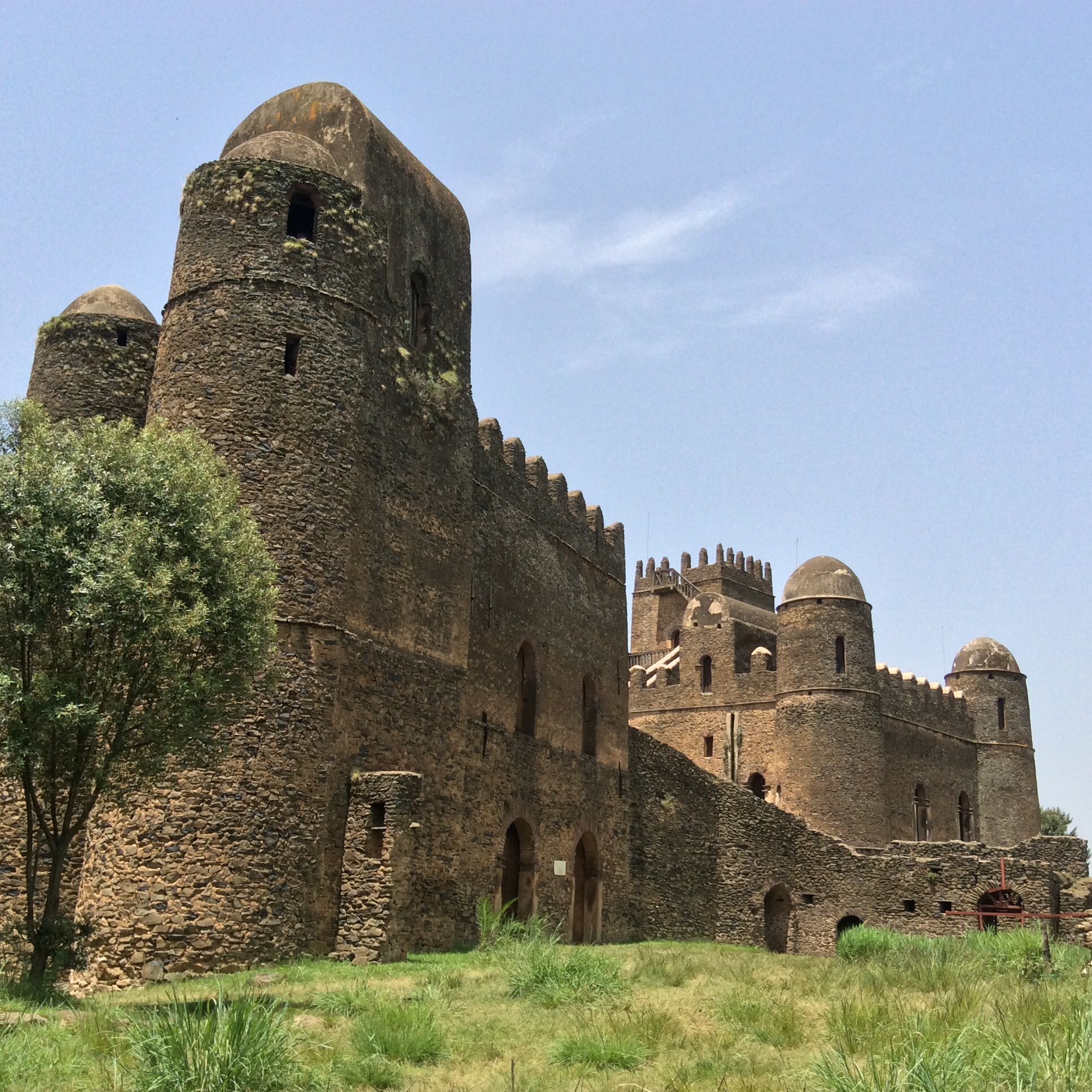
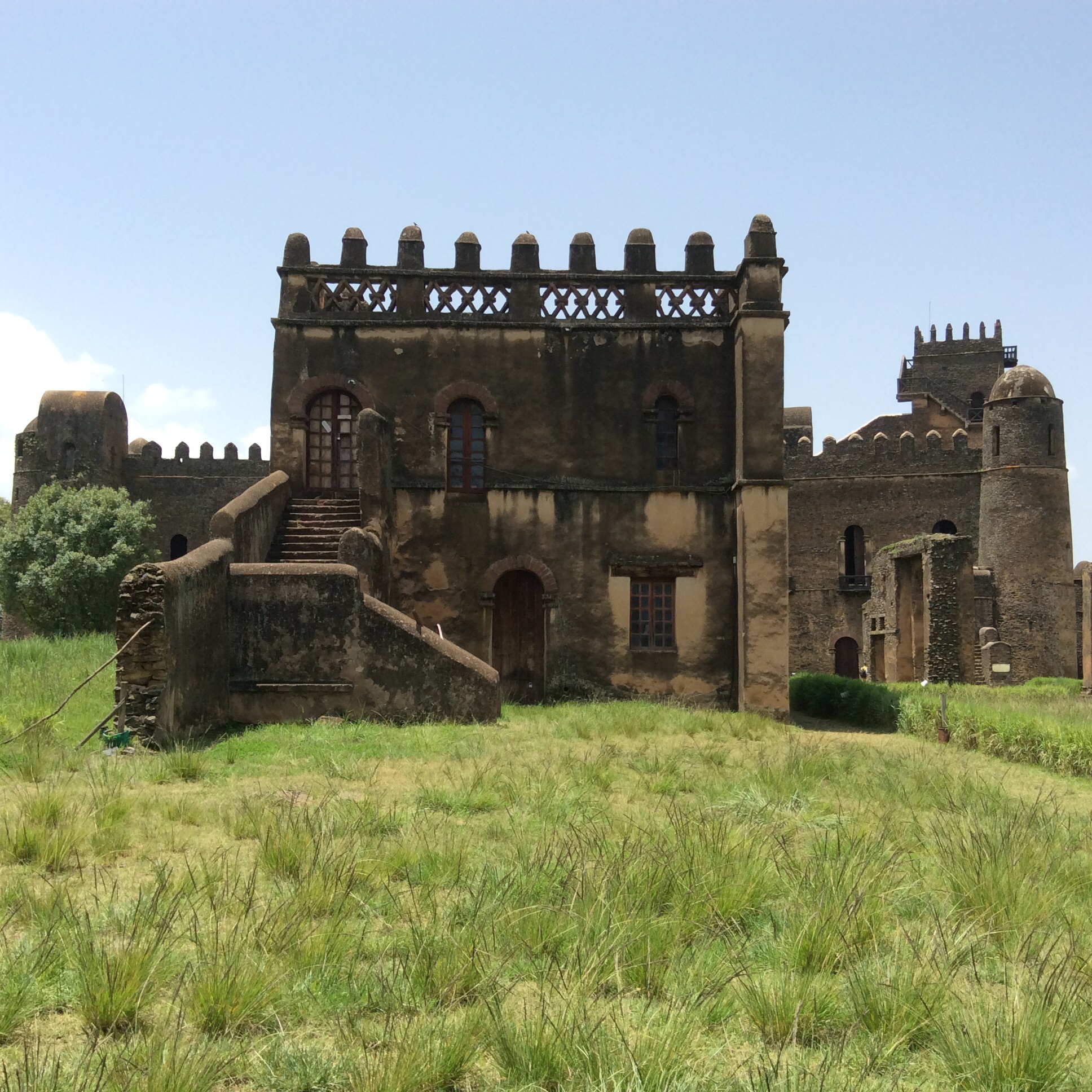
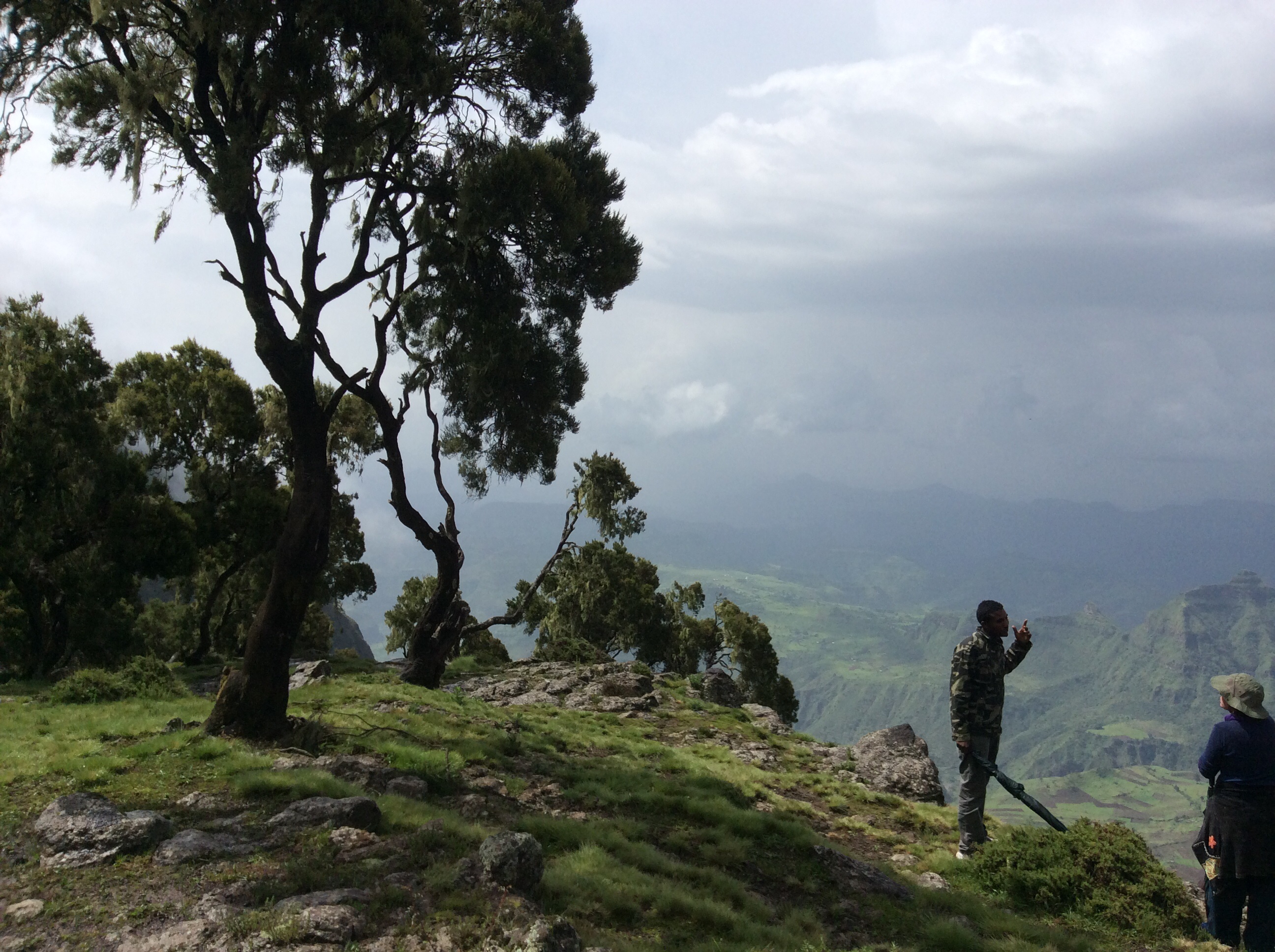
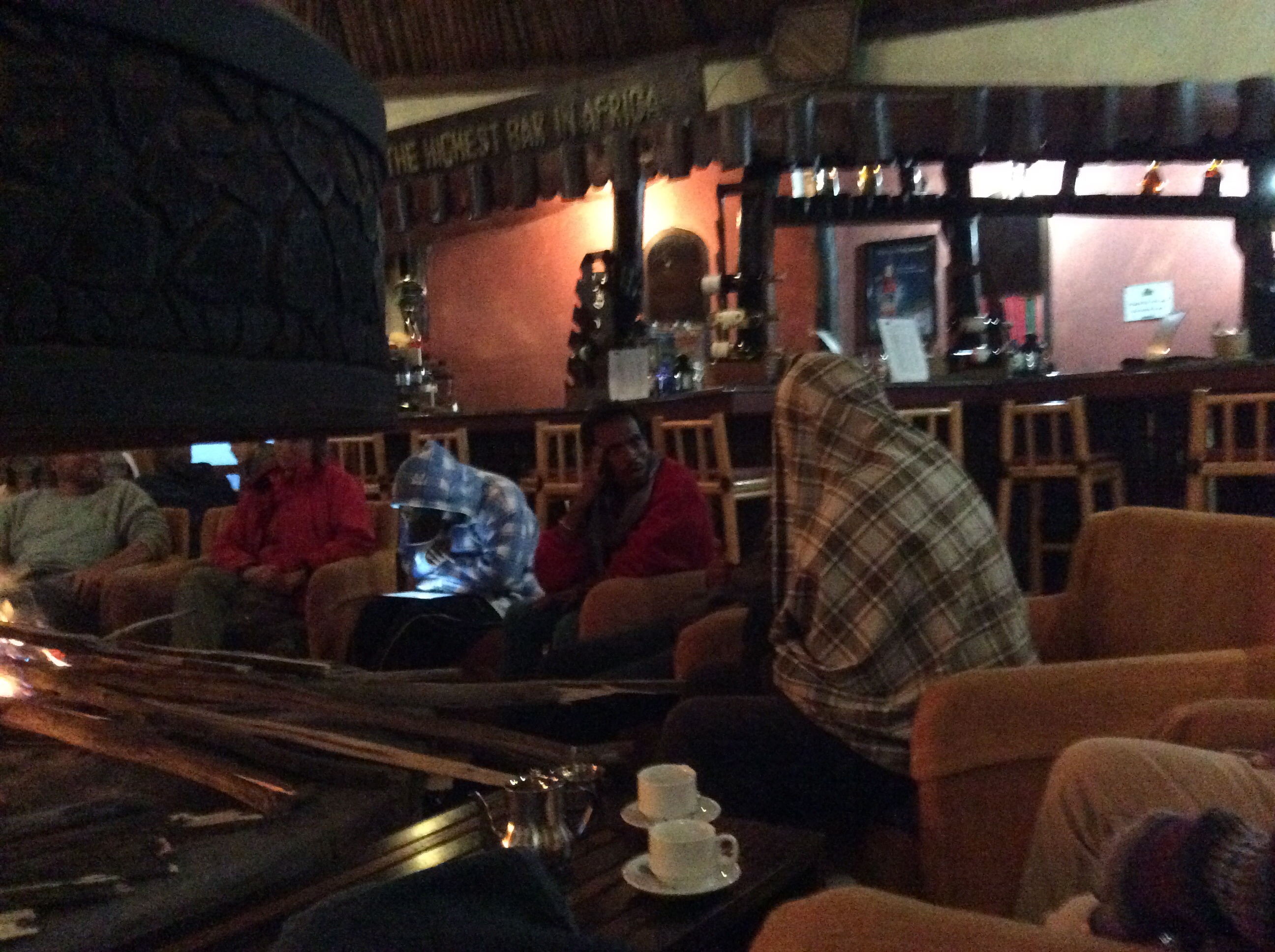 Internet is not so reliable at times here. Yesterday we saw 23 Walia ibex in the Simien Mountins above 14,000 feet. They are found only there. Photos include Simien Mountains, the highest bar in Africa, the castles in Gondar, and the Blue Nile River, the longest in the world. Staying at a hotel on Lake Tana. Saw several hippos near the Nile bridge, but the guard said no photos. For some reason, these photos loaded in reverse order. We were in the Simien Mountains first where we stayed in a hotel above 13,000 feet with no heat, took a small trek, and saw hundreds of gelada baboons. We saw the castles today and went to an overlook over the Blue Nile.


A Lonely Horse
Three months ago, Cool, a horse I raised, died suddenly from acute colic. Cool was a friendly, inquisitive character. He investigated everything, knew when you forgot to shut a gate totally, knew how to open things, never missed anything that was occurring. Fun and funny and well loved.

So well loved in fact that the photo on the back of On the Rim of Wonder is of me holding his bridle while my friend’s exchange student from Austria, Klara Kamper rides him. Apparently, I am not the only one who misses him. Rosie, my other horse, decided this past week that she needed to be as close to the house as possible so she could see me through the window. For the last several days, when I awaken, there she is complete with her nose prints on the window.

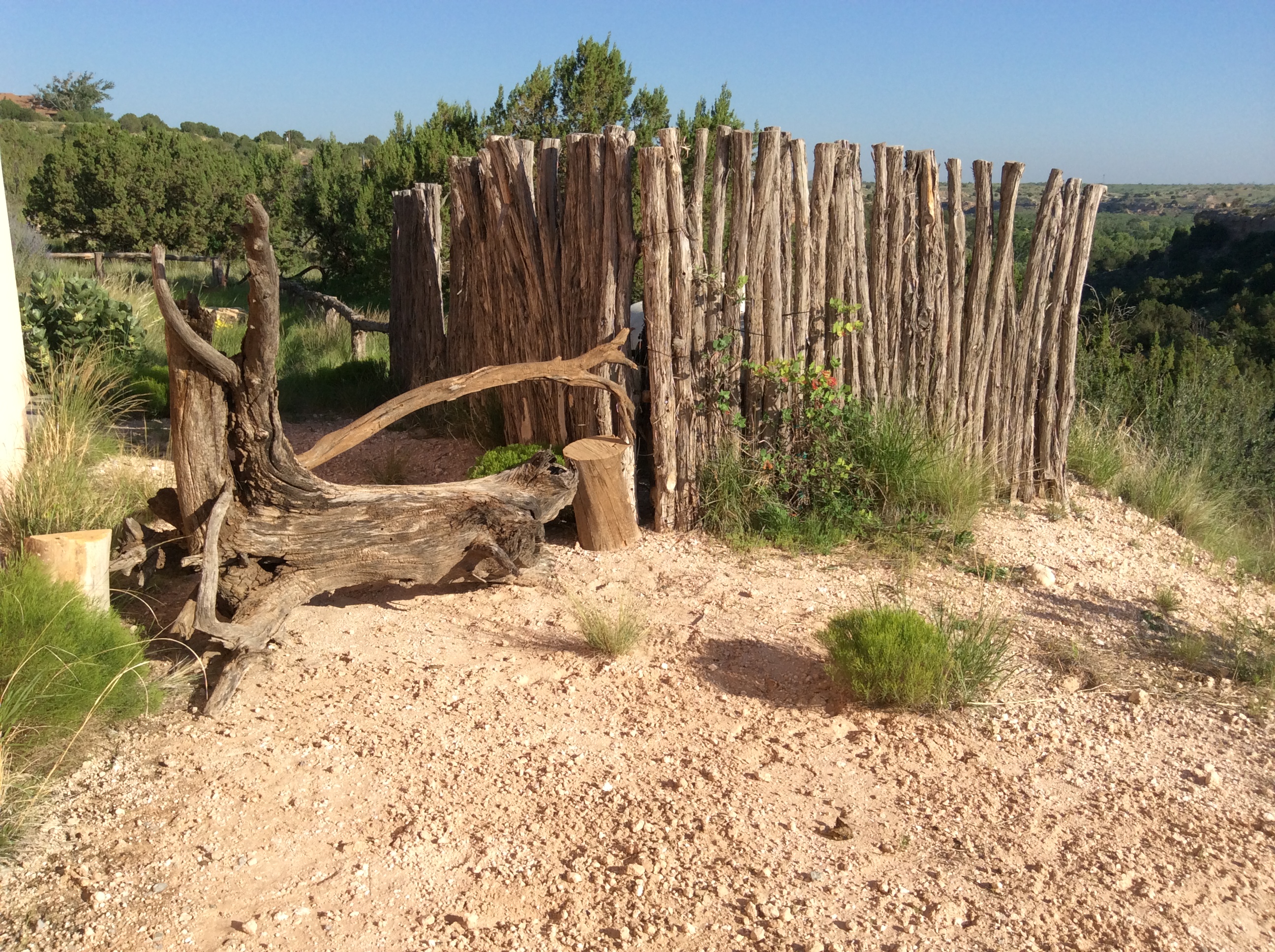
This morning I decided this had to stop for several reasons, one of which is that she is trampling all the flowers and grasses I have tried to grow in this caliche area. It is also not easy to get her to leave. I have to hike around the house and drive her reluctant self out along the edge of the canyon. A fence around a propane tank covers part of the width between the house and canyon–the area through which she walks. About fifteen feet in front of it a large old log sat mostly for decorative purposes. It occurred to me that I could possibly move this back between the fence and house. It is so heavy that to do so I had to pick up one end and move it six inches then go to the other end and do the same. By doing this repeatedly, I did manage to move it. However, a small gap on either side still existed. Since horses can jump, she could jump the foot or so over it if determined. I found another dead piece of juniper to put across the top and two old log pieces to put at either end. Now I can only wait and see if this deters her.
When I return from my trip to Africa, I think I must find another horse to keep her company. In the meantime, she must endure sadly. Here are some photos of both of them when Cool was still alive and well.
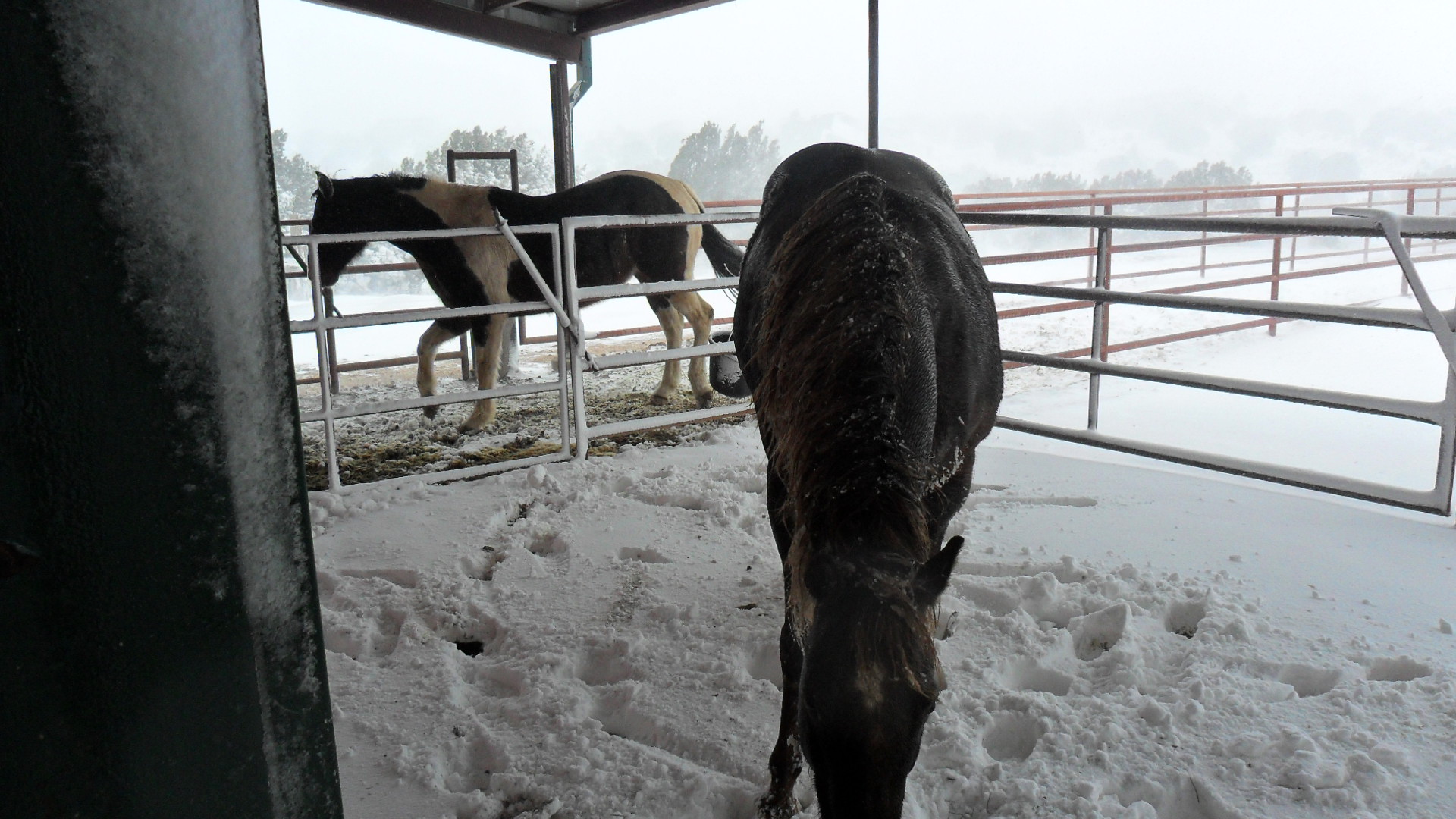

While writing this, I heard neighing and checked to see. Poor, sad Rosie stood at the other end of the obstacles I set up. It was as if she were calling to me to please, please, please let her get back by the house. I ignored her pleas. Eventually she gave up and walked away. Now I am just hoping that she does not find the little walkway by the garage that goes to the front door, which I frequently leave open for the summer breeze. She would just walk into the house.

The Sixth Mass Extinction
Off and on the last month, I’ve posted about various issues on climate change and related topics. Today, Life Science published an article entitled “Extinction Rates Soar to 1,000 Times Normal (But There’s Hope)”. What causes this enormous spike? You guessed it. Humans.
Before recently, the extinction rate was one per every ten million annually. Now it is 100-1000 every million. Where do researchers and scientists find hope in this adverse increase? Let’s look at Earth’s history for a moment before answering that question. Since life began on our planet, five mass extinctions have occurred, leaving only half of living organisms each time. Reasons for these extinctions vary from Earth’s shifting axis to asteroids–see previous posts related to effects of changes in the Earth’s axis. The big question: how do humans affect the current extinction? Yes, we caused the demise of the passenger pigeon, the Tasmanian tiger, and the dodo bird. And human poaching and habitat destruction now endanger elephants, rhinos, and all subspecies of tigers, among others. One problem in accurately determining human effects is that new species are discovered annually so we are not even sure how many species currently exist. Using what we do know about current species, DNA, and some rather sophisticated techniques, scientists come up extinction rates.
Where is the hope? The most endangered species tend to range in small areas in poorer countries lacking resources to protect them. Modern technology can help, using satellite imagery, biodiversity mapping, as well as other methods. Drones have been used in Africa to track both animals and poachers. We can focus efforts on the areas where the most endangered species live.
How can you help? Become a citizen scientist. Use your smartphone camera and report your findings to scientific conservation groups. A site called iNaturalist allows ordinary individuals to upload photos of plants and animals, tagging date, location, etc. This site links to an international organization that tracks endangered and threatened species.
What else can you do: don’t buy anything with ivory in it, don’t buy anything with the fur or body parts of endangered animals. Spread the word. Become more informed, read articles and books related to these topics. Care. This is the only Earth; help save it.
Apocalyptic Planet-Part Seven: Species Vanish
We all know extinction occurs. Nearly everyone knows different species of dinosaurs at varied times roamed the earth for millennia. Bones of all sorts of animals and various hominids are dug up off and on. Scientists study them, determine their age, where and how they lived. Scientists and sometimes even average persons develop theories about why they went extinct. Regardless of which theory a person decides is accurate, these ancient extinctions generally took thousands of years. Recent extinctions are different, e.g. carrier pigeons. Millions existed a couple of hundreds of years ago; now they are gone. Why? Humans.
Various causes exist for the extinctions of ancient species. A major cause is the climate change caused my the changing tilt of the earth’s axis. These changes occur over thousands and thousands of years. What is different now? Let’s take corn. Native Americans cultivated rainbow colors of corn in small, frequently irrigated fields. Where is most corn grown now? Giant fields of GMO corn grow from horizon to horizon in the Midwest. And if Monsanto had its way, no other corn would continue to exist for long. Iowa is a good example. Wherever this corn is grown, native grasses and other native plants totally disappear, in part due to cultivation. A bigger issue is herbicides–to have clean fields, nothing and I mean nothing but corn must grow there. A farmer’s expertise as a farmer is measured my just how super clean his fields are. The only way to get these totally weedless fields is to use herbicides. Biodiversity is a key to environmental health. Little biodiversity exists in giant fields of crops like corn and soybeans. Fertilizers to obtain huge yields wash downstream and in the Midwest eventually end in the Gulf of Mexico and cause giant marine algae blooms which pulls oxygen from the water to create a dead zone where no marine animals or fish can live.
Perhaps readers have heard of the plight of monarch butterflies. Compared to just ten years ago, the population has dropped dramatically. What happened to them? Roundup. Over 100,000 tons of Roundup and other brands of glyphosate herbicides are annually applied to crops in the US. What do monarchs eat? Milkweed. Since 1999, 58 per cent of the milkweed has disappeared. Recently, monarchs experienced a 30 per cent reduction in their numbers in one year. Are we headed toward a mass extinction? Some scientists think so. These scientists are not talking about tigers, elephants, and rhinos being killed at an ever increasing rate for their body parts, but rather about the less noticeable extinctions of various plants and less obvious animals like frogs. And then there is the problem with bees. Bees are disappearing at an ever increasing rate due to not only diseases but due to herbicides and pesticides. Without bees to pollinate the giant fields of almonds and various fruits in California, for example, those foods won’t exist. See a previous post for more discussion on the importance of bees. So why care about frogs? Scientists consider frogs and amphibians in general an indicator of the health of an ecosystem. Certain more tropical species of frogs are especially subject to the effects of climate change and they are disappearing.
Where I live big bluestem, blue grama, buffalo grass, and other native species grew from horizon to horizon. This is the high plains. Root systems of some plants grow twelve feet deep. It has not rained in over a month. Where the native grass once grew, crops are now grown. This time of year finds open fields. Without rain, with the recent endless high winds, dust fills the sky. To safely return home from town Sunday, I had to turn on the car lights to see. The dryness fuels wildfires. Earlier this week, over one hundred homes burned down in a wildfire north of Amarillo. Drought.
Many human inventions are wonderful and make many lives better, but for some of them, I cannot help but wonder at what cost.
 writingontherim