Canyon de Chelley–Part Two: Driving into The Bottom


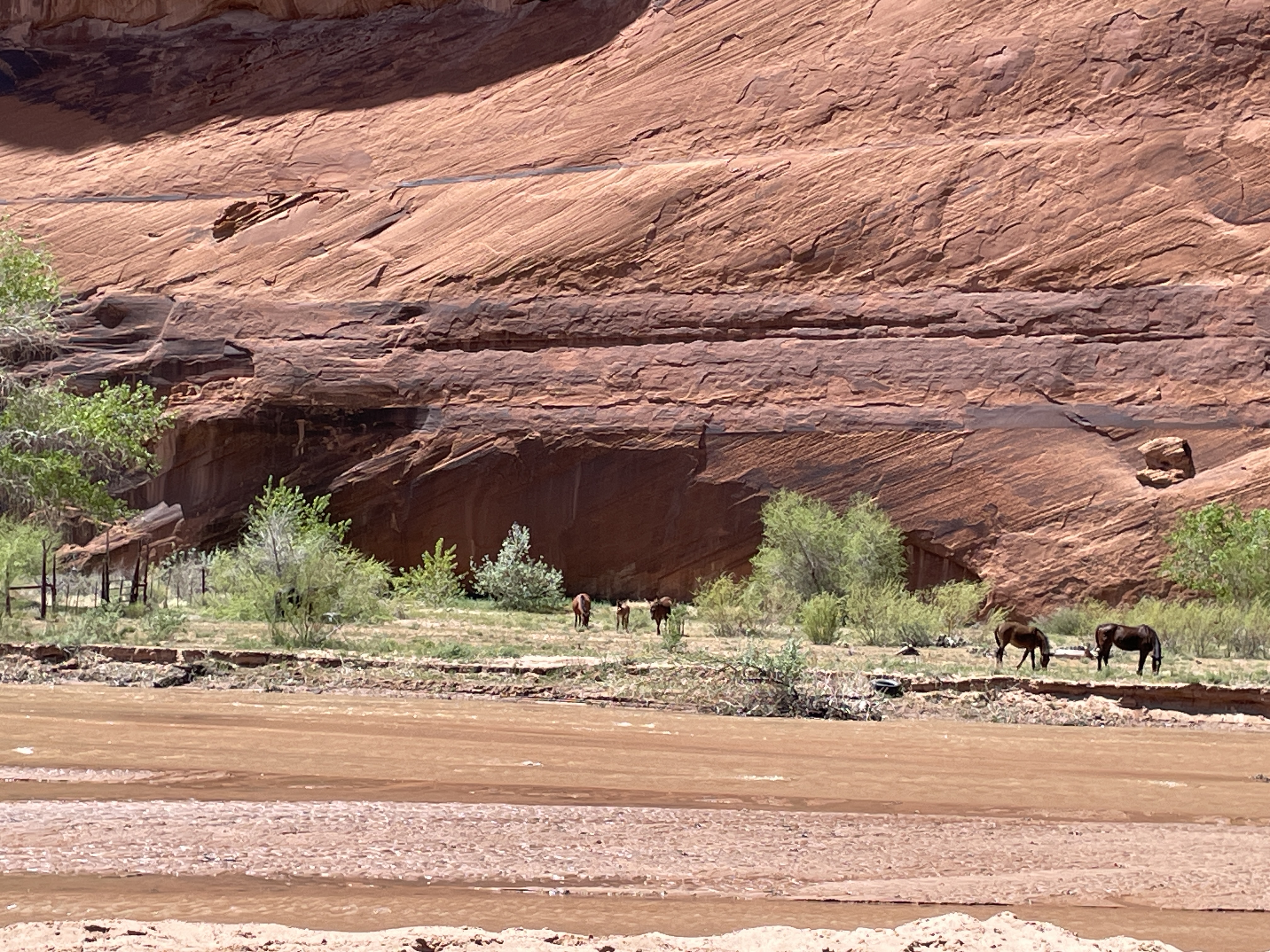
Canyon de Chelley was named by the Spanish who could not quite pronounce the Diné (Navaho) word for it and hence this name which is pronounced like de shay. It is more than 30 miles long and has a river running through it at least a substantial part of the year. In summer native people live there with sheep, horses, etc. even though fewer and fewer of the younger generation choose to do so. To enter the bottom of the canyon, you must acquire a permit and hire a Navaho driver. This is to protect it from the vandalism that occurred in the past. Canyon de Chelley is jointly managed by the National Park Service and the Navaho Nation.

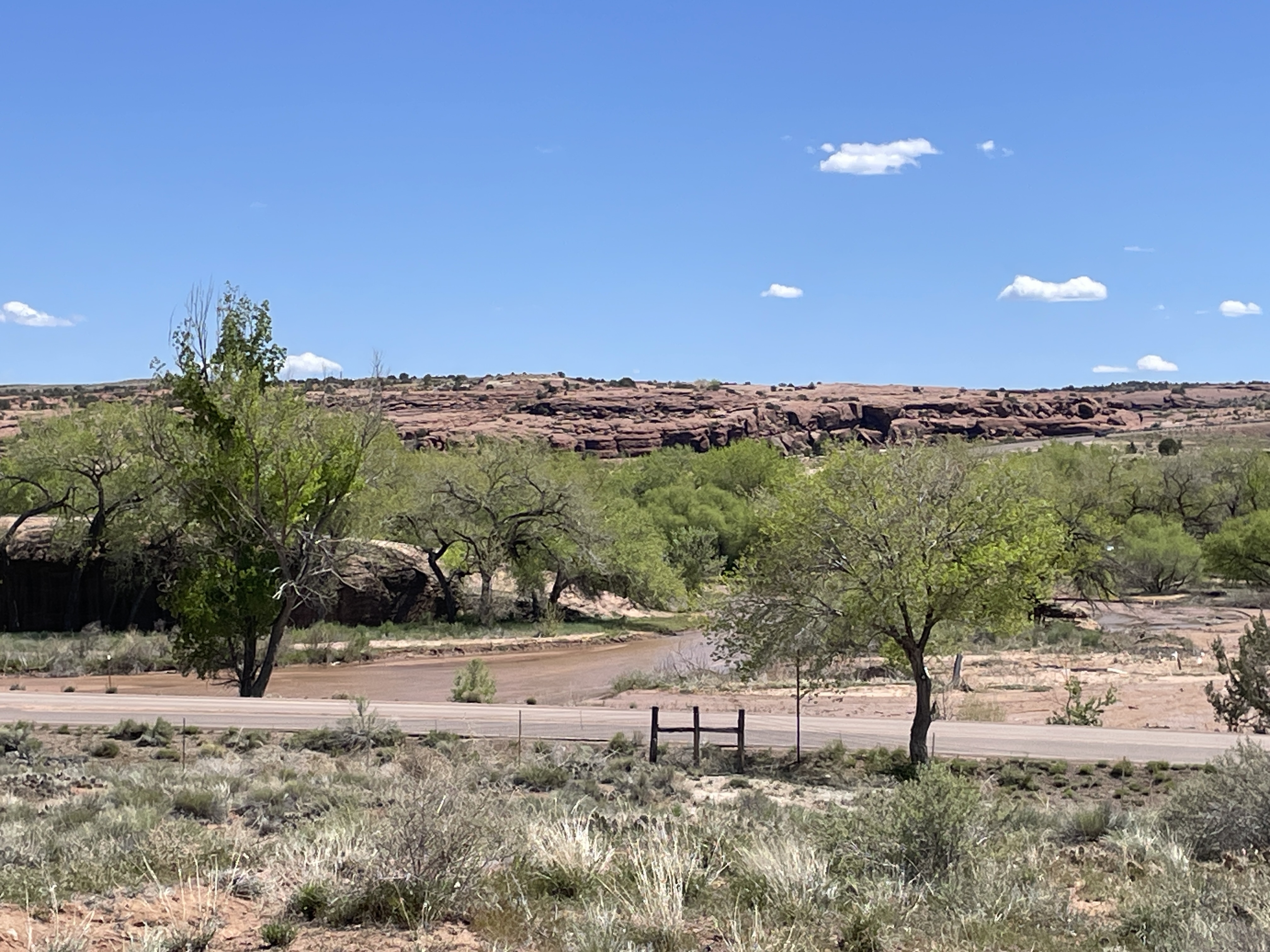
Canyon de Chelley begins at the edge of Chinle, AZ, near the Holiday Inn which, by the way, serves traditional food such as mutton stew and blue corn fry bread. Yes, I ate both. This photo shows the beginning.

It was quite a trip; I sat between two women in the back of a Jeep with a perfect view of everything right in front of me. Oscar, the driver, knew exactly how to traverse the water, the wash (what they call this stream), run up and down the banks.

Driving right up the middle of the wash.

Petroglyphs can be seen in so many places we stopped that I lost count. Oscar said they are nearly endless and can be found throughout the canyon walls.

A few days previous to our arrival it had snowed so everything was green and lush from snow melt.

In addition to petroglyphs, there are etchings in the rock walls.

In this case an etching/rock carving of horses.

Yes, we drove under this overhanging tree limb.

Sometimes the wash was narrower and deeper and we drove up and down steep banks and through deeper water.

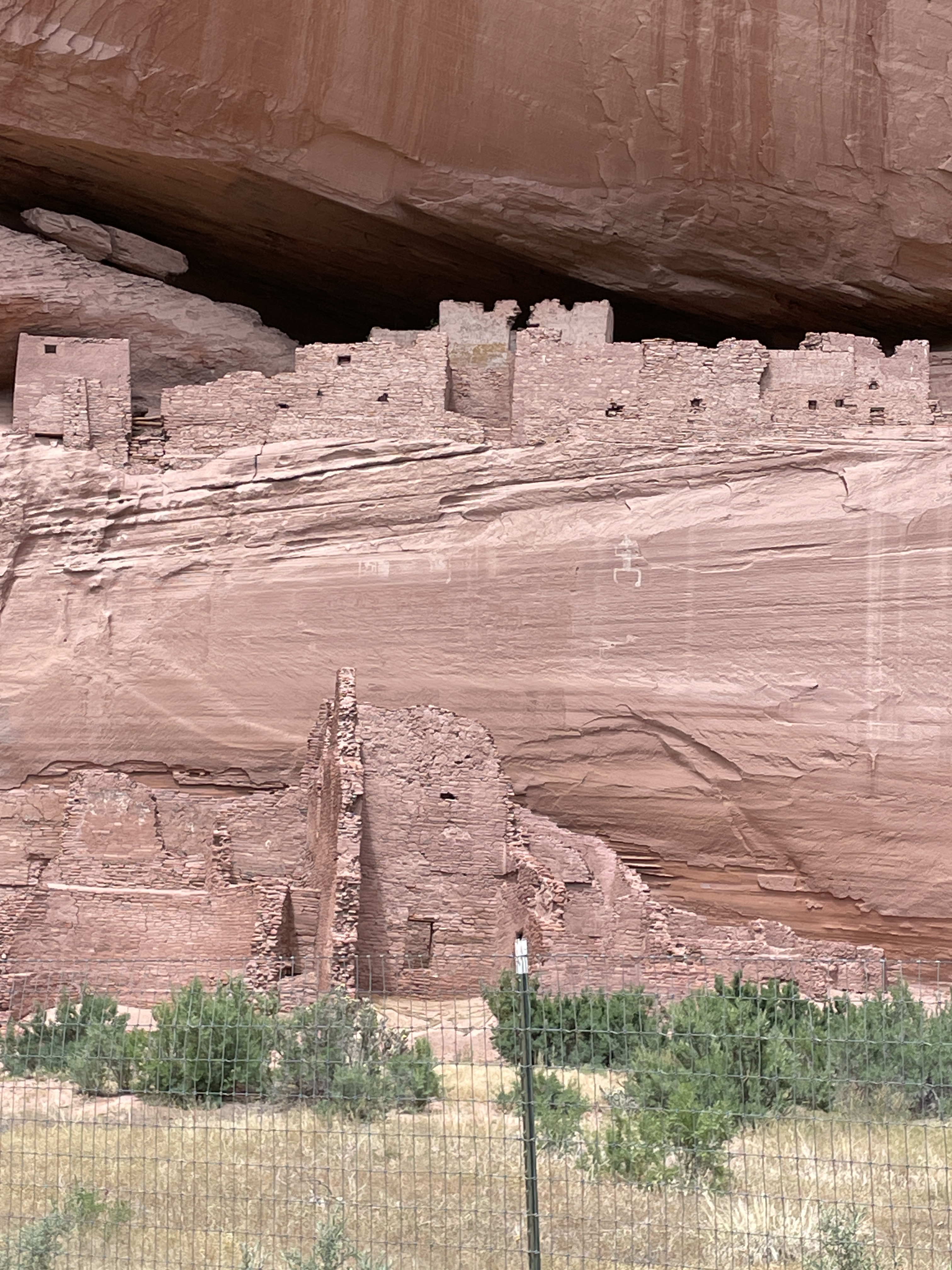
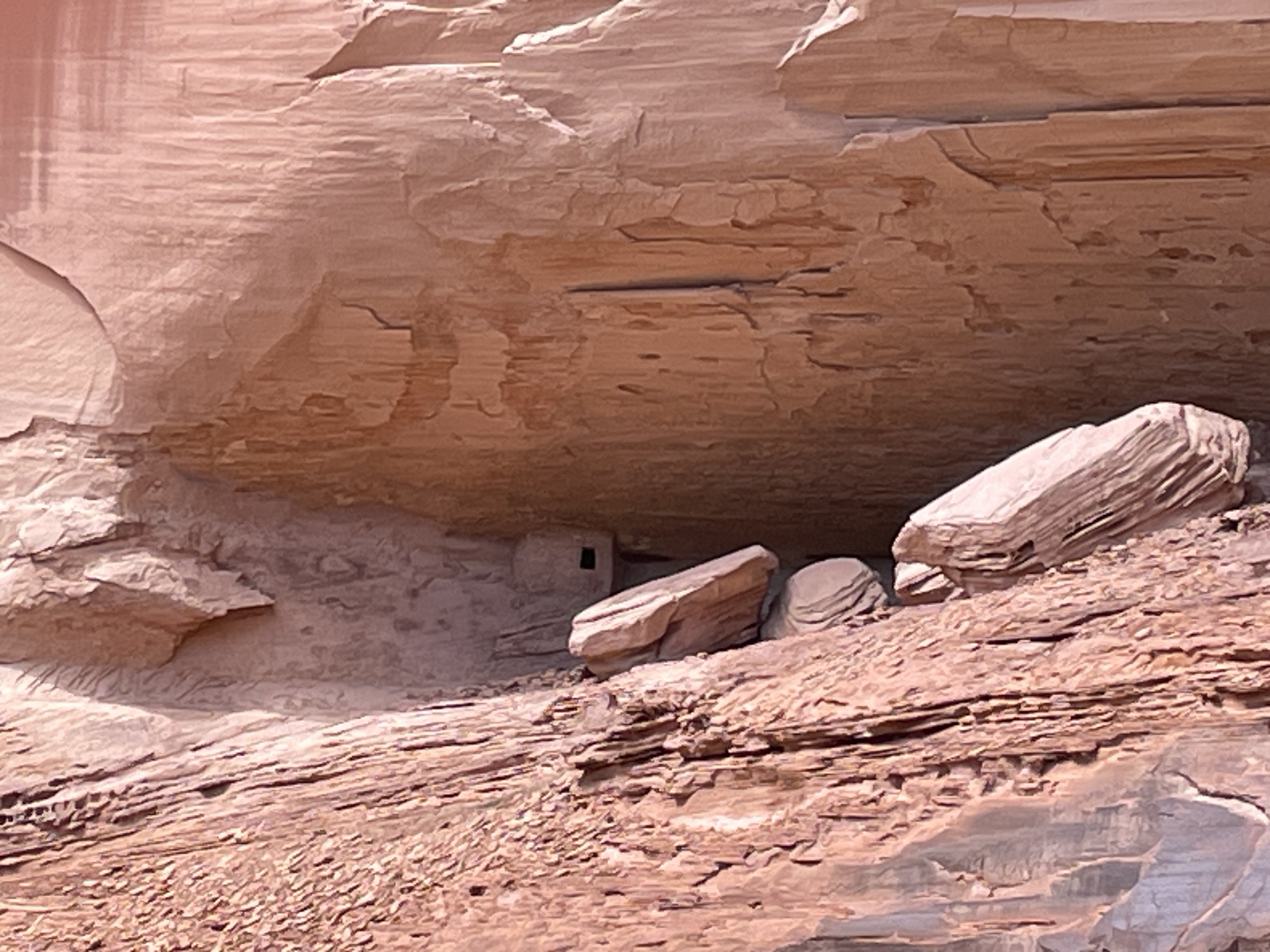
Ancient pueblo people lived here for centuries, some more than 5,000 years ago. This is one of the largest pueblo structures in the canyon (The White House–due to a white washed wall which you cannot see from this vantage point). The fence was built to protect it from vandals. We saw many smaller dwelling places and Oscar said there are hundreds in the canyon.

Headed back down the wash. This was a half day trip so only saw less than half of the canyon. You can hire for an all day trip complete with picnic lunch and go all the way to some of the famous formations that can be seen from the road at the edge of the top. There is also a side canyon called Muerto–due to a massacre of the natives that occurred after the Navaho forced long march.

The Jeep needs a bath after this trip.

Note: With a permit and guides, there is camping and horseback riding trips up the canyon in addition to this type of tour.

Poems


I started out thinking I would write a poem per day for National Poetry Month. Well, I’m a bit behind on that, but here are two of several I have written so far.

Spring

The mockingbird awakens me with his song.

A hummingbird, dressed in green with an iridescent

orange collar, flits by my head then sips nectar

from a scarlet bougainvillea blossom.

The neighborhood barn owl hoots at dawn and dusk.

A black and red/orange bird I’ve never seen before

lights on a palo verde limb.

A Western Bluebird dips its beak repeatedly in

the talavera birdbath.

Remember

In this world steeped in senseless violence remember

each day to find a piece of beauty:

-rosebuds opening

-the scent of jasmine

-a friend’s smile

-a bit of birdsong

In this world ravaged by wars remember

each day to find the jewels of joy:

-listen to a child’s laughter

-dance to a favorite song

-walk in the morning sunshine

-tell someone you love them

One Book a Week-53: “The Last Ride of the Pony Express”, Will Grant


Since I was born in St. Joseph, MO, and grew up 30 miles from there, the Pony Express is something I have heard about my entire life. Therefore, when I saw this book at the local library, I decided to read it. What a fun and informative book!! In 2019, Will Grant, who lives in Santa Fe, NM, decided to locate the right horses, transport them to St. Joseph, and ride the route of the Pony Express from there to Sacramento, CA, the other end of the trail. After the sheriff’s department escorted him across the bridge to Kansas, he managed to avoid cities for the most of the 2000 mile trip. This book is his account of the old Pony Express Stations, ranchers, farmers, historians, businessmen, ordinary people, and wild horses he encounters on his 142 day adventure. Although many have written books about the Pony Express, he is the only person who has followed the entire route on horseback.

One Book a Week-26: “Holding Fire: A Reckoning With The American West”, Bryce Andrews


If you LOVE the West, but sometimes struggle with its violent history, this is the memoir for you. Here is a quote from page 178: “I’m embarrassed at how long it has taken me to notice that a rancher’s view of the natural world is blindered in comparison to the hunter’s perspective; that driving livestock from one field to another is nothing like stalking free-ranging herds; that finding, gathering, and preparing a hundred different wild plants bears no resemblance to growing alfalfa or oats…”

Andrews also discusses the difference between sustainability and reciprocity. Before reading the book, I had never thought about this. He notes that sustainability is taking without damaging. Reciprocity entails giving back, e.g. nature, asking, “What can I give back? What can I do to take care of this place that feeds and shelters me?” This is quite different from “How much can I sustainably take?”

Andrews grew up in the West. However, after cowboying on several ranches in Montana, hunting annually, and later inheriting his grandfather’s Smith and Wesson revolver, he begins to question the gun violence and destructiveness of Western culture. This book details his journey. He continues to live on a farm in the Montana mountains, slowly transforming the land to make it profitable but also a place for nature, for wildlife to prosper.

One Book a Week-10: A Solitude of Wolverines, Alice Henderson


The perfect book for those who love suspense, Montana, wildlife, wildlife conservation, Alice Cooper, the protagonist, is a young, wildlife biologist who spends most of her life going from one remote research site to another. Here she’s located in a remote area of the high country in Montana, 26 miles from Bitterroot, studying wolverine populations for a wildlife conservancy/trust which now owns a defunct ski resort. While a few of the locals support her work and the conservancy, many more see the trust and her as endangering their way of life, and they are willing to kill anyone who gets in their way.

Filled with suspense, reading this page turner will also inform readers about wildlife biology and research, wolverine study, and life in the northern high country.

If you are looking for a fun read where you actually also learn something, this book is the perfect fit.

Note: This is one of three books I have read this month so far. I will post about the other two in the next few days.

One Book a Week-6: Drive Your Plow Over the Bones of the Dead by Olga Tokarczuk


Even though I try to keep up-to-date on Nobel Prize authors, I was unfamiliar with this one until I saw this book on a table at Barnes and Noble. First, the title intrigued me; then the blurb added more mystery. I bought it–so glad I did. Once I started, there was no stopping–fascinated.

Written in first person, it is contains the thoughts and experiences as related by an older woman. Once a bridge engineer, she now resides in the Polish countryside near the Czech border. Winters are harsh; most of the people who live there live there only in summer. She stays and cares for the houses of the summer people while they are gone all winter. She also teaches English part-time to children at the local school. Her passions are animals and astrology. Even though a science type, she is totally convinced that astrology contains life’s secrets even to the point of predicting the time and events of a person’s death. The book is also a murder mystery with an ending totally different from what I expected.

Now I am going to purchase the author’s book, Flights, which won the Mann Booker prize in 2018.

The First Time I Saw the Nile


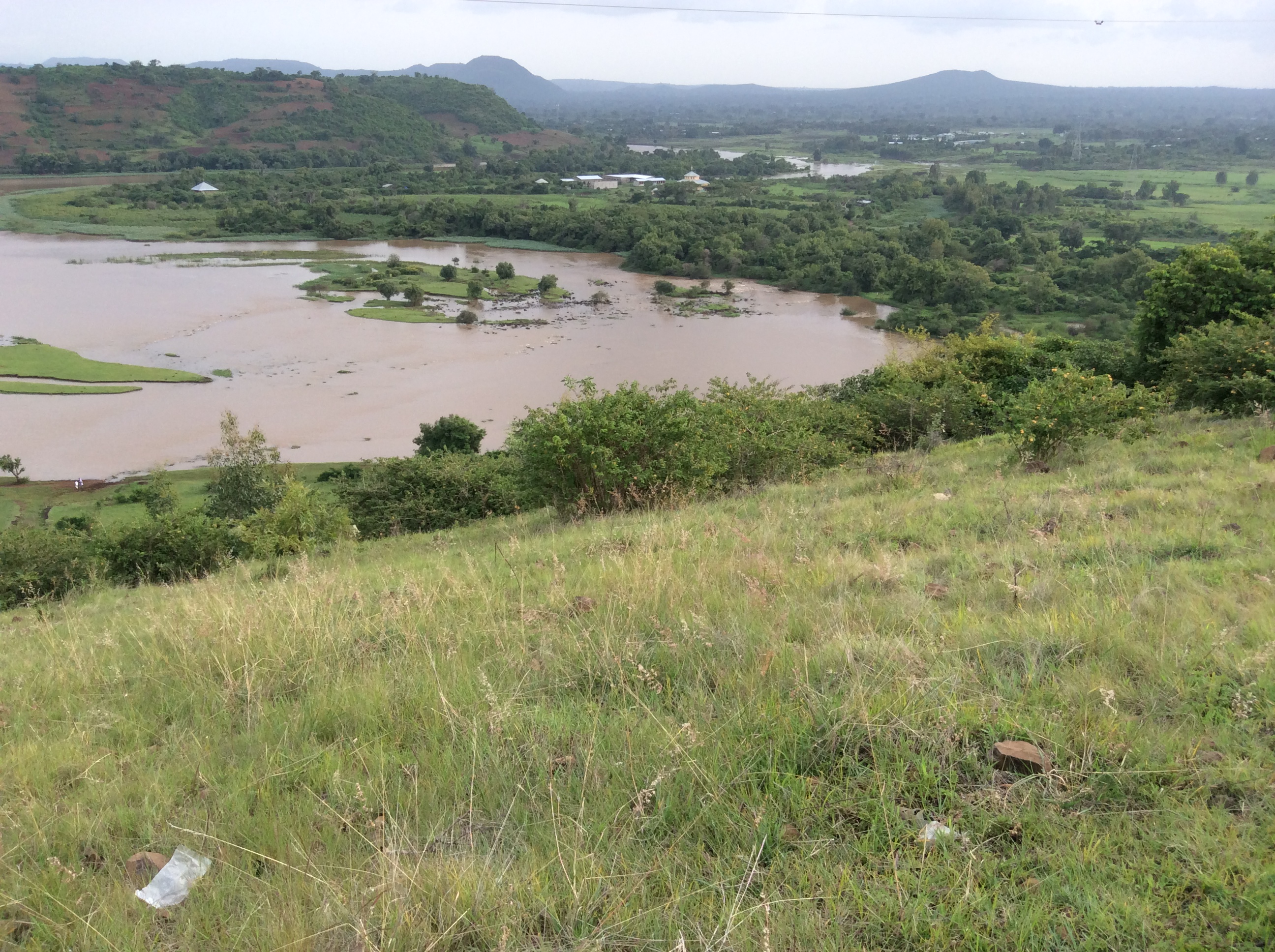
Riding hours through emerald mountains

to Bahir Dar.

We drove up a steep road,

monkeys begging near the roadside.

Car parked, we climbed a steep hill.

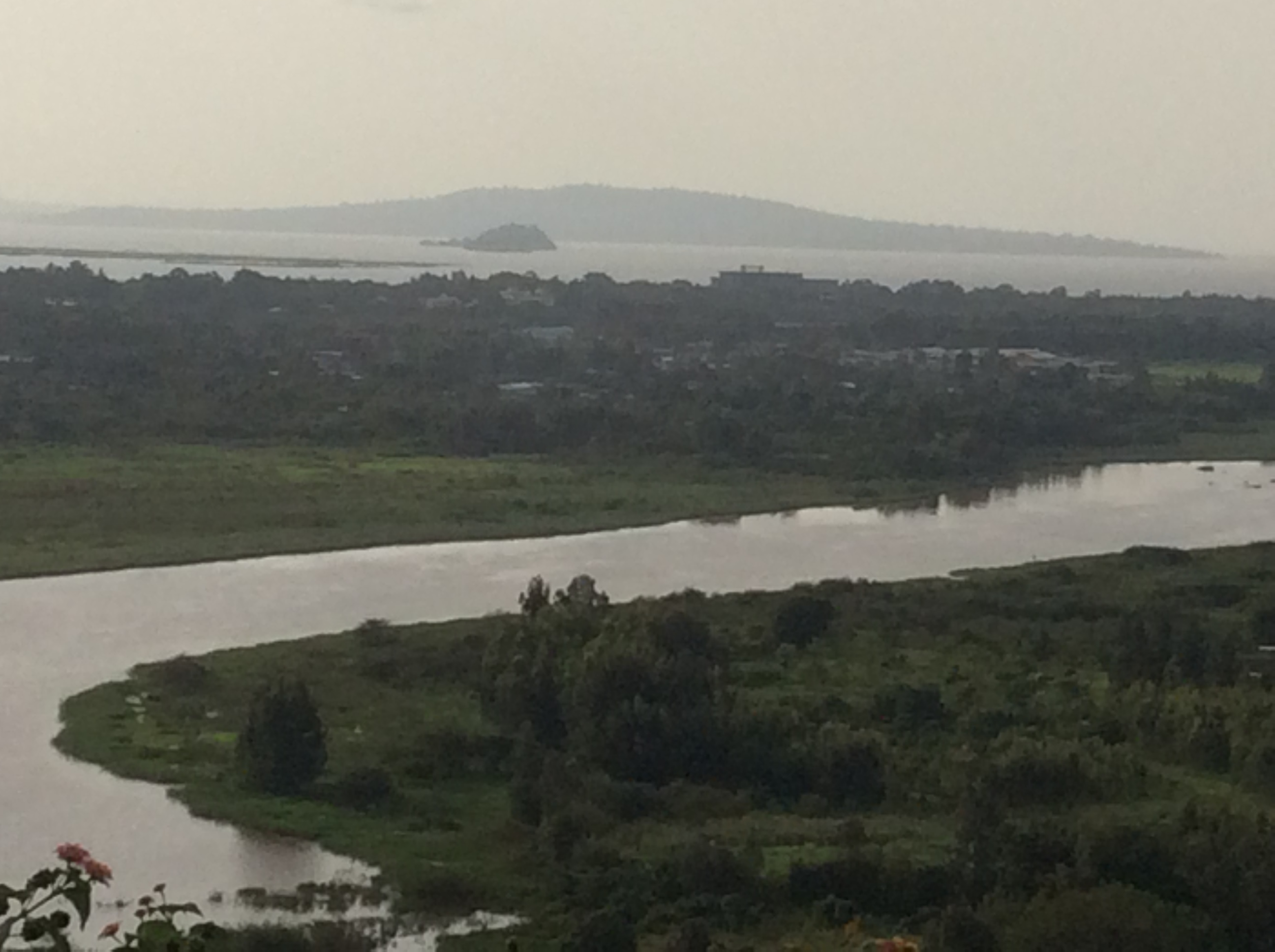
There she was

The NILE

a silver ribbon far below

grassy fields

two white robed people

walked, hippos barely visible.

The NILE

I cried,

a life’s longing fulfilled.

The NILE

Flowing from Lake Tana,

she lay below me,

the legendary river,

ancient people, ancient stories,

builder of civilizations,

of life.

The NILE.

Puma III


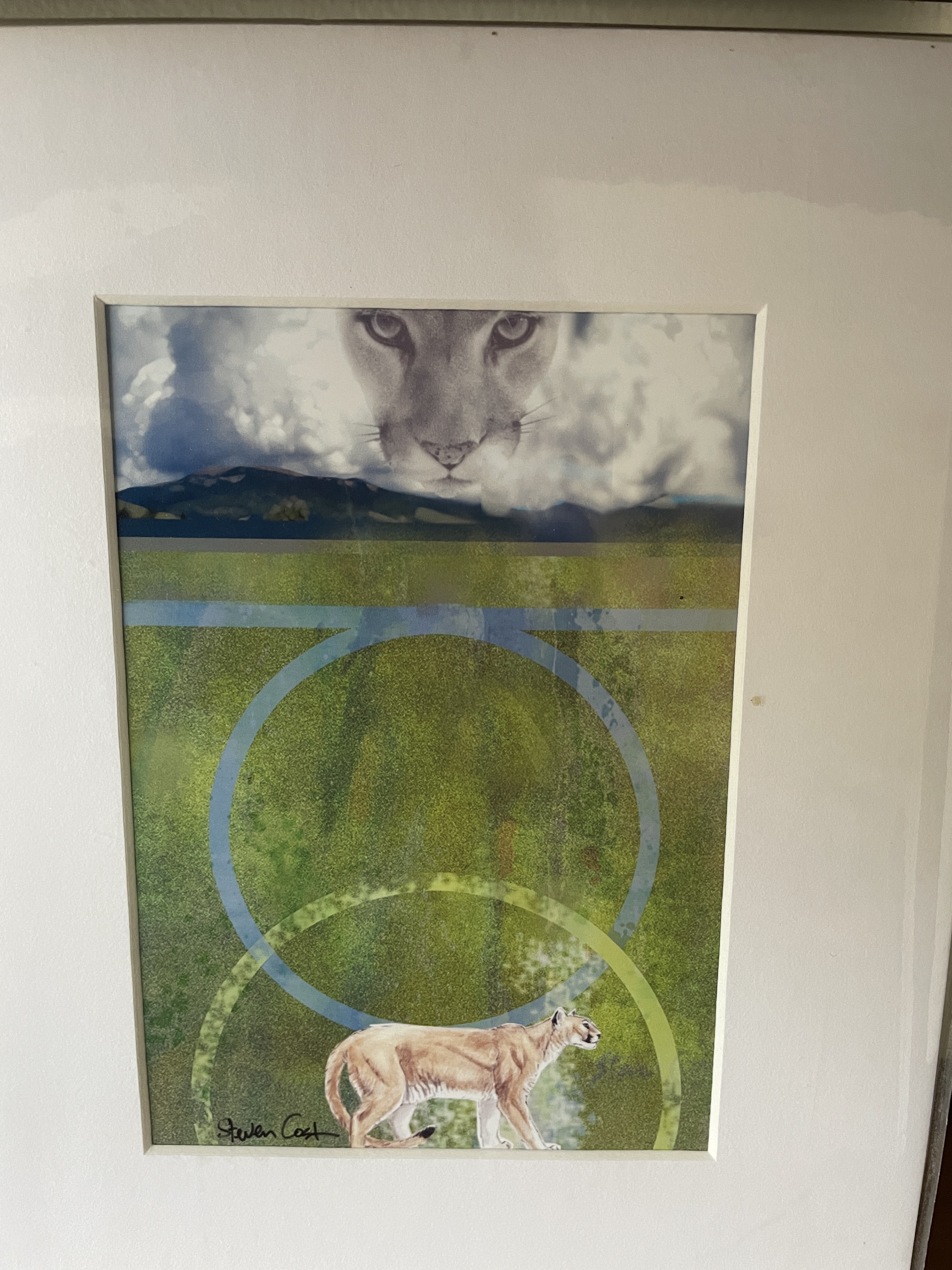
Two more puma paintings grace my house, one in my bedroom and one in my office. The one in my office was painted by Amarillo artist Steven Cost and needs framing.

The following poem is the last of the three puma poems published in “On the Rim of Wonder.”

I want

to walk

with you

in my dreams

scream your screams

feel your blood

rushing

your heartbeat

mine

soft golden fur

wound in my hair

your amber eyes

glowing

through my brown

death defying

together walking

moonlit

wild

free

Puma–2


Years ago while visiting Albuquerque or Santa Fe, I acquired a Zuni puma fetish. It is the only fetish I own. I bought it because it is a puma, the Directional Guardian and prey god of the North, representing independence, personal power, intensity, and loyalty, carried by travelers to protect their journey. It resides on a dresser in my bedroom, watching over me, protecting my life journey.

As I mentioned in a previous post, my puma obsession extends to researching them and writing poems about them. The following poem was originally published in my book, “On the Rim of Wonder”.

My neighbor walked out her door

found a puma lying on the lawn.

Puma rose, stretched, disappeared.

At night when I open my gate

I wonder if she lurks

behind the cedar trees,

Pounce ready.

A Zuni puma fetish guards my sleep.

I run with puma

Night wild

Free.

I scream and howl

Moonstruck

Bloodborn.

I hike the canyon

stroll around my house

look for puma tracks.

I see none.

I would rather die by puma

than in a car wreck.

Pumas — 1


Some people possess obsessions. For me only one really exists–pumas. I kept hoping I might see one when I lived at the edge of a canyon in the Panhandle of Texas even though I knew where I lived was probably too populated. Now, living in LA Country, I realize pumas can be anywhere. Have not seen one yet, but I keep hoping. I’ve considered driving 1/2 hour up into the Los Angeles National Forest to hike and hope. Since one of my walking partners refused to go any farther when the sign said “Watch for Bears”, I would have to take the hike alone. The bear sign did not deter me, but she could not go home since I drove so I went back to the car with her. People see bears in town all the time, but rarely pumas or if they are around, they hide. My puma obsession includes dreaming about them and writing poetry where they star. Here is one of the puma poems I wrote while I still lived in Texas.

I watch for eyes, blue changing to amber and back.

I put my palm, fingers stretched to measure, into the footprint.

Too small, bobcat

No puma.

My thin body squeezes between the rocks,

climbing quietly down the cliff.

Watching, listening, searching.

No puma,

Pale amber rushes across my vision line.

My hearth quakes.

I watch; I wait.

It is Isabella, a golden whir chasing rabbits.

No puma.

At sunrise, I walk the rim,

watching.

At sunset, I walk the rim,

waiting.

At night, I walk the rim,

dreaming.

No puma; not yet.

I’ve had this photo, taken by a famous wildlife photographer, for at least a decade. She, yes, it is a she, watches over me daily. In my bedroom is a puma Zuni fetish and a painting. I have a couple of others here and there in addition to books about pumas. Someday before I die, hopefully.