Canyon de Chelley–Part Two: Driving into The Bottom


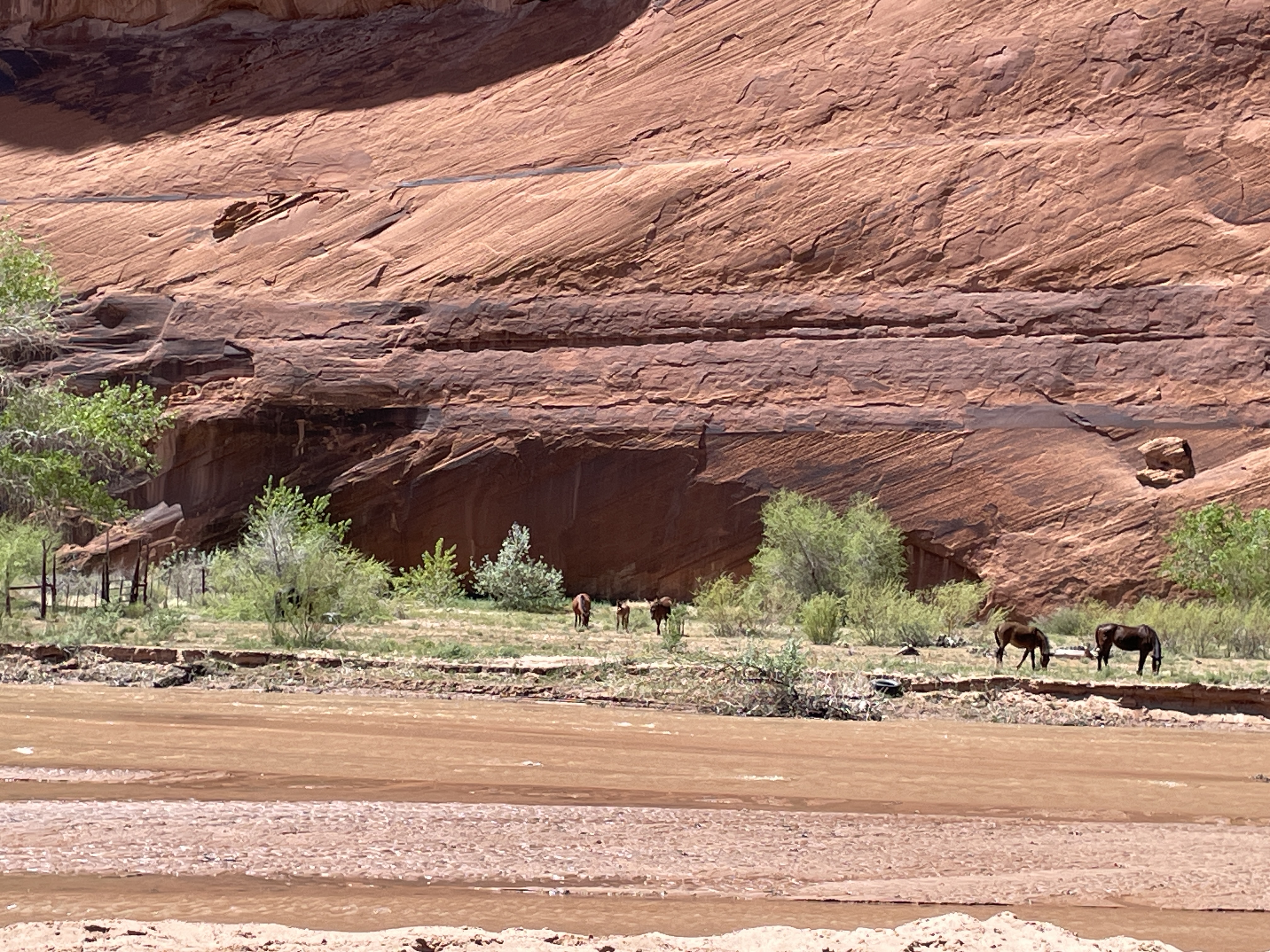
Canyon de Chelley was named by the Spanish who could not quite pronounce the Diné (Navaho) word for it and hence this name which is pronounced like de shay. It is more than 30 miles long and has a river running through it at least a substantial part of the year. In summer native people live there with sheep, horses, etc. even though fewer and fewer of the younger generation choose to do so. To enter the bottom of the canyon, you must acquire a permit and hire a Navaho driver. This is to protect it from the vandalism that occurred in the past. Canyon de Chelley is jointly managed by the National Park Service and the Navaho Nation.

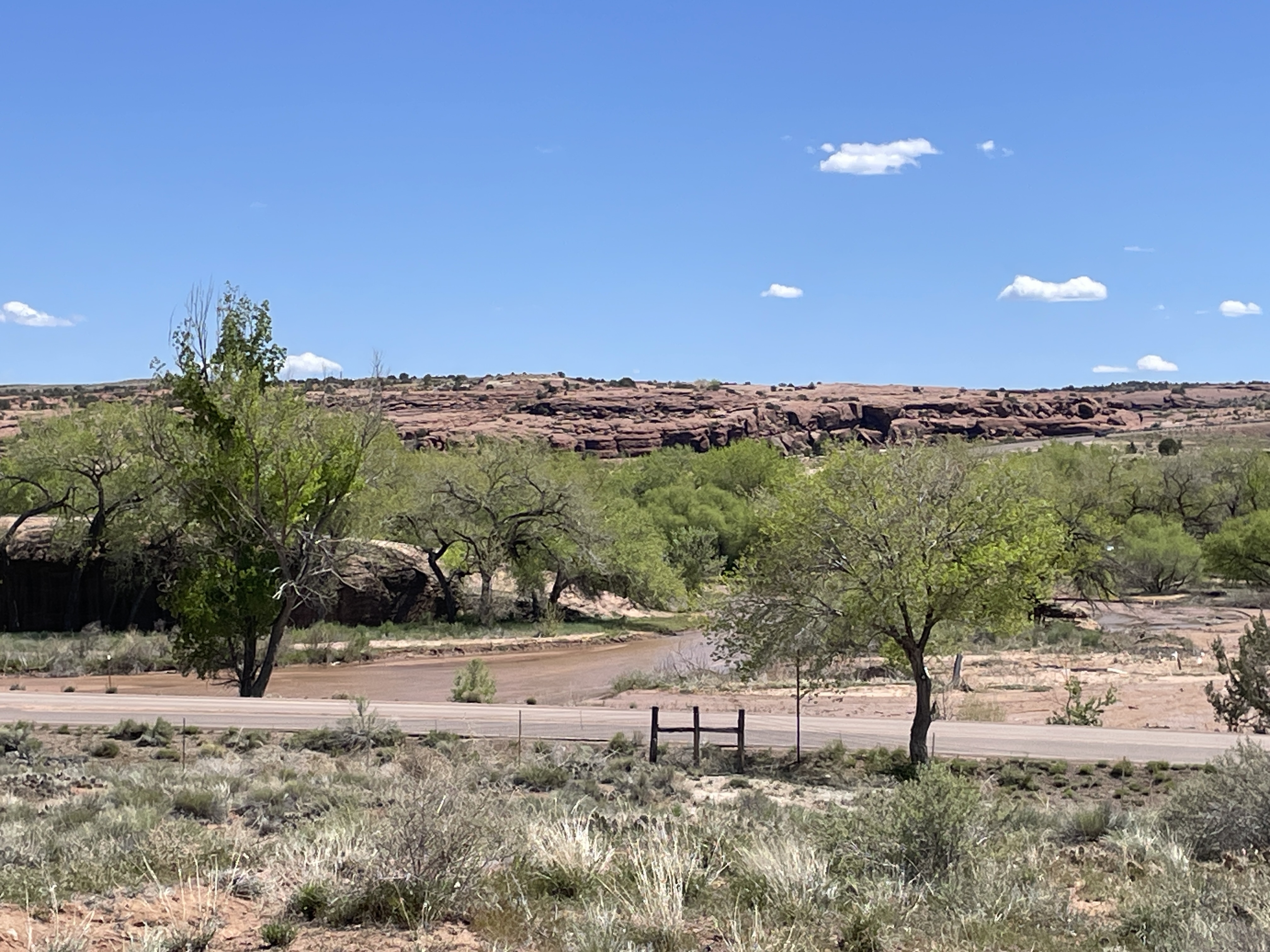
Canyon de Chelley begins at the edge of Chinle, AZ, near the Holiday Inn which, by the way, serves traditional food such as mutton stew and blue corn fry bread. Yes, I ate both. This photo shows the beginning.

It was quite a trip; I sat between two women in the back of a Jeep with a perfect view of everything right in front of me. Oscar, the driver, knew exactly how to traverse the water, the wash (what they call this stream), run up and down the banks.

Driving right up the middle of the wash.

Petroglyphs can be seen in so many places we stopped that I lost count. Oscar said they are nearly endless and can be found throughout the canyon walls.

A few days previous to our arrival it had snowed so everything was green and lush from snow melt.

In addition to petroglyphs, there are etchings in the rock walls.

In this case an etching/rock carving of horses.

Yes, we drove under this overhanging tree limb.

Sometimes the wash was narrower and deeper and we drove up and down steep banks and through deeper water.

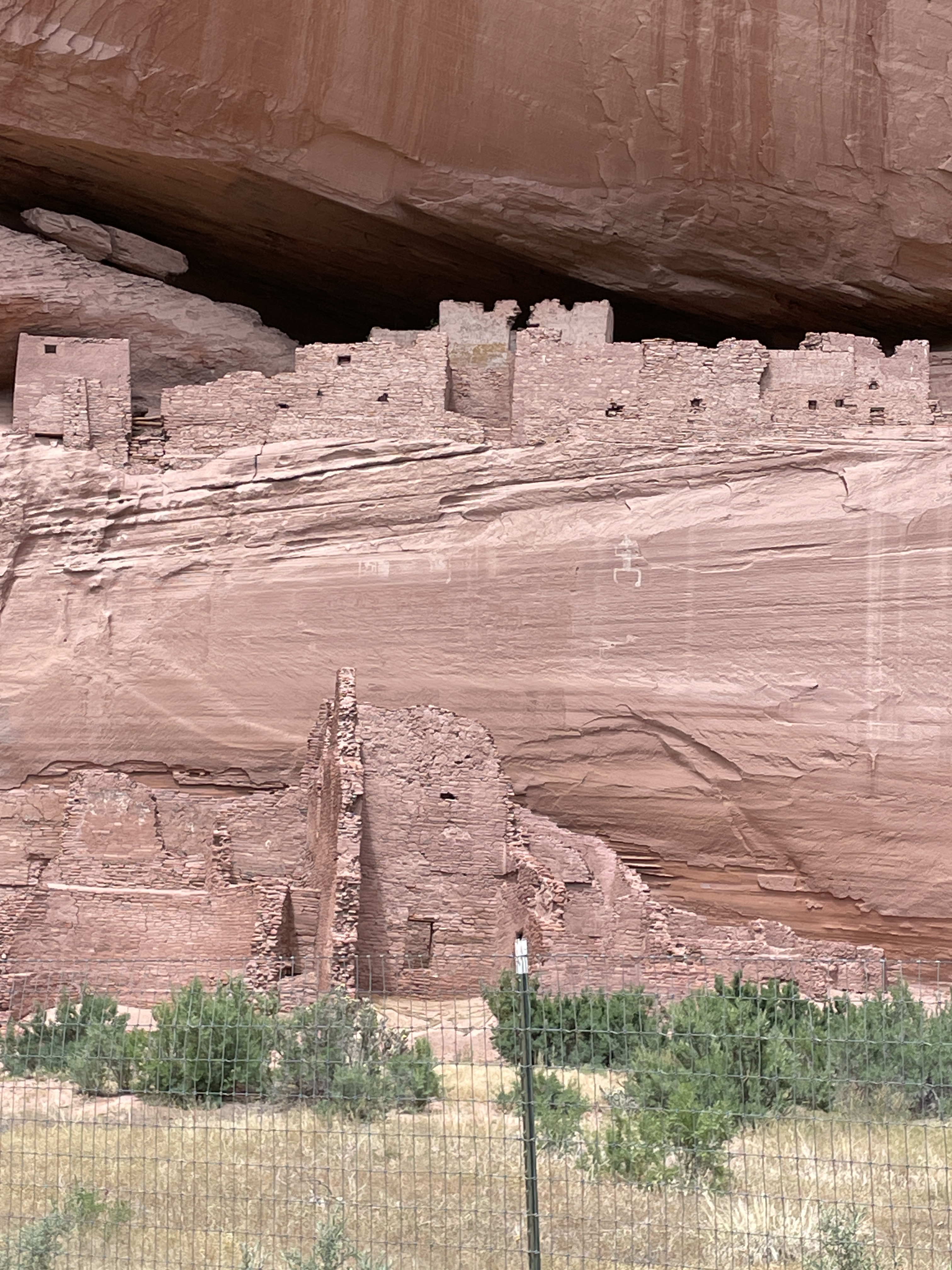
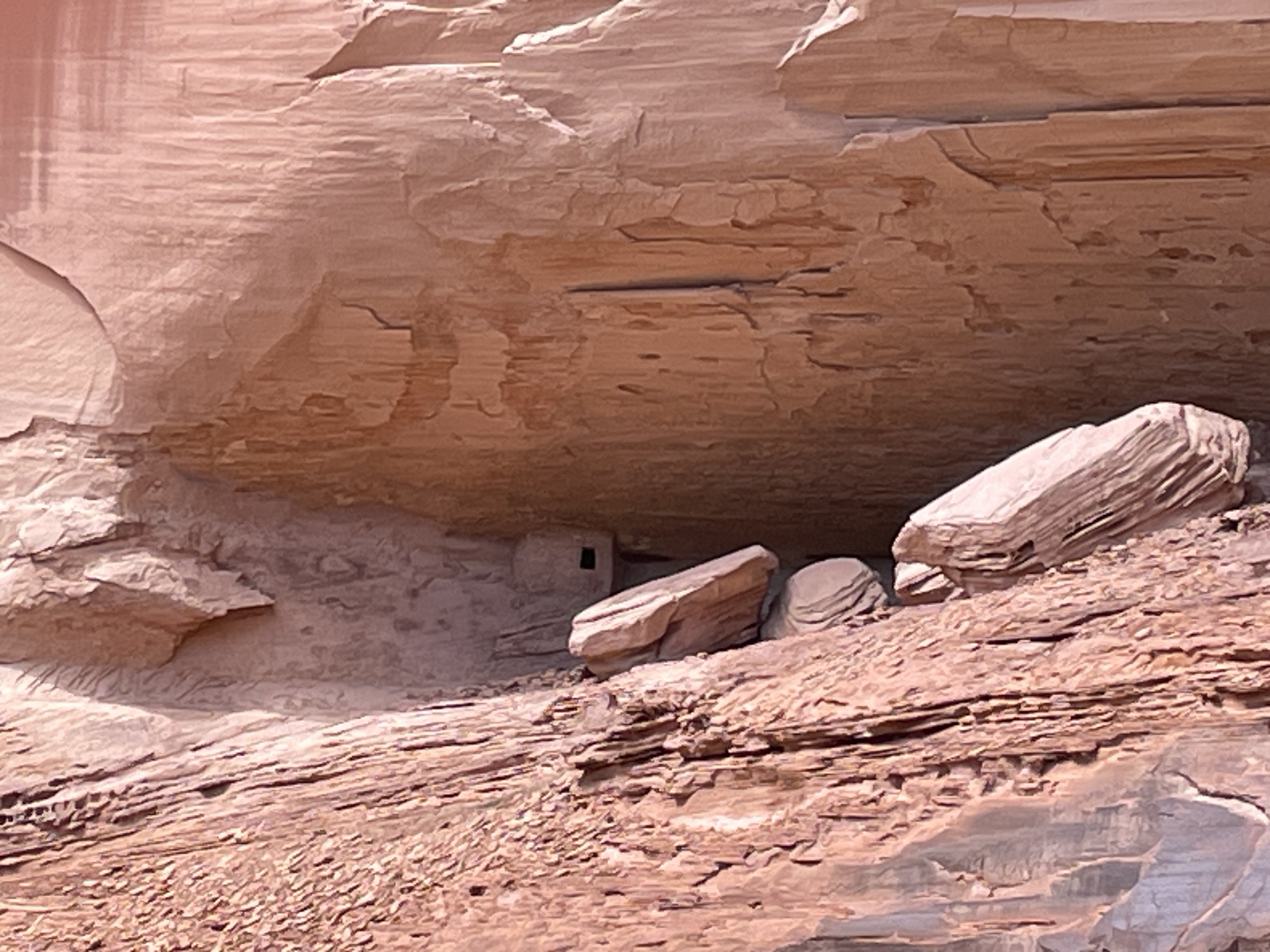
Ancient pueblo people lived here for centuries, some more than 5,000 years ago. This is one of the largest pueblo structures in the canyon (The White House–due to a white washed wall which you cannot see from this vantage point). The fence was built to protect it from vandals. We saw many smaller dwelling places and Oscar said there are hundreds in the canyon.

Headed back down the wash. This was a half day trip so only saw less than half of the canyon. You can hire for an all day trip complete with picnic lunch and go all the way to some of the famous formations that can be seen from the road at the edge of the top. There is also a side canyon called Muerto–due to a massacre of the natives that occurred after the Navaho forced long march.

The Jeep needs a bath after this trip.

Note: With a permit and guides, there is camping and horseback riding trips up the canyon in addition to this type of tour.

Canyon de Chelley–Part One


One of the most famous canyons in the country resides inside the Dine (Navaho) Nation. While administered by the National Park service, it is also the home of several Dine families. You can drive through the roads on the top freely, stop at various viewpoints, take photos, etc. Here are the various views I saw last week while there. The bottom of the canyon is restricted. To go there, you need a permit and a Dine (Navaho) guide. More about that in the next post.

Several families live in the bottom of the canyon, especially during the summer months. You cannot go into the bottom of the canyon without a permit and a Navaho guide.

Book Seven for 2024: “After Eden, A Short History of the World”, John Charles Chasteen


Want to learn a lot in less than 400 pages? Read this book. Published this year, it is the most recent book by a prominent Latin American scholar and historian. After humans learned agriculture and built cities, most of the population of the world became increasingly patriarchal and warlike. The divide between rich and poor increased. Egalitarian foragers and wandering hunters existed only in more remote areas. A few still exist in those remote and less modern corners of the world, often places where few others want to even go. This quote says a lot about the current state of affairs:

“Our civilization has thousands of years practice making war. We have almost NO practice making global peace, but without it we are doomed. Today’s pervasive nationalism and rearmament is unlikely to help us make global peace.”

And a page later:

“Only a true unanimous global effort has any chance to preserve our common home.”

He notes that saving Earth will take huge social transformations, including curbing the excessive consumer capitalism that currently pervades plus overcoming a world wide history where half of humanity mistreated the other half, a practice that still continues.

One Book a Week-53: “The Last Ride of the Pony Express”, Will Grant


Since I was born in St. Joseph, MO, and grew up 30 miles from there, the Pony Express is something I have heard about my entire life. Therefore, when I saw this book at the local library, I decided to read it. What a fun and informative book!! In 2019, Will Grant, who lives in Santa Fe, NM, decided to locate the right horses, transport them to St. Joseph, and ride the route of the Pony Express from there to Sacramento, CA, the other end of the trail. After the sheriff’s department escorted him across the bridge to Kansas, he managed to avoid cities for the most of the 2000 mile trip. This book is his account of the old Pony Express Stations, ranchers, farmers, historians, businessmen, ordinary people, and wild horses he encounters on his 142 day adventure. Although many have written books about the Pony Express, he is the only person who has followed the entire route on horseback.

One Book a Week-47: “A Pipe for February”, Charles H. Red Corn


If you have read “Killers of the Flower Moon” and/or seen the movie, this is a must read. Published in 2002, this Osage novel details the daily life of John Grayeagle from his viewpoint. A young, oil wealthy Osage man at the time he tells his story, John was raised by his grandfather because his parents, like many other Osage, were killed under strange circumstances, in his parents’ case an odd car wreck. He is the cousin of Molly, a main character in “Killers of the Flower Moon”. Although he received a college education, spent months traveling in Europe, lives in an elegant house, and drives an expensive car, he still follows many of the Osage traditions, which he details as he talks about his life throughout the novel. The novel describes the murders (which officials usually claimed were accidents or suicides) from the Osage point of view. They knew something was going wrong but were having difficulty determining what they could do about it. They were suspicious of the guardians assigned them by the US government who thought they were too stupid to manage their oil wealth, yet were often stymied when they tried to gain control of their own affairs. This is their story.

The author, who died in 2017, was a prominent member of the Osage Nation, a member of the Peace Clan as is the novel’s main character. The novel’s Foreward is written by Martin Scorsese, who cowrote the screenplay for “Killers of the Flower Moon” and coproduced and directed the movie.

Disappearance and Murder


A 450 mile stretch of highway runs between two cities in British Columbia, Prince George and Prince Rupert. As part of the Trans-Canada Highway, it was completed in 1969. This event increased the disappearance and murder of First Nations (indigenous) women which began in the 1800s with the influx of miners near First Nations lands. More than 1200 First Nations women have disappeared or been found murdered in recent years. These women are 7 times more likely to be raped and/or murdered than any other group in Canada.

The United States fares no better. Approximately 7000 Native women have gone missing since 2016. If a non-Native person murders a Native person on tribal lands, tribal police cannot arrest the person; other law enforcement often fails to respond. In the US a Native women is 4.5 times more likely to be raped and/or murdered than any other group.

4 out of 5 First Nations, US Native, and Alaska Native women report experiencing violence.

For more information see “Hunted” on Al Jazeera English, powwow times.com, cnn.com, YouTube: Searching for America’s Missing Women. There are many other sources as well.

One Book a Week-26: “Holding Fire: A Reckoning With The American West”, Bryce Andrews


If you LOVE the West, but sometimes struggle with its violent history, this is the memoir for you. Here is a quote from page 178: “I’m embarrassed at how long it has taken me to notice that a rancher’s view of the natural world is blindered in comparison to the hunter’s perspective; that driving livestock from one field to another is nothing like stalking free-ranging herds; that finding, gathering, and preparing a hundred different wild plants bears no resemblance to growing alfalfa or oats…”

Andrews also discusses the difference between sustainability and reciprocity. Before reading the book, I had never thought about this. He notes that sustainability is taking without damaging. Reciprocity entails giving back, e.g. nature, asking, “What can I give back? What can I do to take care of this place that feeds and shelters me?” This is quite different from “How much can I sustainably take?”

Andrews grew up in the West. However, after cowboying on several ranches in Montana, hunting annually, and later inheriting his grandfather’s Smith and Wesson revolver, he begins to question the gun violence and destructiveness of Western culture. This book details his journey. He continues to live on a farm in the Montana mountains, slowly transforming the land to make it profitable but also a place for nature, for wildlife to prosper.

A Book a Week-24: “The Water Museum”, Luis Alberto Urrea


What an amazing story collection!! As I read these incredibly diverse stories featuring so many different types of people, I kept wondering how does he know so much about different sorts of individuals:

-An older white lady in a tiny town in Idaho who runs a little restaurant.

-Chicanos in San Diego–this one I “get”; he grew up near there in Tijuana.

-A divorced white guy, wandering aimlessly cross country.
-A teen in Arizona who loves a nice girl from a dangerous family.

-A “weird” old man in a Mexican village.

-A young man trying to save his dead dad’s possessions from questionable friends.

-A strange magical realism Mexican story. I love magical realism so if I think it strange…

-A kids’ trip to a water museum ( the title) in the drought ridden plains.

-A sad South Dakota story of a white man married to an woman from Pine Ridge.

-In Iowa a widowed farmer trying his best to befriend and understand his Mexican neighbors.

One Book a Week-19: “The Round House”, Louise Erdrich


Winner of the National Book Award in 2012, and narrated by the 12-13 year old son of a tribal judge and a professional, tribal woman, this novel details the story of a family nearly destroyed by the brutal attack on the boy’s mother. Even after the identity of the attacker is known, he is set free because she will not tell or cannot recall where the attack occurred, whether on tribal land or just outside its boundary. This leads to the boy’s determined quest to obtain justice for his mother. This page turner perfectly illustrates the continual problem of justice for indigenous women who are 2-3 times more likely to be raped (and often killed in the process) than white women and with no one ever charged.

Given the seriousness of the novel, it is surprisingly funny at times with the antics of teen boys and other characters, including some colorful and interesting older tribal members and an ex-Marine priest. The reader will also learn a lot about Ojibwa culture. Once you start, you have to keep going in hopes that somehow justice will prevail in the end.

Baja Trip-5: Wandering Around Ensenada


First, we went to the fish market where I saw fish I could not even begin to identify. Then we strolled along the wharf.

This mural portrays the matriarchs of the northern Baja area. each from a different indigenous tribe who lived there before others arrived.

Cruise ships dock here several times a week.

Built when alcohol and gambling were illegal in the United States, this was once a famous casino where the rich and famous came to gamble and drink. Now it belongs to the city and is used for weddings, retirement parties, etc.

Back in the 30s, the water came up to the edge of the casino property so people could come in their luxury yachts, dock, and walk right inside.

The original bar still exists and is well stocked. Here we heard the story of the invention of the margarita. Many claim to have invented it in various places in Mexico. It seems to trace back to a bartender who moved from place to place and brought the drink with him. Who knows?