Do you like to eat? Bees and the Food Supply


SAM_1074Do you like to eat?  Do you eat almonds, apples, cherries, watermelon, blueberries, or cantaloupe?  In fact, the biggest factor limiting the world’s food supply is not war, drought, or any of the factors you commonly hear about.  The world’s food supply is limited by the amount of bees available for pollination.  In the last five years in the United States alone, approximately one million honey bee colonies died each year, about one third of our national bee herd.  Bees are in danger of extinction.  Native to Southeast Asia, honey bees were domesticated long before written history, before the building of the Egyptian pyramids.  Thousands of species of bees exist, but honey bees carry the main load of pollination for cultivated crops.

More than 740,000 acres of almonds, California’s leading agricultural export,  remain in cultivation in the Central Valley of California.  Pollination depends on bumble bees, honey bees, and wild bees.  Sadly, the wild bees are mostly extinct, killed by pesticides and habitat loss.  Now pollination depends on traveling bee keepers and their honey bees.  Today, commercial bee keepers number one fourth of what they did in 1980.  To get enough bees the almond (and cherry and apple, etc.) growers hire these bee keepers to install approximately 2 million bee hives to work the pollination.  Almonds alone require at least 1.5 million hives.  Each almond tree’s blossoms number 25,000 and at 135 or so trees per acre, that adds up to 3.5 million flowers to pollinate.  The difference between a poor harvest and a great one depends on bees.  After the bees finish their work in the Central Valley and other warmer climates, the commercial keepers take them to places like Idaho and North Dakota for the summer where they sip alfalfa, buckwheat, goldenrod, and sweet clover blossoms and produce the honey sold in groceries.

Where have all the bees gone?  What leads them toward extinction?  In 2006-2008, beehives across the world from Europe to here to Indian and Brazil nearly collapsed.  Causes vary:  foulbrood–a bacterial fungus, wasps, ants, mice, a host of viruses, nosema–bee diarrhea, and certain pesticides.  What can we do?  First, we can ban certain pesticides that are known to harm bees.  Second, we need to grow more flowers and blooming weeds (yes, I said weeds) to encourage a broader spectrum of healthy bees for pollination.  Honey bees cannot do it all alone.  The lack of sufficient flowers is the result of not only pesticides, but also the increase in lawns.  If you personally want to make a difference for bees and ultimately our food supply, let the wild flowers grow, plant more flowers and less lawn, limit pesticide use.

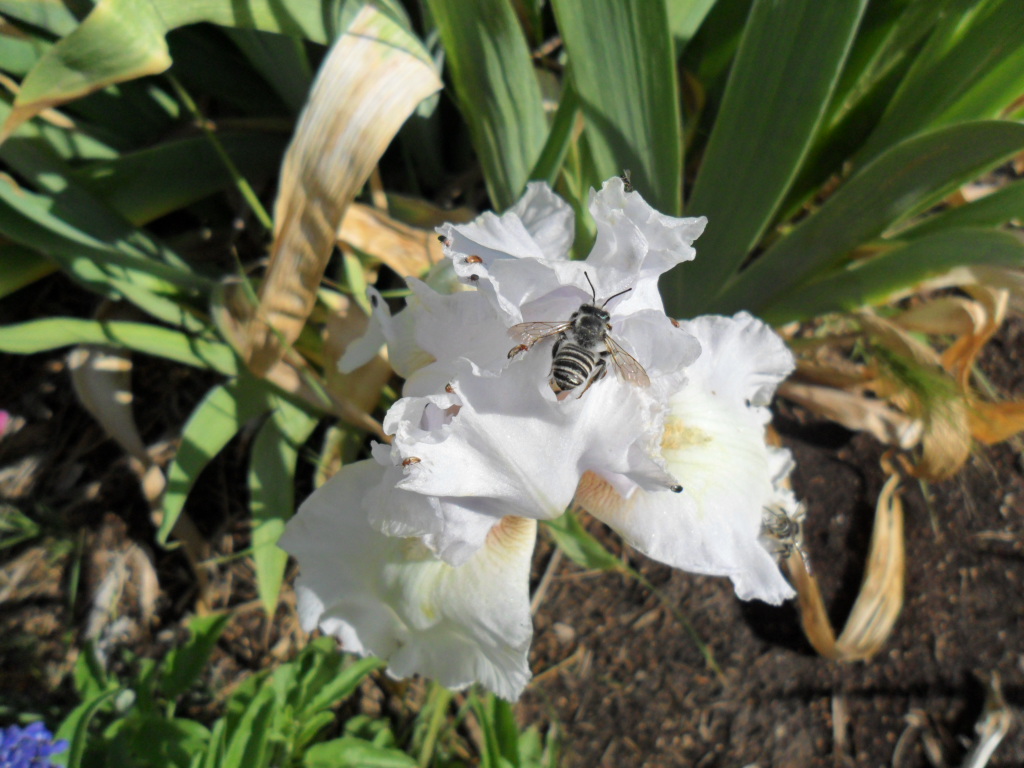
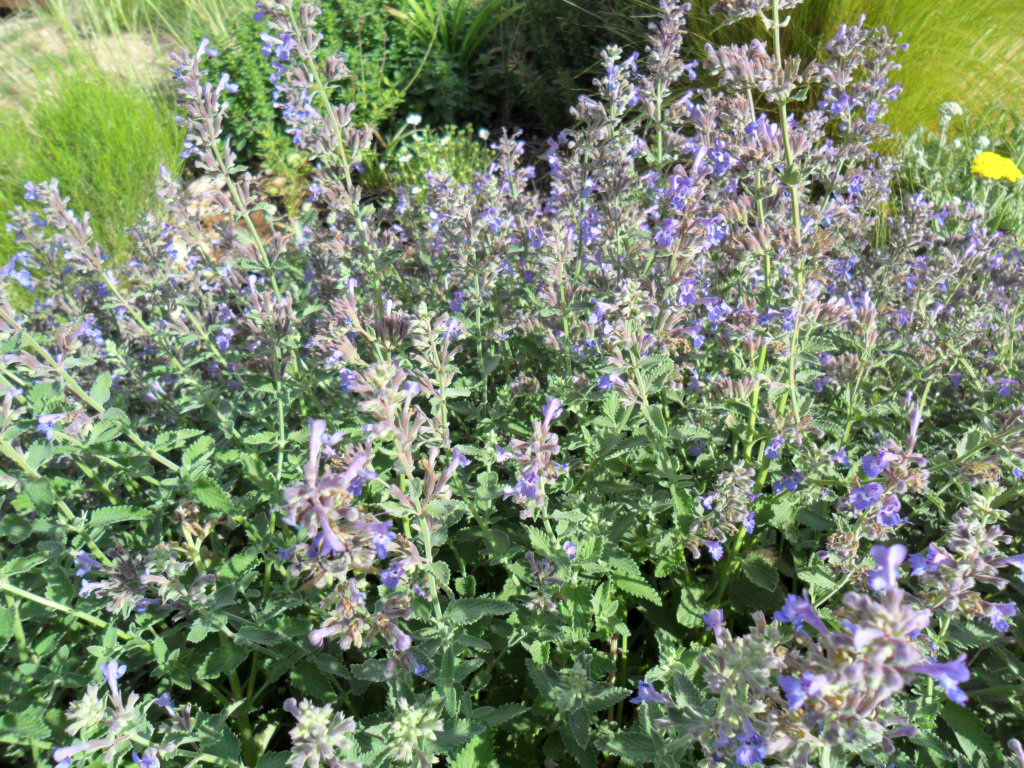
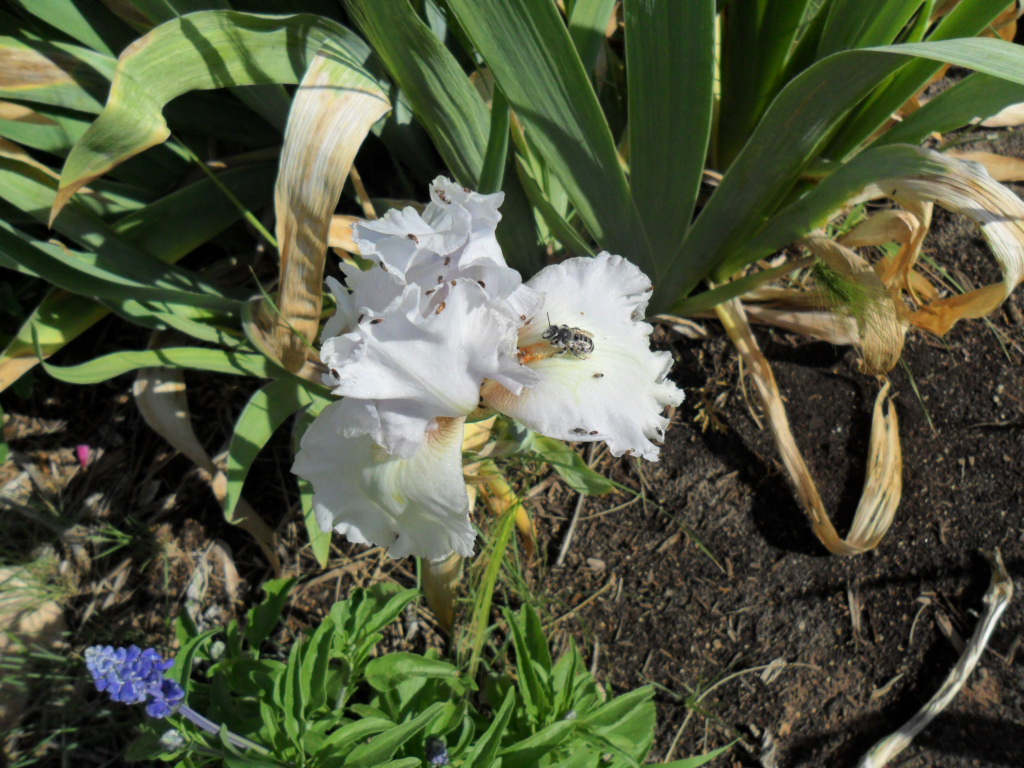
This morning I went out to my xeroscape garden–I have no lawn–and photographed bees.  At one catmint plant, so many busy bees made a clearly audible buzzing sound.  I witnessed at least four different kinds–species–of bees.  These SAM_1076
SAM_1081

SAM_1077

SAM_1078photographs illustrate at least several different types of flowers bees love.

Grandmother


We sit on the wooden swing suspended by silver chains

hanging from the bungalow front porch ceiling.

She, elderly beyond her years, grey hair piled atop her head,

thin and wrinkled.

She stays with us sometimes when Aunt Julia goes off

on one of her adventures.

Cattle graze across the road in front of the house.

It is summer.

A bull mounts a cow.

Suddenly, out of the silence, Grandmother speaks,

“Men and bulls are just alike;

they are only interested in one thing.

A bunch of good for nothings!”

Her voice is vitriolic.

And I, a child, maybe twelve, innocent and ignorant,

sit there shocked,

amazed,

embarrassed,

astonished

to hear my grandmother talk that way.

Now, nearly fifty years later,

I wonder about her life,

what in it caused this secret bitterness

she spilled just once on that idyllic summer day.

I look at her wedding photo.

She has a steady, unsmiling, pretty face,

marrying a handsome man twenty two years her senior.

Were they happy, sad, or probably a bit of both?

I remember what my mother, her youngest daughter, told me

snippets here and there.

A hard life, endless guests

never a break from gardening, cooking, canning, cleaning.

I look at other photos of my grandmother

taken before I was born,

older, nearly as wide as she is tall, never smiling.

I remember her in an old lady’s flowery, lavender dress,

thin from years of undulate fever.

I remember her feeding me bread, butter, and sugar sandwiches,

Easter egg hunts at her house,

and later, at another house, walking with her to the corner store.

I never remember her smiling.

Costa Rica 6: Adventures and Views


Without a doubt Costa Rica holds my vote for most photogenic and greenest country.  From the Caribbean and Pacific rain forests to the high mountain town of Monteverde, the words lush, exotic, verdant do not even begin to describe how incredibly rich the landscape is.  One of the first spectacular views lay before me across the parking lot from a combination restaurant and souvenir shop where we stopped for snacks.

I did not expect to see multiple mountain streams like in the Rockies, but it seemed we were crossing one nearly constantly.  This abundance of water explains their nearly total dependence on hydroelectric power with a little help from wind and thermal energy.

Several of my traveling companions decided to raft this river with class 4 rapids. Something told me I should not do this.  After flipping over several times, banged up and bruised, they decided to hike out.  In  the meantime, I experienced my own adventure, eating a raw turtle egg in salsa at a family restaurant on the top of a nearby mountain.

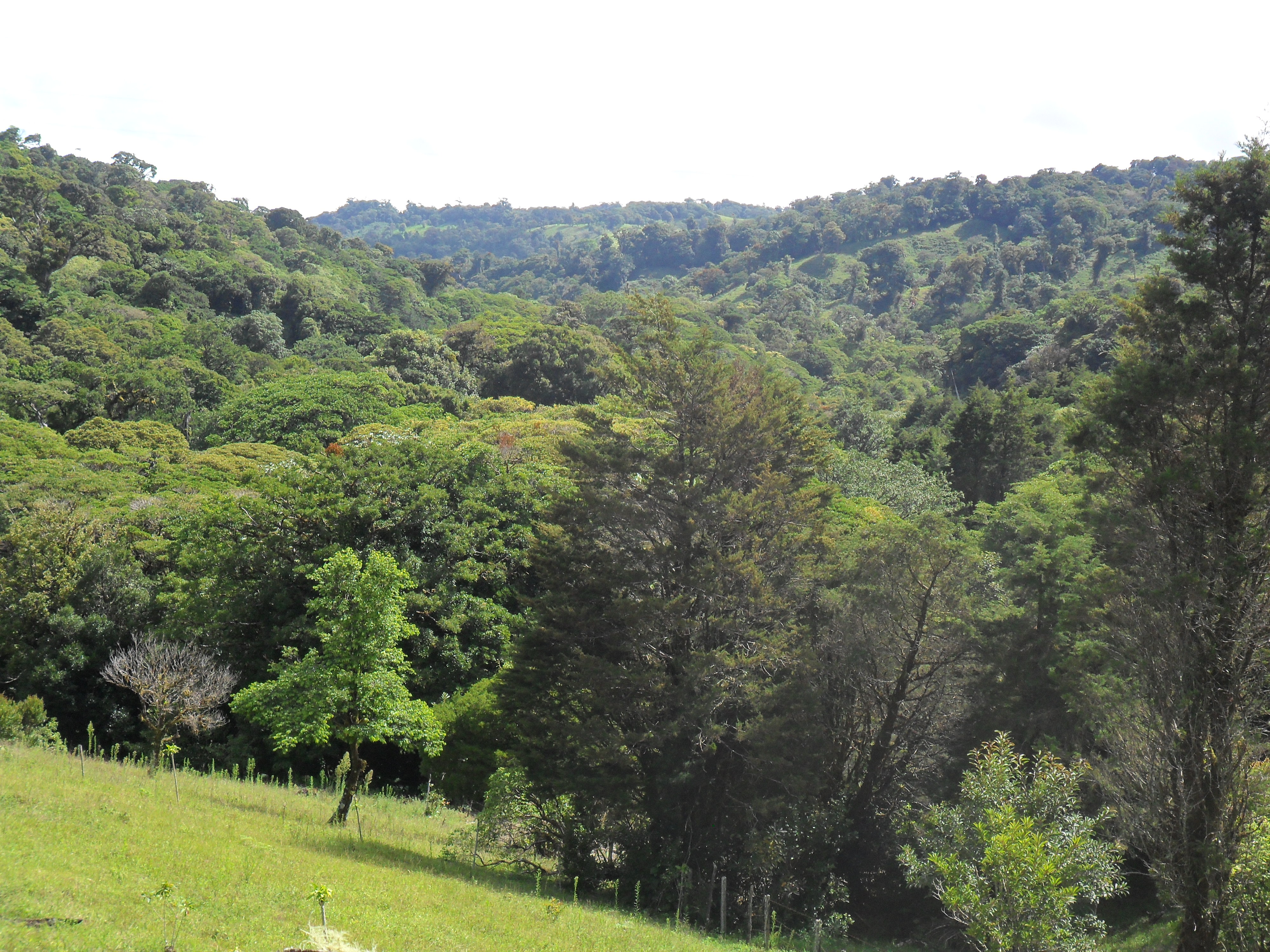
Beautiful mountain scenery seems endless.  I kept 00hing and awing.

This view shows the Bay of Nicoya in the distance from my hotel room in Monteverde.  The following photos all show views in the mountains near this little remote town.  There is only one road in and out and it is not paved and it is narrow.  The town was originally settled by Quakers from Canada who still believe a paved road will ruin the peaceful lifestyle.  Both the Quakers and the town are famous for their cheese which was served both plain and fried for breakfast.

This area provides both zip lining and horseback riding for tourists.  I elected to ride.  However, these horses did not seem well fed and certainly did not want to go very fast.  Although I saw a lot of horses in Costa Rica, these were by far the thinest.

The guy who lead us did not ride one of these.  He was riding a fancy, prancing, grey Paso Fino.

Look closely and you can see someone zip lining across the forested canyon hundreds of feet below.

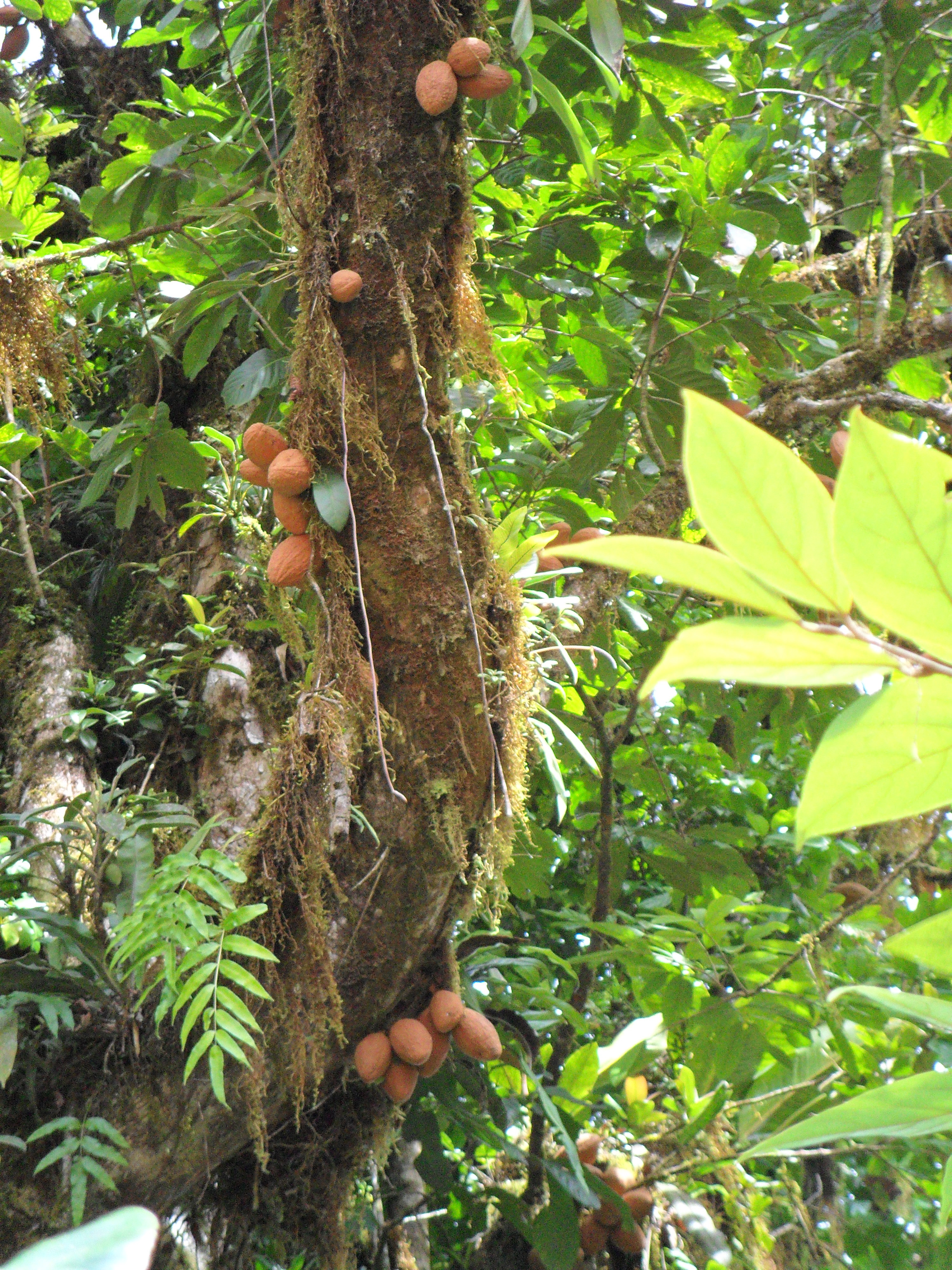
When I asked about this tree, I was told it is related to cacao, but not eaten, not by humans anyway.

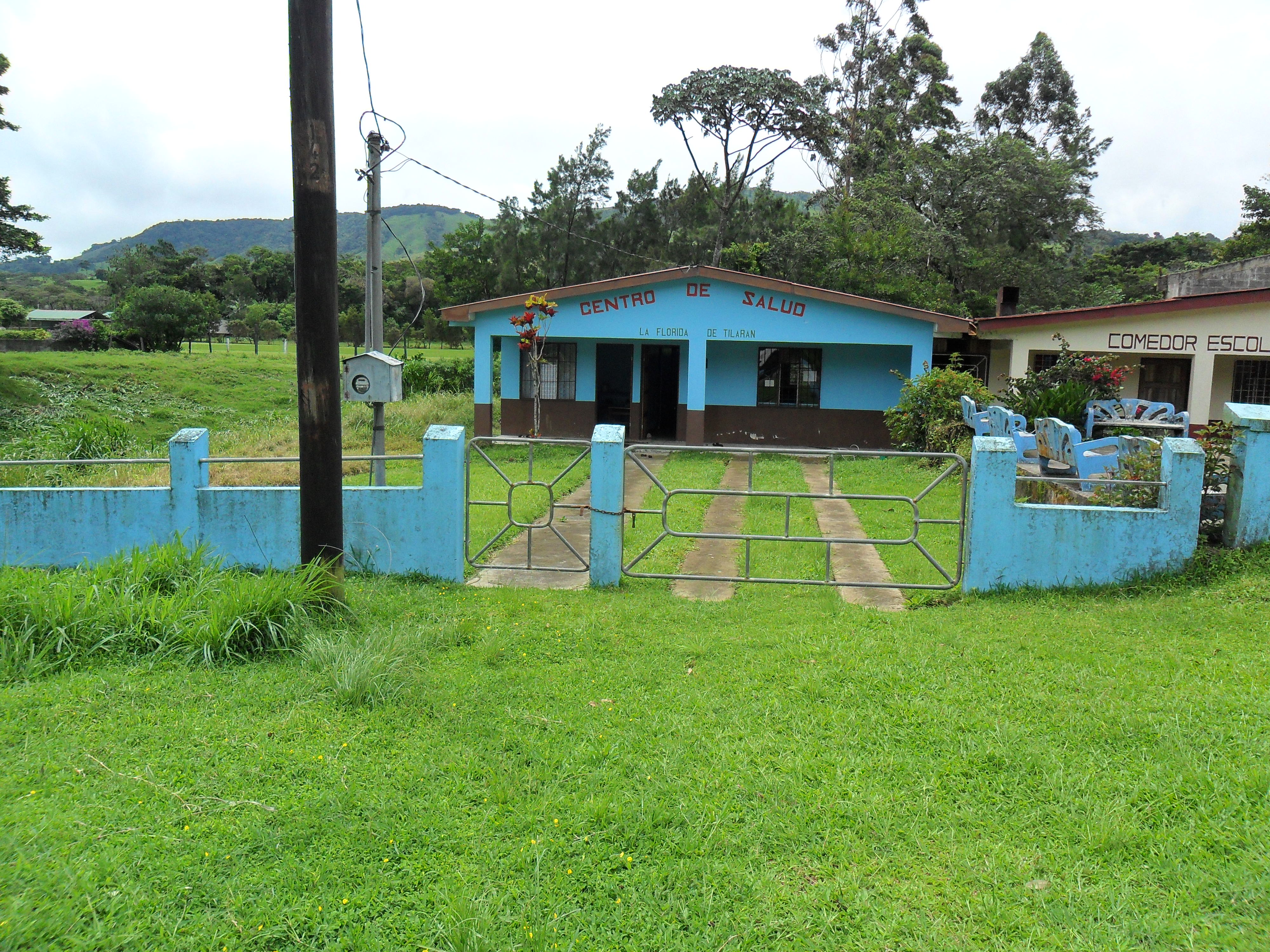
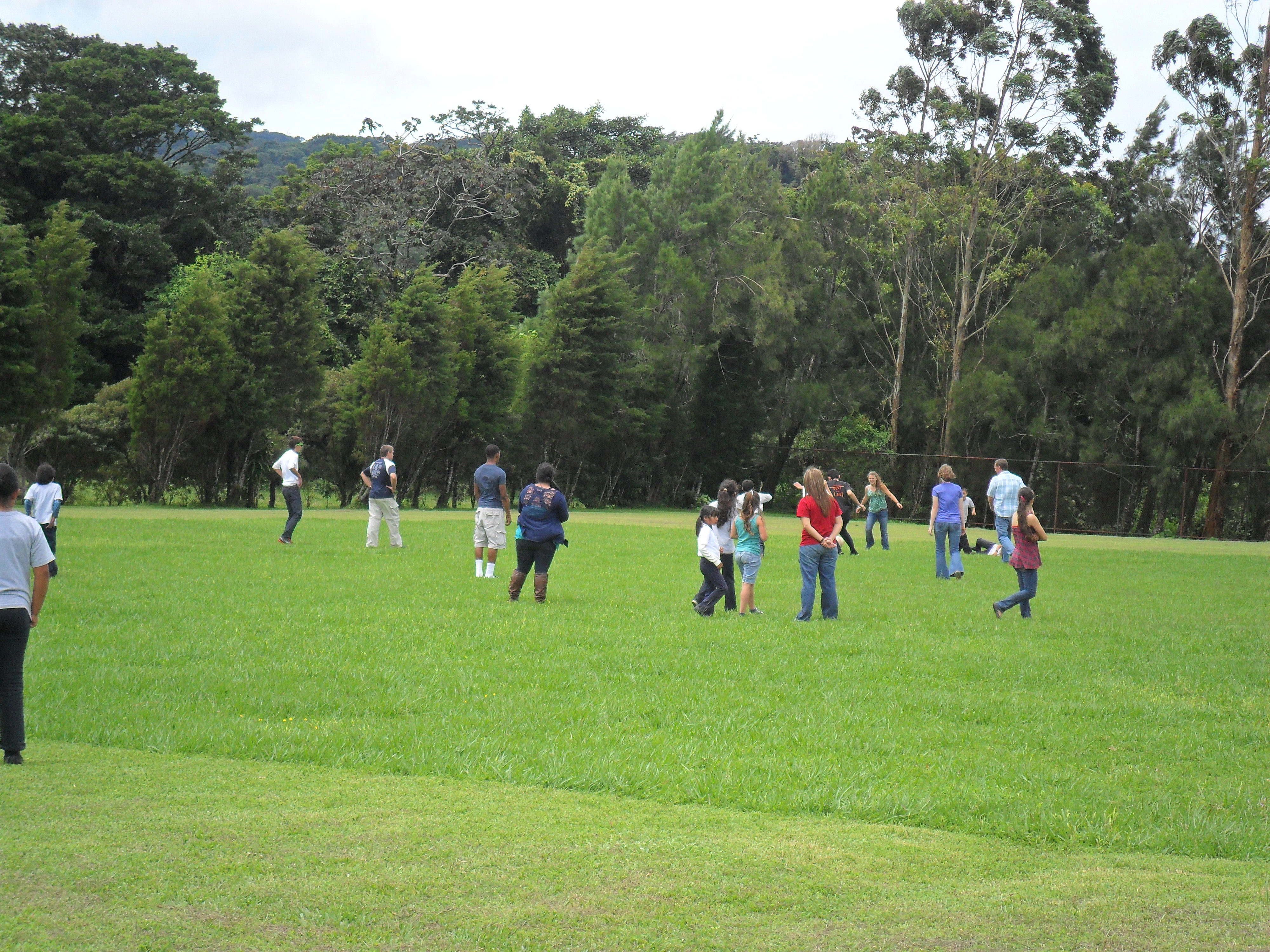
We traveled down the mountain on another dirt road to visit this elementary school.  It housed grades 1-6 with one teacher who is also the principal.  The literacy rate in Costa Rica is 98.5.

Playing soccer with the students.

A port on the Pacific on the way to the surfing town of Jaco.  Costa Rica exports many agricultural products from both its Pacific and Caribbean ports.  This includes bananas, pineapples, hearts of palms, and many tropical flowers.

While many beaches remain unsafe for swimming due to a strong undertow, the beaches at Manuel Antonio National Park are perfect.

To get into Manuel Antonio you have to walk and no parking exists really close.  Hiking out we crossed an area where the water rushed around our knees and the sign said, “No Swimming, Crocodiles”.

As a farmer, I like to look at and photograph crops.  With all the rain and heat, Costa Rica is the perfect climate for many tropical fruits and rice.  On the way back from Manuel Antonio we passed miles of rice fields and Aftican palms which produce palm oil.

Rice.

Coffee, the main export of Costa Rica.  In the highlands, coffee grows everywhere even along the berms in places so steep I wondered how the person picking the beans did not fall over.  Of course, I wondered the same thing about the dairy cattle grazing on the mountain slopes.

We did stop in Sarchi, the town famous for its furniture and oxcart industry.  Oxcarts remain the national symbol of Costa Rica.  Because of the mountainous terrain, when Costa Rican coffee initially became famous and its most successful crop, the only way to get the coffee to the coasts for export was to use oxcarts.

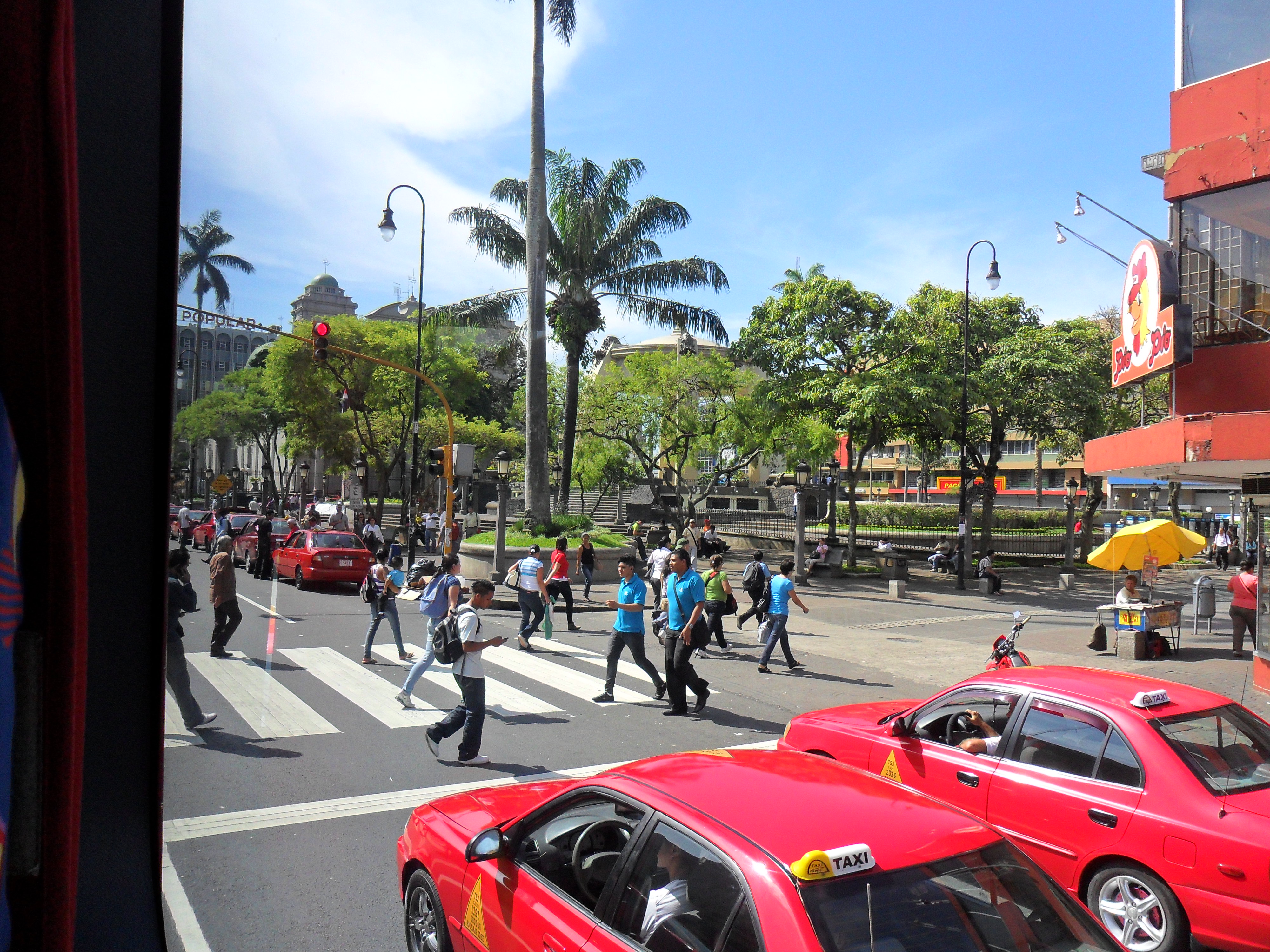
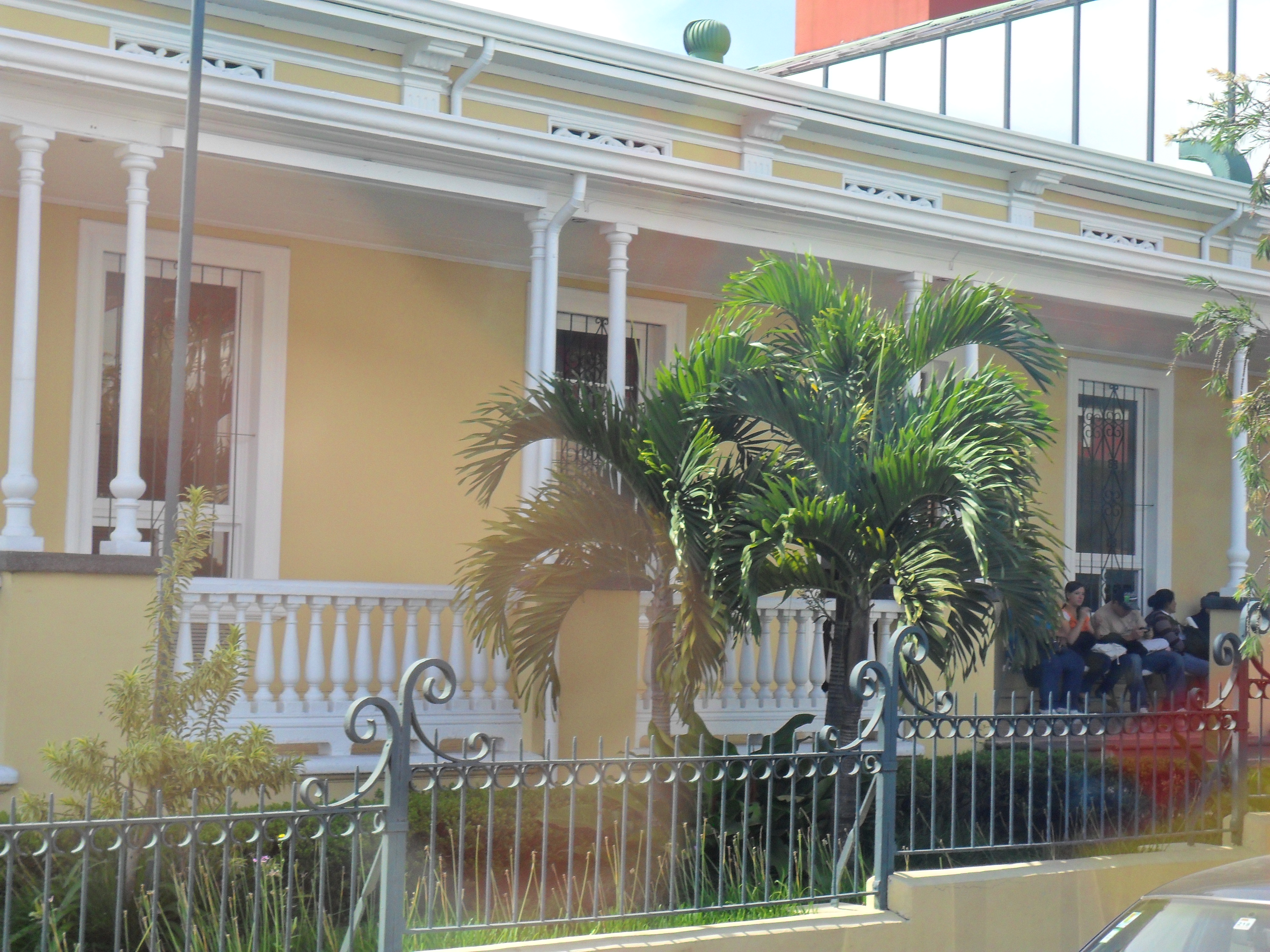
We spent very little time in cities.  However, as we left San Jose near the end of the trip and headed for the Caribbean side, I took some hurried photographs out the window.

My first and last hotel window view in San Jose included these stately coconut palms.

PURA VIDA