Book 38 for 2025: “Beyond the Door of No Return”, David Diop


Translated from French and written by a Senegalese author, this novel takes place during the time of colonialism and the slave trade. In Paris of 1806, a famous botanist, Michel Adanson, is dying. He never has finished the botanical work to which he dedicated his life, and as he lays dying, his last words are the woman’s name “Maram”.

His daughter finds an unpublished memoir hidden in a cabinet. It is the story of his younger life, what happened to him in Africa, all addressed to his daughter so she can understand his story and the meaning of his last word. It is a tale both strange and sad, filled with healers and magic and tragedy. Maram, a fabled revenant, a woman of noble birth from the kingdom of Waalo, was captured and sold into slavery but managed to escape. While working on his quest to find new plants, Adanson hears about this woman and becomes obsessed with finding her. His guide, Ndiak, the son of a chief, accompanies him everywhere and they become friends. This is a story of adventure, romance, and the horrors and cruelty of the slave trade.

Note: The author won the International Booker Prize for his other novel, “At Night All Blood Is Black”. Readers of this will miss several books I am reading because I am a judge for a literary context and cannot discuss what I am reading for the next several weeks.

Book 26 for 2025: “How the World Eats”, Julian Baggini


Although the subtitle says “A Global Food Philosophy”, most of it is an analysis of actually how the world does eat, including some rather remote tribal people, rarities in this contemporary world. This how also includes an analysis of how food affects health in different parts of the world, noting that although contemporary recommendations push vegetables and the Mediterranean diet, some people have no access to vegetables and eat mainly meat and fat and remain healthy. In other cases, like the Masai, cattle provide everything in their diet. The reader gets a broad based view of the best and the worse of diets and food practices worldwide.

A substantial portion of this tome–it is nearly 400 pages long with notes and index of more than 50 pages, looks at industrialized nations and world food supply, including the monopoly large food producing corporations maintain over what is available at grocery stores. Food is big business. The different definitions of food processing is covered as well as the good and bad. He debunks some common beliefs about food and health and notes that while people go hungry in some parts of the world, there is a surplus of food in others.

After all the analyzing and discussions, the last chapter covers “A Global Food Philosophy”. This includes recommendations for what we can do to create a healthier and more equitable worldwide food system while also saving the environment. He lists seven principles one of which is that our food management should be compassionate toward animals if we are going to eat them.

Book 18 for 2025: “The Great Hippopotamus Hotel”, Alexander McCall Smith


After reading 17 serious books to date this year, I decided it was time to read something lighter and found this latest in the No. 1 Ladies Detective Agency series at the library. If you are looking for lighter reading, sort of mystery stories without murders, and insights into a different culture, Botswana, this series is for you. Start with at least several near the beginning of the series so you get to know all the main characters to fully appreciate what occurs and who’s who.

This novel gets its name from a traditional hotel located way out in the countryside far from city. It is a relaxing place with a lovely veranda and native gardens full of flowers and succulents. Strange things begin to occur–food poisoning, scorpions in rooms, laundry disappearing from the clothes line–too many for it to be by accident. The hotel manager comes to see Mma Ramotswe and Mma Makutsi for help. At the same time Mr. J.L.B. Matekoni has a male client who asks him to find him a fancy, red, Italian sport car without his wife knowing anything about it. With their customary good humor and kindness, these characters set out to solve the problems of the hotel and deal with the sports car issue.

As usual in this series, one learns that quite often people accuse the wrong person, that things are often not as they seem, and that your own prejudices and inclinations can lead you totally astray.

Book 38 for 2024: “James”, Percival Everett


If you ever read “The Adventures of Huckleberry Finn” by Mark Twain, then you already know the characters in this new novel. If you have not read about Huck, then I suggest you might want to read Cliff Notes or some other synopsis of Twain’s novel. “James” takes its title from the name of one of the main characters, a slave who lives in Hannibal, Missouri. He is generally called Jim, but in reality prefers the more formal James. Basically, Everett’s novel is written from the viewpoint of James, e.g Jim. Most of the major events in Twain’s original novel are followed in this novel, but from James’ viewpoint. Huck, a poor kid, runs away to avoid his violent father and finds James hiding out on an island in the Mississippi River. Together they live off the land, float in their handmade raft down the Mississippi River, mostly at night to avoid anyone seeing them, and meet all sorts of folks, including two men, who are criminals pretending to be European royalty. It is hard to imagine how a novel about the horrors of slavery could possess any humor, but this one does. It is a quick, enlightening, and entertaining read filled with “lessons” that do not seem to be lessons because they are so intertwined with the James’ story.

Book a Week-20: “Sankofa”, Chibundu Onuzo


After her mother dies, Anna searches through her mother’s belongings and discovers a hidden diary written by the African father she never knew and about whom her white mother, who never married, told her nearly nothing. She travels to Scotland to have the diary authenticated by an expert, researches, and discovers her father had to return to Africa, became a revolutionary, and then president (or dictator, depending on the source) of a small African nation. She also learns that he is still alive.

Leaving behind a daughter and white husband from whom she is separated, Anna decides to travel to Africa to find her father. Treated unequally as a biracial child in England, in Africa she is seen as “obroni”, white. Thus, the book addresses issues of racial identity, family acceptance (she does find her father) and belonging, and tells a tale of the adventures of a middle-aged woman in search of self.

Wandering the World–Food


My travels have not only enlightened me personally, but also enabled me to create recipes from my food adventures around the world. Due to the recommendations of friends and family worldwide, I created a cookbook/memoir with stories and recipes. Len Leatherwood, new President of the Story Circle Network, says, “This is a cookbook after my own heart, filled with a wide range of healthy recipes from several cultures that will add flavor, color, and variety to any table.” Jennifer Archer, award winning writer and editor elaborated further, “A feast for the senses…combines colorful stories, poems, and mouth-watering recipes that inspire readers to experience new places, new tastes…from Asia, Africa, Latin America, Scandinavia, and America.”

This would make a great Christmas present for foodies and people who want worldwide food adventures. It can be ordered online from: http://www.dreamcatcherbooks.com and go to Angel Books.

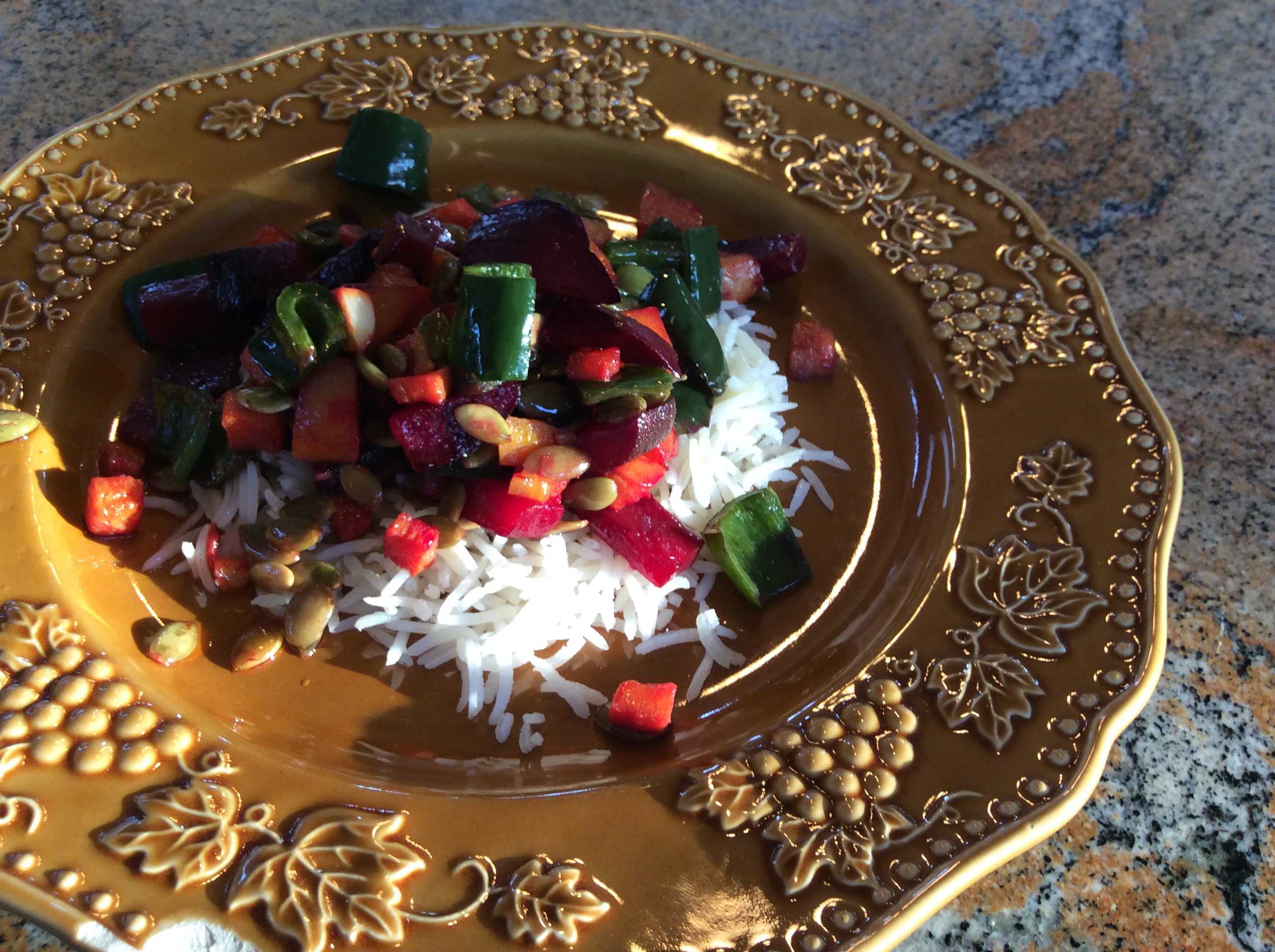
Recipes for the food in the photos above are included in the book. More food photos follow:

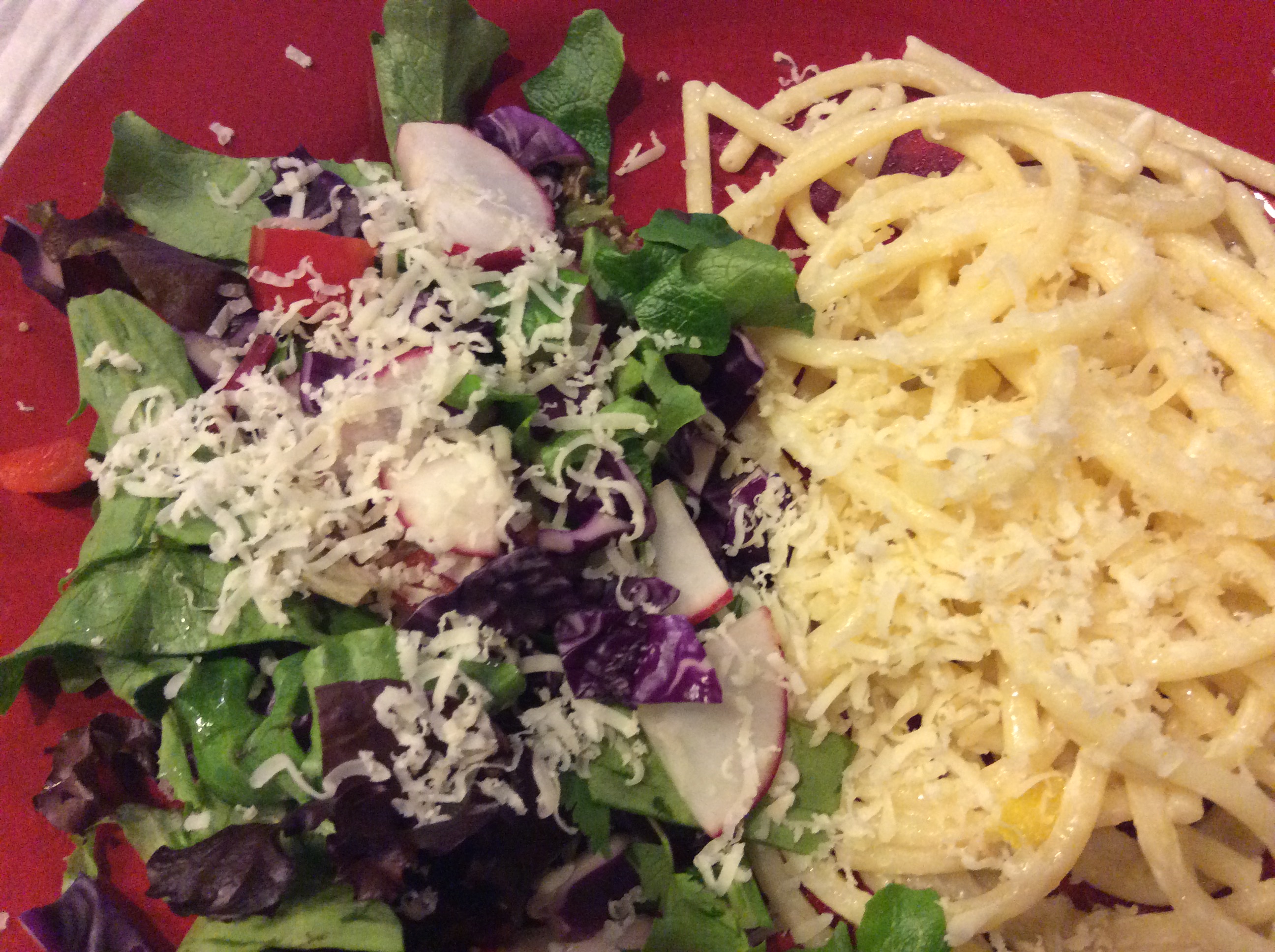
Lemon pasta with mixed salad topped with grated asiago cheese.

Many of the recipes feature berbere, a spice used in Ethiopian cooking. The book also includes four different recipes for salmon and many vegetarian and vegan recipes using spices from around the world.

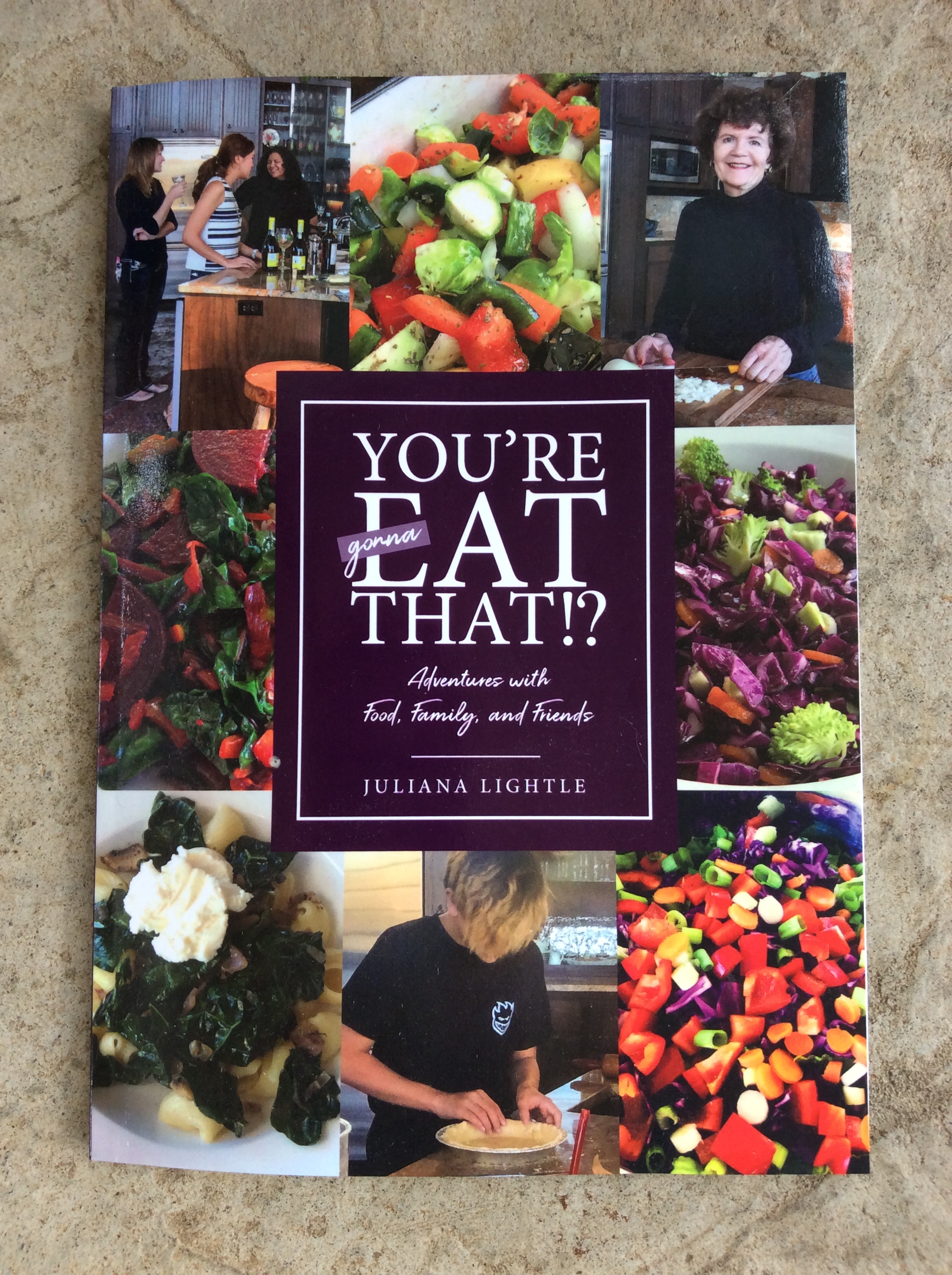
You’re Gonna Eat That!? Adventures with Food, Family, and Friends


This is my new book, published last month.  It is filled with stories, poems, and recipes–healthy food for vegans, vegetarians, pescatarians, and meat eaters with photos and detailed instructions. Currently, it can be purchased at Burrowing Owl bookstores in Canyon and Amarillo, Texas, and online at http://www.dreamcatcherbooks.com, Angel editions.

IMG_4660

More Creative Cooking


Experimentation and creativity while cooking become really important when you are home and going out and about does not seem a very safe option.  Here are some photos of two recent dishes I created for dinner.

IMG_4653

Many people do not like certain vegetables, two of which are my favorites, beets and Brussels spouts.  I remain convinced that people do not like them because no one has ever cooked them in a way they find palatable. These two vegetables keep well in the refrigerator so they are good for buying in this time when many do not want to go to the grocery often.

To create the above dish, I sautéed several chopped garlic cloves in olive oil with the chopped beets.  Cook these until nearly done, then add the sliced Brussels sprouts.  It takes longer to cook the beets and garlic than the Brussels sprouts.  You want the Brussels spouts to be tender but do not over cook.  This particular day I added basil essential oil to taste and served the dish over pasta from Italy.  When I want something more spicy, I sprinkle berbere (Ethiopian spice) over the vegetables instead of using basil or other Italian spices.  Sometimes I serve this over rice instead of pasta, e.g. when I use berbere.  This provides a delicious vegan meal and is easy to prepare.

IMG_4656

One of my favorite dishes includes cod loins.  I create many different versions by changing the vegetables used and the spices. For this one, I first sautéed garlic in olive oil until golden, added chopped beets and sautéed until they were tender.  Then I added the cod loin and chopped red bell pepper and chopped poblano pepper.  At the last minute I added a handful of frozen green peas and sautéed only until they were hot.  Once again I used basil and added lemon essential oil.  The pasta is bucatini from Italy.  If you like cheese, grate fresh parmesan or asiago over the dish.

Covid19–Creative Cooking


This is post number six as I continue to quarantine.  I’ve lost tract of exactly when I last went to the grocery–not for at least three weeks.  In an effort to avoid going unnecessarily, I’ve come up with all sorts of creative cooking by looking to see what I can find in the pantry and refrigerator and inventing recipes, using what I already have.  Here are three of my inventions.

IMG_4592

When I was in Italy last November, I ate pasta with lemon creme sauce in two different restaurants in two different cities.  I have managed to duplicate it using bucatini from Italy, lemons, and heavy cream.  For two servings, cook about 1/2 pound of pasta.  While pasta is cooking, use a potato peeler to peel of strips of rind from one lemon.  Chop these strips into smaller pieces.  Cut the lemon into quarters.  When pasta is al dente, drain.  Turn down the heat and melt 1/4 stick butter in the pan, add drained pasta and lemon rind.  Take the lemon quarters and squeeze the juice into the pasta, add cream to taste–do not add too much. If you do not have cream–this time I had none in the refrigerator, do not worry.  It is yummy without it.

I was out of most salad ingredients so the above salad is chopped cilantro topped with feta cheese, various kinds of olives, and olive oil.

IMG_4597

While scrounging around in the freezer compartment, I found half pound of hamburger. I defrosted that and found a can of kidney beans in the pantry. I sautéed the lean hamburger in olive oil, then added the kidney beans.  I did not have any tomatoes or tomato sauce so I dumped in a little organic ketchup.  After stirring this together, I added berbere, a complex and a little hot spice from Ethiopia.  I served this on top of basmati rice from Pakistan–I buy this in ten pound bags at an international grocery.

The salad ingredients were a gift from a friend who had to harvest all his arugula and lettuce because of freezing weather. While both of us were outside, he handed me a bagful of these goodies.  I added some red cabbage I already had.  Finally, I grated asiago cheese all over the top of everything.  Cheese is a favorite food so I always have lots on hand.

IMG_4599

The other food I always keep in the freezer is fish, usually salmon and cod loins.  For this recipe, I defrosted the salmon and marinated it in teriyaki sauce and chopped up some onions and crystallized ginger.  I sautéed the onions in olive oil, then added the salmon and crystallized ginger.  When the salmon was almost done, I added some chopped, frozen,  poblano peppers (when I knew this stay-at-home order was likely, I bought a lot of poblano peppers and froze them) and arugula.  I served the finished dish over basmati rice.

Sometime in the next month or so–no definite date yet–my memoir/cookbook will come out, “You’re Gonna Eat That!? Adventures with Food, Family, and Friends.” It is filled with recipes using ingredients and methods I have learned in travels and growing up with my mom. Many of the recipes are vegetarian and could be vegan with minor adjustments.

You’re Gonna Eat That?!


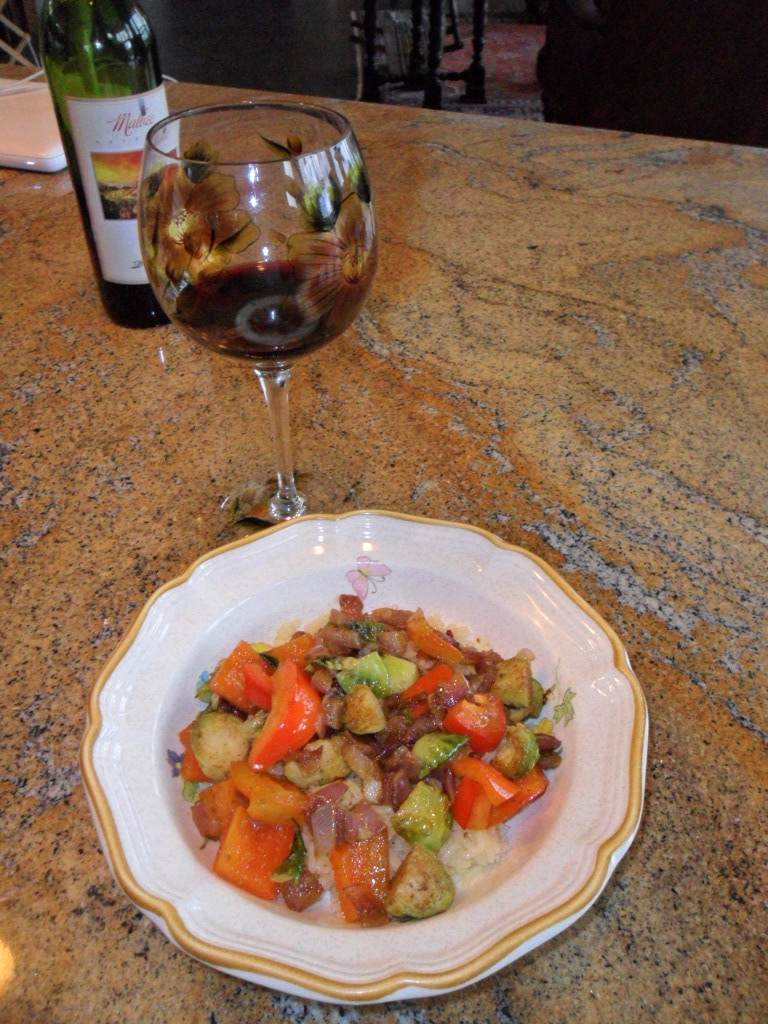
This is the title of my newest book which currently resides at the designers for formatting, placing the photos in the correct place and position, making sure everything is just right.  The subtitle is:  Adventures with Food, Family, and Friends.  It includes family and travel stories, adventures, poems, and recipes. Here are a couple of food photos which will be in the book with recipes.

IMG_3474

SAM_1570

IMG_3495

Every Sunday until publication, I will post an update as to progress.  My goal is to have it available for purchase for Christmas presents for those who love food adventures.