One of the most famous canyons in the country resides inside the Dine (Navaho) Nation. While administered by the National Park service, it is also the home of several Dine families. You can drive through the roads on the top freely, stop at various viewpoints, take photos, etc. Here are the various views I saw last week while there. The bottom of the canyon is restricted. To go there, you need a permit and a Dine (Navaho) guide. More about that in the next post.
Several families live in the bottom of the canyon, especially during the summer months. You cannot go into the bottom of the canyon without a permit and a Navaho guide.
This is the perfect book for those interested in hominid evolution. I’ve been fascinated by Homo naledi ever since I first learned about them more than a decade ago. In 2013, paleoanthropologist Lee Berger first discovered them in a sizable cave system in South Africa. The initial discovery included the largest pile of hominid bones ever found.
In “Cave of Bones” Berger details his and his teams repeated visits to this cave system and their discoveries over time which allowed them to find evidence that naledi buried their dead, used fire, and drew designs on the walls near passages from one part of the cave system to another. Before their discovery, it was thought that only homo sapiens did any of these things with exception perhaps of neanderthal. The naledi walked upright, lived during the same time as early homo sapiens, and had a feet and body structure like homo sapiens (except they were smaller than most people today), but their fingers were somewhat curved indicating they used them for climbing. Their brains were smaller than homo sapiens. This has made some scientists question the validity of the findings since it has long been held than brain size relates to intelligence and many of the abilities that are distinctively human. The book contains photos of the cave system, of some of the skeletons, the drawings, and other relevant material as well as an extensive bibliography.
This past weekend I headed to Mexicali in Northern Baja to visit the town of San Felipe and see a new development about an hour south of there. San Felipe is a small fishing town of approximately 20,000 people where there are no fast food restaurants and no Starbucks. Excellent restaurants and good coffee can be found but not at the places mentioned above. They do not exist there. The town of San Felipe has a long boardwalk right along the Sea of Cortez with restaurants across the street. This past weekend they were holding a ceviche contest and fiesta on a cross street. This is shrimp season and the city is known for its shrimp. Unlike the Pacific side of Baja, there is no large commercial fishing allowed in this part of the Sea of Cortez because it contains many endangered fish and the place where whales come to mate. Locals can fish and you see smaller fishing and shrimp boats in the sea. Not only is the Sea of Cortez protected but so are the plants and animals in the desert. Certain plants, like ironwood trees, are ancient and rare. If you want to build a road, it has to be around them. Many other species are also protected.
Unlike the Pacific side of Baja, the water in San Felipe is safe to drink from the tap. It comes from an aquifer up in the mountains to the west.
We spent most of Sunday at the new green development (it is totally off grid) called Rancho Costa Verde. Solar is used for power and each house has a large underground water tank where water comes from an aquifer up in the mountains. This is a newer development so although many of the lots are already sold, except for beachfront, many houses are just now under construction.
This is a very modern beachfront property with marble floors and a glass wall facing the Sea of Cortez.
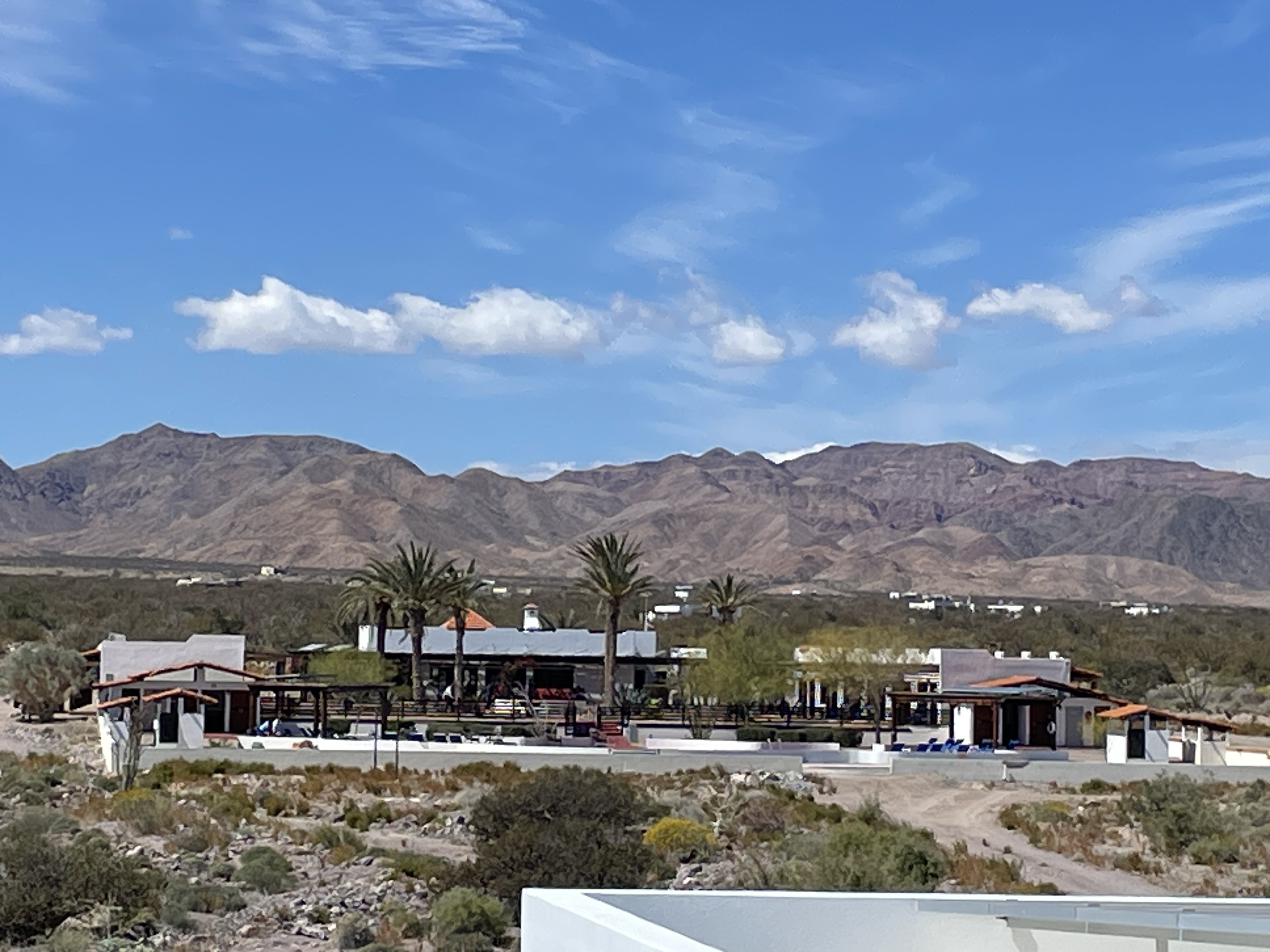
This photo is of the clubhouse and looking the opposite direction toward the mountains. Here I am standing on the roof of the house in the previous photo.
Here I am in front of the pool in front of the clubhouse facing the Sea of Cortez. The house in the first picture is on the left in the distance.
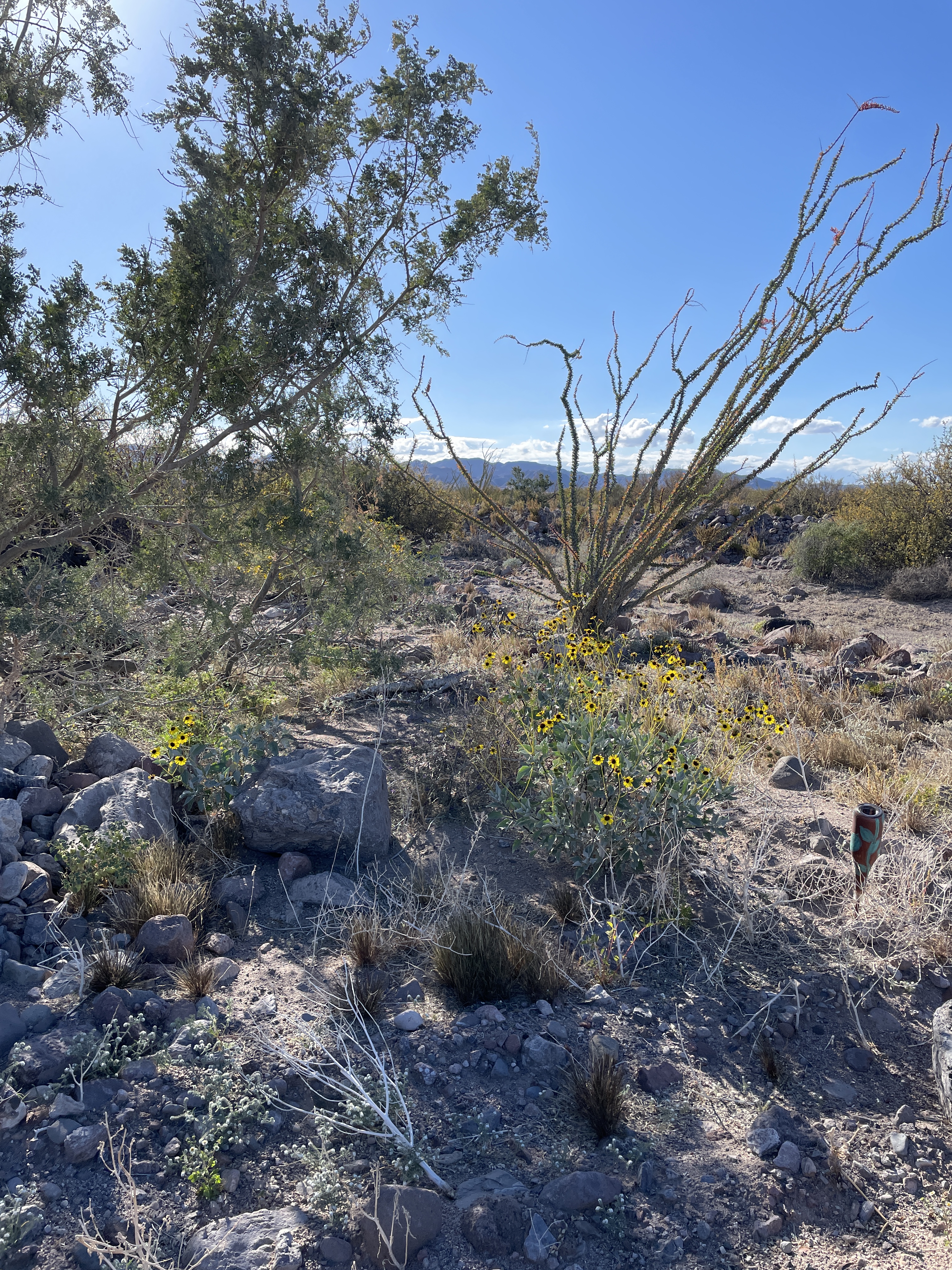
This is desert land where even though it can get hot in summer, the sea breeze keeps it relatively cool.
The plant on the right is ocotillo which is protected. If you are building a house and it is in the way, you have to move it elsewhere. You cannot just get rid of it.
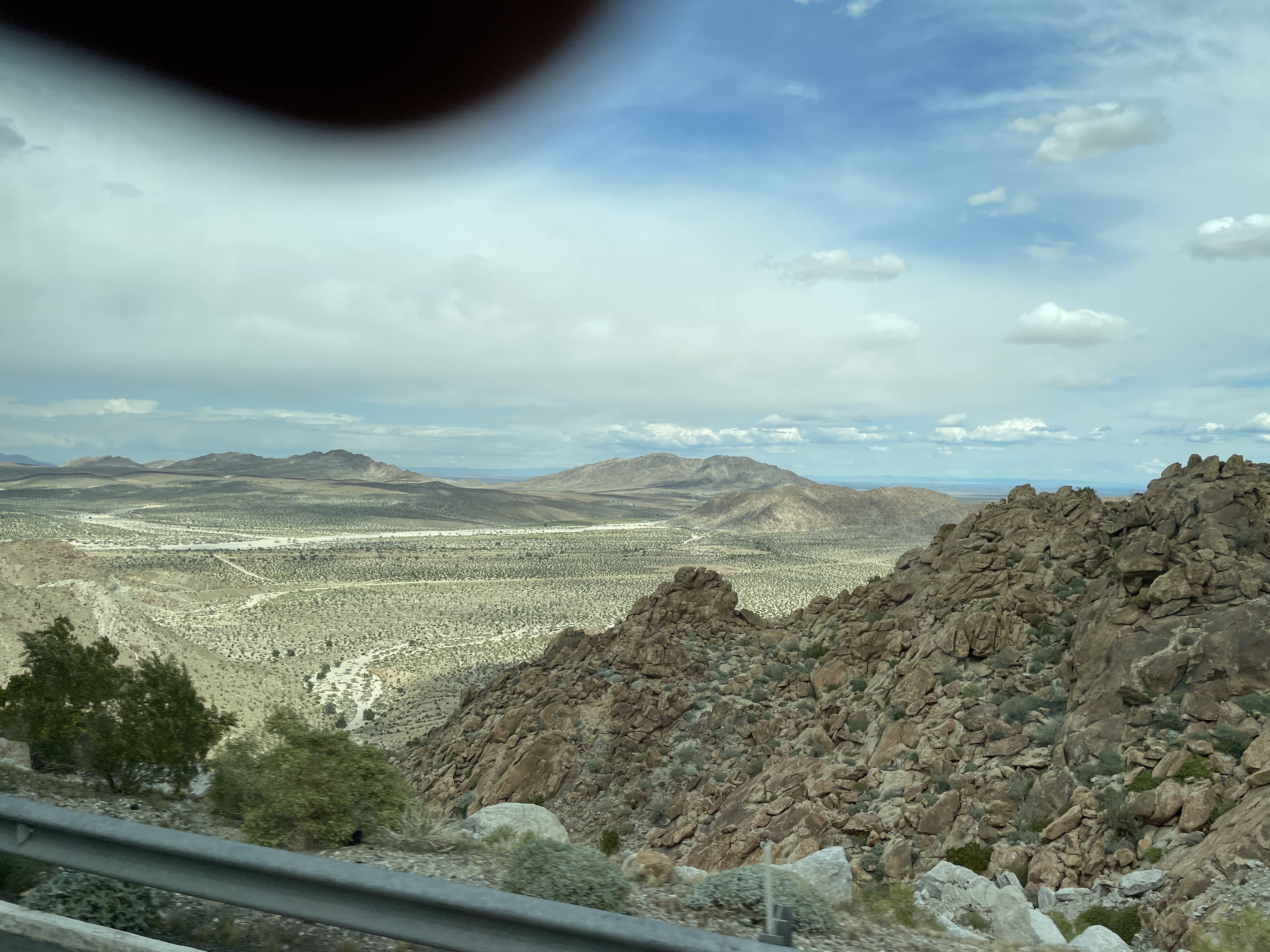
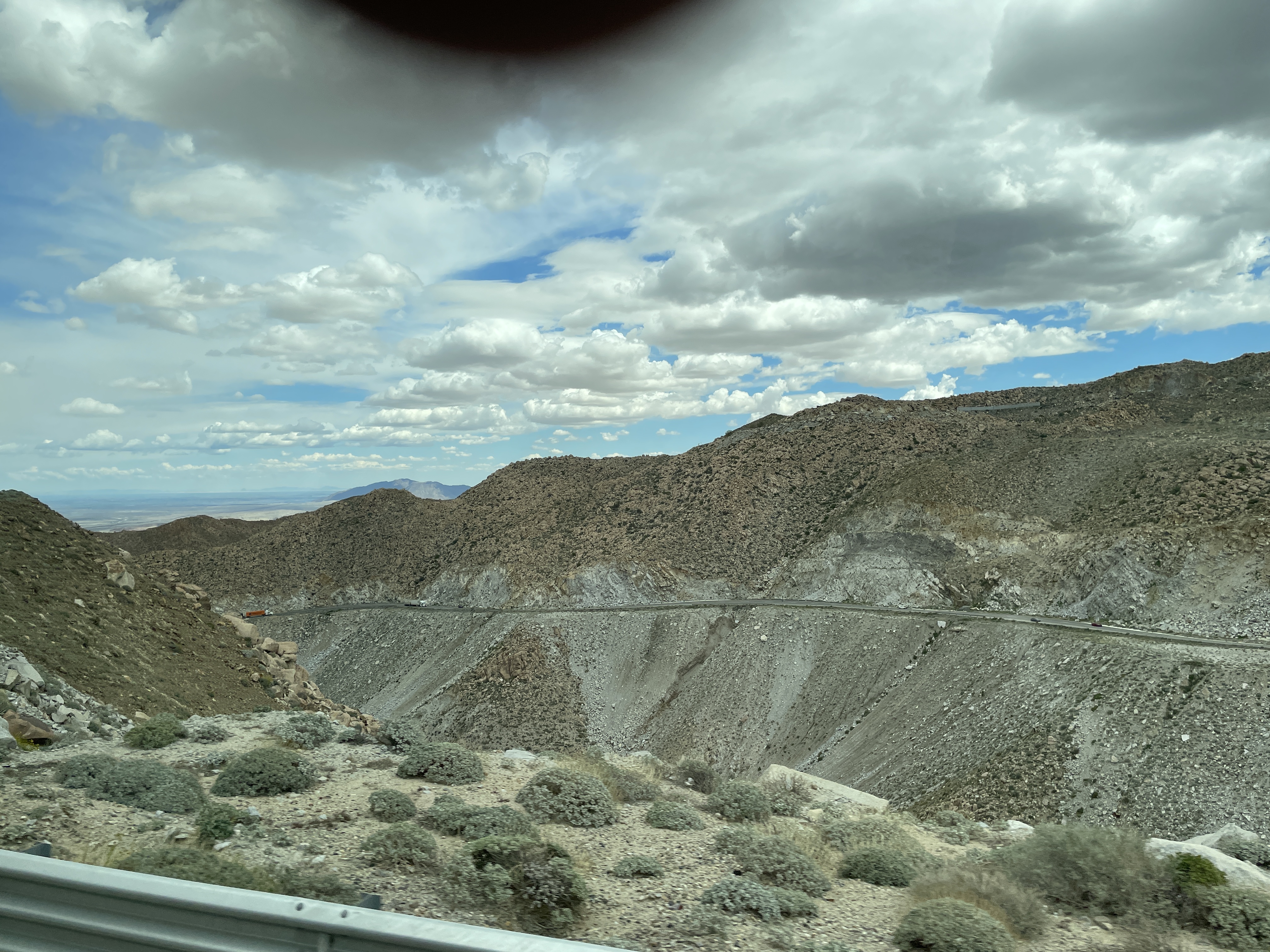
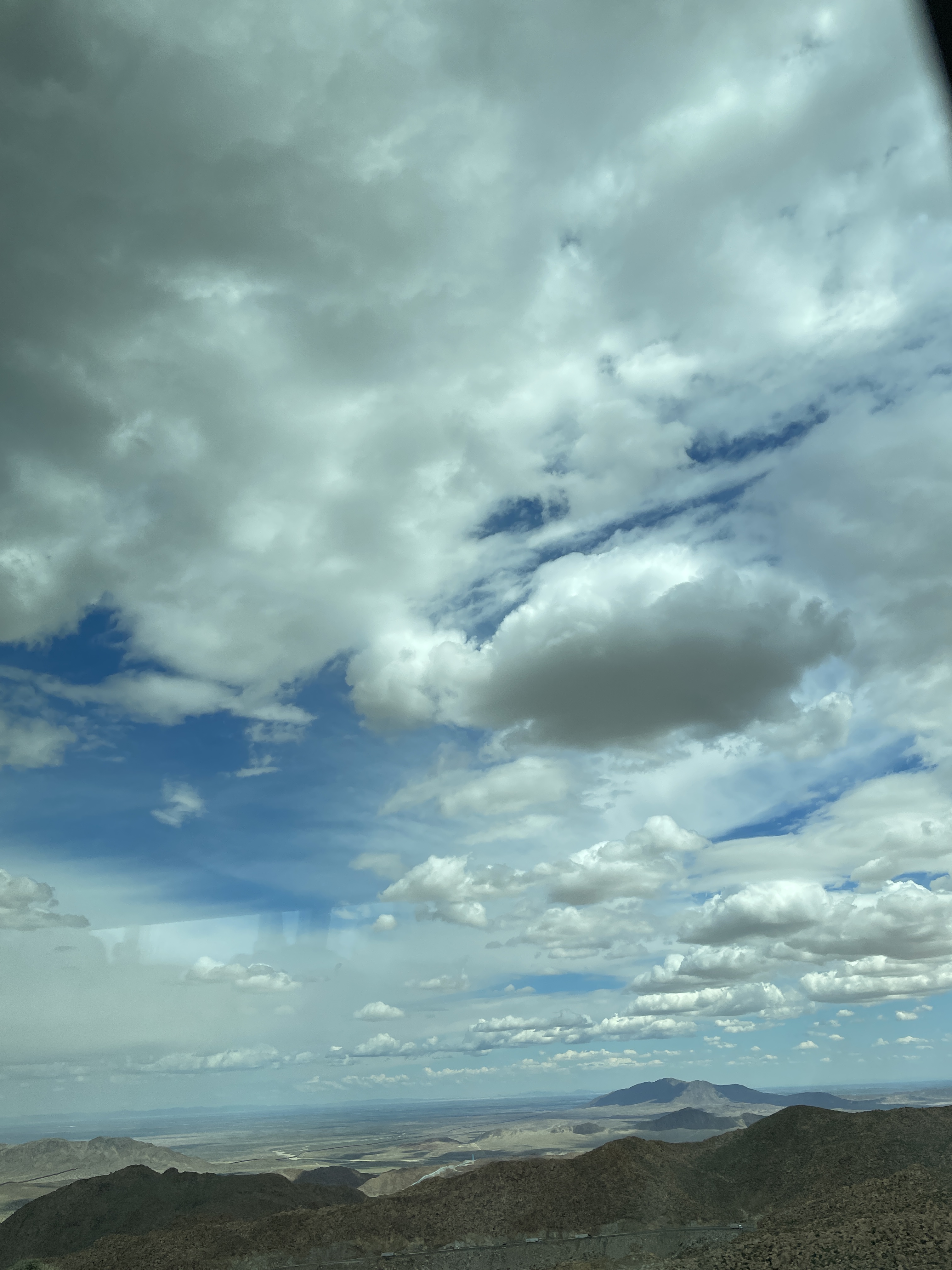
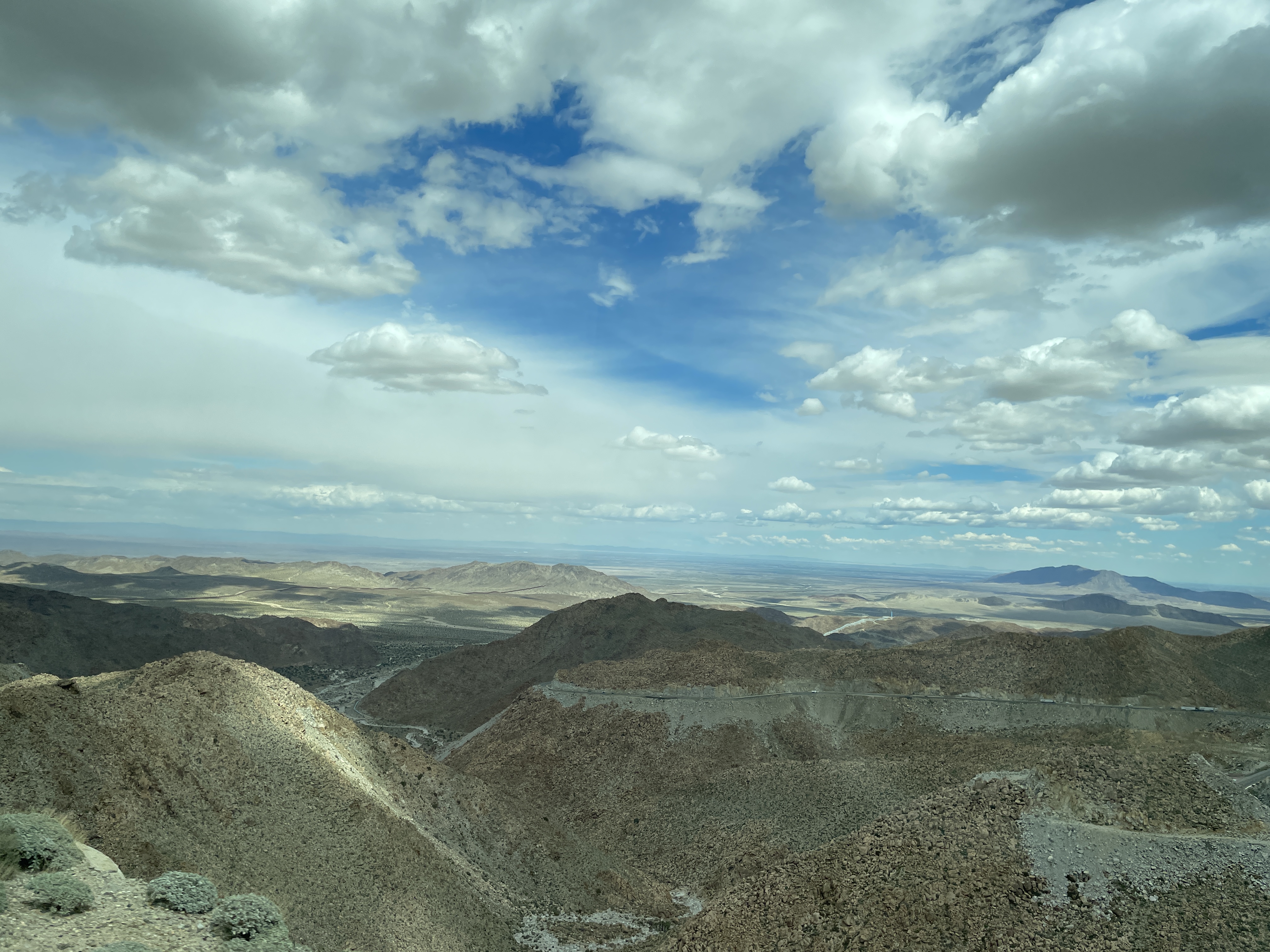
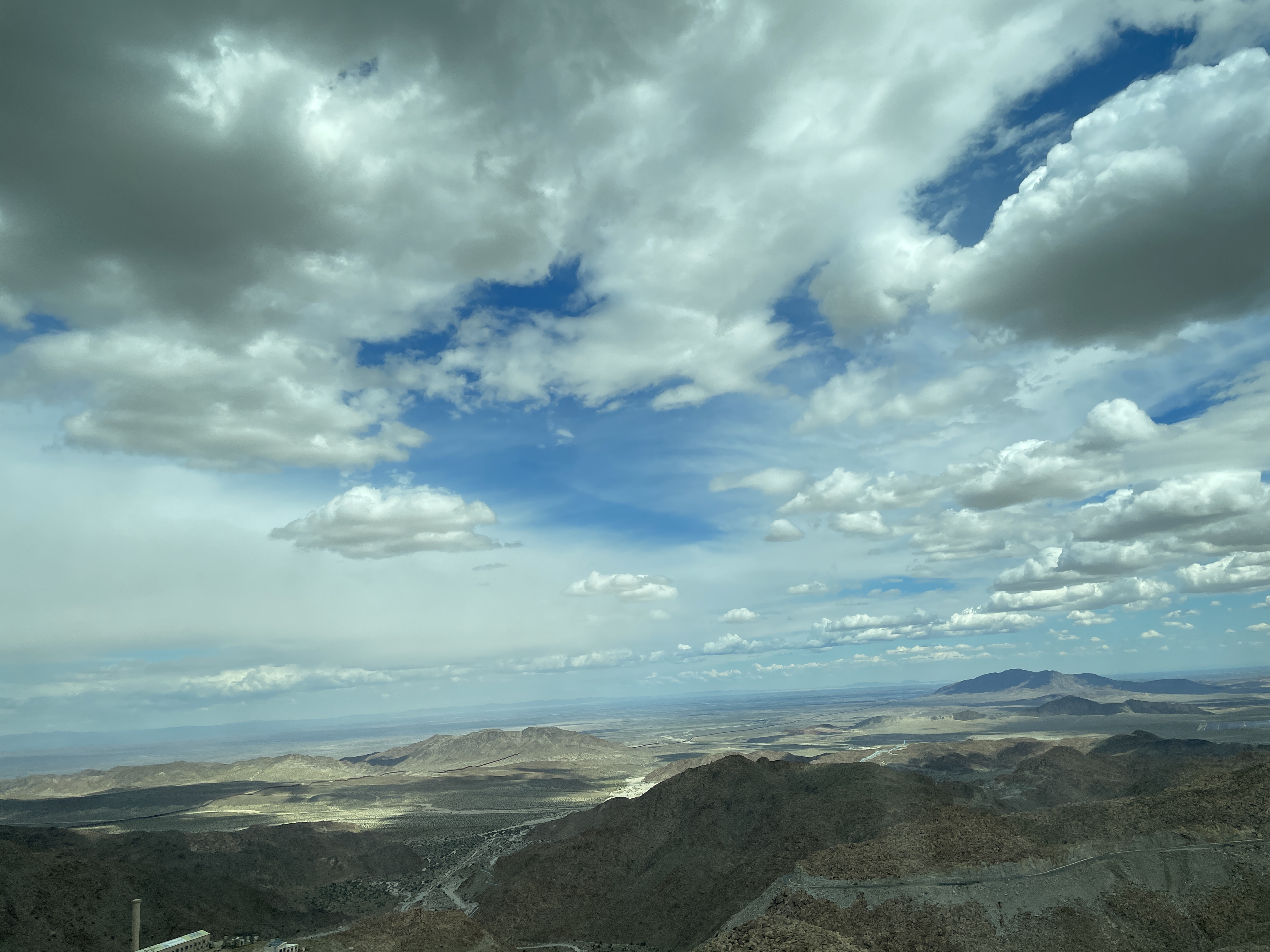
Monday was a big adventure trying to cross the border. We arrived in Mexicali only to discover no busses could cross the border there so we had to take the highway to Tijuana and cross there. To do this you must cross a mountain pass. What a feat of engineering building this road must have been. It is quite incredible and as you climb higher and higher the views go on forever into the far distance. The following are photos I took from the bus window as we drove higher and higher.
These mountains are made of rocks of all sizes that are just stacked on top of each other. Here only these small blue-green plants seem to thrive.
In this photo you can see the highway where we had just traversed.
Here you can see how at this height the mountains are nothing but stacked rocks of all sizes.
After the summit as we went down toward the town of Tecate, it started to rain and it rained most of the way to Tijuana. The Pacific side of this part of Baja gets rain and it was lush green this time of year while the Sea of Cortex side is desert.
I do not recommend crossing at Tijuana in a large bus. Even though we had sent all our passport information in advance, they made the bus sit there for nearly an hour and wait. Meanwhile those on foot and in cars were just zooming along at a rather rapid pace. Then we had to get out of the bus with all our luggage and everything and wait more. I crossed the border (not in a bus) last April and it did not take long at all. I have heard that Tijuana is the busiest port of entry from one country to another in the world but have not verified that. It certainly was busy yesterday.
At the beginning of 2023, my main resolution was to read at least one book a week on average. I exceeded the goal. Now I have to decide whether to continue. I discovered a lot of authors I had never read before and learned many new things.
This last book of the year is perfect for those who love Italy, the Italy of today and medieval Italy because it takes place in both time periods–mostly in the Siena of the 14th century but some in modern Siena as well. It begins in current day New York where Beatrice, the main character, works as a neurosurgeon. Years before, her older brother, a medieval scholar, moved to Siena to investigate the ancient rivalry between Florence and Siena. When her brother suddenly dies, Beatrice discovers she has inherited his house in Siena. When she goes there to settle his estate, she not only discovers his wonderful, centuries old house, but also a manuscript from a fresco artist, Gabriele Accorsi, and one of his paintings where there is an image of a woman who looks exactly like Beatrice herself. This magically leads her to 1347 Siena, a conspiracy over the rivalry between Florence and Siena, the Plague, romance, and so much more. This is a page turner sort of book where the reader also learns a lot about the Plague, medieval Italian customs and life, and Tuscan history.
I find it interesting that the author is a professor of neurology, fluent in several languages, and literate in Latin. This novel has also lead me to explore the actual medieval relationship between the cities of Florence and Siena.
Since I was born in St. Joseph, MO, and grew up 30 miles from there, the Pony Express is something I have heard about my entire life. Therefore, when I saw this book at the local library, I decided to read it. What a fun and informative book!! In 2019, Will Grant, who lives in Santa Fe, NM, decided to locate the right horses, transport them to St. Joseph, and ride the route of the Pony Express from there to Sacramento, CA, the other end of the trail. After the sheriff’s department escorted him across the bridge to Kansas, he managed to avoid cities for the most of the 2000 mile trip. This book is his account of the old Pony Express Stations, ranchers, farmers, historians, businessmen, ordinary people, and wild horses he encounters on his 142 day adventure. Although many have written books about the Pony Express, he is the only person who has followed the entire route on horseback.
This is not the easiest book to read in many ways. Its setting is not long after the death of mythical King Arthur. Main characters include an elderly couple who have left their home to search for their long lost son, an aged knight supposedly Sir Gawain, a dragon monster, a “gifted” older child, and a Saxon warrior. Some of them are Britons and some are Saxons, and in some cases they view each other as arch enemies. There is a monastery with both good and evil monks, a tunnel, lots of forests and mountains, rivers, and a lake where a boatman ferries people to an island–perhaps the residence of the afterlife. The potential symbolism is endless if the reader is into symbolism. The dragon monster has created an endless fog which dulls the long term memory of the humans. The elderly couple want to get rid of the monster so they can repair their memories, but will this really be a good thing. That is one of the main questions in the book. Most analyses of the symbolism say the buried giant is the dragon, but I think it is the buried memories of everyone, but especially the elderly couple, who are desperate to recover their memories.
After reading two intense, somewhat depressing novels, I decided to read a lighter non-fiction work. An article I read mentioned a tale of two guys, Tim Cahill and Garry Sowerby, who drove a GMC Sierra pickup truck from Tierra del Fuego, Argentina, to Prudhoe Bay, Alaska in less than 25 days. I like adventures and the best vehicle I ever owned was a Sierra 4 by 4 Off Road. I sold it to a former student when I moved. It was still going strong at over 300,000 miles.
In order to follow along on their adventure, I dug out my atlas and followed their trip through 13 countries, finding cities, little towns, rivers, mountains. When they traveled in 1987, the only place with no road was the Darien Gap on the border between Colombia and Panama–today still no road and now famous for all the migrants who labor through this dangerous, swampy, jungle area on foot on their way north. Since no road there, Tim and Garry had to load the truck onto a container ship in Cartagena and unload it in Panama. They also rode on the ship as passengers. This lead to their meeting some of the most colorful characters on their trip.
Along the way, they meet all sorts of people, e.g. sadistic police, kind employees of international GMC, a weird consulate employee, and helpful women, describe them and the landscape in detail. Procuring the right documents and proceeding across borders is sometimes easy and sometimes grueling, again described in detail. Of course, political leaders, ease of travel, etc. have changed in many places–I’ve been to or lived in five of the countries they traverse.
Want to explore new places, meet all sorts of folks?? Then this is the book for you and a fun read.
My view of this book remains somewhat mixed. I know it was a best seller, but some parts of the storyline seem extremely contrived rags to riches stories without evidence to back them up. Nevertheless, it is a powerful novel about the ritualistic Akha tribal people of the southern Chinese region of Yunnan who were viewed as backward and remained mostly unknown until their superior Pu’er tea was discovered. Additionally, the novel explores Chinese adoptions, issues Chinese children experience when adopted by white people, and how so-called primitive practices, e.g. killing twins and banishing their parents, can change over time even in remote areas.
I prefer to read books that provide me the opportunity to learn something new. This book definitely provided that. Before reading this novel, I knew nothing about the Akha people, even though I have visited tribal areas not too distant, nothing about Pu’er tea or tea processing and how tea can be as valuable a commodity as gold. Pu’er tea is different from other teas because of the types of trees from which it is harvested and its unique fermentation process which makes it a probiotic.
What an amazing story collection!! As I read these incredibly diverse stories featuring so many different types of people, I kept wondering how does he know so much about different sorts of individuals:
-An older white lady in a tiny town in Idaho who runs a little restaurant.
-Chicanos in San Diego–this one I “get”; he grew up near there in Tijuana.
-A divorced white guy, wandering aimlessly cross country.
-A teen in Arizona who loves a nice girl from a dangerous family.
-A “weird” old man in a Mexican village.
-A young man trying to save his dead dad’s possessions from questionable friends.
-A strange magical realism Mexican story. I love magical realism so if I think it strange…
-A kids’ trip to a water museum ( the title) in the drought ridden plains.
-A sad South Dakota story of a white man married to an woman from Pine Ridge.
-In Iowa a widowed farmer trying his best to befriend and understand his Mexican neighbors.
Yesterday I drove to this place about six miles south of Julian, CA, a small, touristy, mountain town east of San Diego. Owned by the Nature Conservancy, the ranch abuts Anza-Borrega Desert Park, but this area is not desert. On the way, I drove through at least four Indian Reservations on Highway 76. California has more Native American residents than any other state.
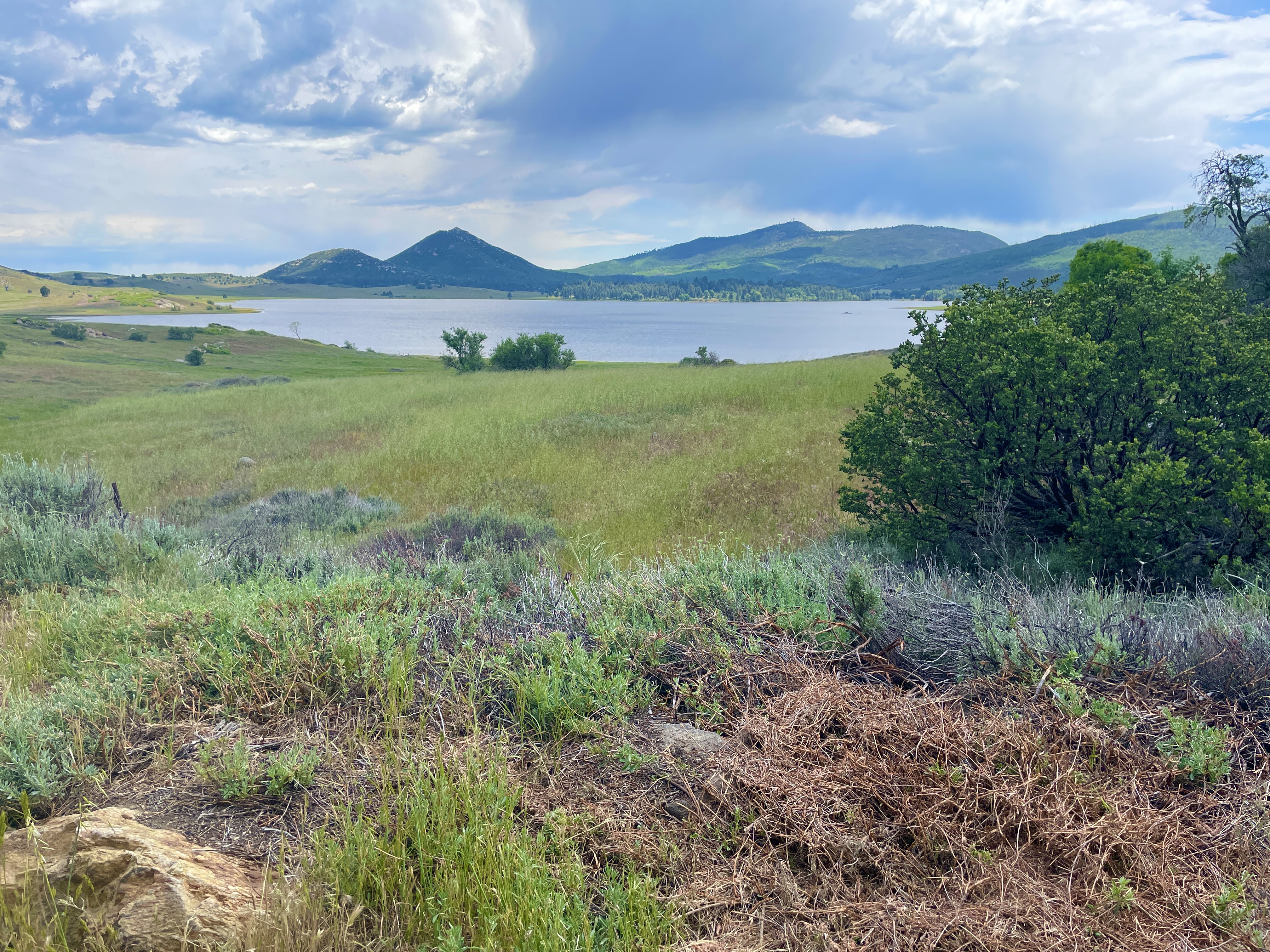
This is Lake Henshaw on Highway 76 on the way to Julian. It is so full now that tops of trees stick out of the water. People told me that last year it was more like a big puddle.
The three mile hike was not long but quite strenuous as we climbed approximately 800 – 1000 ft. in altitude on the hike.
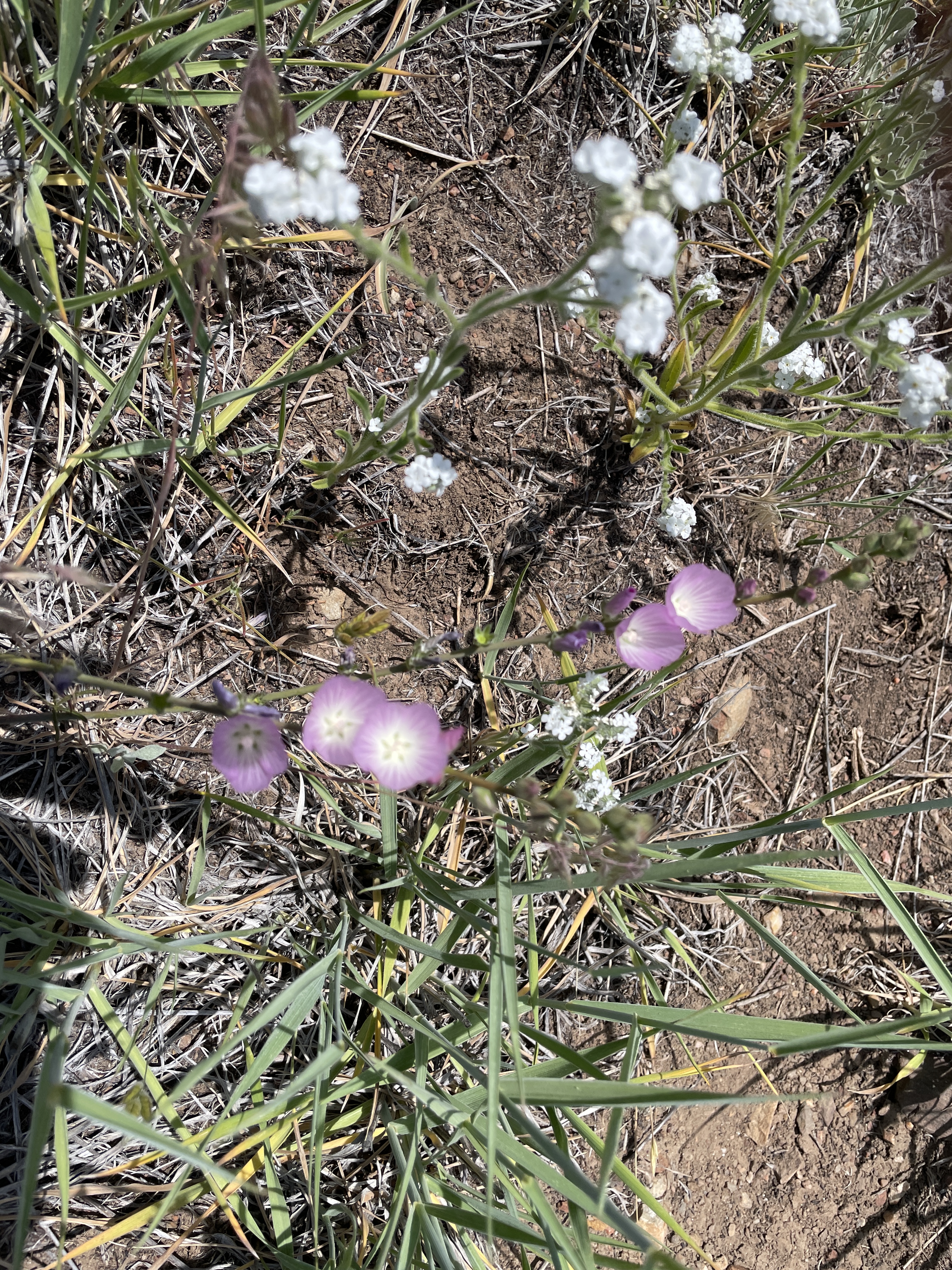
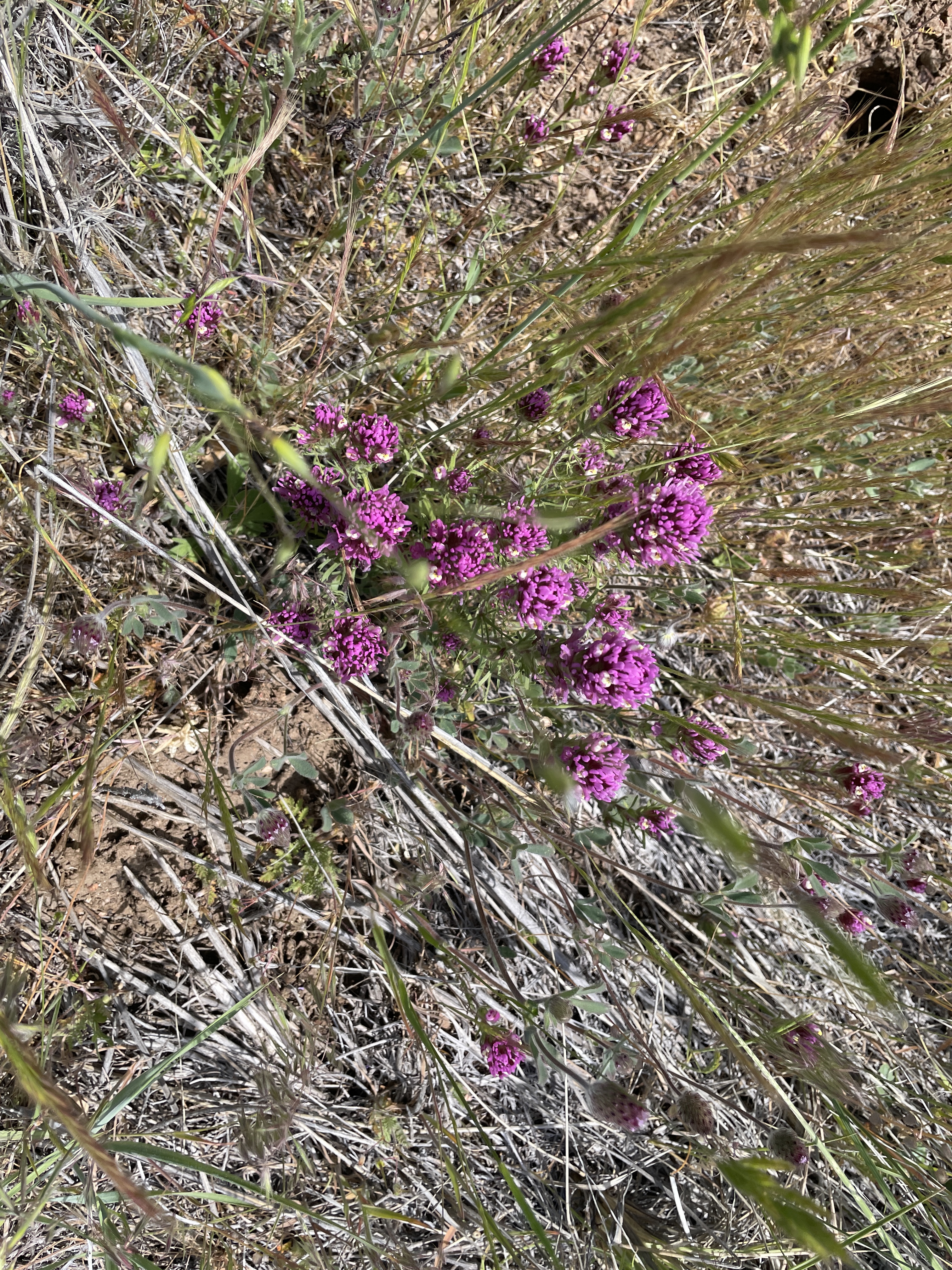
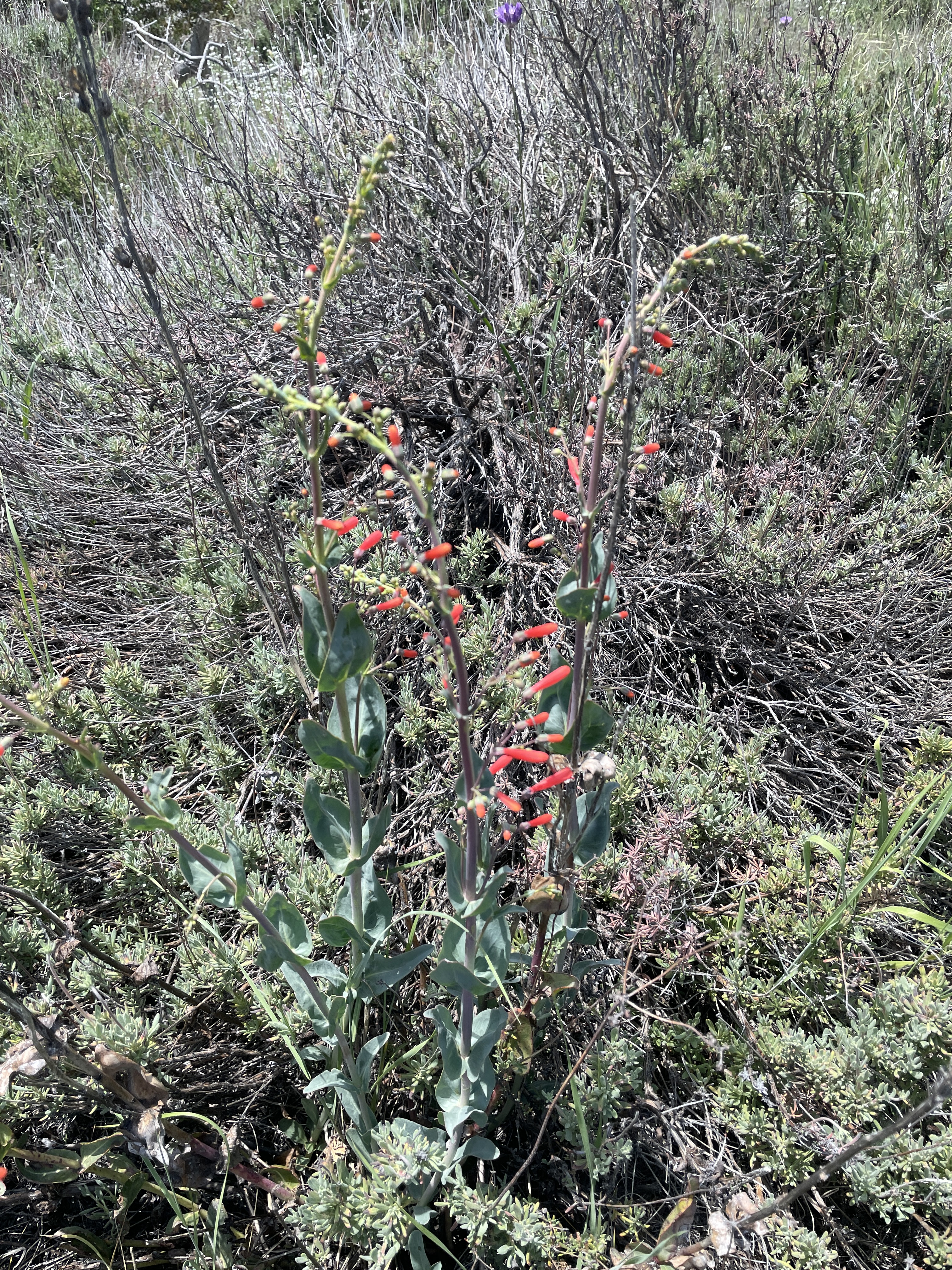
Lots of wild flowers everywhere due to abundant rain this year. We had to find parts of the trail because it had not been used since before Covid and was overgrown.
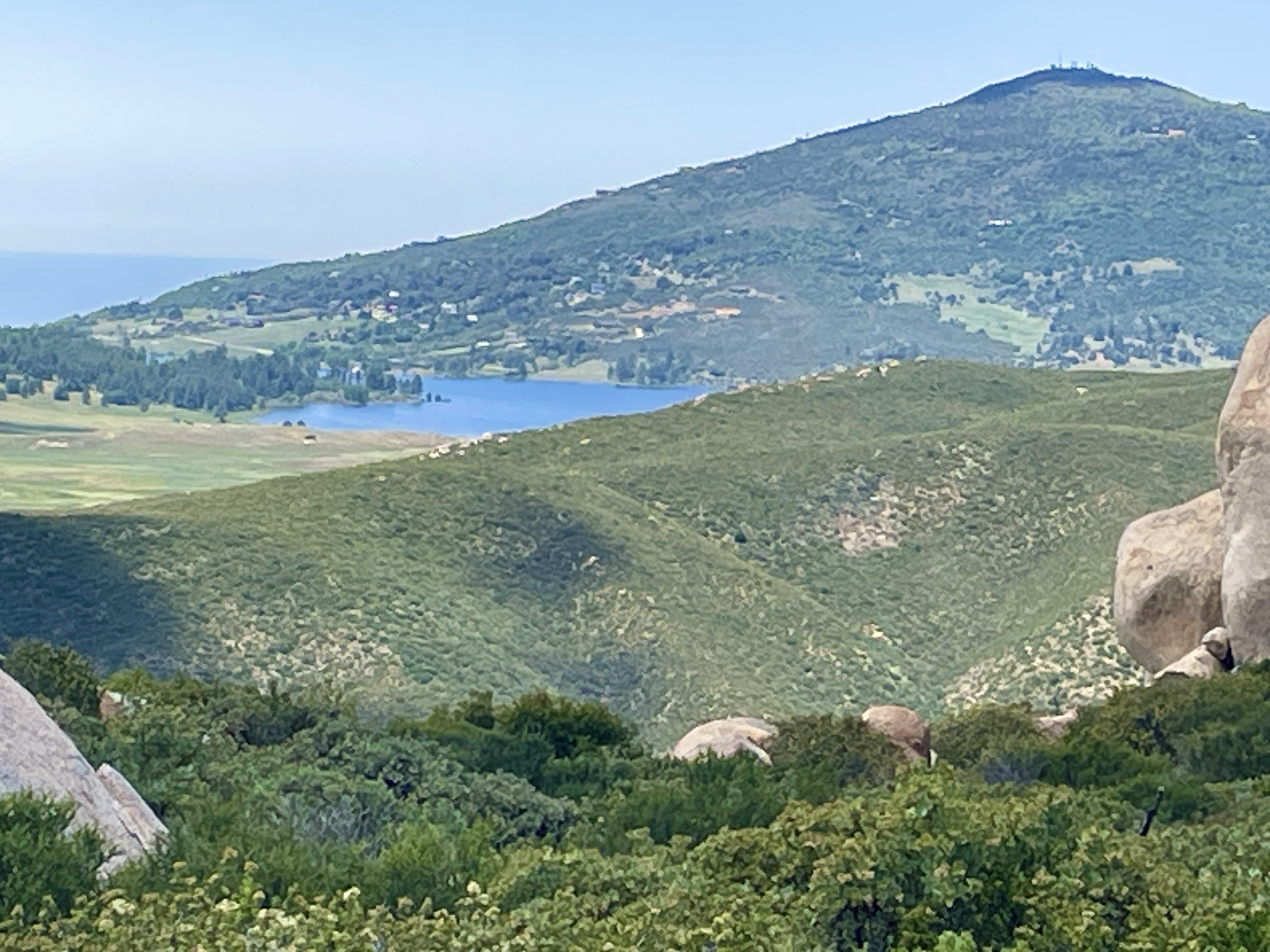
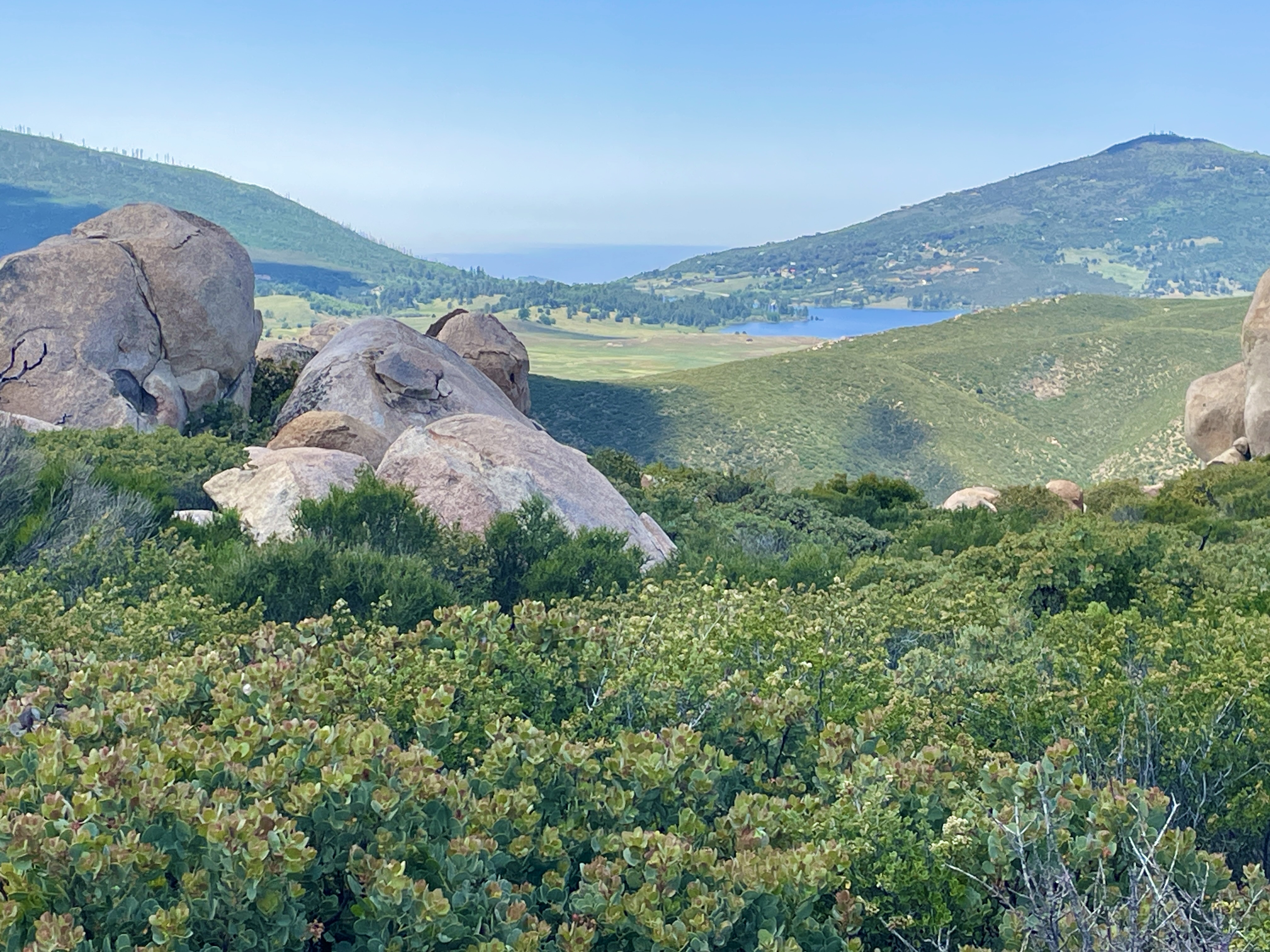
Views of Lake Cuyamaca which we could see in the distance as we climbed up and down.
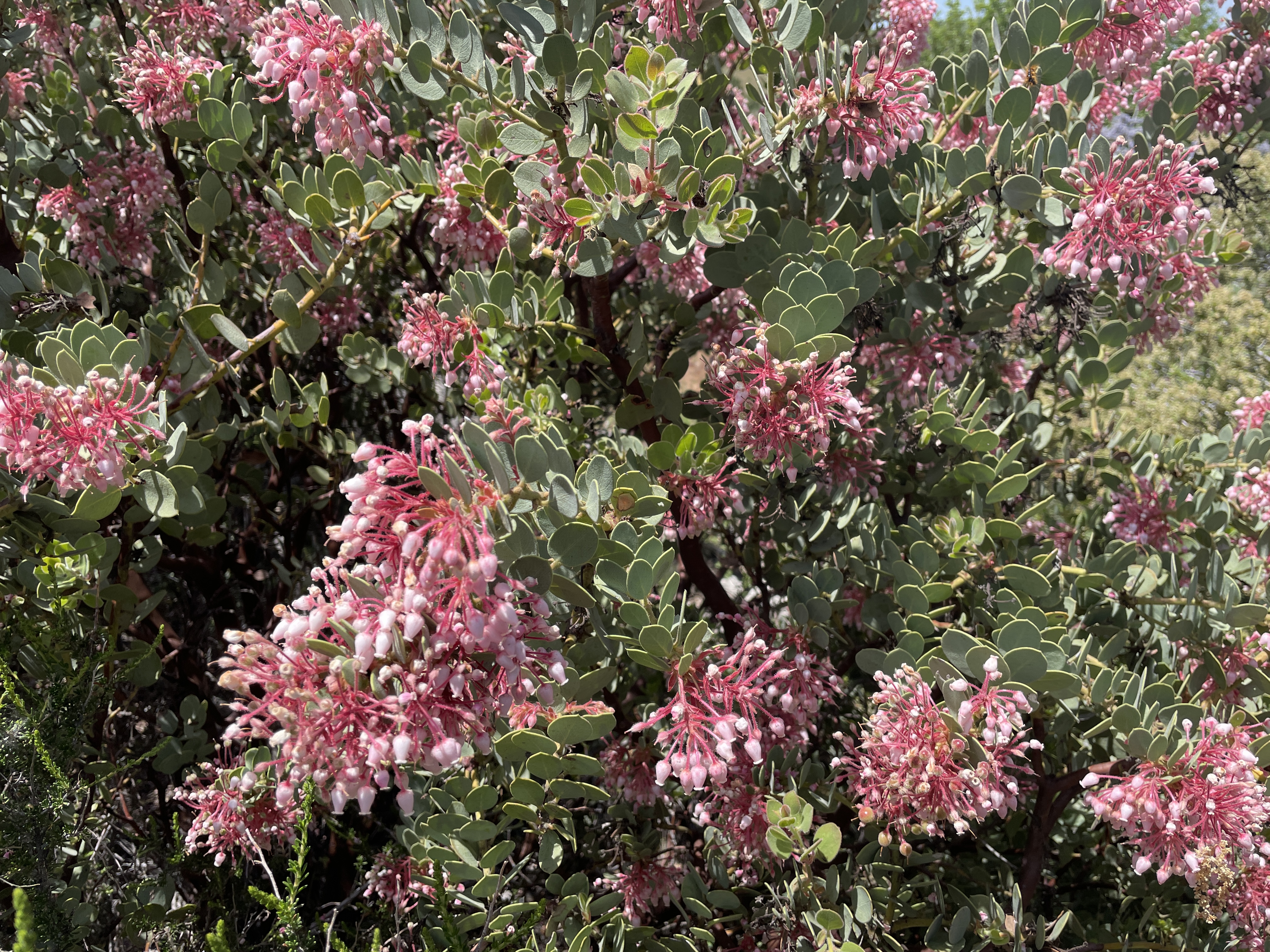
The manzanita are in full bloom and luxurious this year. There were other flower the names none of us knew.
Lupine.
We kept climbing up steep slopes higher and higher. The climb was more difficult because lots of loose, little rocks and gravel in many places.
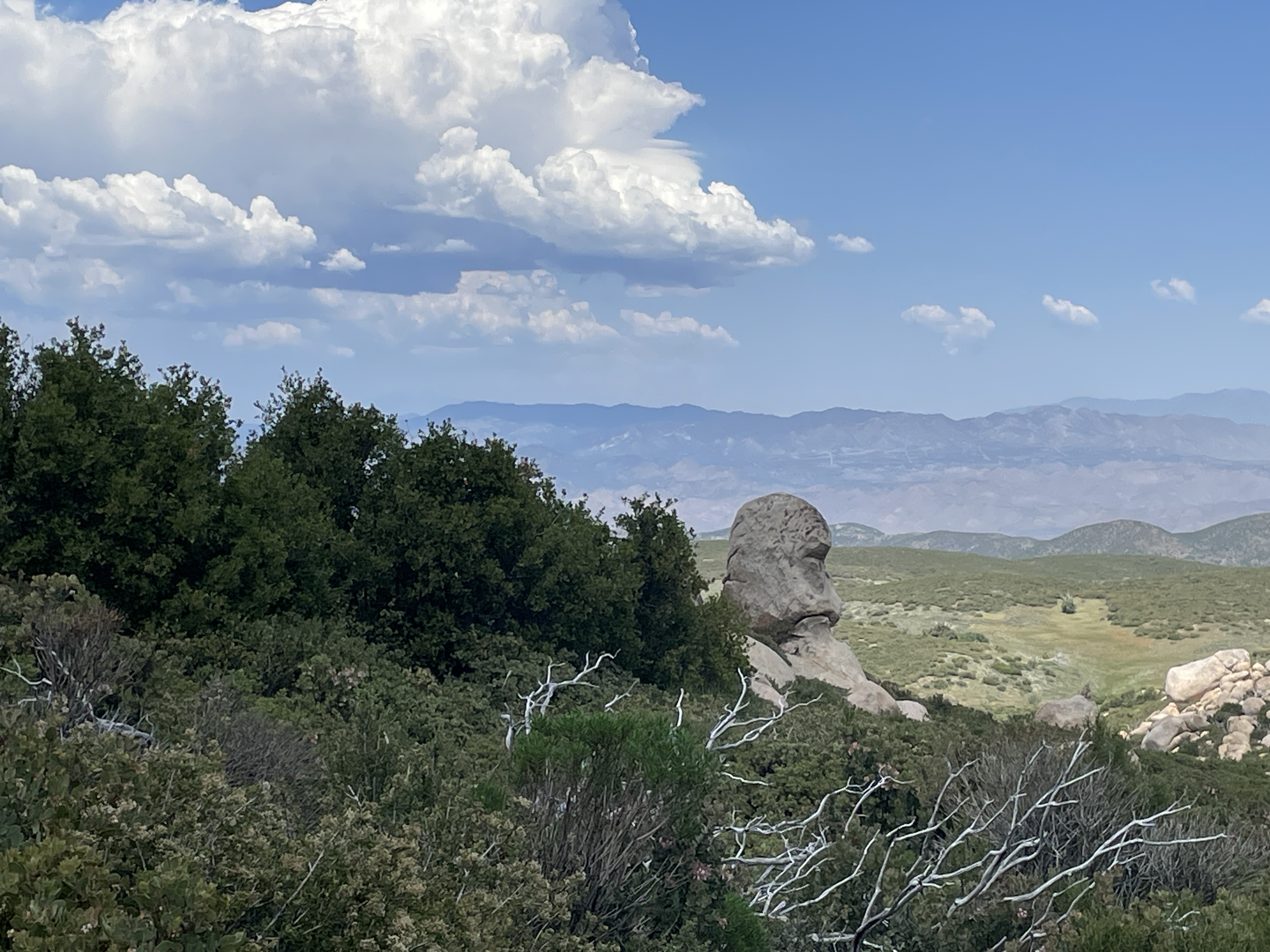
Where we ate lunch at the top which is slightly over a mile high. There are these dead, bleached out branches everywhere, the result of a big fire in 2003 which killed a lot of plants and some of it has never recovered.
Lunch up high among the rocks.
A different type of yucca than grows everywhere in the many other places where I have previously lived.
On the way down from the top. Everything is still quite green here and there were storm clouds in the distance.
Some people call this California lilac. It grows everywhere here and is in full bloom glory.










 writingontherim