bountiful autumn
pomegranates
scarlet lusciousness
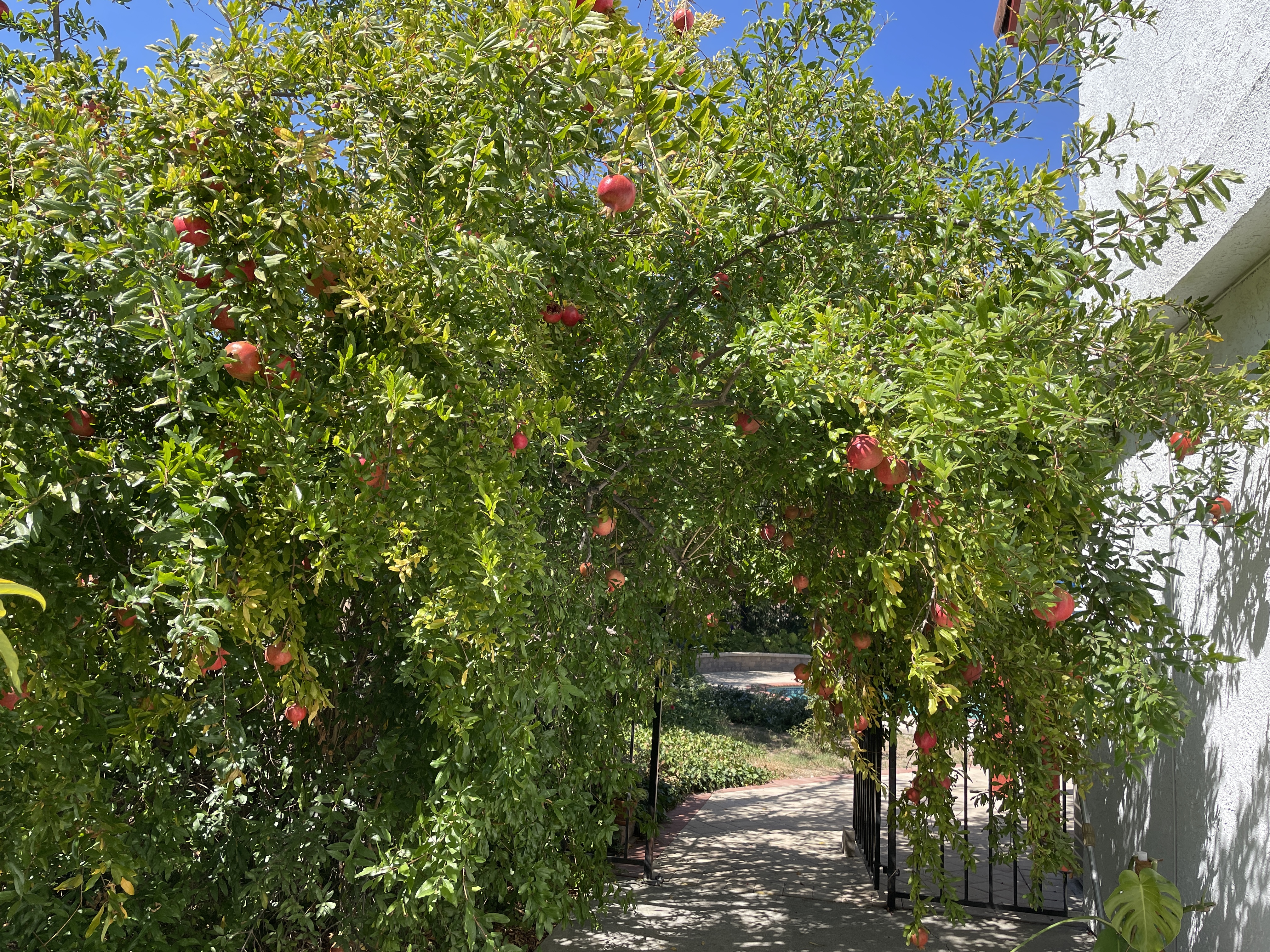
bountiful autumn
pomegranates
scarlet lusciousness
The title tells it all. The author is an investigative journalist. The book is filled with details of varying science reports and studies. A lot of what she quotes is the opposite of the official narrative and science for vaccines in particular, especially those related to childhood vaccinations and Covid vaccines. Technically, both flu and Covid shots are not vaccines in that they do not keep the recipient from getting the disease in all cases like the vaccines for smallpox, measles, and polio do. This does matter in considering whether individuals should get the shots. She also discusses general public immunity in regard to flu and Covid, especially the latter. She also questions the claims that childhood vaccines as they are currently given never cause autism and whether some children are susceptible to extremely negative reactions to these vaccines when the majority of children are not. The main claim is that the giant pharmaceutical companies have enormous power to control the narrative about medications they produce, have huge influence with elected officials of both parties, and will do whatever it takes to make a profit on the drugs they manufacture.

A striking, foreign, young couple appear one evening in the Jeema of Marrakesh. The woman’s incredible beauty fascinates the observers. Suddenly, they disappear. Hassan, a traditional storyteller, invites those who observed the couple to tell what they saw and knew on that night as he presents his own stories to the crowd at the Jeema. His brother, Mustafa, has confessed to the crime of their disappearance, telling everyone he loved the woman whom he hardly knew. He is imprisoned for their disappearance. However, nearly everyone acknowledges that he had nothing to do with it. This novel presents all the different views of the couple, their disappearance, and what it means. Often observer stories contradict each other, raising the questions of what is truth, whose truth is factual, how can we know what is true and how do we define love. Hassan is determined in his quest which takes the reader through all these stories, Hassan and Mustafa’s childhood, the mysteries of the Sahara, and much more.
In 2020, the author, Korean, adopted as a child, nearly 30, decides she needs to find her biological mother before her mother dies. Finding few leads, clues, she hires a private detective who disappears. Then she takes the task of investigating on her own. This book details her investigation, her long relationship with a Serbian furniture mover, life with the parents who adopted her, and her career as a writer, plus going to South Korea to meet her biological family.
Her writing style is a bit different and somewhat rambling. However, for those who have experienced the same sort of search, this book provides details on how to go about finding “the lost”.
It’s 1932.
Movie roles promised to 22 Black Americans.
“Black and White” in the
Uzbek Soviet Socialist Republic.
Treated like royalty, wined, dined, at
their own expense.
Hughes–ridiculous script. All went
home except Hughes. He stayed,
traveled, saw cotton grown from Aral
Sea water–now no water, desolate
desert.
In Tashkent, Uzbeks, Turkmen, Tartars
honored him, flowers, fruit.
No English.
He met a Red Army Captain from
high Pamir Mountains. Hughes
described him, Black with Oriental eyes.
Hughes called him Yeah Man.
He called Hughes Yang Zoon.
Weeks together never understanding
each other’s words.
Hughes’ poetry book
“The Weary Blues” first
American book translated to
Uzbek. Original English version
lost. He describes this new place:
“Look: here
Is a country
Where everyone shines.”
Note: You can find a version of this book translated into English from Uzbek by Muhabbat Bakeava and Kevin Young.

This memoir tells the tale of an unusual tour for a specific purpose, to follow the path of Mennonites who left Europe to escape conscription into the army since the Mennonites are pacifists. The author’s own life is unusual. Her mother was a Swiss Mennonite missionary to Somalia. Her Muslim Somali father taught the Mennonite missionaries Swahili. The two met and married. Samatar grew up and lives as a Mennonite. She teaches African and Arabic literature at James Madison Un. She is most famous for her fantasy novels and short stories which is how I discovered her writing.
In the late 19th century a group of German speaking Mennonites left Russia for Central Asia where their leader believed Christ would return. They suffered many hardships, rejection, abuse, but finally found a place that welcomed them in the Muslim Khanate of Khiva in what is now Uzbekistan. There they built a white church which the locals called Ak Metchet, the White Mosque. Their village lasted 50 years.
If you go online, you can find tours today that follow the route of these Mennonite travelers, trace their route. This book details Samatar’s experiences on the tour, the tour guides, the food, the architecture, the culture and the history: a 15th century astronomer king, the first Uzbek photographer, Mennonite martyrs. She also discusses her own unique upbringing, local beliefs and culture, how people develop their own personal identity, and the surprising interconnections people sometimes discover.

As a summer person, I’m less excited than others I know to see it end. This abecedarian poem allowed me to experiment with words without searching for profound meanings, allowed me to play.
Autumn
brings
chills
dreary
evenings
fog.
Gone
heat
intense
joy.
Kindness
lingers while I
meander
near
oceans
playing
quickly,
running in
sunshine.
Tomorrow
under a
vanishing
wind in a
xeroscape
yard, I will
Zoom my next meeting.


Shafak is a popular Turkish writer. One of my all time favorite books is her novel about the life of Rumi.
“Three Daughters of Eve” takes place one evening in Istanbul in 2016. Peri, one of the daughters from the title, is on her way to a fancy party when a thief snatches her purse out of the back seat of her car which is stalled in traffic. She parks the car and chases him through back alleys. As she fights him for her purse, an old photo falls to the ground. It portrays three young women and their university professor. This photo jars her mind, takes her back to her time at Oxford University when she was a student there in 2000-2002, her childhood in Istanbul in the 1980s and 90s, and her life. She thinks back to her life with her two friends, Shirin, an adventurous Iranian young woman, and Mona, a devout Egyptian Muslim who word a headscarf out of choice. And then there is the famous professor Azur, whose class on God either makes students hate or love him and the scandal that caused Peri to return to Istanbul.
Until her daughter, who was in the car and eventually chases her mother down in the alley, sees the photo, no one, except her husband, seems to have known Peri even went to Oxford. Her daughter mentions it at the party while everyone is arguing about East and West and politics and who has the most money and how they acquired it. Peri tries to deflect questions, changes the subject, and keeps remembering her past: her parents, a father quite irreligious, her mother a devout Muslim, their endless arguments and hostility, her brothers, her childhood and her stint at Oxford.
Through the story of Peri’s life, this novel explores personal identity, East-West history and politics, the meaning of marriage and friendship.
Translated from Japanese, this short novel tells the story of a 19 year old young woman, Yayoi, who lives with a loving family–her mother, father, and brother. Yet she has a premonition that she has missed something from her childhood, forgotten something. She decides to move in with her aunt, Yukino, a gifted eccentric who sometimes awakens Yayoi in the middle of the night to eat and drink, who watches “Friday the 13th” over and over, who just throws unwanted stuff in the back yard and leaves it there among the weeds. While living in the midst of Yukino’s disordered life, Yayoi’s memories begin to resurface. When her aunt disappears, Yayoi and her brother go in search of her and learn mysteries of Yukino’s life. Later, while still searching for Yukino, Yayoi discovers the truth of her own life.
This novel was a best seller in Japan when it was first published there in 1988. It was not translated into English until 2023. Eleven other novels by this author were already available in English.
This book contains 20 fantastical and dystopian short stories. I found them fascinating with topics ranging from selkies to ogres to ghouls to jinns to witches (in this case positive ones). The settings range from US to Africa to a settlement in outer space (the story “Fallow”). Divided into two sections, Tender Bodies, Tender Landscapes, these stories address human frailty, anger, greed, extreme religions and how humans treat each other (both good and bad) and what might occur in the future if people do not behave better. “Fallow” is a sort of handmaid’s tale where instead of being on Earth–which has been basically destroyed–a group of extreme religious folks have made a place for themselves on another planet after escaping Earth. If anyone from Earth accidentally shows up, they are in big trouble unless they become just like the people already there. Otherwise, they do not kill them–that is wrong–but just sort of let them slowly die. These stories, both brutal and lovely, display an incredible imagination.
Travel the World 4 Less
A Glimpse into My Life & Passions
Ceto-Magoism, the Whale-guided Way of WE in S/HE
Exploring the F-word in religion at the intersection of scholarship, activism, and community.
ANCESTRAL FOOD. HERBAL WISDOM. MAGICAL COOKERY. SEASONAL CELEBRATION.
inesemjphotography
politics, engineering, parenting, relevant things over coffee.
Food is the best expression of every emotion. Explore through my reviews, recipes, events and more.
Smile! A Site for Friends Wherever You Are!
inspiring personal growth through poetry and writing
Combining atheism with whimsy. This is a Fair and Balanced blog based on opinion unencumbered by fact.
Odds and ends ~ My Life
Original poetry, commentary, and fiction. All copyrights reserved.
bripike@gmail.com
A wildlife filmmaker in Africa
A Geeky Feminist's Musings On Pop Culture
"5 minute walks"
 writingontherim