 Do you like to eat? Do you eat almonds, apples, cherries, watermelon, blueberries, or cantaloupe? In fact, the biggest factor limiting the world’s food supply is not war, drought, or any of the factors you commonly hear about. The world’s food supply is limited by the amount of bees available for pollination. In the last five years in the United States alone, approximately one million honey bee colonies died each year, about one third of our national bee herd. Bees are in danger of extinction. Native to Southeast Asia, honey bees were domesticated long before written history, before the building of the Egyptian pyramids. Thousands of species of bees exist, but honey bees carry the main load of pollination for cultivated crops.
More than 740,000 acres of almonds, California’s leading agricultural export, remain in cultivation in the Central Valley of California. Pollination depends on bumble bees, honey bees, and wild bees. Sadly, the wild bees are mostly extinct, killed by pesticides and habitat loss. Now pollination depends on traveling bee keepers and their honey bees. Today, commercial bee keepers number one fourth of what they did in 1980. To get enough bees the almond (and cherry and apple, etc.) growers hire these bee keepers to install approximately 2 million bee hives to work the pollination. Almonds alone require at least 1.5 million hives. Each almond tree’s blossoms number 25,000 and at 135 or so trees per acre, that adds up to 3.5 million flowers to pollinate. The difference between a poor harvest and a great one depends on bees. After the bees finish their work in the Central Valley and other warmer climates, the commercial keepers take them to places like Idaho and North Dakota for the summer where they sip alfalfa, buckwheat, goldenrod, and sweet clover blossoms and produce the honey sold in groceries.
Where have all the bees gone? What leads them toward extinction? In 2006-2008, beehives across the world from Europe to here to Indian and Brazil nearly collapsed. Causes vary: foulbrood–a bacterial fungus, wasps, ants, mice, a host of viruses, nosema–bee diarrhea, and certain pesticides. What can we do? First, we can ban certain pesticides that are known to harm bees. Second, we need to grow more flowers and blooming weeds (yes, I said weeds) to encourage a broader spectrum of healthy bees for pollination. Honey bees cannot do it all alone. The lack of sufficient flowers is the result of not only pesticides, but also the increase in lawns. If you personally want to make a difference for bees and ultimately our food supply, let the wild flowers grow, plant more flowers and less lawn, limit pesticide use.
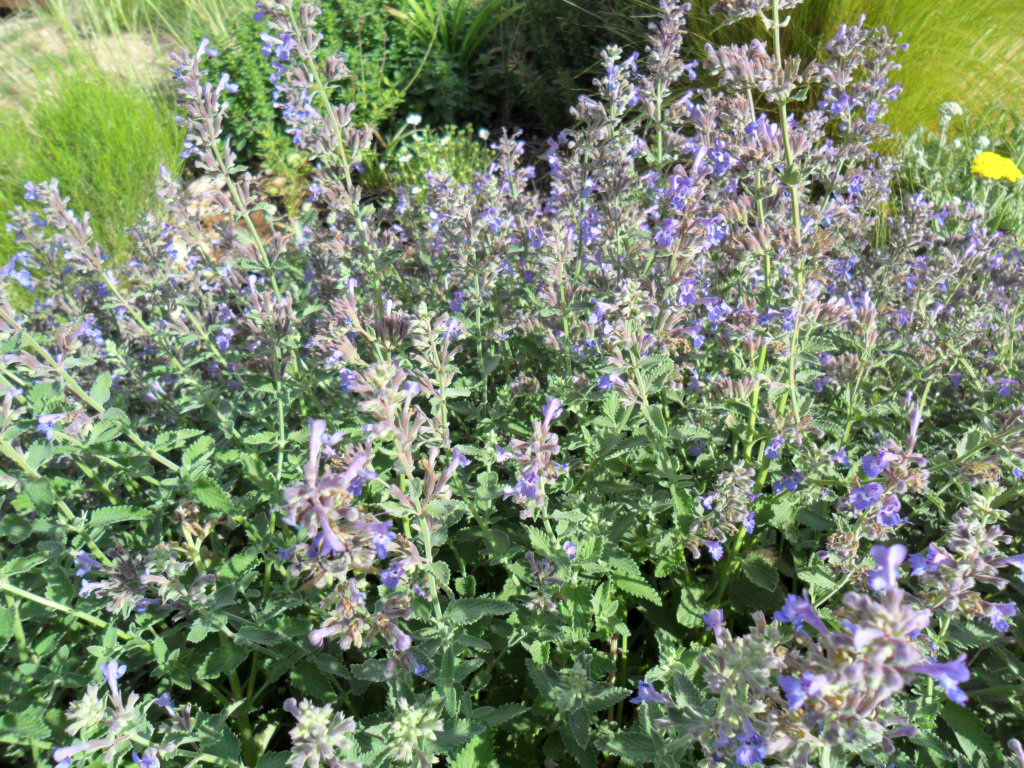
This morning I went out to my xeroscape garden–I have no lawn–and photographed bees. At one catmint plant, so many busy bees made a clearly audible buzzing sound. I witnessed at least four different kinds–species–of bees. These 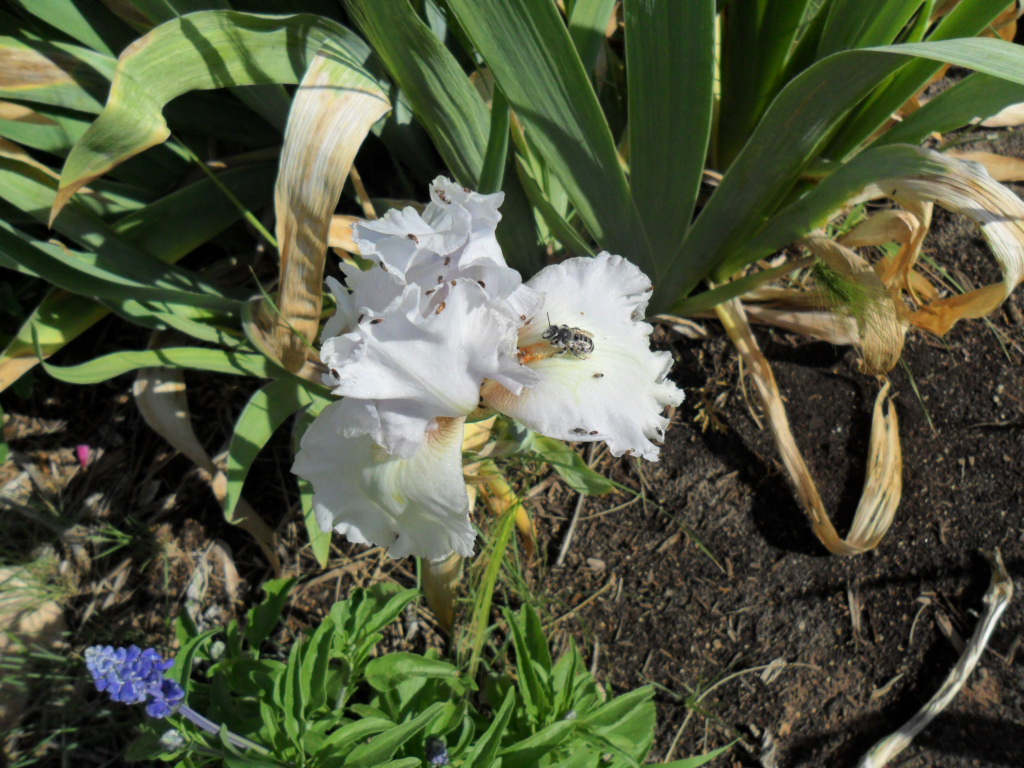

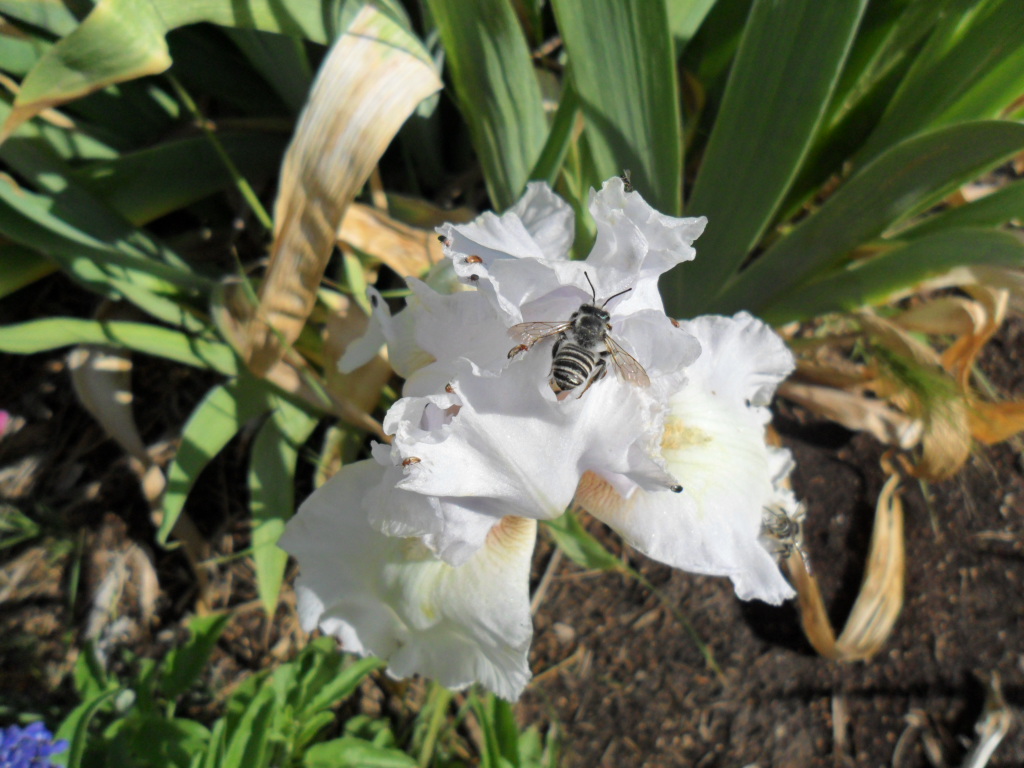
 photographs illustrate at least several different types of flowers bees love.

 writingontherim